















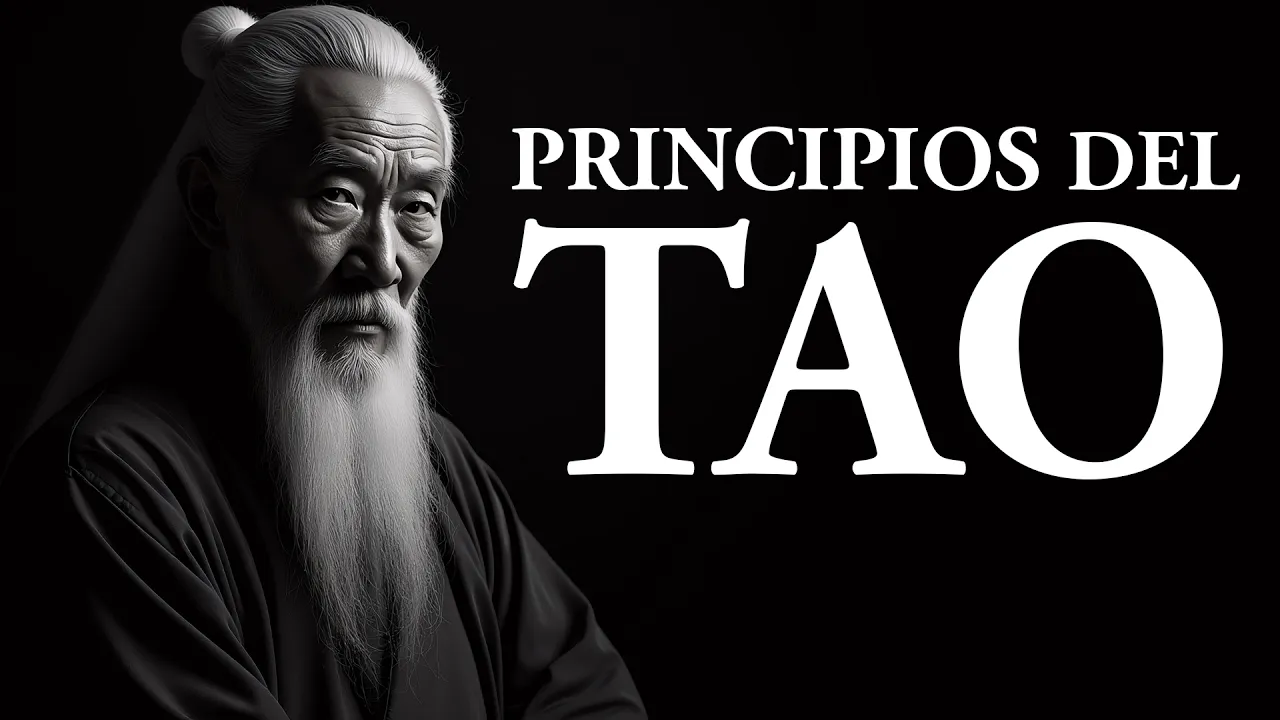

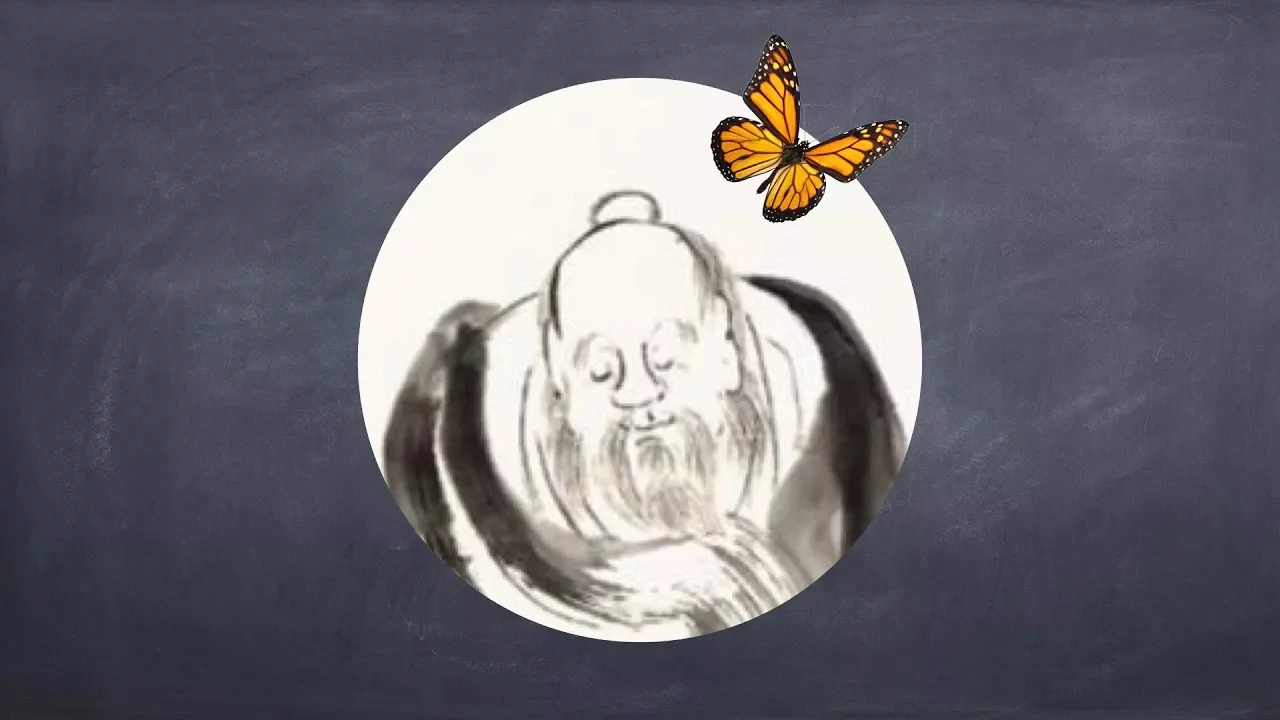


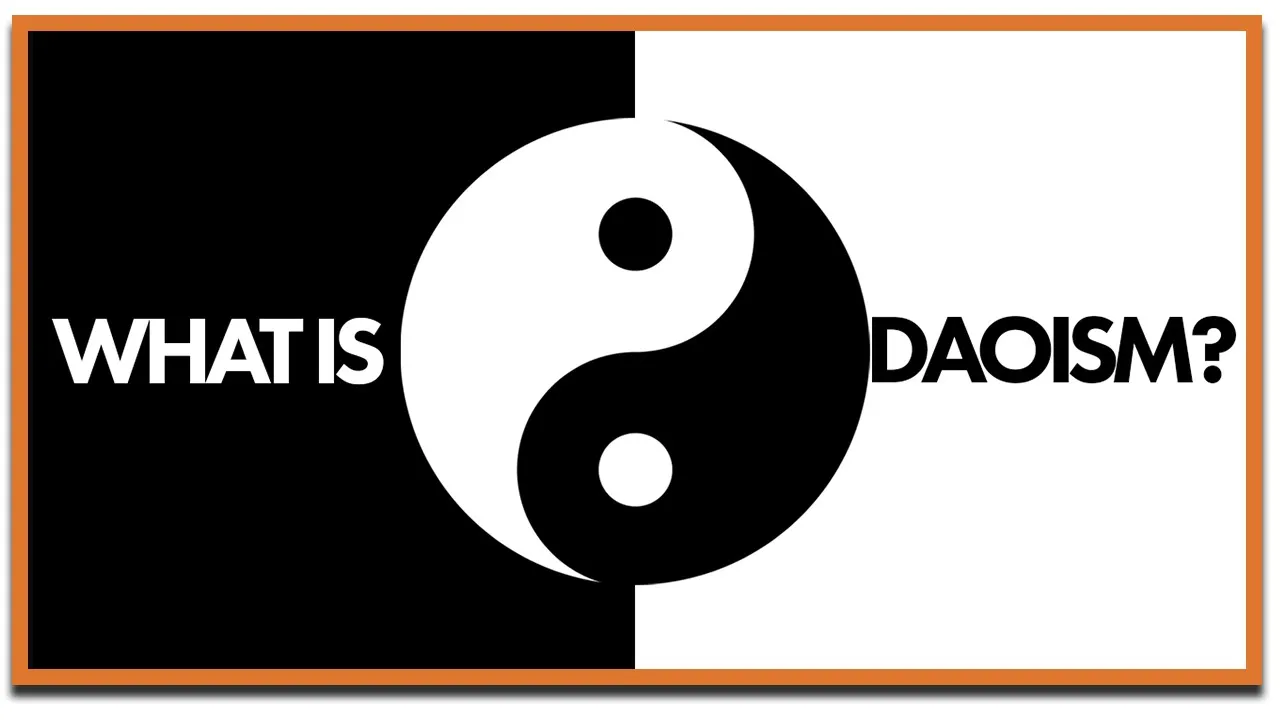
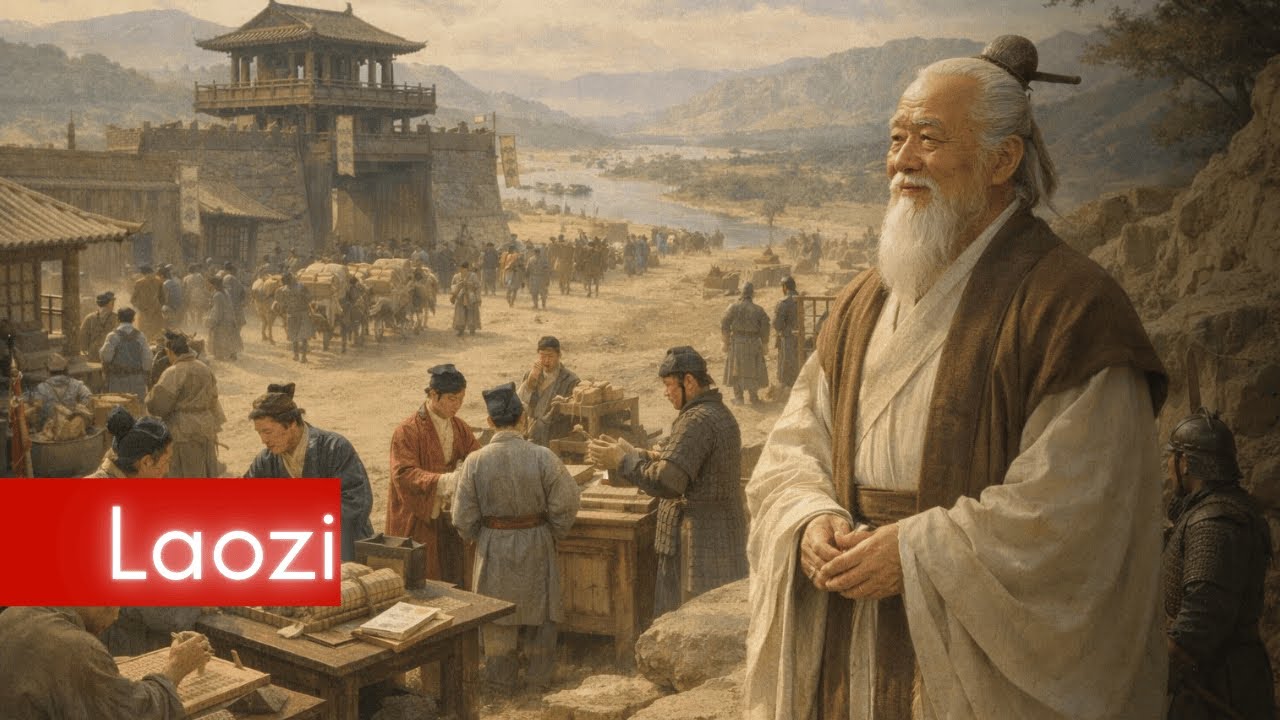



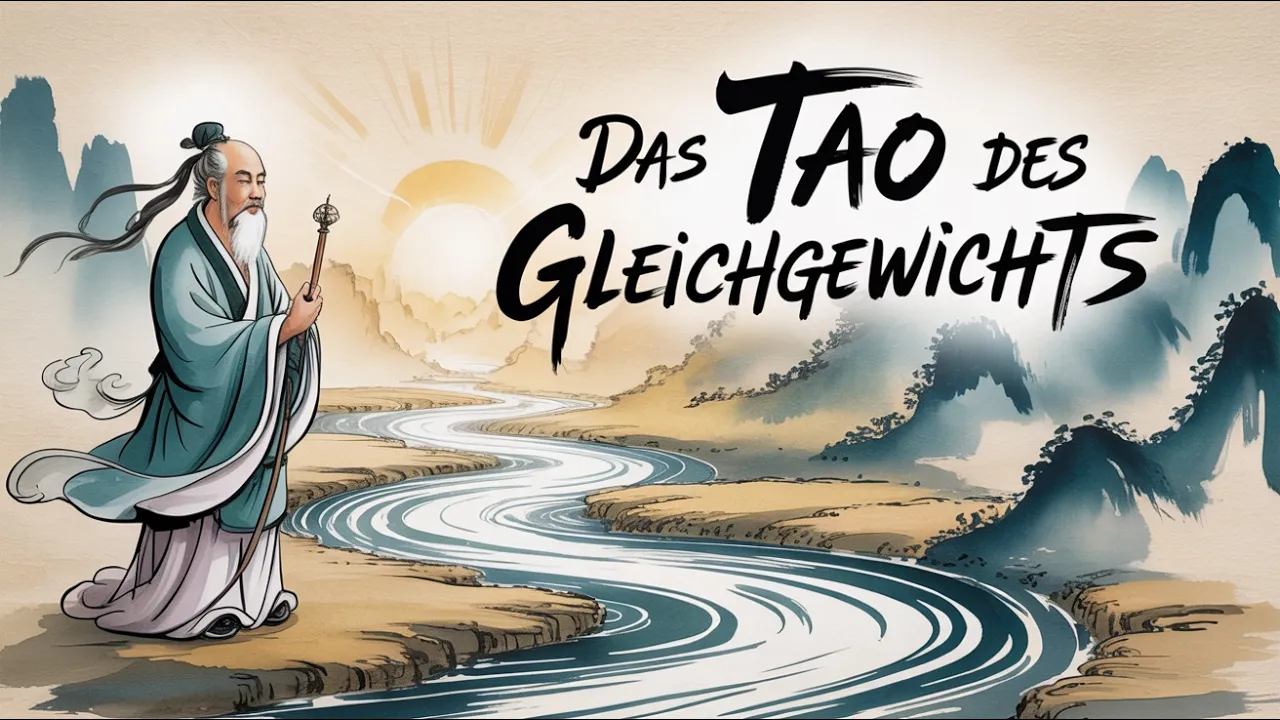


The Dao Te Ching, written by Lao-Tzu around 500 BC, teaches that the Dao (The Way) is the fundamental principle underlying all existence, characterized by paradoxical qualities such as being both named and nameless, and that true wisdom comes from embracing simplicity, non-action (wu wei), humility, and living in harmony with nature rather than through force or control.
Tao Te Ching: Full Audiobook Read by Wayne Dyer
Added:Basic historical context of the Warring States period in ancient China, which gave rise to the 'Hundred Schools of Thought' including Taoism and Confucianism.
The core conceptual definitions of 'Tao' (The Way) and 'Te' (Virtue or Inner Power) within Eastern philosophical frameworks.
The fundamental principle of 'Wu Wei' (often translated as non-action, effortless action, or aligning with the natural flow).
An understanding of Dr. Wayne Dyer's background as a modern Western self-help author and motivational speaker, to contextualize his interpretive lens.
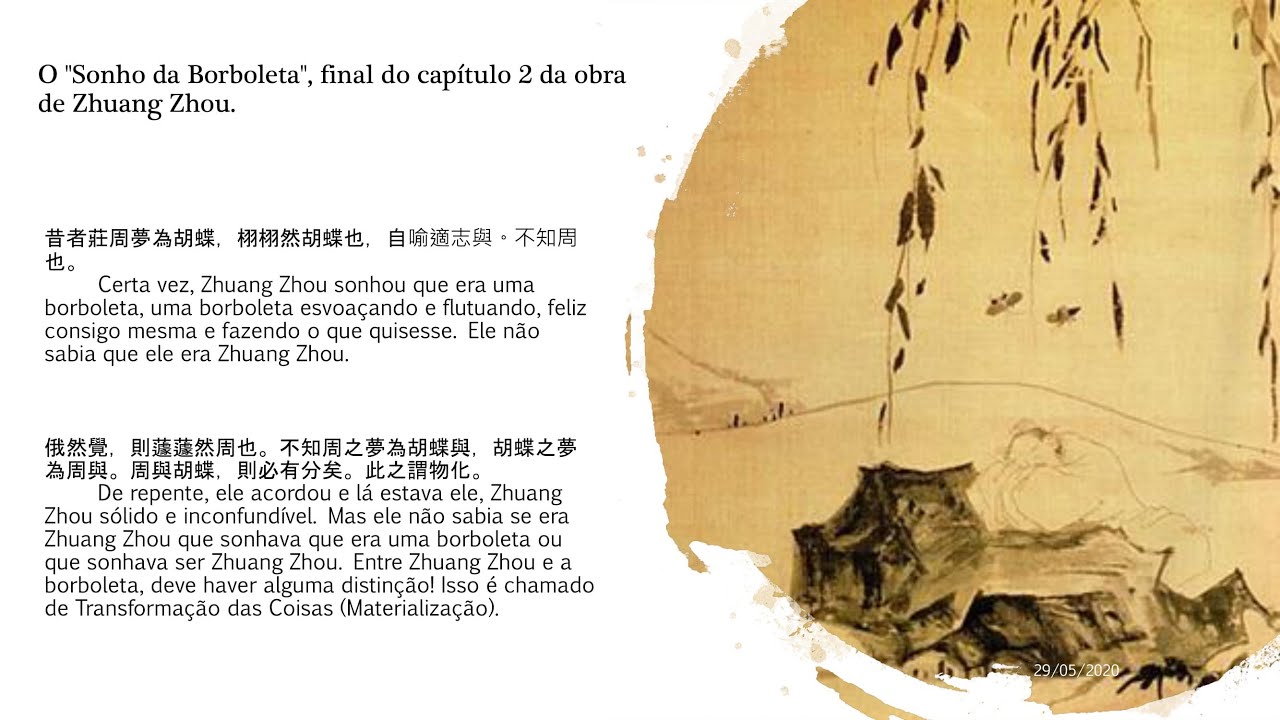
A comparative study of the 'Tao Te Ching' alongside the 'Zhuangzi' (Chuang Tzu) to explore the development of classical Taoist philosophy.
An examination of the distinctions between philosophical Taoism (Daojia) and religious Taoism (Daojiao), including its deities, rituals, and alchemy.
Analysis of how Taoist concepts of balance, non-attachment, and flow integrate with modern psychological frameworks like Mindfulness-Based Stress Reduction (MBSR) and Acceptance and Commitment Therapy (ACT).
A critical comparison of different translations of the 'Tao Te Ching' (e.g., Stephen Mitchell, Gia-fu Feng, or Arthur Waley) to see how linguistic choices alter the text's philosophical nuances.
66.9K views1.1Klikes1:05:52Original Release: 2023-07-31
foreign [Music] the name that can be named is not the Eternal name the Dao is both named and nameless as nameless it is the origin of all things as named it is the mother of ten thousand things ever desireless one can see the mystery ever Desiring one sees only the manifestations and the Mystery itself is the doorway to all understanding [Music] under Heaven all can see beauty as Beauty only because there is ugliness all can no good as good only because there is evil being and non-being produce each other the difficult is born in the easy long is defined by short the high by the low before and after go along with each other so the sage lives openly with apparent Duality and paradoxical Unity the sage can act without effort and teach without words nurturing things without possessing them he works but not for rewards he competes but not for results when the work is done it is forgotten that is why it lasts forever [Music] putting a value on status will create contentiousness if you overvalue possessions people begin to steal by not displaying what is desirable you will cause the people's hearts to remain undisturbed the sage governs by emptying minds and Hearts by weakening Ambitions and strengthening bones practice not doing when action is pure and selfless everything settles into its own perfect place Heaven and Earth are impartial they see the ten thousand things as Straw Dogs the sage is not sentimental he treats all his people as Straw Dogs the sage is Like Heaven and Earth to him none are especially dear nor is there anyone he disfavors he gives and gives without condition offering his treasures to everyone Between Heaven and Earth is a space like a Bellows empty and inexhaustible the more it is used the more it produces hold on to the center man was made to sit quietly and find the truth Within [Music] Spirit That Never Dies is called The Mysterious feminine although she becomes the whole universe her Immaculate Purity is never lost although she assumes countless forms her true identity remains intact the gateway to the mysterious female is called the root of creation listen to her voice hear it echo through creation without fail she reveals her presence without fail she brings us to our own Perfection although it is invisible it endures it will never end foreign is eternal the Earth endures why do Heaven and Earth last forever they do not live for themselves only this is the secret of their durability for this reason the sage puts himself last and so ends up ahead he stays a witness to life so he endures serves the needs of others and all your own needs will be fulfilled through selfless action fulfillment is attained [Music] the Supreme good is like water which nourishes all things without trying to it flows to Low Places loathed by all men therefore it is like the Dao live in accordance with the nature of things indwelling be close to the land in meditation go deep in the heart in dealing with others be gentle and kind Stand by Your word govern with Equity be timely in choosing the right moment one who lives in accordance with nature does not go against the way of things he moves in harmony with the present moment always knowing the truth of just what to do to keep on filling is not as good as stopping overfilled the cupped hands drip better to stop pouring sharpen a blade too much and its Edge will soon be lost fill your house with Jade and gold and it brings insecurity puff yourself with honor and pride and no one can save you from a fall retire when the work is done this is the way of Heaven carrying body and soul and embracing the one can you avoid separation can you let your body become as Supple as a newborn child in the opening and shutting of Heaven's Gate can you play the feminine part can you love your people and govern your domain without self-importance giving birth and nourishing having yet not possessing working yet not taking credit leading without controlling or dominating one who heeds this power brings the Dao to this very Earth this is the Primal virtue 30 spokes converge upon a single hub it is on the whole in the center that the use of the cart hinges shape clay into a vessel it is the space within that makes it useful carve fine doors and windows but the room is useful in its emptiness the youthfulness of what is depends on what is not the five colors blind the eye the five tones deafen the ear the five flavors dull The Taste the Chase and the hunt craze people's minds wasting energy to obtain rare objects only impedes one's growth the master observes the world but trusts his inner vision he allows things to come and go he prefers what is within to what is without favor and disgrace seem alarming High status greatly afflicts your person why our favor and disgrace alarming seeking favor is degrading alarming when it is gotten alarming when it is lost why does high status greatly afflict your person the reason we have a lot of trouble is that we have cells if we had no selves what trouble would we have man's true self is eternal yet he thinks I am this body and will soon die if we have no body what calamities can we have one who sees himself says everything is fit to be guardian of the world one who loves himself as everyone is fit to be teacher of this world [Music] that which cannot be seen is called invisible that which cannot be heard is called inaudible that which cannot be held is called intangible these three cannot be defined therefore they are merged as one each of these three is subtle for description by intuition you can see it hear it and feel it then the Unseen unheard and untouched are present as one as rising brings no Dawn it's setting no Darkness it goes on and on unnamable returning into nothingness approach it and there is no beginning follow it and there is no end you cannot know it but you can be it at ease in your own life discovering how things have always been brings one into harmony with the way [Music] the ancient Masters were profound and subtle their wisdom was unfathomable there's no way to describe it one can only describe them vaguely by their appearance watchful like men crossing a winter stream alert like men aware of danger simple as uncarved Wood Hollow like caves yielding like ice about to melt amorphous like muddy water but the muddiest water clears as it is still and out of that Stillness life arises he who keeps the Dao does not want to be full but precisely because he is never full he can remain like a hidden Sprout and does not rush to early ripening [Music] become totally empty let your heart be at peace amidst the rush of worldly comings and goings observe how endings become beginnings things flourish each by each only to return to the source to what is and what is to be the return to the root is to find peace to find peace is to fulfill one's Destiny to fulfill one's Destiny is to be constant to know the constant is called Insight not knowing this cycle leads to Eternal disaster knowing the constant gifts perspective this perspective is impartial impartiality is the highest nobility the highest nobility is divine being Divine you will be at one with the Dao being at one with the dial is eternal this way is Everlasting not endangered by physical death [Music] with the greatest leader above them people barely no one exists next comes one whom they love and praise next comes one whom they fear next comes one whom they despise and defy when the leader trusts no one no one trusts him the great leader speaks little he never speaks carelessly he works without self-interest and leaves no Trace when all is finished the people say we did it ourselves [Music] when the greatness of the Tao is present action arises from one's own heart when the greatness of the Tao is absent action comes from the rules of kindness and justice you need rules to be kind and just if you act virtuous is a sure sign that virtue is absent thus we see the great hypocrisy when kinship falls into Discord piety and rights of devotion arise when the country falls into chaos official loyalists will appear and patriotism is born [Music] give up sainthood renounce wisdom and it will be a hundred times better for everyone throw away morality and Justice and people will do the right thing throwaway industry and profit there will be no thieves all of these are outward forms alone they are not sufficient in themselves it is more important to see the Simplicity to realize one's true nature to cast off selfishness and temper desire [Music] give up learning and you will be free from all your cares what is the difference between yes and no what is the difference between Good and Evil must I fear what others fear should I fear desolation when there is abundance should I fear darkness when that light is shining everywhere in Spring some go to the park and climb the Terrace but I alone am drifting not knowing where I am like a newborn baby before it learns to smile I am alone without a place to go [Music] most people have too much I alone seem to be missing something mine is indeed the mind of an ignoramus in its unadulterated Simplicity I am but a guest in this world While others Rush about to get things done I accept what it's offered I alone seem foolish earning little spending less other people strive for fame I avoid the Limelight preferring to be left alone indeed I seem like an idiot no mind no worries I drift like a wave on the ocean I blow as aimless As the Wind all men settle down in their grooves I alone am stubborn and remain outside but wherein I am most different from others is in knowing to take sustenance from the great mother [Music] the greatest virtue is to follow the Dao and the Dao alone that I was Elusive and intangible although formless and intangible it gives rise to form although vague and Elusive it gives rise to shapes although dark and obscure it is the spirit the essence the life breath of all things throughout the ages its name has been preserved in order to recall the beginning of all things how do I know the ways of all things at the beginning I look inside myself to see what is within me [Music] the flexible are preserved unbroken the bent becomes straight the empty are filled the exhausted becomes renewed the poor are enriched the rich are confounded therefore the sage Embraces the one because he doesn't display himself people can see his light because he has nothing to prove people can trust his words because he doesn't know who he is people recognize themselves in him because he has no goal in mind everything he does succeeds the old saying that the flexible are preserved unbroken is surely right if you have truly attained wholeness everything will flock to you [Music] to talk little is natural Fierce winds do not blow all morning a downpour of rain does not last the day who does this Heaven and Earth but these are exaggerated forced effects and that is why they cannot be sustained If Heaven and Earth cannot sustain a forced action how much less is man able to do so those who follow the way become one with the way those who follow goodness become one with goodness those who stray from the way and goodness become one with failure if you conform to the way its power flows through you your actions become those of nature your ways those of Heaven open yourself to the Dao and trust your natural responses then everything will fall into place if you stand on tiptoe you cannot stand firmly if you take long steps you cannot walk far showing off does not reveal Enlightenment boasting will not produce accomplishment he who is self-righteous is not respected he who brags will not endure all these ways of acting are odious distasteful they are Superfluous excessive they are like a pain in the stomach a tumor in the body when walking the path of the Dao this is the very stuff that must be uprooted thrown out and left behind there was something formless and perfect before the universe was born it is Serene empty solitary unchanging infinite eternally present it is the mother of the universe for lack of a better name I call it the Dao I call it great great is boundless boundless is eternally flowing ever flowing it is constantly returning therefore the way is great Heaven is great Earth is great people are great thus to know Humanity understand Earth to know Earth understand heaven to know Heaven understand the way to know the way understand the great within yourself [Music] the heavy is the root of the light the still is the master of unrest realizing this successful person is poised and centered in the midst of all activities although surrounded by opulence he is not swayed why should the lord of the country flit about like a fool if you let yourself be blown to and fro you lose touch with your root to be restless is to lose one's self-mastery [Music] the knower of the truth travels without leaving the trace speaks without causing harm gives without keeping an account the door he shuts though having no lock cannot be opened the knot he ties though using no cord cannot be undone be wise and help all beings impartially abandoning none waste no opportunities this is called following the light what is a good man but a bad man's teacher what is a bad man but a good man's job if the teacher is not respected and the student not cared for confusion will arise however clever one is this is the great Secret [Music] know the strength of man but keep a woman's care be a valley under Heaven if you do the constant virtue will not fade away one will become like a child again know the white keep to the black and be the pattern of the world to be the pattern of the world is to move constantly in the path of virtue without airing a single step and to return again to the infinite one who understands Splendor while holding to humility acts in accord with eternal power to be the Fountain of the world is to live the Abundant Life of virtue when the unformed is formed into objects its original qualities are lost if you preserve your original qualities you can govern anything truly the best Governor governs least [Music] do you think you can take over the universe and improve it I do not believe it can be done everything under Heaven is a sacred vessel and cannot be controlled trying to control leads to ruin trying to grasp we lose allow your life to unfold naturally know that it too is a vessel of perfection just as you breathe in and breathe out there is a time for being ahead and a time for being behind a time for being in motion and a time for being at rest a time for being vigorous and a time for being exhausted a time for being safe and a time for being in danger to the sage all of life is a movement toward perfection so what need has he for the excessive the extravagant or the extreme thank you foreign who would guide a leader of men in the uses of life will warn him against the use of arms for Conquest weapons often turn upon the wielder where armies settle nature offers nothing but Briars and thorns after a great battle has been fought the land is cursed the crops fail the Earth lies stripped of its motherhood after you have attained your purpose you must not parade your success you must not boast of your ability you must not feel proud you must rather regret that you had not been able to prevent the war you must never think of conquering others by force whatever strains with force will soon decay it's not attuned to the way not being attuned to the way it s end comes all too soon [Music] weapons are the tools of violence all decent men detest them therefore followers of the Dao never use them arms serve evil they are the tools of those who oppose wise rule use them only as a last resort or peace and quiet are dearest to the decent man's heart and to him even a victory is no cause for rejoicing he who thinks triumphed beautiful is one with a will to kill and one with a will to kill shall never Prevail upon the world it is a good sign when man's higher nature comes forward a bad sign when his lower nature comes forward with the slaughter of multitudes we have grief and sorrow every Victory is a funeral when you win a war you celebrate by Mourning [Music] the Eternal dial has no name although simple and subtle no one in the world can Master it Kings and Lords could harness them the ten thousand things would naturally obey Heaven and Earth would Rejoice with the dripping of sweet Dew everyone would live in harmony not by official decree but by their own goodness once the hole is divided the parts need names there are already enough names know when to stop no one reason sets limits to avoid Peril rivers and streams are born of the ocean and all creation is born of the Tao just as all water flows back to become the ocean all creation flows back to become the Tao one who understands others has knowledge one who understands himself has wisdom mastering others requires Force mastering the self needs strength if you realize that you have enough you are truly rich one who gives himself to his position surely lives long one who gives himself to the Dow surely lives forever the great way is universal it can apply to the left or the right all beings depend on it for life even so it does not take possession of them it accomplishes its purpose but makes no claim for itself it covers all creatures like the sky but does not nominate them all things return to it as to their home but it does not Lord it over them thus it may be called great the sage imitates this conduct by not claiming greatness Sage achieves greatness all men will come to him who keeps to the one they flock to him and received no harm or in him they find peace security and happiness music and dining are passing Pleasures yet they cause people to stop how bland and insipid are the things of this world when One Compares them to the Dao when you look for it there's nothing to see when you listen for it there's nothing to hear when you use it it cannot be exhausted thank you [Music] want to contain something you must deliberately let it expand should you want to weaken something you must deliberately Let It Grow strong should you want to eliminate something you must deliberately allow it to flourish should you want to take something away you must deliberately granted access the lesson here is called the wisdom of obscurity the gentle outlasts the strong the Obscure outlasts the obvious fish cannot leave deep Waters and a country's weapons should not be displayed the Dow does nothing but leaves nothing undone if powerful men could center themselves in it the whole world would be transformed by itself in its natural rhythms when life is simple pretenses fall away our essential Natures shine through by not wanting there is calm and the world will straighten itself when there is silence one finds the anchor of the universe within oneself [Music] a truly good man is not aware of his goodness and is therefore good a foolish man tries to be good and is therefore not good the master does nothing yet he leaves nothing undone the ordinary man is always doing things yet many more are left to be done the highest virtue is to act without a sense of self the highest kindness is to give without condition the highest Justice is to see without preference when the Dow is lost there is goodness when goodness is lost there is morality when morality is lost there is ritual ritual is the husk of true Faith the beginning of Chaos the Great Master follows his own nature and not the trappings of life it is said he stays with the fruit and not the fluff he stays with the firm and not the flimsy stays with the true and not the false [Music] [Music] these things from ancient times arise from one the sky is whole and clear the Earth is whole and firm the spirit is whole and full the ten thousand things are whole and the country is upright all these are in virtue of wholeness when man interferes with the Dao the sky becomes filthy the Earth becomes depleted the equilibrium crumbles creatures become extinct therefore nobility is rooted in humility loftiness is based on lowliness this is why noble people refer to themselves as alone lacking and unworthy the pieces of a chariot are useless unless they work in accordance with the whole a man's life brings nothing unless he lives in accordance with the whole universe playing once part in accordance with the universe true humility truly too much honor means no honor it's not wise to shine like Jade and ReSound like Stone chimes [Music] returning is the motion of the Dao yielding is the way of the Tao the ten thousand things are born of being being is born of non-being [Music] a great scholar hears of the Dao and begins diligent practice a middling scholar hears of the Tao and retains some and loses some an inferior scholar hears of the Dao and Roars with ridicule without that laugh it would not be the Dao so there are constructive sayings on this the way of Illumination seems dark going forward seems like retreat the easy way seems hard true power seems weak true Purity seems tarnished true Clarity seems obscure the greatest art seems unsophisticated the greatest love seems indifferent the greatest wisdom seems childish the Dao is hidden and nameless the thou alone nourishes and brings everything to fulfillment the dial gave birth to one one gave birth to two two gave birth to three all three begat the ten thousand things the ten thousand things carry yin and embrace yang they achieve Harmony by combining these forces people suffer at the thought of being without parents without food or without worth yet this is the very way that Kings and Lords once described themselves for one gains by losing and loses by gaining what others taught I teach the violent do not die a natural death this is my fundamental teaching foreign the softest of all things overrides the hardest of all things that without substance enters where there is no space hence I know the value of non-action teaching without words performing without actions few in the world can grasp it that is the Master's way rare indeed are those who obtain the Bounty of this world [Music] which means more to you you or your renown which brings more to you you or what you own I say what you gain is more trouble than what you lose love is the fruit of sacrifice wealth is the fruit of generosity a contented man is never disappointed he who knows when to stop is preserved from Peril only thus can you endure law [Music] the greatest Perfection seems imperfect and yet its uses inexhaustible the greatest fullness seems empty yet its use is endless great straightness seems Twisted great intelligence seems stupid great eloquence seems awkward great truth seems false great discussions seem silent activity conquers cold inactivity conquers Heat Stillness and Tranquility set things in order in the universe when the world has the way running horses are retired to till the fields when the world lacks the way war horses are bred in the countryside there is no greater loss than losing the Dow no greater curse than covetedness no greater tragedy than discontentment the worst of fault is wanting more always contentment alone is enough indeed the Bliss of Eternity can be found in your contentment foreign [Music] know the world without looking out the window you may see the ways of Heaven the farther one goes the less one knows therefore the sage does not Venture forth and yet knows does not look and yet names does not strive and yet attains completion learning consists of daily accumulating the practice of the dial consists of daily diminishing creasing and decreasing until doing nothing when nothing is done nothing is left undone true Mastery can be gained by letting things go their own way cannot be gained by interfering [Music] the sage has no fixed mind he is aware of the needs of others those who are good he treats with goodness those who are bad he also treats with goodness because the nature of his being is good he is kind to the kind he is also kind to the unkind because the nature of his being is kindness he is faithful to the faithful he is also faithful to the Unfaithful the sage lives in harmony with all below heaven he sees everything as his own self he loves everyone as his own child all people are drawn to him behaves like a little child [Music] between birth and death 3 in 10 are followers of life three in ten are followers of death and men just passing from birth to death also number three in ten why is this so because they clutch to life and cling to this passing world but there is one of ten that say so sure of life that tigers and wild bulls keep clear weapons turned from him on the battlefield rhinoceroses have no place to Horn him Tigers find no place for Claws and soldiers have no place to thrust their blades why is this so because he dwells in that place where death cannot enter realize your essence and you will witness the end without ending [Music] the way connects all living beings to their Source it Springs into existence unconscious perfect free and takes on a physical body lets circumstances completed therefore all beings honor the way and value its virtue they have not been commanded to worship The Tao and do homage to Virtue but they always do so spontaneously the dial gives them life virtue nourishes and nourishes them rears and shelters and protects them the Dow produces but does not possess the thou gives without expecting the thou Fosters growth without ruling this is called hidden virtue all under heaven have a common beginning this beginning is the mother of the world having known the mother we may proceed to know her children having known the children we should go back and hold on to the mother [Music] keep your mouth shut guard the senses and life is Ever full open your mouth always be busy and life is beyond hope seeing the small is called clarity keeping flexible is called strength using The Shining Radiance you return again to the light and save yourself misfortune this is called the practice of Eternal Light if I have even just a little sense I should walk in the great way and my only fear would be straying the great way is very smooth and straight and yet the people preferred devious paths that is why the court is corrupt the fields lie in waste the granaries are empty dressing magnificently wearing a sharp sword stuffing oneself with food and drink amassing wealth to the extent of not knowing what to do with it is being like a robber I say this pomp at the expense of others is like the boasting of Thieves after a looting this is not the Dao whoever is planted in the Dow will not be rooted up whoever Embraces the Dao will not slip away Generations honor Generations endlessly cultivated in the self virtue is realized cultivated in the family virtue overflows cultivated in the community virtue increases cultivated in the state virtue abounds the Dao is everywhere it has become everything to truly see it see it as it is in a person see it as a person in a family see it as a family in a country see it as a country in the world see it as the world how do I know this is true by looking inside myself [Music] he who is in harmony with the Dao is like a newborn child deadly insects will not sting him wild beasts will not attack him Birds of Prey will not strike him bones are weak muscles are soft yet his grasp is firm he has not experienced the union of man and woman but is whole his manhood is strong he screams all day without becoming hoarse this is perfect harmony to know Harmony is to know the changeless to know the changeless is to have Insight things in harmony with the Dao remain things that are forced grow for a while but then wither away this is not the Dao and whatever is against the Dao soon ceases to be [Music] those who know do not talk those who talk and do not know block all the passages close your mouth cordon off your senses blunt your sharpness untie your nuts soften your glare settle your dust this is Primal Union for the secret embrace one who knows this secret is not moved by attachment or aversion swayed by profit or loss or touched by Honor or disgrace he is far beyond the cares of men it comes to hold the dearest place in their hearts this therefore is the highest state of man oh if you want to be a great leader you must learn to follow the Dao stop trying to control let go of fixed plans and Concepts and the world will govern itself how do I know this is so because in this world the greater the restrictions and prohibitions the more people are impoverished the more advanced the weapons of state the darker the nation the more Artful and crafty the plan the stranger the outcome the more laws are posted the more thieves appear therefore the sage says I take no action and people are reformed I enjoy peace and people become honest I do nothing and people become rich if I keep from imposing on people they become themselves [Music] when the ruler knows his heart people are simple and pure when he meddles with their lives they become restless and Disturbed bad fortune is what good fortune leans in Good Fortune is what bad fortune hides in who knows the ultimate end of this process is there no Norm of right yet what is normal soon becomes abnormal people's confusion is indeed long-standing thus the master is content to serve as an example and not to impose his will he is pointed but does not Pierce he straightens but does not disrupt he illuminates but does not Dazzle foreign [Music] governing people and serving nature nothing surpasses Thrift and moderation restraint begins with giving up one's own ideas this depends on virtue gathered in the past if there's a good store of virtue then nothing is impossible if nothing is impossible then there are no limits if a man knows no limits he is fit to lead this is the way to be deeply rooted and firmly planted in the Dao The Secret of long life and Lasting vision [Music] governing a large country is like frying a small fish spoil it with too much poking approach the universe with the Dao and evil will have no power not that evil is not powerful but its power will not be used to harm others not only will it not do harm to others but the sage himself will also be protected only the ruler and his people would refrain from harming each other all the benefits of life would accumulate to the kingdom a great country is like the lowland toward which all streams flow it is the reservoir of all under Heaven the feminine of the world the female overcomes the male with Stillness by lowering herself through her quietness so if a great country lowers itself before a small one it wins friendship and Trust And if a small country can lower itself before a great one it will win over that great country the one wins by stooping the other by remaining low [Music] [Laughter] [Music] the Dao is the Treasure House the true nature the secret source of everything it is The Treasure of the good man and The Refuge of the bad if a person seems Wicked do not cast him away awaken him with your words Elevate him with your Deeds repay his injury with your kindness do not cast him away Cast Away his wickedness thus when a new leader is chosen do not offer to help him with your wealth or your expertise help him to meditate on the principle offer instead to teach him about the Dao why did the Ancients make so much of the principle is it not because it is the source of all good and the remedy for all evil it is the most noble thing in the world [Music] practice non-action work without doing taste the tasteless magnify the small increase the few reward bitterness with care see Simplicity in the complicated achieve greatness in little things take on difficulties while they are still easy do great things while they are still small Sage does not attempt anything very big and thus achieves greatness if you agree too easily you will be little trusted because the sage always confronts difficulties you never experiences them what is at rest is easily managed what is not yet manifest is easy to prevent the brittle is easily shattered the small is easily scattered apt before things exist manage them before there is disorder remember a tree that fills a man's Embrace grows from a Seedling Tower nine stories high starts with one brick a journey of a Thousand Miles begins with a single step act and destroy it grasp it and lose it Sage does not act and so is not defeated he does not grasp and therefore does not lose people usually fail when they are on the verge of success so give as much care at the end as at the beginning then there will be no failure the sage does not treasure what is difficult to attain he does not collect precious things he learns not to hold on to ideas he helps the 10 000 things find their own nature but does not venture to lead them by the nose [Music] the ancient ones were simple-hearted and blended with the common people they did not shine forth they did not rule with cleverness so the nation was blessed when they think that they know the answers people are difficult to guide when they know that they do not know people can find their own way not using cunning to govern a country is Good Fortune for the country the simplest pattern is the clearest content with an ordinary life you can show all people the way back to their own true nature why is the Sea King of a hundred streams because it lies below them humility gives it its power therefore those Desiring a position above others must speak humbly those Desiring to lead must follow thus it is that when a sage stands above the people they do not feel the heaviness of his weight and when he stands in front of the people they do not feel hurt the sage stays low so the world never tires of exalting him he remains a servant so the world never tires of making him its king thank you [Music] all the world talks about my Dao with such familiarity what Folly the Dao is not something found at the marketplace or passed on from father to son it is not something gained by knowing or lost by forgetting if that hour like this it would have been lost and forgotten long ago I have three Treasures which I hold fast and watch closely the first is Mercy the second is frugality the third is humility for Mercy comes courage from frugality comes generosity from humility comes leadership now if one were bold but had no mercy if one were broad but were not Frugal if one went ahead without humility one would die love vanquishes all attackers it is impregnable in defense When Heaven wants to protect someone does it send an army no it protects him with love thank you a good soldier is not violent a good fighter is not angry good winners do not contend good employers serve their workers the best leader follows the will of the people all of them embody the virtue of non-competition this is called The Virtue of non-contending this is called employing the power of others this since ancient times has been known as the ultimate unity with heaven thank you there is a saying among soldiers I dare not make the first move but would rather play the guest I dare not Advance an inch but would rather withdraw a foot this is called going forward without advancing pushing back without using weapons there is no greater Misfortune than feeling I have an enemy for when I and enemy exist together there is no room left for my treasure thus when two opponents meet the one without an enemy will surely Triumph when armies are evenly matched the one with compassion wins my teachings are very easy to understand and very easy to practice yet so few in this world understand and so few are able to practice my words have an ancestor my Deeds have a lord the people have no knowledge of this therefore they have no knowledge of me this is why the sage dresses plainly even though his interior is filled with precious gems [Music] knowing ignorance is strength ignoring knowledge is sickness only when we are sick of our sickness shall we cease to be sick Sage is not sick but is sick of sickness this is the secret of Health [Music] foreign when people lack a sense of awe there will be disaster when people do not fear worldly power a greater power will arrive do not limit the view of yourself do not despise the conditions of your birth do not resist the natural course of your life in this way you will never weary of this world therefore the sage knows himself but makes no show of himself loves himself but does not exalt himself he refers what is within to what is without bold action against others leads to death bold action in harmony with the Dao leads to life both of these things sometimes benefit and sometimes injure it is Heaven's way to conquer without striving it does not speak yet it is answered it does not ask yet it is supplied with all that it needs it does not hurry yet it completes everything on time the net of Heaven catches all its mesh is coarse but nothing slips through [Music] if you realize that all things change there is nothing you will try to hold on to if you're not afraid of dying there's nothing you cannot achieve there is always a lord of death he who takes the place of the Lord of death is like one who cuts with the blade of a master Carpenter whoever Cuts with the blade of a master Carpenter is sure to cut his own hands [Music] foreign [Music] taxes are too high people go hungry when the government is too intrusive people lose their Spirit act for The People's benefit trust them leave them alone [Music] the 76th verse of the Dao de ching a man is born gentle and weak his death he is hard and stiff all things including the grass and trees are soft and pliable in life dry and brittle in death stiffness is thus a companion of death flexibility a companion of Life an army that cannot yield will be defeated a tree that cannot bend will crack in the wind the hard and stiff will be broken the soft and supple will prevail [Music] thank you the way of Heaven is like drawing a bow the high is lowered the low is raised when it is Surplus it reduces when it is deficient it increases the Tao of mankind is the opposite it reduces the deficiency in order to add to the Surplus it strips the needy to serve those who have too much only the one who has the dial offers his Surplus to others what man has more than enough and gives it to the world only the man of the thou the master can keep giving because there's no end to his wealth he acts without expectation succeeds without taking credit and does not think that he is better than anyone else [Music] nothing in the world is softer and weaker than water but for attacking the hard the unyielding nothing can surpass it there is nothing like it the weak overcomes the strong the soft surpasses the heart in all the world there is no one who does not know this but no one can Master the practice therefore the master remains Serene in the midst of Sorrow evil cannot enter his heart because he has given up helping he is people's greatest help true words appear paradoxical after a bitter quarrel some resentment remains what can one do about it being content with what you have is always best in the end someone must risk returning injury with kindness or hostility will never turn to Goodwill so the wise always give without expecting gratitude one with true virtue always seeks a way to give one who lacks true virtue always seeks a way to get to The Giver comes the fullness of life to the taker just an empty hand is imagine a small country with few people they have weapons and do not employ them they enjoy the labor of their hands and do not waste time inventing labor-saving machines they take death seriously and do not travel far since they dearly love their homes they are not interested in travel although they have boats and carriages no one uses them they are content with healthy food pleased with useful clothing satisfied and snug homes and protective of their way of life although they live within sight of their neighbors and crowing and barking dogs can be heard across the way they leave each other in peace while they grow old and die true words are not beautiful beautiful words are not true good men do not argue those who argue are not good those who have virtue do not look for faults those who look for faults have no virtue sages do not accumulate anything but give everything to others having more the more they give Heaven does good to all doing no evil to anyone the sage imitated acting for the good of all
Up Next

24:33
Deploying a Solana NFT Collection on Mainnet: A Step-by-Step Guide
@HashLipsAcademy
42.5K views•2021-10-21

12:54
Triumph of Orthodoxy Icon: Byzantine Art & History Explained
@BenCallan
2.1K views•2024-08-06

9:49
FastAPI vs Flask vs Django: Choosing the Right Python Web Framework
@TechWithTim
302.5K views•2024-05-26

1:42
Game of Thrones Opening Credits: A Cinematic Analysis
@gameofthrones
46.3M views•2011-04-18
Related Study Plans & Knowledge Roadmaps
Structured learning paths in General & Interdisciplinary Studies
general-studies
Elevator Engineering: History, Physics & Cities
01From Hoists to Safety Brakes: The Dawn of Vertical Lift
02Hydraulic vs. Traction: The Engineering Physics of Elevators
03Modern Speed, Safety, and Algorithms
+ 2 more learning modules
12h5 modules
Explore Roadmap
general-studies
Rubber: Material Science, History & Geopolitics
01Origins of Natural Rubber & Mesoamerican History
02The Chemistry of Natural Rubber & Vulcanization
03The Geopolitics of the Rubber Boom & Colonization
+ 2 more learning modules
12h5 modules
Explore Roadmap
general-studies
Containerization: Evolution, Logistics & Trade
01Ancient Trade & Bulk Cargo: Amphorae to Barrels
02The Industrial Revolution & Cardboard Packaging
03The Containerization Revolution: Malcom McLean
+ 2 more learning modules
12h5 modules
Explore Roadmap
general-studies
Textile Tech: Evolution, Labor & Global Impact
01Pre-Industrial Textiles: Handloom & Cottage Industry
02Mechanization: The Spinning Jenny to the Power Loom
03The Factory System & Global Labor Transformation
+ 2 more learning modules
10h5 modules
Explore Roadmap