The Great Firewall of China operates by intercepting and examining all incoming and outgoing internet traffic, deciding whether to allow content to pass through, and in some cases, modifying the content of transmitted data. This censorship technology has been commercialized and sold to other countries like Pakistan, Kazakhstan, and Ethiopia, enabling them to implement their own versions of internet censorship systems.
Understanding China's Firewall: Digital Sovereignty Explained
Added:Deep Dive
Basic internet architecture and protocols, specifically how Domain Name System (DNS) resolution, IP routing, and packet transmission function.
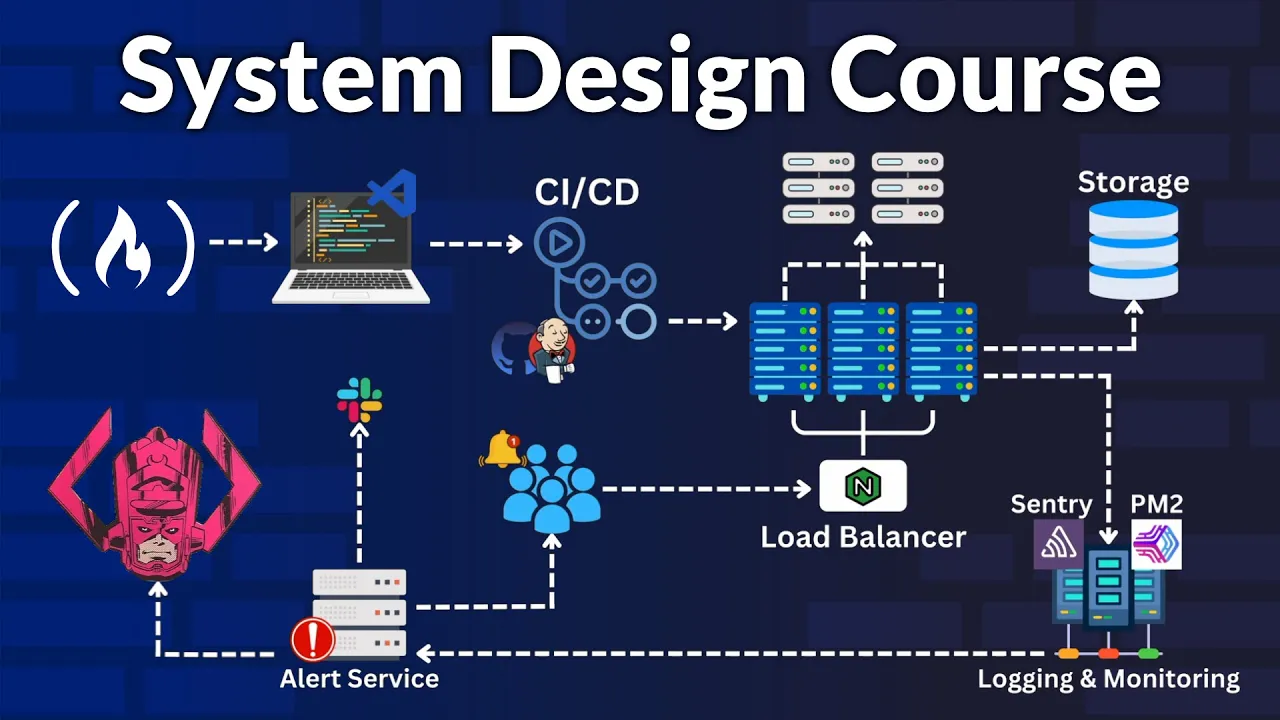
System Design Concepts Course and Interview Prep
1.9M
Networking enables computer communication through IP addressing (IPv4/IPv6), packet transmission governed by Internet Protocol, and application-layer protocols. TCP ensures reliable ordered delivery through sequence numbers and three-way handshake, while UDP prioritizes speed without guarantees. DNS translates human-readable domain names to IP addresses, managed by ICANN with registrars selling domains. Ports identify specific services (HTTP on 80, SSH on 22).
Click to watch →

DNS Architecture Part--1
13K
DNS (Domain Name Service) is the fundamental internet infrastructure that translates human-readable host names into machine-readable IP addresses. Just as humans have multiple identifiers (names, nicknames, role numbers), internet hosts have host names (e.g., www.facebook.com) and IP addresses. Host names are mnemonics—easy to remember but variable length with no routing information. IP addresses are fixed-length numeric values that routers use for efficient packet forwarding. DNS resolves this conflict by translating host names to IP addresses. DNS provides multiple services: host aliasing (multiple names mapping to one host), mail server aliasing (identifying mail servers for domains), and load balancing (returning multiple IP addresses for a single host name to distribute traffic across server farms). Domains define administrative authority (e.g., Facebook.com). The resolution process involves browsers querying DNS for IP addresses, then establishing TCP connections. This architecture enables user-friendly web access while maintaining network efficiency.
Click to watch →

Maray Tamas Halozatok halozata az internet ea
4.9K
The internet architecture consists of four fundamental components: computers connecting to local networks, local area networks (LANs) connecting nearby computers, communication channels (wires, fiber optics, radio waves) connecting networks, and routers directing traffic between networks. When a computer sends information, it breaks data into small packets (10-100 bytes each) sent through the local network. Routers examine each packet and determine the best path to its destination, similar to railway switches directing trains. This process is called packet switching. Unlike traditional circuit-switched telephone systems that establish dedicated channels for conversations, packet-switched networks only use infrastructure when data is transmitted. This makes packet switching more cost-efficient. A disadvantage is that network performance varies based on how many connections share a channel. Protocols are rule systems governing computer behavior in networks to ensure meaningful communication. The internet uses TCP and IP as its most important protocols. The IP protocol adds headers to data packets containing essential routing information. A key property is adaptability to changing network topology. Computers must be assigned unique 32-bit IP addresses (approximately 4 billion possible addresses) for routing. Since IP addresses are difficult for humans to remember, the Domain Name System (DNS) was created to translate human-readable domain names into numerical IP addresses. DNS uses a hierarchical structure with root domains at the top, followed by top-level domains (like .hu for Hungary), then second-level domains. When a computer needs to resolve a domain name, it queries the nearest DNS server, which may forward the query to a root DNS server, which then directs the query to the appropriate lower-level DNS server.
Click to watch →
CS162 Lecture 22 (4/21/2020): Distributed Decision Making (Finished), TCP/IP Networking
1.6K
Internet architecture relies on hierarchical routing using aggregated IP address blocks, enabling routers to make decisions at larger scales rather than per-host. Organizations receive contiguous address ranges (e.g., UC Berkeley's 128.32.x.x), dramatically reducing routing table sizes. Routers maintain routing tables mapping destination networks to next hops, forwarding packets toward destinations. Domain Name System (DNS) provides hierarchical name-to-IP mapping, resolving human-readable names to numeric addresses. Resolution traverses the hierarchy from right-to-left, with caching improving performance but introducing consistency delays. DNS vulnerabilities have been exploited, motivating DNSSEC for cryptographic authentication. The transport layer adds port numbers for application-level communication, with UDP providing minimal best-effort delivery and TCP providing reliable, ordered delivery with congestion control for fair bandwidth sharing.
Click to watch →
17. Computer Networks | EMRS / KVS / NVS Tier-2 EXAM | CLASS 12th - CHAPTER 10 NCERT CBSE 🔥
150
The Internet is a global network of interconnected computers and devices following a layered architecture: individual computers connect to ISPs through modems; ISPs connect to regional networks; regional networks form national networks; national networks connect to the Internet backbone. The World Wide Web (WWW), invented by Tim Berners-Lee in 1990, is an information system of interconnected web pages. HTML (HyperText Markup Language) standardizes web page design so content can be accessed from any computer. URL (Uniform Resource Locator) is a unique address for each web resource, specifying the protocol (http/https), domain name, and resource path. HTTP (HyperText Transfer Protocol) defines rules for retrieving web pages, while HTTPS provides secure encrypted communication. DNS resolution converts domain names to IP addresses through a hierarchical process: browser sends request to DNS server; if DNS server lacks the answer, it queries other DNS servers starting from 13 root servers (named A-M); correct DNS server returns the IP address; browser connects to the web server using the IP address.
Click to watch →
Deep Dive
The concept of Westphalian sovereignty and how traditional nation-state authority applies to physical versus digital borders.

Introduction to International Relations: Why Study IR?
52.3K
The Treaty of Westphalia (1648) established the modern conception of sovereign states as independent entities existing beyond individual rulers. Before this treaty, territories were personal property of monarchs or religious authorities, dissolving with their deaths. Westphalia created permanent political entities with fixed borders recognized internationally. However, most contemporary state borders are artificial creations drawn on maps rather than reflecting natural geographic divisions. The US-Canada border exemplifies this—physically indistinguishable from the surrounding landscape. Many Middle Eastern and African borders originated from colonial-era decisions made by European powers, creating tensions that persist today. Despite these artificial origins, borders are legally recognized and enforceable, representing the foundational framework of the international system.
Click to watch →

CRISTINA SOTO de "Liberalístico" - Magia Negra Babilónica (cierre de la saga).
1.5K
This segment explains why states cannot be managed like private enterprises - they cannot sell their territory or population, and their only 'asset' is the people living within their borders. The host explains that the concept of fixed national borders was established in 1648 with the Peace of Westphalia, which divided Europe among the major powers as if it were a pie. The segment also covers Bodin's definition of sovereignty as a power that is absolute, indivisible, and superior to any individual, and how this concept was deliberately designed to create a permanent power structure that could not be challenged by the governed.
Click to watch →

ШАРФИК И ТАБАКЕРКА ИЛИ ЧАЙ?
92.4K
The Westphalian sovereignty principle, established after the 30 Years' War in Europe (1648-1649), established that states have absolute authority within their own borders. Under this system, states could do whatever they wanted within their territories, with no external interference from religious authorities (such as the Pope) or neighboring sovereigns. This principle of absolute state sovereignty dominated international relations until the mid-20th century.
Click to watch →

Peter Hitchens: 'If Scotland and Wales want to leave let them'
99.6K
Since 1945, the traditional concept of national sovereignty—where nations possess complete independence including their own armies, governments, and borders—has fundamentally dissolved into what the video describes as 'limited sovereignty.' Most European countries no longer have clear borders, their own currencies, or direct control over foreign policy. This transformation means that even if Scotland, Wales, or Northern Ireland achieve formal independence, they may find themselves in a similar position to their current status within the UK, potentially preferring EU membership instead. The speaker argues that England should recognize this reality and accept that its traditional conception of national unity has become obsolete in modern Europe.
Click to watch →

The Most Complex Borders in Europe: Why Do We Have Nations?
1.4M
The Peace of Westphalia was a series of treaties that ended the Thirty Years' War. Among its key outcomes was the establishment of Westphalian sovereignty, which holds that each country should have one set of laws and one religion, and that different countries can have different systems while respecting each other's sovereignty. This concept laid the foundation for modern nation-states.
Click to watch →
Deep Dive
Fundamental network security concepts, including standard firewalls, packet filtering, and the role of Internet Service Providers (ISPs).

Types of Firewalls - Fundamentals that everyone should know
145
Firewalls are essential network security devices protecting networks during internet access. The four main types are packet filtering, application firewalls, stateful inspection firewalls, and next-generation firewalls. The OSI model provides the standardization framework for network communication, ensuring all devices can communicate regardless of manufacturer. Firewalls operate across multiple OSI layers: Layer 3 (Network), Layer 4 (Transport), and Layer 7 (Application). Packet filtering examines packet headers containing source/destination IP addresses, ports, and protocols (TCP, UDP), blocking or allowing packets based on predefined rules. This stateless approach examines each packet independently without tracking connection context.
Click to watch →

Evading IDS, Firewalls, and Honeypots || Ethical Hacking || Mr.Hackman ||
9.9K
This section covers foundational network security concepts including Intrusion Detection Systems (IDS) and Firewalls. IDS monitors network activities for malicious behavior and policy violations, generating reports to management stations. Four IDS types exist: Network-Based (monitors entire network traffic), Host-Based (protects specific devices), Log File IDS (monitors system logs), and File Integrity Checking IDS (detects unauthorized file modifications). Firewalls act as network barriers, filtering traffic based on predefined security rules. They operate at multiple OSI layers including packet filtering, circuit-level gateway, and application-level inspection. Firewalls can be hardware, software, or cloud-based, providing the first line of defense in network security.
Click to watch →

Firewall
6.8K
Several fundamental concepts are essential for firewall management: (1) Host - any device connected to the network with an assigned IP address and hostname, (2) NAT (Network Address Translator) - enables communication from the internet to internal network devices, (3) Packet - the data blocks that travel through the network, (4) Policy - conditions that authorize or deny traffic between network origins and destinations, (5) Port - the logical entry point to specific services (e.g., port 80 for HTTP, 443 for HTTPS, 21 for FTP), (6) IP Range - a group of IP addresses assigned for specific functions or policies, and (7) Service - applications or systems that share information between multiple systems using protocols.
Click to watch →
HTB CJCA Path: Network Foundations
3.2K
Network security protects against unauthorized access and threats through multiple mechanisms. Firewalls monitor and control traffic based on rules: packet filtering examines IP/ports at Layers 3-4; stateful inspection tracks connection states for context-aware filtering; proxy firewalls inspect application-layer content; next-generation firewalls add deep packet inspection and intrusion prevention. IDS (Intrusion Detection Systems) detect suspicious patterns through signature-based (known exploits) or anomaly-based (behavior deviation) methods. IPS (Intrusion Prevention Systems) actively block detected threats. Best practices include least privilege policies, regular updates, layered defense strategies, and periodic penetration testing. The CIA triad (Confidentiality, Integrity, Availability) represents core security objectives protecting data and systems.
Click to watch →
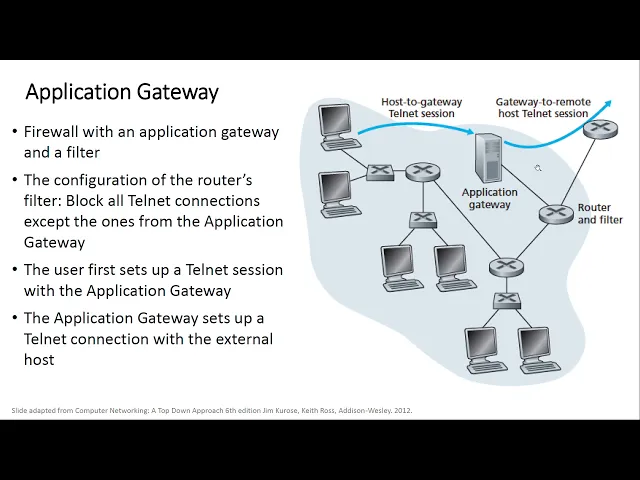
Network Security 10.2: Firewalls and IDS
396
Traditional packet filters are the first firewall type that perform filtering at the gateway router connecting internal networks to ISPs. They make decisions based on administrator-defined rules using parameters like IP addresses, protocol types (TCP, UDP, ICMP), ports, and TCP flag bits. Policies can block web access, allow specific server connections, prevent smurf attacks, and stop traceroute attempts. Each router interface has its own Access Control List (ACL) with rules applied top-to-bottom, allowing specific traffic while denying everything else.
Click to watch →
Deep Dive
An overview of modern Chinese political governance, particularly the emphasis on state control, social stability, and information management.
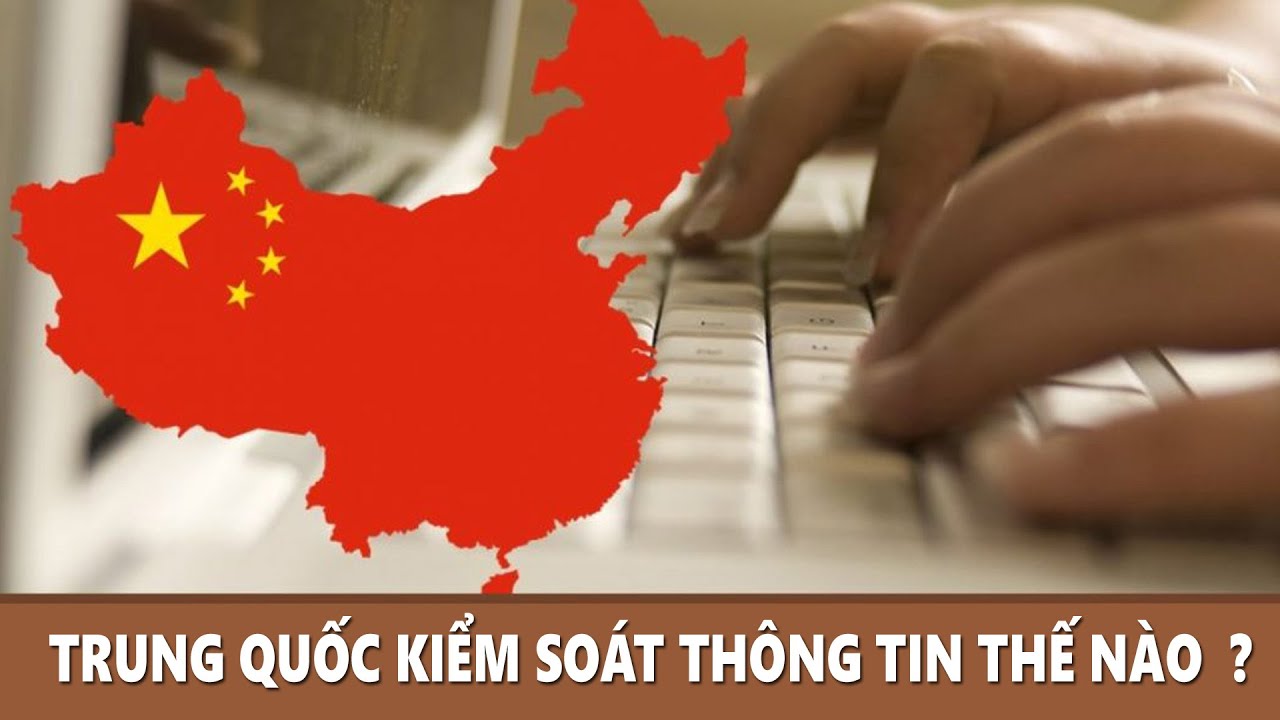
Trung Quốc kiểm soát thông tin như thế nào ? Mr Thông não
222
China maintains comprehensive information control through multiple mechanisms: (1) Historical control via the Information Bureau during the Cultural Revolution, requiring government approval for all media content; (2) The Golden Shield/Great Firewall system established in 1994, blocking major international websites like Facebook, Twitter, Google, and Wikipedia; (3) A 2-million-person online censorship force operating 24/7 to remove unfavorable content and shape public opinion; (4) Google's forced exit in 2010 after refusing content removal requests, with the government using infrastructure attacks to reduce market share from 46% to 2%; (5) Systematic suppression of sensitive topics like Tiananmen Square, where citizens often remain unaware of major historical events. This systematic approach ensures citizens only access information favorable to the Communist Party, maintaining political control through information management.
Click to watch →

石平の中国週刊ニュース解説・10月26日特別号
38.4K
China implements comprehensive political control through institutional transformation, cultural manipulation, and social documentation. The Chinese Academy of Social Sciences plans to become a political organ rather than research institution. Book markets are dominated by political content, with bookstores strategically displaying pro-Party materials at eye level while marginalizing critical works. Since the 18th Central Committee, at least 12 senior military generals have been arrested for corruption, with over 121,000 officials investigated in the first half of 2024 alone. The state issues official 'idiot certificates' as political satire, demonstrating the extent of state control over information, culture, and social discourse.
Click to watch →
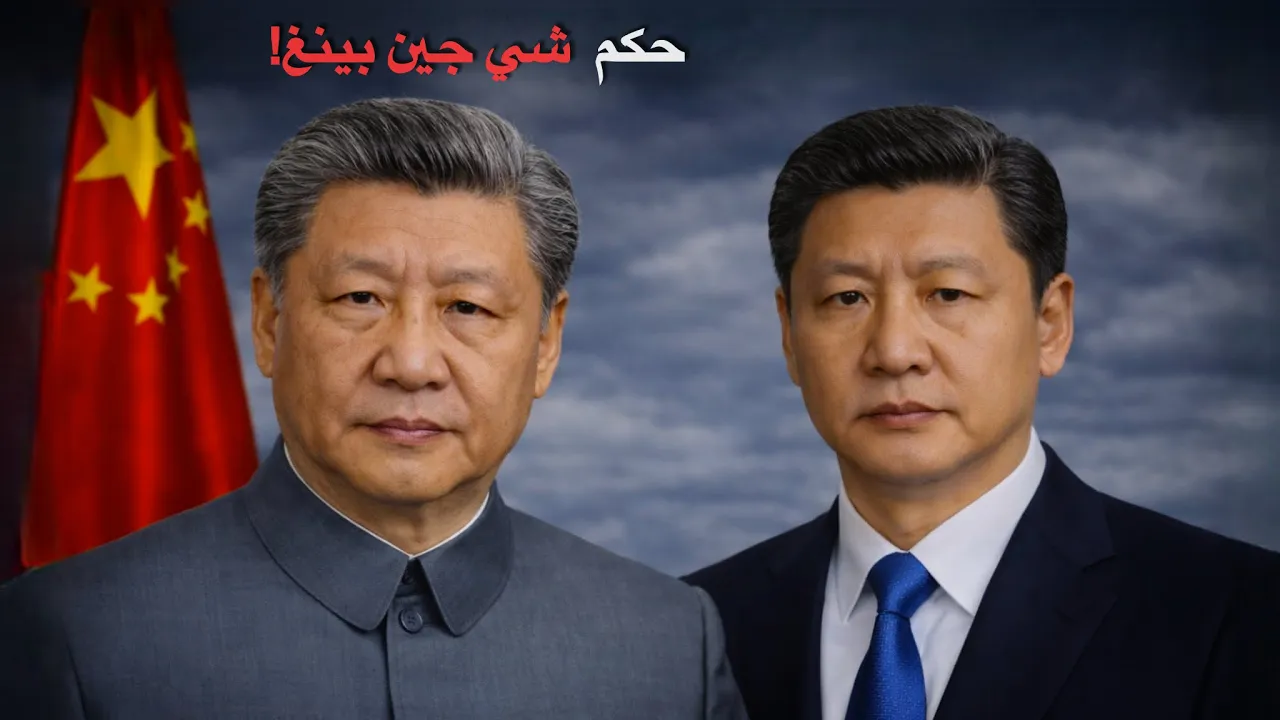
وثائقي للنوم | من هو شي جين بينغ؟ وكيف وصل للحكم في الصين؟ القصة الكاملة
10.9K
After establishing internal control, the focus shifted to the public sphere. Media in China is not independent but part of the ruling structure itself. From the beginning, the goal was clear and direct: one voice for the state and one narrative for events. In this context, official media tools were reorganized. Direction became more centralized and messages more disciplined. Media was no longer a space for discussion but a tool for stability and guidance. News was presented calmly and calculated, with language free of tension. Sensitive issues were either summarized or completely hidden from public discussion. During Xi Jinping's era, digital surveillance tools expanded. The internet was no longer a free space but an area carefully monitored. Social media platforms were monitored continuously and content was filtered systematically. The goal was not to silence everyone but to prevent the spread of information chaos. For the leadership, words could be more dangerous than weapons, so information was managed as carefully as the economy, with long-term planning. The ordinary citizen sees stability and does not feel internal conflict, but behind this quietness, a wide surveillance system works, constantly monitoring trends and measuring reactions. Any different tone is corrected quickly and any speech outside the framework is contained or silenced. In China, media stability is part of security and security is part of the state's survival.
Click to watch →

Đảng Cần Định Hướng Trong Mùa Dịch Chinese Virus
1K
Governments implement comprehensive mechanisms to control information and political discourse. These include: (1) labeling non-official information as disruptive to social order, (2) avoiding sensitive concepts like democracy and human rights, (3) refusing to acknowledge government mistakes or accept responsibility, and (4) framing government service as benevolent gifts rather than obligations. These mechanisms prevent public discourse, maintain political control, and prevent institutional learning from failures.
Click to watch →

A Revolution in Politics? Social Media in China, Egypt, and the US
519
In authoritarian systems like China, information control is the fundamental basis for power. The Chinese Communist Party manages information flows vertically and attempts to cut off horizontal information flow across society. Information is power itself—correct or incorrect interpretations of the past provide legitimacy for current policy. The party has implemented multiple control strategies: legislation, paid commentators (the '50 cents party'), and platform-specific responses. When Weibo required real-name registration, usage dropped 70%, prompting the government to tolerate the shift to WeChat, a private messaging system that spreads information more slowly.
Click to watch →
Prerequisite Knowledge
- Concept 01Basic internet architecture and protocols, specifically how Domain Name System (DNS) resolution, IP routing, and packet transmission function.
- Concept 02The concept of Westphalian sovereignty and how traditional nation-state authority applies to physical versus digital borders.
- Concept 03Fundamental network security concepts, including standard firewalls, packet filtering, and the role of Internet Service Providers (ISPs).
- Concept 04An overview of modern Chinese political governance, particularly the emphasis on state control, social stability, and information management.
Subsequent Learning
- Step 01Advanced technical mechanisms of internet circumvention, such as virtual private networks (VPNs), Shadowsocks, onion routing, and obfuscation protocols.
- Step 02The concept of the 'Splinternet' or internet balkanization, examining how countries like Russia and Iran are developing localized national intranets.
- Step 03The economic impacts of digital protectionism, including how the exclusion of global tech giants facilitated the rise of China's domestic ecosystem (e.g., Tencent, Alibaba, ByteDance).
- Step 04The intersection of digital sovereignty with mass surveillance, algorithmic censorship, and the global export of digital authoritarianism models.
Leak Reveal
Expert View
Mail Analogy
Content Control
Leak Reveal
0:00Playing Section
- 1
Massive 500GB leak exposes internal firewall documents.
- 2
Private firm sold censorship systems to multiple countries.
Digital Authoritarianism and the Violation of Universal Digital Rights
While the 'digital sovereignty' framework presents the Great Firewall as a legitimate exercise of state control over its domestic internet, critics argue this framing masks systemic digital authoritarianism and human rights abuses. This counter-perspective asserts that the firewall violates the universal right to seek, receive, and impart information, as guaranteed by international human rights law. Rather than merely protecting national stability or security, the system is viewed as an oppressive instrument of censorship, political surveillance, and information manipulation designed to suppress dissent and maintain party hegemony. Furthermore, critics emphasize that this model fosters the 'splinternet'—a fragmented global network that stifles international collaboration, restricts the free flow of ideas, and serves as a protectionist trade barrier rather than a legitimate security measure.
Deep Dive
Advanced technical mechanisms of internet circumvention, such as virtual private networks (VPNs), Shadowsocks, onion routing, and obfuscation protocols.
VPN простыми словами: история, блокировки и как выбрать в 2025
15.4K
When traditional VPNs fail, alternative tools provide censorship-evasion capabilities. Tor (The Onion Router) is a distributed network of volunteer computers that routes traffic through multiple encrypted layers, providing anonymity without depending on a single provider. Tor has created mechanisms like bridges (unpublished entry nodes) and pluggable transports that mask traffic as random noise. Shadowsocks, created in 2012 by Chinese programmer 'Clowwindy,' is a lightweight proxy designed specifically for bypassing censorship in China. Unlike traditional proxies, Shadowsocks establishes encrypted channels that make web traffic appear as normal internet traffic, making it difficult for censorship systems to detect.
Click to watch →
Настраиваем устойчивый к блокировкам VPN сервер за 10 минут
200.9K
Mobile operators implement blocking measures against VPN protocols like OpenVPN and WireGuard, which can last for hours or days. VPN traffic obfuscation works by wrapping VPN traffic in other network traffic types, making it appear as regular internet traffic. Blocking systems typically only detect the initial connection handshake between client and server, not the actual data traffic. Shadowsocks, developed by Chinese developers for bypassing the Great Firewall, encrypts and obfuscates VPN traffic effectively. Outline VPN serves as a user-friendly alternative client for Shadowsocks, providing similar functionality with easier setup.
Click to watch →

БЕЛЫЕ СПИСКИ: какой VPN-протокол справится? Сравниваю все
193.5K
This section covers modern proxy protocols designed for stealth: ShadowSocks (2012), VLESS+Reality, and Trojan. ShadowSocks encrypts traffic as random noise but is vulnerable to replay attacks and abandoned. VLESS+Reality mimics legitimate TLS handshakes to legitimate sites like Google.com, using the target's public key for external observers while authentic clients have special keys. Trojan requires a valid SSL certificate and password authentication. These protocols prioritize evasion over functionality, with VLESS+Reality and Trojan being the most stealthy as they mimic legitimate traffic patterns.
Click to watch →
Как установить и подключить бесплатный ВПН (VPN) на ПК и смартфоне
206.2K
This section covers various methods for bypassing internet restrictions. VPN (Virtual Private Network) creates encrypted tunnels to servers in unrestricted regions, masking user IP addresses. Tor Browser routes traffic through multiple volunteer servers for anonymity. Orbot provides mobile VPN functionality through the Tor network. Browser extensions like Frigate offer lightweight circumvention for web browsing. Commercial VPN services like ExpressVPN provide both free tiers with data limits and paid subscriptions with unlimited access. Each method offers different trade-offs between security, ease of use, and cost.
Click to watch →

VPN- все что вы хотели знать | Протоколы и транспорты
22.7K
Advanced transport methods include WebSocket (easily detected by upgrade headers), xHTTP (excellently mimics HTTP traffic), and DNS transport (last resort for extreme censorship, tunneling through DNS queries on port 53). CDN servers worldwide cache content and serve as intermediate VPN points, hiding the main VPN server's IP and making blocking difficult. VLESS with gRPC is the most common CDN combination. Local server proxy uses a local VDS server for additional masking, with the most elegant variation using a local host with a whitelist IP address. SNI (Server Name Indication) acts like a brand on an envelope, requiring protocols like VLESS+Reality; white-list SNI should match the host country. Recommended combinations include VLESS+XTLS+Reality with matching SNI, or VLESS+xHTTP+Reality with a personal domain. Advanced strategies include double proxying through local hosts, Flexible function with IPv4/IPv6 routing, and custom asynchronous protocols with deep low-level masking. Running multiple tunnels provides backup redundancy.
Click to watch →
Deep Dive
The concept of the 'Splinternet' or internet balkanization, examining how countries like Russia and Iran are developing localized national intranets.

CYBERGUERRE : COMMENT MOSCOU ET WASHINGTON PEUVENT NOUS METTRE À GENOUX
156.5K
Some nations are preparing to create isolated internet networks disconnected from the global internet, representing internet balkanization. Iran and Russia have tested the ability to operate on isolated national intranets. This approach differs from China's Great Firewall, which filters information while maintaining connectivity. Balkanization involves completely cutting connections to create isolated digital spaces. Technologies for digital sovereignty can be exported to other nations, potentially creating a global network of isolated digital spaces.
Click to watch →

U.N. Authorizes Unthinkable! China/Russia 2020 U.S. Strike Approved! BeiDou Activated & Online!
34.1K
The concept of splinter net or balkanization of the Internet refers to mass-scale technology filters that enable governments to determine what content will be available to their citizens. Countries like China, Russia, Iran, and Saudi Arabia continue to restrict what is allowed online, while many other countries nibble around the edges of what is greenlit. This represents the control of every message and state-run media, with China seizing control through Baidu as part of a GPS capability but more importantly as a tool for mass-scale destruction of freedom.
Click to watch →

МОЛЧАНИЕ — знак согласия? ПРОПАГАНДА — ТОПЛЕС
44.7K
Internet balkanization refers to the fragmentation of the global internet into localized networks. In Russia, foreign social networks are blocked; in the US, TikTok is restricted; Turkey has blocked Wikipedia for several years; China blocks almost everything except Chinese services. Despite this, people use VPNs because authorities know people will find ways to bypass restrictions. The laziness of people to register or download software means they will eventually remain without access to services like YouTube and VKontakte.
Click to watch →

Кремль тратит 47 млрд в день на войну. Саммит диктаторов: Россия, Китай, Иран, КНДР. Удар по Киеву
227.4K
The internet is fragmenting into separate 'splinternets' or sovereign internet zones controlled by different nations. This phenomenon involves both technical censorship and the development of parallel domestic services to replace Western platforms. The process is described as gradual, with different countries implementing similar strategies at varying speeds. Technical experts note that as censorship infrastructure expands, it inevitably affects previously uncensored services, creating a cat-and-mouse game between censorship tools and evasion methods.
Click to watch →
Ordem 79: O Fim do Windows e a Estratégia Secreta da China
7.5K
China represented a massive portion of revenue for Microsoft, Dell, and HP. When China prohibits Intel chips and Windows systems, it sends shock signals to the market. Microsoft attempted a China Government Edition of Windows 10, but Beijing rejected it. Countries allied with China's Belt and Road Initiative—Russia, Iran, parts of Africa, and Latin America—are watching. If China's model works, they may cancel Silicon Valley subscriptions. The video describes the emergence of the Splinternet: the internet is no longer global but divided into two networks monitored by the US and China. Intelligence reports indicate Windows telemetry never completely turns off, sending encrypted packets to Redmond servers. China concluded Windows cannot be cleaned because its structure is designed to collect data. The only solution is demolition and reconstruction.
Click to watch →
Deep Dive
The economic impacts of digital protectionism, including how the exclusion of global tech giants facilitated the rise of China's domestic ecosystem (e.g., Tencent, Alibaba, ByteDance).

The real reasons why China bans foreign tech companies
705.5K
China employs strategic protectionism to develop its domestic technology sector independently. When foreign tech innovations enter China, local competitors emerge rapidly. The government then systematically eliminates foreign competition through bans or harassment until only Chinese companies remain. The large domestic market ensures these companies develop capabilities rivaling global competitors. This approach, while violating WTO principles, has produced a tech industry comparable to American counterparts. Companies like Baidu, Alibaba, and Tencent emerged from this environment, demonstrating how isolation combined with strategic intervention can create globally competitive domestic industries.
Click to watch →

Chine : qui a peur de TikTok ? | L'essentiel du Dessous des Cartes | ARTE
148.4K
China's digital protectionism has enabled domestic companies to develop globally competitive platforms. WeChat became essential for Chinese daily life and serves as a major social control tool. Similarly, TikTok (Douyin in China), launched in 2017 by ByteDance, has achieved massive global success with 1.56 billion users outside China by January 2024, demonstrating how domestic protection can fuel international expansion.
Click to watch →
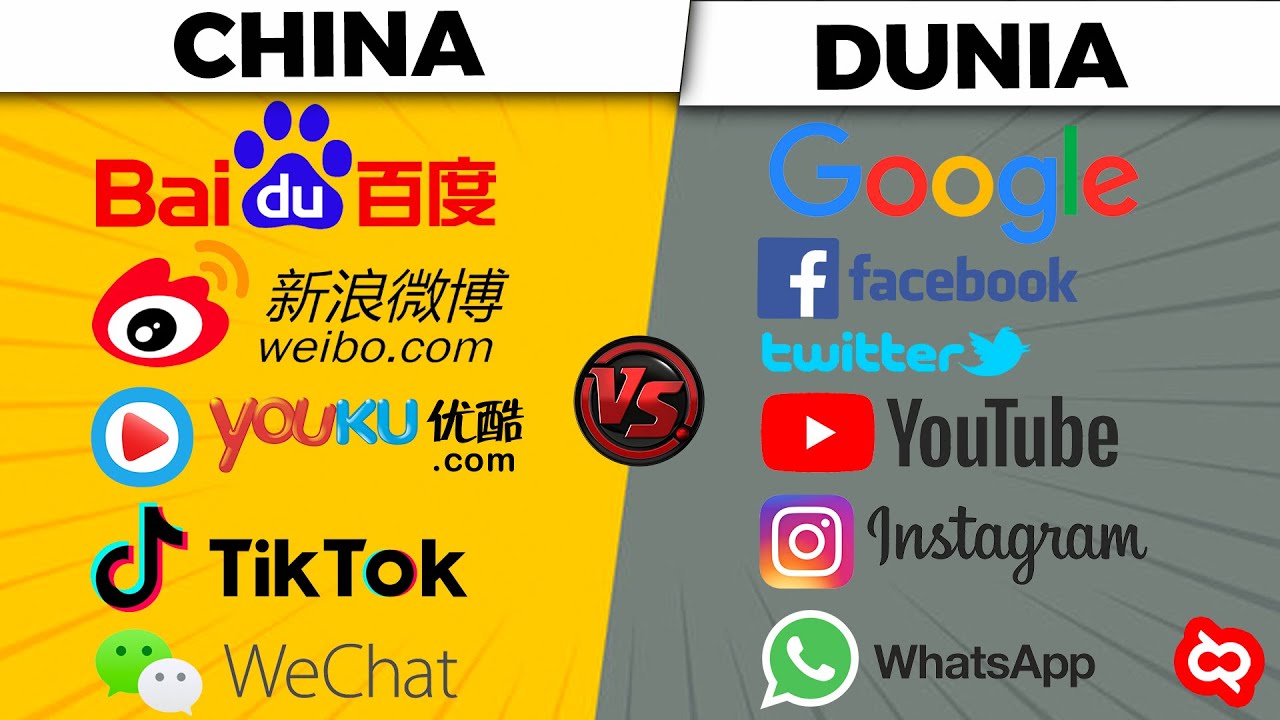
Persaingan Sengit Produk Digital Dunia Maya! Raksasa Teknologi Aplikasi China vs Media Digital Dunia
139K
China has developed a comprehensive domestic technology ecosystem to replace foreign digital services. Baidu (founded 1996, launched 2002) dominates search with 70% market share and 700 million users, though it generates only $6.51 billion versus Google's $104.9 billion. Weibo (launched 2009) serves 523 million users with strict government censorship, contrasting sharply with Western social media's emphasis on free speech. Youku (launched 2013) has 500 million users but generates only $649 million versus YouTube's $19.7 billion. These platforms demonstrate how geographic restrictions create opportunities for local competitors, though they remain significantly smaller than their global counterparts.
Click to watch →

What is Tencent?
643.8K
Tencent, founded by Pony Ma in Shenzhen, is one of China's three internet giants (BAT) that has evolved from a chat application into a diversified technology empire through strategic acquisitions and platform innovations like WeChat, which has over 1.2 billion users and functions as a 'super-app' integrating payments, social networking, and e-commerce; the company's massive scale stems from China's policy of allowing domestic tech companies extraordinary freedom while restricting foreign competition, enabling Tencent to become the world's largest game company and a major global investor in companies like Tesla, Snap, and Epic Games.
Click to watch →

Cecilia Rikap: Digital Ecosystems | Knowledge Extractivism | Amazing Power of Cloud | Focus for EU
177
China's strategy of blocking foreign tech and nurturing domestic champions initially seemed successful, but Chinese big tech now operate identically to US counterparts—controlling beyond ownership, investing in startups for privileged access, and steering innovation toward their interests. While this benefits executives and the state, it creates surveillance societies with increased inequality and concentrates power in private hands. The window for isolationist strategies has closed—US tech giants are now deeply embedded globally. Trump-era pressures make unilateral regulation ineffective. True solutions require international coordination rather than nationalistic approaches that replicate the same problematic power structures under different national flags.
Click to watch →
Deep Dive
The intersection of digital sovereignty with mass surveillance, algorithmic censorship, and the global export of digital authoritarianism models.

WTF just happened to our entire world? Ian Bremmer explains. | Andrew Yang
35.4K
There is a growing trend of exporting authoritarianism and surveillance technology to other countries. Countries in Southeast Asia, sub-Saharan Africa, East and Southern Europe, and Latin America may find China's model more appealing because it offers economic rebuilding with increased government control over populations. This represents what William Gibson called 'the future is already here, it's just not evenly distributed.' The US government would have difficulty implementing such measures, but private companies like Facebook and Apple are implementing similar technologies willingly, as Americans trade data for free services. This creates a dark vision of dystopian exportation.
Click to watch →

wtf just happened in China
213K
Security researchers discovered a memory disclosure vulnerability called Wallbleed in China's Great Firewall (2021-2024), which allowed them to capture over 5 billion pieces of traffic, revealing that China's censorship and surveillance apparatus is being packaged into commercial products sold to other countries including Kazakhstan, Ethiopia, Pakistan, and Myanmar, effectively exporting digital authoritarianism as a managed service.
Click to watch →

Man Indicted for Allegedly Selling 2 Tons of Fentanyl | China in Focus
33.2K
The Chinese Communist Party has invested billions annually in developing sophisticated digital surveillance and censorship systems that create parallel realities for citizens. These systems block access to international platforms like YouTube, Facebook, and Instagram while providing domestic alternatives controlled by the state. The government uses VPNs to monitor and suppress attempts to access uncensored information, with authorities cracking down on circumvention tools. This model is being exported to other authoritarian regimes including Russia, Iran, Venezuela, and Myanmar. The US response includes passing legislation like the Falun Gong Protection Act and issuing diplomatic condemnations of human rights abuses. Cyberattacks on media organizations like the Epoch Times represent information warfare aimed at silencing dissenting voices, particularly around sensitive dates like July 20th, the anniversary of the CCP's persecution of Falun Gong.
Click to watch →

"거대국가 붕괴의 마지막 퍼즐" 중공 내부 기밀문서 10만건 유출 네팔 배후에도 중국 개입 정황 발견
12.9K
China has developed comprehensive digital surveillance systems including internet censorship, real-time network monitoring, and VPN blocking, which it has exported to multiple countries including Ethiopia, Myanmar, Pakistan, and Kazakhstan, creating dependencies that reinforce authoritarian governance models globally.
Click to watch →

URGENTE!!: ASÍ QUIEREN IMPONERNOS CENSURA TOTAL - TODO EL MUNDO DEBERÍA ESTAR AVISADO| Liu Sivaya
25.8K
The video documents a worldwide trend toward digital authoritarianism, with previously free nations implementing increasingly restrictive measures. The UK introduces digital identification and online age verification; Australia implements mass scanning of private messages; Germany pursues legal action against online critics; the UK imprisons thousands for tweets. The video argues that mass surveillance is both ineffective for crime prevention and a pathway toward digital authoritarianism, where AI tools enable arbitrary suppression of legitimate discourse. The speaker warns current generations risk becoming the last to possess fundamental freedoms like privacy, free speech, and sovereignty.
Click to watch →
Leak Reveal
Expert View
Mail Analogy
Content Control
Leak Reveal
0:00- 1
Massive 500GB leak exposes internal firewall documents.
- 2
Private firm sold censorship systems to multiple countries.
Digital Authoritarianism and the Violation of Universal Digital Rights
While the 'digital sovereignty' framework presents the Great Firewall as a legitimate exercise of state control over its domestic internet, critics argue this framing masks systemic digital authoritarianism and human rights abuses. This counter-perspective asserts that the firewall violates the universal right to seek, receive, and impart information, as guaranteed by international human rights law. Rather than merely protecting national stability or security, the system is viewed as an oppressive instrument of censorship, political surveillance, and information manipulation designed to suppress dissent and maintain party hegemony. Furthermore, critics emphasize that this model fosters the 'splinternet'—a fragmented global network that stifles international collaboration, restricts the free flow of ideas, and serves as a protectionist trade barrier rather than a legitimate security measure.
Basic internet architecture and protocols, specifically how Domain Name System (DNS) resolution, IP routing, and packet transmission function.
The concept of Westphalian sovereignty and how traditional nation-state authority applies to physical versus digital borders.
Fundamental network security concepts, including standard firewalls, packet filtering, and the role of Internet Service Providers (ISPs).
An overview of modern Chinese political governance, particularly the emphasis on state control, social stability, and information management.
Advanced technical mechanisms of internet circumvention, such as virtual private networks (VPNs), Shadowsocks, onion routing, and obfuscation protocols.
The concept of the 'Splinternet' or internet balkanization, examining how countries like Russia and Iran are developing localized national intranets.
The economic impacts of digital protectionism, including how the exclusion of global tech giants facilitated the rise of China's domestic ecosystem (e.g., Tencent, Alibaba, ByteDance).
The intersection of digital sovereignty with mass surveillance, algorithmic censorship, and the global export of digital authoritarianism models.
200.3K views9.1Klikes0:59@ChinaInsiderWithDavidZhangOriginal Release: 2025-09-17
Okay, so recently the instruction manual for the great firewall of China was just leaked over 500 gigabytes of internal documents, source codes, uh, files that exposed how the Chinese censorship firewall really works. This private company was packaging this all up and selling it to countries like Pakistan, Kazakhstan, and Ethiopia so that they can put up their own versions of the censorship. So, I got to speak to an expert on this. He's one of the earliest person to create a program that scales the firewall and it's called Fregate.
What how exactly does that firewall work? Uh for the firewall we can use an analogy for the mailing system. When uh people send out the mail in and out to different people, what happened with China is for every mail going in or out of China, they will open it, read it, and decides they're going to let it go.
And furthermore uh with this those latest technology just got revealed they they may they may alternate they may change the content of the Turn.
Up Next

123:59
Digital Authoritarianism: China, AI, and Human Rights Conference | Stanford
@HooverInstitution
159.4K views•2020-09-30

12:54
Triumph of Orthodoxy Icon: Byzantine Art & History Explained
@BenCallan
2.1K views•2024-08-06

9:49
FastAPI vs Flask vs Django: Choosing the Right Python Web Framework
@TechWithTim
302.5K views•2024-05-26

1:42
Game of Thrones Opening Credits: A Cinematic Analysis
@gameofthrones
46.3M views•2011-04-18
Related Study Plans & Knowledge Roadmaps
Structured learning paths in General & Interdisciplinary Studies
general-studies
Elevator Engineering: History, Physics & Cities
01From Hoists to Safety Brakes: The Dawn of Vertical Lift
02Hydraulic vs. Traction: The Engineering Physics of Elevators
03Modern Speed, Safety, and Algorithms
+ 2 more learning modules
12h5 modules
Explore Roadmap
general-studies
Rubber: Material Science, History & Geopolitics
01Origins of Natural Rubber & Mesoamerican History
02The Chemistry of Natural Rubber & Vulcanization
03The Geopolitics of the Rubber Boom & Colonization
+ 2 more learning modules
12h5 modules
Explore Roadmap
general-studies
Containerization: Evolution, Logistics & Trade
01Ancient Trade & Bulk Cargo: Amphorae to Barrels
02The Industrial Revolution & Cardboard Packaging
03The Containerization Revolution: Malcom McLean
+ 2 more learning modules
12h5 modules
Explore Roadmap
general-studies
Textile Tech: Evolution, Labor & Global Impact
01Pre-Industrial Textiles: Handloom & Cottage Industry
02Mechanization: The Spinning Jenny to the Power Loom
03The Factory System & Global Labor Transformation
+ 2 more learning modules
10h5 modules
Explore Roadmap