






![✔️ Resolvemos, explicamos y corregimos un EXAMEN 😲[Cálculo I]](https://i.ytimg.com/vi/v5_if7rXys4/maxresdefault.jpg)








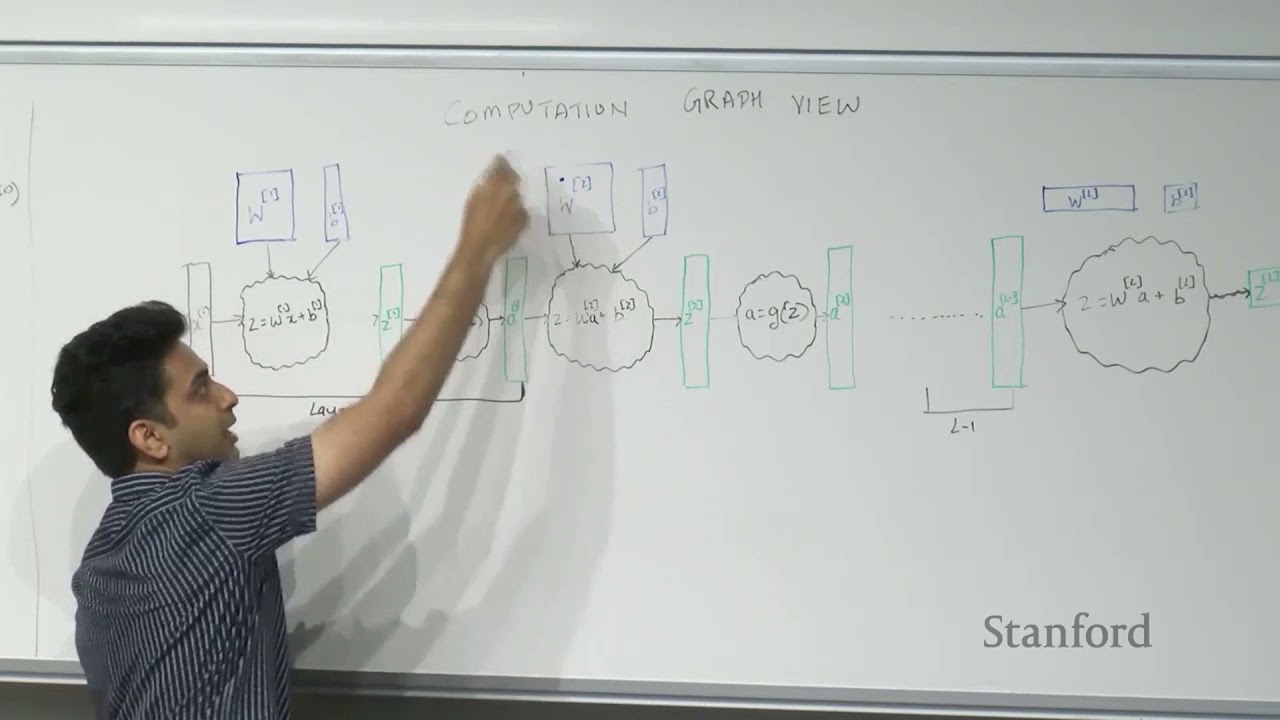


The Jacobian matrix is a mathematical tool that describes how small changes in input variables produce changes in output variables for a vector-valued function, serving as the natural extension of single-variable derivatives to multivariable calculus; it acts as a local linear transformation that captures how functions stretch, rotate, or compress space, with its determinant revealing how much the function scales or distorts space at a point, and it has essential applications in physics, engineering, robotics, and machine learning.
Jacobian Matrix Explained: Multivariable Calculus & Change
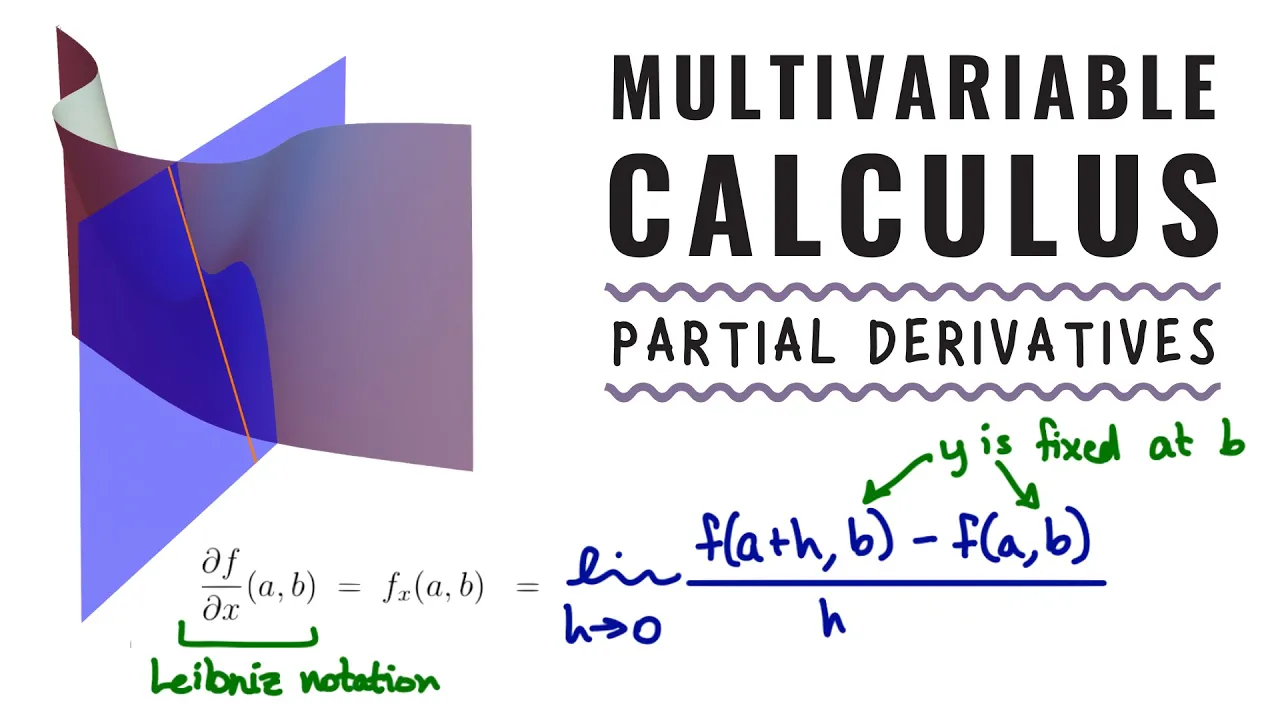
Added:Partial derivatives and the gradient vector for multivariable functions.
Basic linear algebra, including matrix multiplication and understanding matrices as linear transformations.
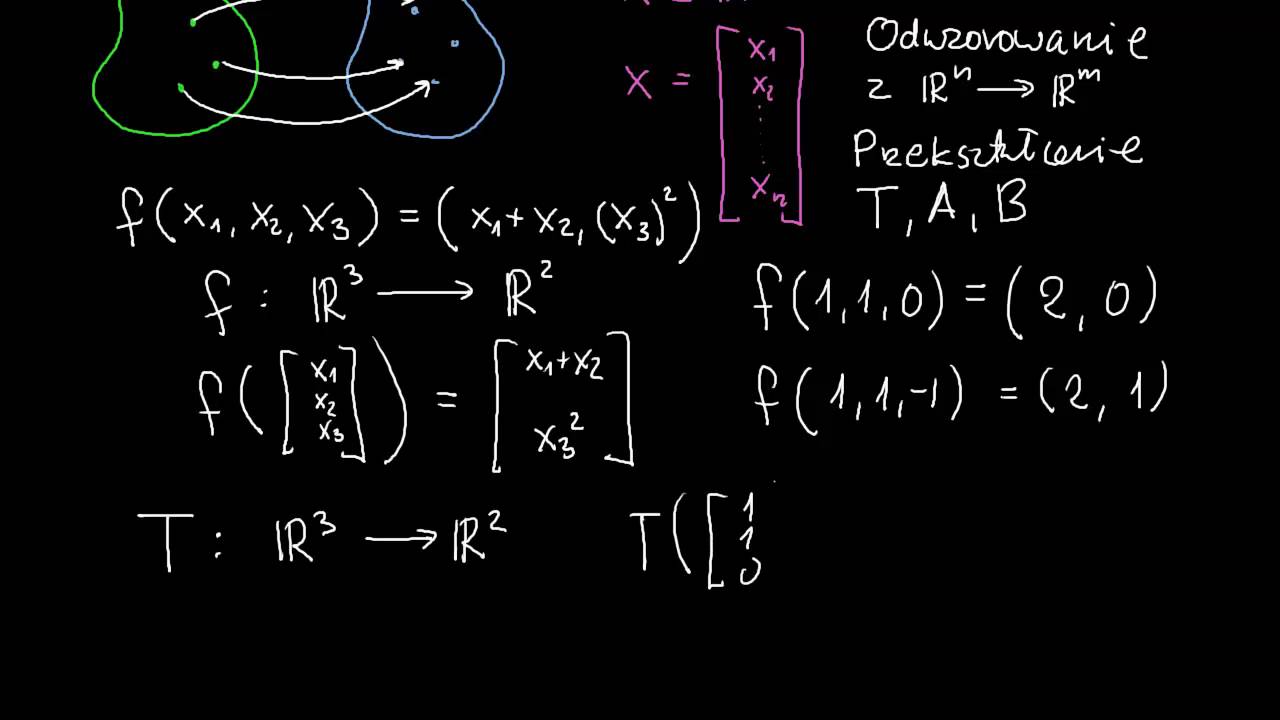
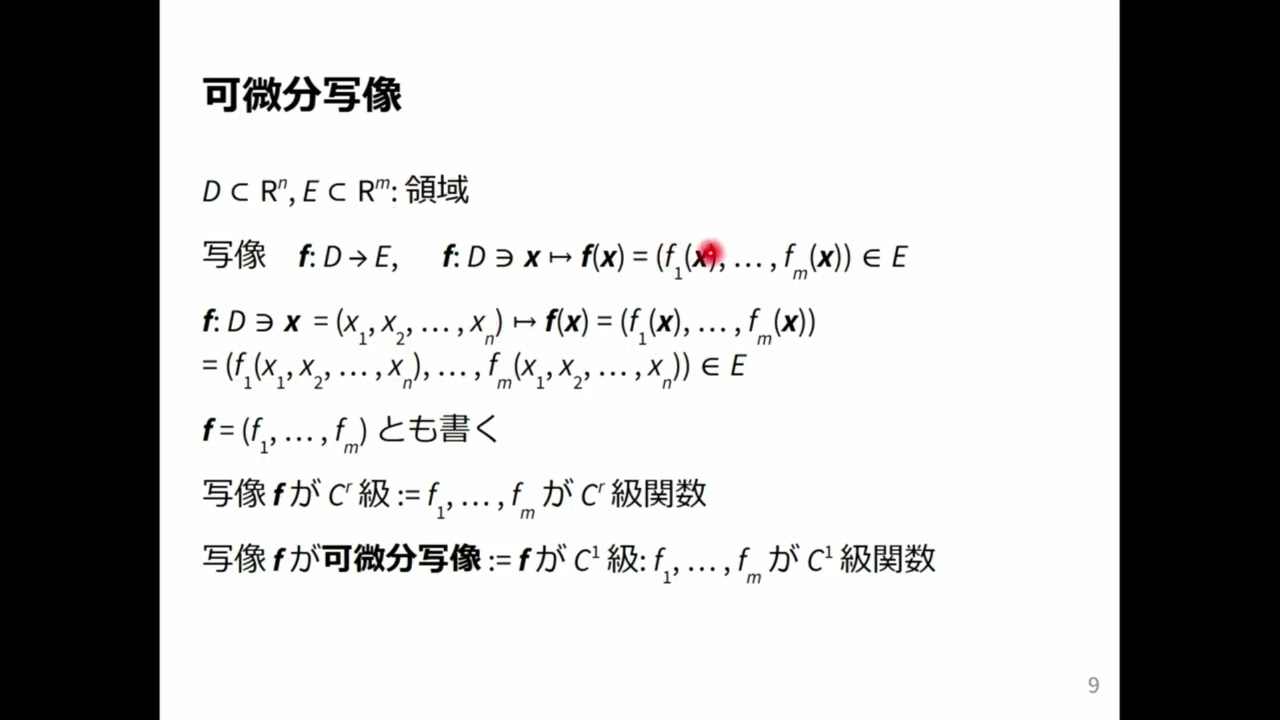
Vector-valued functions that map vectors from one multidimensional space to another (R^n to R^m).
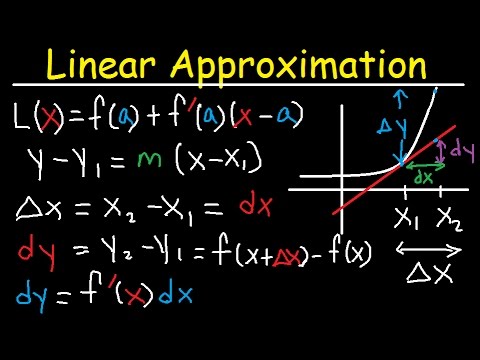
The concept of local linear approximation and differentials from single-variable calculus.
Using the Jacobian determinant for change of variables in multivariable integration (e.g., polar, cylindrical, and spherical coordinates).
Linearization of non-linear systems of differential equations to analyze stability near equilibrium points.
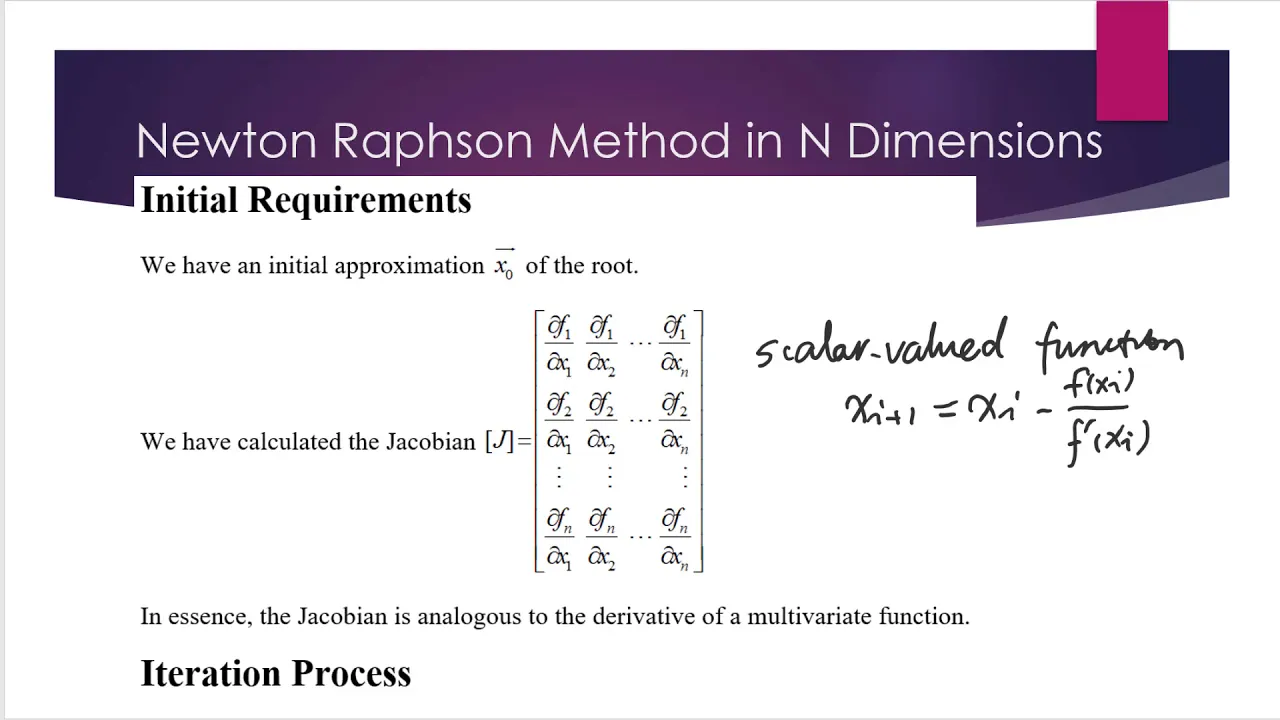
Applying the Jacobian in numerical methods, such as the multidimensional Newton-Raphson method for solving non-linear systems of equations.
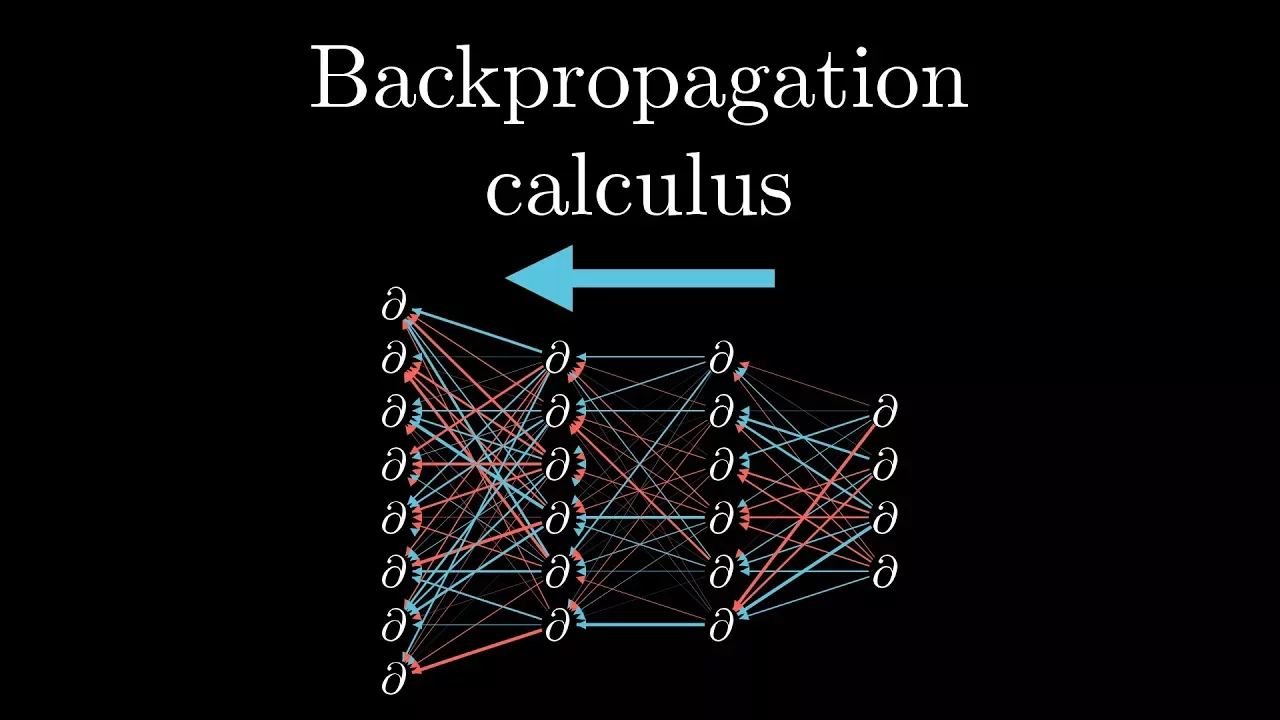
Implementing backpropagation in deep neural networks, utilizing the multivariable chain rule via Jacobian matrices.
1.1K views36likes4:51Original Release: 2025-10-20
The Jacobian Matrix, the blueprint of multivariable change. This powerful mathematical tool describes how small changes in input variables produce changes in output variables. The Jacobian matrix is one of the most elegant and powerful ideas in multivariable calculus and vector analysis. It sits at the intersection of geometry, linear algebra, and differential equations. a compact mathematical tool that describes how small changes in input variables produce changes in output variables. In simpler terms, the Jacobian is the mathematical DNA of transformation. It tells you how things move, stretch, and distort when one space is mapped into another.
Suppose you have a vector valued function f that takes an n-dimensional input and produces an m- dimensional output. The Jacobian matrix often written as J or DF is an M * N grid containing all the first order partial derivatives of the function. Each row corresponds to one output function and each column corresponds to one input variable. The entries tell you how sensitive each output is to each input, essentially a multi-dimensional rate of change. If you've learned about derivatives in single variable calculus, think of the Jacobian as the natural extension. Where a derivative gives the slope of a line, the Jacobian gives the best linear approximation of a multivariable function near a point. In geometry, the Jacobian is more than just a collection of derivatives. It's a local linear transformation.
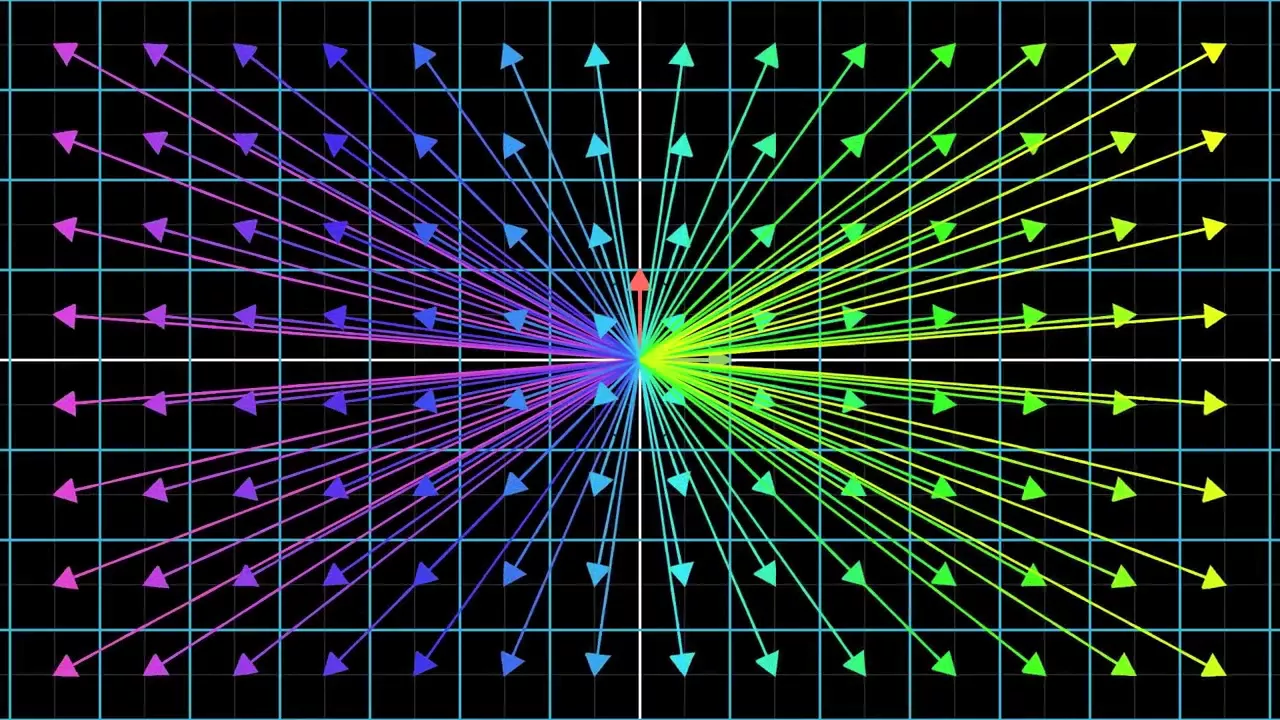
Imagine zooming in infinitely close to a nonlinear surface. At that microscopic scale, even curved functions begin to look linear. The Jacobian is the matrix that captures that local linearity. When a point x moves slightly by a small vector dx, the resulting change in f is approximately df is almost equal to j dx. This equation means the jacobian acts like a transformation matrix, telling you how a tiny movement in input space transforms into output space. It stretches, rotates or compresses the surrounding neighborhood. And that's why the Jacobian is so useful in physics, engineering, robotics, and machine learning. When the number of inputs equals the number of outputs, the Jacobian becomes a square matrix and its determinant called the Jacobian determinant reveals how much the function scales or distorts space at a point. If the determinant is positive, the transformation preserves orientation. If it's negative, it flips orientation. If it's zero, it squashes space into a lower dimension. For example, in change of variables for multiple integrals, the absolute value of the Jacobian determinant acts as a scale factor. It adjusts for the stretching or compression that occurs when changing coordinate systems. This concept extends beyond math classrooms.
In computer graphics, Jacobians determine how textures deform across 3D surfaces. In fluid dynamics, they help track how a small region of fluid expands or contracts as it flows. In robotics, the robot Jacobian relates joint velocities to endector motion. In optimization, especially when using gradient-based methods, the Jacobian captures how each output changes with respect to each input. When the output is scalar, the Jacobian simplifies to a gradient vector. In neural networks, the Jacobian plays a vital role in back propagation where gradients are propagated layer by layer. Each layer's Jacobian connects changes in weights to changes in loss, guiding the optimization process. The Jacobian's beauty lies in its versatility. It's a local microscope and a global map showing how systems behave under transformation. It answers deep questions like if I nudge this variable slightly, how does everything else respond? Whether in physics, economics, or machine learning, the Jacobian matrix represents sensitivity and structure. It tells you not just that change happens, but how it happens and where it's most significant. At its heart, the Jacobian matrix is the language of transformation. It translates nonlinear reality into linear understanding. From engineering control systems to AI models, it reveals relationships hidden beneath complexity. It's not just a tool of calculus. It's a philosophy of precision, understanding big systems by studying their smallest, most meaningful changes. Where the derivative shows a slope, the Jacobian shows the world moving in every direction at once. A true map of multi-dimensional change.
Up Next

6:10
Hessian Matrix | Multivariable Calculus | Khan Academy
@khanacademy
515.1K views•2016-06-16

4:43
Elliptic Curve Cryptography Explained: ECC, ECDSA, ECDH
@PracticalNetworking
28.5K views•2024-10-21
10:44
Fourier Series Introduction: The Big Idea Explained
@DrTrefor
387K views•2021-05-03

6:00
The Mathematical Impossibility of Accurate World Maps
@Vox
23.3M views•2016-12-02
Related Study Plans & Knowledge Roadmaps
Structured learning paths in Mathematics
mathematics
Tensor Calculus: Vectors to Riemann Curvature
01Mathematical Foundations: Linear Algebra & Calculus
02Covectors, Dual Spaces, and Tensor Basics
03The Metric Tensor and Index Gymnastics
+ 2 more learning modules
40h5 modules
Explore Roadmap
mathematics
Gödel's Incompleteness: Logic, Proofs & Limits
01Introduction to Formal Systems & Hilbert's Dream
02Set Theory, Cardinality, and Cantor's Diagonal Argument
03Arithmetization and Gödel Numbering
+ 2 more learning modules
14h5 modules
Explore Roadmap
mathematics
Galois Theory: Fields, Groups & Solvability
01Foundations of Abstract Algebra: Groups & Fields
02Polynomials & Field Extensions
03Splitting Fields & Symmetries
+ 2 more learning modules
24h5 modules
Explore Roadmap
mathematics
Non-Euclidean Geometry: Models & Geodesics
01Euclid's Fifth Postulate and the Birth of New Geometries
02Hyperbolic Space and the Poincaré Disk Model
03Geodesics: Defining Straight Lines in Curved Spaces
+ 2 more learning modules
15h5 modules
Explore Roadmap