


























Existentialism, founded by thinkers like Jean-Paul Sartre, challenges the traditional belief that humans possess an inherent essence or purpose at birth; instead, it proposes that 'existence precedes essence'—we are born without predetermined meaning and must actively create our own purpose through authentic choices and actions, despite living in a fundamentally absurd universe that offers no inherent significance.
Existentialism Explained: Sartre, Meaning & the Absurd
Added:Understanding traditional philosophical essentialism, specifically the Aristotelian idea that objects and beings have an inherent purpose or 'telos'.
Familiarity with the historical shift in Western thought during the late 19th and early 20th centuries, including Friedrich Nietzsche's critique of traditional morality and religion.
Basic grasp of the debate between free will and determinism, as existentialism heavily emphasizes radical free agency.
A foundational understanding of ontology (the study of being) to help grasp the distinction between existence and essence.
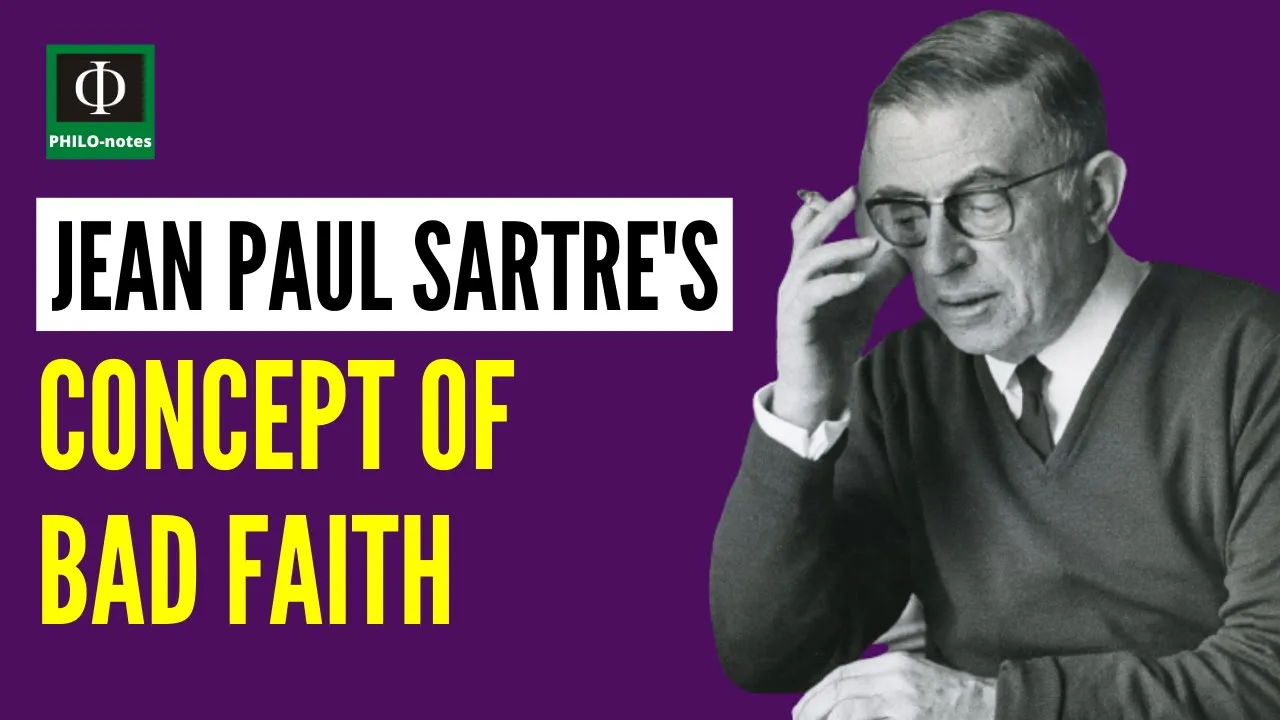
In-depth study of Jean-Paul Sartre's concept of 'Bad Faith' (mauvaise foi) and how individuals deceive themselves to avoid personal responsibility.
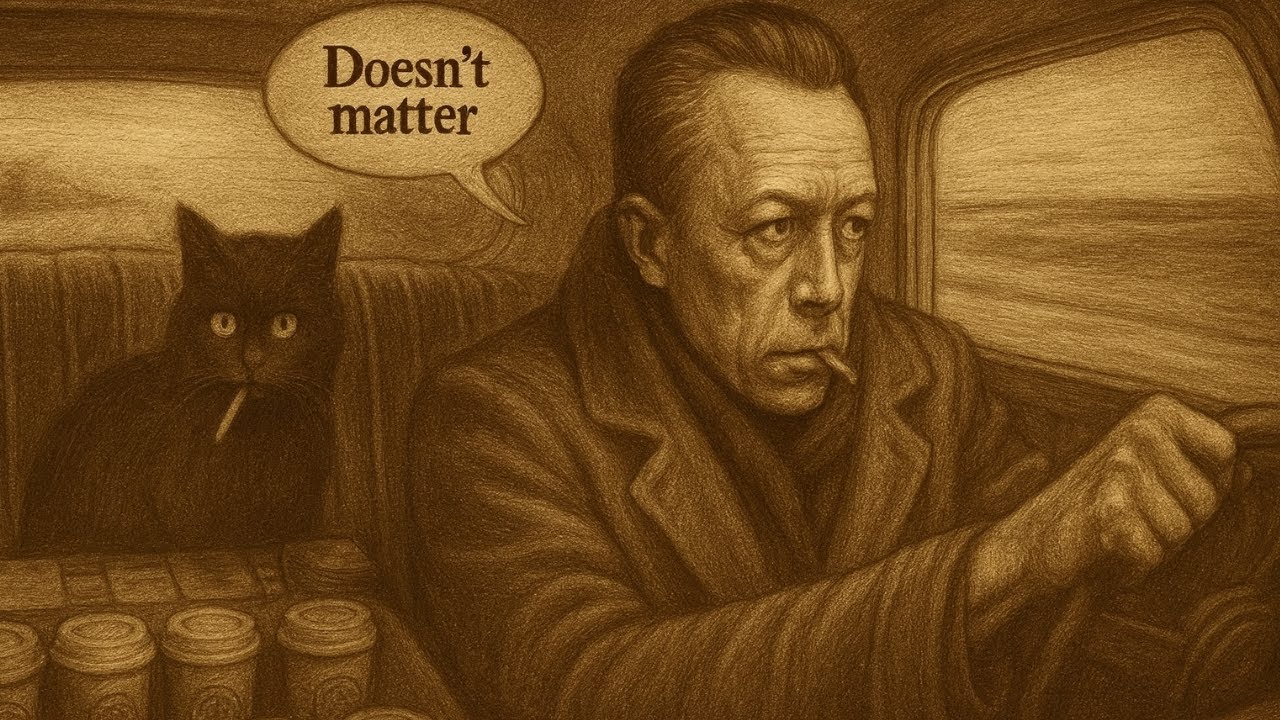
An exploration of Albert Camus and Absurdism, contrasting how Camus's acceptance of the 'Absurd' differs from Sartre's existential creation of meaning.
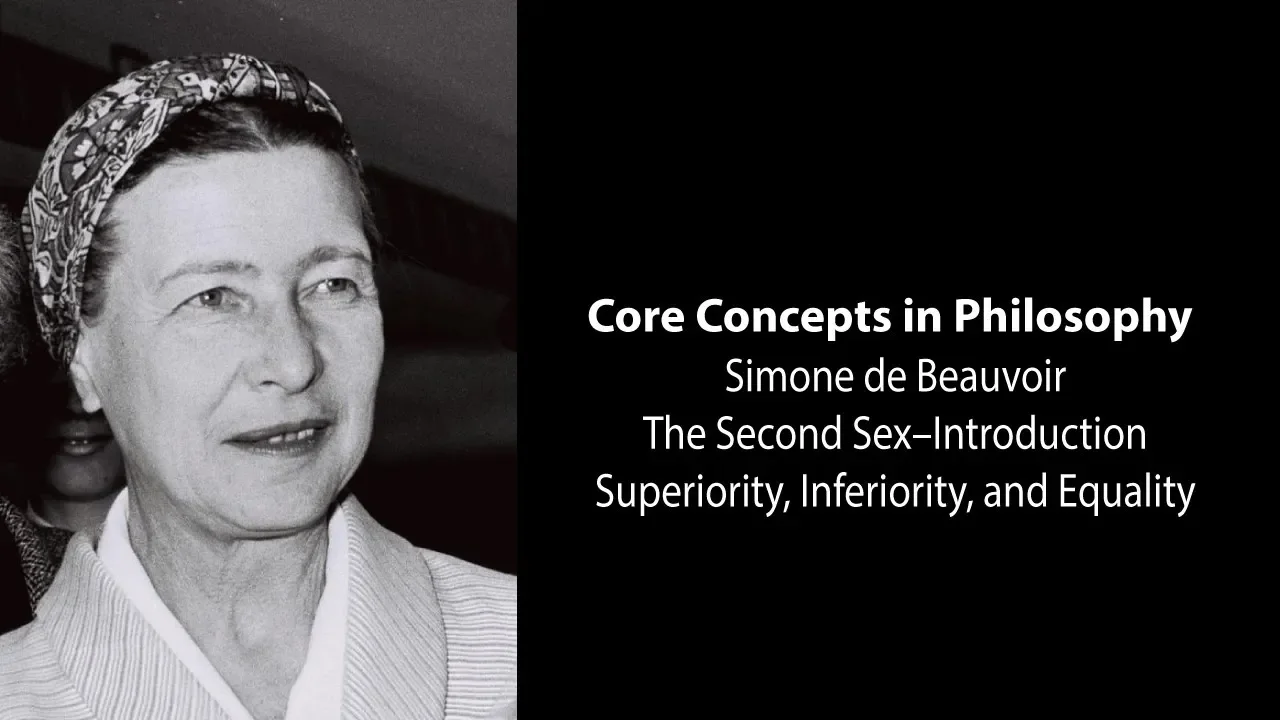
Examining Simone de Beauvoir's application of existentialism to gender, ethics, and societal roles in her seminal work 'The Second Sex'.
Investigating Existential Therapy and psychology, particularly Viktor Frankl's logotherapy and his real-world applications of finding meaning in suffering.
Analyzing the ethical criticisms of existentialism, specifically how one can construct a coherent moral framework without relying on objective or universal values.
7.6M views194.1Klikes8:53Original Release: 2016-06-06
Crash Course Philosophy is brought to you by Squarespace.
Squarespace: share your passion with the world.
What gives your life meaning? God? Love? Money? Work?
Fanfiction? Football? Shopping? Sherlock?
You might have your own personal sense of purpose in your life, or maybe you’re hoping this course will help you find one.
Or you might believe that you were created with a certain essence as a human being, with a purpose given to you by God.
Whatever the case is, no one would fault you for wanting your life to have meaning.
A sense of meaning is something that we all crave – maybe even need.
And as we move out of our unit on the philosophy of religion, we should spend some time talking about how we understand our lives as being meaningful.
Because when you think about it, a lot of us devote a ton of energy to the task of finding meaning in our lives.
Maybe you find it through religion, or by fighting for social justice, or educating others, or seeking beauty in artistic expression.
No matter how you do it, there’s a group of philosophers, the existentialists, who say that any, or all, of these things can give your life meaning.
But at the same time, they say: None of them can.
[Theme Music] As you know by now, philosophy is about the dialectic: Someone puts forth an idea, and then someone else responds to it.
Sometimes, the response comes right away. In other cases, it takes thousands of years.
Way back in ancient Greece, Plato and Aristotle took it as given that everything has an essence – a certain set of core properties that are necessary, or essential – for a thing to be what it is.
If those properties were missing, then that thing would be a different thing.
For instance, a knife could have a wooden handle or a metal handle – it really doesn’t matter.
But if it didn’t have a blade, it wouldn’t really be a knife anymore.
The blade is the essential property of the knife, because it gives the knife its defining function.
Now, Plato and Aristotle thought that everything has an essence – including us.
And they believed that our essences exist in us before we’re even born.
So by this thinking, part of what it means to be a good human is to adhere to your essence.
Now, you may or may not know what your essence is, and you might be great at living up to your essence, or you may be awful at it.
But the important thing is that your essence gives you a purpose.
Because you were born to be a certain thing.
This belief, known as essentialism, was the standard view of the universe all the way up until the late 19th century, and it’s still accepted by many people today.
But in the late 1800s, some thinkers started to challenge the idea that we are imbued with any essence or purpose.
German philosopher Friedrich Nietzsche, for example, embraced nihilism, the belief in the ultimate meaningless of life.
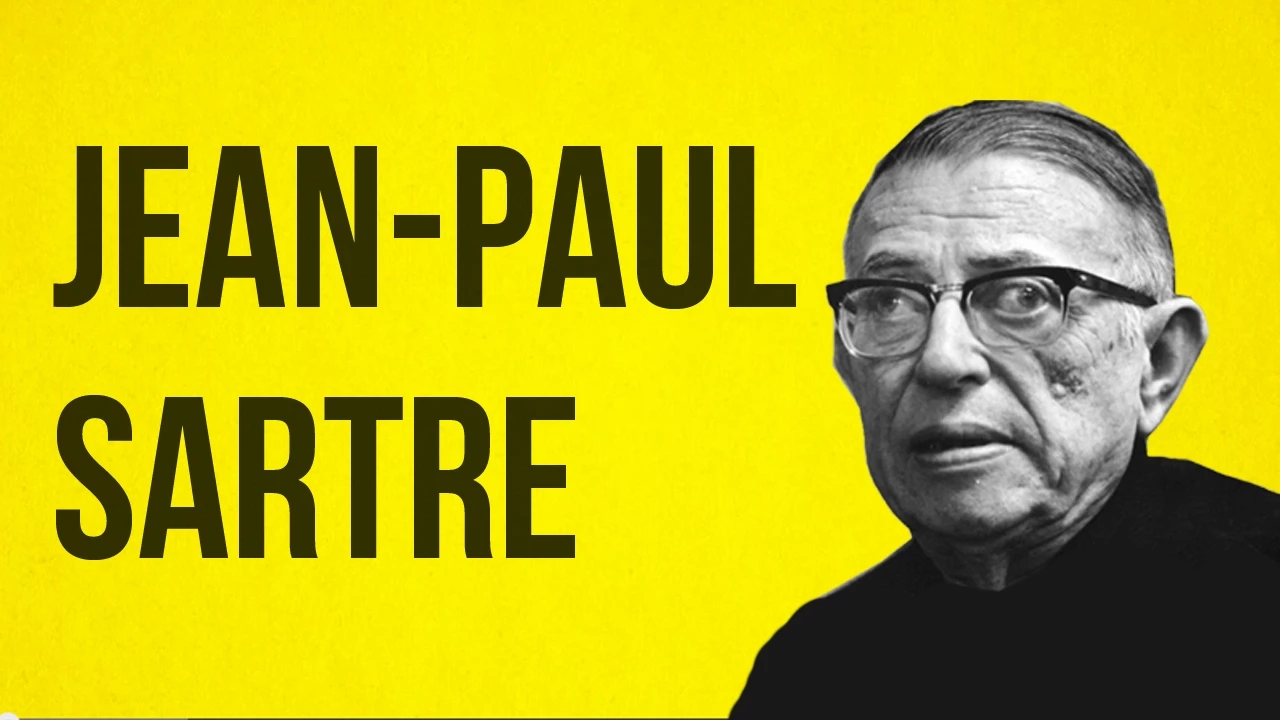
But by the mid-20th century, the path had been paved for French thinker Jean-Paul Sartre to return to the question of essence and ask: What if we exist first?
What if we’re born without any hard-wired purpose? And then it’s up to us to find our own essences?
Well this became the framework for what we now know as existentialism.
And its mantra is the claim that “existence precedes essence.” In other words, our existence – our birth – happens first.
Then, it’s up to each of us to determine who we are.
We have to write our own essence, through the way we choose to live.
But we have no actual, predetermined purpose – there’s no set path that we’re supposed to follow.
It’s hard to express how radical this idea was at the time.
Because, for thousands of years, you didn’t have to choose a path, or find your purpose.
God did it for you.
But it’s important to note that existentialism is not synonymous with atheism.
Plenty of existentialists are atheists, but some are theists, like Kierkegaard.
What theistic existentialists deny is any sort of teleology – that is, they refute the notion that God made the universe, or our world, or us, with any particular purpose in mind.
So, God may exist – but instilling you, or your life, or the cosmos, with meaning – that’s just not in his job description.
As a result, we are each born into a universe in which we, and our world, and our actions, lack any real, inherent importance.
This is a fundamental component of existentialism.
And its adherents refer to it as “the absurd.” You and I think of absurdity as something that’s just silly, or preposterous.
But for existentialists, absurdity is a technical term.
It’s how they describe the search for answers in an answerless world.
We are creatures who need meaning, but we’re abandoned in a universe full of meaninglessness.
So we cry into the wilderness, and get no response.
But we keep crying anyway.
That, for an existentialist, is the definition of absurd.
Since there’s no teleology, the world wasn’t created for a reason, and it doesn’t exist for a reason.
And if there’s no reason for any of this, then there’s also no absolutes to abide by: There’s no cosmic justice, no fairness, no order, no rules.
Now, existentialism has its roots in late-19th-century thinkers like Kierkegaard and Nietzsche.
But it really came into its own during and after World War II, as the horrors of the Holocaust led many people to abandon any belief in an ordered world.
And who could blame them?
When Nazis became possible, meaning became much harder to find.
But Sartre faced meaninglessness head-on, and explored one of the most agonizing aspects of existentialism.
Not the world’s lack of meaning. But its terrifying abundance of freedom.
To most of us, freedom sounds pretty great. But Sartre thought that we are painfully, shockingly free.
After all, if there are no guidelines for our actions, then each of us is forced to design our own moral code, to invent a morality to live by.
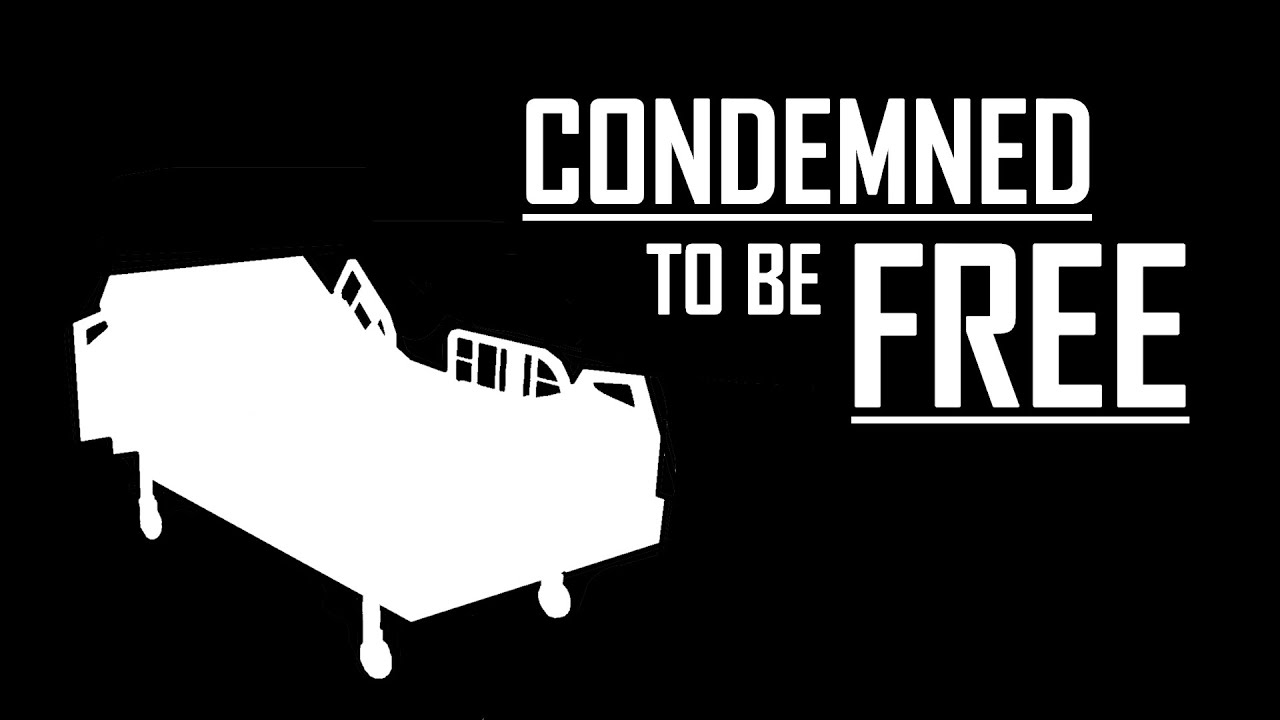
Sartre took this to mean that we are “condemned to be free,” a fate that he found to be quite awful.
You might think that there’s some authority you could look to for answers, Sartre said, but all of the authorities you can think of are fake.
You can do what your parents say, or your church, or your government, but Sartre said those authorities are really just people like you, people who don’t have any answers, people who had to figure out for themselves how to live.
So the best thing you can really do, he determined, is to live authentically.
Sartre used this to mean that you have to accept the full weight of your freedom in light of the absurd.
You have to recognize that any meaning your life has, is given to it by you.
And if you decide to just phone it in, and follow a path that someone else has set – whether it’s your teachers, your government, or your religion – then you have what he called bad faith, a refusal to accept the absurd.
If you live by bad faith, you’re burying your head in the sand and pretending that something out there has meaning – meaning that you didn’t give it.
Which brings us to this week’s Flash Philosophy. Let’s go to the Thought Bubble.
Sartre explained these ideas through an anecdote about one of his students, who faced a difficult decision.
This young man was at a crossroads in his life.
He could join the military during wartime, and go off to fight for a cause that he believed in.
And he wanted to do this. He thought it was right.
But he also had an elderly mother who was all alone, except for him.
If he went to war, he’d leave her behind. And that seemed wrong.
So he could stay with her, and let others fight for justice. Or he could go off to war, and leave his mother to herself, and likely never see her again.
The young man felt a sense of duty to both his cause and to his mother, but he could only serve one.
Moreover, if he went to war, he’d be just a very small part of a really big cause.
His contribution probably wouldn’t be great, but he would be contributing to something that would affect millions of people.
But if he stayed behind, he’d make an enormous difference in just one person’s life.
Thanks Thought Bubble. So, what’s the answer?
Sartre said that the whole point of this young man’s decision was that no one could give him an answer.
In fact, there was no answer, until the man chose one for himself.
No moral theory could help him decide, because no one else’s advice could lead him to a decision that was truly authentic.
So his choice – no matter what it was – was the only true choice, provided that he made it authentically, because it was determined by the values he chose to accept.
A lot of people think existentialism paints a pretty bleak picture of the world.
In fact, the French philosopher and novelist Albert Camus went so far as to say that the literal meaning of life is whatever you’re doing that prevents you from killing yourself.
But most existentialists would remind you that the world, and your life, can have meaning, but only if you choose to assign it.
If the world is inherently devoid of purpose, you can choose to imbue it with whatever purpose you want.
So, no one can tell you if your life isn’t worth anything if you, say, don’t have children, or don’t follow a lucrative career path, or achieve whatever standards your parents hold you to.
And this works not just on an individual scale, but on a global one too.
If the world is going to have any of the things most of us value – like justice and order – we’re going to have to put it there ourselves.
Because, otherwise, those things wouldn’t exist.
So, a worldview that looks bleak to some, may to others seem almost exhilarating.
Today I hope you enjoyed as much as I did learning about essentialism and its response: existentialism.
We talked about Jean-Paul Sartre and his ideas about how to find meaning in a meaningless world.
This episode is brought to you by Squarespace.
Squarespace helps to create websites, blogs or online stores for you and your ideas.
Websites look professionally designed regardless of skill level, no coding required.
Try Squarespace at squarespace.com/crashcourse for a special offer.
Squarespace: share your passion with the world.
Crash Course Philosophy is produced in association with PBS Digital Studios.
You can head over to their channel to check out amazing shows like The Chatterbox, PBS SpaceTime and PBS Idea Channel This episode of Crash Course was filmed in the Doctor Cheryl C. Kinney Crash Course Studio with the help of these awesome people and our equally fantastic graphics team is Thought Cafe.
Up Next

11:03
Theatre of the Absurd: Meaning and Impact Explained
@OrganicActing
36.2K views•2022-08-19

131:21
The Arcades of Paris: Walter Benjamin on Urban Politics & Philosophy
@internationalcentreforcont7204
2.3K views•2013-06-19

9:01
Death Philosophy: Insights from Socrates, Epicurus, and Zhuangzi
@crashcourse
2.6M views•2016-06-13
4:57
The Myth of Sisyphus: A Greek Legend of Eternal Punishment
@TEDEd
8.6M views•2018-11-13
Related Study Plans & Knowledge Roadmaps
Structured learning paths in Philosophy
philosophy
Philosophy of Death (Metaphysics, Harm & Grief)
01Introduction to the Metaphysics of Death
02Is Death Bad? Epicureanism vs. The Deprivation Account
03Lucretius's Symmetry Puzzle
+ 2 more learning modules
15h5 modules
Explore Roadmap
philosophy
Frankfurt School: Critical Theory & Culture
01Foundations of the Frankfurt School and Critical Theory
02Horkheimer & Adorno: The Critique of Instrumental Reason
03The Culture Industry and Mass Deception
+ 2 more learning modules
12h5 modules
Explore Roadmap
philosophy
Philosophy of Language: From Frege to Austin
01The Linguistic Turn: An Introduction to Language in Philosophy
02Gottlob Frege: Sense and Reference
03Early Wittgenstein: The Picture Theory of Meaning
+ 3 more learning modules
15h6 modules
Explore Roadmap
philosophy
Feminist Epistemology: Standpoint & Injustice
01Introduction to Epistemology and Feminist Critiques
02Sandra Harding and Standpoint Theory
03Donna Haraway and Situated Knowledges
+ 2 more learning modules
12h5 modules
Explore Roadmap