













This video presents research demonstrating that long-term potentiation (LTP) in the perforant pathway of the dentate gyrus unexpectedly decreases feed-forward inhibition, thereby facilitating information propagation through the hippocampal circuit. The study combines computational modeling using Izhikevich's neuronal equations with in vitro electrophysiological experiments to show that LTP increases the excitation/inhibition balance by recruiting an interneuron-interneuron network that inhibits basket cells' control over granule cell firing. The key role of basket cells was confirmed through pharmacogenetic experiments in parvalbumin-cre mice, revealing that LTP facilitates activity propagation to downstream brain regions by modulating inhibitory circuits.
Inhibitory Gating in the Dentate Gyrus: Synaptic Plasticity and LTP | Computational Model & Experiments
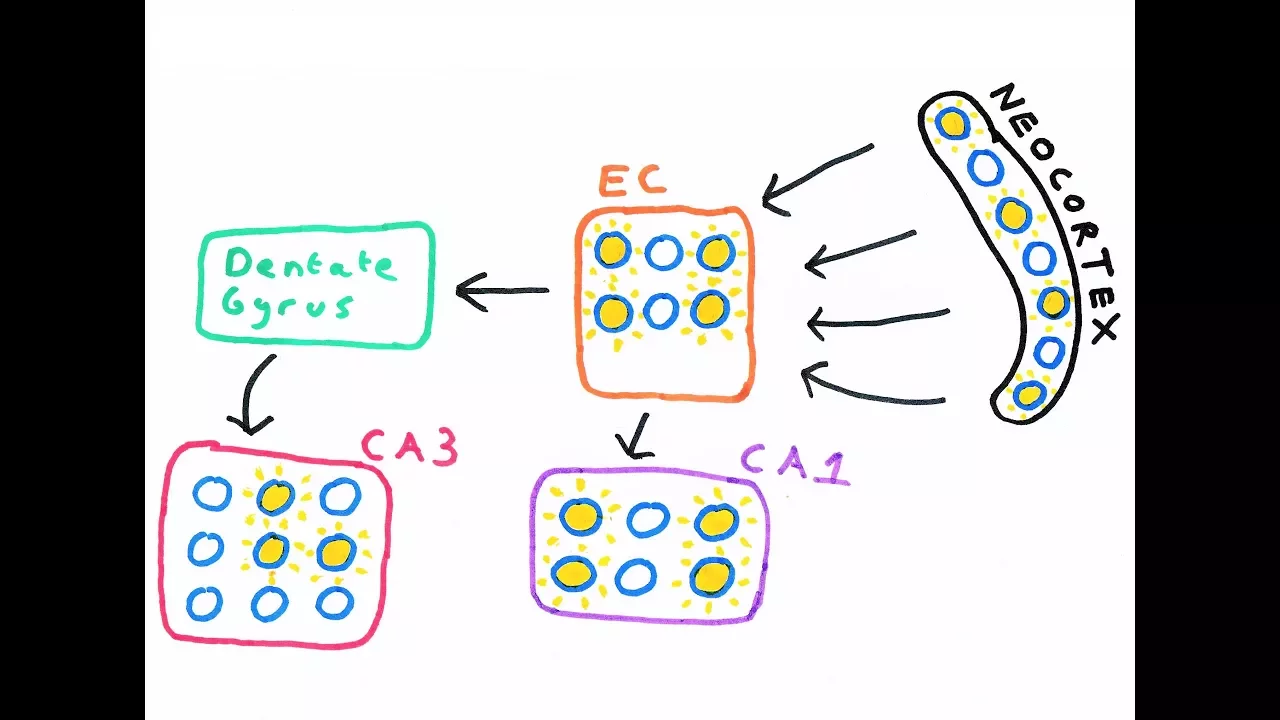
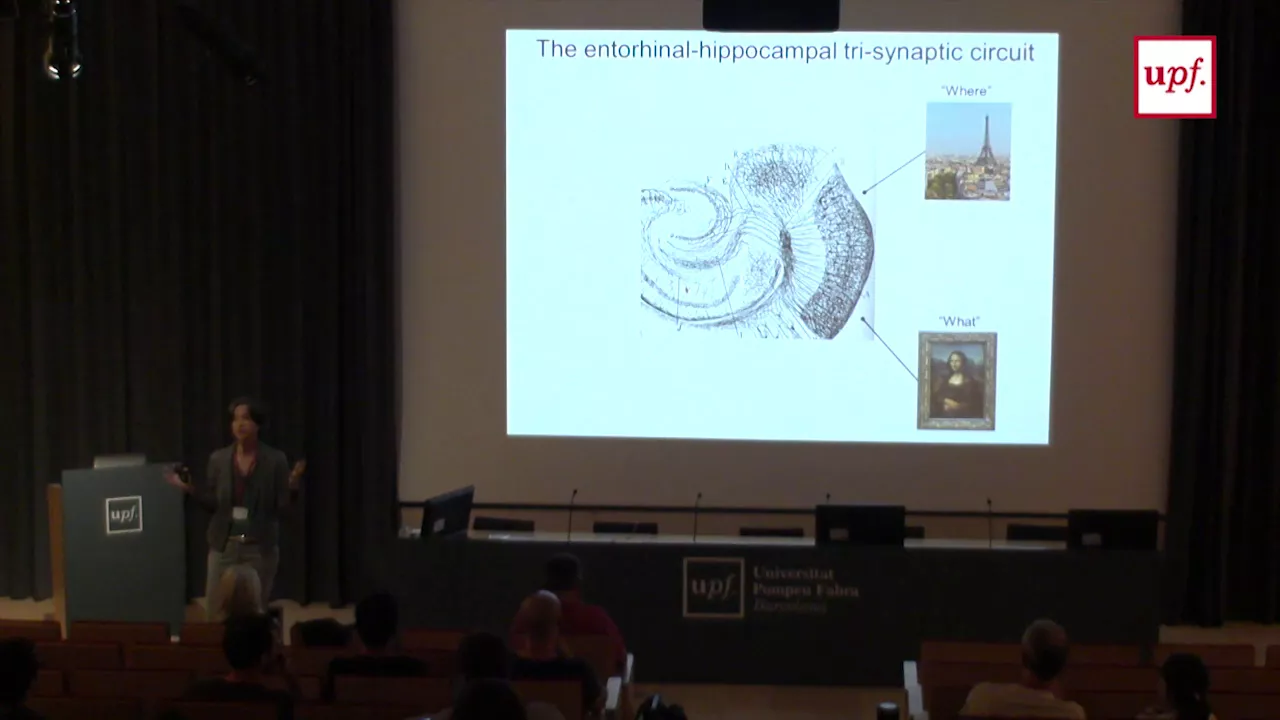
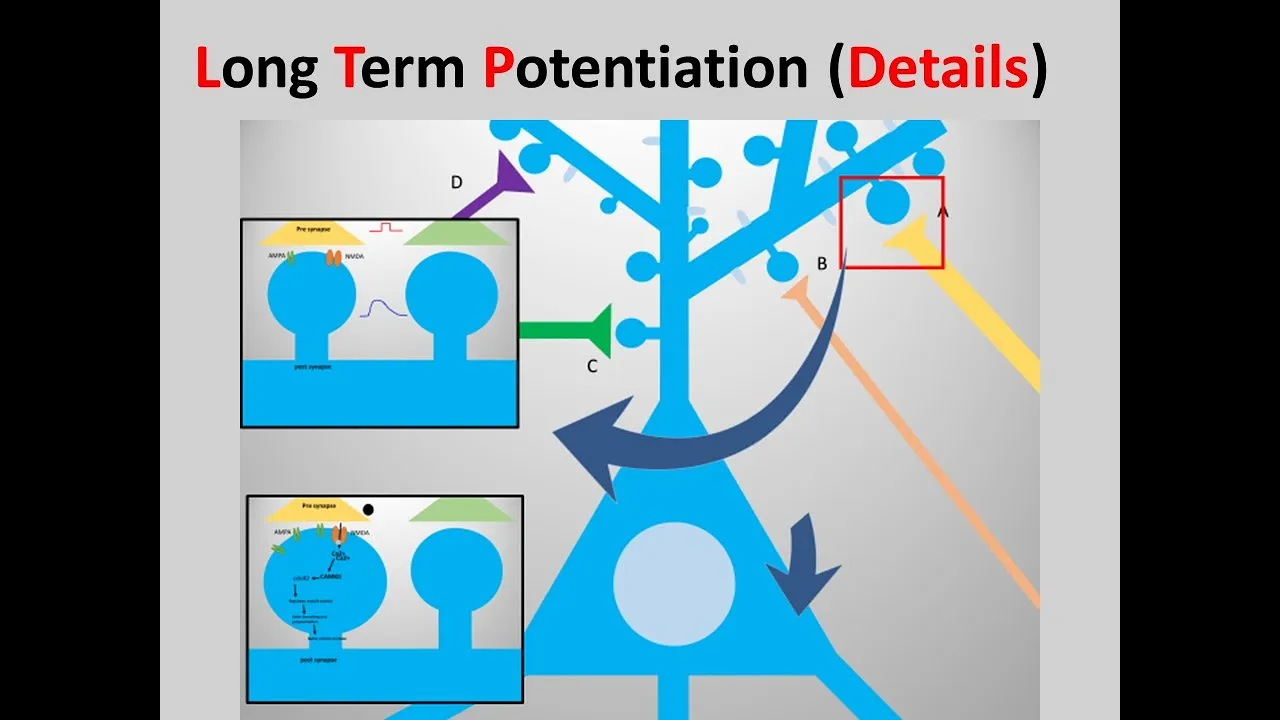
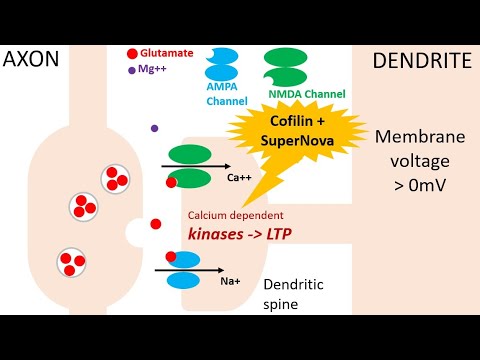
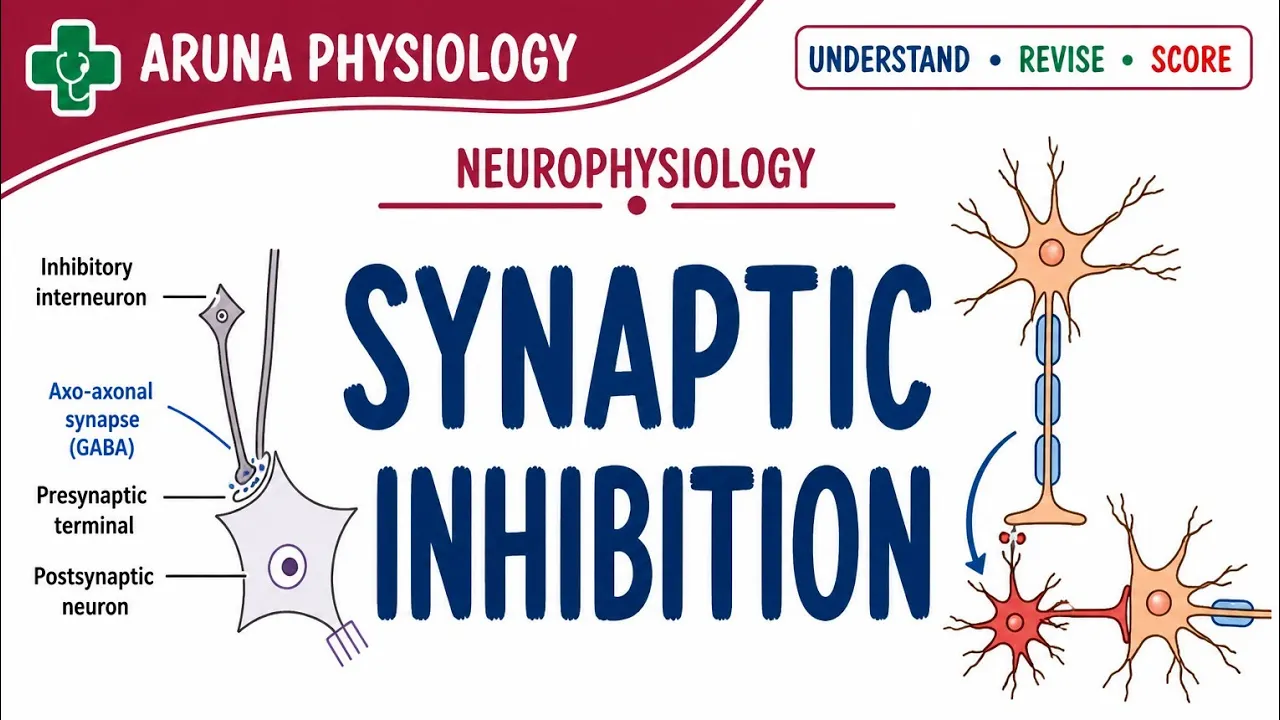
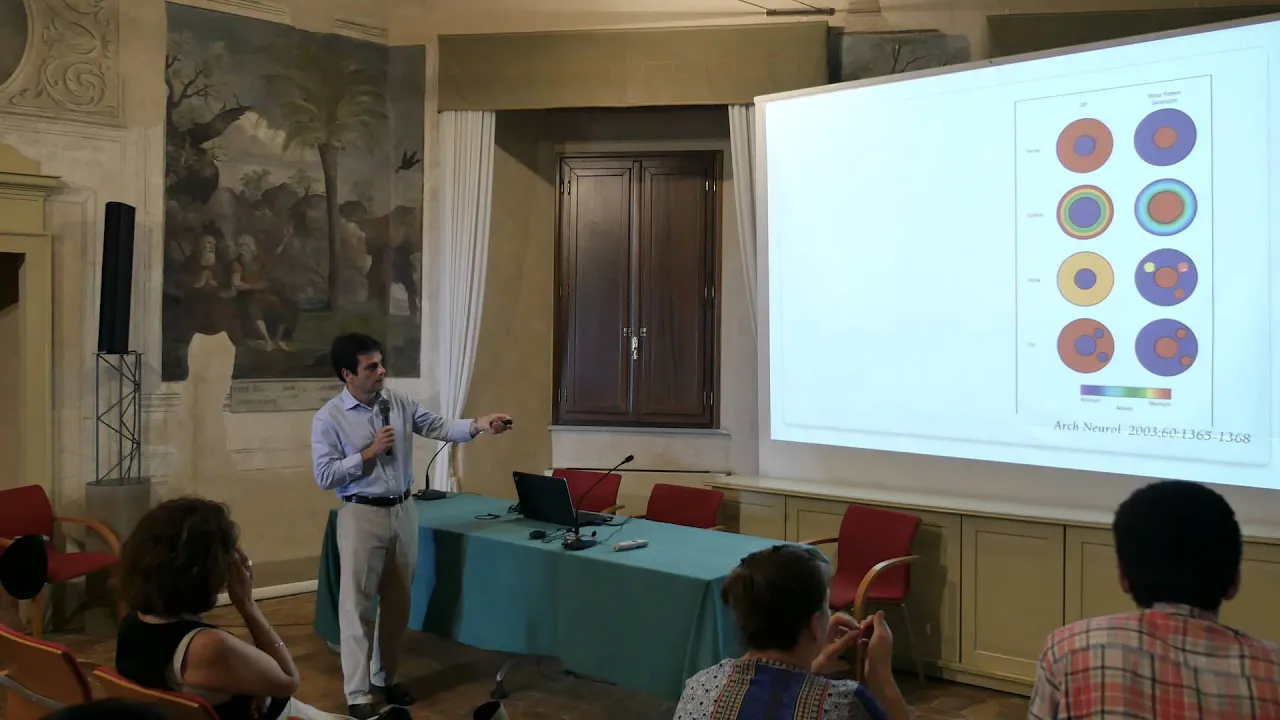
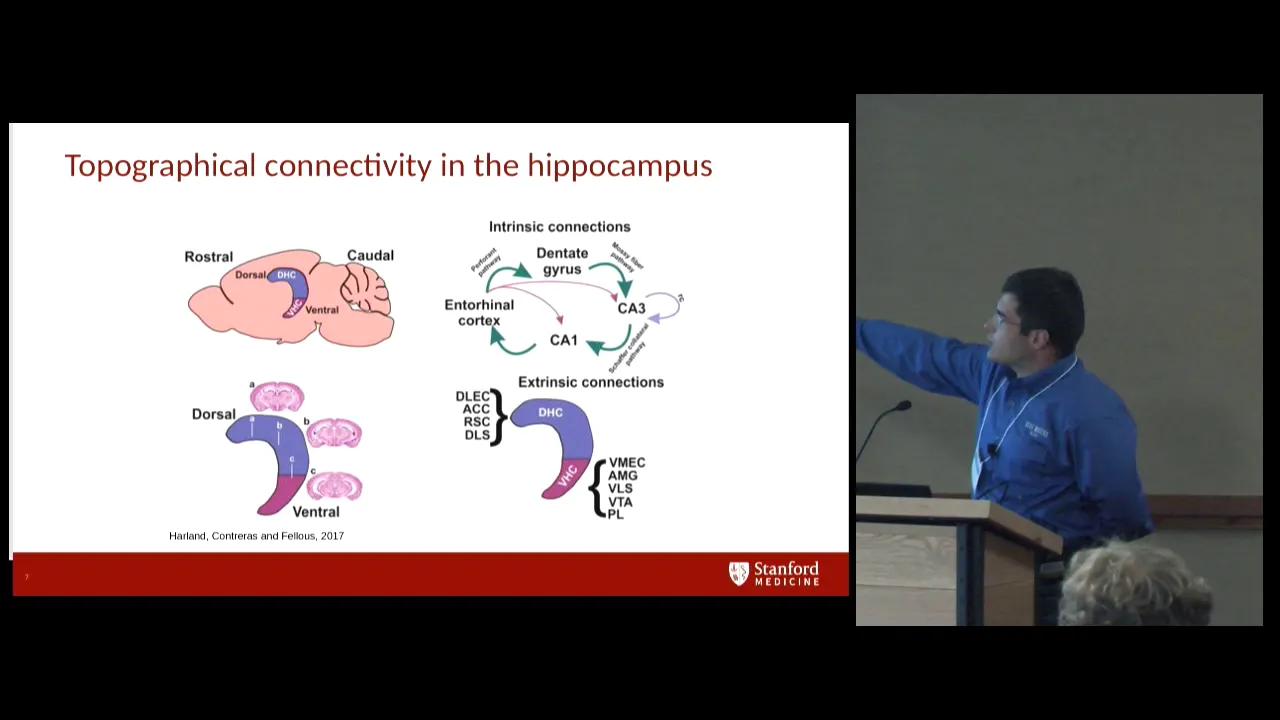
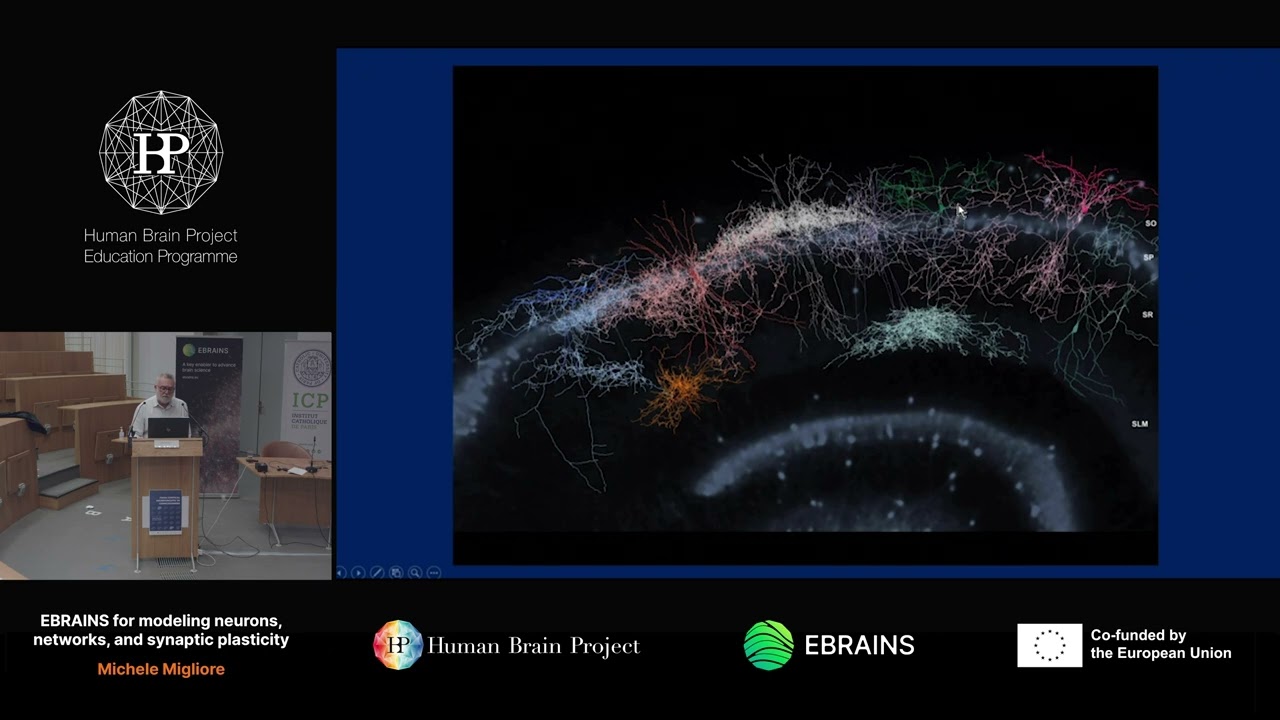
Added:okay thank you so no one thank you for coming and today I'm going to talk about the word that I have been doing in my last two years in the PhD and speaking with here the you focus on the English of the role of division in an aversive in particular in the dental guys okay so well for who doesn't know what is the envision or that situation when I have two neurons ok the prismatic Nirvana postsynaptic neuron when the resonating neuron is an excitatory neurons helps to the personality neurons will be activated however I have the opposite case when the prismatic neuron is an inhibitory no okay so yes I will explain a little bit the structure when we are studying that effort that is the campus one level sacred that is the rental gyrus that is Iranian inside that people come closer then I will explain the motivation of the model why you wha why we have to do a model of that ship with and continue explaining the model of the dentate gyrus the result that we obtained and the part of the emitter experiments that I am doing the of alicante and at the end of conclusions and the future world so let me start talking about all these a structure that we can see here was called by the USSR a as hippocampus the truth the similitude with the sequel's okay this name comes from the Latin a NEPA means horse and come to think monster okay and basically is that simulator in our ring we have Depot campus in the temporal lobe and it's a component of the limbic system so in human race reminds brain we have they accomplished here and another part the symmetric part in an arrangement and in got some mice we in the Therese has that form okay and it's symmetric for the another amateur the most important of that structure basically is that is very is related to the monetary consideration the special memory under and Asia and in functions like patents operations if we talk about the cc's this is church this structure is related to a simmer and Asia and epilepsy so if we talk about in the range that that you program because inside we can see that we have the internal quartets okay basically this is the input to all the with the program boost so deformations comes from the internal quartets to identity iris okay that is all this a structural here the denpa diverse projects the information to the ca3 okay that the c3 is all the Freund here then the c3 projects to see one that is all this structure and then C 1 raise to the suicune at a super cool gameplay yet to internal Cortes okay so here we have the Sigma Coulomb and the subiculum players again - Antonia cortex so we can see here that we have a closed ship with where the information is transmitted so that absence that data here are called perform pathway to the dentate gyrus c3 c1 and arrive again to the internal cortex so the most important input that we have is internal voltage that comes the Hudsons in that direction and go to the rent I Diaries and goes through the perform parking all these odds on that arrive here are called Paraguay okay and we have focused in this structure here and this assertive has three different values has three layers an external layer then a middle layer and then inner layer so the most important layer is the ground that is in the middle well we have more or less 1 million organ well says ok you know right that sales are very but are very Bequia because are very difficult to to activate people but when they name is activated we can be sure that that information is transmitted to the origin of the Serie okay then we have the molecular layer that is the sternal layer of the dentate gyrus where we have the dendrites with the granule cells so in that layer we have the connections between the performed by way the information that got it to the granule cells and then we have inhibitory interneurons and at the end we have the inner rayon of that the entire iris that is constituted but inhibitory and excitatory in their levels in particular here we have one cells that are corporal immune cells and the para looming cells has the the role to control with innovation that graduate okay so this is the structure and this is the sit with and this is the rayon that we are focused why okay so now I will explain the motivation of the model so before to explain the motivation of the model I first have to well I have to spring what is recipe okay so the LTP is the long-term potentiation if we can imagine a presynaptic neuron I see Jana postsynaptic neuron here we have a signal so the procedure Tina has never the transmitters that releases to the to the machinery never and the person enter the poetic neuron has the neural receptors can touch the neurotransmitters and then we have a cosmetic signal depending on the wings of the prostatic never androgynous fights sometimes cannot cure that these see Nazis come so the pristine optic nerve room has more neurotransmitters and the person optic nerve has more narrow receptors okay so the previous scene up the previous signal is potentially okay this process is very important for memory consolidation or learning processes so in one experiment that is published person they all canals here we have rationale image and here we can see that when they a stimuli they perform pathway the input campus in that resonance we can see that that way you not hear the basically is activated okay they did an LTP in the simple from far away and did again another stimulation and after that the stimulation after Delta P the result is that data for campus is motivated but then there are different rates very far of that epoch imposed apparent activity to so that ATP has been Haas doing something that at the end there is a drama the modulation of the neural of the functional Network and then we can send information to different regions of the brain okay so to understand what happens here they do they need another type of experiment so this is the scheme of this pyramid that they did and here we have the PO compass in a rod and this is the Delta gyrus here we have the pepper on pathway okay that is the input that comes from Antonio Cortes they put here an electrode to assimilate that right and the gyrus and then here put another editor to record the EPI del F P is the local field potential hey that is the lateral field that there is in that different rate in the different zones okay so we have we can have here 32 channels 32 records of the LFP but in my case the most important but is the venom the dental IRA because is the first structure that received information from the perform public okay so they have that LSP but with independent component analysis can split that substitution is of lfp in independent components in independent signals okay and in particular here we have two independent signals one the pepper on pathway generator and on oa1 the allure generator the paper on power generator confirmed that were young fear okay and the healer generator comes from the region of the huge thing site the red inside crane of the entire thing so the composition of both signals at the end complete there okay we know that this part of fear is an adjudicatory contribution and this version here this scenario sphere is an inhibitory contribution okay we can know that because with defense resistances that we can block the Navision the power of that signal decreases so the major contribution of that inhibition of that signal is innovation okay so the premium was the problem well here I have one is him to see very you see that we have internal got a sphere the bedroom Power Sprayer okay this red Sun amperage to the opinion green zone and then here we have the power uses that inhibit the granule cells and they to energy P in the bird farm power so they do Delta P here and they compare the amplitude of that ever okay they can even a stimulation here with the electrode and this is the response that they in the recipe and separate and split it in two signals this is the first contribution that comes from excitation and this is the neural contribution that so when they did an LTP here that pig that comes from individual disappears okay so we can see here that the amplitude ratio between these two decades increases after Delta V so basically this means that the situation increases but the innovations the people were inefficient ago from that layer to the granule cells decreases and moreover when compute the correlation between both signals decreases okay and it's a little bit strange that when we are doing the LTP here so we can think that we are putting safety or the input okay we can understand that the situation increases but we very difficult to understand what happens here and why we are depressing the inhibition okay now go from that lram to the granule cells so for this vision we wanted to do a model to try to simulate all these a structure similar like their fat of Delta V and see what happens in the world to try to find an answer to that results experimental results okay so we're starting with the model and the model what I will talk about the individual neurons the model so I used if they create small to simulate individual nodes if the given model is considered by two equations one first variable another a slow behavior that is the you that is the record variable of the magrav potential okay B is the membrane potential of the nebula and this equation or what this model is a discontinuous model so I have to reset the model that one touch of this model is that changing the parameters a B C and E I can generate different type of dynamics okay so I can do an arrow fastest bike in neuronal average back in Iran what are you barking neighbor and this is very important for me if I want to do a model with different type of neurons with a simple model at least they gave it just changing the parameters a B C and E I can get that different type of numerals okay another contribution that I put in that model is the Poisson noise so it's never my mother has a person know the basically is that is neuron has this is a Tory input that is similarly the the external noise that I don't take into one in my okay so in that that is the Turing who basically are events that arrived to my neuron with a Poisson distribution and eat Erin generate a synopsis okay a synaptic current and the synaptic current followed that the question that basically is the conductance times R times the difference between the membrane potential of the nebula and the rest phase reversal potential of the neck of the synapses so this parameter depends of the type of the signals we use AMPA and MVA anga by company a ret that originally helped to aspire to generate to activate the potion optic network the difference between AMPA and in VA is that this is faster than that Hawaii is a the inhibit original C so the difference here is that that reversal potential from the for the new original cyst is minus 75 millivolts and for asita theresa Nazis are syllables okay and they are basically is the dynamic of the neurotransmitters in the synaptic process so basically represents the probability that the Natick neuron can can release neurotransmitters and the piscinas ignorant can touch down that neurotransmitters and that time is the decay time because basically this is a exponential that increases about the probability when the prasena tech neuron generation is 5 so this is a exponential that they came with that - okay that depends of the synopsis for instance for AMPA is five from six milliseconds and four in da is 104 200 milliseconds so this is the synopsis from okay so I have to build a model with population of that they gave its names but I have to satisfy different conditions experimental conditions the conditions from the literature from experimental evidences and the first one is the frequency of its circulation okay so for instance we know that the Chronicle quartet work in a data frequency attentive Raquin sees arranged between free and dangers that inner radio works in a gamma frequency that is between 20 and 60 Hertz and the granular layer the granule cells k words in a theta Anagha on a combination of both frequencies okay and another part comes from this experiment that is from a paper of Peter yonas that well in they did an experiment a difficult experiment this is a registration where in life and we have del SP the local field potential and the intracellular currents so they achieve arrive inside a one neuron I can register and they can't register the inhibitory postsynaptic current inside the neuron and this is the dahle postsynaptic power and they compared and they compute the coherence between that intracellular current and so they saw that for instance when computer confidence with the new vision and the local field potential in the populations there is an important week in gamma so this means that that innovation that the right to the granule cells arrived in playin queso arrived from the population here however when they compared the coherence with between the situation and the local field potential the peak appearance is in the DA so that in that recitations we can say that arrive from the terminal so these conferences of here and the frequency of its population are my conditions to fit the model so the formal that I did was very simple because I used three populations and renal cortex the granule cells and the alert rayon that are above means inter neurons okay and the parameters that I can use to freedom oil are the connectivity that may model the neurons are kinetic randomly with a green frivolity peak so I have a young provide you for the population and the connectivity between populations so change the probability I can change the dynamics of all the seafood and then the another part the lower parameter that I can change is the synaptic conductance so is this value of here basic basically I play with the amplitude for the intensity so changing the parameters with this model I achieved then the initial call was the conditions the previous conditions but when I tried to be to see what happened with LTP was impossible to see the thing we saw that in the spirit that we want to find so at the end we need we thought that we need and now this is the the model that the city that I have built so we have add more connections or more populations so we have the input that isn't renal cortex here I have 200 euro were 80% of that power of the population I see the 30 networks and then 20% inhibitory neurons then these internal quartets and informations to the Raman cells under power looming cells a that inhibitory interneurons throat the path from power the basically FC Nazis AMPA and in the in the population have 500 provinces where the 65% of the population can generate part so pocket super spikes in a given period and the 35% can Jane can generate regular spikes this data comes from the literature from this from the same paper of the from the Petronas and then here we have one population of the innovation that anyway that pyramid cells and then another population of interneurons this in the artery information so it's like the populations this and this another one and then we have this population of here that are healing interneurons that that they are one type of internal that just inhibit no inhibit the minerals that are in the cave analysis okay all my interneurons are possessed by ignorance here we have that contribution and here are the and the contribution of renovation of the 20% our process back in New Orleans so with this model fitting the same parameters the priority of connectivity and the way of that synaptic conductance was more complicated if achill we have more connections here but at the end we obtain that conditions so when we talk about the power spectrum is population we can see that the antonio el corte hasn't been in data but this is easy because I feed the population to obtain that because I don't care about how appears well I know how appears that peak but basically is the input to my important sit with that is an anti jail then we have the contribution of the interneurons from the I lose that we have the part of the division and the part of the most itself work in a llama frequencies around fifty hurt more or less and then we have the ground says the power spectrum we are a cell that has an important being that comes from internal core test and then the Radian little rayon in gamma that arise due to that internals and then when we compare the coherence these are two shows with the model and this with the comparing with the experiment of Peter Jonah's and we can see here that if we compare the secretory current that arrived to my grandmother says in my model with the LEP the cocaine has a pink theta like in the experiment and if I compare the inhibitory cover and the for us to my granule cells to the lfp I have for you Inga okay so we can believe in the moral mirthless so we can continue and we want to just reducing the number of new roots have you never read on us every I well I started with a with the values of the place and then I gradually dug values of that in decor activities because for instance if a a if I see that I have important powers between data I know that arrived from the populations so maybe I see I need more contribution of that way and fear so I have to increase the contacts so maybe we have to increase the variety of connectivity to have more influence of the gamma ray beam that comes from the area okay so I have to play the penny of the result that I can see after so I do the simulation with I do the analysis and then I see the result and then after that we saw I'd have to choose what parameters I have to change because here we have many connection between then and the penny well basically is that I choose that as a safe in the connectivity for instance one cell of the population is connected with unity 20% with energy I don't fit for a one distribution I can do it but possibly the connection here is random so I basically I have one neuron here so it's name is connected to a 20% Asian okay so the way that we simulate this to be basically changing so the LTP change the column tons of in the synapses so we do the same so we change the conductance in the model and we can see after Delta P so we compare the LTP and the network was LTP so this is the simulated with this very means so here we compute the ratio between the vision and the citation data right to the granule cells and here we compare the correlation between the signal Dyneema traditional and the city okay so in the control case if we doesn't change nothing about in the mobile will have that value and we think differently policies that wenching the LGV okay money policies is that in the connection between the per volume in cells and the ground cells here so we reduce the conductance in these synergies and doing that we can see that the the ratio between the individual excitation decreases but this is aspect because we are reducing the division however the correlations is very similar another important is that we can think is that ok this is the logical important thing that if we potentiate do an ultra P here we put it a beam from the internal quarters to granule cells and from internal cortex to the parole immune cells in that case we can see that the ratio decreases and the correlation degree system however we have different conditions for instance if just put in see the input for internal core test granule cells we have the same behavior and doing a potentiation here another pression between internal quartet's ampere volume in cells we have similar results so we can see that wind LT in the model the inhibition of around such decreases thats additional losses increases and the correlation between the sedation and innovation decreases the problem is that we have different possibilities to think that whistle okay so this is one question that I have to do the in vitro experiments however to continue to think to see what happens in the model we choose one of them okay in the case we choose this case when we put in say the input from Grinnell cortical cells and the input for internal quartet super organ cells because is the personalization case when we are doing the LTP here we can see that we are potentiated all this image okay so if we do that we can see the final rate of its population okay and with this probe we can see that while the blue is relatively under what is for LD P and in the model we can see that the population of neuronal cell are motivating the firing rate increases the frame rate of that in Hill during the new that inhibitory interneurons increases too and the population of the Peruvian cells that Amy with the granule cells the frame rate decreases so basically that activation of their own cells activate more kill cells and that kill cells inhibit the paralysis so at the end we have for depression of the new mission over the granule cells basically when appears the LTP we can see that we have a temporal window where the innovation is reduced and the model is saying that that innovation if reviews due to the network okay here we have the same but with the Satori currents so we can see that LTP this is the signatory parent in the granule population of post entropy increases forever with the inhibitory current the blue is pre LTP but force Delta P decreases that innovation and for the population of per volume in cells increases for salt appearance situation but increases to the inhibitions okay so another question is if we have the minimal ship which to explain that okay so to do to answer the question basically we compute the same but removing populations so we remove in that case the population of cells and we can see that the effort of the the Chrisman of the radio between the division of the cetaceans appears again however if we remove the hill cells we lost that information so the kills are most important to any with the per volume in cells and then the invasion over terror cells decreases in the case however if we compute the correlations if we remove the Mo's itself or if we remove the fuel cells we can not change the correlation so at the end to reproduce the spear 'mentally results we need both of both populations so this is the minimal shape with to try to explain what happens when we are student when we are doing energy well in the background pathway okay so one time we have this model we can try to predict something so this is an older type of as payment that was this experiment has been done in the and in this experiment they use transgenic mice the Vantage of that is that we can manipulate that purple moon so we can depress that neighbors or we can activate them so here we have the experiment plots and the model plots okay the control case is the mouse think and then the jello is when we are depressing the population so we work here in this pyramid with the same signal generator of the bed from pathway and the elevator of the use and we can see that if we depress the parole himself oh we don't represent the press the power himself the power pedram that citation is equal but however with the Navision we can see in the experiment that decreases when we depress the bar on human cells that is the jello decreases in added in a gamma frequency a between 30 and 50 Hertz okay the power spectrum of the signal decreases you we compare with the model I can depress the populations in the more a DC and we have the same result that the power spectrum anticipatory current doesn't change forever the acuity current the is depressed the region the peak in gamma is the rest and if we compare the coherence between the bed from the perform power generator and the evil so that attrition and inhibitions when we depressed in the animal the power loom in cells we have here the changes in the Gamma frequency anima more in my of the same so we have a model that is fitted with experimental data that is published then we can answer some questions about the LTP and we can use the model to predict and other efforts that we can see in different experiments the problem as I said before is that we have more than one possibility to screen that effort so for this reason I have to the in vitro experiments okay so I started the last year in this part and the most important thing in experiments is the technique of hotel patch-clamp so basically is a technique to register intracellular ionic currents in one individual nodes the technique is simply to explain but difficult to do it so here we have the pipette and this is the electrode inside the pipette so we arrived to the neuron and the host cell pass Columbus please to break the member of the name and that member of the loan is paid is based if in in the in the Bible so another in that case I can see all the ionic currents in siphoning and I can control the network I can control it with two modes one mode is the voltage clamp with the mode voltage clamp I cram the Newman were given voltage mine 75 millivolt for instance of single millivolts and with that clamp I can see that is a toy and a huge record alright so for instance here and when i stimulate the patron pathway i can see that this is that Seeta Tori : that arrived to my neighbor for instance this is the same but this is the spontaneous signal so if I don't assimilate nothing the slide is activity as a vassal state and these are the ever gates that appear okay the another mode is the current clamp the current graph I clamp I warrant when everyone and I can see the membrane potential of the navel so with a given current I can see coal generate this is the I can redeem of up a balloon okay so when I took when I say that I have to but sunny one bacillus to do that thing of here okay so negative of this pyramid why I have to win with respect man so there's a TV basically to pass whatever human said that is the neuron that I'm working and see what happens with the signatory current and inhibitory current before and after the NTP so I have to generate an LTP in the in the molecular layer here and then enough to see the quorum that arrived to the purple meself so if my model is correct after LTP I have to say that the in addition then inhibitory current is a smaller okay if my model is correct okay so to be sure that we are we are doing the LTP then we have here another pipette that we can't be caught well we can do a special recordings so basically is here I put the piped and register the local field potential in here okay okay the problem is that is very difficult to find the Perot living cells in the tissue so we use advanced in mind that with fluorescent slide we can see that points of here are the power uses okay so with that transgenic mice I can find the neurons using fluorescence with a blue light I can see that neighbors okay so the problem is that for one insights we have a field okay but before to do it experiment we have to satisfy some conditions and controls okay and here we have the problems so the conditions are that I have to use the album ice okay because I need the complete network and for all the months is very difficult but general the mineral is hardest then we had problems with the solution when I started we used a little different solutions because all the process when I saw the brain and when I'm in this pyramid we are using constantly different solutions for to keep him for keeping alive the neurons and well we had problems with the first solutions and three months or bones we started with another one and then we need a temperature in the registration around 32 and 35 degrees so when a new experiment the slice is always with flip with a solution and that hsf has to be between 32 and 35 degrees then I cannot use an tag on it that means gamma in the systems that block the inhibition and I say that because the LTP produce an LTP here in this pyramid in a slice a very difficult we have an important local innovation in over gammon says we are assimilated in not the same that when the animal is alive that we have all the brain so in the slide we have more innovation over the grandma says that the situation so it's very complicated do energy peak the product was people's work with Antonia alpha to block that innovation and then they can achieve that potentiation in the granule cells the problem is that I want to study the division so I cannot block the division so here is difficult for us then in the process of twister II the brain we have to cross the brain in a given position so depending who you can you can destroy your bid so this is another point to take into account for this pyramid and then we have to be ensure that we are are activating the network and then the nor difficulty is the piece two parts problem in cells because the neurons are have field of life and they are being led around sometimes you are right with the pipette and when you try to break the membrane explode so what are you bit difficult so here this is a well I don't know if you can see at the beginning you see nothing but now I can identify different type of neurons here so here there is a granule cells the aquarium is the granule cells so we are particular one gun one cell and we can see different colors so this ray of black of here is the molecular layer when usually I put stimulation fear this son of here is the granule cells layer so here we have all granule cells and then in this way you know fear that is difficult to see what this is okay so there there to be the controls first we have to be sure that we can get a needle to be in gravel cells so I have to pass one ground ourselves I have to put another a pipette here to do that rasullah recordings and then I have to stimulate in in the perform pathway in the rain of the molecular layer and I have to achieve an lcbi potentiation then I have to find with this protocol we do to a stimulation so the first stimulation is to what you ate the seaweed so we have to ensure that we activate in the ship with with that first a stimulation and then the second stimulation is to be the effort in the neuron when the ship is activated the problem is we have to find the time delay between both inputs to be ensure that when we are stimulating in the second time we are in the rain where the which is activated and then we have to find the hottie my intensity at this optimal intensity is a little bit difficult because depending on the day depending on the slice on the neuron in the pendulum if you can cut more out songs you can recruit more add some from the pepper on pathway or depending on to you a slice sometimes you don't have seen here okay so all of these experiments I have to do it with this this is my setup so I think working when I can extract the brain and I have the slices I put the lights here and we have here this is the camera this is the microscope here we have feed meat manipulators when we have the electrodes here with a pipette this is greater that for the cast the stimulation the electrode that is stimulate the slice and with this both micromanipulation I can record and here we can do elliptical a stimulation of the genetic a stimulation and this is very good because I can assimilate with the light I can simulate zones with a high precision I can read one neuron or I'd kind of stimulate the input to one neuron and this is fine because basically when you are using optogenetics you have an objective white mouse so just you activating the the target of your neurons you can you can put the light in one way on but just activates a given type of nerves when you are using the elliptical stimulation you are simulating all the way in that the common so with that set up we can watch clam techniques we can use calcium atom with a camera and we have allowed to see to use the fluorescence imaging for decoration I can see the power bargaining sets okay so this arm I was the last bone the something that I kind of think from this payments so are basically control experiments so now I can obtain listen that are extracellular recordings and the solar recurrence this is the pipette is in the granule layer so we can see if the neurons are activity or not for instance pre LTP we have that P that peak basically is the deviation of the population and after LTP we can see the duct peak distant work in another very higher and is faster appears before so we are putting setting that in and we can activate with the same current up before more news okay so we are achieving an LTP in the slice with on town in Java so this is a good result and then we have the same within a cellular recordings so well this is the arrow cave we generate here the stimulation and this is the result and we can see here that pre LTP we have a given a little of that EV okay and after Delta V that amplitude increases a lot around 50 minutes and then continue which is a little bit but continues higher than in LTP so for the experimental controls we are telling good results and then inspire will be to try the part for volume in cells to see what happens in the spring so to conclude I were what I have a model that the model is fitted with as a payment data that is published with this model with that minimal Shifu I can explain the effort of the LTP in the end I chose moreover we can choose the model to do differ predictions like the experiment experiment with transgenic mice and then the problem is that with this model I have different possibilities of things in result so for their vision I have to do the in vitro experiment okay the problem is that the emitter experiments is very difficult and we had fallen but we are working on that so the next point basically is to answer the question why is the brain using the mega so if we find the mega means that the brain is using when appears healthy peak so there is a name word that at the end there is a group of inhibitory interneurons that inhibit the division over the granule cells so if that is the mechanism and we can see they possesses the correct hypothesis that explained the model with this meter experiment the next part is to think why the brain is using that moral or that if the Meccans and not another one so to see to investigate the part we want to put what we want to use the model to do pattern separations so we want to put a button in internal quartets and to see what happens in the population of granule cells and if the effect of daily LP is better for patter separations maybe for memory consolidation or maybe just this tip is good to improve the transmission of information between the internal core test to see a tree and two different variants of the brain ok so just is the the answer of my thesis that I want to and that I go to explain at the end and just thank you two clowns in Tijuana like all directors and respiratory's me all about the image experiments people maybe who here know him that is very good doing yes yes I know I know this the problem is is that to check the result of this pyramid we need something from the network and it is very difficult to find that for every victim we know that it's not the same and this is well tricky point but in in vitro we can find something about the network in the slice we have the structure very well and we can know that if we are recording a granule cells we can see that the emissions from 4.5 aluminum cells and we can see the performances when we come back so the information that give us the model just we can test it with the in vitro experiment it's not the same it's true but at the end we we have the same results we can associate the in vitro spearman with the model with the network was doing so for the invasion we can use the emitter experiments because you mentioned is translating well in that Institute we have organic mice and that's and then we have well the first Mouse maybe is bite but at the end we can reproduce the mice yes yes no no no so we have a life of mouths of mice that with that unknown sublevel and then we can inject virus and the virus just is expressive to the appearances that the line of the mice is a ballooning crave that that create a meaning that trait is expressing with the wheels with virus so we have that line of mine and we can work with that Winston singing in big experiment they can use that transgenic mice and they working with behavior experiments depressing the problem in cells the the minds easily a bit more silly yes sir I do many simulations after the manipulation changing the connectivity with but with the same probability but always I reserve the conditions so I have new connections yes yes yes yes the conclusion that I need all my populations of five population because if I remove one of them I lost in the experimental phase so this is so well the problem is that the most important part in that vortices have the deviation of granule cells so if I have the population of Grasse is motivated that that activation activate the field interneurons encana me with the Perelman cells so at the end if I can contain the registrations in per volume in cells if after Delta P in the slides I can see that I have more innovation this is because there are an old population of interneurons including internal that in a bit more are more activated so even more my Perelman set so I have more in emission and that way if this happens if with the well if this happens I can say and with the inhibitory currents of granule cells I can see if the if the invasion lateral that the right program cells is the press or not and if the reason excitation and in the sedation between the perform power the director Graham says if put in say T so for instance I can see that for him in power Loomis's I come the relay station satori correct after Delta V spot incentive to so I can say that I have when I do energy P is put in city the inputs that arrive to grammar cells and they push that are up to par on himself so this is one importance is in my mother so I can discriminate that maybe this is the correct answer because in my experiment when I do the LTP the Satori : that arrived to my Perelman cell increases - okay if instead of increased decreases that the sedation this is a depression so maybe we are put in city the input to run our cells but the pressing the input per volume yourself and this is another evil disease the in vitro payments item fit or I can see what is the Equalists the most important contribution the most important contribution is in learning processes when you are learning something from when you are in a room the bending of the Gambian if there are more object or less or tips that grranimals there are more or less activated and words in the buttons operation so for instance if we are here in ash work we have forgiven button in our brains that this is the truth activation of eternal cells or if the room is like a circle so we happen over pattern so this structure is violated with RAM bein with the memory consolidation of that room and the special memory and orientation
Up Next
Adult Neurogenesis and Mood Regulation | René Hen & Alain Prochiantz
@fondationhugot
623 views•2017-11-16
Deciphering Neural Circuits Controlling Anorexia in Mice | Richard Palmiter
@AllenInstitute
2.3K views•2011-10-10

Vagus Nerve (CN X): Anatomy, Nuclei & Functions Explained
@Alilamedicalmedia
305.2K views•2022-10-31
How Exercise Benefits Your Brain: Science Explained
@TED
11.4M views•2018-03-21
Related Study Plans & Knowledge Roadmaps
Structured learning paths in Neuroscience