

![[신년대토론] 2024년 한국정치 어디로? - 어벤저스 신년 토크콘서트](https://i.ytimg.com/vi/N6Ne3Gvr5YE/maxresdefault.jpg)














![미중의 반도체 공급망 분리 [2021년 10월 6일]](https://i.ytimg.com/vi/zXLds_7mgQ4/maxresdefault.jpg)
China's soft power efforts face significant challenges due to the country's prioritization of domestic political stability and social control over international image promotion, making it difficult for Chinese soft power initiatives to achieve the same level of effectiveness as American soft power, which benefits from being disconnected from government interference and leveraging the natural appeal of American culture and values.
China's Soft Power Strategy: An Expert Analysis
Added:The conceptual distinction between 'hard power' (military and economic coercion) and 'soft power' (cultural, value-based, and diplomatic attraction) as formulated by Joseph Nye.
An overview of Xi Jinping's political ideology, specifically the 'Chinese Dream' and China's shift toward a more assertive foreign policy since 2012.
The core tenets of Donald Trump's 'America First' foreign policy and its impact on traditional US alliances, global leadership, and multilateral commitments.
Basic theories of international relations, particularly Realism and Liberalism, regarding how states compete for global hegemony and prestige.
The concept of 'sharp power' and how authoritarian states utilize information manipulation, censorship, and institutional pressure to limit free expression abroad.
Case studies of specific Chinese public diplomacy instruments, such as the Belt and Road Initiative (BRI), Confucius Institutes, and global state-media expansion.
An analysis of empirical public opinion data (e.g., Pew Research, Afrobarometer) measuring how populations in the Global South versus Western nations perceive Chinese influence.
The geopolitical strategies of the 'New Cold War' narrative, including technological decoupling, semiconductor supply chain security, and competing Western infrastructure initiatives.
843 views16likes48:05Original Release: 2018-09-25
some of the key points saying they can't address all them but starting off by noting that China's and and this is kind of a state secret you don't know the last time data was available for how much China was spending on soft power was in 2010 2011 was eight point nine billion and that might not be the total amount but they're spending clearly well over ten billion dollars a year on soft power projection but one of the arguments I would make they have not been as successful as the US and the US doesn't really care about soft power and of course as I'll talk about shortly under President Donald Trump China has really been making a move up in the u.s.
is going down in terms of whatever soft power might be and that's that's one of the subjects I hope to talk about my chapter actually in the book I'm co-editing is a comparison of Chinese and American soft power in the era of Xi Jinping and Donald Trump so that would be one of the questions in the age of Donald Trump in Xi Jinping's China's soft power still weaker than Americas and one of the things I would look at I have a lot of survey data on that I can only get to a little bit of it in terms of favorability ratings but of different countries in the world surveys have been done extensively gallup pew tribal council many surveys an important point to me is that china will never score well and any index of soft power no matter what they do and I'll talk about that in terms of methodology of how these things are measured liberal democracies will always be at the top in any ranking of soft power indices and I'll talk about that briefly but in addition to that in China's hierarchy of values I think influencing the behavior of other countries is more important than soft power development they're quite willing as I'll talk about hopefully to sacrifice what normally would be considered to be soft power if it will support and promote other values of more importance to them in the same sense the Chinese soft power is often focused not just internationally a soft power is generally said to be but Chinese soft power also is domestically focused the O'Callahan when he's written about this has talked about Chinese soft power being negative soft power because it's internally directed rather than externally directed but for China political stability social stability promoting patriotism these are much higher values than whether Norway or France or Australia or India or the United States likes you that admires what you're doing so it's domestically or in it one of the things I work on is Hollywood and China and I have a lot of stuff in here but it's at the back so let me not get to it but it's very clear that Chinese films one element of star power don't travel well Hollywood films do and one of the tables I have later on is a survey done in China asking about what is the most representative image of the United States and Hollywood clear Hollywood is clearly number one and when you think about China if you ask American students what comes to mind when you think of China in terms of images you might get the Great Wall you might get pandas but you're not going to get the same kind of soft power things that are kind of useful like a Hollywood film where people tend to emulate some of what takes place in those films and I can talk about that more if people are interested something I don't think I'll get to in this talk is trying to try to do a lot of things at the same time there are contradictions in Chinese policies you have safe States action values you can call them socialist core values but you have individual value systems and that tends to also have an impact on Chinese soft power also State Society relations are much more complex tried as much more pluralistic public opinion is very important so again that's part of that domestic audience that they're concerned about something I've also worked on that some papers on is the Chinese dream versus the American dream China's exceptionalism u.s.
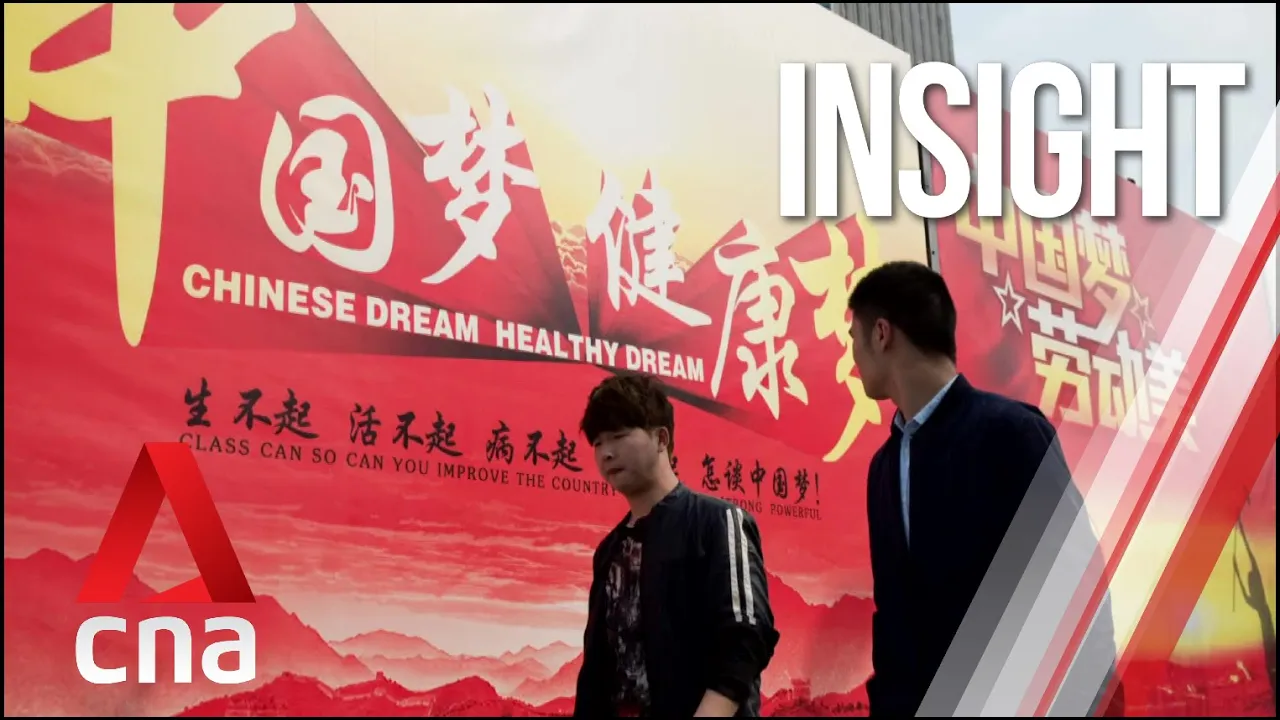
exceptionalism and one of the things I would argue and I hope to get to the slides to show the competition between China and the United States in terms of the American and the Chinese dream both around the world but also even within China where I would argue that the American Dream is actually in some ways at least equally if not more popular than the Chinese dream one of the most important points I would make in terms of comparing China in the u.s. though is that Chinese soft power is most successful when it's not associated directly with the Chinese Communist Party and that any political or governmental interference diminishes the impact of soft power China can do very well as certain things in terms of soft power like the Olympics or the Shanghai Expo within they'll do something in Shin Jang or in Tibet or resting human rights lawyers and that will have an impact on their soft power so it's very much a mixed bag and again it's in part certainly because they're much more concerned about other values not just soft power be very simple and some of this is in Chinese because I also give it a talk on soft power in China several times but just very simply soft power is is something which is distinguished from hard power hard power has to do with the military this coercion its economic incentives or disincentives to try and generate influence soft power is based on attraction to co-opt others to admire and share your core interests it draws on resources like culture values exemplary foreign policy behavior to try and create an international environment where others will others will be more inclined to cooperate less likely to oppose your objectives this goes back to Nye Joseph Nye now Joseph Nye who's kind of made a cottage industry out of soft power relays written quite a few books on this and he's always interviewed on this very popular we interviewed in China for example in 1990 Joseph Nye wrote a book called bound to lead the changing nature of American power his most recent book is is still the American Century and he says yes it still is so he hasn't changed in 25 years but not as original use of soft power was in response to books that have come out in the late 1980s like Paul Kennedy's the rise and fall of the great powers where he looks at economic change and military conflict from 1500 2000 very widely circulated book a very successful book but Kennedy focused on the role of economics military heart power to explain why once dominant nations declined over time no discussion really of soft power and not sought to counter that argument saying that the US was still the dominant world power with no challenger inside and a primary reason was the attractiveness of the American model was not just hard power of course I think no himself would make the argument you can't really easily separate heart power from soft power and you can't really have a successful soft power regime unless you have hard power backing it up now nice since then facing several critiques over the years has added smart power combining hard power and soft power but its argument is essentially remained the same that a primary reason for the success of the United States as a dominant world power was the attractiveness of the American model now if you look at the impact of President Donald Trump's America first policy then number of surveys already coming out on this the number of nations in which the u.s. holds a competitive advantage in favorability over China went from 25 to 12 in a couple of years the Trump has been in office the u.s.
had a 12 point lead over China in terms of the global median by 2017 it was 2 points if you look at different parts of there and a lot of surveys so that's unfortunate have time to put them up China's pickly well-liked in Latin America in the Middle East u.s. scores higher in Europe and the Asia Pacific Africa is kind of mixed and of course within those regions you have different variations but I think one thing to look at is the world's approval of US leadership in the first year of the Trump administration went for 48% approving to 30% an incredible drop in just a year and of course if you look we're at where a US leadership approval has been more successful makes mostly Russia Israel China in fact because they originally thought Trump was gonna be somewhat different then he turned out to me with the trade war if you look at global lease of approval comparing just taking US Germany China and Russia you see that the United States is very volatile particularly last year but most of them countries are pre stable and China more or less keeps at that 29 to 31 percent over the years so it's the volatility of the US in terms of approval ratings not so much that China has risen up you also see the u.s. went 33 countries u.s. went from 64 favorability 64 percent favorability to 50 percent trying to drop from 52 to 48 percent and actually Russia has been rising in spite of all the criticisms of Russia and the sharp power they're using I don't have to be label at this point but you take almost any of these policies of the Trump administration and you see high levels of disapproval around the world this is based on 37 countries global views of Trump the one thing that's positive a strong leader but arrogant and tolerant dangerous I don't want to make this about Trump but some of the writers in China some of the academics see soft power that especially a zero-sum game between the US and China so unless you talk about the u.s. you can't really understand what's happening with China Anglin Merkel clearly gets much higher ratings and she's in paying Putin or Donald Trump how useful was that to her that's the question it raises the question about how useful the soft power more generally well one thing I find important is that even with the declining ratings of Donald Trump as president you find that the view of Americans is still very favorable around the world liking American music movies and television 65% yes 29% dislike respect for personal freedoms now the areas where things have become more problematic is I like American ideas with democracy which is now negative and I guess the Trump administration has a lot to do with that and it's bad that American ideas and customs are spreading here 54% say that's bad so that's an important aspect of soft power which I may get to later if I have time took throughout the u.s.
anymore now when I was asked will the decline of the American image persist over the long term he says no unless the foot one of the following happens Trump gets the u.s. into a major war Trump gets elected to a second term and damages the American system of checks and balances and America's reputation as a Democratic Society and I think surveys already suggests that the America's reputation as a Democratic Society is being called into question because of the Trump administration now on the other side Eric Axley some of you may know who wrote a piece in foreign affairs recently which I thought was very well I don't know he's agreeing in fact I very seldom agree with Eric Eric Axley but in this case I thought his comment was really good his argument is that nice concept of soft power has lost relevance but it's China that could bring it back not the us-china soft power proposition he said it's very very simple you don't have to be like us don't have to want what we want you can participate in a new form of globalization while retaining your own culture your on ideology your institutions so what he's doing is turning I on his head it's the opposite of nice formulation nice formulation is based on the appeal of liberal democracy and universal human rights free speech what Eric Axley saying is that heart power is taking root in many countries including the United States and what China is doing is promoting a community of shared destiny in which nations are allowed their own development paths while working to increase interconnectedness as with the doulton road initiative when that still soft power how far can you stretch a concept I'd still have the same concept that's what he's doing base is conceptual was stretching as political scientist would say Nathan gardels in the washington boro post had it also somewhat similar argument which I again thought was well taken as the u.s.
abandons the post-war multilateral system China steps into the breach they're laying the groundwork for a post American world water very different from the old world water it's not multilateral it's multiple bilateral relationships linked to the Chinese core given China's one world many systems perspective it is based on a convergence of values but a convergence of interests now soft power has always been based on a convergence of liberal democratic values China will never have a soft power rating because of that but does that really matter if trying to can influence the behavior in other countries and that's an important question values versus interests we can help you we don't care what your values are what kind of system you have and so on what argument I would make is as I get to hopefully with time is why is the I States been more successful than trying to turn a soft power even though they don't spend a lot of money on it that'll really care about that even want a pavilion of the Shanghai Expo in 2010 why is it American power strong even in China I mean I think I'll get I'll answer that question in a minute this slide basically is simply say that try to really began to promote soft power development then leader general secretary the party who Jintao made a speech in which he railed against that the strategic plot to westernize and divided china in ideology and culture long term in for treasurer for the West so that began but band began a big push beginning in 2012 on soft power development in China okay I'm going to skip over some of this for time but the argument very simply a megabyte America in China is that American soft power has been successful precisely course it's not linked to the American government Chinese promotion of soft power it hardly exists from the efforts of the government I don't have a number of examples later on of how China could improve its soft power hope I get to them by having it separated from the number of more civil society and so on I'm gonna skip over some of no now if you look at the Chinese media and Chinese books and you find a lot of these but have collected a lot of these books over the years we don't have a avatar the crisis of Chinese soft power back as early as 2011 there was a report on Chinese cultural soft power which suggested that the United States had 43% of the cultural industry market share in the world European Union 34% Japan 10% Australia 5% and China was down at the bottom less than 4 percent although I would think South Korea should have been higher if you look at the Portland soft power 30 which the USC Center for public diplomacy is involved with and you look at the methodology by which they choose which countries have the most soft power 70% objective data 30 percent polling data and see the results in 2018 of the top 15 countries all of them are liberal democracies only two are outside Europe and North America Japan number 5 Australia number 10 and if you look at the next 15 you see that China is only a 27 Russia twenty-eight but again I would raise the question how useful are these things how are you sue is soft power how you so was having indexes indices of the top soft power 30 why does that tell you about the country another example if you look at an important part of soft power is building brand names and so this is 2016 survey s the Forbes I believe it was estimated value of the world's most valuable brands three of them of the top ten are not American Toyota Samsung and mercedes-benz and this has to do with that consumer satisfaction exam just simply financials in terms of top growing brands only one of China one company from China's on the list Huawei is on the list right behind Mercedes Benz 2018 Forbes of the top 100 brands most valuable brands 54 brands are American 20 or technology companies 13 financial services and so on China has only one along with Canada Denmark Ireland and UK now you might be surprised given when you think about some of the companies in China like Alibaba and some of the others that are so big $0.10 but in Kansas methodology everything is always methodology if you're social scientists it all comes back to methodology so Forbes began with 200 more than 200 global brands but we required brands to have more than a token present in the US token presence it's all us center so Vodafone Alibaba eliminated right off the bat because they don't have that global presence if they don't have a strong presence in the US so if you look at the top list you see Samsung and Toyota Dhoni two non American companies on that list there was a brand value I mentioned earlier most representative the US image number one and you could choose up to three on this survey but again it shows you the importance of American culture with Hollywood American politics white house American economics Wall Street human rights freedom Statue of Liberty your style coca-cola and so on try to watch to have the same brands in a fit in fact I thought it'd be interesting to take a look at how much China has improved though over the years if you by looking at some of the Economist covers if you go back to 2013 you have Xi Jinping you have Putin of course triumph of laundry Putin Russia resurgent don't mess with Russia but in China you have Xi Jinping dressed like the chain Emperor in 1793 and the reason for that of course this was banned in China this cover was banned in China not surprisingly but the reason for that is 1793 with a McCartney mission coming from the UK to try and open up China to train and station a permanent representative in the Forbidden City this was the last time try to convict a terms to the West on what their relationship would be after 1793 leading up to the opium war of late 1830s China no longer could dictate terms leading to what they call hundred fifty years of national humiliation and so on so he's trying to bring back try to as if it were still 1793 he's meant as I write it the China dream but given what China's done in the last five years it's hard to argue with with that kind of success if you look at other reason to comment if cadres planning what to make of the book wrote initiative China's got getting the world's attention surveillance they perfected in China a threat in the West China is exporting their surveillance state to other countries Time magazine last year less than a year ago China won world's most powerful man you go from 2013 when he's a Ching Emperor and now he's the world's most powerful man so something is going right in that sense then the issue of sharp power which is added to soft power and hard power and so the sharp power basically without going to too much detail because of time works by manipulation pressure China's intrusions as a new global battle to guide by a chorus political influence goes on Australia has been a very good example of that there's some Canada Germany other other countries so whereas the Soviet Union the West were sworn enemies China is a keenly courted trading partner that is investing used sums beyond its borders very different from what was going on in the Cold War and China wants to stifle any discussion of the Dalai Lama following Goom Tiananmen Square protests of 1989 Taiwan is not being part of China all those things they will use a lot of their economic muscle to try and prevent those things and very successfully often other covers this China probably play fair how the West got trying to wrong that was after she's in pain was able to eliminate the two-term limit on president and the presidency now here's the other side though shall watch on his conscience this is something they no matter how much they want to cover it up and have people disappeared that a memory halt it just doesn't work and this hurts their soft power clearly but it's the price they're willing to pay because soft power it's not the most important thing to them struggle for Hong Kong pandas appear a lot on economist covers looks like usually as very hostile she who must be obeyed now even this was a very positive cover on the Economist made in China new improved and stronger than ever this was a very positive how Chinese companies are really doing a great job this becomes now the poster child in a sense for us retaliation in terms of the trade war against the made in China 2025 so if you're too successful that's going to be used against you as well okay I can skip over some of this of course if I had time I talked about all the Olga or spoofing and Chinamen and the parodies of some of this this is actually something I bought in in Kansai event in Beijing which is Xi Jinping now and the same thing I have of Mao now this is another one this is true in the poor areas of China many of them have turned to Christianity because they have no hope so what the government wisely has tried to do is to say get rid of your Jesus picture put up a Xi Jinping picture and we'll give you money to help you get over this poverty so they're kind of buying that now you may have heard that China censors winnie-the-pooh the letter n is censored as well that was interesting because and social science term N equals you know because a lot of people were saying N equals more than two because more than two terms so they censored the letter n for a while but wouldn t the poo I don't know if you think Winnie the Pooh looks like she didn't pay anyway apparently people are out Xi Jinping think so so I thought it's very interesting when the Oh show up and the O Shah his wife their last picture they took they have mugs with Lenny the Pooh his Lac gets the last laugh when she's in pain in a sense he dies happy in some way here's another one the real China dream with Putin Obama and ave she didn't think that's a tourist and of course and Iran a comment on the move of terminus for president okay I can talk about the dance craze now the other side everyone spend much time on this but you can look at the Economist covers about Donald Trump threat the world trade and danger to America's future is go a little power Trump is Taurus Washington I'll be tremendous but in that issue it's China the global grownup not the United States but China the rift between the US and Europe one-year-old is a trump presidency really this bad America's foreign policy and one of the latest issues above the law and again this gets to what nice talking about the erosion of the separation of powers Trump's interference expecting people in the Justice Department or anybody that works for the executive branch at all to basically be politically inclined to what he wants them to do rather than to seek actually justice so this is really hurting American soft power as well as other things okay now there's a lot of stuff about how cool Germany is but again doesn't really help them at all how does that really help Germany being seen as soft power when Trump got into office focused on peace through strength so I don't was but somebody spent too much time in the US but 2018 in Davos President Trump went Xi Jinping did not he's tried to make the argument America first does not mean America or alone but more people are interested in Leo houla a member of the Politburo in China who was promoting the belt and road initiative and people were saying that the chief executive of Siemens that China's one belt one Road is going to be the next WTO like it or not 2017 you had the very striking situation in Davos the Trump was not there of course he was being inaugurated but you had a very striking thing where with all the global uncertainty and anxiety for capitalism the world's most powerful communist was presenting himself as a champion of globalization and open markets this is why the world is so strange these days now here's one article this was in the New York Times with this lot in the Chinese press as well yesterday's hold from the end of the Institute of International Relations of Chinua University who makes the argument that make America great again great rejuvenation of the Chinese nation this is a zero-sum game the two countries are fighting each other well Trump got rid of the trans-pacific partnership this is a chance for China to move in and basically he's also saying that as the United States drives away talented Americans seeking and others who want to be American immigrants to America China can really benefit it's very hard outing an h-1b visa I've been advising various friends of mine from China and elsewhere very hard to get an h-1b visa but China's opening up a green card program to get these really skilled technicians so if you're American citizens like I am it's very sad to watch this happening Silk Road issue a lot to be said about the Silk Road but one of the arguments is that you have this tension between the connectivity interconnectedness that China is seeking but the control that China has which it doesn't seem willing to give up so even though as this article article suggests even as China seems to be championing globalization broadening ties it's also clamping down in critical Borderlands that the belt and road routes would pass through particularly on security issues and so it's not open a lot of us kind of sealed off from the general public as to what's really happening including the loans that are being made okay the Chinese party state is an obstacle to the soft power success the examples I would give I'd have to go through these very quickly Lina the tennis star roy ant nobel prize in literature I may skip over to China compared to satin watch South Korea is so much more successful in soft power than China is China's use of hard sharp our American Dream can debate a lot could be said about debate so for the Confucius Institutes film issues see how much I can get to okay when Lena won the French Open it was celebrated in people's daily in fact she got to the top she's in pain was way down here even though his picture was in there this was a big thing for China when Li Na wouldn't open then she won the Australian Open in 2014 and you see how happy she was she gave a great interview in English thank the Australian Open after she wasn't very funny talking about her husband talking talking just talking very off-the-cuff but then she went back when she's back in China now in Beijing training tennis players but she didn't thank the Chinese Communist Party or China at all what you won the Australian Open was very striking with all the people she thanked but here's somebody who's the third highest paid female athlete in the world endorsements worth 40 million dollars she didn't thank China in her speech but Xinhua new China News Agency wrote that her success would not have been possible without her time on the national team but in fact she left the national team in 2002 she quit tennis went back to college only coming back when she was permitted to choose her own coach and keep 90 percent of her earnings that have given half to the state so Luhan her hometown of Wuhan gave her one hundred thirty two thousand US dollars was just kind of tip money to her in a sense you can see you can contrast how she looked in the Australia open and how she looked to it in this picture in China big difference and of course she had 22 million followers on Weibo and this circulated very widely who is another example I wish had more time to talk about that Malloy was very clear when and when the know my personal China's trying to win a Nobel Prize for many many years eight Chinese had won Nobel Prizes in Natural Sciences six were citizens of Western countries when they won the prizes two were citizens of Republic of China and Taiwan dashing Jen the French citizen his literary work something very critical of China so memoriam was the first mainstream Chinese writer to win the prize front-page news in China Loy admit went out of his way to say it's an individual individual award will have nothing to do with people reading his work so a popular in China but his locality called me and shondo they turn they turned this into a big thing in terms of saying this is a prize for the whole community the immediately announced hundred million dollars US dollars to transform his home village into a red sore cause his most well-known novelist red saw him from golly on a red sorghum culture and experience zone and residents of the area would have to cultivate red sorghum even though it had long been seen to be unprofitable for that region and local officials told Moyes 90 year old father your son isn't only your son the house is known your house your son is now the pride of China it doesn't really matter if you agree or not that's officials made the decision Tourism Bureau officials I said provincial authorities have ordered Gao me to execute the tourism program don't ask Mount Koya Anna's family doesn't really matter and that's the difference between the individual versus the collective the importance of the state in China compared to the United States where its achievements are individual this gets also to the Chinese and American Dreams American Dreams individual dream the Chinese dream is a collective dream I'm gonna skip over Gangnam style and a South Korean success at this point just for time reasons as part of what I was saying and you can watch me on the time clay just let me know I have no idea what slide about to but here's a survey that was published in Global Times Chinese newspaper which says nationalistic leanings to say the least but the end of 2017 they did it they did a survey completely unscientific of course which is the least friendly country to China in 2017 Australia got about 60% of the votes followed by India the you asked Japan and South Korea because Australia was beginning to question the sharp power of China if you do the survey you earlier which South Korea would be at the top us sometimes me at the top Japan there's always at the top but as the people doing publishing the survey said in the past Japan was always number one but now with the size of Japanese relationship already at slowest point no space to fall Australia has now passed it of course so no Japanese relations gotten better recently but the point is that you could do the survey at any number of times you can find France when there's a boycott of Carrefour and you can find any number of Norway certainly after Leo shot boo or got the Nobel Peace Prize Philippines after the court verdict the arbitration verdict in the South China Sea so China has no shortage of enemies that the state likes to publicize I could spend a lot of time talking about why Korean culture is so popular in China like the lies the seeking the NIEM I left for another star which is so who was so popular but Chinese officials are very concerned about about that and then you had descendants of the Sun Chinese film was very critical it's part of growing and serving with Chinese officials were aware of the growing influence of Korean pop culture on the Chinese populace and so they're looking for a way to smack Korea down anyway and then after Korea accepted the fad terminal high altitude defense system for Korea as to compact North Korean missiles they use that to basically punish South Korea and so that all Korean culture was basically bad Korean entertainment industry is one example finally they lifted the ban in November more or less they never announced the ban and ever announced the lifting in the band they say what's the public's decision not ours but conservative estimate is Korean companies lost about seven point six billion US dollars it had a big effect on South Korean views of China in fact Chinese students in South Korea we're saying at the time people in China was attending them we check messages are the message saying why are you still in South Korea it's a terrible to come back home immediately and the Koreans were saying why are you here we hate you go home so they were caught right in the middle of that and you know it's a tough tough tough environment but again because soft power obviously hurts shiny soft power but that's not the most important thing a few things about the Teddy he's an American dream he's an example from an internal public kind of internal publication and just summarizing this as I said earlier the point being several differences between the Chinese dream in the American dream but China has clear this argument has dealt with pain and adversity since the opium war the China dream is for the glory of the nation the American dream is an individual prosperity success rising social status the argument is that everybody's an equal opportunity to be successful it's a great attraction for immigrants all of this has been called in question now under the trep administration unfortunately sad to see it happened but the China dream depends more and self-sacrifice the American Dream depends on your individual initiative and a lot of people I've met overseas say if you can't make in the United States it's because you're not doing it the way you should be doing it it's not because of the system if you look at some of the surveys that were done after the China dream began to be publicized this is from a French public opinion organization they found that happiness is more tied to material possession in China than anywhere else in 20 countries 34 percent of the people said they measured success by the things they owned 34 percent was the average China was 71 percent more than double the global average two out of three Chinese respondents said they felt under a lot of pressure to be successful and make money more than any other country the importance of materialism Shanghai daily did a weekly series on China dreams by different generations it's quite striking to me because they actually started off okay I want to move the King I have a jury and Walt Disney and the American dream so even in this survey and the study they referenced the American dream and in fact there's some good evidence that in part the Chinese dream is based on a column with Thomas Friedman in the New York Times about the American and the Chinese trying to dream meeting before was announced by Xi Jinping but anyway on the front page of the newspaper I find it interesting the people they highlighted the six-year-old the youngest and the surveyed thingy who is showing on first grader Ted my dream is to study in America play piano better than long long and give concerts all over the world okay that sounds more like an American dream than a Chinese dream Cagle sales representative offices I put these up here because they were highlighted on the front page of the paper as representatives of their generation my dream is to find a good husband who was honest economically stable owed to downtown apartment that has a car okay that's a great dream but I don't see resonating with what Xi Jinping is talking about for the China dream at all I could put up a lot of survey data from different years on the success of American visual culture products on Hollywood filming in China this was an internal survey lean downtown yeah internal survey because the certain and there are 21 questions there I've only put three up but the surveys was so dismayed by the results it was twenty three thirty three universities in China history departments individual success about seventy three percent that's what they want Western visual culture products directly indirectly propagated Western political concepts and lifestyles over eighty two percent said yes attitude to an American cultural concepts being propagated by Americans American visual culture 51 percent identified with them so only seventeen percent said they donated and this was a complete shock and some of the other things in the survey were quite shocking American holiday is very popular in China the younger you are and where you celebrate this is another example the problem China has I think April Fool's Day for me April Fool's Day has become more popular in China once people figured out it's not just about celebrating fools but it's having fun but the Chinese government is so concerned about spreading rumors creating rumors believing rumors that it warns people about celebrating April Fool's Day because it's it doesn't fit without socialist core values it's also could be breaking the law so for example you have this emoticon with hand coming down size is a violation spreading rumors is a violation now of course they had a comments page on here and and people would put things up like oh don't spread rumors does that mean we we shouldn't be reading people's daily and things like that and we couldn't be caught because those comments were so negative after one day they disabled the comment section and again anyway there's a lot of other examples of this I'm gonna skip over some of this house of cards was very interesting in case for me because some people argue that house of cards was a victory for tiny soft power and sweet and high the American or Chinese ambassador in Washington basically said that this embodies the corruption in American politics and therefore we're showing it on TV and well shisha I was a big fan of the show but in fact I would make the opposite argument to victory for American soft power if somebody said in their waiver account more than one person said this how could the American Ministry of propaganda allow the show to air the point being we don't have a Ministry of propaganda and that that's a real disadvantage for China they do have a Ministry of propaganda even if they call it publicity and of course if you look at what China is concerned about and their so-called seven perils that could endanger the leadership of the Chinese Communist Party Western Constitution democracy promoting universal values of human rights meeting independent civic participation too much neoliberalism and so and if you look at less when the national security system committee was set up in China there were three things they were most concerned about extremists or separatists or terrorists online agitation and the influence of Western culture now this is a whole separate subject I don't know if I can it's just so much material on the Confucius Institutes maybe I'm going to wait for Q&A with the talk about that try to try to get influence in Hollywood in terms of soft power Dalian Wanda was was the lead cup and he tried to buy up an American studio Ali Baba's tried to buy an American studio but they overplayed their hand and so Congress began to warn the committee on foreign admission in the u.s. that this was a threat to American national security because Wanda had the luncheon Lynn the CEO of Wanda had vowed to use his purchase of AMC Theaters and his influence in Hollywood to highlight the China element in any films in which they invest to promote China's soft power I can say a lot about the well Jen lives they've written some articles about that in terms of what he said in China what he said outside shot are very different but he's been slapped down quite hard now so you have to see Chinese I would invest about investment very strong now Juan Davao is selling all of these assets including trying to sell part of AMC that's the latest the last few days he's trying to find a customer for at least part of AMC that's China both China and the United States began to crack down on Chinese investments in entertainment so they set new rules the Beijing is seeking to strike a balance between encouraging outbound investment support the doulton Road initiative and also the same time prevent an unbridled exodus of capital if you want to invest in beltro good joint investing in sports clubs cinemas hotels no okay a couple of more points there I think I'll stop to me how do you get soft power in China you don't get soft power by having a tie to the government when fugahwe at the Olympics in 2016 when she heard in the relay when they met they didn't do for anyone the relation and swim very well and she was interviewed for Chinese TV and she said and this is something you don't normally say especially for Chinese but even Americans wouldn't normally say this my period came last night and I was very tired I didn't swim very well I'd let the team down and just because of that openness and I guarantee you nobody in the government told her to say that that was her own honest reaction actually be that friends all over the world just as a result of that that's what they need to me there's another example very strange example but here's a guy in China who wanted to getting on a flight and went through security and the security guy said hey I think you've got a turtle in your and your carry-on said no that's just a hamburger cheeseburger so they open it up and this is what they found he's he didn't want to depart with out his pet turtle and it's that kind of human interest that really promotes the country not spending ten billion dollars a year okay I have a lot of stuff on wolf Forex you in Hollywood but I know the time is short so let me stop [Applause] you
Up Next
86:29
Andrew Yang Town Hall Fairfield Iowa Campaign Speech 2020
@andrewyang
62.4K views•2020-01-25

24:30
BRICS Pay and de-dollarization: A New Financial Order Emerges? | 55 chars
@DannyHaiphongYT
164.6K views•2024-10-22
7:33
Government Surveillance Methods: 10 Ways You May Be Watched
@BeAmazed
1.6M views•2017-04-09
10:19
Explaining the Saudi-Iranian Proxy Conflict in the Middle East
@Vox
18.2M views•2017-07-17
Related Study Plans & Knowledge Roadmaps
Structured learning paths in Political Science
political-science
Economic Statecraft: Sanctions & Chokepoints
01Foundations of Geoeconomics and Economic Statecraft
02The Mechanics of Weaponized Interdependence
03International Sanctions: Types, Implementation, and Efficacy
+ 2 more learning modules
12h5 modules
Explore Roadmap
political-science
Central Bank Independence: Politics & Policy
01Foundations of Central Banking and Monetary Policy
02The Time Inconsistency Problem & Inflation Bias
03The Delegation Model and Designing Independence
+ 2 more learning modules
12h5 modules
Explore Roadmap
political-science
Consociationalism: Power-Sharing & Stability
01Democratic Dilemmas in Divided Societies
02Introduction to Consociational Democracy
03The Four Pillars of Consociational Design
+ 2 more learning modules
12h5 modules
Explore Roadmap
political-science
Rebel Governance: Legitimacy, Economy & State
01Foundations of Rebel Governance and Statehood
02Establishing Political Legitimacy and the Rebel Social Contract
03Wartime Economies and Rebel Resource Management
+ 2 more learning modules
14h5 modules
Explore Roadmap