
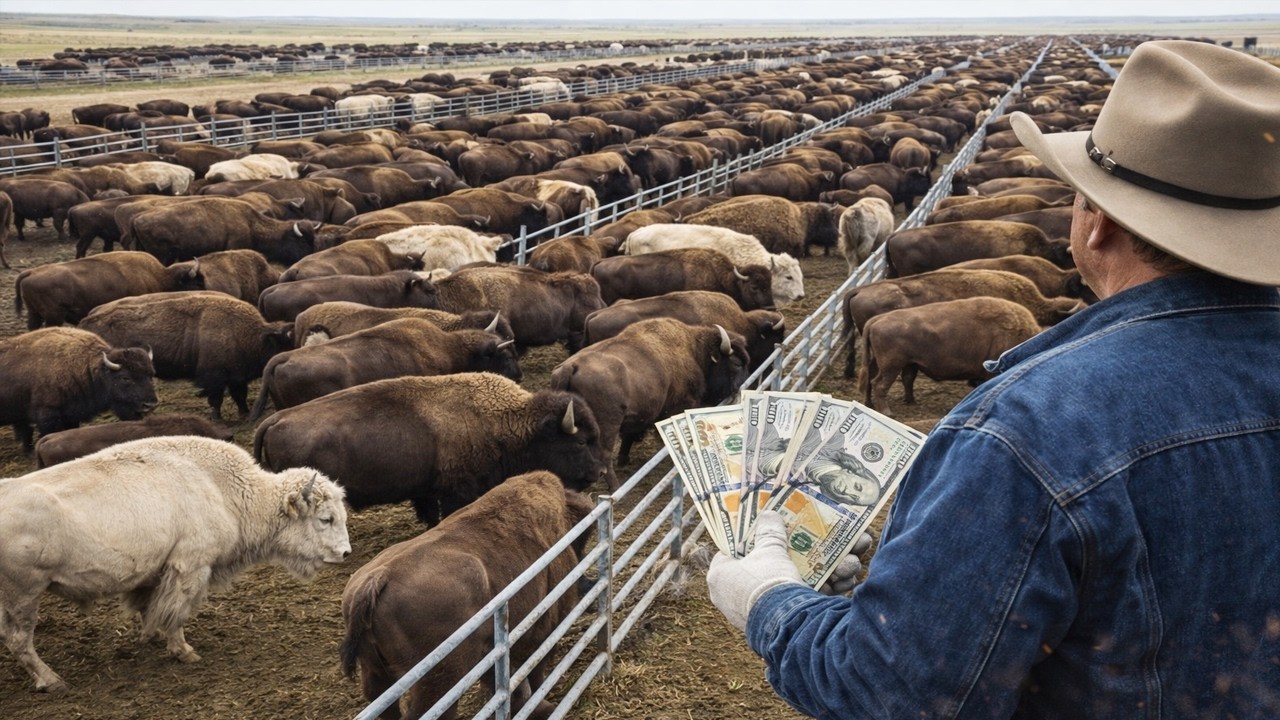
















Bison ranchers must implement proper riparian zone protection and secure creek crossings to prevent animal escapes, as natural water features can provide escape routes for bison; effective herd management requires understanding animal behavior, using training cues like feed cubes, and maintaining regular monitoring of vulnerable areas, especially after rainfall events that can alter terrain and create new escape possibilities.
Bison Ranch Fence Repair & New Calves: Pasture Management
Added:Basic principles of bison behavior and temperament, highlighting how their wild instincts and physical strength differ from domesticated cattle.
Fundamentals of agricultural fencing, including the structural differences between standard livestock wire and high-tensile or electric fencing designs.
Introductory pasture management concepts, specifically how natural features like creeks, rivers, and topography impact boundary integrity.
An understanding of the bison calving cycle and the heightened protective instincts of maternal cows during this period.
Riparian zone management and eco-friendly erosion control to secure waterways without disrupting local ecosystems.
Low-stress livestock handling (LSLH) techniques customized for herding and managing semi-wild ungulates safely.
Advanced ranch infrastructure design, focusing on corral systems, handling facilities, and heavy-duty squeeze chutes engineered for bison.
Post-natal herd health monitoring, including nutritional requirements for lactating cows and preventative health protocols for new calves.
177.3K views9Klikes22:03Original Release: 2023-05-25
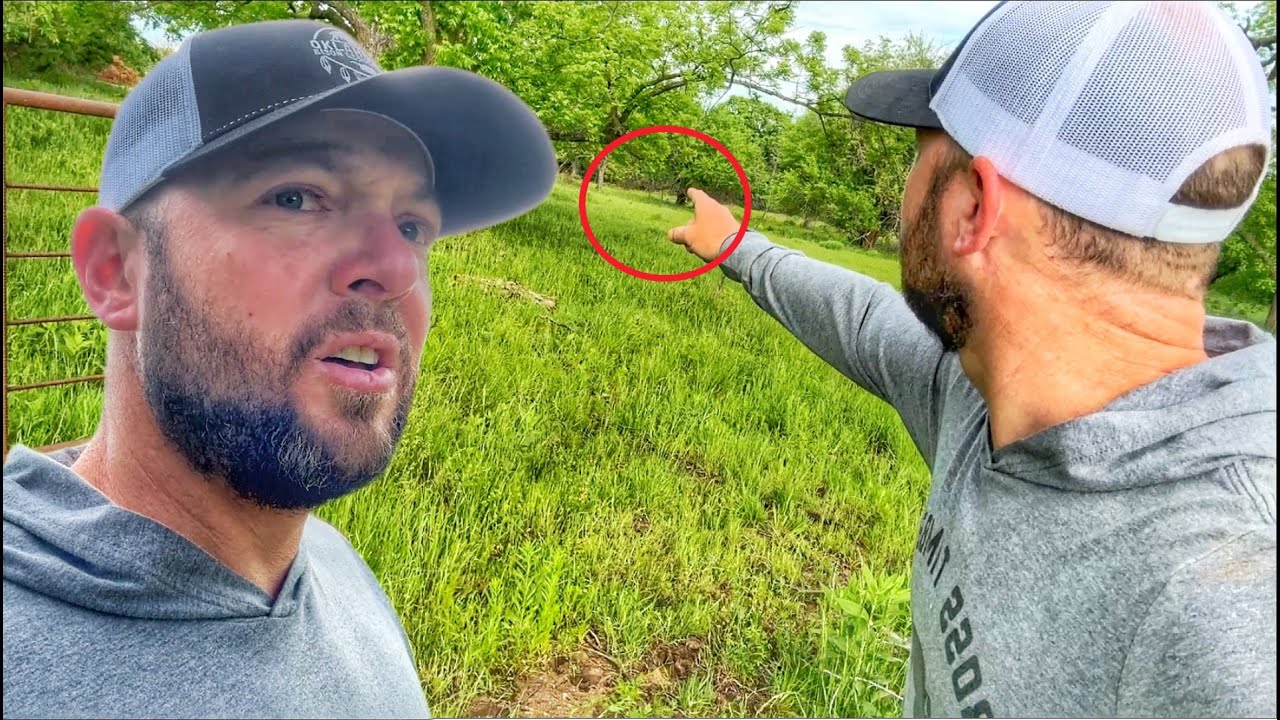
uh-huh uh-huh hey not yet you're gonna get everybody excited well it's too late for that you got everybody around that picture we are going to check the house herd and make sure they're behaving if you saw our last video um we had some oops is what my papa Coke used to say because somebody let them out kind of the worst nightmare of being a bison owner and Rancher Marissa and I have been doing a lot of fence work and in some uncomfortable situations needless to say snakes creeks rough terrain you name it we've been in it but we can't find the Hawthorne right now so um we still gotta find them listen I came out here yesterday and we did a herd check in the morning this is the first time that one of our Originals which is Bell Star had a cat had a DNA test done honor I did Dunbar and Big Joe I pulled hair on them and what happened was it came back as oh it's bellstar's baby so we've keper she is a dumb bar baby Dunbar and Bell star part of my original five this effort the zero eight two was bred by hey guys Dusty Baker customers bye so welcome back to the channel I think we got some new babies let's go check them out Big Joe Hey Big Boy that's 54 the jumper there's the jumper 11.
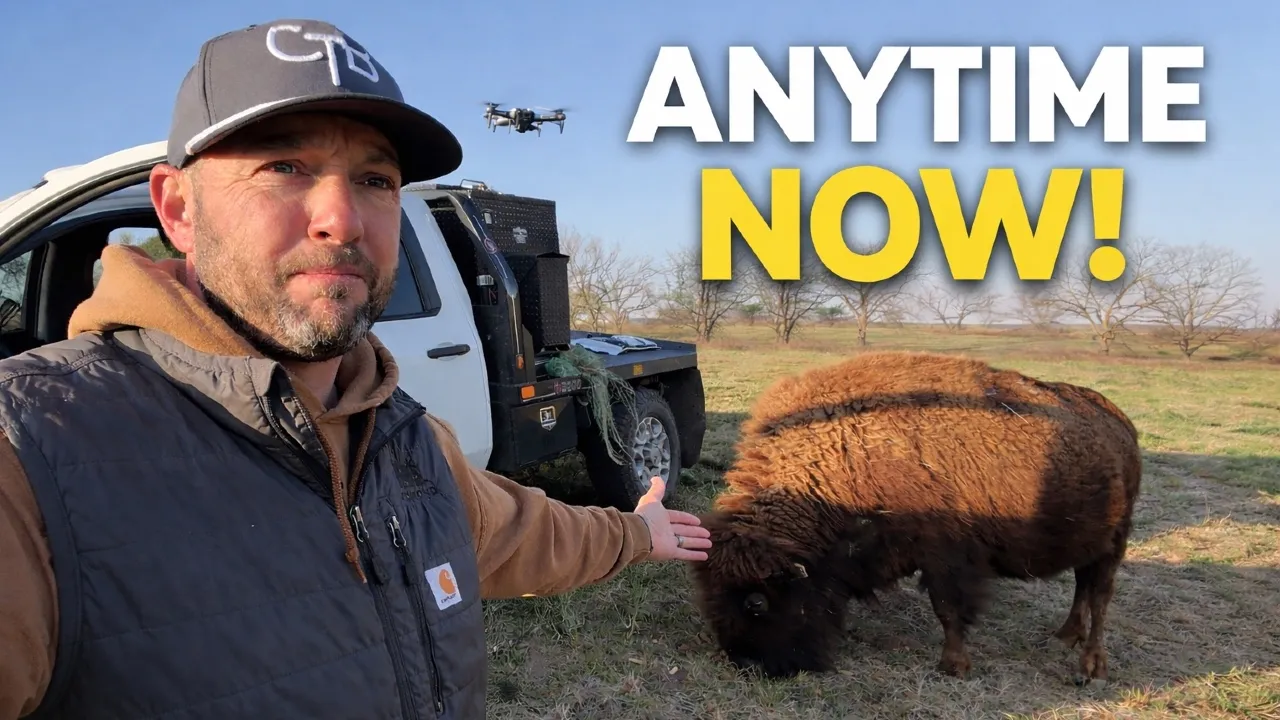
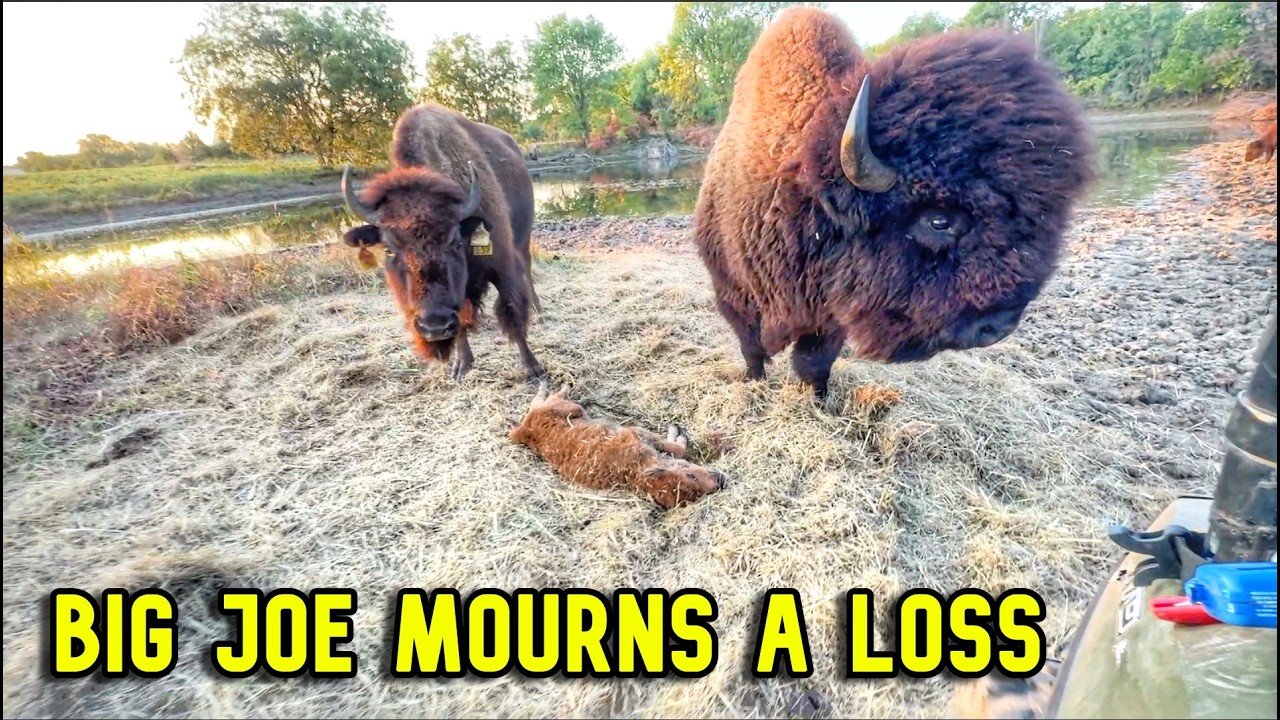
okay those are the first two born here so different here okay Mama well one of these is hers there's not twins over there I promise a lot of people ask about twins uh today yes yes a lot of people ask about twins bison can have twins however it's very very very rare and looky here lucky here man you sneak up on me it's a big boy to be sneaky like that oh he smells something uh-huh uh-huh not yet you're gonna get everybody excited okay not yet back up back up back up back up well it's too late for that you know ever you got everybody around that picture everybody and the little guys yeah we can we can feed yeah before Big Joe comes and gets me [Music] I'll have her no that's a bowl sorry sorry [Music] all right so I know this herd looks a lot bigger because it is but it's really not that bigger the reason these calves are out here is because somebody let them out that's all I'm gonna say so that's where I have a hard time gate cutting them to get them back up they're like I'm gonna be out here they want to hang out with the herd they want to be big kids and you know they want a Grace we have plenty of grass up in the Corral in the Trap area where core is and I like to keep them up there and let them graze that and keep them separated but because somebody let them out they're out here now and it's really not hurting anything they're sharing the grass and that's okay it's growing like crazy right now because of the moisture we keep getting and of course the beautiful weather and temperatures so look at the new one here they do a lot of wrestling when they're first born so fun to watch them and it looks like where are those other two at huh there's one red dog right there there's two yeah one two oh there's there's the newest one right there all right so there she is fun happened um and who this is we thought we noticed this yesterday so there's three and four so we've got four red dogs right now I'm trying to be careful here peaches is getting really close each isn't original there's one right there so the newest one they're all spreader on that because they're eating cubes I had to get them off of Marissa and I they're getting kind of close didn't do a very good job of watching look who's sneaking up behind me Peaches on this side ciao I'll give you some more cubes it's been a long time since we've actually been given them trees they've been chasing this green grass so so quick ly just came up here you look so much like it's a heifer she had a little heifer this is a Noah's Noah from Broken Arrow bison oh there's there's uh Nora right there here's Nora hey look in there little Noir yeah you're kind of looking at her horn she got her horn damaged um somehow at the mom and Kevin's original place I'm not sure what happened but so yep little Nora is going to have a funky horn just like her mama looks just like her mannerisms definitely are a lot alike Big Joe he just keeps coming for more okay back up dude peaches so what we did is uh Marissa and I came out here yesterday and we did a herd check in the morning and we only had three babies and then what we did was we came back in the evening and we glanced down here we thought we had four and mom was showing no signs but here's what's interesting about this cap right over here and kind of back in the back here is this is the first time that one of our Originals which is Bell Star had a cath she's one of our first uh Productions one of our first calves she had a calf and I did a DNA test on her I pulled her hair because I knew we were going to keep her because we were trying to grow the hurt we had a DNA test done honor with some others that's when I did Dunbar and Big Joe I pulled hair on them and what happened was it came back and this is zero eight two heifer her mom is Belle Starr and so the only reason we knew that is because we pulled hair on him several several years ago and sent it to UC Davis a part of the uh North American Bison registry and it came back as oh it's bellstar's baby so we've kept her she is a dumb bar baby Dunbar and Bell star part of my original five this heifered the zero eight two was bred by Big Joe she's been here for ever since we got this place the Ponderosa she's been out here with him basically and so you've got a Dunbar heifer and then a big a Joe cap a lot of people ask can you breed back you can't breathe back but what we do is we try to move them around we try to switch our heifers up so that they're never with the same Bull and so she's one of the very first ones to have a calf from our original and so that's the first time that's happened first thing I had to get on this side of the fence it was getting kind of a little a little pressured in there everybody's wanting some cubes and they're fighting off cubes so anyways uh we are going to check the escapees that are back at the ranch yes of course if you saw our last video um we had some oops is what my papa Coke used to say he had an oops and we did have an oops uh Luckily everything went good and we got them all back in and um these guys are doing good we're check them daily every day we're checking for new babies and making sure they're good so right now we've got 54 Cal which is the jumper we've got a Texas 11. this is her first time at the Crosstimbers bison Ranch We rescued them in 2021 and 54 and 11 and then we have one of our own zero eight two she's had her first baby that's one I talked about earlier she's an original and the other one is a Peter Cole mama and she was a first timer as well so we have two first-timers ever because they're young mamas they're only like two or three years old and the Peter Coleman is from Peter Cole which is from Missouri a good bison friend of ours okay we are going to check the house herd and make sure they're behaving and because Marissa and I have been doing a lot of fence work and in some uncomfortable situations needless to say snakes creeks rough terrain you name it we've been in it and um it's what you got to do whenever uh you know your heart gets out so let's go check Creek's way up where she's going in yep awesome yeah it washed a bunch of stuff away so this is the creek it's actually up quite a bit it's a good thing we came down here and checked it this is the creek where they got out and we've had a lot of rain here in the past I don't know 16 hours or so maybe a little bit more and uh this Creek is the highest I've seen it I mean not that we've had this land for very long but you know since October of 21 I've never seen it this hot but the other thing is yeah it's going pretty good from the rainfall but the other thing is we've never had our bison back here you know obviously we spent a lot of time here recently because um I missed the spot basically and they found a way out and it's my fault because I have we've never really dealt with creek crossings and this riparian area and because of even before the Bison got out we've already been uh talking to some Specialists basically that protect riparian zones so we're working with them on protecting some of these riparian zones uh just from a damage of erosion from the animals goats sheep cattle donkeys horses can all damage these sort of banks right here and cause them to widen any road over time so something new all we're learning all this um about protecting these riparian zones the creek is awesome it's one of our favorite things about this place we also got to protect it now that the bison are back here on this land this 80 acres so that's something we're looking into and then also because whenever your bison get out at a creek you obviously have to pay attention to it so here we are so I know some of y'all are looking at this going Dusty that ain't gonna work and yes you're right this is a temporary fix these bison are all going to be in this pasture for about I don't know maybe two months maybe not even that this is to get us by and we come and check it quite a bit especially when it rains that's why we drove down here like we're gonna have to check it quite a bit to make sure but these panels we raise them up high enough so water could flow underneath them debris could get you know sort of underneath them it's catching some stuff right now but this Creek is not huge but like like we said this is the highest we've ever seen it so it's good to come and check the crossing um but it definitely needs some heavy duty stuff across here eventually and we'll eventually do that we'll never the Bison aren't in here we'll be able to tear all this down and actually start over and actually build some stuff across here where um it swings there's lots lots of stuff you could do for these creek crossings so we'll do that eventually probably when the Bison get out we've still got a lot of things work to do but we can't find the hossard right now so um we still got to find them yeah now that you know you you let your bison on the biggest pasture you have this 80 acres um sometimes they're hard to find especially when you have a creek that runs through there and with the creek is the tree line and the tree line can border you know and cover everything so you can't see pasture to pasture like you normally could in one big wide open space so we've had a hard time finding them here and there so come on Jackie Jackie's been roaming with us in the pastures for herd checks here lately I don't know why but she has been so you look funny wet I only found one it must be hot in the woods hear something Russell in there to crack the back behind me limb no it sounds like they're right back there oh I hear them see who comes out of the woods oh there's number two they're all just laid up I guess hello where's everybody at this may be it it's across the creek [Music] we need to work on that Crossing come on they're not even gonna be able to find the cubes she's shed hard look at her whoa I'm sure you just want to go up and pull it off thank you there's one to your left so you guys can see how tall this stuff is I mean it's all up to my this area some of it is crazy how tall some of this stuff is it's awesome after the shenanigans we had I think it's important to get them cubes around here [Music] they come running here [Music] Hey Big Boy look what we got for you hey right here [Music] yep I know we were super lucky to get those animals back in and this is a perfect example of why we use cubes whenever they got out uh well it's kind of funny they wouldn't respond to Cubes but these animals are so used to us when they saw the ATV they were sort of chilled out when we saw them around this neighborhood they were they calmed down a little bit I tried to get them with the sack of feed and I couldn't do it but their behavior they didn't just keep running they kind of calmed down once they got in a corner in a tight spot and I just needed them to go One Direction and we finally got them to go down the main road but the point of that is is things like the cubes you come out here you shake the sack they hear the ATV they come running out of the woods which is going to be interesting trying to find them all you know on this on this part of the property having them respond to the cubes is such a big deal and I'm still working on getting getting a cake feeder and a flatbed on my truck so we'll have that too as well with the ATV but them getting used to that and cases where they get out or you need to rotate them pastures or you need to get them up to your Corral system before you work them having them respond to the key cubes into the ATV is a big thing and you know kind of the worst nightmare of being a bison owner and Rancher is when they get out getting them back in you've hear so many horror stories about their bison getting out and them having to actually put them down that's the worst case scenario so the creek crossing is a new thing to us and we knew that existed there we just didn't think they would go through it and unfortunately they did but good thing is is we got them all back we got them all safely back and I'm proud of my bison for the way they responded they went out in the open they chilled out once I kind of got there and with the help of my buddy Cole Marissa guiding traffic and creating a blockade it worked out and but I'm really proud of the way they handled themselves and not went crazy basically and ran all across Murray County we're excited about something else we've had some crazy stuff happen I know I know but there's something big around the corner that we cannot wait to bring you and I've been talking about this a long time been hinting to you for a long time about some changes that are coming to the Ponderosa when I say changes I mean big changes are coming major challenges are about to bestow on us for sure and uh we're gonna have our hands full let's just say that hope you guys are ready for it because um you're gonna see something a whole lot more than you're used to anyways thank you guys for watching us we'll see you guys soon keep on boxing ranging [Music]
Up Next

4:56
Cottonwood & Willow Planting: Stinger Bar and Wattle Restoration
@TamariskCoalition
13K views•2014-07-19

26:22
Walking in the City: Urban Rituals and the Flâneur in Contemporary India
@PSBTIndia
1.9K views•2016-08-02

9:49
FastAPI vs Flask vs Django: Choosing the Right Python Web Framework
@TechWithTim
302.5K views•2024-05-26

1:42
Game of Thrones Opening Credits: A Cinematic Analysis
@gameofthrones
46.3M views•2011-04-18
Related Study Plans & Knowledge Roadmaps
Structured learning paths in General & Interdisciplinary Studies
general-studies
Artificial Light: History, Tech & Human Impact
01The Pre-Electric Era: Fire, Oil, and Gas Lighting
02The Incandescent Revolution and Grid Electrification
03Gas Discharge and Fluorescent Illumination
+ 3 more learning modules
14h6 modules
Explore Roadmap
general-studies
Elevator Engineering: History, Physics & Cities
01From Hoists to Safety Brakes: The Dawn of Vertical Lift
02Hydraulic vs. Traction: The Engineering Physics of Elevators
03Modern Speed, Safety, and Algorithms
+ 2 more learning modules
12h5 modules
Explore Roadmap
general-studies
Rubber: Material Science, History & Geopolitics
01Origins of Natural Rubber & Mesoamerican History
02The Chemistry of Natural Rubber & Vulcanization
03The Geopolitics of the Rubber Boom & Colonization
+ 2 more learning modules
12h5 modules
Explore Roadmap
general-studies
Containerization: Evolution, Logistics & Trade
01Ancient Trade & Bulk Cargo: Amphorae to Barrels
02The Industrial Revolution & Cardboard Packaging
03The Containerization Revolution: Malcom McLean
+ 2 more learning modules
12h5 modules
Explore Roadmap