

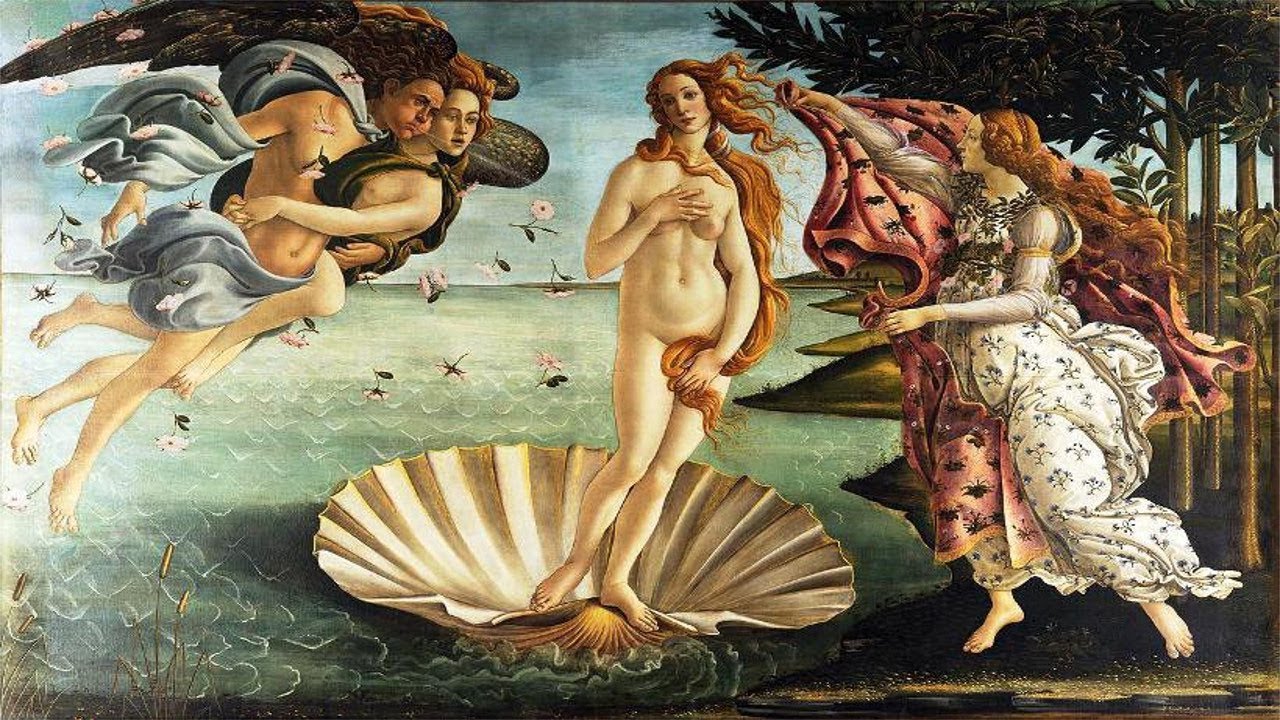






















Aesthetics, originally defined as the science of sense perception, has evolved from ancient Greek and medieval objectivist views (where beauty was considered an objective property existing independently in nature, numbers, and divine order) to modern and contemporary subjectivist perspectives (where beauty is seen as a subjective experience or illusion). This transformation began with Pythagorean and Platonic ideas about mathematical proportions and harmony in nature, continued through medieval theological aesthetics, and culminated in modern skepticism about objective beauty, as represented by philosophers like Spinoza, Hume, and Kant.
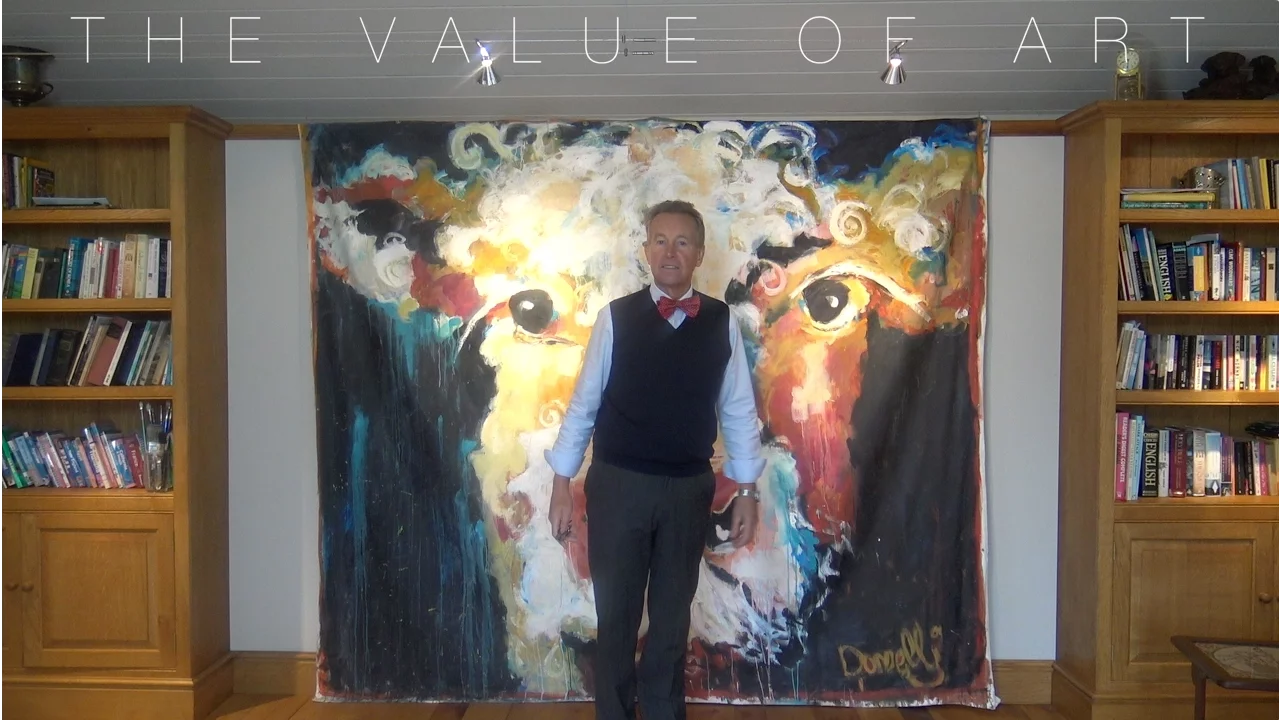
Aesthetics in Art: 1995 Robert Lenkewicz Lecture
Added:Basic understanding of Aesthetics as a core branch of philosophy, specifically concerning the nature of beauty, art, and taste.
The philosophical distinction between objectivity (independent of mind) and subjectivity (dependent on individual perception).
Familiarity with foundational Western aesthetic theories, particularly the ideas of Plato (art as mimesis) and Immanuel Kant (disinterested judgment).
A general overview of 20th-century art history transitions, highlighting the shift from traditional representation to modernism and conceptual art.
In-depth study of Robert Lenkewicz's personal oeuvre, particularly his thematic 'Projects' analyzing marginalized human behavior, love, and death.
Exploration of contemporary developments in aesthetic theory post-1995, such as Nicolas Bourriaud's Relational Aesthetics and the impact of digital media.
Investigation of Neuroaesthetics, analyzing how modern cognitive science maps the biological and neurological processes underlying aesthetic experiences.
Application of objective and subjective aesthetic frameworks to write formal art critiques and perform visual analyses of diverse artworks.
192 views6likes21:21Original Release: 2019-05-30
in 1995 I recorded Robert Lang bits at Plymouth College of Art Design doing a lecture on art on the 5th of October 2017 I managed to salvage the link which tapes from s VHS sorry about the quality but the curator who was Brian Preston and notice a young Nick that he was trying to study aesthetic pendant science aesthetics for the Greeks meant to perceive or apprehend through the senses uncommon turn Aesthetica would have meant science dealing with sense perception but clearly the concept of aesthetics as the science of sense perception is not what we now they regard as aesthetic burned-up is obviously saying that beauty is the subject of this science of aesthetics it is something which is sense or illegal Percy banker like Descartes and Spinoza was a rationalist so we would expect him to hold the rationalist views on aesthetics generally shared by all ancient and medieval philosophers beginning with Plato and Aristotle and that view was that beauty was objective out there beautiful my attitude to it made no difference Beauty was a jet out there batches right objective beauty being the proper object of rational entry is a common doctrine of the great early thinkers they felt that beauty was in me and surely no but Ganga extending the theories of thinkers like Descartes and lightning ka-chow okay please right no he's not sensory agency specialization soon wonders what if anything is all these areas together looking at our subject correctly can be helpful but it is manifestly the entire pre-socratic period has as its most influential representative he observed certain patterns and number two relationships occurring in nature we know that he was interested in the dependents on link of the pitch of a note emitted by a vibrating string the exponent of the harmony of nature was for pythagoras to be found in the science of numbers he speculated that harmonious sounds were vibrated by the heavenly bodies as they described their celestial orbits the music of the spheres it was believed that number ratio for the secret a metric proportion whether expressed in music poetry of building or universe as a mirror a subtle reflection of an abstract order and insight into dance brain the pythagorean's developed a taste for mysteries special significance attached to certain geometric forms in particular the five platonic bodies the last of these known as the dodecahedron and it was particularly popular with his 12 Pentagon claims unite it was Plato's fish essence symbolizing their the pentagram was used by the pythagorean's is a simple of recognition between members of their Brotherhood and was called by Pythagoras known by a number of later hermetic philosophers that the 10 points 1 to 4 I Archy but in striving line one two three four five six seven eight nine ten the interesting thing is then another pencil appears inside upside down and you can do that again there it is again quite trivial so far however there was an ideal proportion which they called the harmonic mean or the codon section the amount of DaVinci the Mona Lisa is constructing up a cinema or at least identify painting additional photography so humanity value into eight sections he was that the very point in participating to the master is found in every one of these ratios every single one of these ratios will have that proportion even larger versions of the scale of this in relation to that info in relation to that Pentagon in relation to that same the construction of the golden rectangle probably most popular form of this ratio contains properties that are related to creative centuries truly another logic the temple site this is a fairly conventional geometric formula Leonardo da Vinci believed that branches came off the trees at a sporadic ratio directly proportional that Smile shelves had that kind of proportion but waves to seashore at that kind of support 30 century the mathematician Fibonacci scored Fibonacci series 1 plus 1 because 2 plus 5 people 5 people taking 13 as a ratio there is a proportion Pythagoras believe that mathematics is the foundation of the intelligible world and of the invisible world bility matter proportions have therefore like ideas and autonomous existence they are consequences of the arithmetic or metric monic means extolled by Pythagoras and theta and are derived from very nature of number it follows according to this view that have been lined every surface every volume whose elements are arranged in conformity with these proportions reflect the idea of beauty beauty would rest on objective foundations independent evil of man when Pythagoras a truth is great theorem he offered a hundred oxen to the muses in fact the inspiration and in the belief that he had the key to the structure of nature itself I remember someone and referring me to both which describes a temple in Kentucky it's supposed to be there now and as she walked in it had seven fights and simple width and each of the pillars that supported enormous ceiling who were a certain width and certain height the textured stonework on the inside was a particularly particular character the quality of the white stain was a particular tone and a particular saturation the spaces in between the pillars were of a particular proportion and all of this is designed in such a way that whoever walked in no matter what culture they came from the claim was that the structure of the buildings are building construction in 13th or 14th century over 100 years would evoke this particular state of market obviously prepare treats date for worship for humility okay sounds a bit extreme and eccentric and let's relegate the motion to poetry but we're all familiar with the atmosphere of the peoples and dark night skies and flat seas we know that a particular atmosphere a particular set of relationships in relation to our own scale devotes immediately I remember when I was younger I saw me in Britain by jura jura jelly painter remarkable draftsman and etcher if there appears a typical magic square and which fascinated followers of number C we can see how each horizontal and vertical line as to the long diagonals they were and he divided into sections of for each of hers and up to 30 this patterning delighted many a philosopher Alchemist and Magus the excited there was an insight into the notion but the structure of matter and the mind of God were linked and could be measured after Pythagoras Plato and Aristotle made observations in the field of psychological aesthetics they stressed the importance of ethics by concepts such as the beauty of virtue and so on when I was 12 when students telescope and I took it into the bedroom and I aimed it at the moon but I was too frightened to look through something so dramatic and powerful Ravis vast in looking so small in the distance I remember getting quite a distance away from the Andes dramatic increase of scale change of scale something took me sometimes just I had similar sensation with his wonderful would come to church children leaving the earth behind him and the Sun rising and setting his weight below him he the stars of Allah he climbs the highest peak and somehow breaks through the heavenly spheres and seems to been competent nature working the grander system tonight for an early medieval image the centuries pass we find Vitruvius and san agustin final Alexandria's followed by the church fathers and then people school men all of whom evolved fascinating and except that it studies Trinitarian aesthetics Christological aesthetics charismatic aesthetic very logical aesthetics 1300 and endless theological variations in the light of this range of aesthetic inquiry touched upon before the dawn of the Renaissance it is no wonder the next few centuries produces instead they deepened enlarge and enrich the various branches that an emerge from ancient and medieval times as the centuries passed specialised areas began to dominate sociological aesthetic special psychological as there is cultural estate new theories about light color form acoustical aesthetics therapeutic phenomenological step here we come to the first essential feature of the history of aesthetic theory and it is this ancient and medieval centers writing on aesthetics were all aesthetic objectivism their core beauty was out there where as a large proportion of modern and contemporary philosophers and estheticians are skeptics or aesthetic subject lists early and medieval giants like Plato Aristotle Augustine and surgical Thomas Aquinas all trusted their sensitive and reason taking existence of beauty for grunt rarely trying to offer any proof for it without their in God in nature in numbers with the dawn of modern sort such speculations with in a way but of Spinoza David Hume Immanuel Kant followed by an uninterrupted line of European and American estheticians doubted or denied the objective reality of beauty they doubted this in a variety of ways but share the view the beauty was not necessarily out to their original artistic power the first cause it is only the midst of this world that a new trans pickering illusion becomes necessary in order to keep the animated world of individuation if we could imagine dissidents become mad and what else is mad this dissonance to be able to live would mean a splendid illusion that would cover dissonance with a veil of beautiful this is the true artistic aim of Apollo and whose name we comprehend all those countless illusions of the beauty of mere appearance that every moment like worth living at all these two drives unfold their powers in the strict proportion according to the law of eternal justice in 18th century Martin called neoclassicism an event the right and left side Brennan these do these always seemed variations on the theme throughout the Greeks knew that this effect should be necessary everybody should be able to feel most assuredly by means of intuition provided he has ever felt if only in a dream but he was carried back into an ancient Greek existence walking on the lofty ionic colonies looking up towards a horizon that was cut off by pure noble lines finding reflections of his own transfigured shape in the shining marvel at his side and all around them solemnly striving or tentatively moving human beings speaking with harmonious voices and a rhythmic the language of gesture to a man in such a mood an old Athenian looking up at him with sublime eyes of East Coast might reply but say this to curious stranger how much did this people have to suffer to be able to [Applause] [Applause] it's become much more complicated because of that I did stop at me - you're quite right and from Nichiren everything changes because it starts becoming extremely specialized there's no longer dealing with ideas as such it gets broken down in terms of language itself and people like the couch down in a different kind of way down there and most of the run are called deconstruction stinkers require such a level of initiation but it's very difficult to to popularize the ideas it's very difficult indeed one tries but it doesn't make much sense so totally under there indeed as many time said in the end of the track agents as fast as you can see this video salvaged in memory of Robert Oscar link of its thanks to Plymouth College both design 1995 Brian Preston and Nick there's been crystal murphy of video production 2017 you can contact me at CCS four to twelve hotmail to come and if you can help to sponsor my videos you paper me a CCS photo one at gmail.com thanks for watching the video
Up Next
8:54
Art or Prank: Duchamp, Readymades, and Institutional Critique
@theartassignment
287.8K views•2017-07-27

12:54
Triumph of Orthodoxy Icon: Byzantine Art & History Explained
@BenCallan
2.1K views•2024-08-06

9:49
FastAPI vs Flask vs Django: Choosing the Right Python Web Framework
@TechWithTim
302.5K views•2024-05-26

1:42
Game of Thrones Opening Credits: A Cinematic Analysis
@gameofthrones
46.3M views•2011-04-18
Related Study Plans & Knowledge Roadmaps
Structured learning paths in General & Interdisciplinary Studies
general-studies
Elevator Engineering: History, Physics & Cities
01From Hoists to Safety Brakes: The Dawn of Vertical Lift
02Hydraulic vs. Traction: The Engineering Physics of Elevators
03Modern Speed, Safety, and Algorithms
+ 2 more learning modules
12h5 modules
Explore Roadmap
general-studies
Rubber: Material Science, History & Geopolitics
01Origins of Natural Rubber & Mesoamerican History
02The Chemistry of Natural Rubber & Vulcanization
03The Geopolitics of the Rubber Boom & Colonization
+ 2 more learning modules
12h5 modules
Explore Roadmap
general-studies
Containerization: Evolution, Logistics & Trade
01Ancient Trade & Bulk Cargo: Amphorae to Barrels
02The Industrial Revolution & Cardboard Packaging
03The Containerization Revolution: Malcom McLean
+ 2 more learning modules
12h5 modules
Explore Roadmap
general-studies
Textile Tech: Evolution, Labor & Global Impact
01Pre-Industrial Textiles: Handloom & Cottage Industry
02Mechanization: The Spinning Jenny to the Power Loom
03The Factory System & Global Labor Transformation
+ 2 more learning modules
10h5 modules
Explore Roadmap