






















A group is a set G equipped with an operation that satisfies three fundamental properties: (1) Associativity - for any elements a, b, c in G, (a ∘ b) ∘ c = a ∘ (b ∘ c); (2) Identity element - there exists an element e in G such that for all a in G, e ∘ a = a ∘ e = a; (3) Inverse elements - for each element a in G, there exists an element a⁻¹ in G such that a ∘ a⁻¹ = a⁻¹ ∘ a = e. Groups can be abelian (commutative) or non-abelian, and subgroups are subsets that themselves form groups under the same operation.
Group Theory Foundations: Definitions, Properties, Subgroups
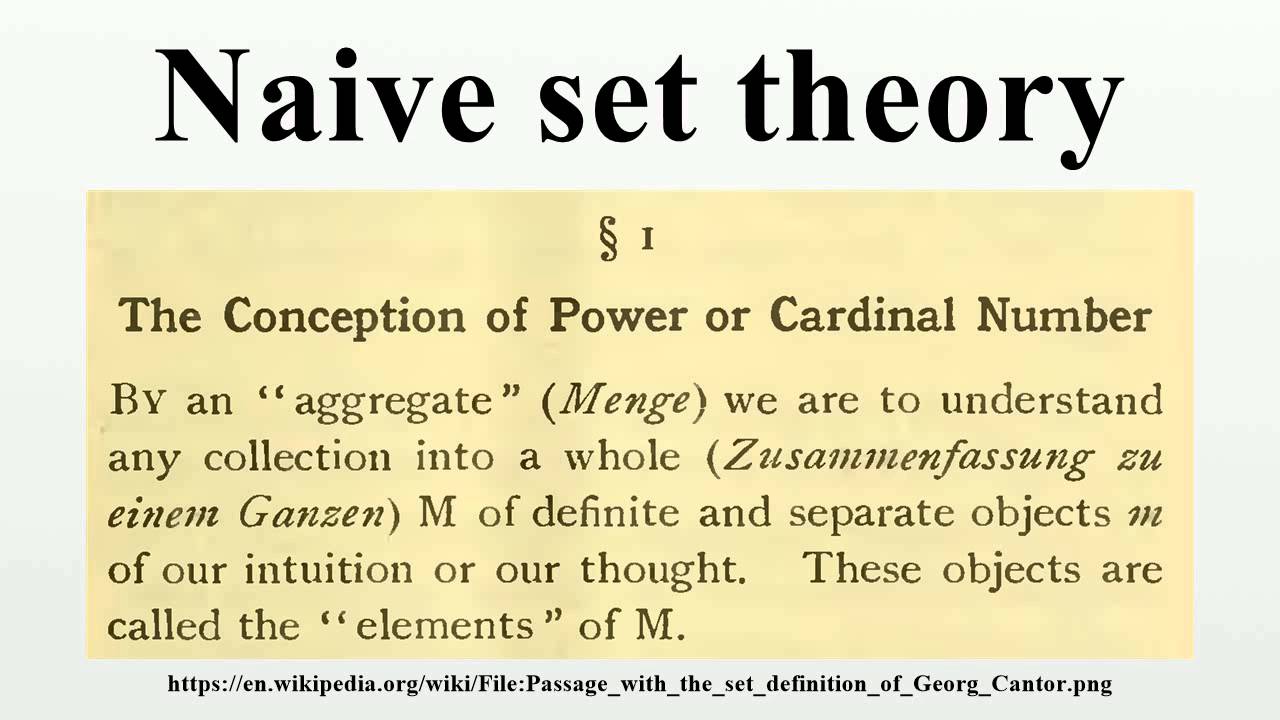
Added:Basic set theory, including elements, subsets, Cartesian products, and relations.
The concept of a binary operation and properties such as closure, associativity, commutativity, and identity.
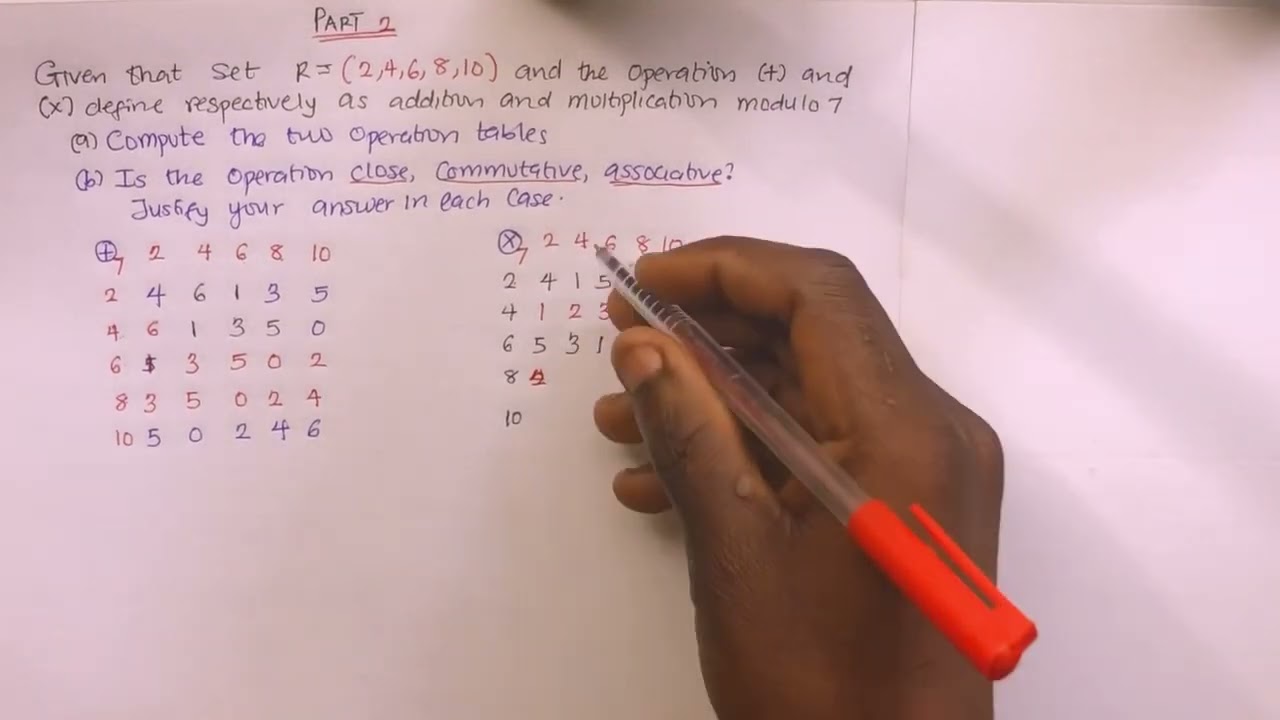
Familiarity with standard number systems (such as integers under addition) and basic modular arithmetic.
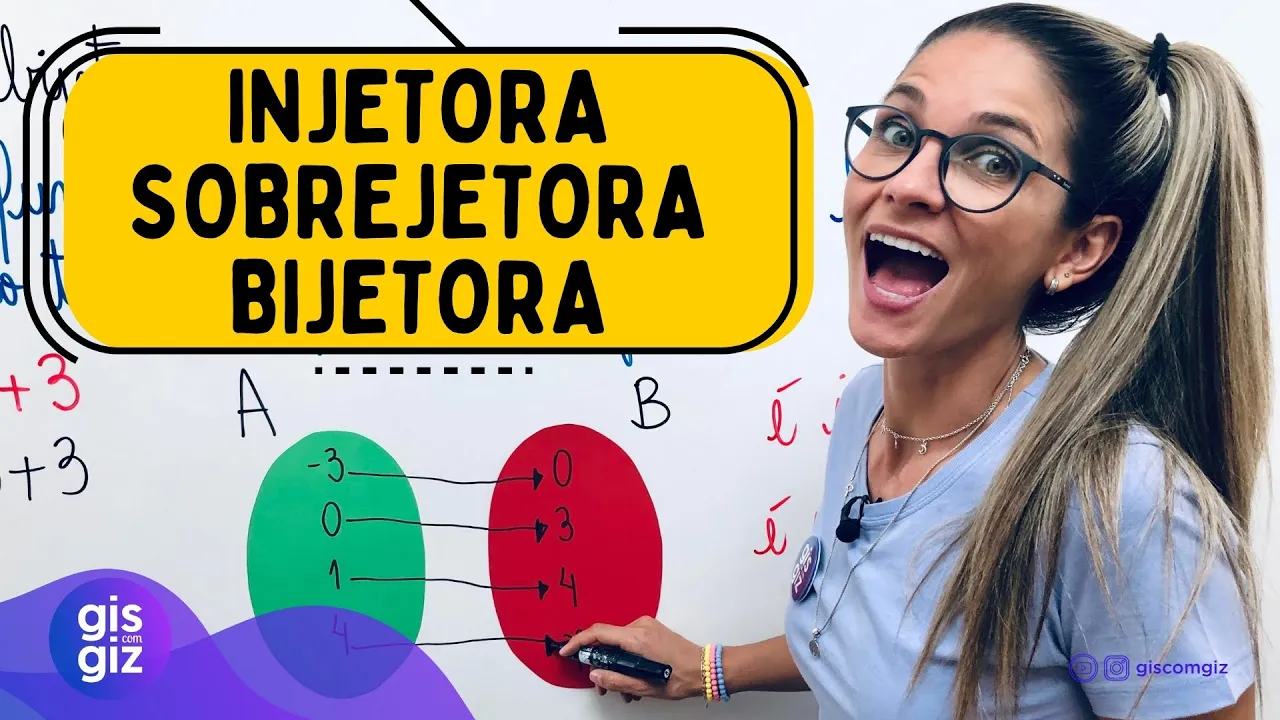
Understanding of functions, particularly injective, surjective, and bijective mappings (permutations).
Lagrange's Theorem, which relates the order of a subgroup to the order of the parent group using cosets.
Normal subgroups and the construction of quotient (factor) groups.
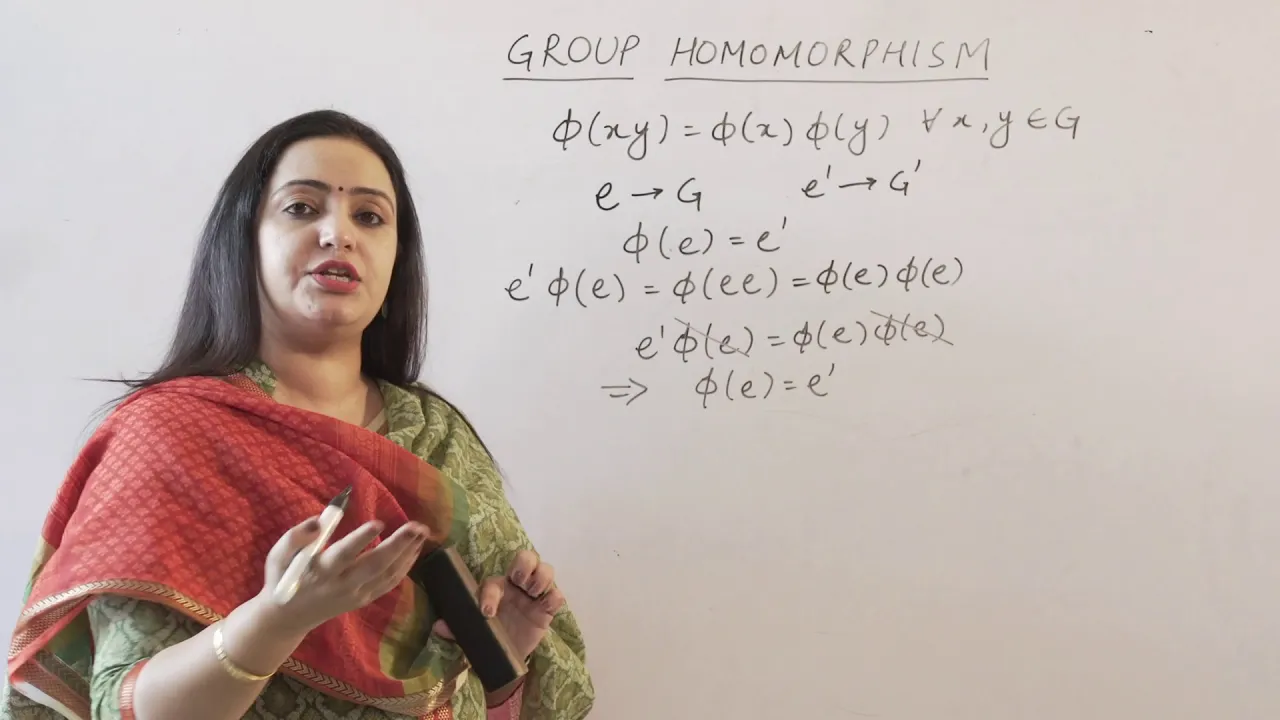
Group homomorphisms, isomorphisms, and the Fundamental Isomorphism Theorems.
Group actions on sets and key results like the Orbit-Stabilizer Theorem and Burnside's Lemma.
Applications of group theory in modern cryptography (e.g., Diffie-Hellman, elliptic curves) and chemical symmetry in physics/chemistry.
13K views4.8Klikes1:29:24Original Release: 2024-08-23
welcome to part one of my course on algebraic foundations part one will be about algebraic structures called groups and in the first chapter I will simply introduce them and discuss the definition and some basic properties we will Begin by studying some examples to motivate the notion of group then I will give you the definition of a group and study some of their properties and third we will look at subgroup groups that is groups within other groups first let's look at the motivating examples and we begin with a very well familiar one the integer numbers Z algebra is about understanding the processes of computations this means what are the objects of computation and which laws have to hold to formulate equations and solve them our first example and you could think of this this as the most fundamental example to explore these algebraic questions are the integer numbers that you're well familiar with Z is the set of numbers 0 1 2 3 4 5 6 7 and so on up to infinity and the negatives -1 -2 - 3 all the way down to minus infinity and this set and these numbers here we consider together with the addition now and we will ignore multip ication at the moment and come back to this at some later point but for now we just focus on the addition of the integer numbers what does it mean to add two integer numbers you know this notation here X+ y so this is precisely speaking a map plus from the cartisian product of the integers with itself so you take a pair of integers and what you get out from this map is a single integer that we note by x + y and instead of using the usual functional notation plus with arguments XY we stick with our familiar notation X+ y for this map there are two laws for this addition that you're probably very well familiar with first is the associativity so if we add three integers then it doesn't really matter whether we add x to the sum of y + z or if we add x + y first and then add Z later and the other familiar property is commutativity which means that the order of the operant doesn't matter in the addition so x + y is the same as y + x we have one element in the integers that plays a very very special role for the addition and that's the element zero so why is this special because it's the only element that leaves all the other elements unchanged under addition so for any inte X we have x + 0 is equal to the original X and because of this property we call zero the neutral element with respect to the addition in the integers another operation that we have is subtraction so given to integers X Y we can form xus y so we subtract y from X but if we think about it then subtraction is nothing else but adding integer x to the negative of the integer y so recall for each integer y we also have its negative included in Z so subtraction is nothing but adding x to the negative of some other integer and this reminds us of this important property that I just stated for every integer X in Z there exists its inverse element inverse here with respect to the addition which is called minus X so that's simply the the negative number of X and this inverse is defined by x - x equal to Z so if we add X to its inverse element minus X we get the neutral element zero and note that talking about the inverses the negative elements only makes sense after we establish the presence of the neutral element okay so if we didn't have the element zero in the integers then it wouldn't make sense to talk about negative elements there's another special element in the integers which is the element one and the one is special because we can use it to generate every integer by repeatedly adding it to itself or taking its negative minus one if we want to generate the negative numbers so for any integer X we can obtain it by taking one and adding it x * to itself or well if it's a negative integer we would use the absolute value of x * minus1 may be curious why we even emphasize these properties so much because they're well known to to us they're very well familiar but I do this because we will see that these properties that we just listed for the integers reappear in completely different objects and because these properties reappear it will allow us to develop a very powerful common theory for all of these different objects and this brings me to our next example the permutations so at first glance permutations are something completely different from inter numbers namely a permutation Sigma of some set X is nothing else but a bjective map Sigma from X to itself now recall from set theory that the bjective map is one where there's a unique correspondence between elements in the input set to elements to every element in the output set so we in particular I have an inverse map that reverses this Sigma and here a permutation is the B itive map from one set to itself and we focus here on finite sets and because in finite sets we can just enumerate all the elements we just stick for Simplicity with elements with the sets that have the elements numbers 1 to n so I denote this set by xn so this is the set of the numbers from 1 to n for some integer greater equal to one and for these sets we can interpret the per ations as rearrangements of the numbers 1 to n and we use the following notation for them so a permutation of such a set from 1 to n is written like that in the first in the top row we just write the numbers one two three and so on up to n and in the bottom row we write the images under this permutation so we here we state with which element they have been exchanged as an example let's look at the permutation Sigma for the set one to three that assigns one to the element three two to itself so nothing changes for two and three is assigned to the element one in this notation we would write it we would write Sigma as 1 2 3 in the top row and then three 2 one so the three here is because one gets assigned to three the two here because two is fixed nothing happens with the two and the one here because three gets assigned to one so what this permutation does is it just swaps the position of one and three and does nothing to the element two and for the permutations of the numbers 1 to n we denote the set of all permutations by this letter SN this is a finite set as you may know from combinatorics because we know that the number of all permutations of n elements is n factorial so the the number of elements in this set as n is n factorial which by definition is n * N - 1 * N - 2 down to * 2 * 1 and you can actually quickly derive this formula by thinking about how you can enumerate all the permutations of n elements so if we stick to this notation here you would have end choices to pick the first entry here after you fixed the first entry you would be left with n minus one candidates to pick the second entry after you fixed the first two you would be left with n minus 2 entries for the third and so on down to the last element so once you've fixed all the images for one up down to n minus one you would only have one element left that you could map n to and this corresponds to this final Factor one here so yeah thinking about it like that you can easily derive this formula here two permutations are both maps from the set xn to itself and this means we can compose them to obtain a new permutation so in the usual notation of map compositions Sigma composed with to if these are two permutations is again permutation from xn to xn and by definition this is just the permutation that takes the number K and first permutes it by to and then the result of that is permuted by Sigma okay so first we rearrange the numbers 1 to n according to to and then we take the rearranged numbers and again rearrange them according to the permutation Sigma schematically we can see this in this little example here so Sigma is the permutation that Maps 1 to 2 2 to 4 3: 1 and 4 to 3 whereas to is the permutation that fixes the element one Maps 2 to 3 3 to 4 and 4 to2 and you can verify that the composition of these two where you apply to first and then Sigma is this permutation here and to make it a bit easier to derive this we can write down the two permutations like this so the the first one in the composition the rightmost one is tow we apply this first using these rules here so I indicated with these little arrows one is fixed so one gets mapped to two two goes to three three goes to four and four goes to two and after we're done with that we apply the the permutation Sigma and with Sigma one goes to two two goes to Four 3 goes to 1 4 goes to three and to get the composed permutation of those two we simply follow those arrows one goes to one goes to two so one goes to two two goes to three goes to one so two goes to one three goes to four goes to three so nothing happens with the three after all it's fixed four goes to two goes to four and same for element four it's fixed it's mapped to itself and in this way you can see that this is indeed the composition of those two permutations and together with this composition the set SN of all permutations of n numbers becomes an algebraic object itself these permutations together with a composition share a few properties with the integers Z firstly the composition is associative simply because it's a composition of maps and composition of maps are always associative so if you compose row with the composition of Sigma and to is the same as if you take the composition of row and sigma and compose it with with to that's just a standard property of maps so nothing particular about permutations gives you this associativity property but it's just because permutations are maps then we also have a neutral element for this composition just like zero was the neutral element for the addition in Z and this neutral element is the identity map of the set of the numbers from 1 to n so the identity map is simply the permutation that keeps all the numbers in their proper original order so it doesn't rearrange them at all and the identity map obviously satisfies this neutral element property if you compose any permutation with the identity that's like rearranging set of numbers after well not doing anything to it that's the same as just applying Sigma and it's the same as first applying Sigma and then not doing anything with it and since the permutations are bjective maps which means they do have inverse Maps so invertible maps and the inverse maps are also invertible due to the projectivity the inverses are also permutations so this means that for every permutation Sigma there exists its inverse permutation Sigma to the minus one so this is just the inverse map in the regular sense of mappings and of course Sigma combined with its inverse is by definition the identity and it's the same as combining the inverse with Sigma from the left so these properties make the permutations similar to the integers but there are also some differences and the integers satisfy the law of commutativity but for the permutations beginning with number n greater equal to three commutativity does not hold in general for permutations let's look at this example here we have Sigma the permutation mapping 1 to 3 2: 1 and 3 to2 and T the permutation that swaps one and two and fixes the element three and if we compose them if we compose Sigma after to we get the permutation 1 to 1 2 to 3 and 3 to two so the permutation that swaps two and three but if we compose them the other way around first apply Sigma and then to we get the permutation that fixes two and swaps the other elements so the one that swaps three and one and clearly these two are not the same so here with respect to the composition of permutations we do not have commutativity and you can easily extend these permutations here to permutations of any number larger than three so this example also holds in yeah for larger numbers three and we see that for any n greater equal 3 the permutation set with a composition is not commutative also Z was generated by a single element one through repeated addition of this element but for the permutations we usually cannot do with just one generating element for example if we just stick with S3 so the permutation of three numbers then the set of permutations is generated by these three permutations here the one that swaps 2 and three the one that swaps one and two and one that swaps three and one and it's a General but very non-trivial result that the permutations on N elements are generated by the so-called transpositions so these are those permutations of the numbers 1 to n that swap precisely two elements and leave all others in their place so you can see these are all transpositions they all fix one element and just swap the other two and this is a principle that holds in general for any number n but as I said it's not a trivial result I will just state it here but not prove it at this moment but be sure we will get back later to this now on to our next example something different here we look at the symmetries of a circle just consider any Circle located in the plane and by symmetry of the circle we mean any transformation that Maps the circle to itself so mapping a circle to itself means every point on the circle is transformed to another point on the the circle and these transformation are any rotation R Alpha about the center of the circle by an angle Alpha and any reflection Sigma L about an axis L passing through the center of the circle other Transformations are not symmetries because they would move the circle or distort the circle in a way that some of its points will be moved outside the original Circle here we have an image to illustrate this so here's our Circle here's a Center here's some point p on the circle and the vector pointing from the center to this point p and we can extend all of these rotations and Reflections to transformations of the whole plane then they would be linear Maps when we do this and from now on we shall assume that we do this and if you want to learn more about them for example their Matrix representations and some of their geometric properties I recommend you watch my course on the math Flix Channel linear algebra in 2D but let's have a look at how they work now so here we have the rotation by an angle Alpha which simply takes this point p and rotates it so the rotation doesn't change the distance to the center so it's kept on the same Circle just at a different angle Alpha to its original position and a reflection across such an AIS L that runs through the center of the circle yeah does what it says it reflects it so we take the the perpendicular line to this axis and draw it from the point P to the other side until we hit the circle again and this is the reflected image of P under this reflection Sigma L now we use the notation Sim Circle to note all the symmetries of the circle so the rotations and the reflections and once again we can observe some similarities between this set and our integer numbers or our set of permutations s n namely these symmetries in Sim Circle are maps of the plane to itself so we can actually compose them and the composition of two rotations R Alpha composed with r beta is again a rotation by the angle Alpha plus beta that makes sense you first rotate by an angle beta and then you rotate by an angle Alpha that's exactly the same as if you had rotated once by the combined Angle now which may not be so obvious but in fact is true that if you compose two Reflections let's say Sigma L and sigma H across AIS l and H then what you get is a rotation R to Alpha so by twice the angle Alpha that is enclosed between the two x's l and H and again what might not be so obvious if to compose a rotation and a reflection say R Alpha and sigma L then you get again a reflection Sigma H and here the axis for the reflection is our original axis L rotated by the angle2 time Alpha so where Alpha is the angle here and if you compose them the other way around Sigma L composed with r Alpha then you get again reflection Sigma h Prime and here the axis H Prime is the original axis L rotated in the opposite direction so by by minus 12 time Alpha in this way we find that the composition of symmetries yields again other symmetries of the circle so composition is an algebraic operation on the set Sim circle on the set of symmetries of our circle now let's compare this to the integers or to the permutation and the first thing we notice again is that since the elements of sim Circle are maps maps of the plane to itself or by restriction of the circle to itself their composition is associative here we have the associativity property again and just as I said for the permutations this is simply a property of maps this has nothing to do with this circle in particular but all composition of maps are associative if you're allowed to compose the maps in the first place there's again a neutral element in the symmetries of the circle and it's the identity map again now this time it's not the identity map of a finite set of numbers but it's the identity map of the plane which clearly Maps the circle to itself because it fixes every single point on it and we have inverses for all the symmetries of the circle namely every reflection is its own inverse if you think about it that's pretty obvious if you take a reflection X and you reflect about it and then you do the same reflection again everything is just back to where it started so composing a reflection with itself gives you the identity map and for every rotation we can undo the rotation by simply doing the rotation by the same angle but in the opposite direction so our Alpha composed with r minus Alpha is r0 rotation by angle zero and if you rotate by nothing then then you simply have the identity map again so this shows you that we do have inverses for all the symmetries if the identity map is the neutral element of our set of symmetries the set of symmetries of the circle is an infinite set since we have a rotation and a reflection for each angle Alpha between 0 and 2 pi now this set is even larger than the integers so recall the integers were also an infinite set but the integers are countable whereas this interval from 0 to 2 pi is not countable set so this shows this symmetries of the circle are significantly larger than the set Z let's look at commutativity first we observe that all the rotations commute because rotating by Beta and then Alpha is the same as rotating once by Alpha plus beta so R Alpha composed with r beta is R Alpha plus beta but addition is commutative so this is R beta plus r Alpha which is the same as R beta composed with r Alpha so the the rotations commute among each other but Reflections do not commute and also Reflections and rotations do not commute in general for example if we look at this here our Alpha composed with Sigma L the reflection across L composed with r minus Alpha is Sigma H and here H is the line obtained by L by rotating it by an angle Alpha now if our Alpha and sigma L would commute this would imply that L is equal to H because then we could move the r Alpha past the sigma L here and then it would cancel out with this one and we would be left with Sigma L but if H is the line obtained by L by rotating it by an angle Alpha then L equal to H can only be the case for Alpha equal to zero and this shows that we do not have commutativity in general when it comes to mixing reflection and rotations so the whole set of symmetries of the circle together with the composition of symmetries is not commutative even though the rotations actually are commutative among themselves also when we look for generators of this symmetry set here recall we had the one as the convenient generator for Z and we had finite number of generators for the finite set SN but we cannot write it down that easily for these symmetries here and this is due to the uncountability of this set so if we wanted to write down a minimal set of generators that would be very difficult of course we could take the whole set itself as generators but that would be a bit silly because it wouldn't give us any interesting information one thing we can say is that the set of all Reflections would be enough to generate this set of symmetries all the set consist of all rotations together with one single reflection would also be enough to generate this set of symmetries so these are still not minimal sets of generators but at least it's an interesting information on much smaller sets that would be enough to generate all the symmetries now we come to our next example which in a way is similar to the previous one because it's derived from that here we look at the symmetries of an equilateral triangle whose vertices lie on the circle that we just studied before so we have this situation we have our Circle again here the center and then we have three points on the circle that are arranged in such a way that they form an equilateral triangle and for convenience we just label the vertices 1 2 and three here we write Sim triangle to denote the set of all transformations of this triangle to itself so the symmetries of the triangle and we know note that we can identify any transformation of this triangle with the transformation of the whole plane that Maps the circle to itself because the end points here lie on the circle so any transformation that Maps the triangle to itself corresponds to one transformation that Maps the circle to itself and in this way we may consider the set of symmetries of the triangle as a proper subset of the symmetries of the circle but it is a much smaller subset than the full symmetries of the circle because not every rotation or every reflection will preserve this red triangle here and in fact the inner angles of this equilateral triangle are 120° so that's 2 Pi / 3 and the symmetries of this triangle are the following rotations and Reflections it's only six of them so much much less than for the full circle first Rotation by angle zero which is nothing else but the identity map so the one that doesn't do anything it's obviously a symmetry then we have the rotation by 2 Pi / 3 so this is a 1/3 of a full rotation this is what's happening here so one gets rotated where the two was before two gets rotated down here where the three used to be and three gets rotated here where the one used to be the next is if we apply this twice we get a 2/3 rotation which is the rotation by angle 4 Pi / 3 this is this one here where one gets rotated to where three used to be two gets rotated to where one used to be and three gets rotated to where the two used to be then we have Reflections Sigma l0 L1 and L2 where LK is the axis enclosing the angle 2K * pi over 3 with the with this x axis here so Sigma l0 this angle zero with the xaxis so it's just a reflection across the x axis that fixes point one but exchanges the points two and three next we have the Reflection by angle 2 pi over three that would be this axis here the blue one that one fixes 3 because it's right on the axis and it switches the points one and two of the triangle and finally we have the rotation Sigma L2 by 4 pi over 3 the the angle of the AIS with the x axis this one fixes the point two the vertex 2 of the triangle and flips vertices one and three of the triangle so the symmetries of the triangle form a finite subset with only six elements of the uncountably infinite set that makes up the symmetries of the circle again we have associativity of the composition of symmetries because this is just inherited from the larger set symmetries of the circle and the composition of two symmetries of the triangle is again a symmetry of the triangle we have the neutral element the identity within the symmetries which we just saw before and every symmetry has an inverse within the set of symmetries of the triangle so for the rotation 2 piun / 3 the inverse is Just 4 piun / 3 so we have a 1/3 rotation combined with a 2/3 rotation we get the full rotation which is the same as not doing anything if we rotate once by 2 pi and of course then the inverse of this one is this one and for the reflections again we simply have the property that each reflection is its own inverse so reflecting twice across the same axis is as good as not doing anything another interesting observation is that every symmetry of the triangle is completely determined by where it Maps the vertices 1 2 3 therefore we can interpret symmetries of this triangle as simply permutations of the set 1 23 and in fact the number of elements of the symmetries of the triangle is six which is 3 factorial so it's the same as the number of symmetries of this set here of the set of three numbers so we can identify the symmetries of the triangle with the full set of permutations of the numbers 1 to 3 and here we make this explicit it so the identity obviously is identified with the identity permutation the 1/3 rotation so Rotation by angle 2 pi over 3 is identified with this permutation here one goes to two two goes to three 3 goes to one the 2/3 rotation is identified with this rotation one goes to three two goes to 1 3 goes to two and the reflections are identified with these three permutations here that each fix one element and swap the other two so here the one is fixed the other two are swapped here the two is fixed and the other two are swapped and here the three is fixed and the other two are swapped and this shows us that the symmetries of the triangle and the permutations of three elements actually have the same algebraic structure even though they appear in completely different contexts so the sets they act on are completely different so once it's the triangle and the other one is just a set with three numbers but we've seen that this triangle is in a way sufficiently rigid that we can completely reduce its symmetries to the permutations of these three numbers and that's a very interesting observation that identical algebraic structures may appear in completely different contexts now we're ready to give the definition of a group so the properties we just studied for the integers the permutations are the symmetries of a circle or a triangle will be distilled into the following definition a group is a set G together with an operation called Circle that takes two elements of G produces a new element of G that has the following properties first the operation is associative which means that if we have three elements G1 G2 G3 from the set G we have that G1 composed with the composition of G2 and G3 is the same as the composition of G1 and G2 composed with G3 second there exists a neutral element also called the identity which is customarily denoted by the letter e that satisfies for all elements G from the set Big G that g composed with E equals g and this is the same as e composed with G from the other side and third ly every element G has an inverse element written like this G inverse that satisfies G composed with G inverse is the neutral element and is the same as G inverse composed with G as well and such a group is called ailion after the Norwegian mathematician Neil Henrik arble or also called a commutative group if for all elements G1 G2 from our group the order of operation doesn't matter so if G1 composed G2 equals G2 composed G1 and a few remarks on the notation so you don't get confused in this course or when you read up in the literature strictly speaking a group is a pair of two things namely first a set G and second the operation on this set and I will use this par notation when it's important to emphasize the operation here but very often I will write simply G to represent the group when it's clear from the context which operat we mean or if it simply doesn't matter which operation we mean and usually the group operation is simply written like a multiplication so G1 do G2 or simply G1 G2 without any symbol here for the operation and this is the case mainly when we do not make any assumption on whether the group G is a billion or not and then the neutral element is often also denoted by the symbol one or sometimes one index G to emphasize which group we're looking at and since we write it multiplicatively we also use this power notation G Square for G * G G3 for G * G * G and so on when we're looking at a building groups we usually write them additively that is we use the symbol Plus for the operation on the group and this is done to suggest similarity with the ailion group of the integers Z with plus with the addition and here the neutral element will be denoted by zero again in similarity to the integers and instead of using a power notation here we use a multiple notation so we write 2G when we mean G+ G we write 3G when we mean G Plus G Plus G and so on and when we use more exotic symbols for the group operations like all kinds of stars or dots or bullets then we do this to emphasize that we are talking about some abstract group and we do not want to associated with any particular well-known group in our heads time to look at some examples well let's just quickly revisit our previous examples so the integers that with the usual addition are a group which we saw in the beginning and they're even an ailan group because the addition is commutative and when we speak of the group z it is always implied that the operation is the usual addition so we will just talk about Z as a group without explicitly stating which operation we mean and then it's understood that we're talking about the usual addition example four our permutations SN of the set of numbers 1 to n with a composition of maps is a group and as we saw for n greater equal 3 this group is not a bilan because not all permutations commute with one another the symmetries of the circle with a composition of maps is a group again not an a bilion group and the symmetry of the equilateral triangle with a composition of maps is a group and this was a group contained in the larger group from the previous example the group of symmetries of the circle and an interesting thing to notice here is that these three examples the permutations and the two symmetry sets are defined through the action on some set so here the permutations act on the set of numbers 1 to n the symmetries act on the Circle or here the symmetries act on the triangle so there's always some additional set that we use to define these groups but in the definition of the group that we just gave these acted on sets do no longer play a role so when we're talking about groups we focus on the properties and the laws that are intrinsic to the acting elements that are intrinsic to the symmetries or the permutations here but we do not care so much about this sets that the action takes place on we care about the algebra of the acting entities here these form the groups and I think it's always helpful if we learn about a new structure to understand when such a structure does not appear so let's look at some examples of non- groups here we take a subset of the integers which are call X which contains the integers from minus 4 up to +4 and and together with the addition this inherits the associativity of the integer addition we have the neutral element zero and every element in here has an inverse element so for every positive number we have the corresponding negative number still this is not a group why is that because the addition plus is not a proper operation on the set X and we see this easily if we take the element four and add it to itself then we get the number eight but eight is not contained in x so addition is not an operation on X we would have to leave the set X to get all the results for the additions and this means this pair X and the addition of integers is not a group we also say that X is not closed under the addition the next example let's look again at the integers but now we look at the multiplication and together with a multiplication the integers are not a group why is that clearly the multip lication is an associative operation on Z and we have a neutral element namely the element one so if we multiply anything by one we get the same element again but what we're missing are the inverses of elements in Z so for any element that's different from plus - one we do not have an inverse in that because well the least we would have to do is to introduce fractions but fractions for elements other than plus - one are not contained in Z so we do not have inverses for the multiplication but even if we introduce fractions it still doesn't quite work out so if you look at the rational numbers Q so basically taking Z and filling it up with all the fractions or even the real numbers are together with the multiplications they're still not groups clearly again multiplication is associative we have a neutral element but still we have the element zero that does not have an inverse for the multiplication so recall you're not allowed to divide by zero and so there's no way to define a proper inverse element for zero within the rational or the real numbers with respect to the multiplication and this means q and R are not groups with the multiplication but let's look at some additional positive example of groups so we've seen that Z with the addition as a group and in exactly the same way we can convince ourselves that the rational numbers with the addition the real numbers with the addition and even the complex numbers with the addition are groups and to vindicate the multiplication a little bit well let's use this letter Hollow K to denote either the rational numbers the real numbers or the complex numbers and as we just saw on the previous slide K is not a group for the multiplication but we can define a subset which I call K times with this symbol here which is meant to be all elements X of K such that X has a multiplicative inverse 1 /x and for these three here this is the same as simply taking K without zero because every element in either of these sets that is different from zero does have a multiplicative inverse element 1 /x and then indeed this K times becomes a group since yeah any product of non-zero numbers in K again yields a nonzero number so it is closed under the multiplication it's associative we have the neutral element one and the inverses Exist by definition here so that makes it a group and a more complex example here again K is either of the rational the real or the complex numbers and by K to the n * n we mean the set of n byn matrices with coefficients in K now we observe the following for the N byn matrices and here you probably need some Knowledge from linear algebra so if you're not familiar with this linear algebra at all feel free to completely ignore this example or maybe feel motivated to look it up somewhere but the multiplication of two n byn matrices a again yields an N byn Matrix a * B so it's closed under multiplication matrix multiplication is associative so a * parenthesis BC is the same as parenthesis AB * C to prove this is quite tedious so I'm not going to do it here but it's essentially done by just writing out the formula for the matrix product coefficient wise but the N byn matrices do not form a group for its multiplication for a similar reason that we had for the sets K it's simply the fact that many matrices do not have an inverse with regard to the multiplication of matrices and these are precisely those matrices whose determinant is zero okay so if you're familiar with linear algebra you've probably seen this a famous result the determinant of a matrix is zero if and only if this Matrix is not invertible but we can Define this set here which is called gln of K which consists of those n byn matrices whose determinant is different from zero and this subset of the N byn matrices is called the general linear group over K so that's GL General linear group and the name already tells you it is a group let's quickly check this so associativity we have we have that it's closed here so from the well-known formula for determinants the multiplicativity of the determinant we have that determinant of a * B is the same as determinant of a * determinant of B so if these two determinants here are different from zero then of course the determinant of the product will be different from zero as well and and this shows us that the product of two elements a in this General linear group is again an element in the general linear group so that's good we have a neutral element namely the identity Matrix so which is the Matrix which has one on the diagonal and zero everywhere else it has determinant one so it's clearly contained in glnk and for every element in glnk we also have that its inverse Matrix is contained in gln K so first we know the inverse exists because this is equivalent to the determinant being different from zero and the determinant yeah the determinant of the inverse is just one over the determinant of a and if this is different from zero then of course the inverse also have a has a determinant different from zero so the inverse is also contained in gln K and this shows that indeed the general linear group is a group with the matrix multiplication as operation and here's an exercise for you to check check whether these three are groups so pause the video for a while and look at these three examples G1 is a subset of the permutation group on N numbers so these are all the permutations that fix the number one so Sigma of 1 equals 1 and we use as operation again the composition of permutations second example is very similar G2 these are the permutations on numbers 1 to n that move the number one to the number two and the third example here we take R3 so the yeah the vector space in three dimensions and here we have a vector cross product you may or may not be familiar with that uh which is yeah multiplication of two vectors in three space giving another Vector in three space and it's defined by this formula so if you're not familiar with the cross product the vector cross product just take this formula here as its definition and please check if these three are groups or if they're not groups or which ones are groups and which ones aren't so here's the solution for the first example we know that the composition is associative so we don't have to prove this the identity so the neutral element satisfies that it Maps number one to number one so that's good it's contained in G1 and if we we have a permutation in G1 then let's look at the inverse of this permutation what does it do to one well because Sigma is contained in G1 we can write this element one as Sigma of one due to this property here so we have Sigma inverse of one is the same as Sigma inverse of Sigma of one but Sigma inverse and sigma cancel out so this means Sigma inverse of 1 equals 1 and this means that that Sigma inverse is also contained in G1 and this makes G1 a group but it's different with G2 this is not a group because the identity does not satisfy identity of 1 equal to two so the neutral element is not contained in G2 and there's no other neutral element for the composition so this makes it impossible for G2 to be a group and for G3 we also find that it's not a group because the vector product is not associative which you can verify with this simple example here so we take some standard vectors 1 0 times and now we first multiply out these two 1 0 0 * 0 1 0 and then take this and multiply it from the right with that one after that's all done using this formula here we find that this is 0 - 1 0 but if we move the parenthesis to multiply these two first then this product here gives zero so the cross product of a vector with itself is always zero so this get gives zero and zero times any Vector gives the zero Vector so we have some nonzero vector and here we have the zero Vector so they cannot possibly be identical and this shows that the associativity law does not hold for the vector product and in addition there's no neutral element and there are no inverses but it already fails with the associativity a quick word on generator so recall that from our initial examples we had some elements that generated these groups for example Z was generated by the number one by repeatedly adding one to itself we could obtain any element in z or repeatedly adding minus one to itself and the group S3 was generated by three particular permutations so the general question to ask here would be is there some subset X of our group G such that every group element can be written as a product g equals G1 G2 GK of elements that are contained in this set X so this would be our generating set then and this is indeed a very interesting and important question in group Theory but I do not want to discuss this here I will rather postpone it to a later chapter of this course where we will look at it in more detail now let's derive some basic properties of group we we done with the definition and the initial examples so time to prove something first product group so if we have two groups how can we construct a new group and this is a very simple example so let's say we have G1 with this circle as operation and G2 with the bullet as an operation and these are two groups then we can look at the cartisian product of the sets G1 and G2 and make this into a group with an operation let's call it star given by the componentwise operation of the original group so the pair G1 G2 with G1 coming from this one and G2 coming from this one operating with the pair H1 H2 with H1 coming from G1 and H2 coming from G2 is simply defined by applying the individual group operations component wise so we Define this to be G1 Circle H1 and then the second component G2 bullet H2 and the proof is probably the most boring proof in all of group Theory so all the group properties are inherited component Wise from G1 and G2 so I'm not going to spend much time explaining this I will simply show you the equations and if you feel like it you can follow along and verify them so to verify that it is indeed an operation on the cartisian product check that it's an operation component wise yes it is because we assume these two to be groups already same for the associativity it's a bit much to Simply write down but in the end it's just checking that component wise associativity holds which is the case because these two are groups to begin with the neutral element is simply given by taking the pair which consists of the neutral element for the first group and the neutral element for the second group and same for the inverses so the inverse of a pair of elements is given by the pair of the corresponding inverses yeah if you want to have a closer look just pause the video and read along the formula here and of course we can generalize this construction to products of more than two groups so we can form group products with an arbitrary amount of groups G1 up to GN now we come to some very basic properties but very important properties of groups as well that distinguish them from more General algebraic structures and these properties are in the end what make groups so useful first we prove that the neutral element is uniquely determined by the group laws so how do we do that we suppose there is another Element e Prime in the group G that has the same properties as the neutral element and then we conclude that it has to be the neutral element already suppose e Prime satisfies e primes * G equal to G and this is the same as G * e Prime for all the elements in the group and then I claim this e Prime is already the neutral element so there can be no distinct second element with these properties let's prove this so e is the neutral element so by definition that means e * e Prime equals e Prime now we use our assumption on E Prime where we plug in the neutral element for the element G here because it holds for all G's so in particular it holds for the neutral element so we get e is equal to e * e Prime but here we just had that e * e Prime is e Prime so if we take this equation and this equation together we find that e is equal to e Prime this may seem very trivial but you have to think about it carefully and you really have to use the group properties and the properties of the neutral element to come to this conclusion and the similarly subtle proof is the proof that the inverses of a of an element are unique or the inverse is unique I should say so suppose we're given an element G in our group and there's some element G Prime that satisfies G * G Prime is the neutral element and G Prime * G is also the neutral element then this G Prime has to be the inverse element of G so there can be no two distinct elements that behave like an inverse it has to be the unique inverse in the group and to prove this we recall that g inverse means that e is equal to G * G inverse it's just by definition of the inverse element and now we can write G Prime as G Prime Time neutral element by definition of the neutral element we can write the neutral element like this so this is G Prime * G * G inverse now we use the associativity to write this as parenthesis G Prime * G * G inverse now we use the assumption that g Prime * G is equal to e so we replace this by the neutral element but neutral element time G inverse is just G inverse and we find that overall G Prime equals g inverse again this might see like we're just doing something trivial here but no you actually have to carefully apply the group properties to come to this uniqueness of the inverse as an exercise for you some more properties of inverses so pause the video for a few minutes and prove the following G is a group we have two elements G and H our group and first you should prove that the inverse of G inverse is G itself and second you have to prove that the inverse of the product GH is the product H inverse time G inverse so you reverse the order here and take the inverses for a solution for the first case note that g satisfies G * G inverse is equal to the neutral element and this is equal to G inverse * G so yeah the element G just satisfies the properties for the inverse of its own inverse and therefore the inverse of the inverse is the original G it can't be any other element because we've just previously proved the uniqueness of the inverse and that means we're good here and for the second one look at the following we multiply the product GH by the right hand side here and because we have associativity we can regroup these elements like this G * H * H inverse * G inverse this is the neutral element so we can just delete this then we're left with G * G inverse which is also the neutral element so this satisfies the property of this inverse here from the right and in the same way pretty much you can show that it also satisfies the property of the inverse from the left and again by the uniqueness of the inverse this shows us that this here is indeed the inverse of the product GH another important property when we want to perform computations in groups is the cancellation property this states that for all elements a X and Y in in group G we have that ax equal to a y implies that X is equal to Y so we can cancel the group element a and this is the same just from the other side so x * a = to y * a Al implies xal to Y for a proof let's look at ax = to a y then we can multiply both sides with a inverse and because we have associativity we can group The a inverse and the a together those two cancel out because this is the neutral element so we're left with e x equal to e y but because e is the neutral element this is just x equal to one so we've seen by a few equivalent manipulations that this is equivalent to to this and the second one we can prove along the same lines and another important property of groups is the unique solvability it's a bit similar similar but not quite the same as the cancellation property so for fixed elements a in the group and some unknowns XY there's a unique solution for each of these two equations so there's a unique solution to axal to B and there's a unique solution to ya a equal to B we'll just prove it for the first one so by multiplying a inverse from the left of this equation we find that a x = to B is equivalent to yeah a inverse * a * x equal to a inverse * B again these two cancel out because they're the neutral elements so this or the original equation is equivalent to X = to a inverse * B so this would be our unique solution here very similar we do it for the second equation here we would find that y = to B * a inverse is the unique solution of the second equation now let's have a look at subgroups recall from our initial examples the symmetries of the circle and the symmetries of the triangle that both of them are groups in their own right with the same operation namely the composition of maps but here the second group is included as a subset in the first one and this is actually a quite common phenomenon and it is often helpful to identify a set with an operation as being included in a larger group so that it can inherit the group properties from the larger one and for this we make the following definition so if G with this operation circle is a group and S is a subset of G such that s together with the same operation is a group as well then we call this as a subgroup of G and sometimes you will find the notation at s less or equal G to express that s is a subgroup of G personally I don't like to use this notation because it's not always clear maybe not everyone is familiar with it so I prefer to write it out explicitly that s is a subgroup of G as our first example we already headed the symmetries of the triangle form a subgroup of the symmetries of the circle of course assuming that this triangle lies on the circle the vertices of the triangle lie on the circle another maybe now more interesting example because it's new is the set of even numbers which are denote by two Z so this is the set 2 * X for any integer X and this I claim is a subgroup if we take the usual addition of the integers let's verify this so first we need to check that Z that two Z is closed on the addition so if we have two even numbers a b that there's some a plus b is again even by definition A and B being even means a is equal to 2X and b equal to Y for certain integers X and Y and hence if we look at the sum A + B this is 2x + 2 y we can factor out the two so this is 2 * x + y and yeah X Plus Y is again an integer so this is indeed an element of 2 Z so the even numbers are closed under addition clearly they contain the neutral element 0 because 2 * 0 equals 0 and and for each element a that is even its negative element minus a is also even of course and this proves that 2 Z is indeed a subgroup of Z and in fact the same is true for NZ for any integer number n so if instead of two we replace the two by some integer n here so the multiples of any integer number n form a subgroup with respect to the integer addition and recall from one of our our previous exercises that we had this subset of the permutation group on N numbers so we proved in the exercise that this set is a group Sigma contained in the permutations on N numbers that satisfy that they fix the element one so they map one to itself and because we already found that this is a group it is in fact the subgroup of SN and this subgroup is called the stabilizer of one simply because yeah it stabilizes The Element one none of its elements actually permuted to some other element and so you don't have to verify all the group properties every time you want to check that some given subset s in G is a subset subgroup you can use uh very convenient Criterion to show that something is a subgroup this goes as follows let G be a group and we're given some subset s of G and this is a subgroup of G if and only if the two following properties hold firstly s is not empty and second for any two elements GH in the subset s the product G time H inverse is also contained in s and if these two hold then s is indeed a subgroup for the proof because we want to prove an equivalence if and only if we first assume that s is a subgroup and prove that these two properties hold so if s is a subgroup it's it's a group of course then it's not empty because because the neutral element has to be contained in s so we can take the first box and if it's a group The inverses are contained in s and it is closed under the group operation so that means for any elements GH and S of course G * H inverse also has to be in s the other direction we now assume that the subset s satisfies these two properties and will conclude that it has to be a subgroup so first we use the first property s is not empty so there must exist some element G in s and now if we apply the second condition to G with itself we find that g * G inverse has to be contained in s so but G * G inverse is just the neutral element so we find the neutral element has to be contained in s now that we know this we can again use the second condition with G replaced by the neutral element so we find that g inverse for G and S is the same as neutral element time G inverse but we know the neutral element is also an element in s so by this property here we find that this product namely this element here has to be contained in s and this shows that for any element G in s the inverse is also contained in s finally we check that s is closed under the group operation so we take any two elements G and H from s and want to show that the product is again in s now we know from what we just shown here that for H the inverse is also contained in s so so we can write H as H inverse inverse and now we use the second property here for H replace by H inverse to conclude that this is an element in s so in other words the product of any two elements from s is again in s and that means s is closed under the group operation and thereby with all three together e being contained in s the inverse is being contained in S and S being closed under the group operation it has to be a subgroup that concludes our proof let's look at some more examples again I use the hollow letter K to denote any of the rational numbers the real numbers or the complex numbers and we'll look at another Matrix example so here I Define the set s Ln of K to be the set of n byn matrices a whose determinant is equal to one and I claim this is a subset of the general linear group and indeed a subgroup we call this one was the set of matrices whose determinant is different from zero so clearly if the determinant is one it has to be contained here so it's obviously a subset but we also want to convince ourselves that this sln is a subgroup first we check that sln K is not empty because the identity Matrix has determinant equal to one so it's contained here and for two matrices a that are contained in the set sln K we observe that the determinant of B in inverse is just the inverse of the determinant and if B has determinant One to begin with then of course its inverse will also have determinant one using the subgroup Criterion determinant of a b inverse is by multiplicativity of the determinant that a * that b inverse which using this and the Assumption On A and B is 1 * 1 equal to 1 so it follows that a * B inverse is also contained in sln K if a and b are and now the subgroup Criterion with these two properties here tells us that sln K is indeed a subgroup of gln K and this sln stands for special linear group so recall the gln was the General linear group and here the sln is the special linear Group which is a subgroup of the general one next example let's look at the vector space K2 so here we have vectors with two entries which are taken either from the rationals the reals or the complex numbers and this this is a group with component wise addition we know that from our group product theorem that we proved just a few minutes ago and I say that any line passing through the origin is a subgroup of this group here now first what do I mean by such a line passing through the origin I take any nonzero vector v and then I look at all the multiples of this Vector so I take all the numbers Alpha contained in K and multiply them by this fixed Vector here and all the vectors I get by doing that form my line L through the origin now I apply the subgroup Criterion to show that this is indeed a subgroup so first of all it's not empty since the origin lies in L so I pick the element zero here multiply 0 times this Vector so I get the zero Vector which is the origin this is contained in L so L is not empty now I take two vectors X Y on L so two vectors lying on this line L that means X is Al to Alpha time this vector v and y is equal to Beta time this vector v for certain numbers Alpha and beta and then I look at the difference so take X plus the inverse of Y and this is just Alpha minus beta * V so this is just another number that I could multiply V with so this also lies on the line L so by the subgroup Criterion it follows that L is indeed the subgroup of this Vector space K2 now you can stud some non-examples of subgroups so pause the video for a few minutes and prove that these two are not subgroups first look at the subset of odd numbers in the integers so I call this x and the odd numbers are given by 2 N plus one where n runs through all the integers so you get an even number plus one has to be odd and the totality of those makes up the odd numbers the second example is line J that is not passing through the origin in this Vector space K2 and this J is defined as follows again we take two fixed non-zero vectors V and W and again for v i just run it through all its multiples where yeah have this Factor Alpha that can be any number from the set K and I offset this line here by this Vector W and in order to make sure it doesn't go through the origin I have to assume that V and W are linearly independent so in other words W is not a multiple of V the solution is as follows for the first one you have multiple ways to show it so the most direct one is probably to just say that the neutral element zero is not an odd number so there's no way to write 0 equal to 2 N + 1 for any integer in so zero is not contained in the odd numbers alternatively you could prove that the set of odd numbers is not closed under the addition because the sum of any two odd numbers as you can see here is an even number so these are two things where the subgroup property of the odd numbers would fail and as for the second one the lines not passing through the origin so since V and W are not multiples of one another there's just no way to combine Alpha V plus W to become the zero Vector so for any choice of alpha you pick here you would never get the zero Vector so the neutral element of the addition is not contained in this line J and therefore it cannot be a subgroup and there's another exercise for you here you prove that if G is a group and we have two subgroups of G S1 and S2 then the intersection of those two is also a subgroup of G we use the subgroup Criterion again first we observe that the neutral element is contained in the intercept so the intersection is not empty why is it contained in the intersection because of course it has to be contained in each one of the two S1 and S2 so if it's contained in both it is contained in the intersection now we take X and Y that are contained in the intersection and that of course again means that X and Y are contained in both S1 and S2 so by the subgroup Criterion for S1 x * y inverse is contained in S1 and also by the same reasoning x * y inverse is contained in S2 but if x * y inverse is contained in both then it's contained in the intersection and that concludes the proof by the subgroup Criterion the intersections not empty and it satisfies this property for all XY in the intersection and here we have a theorem that generalizes the previous exercise so let G be a subgroup and here we have a a family of subgroups that is indexed by some index set and then I say that the intersection over all of these subgroups is again a subgroup of G now this may be a bit confusing from the notation what I mean by this is basically that this index set can be any set finite infinite countably infinite or uncountably infinite anything you like and what this basically says is all only that you can take any number or any amount of subgroups in S and G sorry and the intersection will always be again a subgroup in G and the proof is basically the same as the previous exercise so first you check that the neutral element is contained in the intersection because it's contained in each individual subgroup so it's not empty and then you remind yourself that by the subgroup Criterion for each of the individual subgroup the product X Y inverse is contained in each individual subgroup and hence it must be contained in the intersection and you you can apply the subgroup Criterion to find that the intersection is a subgroup of G now we introduce A New Concept for subgroups and we do this because throughout this course we will find that subgroups often allow us to gain a deeper understanding of a group as a whole and the importance of these Concepts will become apparent later on in this course so I will just introduce them here now so you're familiar with them and we will keep using them later on in the course let G be a group and S A subgroup of G then for any element G in the ambient Group G we Define the left co- set written GS of the subgroup S to be the set that contains all products GS where s little s runs through all elements of the subgroup S and analogously we Define the right coet big S * G as the set of all products s G where little s runs through all the elements of the subgroup S now we observe that if G is an a bilon group so a commutative group written additively so with a plus as the group operation then left and right coets are identical so G Plus S and S Plus G are the same set for every element G in the ailan group that is clear from the definition if the group is a bilon we can just switch the order of G and S here and then these two sets are identical and indeed these co- sets form equivalence classes for a certain relation so let G be a group as a subgroup and then we Define this relation till the L which I Define here G and G Prime are related if they have the same coet so GS is the same as G Prime s and I claim that this is in fact an equivalence relation where the left coets Gs are the equivalence classes moreover if two elements G and G Prime are equivalent by this relation then they differ only by a multiple in the subgroup S so G is equal to G Prime * s for some element from the subgroup S and of course a corresponding statement holds for the equivalence relation induced by the right coets but I will only focus on the left coets we will prove that it is an equivalence relation this one here first we have to show that it's reflexive so that g is Rel ated to itself but this follows directly from the definition so of course GS is equal to GS if I replace G Prime by G here so this is Trivial also symmetry is clear because G being related to G Prime implies G Prime being related to G simply because the equality here is a symmetric relation so g s being equal to G Prime s is of course the same as G Prime as being equal to GS so there's nothing really to do here transitivity so we assume that G1 and G2 are related and G2 and G3 are related by the first one this means g1s is equal to g2s the second one means g2s is equal to g3s but if g3s and g1s are both equal to g2s then of course this means that g1s is equal to g3s so G1 and G3 are related as well this shows that we have an equivalence relation and to prove this one here well first we knowe that the neutral element is contained in the subgroup S so both G and G Prime are contained in Gs if they have the same coet and G is contained in G Prime s which is the same as GS then of course by definition of the CET G Prime s this means G is equal to G Prime s for some element little s in the subgroup s here I have a schematic image to illustrate the properties of coet a little bit so suppose this is our group G the dots are all the elements in G and the blue ones in particular are the subgroup S and here we have our neutral element which has to be contained in the subgroup of course then we obtain the coet GS by multiplying all the elements of s with this element G in particular G itself is contained in the coet because the neutral element multip by G gives just G itself and if we have two elements G and G Prime that are equivalent that produce the same coet here then we get the same elements the red ones multiplying all the blue elements the elements of s by an element G Prime but of course here every element of of S might be mapped to a different element then we would map it to if we multiply by G and G and G Prime are related by some element s so so this would correspond to multiplication of some of e with some element s from the subgroup S and G and G Prime being both contained in the same coet means they are related by such an element little s from the subgroup S and here we have the situation that we have elements G and G prime prime that are not equivalent and so they produce disjoint coets there's no intersection between the green ones and the red ones here we explore the properties of coets a bit further so let G be a group with subgroup s and Tiller the equivalence relation for the left coets of s so the one we just studied I just dropped the index L and by r i denote a set of Representatives for the equivalence classes of this relation that means from each coet GS I pick precisely one element of this co- set okay so maybe going back to this image here so for each Co set the red one or the green one I pick precisely one element say this one or this one here for each coet and these together make up this set of Representatives and it doesn't really matter which elements I pick and then my theorem 28 states that I can partition my group g into coets more precisely it says that for any two elements G1 G2 in the group G I have either g1s equal to g2s so either the Cod coets are identical or the intersection of the coets is empty so they're disjointed and as a consequence of this G is a disjoint Union of left coets so G is equal to the union of the coets GS where I take the union over the representatives for each coet so each coet appears exactly once in this Union here because I have only one representative for each coet and this is a direct consequence of of this property here and of course the analogous statement holds for right coets now in principle this is just a property of equivalence relations but I still want to give a proof here so we get a little bit more practice doing group computations what we have to proof is that either two coets are identical for different elements G1 G2 and G or the intersection is empty I assume the intersection is not empty and then I have to prove that this situation here holdes okay assume the intersection is not empty then there is an element in the intersection of these two coets and I can write this element in two ways as G1 S1 because it's contained here but I can also write the same element as G2 S2 because it's contained in here now we consider any element g1s contained in the coet G1 * big S and I want to prove that this is contained in the coet G2 s since s is a subgroup there is some element S Prime in this subgroup such that this element s here can be written as S1 * S Prime where S1 is the element here and this is true by the unique solvability property that we learned before but then g1s is if I plug this in the same as G1 s1s Prime and now I can replace G1 S1 by G2 S2 here so this becomes G2 S2 s Prime but S2 s Prime is just an element of the subgroup S so this is contained in g2s so I've shown that any element of g1s is contained in g2s so g1s is a subset of g2s but I can just reverse the argument for an element from g2s and show that it's contained in g1s and that means the two sets g1s and g2s have to be identical and that proves this theorem here the next theorem is about a an interesting way to produce new subgroups out of a given one namely if G is a group and S is a subgroup and we have any element G in the big group G then the set G * s * G inverse is a subgroup of G as well so this just means we take the set that we get by taking any element of s and multiplying from the left with G and from the right by G inverse and the totality of all these elements gives you this set here and I claim is a subgroup of G as well if s is a subgroup and then we call this subgroup GSG inverse the conjugate subgroup of s by the element G let's prove this we know that the neutral element is contained in s but the neutral element can be written e as G * e * G inverse because yeah the the E here is just redundant we can omit this then we have GG inverse but this is just the same as the neutral element so we see that the neutral element is in fact contained in this conjugate here and this means the set GSG inverse is not empty now look at any two elements X1 X2 contained in the conjugate here then by definition of this this means there exists two elements S1 S2 in the subgroup S such that x i is G SI i g inverse where I is either one or2 now s is a subgroup so S1 * S2 inverse is some element s contained in the subgroup S so let's try to apply the subgroup Criterion on these two elements here so we look at the product X1 * X2 inverse and we plug in these Expressions here for X1 and X2 so for X1 we get G S1 G inverse for X2 we get G S2 G inverse and take the inverse of all of that if we do that we get G S1 G inverse G S2 inverse G inverse the G inverse and the g here cancel out out so we're left with G S1 S2 inverse G inverse but from here because s is a subgroup we know this is some element s so this is GS G inverse and this is again contained in g subgroup s g inverse so this shows by the subgroup Criterion that g SG inverse the conjugate is indeed a subgroup of the group G let's look at an example for such a conjugate subgroup so we go back to our triangle symmetry group again and the Symmetry group of the triangle has a subgroup s consisting of just two elements the identity and one reflection across the axis l0 here we have them visualized so the identity just doesn't do anything so here we have our vertices 1 2 3 the identity doesn't do anything to them and the reflection sl0 fixes the element one because it's just on the reflection axis and it flips elements 2 and three and now let's look at the conjugate of this subgroup namely we conjugate s by the rotation G which is the 2/3 rotation so 4 Pi / 3 rotation what we get is GSG inverse which is again a subgroup with two elements the identity of course and then we have G composed with the reflection Sigma l0 composed with G inverse and you can check that this is indeed the reflection across the AIS L1 which is this one here so the original subgroup consisted of the identity and the reflection across this axis and the conjugate subgroup if we conjugate by this rotation consists of the identity and the reflection across this axis here and if you don't believe this I invite you to verify this Yourself by identifying the symmetries of the triangle with the permutation of the vertices and then just checking these properties by using the permutation representation there's a particularly interesting class of subgroups and those are the subgroups that are invariant under this conjugation operation so if G is a group and N is a subgroup of G such that for all elements G and G in the group G it holds that g n g inverse is equal to n itself then we call n a normal subgroup of G evidently in an ailon group every subgroup is normal again this follows by just checking if you have G times some element n * G inverse you can just switch the position of N and G inverse then the G and G inverse cancel out and all that remains is n and we have the following proposition about the coets of normal subgroups so a subgroup n of Group G is normal if and only if for any element G of the group G the left coet and right coet are identical so G n is equal to n and for the proof we observe that g n g inverse being equal to n is equivalent to those two properties here firstly for all n in the subgroup N there exists some NP Prime such that g n g inverse is equal to n prime meaning that this part is contained here and second for all n Prime in N there exists some n prime prime such that g n prime prime G inverse is equal to n Prime meaning that this part here is included here and one and two together just mean that they are identical but this is equivalent to for All N in N there exists n Prime in N such that manipulating this expression GN is equal to n Prime G which of course is contained in big n g and second for all n Prime in N there exists n prime prime in N such that n Prime G is equal to G and prime prime in GN and together One and Two Become that NG is equal to GN so this is equivalent to this let's finish up with an example of a normal subgroup one that we've already seen so we call the special linear group sln consists of those n byn matrices s with determinant s equal to 1 and I claim this is a normal subgroup of the general linear group we already saw in an example before that it's a subgroup but I claim it's even a normal subgroup and to see this consider any Matrix G in the general linear group and any s from the special linear group then the determinant of GSG inverse is by multiplicativity of the determinant just determinant of G * determinant of s time inverse of determinant of G and because this and this cancel out this is just the determinant of s but determinant of s was equal to one so so this Matrix here has determinant one if s has determinant one so this means GSG inverse is contained in sln for every element s in sln and this proves that sln is a normal subgroup and that's it for today thank you very much for your attention please help me generate my subscriber Group by which I mean like this video And subscribe to my channel and tell all your friends about my awesome videos
Up Next
10:57
Čech, Vietoris-Rips, Delaunay & Alpha Complexes | Applied Topology Tutorial
@aatrn1
2.3K views•2021-03-29
4:43
Elliptic Curve Cryptography Explained: ECC, ECDSA, ECDH
@PracticalNetworking
28.5K views•2024-10-21
10:44
Fourier Series Introduction: The Big Idea Explained
@DrTrefor
387K views•2021-05-03

6:00
The Mathematical Impossibility of Accurate World Maps
@Vox
23.3M views•2016-12-02
Related Study Plans & Knowledge Roadmaps
Structured learning paths in Mathematics
mathematics
Tensor Calculus: Vectors to Riemann Curvature
01Mathematical Foundations: Linear Algebra & Calculus
02Covectors, Dual Spaces, and Tensor Basics
03The Metric Tensor and Index Gymnastics
+ 2 more learning modules
40h5 modules
Explore Roadmap
mathematics
Gödel's Incompleteness: Logic, Proofs & Limits
01Introduction to Formal Systems & Hilbert's Dream
02Set Theory, Cardinality, and Cantor's Diagonal Argument
03Arithmetization and Gödel Numbering
+ 2 more learning modules
14h5 modules
Explore Roadmap
mathematics
Galois Theory: Fields, Groups & Solvability
01Foundations of Abstract Algebra: Groups & Fields
02Polynomials & Field Extensions
03Splitting Fields & Symmetries
+ 2 more learning modules
24h5 modules
Explore Roadmap
mathematics
Non-Euclidean Geometry: Models & Geodesics
01Euclid's Fifth Postulate and the Birth of New Geometries
02Hyperbolic Space and the Poincaré Disk Model
03Geodesics: Defining Straight Lines in Curved Spaces
+ 2 more learning modules
15h5 modules
Explore Roadmap