













![[MA01] Descobrindo o universo microbiano - Aula 01](https://i.ytimg.com/vi/GwLxF1CjV00/hqdefault.jpg)





Metagenomics is the study of genetic material recovered directly from environmental samples, enabling researchers to analyze entire microbial communities without culturing individual organisms. This approach addresses the limitation that most microorganisms cannot grow in laboratory conditions, allowing scientists to study microbial diversity in natural habitats such as soil, water, and the human body. The workflow involves extracting metagenomic DNA from environmental samples, preparing libraries for sequencing platforms like Illumina, performing high-throughput sequencing, and using computational tools to assemble and classify genetic data. Applications include discovering novel antibiotics, understanding host-microbe interactions, and investigating microbial roles in ecosystems and disease processes.
Metagenomics Overview: DNA Sequencing of Environmental Samples
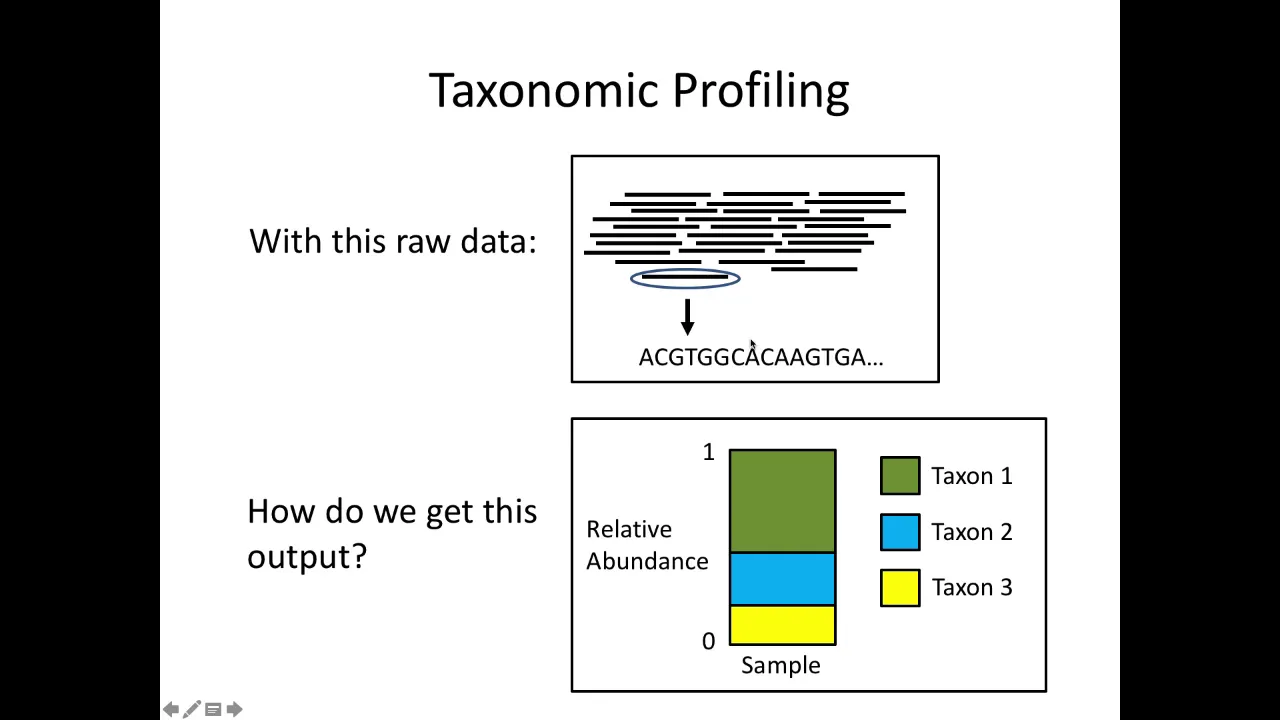
Added:welcome to my presentation in this presentation we are going to see about metagenomics metagenomics is the genomic analysis of microbial communities by direct extraction and sequencing or cloning of their dna that allows studying communities of organism directly in their natural environment what is metagenome microbial life exists in almost every environment from the most familiar environment such as garden soil the leaves of green plant as well as their roots or pipe underneath our sink these microbial habitats also include environment considered or to survey due to the extreme conditions for example at the bottom of the sea in the arctic ice or in the salt deserts microbes also populate our own body and life for example on our skin or inside the gut almost every environment on earth is colonized by different types of microorganisms metagenome consists of the genome of many individual microorganism present in environmental sample we study the meta genome because most microorganism can't grow in pure culture and culturing can never capture the full spectrum of microbial diversity metagenomics provides the culture independent information about environmental microorganism first step is the isolation of metagenomic dna from a sample of defined environment that encompasses the genome of entire microbial population the resulting metagenomic dna can be analyzed by two different approaches first one is functional metagenomics to search for specific enzymatic activities or proteins second one is metagenomic sequencing to study microbial and functional diversity i am going to take a soil as environmental sample first the dna is extracted using dna extraction kit popularly used dna extraction kit for soil is power soil dna extraction kit first add 0.25 gram soil to power with tubes using a weighing funnel we will make this process easier gently vertex to mix add 60 micro liter of solution c1 to the tube and invert several times or vertex briefly to mix vertex at the maximum speed for 10 minutes followed by a simplification transfer the super 910 to a clean 2ml tube supernatant may still contain some soil particles carry over the soil or adopt particle color in the mixture normal at this steps add 250 micro liter of solution c2 and wetted for 5 seconds incubated at 4 degree celsius for 5 minutes followed by centrifugation avoiding the pellet transfer of 2 but no more than 600 microliters of supernatant to a clean 2 ml collection tube add 200 microliter of solution c3 and the vertex briefly and incubated at 4 degree celsius for 5 minutes followed by centrifugation transfer the supernatant into a clean milk collection tube shake the solution 4 before use add 200 microliter of solution c4 to the super 910 and vertex for 5 seconds load approximately 675 microliter onto a spin filter and a centrifuge at 10 000 rpm for one minute discard the flow through add 500 microliter of solution c5 under centrifuge discard the flow through and centrifuge to remove residual c5 and place spin filter in a clean 2ml collection tube add under microwater of solution c6 to the white filter membrane and send fish to elute the dna library preparation for illumina sequencing platforms requires input of defined length therefore fragmentation of dna or the use of cdna prepared rna is the starting point this is followed by n repair to generate blunt tender phosphorylated molecules followed by the addition of non-templated damp dial before legislation to an adapter if necessary to achieve sufficient kills the final step is pcr amplification of the library next step is illumina sequencing the current availability of vast arrays of ngs machines with a different throughput makes metagenomic analysis feasible for a large range of research groups and application a good example is the illumina sequencing offers low instrument run casting written for a reduced throughput making this device attractive even for a small laboratories as a result the number and diversity of sequencing project arise first step is adapters are annealed to the end of the sequence fragment fragments binds to the primer loader flow cells and bridge pcr reaction amplify each bound fragments to produce the clusters of fragments during each sequencing cycles one fluorophore attached nucleotide is added to the growing strands laser produce fluorophores in the all the fragments that are being sequenced and the optic scanner collects the signals from each fragment clusters next step is assembly pipeline assembly involves the merging of fleets from same genome into a single contig most available tools build up on a traditional diprogen crap approach to genome assembly assembly steps first sequence reads are filtered using digital normalization and remove the redundant reads then assemble the reads decimal reads are known as contigs the contexts are classified using k-mer and coverage last step is contact building bending is the process of grouping reads or context into individual genomes and assigning the group into specific species subspecies or genus the following information obtained during soil meta genomic studies identification of novel metabolite medicines antibiotics toxonomy classification pylogeny interaction of host and microbes hotspots quantification microbial diversity viral bacterial fungal discovery disease life cycle soybean disease control in space mandate to store all the meta genomic data the sheer volume of data being generated means there is an urgent need for appropriate ways of storing vast amount of sequences tools such as img mer camera mg rest and eba meta genomics provides a integrated environment for analysis management storage sharing of metagenomic project thank you for watching this video
Up Next
Biological Chemistry II: Course Overview & Key Themes | MIT 5.08J
@mitocw
65.9K views•2019-08-01
Bacterial Communication: Quorum Sensing and Biofilm Formation Explained
@JHUAAP
12.6K views•2011-06-28

Enteric Nervous System Explained: The Gut's Brain | Neurobiology Lecture
@alumniu6029
438 views•2018-09-12
Bacteriophages: Earth's Deadliest Killers and Future Antibiotics
@kurzgesagt
34.6M views•2018-05-13
Related Study Plans & Knowledge Roadmaps
Structured learning paths in Biology