

















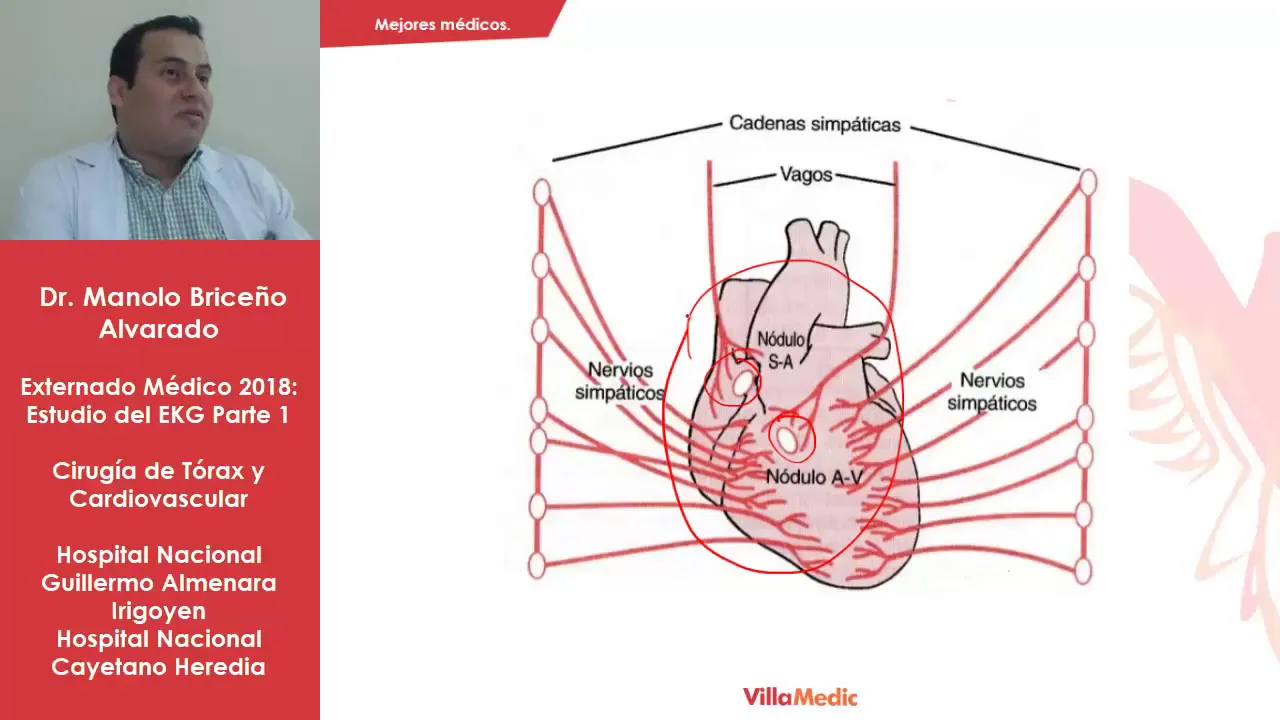


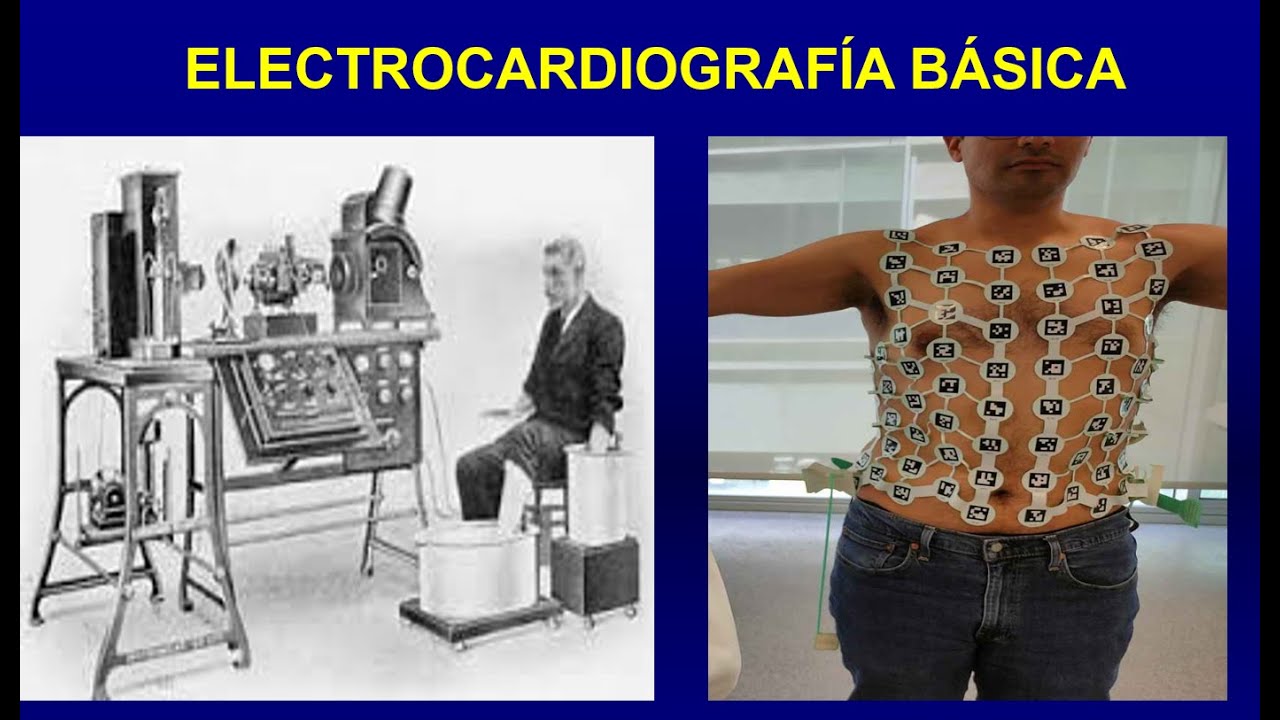


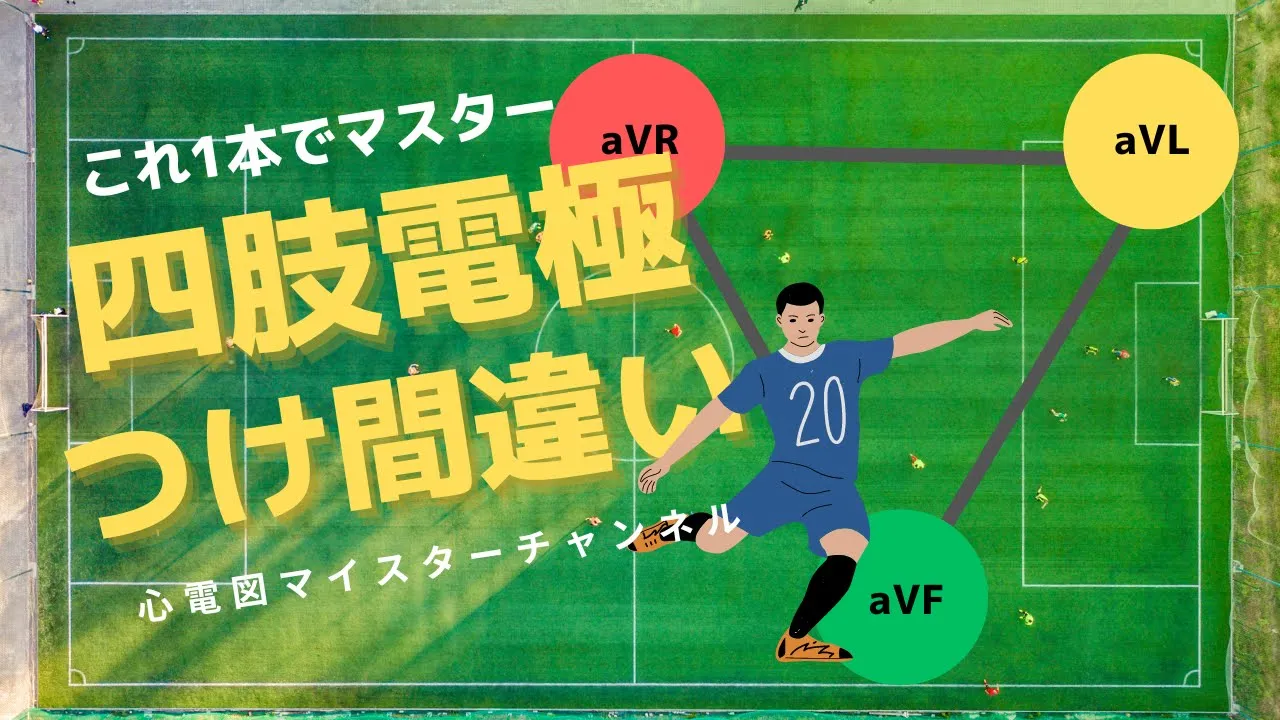




A 12-lead ECG uses 10 electrodes (4 limb electrodes and 6 precordial electrodes) to create 12 different views of the heart's electrical activity; limb electrodes follow the mnemonic 'White on Right, Clouds Over Grass, Smoke Over Fire' (white for right arm, green for right leg, black for left arm, red for left leg), while precordial electrodes follow the mnemonic 'Ride Your Green Bike On Pavement' (V1-red at 4th intercostal space right of sternum, V2-yellow left of sternum, V3-green midway between V2-V4, V4-blue at 5th intercostal midclavicular line, V5-orange at 5th intercostal anterior axillary line, V6-purple at 5th intercostal mid-axillary line).
12-Lead ECG Placement Made Easy: Mnemonics for EMTs, Nurses & Paramedics
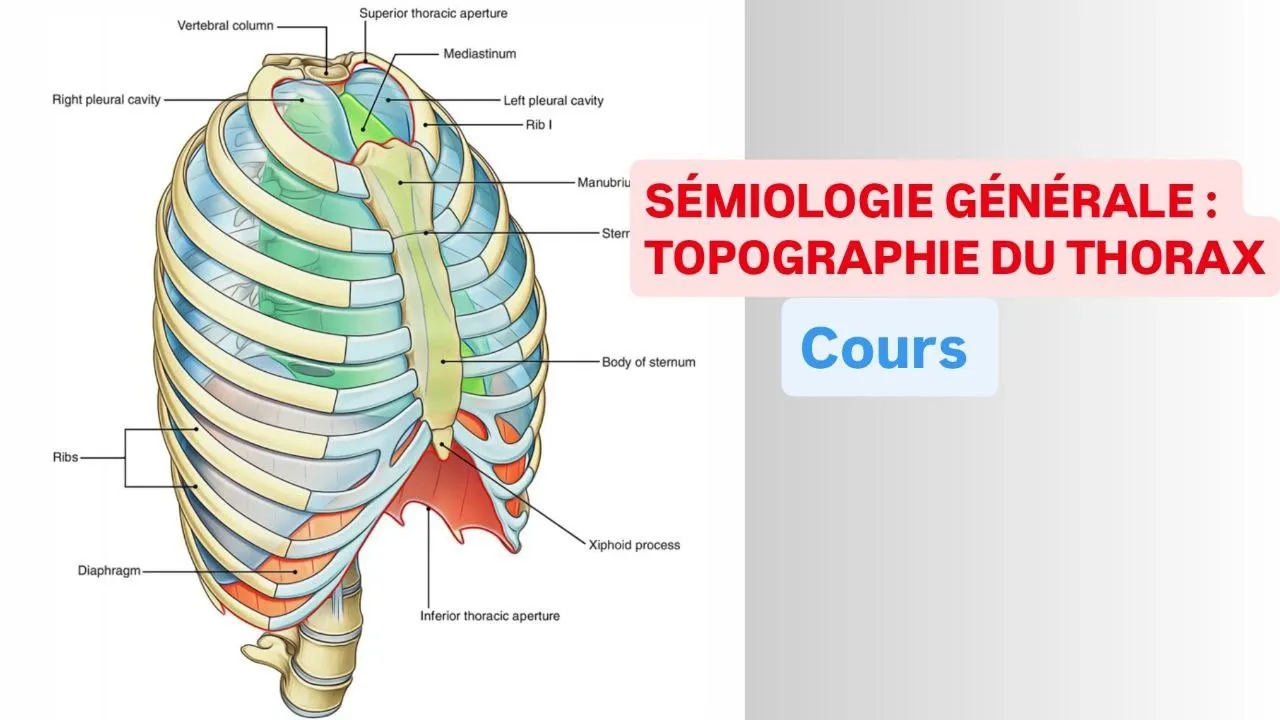
Added:Basic thoracic anatomy, specifically how to identify anatomical landmarks such as the clavicle, sternum, intercostal spaces, and the midclavicular and axillary lines.
The conceptual distinction between an 'electrode' (the physical patch placed on the skin) and a 'lead' (the electrical perspective or vector recorded between electrodes).
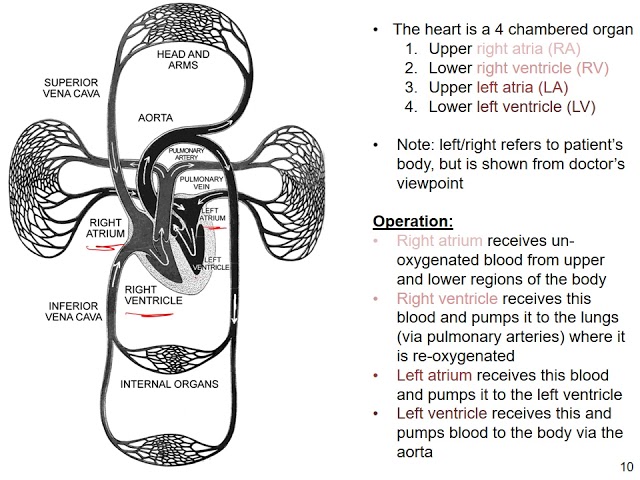
Fundamental understanding of the heart's position in the chest cavity and the direction of its normal electrical conduction pathway.
The clinical purpose of an electrocardiogram (ECG) and why precise electrode placement is critical to diagnostic accuracy.
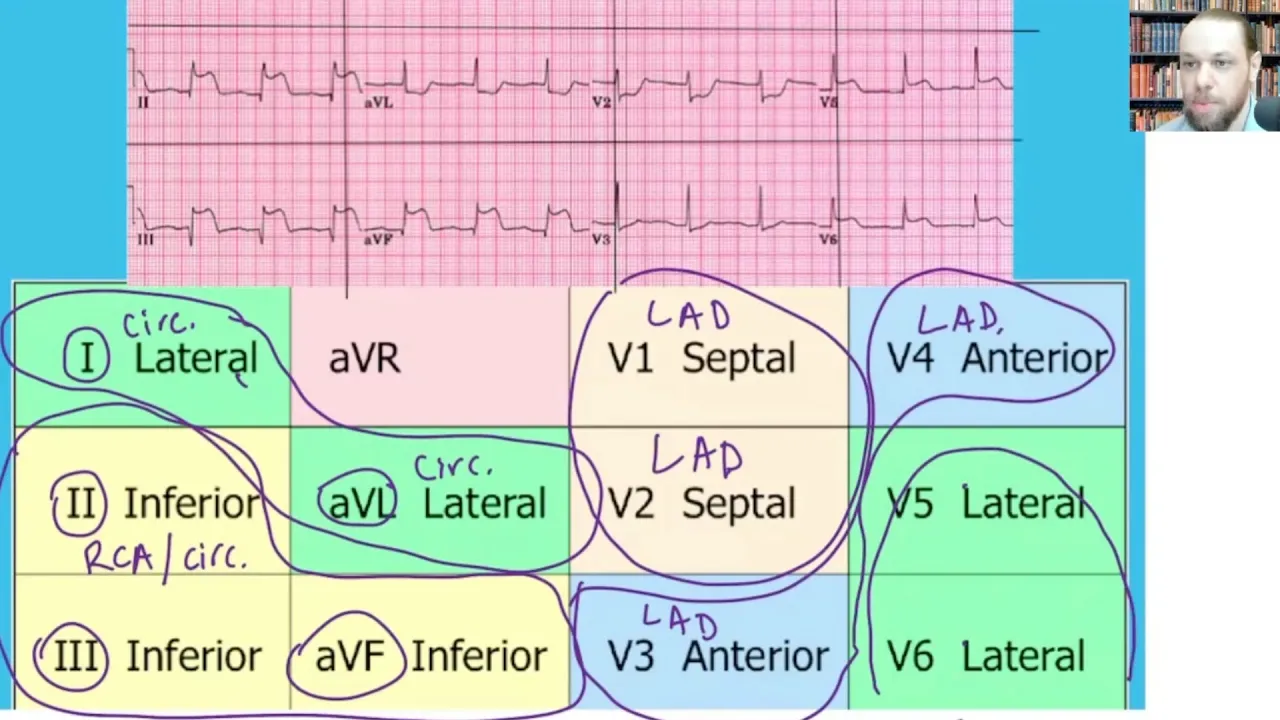
Understanding which specific leads correspond to which anatomical areas of the heart (e.g., inferior, lateral, anterior, and septal views).
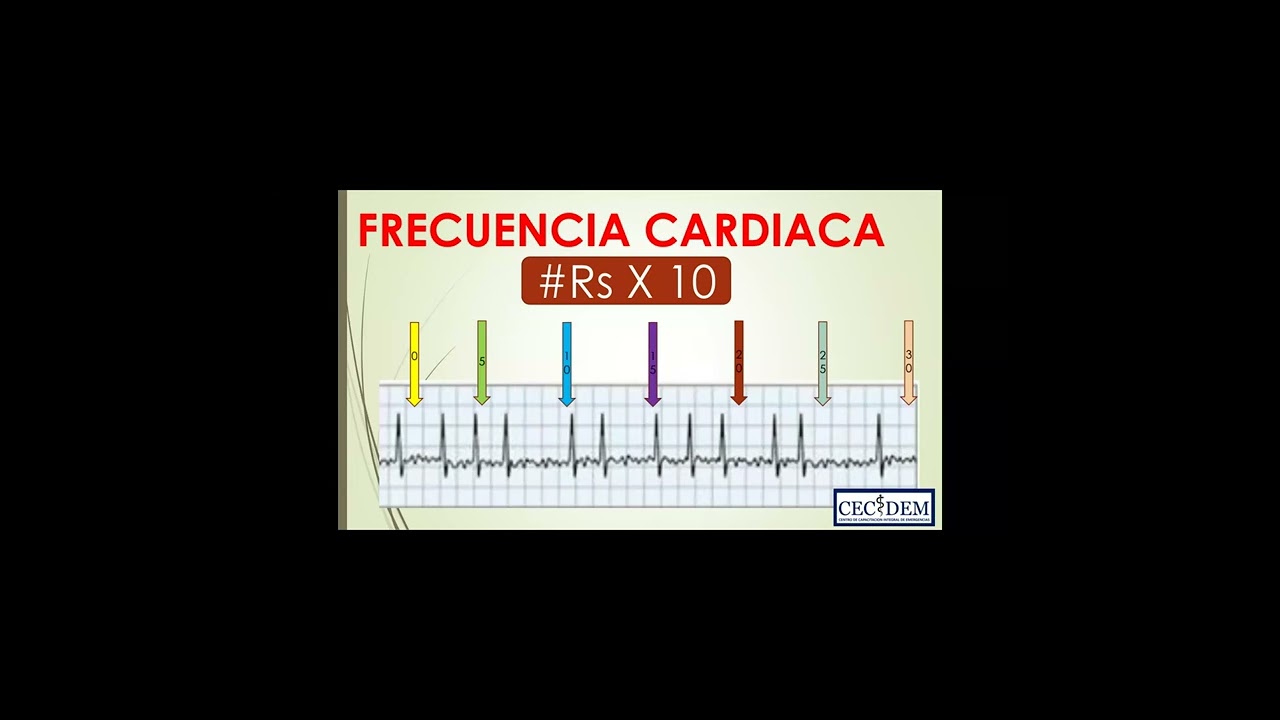
Recognizing normal waveform morphology (P wave, QRS complex, T wave) and reading a standard 12-lead ECG strip.
Identifying and troubleshooting common electrode placement errors, lead reversals, and signal interference (artifacts).
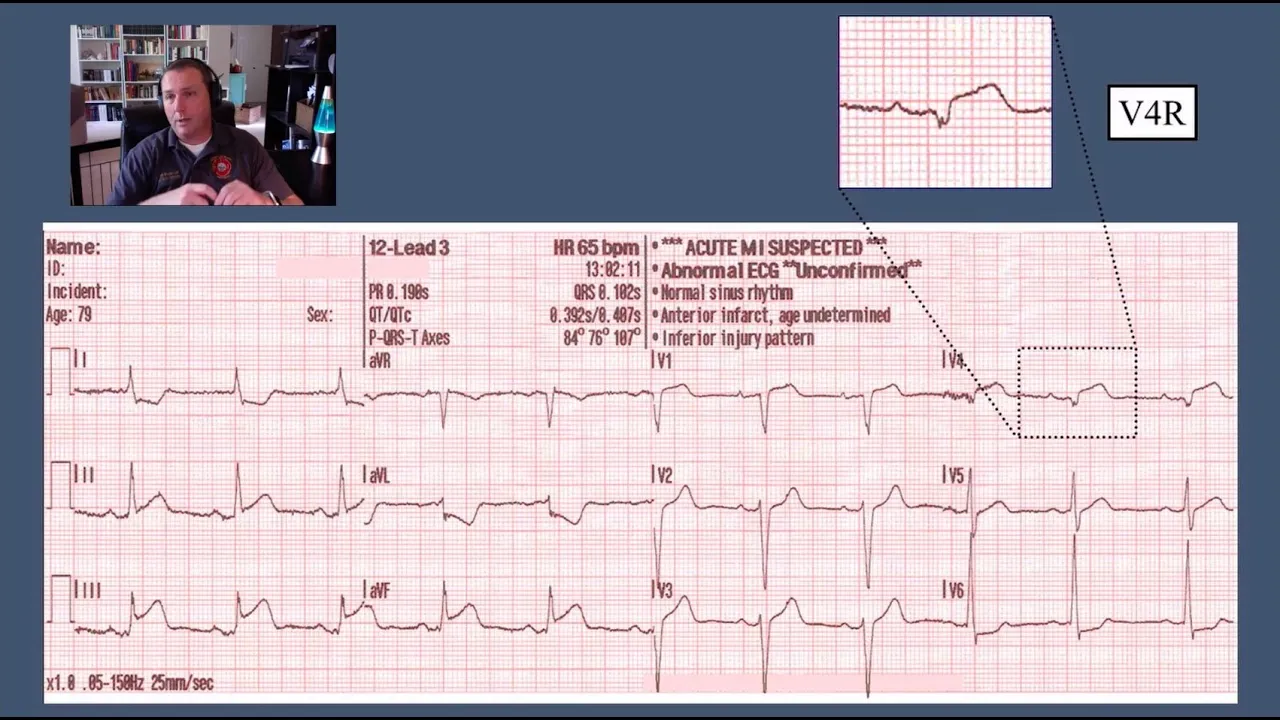
Advanced clinical applications, such as interpreting a 12-lead ECG to detect myocardial ischemia, injury, or infarction (e.g., STEMI).
599.9K views10.7Klikes8:39Original Release: 2023-08-31
welcome to the channel where medical topics are Made Easy this video will explain how to place a 12-lead ECG and its electrodes we're going to use a mnemonic that makes 12-lead ECG placement easy for EMTs paramedics nursing and more so let's get right into it a 12-lead ECG uses 10 electrodes which are the sticky pads placed on the skin be aware that electrodes and lead wires are not the same as leads so many people get this wrong and we're going to explain this in a minute so keep watching this will also explain why a 12-lead ECG uses only 10 electrodes so again a 12-lead ECG uses 10 electrodes these 10 electrodes can be divided into two types the limb electrodes and the precordial electrodes the limb electrodes are placed on the extremities and there are four of them and the precordial electrodes are placed on the chest and there are six of them so what exactly do all these circles and colors represent and what do all these definitions mean we're going to go back to this diagram in a minute but first let's clarify some definitions because a lot of people get this wrong so do not skip this part in order to obtain a 12 lead ECG 10 electrodes are placed on the skin electrodes are the sticky pads that are placed on the body in certain positions the electrodes allow the electrical activity of the heart to be recorded the weed wires are wires that are connected to the electrodes and they transmit or send the heart's electrical activity to the ECG machine the lead wires are typically color coded and they need to go in the correct position the 10 electrodes create 12 different views of the heart and the electrical activity of the heart is recorded from those 12 angles and these 12 views of the heart are the 12 leads you see on the ECG so a lead is a recording or view of the electrical activity of the heart from the angle of that particular electrode some of the electrodes communicate with each other which is why there are 12 different views or leads from only 10 electrodes now that we know the definitions let's go back to our diagram so the circles you see are the electrodes and the colors represent the color of the lead wire that connects to that electrode but how do you remember where to place all the different electrodes and lead wires well let's walk through a memory trick mnemonic that will help you remember exactly where to place them starting with the limb electrodes and lead wires these are the ones that go on the extremities and there are four of them first you're going to remember white on the right this will help you remember the white lead wire which is the right arm goes on the right side you'll place the electrode on the right arm typically above the right wrist and then you'll connect the white wire labeled ra for right arm then use clouds over grass to remember white which is clouds goes over green which is grass we already know the white lead wire is the right arm so the green lead wire is the right leg you'll place the electrode on the right leg typically above the right ankle and then you'll connect the green wire labeled RL for right leg to that electrode next you'll use smoke over fire to remember black which is smoke goes over red which is fire the black lead wire is the left arm and the red lead wire as the left leg you'll place the left arm electrode on the left arm typically above the left wrist and then you'll connect the black wire labeled La for left arm you'll place the left leg electrode on the left leg typically above the left ankle and then you'll connect the red wire labeled LL for left leg again many people call these limb leads these are not leads they're electrodes and lead wires that are used to get the limb leads the limb leads are what you see on the ECG that are derived from these limb electrodes and lead wires and they're labeled different on the ECG I wanted to point out that you may see some literature and studies suggesting that you can put the limb electrodes anywhere on the limbs as long as both sides are symmetrical with each other however Studies have suggested changes to the ECG morphology the more proximal the electrodes are placed on the limbs so make sure to follow your ECG and institutional protocols now that we know where to place the limb electrodes and lead wires let's move on to the precordial electrodes remember these are the ones that are placed on the chest and there are six of them the lead wires are labeled V1 through V6 and you can use the mnemonic ride your green bike on pavement to remember the order of the colors the r for ride is to remember V1 is red the Y for your is to remember V2 is yellow V3 is green V4 is blue V5 is orange and V6 is purple there's also another memory trick you can use so keep watching but first let's look at exactly where to place the precordial electrodes this is important so don't skip it starting with V1 you're going to place the electrode in the fourth intercostal space right of the sternum you'll then connect the red lead wire labeled V1 use ride in the mnemonic to remember V1 is red remember the left leg was also red so make sure to always check the lead wire labels next is V2 you'll place the electrode in the fourth intercostal space left of the sternum you'll then connect the yellow lead wire labeled V2 use your in the mnemonic to remember V2 is yellow let's skip V3 and go to V4 you'll see why in a minute you'll place the electrode in the fifth intercostal space midclavicular line You'll then connect the Blue lead wire labeled V4 use bike in the mnemonic to remember V4 is blue now let's go back to V3 you'll place the electrode midway between V2 and V4 you'll then connect the green lead wire labeled V3 use green in the mnemonic to remember V3 is green moving on to V5 you'll place the electrode in the fifth intercostal space anterior axillary line you'll then connect the orange lead wire labeled V5 use on in the mnemonic to remember V5 is orange finally we have V6 you'll place the electrode in the fifth intercostal space mid axillary line You'll then connect the purple lead wire labeled V6 use Pavement in the mnemonic to remember V6 is purple here is one more memory trick you can use first you're going to use the colors of a traffic light to remember V1 through V3 V1 is red V2 is yellow and V3 is green then use the mnemonic Bop To Remember B is for the blue V4 O is for the orange V5 and P is for the purple V6 I also want to make you aware of a modified version of electrode placement you may see some literature placing the limb electrodes on the Torso like shown in the picture this may be necessary if someone has an amputated extremity or to reduce motion artifact if the limbs are moving a lot just know that studies have suggested potential significant changes to ECG morphology when the limb electrodes are placed on the Torso if the limb electrodes are placed on the Torso it's good to notify the provider by writing torso position limbs on the ECG again remember to follow ECG and institutional placement protocols here is a summary table reviewing everything remember a 12 lead ECG uses 10 electrodes and 10 lead wires four electrodes are placed on the limbs and the limb lead wires that connect to these electrodes can be remembered using white on the right clouds over grass and smoke over fire the lead wire for the right arm is white the lead wire for the right leg is green the lead wire for the left arm is black and the lead wire for the left leg is red six electrodes are placed on the chest called precordial electrodes and the precordial lead wires that connect to these electrodes can be remembered using the mnemonic ride your green bike on pavement V1 is placed in the fourth intercostal space right of the sternum and it's red V2 is placed in the fourth intercostal space left of the sternum and it's yellow V3 is placed between V2 and V4 and it's green V4 is placed in the fifth intercostal space midclavicular line and it's blue V5 is placed in the fifth intercostal space anterior axillary line and its orange V6 is placed in the fifth intercostal space mid-axillary line and its purple hopefully this helped you understand how to place a 12 lead ECG please share this video with others and hit that like button and leave a comment subscribe to save time studying and not miss out on future videos notes and study guides you can find all the flashcard study guides and notes linked down below thanks for watching and hope you check out future videos
Up Next

26:23
Criminal Psychologist on Evil, Psychopaths, and False Memories
@ladbiblestories
380.3K views•2025-11-09

26:22
Walking in the City: Urban Rituals and the Flâneur in Contemporary India
@PSBTIndia
1.9K views•2016-08-02

9:49
FastAPI vs Flask vs Django: Choosing the Right Python Web Framework
@TechWithTim
302.5K views•2024-05-26

1:42
Game of Thrones Opening Credits: A Cinematic Analysis
@gameofthrones
46.3M views•2011-04-18
Related Study Plans & Knowledge Roadmaps
Structured learning paths in General & Interdisciplinary Studies
general-studies
Artificial Light: History, Tech & Human Impact
01The Pre-Electric Era: Fire, Oil, and Gas Lighting
02The Incandescent Revolution and Grid Electrification
03Gas Discharge and Fluorescent Illumination
+ 3 more learning modules
14h6 modules
Explore Roadmap
general-studies
Elevator Engineering: History, Physics & Cities
01From Hoists to Safety Brakes: The Dawn of Vertical Lift
02Hydraulic vs. Traction: The Engineering Physics of Elevators
03Modern Speed, Safety, and Algorithms
+ 2 more learning modules
12h5 modules
Explore Roadmap
general-studies
Rubber: Material Science, History & Geopolitics
01Origins of Natural Rubber & Mesoamerican History
02The Chemistry of Natural Rubber & Vulcanization
03The Geopolitics of the Rubber Boom & Colonization
+ 2 more learning modules
12h5 modules
Explore Roadmap
general-studies
Containerization: Evolution, Logistics & Trade
01Ancient Trade & Bulk Cargo: Amphorae to Barrels
02The Industrial Revolution & Cardboard Packaging
03The Containerization Revolution: Malcom McLean
+ 2 more learning modules
12h5 modules
Explore Roadmap