





![[new 유체역학] 9. 유체 정역학2 - 압력장에서 유체의 기본 방정식](https://i.ytimg.com/vi_webp/8vQuik_RmRE/maxresdefault.webp)
![[소방유체역학] 2.2.1 유체에 작용하는 힘 - 체적력&표면력](https://i.ytimg.com/vi/_oFZ5dsRbpQ/maxresdefault.jpg)







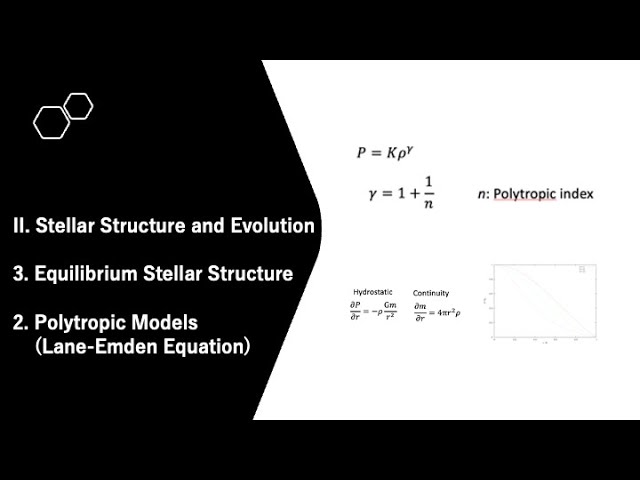














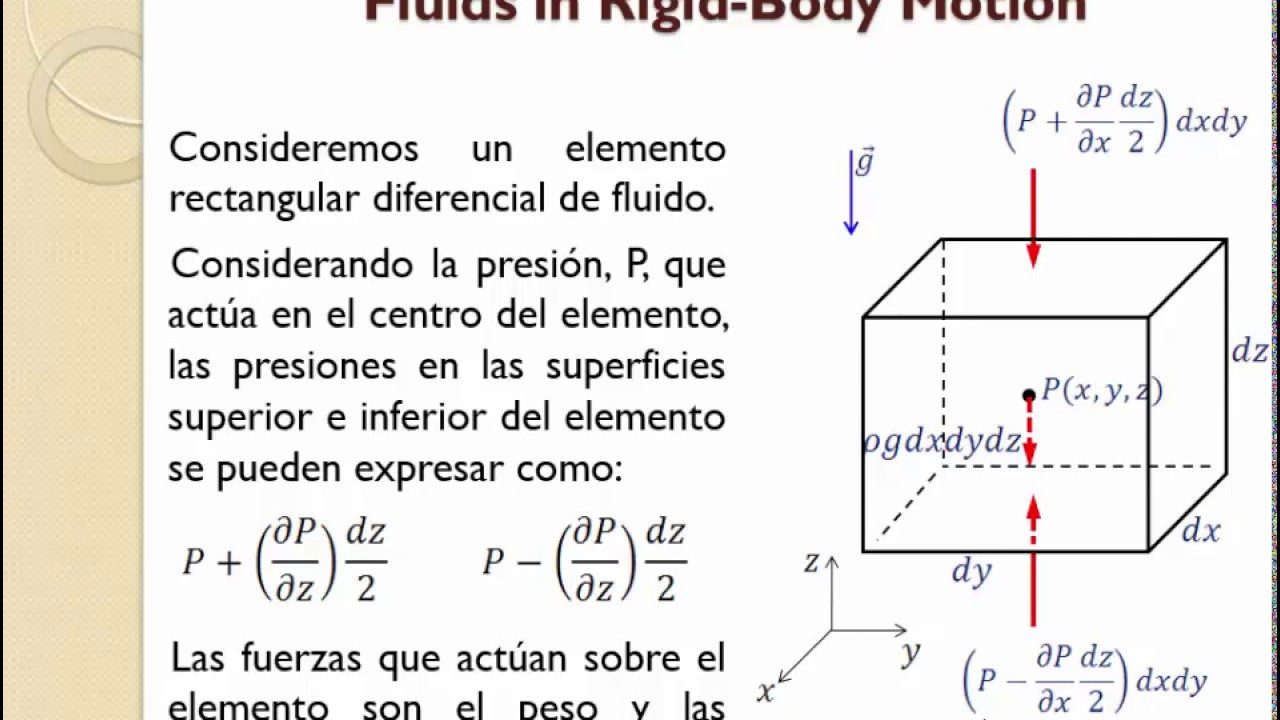
Hydrostatic equilibrium in stars is achieved when the outward pressure gradient force balances the inward gravitational force, described by the differential equation dP/dr = -GM(r)ρ/r², where P is pressure, r is radial distance, M(r) is enclosed mass, and ρ is density; for constant density, this yields the central pressure P_c = (3/8)(GM²)/(πR⁴), while for variable density, the equations reduce to a second-order differential equation requiring a polytropic relationship between pressure and density to solve.
Hydrostatic Equilibrium in Stars: Derivation & Solutions
Added:Fundamental principles of Newtonian gravity, including gravitational force, gravitational acceleration, and potential energy in spherical coordinates.
Basic fluid mechanics, specifically the concept of pressure, density, and how pressure gradient forces act within a fluid element.
Thermodynamic equations of state, primarily the Ideal Gas Law, which relates pressure, density, and temperature.
Introductory calculus and ordinary differential equations (ODEs), necessary for setting up and integrating radial gradient equations.
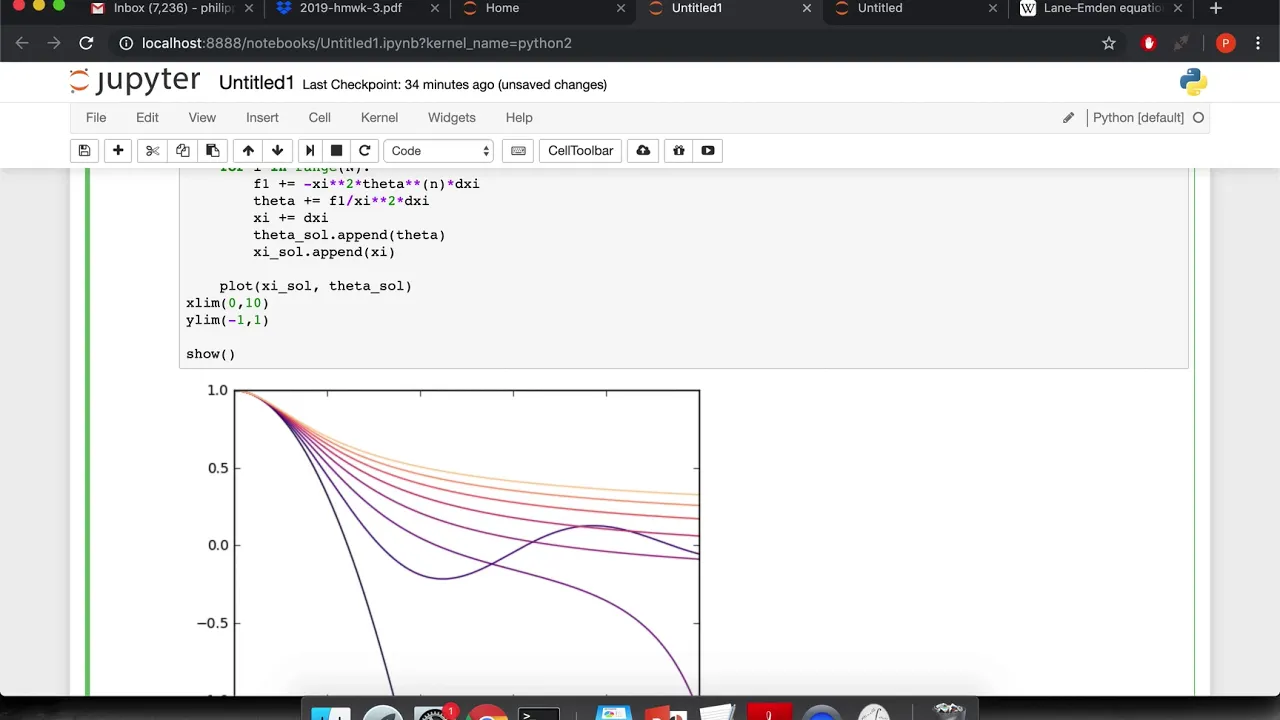
The Lane-Emden Equation, exploring detailed analytical and numerical solutions for polytropic stellar models with different indices (such as n=1.5 and n=3).
The complete set of Stellar Structure Equations, which integrates hydrostatic equilibrium with equations for mass conservation, radiative/convective energy transport, and nuclear energy generation.
Degenerate stellar remnants, applying hydrostatic equilibrium to white dwarfs and neutron stars using electron and neutron degeneracy pressure.
Stellar stability and pulsations, analyzing how stars react to radial perturbations and what causes them to deviate from hydrostatic equilibrium.
9.4K views281likes10:38Original Release: 2022-05-11
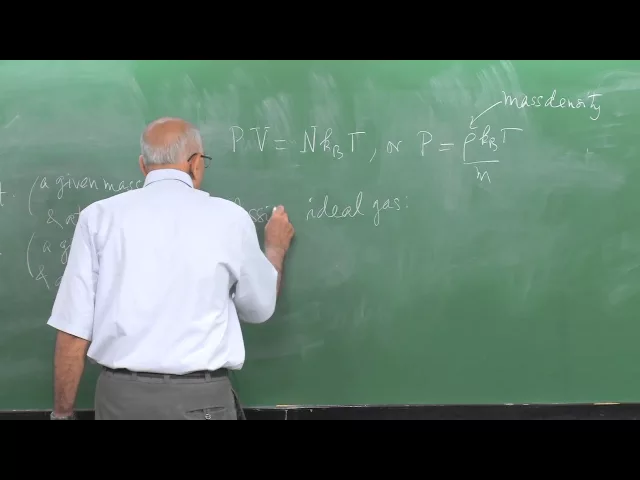
for more physics related videos please subscribe welcome to Stellar physics 3A in this video I will go over hydrostatic equilibrium first I will derive the equations for hydrostatic equilibrium then I will solve them in the case of constant density and then we'll take a look at how to solve them if the density is not constant I rated the physics level in this video as intermediate before we begin we're going to make a few assumptions first we're going to assume that the star is static meaning it's neither Contracting or expanding we're also going to assume it's spherically symmetric we're going to assume that Newtonian gravity is sufficient meaning that Corrections due to general relativity are negligible mathematically this means that everywhere inside the star the quantity 2gm over RC ^ 2 is much less than 1 where R is some radial position m is the mass enclosed inside that radius G is Newton's constant and C is the speed of light this quantity is often called the metric deviation so in case I refer to it that way you'll know what I'm talking about eventually we will also assume what's called a polytrope solution and we will also assume that the ratio of the gas pressure and radiation pressure is constant throughout the star this is sometimes called the standard model of Stellar physics so hydrostatic equilibrium so if we draw a star at some radial position inside the star this will Define a sphere that encloses some Mass which I'm going to call M of R so M which is a function of r is the mass enclosed by this sphere of radius R now let's say this sphere has a very thin thickness which I'm going to call Dr so essentially what we have here is a shell of radius R and INF infimal thickness Dr and the mass of this shell I'm going to call DM the gravitational force on this shell will be the mass of the shell times the gravitational acceleration and G of R will be entirely determined by the mass enclosed inside the shell due to spherical symmetry the mass outside of the shell will exert no net gravitational force on the shell the material inside the shell will exert an outward pressure on it and the material outside of the shell will exert an inward pressure on it and since the outside pressure is being exerted at a slightly different radius than the inside pressure these two pressures will be slightly different now we've assumed that the star is static hence the term hydrostatic equilibrium so that means that the sum of all the forces on this shell must equal zero so the sum of all the forces will be the inside pressure times the surface area of the shell minus the outside pressure time the surface area and minus the gravitational force these minus signs account for the fact that these two forces Point inwards while this one points outwards and the sum of all the forces has to be Zero by Newton's law the gravitational acceleration will be Newton's constant time the enclosed Mass / the radius squared and the outside pressure at position r + Dr we can write as the inside pressure plus a small change in pressure when we plug this into our equation for the sum of the forces we get that a small change in pressure times the surface area of the shell which is 4 pi r s must equal the gravitational force on the shell in general the mass enclosed will be the density integrated over the volume we're assuming spherical Symmetry and so we're just left with the radial integral we can differentiate both sides to find an equation for DM of R this equation is generally referred to as the mass continuity equation we can substitute this into our equation for the pressure the surface area turns will cancel out and dividing on both sides by Dr we get the following differential equation for the pressure so we can now summarize a general system of equations for hydrostatic equilibrium I'm first going to write them down in the most General case meaning an absence of spherical symmetry the equation we just derived for the pressure can be written more generally as the gradient of the pressure equals the gravitational acceleration time the density the mass continuity equation in general can be written as dmdv equals the density this is actually just the definition of density and finally as we found in previous videos we know that the pressure is some function of density and entropy if we assume spherical symmetry the gradient will reduce to a radial derivative and the mass and density will only be functions of radial position and although this doesn't actually have anything to do with spherical symmetry we're going to assume that the pressure is related to the density via what's called a polytrope we'll see in a little bit what that is now as far as hydrostatic equilibrium that's all the information you need but if you want a more detailed understanding of the internal structure you need a little more information you need to conserve energy and this means that the nuclear energ produced must equal the energy released by the star which is going to be the photon Luminosity plus the neutrino Luminosity this equation holds only in the case that the star is static if the star is not static you have to include other terms to account for kinetic energy changes in gravitational potential energy and changes in internal energy you also need to know how heat is transferred throughout the star which could be either by radiation convection or conduction if you're enjoying this video so far please please be sure to like And subscribe and maybe share it with a few friends now that we have a set of equations for hydrostatic equilibrium let's start off simple and start in the case of constant density in this case our differential equation for pressure will look the same it's just that the density will be constant and the mass en Clos will just be the density times the volume so let's plug M ofr into the pressure equation 2 powers of R will cancel and now we can easily integrate this P KN here will be the central pressure so when R equals 0 in order to find this value we need a boundary condition I'm going to oppose the boundary condition that the pressure at the Stellar surface is zero this doesn't have to be true you could imagine maybe the pressure is not zero at the surface either because maybe the star has an atmosphere around it exerting some atmospheric pressure or you can maybe imagine having some surface tension but assuming that the pressure is zero at the surface of the star this gives us the equation for the pressure which can be Rewritten in terms of the mass of the Star by substituting that the density is the mass divided by the volume how the pressure will relate to the temperature will depend on if the star is radiation dominated or gas dominated I'm not going to do that because in reality constant density is a pretty bad model for a star this equation however wouldn't be too bad for something like a rocky planet where the constant density approximation is not that bad it's also not a bad approximation for compact objects so you could get away with this for dense cores and white dwarves constant density also works pretty well for neutron stars but in the case of neutron stars the Newtonian approximation doesn't hold neutron stars have a metric deviation that's very close to one and are basically on the brink of collapsing into black holes so now that we have a solution for constant density let's take a look at a more realistic case which is that the density is a function of r so let's start off with our two equations the equation for pressure and the mass continuity equation I'm going to rewrite this first equation by moving the R 2 here to the other side of the equation now I'm going to differentiate both sides on the left hand side I'm going to leave it as the derivative of R2 * dpdr on the right hand side I have to use the product rule to differentiate both M and row so this term here will be the derivative of M while holding row constant and this term here is the derivative of row while holding M constant now I'm going to substitute the two original equations into these two terms so an M of R I'm going to substitute this first equation because you can see I have an M of R here so I can isolate it by bringing everything to the other side and here I have dmdr so that's just the second equation this will give us the following equation now I'm going to divide both sides by the density and I'm going to bring this second term to the other side of the equation if you take a close look at the left hand side of this equation you'll notice that it's actually a total derivative so looking inside these brackets we see we have two terms we have this one over row and then we have this term inside the parenthesis the first term over here is holding one row constant times the derivative of the term in the parenthesis and this second term is holding the quantity in the parenthesis constant times the derivative of 1/ row that includes this minus sign here and so we've combined these two equations to one second order differential equation for hydrostatic equilibrium so now in order to go any further we need some kind of way to relate the pressure to the density and this this is where we're going to assume that the pressure and density are related via what's called a polytrope and that means that the pressure is equal to a constant K times the density raised to another constant solving this equation using a poly Trope is not particularly difficult but it's a little timec consuming and there's a lot of different parts that you have to keep track of so I'm going to do this in a separate video If you enjoyed this video like And subscribe and be sure to hit the Bell to be notified for future videos in the series
Up Next

3:04
Proton-Proton Chain & CNO Cycle Explained | Nuclear Fusion
@ozscienceteacher
1.2K views•2020-08-21

12:53
21cm Hyperfine Transition in Neutral Hydrogen: Radio Astronomy Basics
@AaronRobertParsons
12.4K views•2011-10-13

32:32
NMR Spin Physics I: Zeeman Effect, Resonance Condition & Larmor Frequency
@nptel-indianinstituteofsci8064
2.3K views•2024-01-17

27:14
Entropy and the Second Law of Thermodynamics Explained
@veritasium
27.5M views•2023-07-01
Related Study Plans & Knowledge Roadmaps
Structured learning paths in Physics
physics
Nuclear Physics (Decay, Fission & Reactors)
01Atomic Structure and the Binding Force
02Radioactive Decay and Half-Life
03Nuclear Fission Mechanics and Chain Reactions
+ 2 more learning modules
12h5 modules
Explore Roadmap
physics
Soft Matter (Polymers, Colloids & Rheology)
01Foundations of Soft Matter & Thermal Forces
02Polymer Physics and Macromolecules
03Colloids, Surfactants, and Self-Assembly
+ 2 more learning modules
38h5 modules
Explore Roadmap
physics
Analytical Mechanics: Lagrangian & Hamiltonian
01Mathematical Foundations: Calculus of Variations
02From Newtonian Mechanics to Constraint Dynamics
03The Principle of Least Action & Lagrangian Mechanics
+ 3 more learning modules
28h6 modules
Explore Roadmap
physics
General Relativity (Spacetime & Cosmology)
01Foundations of Relativity: Special Relativity
02The Geometry of Spacetime: Equivalence Principle & Curvature
03Einstein's Field Equations: The Mathematics of Gravity
+ 2 more learning modules
55h5 modules
Explore Roadmap