












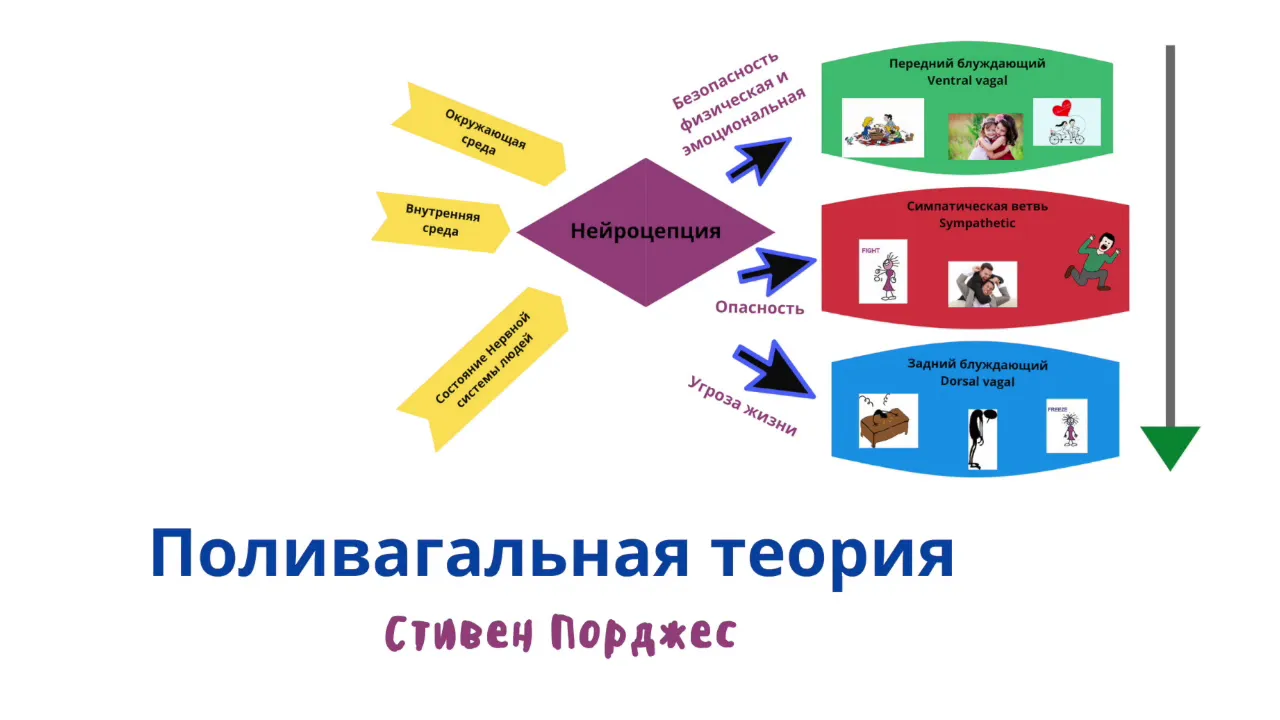











According to Polyvagal Theory developed by Stephen Porges, the human nervous system operates in three distinct states: the ventral vagal state (safe and social, characterized by calm, connection, and relaxation), the sympathetic state (fight or flight, involving mobilization and heightened alertness), and the dorsal vagal state (shutdown or freeze, marked by dissociation and numbness). Trauma can cause the nervous system to become stuck in either a hypervigilant sympathetic state or a frozen dorsal vagal state. By learning to identify which state one is in and practicing self-regulatory techniques such as somatic exercises, grounding practices, and co-regulation with trusted others, individuals can move up the 'polyvagal ladder' toward the safe and social ventral vagal state, improving their mental health and relationships.
Polyvagal Theory: 3 Nervous System States for Anxiety
Added:I once worked with a client who was smart, energetic, motivated, maybe a little anxious, but overall pretty high-functioning. But whenever we started to talk about her ex-boyfriend, the one who used to abuse her as a teenager, she would keep talking, she'd keep answering my my prompts, but I could tell that she would go numb. She'd say things like, "Oh, I'm so angry about this," but her body said that she was feeling flat. She'd often pull her knees into her chest, or she would shrink into her chair and her body might might slump down. And she didn't realize that her nervous system was shifting into a shutdown reaction known as the dorsal vagal state. Now, do you ever feel hopeless, shut down, or walled off? Or do you get triggered and feel anxious, angry, or agitated? There are essentially three states of your nervous system: the ventral vagal, which is safe and social; the sympathetic, which is fight or flight; and the dorsal vagal, which is shut down. And most people aren't able to identify which state they're in, and then they feel helpless to change. This is especially difficult for people with trauma, which includes about one-third of the population. So when you have trauma, your nervous system can get stuck in a hypervigilant state, or a frozen, numb state. And when you can identify the states of your nervous system, you can learn skills to spend more time in the safe and social state of your nervous system. You can retrain your nervous system to be healthier. One approach to learning how to feel safe in your body is the polyvagal approach. It's known as the science of feeling safe. The researchers and clinicians who developed polyvagal therapy have developed a system to help people learn to turn on that safe feeling in your body so that you can feel more calm, have better relationships, and make better choices. In this video you're going to learn the three states that your nervous system can be in according to polyvagal theory, and and this will help you learn to identify what state you're in and then use self-regulatory skills to shift your nervous system to a state of safety.
[Music] The main idea of polyvagal theory for treating trauma is that trauma isn't just in your head or in your memories; it actually gets stored as a habitual reflexive state of your nervous system.
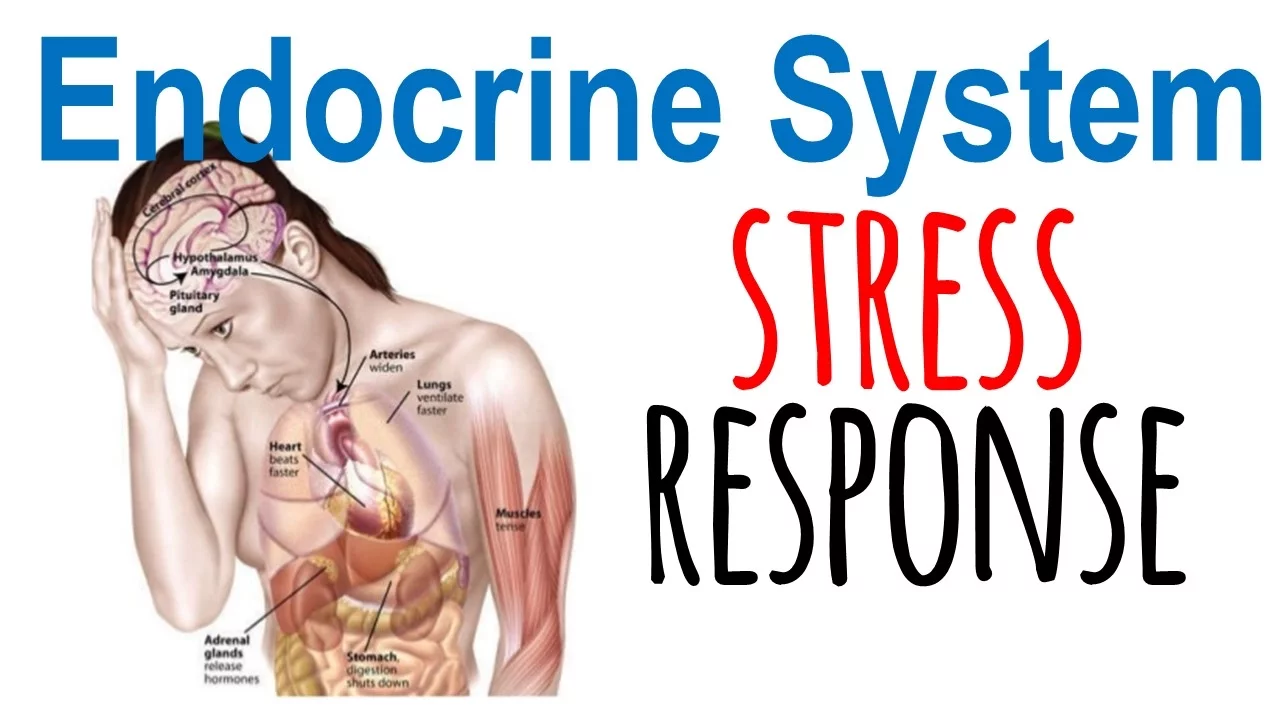
Now, your nervous system is designed to protect you and keep you safe by reacting very quickly and intensely to threats. So for example, once I stepped over a rock that had a rattlesnake under it, and before I even realized what that rattling sound was my nervous system had reacted - I had jumped three feet away. And then the rest of my brain caught up and I realized cognitively that there was a snake there. This automatic reactive response was the fight/flight/freeze response, and it happened super fast and super powerfully to keep me safe. But if our nervous system gets stuck in that hypervigilant state, like like a war veteran who feels like they can never let down their guard, then then something like PTSD can really mess with our lives. It can stress us out. It can damage relationships and cause health problems. So polyvagal theory has developed a ton of techniques to soothe this stress response and to treat trauma in the nervous system. But to use them we need to know which state we're in in order to know which techniques to use.
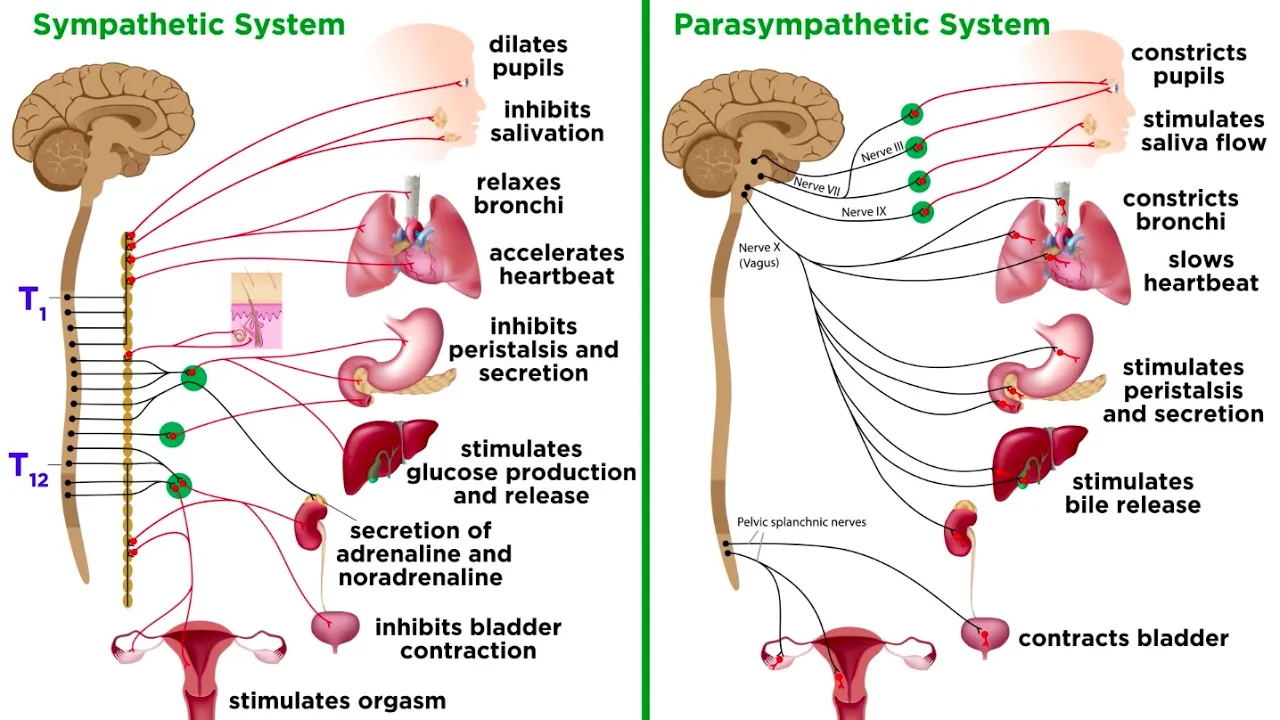
As they say, with awareness comes choice. As we talk about the three states of the nervous system, I really have to credit Stephen Porges, who is the founder of polyvagal theory, and Deb Dana, who takes the really complicated science of polyvagal theory and makes it actually understandable and applicable for the average person. Now, to begin with, the vagal in polyvagal theory refers to the vagus nerve. The vagus nerve is the longest nerve in the body, and it has many branches, going down from the brain all the way down to the pelvis, and it helps regulate breathing and digestion and your immune system. It also communicates that "felt" sense throughout the body. So when you have a gut feeling about something or when your heart flutters or when something makes you feel sick to the stomach, the vagus nerve is communicating in both directions. It's communicating from the brain to the body and from the body to the brain. So when you interpret something as threatening, whether it's standing next to a massive cliff or public speaking, the vagus nerve communicates from your eyeballs to your brain to your stomach, and all of these systems interact to determine whether you're excited about it, bored of it, or scared of it. So for example, with the cliff, if you think that the cliff is life-threatening, if you believe that you're going to fall, your nervous system will turn on the fight-or-flight mode and you might feel butterflies in your stomach or sweaty palms and then feel motivated to back away from the cliff. Or if you get completely overwhelmed by the cliff, you may shut down, freeze up, and be unable to move. But if you're a skilled and competent rock climber who just scaled that cliff with your best friend, you may be feeling excited, exhilarated, creative, and social. You're happy and having fun. So the this interplay of your senses - so like what you see and how you think about a situation - your thoughts, and then your instinctive response - which is your nervous system - these determine which state you end up in. With polyvagal theory they use the metaphor of a ladder to explain the hierarchy of states and the nervous system and to help you learn how to shift between the states so that you have a little bit more control over your reactions. So let's begin exploring these three states of your nervous system. At the top of this ladder is the ventral vagal state. This is where you feel safe and social. The ventral is the front side of your body. People describe this feeling as when your heart is open, you feel connected to others, you make eye contact, you see others' faces. You may feel calm, joyful, energized, curious. This is one state of the nervous system's parasympathetic response. In this state you generally have better digestion, immune response, circulation, and you're more relaxed. You may feel settled, grounded, and you can learn and connect. So take a minute - you can pause this video if you'd like - and write down, what does this safe and social state feel like for you? How do you know when you're in this state? Okay. The next step down the ladder is the sympathetic state. This is the activated state, essentially the fight-or-flight response. This is when the older part of your brain kicks on the survival response. You may feel energized or mobilized, or you might feel anxious and agitated. Irritability and anger is part of that fight response. Right? When we have a fight response we may feel anger, rage, irritation and frustration. If we're having a flight response we might feel anxiety, worry, fear, or panic. Right?
That motivates us to move away to escape and avoid a danger. Physiologically, our blood pressure, heart rate, and adrenaline increase, and our digestion decreases. Right? Pain threshold also goes down, and our immune responses get usually dialed down. Now, it's important to remember that these states aren't a bad thing. There's a time and a place for each of them. So when I had baby number four we barely made it to the hospital. She was born about 90 seconds after we drove up. And I was definitely in the mobilization state. Right? I was in this sympathetic state. And while the contractions in the car were quite uncomfortable, I didn't actually feel any pain when she was born.
And that's got to be due to the endorphins and the adrenaline from this state. And and remember when I jumped away from the rattlesnake? This response helped to keep me me safe. So there's nothing wrong with the sympathetic response in your nervous system; you just don't want to get stuck in this state for long periods of time. With PTSD, chronic stress can make you sick and keep you feeling anxious all the time, even when the danger has passed. So that's why, you know, sometimes the state isn't seen as the best state because you just don't want to spend your whole day feeling anxious, irritable, agitated. Right? Okay. Let's talk about the third state. The third state is the dorsal vagal state. This is the shutdown response. This is the oldest most primitive part of our nervous system. When we're faced with an overwhelming threat, the shutdown response takes over. Now, dorsal means your backside, right, like a shark's dorsal fin.
So in the dorsal response, the shutdown response, it's like turning your back. It's like curling up into a ball and trying to go numb. In this state you may feel frozen, helpless, or depressed. You may feel dissociation or depersonalization, where you feel disconnected from yourself and your feelings. You may not care, or you might just feel shut off, shut down, heavy, tired, or frozen.
It's like you want to shrink. You don't want to draw attention to yourself. Physiologically, your body starts to conserve energy. We store more fuel, also known as fat, in this state, and insulin activity increases, but so does your pain threshold. This is the parasympathetic response, just like the ventral vagal state but it's just a different form of it. And again, each of these states serves a function in small doses. There are times where the safest thing for us to do is to shut down, be quiet, or or freeze up. Right? There are times when giving up is the most helpful approach to a situation, to a really hopeless situation. Giving up on a situation can help you shift to trying something different or something new at some point when you're feeling safe in the future. But being stuck in the ventral vagal state can feel like just this chronic hopelessness.
And I think a lot of forms of depression are being kind of in a chronic ventral vagal state.
Okay. So can you identify these three states in yourself? What kind of situations make you feel safe and connected? What what kind of situations make you feel agitated, energized, or angry, and then what kind of things trigger that shutdown response from you? And these aren't just things outside of you. This includes how we think about and interpret situations and our own habitual reactions. With the right skills and the right support you can actually learn to move up and down this ladder. You can learn how to spend more time in the safe and social state and less time feeling shut down or anxious or angry. But the first step to this is getting really good at identifying what state your nervous system is in and then what led you to being there. Now, going back to my client, she didn't realize that she would get stuck in this shutdown response every time we talked about her ex. But when I pointed it out to her, when I gently remarked on her body posture and asked her about what she was feeling, she was able to realize what was happening and learn what to do about it. Now, it can be really helpful to work with a therapist to explore this because they can help you see yourself from an outside perspective. So when you're in the sympathetic or the dorsal vagal state you're not thinking super clearly, and it can be hard to trigger yourself to move up that ladder to feeling more safe and creative or to feeling more energized instead of shut down. Now, speaking of moving up the ladder, to move from shut down, the dorsal vagal state to the ventral vagal state, you have to go through the steps on the ladder. So that means going from shutdown to feeling safe requires you to get mobilized. Getting moving - so activities like yoga, dance, exercise, or somatic therapy exercises can help you work through that trapped feeling towards being in that safe state of your nervous system. A therapist trained in polyvagal theory or somatic therapy can help you learn to recognize your triggers and glimmers. And I love this term "glimmers." I read it somewhere else. But these are the the cues that help you move toward a sense of safety, and a good therapist can help you get grounded and calm and help you return to a ventral vagal state more quickly. There's another reason that working with someone is really important.
It's because our nervous systems co-regulate. That means that our nervous systems take cues from the people around us to decide how anxious or calm to be. We've depended on nervous system co-regulation since we were babies. Right? Babies rely on being held, on making eye contact, on hearing their mother's voice, on being touched and and getting your cries soothed. All of these interactions restore a sense of safety. And as adults, that need doesn't change. Working with friends, family members, and therapists can help you foster that sense of safety. Now, as a therapist I use Jedi Mind Tricks to help my clients feel calm. Okay. Just kidding. I don't do that. But I do intentionally use my nervous system to help calm my clients nervous system. So I'll use things like my body posture, my eye contact, my voice, and how I move to help the other person feel safe.
And this doesn't work so well over the internet as it does in person, but it does make a difference.
So if you're looking to work with a therapist and you don't know where to start, BetterHelp can help make it really easy and more affordable to get the help that you need. BetterHelp also sponsors my channel. They help make it possible for me to do the work that I do. BetterHelp will match you to a licensed therapist in your state who you can work with through video chat, calls, or texts. They make it convenient to find a therapist who specializes in your issues, and you can do it from the comfort of your own home. So if you're interested in trying therapy over the Internet please click the link to get 10% off your first month and to start getting the help that you need. Okay. I hope you find this information helpful. Thank you for watching, and take care.
Up Next

Neurobiology of Trauma and Fear | Dr. David Lisak | Forensic Interview Insights
@ACASAFayetteville
129.6K views•2013-02-05

Deciphering Neural Circuits Controlling Anorexia in Mice | Richard Palmiter
@AllenInstitute
2.3K views•2011-10-10
ADHD Emotional Dysregulation: Neuroscience & 9 Coping Skills
@TherapyinaNutshell
204.9K views•2026-01-15

How Exercise Benefits Your Brain: Science Explained
@TED
11.4M views•2018-03-21
Related Study Plans & Knowledge Roadmaps
Structured learning paths in Neuroscience