Black Friday (September 8, 1978) was a violent clash between anti-government protesters and the Shah's military forces in Tehran, where soldiers opened fire on demonstrators in Jaleh Square, killing dozens and injuring many more. This massacre destroyed any remaining hope for compromise between the Shah and his opponents, intensified public anger, and accelerated the revolutionary movement. The event marked a turning point that shifted demands from reform to complete overthrow of the monarchy, ultimately leading to the Shah's departure in January 1979 and Iran's transformation into an Islamic Republic under Ruhollah Khomeini.
Black Friday 1978: A Turning Point in Iranian History
Added:Deep Dive
The reign of Mohammad Reza Shah Pahlavi, including his modernization efforts known as the White Revolution and the suppression of political dissent via the SAVAK secret police.
The Ayatollah Khomeini: The Cleric, The Emperor and The Great Satan
1.3M
Shah Mohammed Reza Pahlavi launched the 'White Revolution' in 1962-1963 as a modernization program including land reform, women's suffrage, and opening public offices to minorities. This reform program sparked opposition from multiple factions: left-wing groups wanted more radical changes and resented US dependence; conservative clerics opposed the reforms as too Westernized; both groups united in condemning government corruption and the SAVAK secret police. The CIA confirmed SAVAK was originally established, trained, and funded with CIA support, employing 15,000 formal agents plus informal networks throughout society.
Click to watch →
Reza Pahlavi:The Wrong Decision That Created the World’s Most Hated Country
271
Mohammad Reza Pahlavi's reign was built on foreign intervention, oil wealth, and authoritarian modernization. In 1941, British and Soviet forces invaded Iran, forcing his father to abdicate and placing the 21-year-old on the throne as a puppet. In 1953, the CIA and MI6 orchestrated a coup to restore him after Mosaddegh nationalized oil. Oil wealth funded the largest Middle Eastern army, advanced fighter jets, and modernization projects. The 1963 White Revolution aimed to create a secular, pre-Islamic Persian identity, erasing 1,400 years of Islamic heritage. However, SAVAK, trained by CIA and Mossad, became one of the world's most brutal secret police, penetrating universities, mosques, and families to suppress dissent.
Click to watch →
Mohammad Reza Pahlavi - Politics of Oil | Those Who Shaped the 20th Century, Ep. 20
18.1K
The Shah launched the White Revolution in the 1960s, including land reform returning holdings from his father's era to peasants. However, despite his modern vision, wealth accumulated upward into old families, entrepreneurs, and foreign investors rather than trickling down. His secret police took savage reprisals, and his country ranked among the lowest in human rights. In the last decade of his reign, neither weapons nor police could maintain power against the Islamic clergy representing millions of oppressed people. Yet his legacy endures: he transformed Iran from a tribal society into a modern state, establishing universities, medicine, hospitals, new industries, technology, and science using oil revenues.
Click to watch →

Could IRAN Really Restore Its KING?
44K
Mohammad Reza Shah Pahlavi succeeded his father and consolidated his authority, particularly after the 1953 Western-backed coup that overthrew Prime Minister Mohammad Mossadegh when he tried to nationalize Iran's oil industry. Presenting himself as a champion of modernization against communism, he promoted land reform, expanded education, and supported women's rights. However, he also suppressed all opposition through his feared secret police, SAVAK, which eliminated opposition parties, rigged elections, and intimidated, arrested, tortured, and executed regime opponents.
Click to watch →
Untold Story of Reza Shah Pahlavi | Shah's Secrets | Zaviya
1.9K
Mohammad Reza Pahlavi became Shah of Iran in 1941 at age 21 through foreign intervention, not his own capability. The CIA and British MI6 launched Operation Ajax in 1953 to overthrow Prime Minister Mosaddegh after he nationalized Iran's oil industry. The Shah implemented the White Revolution, a grand modernization project including land reform, women's suffrage, and industrial development. However, this rapid modernization destroyed centuries-old rural structures, forcing millions into slums. The Shah's Westernization policies alienated conservative and religious sectors. His secret police SAVAK tortured and disappeared anyone who criticized the government. The Shah's family participated in this brutality—his twin sister Princess Ashraf was known for her cruelty. The Shah believed his people loved him like ancient Persian emperors, but they actually feared him.
Click to watch →
Deep Dive
The geopolitical context of Iran during the Cold War, including the 1953 coup d'état (backed by the US and UK) that restored the Shah to power.
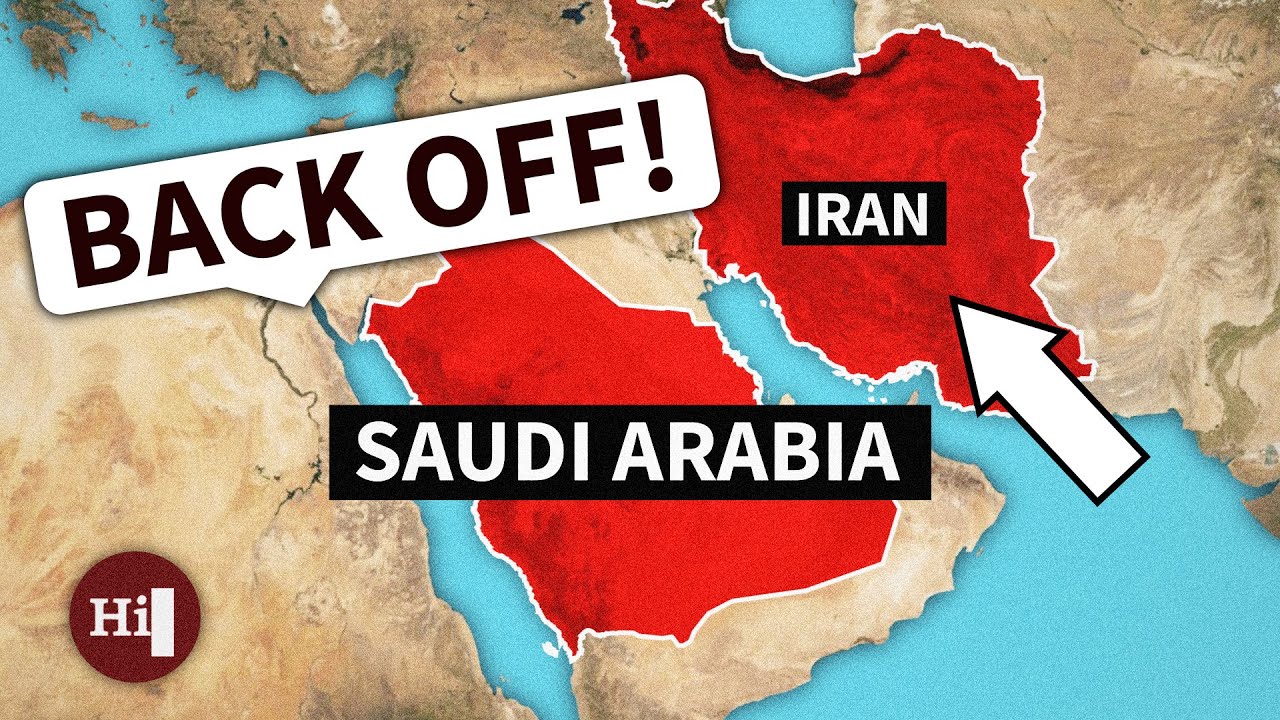
Saudi Arabia's Catastrophic "Iran" Problem
295.7K
In 1953, with help from the United Kingdom and the United States, Iran's Prime Minister Mohammad Mossadegh was overthrown in a CIA-backed coup. The Shah subsequently strengthened his position and became an important Western ally during the Cold War against the Soviet Union.
Click to watch →

Холодная война №3 Ирак и Иран
523
This section covers the 1953 CIA-backed coup that overthrew Iran's democratically elected Prime Minister Mohammad Mossadegh and restored the Shah. The coup established a pro-Western regime oriented toward the United States and Western countries, while being relatively cool toward Soviet developments. During the Shah's reign, Iran hosted tens of thousands of American military advisors and supported similar regimes in Chad, Somalia, and Oman. The Baathist revolution in Iraq (1958) created a similar dynamic, with the Arab Socialist Baath Party establishing a harsh regime that developed into a powerful intelligence network. Saddam Hussein rose through this system, becoming head of security services and establishing a cult of personality.
Click to watch →
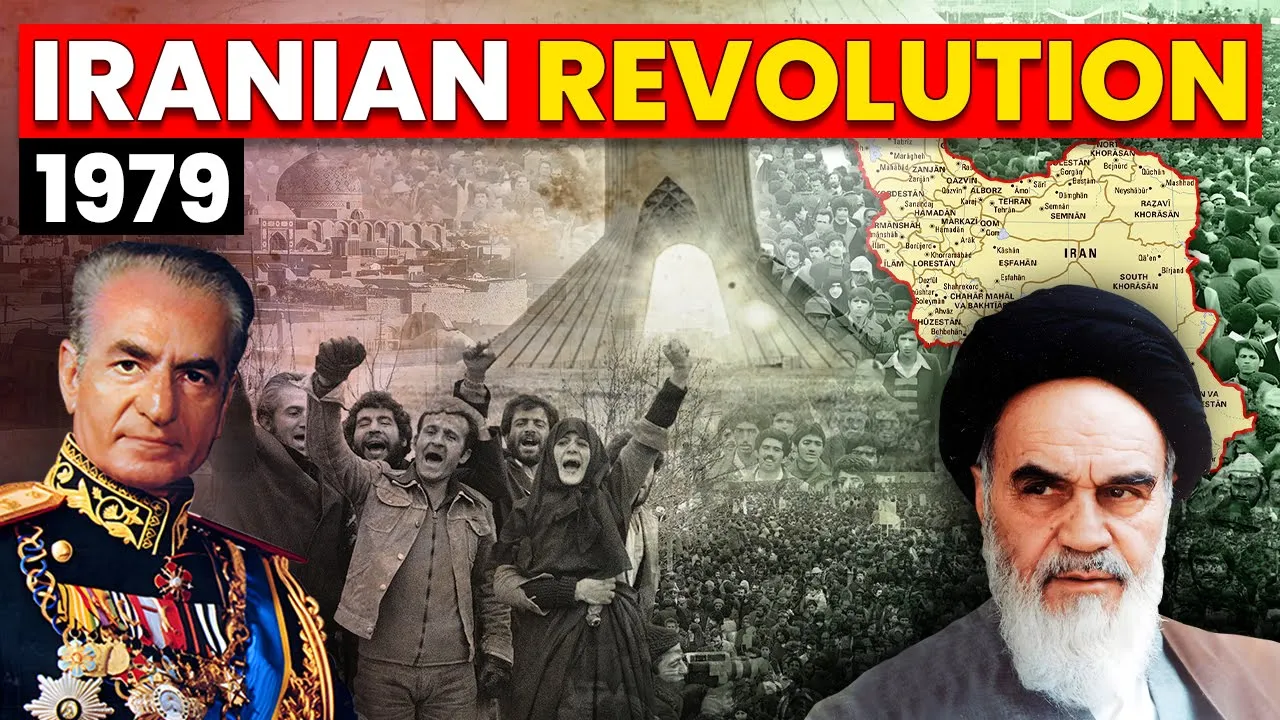
Reality of 1979 Iranian Revolution | The Last Persian Shah | How Ayatollah Khomeini Captured Power
357.5K
During the Cold War, Iran became a battleground for American and Soviet influence. The 1951 nationalization of oil by Mossadegh triggered a crisis that brought the US into Iranian affairs. With CIA-MI6 collaboration, the 1953 coup restored the Shah with American backing. This established decades of American dominance, replacing Soviet influence with Western control. The Shah then established SAVAK, a brutal secret police force, consolidating dictatorial power through intimidation.
Click to watch →

أرشيف ميتروخين.. .. شاه إيران بين سندان العرش ومطرقة الانقلابات
3.7K
Iran's strategic position between the Soviet Union and the Persian Gulf made it a critical buffer state in the Middle East. During World War II, the Allies occupied Iran, and after the war, the Soviet Union refused to withdraw until under severe pressure, eventually leaving in 1946. During this period, Soviet intelligence (KGB) established a significant presence in Iran, creating approximately 40 offices and individual posts. Soviet officers conducted operations including physical elimination of individuals who opposed Soviet interests. In 1953, the United States and Britain orchestrated a coup d'état that overthrew Iranian Prime Minister Mohammad Mosaddegh, who had nationalized Iran's oil industry. The operation was conducted by CIA and British intelligence (SIS). The Shah of Iran, Mohammad Reza Pahlavi, was restored to power. The Shah later expressed gratitude to CIA Director Kermit Roosevelt, stating he owed his throne to the United States. This event marked a significant turning point in Iran's relationship with Western powers and demonstrated the extent of Western influence in Iranian affairs.
Click to watch →

O passado do Irã que ajuda a entender o conflito de hoje
959
In 1953, the Shah of Iran, with support from the United States and Israel, orchestrated a coup d'état to remove his nationalist Prime Minister rival. This coup was part of a broader pattern of U.S. intervention in nearly half the world during the Cold War era, driven by ideological competition with the Soviet Union. The coup established the Shah as a dictator who remained in power until the 1979 Islamic Revolution.
Click to watch →
Deep Dive
The growing domestic opposition to the Shah's regime, led by various factions including secular nationalists, Marxists, and Islamist groups aligned with the exiled Ayatollah Ruhollah Khomeini.
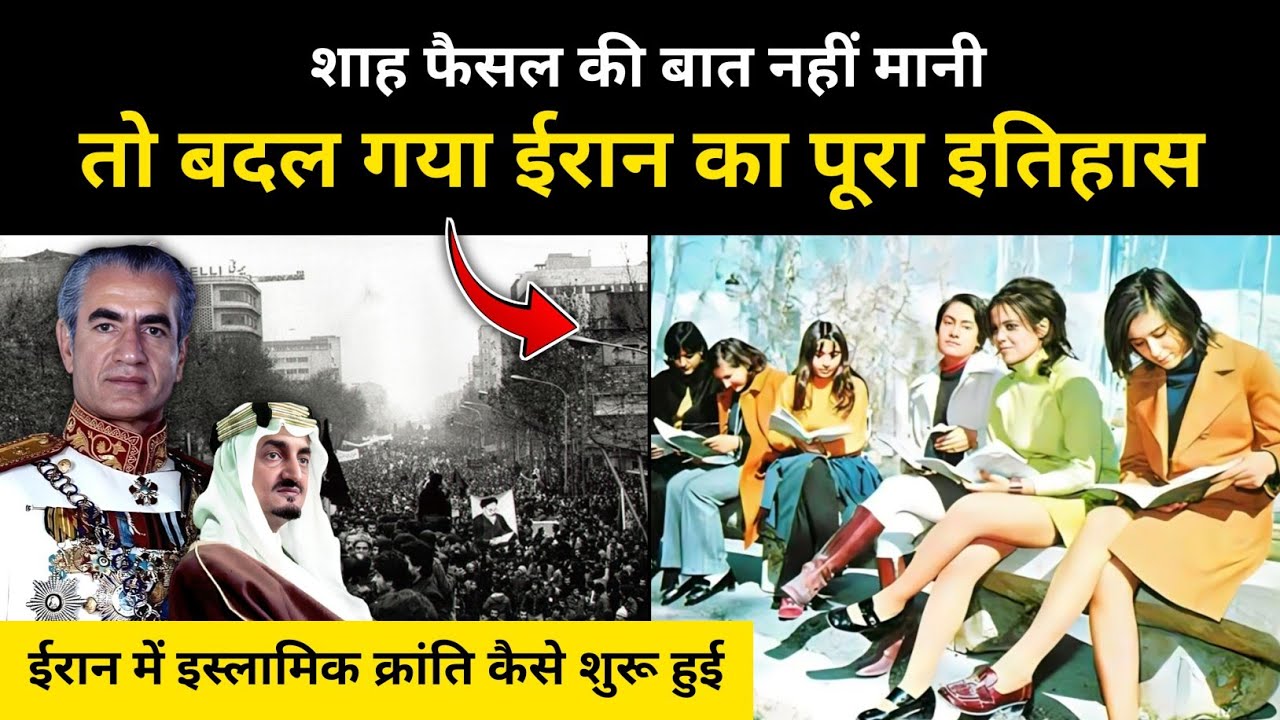
History of Iranian Revolution 1979 । R.H Network
46.2K
By the late 1960s, opposition to Shah Reza Pahlavi's rule had grown significantly among Iranians. The opposition split into two main factions: (1) Religious conservatives led by Ayatollah Ruhollah Khomeini, who opposed the Shah's secularization policies and sought to preserve Iran's Islamic identity; (2) Marxist revolutionaries inspired by the Russian Revolution, who criticized the Shah's regime for corruption, wealth inequality, and Western alignment. Both groups shared a common goal of removing the Shah but differed fundamentally in their vision for Iran's future direction.
Click to watch →

Revisão História / Descolonização africana, asiática e conflitos no Oriente Médio - prof. Joab
257
The opposition to the Shah was a coalition of diverse groups: liberal democrats who wanted political freedom and an end to corruption; religious leaders (Shiite clerics) who opposed Westernization and corruption; nationalists who opposed foreign control of Iranian resources; and leftists who wanted a socialist transformation. Despite their ideological differences, these groups united against the Shah because he was the common enemy. This coalition was led by Ayatollah Khomeini, who was exiled in Iraq and organized the revolution from abroad. The coalition's diversity demonstrated how different social groups could unite against a common enemy.
Click to watch →
The 110-Year Story of the Iranian Revolution
41.2K
Ayatollah Ruhollah Khomeini emerged as a prominent enemy of the Shah during these reforms, declaring Shah's actions would lead Iran to ruin. After leading agitations, the Shah exiled Khomeini to Iraq and later France for fifteen years. During exile, Khomeini developed ideas combining opposition to Western imperialism with Islamic legal code, presenting himself as liberating the colonized world. His influence persisted despite physical absence, and he successfully united various opposition groups—Marxists, liberals, and religious authorities—under his leadership by focusing on common grievances against the Shah.
Click to watch →
The Ayatollah Khomeini: The Cleric, The Emperor and The Great Satan
1.3M
Khomeini's opposition to the Shah was based on five main points: (A) He opposed women's rights reforms, including suffrage; (B) He criticized land reforms as ineffective at feeding the population; (C) He sought to free Iran from foreign influence, particularly from the US and USSR; (D) He protested the inclusion of religious minorities in positions of power, especially the Bahai community; (E) He was a vocal critic of Israel, accusing it of manipulating the Shah. These positions united various opposition groups under his leadership.
Click to watch →

LA HISTORIA COMPLETA DE IRÁN Y DE ARABIA SAUDITA… ¿Por qué IRÁN y ARABIA SAUDÍ se odian?
52.6K
Ayatollah Ruhollah Khomeini, a charismatic Shia cleric living in exile, became the focal point of opposition. His sermons circulated throughout Iran on cassette tapes played in bazaars, mosques, and homes. In the late 1970s, pressure exploded into mass demonstrations, strikes, clashes with security forces, and funerals transforming into protests. The opposition was a mosaic: liberals demanding democracy, Marxists inspired by the Soviet Union, and Shia religious leaders demanding a true Islamic state. The religious faction had the advantage of mosque networks, charity organizations, and deep moral authority in rural areas and popular neighborhoods. In 1979, the Shah's palace fell, he fled, and Khomeini returned in a plane full of journalists, received as a savior.
Click to watch →
Deep Dive
The socio-economic conditions in Iran during the late 1970s, characterized by rapid urbanization, high inflation, and economic inequality despite oil-wealth-driven growth.
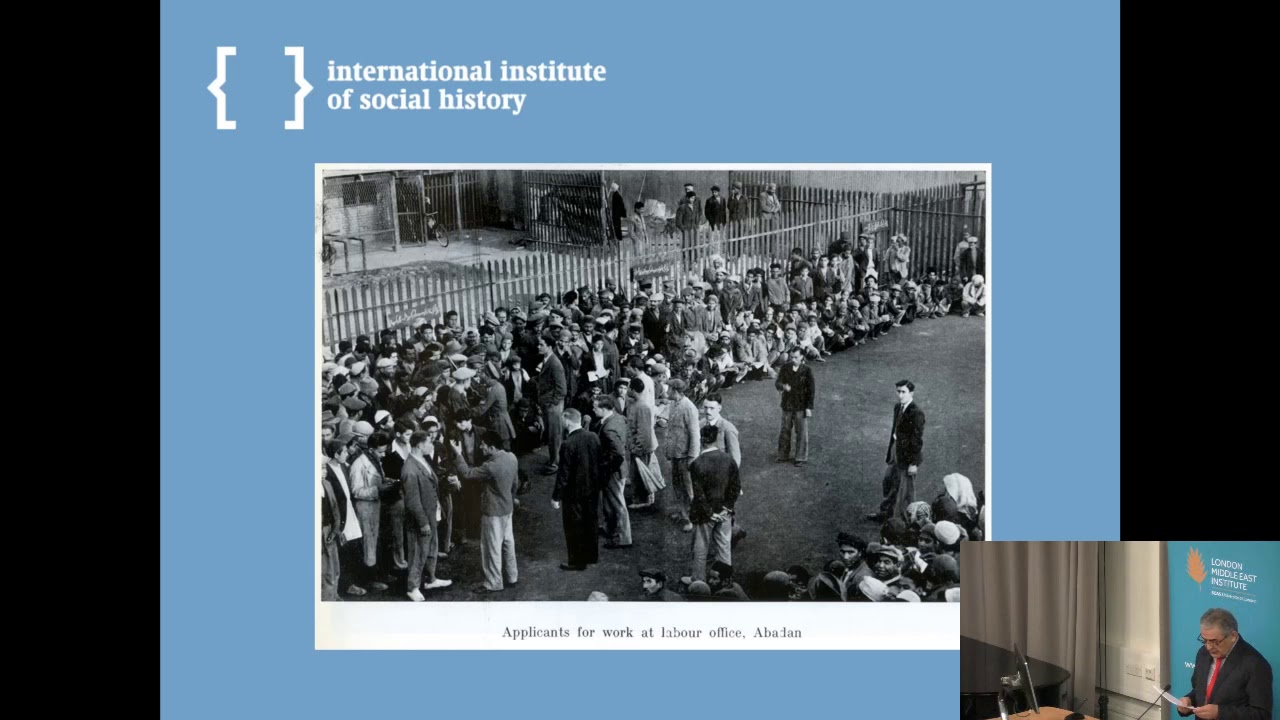
Kamran Djam Annual Lecture 2: Seventy Years in the Social History of the Iranian Oil Industry | SOAS
348
Rapid but uneven socio-economic growth combined with an underdeveloped political system characterized Iran's 1960s-1970s. Population grew from 23 million in 1960 to 34 million by 1975, with cities doubling from 8 million to 16 million. Tehran expanded from 2.5 million to 4.5 million in a decade. Squatter settlements housed 500,000-1 million people, with 11% of provincial populations affected. In 1972, Iran ranked among countries with most uneven income distribution. Large industry workers earned 1,500-2,500 rials by 1975, while non-large industry workers remained at 600 rials. Despite improved worker conditions, the gap between political freedoms and economic prosperity created underlying tensions that would culminate in the 1979 revolution.
Click to watch →
Así el ayatolá Jomeini se quedó con Irán en 1979
120.3K
Despite the oil boom of the 1970s, Iran failed to improve living conditions for its population. The country remained at the bottom of Middle Eastern oil-producing nations in social development indicators like educational coverage and infant mortality rates. The Shah's government used oil wealth without fulfilling promises to improve conditions for the disadvantaged. Political repression by the SAVAK intelligence agency, which had 15,000 agents, created a deep divide between political leaders and their support base.
Click to watch →
Иран. Почему исламские радикалы победили сексуальную революцию? | Экономика, нефть, война, США
614.2K
Despite overall economic growth, Iran experienced severe economic inequality. By the 1970s, 10% of the population owned 90% of the wealth, while 30% lived in poverty. High inflation, reaching 10% annually since 1974, eroded living standards. The combination of economic disparity, corruption, and social injustice created conditions that would eventually lead to the Islamic Revolution.
Click to watch →
MỸ ĐÃ LỪA IRAN NHƯ THẾ NÀO ?
45.7K
Despite impressive GDP growth of 8-9% annually during the 1960s-1970s, Iran's prosperity was illusory. 80% of oil revenue flowed to Western companies, leaving only 20% for the Iranian government. Most of this 20% went to the Shah and his elite circle. Meanwhile, over half the population lived in poverty, with 54% below the poverty line. Rural areas suffered from lack of electricity, hyperinflation, unemployment, and hunger. This stark inequality created conditions for revolution.
Click to watch →

Streams with Djene: Iran So Far Away
4K
The reality of late 1970s Iran was not a land of milk and honey but a deeply unequal society with huge divisions between rural and urban areas, very low literacy rates, and a torture regime. While there were high economic growth rates similar to South Korea, the benefits went to a very small minority of the population. The Shah's attempts at social and economic revolution, particularly his modernization of the countryside, accelerated rural-urban migration and created problems like insufficient infrastructure and people living in squalor, alienating both conservative classes and religious sensibilities.
Click to watch →
Prerequisite Knowledge
- Concept 01The reign of Mohammad Reza Shah Pahlavi, including his modernization efforts known as the White Revolution and the suppression of political dissent via the SAVAK secret police.
- Concept 02The geopolitical context of Iran during the Cold War, including the 1953 coup d'état (backed by the US and UK) that restored the Shah to power.
- Concept 03The growing domestic opposition to the Shah's regime, led by various factions including secular nationalists, Marxists, and Islamist groups aligned with the exiled Ayatollah Ruhollah Khomeini.
- Concept 04The socio-economic conditions in Iran during the late 1970s, characterized by rapid urbanization, high inflation, and economic inequality despite oil-wealth-driven growth.
Subsequent Learning
- Step 01The events of the 1979 Iranian Revolution, including the return of Ayatollah Khomeini and the collapse of the monarchy.
- Step 02The establishment of the Islamic Republic of Iran, the consolidation of theocratic rule, and the drafting of the new constitution based on the concept of Velayat-e Faqih (Guardianship of the Jurist).
- Step 03The 1979 Iran Hostage Crisis and its profound, lasting impact on United States-Iran diplomatic relations.
- Step 04The outbreak of the Iran-Iraq War (1980-1988) and how the external conflict was utilized by the new regime to unify the country and suppress internal political opposition.
- Step 05The broader geopolitical shifts in the Middle East resulting from the rise of political Islam and the reconfiguration of regional alliances.
Black Friday Onset
Revolutionary Aftermath
Black Friday Onset
0:00Playing Section
- 1
Background of 1970s Iran with inequality and political repression under the Shah.
- 2
Rising opposition led by Khomeini and escalating cycle of protests and crackdowns.
- 3
Martial law declared in Tehran, leading to the deadly clash in Jaleh Square.
Revisionist Historiography on Jaleh Square Casualties and Mobilization
While the traditional narrative frames Black Friday as a massive, unprovoked massacre of thousands of peaceful protesters that made the fall of the Shah inevitable, revisionist historians offer a critical alternative perspective. Post-revolutionary investigations, including those by Iranian researcher Emadeddin Baghi using the Martyrs Foundation archives, revealed that the actual death toll was significantly lower than contemporary reports, numbering between 64 and 88 people rather than the thousands claimed by opposition forces. Additionally, some historical analyses suggest that armed provocateurs within the crowd may have initiated the clash to force a violent state reaction. This counterpoint argues that the event's historical impact was driven less by the actual scale of military violence and more by the highly effective mythologization and propaganda surrounding the casualties. Revolutionary leaders strategically used these inflated numbers to delegitimize the Shah's regime, close off avenues for moderate political reform, and polarize Iranian society to ensure a radical revolutionary outcome.
Deep Dive
The events of the 1979 Iranian Revolution, including the return of Ayatollah Khomeini and the collapse of the monarchy.
امام خمینی کے مزار پر حملہ || امریکہ جنگ میں شامل || امریکہ جنگ میں شامل
48.9K
The Iranian Revolution of 1979 fundamentally transformed Iran from a monarchy to an Islamic theocracy. Ayatollah Ruhollah Khomeini, who spent 16 years in exile in Turkey, Iraq, and France, returned to Iran on February 1, 1979, aboard a plane shot down three times by Iranian forces. His return marked the beginning of the end for the Pahlavi dynasty, which had been declining due to widespread strikes and protests. The Shah fled Iran on February 11, 1979, aboard a chartered Boeing 747 from Paris to Tehran. Khomeini's leadership established Iran's current political system, with the Supreme Leader as the highest authority. His death on June 3, 1989, raised questions about succession, with reports suggesting he identified three potential successors.
Click to watch →
Así el ayatolá Jomeini se quedó con Irán en 1979
120.3K
The 1979 Iranian Revolution was a theocratic revolution that overthrew the monarchy in Iran, beginning a process that continues to influence global geopolitics today. The revolution was led by Ayatollah Ruhollah Musavi Khomeini, who directed the political process from exile until he returned to Iran at the moment of the revolution's triumph to establish a republic governed by Islamic law.
Click to watch →

რატომ ებრძვის დასავლეთი ირანს სინამდვილეში?
33.5K
Ayatollah Khomeini, who had been exiled in France, became the focal point of Iranian opposition. He criticized the Shah's secular policies and anti-Islamic stance, gaining support among Iranians who felt their religious identity was being undermined. Despite being outside Iran, his sermons and interviews were broadcast into the country, primarily in mosques. The revolution was supported by Islamists, students, the middle class, and the poor. On January 16, 1979, the Shah announced he was leaving Iran for 'rest,' choosing a time when the country was in turmoil. He never returned. On February 1, 1979, Ayatollah Khomeini returned to Iran, greeted by 3-5 million people, one of the largest political mobilizations in modern history.
Click to watch →

Bom dia 247: humilhado, Maia ameaça acolher impeachment (1.2.21)
74.1K
On February 1, 1979, Ayatollah Khomeini returned from exile after 13 years in Iraq and France. This marked the beginning of the Iranian Revolution, which ended the Shah's monarchy and established the Islamic Republic. The revolution was a response to Western imperialism and the Shah's corrupt regime. The new Islamic Republic claimed to liberate Iran from foreign domination, though the revolution was also influenced by the earlier nationalization of Iranian oil under Mossadegh in 1951.
Click to watch →

Ayatollah Khomeini Kon? | Supreme Leader | Nadeem Sarwar Nohay 2020 Fans must watch this | Muharram
42.5K
Ayatollah Ruhollah Khomeini, born in 1902 in Rasht, Iran, was a prominent Shia cleric who led the 1979 Iranian Revolution that overthrew the Pahlavi monarchy and established the Islamic Republic of Iran, becoming its Supreme Leader until his death in 1989; his return from exile in France in January 1979 sparked mass demonstrations that led to the Shah's departure and the implementation of Islamic governance principles.
Click to watch →
Deep Dive
The establishment of the Islamic Republic of Iran, the consolidation of theocratic rule, and the drafting of the new constitution based on the concept of Velayat-e Faqih (Guardianship of the Jurist).

The ‘Ayatollah’ opposing US imperialism and Iran’s Islamic ‘regime’ | Mohsen Kadiver | UNAPOLOGETIC
212
When Khomeini returned to Iran, the first draft of the constitution prepared in his office had nothing about Velayat-e Faqih. Other grand marjas confirmed this without criticism. The Assembly of Experts for the constitution started, with the head being the speaker's teacher and vice director being Muhammad Bhishti. Both supported Velayat-e Faqih, and a strong majority of the assembly imposed it in the constitution. The speaker notes that this concept changed everything in Iranian politics, creating a hybrid constitution that accepted both democratic and theocratic elements in contradiction. In the first referendum, 20 million people voted for the Islamic Republic, but about 10 months later, only 15 million voted for the constitution, representing a 25% decrease. Ayatollah Montazeri was the first to understand and criticize this contradiction.
Click to watch →

Israeli strikes kill top Iranian commander: What is Tehran's chain of command? | N18G
308.4K
Ayatollah Khomeini's return to Iran in 1979 marked the culmination of decades of opposition to the Shah's secular monarchy. Having spent 14 years in exile in Iraq and France, Khomeini developed his theory of Velayat-e Faqih (Guardianship of the Islamic Jurist), arguing that Shia clerics best understand divine law and thus deserve political authority. This ideology became the cornerstone of Iran's new constitution. A nationwide referendum approved the Islamic Republic model with overwhelming support, followed by the Assembly of Experts rewriting the constitution to establish Khomeini as Supreme Leader for life. The subsequent Cultural Revolution then systematically dismantled liberal Western influences, closing universities for two years and replacing progressive curricula with political Islam, demonstrating how revolutionary ideology translates into systematic societal transformation.
Click to watch →
How Did the Ayatollahs Set Up Iran's Islamic Regime? | Israel Iran Conflict | Palki Sharma
335.8K
The Islamic Republic of Iran was established in 1979 following the revolution led by Ayatollah Khomeini, who returned from 14 years in exile; he created a theocratic system based on Velayat-e Faqih (guardianship of the Islamic jurist), which established the Supreme Leader as the ultimate authority, created the Islamic Revolutionary Guards Corps as an independent militia, and implemented a complex power structure with multiple councils and assemblies that all draw power from the Supreme Leader, effectively creating an illusion of checks and balances while maintaining centralized clerical control.
Click to watch →
الخميني وثائقي | الجوانب المظلمة في حياة الخميني: ما لم يُروَ من قبل!
201.4K
Velayat-e Faqih (Guardianship of the Jurist) is one of the most important political theories proposed by Ayatollah Khomeini, forming the intellectual and legal foundation of Iran's political system after the Islamic Revolution. The theory centers on the idea that religious jurists meeting specific conditions (justice, expertise in religious and political matters) should govern and manage Muslim affairs in the absence of the Hidden Imam. Khomeini believed that the presence of a ruler is necessary to maintain social order, protect Islam and Muslims from external enemies and internal deviations, and that the absence of a ruler would lead to social disintegration and the spread of injustice and corruption. The qualified jurist is the legitimate ruler in the era of the Hidden Imam and possesses the same authorities that the Prophet Muhammad and the Imams possessed. The guardianship encompasses all aspects of political, social, economic, and cultural life.
Click to watch →
How the Iranian Revolution Was Hijacked | EP 2
136.4K
Velayat-e faqih (guardianship of the jurist) was the core doctrine that would form the basis of the Islamic Republic. It meant that clerics like Khomeini should shoulder the guardianship of the state, which was supposed to have perished with Ali and Hussein. This was profoundly revolutionary because for the first time in Shiite history, clerics proposed to run the state rather than waiting for the Mahdi (the 12th Imam). The concept derived from Quran, Hadith, teachings of imams, and classical Shiite texts, representing centuries-old tradition, yet was also inspired by Plato's idea of enlightened experts running the state.
Click to watch →
Deep Dive
The 1979 Iran Hostage Crisis and its profound, lasting impact on United States-Iran diplomatic relations.
DABINKII JAXIIMADA!! MAXUU TRUMP UGA BAQAYAA IN IRAN AY SOO CELISO QORSHAHII 1979-DII
4.5K
The 1979 Iran Hostage Crisis, when Iranian students seized the US embassy in Tehran and held 52 Americans hostage for 444 days, fundamentally transformed US-Iran relations from diplomatic engagement to adversarial confrontation, establishing a pattern of hostility that continues to influence modern diplomatic efforts, including current negotiations involving figures like JD Vance.
Click to watch →

IRAN மீது USA ஏன் இவ்ளோ கோபம்? | யூதருக்காக நடக்கும் போர்? | அதிர வைக்கும் ஆய்வு! | Jews | Gulf War
114.4K
Following the 1979 Iranian Revolution, the new Iranian government took diplomatic hostages from the United States. During the Carter administration (1977-1981), 52 American diplomats and citizens were held hostage in the US embassy in Tehran for 444 days. This event significantly damaged US-Iran relations and created lasting animosity between the two nations.
Click to watch →
The Secret War between Iran, Israel and the USA | ENDEVR Documentary
797.5K
On November 4, 1979, Islamist students invaded the American embassy in Tehran, taking 52 diplomats hostage. This crisis made clear that the US was largely unprepared to deal with the nature of revolutionary Iran and the anger reflected in the takeover. The hostage crisis brought Iran to the top of American concerns about global situations. The crisis lasted 444 days until the last hostages were finally freed, and it fundamentally damaged US-Iran relations for decades.
Click to watch →

ट्रम्प ने ईरान के सामने किया सरेंडर, अपना वाला तो पहले ही! | Iranisrailwar | trump | NarendraModi |
6.2K
On November 4, 1979, Iranian students stormed the US Embassy in Tehran, taking 66 hostages including Americans, Canadians, and Africans. The crisis lasted 444 days under Jimmy Carter's administration, making it the longest hostage situation in world history. The students demanded the return of Shah Reza Pahlavi, who had left Iran for medical treatment in New York after the Islamic Revolution. In April 1980, the US launched Operation Eagle Claw, a military rescue attempt that failed catastrophically due to bad weather, resulting in 8 American deaths. The hostages were eventually released on January 20, 1981, when Ronald Reagan took office, after negotiations in Algiers. Many of the students who stormed the embassy went on to hold high-ranking positions in Iran's government, including becoming generals, foreign ministers, and defense ministers.
Click to watch →

Entenda o conflito entre IRÃ e ESTADOS UNIDOS do Começo ao Fim
113.1K
Mohammad Reza Pahlavi ruled Iran with an iron fist, marked by torture, censorship, and a brutal secret police. Oil wealth flowed abroad while strikes paralyzed the country. In 1979, weakened and surrounded by protesters, the Shah fled. Ayatollah Ruhollah Khomeini returned as a hero, and on April 1, the Islamic Republic was established. In November 1979, Iranian students invaded the American embassy, taking 52 diplomats hostage for 44 days. In April 1980, President Jimmy Carter formally broke diplomatic relations—a rupture that persists today. The crisis ended only in January 1981 when Ronald Reagan assumed the presidency. This marked the beginning of a new chapter: a sovereign, radicalized Iran determined to break with the West at any cost.
Click to watch →
Deep Dive
The outbreak of the Iran-Iraq War (1980-1988) and how the external conflict was utilized by the new regime to unify the country and suppress internal political opposition.

INTERVIU. Celălalt Iran: un popor alergic la intervenții străine
58.8K
The eight-year Iran-Iraq War (1980-1988) had a paradoxical effect on the Islamic Republic: while it caused immense suffering for the Iranian population, it also served to consolidate the new regime by mobilizing national unity against external threats. The video explains that the war created a sense of shared sacrifice and national purpose that strengthened the Islamic Republic's position domestically. This demonstrates how external conflicts can paradoxically strengthen authoritarian regimes by providing a unifying cause and justifying the suppression of internal dissent.
Click to watch →

Iran 1988, l'opposition massacrée
183
The Iran-Iraq War (1980-1988) provided the Islamic Republic with opportunities for consolidation. The war led to the institutionalization of the regime, including the exclusion of Bani-Sadr from power. At least six cease-fire proposals were made by the UN and other actors between 1981 and 1988, all of which were rejected. The war enabled the regime to reclassify political opponents as enemies through antiterrorist laws, transforming internal political conflicts into external security threats. This demonstrates how external conflicts can be used by authoritarian regimes to consolidate power and eliminate political opposition.
Click to watch →

L’Iran i el No a la Guerra
241
The Iran-Iraq War (1980-1988) served as a crucible for the Islamic Republic's consolidation of power. The war created a unifying nationalistic sentiment while simultaneously enabling brutal repression of political opposition. Between 1980-1988, the regime executed thousands of political prisoners, with estimates ranging from 3,000 to 30,000 deaths. This period established patterns of state violence that would characterize subsequent Iranian politics. The war also demonstrated how external conflicts can be exploited by authoritarian regimes to strengthen their hold on power through manufactured national unity.
Click to watch →
"Iran GONE Forever..." - Iranian WARNS Trump on US Attack on Iran | Trita Parsi
29.5K
The Islamic Republic had huge problems from the beginning, but Saddam Hussein's invasion in 1980 became a blessing by rallying the country around the flag. The common enemy postponed internal contradictions for nearly a decade. By the time the war ended, the country was devastated but supporters had invested heavily—children had died defending the country. This made it much more difficult to walk away from the regime. The war profoundly deepened support among supporters because they had sacrificed so much for it. This demonstrates how external threats can strengthen authoritarian regimes by creating a common enemy that unites the population.
Click to watch →

حرب إيران × العراق 1980-1988م - وثائقي
912.4K
The Iran-Iraq War (1980-1988) was one of the longest and deadliest conflicts of the 20th century, triggered by a combination of territorial disputes over Shatt al-Arab, the 1979 Iranian Revolution, and regional power struggles. The war began when Iraq invaded Iran in September 1980, despite both sides having historical grievances and ongoing border tensions dating back to the 19th century. Saddam Hussein's regime, having recently consolidated power, sought to exploit the revolutionary chaos in Iran to expand Iraqi influence in the Persian Gulf region. The conflict resulted in over 800,000 deaths and $400 billion in damages, fundamentally reshaping the political landscape of the Middle East.
Click to watch →
Deep Dive
The broader geopolitical shifts in the Middle East resulting from the rise of political Islam and the reconfiguration of regional alliances.

வளைகுடா அரசியலில் மாபெரும் திருப்பம் -ஈரானுக்கு எதிராக இஸ்ரேலுடன் கைகோர்த்த நாடு |Major MadhanKumar
70.5K
The Middle East is experiencing a major realignment of alliances. Traditional Islamic alliances (Saudi Arabia, Turkey, Pakistan, Iran) are being replaced by new groupings. UAE has completely exited the traditional Islamic alliance and is forming new partnerships through the Abraham Accords and I2U2. This represents a fundamental restructuring of regional power dynamics based on strategic interests rather than religious or ideological alignment.
Click to watch →

Tronditet Izraeli, Erdogan merr vendimin e frikshëm, Krijohet aleanca më e re e botes muslimane
17.3K
A major geopolitical realignment is occurring in the Middle East as Islamic nations form a unified alliance challenging Western hegemony. The alliance includes Saudi Arabia, Turkey, Pakistan, Egypt, Sudan, and Iran, with potential inclusion of Iran. This alliance is based on shared religious identity and strategic interests, with Pakistan's nuclear capabilities potentially shared among members. The alliance is seen as a response to Western fragmentation of the Islamic world. Saudi Arabia's Vision 2030 is failing because these nations are not financing it, but the military alliance may provide the economic foundation needed. The alliance could eventually include Iran, creating a unified Islamic bloc that challenges American influence.
Click to watch →
![Panel 3: Policy, Mobilization, and Prospects -Discussion [ENG]](https://i.ytimg.com/vi/Hygn9B6m268/maxresdefault.jpg)
Panel 3: Policy, Mobilization, and Prospects -Discussion [ENG]
114
The Middle East is experiencing a significant power shift away from Western influence toward regional powers. The region is partly driving itself apart through internal conflicts. The US has reduced its engagement, which has changed the regional order. Russia's influence is unlikely to be repeated. The Middle East as a civilization has not resolved fundamental issues of state, politics, religion, and ethnicity. After the 1973 war, the PLO recalibrated itself to think of itself as a state-building project rather than a revolutionary movement, creating internal rifts among Palestinians. The 1988 Declaration of Independence was a political choice, not an inevitability. After 25 years of experimentation, Palestinians are now at a juncture where they must define politics in the absence of a state. Islamist movements have become sociologically more complex due to generational differences. A significant trend is the emergence of movements like the Justice and Development Party that have abandoned the traditional Islamist project while still respecting their origins. Both secularists and Salafis criticize Islamist movements for wanting political power while guarding themselves in religion.
Click to watch →
India Counters Islamic NATO with Hindu-Jews-Christian QUAD | America Ready to Attack Iran?
86.2K
The Middle East is experiencing a major geopolitical realignment. The US has deployed its entire military armada to the Persian Gulf, with over 500 fighter aircraft assembled for potential operations against Iran. In response, regional powers are forming new alliances. Pakistan, Saudi Arabia, and Turkey are creating an 'Islamic NATO' alliance based on complementary strengths: Turkey's drone technology, Saudi Arabia's financial resources, and Pakistan's military personnel. This alliance aims to counterbalance Western military presence and protect regional interests.
Click to watch →

THE GLOBAL MIDDLE EAST - Social Change and Contentious Politics (Joel Beinin and Rashid Khalidi)
390
Islamist movements in the Middle East are diverse and deeply rooted, not a single unified phenomenon. The Saudis and Muslim Brothers are at odds, while the Taliban and Islamic State in Khorasan are also in conflict. Each variant operates under specific circumstances. Islamist organizations with deep societal roots, like the Muslim Brotherhood established in 1928, cannot be eliminated through force alone. Many false assumptions exist about secularization in the Middle East—religion has never been relegated to private spheres here. The variety of Islamist regimes that have come to power (Iran, Turkey, Afghanistan) has demonstrated what political islam can and cannot achieve, often revealing that regimes shed religious principles in practice. U.S.-Iran relations lack fundamental conflict beyond historical events; rational policy could pursue containment and peaceful coexistence. However, powerful domestic interests invested in finding enemies over the horizon continue driving hostile policies. As the U.S. pivots toward Asia, Middle Eastern actors including Saudis, Emiratis, Iraqis, and Egyptians have begun rapprochement with Iran and its proxies, normalizing relations with Damascus. Russia, geographically proximate to Iran, Turkey, and Afghanistan, can project power without extensive overseas bases. China already controls ports in Iran and participates in Belt and Road Initiative projects. India will likely oppose Chinese initiatives. These emerging powers will reshape regional dynamics.
Click to watch →
Black Friday Onset
Revolutionary Aftermath
Black Friday Onset
0:00- 1
Background of 1970s Iran with inequality and political repression under the Shah.
- 2
Rising opposition led by Khomeini and escalating cycle of protests and crackdowns.
- 3
Martial law declared in Tehran, leading to the deadly clash in Jaleh Square.
Revisionist Historiography on Jaleh Square Casualties and Mobilization
While the traditional narrative frames Black Friday as a massive, unprovoked massacre of thousands of peaceful protesters that made the fall of the Shah inevitable, revisionist historians offer a critical alternative perspective. Post-revolutionary investigations, including those by Iranian researcher Emadeddin Baghi using the Martyrs Foundation archives, revealed that the actual death toll was significantly lower than contemporary reports, numbering between 64 and 88 people rather than the thousands claimed by opposition forces. Additionally, some historical analyses suggest that armed provocateurs within the crowd may have initiated the clash to force a violent state reaction. This counterpoint argues that the event's historical impact was driven less by the actual scale of military violence and more by the highly effective mythologization and propaganda surrounding the casualties. Revolutionary leaders strategically used these inflated numbers to delegitimize the Shah's regime, close off avenues for moderate political reform, and polarize Iranian society to ensure a radical revolutionary outcome.
The reign of Mohammad Reza Shah Pahlavi, including his modernization efforts known as the White Revolution and the suppression of political dissent via the SAVAK secret police.
The geopolitical context of Iran during the Cold War, including the 1953 coup d'état (backed by the US and UK) that restored the Shah to power.
The growing domestic opposition to the Shah's regime, led by various factions including secular nationalists, Marxists, and Islamist groups aligned with the exiled Ayatollah Ruhollah Khomeini.
The socio-economic conditions in Iran during the late 1970s, characterized by rapid urbanization, high inflation, and economic inequality despite oil-wealth-driven growth.
The events of the 1979 Iranian Revolution, including the return of Ayatollah Khomeini and the collapse of the monarchy.
The establishment of the Islamic Republic of Iran, the consolidation of theocratic rule, and the drafting of the new constitution based on the concept of Velayat-e Faqih (Guardianship of the Jurist).
The 1979 Iran Hostage Crisis and its profound, lasting impact on United States-Iran diplomatic relations.
The outbreak of the Iran-Iraq War (1980-1988) and how the external conflict was utilized by the new regime to unify the country and suppress internal political opposition.
The broader geopolitical shifts in the Middle East resulting from the rise of political Islam and the reconfiguration of regional alliances.
846 views13likes3:00@TimeScroll-b1zOriginal Release: 2026-03-31
September 8th, 1978 in Tehran.
It involved a violent clash between anti-government protesters and the military forces of Mohammad Reza Shah Pahlavi, and it became a major turning point leading to the Iranian Revolution.
In the 1970s, Iran was undergoing rapid modernization under the Shah's rule.
While reforms improved infrastructure and education, they also caused economic inequality and social disruption.
Many groups, including religious leaders, students, and workers, became dissatisfied with political repression, corruption, and Western influence.
Opposition to the Shah grew stronger in 1978, led in part by exiled cleric Ruhollah Khomeini.
Protests spread across the country, often linked to religious observances.
Each crackdown [music] by the government led to more demonstrations, creating a cycle of unrest.
On September 7th, 1978, the government declared martial law in Tehran and banned public gatherings.
The next day, thousands of protesters gathered in Jaleh Square, many unaware of the restrictions. The military surrounded the area and ordered the crowd to disperse.
When the protesters did not leave, soldiers opened fire.
Panic followed as people tried to escape.
Dozens were killed and many more injured, although the exact number of casualties remains disputed.
Official figures reported around 60 to 90 deaths, while opposition sources claimed much higher numbers.
The massacre had a powerful psychological and political effect.
It destroyed any remaining hope for compromise between the Shah and his opponents.
Public anger intensified, [music] and protests spread nationwide. Strikes increased across key sectors, including the oil industry, weakening the government's control.
The opposition also became more united with different groups rallying against the monarchy.
Black Friday is widely seen as a turning point that accelerated the revolutionary movement.
After that, calls for reform shifted toward demands for complete overthrow of the regime. In January 1979, the Shah left Iran.
Shortly afterward, Ruhollah Khomeini returned from exile and assumed leadership of the revolution.
The monarchy collapsed, and Iran was transformed into an Islamic Republic.
Black Friday remains a powerful symbol in Iran.
Jaleh Square was renamed Martyr Square in memory of those who died.
The event is remembered as a day of sacrifice and resistance against oppression.
Black Friday, 1978, was a pivotal moment that changed the course of Iranian history.
The violent crackdown on protesters not only deepened public anger, but also accelerated the of the Shah's government.
Its impact continued
Up Next
19:01
The 1953 Iran Coup: How the CIA Overthrew Iran's Democracy
@realtimehistory
462.1K views•2024-10-04

33:02
The Great Schism of 1054: Causes and Consequences
@SacredCathedrals
113.5K views•2026-02-19
91:57
The Geopolitics of the Ukraine War and the Rise of Global Autocracy
@JordanHarbingerShow
468K views•2025-04-19
17:05
Understanding the Cold War: Superpower Conflicts and the Road to Détente
@OverSimplified
46.1M views•2019-01-24
Related Study Plans & Knowledge Roadmaps
Structured learning paths in History
history
Byzantine Iconoclasm: Theology, Art & Politics
01Foundations of Byzantium and Early Christian Images
02The First Iconoclasm: Leo III and the Crisis of Images
03Empress Irene, Nicaea II, and the Second Iconoclasm
+ 2 more learning modules
9h5 modules
Explore Roadmap
history
Iranian Revolution (Causes, Events & Legacy)
01The Pahlavi Dynasty and the Roots of Discontent
02The Spark of Rebellion and the Rise of Khomeini
031979: The Fall of the Shah and the Climax of the Revolution
+ 2 more learning modules
8h5 modules
Explore Roadmap
history
Mali Empire: Mansa Musa, Trade & Timbuktu
01Foundations of the Mali Empire
02The Trans-Saharan Gold and Salt Trade
03The Reign and Pilgrimage of Mansa Musa
+ 1 more learning modules
6h4 modules
Explore Roadmap
history
1947 Partition: Politics, Borders & Legacies
01Foundations of British India and the Divide
02The Political Negotiations and the Mountbatten Plan
03Drawing the Boundary: The Radcliffe Line
+ 2 more learning modules
8h5 modules
Explore Roadmap