

















![[화공생명공학부 성영준 교수] 배기가스 내 이산화탄소의 효율적인 생물학적 전환을 위한 광합성 미생물 돌연변이 균주개발 기술](https://i.ytimg.com/vi/KzYv_kyzelE/maxresdefault.jpg)

Photobioreactors are closed systems for microalgae cultivation that supply energy via electric lights, classified into four main types: vertical tube (bubble column and airlift designs with internal structures for liquid cycling), horizontal tube (tubular reactors with long horizontal tubes for high surface area), stair tank (with external light sources and good mixing), and flat panel (transparent glass sheets positioned toward light sources). Each design offers different advantages in terms of mass transfer, mixing efficiency, dissolved oxygen control, and suitability for specific microalgae strains, with selection depending on factors like strain characteristics, growth mode, and cultivation medium.
Photobioreactors Explained: Types, Design, and Mechanisms
Added:Basic principles of photosynthesis, including the light-dependent and light-independent reactions, and how light intensity affects photosynthetic rate.
Fundamentals of microalgae biology, including cell structure, growth phases (lag, exponential, stationary), and nutrient requirements (nitrogen, phosphorus, trace metals).
Introduction to transport phenomena, specifically fluid dynamics, shear stress, and mass transfer concepts such as gas-liquid mass transfer (CO2 supply and O2 removal).
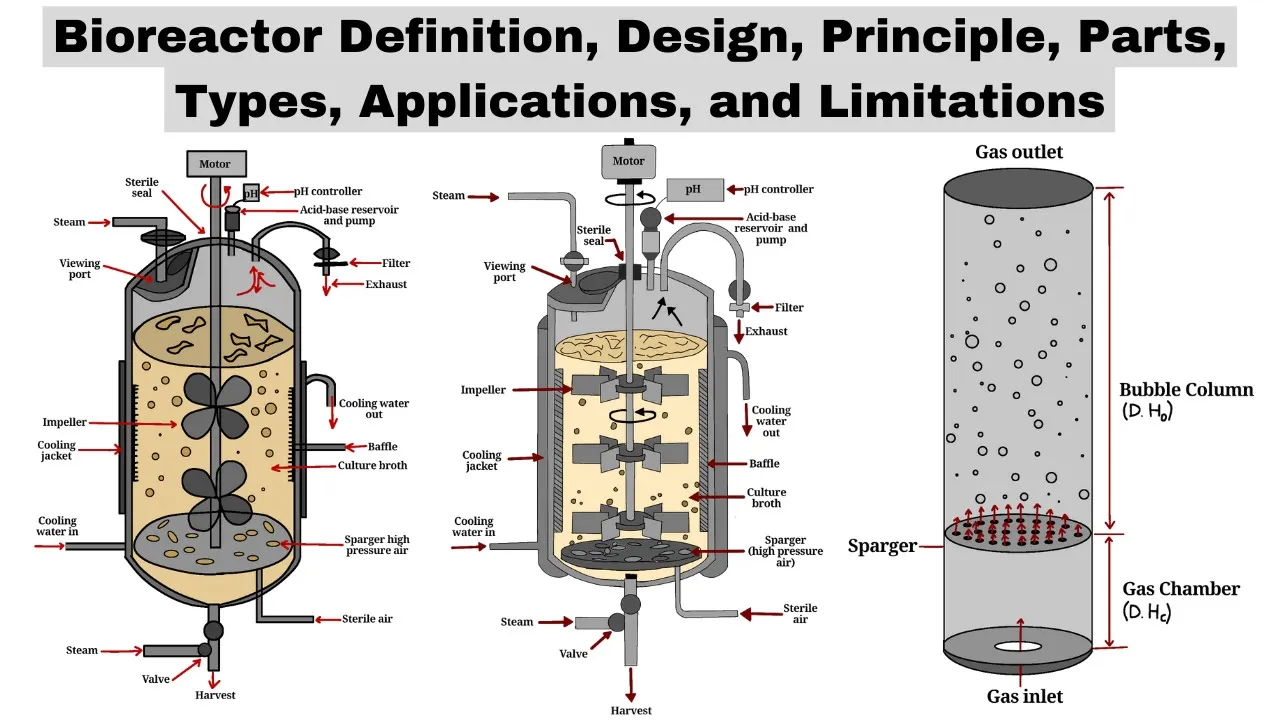
General bioreactor design principles, including the distinction between open systems (like raceway ponds) and closed systems, and the importance of parameter control (pH, temperature).
Downstream processing technologies for microalgae, including harvesting (flocculation, centrifugation), cell disruption, and extraction of high-value bioproducts or biofuels.
Scale-up engineering and economic analysis (CAPEX/OPEX) of industrial-scale photobioreactor facilities.
Advanced process control and automation systems for optimizing light distribution, mixing intervals, and nutrient feeding strategies in real-time.
Genetic engineering and strain optimization of microalgae to enhance photosynthetic efficiency and resilience to environmental stressors within closed bioreactors.
767 views13likes9:24Original Release: 2021-02-02
hi everyone salaam alaikum my name is annas in this presentation i will talk about basic knowledge of fundamentals microalgae cultivation by photo directors and in this presentation i just offered the the kind of photo bioreactors and those are like four photo directors will be discussed so first of all we have the vertical tube photobioreactor and horizontal stair tank photobiorector and flat panel photobiorectal so what is the photobioreactor a photobioreactor is a closed or mostly closed field of photo traffic production where energy is supplied via electric lights photo bioreactor can be located indoor or outdoors depending upon the light collection and distribution system and their commercial visibility so in the classification of photobiorector i will discuss the design for everyone and the mechanisms and their advantages advantages with their limitations there are various techniques for microalgae contribution the cultivation method is minimally enforced by the stream type source of nutrition and the investment cost it can be classified so in photobioreactors it can in general the system it can be classified to two categories that close and open system so but for photobiological all of them are in a closed system first of all vertical tube pulled biractor and vertical to your photobioreactor design there are two types that are power column and a left column the similar features for both type or photo director are that they have an iris spherical attach it at the bottom of the reactor to enhance mass transfer by generating iron bubbles to mix the algae with the cultural medium so as we can see in this figure we have a bubble column reactor in the left and we have the air left reactor and the right both of them are vertical to put birector but the airlift electro is improved designed for bubble columns so in the air left reactors in this configuration the process is called i left due to the iron bubbles driving so we can see here the the bottom and we can see here the the rise zone so uh before to to start to explain the air left so as we can see in the bubble column reactor we don't have the the internal structure we have floyd patter pattern but here we have the internal structure so that helps to uh to drive the liquid from the rise zone within the constricting tube to the illuminated zone outside and that help to liquid cycling between the dark and light zone so the features of bubble column is satisfactory mass transfer and high surface area to volume ratio but the the gas flow rate is difficult to be controlled as it depicts the light and dark cycle for isle airlift reactor leads to liquid cycling between the dark and light zone good mixing with low shear stress efficient mass transfer and being ideal for algae immobilization the second one is horizontal tube photobiorector horizontal tube also known as tubular reactor is the first constructed model of close reactor for microargument fission it is comprised of long horizontal tubes that can be placed in many free tissue to form walls so in the horizontal as we can see uh it should be uh placed in the huge or the large area of land due to the high surfaces this reactor type is only suitable for certain microalgae that required some light and this type of reactor the cultural medium is circulated within the tubes together so uh with this configuration the diameter of tube can be smaller due to the long and large distance for ability for the light sources to culture liquid the feature of horizontal tube photo bioreactor as the tube has smaller smaller diameter that would give a higher format volume metric productivity the use of horizontal type for the bioreactor could minimize dissolved oxygen content better than vertical one and the limitation only suitable for certain microalgae that require sunlight third tank photobiorector basically the star tank used is differed from the termination tank design the concepts are similar while the difference that can be distinguished for microalgae cultivation are the need for additional external light sources to be added to the design so also this reactor has a low surface area to volume ratio that reduce the microalgae photosynthetic efficiency it has a good performance as it provides very good mixing and transfer indirectivity microalgae so the features it accepts code performance as it provides very good mixing and transfer indoor cultivation and the limitation is still only small and just use a liberalization the last one is the flat panel for to buy rector the flat panel is the most common design of photobioreactor comprising of two transparent or semi-transparent classes sheets that resemble resumable rectangular box that are contacted and kissed towards the light source so it can be positioned vertically or included certain angles this one so the mechanisms would potentially enhance the microalgae biomass productivity by increasing the mixing rate and profiting upper bright amounts of carbon dioxide while removing the accumulated oxygen through exhaust gas immunization to intensify the flashing light effect this would be beneficial for the extraction of biomolecules from microalgae so the features it can be positioned vertically or included at certain angles it also has very short light but that enables easy light to the microalgae thus is suitable for both outdoor and indoors and the limitation is region that causes hydrodynamic stress including collogen photobioreactors have a various design and mechanisms that affects on microalgae called fission thus to be choosing the suitable photobiorectal it should be taking the concentration manufacturers such as the kind of microalgae strain the mode of growth and the medium of cultivation thank you
Up Next

56:23
Algae Biofuels: Harnessing Microalgae for Renewable Energy
@LosAlamosNationalLab
623 views•2020-12-03
14:12
Quantitative Real-Time PCR (qPCR): Principle, Method & Data Analysis
@animatedbiologywitharpan
129.2K views•2023-09-06
23:33
Microbial Degradation of Plastics: Biodegradation Pathways & Sustainability
@majeedhammad
2.9K views•2021-04-11

16:04
CRISPR and Genetic Engineering: How Gene Editing Works and Why It Matters
@kurzgesagt
30.5M views•2016-08-10
Related Study Plans & Knowledge Roadmaps
Structured learning paths in Biotechnology
biotechnology
AAV Production: Transfection, Prep & qPCR
01Introduction to Gene Therapy and AAV Biology
02Mammalian Cell Culture: Suspension HEK293 Cells
03Upstream Bioprocessing: Triple-Transfection Optimization
+ 2 more learning modules
18h5 modules
Explore Roadmap
biotechnology
Building Gut-on-a-Chip: PDMS, Cells & TEER
01Foundations of Microfluidics and Gut Anatomy
02Cleanroom Fabrication & PDMS Soft Lithography
03Epithelial Cell Culture and On-Chip Seeding
+ 2 more learning modules
26h5 modules
Explore Roadmap
biotechnology
Optimizing CFPS: E. coli Extract & Yield
01Fundamentals of Molecular Biology and Translation
02Introduction to Cell-Free Protein Synthesis (CFPS)
03Preparing E. coli Crude Lysate (The Extract)
+ 2 more learning modules
19h5 modules
Explore Roadmap
biotechnology
Haematococcus PBR: Design, Stress & Astaxanthin
01Biology and Life Cycle of Haematococcus pluvialis
02Bench-Scale Photobioreactor (PBR) Design and Engineering
03Culture Media Formulation and Inoculation
+ 2 more learning modules
15h5 modules
Explore Roadmap