










![The United States v. Lopez, EXPLAINED [AP Gov Required Supreme Court Cases]](https://i.ytimg.com/vi/WnAgQKqc0F0/maxresdefault.jpg)








![AP Government UNIT 1 REVIEW [Everything You NEED to Know!]](https://i.ytimg.com/vi_webp/lxotd_zV1hc/maxresdefault.webp)



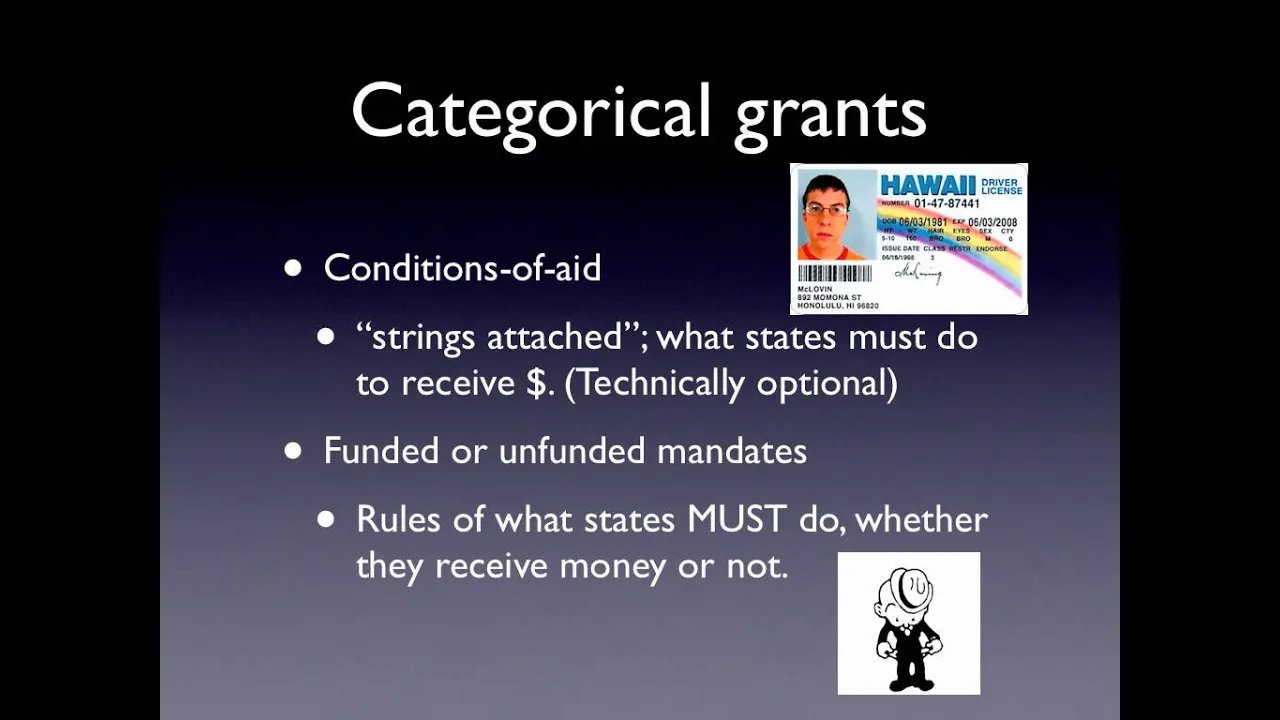
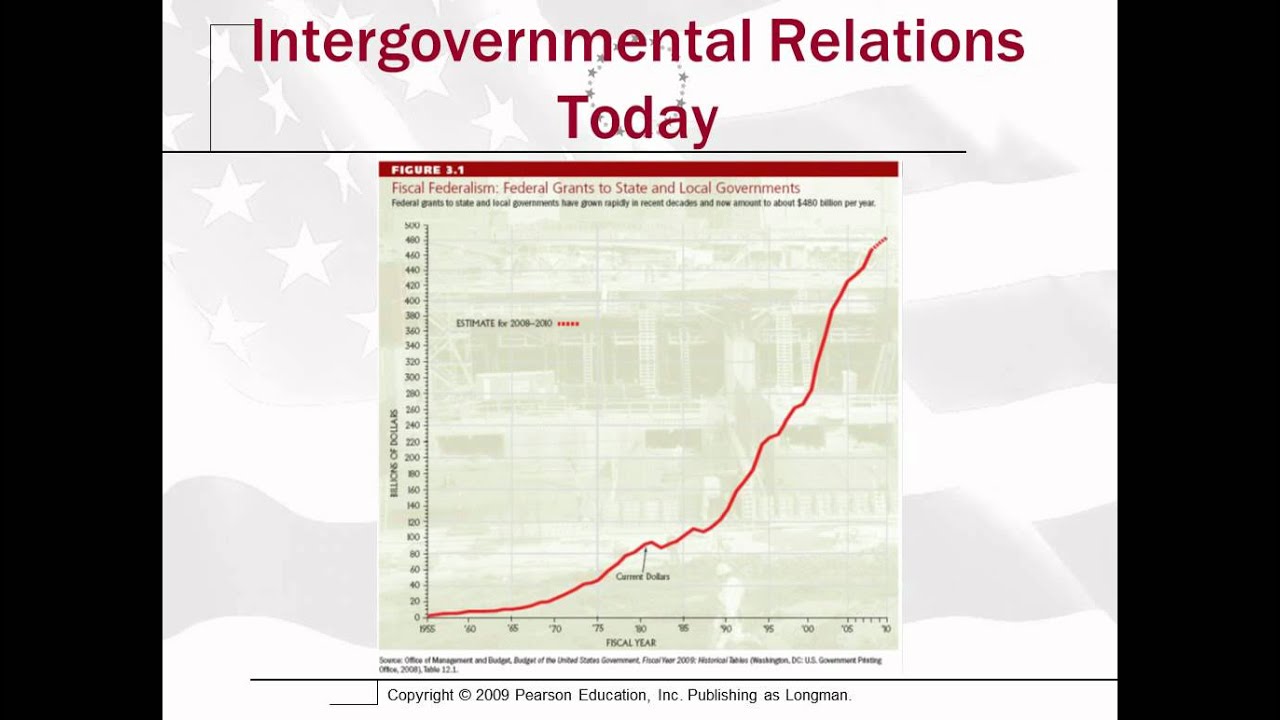
Fiscal federalism is the pattern of spending, taxing, and providing grants in the federal system, where the national government shares funds with state and local governments through grants. There are two main types of grants: categorical grants, which have strings attached and require states to spend money on specific projects or follow formulas based on population, and block grants, which provide states with more discretion and fewer restrictions. The federal government has significantly increased grants to states over time, from about $2-4 billion in 1955 to nearly $480 billion by 2010. A major issue in federalism is unfunded mandates, where the national government requires states to comply with federal rules without providing financial support, such as the Americans with Disabilities Act requiring buildings to be handicapped accessible. Federalism has advantages including increased access to government, local problem-solving, and preventing political domination, but disadvantages include varying levels of service across states and too many levels of government.
AP Gov Federalism: Grants, Unfunded Mandates & Devolution
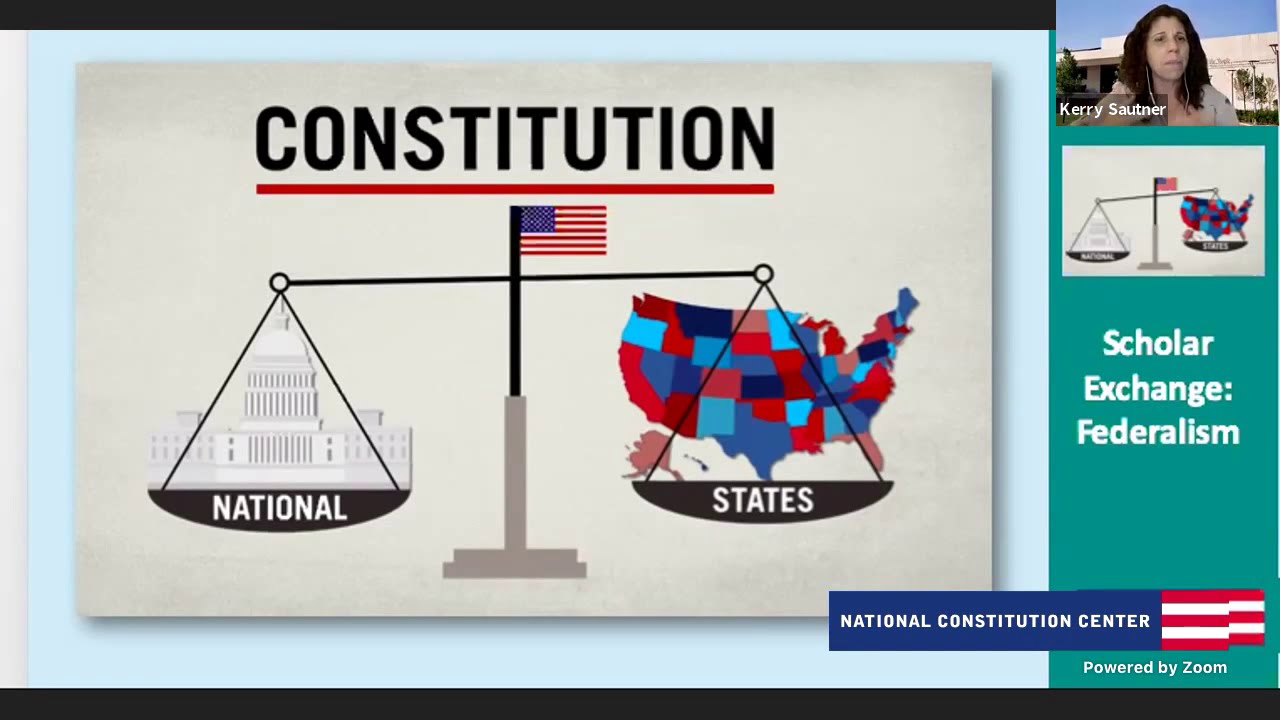
Added:hi this is Kelsey fski for apgov review and in chapter 3 part three we're going to be continuing our discussion on federalism and this is a very important concept that you will definitely see in some form whether on the multiple choice or the frq or even both on the APG exam so we had talked about previously about dual federalism and cooperative federalism in chapter 3 Parts 1 and two and we noticed that of course dual federalism where the states and the national government were acting in their own Spears they were really limited interaction between the two and then after 1930 we began to see cooperative federalism where the state and the national government are working together there's a lot more overlap well fiscal Federalism is very much in line with cooperative federalism and by definition this is the pattern of spending taxing and providing grants in the fedal federal system remember in the federal system you have the sharing of power and you also are going to have the sharing of funds in forms of Taxation and in many ways this is the Cornerstone of the national government's relations with the state and local governments the best way to impact the state and the local governments is with of course money and if you look at the federal budget you'll see that 51% of it has to deal with health uh 10% Transportation 11% education 19% income uh security and and Within These major sectors this is where you're going to see major grants going to the states and the states certainly like what they see as free money and if you see over time the amount of money that the federal government has granted to the state and local governments has significantly expanded over time just look about in 1955 you're maybe at two or4 billion doar and even when this is adjusted to inflation I mean this by 2010 you're approaching about $480 billion which is a very very large sum of money so the amount of Grants is certainly increased over time so the grant system is of course Distributing the federal pie the federal dollars there's uh two types of Grants the first one being categorical grants and these are the grants that have strings attached they say yes we'll give you this money but you have to do this and uh typically there are strings attached and requirements uh that are going along with that money and those could become uh project grants where it could be a specific project of building a bridge or some other Road Project let's say whereas a formula grant is where money is going to be distributed to everybody but there's a formula so it's going to dictate how much money you get for example if you're in New Jersey which has a sizable population you're probably going to get more money on a formula grant if population's based on it as opposed to so let's say Montana which is much more sparse the second type of Grant is called a block grant and these are the grants that states love because it gives a lot of discretion to the states and local governments there are typically no strings attached I mean almost think of it as a block right they can mold it into that block to however they want to meet however they feel fit so there are no strings attached typically states are going to undoubtedly prefer a block grant over a categorical Grant because categorical Grant is telling the states how they have to spend it there are requirements whereas block rants they can basically do what they see fit all right so there is certainly a Scramble for federal dollars you know roughly 460 billion plus in Grants is given away every year that number has certainly increased that's a 2010 figure nevertheless um you do see some type of universalism in the sense that every State typically will get something but certainly states with higher population and higher infrastructure needs are probably going to see more money coming their way but really the big problem the Mandate Blues so a mandate is typically coming from the national government and it directs the state or the local government to comply with Federal rules under the threat of penalties or as a condition of receipt of a Federal grant basically it means that the states have to follow the rules outlined by the federal government and if they don't they can have money withheld there can be some type of penalty they might lose a grant and states of course hate being told what to do I mean almost think of the states as like a child and the federal government is the parent and the parent is bossing around the state you have to do this oh you have to do that states hate mandates and what mandate do they hate the most unfounded man unfunded mandates a good example of this is when the Americans with Disabilities Act was passed which basically stated that buildings had to uh fit and be handicapped accessible and if you had to build let's say a new wheelchair ramp outside of a state courthouse building well the states are going to have to pay for that there's going to be no money attached to that and States hate that because they're being told not only what to do but then now they're being forced to spend money and if you think about all the public uh amenities that are offered by state governments that's a pretty penny that they're going to have to pay especially if you're a state the size of California that probably has more court buildings more public buildings just in general so unfunded mandates are very much hated because they are being told what to do and they have to spend money now as I was telling you about between federal and state relations right they've become much closer from the 1930s all the way up until around Reagan is president in the 1980s and there's this New Concept at that time known as Devolution and that's where you're transferring the policies of the federal ederal government to the state and local governments so you're really reducing the size of bureaucracy something known for uh by Reagan as part of Reaganomics and there was you know by transferring these services from the federal to the state governments you're guaranteeing no financial support um and this was part of again Reagan's ideals of that there's just basically too much Federal control and that programs for example like Medicare would be better handled at the state level so when we look at federalism as a whole you have your advantages and you have your disadvantages major advantages well increases access to government uh you have more opportunities you can also solve problems locally so what might work for Montana they can do their own thing while Kansas and maybe Florida does their own thing it's also an advantage with federalism in the sense that political parties or interest groups cannot dominate all politics there are about 87,000 governments in the United States when you you look at local governments you look at County governments state governments so it is very hard for political parties or interest groups to dominate all of that so again more opportunities for participation certainly there are disadvantages with respect to federalism that states have different levels of service you know that for example when you look at education in New Jersey you're spending a pretty penny $8 to $20,000 per student whereas if you go to a Midwestern State you're going to see that much lower for example Oklahoma uh spends a lot less money so this the level of service you might be getting is going to vary and also local interests can counteract national interests as well uh a good example of that is when the Affordable Care Act was passed you had states such as Texas suing the national government to have the repeal of the so-called Obamacare so certainly you have that happening to as well then also there's the argument that there are just too many levels of government and too much money is being spent uh a good example that I'll fast forward through this to this table right here the number of governments in America as I mentioned earlier 87577 I mean if you look at the number of Just For example school districts you're looking at 13,500 townships or towns you're looking at another 16,000 municipalities another 19,000 3,000 counties uh en counting so there's a lot of overlap in some sense and to have governments you know stay afloat you it costs a lot of money and certainly that has been an argument floated out I just want to back track just for a second as I was talking about state and local spending on public education and how the level of service can certainly vary and these numbers are from 2005 so forgive that they're a little outdated but keep this in mind when adjusted for inflation you still have these wide gaps so if you look for example at Kansas might only spend $88,500 on education whereas in New Jersey they're spending $13 $1,740 uh so you have spending amounts that are very different and that can certainly impact the level of service one might receive especially in education okay so understanding federalism and its scope really these are questions as to what should the scope of the national government be relative to the states so should the national government have a lot more power over the states uh should more for example with Reagan's Devolution idea should more of the responsibilities be given to the states but certainly one thing that holds true is that National Power has increased over time we see this with civil rights we've seen this with the Industrial Revolution we've seen this with the Civil War keep that in mind and a lot of problem problems do require resources that states cannot afford especially states that might only have a 20 to30 billion budget every year can't afford certain things that they need so they need the federal government to step in which has a plethora of resources and money compared to the state governments where we're talking trillion dollar budgets at the national government level states are nowhere near that so certainly sometimes the problems do require Federal intervention and if you look at just fiscal federalism in this graph you've seen steady spending increases over time so in summary as we conclude our discussion on Federalism is a governmental system in which power is shared you have to really keep that in mind power is shared thanks to the 10th Amendment where you have reserved powers for the states um and we see that certainly today and the United States has moved from Dual to cooperative federalism which is of course part of fiscal federalism where the states and the national governments are working together and we certainly have reviewed advantages and disadvantages to democracy as there are with everything uh in life so I'm going to conclude with two review questions which type of government funding allows States the most to discretion take a moment to think about that and if you said block grants you would be correct because remember think about it like almost like a block of marble you can sculpt it in any way that you want States love that there are really no strings attached as opposed to categorical grants um which mandate states to do certain things so block grants are the preferred type of grant for States I'll give you another review question take a moment to read it and I will RW the answer momentarily all right the terms fiscal federalism and cooperative federalism refer to situations in which and if you said the last Choice Federal state and local governments work together key word being together to complete a project with the federal government providing much of the Project funding you would be correct because again with fiscal federalism you have the federal government providing money in terms of some type of Grant and with cooperative federalism you have the state and the national governments working together so if you got that correct kudos to you and this concludes unit one of constitutional underpinnings
Up Next
Unitary, Federal, and Confederal Systems Explained
@BradCartwrightEconomics
151.2K views•2014-09-03

BRICS Pay and de-dollarization: A New Financial Order Emerges? | 55 chars
@DannyHaiphongYT
164.6K views•2024-10-22

Government Surveillance Methods: 10 Ways You May Be Watched
@BeAmazed
1.6M views•2017-04-09
Explaining the Saudi-Iranian Proxy Conflict in the Middle East
@Vox
18.2M views•2017-07-17
Related Study Plans & Knowledge Roadmaps
Structured learning paths in Political Science