























In game theory, a dominant strategy equilibrium exists when each player has a single optimal strategy that maximizes their payoff regardless of what other players do, allowing prediction of the game's outcome. When dominant strategies don't exist, Nash equilibrium serves as a weaker solution concept where each player's strategy is optimal given their beliefs about what other players will do, representing a stable state where no player can benefit by unilaterally changing their strategy.
Game Theory: Dominant Strategy & Nash Equilibrium Explained
Added:Understanding the assumption of rationality in economics, specifically how individual actors seek to maximize their own utility or payoff.
Familiarity with the concept of strategic interdependence, where an agent's outcome depends not only on their own actions but also on the actions of others.
Basic knowledge of what a payoff matrix (or normal-form game) represents, including identifying players, strategies, and outcomes.
An introductory grasp of decision-making under constraints and basic probability concepts.
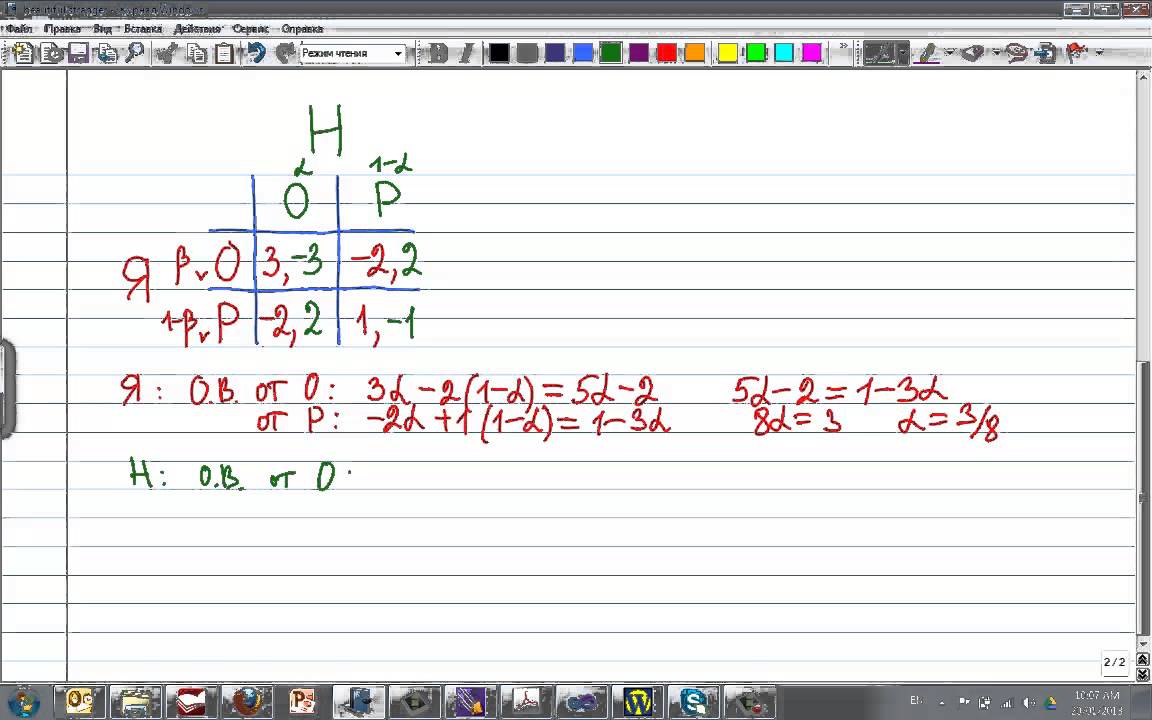
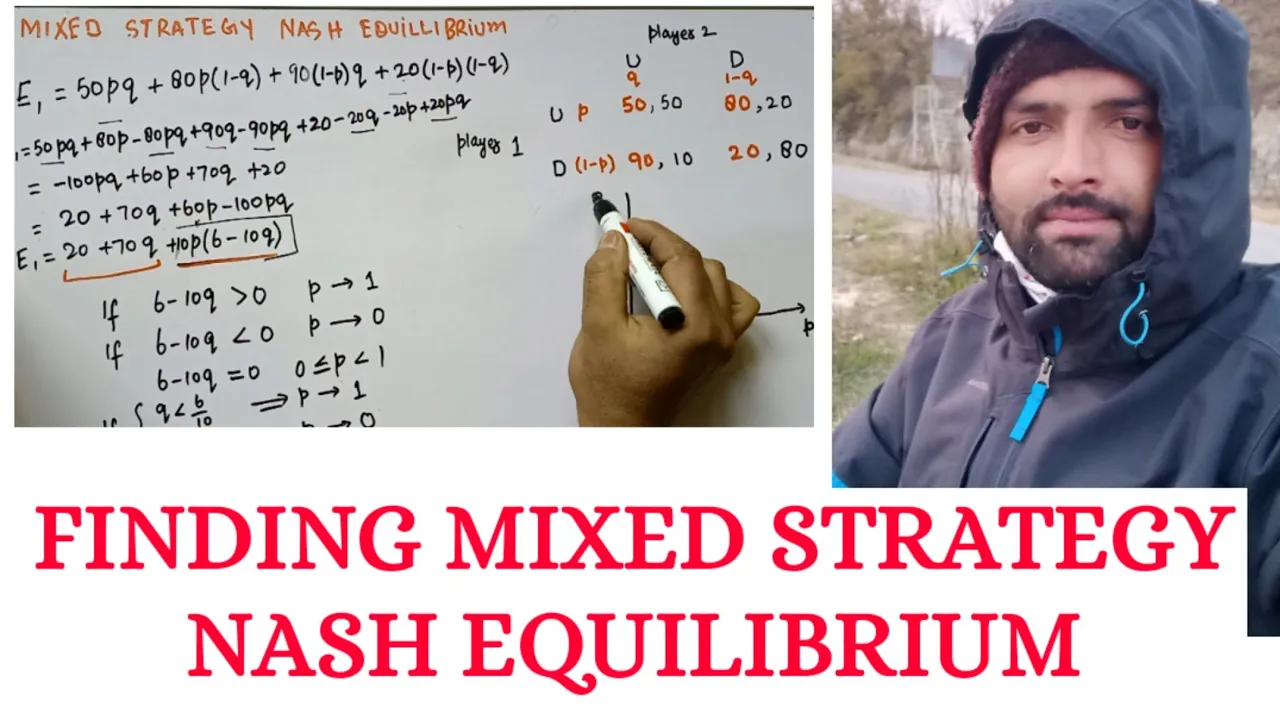
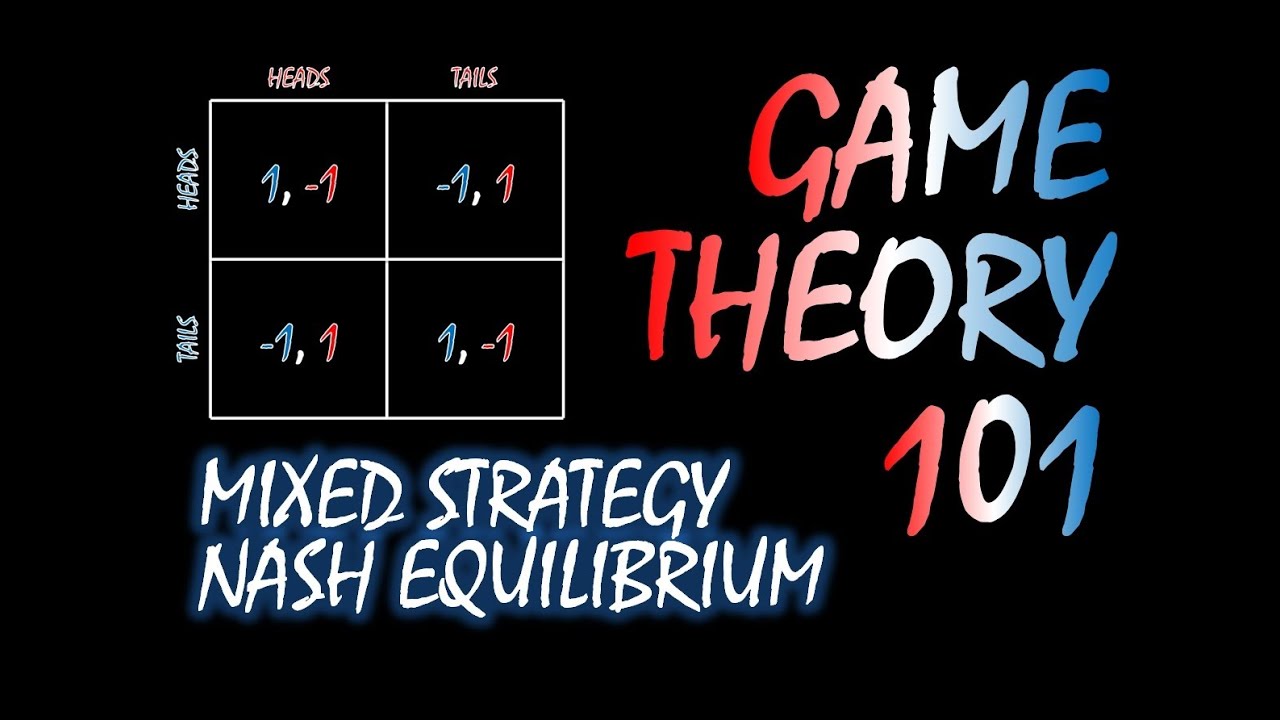
Mixed Strategy Nash Equilibrium, where players introduce probability and randomness into their strategic choices when no pure strategy equilibrium exists.
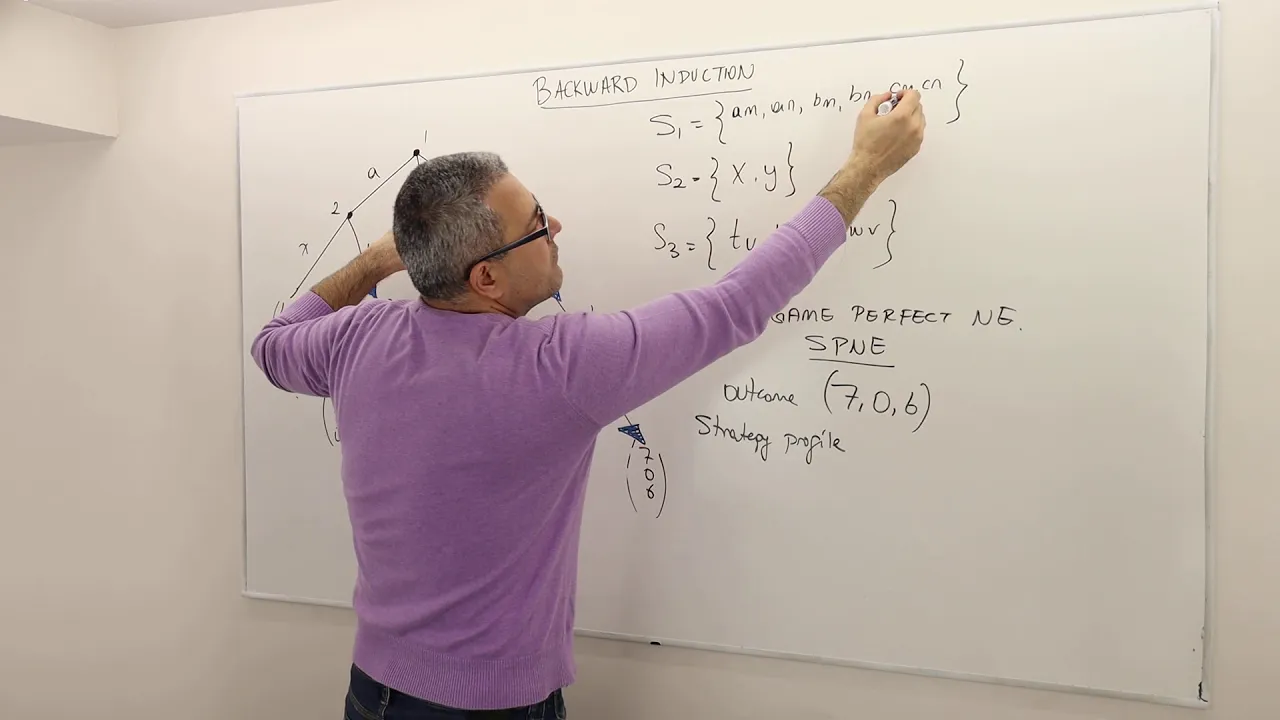
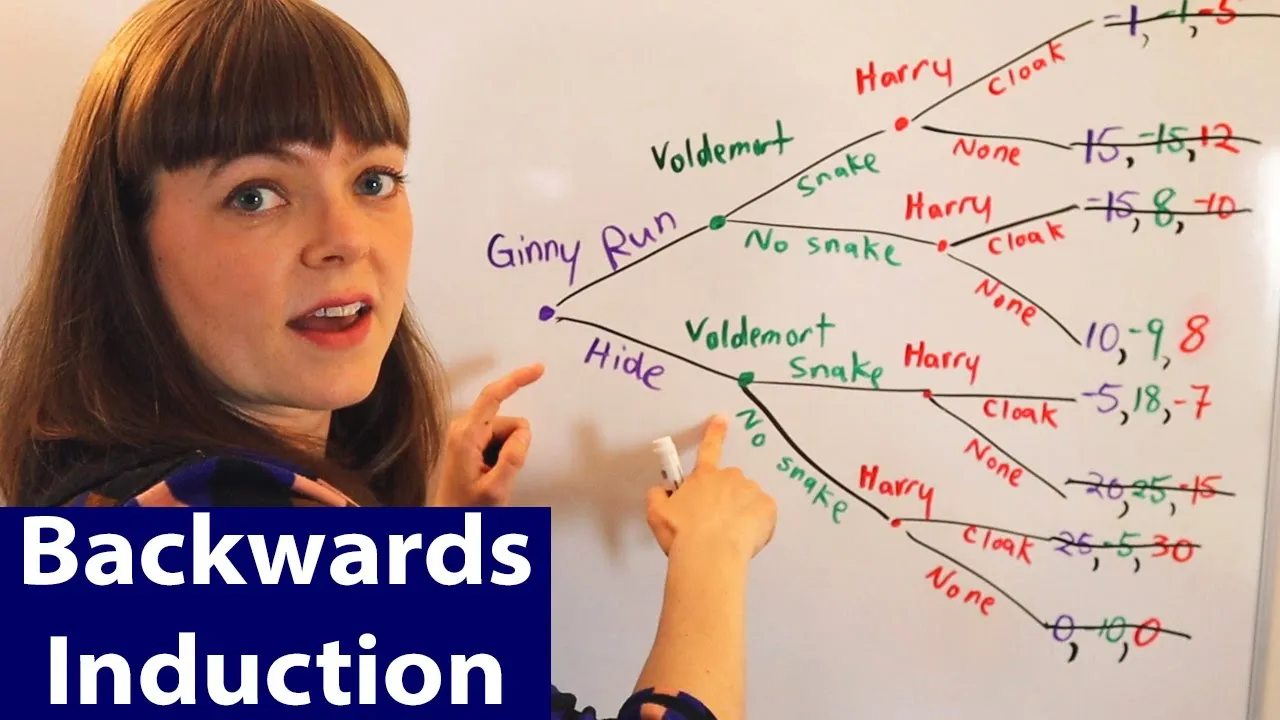
Sequential Games and Subgame Perfect Nash Equilibrium, analyzing decisions made in a chronological order using extensive-form game trees and backward induction.
Repeated Games and cooperation, exploring how long-term interactions and punishment mechanisms (like trigger strategies) affect outcomes in scenarios like the Prisoner's Dilemma.
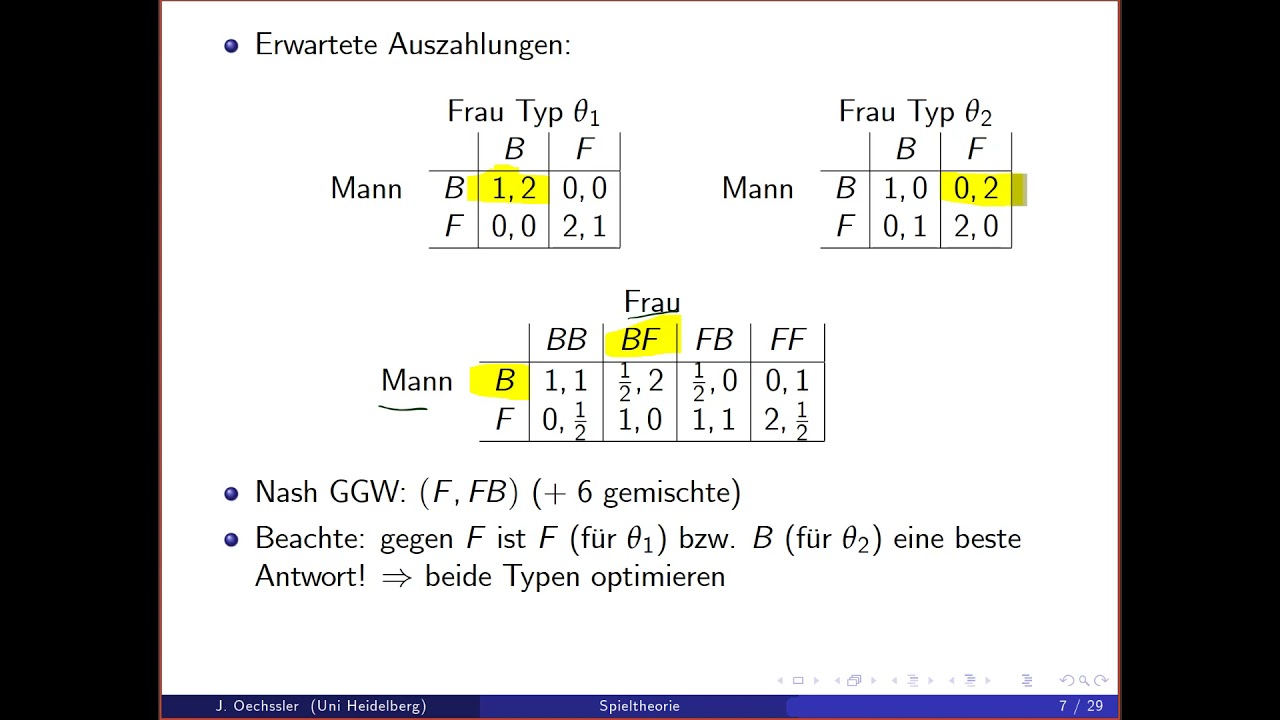
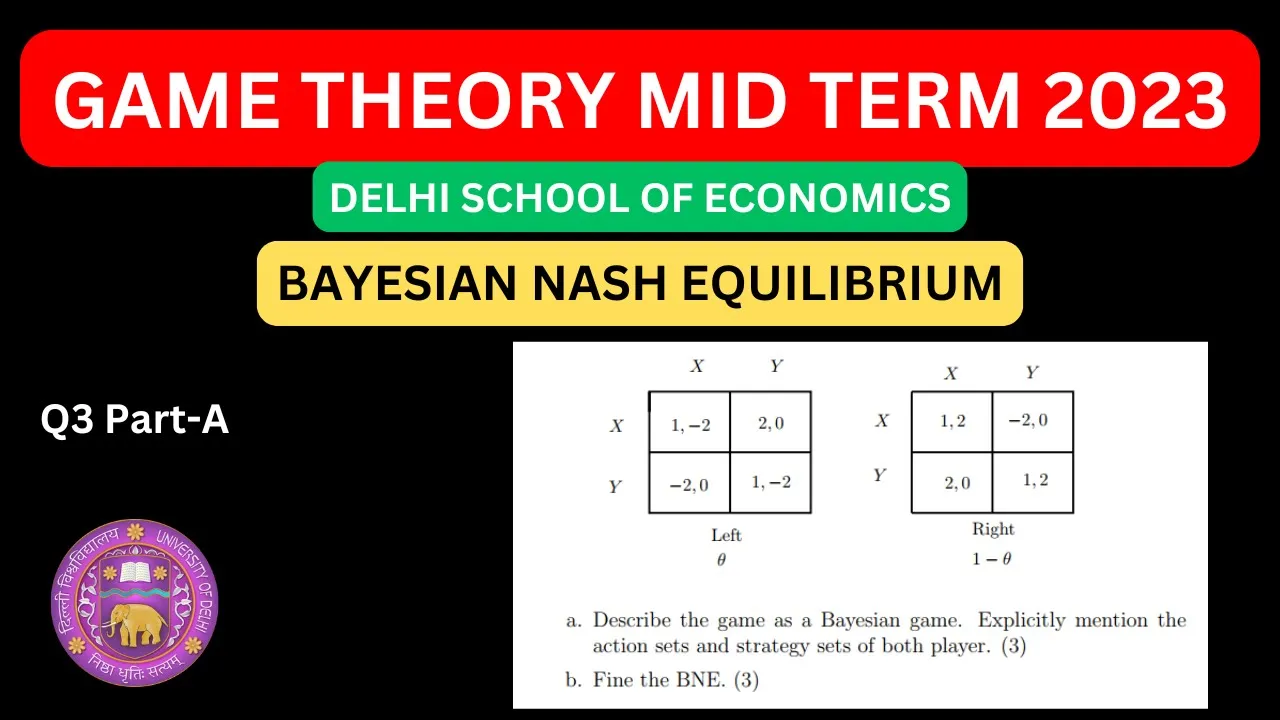
Incomplete Information and Bayesian Nash Equilibrium, where players have private information about their own payoffs or types that others do not know.
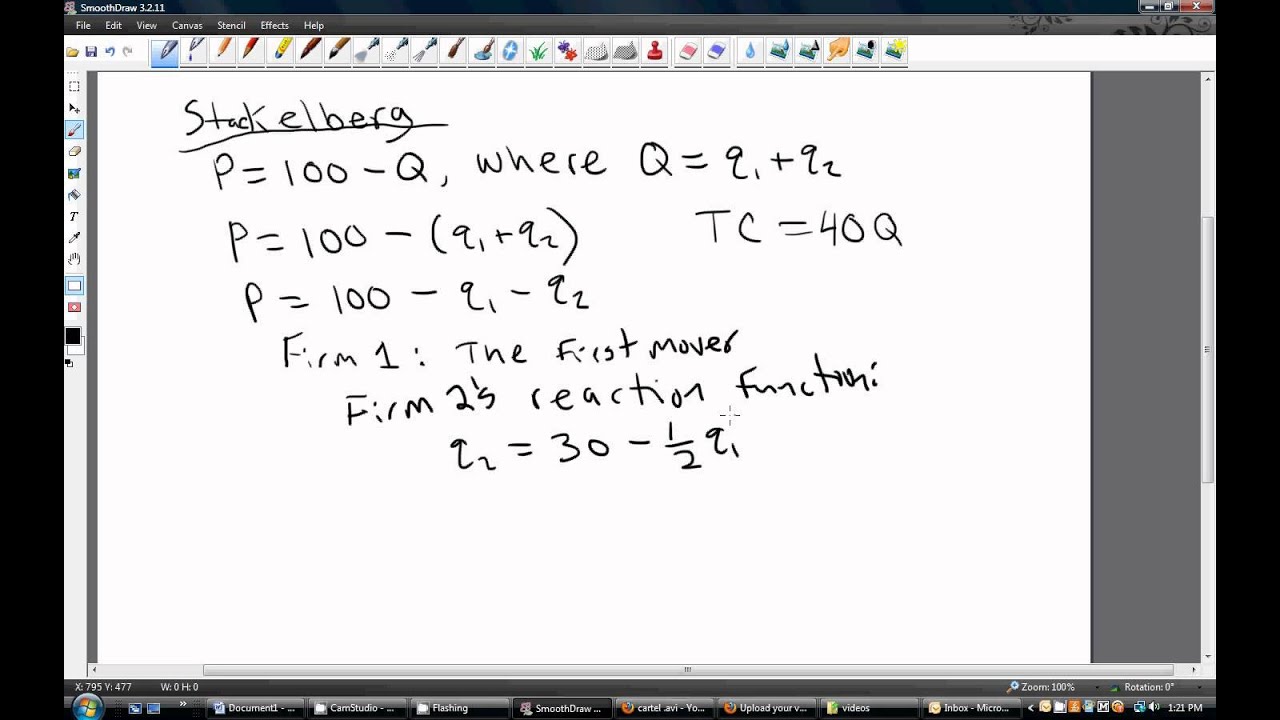
Applications of game theory to real-world economic models, such as Cournot, Bertrand, and Stackelberg oligopoly competition.
23.4K views387likes20:05Original Release: 2021-05-23
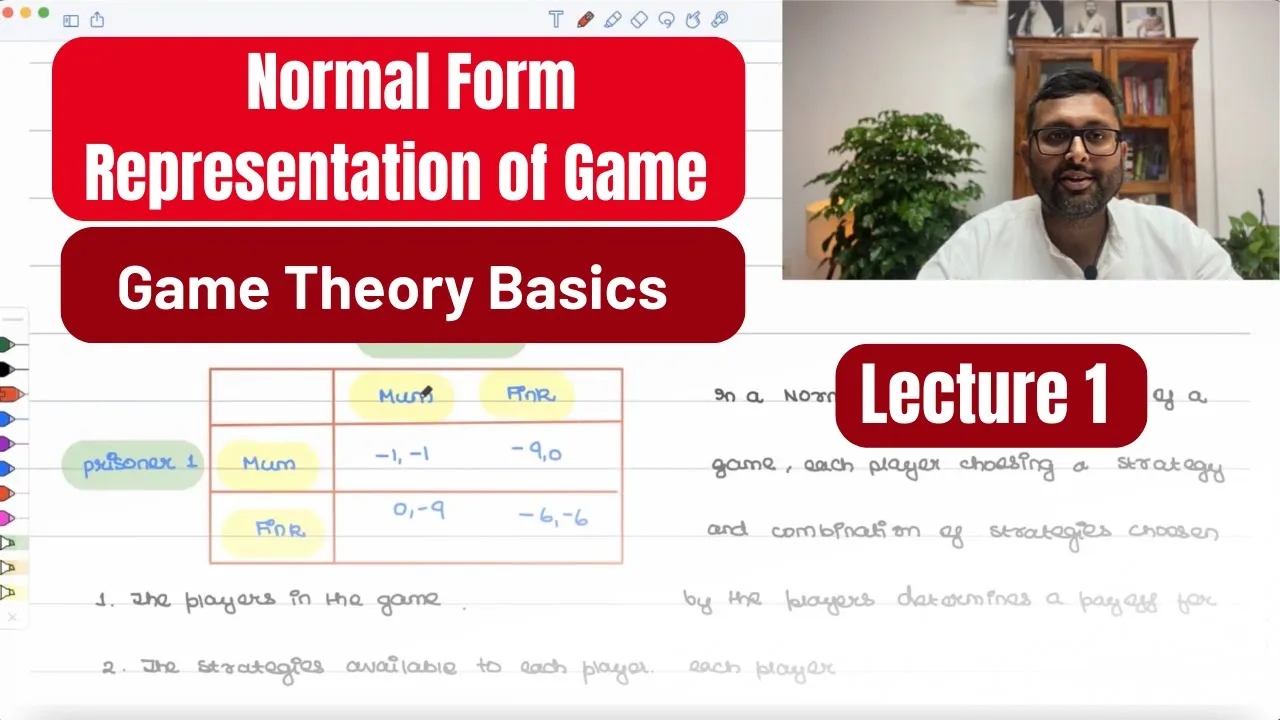
let us talk about a few basics of game theory so i just start with an example let us say there are two players in a game so there is a game in which the players have strategies and we need to define the number of players there's strategies and what are the payoffs of each of these players whenever they're going to take some actions so let us say there are there is a player a and there is a player b player b has two choices left right and player a has two choices top bottom right and these are the payoffs so every time the first number here shows the payoff of player a and the second number here shows the payoff of player 2 right so if player a plays stop and player b plays left the payoff to player a is 1 and the payoff to player b is 2 right 0 1 2 1 1 0 2 1 1 0 right so this is what the payoff matrix it looks like now just think about it player a i'm player and you guys are player b so i have a choice either top or to play top or bottom you have a choice either to play left or right the first number every time is showing me my payoff and the second number every time is showing your payoff right so if i play bottom now just think about it this 2 is greater than 1 this 1 is greater than 0 so whether you play left or you play right the payoff i am going to get from playing bottom is more than the payoff i'm going to get from playing top right so for player a bottom is the dominant strategy right okay it is a dominant strategy so whatever whichever choice please write whichever choice b makes a always chooses bottom a always chooses what nothing about b think about b these second numbers are for player b just think about your and he has a choice between left and right 2 is greater than 1 1 is greater than 0 so whatever whether player a plays top or player a plays bottom player b is better of playing left [Music] whether player a plays stop or player a plays bottom player b is better of playing left so what do you write whichever choice b always chooses left b always chooses left right so it means what it means that there is a dominant strategy for player a bottom is the dominant strategy for player b left is the dominant strategy right so there is a dominant strategy whatever the other player plays if i have a dominant strategy i'll play only that strategy that is what dominant strategy is so whatever other player plays it doesn't matter if i have a dominant strategy i will be playing my dominant strategy only right so there is one optimal choice of strategy please write there is one optimal choice of strategy right for each player no matter what other player does no matter what other player does right so this is what uh uh the dominant strategy is whatever be whatever be your strategy doesn't matter if i have a dominant strategy i'll be playing my strategy that is it i'm not even concerned with what you are playing so if there is a dominant strategy for each player you can actually predict that that is going to be the outcome of the game so here in this case bottom is a dominant strategy for player a left is a dominant strategy for player b you can easily predict that bottom left is the equilibrium outcome of this game right so if there is a dominant strategy please write okay if there is a dominant strategy for each player in the game right then we would predict that it would be the equilibrium outcome of the game that it would be the equilibrium outcome of the game so you have here in this case bottom left is the equilibrium so bottom is the equilibrium strategy for player a left is the equilibrium strategy for player b and uh we'll be playing this with a payoff to one with a payoff two right okay so equilibrium outcome is this bottom left okay so here this was the case where dominant strategy equilibrium exists so you can just write somewhere here dominant strategy equilibrium exists dominant strategy equilibrium exists so this is what the uh this is what the case for the dominant strategy now let us look at the case where the dominant strategy does not exist so let us look at the case when dominant strategy equilibrium it does not exist dominant strategy equilibrium does not exist so let us just change the payoffs a little bit for the same game so there is a player a and there's a player b player b plays left player b plays right player a can play talk player a can take bottom play can play bottom and uh these are the payoffs now two one zero zero zero zero one two two one zero zero zero zero one two now just think about it whether is there a dominant strategy is there a dominant strategy just think about it for player a in case if it plays only top so two is better than zero yes definitely but zero is not better than one so he will not play top top is not the dominant strategy and similarly not even bottom so 0 is not better than 2 it's gone so you don't have to worry about it one is also better than zero but fair enough so bottom is also so there is no dominant strategy for playering similarly for player b one is better than 0 yes but 0 is not better than 2 so left is definitely not a dominant strategy for player b similarly 0 is better than 1 oh sorry 0 is not better than 1 but 2 is better than 0 but since 0 is not better than 1 right is also not the dominant strategy for player b right so there is no dominant strategy exist so instead of requiring a very strict strict rule that whatever other player does i will play my dominant strategy instead of requiring that i can require something else i can require something else that we are going to find out the optimal for the optimal choices of p so a is going to find out optimal for the optimal choice of b b is going to find out optimal for the optimal choice of a right so if a is choice is optimal for b's choice and these choices optimal for a's choice that is what nash equilibrium is that is what nash equilibrium is right so please write few points first thing you know here dominant strategy here dominant strategy equilibrium does not exist first thing second thing rather than a's choice be optimal for all choices of b we can we can uh put a weaker condition that a's choice be optimal for the optimal choice of b right so rather than a's choice be optimal for all choices of b what what do i mean by this i mean by this this that you have a dominant strategy equilibrium in the earlier game so a was playing bottom whether b was playing left or right b was playing left whether a was playing top or bottom right so rather than requiring that what we can do is this we can just require we can just require that it would be optimal for optimal choices of b right from for optimal choice okay right so but whatever b's choice is going to be depends on what a is also doing so what do you what what is meant by a nash equilibrium then so it is a pair of strategies if a's choice is optimal given these choices and b's choice is optimal given a's choices right so i'll define that but let me just tell you what how do you find that out so if player a plays stop what is the best for player b between left and right he will be comparing one and zero comparing one so i'll put a sign here now player b plays left player a has to compare between top and bottom so he's comparing two and zero what will you do 2 right so you have 2 underscore signs here this becomes a nash equilibrium similarly if player a plays bottom player a a player b has a choice between left and right so he is comparing zero into what what he's going to do he's going to choose two that is right if player b plays right player a has a choice between top and bottom right so he's comparing zero and one what will you do one so you have a nash equilibrium here right so there are two nash equilibriums there are two nash equilibrium so let me just define this let me just define this a pair of strategies why should i write this a pair of strategies is a nash equilibrium if a's choice is optimal for b's choice and b's choice is optimal for his choice right so neither person knows what other person is going to do when he's when he is going to make a choice right his choice of the strategy right so we have a nash equilibrium if uh if each person is making the optimal choice given the other person's choice right so let me just do this once more player a playstop player b has a choice between left and right he's going to choose between one and zero let's say he's chosen one so i have underlined this one what's let's say i mean he will be choosing one because he is getting a higher payoff from playing left when player b plays left player a has a choice between top and bottom so he's comparing 2 and 0 is he's going to choose 2. so this i'm going to mark this so you have the two underscores at the same time so what is a doing i mean a is making a the optimal choice given the other person's choice given the other person's choice so if what do you mean given the other person choice means given player b is going to play left player a is better off playing top given player a is playing top player b is better off playing left that is what this means given other person's choice similarly if player a plays bottom then player b is going to make a choice between left and right so he's comparing the pay of zero and two he's going to take up two if player b is going to play right player a has a choice between top and left so he's comparing zero and one he's going to choose right so you have the nash equilibrium okay so there are two nash equilibriums out here there are two nash equilibria's out here okay so we'll take the discussion further tomorrow thank you
Up Next

11:07
Cournot vs Bertrand Competition: Oligopoly Models Explained
@intromediateecon
129.6K views•2010-08-30

5:07
Impact of Yuan in Indo-Russian Trade Amid Sanctions
@WION
261.9K views•2022-07-01
10:33
Behavioral Economics Explained: Rationality, Nudges, and Risk
@crashcourse
1.1M views•2016-03-12

113:18
The Age of Easy Money: Fed & Inflation | Full Documentary
@frontline
21.2M views•2023-03-15
Related Study Plans & Knowledge Roadmaps
Structured learning paths in Economics
economics
Sovereign Debt: Defaults, IMF & Restructuring
01Introduction to Sovereign Debt & Government Bonds
02Debt Sustainability & Credit Ratings
03Anatomy and History of Debt Crises
+ 2 more learning modules
12h5 modules
Explore Roadmap
economics
Market Design: Matching Theory & Gale-Shapley
01Introduction to Market Design and Price-Free Markets
02Two-Sided Matching & The Gale-Shapley Algorithm
03School Choice Systems and Mechanism Design
+ 2 more learning modules
10h5 modules
Explore Roadmap
economics
Impossible Trinity: Forex, Capital & Policy
01Introduction to Monetary Policy and Central Banking
02Exchange Rates and International Capital Flows
03The Mundell-Fleming Model
+ 2 more learning modules
8h5 modules
Explore Roadmap
economics
Healthcare Economics: Market Failures & Systems
01Introduction to Healthcare Markets and Market Failure
02Asymmetric Information and Adverse Selection
03Moral Hazard and Insurance Design
+ 2 more learning modules
12h5 modules
Explore Roadmap