Asteroids are rocky objects found primarily in the asteroid belt between Mars and Jupiter; comets are icy bodies that develop tails when approaching the Sun due to vaporization of their ice and dust content; meteors are small fragments (meteoroids) from asteroids or comets that burn up in Earth's atmosphere, creating the visible streaks called shooting stars, while any surviving fragment that lands on Earth is called a meteorite.
Asteroids vs Comets vs Meteors: Key Differences Explained
Added:Deep Dive
The basic structure of our Solar System, including how planets, moons, and smaller bodies orbit the Sun.
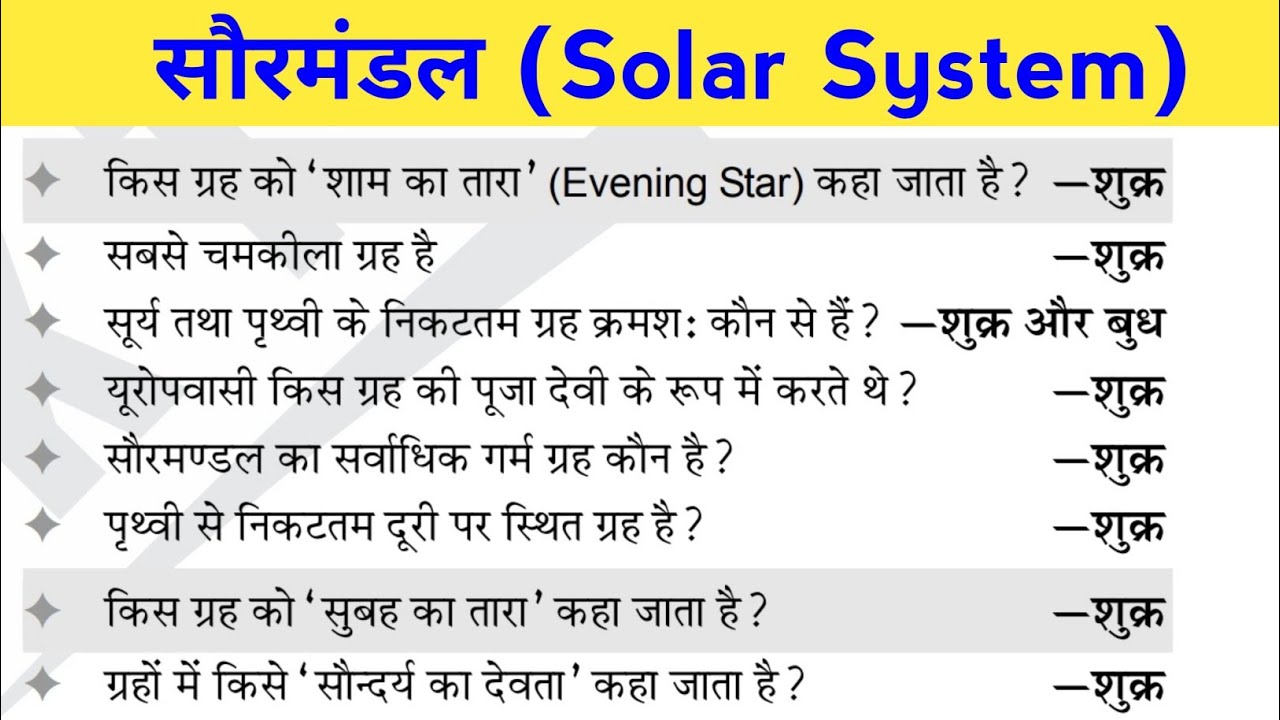
सौरमंडल | Solar System | Planets | solar system in hindi| solar system geography | World Geography |
5.9K
This comprehensive section covers the basic structure of our solar system. Key topics include: (1) Definition of planets as celestial bodies orbiting the Sun, and satellites as bodies orbiting planets; (2) Kepler's laws governing planetary motion; (3) Planetary order by size: Jupiter, Saturn, Uranus, Neptune, Earth, Venus, Mars, Mercury; (4) Orbital extremes: aphelion (maximum distance) and perihelion (minimum distance); (5) Astronomical Unit as the average Earth-Sun distance; (6) Sun's composition (71% hydrogen) and surface temperature (6000°C); (7) Light travel time from Sun to Earth (8 minutes 20 seconds); (8) Mercury as the fastest planet completing orbit in 88 days; (9) Venus as Earth's twin in size, known as Evening Star and brightest planet; (10) Earth's rotation period (23h 56m 4s) and orbital speed (27 km/minute); (11) Earth's equatorial diameter (12,800 km) and shape as oblate spheroid.
Click to watch →

Space Physics | O Level IGCSE Physics | Revision
15.1K
The Solar System consists of the Sun at the center containing 99% of total mass, eight planets orbiting around it, and various smaller bodies. The eight planets in order from the Sun are: Mercury, Venus, Earth, Mars, Jupiter, Saturn, Uranus, and Neptune. Pluto is classified as a dwarf planet, not a full planet. The inner planets (Mercury, Venus, Earth, Mars) are smaller, denser, and composed mainly of rock and metal. The outer planets (Jupiter, Saturn, Uranus, Neptune) are much larger, less dense, and composed mainly of gases. Dwarf planets like Pluto orbit beyond Neptune and are composed of rock and ice. Asteroids are rocky bodies primarily in the belt between Mars and Jupiter. Comets are 'dirty snowballs' of ice and dust with highly elliptical orbits.
Click to watch →

Solar system
1.2K
The solar system is the sun and all objects that orbit it, including planets, dwarf planets, moons, asteroids, and comets. Formed about 4.6 billion years ago from a cloud of gas and dust, its structure is dominated by the sun, which makes up over 99% of the system's mass. The solar system is divided into the inner solar system (Mercury, Venus, Earth, Mars, and the asteroid belt) and the outer solar system (Jupiter, Saturn, Uranus, Neptune, and the Kuiper belt). The sun is a massive ball of hot plasma providing light and heat through nuclear fusion. The inner planets are rocky: Mercury (smallest, iron core, 88-day orbit), Venus (hottest due to greenhouse effect, retrograde rotation), Earth (only planet with confirmed life, four layers), and Mars (red planet, desert-like, two moons).
Click to watch →
Class 5 Basic Science | Sky Near At Hand - Christmas Exam Special Revision | Xylem Class 6
18.9K
The Solar System consists of: (1) The Sun at the center, (2) Eight planets orbiting the Sun (Mercury, Venus, Earth, Mars, Jupiter, Saturn, Uranus, Neptune), (3) Satellites (moons) orbiting the planets. All these celestial bodies are held together by the Sun's gravitational pull. Planets are celestial bodies that orbit the Sun in fixed paths (orbits) and do not produce their own light but reflect sunlight. The Moon is Earth's natural satellite, orbiting our planet.
Click to watch →
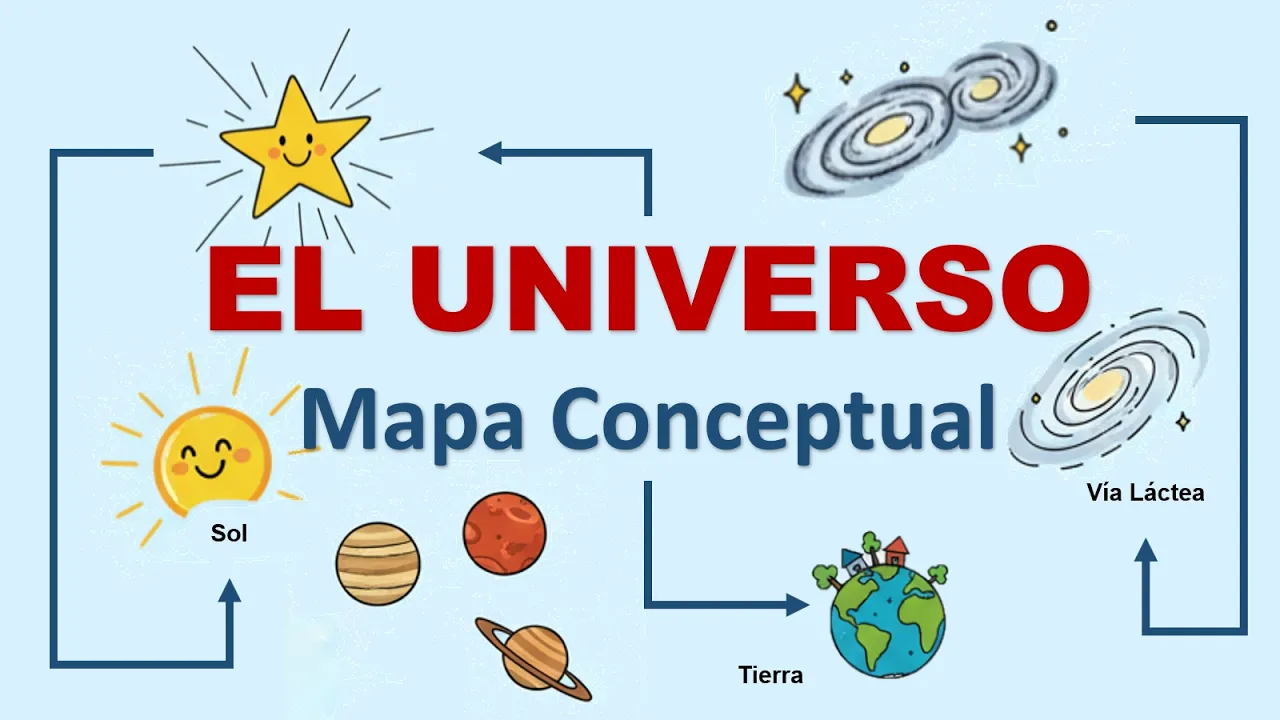
🌌 Mapa Conceptual del Universo | Explicación Fácil + PDF para Practicar
1.2K
The solar system consists of the Sun and all bodies orbiting it, including planets, moons, asteroids, and comets. The eight major planets orbit the Sun in a specific order, with Pluto reclassified as a dwarf planet. Moons orbit planets rather than stars, with Earth having one Moon, Mars having two, Jupiter having 95 confirmed moons (including Europa), and Saturn having 146 confirmed moons. Asteroids are small rocky bodies, mostly found in the belt between Mars and Jupiter, with irregular potato-like shapes unlike spherical planets. Comets are icy bodies that develop bright tails when approaching the Sun. The Moon is larger than Pluto, explaining why Pluto is classified as a dwarf planet.
Click to watch →
Deep Dive
The physical distinction between rock, metal, and volatile ices (such as water, carbon dioxide, and methane).

Como novas imagens do 3I/ATLAS revelam um objeto metálico| Ciência Para Dormir
923
If 3I/ATLAS is rich in metals and carbon as evidence suggests, we need to understand what this means physically. Refractory materials like iron-nickel metals, silicate rocks, and carbon compounds like graphite remain solid at very high temperatures. When heated by solar radiation, they don't sublime easily like water ice or frozen CO2. Instead, they conduct heat to their interior, warm gradually, and can reach high temperatures without losing mass through vaporization. This gives them very different thermal behavior from volatile-rich comets.
Click to watch →

0602 The Jovian Terrestrial Dichotomy
1.1K
Far from the Sun, it is colder, allowing other materials to solidify. These materials are called 'ices' and include water ice (H2O), methane ice (CH4), dry ice (carbon dioxide), and ammonia (NH3). These ices are much more common in the universe than rocks and metals, providing more raw materials for planet formation.
Click to watch →
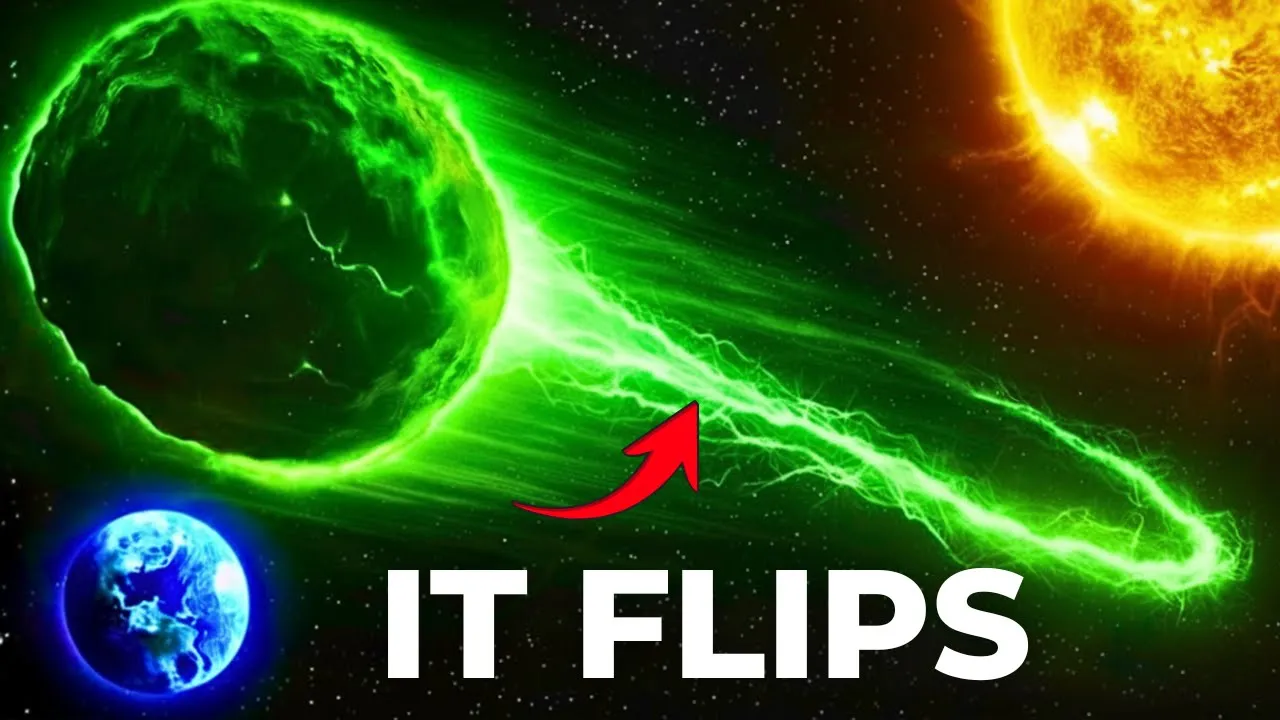
3I/ATLAS Just FLIPPED it’s Anti-Tail Pointing toward Earth | The Sleepy Explainer
4.8K
Methanol and HCN represent volatiles that sublimate at different temperatures than water ice. Water ice (H2O) frozen solid requires temperatures above about 180 Kelvin to sublimate at the low pressures of space. Methanol ice can sublimate at lower temperatures around 100 Kelvin. HCN is even more volatile. CO2 sublimates readily at 150 Kelvin. The fact that we are seeing all of these species simultaneously, that we're detecting emissions from molecules with very different volatility mixed together with high-temperature emissions from metals like nickel that require vaporization temperatures above 1,000 Kelvin, suggests a chaotic internal structure. The nucleus is not a neat stratified layer cake of ices where the most volatile species are on the outside sublimating first, then progressively less volatile species as you go deeper.
Click to watch →
Saturday Morning Physics | The Formation of Planetary Systems
1.1K
In the outer solar system, rocky grains are coated with various ices including water, ammonia, carbon dioxide, and carbon monoxide. These volatile ices behave differently from rocky materials because they can sublimate (change from solid to gas) at temperatures much higher than rocks require. This differentiation creates compositional layers in planetary formation, with ice-rich regions forming beyond the ice line (approximately 3 AU from the Sun). The distinction between icy and rocky materials is crucial for understanding planetary composition.
Click to watch →

3I/ATLAS: ¿Cuántos días faltan para prender la alarma?
60.8K
Different volatile ices have different sublimation temperatures. Water ice sublimates at around 150 Kelvin, while carbon dioxide sublimates at approximately 70 Kelvin. In extremely cold environments (around 30 Kelvin), CO2 remains solid while water may exist as rock-hard ice. This explains why 3I/ATLAS showed CO2-dominated emissions even at distances where water should have sublimated first, indicating formation in a region where CO2 was the dominant volatile ice.
Click to watch →
Deep Dive
The concept of Earth's atmosphere and the heat generated by atmospheric friction on fast-moving incoming objects.
Owen Benjamin Goes Flat Earth
125.2K
Objects entering Earth's atmosphere at high speeds burn up due to friction with atmospheric molecules. The video shows that this friction generates heat, which is why rockets and spacecraft need heat shields. The Flat Earth model cannot explain why objects entering the atmosphere at high speeds burn up if the atmosphere is not moving with the Earth.
Click to watch →

2026 Could Be Worse Than You Think
59.9K
Objects entering Earth's atmosphere generate enormous friction, causing them to burn up. The needle traveling at near-light speed would create massive heat and could disintegrate. If it survived, it would hit with energy over 100 times a nuclear bomb, releasing heat, light, and shock waves. This demonstrates how atmospheric entry heating affects incoming objects and contributes to planetary protection.
Click to watch →
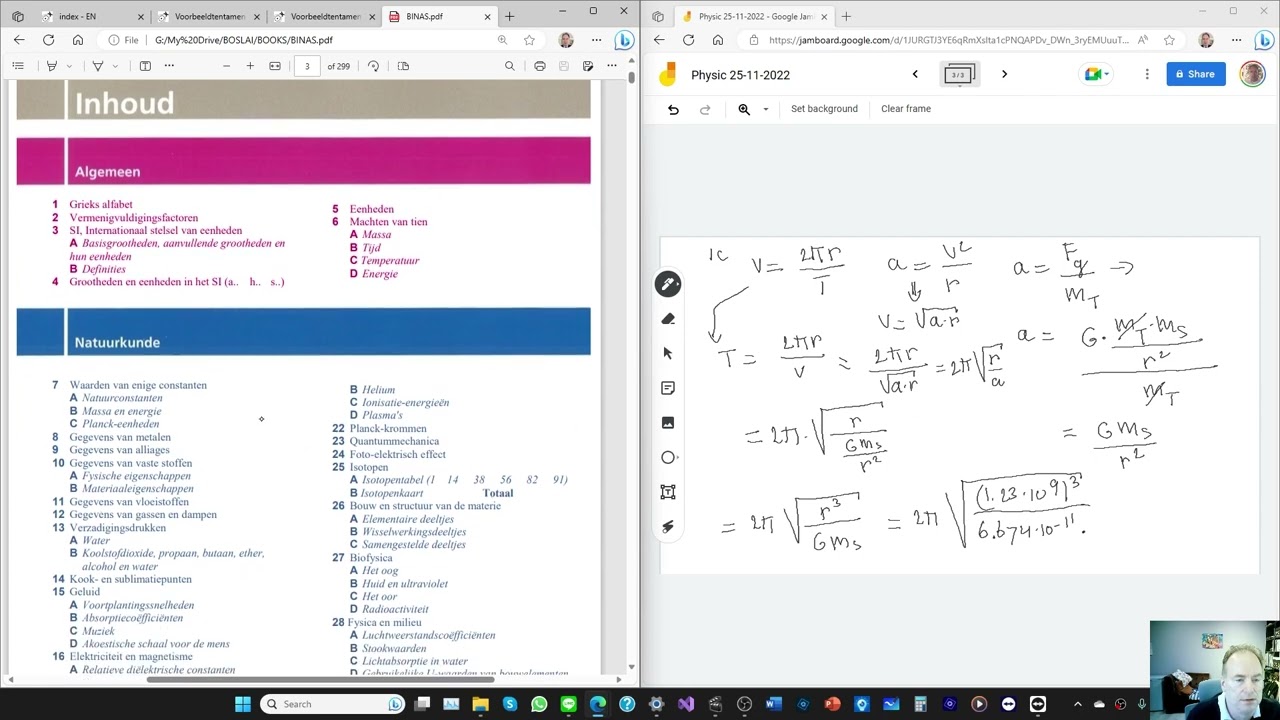
Dutch Central Entrance Exam Physics 2022-11-25
415
When a spacecraft enters an atmosphere, friction generates heat. The power dissipated as heat is given by P = F × v, where F is the frictional force and v is the velocity. The heat generation per unit area is P/A = (F × v)/A. For a probe with friction force 6.0 kN and velocity 0.74 km/s, the heat generation rate is approximately 5.1 × 10⁵ W/m².
Click to watch →

I'm sure it's just a head cold! | Commander Clark in english | Full Episodes 1hr | Cartoons for Kids
2.3K
When objects enter Earth's atmosphere, friction between the object and air molecules generates intense heat, causing the object to burn up. This principle explains why meteorites and spacecraft must be designed to withstand extreme heat during atmospheric entry. The same principle applies to any object entering a planet's atmosphere.
Click to watch →

Down to Earth (1959)
247
When objects enter Earth's atmosphere at high speeds, friction with air molecules generates intense heat. This is demonstrated by meteors, which burn up and appear as shooting stars. The same principle applies to space vehicles during re-entry, where they must manage extreme heat generated by atmospheric friction.
Click to watch →
Deep Dive
Basic orbital mechanics, particularly the difference between circular planetary orbits and highly elliptical orbits.
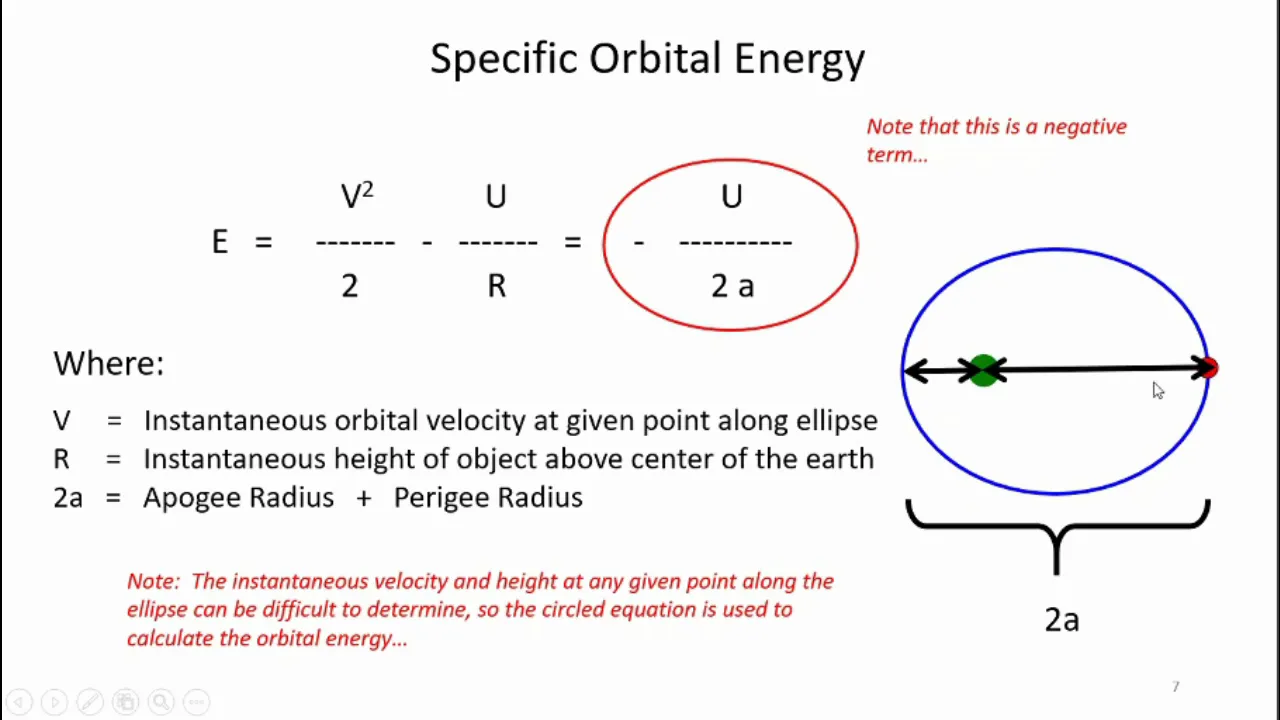
Introduction to Basic Orbital Mechanics
10.5K
All orbits are fundamentally elliptical in nature, with circular orbits being a special case where both foci coincide; in circular orbits, velocity remains constant throughout the orbit, while in elliptical orbits, velocity varies such that satellites reach maximum velocity at perigee (closest point) and minimum velocity at apogee (farthest point), with orbital velocity calculated using specific equations involving the gravitational constant and orbital radius for circular orbits, and incorporating orbital energy for elliptical calculations.
Click to watch →
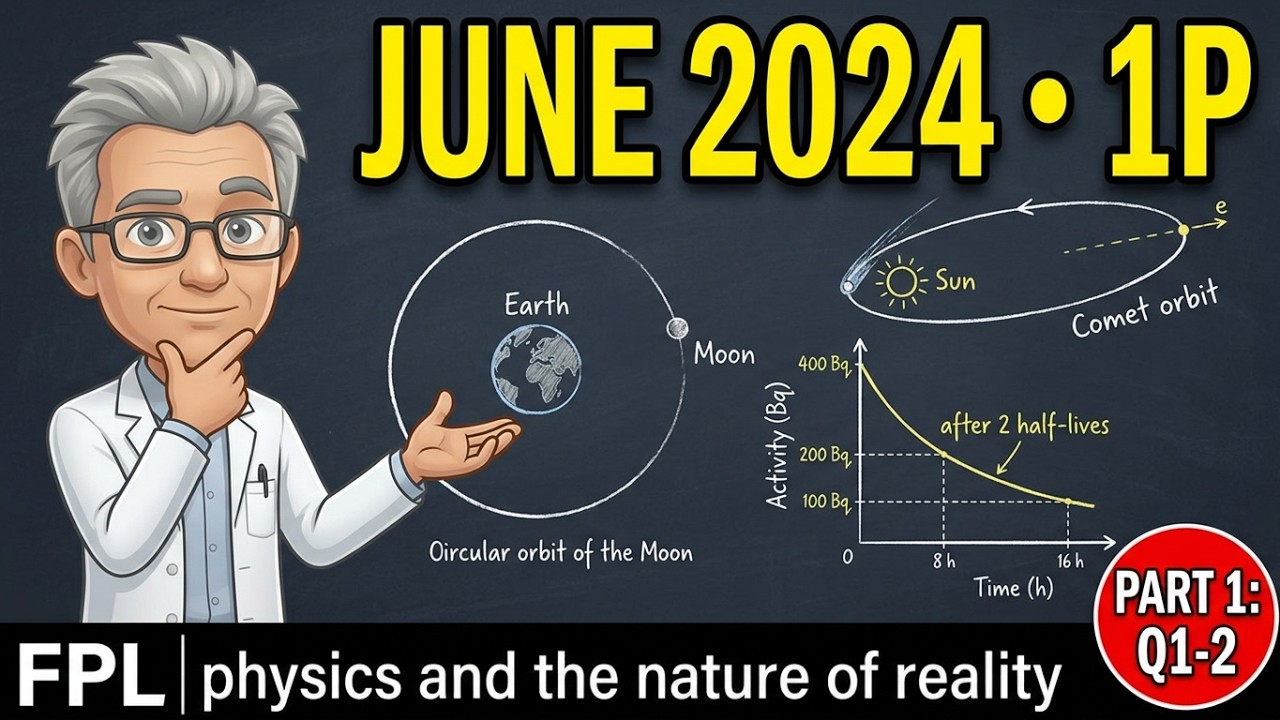
Physics IGCSE Edexcel June 2024 1P (Part 1)
417
Planets typically have nearly circular orbits around stars, while comets have highly elliptical (egg-shaped) orbits. In circular orbits, objects maintain relatively constant speed throughout their orbit. In elliptical orbits, objects vary their speed significantly - they speed up as they approach the star (closer point) and slow down as they move away from the star (farther point). This variation occurs because gravitational pull is stronger at closer distances.
Click to watch →

NCERT Class 6 Geography Chapter 1|The Earth in the Solar System BPSC| AEDO | TRE 4.0 | Ankesh Sir |
2.3K
Planetary orbits are elliptical (oval-shaped), not perfectly circular. This was discovered by Johannes Kepler and is described by his laws of planetary motion. The difference between elliptical and circular orbits is significant for understanding orbital mechanics and why planets sometimes appear closer or farther from the Sun.
Click to watch →

Why Are Planetary Orbits Elliptical?
210.7K
Planetary orbits are elliptical rather than circular because achieving a perfectly circular orbit requires an extremely precise balance of mass, velocity, and distance from the star, which is rarely maintained in nature; even slight disturbances from gravitational interactions with other celestial bodies cause orbits to become elliptical, with most planets having low eccentricities (closer to circular) while objects like Halley's comet have highly elliptical orbits (eccentricity ~0.97).
Click to watch →

الحلقة 276 : مخطوطة ارخميدس. الجزء 2
105
The difference between elliptical and circular orbits can be understood geometrically. A circle is formed when a plane cuts a cone perpendicular to its axis. An ellipse is formed when the plane cuts the cone at an angle. This geometric principle explains why planetary orbits are elliptical rather than circular.
Click to watch →
Prerequisite Knowledge
- Concept 01The basic structure of our Solar System, including how planets, moons, and smaller bodies orbit the Sun.
- Concept 02The physical distinction between rock, metal, and volatile ices (such as water, carbon dioxide, and methane).
- Concept 03The concept of Earth's atmosphere and the heat generated by atmospheric friction on fast-moving incoming objects.
- Concept 04Basic orbital mechanics, particularly the difference between circular planetary orbits and highly elliptical orbits.
Subsequent Learning
- Step 01Planetary Defense strategies, including tracking Near-Earth Objects (NEOs) and deflection technologies like NASA's DART mission.
- Step 02The role of asteroids and comets in cosmochemistry, specifically how they delivered water and prebiotic organic compounds to early Earth.
- Step 03Deep-space exploration history, focusing on sample-return missions like OSIRIS-REx, Hayabusa2, and the Rosetta comet lander.
- Step 04The mechanics of meteor showers, explaining how dust trails left by comets lead to predictable celestial events on Earth.
Celestial Bodies
Asteroid Basics
Comet Makeup
Meteoroid Origin
Meteor Entry
Shooting Stars
Meteorite Fall
Final Summary
Celestial Bodies
0:01Playing Section
- 1
Defines asteroids, comets, and meteors as planetary objects.
- 2
Explains they all orbit the Sun but have distinct compositions.
The Continuum Model and Blurring Boundaries of Small Solar System Bodies
While traditional educational resources present asteroids, comets, and meteors as distinct, separate categories, modern planetary science increasingly views them as part of a continuous spectrum rather than strictly defined, separate classes. The discovery of 'active asteroids' (also known as main-belt comets) has challenged the traditional dichotomy that asteroids are purely rocky, metallic, and inert, while comets are icy and active. These hybrid objects reside in the asteroid belt but exhibit comet-like tails or outgassing. Furthermore, many dead or dormant comets lose their volatile ice over time and become indistinguishable from asteroids. This perspective suggests that these bodies share common origins and evolutionary pathways, and that rigid classification schemes fail to capture the complex, transitional nature of small Solar System bodies.
Deep Dive
Planetary Defense strategies, including tracking Near-Earth Objects (NEOs) and deflection technologies like NASA's DART mission.
NASA का पृथ्वी को Asteroid से बचाने का प्लान | Planetary Defense | DART | Sciencekaari
261.3K
NASA's Center for Near-Earth Object Studies (CNEOS) has cataloged approximately 18,000 near-Earth objects by January 2018, with 40% of asteroids larger than 1 kilometer mapped. Scientists project 90% of hazardous asteroids larger than 140 meters will be identified by 2030. The 2013 Chelyabinsk meteor event, which injured over 1,500 people and damaged 727 buildings, prompted NASA to establish the Planetary Defense Coordination Office (PDCO) in 2016. This office coordinates with multiple government agencies to identify hazardous objects, assess risks, develop deflection technologies, and coordinate international responses. The DART mission, launched in 2021, tested the kinetic impactor strategy by intentionally crashing a spacecraft into asteroid Dimorphos to demonstrate trajectory alteration capability.
Click to watch →

NASA Science Live: Asteroid Close Approach
2M
NASA actively monitors near-Earth objects (asteroids and comets) that could pass within 30 million miles of Earth, using a coordinated network of telescopes and international partners to discover, track, and characterize these celestial bodies; the agency maintains the Center for Near-Earth Object Studies (CNEOS) which provides public access to orbital data and close approach tables, while developing deflection technologies like the DART mission to test asteroid redirection capabilities should a potential impact threat be identified.
Click to watch →

How NASA Plans to Save Earth from Asteroids | The Space Show
256.1K
The DART (Double Asteroid Redirection Test) mission represents humanity's first test of asteroid deflection technology. Planetary astronomer Andy Rivkin explains that DART will use a kinetic impactor—a spacecraft that rams into an asteroid to change its trajectory. The mission targets the Didymos system, a binary asteroid where Dimorphos orbits Didymos. DART will launch in August 2021 and impact Dimorphos in late September or early October 2022 at 6.5-7 km/s, requiring onboard autonomous navigation. The Italian Space Agency's LICIACube CubeSat will observe the impact debris plume. Scientists expect the impact to change Dimorphos's orbital speed by 0.5 mm/s, accumulating to a 10-minute orbital period change. Effective deflection requires early detection combined with cumulative small changes over time. Alternative methods include the gravity tractor, which uses spacecraft gravity to slowly tug on asteroids, offering more precise control but requiring longer timeframes. Nuclear options are reserved for emergencies with limited warning time.
Click to watch →

¿Existe un Plan Real para Defendernos de Asteroides?
593.2K
Multiple technologies exist for asteroid deflection: kinetic impactors, infrared lasers, nuclear weapons, and gravitational tractor beams. NASA's DART mission (launch 2021) represents humanity's first planetary defense test, targeting the binary asteroid system Didymos (800m primary, 160m moonlet) in 2022. Binary asteroids constitute 15% of known asteroids but have never been explored. The mission aims to test whether controlled collisions can change asteroid trajectories, demonstrating that humanity has developed concrete capabilities for planetary defense against asteroid threats.
Click to watch →
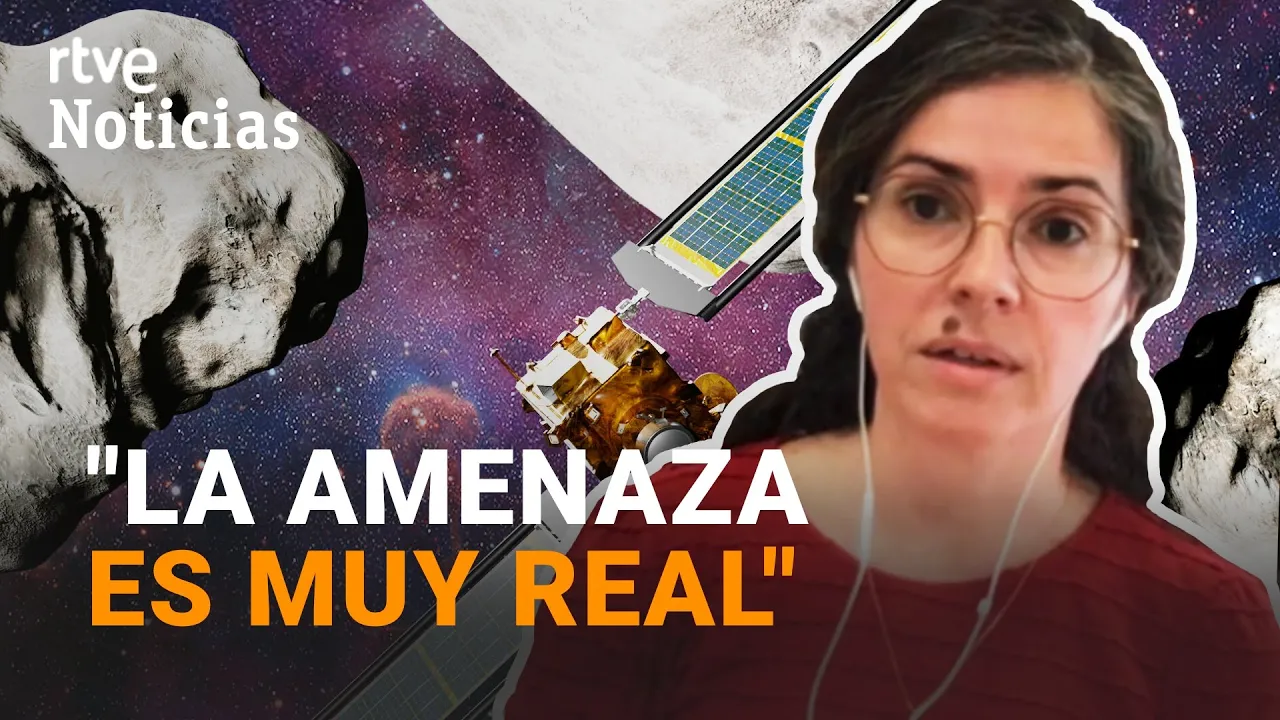
¿Estamos en PELIGRO? Te explicamos 'DART', la misión de la NASA contra los ASTEROIDES | RTVE
279.1K
NASA's DART (Double Asteroid Redirection Test) mission represents a pioneering step in planetary defense, testing technology to deflect asteroids if we knew with sufficient advance warning that an impact was going to occur. The mission involves launching a spacecraft to impact a small asteroid orbiting a larger one, not to deflect an asteroid threatening Earth, but to test our ability to modify an asteroid's orbit using a spacecraft weighing about one ton traveling at 6-7 kilometers per second. The mission is an international collaboration between NASA and the European Space Agency, using a Falcon rocket from SpaceX, demonstrating how private companies are increasingly involved in space exploration. The target system is a binary asteroid pair far from Earth, posing no danger, but serving as a controlled testbed for understanding how much we can modify asteroid trajectories.
Click to watch →
Deep Dive
The role of asteroids and comets in cosmochemistry, specifically how they delivered water and prebiotic organic compounds to early Earth.

Scientists Just Found Water Older Than the Solar System | Brian Greene
155
The molecular cloud from which our solar system formed contained virtually all the chemical building blocks that terrestrial biology uses: water, organic carbon compounds, amino acids, nucleobases, and sugars. The full chemical precursor inventory for building RNA, proteins, and cell membranes was present in the interstellar medium before the solar system formed. This prebiotic chemistry is not a special feature of our molecular cloud but a generic feature of cold interstellar chemistry that operates wherever molecular clouds form—meaning wherever stars and planetary systems form, they are being seeded with the same chemical inventory. The pathway from molecular cloud chemistry to early Earth's surface is delivery by small bodies—comets and carbonaceous asteroids—during the heavy bombardment phase (roughly 3.9 to 4.1 billion years ago). The total mass delivered to Earth during this period is estimated at 10^19 to 10^20 kg, comparable to the mass of a small asteroid belt. The same comets and asteroids that brought deuterium-enriched water also brought amino acids, nucleobases, and sugars. The key question is survival: do these organic compounds survive impact or are they destroyed? The answer depends on impact velocity and size—smaller impactors at lower velocities or arriving at shallow angles can deliver organic material intact, while micrometeorites (millimeter-scale and smaller particles) are the most efficient carriers of intact organic chemistry.
Click to watch →

EAI Seminars: Making Habitable Worlds: An Astrochemical Perspective
285
This section covers how comets and carbonaceous asteroids delivered prebiotic organics to Earth. Comets contain many organics including methanol, alcohols, formic acids, and precursors of nucleic acid bases (like HCN). The Rosetta mission detected glycine (an amino acid) in comet 67P/Churyumov-Gerasimenko. Comets are enriched in deuterium compared to surface water, suggesting they delivered some water (1-10% of Earth's surface water) and noble gases. Carbonaceous asteroids (C-type) contain up to 25% water with D/H ratios similar to Earth's, up to 3% carbon (mainly in insoluble aromatic structures), and 30% soluble carboxylic acids (important for membrane formation). They also contain complex organics like adenine, guanine, and cytosine (nucleic acid bases) and more than 70 amino acids, including eight protogenic ones.
Click to watch →

Viaje a los limites del universo HD Es - Natgeo
910.4K
Comets are icy bodies from the deep space that contain frozen organic materials and water. When comets approach the Sun, their frozen cores vaporize, creating spectacular tails extending millions of kilometers. Scientists theorize that comets may have delivered water and organic compounds to early Earth, potentially seeding the planet with the building blocks of life. Asteroids are rocky remnants from the solar system's formation, some measuring hundreds of kilometers in diameter. Dating meteorites found on Earth reveals that planets formed approximately 4.5 billion years ago. These rocks represent the 'birth certificates' of our solar system. The threat of asteroid and comet impacts poses an existential risk to life on Earth, as demonstrated by the extinction of dinosaurs 65 million years ago.
Click to watch →
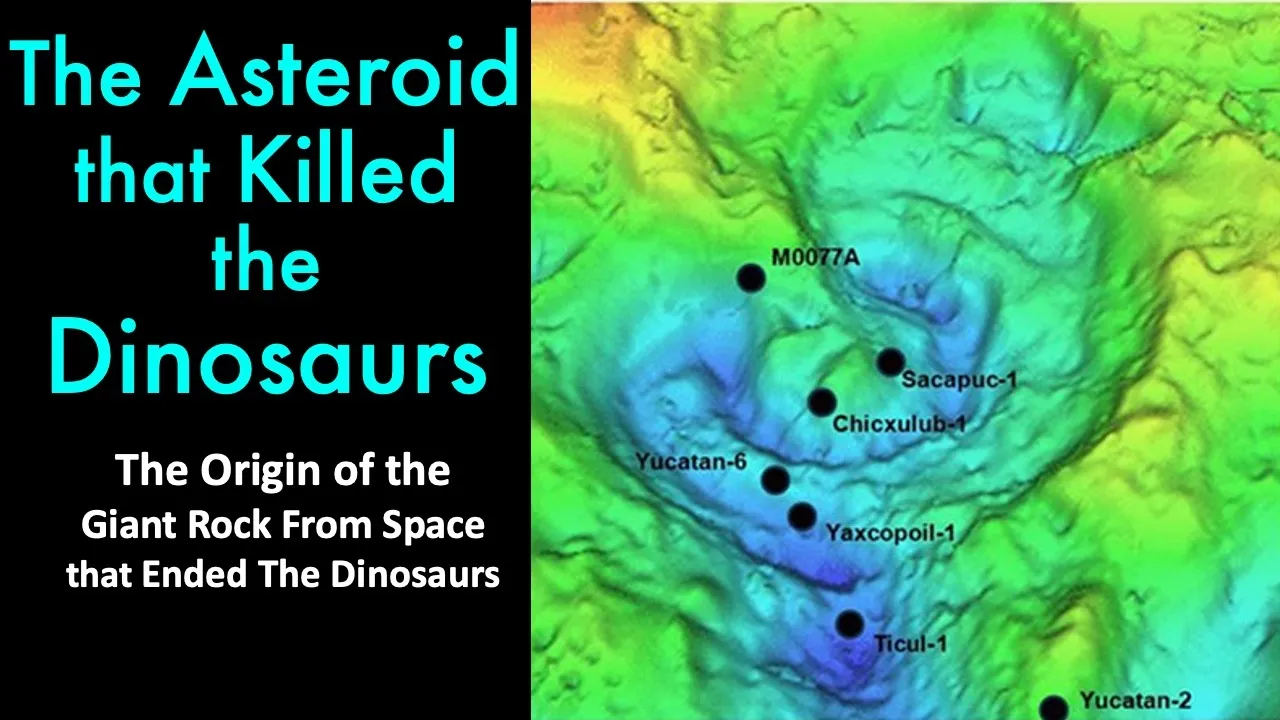
Where Did the Asteroid That Killed The Dinosaurs Come From
139.2K
Early Earth was dry because the inner solar system was too hot for water to condense. Carbonaceous chondrites delivered water to Earth, creating oceans, rivers, lakes, and seas. If enough water came from these asteroids to bury Earth to an average depth of two miles, they must also have delivered vast quantities of carbon-based molecules. Based on the carbon-to-water ratio in these asteroids, they may have delivered 15-20% of the volume of Earth's oceans in organic compounds like amino acids, nucleic acid bases, fatty acids, and other molecules essential for life.
Click to watch →

LES BRIQUES DE LA VIE ONT-ELLES ÉTÉ FAÇONNÉES DANS L’ESPACE ?
4.1K
This section explains the formation of asteroids and comets from the same primordial material but in different solar system regions. Asteroids formed in the inner solar system where only rocks and metals remained solid, while comets formed in the outer solar system where ices (water, CO2, ammonia) could condense alongside rocks and metals. Over time, some comets have lost their ices and become asteroid-like, while some asteroids may have originated from the outer solar system. The speaker notes that meteorites contain at most 5% organic matter, while comets contain approximately one-third to one-half organic matter, suggesting comets may have been more important in delivering organic compounds to early Earth.
Click to watch →
Deep Dive
Deep-space exploration history, focusing on sample-return missions like OSIRIS-REx, Hayabusa2, and the Rosetta comet lander.
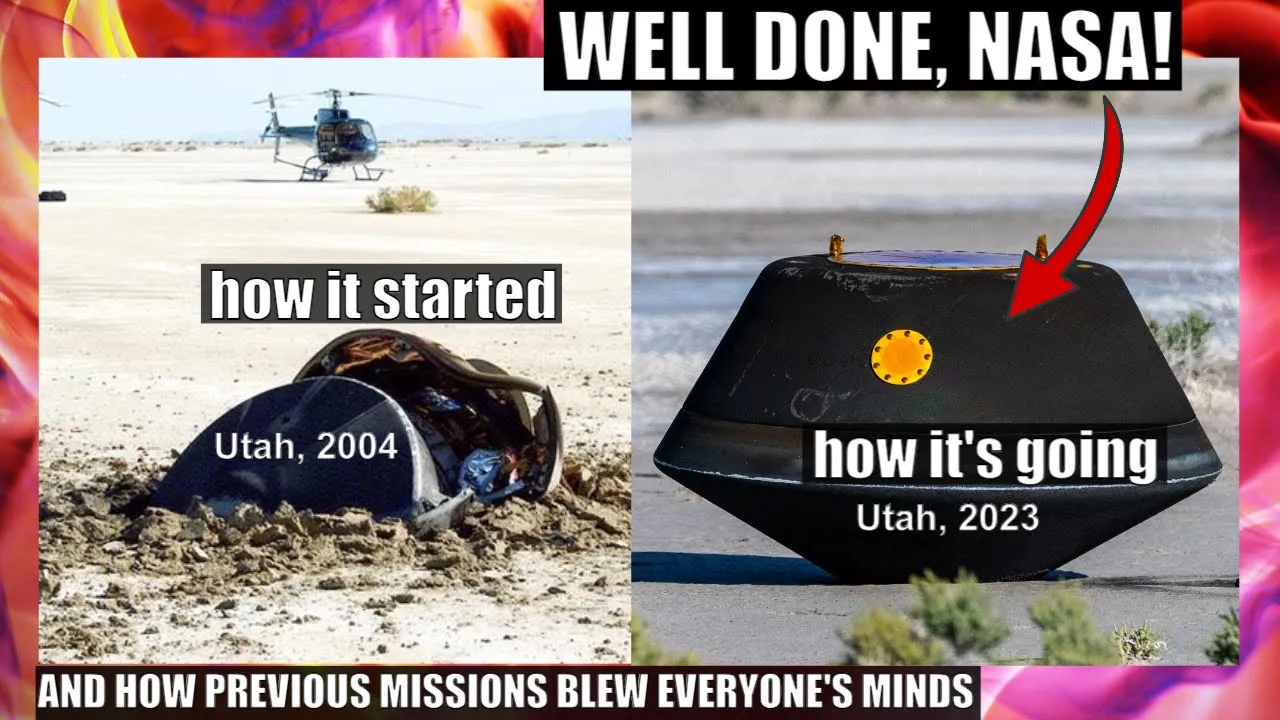
NASA Collects Extraterrestrial Samples/History of Sample Return Missions
78.2K
The 2010s brought increasingly sophisticated sample return missions. JAXA's Hayabusa2 (completed 2020) successfully returned samples from asteroid Ryugu, revealing it formed in extreme heat above 1,000°C and broke from a larger parent body. The mission discovered carbonated liquid water inside iron sulfite crystals—a 'soda-like' substance containing salts and organic matter. NASA's Osiris-Rex then achieved an unprecedented 250-gram sample collection from asteroid Bennu, 50 times heavier than any previous asteroid sample. Both missions confirmed asteroids are rubble piles from ancient collisions, not solid rocks, and demonstrated that spacecraft can sink into asteroid surfaces as if they were dust.
Click to watch →
The Key To Deep Space Travel | FULL DOCUMENTARY
19.6K
Comets differ from asteroids in composition (ice, dust, organic compounds) and behavior (developing tails when approaching the Sun). NASA's Deep Impact mission pioneered comet science by impacting Tempel 1 in 2005, revealing subsurface water ice and organic materials. ESA's Rosetta mission achieved the historic first comet landing in 2014, discovering that comets likely did not deliver much water to Earth. Sample return missions represent the cutting edge of solar system exploration: Japan's Hayabusa2 successfully touched down on asteroid Ryugu in February 2019, while NASA's OSIRIS-REx arrived at Bennu in December 2018. These missions aim to detect amino acids and determine whether asteroids delivered life's building blocks to early Earth, bringing extraterrestrial materials to Earth laboratories for detailed analysis.
Click to watch →

Space Cowboys - ep 01 - New Horizons
321
This segment covers international asteroid exploration missions. NASA's OSIRIS-REx entered orbit around asteroid Bennu in December 2018 and will collect samples using a mechanism that fires cooled nitrogen gas to collect dust and material. Bennu is a C-type carbonaceous asteroid containing carbon compounds and may contain building blocks of life. The samples will be returned to Earth in 2023. Japan's Hayabusa 2 will deploy rovers to asteroid Ryugu's surface and fire a projectile to create a crater, collecting material from below the surface. The hosts discuss how different countries approach asteroid exploration differently, with Japan focusing on surface exploration and sample collection. They also cover controlled atmospheric reentry challenges, including Apollo 13's trajectory management where astronauts nearly entered the atmosphere at too steep an angle.
Click to watch →
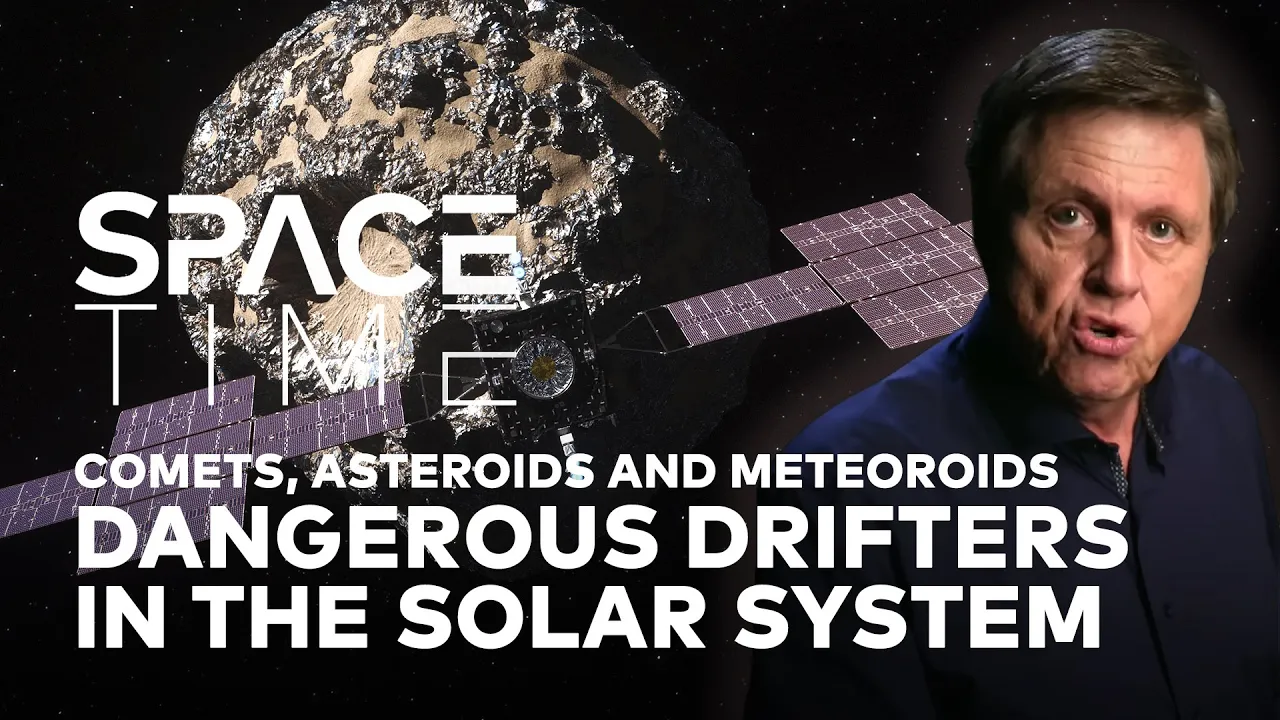
Comets, Asteroids, and Meteoroids: Solar System's Dangerous Drifters
138.7K
Major space missions have revolutionized our understanding of solar system objects. The Rosetta mission (2004-2016) achieved the first comet orbit and landing on 67P/Churyumov-Gerasimenko. OSIRIS-REx (2016-2020) successfully collected asteroid Bennu samples despite technical difficulties. Japan's Hayabusa missions pioneered asteroid sample return, with Hayabusa2 collecting 5.4g from Ryugu. These missions demonstrate humanity's capability to explore and sample distant worlds, bringing extraterrestrial materials back for laboratory analysis.
Click to watch →
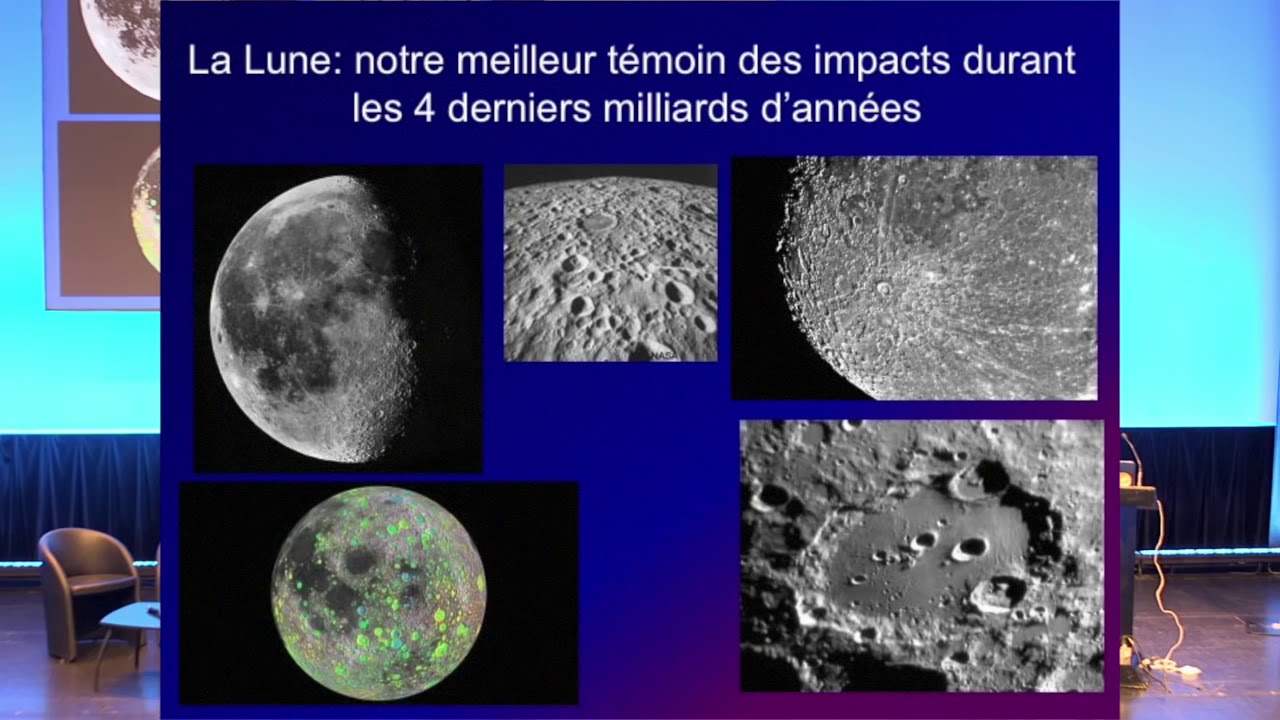
A la rencontre des astéroïdes : Hayabusa 2, OSIRIS-REx, AIDA par Patrick MICHEL
2.3K
Hayabusa 2 (2014) and OSIRIS-REx (2016) represent next-generation sample return missions. Hayabusa 2 targets Ryugu (900 m diameter, carbonaceous) using a touch-and-go sampling method with a small rover and a high-speed projectile to excavate surface material. OSIRIS-REx targets Bennu (500 m diameter, carbonaceous) using a 'Touch-And-Go' sampling method with a 'TAGSAM' device that uses a gas jet to capture surface material. Both missions aim to return samples in 2020 and 2023 respectively, providing unprecedented opportunities to study the composition of primitive solar system materials and potentially the origins of life on Earth.
Click to watch →
Deep Dive
The mechanics of meteor showers, explaining how dust trails left by comets lead to predictable celestial events on Earth.

StarTalk with Neil deGrasse Tyson - KRISTEN SCHAAL & JOHN HODGMAN: Astronaut Session
348.9K
Meteor showers occur when Earth passes through the debris trail left behind by comets as they orbit the Sun. As comets approach the Sun, solar heating evaporates their ice, releasing dust and small particles that had been mixed within the comet's nucleus throughout its journey. These particles spread out along the comet's orbital path, creating a debris trail. When Earth intersects this debris trail during its annual orbit around the Sun, the particles enter Earth's atmosphere at high speeds, burning up and appearing as meteors. Different meteor showers occur at predictable times each year because Earth crosses different cometary debris trails at specific points in its orbit.
Click to watch →

How are meteor showers created?
926
Meteor showers occur when Earth passes through streams of dust and debris left behind by comets as they orbit the Sun; these comets release particles during each close approach to the Sun, creating dust trails that Earth intersects annually, causing meteors to appear to radiate from a single point in the sky (the radiant), which is why meteor showers recur at predictable times each year and are named after the constellation containing their radiant point.
Click to watch →
Mark and Space
524
Meteor showers occur when Earth passes through a corridor of dust left behind by comets as they orbit the Sun. The scientific explanation involves comets leaving trails of dust fragments in their orbital paths, and Earth periodically intersects these dust lanes. The timing of meteor shower peaks is consistent with Earth's orbital mechanics - the best meteor showers are observed between midnight and sunrise because this is when Earth's forward-facing side plows through the dust corridor. This phenomenon conforms with the heliocentric model of the solar system and provides evidence for Earth's spherical shape and orbital motion.
Click to watch →

Cosmic dust
382
A meteor shower is the fall of large numbers of meteorites onto Earth's surface that did not burn up completely in the atmosphere. It occurs annually and predictably when Earth crosses the orbit of a comet and dust particles burn up in the atmosphere, creating bright flashes of light. When comets are heated by the sun, their ice and dust decompose, releasing dust particles that form tails. These particles then penetrate Earth's atmosphere at high speeds. Due to rapid fall and atmospheric oxygen, the dust burns up instantly, creating the falling star effect. The comet itself creates no effect. The dust settles in a specific orbit and meets Earth when it completes a rotation around the sun.
Click to watch →
Ploi de Stele: De Unde Vin și Când le Poți Vedea? – Pentru Dormit
195
Meteor showers occur on the same dates each year due to orbital mechanics. Just as Earth follows a well-defined path around the Sun, comets and asteroids have their own orbits, often elliptical, that bring them back to the same regions repeatedly. When a comet approaches the Sun, heat causes it to release particles that remain floating along its orbital path, forming streams of debris that persist year after year. Earth, in its annual journey, reaches these debris streams at precise dates because our planet moves on a stable trajectory while the debris trail remains approximately in the same position relative to background stars. This regularity allows astronomers to predict with remarkable precision when and where showers will occur.
Click to watch →
Celestial Bodies
Asteroid Basics
Comet Makeup
Meteoroid Origin
Meteor Entry
Shooting Stars
Meteorite Fall
Final Summary
Celestial Bodies
0:01- 1
Defines asteroids, comets, and meteors as planetary objects.
- 2
Explains they all orbit the Sun but have distinct compositions.
The Continuum Model and Blurring Boundaries of Small Solar System Bodies
While traditional educational resources present asteroids, comets, and meteors as distinct, separate categories, modern planetary science increasingly views them as part of a continuous spectrum rather than strictly defined, separate classes. The discovery of 'active asteroids' (also known as main-belt comets) has challenged the traditional dichotomy that asteroids are purely rocky, metallic, and inert, while comets are icy and active. These hybrid objects reside in the asteroid belt but exhibit comet-like tails or outgassing. Furthermore, many dead or dormant comets lose their volatile ice over time and become indistinguishable from asteroids. This perspective suggests that these bodies share common origins and evolutionary pathways, and that rigid classification schemes fail to capture the complex, transitional nature of small Solar System bodies.
The basic structure of our Solar System, including how planets, moons, and smaller bodies orbit the Sun.
The physical distinction between rock, metal, and volatile ices (such as water, carbon dioxide, and methane).
The concept of Earth's atmosphere and the heat generated by atmospheric friction on fast-moving incoming objects.
Basic orbital mechanics, particularly the difference between circular planetary orbits and highly elliptical orbits.
Planetary Defense strategies, including tracking Near-Earth Objects (NEOs) and deflection technologies like NASA's DART mission.
The role of asteroids and comets in cosmochemistry, specifically how they delivered water and prebiotic organic compounds to early Earth.
Deep-space exploration history, focusing on sample-return missions like OSIRIS-REx, Hayabusa2, and the Rosetta comet lander.
The mechanics of meteor showers, explaining how dust trails left by comets lead to predictable celestial events on Earth.
176.4K views2.9Klikes1:25@NASAOriginal Release: 2021-11-24
What's the Difference Between Asteroids, Comets, and Meteors?
We Asked a NASA Scientist.
Well, they're all planetary objects orbiting the Sun. An asteroid is a small, rocky object and when seen in a telescope, it appears as a point of light. Most asteroids are found in a ring between the orbit of Mars and Jupiter called the asteroid belt. Some asteroids are round, some are elongated, and some even have a satellite. A comet also orbits the Sun, but unlike an asteroid, it's composed of ice and dust. So, when a comet gets close to the Sun, its ice and dust content start to vaporize. So, when seen in a telescope, a comet appears fuzzy and/or has a tail. So, what's a meteor?
Well, let's start with a meteoroid. A meteoroid is a small piece of asteroid or a comet, typically pebble-sized, but could be a little smaller or a little larger, and often created from a collision.
When a meteoroid gets close to the Earth and enters the Earth's atmosphere, it's called a meteor.
And a meteor enters the Earth's atmosphere at a very high speed. So it burns up and produces a streak of light called a shooting star. So, if you have seen a shooting star, you likely saw a meteor.
And if a meteor survives the burn and lands on the ground, it's called a meteorite.
So, what's the difference between asteroids, comets, and meteors? Well, asteroids are rocky, comets are icy, and meteors are much smaller and are the shooting stars that you see up in the sky.
We Asked a NASA Scientist.
NASA
Up Next

81:58
Near-Earth Asteroids Threat & ESA Planetary Defence
@stefaniasoldini8951
117 views•2021-01-06
61:17
First Billion Years of the Universe with the Square Kilometre Array
@iaaudc
121 views•2022-05-26

10:13
How to Use the Lightkurve Web Interface for Exoplanet Data Analysis
@NASA_EMAC
1.1K views•2021-01-13
6:10
Gamma-Ray Bursts: Cosmic Snipers Explained | Astronomy
@kurzgesagt
15M views•2016-07-31
Related Study Plans & Knowledge Roadmaps
Structured learning paths in Astronomy
astronomy
Reionization: Pop III Stars, IGM & 21cm Line
01Foundations of Cosmology & the Early Universe
02Population III Stars & Cosmic Dawn
03Physical Mechanisms of Reionization
+ 2 more learning modules
17h5 modules
Explore Roadmap
astronomy
Planetary Rings: Dynamics, Roche & Resonances
01Foundations of Gravity and Orbital Mechanics
02Tidal Forces and the Roche Limit
03Structure, Composition, and Collisions
+ 2 more learning modules
10h5 modules
Explore Roadmap
astronomy
Asteroseismology: Stellar Waves, Ages & Cores
01Foundations of Stellar Astrophysics & Wave Mechanics
02Stellar Oscillation Modes: P-modes and G-modes
03Mathematical Framework of Asteroseismology
+ 2 more learning modules
35h5 modules
Explore Roadmap
astronomy
Adaptive Optics: Physics, Engineering & Control
01Foundations of Wave Optics and Wavefronts
02Atmospheric Turbulence & Optical Distortion
03Wavefront Sensing Technologies
+ 3 more learning modules
35h6 modules
Explore Roadmap