

















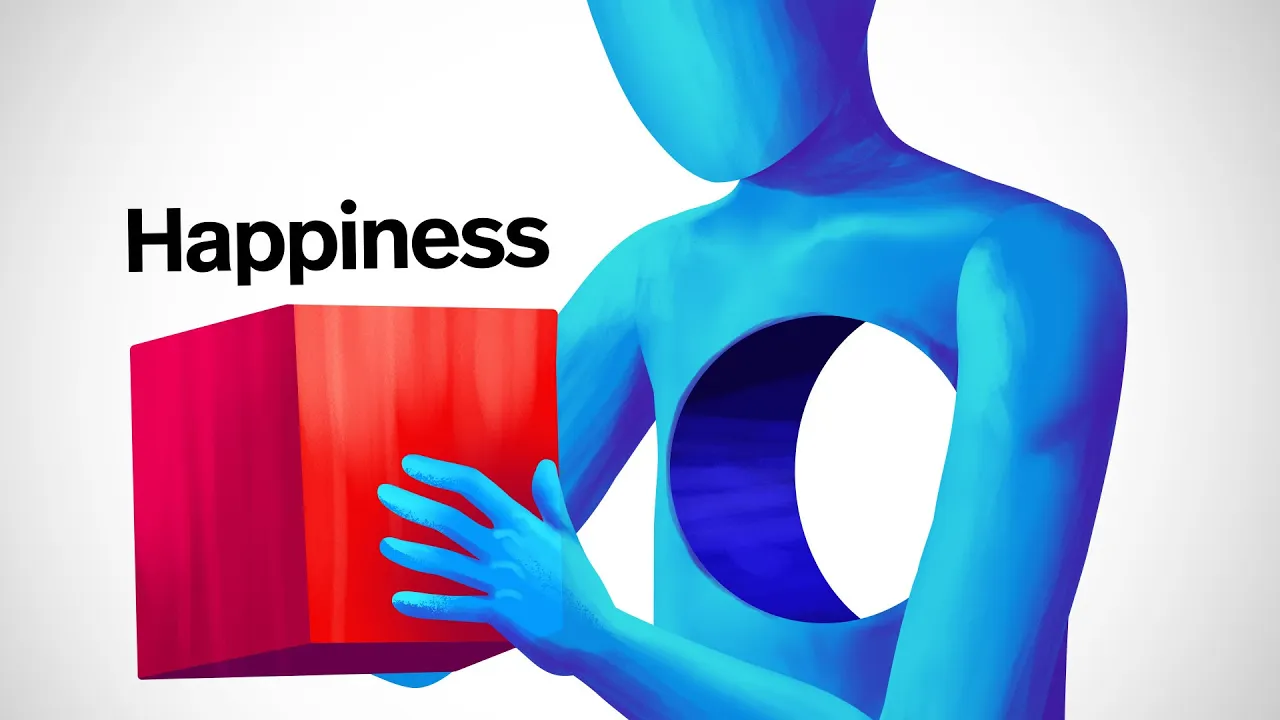

French-Algerian philosopher Albert Camus argued that life has no inherent meaning and is therefore absurd—the fundamental conflict between human beings' rational desire to find meaning and an irrational, indifferent universe. Rather than escaping this absurdity through suicide, religion, or false ideologies (which Camus termed 'philosophical suicide'), one should embrace and revolt against it by fully experiencing existence with lucidity, rejecting hope and future appeals, and finding meaning in the act itself rather than in outcomes; this is exemplified by the myth of Sisyphus, who could find happiness in his eternal punishment by embracing the absurdity of his situation.
Albert Camus on Life's Absurdity: Meaning in a Meaningless World
Added:The core tenets of Existentialism, particularly the concept that 'existence precedes essence' and the rejection of predetermined cosmic purpose.
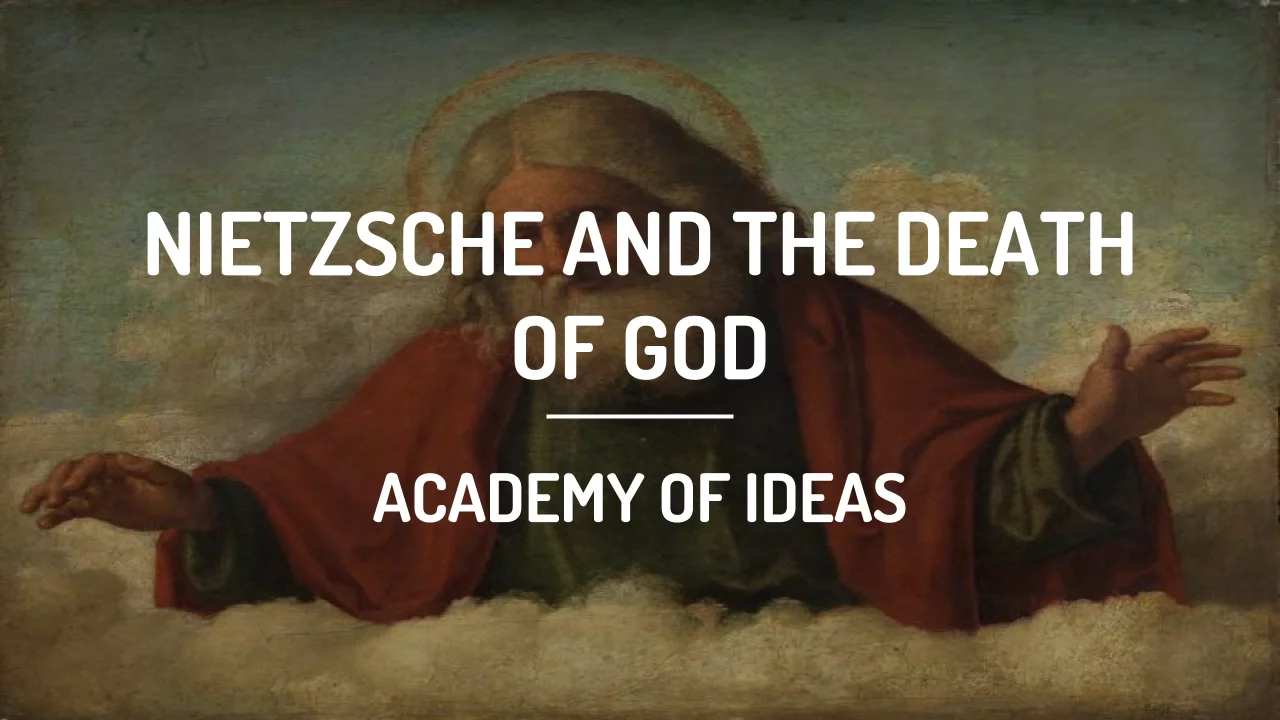
Nietzschean Nihilism and the 'death of God,' which set the historical and intellectual stage for 20th-century secular philosophy.
The Greek myth of Sisyphus, specifically the eternal punishment of rolling a boulder up a hill, which serves as Camus' primary philosophical metaphor.
The philosophical definition of 'The Absurd'—the conflict between humanity's desire for inherent meaning and the cold, silent universe.
Camus' concept of 'Philosophical Rebellion' as detailed in 'The Rebel', exploring how one lives ethically and resists injustice without relying on absolute moral truths.
The ideological rift between Albert Camus and Jean-Paul Sartre regarding political commitment, Marxist theory, and the creation of personal meaning.
The 'Theater of the Absurd' and absurdist literature, analyzing how these philosophical concepts are dramatized in works by Samuel Beckett and Franz Kafka.
Existential Psychology and Logotherapy, examining how modern therapy helps individuals confront existential dread and construct personal meaning in a therapeutic setting.
1.7M views82Klikes10:43Original Release: 2020-04-16
Have you ever wondered why bad people often seem to get away with their actions, and, likewise, good people are often faced with terrible hardships?
Have you ever suspected that the meaning we attribute to life, or certain aspects of it, may just be an illusion - in other words: a man-made creation only to make the mystery of existence more bearable?
Is there a Godly plan behind all of this?
Is there an afterlife, and is our time here in this world just a preparation for it?
Or could it be that life is utterly meaningless, that the universe is irrational and indifferent to us, and that humanity is nothing more than a cosmic joke?
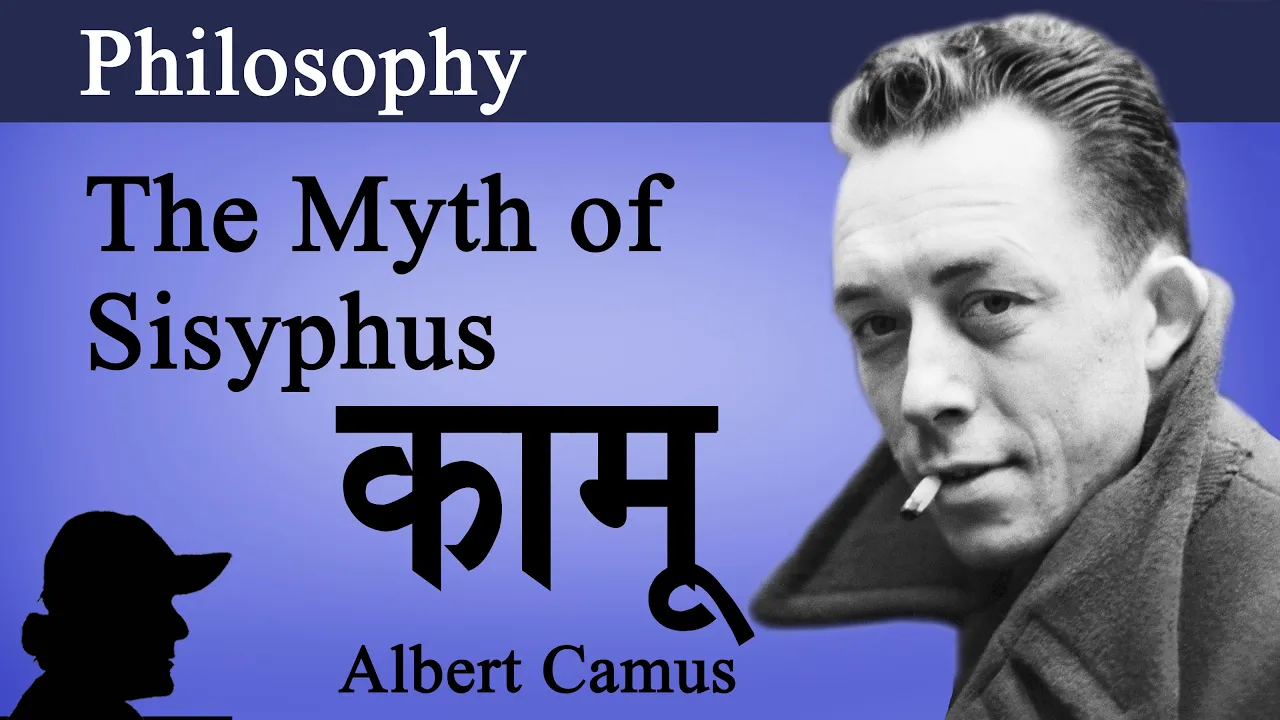
French-Algerian philosopher Albert Camus believed that life has no inherent meaning and is, therefore, absurd.
In a way, this might be a reason for despair, that can lead us to end our own lives.
But Camus stated that a meaningless universe is actually an opportunity to free ourselves from the shackles of hope and experience existence more fully.
The Danish philosopher Kierkegaard longed for a purpose that he could live and die for.
Also, he struggled with the fact that a great deal of existence cannot be rationally explained, and therefore, we have to find something outside ourselves to hold on to; something that gives us clarity and guidance in the face of the unknown.
He found that religion is the answer and that we should take a leap faith, by embracing this higher purpose as the ultimate meaning of life, even though there’s no solid proof of its validity.
Such an embrace may solve the problem and end our existential angst, but it comes with a price.
“Philosophical suicide,” is what Albert Camus called the solution of faith.
Camus had quite a different approach to the uncertainty of existence.
He acknowledged that reason has its limits and that what goes beyond our understanding is indeed inscrutable.
Moreover, he believed that life is meaningless and that all forms of meaning that we give to it are nothing more than constructs of the human mind.
There’s no proof that the universe has a meaning that transcends it.
And if it has, we simply don’t know it as we speak.
As he states in his philosophical essay The Myth of Sisyphus: I don’t know whether this world has a meaning that transcends it.
But I know that I do not know that meaning and that it is impossible for me just now to know it.
What can a meaning outside my condition mean to me?
I can understand only in human terms.
End quote.
Thus he concluded that the only honest observation that we can make about the world is that it’s meaningless.
There are no universal values, there’s no divine plan, and everything happens randomly.
Hence, life is absurd.
But what did Camus mean with the absurd?
Did he mean that we, humans, are absurd beings?
Or that the world that surrounds us is absurd in itself?
Well, he meant neither.
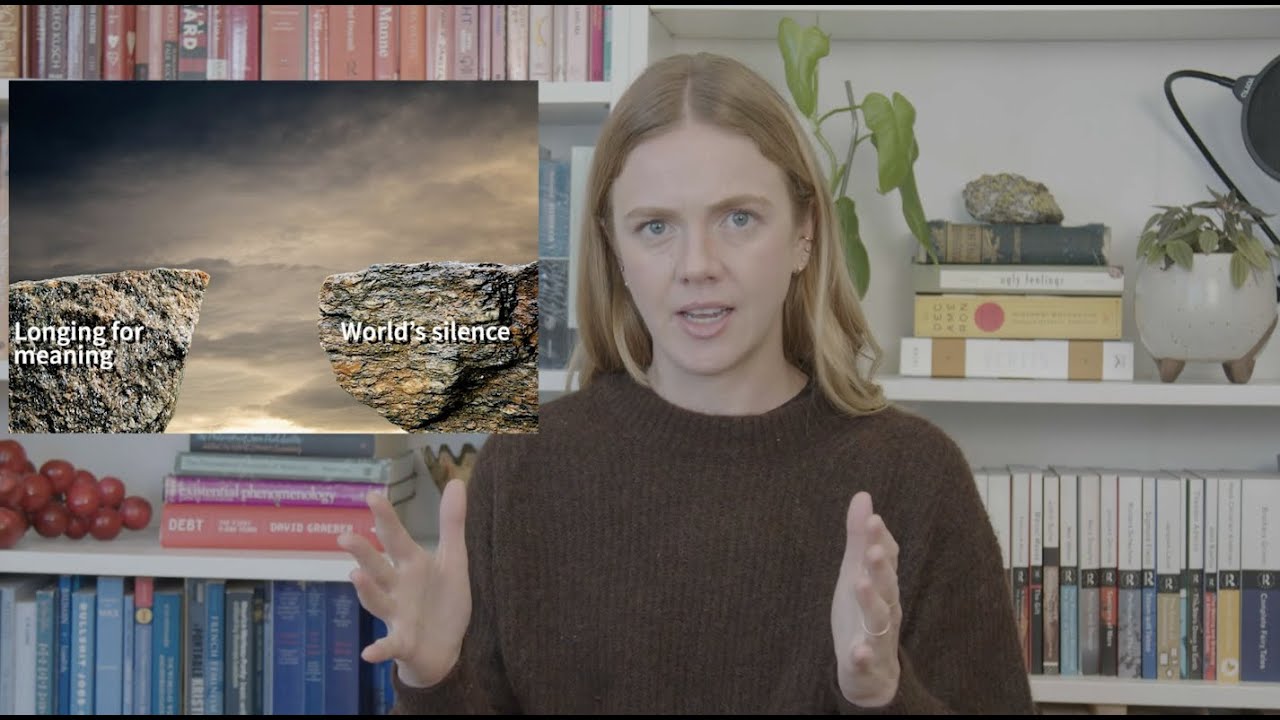
The predicament we face as humans is that we are rational beings with a strong desire to create order and clarity, and give meaning to life, while we are part of an irrational and indifferent universe.
The response of such a universe to the human cry for meaning is nothing more than silence.
This confrontation is what Camus called the Absurd.
It’s the fact that we keep trying to make something out of this universe, to understand the riddle, to give meaning to its ways, but as soon as we think we grasped it, it slides through our fingers like water.
The realization that we are a bunch of primates living on a rock in an endless universe that is indifferent to us, and that after a hundred years our lives will be forgotten, and that our planet won’t survive anyway because sooner or later it will be swallowed by the Sun, could lead someone to despair.
But there’s no proof that our existence is otherwise.
Also, when we look at the repetitiveness of our lives, and this culturally accepted path that we’re all expected to take from birth to the grave, we might start to wonder and think: what’s the point of all this?
This is when one becomes aware of the absurdity of it all, as Camus stated and I quote: Rising, streetcar, four hours in the office or the factory, meal, streetcar, four hours of work, meal, sleep, and Monday Tuesday Wednesday Thursday Friday and Saturday according to the same rhythm – this path is easily followed most of the time.
But one day the “why” arises and everything begins in that weariness tinged with amazement.” End quote.
So, why are we here?
What’s the point?
Trying to find rational explanations for these questions in an irrational and indifferent world is absurd.
And according to Camus, the Absurd cannot be negated.
This means that we can react to it in two ways: we can live it or we escape from it.
Many clever people have exploited this human tendency to long for meaning, by creating ready-made answers to satisfy any philosophical and existential question and use them as tools for control.
These may come in the form of religion, but there are also secular, substitutes that attribute meaning to existence.
For example, the Nazi-belief in a master-race that is destined to rule over all other races, or the sacralization of national identity, which makes the act of serving one’s country an ultimate concern.
Or the belief in Karma, which, isn’t always valid, when we see that many bad people get away with their deeds and live happily, and many good people are faced with misfortune.
The problem with all these approaches is that we set our rationality aside, and choose to believe in things that lack proof and rational explanations or even go against our own experiences.
Hence, Camus called this philosophical suicide, which is just a way to elude the Absurd by replacing the uncertainty of existence with a set of manmade beliefs.
A more direct approach to escape the Absurd is the act of physical suicide, which, according to Camus, is the only one really serious philosophical problem.
But the issue with this approach is that we basically succumb to the Absurd, admitting that the confrontation with meaninglessness and experiences of hopelessness is too much for us.
Now, in order to not fall into one of these traps, and live life despite its absurdity, we ought to ask ourselves the following question: is a hopeless life in a universe without a meaning that transcends it necessarily wrong?
According to Camus, it isn’t.
In fact, a world without meaning is an opportunity to let go of all illusions of meaning, so the harsh reality comes to the surface.
And instead of despairing because of that, we can choose to see the silver lining.
When there’s no last judgment nor an afterlife, it means that we can focus completely on this life.
When there are no transcendent morals and values, it means that we can create our own.
When our time on earth is limited, along with our perception and knowledge of it, we might as well make the best of it, and have a nice, hot, cup of coffee.
Camus believed that we shouldn’t just accept the Absurd: we should revolt against it.
Because even though we’re powerless and ignorant towards the greater picture, we do have control over our faculties.
And the only way to be free in unfreedom is through rebellion, by fully using the power that we have: that of thought and action.
According to Camus, the Absurd Hero lives life to the fullest in the face of the Absurd.
Despite the invitation from death, he will not end his own life, no matter if it’s philosophical or physical.
And even if this means a life of despair, he chooses despair.
Living an Absurd life means indifference to the future, the rejection of hope, and a lucid experience of what’s happening in the moment.
I quote: Hence what he demands of himself is to live solely with what he knows, to accommodate himself to what is and to bring in nothing that is not certain.
He is told that nothing is.
But this at least is a certainty.
And it is with this that he is concerned: he wants to find out if it’s possible to live without appeal.
End quote.
Living without appeal means living in the present moment with the full awareness of the Absurd and not wanting anything more from a conceptual future.
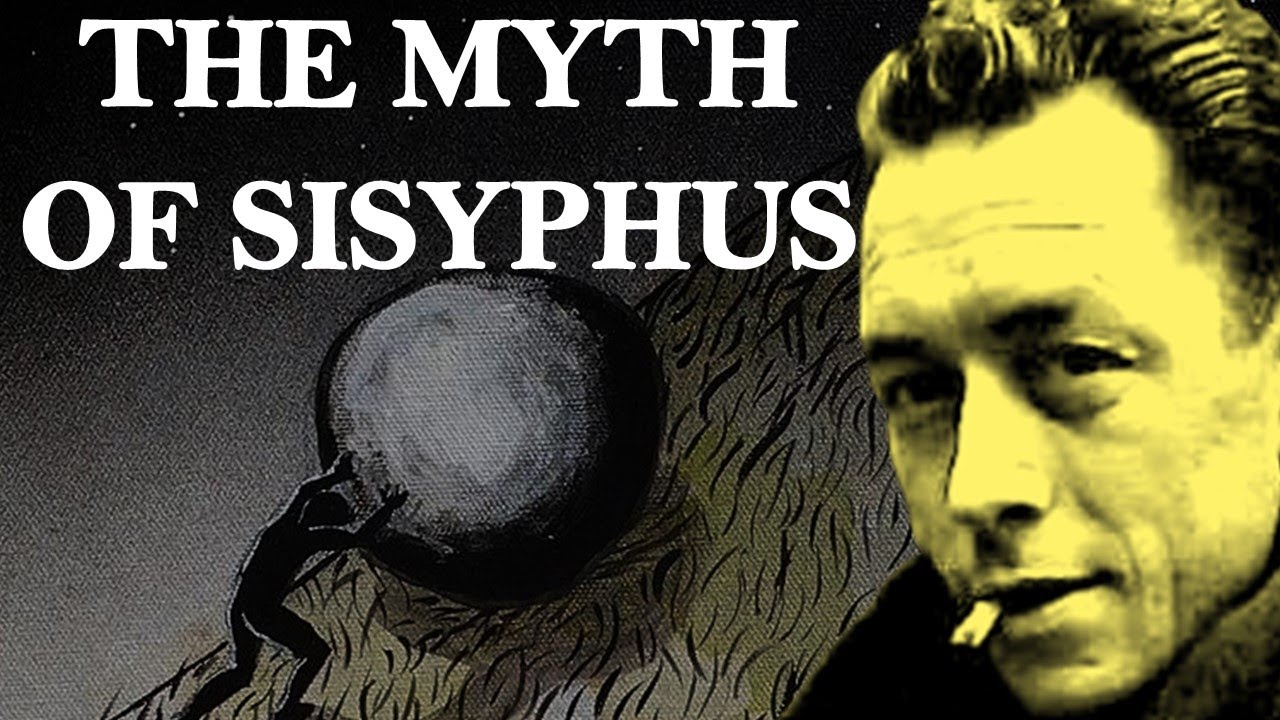
To imagine what it’s like to live without appeal, Camus pointed to the Greek mythological figure Sisyphus, who was the founder and king of Ephyra, and also quite a deceitful person.
He made the mistake to challenge the Gods and was punished for that and condemned to push a rock uphill, that rolled down every time it neared the top, and to repeat this process for eternity.
Sisyphus existence is so meaningless and hopeless, that trying to give his repetitive action any meaning is totally absurd.
And there’s key.
Living without appeal means that it isn’t necessary that our actions lead to something better in the future.
The meaning lies in the act itself, which is sufficient to be content in a hopeless life.
The Gods based the punishment of Sisyphus on the idea that there’s nothing more dreadful than endless and futile labor.
But this simply depends on the position we take towards that.
So, what if we imagine Sisyphus happy?
What if one finds joy in despair, and refuses to bow for the misery that life throws at us.
Because is there anything more rebellious than to actually find joy in what’s supposed to be our punishment?
Thank you for watching.
Up Next

39:56
Albert Camus on Absurdism and Political Rebellion: The Rebel Explained
@unsolicitedadvice9198
162.8K views•2025-06-14

164:01
John of Damascus on Holy Images: A Theological Defense
@BannedBooks
139 views•2026-04-25

68:32
Should We Destroy the Machines? Big Tech Surveillance Critique
@TheStoriesWeTell303
167.9K views•2025-11-30
4:57
The Myth of Sisyphus: A Greek Legend of Eternal Punishment
@TEDEd
8.6M views•2018-11-13
Related Study Plans & Knowledge Roadmaps
Structured learning paths in Philosophy
philosophy
Frankfurt School: Critical Theory & Culture
01Foundations of the Frankfurt School and Critical Theory
02Horkheimer & Adorno: The Critique of Instrumental Reason
03The Culture Industry and Mass Deception
+ 2 more learning modules
12h5 modules
Explore Roadmap
philosophy
Philosophy of Language: From Frege to Austin
01The Linguistic Turn: An Introduction to Language in Philosophy
02Gottlob Frege: Sense and Reference
03Early Wittgenstein: The Picture Theory of Meaning
+ 3 more learning modules
15h6 modules
Explore Roadmap
philosophy
Feminist Epistemology: Standpoint & Injustice
01Introduction to Epistemology and Feminist Critiques
02Sandra Harding and Standpoint Theory
03Donna Haraway and Situated Knowledges
+ 2 more learning modules
12h5 modules
Explore Roadmap
philosophy
Environmental Philosophy: Ethics & Deep Ecology
01Foundations of Environmental Ethics & Anthropocentrism
02Biocentric Individualism and Animal Liberation
03Ecocentric Holism and Deep Ecology
+ 1 more learning modules
10h4 modules
Explore Roadmap