























The Meissner effect is a macroscopic quantum phenomenon where superconductors expel magnetic fields when cooled below their critical temperature, fundamentally different from classical Lenz's law effects; this quantum behavior emerges from BCS theory, which explains how electron pairs (Cooper pairs) form through phonon-mediated attraction, enabling superconductors to exhibit zero electrical resistance and perfect diamagnetism.
Superconductivity Explained: The Meissner Effect and BCS Theory
Added:Basic electromagnetism, including Ohm's Law, electrical resistance, and magnetic flux.
Fundamental quantum mechanics, specifically the distinction between fermions (like electrons) and bosons.
The concept of crystal lattice structures and lattice vibrations (phonons) in solid-state physics.
Thermodynamic phase transitions and the concept of critical temperature.
The distinction between Type I and Type II superconductors, including flux pinning and vortex states.
High-temperature superconductivity (unconventional superconductors) and the limitations of standard BCS theory.
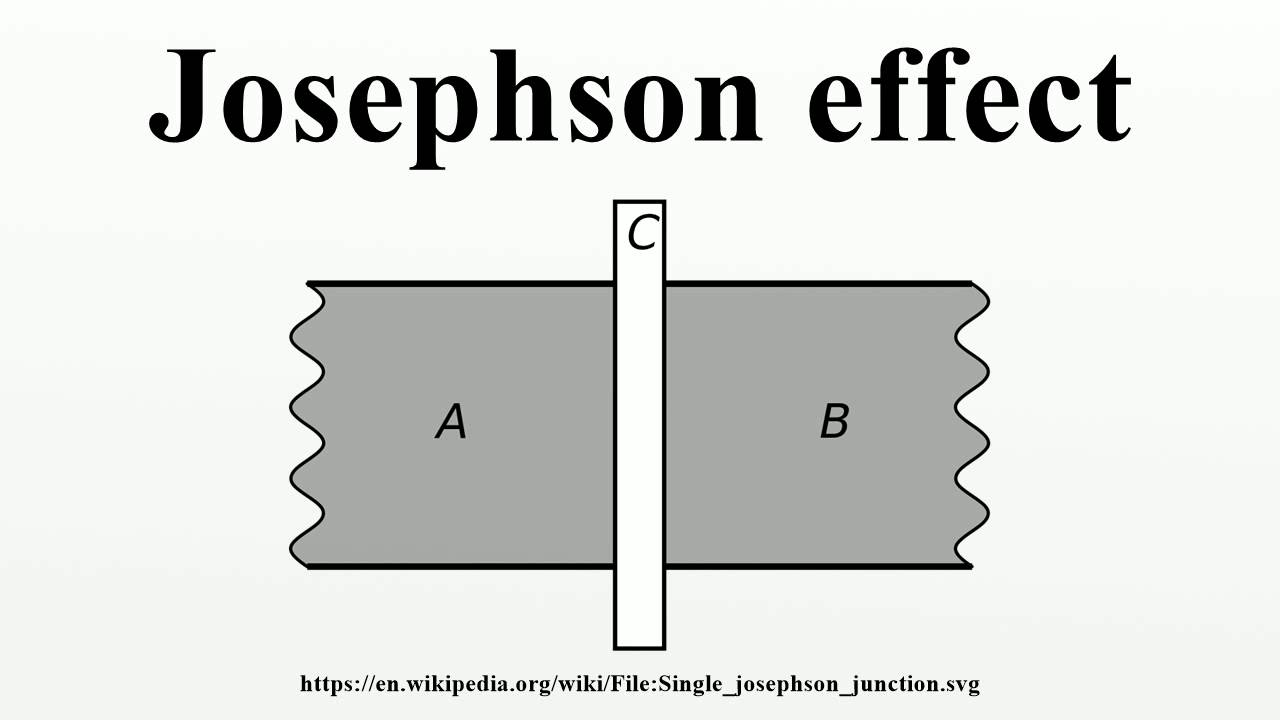
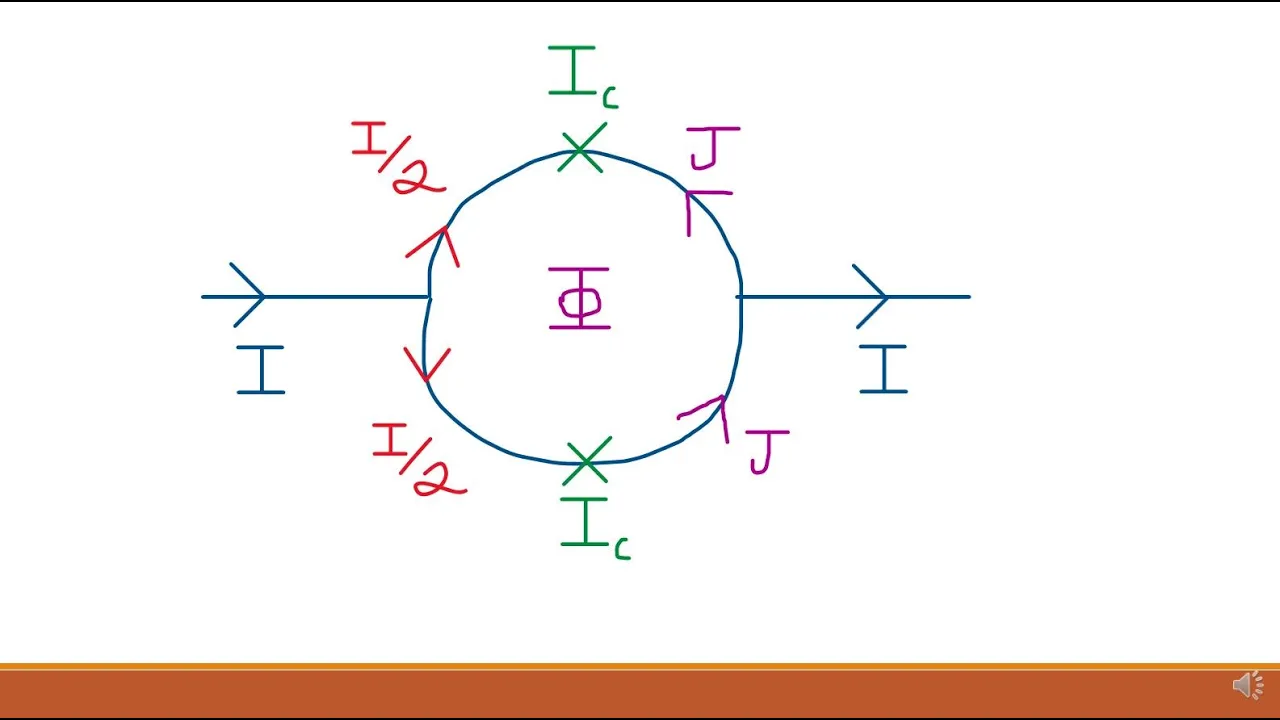
The Josephson Effect and its application in SQUIDs (Superconducting Quantum Interference Devices) used in quantum computing.
Real-world applications of superconductivity, such as MRI machines, maglev trains, and particle accelerators.
109.5K views1.1Klikes6:32Original Release: 2015-01-12
There are a lot of interesting superconductivity demos online.
Usually featuring floating superconductors over magnetic tracks, they have a certain wow factor and show how strange superconductivity is.
Unfortunately, most don’t explain what’s going on or incorrectly explain it, simply adding to confusion about superconductivity.
This video will try to clear up some of that by discussing the Meissner effect and superconductivity in a little more detail.
So what is the Meissner effect?
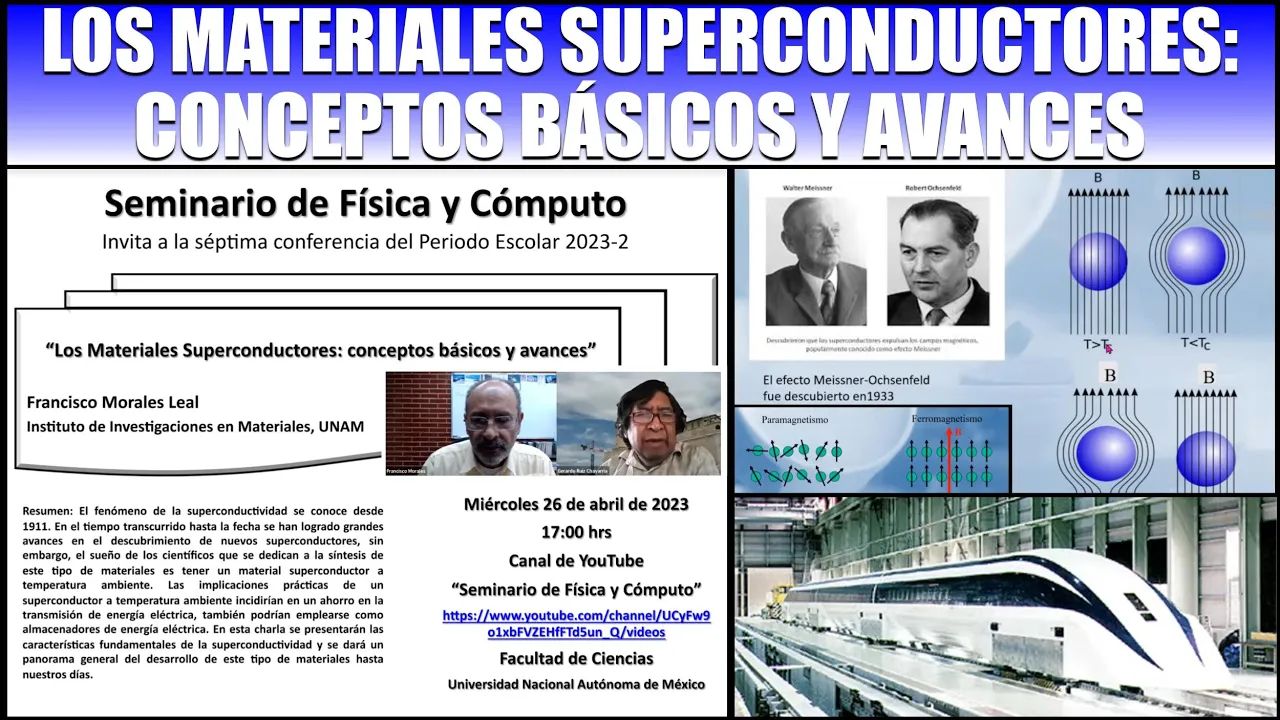
To demonstrate, place a superconducting puck at room temperature on a magnet.
Then lower the temperature.
Above a critical temperature, Tc, the puck is not superconducting and the magnetic field goes through it.
When the puck goes below Tc, it becomes superconducting and expels the magnetic fields.
A surprising number of science demonstrators from surprisingly respectable institutions try to explain this as a classical effect.
They will open their bag of classical E&M tricks and pull out Lenz’s law.
Admittedly, you can bounce a magnet off of a highly conductive normal metal, like really cold copper, due to Lenz’s law.
The changing magnetic fields will produce an EMF that will result in eddy currents that oppose the change in magnetic flux.
The lower the resistance, the stronger the currents.
In a zero resistance material, eddy currents should expel any changes in the magnetic field from the perfect conductor.
With this in mind, it is understandable how someone might want to explain the Meissner effect as Lenz’s law in a perfectly conducting system.
The real question is whether this explanation is consistent with experiment.
Let’s look at our field expulsion again.
When the material is resistive, the field penetrates.
If we are dealing with Lenz’s law, the field should remain the same when the resistance goes to zero.
After all, the magnetic field is not changing and, going by maxwell’s equations, there shouldn’t be induced eddy currents from an unchanging magnetic fields.
Any force on a charged particle from the magnetic field should be perpendicular to the direction of motion so there isn’t really a classical mechanism for the unchanging magnetic field to speed up electrons.
This argument pretty much excludes a classical explanation for the Meissner effect, but it doesn’t necessarily apply to quantum mechanical systems.
If you ever want to look into it, it is possible for the quantum mechanical ground state to have currents that expel a magnetic field.
This leads to the notion that the Meissner Effect and Superconductivity are large scale or Macroscopic Quantum Phenomena.
They are not trivial things that you can gloss over in a sentence or two and pretending that they are easily understood classical effects is some serious disrespect to condensed matter physics... Superconductivity was one of the great physics problems of the 20th century and, despite numerous great minds working on it, took almost a half century to explain in a satisfactory way.
The discovery of superconductivity by Kamerling Onnes came at liquid helium temperatures in Mercury.
Below 4.2 K, the resistance of Mercury abruptly vanished.
As a side note Al, Pb and Sn are also superconductors at low temperatures.
The discovery of the Meissner effect in 1933 was followed by the London Equations, an excellent phenomenological model of superconductivity.
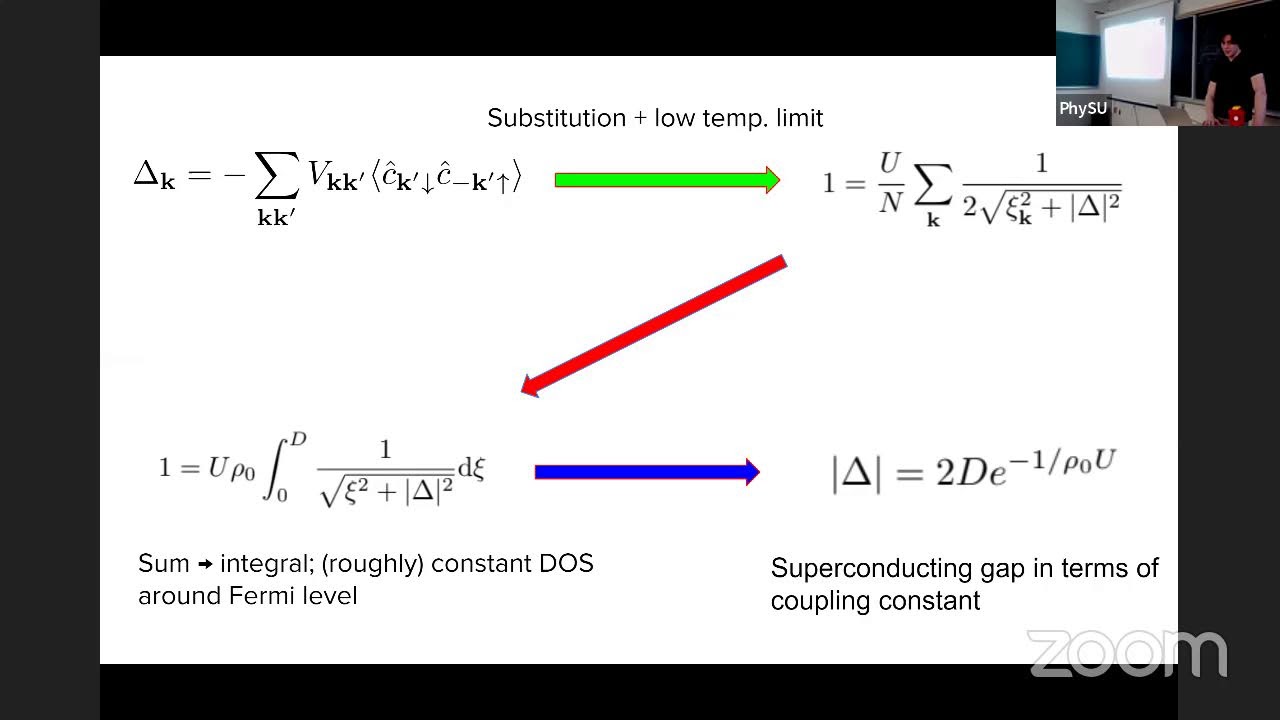
After the second world war, Ginzburg and Landau formulated a very useful phenomenological model describing superconductivity in terms of an order parameter, but a microscropic theory explaining superconductivity didn’t emerge until the late 50s.
Now known as BCS theory, this theory of superconductivity was the work of John Bardeen, Leon Cooper, and John Robert Schrieffer at University of Illinois Urbana Champaign.
Before discussing bcs theory, it’s probably a good idea to touch on the difference between fermions and bosons… Fermions are half spin particles that are antisymmetric and thus follow the pauli exclusion principle.
Common examples are electrons flowing through a metal.
Due to the Pauli exclusion principle, there can’t be more than one fermion in a state.
In the cartoon picture I’m showing you, I can actually have two fermions per energy level: one spin up and one spin down.
This means that I will fill progressively higher energy states as I add electrons.
Bosons are integer spin particles.
They are symmetric and do not follow the pauli exclusion principle, meaning that many bosons can be placed in a single state.
At low temperatures, most of the bosons will go into the ground state, forming a bose-einstein condensate.
Since the ground state is filled with many bosons, Bose Einstein condensates or BECs often show large scale quantum mechanical behavior.
This led to many attempts to understand superconductivity as some sort of condensate.. <indeed, similarities led to many attempts to understand superconductivity as some sort of condensate.
The problem is that ordinary electron transport through metal is fermionic.
So, how do you get a bunch of fermions to condense like bosons?
That was a big question.
The Nobel prize for answering it went to Bardeen, Cooper, and Schrieffer for BCS theory.
One of the central ideas to BCS theory is Cooper instability, the idea that the arrangement of fermions on the left might be unstable in the presence of an attractive coupling between electrons.
If this coupling paired electrons to form composite bosons, these cooper pairs could collapse into a lower energy state now commonly known as the BCS ground state.
This would explain a lot of weirdness in superconductivity.
It would also explain the observed band gap and the sudden phase transition into a superconducting state.
So, what’s the attractive force?
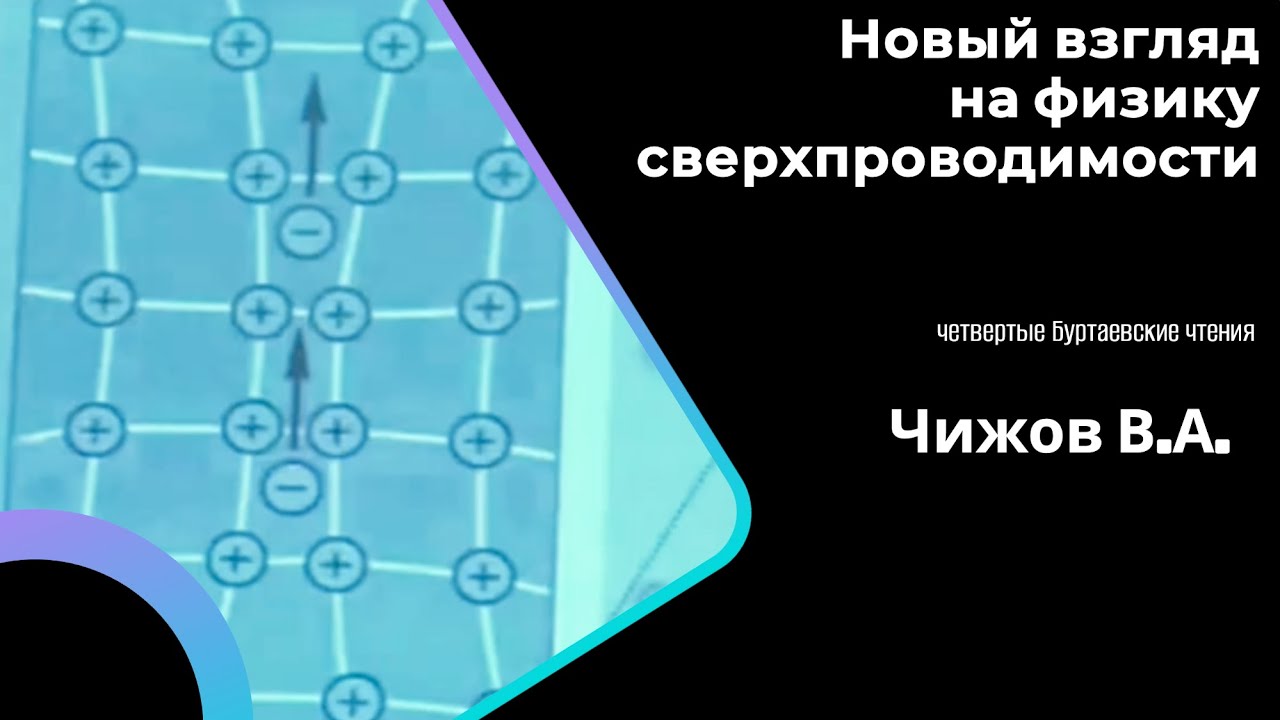
In this case, there’s a long range interaction between electrons via phonons.
In other words, the coupling is due to vibrations in the atomic lattice.
This is often visualized as two large objects on a bed.
Due to the depressions, the objects are attracted to each other.
While what happens is slightly more complicated, this captures the basic idea.
This model turned out to be an excellent description of conventional superconductors and had excellent agreement with experimental results.
It would also later give great insight into superfluidity in Helium 3, which uses a very similar mechanism.
BCS theory does have its limitations and does not adequately explain High Temperature superconductors, which are still of great interest today.
Seriously, cuprates look like a fun playground for ARPES and STM groups.
Hopefully you learned a little about superconductivity and condensed matter physics by watching this video.
As an side note, I discuss how a type II superconductor can get locked to a magnet in a different video.
Please give feedback in terms of a thumbs up or down and leave a comment below.
Thank you for watching.
Up Next
19:42
Identical Particles, Bosons, Fermions: Quantum Statistics (Physics Lecture)
@integratedphysicsstudiesip3681
128 views•2025-04-08

12:53
21cm Hyperfine Transition in Neutral Hydrogen: Radio Astronomy Basics
@AaronRobertParsons
12.4K views•2011-10-13

32:32
NMR Spin Physics I: Zeeman Effect, Resonance Condition & Larmor Frequency
@nptel-indianinstituteofsci8064
2.3K views•2024-01-17

27:14
Entropy and the Second Law of Thermodynamics Explained
@veritasium
27.5M views•2023-07-01
Related Study Plans & Knowledge Roadmaps
Structured learning paths in Physics
physics
Nuclear Physics (Decay, Fission & Reactors)
01Atomic Structure and the Binding Force
02Radioactive Decay and Half-Life
03Nuclear Fission Mechanics and Chain Reactions
+ 2 more learning modules
12h5 modules
Explore Roadmap
physics
Soft Matter (Polymers, Colloids & Rheology)
01Foundations of Soft Matter & Thermal Forces
02Polymer Physics and Macromolecules
03Colloids, Surfactants, and Self-Assembly
+ 2 more learning modules
38h5 modules
Explore Roadmap
physics
Analytical Mechanics: Lagrangian & Hamiltonian
01Mathematical Foundations: Calculus of Variations
02From Newtonian Mechanics to Constraint Dynamics
03The Principle of Least Action & Lagrangian Mechanics
+ 3 more learning modules
28h6 modules
Explore Roadmap
physics
General Relativity (Spacetime & Cosmology)
01Foundations of Relativity: Special Relativity
02The Geometry of Spacetime: Equivalence Principle & Curvature
03Einstein's Field Equations: The Mathematics of Gravity
+ 2 more learning modules
55h5 modules
Explore Roadmap