









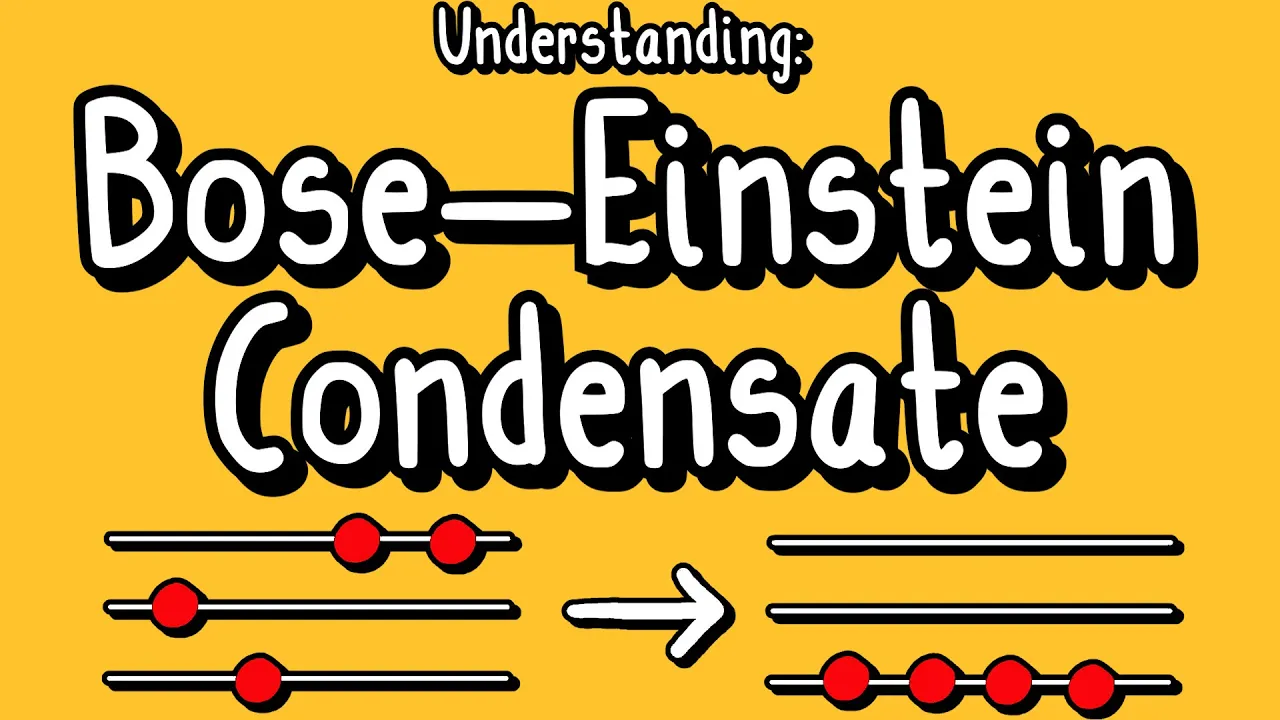





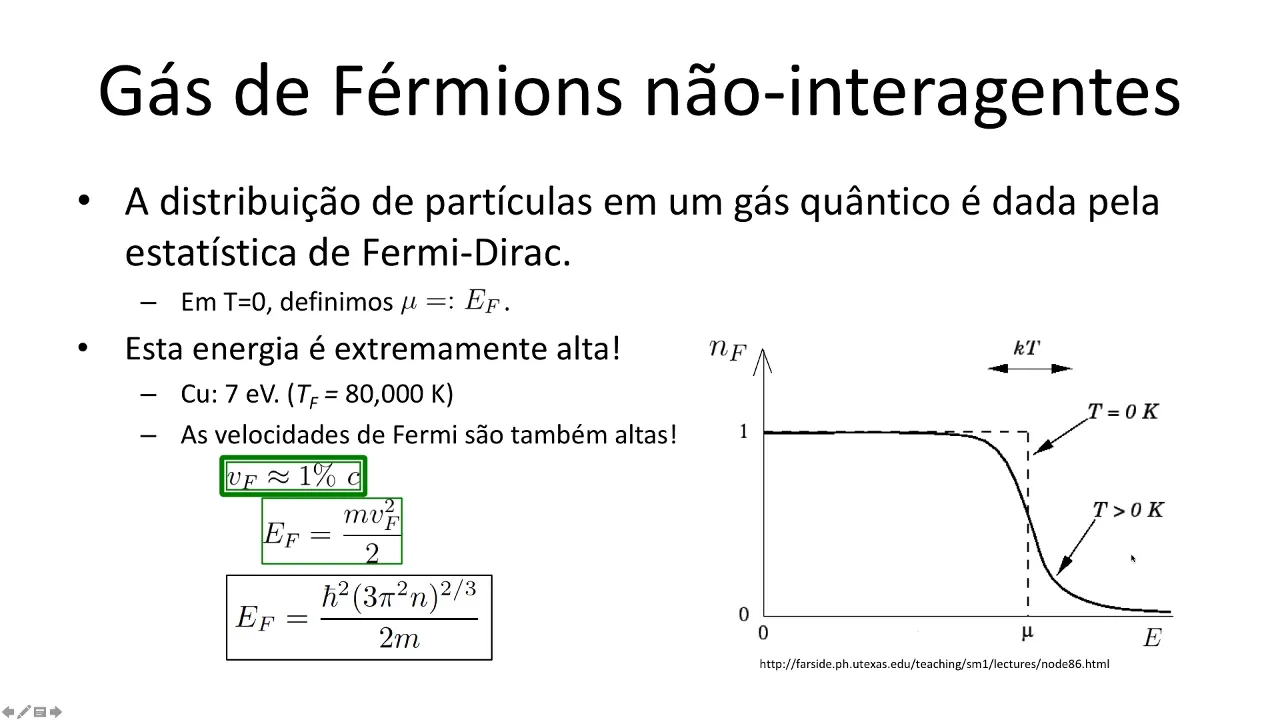





In quantum mechanics, identical particles are classified into two categories: bosons (particles with integral spin including zero, described by symmetric wave functions that remain unchanged upon particle interchange, and obeying Bose-Einstein statistics where multiple particles can occupy the same quantum state) and fermions (particles with half-integral spin, described by antisymmetric wave functions that change sign upon particle interchange, and obeying Fermi-Dirac statistics where no two particles can occupy the same quantum state due to the Pauli Exclusion Principle). This fundamental distinction arises from the indistinguishability of quantum particles, where the uncertainty principle prevents tracking individual particle trajectories, unlike classical mechanics where particles maintain their individuality through continuous trajectories.
Identical Particles, Bosons, Fermions: Quantum Statistics (Physics Lecture)
Added:hello students welcome to my YouTube channel integrated phys studies IPS already plus two second syllabus complete CCS phys onl you can share it with your friends also it's completely free of cost latest video [Music] notification toity advance increase the resolution you can get the link from the description [Music] box which you can get from the playlist okay thank you hello students identical [Music] particles so sta mechanics Statics Max buman statistics Quantum statistics further Quantum statistics again classify Einstein or statistics or FD statistics statistics in order to deduce the planks quantum theory of radiation that is the planks radiation law B in the year 1924 Einstein statistics fundamental assumptions okay sole [Music] exp the of gases so statistics the name of B andin Einstein statistics 1926 for me and direct Statics modify by using the Exclusion Principle and the electromagnetic structure of atoms Exclusion Principle no two electrons having the same set of quantum numbers can occupy the same energy State okay that means statistical form pH points consideration which cannot possibly occupy the same pH cell so for direct statistics now moving further to our main topic what are identical particles actually there are three types of identical particles identical particles of any spin which are separated in the assembly and can be distinguished from each other for example the molecules of the gas which are the particles of this kind okay Maxell B statistics particles of zero or integral spin but they cannot be distinguished or in other words they are indistinguishable from each other so these particles are bosons or B particles as they do not obey the poly Exclusion Principle for example your photons alpha particles Etc okay third category identical particles of half integral spin and they are also indistinguishable they cannot be distinguished okay and these particles obey poly Exclusion Principle example electron proton neutron okay and they are called Fons okay as I said first kind partic actually they are the classical particles the classical statistics a second or third Quantum particles obing the quantum statistics okay so essential distinction between the and the quantum statistics is that particle clal statistics distinguishable Quantum statistics they are not distinguishable or they are indistinguishable okay classical statistics individually particles volume okay volume able to a system into a number of cells then according to both Einstein statistics more than one particle can occupy the same cell for statistics only one particle or none can occupy the same cell okay this is the basic distinction what is indistinguishability of identical particles indistinguishability that if the position and spin coordinates of two of the particles are interchange interchange then there is no physical way of measuring that a change has been made in the system distinguishable sorry indistinguishable property okay now classical mechanics actually identical particles do not lose their individuality okay and if a pair of particles is completely equivalent even then it is possible to identify them by continuity of their trajectories because this property enables an observer to follow each particle trajectory motion okay and this is due to the fact that their wave do not overlap and particles move in separate distinguishable continuous orbits quantum mechanics follow from the uncertainty principle okay uncertainty principle you cannot measure the position and momentum at the same time okay so due to uncertainty principle the concept of path seizes to have any meaning so if the position of an electron is exactly known at a given instant then its cets have no definite value even at the infinitely closed subsequent inent okay now the localize by localizing and numbering The Identical particles at some instance then if we localize one of them at some other instant we cannot say which of the particles has arrived at this point okay the same moment okay so in quantum mechanics there is no way of keeping track of each particle separately when the wave function of two identical particles actually okay thus in quantum mechanics there is no possibility of separately following each of the similar particles and thereby distinguishing them okay now quantum mechan anti symmetric okay so symmetric function any of particles then it will leave the wave function unchanged okay suppose with I value + one of the operator P so that operator P J is operating on the wave function s s s subscript is for the Symmetry it will give you equal to s s plus one on the other hand sign change and suppose having with an value minus one then operator p is operating on S A subscript A is for anti symmetric is giving you minus a okay so minus one right so identical particles having an integral quantum number for their intrinsic spin as described by the symmetric wave function now symmetric with respect to Interchange of any pair of particle it is symmetric okay so suppose wave function having total capital N number of suppose particle it is a symmetric wave function okay and the type of particles are known as Bon as they obey the both Einstein statistics some of the examples of these both are like your photons neutral helium okay normal State r with spin zero and also there is alpha particle which is dou charge helium nucleus having spin zero second category of C particles with half or integral multiple of quantum number okay they are having spin half okay intrinsic spin so an function and the particles are known as formon obing the form statistics example electron proton neutron muon okay so for the case of two particle wave function General format H S12 equal to e S12 so it will give suppose two degenerate solution that are s 1 2 S 2 1 then symmetric wave function i s s s for symmetric equal to the summation of these two solution but however anti- symmetric wave function by s a a for anti symmetric it is equal to the difference between the these two solution okay and remember these two solution are nothing but unnormalized wave function okay statistics of identical particles suppose we consider a system of two non interacting particles for which there are two states defined by five and F Das okay the two particles are not identical then combined system it will have four linearly independent states which are formed by their product okay so they are given by 51 52 51 5-2 5-1 5 2 5-1 5-2 first case second case if the two particles are now identical to a class described by symmetric wave function then three states can be formed by the superposition of their product wave function okay namely 51 52 51 5-2 + 5 D1 5 2 51 52 okay right the two particles are identical but now described by anti- symmetric wave function then we have only one possibility as I said minus 51 5-2 minus 5-1 5 2 okay so the system of identical particles with symmetric wave function obey both Einstein statistics and they are called oons and that having anti- symmetric wave function obey form statistics and they are called the forms okay identical particles and indistinguishable okay difference second second Einstein particles are having integral spin or spin zero but fori they are having half integral spin third Point applicable to the wave function of identical particles which are symmetric upon exchange of particles but here it will be anti- symmetric upon exchange of particles a main point they do not obey poly Exclusion Principle but here form obey poly Exclusion Principle six point okay Quantum State can accommodate any number of B Because po exclusion okay for case particles are non interacting in the ideal case okay now let us try to illustrate it for this purpose we consider a gas of only two particles let us call them small A and B I assume that each particle can be in one of the possible Quantum State 1 2 and 3 okay Max statistics okay here the particles are distinguishable and any number of particles can be in any one state so okay so total possibility which is nothing but 3 Square nine possible states are possible okay for the whole guas both Einstein statistics here the particles are indistinguishable so we can write Bal 1 2 3 okay right so total possibility 3 + 3 equal to 6 now thirdly for me direct statistics exion no more than one particle can be accommodated okay and also the particles are indistinguishable so okay so in this way let us designate with the symbol J which is equal to the probability that the two particles are found in the same state divided by probability that two particles are found in different states 1 1 and zero so maximum B Einstein okay so there is a greater tendency in case of B Einstein statistics for the particles to Bunch together in the same state as comp compared to the Maxwell bman okay on the other hand in case of your form statistics there is a greater relative tendency of particles to remain apart in different states than as in case of your classical maxel Boldman statistics finally let us have an Outlook upon bons and formans similarity indistinguishable okay differentiate by means of symmetric and anti- symmetric wave function okay in case of your formans the particles will have half integral spin however in case of your boson they will have integral spin including zero okay so system will system with integral spin particles obey both Einstein statistics okay and they are called both and that having half integral spin obey for direct statistics and they are called form this is the basics okay so after to this I have taken this topic of identical particles then Bon and formon from one book now you see this I have taken from another book also okay so you can read from this book also and you can make your note accordingly okay briefly n note okay thank you
Up Next

Meissner Effect in Superconductors Explained with Proof
@pankajphysicsgulati
259.6K views•2019-01-14

21cm Hyperfine Transition in Neutral Hydrogen: Radio Astronomy Basics
@AaronRobertParsons
12.4K views•2011-10-13

NMR Spin Physics I: Zeeman Effect, Resonance Condition & Larmor Frequency
@nptel-indianinstituteofsci8064
2.3K views•2024-01-17

Entropy and the Second Law of Thermodynamics Explained
@veritasium
27.5M views•2023-07-01
Related Study Plans & Knowledge Roadmaps
Structured learning paths in Physics