






















Mycorrhizal fungi, particularly Glomeromycota, form symbiotic relationships with 85% of land plants and play a critical role in maintaining plant biodiversity, productivity, and soil carbon storage. Research demonstrates that these fungi buffer ecosystems against global change drivers like nitrogen deposition, with fungal diversity positively correlating with plant diversity and productivity. While mycorrhizal fungi may help ecosystems resist and recover from environmental stressors, they cannot single-handedly solve climate change challenges, requiring active human intervention alongside their protective effects.
Invisible Architects: Mycorrhizal Fungi and Ecosystem Health
Added:Fundamental concepts of ecological symbiosis, particularly mutualistic relationships between different species.
Basic plant physiology, focusing on how root systems absorb water and essential nutrients like phosphorus and nitrogen.
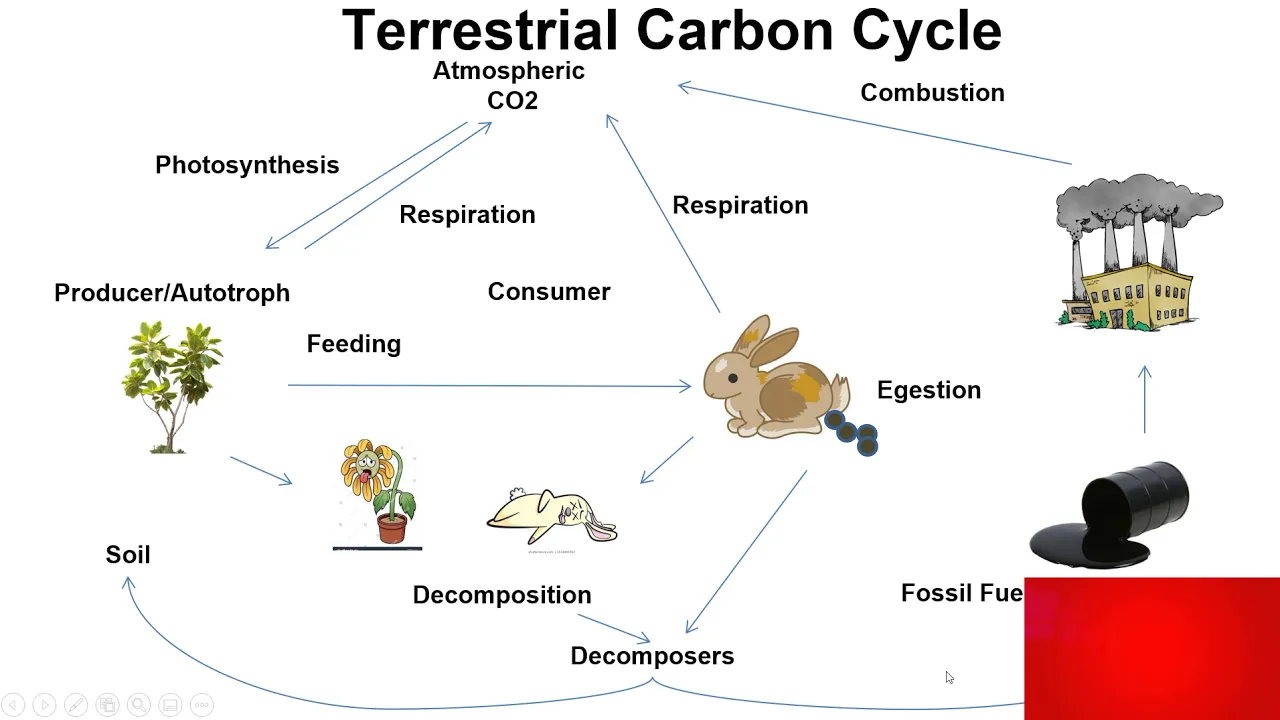
The terrestrial carbon cycle, including how carbon dioxide is captured by plants via photosynthesis and transferred to the soil.
An introductory understanding of soil ecology, specifically the soil food web and the distinction between fungi, bacteria, and plant roots.
The 'Wood Wide Web' phenomenon: how mycorrhizal networks facilitate inter-plant communication, warning signals, and resource sharing.
Applications in regenerative agriculture and forestry, such as using mycorrhizal inoculants to restore degraded lands and improve crop yields naturally.
Advanced biogeochemistry, specifically studying glomalin and other fungal proteins that bind soil particles and stabilize carbon for centuries.
The impact of anthropogenic stressors, such as chemical fertilizers, fungicides, and tilling, on the health of native mycorrhizal communities.
19.7K views260likes1:21:49Original Release: 2018-04-18
[Music] cafe scientifique is a monthly series of expert-led discussions on science and culture presented by the Bell Museum of Natural History for more information about the Bell Museum or to find out about upcoming cafe scientifique programs visit Bell Museum org or find us on Facebook and Twitter how's everybody doing tonight excellent um well as I assume you know we're gathered here tonight for a cafe called invisible architects and it will be a scintillating talk reviewing the weird underground world of micro Raizel fungi and maybe we will finally settle the debate whether it is fungi or fungi it depends on where you're from or fun G ok all right so our trivia quiz tonight will primarily be a shrooming affair number one true or false question true or false mushrooms are a member of the plant kingdom yes that is not true that is false correct correct absolutely yes all right well just a just a follow-up which kingdom are mushrooms a member of that is correct they are the fungi kingdom they have their own Kingdom all right so now they've established that the vegetative nutrient transferring part collect of a fungus rather collectively is known as one mycelium to hyphae high fee 3 stock or for spores yes all right this is kind of a trick question collectively No so this is the vegetative nutrient transferring part yes Alexis yes that is well know you're on the right track okay I'm just gonna say them out loud in all right mycelium yes I think that's what you meant so let's call that good all right so the largest fungal colony that we know of grows in the blue mountains of Oregon and it's definitely one of if not the largest organism on earth although we were trying to figure out what their measure for largest organism on earth was whether it was like biomass or distance covered or whatever but we're going to talk about surface area here so how many average-sized suburban Lots which you can kind of picture right would you need to purchase in order to accommodate this gigantic fungus does that make sense okay would you have to buy 20 average suburban Lots 200 average suburban Lots 2,200 or average suburban lots or 6200 average suburban lots to accommodate to this fungus in Oregon yes that is correct excellent so 6,200 Lots is correct and we were calculating that at each lot being about 0.35 acres per lot because that's what the Google said and then just to relate that to something we can maybe picture that's about one-third of the suburban Lots in Woodbury so if you took one-third of Woodbury is residential then you would have the fungus Oh though the neighborhood probably wouldn't like that if you called it the fungus all right it's a cultist it's a lovely cul-de-sac all right let's see number four which of the following is not a real name for a mushroom I think we've done this one a few of maybe a couple years ago when Kath Sweeney was here but it's just a fun one so these are different different challenge names though alright not a real name of a fungus the snake tongue truffle club the bearded filled Cup the star bellied snitch or the pink disco right in the middle there you're going with number three the star bellied snitch that is correct I was hoping I'd just throw you off because it seemed like no way all right number five which of the following is not a factual way to identify the difference between a real delicious morel mushroom or a false deadly morel mushroom okay so three of these ways are ways that can hopefully help you make that identification and one of these ways is not a way to tell the difference and all of these ways should not be relied upon as the only ways in which you try to make that distinction between deadly mushrooms and edible mushrooms so please look that up before you eat anything that you pick all right so true morels have a cap covered in pits and ridges while false morels look more wavy and lobed alright number two the cap of a false morel opens at dawn and closes at dusk while the cap of the true morale stays open all the time three the true morel is attached to the stem the cap rather is attached to the stem the false morel has a cap that hangs freely off the stem and for the inside stem of a true morel is hollow well the inside of the false false morel is filled with fibrous fibers or chunks of tissue yes number three that is actually a correct true distinction between the true and false morale okay so that rules out one so we're down to pitted caps versus lobed caps yes number two the cap of the fake Morel opens and closes with dusk and dawn that is correct yes so yes no such thing as the opening at dusk and dawn as far as a false morel is concerned which of the following is not a weird property that a real mushroom hash okay so I'm going to say three weird properties that are actual real mushroom properties and one that is not a real mushroom property okay all right number one the young fruiting bodies of the inedible Hydell impecca fungi bleed a red pigment containing anticoagulant properties again inedible don't eat that one okay be the edible fruiting body of the corporate core print is comatose dissolves itself within hours of depositing its spores or after being picked dissolves itself three the germ of the parasitic Kazuto Pentagon Pentagon toga na Pentagon uh twirls through the air sniffing volatile chemicals released by oh let me take that back I apologize no that's okay the drivel twirls through the air sniffing volatile chemicals released by neighboring plants in order to find a suitable host inserts its nozzles into that host and siphons off vital nutrients and for the spores of the Cal baristas sub sculptor form a mass called AG labor in the center of a stomach like fruit body and escape in response the impacts of falling raindrops so we've got bloody blood bleeding mushrooms with anticoagulant properties we've got dissolving mushrooms that dissolve after they fruit or after they deposit their spores we've got a parasitic mushroom that smells out its host and then sticks its nozzles into it and we have the one that doesn't have that collects its spores in its in stomach like Center and then kind of spits them out when the rain hits it yes number three is the parasitic mushroom and you're saying that is not a mushroom you are correct that is not describing a mushroom that is describing a plant in the Amazon all right what is the biggest source of greenhouse gas in the United States a farming logging and manufacturing B heating and cooling buildings C producing electricity or D using transportation yes a farming logging manufacturing is not the biggest producer biggest source of greenhouse gas so we're yes was my yes and no it is not actually heating we have heating and cooling buildings or producing electricity it is not heating and cooling of buildings producing electricity is actually and this is according to the Department of Energy website finally which state has the highest energy related carbon dioxide emissions per capita so carbon dioxide emissions per capita energy related Wyoming North Dakota Florida or California it's not North Dakota that was also my guess yes it is why oming very good Wyoming is the second largest energy producing state after North Dakota I believe and it is but it has the least population and so it works out to be the highest producer per capita all right I'm gonna introduce our host our ball I guess I'm the host I'll introduce our guest tonight tonight's guest is dr. Jeremiah Henning his research has taken him from tropical rainforests and mountaintops to the Arctic tundra permafrost and tall grass prairies of the Midwest all in pursuit of understanding biodiversity and how contemporary global change is reshaping it curiously enough Invisibles soil-dwelling organisms called Mike - Jai may hold the key I didn't have to spell at that time - how ecosystems will respond to a changing climate dr. Henning who likes to be called Jeremiah is a post doctoral associate in the Department of ecology evolution and behavior at the University of Minnesota he recently relocated back to the Midwest after completing his PhD at the University of Tennessee and he continues his work in the tall grass prairies near o Claire Wisconsin and I'm pretty sure to be a great talk because there's already one empty beer and another full one all lined up on the stool so let's give a big round of applause for chamber Jeremiah Henning all right good all right well I just want to start out by by first thanking Leah for such a great introduction and thank you for organizing such a cool event and thanks for inviting me - to come and speak for it you kind of reminded me though that now I guess I've spent most of my adult life over over I guess 1213 years now thinking about this weird group of fungi that lives somewhere between kind of the plant root and kind of the soil and they're they kind of live kind of cryptically kind of very hard - very hard to see right and if you guys are anything like my parents or my family you're probably thinking why the hell would you spend your life thinking about these types of fungi and and hopefully through my talk you'll you'll you'll discover why I spend a lot of my time thing about these fungi just a quick show hands have has anyone ever heard of mycorrhizal fungi before coming in the door whoa that's that's fantastic that's that's like ten more people than I thought I thought it was gonna be zero so then I guess I don't work have to work as hard tonight so you know first I guess for the rest of you I'll first introduce what the hell mycorrhizal fungi are why they're important and how and then hopefully how they may kind of mediate or mitigate some of the the effects that ecosystems are gonna see with climate change before I really get started I need to defense them to save them thank yous to a lot of folks that have contributed to the work that I'm gonna present tonight science is not a single endeavor but it's you know it's it's done through heavy collaboration and a whole a whole team of really great folks and obviously I have to think a lot of really great funding sources and so there's been a lot of a lot of places that have given me money to study these weird weird fungi and so very thankful for them that they've made this work possible and so this is this is a pretty characteristic kind of landscape you might see around just outside of the Twin Cities right so this is a kind of picturesque tall grass prairie ecosystem and when I look at this ecosystem I see a lot of things that make it really really special right so first off we know that the tall grass prairie ecosystem hosts a huge amount of plant biodiversity right so if you go out into a prairie in mid-summer you can see tons and tons of different plant species and then associate with all those different plant species you see a tremendous amount of insects and different animals that are living within those those diverse plant communities but I guess to me what what really makes these these tall grass prairie ecosystems really really special is the fact that they are some really beautiful areas that store just a ton of carbon right and so maybe that's not what you think about when you see a tall grass prairie is their ability to store carbon but you know carbon storages is a it was a really important component right so if you you see these kind of tall grass prairie plant species you can see them kind of growing up one to two it's three feet tall right maybe maybe some plant species get about four or five feet tall but below ground these plants penetrate six to ten feet below the soil surface right so in the soil these these plants are putting a tremendous amount of carbon and and you can see that carbon right so in areas now in that were once tall grass prairie are now turned into agriculture right so you can see though in areas of heavy agriculture that that really beautiful characteristic kind of black soil and a lot of a lot of farm plants that really has that really nice kind of earthy smell it's black because the amount of carbon that's that's put within those soils right and and most of the tall grass prairie that we have has been converted to agricultural land because it's it's very fertile and very great but I guess more importantly you know the tall grass prairie as in most ecosystems on the face of the earth are under threat right so we know that around the globe that that things are changing right so we know that we're we're converting large swaths of land especially the tall grass prairie into into agricultural space right and in those agricultural spaces where we're converting you know once was grasslands into these kind of flat open kind of dirt spaces that we plant monoculture crops on we dumped excessive amounts of nutrient fertilizers in that space additionally we are burning a ton of fossil fuels which are adding to the amount of carbon dioxide to the atmosphere which are raising global temperatures on average about one one-ish degree over the last hundred years and that's that temperature increases is projected to go anywhere from about two to four degrees on average and that raising temperatures is kind of changing the the precipitation patterns around the globe right so areas that maybe once had these nice swimming areas are now kind of drawing out as the these areas are getting hit with prolonged droughts on the flip side of that there's areas that are getting more kind of excessive extreme rain events that now are kind of turning into these kind of flash flood zones right so around the Twin Cities that's kind of that's kind of what we're seeing right so we're seeing these kind of catastrophic kind of flash flood of rain events due to climate change we also know that we're cutting down a lot of forests as we're kind of converting a lot of these these forest lands from from nice plant communities into agriculture or we're converting them to kind of these urban centers and so a lot of these urban centers where we're kind of losing kind of that plant cover and where we're seeing a lot more just human human activity on the landscape right so kind of all these things are kind of hitting our different ecosystems kind of simultaneously and so it's kind of a kind of a bleak picture and and so I guess this is kind of the doom and gloom portion of my talk but hopefully I'll pull out of that in a second and so organisms on the landscape have a few different ways that they can respond to global change right so thinking of of how these these trees may may respond in this desert they can kind of hang out and cope right they can kind of wait kind of hunker down there their activity and just kind of wait it out until organisms are the the climate comes back to a better a better more kind of conducive habitat for them to grow organisms can move right so we see we're seeing this within the within around the globe too so plants are kind of starting to shift their populations away from the equator and moving towards kind of the poles plants on the sides of mountains are kind of drifting up the side the mountains as their they're trying to kind of track their historic climates on the in on the landscape plants can also adapt and animals can also adapt too so they can change when they're when they're living right so plants are able to maybe flower earlier in the growing season or they're able to grow green out a few weeks earlier or maybe they're able to kind of train change their traits and how they're how they're living on the landscape or or they are not and we know that there's a lot of organisms that are going extinct and so biodiversity is is kind of doing any one of these given things in in most ecosystems which is resulting in a lot of changes in biodiversity it's leading to a lot of changes into the different organisms that are living within ecosystems and we know that the ecosystems themselves are adapting and so I'm gonna take this back to more of a carbon kind of heavy kind of framework from what I presented within what makes what makes the Prairie special and so to think about how ecosystems kind of that larger scale are responding little global change I'm gonna kind of walk you through a little bit of very elementary carbon cycle global carbon cycle right and so this is our eco system we have a whole bunch of plants in that ecosystem and we have a whole bunch of of roots and in soil below and we know that across the the landscape across the globe we have a tremendous amount of carbon being stored within plant biomass right so across the globe if we could weigh every single plant that lives on earth it would weigh something like 550 Giga tons a Giga ton is a billion tons I don't know what that means does that I that makes no I have no like reference point to that and so the next biggest organ the biggest organism I could think of when I was when I was trying to think was an elephant so we know an elephant weighs about seven seven metric tons a little shy of that and so if we put the amount of total plant biomass in terms of of elephants we would have about 81 million elephants worth of plant biomass on the face of the earth at any given time that's a lot elephants maybe maybe if elephants aren't aren't your thing another example anyone know what this building is yeah it's Empire State Building so Empire State Building weighs about three hundred sixty five thousand tons so in in plant biomass that would be about 15 million Empire State building's worth of plant biomass on the landscape that's a it's a crap ton of carbon as as as plant biomass right but we also know that we have a tremendous amount of carbon in the atmosphere right so the atmosphere contains about eight hundred gigatonnes of carbon so that's more more carbon is stored within the atmosphere than we have within plant biomass and we know that that carbon goes from the atmosphere into plant biomass through photosynthesis every single year right so we know that about 120 gigatonnes of carbon moves from the atmosphere into into green leaf tissues but we know at the end of every fall those leaves die they senesce right and they drop back to the landscape and so they are respired by the different bacteria and fungi that live at the soil surface and that is about half of the carbon goes straight back away to that that that atmosphere the other half of of the plant biomass goes below ground and is stored as carbon in into the soil right so that's about that other the other sixty Giga tons and it contributes to the soil carbon pool which is 2300 gigatonnes of carbon so that's a lot more there's a lot more carbon being stored in the soil then there is in both the atmosphere and the in the and that's was stored within the plants combined right so 2,300 gigatonnes of carbon that's 350 350 million elephants are stuffed into the soil or 60 million Empire State building's so a lot more carbon than in the soil then is in the atmosphere or in the in the in plants but we also know that every year that that root and microbial respiration and decomposition breaks down a lot of that carbon and it goes back into that in the sphere so if we kind of take that kind of the net carbon flux that goes from the atmosphere into the plants into the soil and then back again it's about a net effect of zero right so it's about 60 and 60 coming out 120 going in so it's about a zero effect unfortunately we know that you know we've done a lot we do a lot of things in cities right and with so burning fossil fuels our use of cement our land use change adds about nine gigatonnes of carbon back to the atmosphere per year that doesn't seem like a lot 9 Giga tons in relevance to 800 r550 or 2300 is not very much but when you when you think about that into the reference of a Net Zero it's just it's just gaining carbon back to the atmosphere here so we're only seeing that movement back to the atmosphere and this is why people like me and other climate scientists are very terrified by ongoing climate change but I guess you know silver lining kind of thing we know that our rate are the rise we've already seen in global co2 does increase photosynthesis unfortunately we only see about three more gigatons of carbon moving into into into plant tissue through photosynthesis per so we're still at a a six Gigaton deficit to the atmosphere a year and this is why we're seeing such a quick increase in in the co2 within our atmosphere it's because of that addition that small addition is has pretty big effects long term and and I guess what keeps me up at night and a lot of climate scientists probably also is that the the movement from plants to the carbon are to the soil and then the soil back out to the atmosphere in a warmer kind of precipitation changed regime is really unknown we really don't know how these feedbacks are going to be affected by a warmer climate or a climate with more water and so these unknowns are kind of scary if we start kind of ramping this up we could see a an acceleration of the co2 that's being contributed back to that in the sphere okay so now that everyone's in a pretty dark place I'm gonna try to bring us back out because what if what if there were some organisms that existed that could simultaneously maintain plant biodiversity they could increase plant productivity and they could increase the level of storage of carbon in ecosystems that would be pretty rad right we have them our buffs go to mycorrhizal fungi right and so these are the fungi that I spend way too much of my time thinking about and these fungi to kind of give you a little kind of introduction of what they are so these these fungi are part of the phylum glow marrow my coda it's kind of a sister clay to kind of the mushroom the mushroom forming fungi that you may be more familiar with the basidiomycetes they're kind of an ancient sister's sister clay and these fungi don't produce mushrooms but they produce these these very beautiful asexual spores and so this is a kind of a mixed bag of probably 30 40 different fungal species you can see very different sizes colors and kind of shapes within there within their spores but I guess a little more information of what they are and so these fungi live in the roots of almost every single land plant right so 85% of all plant species contain these fungi and so basically anything or basis will have amf in their roots and and most tree about half a trees have amf in their roots and they live between just I kind of let the cat out of the bag on that one they live halfway between plant roots and in the soil and so I kind of have this cartoon here so you can see fungi kind of setting up shop within the plant root here and within between the space between the the plant epidermis and the vascular tissue which runs in the middle and then they they leave the root and they kind of live out in soil space once they're in the soil space these fungi are really really efficient at graining nitrogen and phosphorus and they translocate that that phosphorus and nitrogen back to the plant and in return these fungi receive a ton of sugar from the plant right so plants are paying these fungi for the nitrogen and phosphorus that they provide in return plants are giving sugar so plants are giving about some plant species give up about 20% of all the carbon that they fix through photosynthesis straightaway to these fungi so these fungi can be a tremendous carbon sink for the plant but in areas where there's very low nutrients available to them they have to otherwise they can't survive these fungi also are really good at translocating water to a host plant - and in addition to the nutrient End these fungi also protect plants against pathogens they're really great for helping plants just kind of cope with kind of drought stress if things try to eat plants they help kind of plants kind of maintain and kind of live through some of that baddack stress as well and one of the cool things i think about these plant are these fungi is that this is an ancient symbiosis between plants and fungi and so these these fungi have been around and have been associating with plants as long as plants have been living on land and so the original plants that were colonizing land from water environments had these pretty weak kind of primitive root systems that they really couldn't pull nutrients from the soil and without these fungi they won't have been able to kind of survive on land and so these fungi are pretty important you know they're they're life on life of plants wouldn't be wouldn't be possible without them so really they they run they run plants and you know in addition to all the effects that they have for an individual I think what really got me excited about these fungi when I was an undergraduate student was the effects that they have at kind of the ecosystem or at the community kind of larger spatial scales and so when I was an undergrad I read this this really highly influential paper by this Dutch researcher and his team of researchers Marcel Vander Heiden and what they were interested in is learning I think she loved well the number of total fungi within the ecosystem so they added the they built these systems with a varying number of fungal species from so from zero to one two four eight up to up to 16 fungal species and then in these in these ecosystems they seeded plants and to measure how much plant biodiversity that these different fungi were able to support right so they were looking for the relationship between the amount of fungi in the ecosystem and the level of plant diversity that they could observe and they found this really highly positive relationship between the number of fungi and plant diversity so more fungi led to more plants additionally they were also interested in knowing how the number of fungi in the system kind of helped the total amount of plant biomass or plant productivity in that ecosystem right so if we can maximize plant productivity we could see more kind of more carbon being pulled into that that green that green box and when they looked at that relationship they found a very similar positive relationship between the number of fungi and the amount of plant productivity in that system so again we see this more fungi more plants kind of relationship at the same time that Vanderheiden is group were we're doing their work and within fungal diversity there was another group that was looking at the ability of these fungi to shape so carbon storage and so what they did is they measured this special fungal protein called glomalin in the soil and so you could think of this as more fungi are gonna produce more of this protein in general and then they were looked at the stability of carbon our soil aggregates right so the more kind of sticky kind of clustered the the so carbon aggregates are are so aggregates were the more kind of kind of the better structure your soil has right and so they also found this positive relationship so more more fungi in the system led to more stability of soil aggregates so we had this relationship more fungi more carbon right and so this kind of kicked into this into high gear this kind of quick literature of people investigating EMF and and really pointed to the the critical role of amf have in the maintenance of plant diversity plant productivity and the stabilization of soil carbon and so this kind of leads me to the kind of the question of the night do EMF kind of mediate plant biodiversity and ecosystem level responses to global change and I'm gonna attack this in in two different two different pieces right so first I'm gonna kinda concentrate on this ability of AMF to mediate plant biodiversity responses to global change drivers and then I'm going to kind of come at it from a second view and thinking about how AMF may mediate ecosystem level responses to global change and so for this first question I'm gonna kind of concentrate on that the ability of AMF to kind of mediate the diversity productivity in the face of global change drivers one very important global change driver that I worked on and is a global change driver in this area is nitrogen right and so this this map is a map of nitrogen deposition across the globe in the year 2000 and so we can see our nice little spot here in the Midwest we're in the we're in the high zone right so we are dumping a ton of nitrogen into our ecosystems right most of this is coming from what do you think manure yeah so it's agriculture right and you can see in areas almost every area of the world right so Europe is dumping a ton nitrogen Asia Central Africa and huge chunks of of South America too and so this is a pretty common pretty common thing anywhere that there's a lot of agriculture that we're seeing a lot of nitrogen being deposited and so when I started thinking about that relationship that that Vanderheiden found he found this very positive relationship between diversity and productivity with the amount of fungi in the system and so I immediately started thinking about you know opposite both ends of this spectrum and so you know at areas of of low fungal diversity in areas of high fungal diversity what do we see when we start adding nitrogen into these ecosystems and so this is kind of the way I the question I kind of tested right and so to do this I went to this i reconstructed this prairie near Eau Claire actually in which we we seated in very a different plant species right so we want we're interested in also kind of accounting for some of the plant biodiversity differences right and so we went from these very simple kind of kind of plant systems where we only had six different plant species all the way to these more complex systems with with 30 plant species and so each of these nine seeding treatments was replicated five times for 45 total plots each of these plots was then split and then in half of those plots I added nitrogen to kind of knock out the amf community in those plots right so then we could and then on the other half of the plots I overlaid a nitrogen in addition so then it looked something like that so then I could do comparisons to look at how a MF mediated nitrogen response of the plant community but I can comparing this this non-fun decided nitrogen to the control and these the fungicide with nitrogen to the fungicide without nitrogen right does that make sense all right no yeah yeah a4 okay so that's basically most green things that you can think of that are not grasses yeah yeah what's a fungicide so that's a that's a chemical yeah that's a great question so that's a chemical that just kills fungi yeah so we know it's not nitrogen so we yeah we overlaid nitrogen with with a fungicide treatment so we just wanted to knock out all the fungi in that ecosystem and we wanted to see how that the the presence of fungi or the absence of fungi mediated plant responses to nitrogen yeah yes they are absolutely yes yeah so they're mostly used as foliar on the leaves yeah yes it does but there's a lot more things that that disrupt the mycorrhizal in in agricultural systems so dumping and nitrogen hurts but plowing every year disrupts the the fungal kind of the structure of the fungi in the soil and so the fungicides hurt are really hurt but the the just the yearly tilling that we do in systems knock out these fungi unfortunately all right so so we then we had these comparisons and so then I just it was allowed me to ask this question do a MF buffer plant biodiversity in response to nitrogen right and so I'm gonna show a bunch of figures that look like the oh yeah one more question we used just common the common man I'm totally blanking on the name ammonium nitrate fertilizers so I'm gonna show a bunch of figures that look like this right so where we see so this is always gonna be a comparison against the control and so it's just basically subtracting the the control from the the community with nitrogen added right so it's just could be a difference and then I'm gonna have AM F present or AMF pres absent so the zero line would be that biodiversity was the same in in nitrogen or non nitrogen added plots anything above that line is that we gain plant species when we add nitrogen anything below that white line is gonna be we're losing plant species when we add nitrogen into that ecosystem alright so when we have AM F present and we douse these these plant communities with nitrogen we lose on average about three plant species on average and this is this is pretty common we know that this happens this is kind of a long history of of kind of been fine found in in kind of the agricultural literature when you add nitrogen you lose plant species you lose play diversity it's so nitrogen edition cause it causes the loss of biodiversity but when we knock out AMF and we measure plant responds to to nitrogen edition we actually find that we lose more biodiversity when we remove these fungi and so it doesn't look like much it's this difference between three and four species right and so we're only losing one more species but I should mention that the overall species number in these plots although we seated up to 30 species in these plots that most of we had were about 8 to 15 species on average in each of these plots and so 3 to 4 if we're losing 3 to 4 species in these plots that could be almost half of the biodiversity in these plots so I'm kind of sad but a math kind of help buffer that maybe just a little bit but they they're buffering it a little bit so maybe amf dampen biodiversity losses in response to nitrogen and so next I was interested in thinking about the biodiversity or the productivity response to to nitrogen again we're gonna have a very similar looking figure where we now we have just change in plant productivity on on our y-axis here and again anything above this this zero is gonna be productivity gain with nitrogen or we're gonna have productivity loss with nitrogen and so when we when we have AM F present we actually see no change in plant productivity in that ecosystem that's good we're maintaining the amount of plant biomass that's in that system however when we knock out AM F we actually see a decline in plant productivity in that ecosystem so removing AM F in that system are removing some of that biodiversity of AM F has pretty has pretty bad in effects on plant productivity and time to kind of relativize that that productivity reduction is about 50% so we're losing about half of the my productivity in that system and so amf are able to really buffer plant productivity in response to to nitrogen addition okay to kind of wrap that that first piece up fungi control plants which is pretty obvious but kind of a little more deeper that fungal biodiversity buffers plant diversity maybe a little bit but really seems to buffer plant plant productivity responses to two nitrogen addition here yeah absolutely what's that most people aren't dumping nitrogen in most people are using it in agricultural settings and so when you're dumping Nitra if you knock out a MF and you're growing crop plants crop plants are really responsive and increase their productivity with nitrogen addition and so this is these are kind of these natural systems where they're probably only really seeing the runoff right so this these are these natural areas that may be really affected in areas next to heavy agricultural fields which which are the the few remnant prairies that exist on the landscape yeah I don't I I haven't done any herbicides yeah alright so now to kind of move into that that second question here how do you AMF kind of mediate the ecosystem response to global change and so because I really like nitrogen I'm gonna I'm gonna stick with with nitrogen as my global change driver again and I just wanna to flip up that map again nitrogen is a big problem globally right so anywhere any basic almost every continent has a nitrogen deposition problem but we also are seeing a lot of biodiversity responses right so I showed in that first part that when we add nitrogen we see a lot of biodiversity loss and so now for this the second piece I want to kind of tease apart this the effects of nitrogen from the effects of biodiversity loss here and and to kind of get back into the doom and gloom a little bit and thinking about biodiversity losses so this is this is a map of biodiversity loss since the Year 1500 and the colors are a little a little bit skewed here but so blue equals areas that have lost a ton of plant biodiversity so anywhere you see blue the really light the lightest colors of blue can be losses of about 22 to 30 percent of all their plant biodiversity and so you can see you know areas it happens to coincide with areas of heavy agricultural use right so Midwest here most of Europe large swaths of Central Africa have lost a tremendous amount of plant biodiversity if we add all that up on the face of the globe we see that there's a 14% loss of the global biodiversity since 1500 so that's about the time of Industrial Revolution right it's more doom and gloom and so we know that we've lost in a lot of areas we've lost a tremendous amount of of plant biodiversity because of agricultural activity and we Oh moving forward that there's gonna be a lot more kind of doom and gloom and there's gonna be a lot more kind of ecosystem responses to global change so this is a figure that NASA did a few years ago kind of highlighting some of the areas and the ecosystems that they kind of deemed as sensitive interesting to me the areas that are sensitive in to NASA's kind of projection into the future are different from the areas that have been impacted to date because now these are areas that aren't really farmed and so they they have really haven't lost their a lot of biodiversity through agricultural practices yet but they're gonna lose a lot in the face of warming precipitation regimes changes a lot of those other kind of contemporary global change drivers and kind of me the thing that really sticks out to me is the the loss the importance and the the sensitivity of of boreal so really northern and mountain ecosystems and so to kind of to kind of jump ahead and to think about that I'm going to transition from these these tall grass prairies in the Midwest and I'm gonna jump into some of the work I've done in montane meadows around the globe but I'm gonna focus in on some work that I did in Colorado and so kind of a quick little intro into Wow why mountain ecosystems are in peril so we know that that plants are responding to to warmer temperatures right so if we if we have this warming event that happens and so we have this very angry Sun we know that that plants that are existing at the low end of the mountain are moving and they're moving to higher elevations plants that are at those mid elevations are moving higher right all the way up and so the most sensitive species are these these these species at the top of the mountain so they're already in a range that is pretty limited and they're they're they're have a very kind of reduced kind of geographic range and if we keep warming it they're just gonna there gonna run out of space that they can go up they hit the top of the mountain and they really can't exist in in in warmer and warmer temperatures a lot of we're seeing this in a lot of animal communities as well and so to remind you that question do a MF media ecosystem level responses to nitrogen change our nitrogen addition and plant loss and so for this work I'm actually did a couple different nitrogen additions right so I added a I went to this Mount Montaigne ecosystem in Colorado and I started adding organic nitrogen to some plots and then in other plots I added this inorganic addition and so I did these different forms of nitrogen because plants differ in their ability to use different forms of nitrogen some plants are better at at grabbing inorganic forms of nitrogen some plants are able to grab inorganic forms of nitrogen and the fungi themselves also differ in their ability to to to access these different forms of nitrogen in the system and then to to simulate biodiversity losses on the landscape I pulled out my scissors and I went through these ecosystems and I chopped out all the dominant species in the system and so in this system it was this big bunch grass that I just chopped out with the scissors and then she wanted to see what happens when we when we cut out those plants and then in these in each of these plots I measured a whole bunch of response variables from the fungi to the plants and some of the carbon storage in these in these systems but I think as a good lead-in I kind of had to start with a fungi right so I've been talking a lot about fungi and so I have to start on how nitrogen affects fungi right so this was something I ignored in the first part of my talk right so we just dumped fungicide on the plots to to knock out all the fungi in here we were interested in how the biodiversity of fungi and the abundance of fungi in the soil responded to nitrogen themselves and so when we did that we I installed these kind of mesh bags into the soil and so these mesh bags allowed fungal hyphae to grow in from the soil into the bags and then after a year I just come out pull these bags out and measure all the fungal biomass that grew into these bags over the year and it gives me a measure of how much fungal biomass is in in those ecosystems right so this we could kind of scale this up to kind of ecosystem level and so carbon storage as well and so I'm gonna show a quick figure so this is gonna be fungal biomass in the soil on the Y and we're gonna have our different nitrogen here and I found when we dumped tons of nitrogen on the systems it really didn't affect the fungi that were in those systems it was as actually pretty shocking we thought that that nitrogen was going to just knock these fungi out they seemed to be pretty resistant and so they were able to kind of resist the effects of nitrogen in the system but then I wanted to kind of understand what removing all the dominant plant species did in to the amount of fungi living in these soils right so you would think that if you chopped out half of the biomass in each of these plots it would that's the that changes the amount of carbon that is going to these fungi probably would probably have a bet pretty bad effect for the fungi but when we measured the amount of biomass in these removals and not removals we found that it didn't matter there was still the same amount of fungi in these ecosystems and so these amf seem to be resilient to plant removals in this ecosystem and so if maybe if amf are resistant and resilient to nitrogen and dominant removal maybe that could kind of segue into how ecosystems are gonna respond to nitrogen and plant removal and so then we wanted to think about some of these ecosystem level responses and how we measured this was soil carbon a flux so the amount of co2 that was coming from this soil and is being respired back into the atmosphere right so the the pool going from the soil back to that miss fear again and so that's just measured as soil efflux here and we measured it across three different years and in response to nitrogen we really see that nitrogen has no overall effect on the amount of carbon a flux we there's change across growing seasons so 2013 was a significant drought year but 2014 and 2015 they were fine it was as more wet years there was a lot more snowfall in the mountains and so but it didn't really matter whether or not these these these soils had a bunch of nitrogen dumped on them there they were all respiring at about the same level which we kind of anticipated that dumping nitrogen was gonna give more kind of growth to the bacteria and the fungi in that system but so respiration seem to be really resistant to nitrogen in that system and then to kind of think about kind of the functional component of the plant community we were interested in to understand how plant communities kind of recovered from cutting out these dominant plants right and so if we go in and we cut plant species out how are these communities gonna respond right and so how I'm gonna measure this is gonna be this kind of relative change again right and so we're measuring the this so this is kind of a functional thing so we're interested in what we did is we went and measured all the traits of all the plants that lived in each of them of those plots and and that gave us kind of this kind of functional kind of breakdown of what the plant community how it how it kind of works and so we kind of had two different hypotheses so the recovery could just be every plant species that's in those plants are in those plots just kind of grow and everything gets bigger right and so if the dominant species is just really different from all the other plant species in that plot we should see a line that looks like this right so we cut everything out at year zero and then we just see nothing really happening all the plants that are there just kind of grow and kind of do their thing everything is kind of the same or we could see the the flipside is maybe the dominant plant species had some kind of special characteristic about it that allowed it to be the dominant plant species right and so maybe the species that are most closely kind of resemble that species will be the species that kind of take over right so in in our and our field we cut out grass and so maybe all the other grass species will compensate more so than the other species right so maybe there's something special in this ecosystem that allowed grasses to to grow fast and if we if we see that happening we should see this line that when we cut it the the function changes rapidly but over time so year one to year two year three to year four we see this slow kind of convergence back to the starting place right and so when we when we measured this this kind of the plant recovery in the plant responds we that's exactly what we found so we found that species that were more similar to our big dominant plant kind of slowly recovered back to back to the the original are closer to the original plant community and we knew that the the dominant plant species in this in this field had some kind of they were these big kind of grasses and we saw recovery of all the grasses in this in this in the system and so plants we kind of turned that this the plants communities themselves were resilient to dominant plant species because we had this similar plants kind of filling in the empty gaps of where they were if that makes sense does that make sense it's kind of complex cool all right so to kind of wrap that that ecosystem kind of yeah yeah no we didn't we didn't cut the plants out or pull the plants out we just cut the tops off because so we we applied a little bit of of Roundup to him so they didn't grow back yes yeah we killed the old plant we just then dig it out yeah yeah yeah it would have been pretty catastrophic so especially in these montane systems the plants above-ground are only about this tall but they might go like 10 feet below ground and so to try to get those roots out would be would be impossible so we just we just round up Plus paint brush the little round up after we scissors cut them out very tedious okay so to kind of wrap that that part up so we found that fungal biomass was resistant to nitrogen addition and resilient to plant losses so respiration was resistant to nitrogen addition and at the the kind of the functional kind of plant community response was resilient to to to plant losses and so it seems it's this kind of this really fun kind of nice story in this nice correlation that we see the fungal communities kind of staying placed when we would bombard them with nitrogen and we cut out their host and then we see this really nice recovery of the ecosystem the plants and and the the lack of change within the the respiration and so maybe amf can kind of maybe AMF can kind of buffer entire ecosystems to global change but you know this is this is kind of a preliminary pattern and so there's there's a lot of really nice correlations here but we don't really know if if amf are causing this and so maybe this is kind of a tease but it's kind of a preliminary pattern that we're seeing and so I think follow-ups are gonna be kind of digging a little bit deeper to see if maybe of amf really can or the fungi can really buffer ecosystems against global change we'll see I'll keep you guys updated alright so I'm gonna go back to the doom and gloom picture again right so we know that we're bombarding ecosystems with a tremendous amount of global change drivers right and you you may be kind of wondering that big the big question so will these weird so dwelling fungi save us from all these things it would be nice right it would be really nice but you know to be honest no it's these fungi might be able to help buffer the response and might be able to help us for a little bit right but but we can't just keep doing all these things and just hope that the fungi are gonna save us right and so it's gonna take its gonna take active participation on our part it's gonna take active participation on our part to to bombard our you know council people and our you know our our government officials to kind of get real policies in place I'm not sure if any of you kind of saw this come out last week so this was a paper that was a twenty five year anniversary of the first world noted or the first notice of world scientists warning to humanity and so last week I guess it was a week in a day ago now the second notice came out and I guess what I thought was really interesting about this the second warning is that over fifteen thousand scientists from around the globe from a hundred eighty four different countries have signed on to support this letter or this paper right issuing this this monumental warning to humanity about how we need to change our ways and the we need to step up to the plate and so even even in our country even though this is a a pretty politicized issue globally this isn't this isn't a politicized issue this is everyone else but us is trying to fix this problem and one of the I guess the one of the cool quotes I guess not cool I guess depressing quotes in this was this line so the first issue was put out in 1991 1992 and so since 1992 with the exception of stabilizing the stratospheric ozone layer remember in the late 80s early 90s we had the whole starting developed in the ozone layer so that that kind of fixed there that kind of went away a little bit right so other than that humanity has failed to make sufficient progress in generally solving these foreseen environmental challenges challenges and alarming annually most of them are getting far worse and so ok with that I'm gonna step back off the soapbox because I don't need to say on that all night and I'm gonna kind of wrap up my talk here and so I started out in the tall grass prairies near o'clair and looking at how fungal diversity made me 88 plant diversity responses and plant productivity in response to nitrogen I then kind of transitioned to these kind of Montaigne systems and looked at how amf communities might promote the resistance and resiliency within ecosystems to nitrogen addition and plant biodiversity losses and finally you know this idea that fungi may help for a while but really it's up to us to change change how how things are going in and with that I'm gonna finish up and I'd be happy to take any questions [Applause] [Music] [Applause] [Music] great I am going to come around with the microphone just as a way of sort of moderating the flow of questions all right I guess I should I should lead so I'm not that doom of a gloom person I'm sorry if I came off at that I'm more of an optimist except I guess with climate change well I have to say I have to say this is the first time that I've ever had that that question framed in that way like our fungi going to save us I hope that as I hadn't thought about that before and now we know the answer is no well I mean my hell furlough you know okay I've hand you the mic radio all right so even those mountain in the mountain test plots where you killed off the plants you've defoliated them and roundup them how did the fungi survive that I mean since they have that symbiotic relationship doesn't that hurt the fungi not to have the plants there yeah that's a really great question and that was something I forgot to mention and so I think that fungi are able to so at first that's exactly what we thought was gonna happen is that we cut these plants out we round up them we would see this huge drop in in fungal infection in the soils but in real real reality these fungi are connected to a bunch of different plants and so they form these kind of common networks amongst multiple host plants right and so they're they're kind of almost like a computer network right that you can connect with in an office building or whatever you can connect to multiple different computers through a cord these fungi are the cords so if you cut out one plant they're still able to survive on eight other plant hosts and so through that that kind of common network if it is possible could i interject alfalfa as a plant and the nodes in f alpha that grow under the ground have you studied any of that as a solution to our our problems yeah that's a that's a really great idea because alfalfa also fixed nitrogen they have bacteria in their roots that fix nitrogen and so I think I think there's a lot of really great solutions that how we could start bringing in AMF into agriculture we don't really do it in this country at all right now so after Europe in Asia are a lot more advanced in that but they also go to kind of a no-till right so if if we want to keep these fungi in the system and keep them doing their thing we just don't till it we just cut everything off at the base and then re replant on top of it and so the tilling is is huge and then if we stopped tilling then we can stop dumping nitrogen and other nutrients on the system because these fungi essentially are doing the same job as a lot of the fertilizers and I think one of the major problems in winter is that the when we cut off the the cover crop you know corn or or whatever we don't plant anything on top of that so yeah if you could if you could get alfalfa to grow through the winter I think that'd be really nice but I think the rotation between like alfalfa and other kind of nitrogen-fixing plants help keep keep some of the nutrients in the ecosystem oh it's just curious you said there's trees that coexist more with amf and trees that don't yeah and so I'm curious what are some and why other trees don't yeah so some some some plant are some tree species associated with ecto mycorrhizal fungi and so they're kind of a competing mycorrhizal group and so things like oak and this is really hard to be put on the spot oak and all the pines associate with ecto mycorrhizal fungi and so those are fungi that will produce your classic mushrooms and they don't live inside the plant roots so they they - outside of roots and so am trees there these fungi but they're kind of sugar they're sugar maples black walnuts tulip poplars which I don't think tulip poplars grow this far north yeah some of the softer some of the softer woods associate with a em and so in some trees go both associated with both so Aspen's and Aspen's and cottonwoods can associate with both am and ecto mycorrhizal fungi and so can willows willows can do can associate with both and so they have one or the other there's no there's no tree that associates with nothing yeah is there a way to you know seed the soil with so to speak with these fungi yeah there's there's a few companies that are starting to produce inoculum that you can add to restoration right and so the the the work that i presented here from the stuff oh no Claire it originally started as a restoration experiment so if we can use use em fungi within more of a restoration framework and I've done a few other projects that have used actually translocated fungal and ocula remnant intact prairies into into new restorations and actually improves the growth of plants and it actually helps out a lot but but you have to be really aware of what company that you're buying your fungal propagules from your inoculum because a lot of companies are just kind of selling you garbage unfortunately just because they're easier to propagate and so there's only a handful of companies that are selling you real like beneficial fungi so my question is are there any plants that get by without fungi yeah absolutely and so there's a lot of edges and a lot of aquatic plants don't really associate it with with fungi just the the aquatic environment is pretty rough on on fungi yeah but yeah a lot of sedges in sedges and a lot of aquatics that's the only the only two I can really think of off the top of my head yeah most of them view though so what about farming method surgery different farming methods that would preserve the fungi yeah I think if we went to like a no-till system I think that would be really beneficial so a lot of European farming and a lot of I think Chinese farmers have started adopting more of a no-till the problem is to buy all the new technology that would require that required to go to a no-till system is very different and it's very expensive compared to what you know how farmers you know farmers have equipment that has been passed down and used for a really long time and so forcing farmers that are already kind of scraping by to buy all new equipment in an infrastructure is is really tough but a lot of the no-till systems they're they're expensive up front but they're a few pieces equipment that all kind of hooked together they've actually pushed that technology it's really great and then I think just keeping more cover crops on on systems are gonna be really beneficial too so one of the things that also hurts fungi is if they have no host for eight months of the year and they only have corn growing on them for about two months and then they're its slashed again and so that other ten months of the year nine months of the year they really have nothing to associate with and so it's also really bad and so if we if we do more crop rotations quickly I think that also will help out a lot um can I ask you just a little bit if you know about the technology new technologies for no-till because I guess when I think of no-till I think you know hearkening back to before tractors and plows and as you're talking about new technologies you know shepherding in a no-till era maybe I'm wondering what those look like yeah so the way the few I've seen it's just they're these really cool kind of Cedars that will kind of punch a hole into the soil and simultaneously will drop a seed into the system and so it just kind of looks like a big rolling kind of spiked wheel that just rolls over the top of the soil and just kind of punches holes and drops drop seeds in so now I have to ask about soil compaction yeah is that it's also a huge huge issue with AMF too and so I think some of the yeah that's also a huge problem yeah Stanley changing gears for a second yeah what opinion do you have of GMOs no opinion I think you know there I think what they are you know I think every every crop that we grow is a GMO at some level right so that we've just sped up the the speed of which we have GMOs now so now we can instead of doing it you know harvesting and saving only the seeds that were really beneficial for hundreds of years we can now just go into the the DNA and pinpoint of what we want and we can pick out the traits of that we want in the landscape and so yeah so I think good bad I don't know as it depends it depends on the the technology that's added into them right so some some of the things with you know some of the like though I guess Roundup Ready stuff is what scares me about it about the like Roundup Ready stuff is that now Monsanto control or it's some big corporations kind of control the all the the whole product right so they'll sell you the seed and then they'll sell you the fertilizer and then they'll sell you the roundup and then those but that and you have to buy licenses every year on it so that is what is a little scary to me GMOs and in general I don't really scare me it's just like it's the corporate the corporate scariness yeah yeah yeah absolutely an intellectual property yeah exactly exactly that's right here as a backyard vegetable grower is there something I should take home with me from this yeah I think I think it would be really great because you can you can start trying to incorporate some of these fungi into your garden right says do you do some do you wrote wrote Hill every year or do you just kind of loosen up the soil a little bit yeah so I think I think if you you know you could look into bringing some of these fungi in your system and you probably get better yields in and more growth on a lot of your vegetable plants absolutely it may be less need to fertilize if I'm not sure if you fertilize or do any of that and and your plants will also be able to withstand maybe some some some pathogens and and you know different insects that feed on them so these fungi kind of help plants kind of better tolerate that that kind of stuff back to my question about incorporating maybe some of my sister and I just signed a contract to put some land that's to Congress conservation blue the same thing and you know yeah we were just gonna contract with the companies companies that you know could come up with a different biodiversity and the seed that you have to put on there and but I you know no one ever talked about you know is there any you know would they know what I was talking about if I said hey they should they should if they're doing a lot of grassland restorations they should know about my crazy yeah absolutely okay but they but I contracts probably don't the state or the government probably doesn't require that but I supposed to be extra extra that have them do that oh absolutely yeah yeah I know is are you doing a grassland restoration yeah I don't always whatever the combination we were go you know some extra flower wildflowers yeah yeah totally totally yeah yeah yeah like a tall grass prairie restoration so one of the companies one of the companies I know really well that does some of these kind of fungal kind of culture mixes that they tailor towards your climate and to the growing conditions is a company called Maiko bloom and they're out of I think I think she just moved from Indiana to Lawrence Kansas but she's out of Kansas and she she has a collection of different fungi that she will tailor towards your your area that you're growing in so that's it that's a great question and so so the a lot of the corporate and not fungal inoculum that is out there that's kind of what it is it's just kind of like weedy stuff that they can get to grow really easy and yeah I don't know if we really know enough about invasive fungi yeah that's not an area that many people think about yeah oh yeah it's definitely possible it's absolutely possible and so the the fungi that that Maiko bloom cells actually they're extracted originally from remnant tall grass prairies around the Midwest and so she goes and just collects different fungals communities from those different remnant prairies they're always yeah yeah and they produce asexual spores so there's no there's no sexual reproduction in those in amf so they just they will just grow at the end of the hyphy yeah and they usually get cute in so they usually start producing spores at the end of the growing season so as the as plants are starting to slow down their their photosynthesis and their the amount of carbon that they're paying them they will they kind of have I guess evolved to to know that that the winter is coming and so they'll just kind of spore up and wait for a next spring yeah and so it's it's so these these fungi so fungi are weird yeah yeah they they can't really travel well some some spores will get eaten by mice and voles and other things that live in and earthworms and other things that live in the soil and so they can get moved kind of short distances but they're kind of restricted to the soil and so unless they're getting physically carried out they're not moving and so fungi are a little bit different than what we know about plants and animals and so they're fungal spores especially amf spores will have our poly nucleus have like thousands of different nuclei in an individual spore which is a little different than way we work or our plants work and so they yeah so they have a tremendous amount of fungal diversity in their in their genes but it's just not from sexual reproduction thank you very much Jeremiah for being here we really appreciate all the work that you did to put this presentation together for us thank you and then hope folks that are traveling have safe easy travels we'll see you next month thank you [Music]
Up Next

1:39
Sodium-Potassium Pump | Active Transport & ATPase Explained
@doctorbhanuprakash
611.1K views•2015-04-25

50:12
Bacterial Communication: Quorum Sensing and Biofilm Formation Explained
@JHUAAP
12.6K views•2011-06-28

5:35
Enteric Nervous System Explained: The Gut's Brain | Neurobiology Lecture
@alumniu6029
438 views•2018-09-12

7:08
Bacteriophages: Earth's Deadliest Killers and Future Antibiotics
@kurzgesagt
34.6M views•2018-05-13
Related Study Plans & Knowledge Roadmaps
Structured learning paths in Biology
biology
RNAi: Biogenesis, RISC & Gene Silencing
01Molecular Biology Foundations: DNA to Protein
02Introduction to RNA Interference (RNAi)
03Molecular Biogenesis of miRNA and siRNA
+ 2 more learning modules
10h5 modules
Explore Roadmap
biology
Mycorrhizae: Signaling, Biophysics & Ecology
01Foundations of Mycorrhizal Symbiosis
02Molecular Signaling and Root Colonization
03Biophysics and Bioenergetics of Nutrient Exchange
+ 1 more learning modules
11h4 modules
Explore Roadmap
biology
Circadian Clocks: TTFL, SCN & Periphery
01Foundations of Molecular Biology & Gene Expression
02Introduction to Chronobiology and Actograms
03The Core TTFL: Molecular Architecture of the Clock
+ 3 more learning modules
14h6 modules
Explore Roadmap
biology
Population Genetics: Math, Drift & Selection
01Genetic & Probability Foundations
02The Hardy-Weinberg Principle and Baseline Models
03Mathematical Modeling of Natural Selection
+ 3 more learning modules
18h6 modules
Explore Roadmap