



















![यूरेनियम जैसे धातुओं का जहर काटती मशरूम [Mushrooms are useful in detoxify contaminated soil]](https://i.ytimg.com/vi/4OywMsxLLps/maxresdefault.jpg)

The Soil Food Web is a complex ecosystem of microorganisms—including bacteria, fungi, protozoa, nematodes, and microarthropods—that work together to perform essential soil functions such as nutrient cycling, disease suppression, and organic matter decomposition; healthy soil requires aerobic conditions with balanced populations of these organisms to support plant growth, prevent erosion, sequester carbon, and maintain overall ecosystem health, whereas disturbed soils with poor biology lead to reduced crop yields, increased pest problems, and environmental degradation.
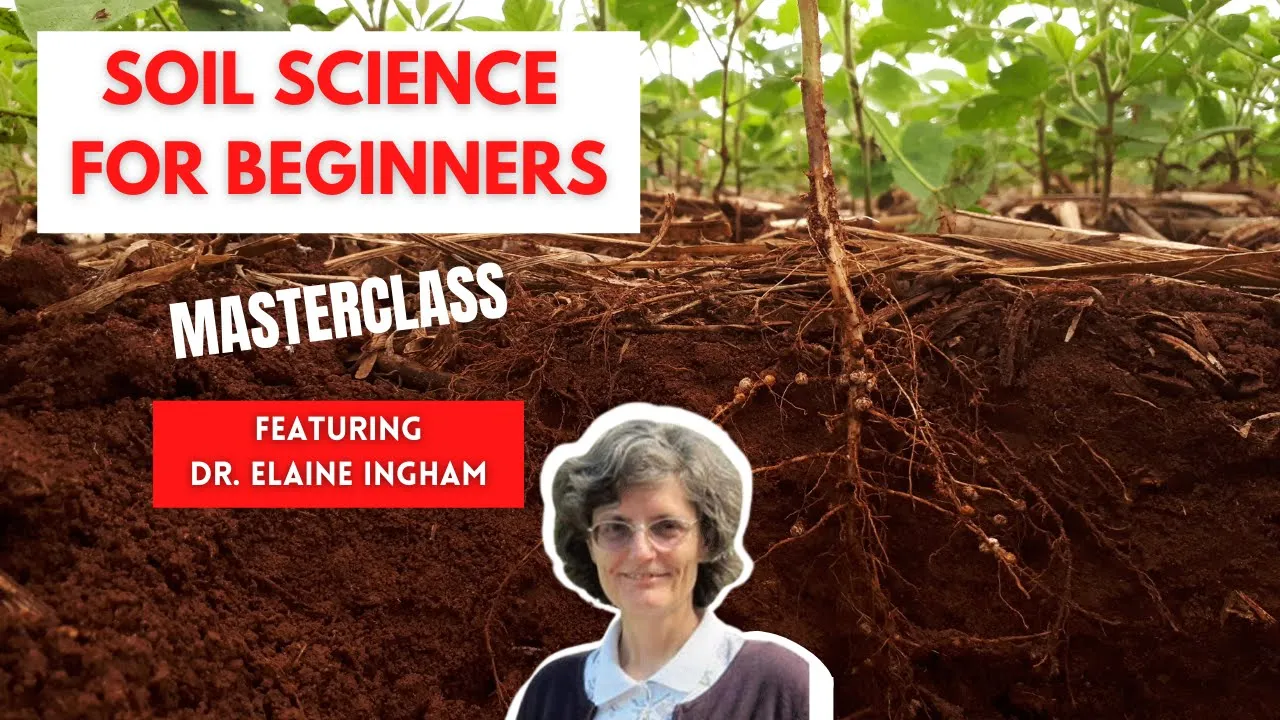
Soil Food Web Explained: Dr. Elaine Ingham on Soil Biology
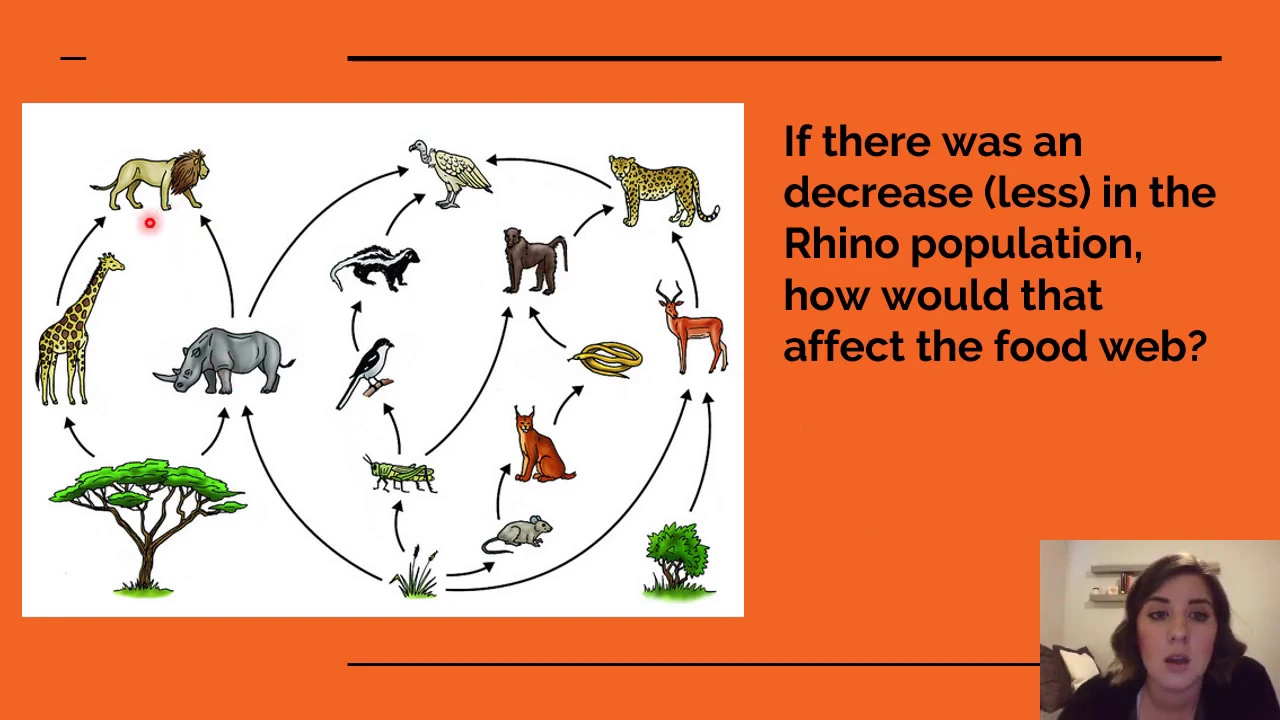
Added:Basic ecological concepts of food webs, including the roles of producers, consumers, and decomposers.
The fundamental physical components of soil, such as sand, silt, clay, and organic matter.
An introductory understanding of micro-organisms, specifically bacteria, fungi, protozoa, and nematodes.
The basics of plant nutrition, particularly how plants historically uptake nitrogen, phosphorus, and potassium.
Principles of Regenerative Agriculture, such as cover cropping, diverse crop rotations, and no-till farming systems.
Advanced composting techniques, including thermal composting and the production of actively aerated compost teas (AACT).
Soil microscopy and biological assays to identify, count, and assess soil food web organism ratios.
Bioremediation and mycorrhizal applications for restoring degraded soils and cleansing chemically contaminated lands.
106.9K views2.6Klikes42:41Original Release: 2022-03-14
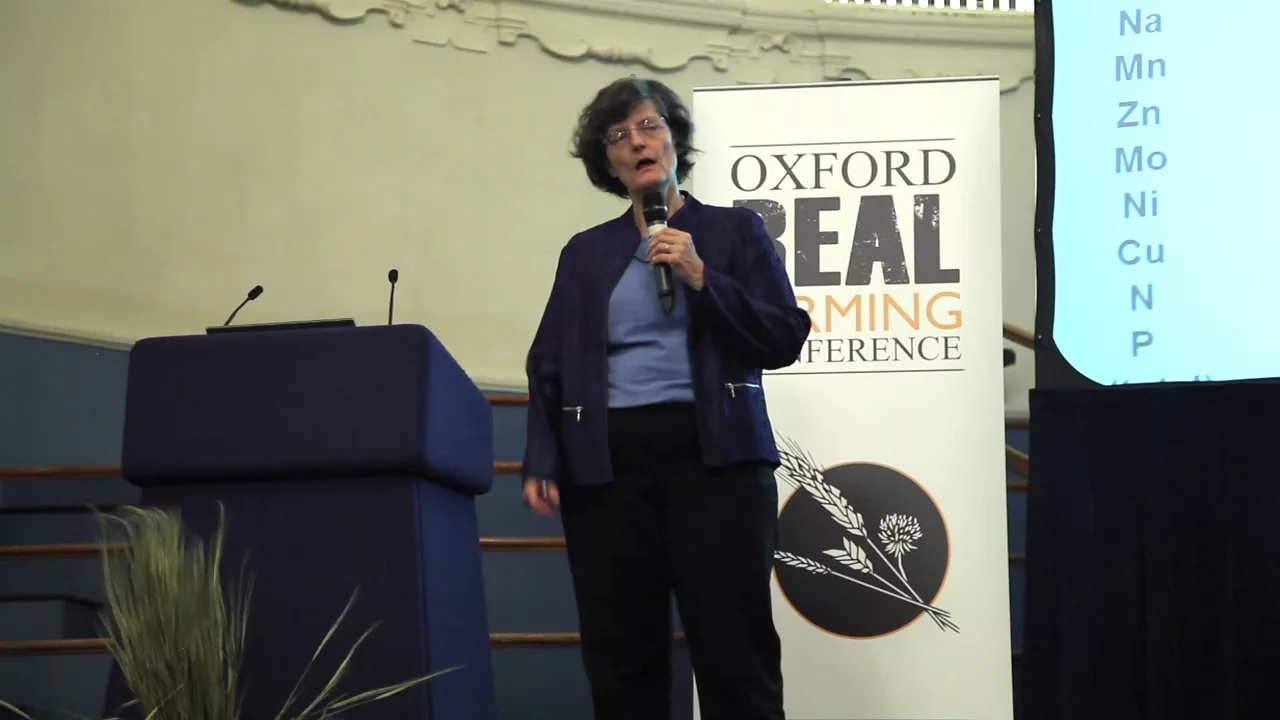
Thank you very much, everyone for attending these meetings.
The Soil Summit.
I'm very happy to be able to bring this program to you, so no further Ado, Let's get going.
I want to talk about the Soil Food Web for a few minutes this morning.
What is it?
What's comprised exactly what it doesn't do those kinds of questions. And I always like to start out with this particular slide because it reminds me of a lot of the information that I need to put out.
This was a picture that was taken by the Lexicon of Hore Sustainability Group out in Pennsylvania.
And I love the fact that they put the Soil Food Web diagram overlaid of me out that field, holding up my hands, kind of saying, like, Yes, Yeah, I can get dirty.
The field always reminds me of what I need to talk about a little bit when you're looking at this sort of field.
One of the things you want to ask yourself is is this soil?
Or is this dirt?
And some people are surprised that those are really, truly two different things.
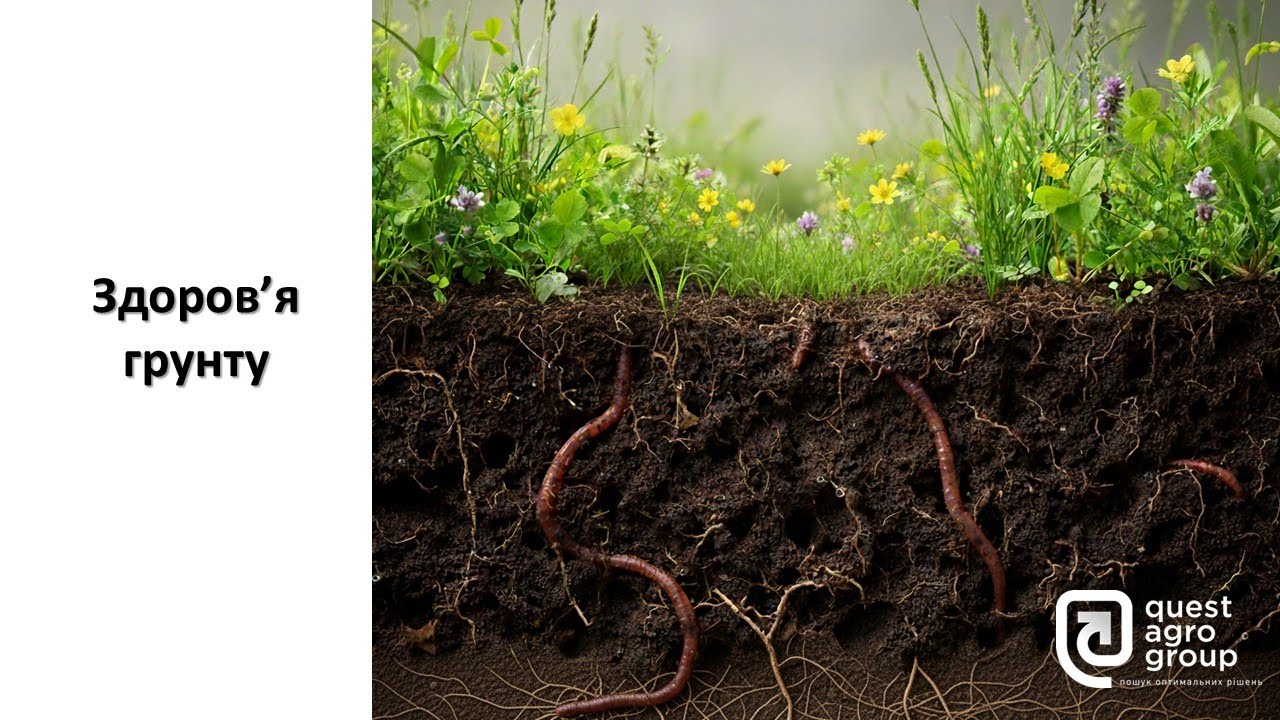
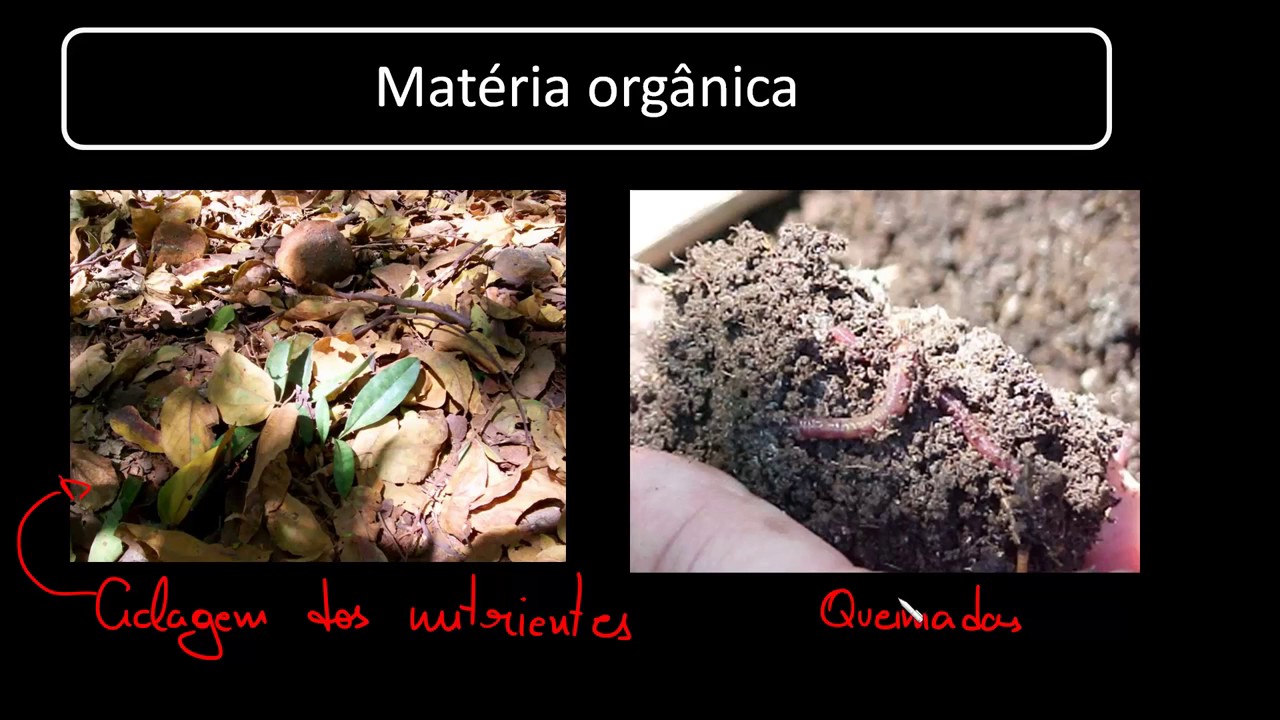
When we're talking about soil, it has to have all of the food web organisms in it, and it needs to have some organic matter as well.
When I look at the color of this field this recently tilled field, I get a little concerned because this is not the rich dark Brown, 70% cocoa chocolate color that I want to see in a good soil.
This light Tan color says to me, We've got some problems here. We don't have the complete food web.
What's lacking, what's missing?
What do we need to get back into the system?
And how are you going to put that back into the system?
Another thing that I look at when I I'm looking at this particular field is all of these big clots.
This dirt has been compacted, and then they came along and tilled it probably to get rid of that compaction because your routes won't go down very far until when they hit that compassion layer at four to 6 inches.
The roots aren't going to go any further.
The roots of terrestrial plants are obligate robes, and when you're in a compacted condition, there's very little oxygen in there because the few microorganisms that were present in that material to begin with utilized all of the oxygen.
So it's gone an aerobic and your roots can't grow into it or your roots will be harmed.
They may well die because of that experience, and certainly they will grow out sideways.
Then instead of down.
If your roots are going out sideways, it's going to be trying to steal nutrients from the plant next to it.
So you're going to have some problems.
Those plants are going to be stressed.
They're not getting the full nutrition that they require.
So tells me quite a bit, just looking at a field to discover those kinds of problems.
So how do we fix those things?
How do we rebuild structure?
How do we get that organic matter back to what it needs to be? So this soil and this field is probably well or significantly lower than the minimum of three that you really need to have in soil in order to grow plants without requiring pesticides or inorganic fertilizers and such.
I like to give a little bit of introduction about who I am.
I am Dr Elaine Ingham.
I have all that lineup of Alphabet soup after my name Tara.
I started out as a soil microbiologist, and I've really turned into a soil ecologist, if you will.
But of course, my focus is on the organisms that live in the soil.
I'll let you read through the list here.
You don't need me to do that for you.
Looking at what the soil food web is, what the soil food web does is really where I want to go today.
So what is the food web?
The processes in soil and that's important to recognize that we're talking about soil.
The processes in soil are done by the microorganisms for the most hard.
All the critically important things that are supposed to happen in soil happen because the biology is present.
So just a reminder, if you want to go to our website and take a look at all of those different things that soil Food web school does, please go enjoy the website.
Remember to go all the way down to the bottom of the pages because there's more interesting information.
The links to that information down at the bottom of the page is not necessarily at the top just to keep you on your toes.
So the soil food web in a picture model, if you will.
This is really a flow of carbon through the food web.
Or you can also think of it as the movement of energy from sunlight through this system or any nutrient.
You could reasonably be following where those nutrients are getting to in the biology that should be present in your ecosystems, in a community, in a watershed.
So we want to understand how biology affects these things.
I remember when I first came to Colorado State University to work on my PhD back in 19 78 1 of the first things that my major Professor had me do was to go to every Professor at Colorado State University that dealt with soil in any way. So to hydroponics people, to horticulturalists, to the crop scientists, to the soil science Department, to the Agronomy Department and talk to those professors about what it is that these organisms do in soil.
Why are they there?
What is their function and purpose?
And I wanted to work on a project where we were going to look at how do you measure fungi and bacteria and protozoa and nematode all in one sample so we could get that information out to the grower as rapidly as possible.
Could we get this information returned to the grower within 20 minutes?
Typically, it took back then it took a good two to 6 weeks to get the information about just these few groups of organisms back to people.
And that's way too long.
Growers need that information right now.
So what do these organisms do in the soil is the question I was asking to all of those professors at Colorado State University. And was I wise to put together a PhD program that focused on those organisms?
Would there be a job for me when I am done with my PhD and that every single person that I talked to there?
They said, That's a bad idea.
There is no job market.
You're not going to have a job when you get done with your four years of the graduate program.
These organisms aren't important in soil.
They don't do anything to help your plant growth.
They're just there.
And I remember at the time thinking of what's wrong with these people, because nature has kept these organisms alive and active on this planet for well, take bacteria.
We know there are in the fossil record.
There are bacteria that we can show that material is for billion years old, and it has bacteria in it from that time.
And so Mother Nature has kept those bacteria around for 4,000,000,000 years. They have to be doing something our Mother Nature would have kind of let them go and they wouldn't be present amongst us.
How about fungi?
3, 5,000,000,000 years that fungi have existed protozoa a little bit shorter time nematodes, as you go through the whole evolutionary system, these organisms have been around for a lot longer than human beings have been around.
And nature doesn't keep things that aren't important that aren't performing a function.
So just because we, as human beings, have not paid attention to what these organisms do or if they're important, doesn't mean we should take such a callous attitude for them.
Because, of course, I went ahead and did my PhD work, starting to show what the role and function of these organisms were in the soil?
Of course, I worked with a huge number of other people.
David Coleman, Pat Reed Burn coal, all sorts of people at Colorado State, as well as the University of Georgia.
And then when I arrived here at Oregon State, continuing to work on these organisms of what they do.
And so understanding what's going on.
So sunlight energy, for example, is fixed through photosynthesis and pulling into carbon dioxide molecules into the plant material. It's going to store the energy from that sunlight in the carbon carbon bond from those two carbons coming from a carbon dioxide, the waste compound, oxygen blown off into the atmosphere for which we are eternally grateful.
So we can breathe and we will return the Co two for those plants to now recycle and use.
Of course, you can't grow plant tissue on carbon to carbon bound materials.
Plants, nothing on this planet grows on carbon chains alone.
So those sugars, which is what you would call them, the short chain or slightly complex sugar compounds being produced above ground, are going to be used as the transporters of the nutrients that the plant has to have in order to grow that we have to have in order to grow.
So these sugars are going to be sent down into the roots in order to pick up nitrogen, foster, sulfur, magnesium, calcium, sodium, potassium, iron, zinc.
All the nutrients that your plant requires.
Is there any nutrient on the periodic table that your plant doesn't need?
Well, some of them we don't need very much of, but almost everything on the chart of elements has to in some concentration is required by your plant.
So all of those nutrients have to be picked up in the soil.
So okay, that sounds pretty good.
Here are the roots.
The sugars are going to be transported down into the soil, and your plants are going to pick up the nitrogen foster sulfur, magnesium, calcium, etc. Well, but where did that nitrogen foster self re, magnesium, calcium, etc. Where did that come from?
It didn't just like OOH magically show up around the root systems of the plants.
Where did it come from?
How did it get here?
And in high enough concentration that your plant can take up what it needs, tie those nutrients onto the sugars.
And now we start calling those amino acids or proteins or lipopolysaccharides or any one of the other gazillion nutrients organic compounds in your plant.
So where do those nutrients come from?
So you have to understand that this plant is going to put out exudates, which are basically sugars and the kind of ex date it is is are meant to wake up specifically wake up specific species of bacteria.
It's going to be food released out into that root system right around the roots so that it will grow those bacteria and those bacteria will get the message that what your plant requires is some iron is some zinc.
Same thing for fungi.
The plant puts out exudates, which are specifically meant for the fungal hype.
And they get that message to make the enzymes to be able to pull the nutrients off of the sand, still clays rocks, pebbles, parent material and start accumulating those nutrients, restoring them in the fungal hypha or in the bacterial bodies.
So we're starting the process of converting those inorganic soluble, not soluble forms of nutrients out in the rocks and pebbles and such into bacterial biomass into an organic form inside the bacteria inside the fungi.
And then they store those nutrients until the plants making certain that's got lots and lots of bacteria around that root system.
And Oh, Yeah, protecting the roots of your plants from diseases and pests and other predators attacking those root systems and destroying the root system.
So very important in protecting your plant.
If we don't have the right biology in the soil, we're not going to be able to protect the plant.
So the protectors, the Castle wall, the Knights in shining way to armor.
Protecting your root system will prevent the disease causing organisms from being able to germinate.
No food, no space, not enough anything for those bad guys to grow, if you will.
So but back to your in fungi.
Well, I haven't really kind of gotten around to explaining to you how it is that we get soluble in organic nutrients around that root system in the form that you plant needs.
How does that happen?
We've got nutrients tied up in the bacteria and fungi.
We're protecting the roots against diseases.
But what's the next step?
Well, you have to have the third trophic level groups of organisms, the predators of the fungi and the predators of the bacteria.
So bacteria just follow the lines to the protozoa.
The two good guy protozoa, the aerobic ones.
And remember, everything down here needs to be aerobic or it's going to be killing your root system, it's going to be harming its ability to take up the nutrients.
So we want the aerobic organisms present and functioning in that soil.
So the amoeba and the flag lets.
But there are bad guys in the protozoa bad guys that we can use. If we're looking at our soil using a microscope, we can see those ciliates.
And if we're starting to get a lot of affiliates in our soil, we can know that things are not good, that the soil isn't really soil.
How many of the bad guys do you have to have until you start calling it what it is dirt.
So we need to have the good guys.
We don't need the bad guys.
How do you Select against the bad guys?
It's all about the conditions in that soil.
You have to have the right conditions to grow the good guys.
What are the conditions that grow the good guys?
It's aerobic conditions.
If you go anaerobic, you're gonna be growing the bad guys.
And that's why we call them bad guys is because they let you know something very bad is starting to happen in your soil, and you need to fix it now.
Well then also, bacteria are eaten by bacteriafeeding.
Nematodes.
Same thing the good guys like at aerobic the bad guys, they kind of want it reduced oxygen conditions.
Fungi are eaten by protozoa, the fungal feeding nematodes.
And I think I said fungal feeding protozoa.
So I'm going to back up.
So then the fungi are eaten by the fungal feeding nematodes as well as the fungal feeding microarthropods.
So when any of these predators eat any of their prey group, the nutrient concentration in bacteria is way higher than any other organism on this planet.
Nothing can beat bacteria for the storage capacity of all the nutrients that your plant is going to need or that you're going to need.
So when these guys eat the bacteria, there's way too much nitrogen, way too much poster suffer magnesium, calcium, etc. And so all of that excess has to be dumped out into the soil in a soluble inorganic form.
That your plan can very easily take up when you think about the form of nitrogen, for example, coming out of the bacteria or the fungi, because the same thing that's happening there, the fungal feeding nematodes, the fungal feeding microarthropods when they eat fungi way too high a concentration for them to stay alive.
And so they are going to poop out those excess nutrients.
And of course, where is that going to be happening?
Right in a in zone?
Because Here's where the highest concentration of bacterium fungi are.
So of course, the predators are going to come into the system, eat the bacterium fungi and release those nutrients in plant available forms.
And so your plant just says, Take it, grabs it, pulls it into its body, ties it up on the sugars, and off they go to do their job of translocating into the different parts of the plant, all the nutrients that that plant requires.
So when we're thinking about nitrogen, for example, the form it's released that is released from the predators eating the prey groups.
The form is NH four Ammonium.
When were in a bacterial dominated soil, the PH of the glue that these bacteria make are going to be alkaline.
So in typically in grasslands that are very productive.
So in the soil where we have a lot of bacteria, we're going to have so much alkaline or high PH glue material being produced that it will cause that soil to be on the alcohol inside.
And alkaline conditions are what Nitro fine bacteria need to take the NH four that is present in high concentrations and convert that into No three nitrate.
So early in succession will talk a lot more about succession, not tomorrow, but the next day.
So we want to have the right amount of nitrate is what you're trying to grow our early successional plans, but later successional plans require the NH four.
So it is the biology in your soils that control the chemistry, not the other way around.
It's the organisms.
Well, and remember who's feeding them.
Those organisms are being fed by the plant.
And so what's the plant that is in the system, it's going to be trying to maintain that ratio of fungal biomass to bacterial biomass, so that plant will be highly productive, produce a lot of offspring.
So do we need then the higher level organisms in this food web? Well, Yeah, we do.
Because if we get too many of these third trophic level organisms, they're going to overeat the bacterium fungi, and all of the nutrient cycling is shut down.
Yeah.
Your plan is going to be hurting bad.
So we've got to have these higher level predators in the system to keep this trophic level at the right level.
Not too many, not too few.
So right at the right level.
So the bacterium fungi will constantly be eaten and released.
Any excess nutrients that don't get taken up by your plant will be taken up by the bacterium fungi that didn't get eaten by their predators.
Do we need the higher level groups?
Well, Yeah, because we don't want this group.
We don't want the fourth trophic level to get really high in numbers.
And overeat all of our third trophic level, which means nutrient cycling would shut down.
And your plants in a world of hurt again.
So we have to have the balance all the way through the system.
Mother Nature is all about balance.
It's very important to understand what's going on in these systems. So when you look at the organisms in the soil food web with the bacteria, we separate the aerobic bacteria, the facultative anaerobes, then the true anaerobic species of bacteria.
If we have aerobic conditions in the soil, if we're growing microorganisms, we want to maintain aerobic conditions.
So this is the set of good guys.
The faculty of Ana robes a huge number, probably the greatest number of our pathogenic or disease causing bacteria occur in this group, the facultative anerope.
They have to make enzymes that allow them to function in aerobic conditions as well as in anaerobic conditions.
So they're having to produce two sets of enzymes and therefore they cannot compete against the truly aerobic organisms that only have to make one set of enzymes in order to function the anaerobic bacteria.
Of course, they need really low levels, less than four parts per million oxygen, whereas aerobic need above six parts per million oxygen.
So we separate these good guys from the bad based on the response to oxygen.
Actinobacteria are found very early in succession.
So we want them there when you're trying to grow the brassica, the coal, the kale crops, the non micro Rizal plants.
Because many not all but many of the Actinobacteria are suppressive.
They will not allow the micro Riza fungal hype to get from the spore.
Once it germinates to the root system of the plant.
The Actinobacteria may suppress the growth of the micro Riza fungi after they have colonized.
Your plant doesn't get the benefit.
So we want the Actinobacteria around at certain times, but certainly not if you're trying to grow a mycorrhiza plant.
Well, different Actinobacteria for different kinds of conditions and places and things like that, too.
So those are all factors that we have to consider.
The filament is fungi.
Our aerobic.
Michael Raizel, fungi.
Our filament is fungi, and they require the aerobic conditions obligately aerobic or their enzymes are not going to function and the organism is going to die.
The yeasts only a few of the yeast are aerobic.
All the rest of them require reduced oxygen conditions.
Oh, my seats have kind of been their place in the taxonomy.
Organisms has kind of been changing over the last 10, 15 years. It's not really clear where.
Oh, my seats are really going to end up.
Are they going to be a whole new Kingdom?
They're not even going to be fungi anymore.
Well, but they look exactly like fungi.
They behave much like fungi.
They have the same kinds of spores.
And well, so for me, they're fungi.
And sometimes you've got to differentiate between the splitters and the Lumpers.
Splitters wanted give everything its own Kingdom based on morphology and function, whereas I tend to be a Lumper where, Hey, if they all list the same, if they all look like a duck, they smell like a duck.
They quack like a duck.
They're a duck.
So that's my definition of Omi seats.
They tend to be very narrow diameter in soil.
Now, take those hype of my seeds and put them on a petri dish with no competition and massive concentrations of food.
And those Amy seeds become couch potatoes, big fat, Blobby kind of hype.
They don't look at all like a fungal organism.
Once you put them into play count.
But in the soil where they don't have massive amounts of food and they're in competition all the time.
Yep.
They're not going to be able to win under aerobic conditions.
And so guess where most of the disease causing fungi are found in these two groups?
A few in the ASCO my seats, for example, in the dude, my seats. Yeah, there's some, but the majority.
So I'm a Lumper put together things that have similar function and similar appearance.
So in the food web, then now we're into those things that eat the bacterium fungi, the flags in the mob, the ciliates are the bad guys.
The nematodes, the good guys, the bacterial feeders, the fungal feeders, the predatory nematodes.
Predatory nematodes eat other nematodes root feeding nematodes.
Of course, the main of growers everywhere.
You don't want root feeding nematodes in your soil.
So how do we identify them?
We teach people how to do these identifications.
We're not going to take you down to the species level.
We're not going to take you to the genus level.
There doesn't seem to be a lot of reason to do that.
So maybe I'm just too wide cited to see what the identifying things to genus and species might have when we're trying to look at general function in the soil, is your plan going to grow or not?
Is a pretty generous question.
So that's what we're looking for is that kind of information?
What's the fungal, the bacterial bar mass ratio, which will help us understand what kind of plant will grow?
What are the constraints?
Of course, microarthropods.
We're in the process of adding these organisms into our soil food web.
Picture.
So when we go back to this picture, you'll notice that we've got one microarthropod that's representing a group of organisms that are their individuals.
The individual species are in the hundreds of thousands, maybe even a million or more.
How many species of bacteria are there?
We don't know, because we haven't even begun to get around to identifying them all.
Every time we do a DNA analysis, there's a whole bunch, maybe 50 or 60 species of something.
But we only have those new sequences for them.
So we don't know where they belong.
We don't know.
Yeah.
So this is a frontier, folks that you're walking into, and a lot of unanswered questions have yet to be answered.
So we're looking at this from a very general point of view.
But who are the shredders?
Who are the comminutors?
The sapsuckers?
So when you think about an Earthworm, they are comminutors.
Earthworms do not digest organic matter.
They are not decomposers.
Nowhere in their genetic material are their DNA for coding for those enzymes that do decomposition, they chop up whatever they're chewing on, improving the surface area, the substrate available for bacteria and fungi to grow on.
So you're got a massive burst of growth because the bacterium punch, I have more food.
It's not the Earth worm.
That's doing that work.
The Earth Wim did the chop chop, chop, broke things down into small bites, which the bacterium fungi now can just have a hay day growing on them.
So I have to understand.
Well, I'm certain there are other things that micro Arti pods do as a community working together with the other organisms that we have not even begun to suspect.
We've got a lot of work left to do it's.
The interactions of these organisms that form the higher level functions are overarching.
Principles of what biology does in the soil are all based on the interactions of these organisms.
If you don't have a fungi, you're going to miss a whole bunch of the overarching beneficial principles of what goes on in soil.
So the benefits of organisms microorganisms, they are the ones doing all the work.
And we've just talked about most of these nutrient cycling.
We've talked about that retaining nutrients.
A bacterium, fungi suppressing disease.
Yep, the whole food web working together.
We'll do that suppressing weeds.
What we see.
And part of the reason I relate a little bit of this information about nitrate an ammonium.
As you have really high levels of bacteria, all turning all the NH four into No three, you are selecting four weeds.
There's a recent set of paper, scientific papers from Japan.
I believe it's the University of Tokyo.
No Katani is the person who is leading the charge on writing those papers has showed that the more nitrate you have in the soil, the more weeks you've got as you reduce the amount of nitrate and increase the amount of ammonium, the weeds cannot grow.
They will not be healthy, and your crop is going to win whatever your coop needs to be.
You need to exit from a strictly bacterial dominated soil and turn that back into something with a lot of fungi in it. Just think, though, every time we till, we slice and dice and crush the very organisms that you need to move things back into NH four every time you apply a pesticide and you kill most of the good guys in your soil.
What are you selecting for weeds?
We're doing it to ourselves because we don't understand what we're doing.
Okay, so building so structure.
We have structure.
So water and oxygen and roots and your organisms will be held in an aerobic condition.
And if you have that, there will be no erosion.
You will not have run off no leaching, everything's retained in that soil.
So we stop destroying water quality of everything that's downstream of us.
We have to stop pouring all those nutrients out into the ocean. That's not where we need those nutrients.
We need those nutrients up here on the land.
Stop letting them wash downstream.
We're just crazy to be doing this when we sequester carbon, putting all that elevated Co two back into the soil from whence it came.
And we can do that.
Please go watch the animations on the Soil Food Web school website, especially the one about sequestration of carbon.
Because we go through the math that talks about all of this, if we could all start composting correctly, has to remain aerobic through the whole composting process.
You've got to have all those nutrients and organisms present in that compost.
So go through those animations and you can see the calculations that within six years, if everyone composted, all that elevated Co two in the atmosphere would be back down into the soil, and climate change would go away.
Well, do we have the will to do that?
Who are we battling?
Who are we fighting?
Yeah.
Follow the money.
And you'll realize why what we've been working on haven't been paid attention to.
So now that we're moving in that direction where most people have heard about this, people are starting to understand we need to be the rock that explains to people why soil life is important.
How is it that we can get all that carbon sequester back in the soil in such a short period of time?
Maybe we should double the estimate.
Maybe we should be saying, well, you know, given that we have to start up this whole industry and we've got to have composting operations all over and a lot of the regs that our governing composting processes should be thrown out the window, the correct one should be implemented.
So lots of work there and decomposing toxins, all those pesticides, all those toxic materials that we've been putting out into the soil for so long, we have to come decompose them.
Well, guess what.
Organisms have been doing that for the last 3.5 billion years.
Fungi.
I have not found a toxic chemical that we cannot decompose.
There is something somewhere out there that will deal with whatever toxic material you want to deal with.
So Let's get that decomposition going.
So we don't have those problems in our fields.
We're not having plans translocate those toxins into the food that our animals or that we, as human beings, are consuming.
So when we think about what we do with the school, we do all the things that I've just been talking about.
We identify the microbes.
Please come and learn how to identify whether you got the good guys or whether you had the bad guys.
We have to measure biomass or numbers of the organisms we need to know about diversity.
Do you have somebody working every second of every day, regardless if it's cold or if it's hot or somewhere in between, whether it's wet or it's dry or someplace in between, or if you've got this kind of toxin in the soil or you've got this kind of food, we need to have massive diversity in our soils.
Where do you find that?
Where do you locate it?
And that's why you need to come and take the Foundation courses.
We want to Select four the desired organisms and against the problem, organisms and I've already given you a big hint.
You have to keep things aerobic.
We teach people methods to enhance the desirable microorganisms in the soil and on your foliage.
Oh, Yeah.
There's the above ground part of the plant and all of the organisms on the above ground.
Part of the plant originally come from the soil.
If you got good biology in your soil, you will have good biology on the above ground part of your plant, and you don't have the diseases.
You don't have the pests.
You don't have all of those problems.
We want to help people.
So we help people learn how to interpret the interaction.
So with one microbe is high and the other one is low.
What does that mean if this is not quite right, but that is, what does that mean?
And so we teach you how to make those interpretations.
We want to enhance the beneficial organisms on the surfaces of food for our animals or for us.
When you take a bite out of a carrot, you should want some of the soil.
You should want some of the organic matter on that carrot, because that's going to be carrying the organisms that you require in your digestive system.
How do we make certain that you are consuming on a daily basis, those organisms that will replenish whatever set of organisms got killed in your digestive system because you ate something with glyphosate on it.
So we've got to get away from the vitamins.
We've got to get away from taking a pill, popping a pill.
You don't retain most of the vitamins or most of the minerals that you get.
If you're popping vitamin pills, you're wasting your money, but you can see it yet another big part of the pharmaceutical world with a lot of money to try to convince people that vitamins and minerals pills are required and that they're worthwhile when in fact, they aren't.
You have to have the organisms in your digestive system in order to be able to deal with what you put into it.
So how do you get those organisms?
You eat them on the food that you're consuming.
So microscopes, we teach you how to use those microscopes.
We are going to show you all kinds of different ways of assessing the biology.
This happens to be the surface of some compost, and you can't even see the surface of the organic material in here because it is so covered with all these organisms.
We've got lots of bacteria in here.
We've got all these strands of fungal hype, and you can see how some of them are really wide.
And some of them are very, very narrow.
And these are yeasts and, Oh, just Heards of different species, different sizes and shapes.
And that's what we want to be seen.
This is a good compost.
When we're making compost, you need to understand the specific recipe that's needed.
You have to make certain the biology is growing.
How do you measure that?
You need your microscope?
This is a soil that's been improved by adding bio complete compost. And look at all the species of bacteria.
Look at all the Airways and passageways for oxygen and water and the roots of your plants to get into these cracks and crevices. Good nutrient cycling.
Take a look at the anaerobic version.
This was in the plot right next door, horribly compacted.
Well, maybe one or 2, but that's it Airways to get oxygen and water and organisms and your roots.
Yeah, you are not growing good plants here.
They're going to be sick, unhappy, unhealthy, and they're going to be diseased.
And you, as a grower, not going to manage.
So we make liquid versions of these organisms.
So typical tea Brewers extractors.
Simple.
We don't want anything inside.
We want an air pump blowing into here.
We want to put the compost in the bag and Merse it in the water. And in 30 minutes, you'll have your extract.
Or in 20, 24 to 48 hours, you'll have the tea where you've actually brewed more organisms.
And then again, a representation of the human digestive system.
If you've got poor sets of microorganisms in the soil, that means you're not going to have good plant growth.
That's not going to be healthy.
You're not going to get the nutrition that you require in conventional agriculture.
We continue to kill, destroy those actual sets of organisms that we need.
So they aren't presented present.
And that's what promotes poor growth of the plant.
Get those organisms back into your soil so you can eat the organisms that you require and get them back into your digestive system and your food.
We'll appreciate it as well as will you, as will your digestive system, because you'll be consuming the organisms, the good organisms on the surface of whatever you eat.
So hopefully, that's exciting beginning to the soil summit.
And I hope that all of you enjoy today's speakers.
Up Next
30:30
Soil Science Masterclass: How to Build Great Soil with Dr. Elaine Ingham
@DiegoFooter
883.7K views•2021-09-13

15:54
Life in Biosphere 2: Sustainable Ecosystems & Human Survival
@TED
334.9K views•2009-06-16
14:30
Microplastics Everywhere: How Plastic Impacts Our Lives
@TEDx
100.9K views•2018-05-08
10:28
Ice Stupa Artificial Glaciers: Solving Ladakh's Water Crisis
@SonamWangchuk66
3.2M views•2015-05-03
Related Study Plans & Knowledge Roadmaps
Structured learning paths in Environmental Science
environmental-science
Ocean Noise: Cetacean Impacts & Mitigation
01Fundamentals of Underwater Acoustics
02Marine Mammal Bioacoustics
03Anthropogenic Noise: Shipping & Seismic Surveying
+ 2 more learning modules
16h5 modules
Explore Roadmap
environmental-science
Road Ecology: Corridors, Overpasses & Fencing
01Foundations of Habitat Fragmentation and Carnivore Ecology
02The Road Barrier: Ecological Impacts of Transport Infrastructure
03Principles of Ecological Corridors and Connectivity Mapping
+ 3 more learning modules
14h6 modules
Explore Roadmap
environmental-science
Ocean Acidification: Kelp Buffering & Shellfish
01Fundamentals of Ocean Chemistry & pH
02Chemical Pathways of Coastal Acidification
03Bivalve Physiology & Calcification Under Stress
+ 2 more learning modules
18h5 modules
Explore Roadmap
environmental-science
Ice Stupas: Glacial Retreat & Water Security
01Foundations of Glaciology & Mountain Hydrology
02Climate Change and Glacial Retreat Dynamics
03The Science of Ice Stupas & Artificial Glaciers
+ 2 more learning modules
14h5 modules
Explore Roadmap