










![Биология поведения человека: Лекция #22. Эмерджентность и сложность [Роберт Сапольски. Стэнфорд]](https://i.ytimg.com/vi_webp/ScKNmdoY2bE/maxresdefault.webp)







Nematic liquid crystals, which possess orientational order unlike isotropic fluids, can be used to control the motion of active particles such as swimming bacteria. Unlike isotropic environments where active particles exhibit chaotic Brownian motion, nematic liquid crystals rectify this motion by creating asymmetric viscous resistance depending on the orientation of the director field relative to particle movement. This allows researchers to design specific propulsion trajectories and even transition between individual and collective motion modes by manipulating the director field through external stimuli like electric fields or geometric patterning. The key insight is that the anisotropic nature of liquid crystals enables unipolar propulsion of active particles without requiring complex multi-component swimmer designs, overcoming limitations imposed by the scallop theorem in isotropic fluids.
Controlling Active Matter with Liquid Crystals
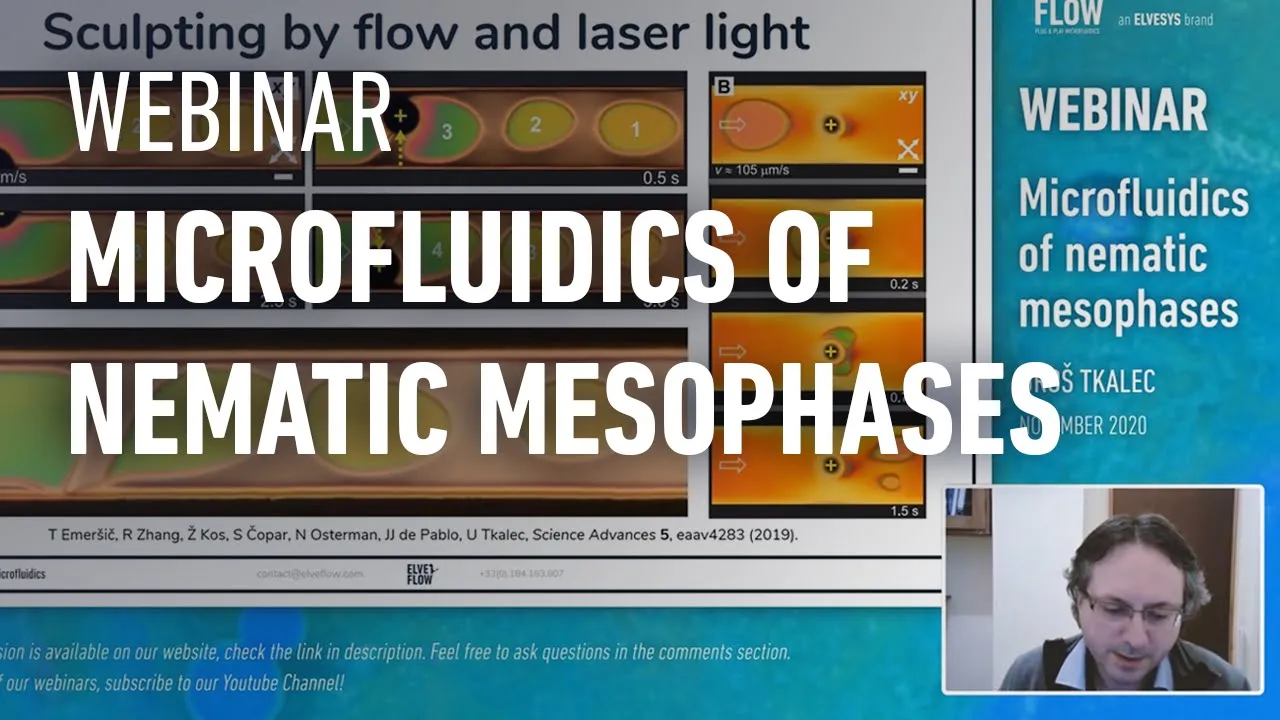
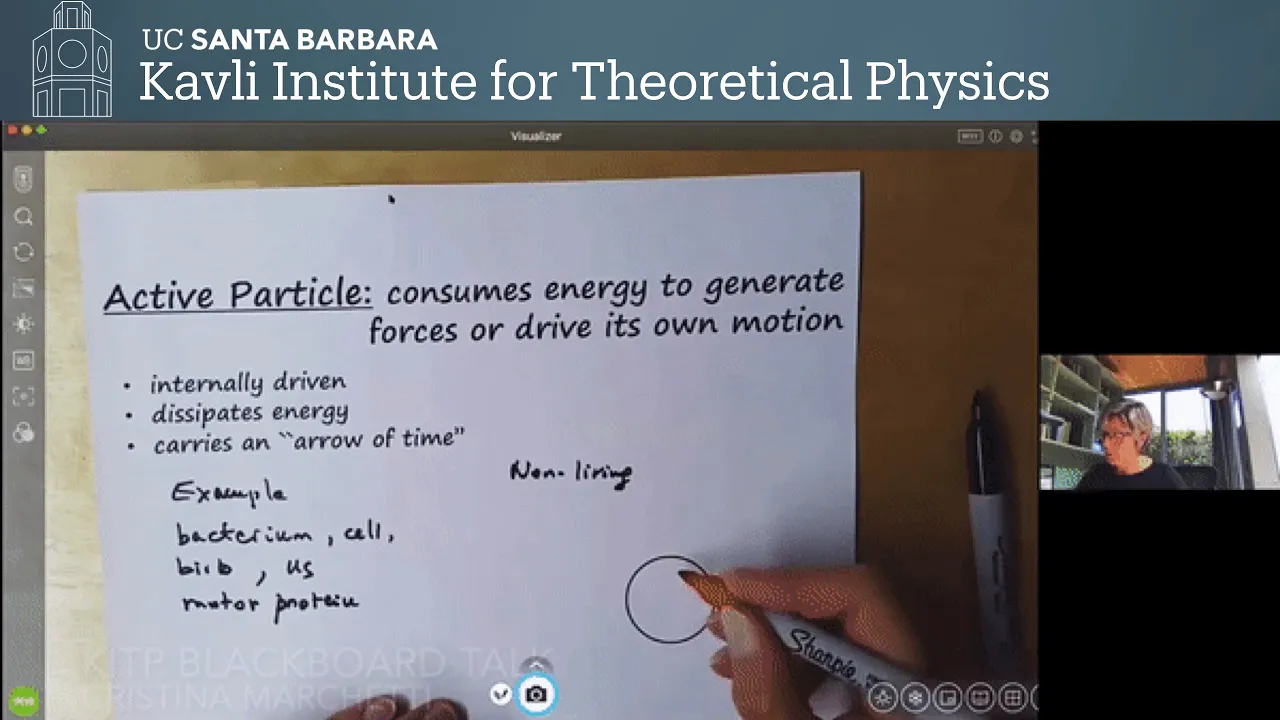
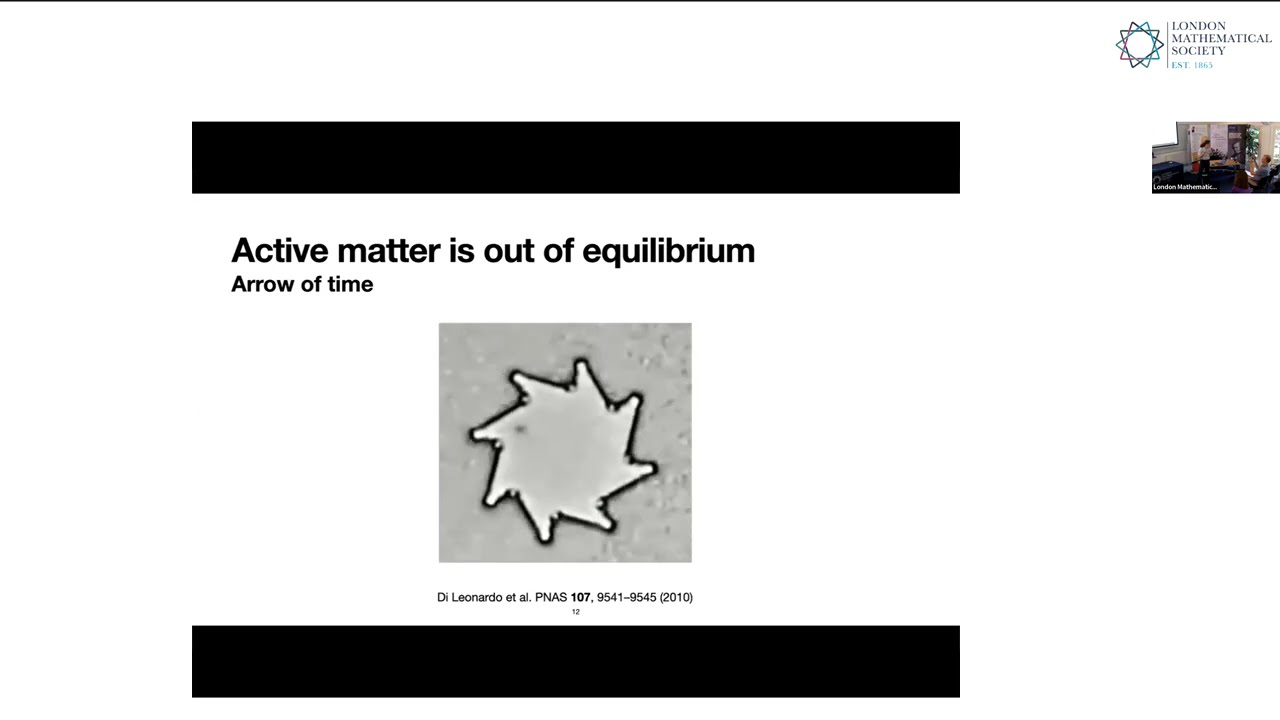
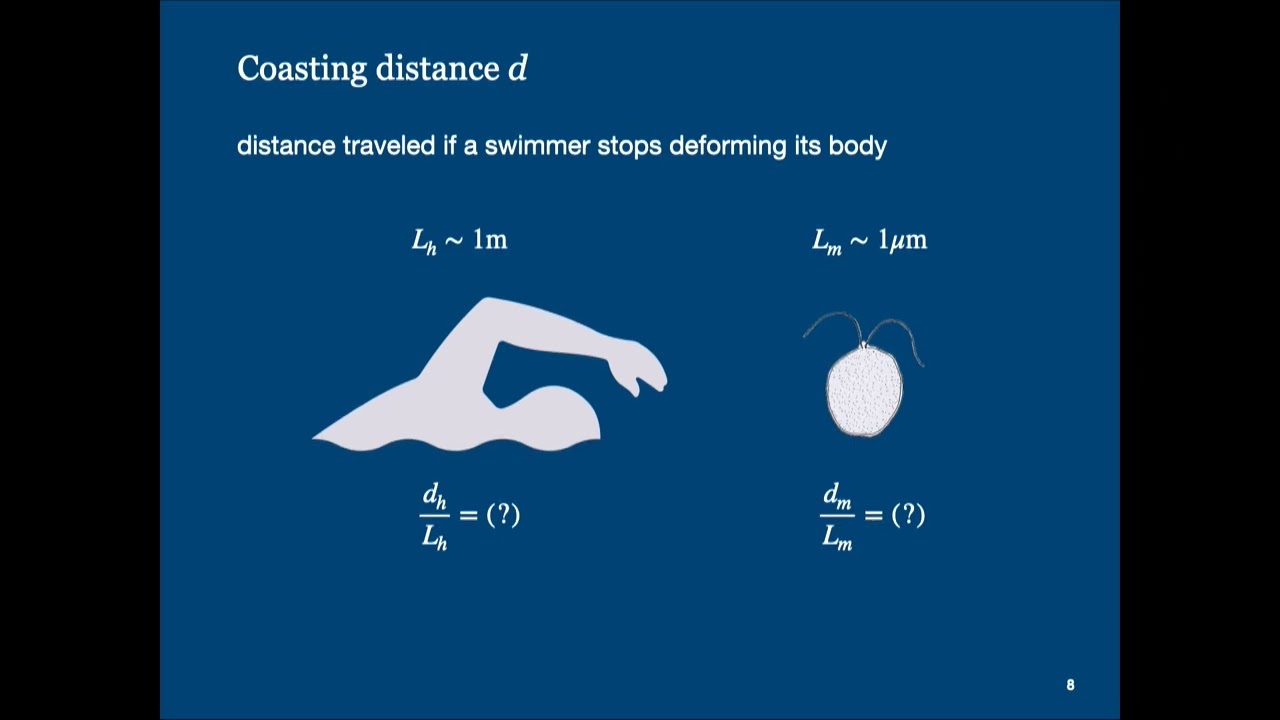
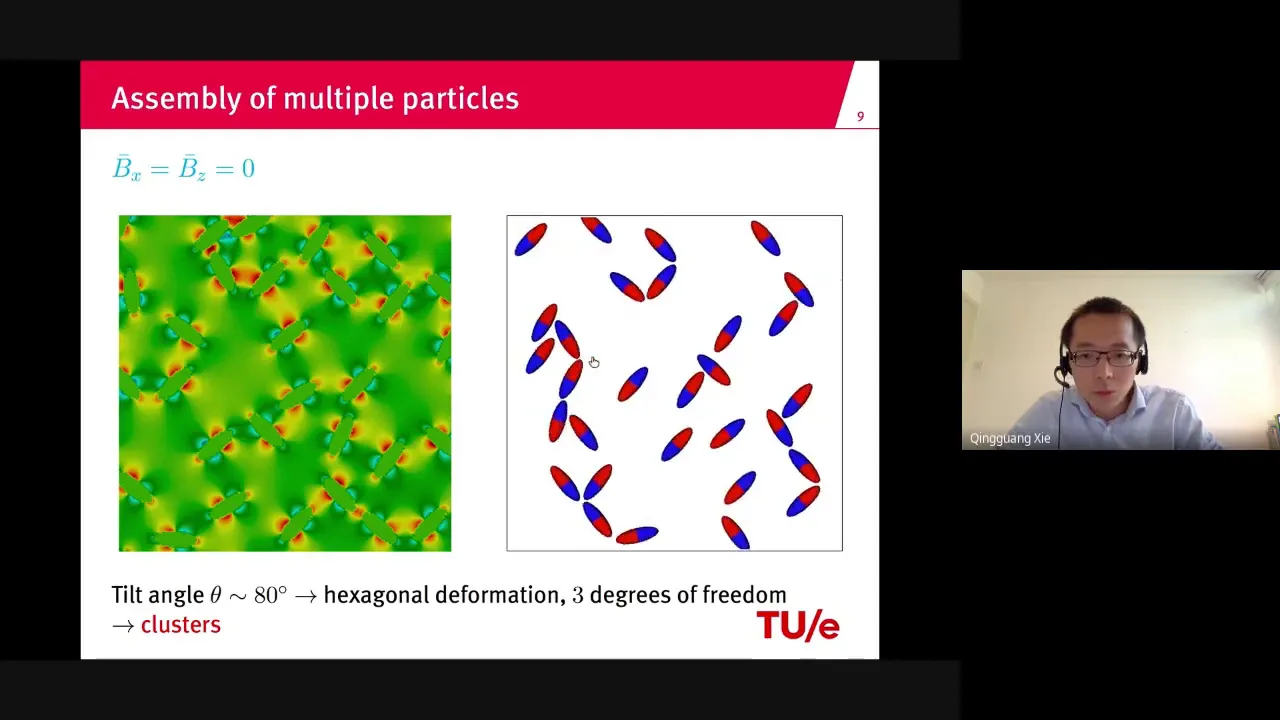
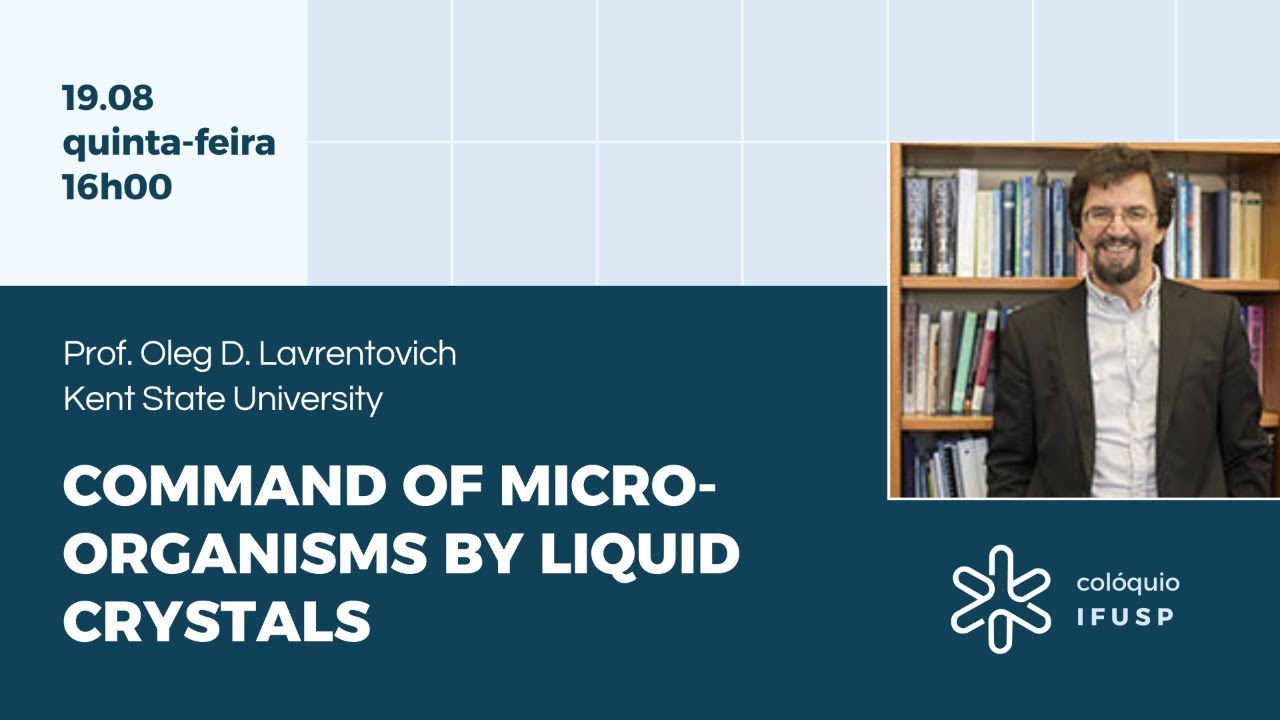
Added:noon everyone good afternoon everyone uh welcome to what is the uh first session of our icam week of science uh before we start let me first say that uh as until sometime around uh uh nine o'clock on uh thursday evening we thought we were going to have this meeting in person and in hybrid mode but uh we discovered on thursday night that the campus uc davis campus was going to be closed and so there was a rush of activity and we've managed thanks to the great efforts of brittany hong and also my co-co-chair rajiv singh been able to convert the meeting to being entirely entirely online of course we don't like that we would love to have been together um uh but we're hopeful that uh in some meetings soon we'll be able to all be together um so as you know icam is committed to uh exploring the frontiers of emergent matter be they quantum soft or biological and at our meetings every year we hold a meeting where we look at some of the new developments in each of these frontier areas and so this afternoon uh we're going to be discussing frontiers of soft and active mata uh the athenian is going to be chaired by conquer guitar and i think i'll hand over to him thank you very much okay i guess we should start right so um before i use pictures in this session as i understand and that i'm cheering and just a little bit of rules so we like to enforce the front filter rules which means just for the speakers i wanted to say that please leave 30 percent of the allocated time for discussions which means you have a 45 minute slot so if you could finish up within 30 minutes or so and leave room for questions that'd be great and if you'd like i could give you a warning at the 25 minute mark so you know um you know five more minutes left now this is give or take but i i i'd really urge the speakers to leave some room for questions having said that the first speaker today i'm very happy to now introduce unlike laurentovich especially because he's from my institution kent state university good to see you oleg again at a distance i'm sitting here in pittsburgh but i uh so we're we're all in but so oleg is going to talk about his uh recent work and without much more to do i'll let olek start thank you very much thank you i would like to thank the organizer for making it all possible even in this not in person mode i think some young scientists might join and let me ask you you see the screen right yeah it looks great and uh you're hearing me uh wonderful so uh i will present um how one can use liquid crystals to control so-called active matter that for many of you is known to be extremely unstable and full of defects so those are the main students involved in the research taras turi who recently defended his thesis and the three current students and we collaborated with our colleagues at kent state sergey sionoski and chihuahua who recently left kent state for a permanent position in people republic of china uh igor aronson at penn state and julia yelmans at oxford in the united kingdom so the next slide shows a picture a video that is a source of our inspiration what you see here is a little drop of water in which there are swimming bacteria the silver subtles and you might see that they are very effective transformers of chemical energy of nutrients into the mechanical energy and one might think that if somehow one could streamline the swimming activity then maybe one can extract some useful work at the micro scale and the problem is that it's uh very difficult to convey to the bacteria what do we want from them of course one can create the gradients of nutrients but any gradient is temporary and in order to obtain a sustained directional motion one needs to do something else and this was the motivation of our work we decided that if you will place the swimming bacteria in a friendly environment that is at the same time orientational order so a liquid crystal then probably we could control the dynamics of this particular set of swimming bacteria and maybe it can be expanded to to other entities such as artificial microscopes so i will start with the brief introduction of hydrodynamics at the so-called low reynolds number and the famous scallop theorem that limits the way by which the microorganisms could propel themselves then i will briefly discuss how liquid crystals are different from water from the subject of normal hydrodynamics and we'll discuss how life changes at low reynolds number when it occurs not in water but in a pneumatically crystal and finally i will talk about how to use the elec crystal environment to control individual and collective behavior of swimming bacteria so here you see nothing else but the second newton's law which is also known as the navier-stokes equations for incompressible newtonian fluids and the reynolds number is simply the ratio of the inertia term to the viscosity term and for scales l here and velocities that are at the scale of micrometers and micrometers per second for typical viscosities of environment this number is extremely small and that means that the inertia terms can be neglected and all we are left with is a stocks equation which doesn't contain time and as was noted by parcel it simply means that at microscales the swimmers must develop some activity that is not time invariant in order to propel themselves and he presented an example with a little scallop of microscale lens that could not swim if it would just open and close his mouth and in the nature one can find examples such as swimming bacteria that overcome this limitation and create time irreversible propulsive mode but swimming bacteria with flagella are one example this helicoidal appendage rotates and since the viscous resistance to each element of the flagellum is different for the direction parallel to the flagellum and for the direction perpendicular to the flagellum one creates the persistent propulsive force shown here with the red arrows and this is how the bacteria propel themselves now people are always interested to produce something artificial and as simple as possible in order to mimic this propulsive activity in the microscale and here i saw just two famous examples the what would be the simplest types of artificial micro swimmers one is on the right hand side representing three spheres that are connected by rigid rods and these rods change their length and as a result of time irreversible uh protocol this uh triple sphere would propel itself as simpler in some sense at least in the number of spheres involved solution is shown in the middle of the page it's two spheres that are connected by a tube that pumps the fluid from one sphere to another and uh again you can develop a protocol that would propel this structure forward of course in both cases you have to spend some energy you have to provide the energy to the system in order for the system to perform work and as compared to those two solutions the three spheres and two spheres i would like to argue that in a liquid crystal environment the situation might be simpler in the sense that even a single sphere with some type of activity can propel itself so you don't need the second or the third sphere for the propulsion to happen and in order to understand what's uh the main difference between a liquid crystal and isotropic fluid i just show you a couple of slides here so like the crystal of the pneumatic type and this is the type that we are dealing in this presentation is the material that is formed by typically elongated molecules that are oriented along one direction called the director and this direction is the axis of an isotropy of all properties like dielectric permittivity viscose drag biofringes and other things so since the ground state is a uniform alignment of the director any attempt to create a deformation of orientational order implies some elastic resistance and here i saw the formula for the elastic energy which is the integral over the deformed volume of the gradients of the director field and of course it's not just gradients but the gradient squared because the let's say left and right handed uh display shown on the picture uh would be of the same energy this is why we have a square and uh if one think about the dimension here then one would conclude that the elastic energy scales linearly with the size of the system which is a very important conclusion because if you now compare this bulk energy with the surface energy which stems from an isotropic molecular interactions uh that costs some energy when the external force tends to deviate the director from the direction that is preset by molecular interactions then this energy is growing as the surface area or as the square on the typical size so now if you compare the elastic bulk energy and the surface entering energy would realize that counter intuitively the surface energy wins when the system is large large means larger than the ratio of this material parameters elastic constant k and anchoring coefficient w and in typical liquid crystals this ratio is on the order of one micrometer plus minus one or two orders of magnitude so it's precisely the range of many uh biologically relevant things like cells or bacteria and slightly larger than viruses so let's consider how this consideration applies to the simple object the sphere at the surface of which the surface anchoring prefers to see the director perpendicular to the sphere and imagine that such a sphere is dispersed in a metallic crystal that otherwise is uniform uniformly aligned the question is what would be the configuration of the director field around such a sphere and of course the answer depends on the balance of the elastic energy that scales as the radius of the sphere and the surface anchoring that scales as the surface area and if the sphere is sufficiently large then as i already told you the surface anchoring wins and that means that the director must be perpendicular to the interface and one of the simplest solutions is shown here the director turns perpendicularly to the interface and if i produce some symmetric configuration then i might end with the saturn ring configuration later on it was realized by tom lubanski and his colleagues that um a simpler and energetically preferable solution might be when the saturn ring which is a loop defect is shrunk into a point either on the right hand side or left-hand side of the sphere and then one deals with the bipolar geometry of the director configuration uh with the so-called hyperbolic hedgehog in this case on the right hand side so you you can see this uh hedgehog if you take a microscope and disperse the water droplets in an enematic lake crystal uh in this video it's on the right hand side and what else you can see you can see the brownian motion and here i show the trajectory of the center of mass of the droplet and you see that it's uh similar to a brownian motion in an isotropic fluid with that difference that far field of the oriented director makes this cloud of trajectory slightly elongated along the director along with the horizontal axis but other than that the dynamics is similar to normal dynamics and especially in the sense that this droplet doesn't move anywhere if you take the integral over long period of time you would see that the droplet remains in the position at which you started so the question is imagine now that it's just not the water droplet imagine that inside of this droplet of water we have some activity some slimming bacteria the question is what would happen then and the next slide shows that the situation changes dramatically what you see here is the droplet of water with bacteria inside and the hedgehog is on the right hand side and the bacteria doesn't show a brownian motion it shows a ballistic propulsion if you measure the displacement as the function of time for the horizontal direction you would see this ever-increasing path and this is a ballistic motion now it's important to realize that the symmetry of distortions of the director is of crucial importance if for example one creates a sample in which the glass plates are not that far apart from each other so that they drop it almost touches the glass plates then it's the saturn ring configuration that is stabilized and as you might see see here for the saturn ring there is practically no displacement it's only when the saturn ring shrinks on the right hand side into a point only then you start to see some propulsion so the symmetry of the director distortions is of prime importance for the propulsion to happen the next slide shows that if you melt the liquid crystal then the propulsion stops if you destroy this orientational water like at this moment when the temperature was 35 degrees centigrade then the pneumatic melts into the isotropic phase there is no director field and the propulsion stops you you might observe normal brownian motion without any displacement in this case so the question is what's going on how to uh understand this uh propulsive mechanism here i saw the video of what's going inside so the video doesn't show you the individual bacteria but what it does show is the fluorescent markers that are dispersed in water and because the bacteria are swimming the the markers are moving around and that indicates that there are some flows if you try to find some order in those flows you you would fail because there is no direction or no regular vortex around which these flows would evolve it's really chaotic and if you integrate the velocities over a long time you would see practically isotropic distribution but then if you do a similar analysis of the flows of the pneumatic fluid outside of the droplet and this is the right right hand side of the movie then you would see that the situation is totally different the the flow is noticeable and in the coordinate frame that is fixed with the droplet this flow is from right to left and if you integrate over long time then you would see that this flow persists and this is why the drop that moves if now you let the droplet go then it would move in the direction opposite to the flow of the surrounding how do we understand more qualitatively and quantitatively this effect so here i show you the vertical cross section of the cell the droplet is in the middle and these bars on top and bottom are the glass plates and the glass plates want the director to be tangential to them and the droplet as i already said prefers to see the director perpendicular so the activity of bacteria inside the droplet create the flow that are transferred through the interface between the two fluids and if this displacement is directed to the left then the director is going to be distorted as you see here if it's uh directed to the right then the director again needs to be distorted in a different way because the surface anchoring keeps the director perpendicular to the surface of the sphere and then if i compare the two configurations for the same displacement of the droplet to the left and to the right i would see that the director configurations are totally different in the case of motion to the right the director is more horizontal more uniform and in the case of motion to the left it's distorted and and that's the the mechanism since the director configuration offers different viscous resistance to the flow that depends on the orientation of the director with respect to the velocity i have different resistive force for two equal displacement and this produces the overall motion and one can estimate it as something being proportional to the viscosity difference for the more oriented director and less oriented director now since we know the relationship between the surface entering and droplet activity we can try to control the dynamics in many different ways here you saw one example when the leaked pistol is redesigned in such a way that it forms this radial structure and if you put the droplet somewhere at the periphery of the structure it will be accelerated towards the center and then once it reaches the center the surface entrance at the drop that matches the pattern field and the droplets stop so you can design like bus stops for the dynamics of the job you can also use the electric field for example for example using the patterned electrodes and realign the far field in which the droplet is located and then you can direct the dropper to any trajectory you wish to have here i'll show you an example with some droplet making complete reorientation of its directionality and using electric field you can also control the speed because if you increase the electric field without changing its orientation then you can expand the hedgehog into the saturn ring and the second ring configuration is photopolar and cannot move in either direction and because of that the droplet stops so i would like to conclude the first part with the simple statement that if you replace the isotropic newtonian fluid with the pneumatic environment then you have the capability to enable enable propulsion of water droplets with some kind of activity in it and you can use the pneumatic director field to control the trajectories and the speed of active droplets either through patterning on the director or through the interaction with the electric or say magnetic now the last portion is about how can we use lake crystal medium to control not just a bunch of bacteria inside the water droplet but individual bacteria and for that of course we again want to streamline the emotion that is shown here in isotopic fluid to something that is more water and i will show you two examples one is kind of jet motion and another one is a circle of polar motion so of course uh if we disperse individual bacteria in elite crystal this leak crystal must be friendly in the sense that it's let's say water-based we cannot use the so-called thermotropic like crystal that we used in the first portion of the presentation but we have to use the so-called lyotropic liquid crystal and here i show you the structure of such a liotropic we call it chromonic liquid crystals so it's molecules of a disk like shape that are dispersed in water they have hydrophobic pores and polar territories and while in water they prefer to shield their pores from water it's a hydrophobic effect and they aggregate into elevated cylindrical bodies and these bodies form electric crystal because um through on sagger and on cyber model uh elongated objects at sufficiently high concentration would prefer to align parallel to each other to decrease the orientational entropy so we are using this material as the background in which we dispersed swimming bacteria bacillus satellites it's the same type of bacteria we dealt with before and you might see here a swimming bacterium it's even visible how it rotates the flagellum exactly because the medium is a liquid crystal and that means birefringence and the perturbations of the pneumatic are being visualized in polarizing microscope from through the wave of dark and bright spots so what would be important for us is to realize that this motion is force-free in other words whatever propulsive force the bacterium creates is being exactly compensated by the drag force and so we can present the bacterium as an ellipsoid at the extremities of which we have two forces of opposite polarity but equal magnitude so if we prepare a uniformly aligned chromosome and disperse bacteria in them we achieve some success in terms of control you see here that the bacteria move horizontally but it's not yet what we want because the amount of bacteria moving to the left and to the right is the same so we cannot extract simply some word and it turns out that we could extract some work if we start to distort the director field and distortions are not just any distortion i show you the next slide in which we have two types of distortions on the left is circular distortions of the director and you see here that the bacteria move left and right clockwise and counter clockwise with the same probability and on the right it's a radial distortion and again the number of bacteria going in and out of the center is about the same but then surprisingly if you mix the two types of deformations the circular and the radio and create a mixture then in this configuration you achieve a polar propulsion i saw here the bacteria that move in the vortex that is designed with this chiral asymmetry and you might see that they move in the same direction you can measure the velocities shown on the right hand side and the mechanism here is the interactions of neighboring bacteria with each other so i show the two bacteria that are aligned by the underlying pneumatic background so they are at some angle with respect to each other and the their interaction is such that the horizontal components of the forces cancel each other but the vertical could not and this vertical net force is directed upwards if i move 90 degrees to the left then i would see a similar picture and if i repeat this thought experiment i would realize that my hydrodynamic interaction force is circular and that's the reason for the propulsion of bacteria in surface i can write down the expression for this active force of hydrodynamic interactions in this electoral form in a slightly different shape it was written by syntha and ramaswani for active matter some years ago and since i know my director field i can find out what exactly is this force in the shown geometry and i would realize that the radial component is zero but the azimuthal is not zero and it goes as one over r where r is the distance from the center and alpha is some activity coefficient and then i balance it with the drag force and i find out the velocity field that is matching the experimental field rather nicely and at least qualitatively i know that the reason for this collective behavior is interaction of bacteria which are pre-aligned by the enematic environment so the question is okay uh if the bacteria are very far away from each other then apparently they wouldn't interact so uh what does it mean to be close enough and uh we did experiments uh runa mostly did with different concentrations of bacteria so if they're really far away from each other they simply follow the pre-design director field but once their concentration increases they start to show some elements of collective motion at the bottom you can see the kind of integral of this video that shows the trajectory and finally the concentration exceeds some castle then the bacteria start to throw this collective motion and gather it in circles and swim in a polar fashion yes thank you very much so the mechanism again is very similar to what i already discussed the bacteria are far away they don't interact if they are close to each other uh in this orientational pattern then they create the hydrodynamic forces and if you play with the spiral angle you can produce also kind of situations when the bacteria would gather in the center or when they would expand to the periphery it's only 45 degrees more or less for which the bacterias were in a stable circle because there is no radial component of this active force and the experiment confirms just that depending on how you design the director field you can create a condenser of bacteria or you can clean them out of the system and push them to the platelet and the final final slide is a similar approach to create now not a circular motion but a motion with unidirectional propulsion so i deliberately didn't show you the director field hoping that those who are not familiar with this work would think uh now i show you the director field it's uh the periodic lattice uh unidirect one-dimensional lattice of splay and bend and also a fragment here there are no physical walls um if you go up or down in this movie you you wouldn't see no hinges for the motion of bacteria it's just the curved director field that condenses the bacteria and forces them to swim unidirectionally and for comparison i'll show you where we started with the chaotic motion and this directional propulsion allows us to force the bacteria to perform some useful work [Music] you might argue it's really useful or not but uh the bacteria push the colloidal particle polymer sphere from left to right and of course you can design this trajectory to your specifics and deliver this colloidal droplet to a destination of your uh choosing okay the final slide is that uh lick crystal environment really allows you to gain some control over the active matter and you show it with the example of swimming bacteria we think that artificial swimmers can be similarly controlled in particular the crystal environment um overcomes the limitations of the scalp theorem and the enables of active spheres to propel themselves and one can use the blue crystal environment of various types thermotropic or lyotropic to control the trajectories and the speed of microschemers thank you very much for your attention thank you very nice talk so from the audience if you want if you have any questions please raise your hand there's a reaction button and you can click on that and there's a hand raised hand uh feature you can also text if you don't find that so please feel free to ask olek questions on his talk i'm on the run josh please ask questions yeah yeah like now i'm on the right camera um so can you give us a sense are there liquid crystal environments in nature where the bacteria find themselves i mean is this something maybe they have evolved to do or could take advantage of either you know in a host in a pathogenic case or just anywhere out in the wild well it's uh it's um not that the bacteria were growing in a lake crystal environment i i don't think that um bacillus satellites for example would meet the electrical environment in its childhood and then you bring it to the lab and it would perform no it's an artificial system so it's the system designed to to control the dynamics bacteria you know yeah they form collective modes uh when they are at very high concentrations and since they are road-like these high concentrations make them a liquid crystal out of themselves so they they don't need the environment to become orientation with water so with high concentrations the the bacteria form if you wish a lift crystal and then they start to swim in circles uh with a certain polarity it's not only bacteria sperm cells do that and many other living organisms do that they form leaked pistols out on the of themselves okay so uh i think piers and then jose yeah thank you alex for very nice talk have you experimented with the effect of using cholesteric liquid crystals something with a natural twist yes we we tried but besides some obvious results that if you create the twist then the bacterial swimming near one plate would go this direction let's say thousand wars and near the top they would go west and east there was not nothing of interest but um i have to say that we are at the beginning of this exploration because we expect many interesting things to happen since the bacteria by themselves are chiral objects for example a bacterium that is placed in the normal shear of coat cell for example would experience some lift because of the chirality so we kind of plan of playing with this hierarchy of bacterial versus chirality of the medium okay jose this was a very interesting talk and i think it's interesting to think about the possibilities you're commenting about the fact when the concentration increases that the bacteria create its own liquid crystal environment would that have any functional reason for the bacteria how it moves if it's a very dilute environment where we just be moving chaotically and looking for something but when you get organized yes yes but but this is more the subject of fundamental active matter physics rather than leaked crystals you know the school of fish often form the pneumatically crystal and vortices and people say that it helps them to evade predators like sharks because you know when the shark is inside this circulating swarms or school of fish it's very hard for it to to target one face to eat so uh that's what they do in nature um then uh many from bacteria to fish yeah yeah but you you know i i just give you the the example for example yes in the case of bacteria in which they they do form swarms i really don't know what might be the physiological reason for that there are some tragic examples like ants would form form the circular trajectories following in traces of chemicals one after another and they could not escape uh till they die so they go in circles still till you know the nutrients expire and the ants expire so it's an example when it might be detrimental in the case of fish it's probably a positive outcome any other question i'm checking to see if anybody has their hands up so i have a question oleg which is probably just a simple question does this concentration of back in the second part of the talk does the concentration of bacteria change anything does it change with how many you have yes it's it's a dramatic effect so here the concentration there are two regimes one regime is that the bacteria are so far away from each other that these water jets that are associated with their swimming do not overlap and then the bacteria behave as individual entities there is no interaction this is uh the yeah the the case here you see if you put them in the oriented director of the like crystal environment they follow the director they don't listen to each other but but if the concentration is such that the distances between them are smaller than about 20 micrometers then these jets start to overlap and if there is a misalignment of two bacteria then these two forces cancel horizontally but add up along the vertical direction and that creates the the torque and that ultimately leads to this collective motion in the circle that i saw on the right hand side so here the concentration is 10 times higher than in the individual case and so yes the the concentration controls the interactions between the bacteria through hydrodynamic forces and that leads to completely different uh dynamics of collective dynamics and so in this case in this particular config liquid crystal they'll always spiral into a circular motion and uh or is there any other motion that can be generated yes if if we create the vortex environment then it's always either clockwise or counterclockwise and we can decide which would it be clockwise or counterclockwise by controlling the the geometry of the structure but the environment can be designed in a different way here is an example and so it's a linear propulsion uh because the director field is not circular but um in the form of periodic uh splay and band it's so just a fragment that is shown here so you can design whatever you want and the important thing is that the motion is fallen thanks anybody else have any questions yeah i have another question yeah so um i actually have two questions uh first of all um can you explain how you produce these uh uh these configurations these topological configurations of your pneumatics yes so that was thanks to chihuahua who developed the approach of plasmonic alignment so what you do you have a metal sheet metal film and you make very thin nano slits and then you shine lights through it and the outcoming light is polarized more or less linearly perpendicularly to the long axis of the sleeve and now you use the pattern of those nanoslates which looks like these bars here these little ticks yes and you irradiate the photosensitive substrate and the photosensitive molecules such as other benzene derivatives they experience sense this configuration till they end up being perpendicular to the polarization of light that is acting locally at this location and then we use this photosensitive substrate after we irradiate it with the pattern polarization field to align the liquid crystal the liquid crystal molecules listen to the molecules of other benzene and replicate their orientation and and my uh other question was you showed this force due to ramaswamy in ital uh how well does that theoretical force do in describing your experiments simulated and compared yeah so ramaswamy produced it on the symmetry argument that it's just allowed by the cemetery but in our case so we we have the experiment so we have this expression we derive what this expression produces in the particular geometry of our director field we end up with this force then we add the viscose drag and here is the theoretical result so the velocity predicted by this model is this and the experiment is actually showing pretty close resemblance and then this is the theoretical curve the red and the experimental points are just the points with error bars and i i would say that it's a reasonable uh agreement so it's very hard to find the exact agreement in active matter with any theory but i think in our case it's it's not that bad and if you increase the concentration does it begin to break down yes it's important not to get over excited and not to put too many bacteria because then this kind of streamlining ability of the liquid crystal is compromised and i don't show the movies here but if there are too many bacteria then this activity can overcome and they can create undulatory instability some in some cases the bunch of bacteria would go away and the remaining would restore the stable circle and uh continue in a stable fashion fantastic okay thank you so uh we should probably move on to the next talk but let's thank all egg again for a wonderful talk thank you thank you very much so the next speaker is we had scheduled a half hour break here um is this is this after the half hour break or no in principle it was now um until 3 15.
okay okay so let's have the break then so i think we should stick to that otherwise we may lose people yeah i missed the break when i looked at the program i see it now okay so we have we have a break we we come back at uh what time do we come back a quarter past three davis time and quarter past three davis time which is six
Up Next

Ceptr Oscillations & Stability in Stars: Gamma Condition
@IITKanpurNPTEL
334 views•2021-04-16

21cm Hyperfine Transition in Neutral Hydrogen: Radio Astronomy Basics
@AaronRobertParsons
12.4K views•2011-10-13

NMR Spin Physics I: Zeeman Effect, Resonance Condition & Larmor Frequency
@nptel-indianinstituteofsci8064
2.3K views•2024-01-17

Entropy and the Second Law of Thermodynamics Explained
@veritasium
27.5M views•2023-07-01
Related Study Plans & Knowledge Roadmaps
Structured learning paths in Physics