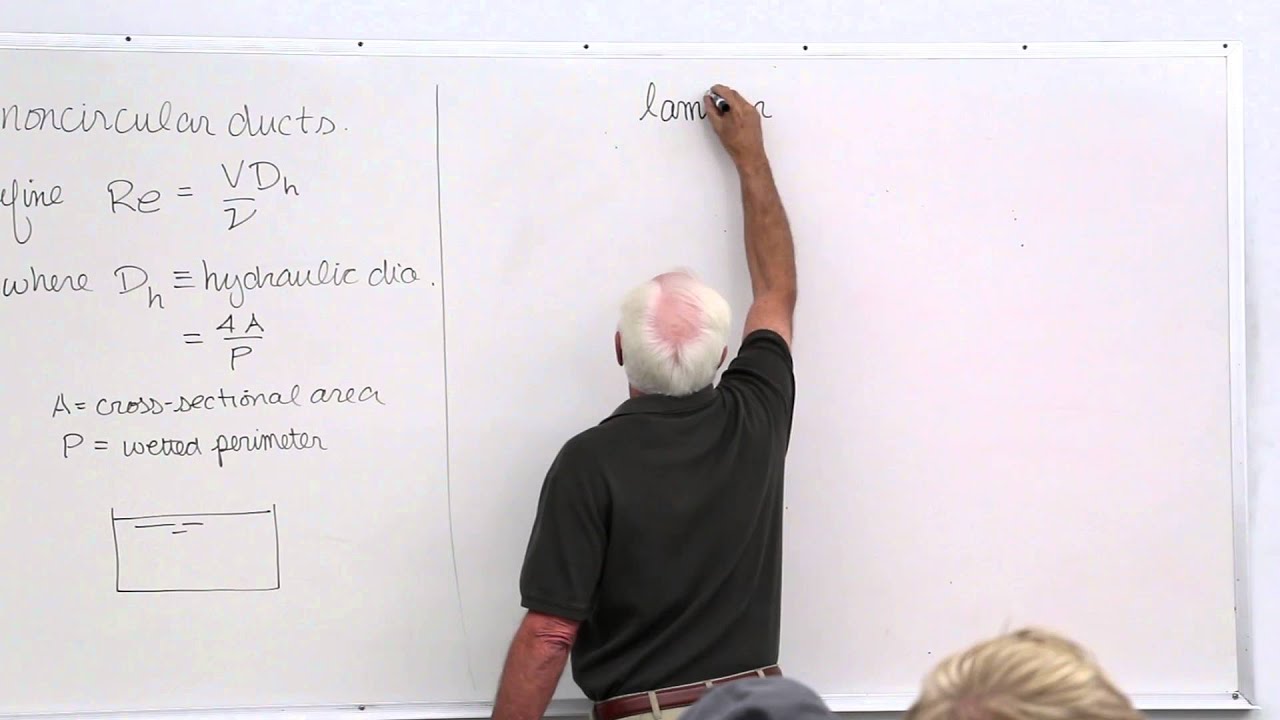
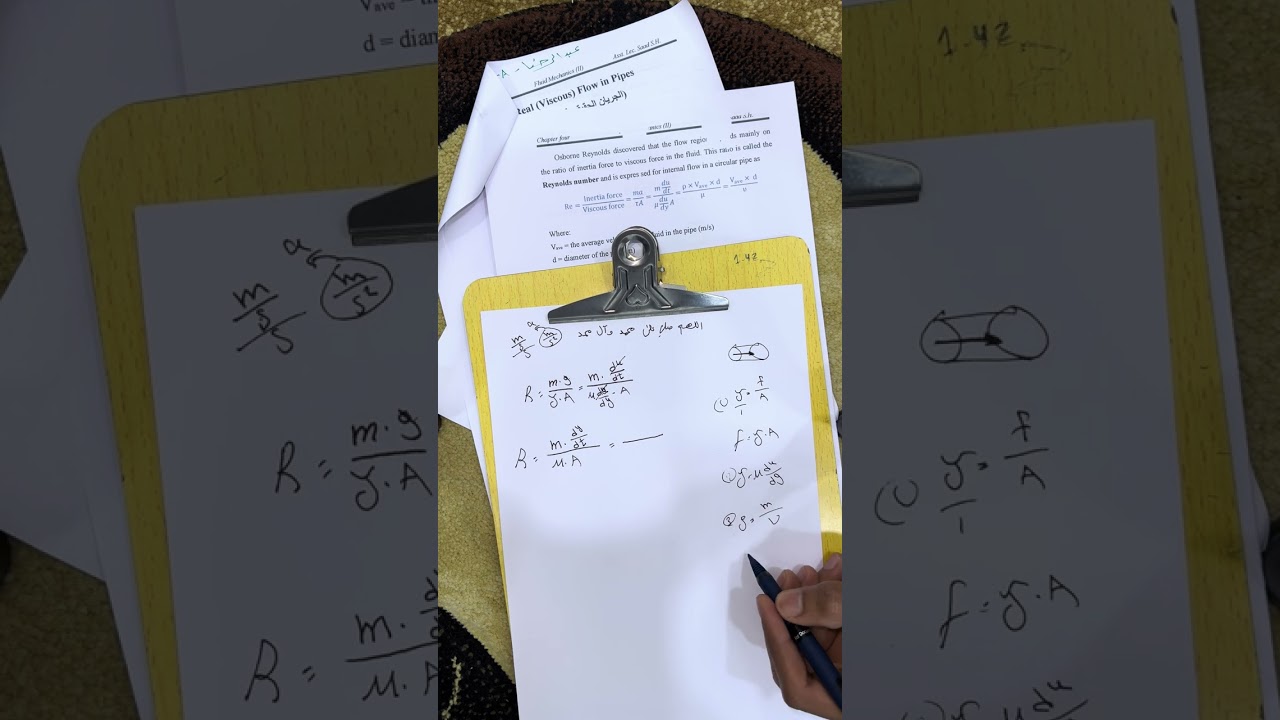

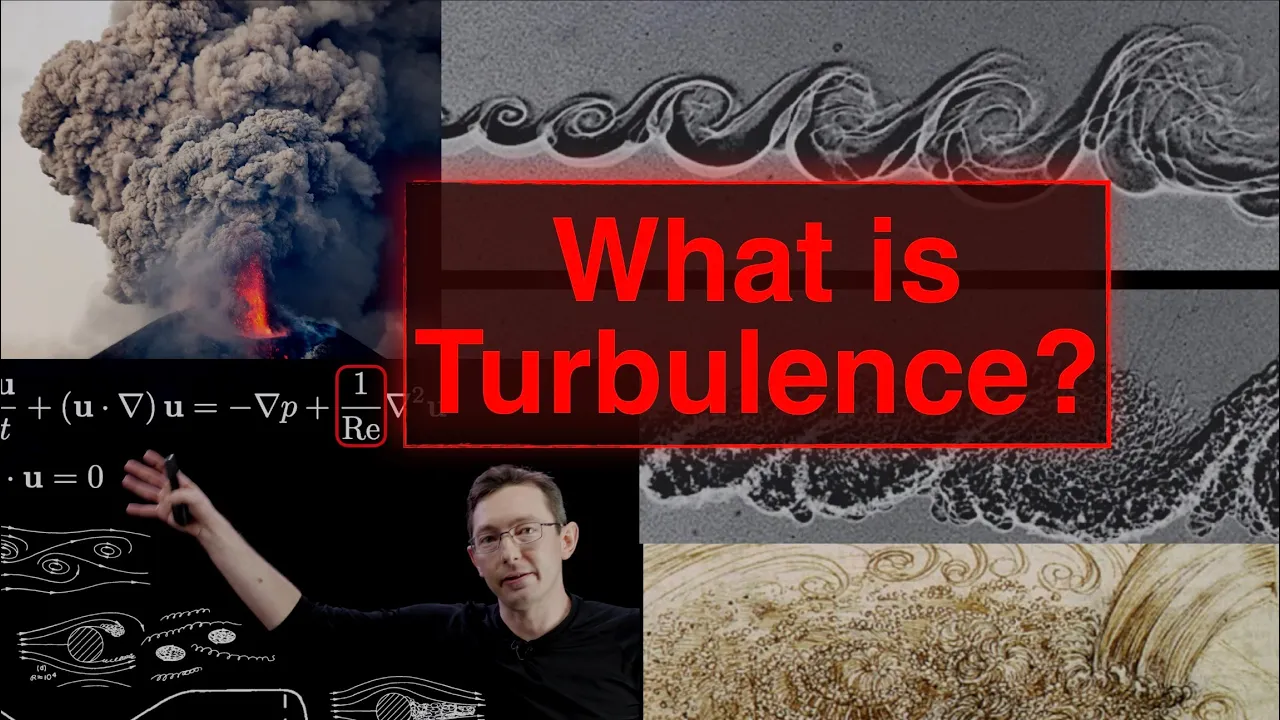
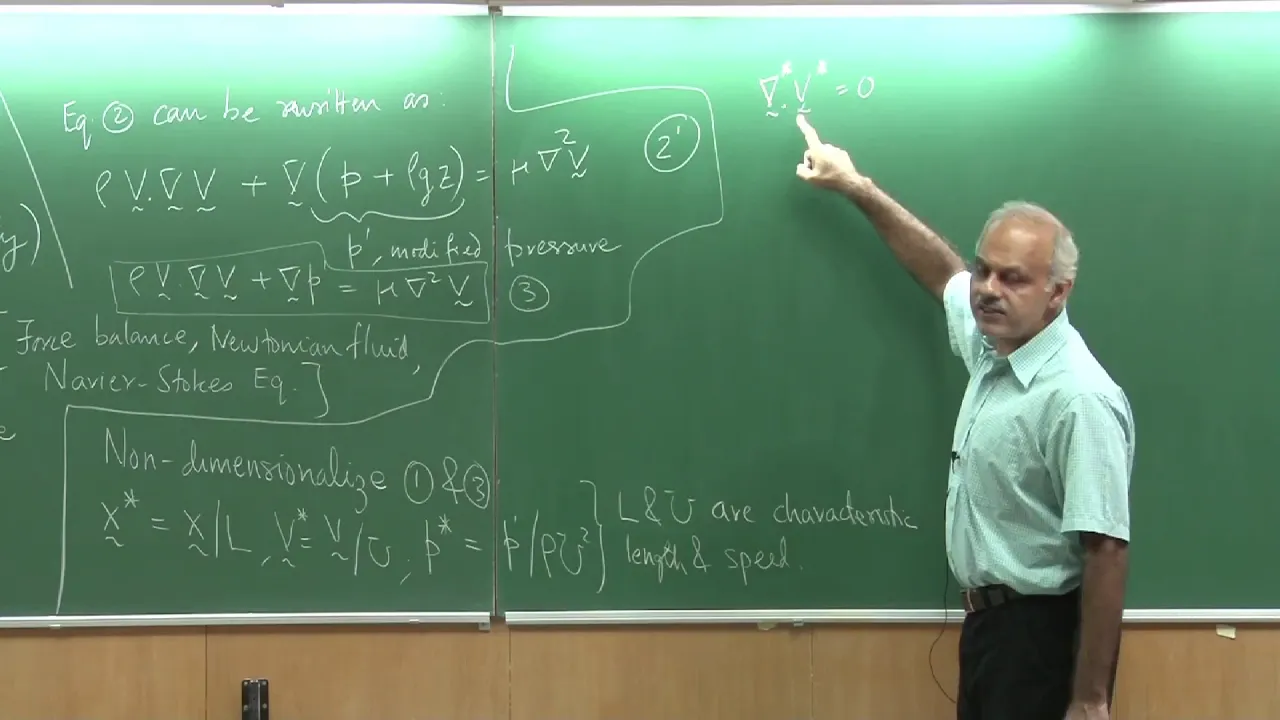



















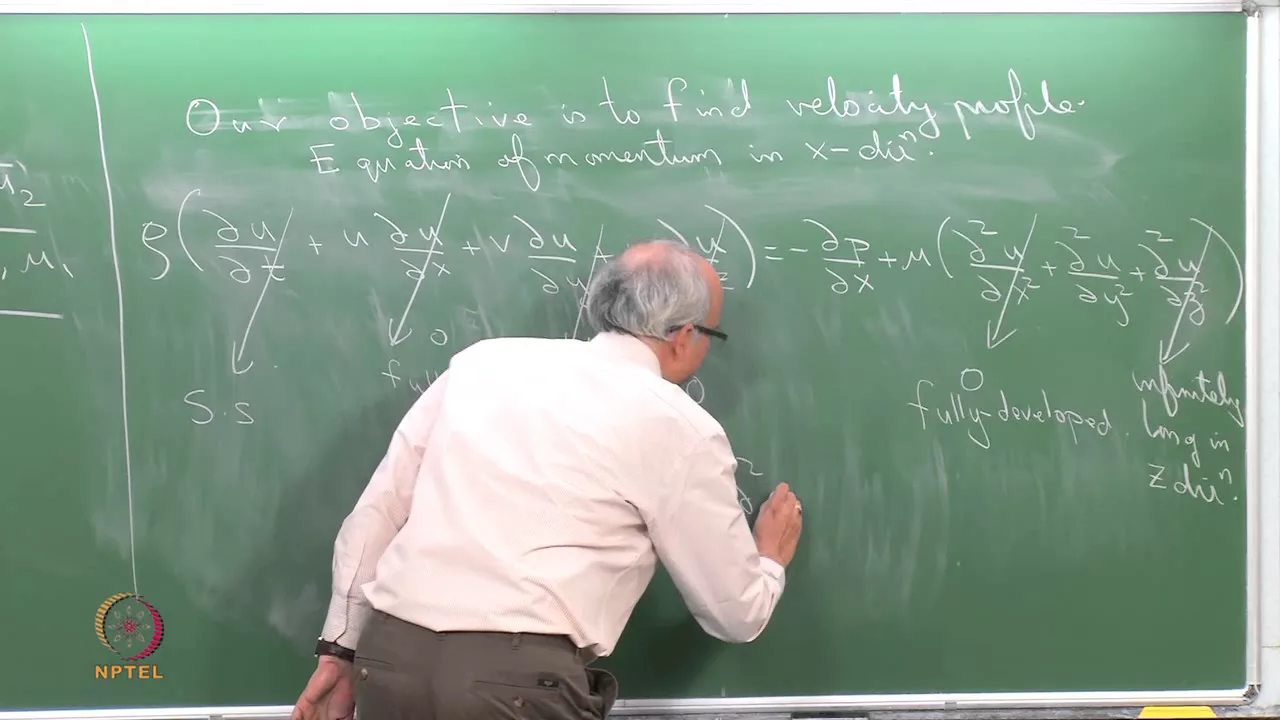




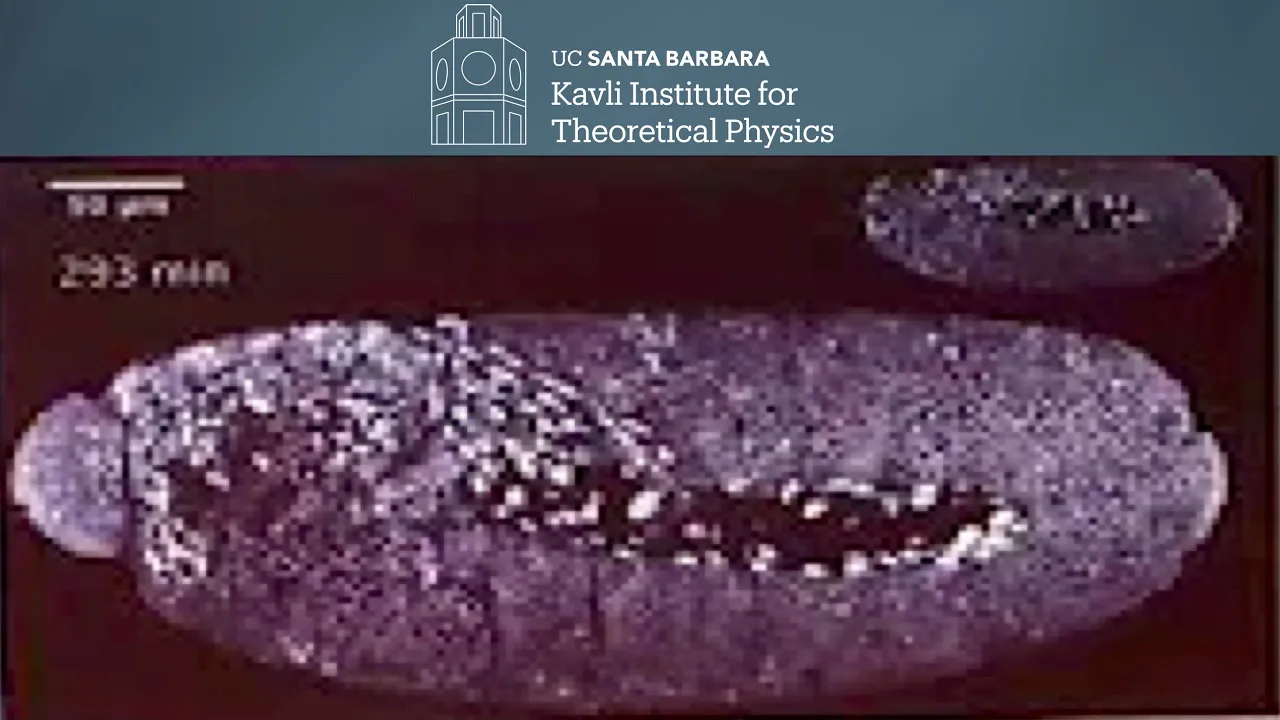


The Reynolds number (Re = ρUL/μ) determines whether inertial or viscous forces dominate fluid flow: high Re (Re >> 1, like swimming in pools) means inertia dominates and organisms coast after stopping, while low Re (Re << 1, like microorganisms in water) means viscous forces dominate and organisms stop immediately when propulsion ceases. At low Re, the Navier-Stokes equations simplify to the Stokes equations, which are linear, time-independent, and exhibit kinematic reversibility (reversing motion reverses flow exactly), fundamentally constraining how microorganisms can swim.
Dynamics of Biological Systems Lecture 5 | Swimming at Low Reynolds Number
Added:Fundamentals of fluid dynamics, specifically the definition and physical significance of the Reynolds number.
The Navier-Stokes equations and their simplification into the Stokes (creeping) flow equations when viscous forces dominate over inertial forces.
Basic eukaryotic cell biology, particularly the structural components and functions of cilia and flagella.
The concept of time-reversal symmetry in classical mechanics and differential equations.
Purcell's Scallop Theorem and the mathematical proofs governing why reciprocal motion cannot produce net locomotion at low Reynolds numbers.
The design principles of synthetic microswimmers and nanorobots aimed at biomedical applications like targeted drug delivery.
Microfluidics and lab-on-a-chip technology, focusing on how low Reynolds number flows are manipulated for biological assays.
Active matter physics, examining the collective behavior, self-organization, and turbulence patterns of populations of swimming microorganisms.
1.2K views24likes1:31:41Original Release: 2024-06-14
start okay uh so good morning and welcome uh after a week's break so my name is bro and I'm going to talking about this module two which I've called life and flows at load and alls numbers so I will uh just briefly outline what this model is going to be it's going to be about understanding primarily swimming of microorganisms and their Collective behavior in fluidic environments and for this there are really two pieces one is the mechanics or the fluid dynamics piece for which I give you a handout and I will also go over this today and then we will try to apply these in specific problems so one thing that I thought I should mention since it's very different from what akit covered I I thought I will just give you a brief motivation of why you should get about this sort of stuff why it's interesting and what are the problems that people think of okay so let me start by giving you this example this is uh there is a mouse okay okay uh let me start by giving you this example this is a picture that all of you have seen over here it is the vuan man by Leonardo DaVinci and we all know that this serves as a depiction of the Divine proportions of the human body it says that roughly our height is uh same as a wingspan and this is over here is a picture of a fly where you can also see certain proportions and symmetries appearing in the body of the flight now the question is apart from these symmetries there is also another symmetry that this picture portraits and that's a bilateral symmetry of the Left Right symmetry that we all have in the outside but there is a saying that symmetry is really only skin deep if you look underneath the skin then you find that we're not really left right symmet and our organs are not placed in a symmetric fashion in fact our heart is on the left side the liver is on the right side and so on and so forth some people can actually have their entire body plan flipped like a mirror that's called cus inversus and can still function normally in fact we all have three broken symmetries one is top down the other is front back the other is this Left Right symmetry that I'm talking about and the last symmetry to be broken in the process of development is this Left Right symmetry that I'm mentioning now since humans start off as a spherically symmetric egg it's it's sort of spherically symmetric embo it's sort of a fundamental question that how do you break this symmetry in the process of development and one of the most remarkable discover is in developmental biology has been unraveling of this mechanism through which you break this Left Right symmetry that we uh all have in the outside so what people did is that they looked at this mouse embryo and the mouse embryo there is a chamber they found is called hensen's node or left right organizer don't worry about the name it's not important from the mechanism what they noticed is that in this note there are thin hair like Micron siiz filaments that you see over there and they are called cilia that are rotating vigorously so I just give you a picture there are hundreds of such filaments there are many cells in this nodes each of the cells has this one Thin Hair like object and it's rotating clockwise okay just Waring around now think of it as as a coffee cup so if you take a spoon and if you stir with one spoon you will mix the fluid right you will create a directional flow but you will only create directional flow if all of these things are beating in some sort of coherence if they're all doing their own random things then there won't be any directional flow so it turns out they do beat incoherence and what they do is that they create a flow that go from the right inside to the left inside of the chamber so there are some particles that you see going from right to left and that's the flow is doing now the hypothesis is that this flow then interacts with chemical Messengers on either side of the chamber and this interactions eventually lead to the Symmetry breaking of the EMB now this is all hypothesis but what's quite quite remarkable is that people who figured this out went back and what they did is that they designed an experiment where they will mechanically just like coffee spoon stirred the fluid in the other direction so they stirred the fluid from left to right instead of going from right to left and quite remarkably the heart of the mouse ended up on the other side so that's flipped the direction of the symmetry so if this does not prove that why fluid flows are important in biology I don't know what does but what this also okay I will so what this also tells us is can what this also tells us is a fundamental point that I'm trying to make over here which is that there is an intrinsic coupling between mechanics or fluid flows uh with functions okay so often time what happens is that you have mechanics like fluid flows that I'm talking about and they're always related to some sort of function in this case the function was left right symmetry breaking it could be something else as well and in almost all these cases uh something that sits in between is biochemistry so just like fluid flows interact with chemical Messengers in this problem they can interact with uh other sort of signals in the problem and then can uh create functions so they you cannot really ignore one from the other and they are all intrinsically coupled okay so this is a bit more provocative uh and maybe uh oversimplified but I should also point out that these three things together has implications for evolution okay so what I mean by that uh I will just give you through an example you know that when life started it started as a single cell it started in actic environment but at some point it become multiple cells right it became two four and then it's complex when now the cells are differentiated they have different functions and so on you can ask that why did this happen right why did cells had to I mean why did they become multiple cells what was the origin of multicellularity it turns out that of course it has complex questions of biochemistry and functions but whenever you think of functions or whenever you're thinking of evolutionary pressure for something to attain or achieve something you need to think about mechanics because they are living in an environment and you cannot really separate out mechanics from function and in this context fluid flows and broader sense elasticity and all the other subjects come into play and they all together Can Shed light on questions like Evolution so this is sort of the broad motivation or the big picture but of course we have to do something that's Concrete in this course so what I've chosen to do is uh to talk about flows and sort of Life at low inals number or flows and life at Micron skills so the reason for choosing this subject is something of course I'm interested in and work on this sort of tangentially but also these are really abundant problems what I mean by abundance is that you know microorganisms even though we are not seeing them with our Naked Eyes but they are really largest one of the largest contributor to the biomass they're abundant they're all over the place they're in our gut in aquatic environments in soil they're everywhere and so it's a natural question or sort of a question out of curiosity how are these guys moving what are they doing uh how they're functioning so here are some examples of problems that I would like to think about in this course so this is uh an eoli which is a bacteria that swims in fluid by this run and Tumble motion they have this fella they rotate it they move around this is a green algae camid monus and it is again this two Thin hairlike filaments called fella they're beating it and Performing breast stroke like motions and this helped them again to swim in fluids this is a sperm cell okay it's propagating bending waves along its fella again a long floppy object and with the propagation of these waves it's swimming in fluids and this is a much larger uh organism it's called volvox and it has roughly 50,000 cells the spherically symmetric as you can see over there and they are a prototypical organism in the question of sort of understanding how multicellularity emerge so they have a lot of cated cells on the outside surface they together per perform various coordinated action and when you have multiple wall boxs they perform all sort of collective Behavior okay so in these all these problems if you think about it the flows of the mechanics is happening outside the cell so say the cell is moving and it's disturbing the fluid around it so that's why I'm calling this external flow problems however there is a whole class of problems which relies to flows internal to things okay and again at Micron scale and really the most prominent example is flows inside cells so we have roughly 30 trillion cells in in human and just for the numbers there are about 100 billion stars in Milky Way so it's it's ridiculously large compared to that number so in inside cells what can happen is that you can again have flows this is flows inside plant cells called iloda and uh this is uh this is what is called cyclosis a cytoplasmic streaming where this large scale flows transport chloroplast in this very large cells this is uh the first cell division in CA Elegance uh and here this is formation of mitotic spindle so this is an apparatus that help you in uh formation of cells and again there is a very rich set of questions of mechanics and fluid flows involved in this uh formation of cell division problems this is uh an example or movie of flows inside xels are o sites of the fruit fly drosophila and again you see that there's a lot of comp licated motions happening over here and there are really things if you if you image the things of the fluid flows they really look like hurricanes or vertices even though their physics and governing equations are fundamentally very different and finally over there it's is an example of uh it's just a picture it's of a crawling amiba and you're looking at the flows inside the cells so all of these examples take place at the scales of Micron the flows are very slow often time the fluids are very viscous and this is the world that I'm going to talk about okay so this is the rough outline uh of of the module so uh today I I will primarily talk about fluid mechanics and just just we so that we are all on the same page to understand certain specific problems of biophysics I just have one uh disclaimer or one point that I want to make is that U First that this is not a course on fluid mechanics so I will purposefully not be rigorous about the stuff that I talk about fluids so the whole whole of doing fluids here is to get an understanding so that we can do certain problems in biophysics so don't take any of my word as standard for fluids that's one thing the second disclaimer is that this is the first time I'm teaching this uh so I most likely will happen to go either very slow or very fast so you guys need to stop me and tell me what I'm doing okay so that's your responsibility that you have to do uh and there is really no goal to reach the end really I I genuinely mean that that I don't need to really cover all these things if we reach very good if we have more time we can do something else but if we don't reach that's fine we just we should just learn as as we go along that's should be the goal okay do you have any questions so far questions okay so let me just stop this and I will now use the board uh so as I mentioned that today's lecture is primarily fluids I depending on whether we have time we will get to biology or not maybe we start from next lecture but we want to what I want to do is I want all of you guys to get familiarized with the world that we're going to talk about the properties of that world and sort of the strangeness and oddness of that world so I sent out a video if you guys have seen the video you've already seen some of the weird things that happens in in this world of Micron scale we'll learn more about it so let me start with uh navor stok equations and what these equations are going to describe is going to describe fluid flows and whenever we describing fluid flows like I mentioned the handout it's always good to talk about a velocity field so I'm going to denote my velocity field with U I will try to denote vectors by an underscore okay so use my velocity field X is my position T is time and in all this throughout this course I'm going to talk about fluids that have constant density and that are compressible so there is no variation of the density or viscosity as we move along the fluid so they have all uniform and Conant properties and if for for such a fluid if you have incompressibility you have this condition the velocity field U is Divergence free so this is a Divergence and the nav St equations looks like this and if we just Define what I mean by Delta Delta is simply I'm doing this in reference to some coordinate system so this is uh our governing set of equations of any fluid flows that we're going to think of okay so let me just go over what these equations encode and what every term means okay so as I mentioned the first term is really a statement of incompressibility so if you have a fluid so if you if you take when you're thinking about fluid you typically think about a blob a fluid so you take some volume element of the fluid so this is some region of the fluid flow and you say that the volume of this fluid as it moves around is not allowed to change and then what we get is this condition of Divergence of U is zero because the flux of material living out of the surface is really U do the local normal time DS and you do this integral over Delta Omega but now you apply the Divergence Theorem on this and then then this becomes Divergence of U over the volume element in this region Omega and this is true for any arbitrary volume and this has to be equal to zero because I'm saying that the volume is not changing this is the amount of stuff leaving the object and I've said the net stuff the net volume doesn't change so this has to be zero and only way this can be zero for any arbitrary volume DV is that if d. U the Divergence itself is zero so that's the statement of incompressibility that as this fluid blob is moving around it's not going to change its volume okay so over here which is really the Crux of the na St equations this is really you should think of it as momentum balance or writing Newton's Laws of Motion okay so we know that the Newton's Laws of motions are simply I will just write it this way f is m a and this is exactly f is equal to ma a okay so on the left hand side I have essentially so let me erase this llan here so on the left hand side this whole thing sitting over here is acceleration of the fluid element and this this is density so density time acceleration is essentially mass time acceleration but per unit volume is that okay with everyone so this is like mass times acceleration altogether but per unit volume you should remember that and this is acceleration of course and you can you can recognize that this is acceleration because there is a term that looks like derivative of my velocity field with respect to time that's exactly like acceleration but then there is this additional piece that shows up in this equation and in the handout I showed you that where this additional piece comes from okay this really comes from following an element of the fluid as it moves along and this is that's why sometimes called the convective piece of the problem okay you don't need to worry about it but all you all I want you to remember is that this whole thing together is the acceleration of any fluid particle Okay so this is my masstimes acceleration over here and so if I want to write Newton's law what the entire right hand side is is essentially forces and I just put this still the sign over there because this is really Force per unit volume because I'm writing this for a blob of fluid I'm really thinking about what are the forces that are acting per unit volume of this blob okay so again in this forces as you can see that there are two pieces okay the first piece is is a gradient so this is the gradient operator acting on a pressure so p is my pressure and you can think of this in an intuitive way okay so before going going to any sort of mathematics you can think that you take a beaker of water or you take a glass of soda you put a straw and you suck the fluid up and the way you're doing this is by creating a pressure gradient right you create a differential of pressure that's why things flow that's exactly what happens in pipes if you have flow of through a pipe you have difference in pressure and that's why the fluid is Flowing so it sort of makes sense that there will be some term like gradient of pressure and it's really the gradient that matters because it doesn't matter if I have high pressure but identical pressure on two sides it's only the pressure difference that's going to drive or move fluids so it makes sense that there is some stuff like gradient of pressure throwing up over here the other property that I want to talk about pressure is that it is if you take a volume element like this it is always going to act normally to the surface okay so that's that's this term pressure so if if as a result if since it's acting normally as you can imagine that if pressure was uniform it was a constant then there is no net force on this object and this is not going to move around okay so now let's talk about the other piece and this is the piece coming from viscous stresses so what what does that mean so this is something again you guys studied in some version in class 12 which is that suppose I take I take a plate and I move it with some velocity U and this is a wall it's fixed let's say this height is z and there is some fluid sitting inside okay and this is the area of the plate is a see if if I'm going to pull this I need to apply a force right now when I'm pulling I need to apply a force because the motion of this plate is going to get resisted by the motion of the fluid so this is something that we again experience sort of have an intuitive experience that whenever we say that we can say that oh there is a lot of drag there's Air drag and so on so we have some intuition of drag but this is really the resistance or the friction coming from the fluid that's how you can think about it okay and then there is this sort of experimentally verifi law for most fluids and all the fluids that I'm going to talk about is that the forces that you that by which you need to pull this plate if you need to move it with velocity U the look of the following form so what this means is that it depends on the gradient of the Velocity by gradient I mean u/ z it's proportional to the viscosity of the fluid which is a property of the fluid and this is the area through which this force is acting this the area of the plate or in other words I can sort of identify this as some stress which is force per unit area and this stress itself more formally as you know this is something that studied is given by this following expression this is sort of Newton's Laws of viscosity okay so this is proportional to the viscosity and then this is proportional to the gradient of the Velocity you can ask that why the gradient is showing up why not just the velocity again just think about it's from intuitive perspective is that if you have two fluid layers that are moving with the same velocity then there is sort of no friction between these two layers you have friction only when there is relative motion between each other right so if there are layers of fluids that are moving the same direction with same velocity there is no stresses that you will develop there is no friction that you will develop however if there are Velocity differences or gradients of velocity then you will develop a stress of friction and this law tells you that it's proportional to this velocity gradient and the proportionality constant is this material property viscosity okay any sort of question why is the okay that's a good point so this is I'm really doing this for a 1D setup what you can imagine so one one thing you can imagine if you do this for 1D problem then this there will be there will be a derivative that looks like del d z so this will will show up as Del Z of the stresses so if you do balance in a small box like we did in the sort of the reading material is a difference just like the pressure is a difference of the stresses that are going to matter to drive things and the difference of the stresses will look like d z of the stress and that will give you something like D2 dz2 okay but but of course there are other pieces this is for a 1D problem if you do it in 3D then all the other pieces will show up that's sort of theistic argument okay I mean this is really not rigorous you can you can write down sort of a stress tensor and derive that in a formal way but there is just rough intuition that that term is encoding friction between fluid layers okay so so can can you tell me what is the unit of viscosity what is what is the dimension or units anything okay so let's let's let's maybe write down the dimension what is what is viscosity kg per Pascal per second or Pascal time seconds Pascal into seconds how will you figure that out from here so what is this this is force this is units of forces this is area so this is force dimensions of force per unit area right so this is Pascal Force per unit area this is my viscosity what is the dimension of D DZ you has the dimensions of velocity divided by a length what the dimension you get so this this is sorry time inverse okay that that's that's that's what you get out of this right and so then you multiply this side so so Pascal seconds is Is mu and I will just write this this is you can verify this now of course like you said it is Pascal seconds in si what is the viscosity of water in Pascal seconds does anyone know how how viscus water is minus okay that's that's not quite correct I think I I know what you're hinting at there is another quantity called kinematic viscosity but we'll come to that later it's 10^ minus 3 Pascal second so this is uh mu water okay okay this is this is something that we should remember for this this course because all the stuff are going to be in water okay so so that's about this this piece that's that's a NV St equation and now let's come back uh analyzing the NV equations a bit more so the point that I will I will make is that this is really the equation that's governing almost all the fluid flow that we are seeing around us so it's governing the fluid flows that's are happening right now in this moment because of this air conditioner I'm speaking that's nav Stokes equations it governs the fluid flows that happens on the ocean if you have hurricanes that's nav Stokes equation if you have a Galaxy that's plasma that's NA Stokes also flows inside cells microorganism that's nav Stokes it's quite remarkable and almost ridiculous that this set of PDs are governing everything but you know from your intuition that flows look very different at different scales okay so the best example is that go to your kitchen open the tap you see water flowing down now if you want to fry something pour some oil the flow of oil doesn't resemble the flow of water it looks very different because we know that oil is typically more viscous than water that you sort of have a feeling or intuition about so there is clearly different physics happening at different length scales and time scales and so on and what we want to figure out is what is that quantity that differentiates physics at different scills okay so if I have a problem if I have a physical problem before solving the PDS can we try to figure out which terms of these governing equations are at dominant play okay that's that's a task that we are trying to achieve so let's let's do this for the context of a problem suppose I have some object of length L and there is some flow happening past it there is some some some fluid flows happening maybe there is some velocity scale U and the density of the fluid is z viscosity is okay so now this is something that we are going to do throughout this course as you will see we are going to do what I would call scaling and the scaling process what you want to do is that you don't want to really solve the equations but you want to get a sense of the orders of magnitude of the terms that are showing up in your equation okay so if there is a problem like this you can say that there is a natural length scale in the problem that's L that's my length scale for the problem there is a velocity scale for the problem which is this capital u and you can combine these things together to get a time scale in the problem that's l you so let's say let's again take a physical example and try to figure out how will you get l u and L these things so let's let's take the context of you you take a cup of coffee and you want to stir it okay so what's the relevant length scale you think in that problem is diameter of the cup size of the spoon that's the length scale some centimeters what's the Velocity in in that in that context the velocity of the spoon the rate at which is St okay fine so you know know L and U and you know the density and viscosity of these things and so now you're in a position to infer how what are the orders of magnitude of these terms in the problem okay so how we do that is that you take a small parcel of fluid and ask what is the estimate of mass times acceleration in the fluid okay mass times acceleration per unit volume so essentially you're trying to estimate the left hand side of this PD so what we do is that these are going to call inertial forces I will just write inertial forces inertial so density is density row and if I want to compute acceleration of a fluid parcel I need to compute D DT what is D DT in sort of scaling it's going to be what row times what's the rough orders of magnitude of this term u s by L that's correct but let's let's do it step by step so it's e over T is this is this okay with everyone that's it is roughly U over T and but I know what T is so I just do row u s that is right okay how how about this term how about this term so let's let's call it viscus how about that ter there is a mu sitting there what is the llan of U look like in scaling How does it go like sorry u l s is it clear to clear to everyone Y is u l s so llan remember llan is something like something of this sort right so there are two derivatives so that's l s and the velocity scale is U is this okay okay so maybe now we can compare what is the ratio of these two things okay let's compare that so inertial forces or viscous forces and that's what if you do this that's what we will get is this is this okay and of course since both of them had units of forces per unit volume what you got at the end is something that's dimensionless right it doesn't have any Dimension there's just one parameter which doesn't have any Dimension and we're going to call is the ral's number so what the ral's number is really measuring it's measuring the strength of the left hand side compared to the strength of the right hand side or the viscous forces how dominant are the inertia compared to the viscous stresses or viscous forces in the problem or friction in the problem is this is this okay fine so maybe what we can do is that we can try to figure out some renals number of some typical things and see see where our estimate lies so since we're going to talk we we will talk about swimming or motion INF fluids let's think about swimming and let's say what is the Ral number of well so we we'll guess that anyone first maybe you can tell me whether it's it's it's large or small or what what do you think is a number of a well of a big fish like sperm well or a blue well large anyone else like what do you think what do you think is the number should be large or small large large okay so maybe maybe we can do that okay so I do every example in water so for water I know what row is a density of water I know what mu is so maybe we just first compute what is row mu so Row for water is 1,000 and mu is we just said it's so row over mu it's 10^ 6 it's a very large number so let's let's put it so maybe I just do it here so renals is really 10 the^ 6 * U * l so this is renal in water okay this is H2 if you want to call it so now now maybe we can we can do the well problem what's the rough length of a well what what's rough order of man any number just don't need to be specific 30 m so let's make it 10 m let's make our life simpler okay 10 m so L is 10 what is roughly the velocity any estimate for it 1 m/ second 1 m per second is actually a good estimate and also it's good for because all 10 ones are good so renals for a well is roughly 10^ 7 that's a very large number it's not a order one number and clearly you can see that these terms of the equations are way more important than these terms over here it's really dominated by what you can call inertia the problem okay fine so let's see what's the Ral number of Michael Phelps what do you think what do you think is it high low or where does he where does he stand 10^ 6 okay that that sounds like a good estimate right uh he's roughly 2 m okay swings very fast 10 six is fine okay so ral's Phelps is is 10 six so he's also also a high rals guy what do you think is the renal number for me if I swim just it's will wordss and Phelps for sure because my velocity will factors of hundreds less probably but but what's what's a rough rough order it's going to be large or small that's it will be smaller but but uh how smaller is it more than one like OD one or order thousand order 10,000 was similar order right so I would just say that rols normal human is 10^ 4 so we are all hols people we all highr andols number objects so that's the world we live in so that's really what I want to highlight this is the world that we observe this is the world that we are living in every day this is a world that you're facing when you're biking swimming everything okay so so now let's let's do this other problem there are microorganisms or unicellular organism let's start big these are called parium they live in fresh water the Cates they're roughly you know hundreds of microns large that's roughly the cell size that's a pretty large cell 100 Micron for a cell is pretty large typical sizes of cells are 15 30 Micron so 100 is quite large and it moves with some velocity which is uh you know orders mm/ second so now let's estimate what's the Ral number for aate what do you think is this a Ral number can can anyone tell me so let's let's compute it so U is millimet per second you know so this is 10^ 6 * 10 - 3 that's mm/s and my length is hundreds of microns so it's that's right okay so it's roughly order point1 right so now now you see that you have immediately now transitioned to a world cat is 0.
.1 it's roughly 0 one and and that's that's sort of the world uh but now this term over here has become less important compared to these terms that are governing the equations so this is the terms that have now started to dominate and not inertia so it's viscosity or friction that starts to dominate and not the inertial okay so let's let's do one more example okay what about something like eoli okay so equi is I mean I didn't draw this correctly right so this is how eoli looks they have this fella they rotate it and they swim okay so what is the rough order of magnitude of length you think for orders of what micrometers now you're really in the orders of tens of microns so maybe maybe let's make it tens of microns order and the velocities are again orders of T microns of seconds okay so now what is the Ral number for this guy what's what's 10^ 6 what do I get so I have 2 10^ - 6 will show up from micrometer so that will give me 10 - 6 but then 100 it's 10- 4 right so now this is really small now this is this is way far from your order one term and really these terms are not going to be important anymore you now conclusively said that these are the things that are way larger because remember it's the ratio of the inertial forces to the viscous forces if this is very small then you can have very large viscous forces these terms are not going to be important and so that's the limit or that's the world that we're going to think of okay so one one example that I didn't really do but I thought I would just just mention because this was in the video lecture is that in in this sort of swimming problems what I did is that I varied the swimming speed U and the length L and that's how it sort of went down from being at high anal number to being at lower anal number but you can have situations where the length is very large but still it's a lower and L number problem can anyone give me an example that can happen yes correct so you have you have to have very high viscosity low density or or yeah that that's correct or you can have very low velocity and very large length scale is there a physical physical context where you've seen that that very slow velocity but large length skills sir in plate tectronics yeah that's correct so that that that's exactly that's that's that's a right answer it's it's tectonics or glaciers things like that they have very large link scales but their velocity is very small right so they're again in the lower and L number volt but they're very diff I mean this is not the same set of way you go to that tral number it's the velocity is fundamentally different okay so so let's just use what we have so far and let's now go to the world of linal number so what I will do is that I will just rewrite the governing equations and make our life simpler by saying so these are the Stokes equations now the equations of this so I've disappeared all those terms that involveed time derivative U do gradu all the nonlinear things that were there in the equations they have disappeared and left with much simpler PDS they look very simple and they're together called The Stokes equation I've still retained the assumption that the Divergence of the velocity should be zero and that's all we are going to deal with so it's incompressible fluid and this is the momentum balance so we just make one one side comment is that you see that I didn't get rid of the pressure I didn't say anything about the pressure actually throughout this argument uh there are sort of subtle reasons why the pressure should be there but without going to sort of math reasons I give you a physical argument even if at lower andal number you can do this whole experiment of driving fluid with pressure gradients right so if you take take a syringe which is a very thin diameter and slowly suck a fluid as very viscous you're driving it by pressure gradient so the pressure gradient should be there okay that's sort of that's sort of an intuitive understanding why it should be there but there's more rigorous reasons for why it should be there but let's for now we just take that the pressure should be there okay so that's our governing equations okay so what we will do is that in order to understand locomotions or problems in lower enal number we need to understand certain prop properties of these equations okay so let's let's write down I will write down certain properties and explain what I mean by them okay so first can anyone tell me so these are PDS right these are partial differential equations can anyone tell me whether these are linear or nonlinear equations everyone everyone agrees with that statement okay so there are linear equation so let's let's write that that's first property so let's the and if you are have linear equations what it means is that if you get two solutions one is pressure one is velocity suppose you have two solutions for the Stokes equation then you can do a linear combination of these guys and construct another solution okay everyone on board with that okay so that's that's a linear perfect now let's let's ask the sort of the non- obvious question what is strange about this equation so what what is the thing that sort of is is weird and odd about this equations I mean of course these equations are nice because I had this whole left hand side that was sitting there there nonlinear terms and everything they have disappeared they are linear equations we love linearity but there is something strange happening with this equations can anyone sort of guess or point out yes yeah so there is a response right there is no time in this equation now let's take a moment for that okay that's really odd because you know when when we start learning differential equations in school or anywhere or even last week like when we were doing ait's class right differential equation by sort of by definition you think about Dynamics right it's describing something that's evolving moving going forward and whenever you think about Dynamics and particularly if you're thinking about fluid flows which are things moving around you think that there should be time I mean Dynamics with respect to what time has should be there right but now time is not there in this equations that's really strange okay so these are describing dynamics of flows but there is no time and throughout in ait's class you never encountered a system where there was no time all the population dynamics that you guys did there was always time right so what does this mean if I don't have time in this equation what okay that that's that's that's correct so this is some sort of quasy steady state problem but the fluid needs to flow right fluid needs to move so if it is steady and then it's not moving then it's it's it's it's not interesting right how will it move how will the fluid move you already has I need to solve for you I don't know what U is right I still U is U is still this I will also write time so just think about it this way okay suppose there is a silicon oil okay which is extremely viscous it's thousand times more viscous than water and now I I get into that oil and I move so I'm going to move the fluid around right so there has to be a velocity field for that which you need to still compute so what does it mean to not have time in in right okay so so I I'll give you the give you give you sort of the hint and answer is that what it means to not have time in equations is that it means there are problems that are fundamentally driven by boundaries so I will explain what I mean by that so suppose you take a chalk okay so it's now now resting it's not moving I push it now I have removed my Force but it keeps moving right this guys keep moving why is it moving and and the property by which it is moving is is called called what it's called inertia so inertia encodes a memory in certain ways that it it remembers that oh I was moving so I must keep on moving of course it will stop because of friction at some point but it will keep on moving for a bit but here I have got rid of that inertia so fluid doesn't have any memory it doesn't know that it was moving it will only move if I push it to move okay let me give you another example suppose you solve this equation some oscillator some some particle this is mass times acceleration there is some damping okay so this is some friction and this is the forcing by which you're of course you can if I tell you what f is you can you know a method you can solve this and you can look at what happens to it now suppose instead I tell you that the Gover equation is not this but it is this now this is a weird equation right because of course I know what x do is X do is nothing but f/ C and if I apply a force this guy will move but the moment I stop applying the force its velocity zero it immediately comes to rest it doesn't do anything it just stays there this is not true for this guy right if I stop apply the force it starts moving remove the force it will still keep moving for a bit before it comes to rest because of this guy but it will move right here this doesn't happen so this is really the world we living in and and the fluid only moves if you drive things through boundary okay so I will just write it the mathematical statement for this quantity is called are called boundary value problems so so really things move and things you can solve is by forcing through boundaries okay and this is like uh or it so said that these are essentially quasi stady problems you're moving the boundary the fluid is moving you stop moving the fluid is at rest nothing happens to the fluid there a really strange world okay this is not something that we're used to every day so in the context of fluid if I want to give you this example it should be the following that I take a cup of coffee again I put my uh spoon and then I stir it but if I stop stirring you know that the coffee will keep spinning for a bit but if you take a silicon oil do this experiment if if you find very viscous oil take a take a stirer and just stir it and then stop and you will see immediately the whole thing is stopping nothing is moving so that's that's the world that we are trying to model okay so things happen things can evolve in time only if you change the forcing in the boundary just like this this particle can have Dynamics in time if you keep changing force with respect to time right if you change the force the velocity will change with time but this happen instantaneously so of that's the world that we're living in so together with these two let's first I will I will list down more properties let's first examine what it means to swim in the this fluid okay so let's just do this calculation for this fluid okay so this is okay that that's a good question this is for flows which are at low renals number so in the flows where the inertial terms are not important compared to the viscous terms so now it can happen because the viscosity of the fluid is very high it can happen because the length skills of the problems are very small it can also happen if the velocities are very small so it could be combination of all those things right and I won't say just just High viscous but of course if you want to think about an intuitive experiment that you can do at a lab scale it has to be a high viscous fluid if you want to do an experiment on the tabletop it has to be a high viscus flu okay so let's just let's just do one one problem just exactly like this and ask the following Suppose there there are two things I'm to do Suppose there is a guy and then there is a bacteria both of them are swimming and at some point this guy stops Swimming by stop swimming I mean suppose this guy was performing say freestyle motion and it just stops paddling so it's not swimming but you can imagine that since it was moving just by the virtue of inertia this guy will move some distance like it was going to Coast some distance same for this guy so this guy is moving and suddenly this guy says now I won't swim anymore and let's see how far I go with with the inertia that I had so let's compute what is the distance you will go if you suddenly stop swimming is the question clear okay so let's do that so again we'll do this by scaling okay so my govern equation is Ms S for swimmer not for the fluid mass of the swimmer times dvdt the forces that acting right so what I will do is again the idea is just just like I I I we do in scaling so suppose this guy has some velocity U this some velocity U first let us estimate how long does this guy swim before it comes to a stop so can I write this is this okay with everyone to is the stopping time is this okay so this is again a scaling argument okay I'm not doing anything rigorous here I'm just trying to estimate the orders of magnitude of when this will happen so I have a scale for velocity that's U I don't know what the scale for time is that's what I want to compute that's let's call this St and then there is some scale of forcing okay okay with everyone okay then what I will do is that I can rearrange this and write that t is Ms u/ F and let's write this as so where row s is the density of the swimmer and length is the length skin is this okay sounds good okay so if this is the time estimate of how long I swim what is the distance I will go well the distance is simply to * U that's my scales for the problem like and this is going to be row s l Cub ^2 is this okay so let's compute what D is now okay so I will compute first the D for the bacteria so all I need to compute D is I need to tell you what f is and I know that in this world of low Ral number we just proved earlier that is the friction forces from the fluid that dominates so I have an estimate for this F what is estimate for F Well mu * velocity is you can convince yourself remember stress is Mu * velocity over length right so force is Mu * velocity times length because let me just do this T is Mu u/ l s so Force which is to * l i sorry T * l^ 2 is Mu u l and this you can check by by Dimension so mu has dimensions of Pascal seconds this is dimensions of meter per second this is dimensions for meters so these are met squar Pascal * me Square gives you force and then seconds and seconds cancel so these are the dimensions of forces okay so what is Dum well it is s l cubed u^ 2 over mu u l i can cancel this becomes two so then I can write this as this so let's let's check did everyone follow what I did over here so what I did is that I divided by the density of the fluid so I multiplied by the density of the fluid didn't do anything really this became l s I just took one L outside and then I've written row f l u over mu is this is this clear to everyone this is just manipulation I haven't done anything so far what is this number that's sitting over there okay that's Ral so maybe I can write this DB / L is row s over row fluid time so now we sort of see what's going to happen okay or maybe let's let's just write let's just write this okay okay now suppose I'm eoli the density of eoli and density of water is roughly same so this is some order one quantity what is the renals we estimated for eoli what's the renal so this is 10^ minus 4 what is the length scale that we also estimated for equi what's roughly the length scale 10 T of microns 10 10 to Minus 5 so what is this is 1 nanometer so imagine that you a bacterium is swimming in a fluid and then you decide that I'm tired I won't swim anymore I will just Coast with the fluid well you're not going to go anywhere the moment you stop swimming the distance you will go before you completely stop is 1 nanometer so that's that's nothing so essentially immediately you stop swimming you immediately stop and that's really what we have been encoding over here is that fluid only really moves things only really move if you keep driving them if you don't drive them nothing moves and everything is stationary us stop is this is this clear what's happening uh sir yeah so here the Dynamics is captured by the pressure gradient uh the like the indirect time Dynamics is captured by the pressure gradient here so the time Dynamics is captured by everything right I mean once the bacteria stops swimming there are forces acting on it and the forces come from resistance from the fluid right so you can think of this F being the drag Force coming from the fluid and it has contributions from both viscous stresses and pressure so you're right about that uh one thing that I didn't really discuss is that for this equations to hold true you know when you saying that two terms add up and gives you zero the pressure and this term has to be of the same order right right the pressure cannot be very different from this guy and vice versa so they are all on the same order so what we estimated over here will work perfectly fine if you estimate with pressure as long as you're doing the right scaling for the pressure does that answer your question yes sir and any other question do you think this is true if if we swim in the fluid do you think this is true so we will move if we stop swimming we will right so what will change I mean this so far up to here there was no Assumption of anything what will change if you move in the moving if we do this experiment some some estimate of something has to change right for this to happen so let's let's do deum or what is the thing that's going to change can anyone guess the renal number has changed correct but but in this expression once once we computer D bacterium what is the thing that we had to input up to up to here we didn't say anything about bacteria or human we said something about about a quantity to get to that what was the quantity that we estimated from Stokes equations we estimated the force we said something about the forces and remember the forces are very different if I swim right it's not a lower and all number flow so the forces that act on me they look very different they're not going to be the same orders as these guys so someone a question about pressure it's actually a very good question because those are the dominant forces that are showing up when you are swimming in the swimming pool and that's again in the rough same orders of magnitude as the inertial forces mass times acceleration so I will just tell you what the force is without that's not the point of the class I will just tell you how the flows forces look like if you're inertial flow okay so things look like this this is how the for scale will look like okay so this this is for those of you who have sort of remember Bol is equation and things like that in Bol is equation you have things like P plus row u^ s so pressure grows as sort of row u^ s and then you multiply by the length Square to get the force so that's I'm not not really justifying where this comes from but that's that's rough skin so if you put it back and do the calculation I won't do it you'll find DH or D human will go as row s by row fluid length so it will turn out to be simply just do this calculation and you can you can do it your home and this this is really what you will get so this is really going to be the density of the swimmer the density of the fluid times the length of the swimmer that's the distance will go and clearly this is not going to be 1 nanometer there's going to be some finite distance and that's of course an experience that we have in in swimming pool you push from the wall and then we're not doing anything you're just staying a float you will Coast right you're not going to sink or stop immediately but the vectoria will just stop immediately it just don't won't go anywhere okay sorry for um here yeah so there is a ratio of density correct then there is ral's number multiplying length so that so okay so that will that will you are correct I just assume that the bacteria that was swimming this roughly density matched with water so it's like you're not thinking about floating and other things your density mat are neutrally bound and then it's really Ral St length as opposed to if I'm density wats if say I'm swimming in Dead Sea so I'm density matched with the salt water so then this is order one then I will swim a distance of my body length roughly if I stop doing anything and kind of nice results the nice estimate of this scaling I don't know whether appreciate this is that this really doesn't depend on whether you are a very good swimmer or bat swimmer like interal number of course Michael Phelps is taller than me but if if we were of the same height you know and we did this experiment we will do equally bad or equally well it doesn't matter right okay so that's that's the strangeness of of of this world that we are living in okay okay so so let's let's uh get get to the next property of things and um that's again something that you guys did in class 11 and 12 but I will just recall that over here do you guys remember stoes drag stoes drag terminal velocity of falling sphere remember this problem right everyone did this so let me write down the property and then I will go let's do that problem let's revisit that problem once more and we'll see how it is related to that so what was the problem we had a sphere with some density that's row s sitting in some fluid the fluid has density row F say it's an it's water and say it's an iron sphere it's going to sediment it's going to fall correct and the calculation if you remember correctly then you'll find that there was this calculation of what you call the terminal velocity it's a velocity or it's a state where the drag forces or the forces acting on the sphere from the fluid perfectly balances the forces that are pulling it down the forces from gravity or bcy what you want to call it so let's compute what is the force that wants to pull it down let's complete that so so let's let's just so say this is z Direction say there is gravity I want to compute what is the forces that's pulling it down what what what is f so it is let's let's write it this way this the mass of the sphere times is it g how mean it's sitting in a fluid so there has to be balancy so it it displaces a volume of the fluid same as its volume right so you're going to displace that so how much how much volume does it displace maybe it's better to write in terms of volume so 43 Pi let's call the radius to be a okay that's correct so that's the difference of the density that's r spere minus r fluid acting in the oh there has to be a gravity somewhere right is this is this okay remember this space so this is a force which is pulling down the sphere but there is another Force that's acting on the sphere what is that Force the drag does everyone remember this that there's a drag force acting which direction is drag peror upwards fine okay so there is an F drag let's call what let's say what F drag is now does anyone remember what have drag is if it is moving with some velocity constant velocity U okay you guys remember this so it's great so 6 Pi EA is viscosity I will call it mu a * * Z so all I would do is now say that it's when it's falling with a constant velocity terminal velocity there is no acceleration so my Newton Law should look like this F let's call this G fg+ FD Z right that's that's that's all it should happen and of course now you can you can arrange and solve this what you find is is the following right you say 6 Pi mu AAL = to 4/3 pi a cub let's call this Delta row time G so if you rearrange this stuff you find U to be what three so it's 29 a 2 uh by mu Del G that's what you find okay this is okay this is just really redoing what you guys did in class 12 or 11 okay so suppose I do the experiment in an oil and if this is a iron sphere it will sediment it will fall down what happens if I do this experiment with a ping pong ball which is way less dense compared to compared to the o what will happen it will of course not fall down so but I still want to measure this this velocity for a ping pong ball it will go up so what we can do is that we can take a tank of oil and release the ball from the bottom then it will go up so if I change the sign of Delta row so for that case what is what you're doing is effectively change the sign of Delta row right if you just flip the sign of Delta row right now row s is greater than row F but if you do the opposite nothing Chang nothing in this problem changes if the viscosity and the radius are the same doesn't matter whether it's uh what is it called whether it's iron ball or anything all it depends on Delta row as long as the Delta row is fixed doesn't matter if you change the sign it will just go up it will all just all it just do it will change the sign of you it's okay so when doing this it it sort of you did two important things sort of subtly you did this but let me point out the first one is that you said that there is a relationship between the drag forces and the velocity of the object you said that now tell me where did this relationship come from how do you know that this is the right relation is this something trivial or is it something non-trivial okay so it's it's it's a fairly non-trivial problem now right you see that this is something that we use but now it's a non-trivial problem you're saying that you have to solve for the velocity field past the sphere and then compute this thing this is this is a hard problem not something trivial but really one thing that's sort of interesting in this relationship that there is a linear relationship between the velocity and the direct forces so let's just highlight that so Force just just for the sphere Force is 6 Pi mu a u and let me just box this piece I will talk about that later so if you just increase you take the sphere just increase the velocity by a factor of two the force will go up by a factor of two right it's really proportional to Velocity and as you can sort of guess that this is a consequence of the fact that the equations are linear if the equations were not linear you you won't have this relationship but here things are really you're just doubling one thing and the other thing also doubles so there is a linear relationship between force and velocity and now there sits a preactor sitting in front and this preactor is really function of geometry right here this is the preactor of course there function of the property of the fluid that makes sense it's function of viscosity but really function of the geometry it it doesn't depend on anything else you tell me the size of the sphere I know what the drag force is or the prefa geometric prefactor is this okay so in general and again let's see one the time we can do it bit more in a general context in a sense that if you have any arbitrary object any arbitrary object doesn't need to be sphere any shape and if you drag this shape with some velocity U and you want to compute what is the force acting on this object of course Computing that could be non-trivial just like it's non-trivial here Computing force on a spere is non-trivial problem this is also a non-trivial problem but you can say something you can say that the force whatever force that I need to apply has to be proportional to the velocity so this is again a property of this regime this is the property of Stokes equation this is property here and this is not true if you are in the other limit the inertial regime then forces are not proportional to velocities okay here this is this is true okay and I won I won't go into the details but you can sort of show why why that had to be the case because the stress to that I was writing down that's proportional to that's linearly related to Velocity and the stress is directly related to forces so the stress is proportional to the velocity and it's a velocity driving Flo then they all should be linear related that's sort of theistic argument is this is this okay this force is a drag Force this force is a drag Force okay so that that's another good good question and let me let me point point to that so you're absolutely right this is the drag force from the fluid on the object but remember my governing equation in lower Ral number just like I showed you that as the bacteria moves there is no terms like mass times acceleration they really sort of they have no memory no inertia they don't move so my govern equation is always this F external plus F drag is equal to z i don't have mass time acceleration so like you said you absolutely correct this is the drag Force but this is also the same amount of force by which I have to pull it so if I'm I'm pulling it just like in the sphere problem right you balance these two forces they must be equal okay so now tell me if I say that I have a vector F and have a vector U and they're linear related what's the most General your relationship between two vectors tensor okay anyone else what to guess what they're parallel they need not always be parallel but I mean this is okay this is not a fluids question this is really a math question so if you have two vectors and I'm saying that these two vectors are linearly related what is the most General linear mapping between two vectors okay it's a scaler can scaler can work so in the sphere problem we had a scaler correct but is this the most General one not right should be should be some Matrix sitting there has to be a matrix right that's how you can map two vectors that's a most General mapping linear mapping between two vectors that I'm thinking of so there has to be a matrix sitting there so forces on an object is related to linearly with the velocity and typically there is a matrix sitting there and this is called the resistance Matrix resistance Matrix and now you can imagine that this is really a dual problem in a sense is that if I tell you what the resistance Matrix is if I measure velocity then you can tell what the force is and vice versa right if I tell you what the force is you can just invert this Matrix and write it as as so m is nothing but inverse of this Matrix R so m is R inverse and this is called the mobility is this is this clear so there are really dual problems if I know the force I know the velocity if I know the velocity I know the force provided I know R okay so excuse me sir yes sir can the Matrix R be a singular Matrix it cannot be it cannot be a singular Matrix uh that's a very good very good point actually so your question is will R always have an inverse is that is that what you're getting at yes sir okay so there there is sort of more properties on R you can prove that R has to be a symmetric positive definite Matrix why it has to be that that's a different discussion because you can show that I mean these things as they move they need to dissipate energy and the energy dissipation can only be positive and from those properties you can prove that R is symmetric positive definite so no R is not singular R will always have an inverse so there is no no nothing to worry but you can think of it I mean okay this is a math statement but you think of it from from an experiment sense right if you if you're moving a object in a fluid you perform experiment you measure the force and know the velocity what you're saying is that if I do the if I measure the velocity i' I've now measured forces and now velocity but if I know velocity then I don't know the forces that shouldn't be the case right the force should be should be able to find it that's sort of the experimental reasoning but no the math reason is R is always invertible there's nothing to worry about it okay is this clear so let's see uh okay so I think I think last one thing that I I should mention about this this Matrix R is that what do you think R is a property of this is this is just one thing of course if I'm putting pulling this object R is something if I pulling a square R is something if I'm pulling this object R is something so what is r function of r is purely a geometry function it's doesn't depend on anything else and for the sphere problem my R Matrix was 6 Pi mu a identity I can also think of it this way right it's an identity Matrix problem so this is really function of geometry and nothing else okay fine so so I think I I will do the last property uh it will go bit over time but I think we should do it so we can do biology next time uh the last property is really what is called kinematic reversibility or reversibility in this equations so this did did you get chance to watch the video then no okay so video was a fun part uh okay so I I I'll show you a movie I maybe I first explain and then I show the movie let's do it that way okay uh so the last point is reversibility so this is again a subtle point and it's it's a very interesting one and this is the first thing that you will see when in the next class when we start doing swimming this is the first thing that going to have very serious implications of how one can swim in a viscous fluid so this is really tired to swimming and the point here is that we have established the fact fact that fluid Flows In This regime only happen through boundaries right we have said if the boundary moves there is a flow if nothing is moving there is no flow now let's do this thought experiment there is a sphere that's moving in this direction the same problem that we just did okay the the sedimenting stuff drag Etc what if and say it's moving with a velocity U what if the fear starts moving in this this direction the velocity U so these are two different problems this is problem one and this is from so let me rephrase the question as the F moves in this direction it's going to create some flow some flow happen around it and now the fear is moving in the opposite direction but with the same velocity my question is what do you think will happen to the flow it reverses Direction correct it has to reverse Direction it sort of makes sense but will the flow pattern change no right so nothing will happen because you're really driving this flow through the motion of the sphere if you just change the direction of the motion of the sphere nothing should change right the flow is going to look identical but all the particles of the fluid is going to go in the opposite direction so this is called kinematic reversibility and this is also happening because there is no time in the equation so they have no memory what they were doing the moment you sort of switch the direction of this guy all the fluid particles start going in the direction is this is this clear and and really the point that I'm trying to make is that the flow pattern is not going to change the flow pattern is going to look identical it will just going to reverse so again so so this is all quasi steady state uh can you explain what you mean by Steady okay so there are multiple things uh so steady and incompressibility are two different things so steady is steady flow is when there is no explicitly time showing up in the problem so that's a steady flow problem the flow pattern is not evolving with time that's a flow that I will call steady whether a fluid is in compressible or compressible that has nothing to do with it right so for example you you take a cup of coffee it's water roughly that's that's an incompressible fluid but if you just vigorously shake it it's going to be un steady flow it's changing with time so those are two different things here as you have sort of rightly pointed out there is no time I mean I wrote time here but really there is no time in the equation so the only way the fluid changes with time is if you were moving with a velocity U and now we move with a velocity 2 U then the fluid flow will change in time but that's the sort of a fake time it's it's a time change that's happening because you change the boundary condition of the problem so so this is this is really a implication of of sort of these two facts coupled with the point that there is no time in this equation so everything is reversible in Stokes SL I said the reversibility is true only for Road and all's case right that's correct that's absolutely correct so reversibility is only true for lower andal and let me let me just since we are we're close to finishing let's let's do one thing now let's just show you a movie okay of reversibility and I I will explain what it means okay so now I have to connect to zoom again so this is the experiment that you're going to see is a very famous experiment it's done by uh GI tellor who was one of the greatest flute dynamicist of all time and it made a lot of pionering contributions uh in fluids and other fields and um we see see see what it how it looks okay so what you are seeing over here are essentially two concentric cylinders so I just draw the picture over here so there are two concentric cylinders and there is a fluid okay in between and this is a think it's is something like glycerin or something it's heavy highly viscous okay and what we going to do is that uh I think you're rotating either the inner one with the outer one you're rotate going to rotate this outer cylinder and there are three these are corn syrup I think these are three dies three fot coloring can you reduce the light a little bit perfect okay so this is these are food coloring okay and what you're going to do is that you're going to rotate the outer cylinder so what it means is that if you rotate the outer cylinder you can imagine that there will be some flow like this some flow like this okay and so these things are going to get mixed get transported exactly how you stir stir in cup of coffee so let's let's see what's happening so it's going to get uh okay so it's not playing online so let's just wait for a second uh is it working now on Zoom so there's some problem in Zoom I think yeah camera is oh this can this can go on okay perfect okay so so as you can see that this whole thing is getting mixed okay so this this whole di got your doubt so you have something that's a well mixed stuff right let's just pause this whole thing here for a bit this is going on okay so she stop here so this whole dye that was there that got spread out and so now we have this sort of well mixed or well sheared mixture of this dye now just think for a second you take a beaker put some dye in it Beaker of water okay put some dye in it and stir it in One Direction the dye is gone the whole Beaker becomes blue there is absolutely no way to recover the previous state there absolutely no way you cannot just just stting the other direction and the D magically comes back can never happen but here it's a bit different right so here what you see what it does now now it starts rotating in the other direction as you can see over there it's actually rotating the inner cylinder but it's okay it's rotating the other direction and we'll see what happens to the D okay so now you're back right so this is exactly exactly the consequence of kinematic reversibility in the problem because fluid motions in this problem is purely driven by boundaries there is absolutely no memory so the moment it stopped the whole thing stopped the moment you start reversing the flow field just reverses identically backwards it's going to the whole particles of flows remember the velocity field is U so any fluid particle on on the fluid moves with this velocity DX DT Z so the moment you have reversed U to minus U all the fluid particles will just Trace back the path and come back to the state they're not going to go anywhere and this phenomena is called kinematic reversibility and so this is this is the first of of the four properties that are going to I mean they're all sort of related but this is really the first property that will have a direct consequence to swimming of microorganisms and this this will restrict certain kinds of swimming which are possible in high rals number which are possible when we go out for swimming in swimming pools but not possible in the world of zor number okay so what we'll do is that we'll next time we'll pick up from here we'll start by discussing Locomotion in low andal number before I before I close there's a there is a don't think of it as a homework just think of it as in a puzzle okay uh sorry to bother you again can I close this okay I think you can see me now right yeah yeah yeah yeah perfect so let's do this puzzle okay this is this is you guys you guys think about it suppose there is uh rigid rod iron rod okay heavier than the fluid and of course there is gravity or bany whatever you want to call it there is a force that's pulling it down okay the problem or the question that I want to ask so the going to of course fall downwards there is no doubt about that as it falls downwards will it rotate and if it rotates which direction will rotate that's the puzzle is the question clear so what can happen is that you can start here and as you fall you can become straight that can happen if you you can be like this and you can fall like this you can rotate like this right you can rotate so my question is if it rotates with some angular velocity Omega which direction will it rotate and yeah that that's the puzzle okay that's puzzle one is this clear to everyone the medi so it's say say it's the same medium where these guys were doing the experiment so it's gin or silicon oil extremely viscous extremely viscous so so in short answer it's it's lower than number problem okay you're in this regime and this is the puzzle that you have to solve and really again I I will just give you the hint the whole whole solution relies on the fact that things are reversible so whatever you you come up with has to be tied to this reversibility and I'll give you a second puzzle that that looks almost similar to this one is that there is a wall okay and now there is a sphere this sphere is sedimenting same as before so we just did that problem of 6 Pi mu terminal velocity and so on same problem but now there is a wall okay the question is whether the sphere as it sediments whether it drifts in this direction or whether it's going to drift in this direction is the question clear so as this guy sedimenting will it sediment like this or will it go straight so will it sediment like this or will it sediment like this or will like this is is is a question question clear to everyone so again answer to this problem is also TI to reversibility so what we'll do is that next time which is on Friday I will just quickly recap these properties we'll solve these two puzzles okay and then we start by swimming okay because we are really in the position now to talk about swimming uh we have done done everything all the ground work and then we'll see where we go is it okay okay so I I will just hang in there uh if you have any questions comments just let me know yes sir can you hear me yes I can hear you so will we also be handed over some readings before the next class uh so so so you received the last reading right yes yes the fluids intro yeah that that's correct so and then there is this video lecture that I also sent you yes yes I think that's all there there is no more reading that that's really all okay I mean I would I would suggest one thing if you have time based on what we discussed today go and reread that sort of notes and see whether you can follow all the steps that's all sure sure okay thanks yeah
Up Next
49:08
Chemical Bonding Lipids and Membranes | MIT 7.016 Introductory Biology
@mitocw
262.9K views•2020-05-12

50:12
Bacterial Communication: Quorum Sensing and Biofilm Formation Explained
@JHUAAP
12.6K views•2011-06-28

5:35
Enteric Nervous System Explained: The Gut's Brain | Neurobiology Lecture
@alumniu6029
438 views•2018-09-12

7:08
Bacteriophages: Earth's Deadliest Killers and Future Antibiotics
@kurzgesagt
34.6M views•2018-05-13
Related Study Plans & Knowledge Roadmaps
Structured learning paths in Biology
biology
RNAi: Biogenesis, RISC & Gene Silencing
01Molecular Biology Foundations: DNA to Protein
02Introduction to RNA Interference (RNAi)
03Molecular Biogenesis of miRNA and siRNA
+ 2 more learning modules
10h5 modules
Explore Roadmap
biology
Mycorrhizae: Signaling, Biophysics & Ecology
01Foundations of Mycorrhizal Symbiosis
02Molecular Signaling and Root Colonization
03Biophysics and Bioenergetics of Nutrient Exchange
+ 1 more learning modules
11h4 modules
Explore Roadmap
biology
Circadian Clocks: TTFL, SCN & Periphery
01Foundations of Molecular Biology & Gene Expression
02Introduction to Chronobiology and Actograms
03The Core TTFL: Molecular Architecture of the Clock
+ 3 more learning modules
14h6 modules
Explore Roadmap
biology
Population Genetics: Math, Drift & Selection
01Genetic & Probability Foundations
02The Hardy-Weinberg Principle and Baseline Models
03Mathematical Modeling of Natural Selection
+ 3 more learning modules
18h6 modules
Explore Roadmap