
























When a political system becomes manifestly unjust, violates constitutional order, and fails in its fundamental duty to protect citizens, citizens have a moral and philosophical duty to rebel, as this represents a violation of the social contract between the governed and the government.
The Duty to Rebel: A Philosophical and Political Analysis
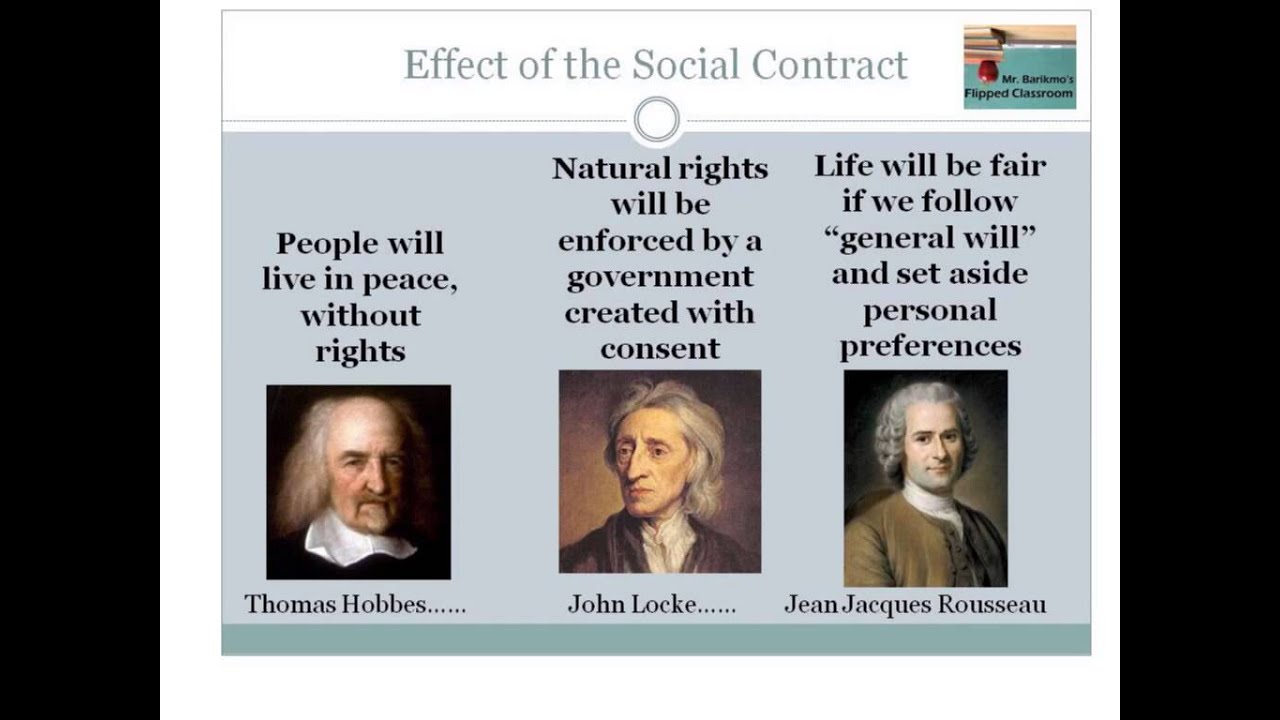
Added:Classical Social Contract Theory: Familiarity with the works of Thomas Hobbes, John Locke, and Jean-Jacques Rousseau, specifically Locke's arguments regarding the right to revolution.
Concepts of Political Legitimacy and Authority: Understanding how a state derives its authority to govern and the criteria used to determine when a government becomes illegitimate.
The Concept of Political Obligation: The philosophical debate surrounding why citizens are morally obligated to obey the law and the state.
Modern Political History of Nigeria: A foundational understanding of Nigeria's post-independence governance, federal structure, and historical socio-political challenges.
The Ethics of Resistance and Civil Disobedience: Exploring the philosophical boundaries between peaceful protest, civil disobedience (e.g., John Rawls, Martin Luther King Jr.), and armed rebellion.
Comparative Revolutionary Movements: Analyzing historical and contemporary global case studies where civic resistance successfully or unsuccessfully dismantled oppressive regimes.
Transitional Justice and State Reconstruction: Examining how societies rebuild governance frameworks and restore legitimacy after a successful rebellion or state collapse.
Constitutional Reform and Federalism in Africa: Investigating structural political solutions, such as devolution of power and constitutional restructuring, to address systemic governance failures in multi-ethnic states.
9.2K views501likes50:05Original Release: 2026-04-05
I am trying out a new device to ensure that we don't get the usual breaks in transmission.
I believe that is now completely eliminated from at least going forward.
We shouldn't be experiencing those disruptions any longer.
But I also now need to confirm that my audio is fine. Because there is men that I'm having to use something completely new.
So please I would love to have an indication that you can all hear me.
Please.
Thank you. Let me see that feedback.
God bless you. I see you Adequaya Cousin. God bless. Thanks for being here everybody. Good morning.
So I think I can finally say that we are now safe from all these silly interruptions.
Whether that be the limitations of living in Nigeria or whether that is due to deliberate human actions. Doesn't matter any longer. We are beyond them now.
So and thanks for letting me know that we're good with sound as well.
Happy Resurrection Day to you my Christian brothers and sisters.
And for you my Muslim brethren.
I guess I should be saying welcome back to the land of the canal from the land of the pure where you've been for a few.
How was that last week? I know you were catching up with all your many vices.
>> [laughter] >> Well, um we do have a lot to unpack. It's a new experience knowing that I can speak with you completely unworried about network interruptions and everything.
So let's just vibe for a bit, right? But your reverse will say a bit about in sharing.
You better not let things go thorough.
Uh where we play, we should also speak seriously at least to serious issues. We may laugh about them because as Fela said now laugh laugh he catch monkey. So sometimes we will laugh, right? So let me start the week that was. Although still he is actually with a few things that has happened as the week unfolded. The first of them which is tangentially related to the topic I'll be dealing with this morning.
And that one is the one that uh speaks to the ADC the APC and INEC.
You know when I tell you guys that there is a fire burning on top of the seas.
I think we've come to a point where you should actually stop arguing with me.
Just ask me to give you the ashes.
I'm sure that should suffice to deal with the argument. I have told you a lot of things in the past that seemed completely outrageous until they came mainstream.
And one of them was me telling you back in March 2023 that there is no election in 2027.
That Tinubu will never allow an election in Nigeria again. I told all of you.
Yesterday somebody posted an old clip of that he where he was pretty was saying pretty much the exact same thing.
And um when when when I looked at it I didn't realize that every time you're told the truth you have a need to euthanize yourselves or shall I say you lure yourselves into the delusion of believing that the unpalatable truth will not come true.
And that was exactly that was exactly what I'm seeing in these.
No matter how well-intentioned a coalition of politicians may be Tinubu will find a way to ensure that they do not have a platform for engagement with the people.
Now I believe that the critical disconnect is that instead of building an alliance with the people, the victims of the system the political collectives have focused on building an alliance with themselves.
But it is the people who must rise before this system can be destroyed because it cannot repeat, it cannot [clears throat] be reformed. It is intrinsically evil.
extrinsically toxic incapable of any change or delivery of anything good. It is designed to do exactly what it is doing.
So that Tinubu and the INEC and all of them have manufactured a crisis for the political collective that is the ADC which in my own view is just APC with the pimples of with the pimple of Peter Obi on his face. Which is why I was never enthused.
As well-intentioned as it might be and as much as I know that you all hope and pray that oh you could find some Voltron even if it is a collection of objectionable persons who were in APC yesterday. But that is not my purpose this morning. I don't want to say I told you so. I only want to remind you >> [clears throat] >> that you are not seeing anything new.
What you have seen with the INEC the judiciary and Tinubu and the system working to destroy platforms most of Obi at all is something that you should have seen. I told you since 2023.
You don't have a democracy.
That's the reality. We all have to pretend that Nigeria is still a democracy. That is why the like of me can still set up a camera and be speaking to you.
But as I speak with you even I know that I must always be very careful about my movement.
I must be very guided about my finances because the system is not designed to tolerate the like of me.
We are all pretending there is a democracy. They are pretending, I'm pretending, we are all pretending that we are in a democracy. But the reality is that even Abacha's season was not this bloody.
And the stealing was not this frontal.
The system was not this pervert.
I preached the message the other day. I titled it the death of men.
The death of men. I didn't say good men, I said men. The death of men. It means the absence, the complete absence of men.
I'm not talking about human beings, I'm talking about men. People have risen above their base values, their their their carnality.
They they've learned to understand their place as creatures in time who will die someday. So they would aspire to something higher.
I explained in that sermon and I urge you to look for it. It's online. The death of men. It was somebody asking me if I thought that we would ever have another Gani that provoked the thoughts that led to that lecture. And what I was saying essentially is that the society that produced Gani is dead.
So you can't have another Gani because the student union leaders who under guided Gani's struggle they are gone.
It was Segun Awolowo.
I don't know if you know the oracle.
Find him online. One of the most cerebral thinkers in Nigeria, a radical progressive.
He was in NANS as president during our own season.
And he was lamenting the putrefaction of one of our contemporaries who currently sits in the Senate. He was lamenting how a person who hoisted the socialist flag is today reactionary defending anti-democratic laws introducing them, a major spokesperson for this regime is in the Senate. So he was lamenting and I said to him is that maybe a little unfair to focus on that one. Where are all the others?
Where are the where were yesterday's pastors, imams canons, archbishops who spoke truth to power in the age of Gani Fawehinmi who made sure that when Gani was speaking he wasn't considered a madman. The like of me actually have to come out and be saying I'm a madman before I could before I can comfortably speak some truth.
That is how putrified the society has become. Today you go to the campuses, what do you find? Your mandate we shall stand.
These are tomorrow, the people who should be imagining tomorrow. They are done. Those are the persons that produced That was the society that produced Gani. I was student union president in LASU.
It was my regime that made Gani the life patron of that student union.
Would today's student union dare to call any of the progressive persons in our society to make them anything? Would they even invite such a person to any campus in Nigeria today? So, how can you have another Gani when you yourselves are a poor reflection of the society that was?
So, the death of men does not mean that they are dead. It simply means Kò sé ní yọ mọ.
No more persons.
No more.
No more persons.
We we we Where are the Umbers? The Emirs, the Obis who spoke truth to power back then. The judiciary in Nigeria was one to be proud of.
Even some of the most pro-government judges knew better than to do the things these ones shamelessly do today. Shamelessly, without any They fought They've completely forgotten that they will come and they will die.
And men do worry.
Àtárí wọlù fẹ́rẹ́ bí àní jiyàn ní bẹ́rẹ́.
Ní èsìrí wọlù tá dá sàì. Ní ó padà sàì júli ọmọ.
We all look as if we will not die again.
We live like we will never die.
Yet everyone who lives shall die.
And then the question will be what did you do with the life you lived?
How did you live it?
What choices did you make?
Did you leave that society better than you were born into it?
What did you do?
How did you impact that society?
Posterity will ask.
So, the reality is if anything is going to change, it's not going to be because the government changes.
Even if the government changes and you don't change, I don't change, we don't change, and find the collective will to become I preach that one to to you.
You know, a friend called me this morning and he was urging me to do something politically and I was explaining to him that it's a waste of time.
And um I realized that he couldn't understand me, but as I'm speaking with you, something became a little clearer to me.
And it is the fact that even if this generation fails to get the message, I am confident that another generation is coming following closely on the heel of this one that will get the message.
What we are saying today might very well be the road map by which they will navigate tomorrow.
But let it be said that we did our own bit.
So, it's almost 10:00 now.
Um since I still have a minute, I'll spend that reaffirming my complete faith.
Hear me again, my complete faith in the person of David O Mọlẹyín.
Those of you who are jumping on that silly bandwagon of those who are looking to destroy his character, you should be ashamed of yourself.
Have you ever felt the pain of exile?
He didn't do it He's not on exile because he's in love with money.
If some people will manufacture bishops, manufacture crises inside a party. If I every party, they manufacture crises, what do you think they will do to discredit one of the most critical voices in pursuit of your freedom?
When somebody puts some proof on the table, then you can be jumping to conclude You can be concluding and drawing your conclusions. You can voice opinions as negative as they may be if it is founded on truth.
Mhm? Every human being is fallible. Not suggesting that David is not human, but I find it rather distasteful that a lot of you, without proof, just based on allegations David is a very passionate man. I know he pisses off a whole lot of you. He doesn't have my patience or diplomacy, but remember, I'm not David's age. I've had time to be seasoned. I've calmed down. When I was David's age, I'll probably do worse than he's doing to each of you. I don't have the patience to deal with you guys or to David will take the time, he will explain. He's He's years years ahead of a lot of people who are presuming to have opinions about him.
But that is not my purpose this morning.
I'm just calling you to awaken your brains. Don't just be jumping to conclusion. David is too critical a voice to be lost to us. So, be careful. Mhm? Be careful.
Don't let yourself be recruited into the army of those looking to destroy a very very credible voice.
All right. Good morning, everybody.
I know I've had quite a number of my people with me.
Yeah, that's where I live with. I live in a jungle.
My space is deliberately forested. So, I have a lot of migratory birds who come around and make a whole lot of noise.
So, we would enjoy them together this morning. Mhm?
So, this morning yeah, happy Easter.
Happy resurrection morning to you guys.
I want us to discuss No, I can't even call it a discourse. I want to speak to the subject, the duty to rebel.
I posted I made a post earlier today recommending Babylon System by Bob Marley as the worship song for this morning.
And um I hope some of you have found the time to listen to that song. If you haven't, I recommend it to you. Um Creatives are essentially prophets if they are true to themselves.
And Bob Marley spoke from the throne of consciousness when he wrote that lyric.
And I hope you'll find the time to listen to it.
But what is the duty to rebel?
As um harsh as that might sound to some people, it is actually something that is rooted in the beginnings of modern society.
There was a gentleman, one of the proponents of the social compact theory, Jean-Jacques Rousseau.
And he it was that built on John Locke's proposition that the citizen retained the right to rebel when the state has become manifestly unjust, where the ruler um where the ruler has more or less taken away the sovereignty of the people. When there is a usurpation of sovereignty, and what is usurpation of sovereignty?
Let me begin by explaining what the social contract theory is so that you would have contextual understanding of the arguments that I seek to make this morning.
The social compact theory for the evolution of the modern state says that man existed in a state of nature where life was short, nasty, brutish.
It was Thomas Hobbes who started this theory.
But Thomas Hobbes did not Thomas Hobbes was of the opinion that however despotic the ruler who is elected as a process for the setting up of the state after the donation of sovereign will by the individuals who came together to form the state. He was of the opinion that regardless of how despotic this person may be, you really cannot do anything to remove him.
But subsequent proponents of the theory, the one that came after him, the notable one, at least the one mostly quoted is John uh is um John Locke.
And Locke was of the opinion that where the ruler who is created as a function of the donation of the people's free will and sovereignty. When that sovereign has destroyed the social compact, that theory of that contract that was entered into, the people have the right to break the compact that is already broken and to remove such a ruler.
Now, all of these assumes the anomalous states that arose out of our colonial experience.
One of such anomalies being the country called Nigeria.
It presumes that our people came together, exercised their free will, and formed a country.
Nothing could be farther from the truth.
We are the product of the white man's wet dream.
They sat together 125, 26 years ago in Berlin, and they drew lines and created spheres of influence, and these were the things that later became countries. No respect for the people living there. We were not even seen as human.
We were only just commodities, just a few short years before then. So, the entire construct of spheres of influence was merely the division of what was seen as spoil of war.
And we were carved up in that fashion.
And that was the basis of the creation of the Nigerian state.
Yes, maybe they sat down with a few despotic rulers whom they had propped up in order to find legitimacy for the evil that they were perpetrating.
But, none of us as individuals were deemed worthy of consultation.
So, my forefathers were definitely not consulted, and I doubt if any of yours were called to any meetings.
But, the Nigerian state was formed.
That Nigerian state pretended to have some sovereignty, at least the pre-independence persons, Awolowo, Ahmadu Bello, Zik, the different persons they would call nationalists, persons who are different levels of consciousness and honesty, and even agenda and purpose, were said to have agreed on our behalf to create today's Nigeria.
Six years, not even not even up to six years after the people who created Nigeria for their own benefit had left Nigeria in what was called independence, this country was torn apart.
And it became the fiefdom of uninformed men with limited imagination and understanding, soldiers, the oldest of whom was not even up to 35. That is not to suggest that these are not matured enough persons, but what education did they have?
These were persons who grew up deifying the evil.
Their own enslavers were their gods.
Those are the ones who built the state that we call Nigeria today.
And the contradictions, the inherent and intrinsic contradictions, the extrinsic ones, too, have come together to ensure that we have not managed to build a nation or birth a nation out of the mess that we were handed.
We call and speak to the point of racism. We talk about racism.
But, do you know that the ethnic bigot is actually the stupid cousin of the racist?
If you, [clears throat] same black skin, same country, locked together for over 60 years, cannot find common purpose amongst yourselves, if ethnicity and religion, sectarian differences, political differences, partisan differences are enough to divide you that you cannot even find common cause with yourselves, manifest victims of a very vicious system that does not even hide its intentments, you cannot find common purpose to come together.
How do you [clears throat] come to the point where you understand that you have a duty to rebel?
Pictures came out after the massacre in Jos.
The governor, I believe he's a Berom, was in a tank, armored tank, to visit the conflict zone.
He was welcomed by persons who had nowhere else to go, no protection, and anything close to what he had.
But, he went in an armored vehicle.
Let that sink in.
He is not Fulani, he's Berom, one of the victims.
These are his people.
He speaks their language.
He was there, but went in an armored vehicle.
But, these people, he left them behind after he had left with his own security.
Let that sink in.
Your president, he went to Jos, he did not leave the airport.
He informed them, "You don't have light.
I can only stay 10 minutes."
The governor, and even the previous one, said the thing was done to discredit Mr. President.
The point I'm making to you is that this has nothing to do with ethnicity.
It has nothing to do with religion.
These governors, they are Christians.
At least they protest and say so.
They are also from that state, the same ethnicity being slaughtered.
They reduced the lives of their brethren.
They reduced the wailings and tears of that woman crying over her dead son, they reduced it to politics.
Did you hear them?
This was done to discredit Mr. President.
The same Mr. President who could not be bothered to move beyond the airport.
And then, you cannot understand that you have a duty to rebel because you upset me, it's your person that is there. You found reasons why you cannot find common purpose.
Muslims are dying as Christians are dying.
Yes, there is a Fulani militia that sometimes speaks in the name of Muslims that is doing the killing.
Yes, a lot of Muslims are foolish enough not to understand that this is not in the name of God, and by their silence, they become complicit in this mass mass murder.
But, it does not change the fact that at the end of the day, Muslims are equally being killed just as Christians are being murdered.
Different reasons, but all traceable to the complicity of the state and its manifest failure.
When you see this failure, at what point do you believe you're going to find a grace of common purpose so that you may then understand that you have a duty to rebel?
In the social contract theory, the basis for the establishment of the modern state is so that the state may provide security of lives and property.
In Borno, just a couple of weeks ago, multiple persons were murdered.
In Kwara, another branch of Al-Qaeda coming in through the Republic of Benin and the ravaging the boundary towns.
Nigeria has failed woefully.
It's not a failure born of incapacity.
It's a failure born of complicity.
Buhari told you how they imported the terrorists.
You hear your chief of defense staff telling you how these are our brothers. Terrorists are our brothers.
Terrorists those are the brothers that we are supposed to embrace.
People who have taken up arms murdered untold number of persons, sexually enslaved our sisters and mothers.
These are the persons your chief of defense staff is telling you are your brothers.
The persons in place of authority in relation to your security are telling you that you should embrace the terrorists.
The EU pleaded for it in primature on it.
The Nigerian state should rehabilitate terrorists. Britain will not accept some British who are caught up with ISIS back in Britain. They denationalized them. And so as a lot of a whole lot of European nations.
But they are telling you that you should not You should make a point of reintegrating terrorists.
They are not even shy about hiding their criminality, their criminal complicity in our mess.
Why should they be?
When they are partners in progress, our government itself is complicit in the mess we are in.
I know some of you would have forgotten Commodore Olawunmi.
Commodore Olawunmi was a spook, as a spy.
National security, somebody who should ordinarily not be seen in public.
He was in a TV studio. He told you as far back as 2016 he had handed the list of terrorist sponsors to the president.
That is um Muhammadu Buhari.
May he not sleep well wherever he is.
It was his bid for power looking to soak the blood of dogs and baboons that brought in the terrorists.
They gave him the list of sponsors.
What did you want him to do?
They are reporting the evil to the wicked.
How?
This is where we are.
The state has failed in his most basic duty.
And remember, it is not a failure that is born of incapacity.
It is a failure that is deliberate because the government itself is complicit.
It is not for want of a capacity.
Nigeria restored peace in Liberia.
In the '60s we were enforcing peace in the Congo.
We enforced and restored peace in Sierra Leone.
We deployed bomb We deployed bombers, fighter jets to Republic of Benin to restore democracy when there was a coup attempt last year.
But this same country we sit down. This same country that air force is not available when terrorists are having Eid Eid service displaying their full harms.
They have nowhere nothing to say when terrorists are holding meetings giving conditions for the attendance of law enforcement agents.
They are nowhere to be found.
Nigeria not because it is lacking in the capacity to protect, but because it is deliberately not doing so.
Multiple reasons.
But that is neither here nor there. But that is the first duty in which it has failed.
But we must also now understand that when you now lose the power to elect your own rulers when you are not in a position to change the system based on the agreed Nigerians were never called to write a constitution. But even if we accept the legitimacy of decree 24 of 1999, which you call the constitution even if we accept its legitimacy even if we accept the supremacy of the existing legal order it then mean that all of us are equally bound to obey what the legal order has said.
And this is where that is stringent argument in 2023 which were also made by a lot of us but ignored by those who are desperate to install Tinubu in power. This becomes important.
In installing the person who is today the Senate president in installing him in the Senate the Nigerian constitution was violated violently with the connivance of the Supreme Court.
Akpabio at there is no legal basis for Akpabio's existence in the Senate.
He was clearly disqualified by the law.
But our Supreme Court did the magic.
Turned the constitution upside down.
And a man who had run for the presidency, who had picked up the form for the presidency expressly barred by the electoral act was allowed to pick up the form for the Senate. And the Supreme Court martial.
In pursuit of a narrow interest the law was turned on his head to sit in the Senate.
And he sits above the sovereigns, me and you.
Because he's not there based on our will.
He is there based on the prescription of the ultimate beneficiary of the coup that was plotted against that imperfect constitution in 2023.
Bola Ahmed Tinubu does not qualify to sit in the seat.
But the Supreme Court performed its magic.
Now, here is the thing me and you need to understand.
What we tolerate becomes the culture.
We have tolerated the violation of that constitution.
As bad as that fraudulent constitution might be the reality is that today we don't have one any longer.
Nigeria is today ruled by the will of men not by any law whatsoever.
And this imposes a duty on the conscious to rebel.
When executive powers when the executive usurps the powers of the legislature and is also exercising the powers and prerogative of the judiciary in a corrupted concussion of power as currently exist in Nigeria where a single man decides an entire budget item like Lagos Calabar coastal road without any public bid whatsoever without any tender and he award this contract to a company in which he has publicly known and declared interest violating every law under the public procurement act under the PPP laws it stinks.
And you can no longer speak of a constitutional order in that space.
Where the INEC chairman would have the brazenness to decree another party out of existence in pursuit of manifest political chicanery, [clears throat] you know at that point that you no longer have a path to politically exercise your sovereignty.
And therein lies the duty to rebel.
There is a duty to rebel.
Sovereignty is a contract among equals, not a surrender to a sovereign.
Americans can have rally and say, "No to kings." But can we truly say that?
Your local government chairman is a king.
Your governor is a king. Even the policeman sees himself as a king. Every person who is exercising the powers of the state has become a cabal, you see, the one who must not be questioned.
Because they are not obliged to any laws. They are not obliged to to to obey any rules.
All the laws apply to me and you, but nothing applies to them. They are not constrained by any rule. The whims of men reign supreme in Nigeria.
Man is born free, Rousseau said, and everywhere he is in chains.
It is a violation of the state of nature to accept this as normal and refuse to rebel.
All the reasons you have found not to rebel, you need to throw them away because there is a duty.
There is a duty to rebel.
Even if to retain one's humanity.
Look, my grandmother taught me.
She said, "Self-respect is the foundation of all respect."
And that it is the excess of the respect that you have for yourself that you extend to others when you come into contact with them. Because you want to be respected, you respect yourself. You then must respect the persons into with whom you will come into contact.
For those who are Yoruba, you would understand. He says, "Bi o ba pon won ni, bi won ba pon ra won ni, ara won ni won ko la butan." Do your own duty, and then it falls on them to either respect or disrespect themselves.
If you have done your duty as a human being, you will know very clearly that this is not normal.
And it should not be tolerated. Under no circumstances whatsoever must this be normalized.
You have a duty to rebel.
The duty that we now have that is allied to that duty to rebel is the duty to take the time to educate ourselves. Because every time we talk about the duty to rebel, every time I speak to the duty to ensure that a revolution comes about in this country, one of the first things that happen to a lot of you is that you think violence. And I've had these tendencies argument with a few of you online. Let me clarify once and for all today as I bring this to a close.
When you have identified the duty to rebel, you are also under a duty to do so as thinking men who act as men of thought. And paraphrasing Nkrumah, he says, "Revolutions are brought about by men of action who act as men of thought."
Because I desire change from a power that is profane and violent, predictably violent, does not mean that I have to embrace violence.
Mazi Nnamdi Kanu Kanu was never caught carrying a K 47 anywhere.
But the Nigerian state has him in a prison today. The same state that is talking about rehabilitating persons who have taken up arms against it.
The same state that has the space to rehabilitate terrorists has someone who is speaking to the grievances of an entire people in prison.
This is the state telling you that it has no respect whatsoever for any rhetoric in relation to violence.
However, we are not limited to street protests.
Those of you who are artisans, those of you who have access to market women, if you don't All of us have duties to educate ourselves and explain to our people. If we say sit at home, how do you tell a person to sit at home when you have not educated them about the need to sit at home?
Let us be deliberate about finding alternatives to the street protests that have perennially invited the state to treat us as sitting ducks when we walk to the street.
If sit-at-homes are not effective, we wouldn't have done it in the days of NADECO during Abacha years.
If sit-at-homes are not effective, Soludo in Anambra would not be threatening people to come out on Mondays.
The point is, if we don't consult our efforts, if we don't take the time to educate the people, find common purpose, stop thinking like tribesmen, understand that we are all in this together, stop being foolish cousins of the racists with your bigotry, come together, find common purpose, reach out across the various divides, build bridges, talk to yourselves because the duty to rebel cannot be exercised if we do not bring ourselves together first.
This has nothing to do with tribes, ethnicity, religion. It is a class struggle.
They don't care about your ethnicity. The beneficiaries of Nigeria comes from your tribes.
Regardless of where you are from, there is a beneficiary of Nigeria that came from there.
One of your persons is feeding from that trough that does not desire change in Nigeria.
For them, it has nothing to do with ethnicity. They care less about religion.
They care about their interests. If they can find common interests, what stops you from finding common interest?
Why is it so difficult for you, victims, to see that your interests are the same?
Is the person in Buhari's hometown buying fuel for less than me and you are paying today?
Aliko Dangote's children affected by what is happening?
I was watching Gotel Aboki talking about revolution and while the rattle came after him, and I I listened to him.
The guy was saying the truth. He's not He's not affected.
But we all sit down here. The persons who are affected are too busy dividing themselves on behalf of the beneficiaries.
In doing so, you lose sight of the duty to rebel. Because you are vicariously having a good time because some other person is being victimized. Oh, the Ibos are feeling it. Are you not feeling it?
Are you not feeling it? That fat-bellied one that is going around running, city boy.
Na Igbo come from?
They don't care about you. Your ethnicity comes for nothing.
To hell with your ethnicity. It's about the class.
And it's a classless class.
But you subjugate yourself to them.
And you lose sight of the duty to rebel.
A one-party state is being foisted on you.
There's nothing wrong intrinsically.
There is nothing inherently wrong with a one-party state if it has the common good in mind.
China is a one-party state. That's where everybody is running to as a model of good governance.
But you look at this, and what do you see?
The establishment of abnormality and insanity in our country.
And we give up the duty to rebel.
Rousseau spoke spoke to the the duty to termination of obedience. That's civil disobedience.
It's within my right.
It is completely within my right.
When the powers of the rule state has been subverted to the point where it now reigns supreme over the ruled, the conscious person have a duty to rebel.
But when you rebel, there is a duty to reconstitute so that anarchy may not reign.
And that is the part where we should be speaking of the duty to reconstitute.
Have a plan for the day after the end of this system.
I have no interest in 2027.
I am interested
Up Next

26:23
Barry Foy: How a Smuggler Reshaped Federal Law Enforcement
@Blackfiles-HD
49.5K views•2026-02-19

6:55
Understanding Copyright and Fair Use in the Digital Age
@techquickie
144.1K views•2016-07-22
5:27
Forensic Phonetics: Speaker Identification in Legal Cases
@nptel-nociitm9240
539 views•2025-03-19

24:42
Police Interrogation Tactics: False Confessions & Legal Reform
@LastWeekTonight
7M views•2022-04-18
Related Study Plans & Knowledge Roadmaps
Structured learning paths in Law
law
Analyzing Mergers: Clayton Act & FTC Rules
01Introduction to Antitrust Law and Market Competition
02Corporate Mergers and Section 7 of the Clayton Act
03Defining Markets and Measuring Concentration (HHI)
+ 2 more learning modules
10h5 modules
Explore Roadmap
law
Self-Defense Law: Imminence & Castle Doctrine
01Foundations of Self-Defense Law
02Imminent Threat & Reasonable Belief
03The Principle of Proportionality
+ 3 more learning modules
12h6 modules
Explore Roadmap
law
Defamation Law: First Amendment & Actual Malice
01Introduction to civil torts and the First Amendment
02Elements of Defamation: Libel and Slander
03Public Figures vs. Private Individuals
+ 2 more learning modules
8h5 modules
Explore Roadmap
law
Hearsay Rule: Trial Evidence & Exceptions
01Introduction to Trial Evidence & Courtroom Basics
02Demystifying Hearsay: The Core Definition
03Non-Hearsay: Exclusions Under FRE 801(d)
+ 3 more learning modules
14h6 modules
Explore Roadmap