In American Sign Language, similar signs can be distinguished by their phonological parameters including handshape, location, movement, palm orientation, and non-manual signals (NMS). This video presents ten pairs of minimal pairs (signs that differ by only one parameter) to help learners identify the specific distinguishing feature for each pair, such as DRY vs. UGLY differing in location, CLASS vs. FAMILY differing in handshape, and YOURS vs. MINE differing in palm orientation.
ASL Minimal Pairs: Sign Parameters Practice Exercise
Added:Deep Dive
Understanding of the five basic phonological parameters of American Sign Language: Handshape, Location, Movement, Palm Orientation, and Non-Manual Signals (NMS).
Language Play Through ASL Rhymes and Rhythms
3.9K
American Sign Language has five distinct parameters that constitute its phonological system: handshape (finger and palm configuration), movement (direction and path of hand motion), location (body position or space), palm orientation (which way the palm faces), and non-manual markers (facial expressions and body movements). Changing any single parameter creates a completely different meaning. For example, changing palm orientation from up to down changes 'children' to 'balance'; changing handshape keeps movement constant but produces different words like 'cheese' versus 'paper'; changing location produces different meanings even with identical handshapes and movements.
Click to watch →
![AULA [AO VIVO] PARÂMETROS, LINGUÍSTICA E GRAMÁTICA! - FELIPE SABARÁ](https://i.ytimg.com/vi/Kd7aw5cXUlM/sddefault.jpg?sqp=-oaymwEmCIAFEOAD8quKqQMa8AEB-AHUBoAC3gOKAgwIABABGGUgZShlMA8=&rs=AOn4CLCD9Hfl9goN-s00w9XHimnhhWtaMw)
AULA [AO VIVO] PARÂMETROS, LINGUÍSTICA E GRAMÁTICA! - FELIPE SABARÁ
14.2K
Sign languages have five fundamental phonological parameters that work together to form complete signs: (1) Hand Configuration (configuração de mãos) - the shape of the hand, (2) Point of Articulation (ponto de articulação) - where in space the sign is produced, (3) Movement (movimento) - the path and type of motion, (4) Orientation (orientação) - the direction the hand is facing, and (5) Non-manual Markers (expressões não manuais) - facial expressions and body language. These parameters are analogous to phonemes in spoken languages, but instead of being based on sound, they are based on visual-gestural elements. The term 'quirema' refers to the hand units in sign languages, derived from the Greek word 'kheir' meaning hand. Signs are constructed by combining these parameters, and changing one parameter can change the meaning of a sign. William Stokoe, an American linguist at Gallaudet University, pioneered the study of sign languages in the 1960s, establishing sign languages as legitimate languages with their own grammatical structures. Sign languages have the same linguistic structure as spoken languages, including phonology, morphology, semantics, pragmatics, and syntax, but use visual-gestural channels instead of auditory-vocal channels. Syntax in sign languages typically uses Object-Subject-Verb (OSV) order instead of the Subject-Verb-Object (SVO) order used in spoken languages, reflecting how deaf people think and process information in a more visual and spatial manner.
Click to watch →
![[LIB] Inspire-se - Libras III](https://i.ytimg.com/vi/bRTa214nSvM/maxresdefault.jpg)
[LIB] Inspire-se - Libras III
218
Sign language has five phonological parameters: hand configuration (the shape of the hand), movement (the motion of the hand), location (where the sign is produced in space), orientation (the direction the hand is facing), and non-manual markers (facial expressions and body movements). These parameters work together to create meaning, similar to how phonemes work in spoken languages. The orientation and non-manual markers were the last parameters to be identified in sign language research.
Click to watch →

Gramática De Libras
328.6K
Sign language operates through five essential parameters that must work together for correct communication: (1) Hand configuration (shape of hands), (2) Point of articulation (where signs are made on the body), (3) Movement (the motion used), (4) Orientation (direction and form of signs), and (5) Facial and bodily expression. All five parameters must be present and aligned for a sign to be correct. Signs and gestures are fundamentally different—signs follow linguistic rules while gestures are informal movements used by hearing people.
Click to watch →
Aspectos Históricos da Educação de Surdos e Introdução à Linguística da Libras
810
Sign language has five phonological parameters necessary to form signs: (1) Hand configuration - the shape of the hand, (2) Point of articulation - where the sign is produced (e.g., mouth, face), (3) Movement - the motion of the hand, (4) Orientation of the hand - the direction the palm faces, and (5) Facial expression - which conveys meaning and emotion. These parameters work together to create meaningful signs, similar to how phonemes work in oral languages. For example, the sign for 'orange' uses different parameters than the sign for 'learn,' demonstrating how these elements combine to create distinct meanings.
Click to watch →
Deep Dive
The linguistic concept of 'minimal pairs'—words or signs that differ by only one phonological element, resulting in different meanings.

수화통역사 자격증 🖐🏻 (수어통역의 기초) 6강 | 수어통역 기초3
6.6K
Minimal pairs in sign language demonstrate that each phonological parameter can distinguish meaning. Handshape minimal pairs (예쁘다 vs 어렵다) differ only in handshape. Location minimal pairs (만들다 vs 하다) differ only in location. Movement minimal pairs (배우다 vs 머시따) differ only in movement pattern. Directional minimal pairs (연습하다 vs 청인) differ only in movement direction. Non-manual signal minimal pairs (아깝다 vs 귀엽다) differ only in facial expressions. This systematic variation proves sign language has phonological structure.
Click to watch →
![Phonology: Intro to linguistics [Video 3]](https://i.ytimg.com/vi_webp/1JYahvKUvPU/maxresdefault.webp)
Phonology: Intro to linguistics [Video 3]
99.2K
A minimal pair is a useful tool for determining what constitutes a phoneme in a language. A minimal pair consists of two words that differ in only one sound. Examples include 'would' and 'good' (differing only in the first sound), 'see' and 'saw' (differing only in the last sound), and 'will' and 'with' (differing only in the last sound). These pairs help identify which sounds can actually distinguish meaning in a language.
Click to watch →

Lenguaje - Semana 02 - Pre San Marcos Ciclo Especial de Verano 2026 (Nuevo Ciclo)
201
A minimal pair is a pair of words that differ by only one sound, and this change in sound results in a change in meaning. Examples include: mesa/misa, tapa/tapa, mota/nota, oro/lo, caro/carro, nido/niño. This concept demonstrates the distinctive function of phonemes in language.
Click to watch →

Lenguaje - Semana 03 - Consultas Académicas Pre San Marcos Ciclo 2024-I (Nuevo Ciclo)
127
Phonology is a discipline of linguistics that studies the phonological component of language, consisting of units (phonemes) and rules for their combination. Minimal pairs are pairs of words that differ in exactly one phoneme while being identical in all other aspects, producing a change in meaning. Minimal pairs can occur at the level of consonants or vowels. The key criteria for identifying minimal pairs are: both words must have the same number of phonemes, and they must differ in only one phoneme. Examples include 'peso' and 'queso' (differ in initial consonants), and 'quiso' and 'guiso' (differ in initial consonants).
Click to watch →

Chapter 4: The Sound Patterns of Language/ George Yule/ by A. K. A. S.
4.3K
A minimal pair is a pair of words that differ by only one phoneme and have different meanings. For example, 'bat' and 'pat' differ only by the initial phoneme /b/ versus /p/. Minimal pairs are used to identify phonemes in a language because they demonstrate that the differing sound can distinguish meaning. If two words differ by more than one phoneme, they are not minimal pairs.
Click to watch →
Deep Dive
A foundational vocabulary of basic ASL signs to readily recognize the visual examples used in the exercise.

25 Basic ASL Signs for Beginners (the MOST important)
392.5K
This section covers foundational ASL signs essential for basic communication. The sign for 'I' or 'me' involves pointing to yourself with a one-hand shape. 'He,' 'she,' and 'it' all use the same pointing motion in any direction. 'What' uses a five-handshape moved side-to-side with furrowed brows. 'Again' combines an open B handshape with a bent B handshape in a twisting motion. These signs form the building blocks for more complex conversations and demonstrate how pointing and hand movements convey meaning in ASL.
Click to watch →
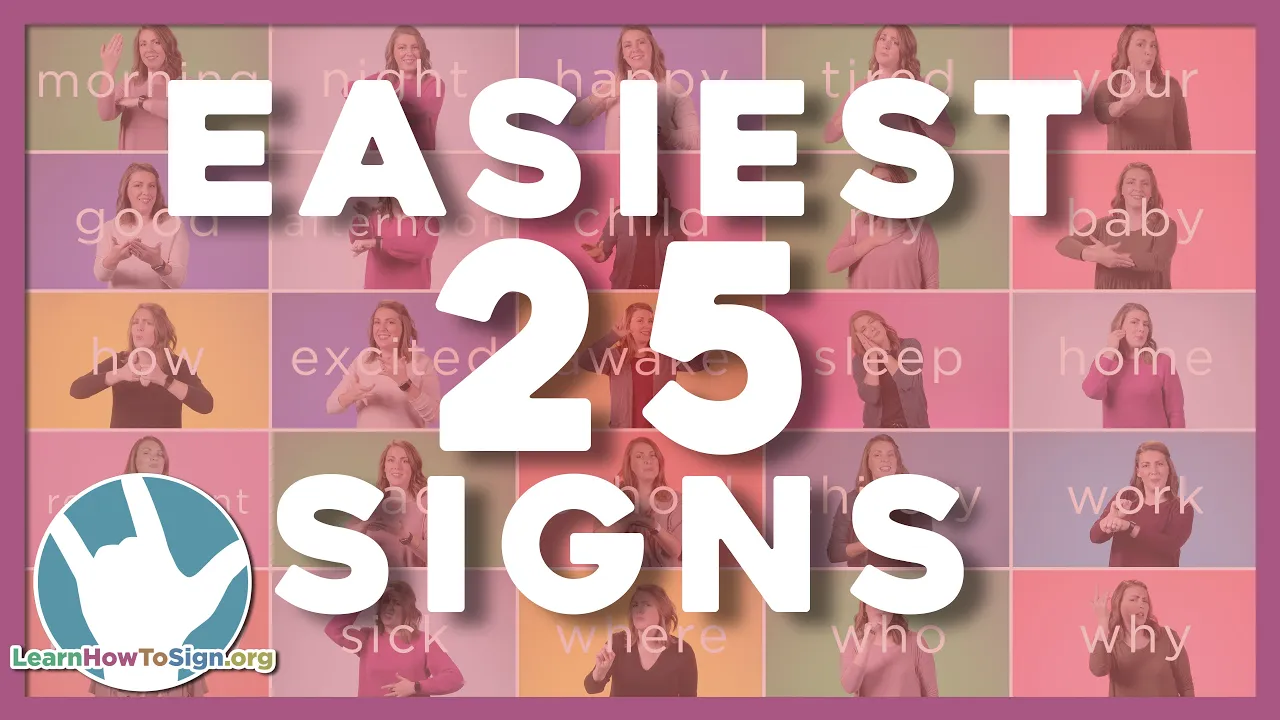
25 Easiest Signs to Remember in ASL | ASL Basics | Sign Language for Beginners
347.6K
This section covers essential American Sign Language vocabulary including 'good/well' (hand from chin to non-dominant hand), 'bad' (opposite of good), 'hungry' (C-hand down chest), 'thirsty' (index finger from chin to chest), 'my/mine' (flat hand on chest), 'your' (pushing hand toward person), 'where' (index finger searching like compass), 'who' (owl call), 'how' (with lowered eyebrows), 'why' (Y-hand wiggle), 'baby' (rocking motion), 'child' (head pat), 'work' (fists pounding), 'home' (O-hand across face), 'school' (teacher clapping). Key learning principles emphasized: practice signing along, review difficult signs, slow down videos, and repeat frequently for retention.
Click to watch →
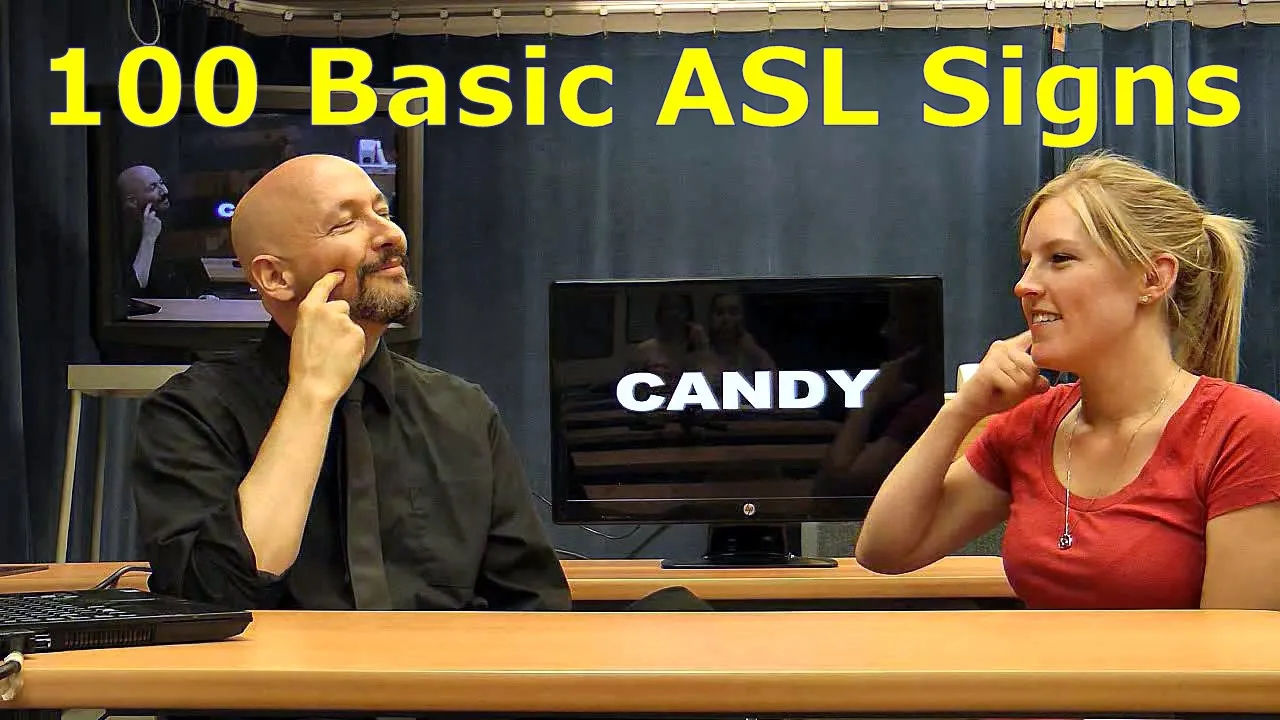
"100 Basic Signs" (American Sign Language) (www.lifeprint.com)
5.6M
This comprehensive section covers three core vocabulary categories essential for basic ASL communication. First, family relationship signs including Mom, Dad, Boy, Girl, Marriage, Brother, Sister, Grandpa, Grandma, Aunt, Uncle, Baby, Single, and Divorced establish foundational interpersonal vocabulary. Second, place and location signs covering Home, Work, School, Store, Church, Car, In, Out, and With enable spatial communication. Third, directional and locative signs like Come, Go, and With demonstrate how movement is incorporated into ASL grammar. The video emphasizes proper hand positioning, noting that for 'church' the thumb should not be too high on the arm, and demonstrates variations in sign execution while validating multiple acceptable approaches.
Click to watch →
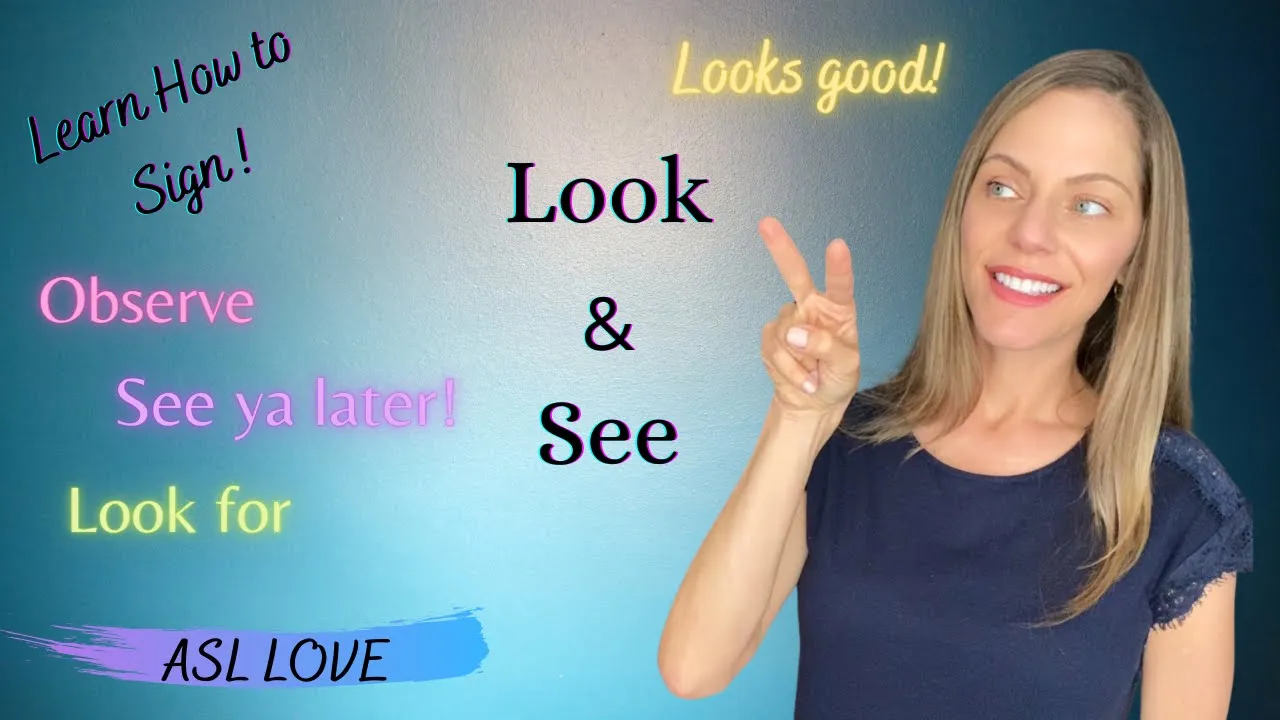
How to Sign LOOK - SEARCH - WATCH - SEE - Sign Language ASL
73.7K
This lesson covers American Sign Language signs for visual perception verbs. The core signs include LOOK (directional V handshape pointing outward), SEE (same handshape with palm inward), WATCH (bent L handshape pulled forward), MONITOR/OBSERVE (circular V handshape motion), and SEARCH/LOOK FOR (circular C handshape motion). The instructor demonstrates how variations are created through handshape changes (L vs V), palm orientation, movement direction, and facial expressions. These signs form a vocabulary set for expressing visual attention and observation.
Click to watch →
100 Basic Signs You Should Know | Part 1: Starting Conversations in ASL
621.1K
The first 25 essential ASL signs covered in this lesson include: hello, how you, fine, good, bad, my name, what, your, where, I learn sign language, slow, stop, please, thank you, your welcome, sorry, why, who, and when. These signs provide the foundational vocabulary needed to initiate and follow through with basic conversations in American Sign Language. The instructor reviews all 25 signs at the end of the lesson to reinforce learning and ensure retention.
Click to watch →
Deep Dive
Basic comprehension of how visual-gestural languages organize phonetic structure compared to auditory-vocal languages.

Language, Two Ways | Jeremy Kuhn | TEDxStuyvesantHS
783
Just as spoken languages have phonological systems with natural classes of sounds organized by place and manner of articulation, sign languages have analogous systems organized by visual-spatial parameters. These include handshape (what the hand looks like), location (where on the body the sign is produced), movement (direction and type of motion), and orientation (which way the palm faces). Signs are grouped into natural classes based on shared properties in these dimensions, similar to how sounds are grouped in spoken languages.
Click to watch →

Language and the Brain, Part 2 - 2009
1.5K
Sign languages possess sublexical phonological structure similar to spoken languages but based on manual and body features rather than sounds. Signs differ in location (hand position in space), hand shape, orientation (hand angle), and movement. There are rules governing how these components can be combined—certain handshapes cannot produce certain movements, and specific sequences of handshapes are allowed or disallowed depending on the language. This demonstrates that sign languages have systematic phonological organization comparable to spoken languages.
Click to watch →
Multimodality and Visual Language – Prof. Dr. Neil Cohn
1.8K
Visual languages are systems used for drawing, analogous to spoken languages for speaking. They use the same types of linguistic structure: a visual vocabulary built of memorized units stored in memory (both fixed and productive items), ordered by a grammatical system using grammatical roles and hierarchical constituents. There is cross-cultural diversity in visual languages corresponding to different drawing systems. The language faculty is actually a multimodal faculty consisting of three inherent modalities: graphic (visual), vocal (speech), and bodily (gestures). This architecture includes correspondences between modalities—for example, writing creates a correspondence between vocal sounds and graphic representations. Expressions emerge as interactive activation states of the subcomponents within this broader architecture.
Click to watch →

Language is a Physical Thing | Steven Hartman Keiser | TEDxMarquetteU
795
Visual gestural languages like American Sign Language (ASL) and British Sign Language (BSL) are independent linguistic systems that change the world just like spoken languages. They exist separately from spoken languages and have radically different word structures and sentence formations. Unlike spoken American and British English, which are largely mutually intelligible, ASL and BSL are not mutually intelligible because they differ in hand shape, location, motion, and meaning. You learn ASL by being around ASL speakers, not by observing English speakers gesturing.
Click to watch →

Fonologia da língua indígena terena de sinais e contribuições para a tipologia das línguas de sinais
151
Sign languages are visogestual modalities, meaning they are produced through hand movements and non-manual expressions (facial and body expressions) and are received through vision rather than hearing. This distinguishes them from oral languages, which are auditory. The visogestual nature of sign languages means they have different phonological parameters compared to spoken languages.
Click to watch →
Prerequisite Knowledge
- Concept 01Understanding of the five basic phonological parameters of American Sign Language: Handshape, Location, Movement, Palm Orientation, and Non-Manual Signals (NMS).
- Concept 02The linguistic concept of 'minimal pairs'—words or signs that differ by only one phonological element, resulting in different meanings.
- Concept 03A foundational vocabulary of basic ASL signs to readily recognize the visual examples used in the exercise.
- Concept 04Basic comprehension of how visual-gestural languages organize phonetic structure compared to auditory-vocal languages.
Subsequent Learning
- Step 01Exploration of ASL morphology, such as how shifting specific parameters changes a verb to a noun (e.g., SIT vs. CHAIR).
- Step 02Study of ASL phonological processes in conversational signing, including assimilation, handshape change, and parameter deletion.
- Step 03Introduction to sign language notation and transcription systems, such as Stokoe Notation or SignWriting, which classify signs by their parameters.
- Step 04Practical application of parameter precision to improve conversational clarity and reduce signing errors in real-world communication.
Sign Pairs
More Pairs
Sign Pairs
0:06Playing Section
- 1
Tests recognition of similar sign pairs like DRY/UGLY.
- 2
Covers ONION/APPLE and SCARED/BREATHE distinctions.
- 3
Highlights subtle movement and location differences.
The Movement-Hold Model (Sequential Phonology)
While traditional ASL instruction categorizes signs using five simultaneous parameters (handshape, location, movement, orientation, and non-manual signals), this framework has been criticized for oversimplifying sign structure. The Movement-Hold Model, developed by Scott Liddell and Robert Johnson, presents a major alternative perspective. It argues that sign languages, like spoken languages, possess a sequential segment structure consisting of alternating 'movements' and 'holds' (analogous to consonants and vowels). Under this model, analyzing signs merely as static bundles of simultaneous parameters fails to capture the complex, rule-governed sequential changes that occur within a single sign. For students, understanding this sequential perspective reveals that sign phonology is much more dynamic and structurally aligned with spoken language phonetics than a simple five-parameter checklist suggests.
Deep Dive
Exploration of ASL morphology, such as how shifting specific parameters changes a verb to a noun (e.g., SIT vs. CHAIR).
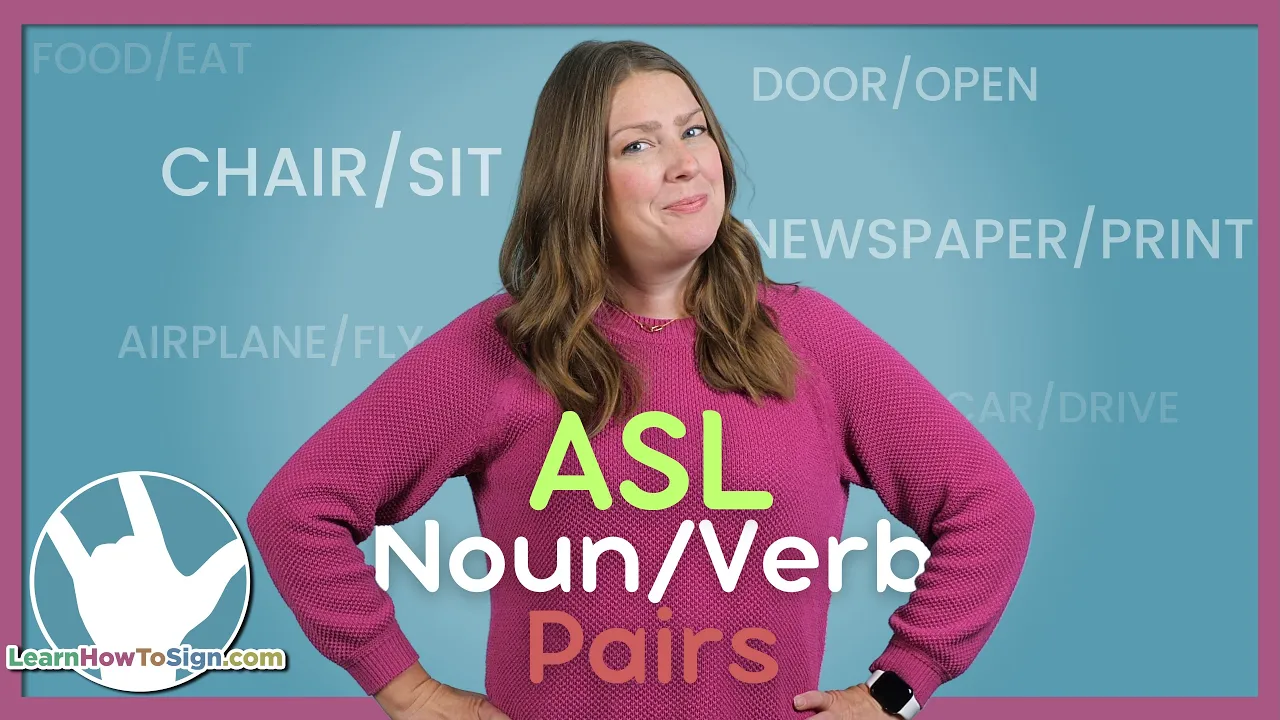
ASL Noun Verb Pairs Explained
16.1K
Several common ASL noun-verb pairs demonstrate the movement distinction: (1) SIT (one motion of sitting down) vs CHAIR (tapping motion), (2) FLY (continuous movement) vs AIRPLANE (shorter movement), (3) OPEN (one singular motion) vs DOOR (double movement of opening and closing), (4) PRINT (showing the act of printing) vs NEWSPAPER (multiple movements). These examples illustrate how changing the movement pattern transforms the meaning from noun to verb.
Click to watch →

#10 ASL Morphology
12.2K
In American Sign Language, morphemes are the smallest meaningful units; free morphemes like individual signs (e.g., 'book', 'sit') can stand alone with complete meaning, while bound morphemes must attach to other morphemes to convey meaning. Bound morphemes in ASL include inflectional morphemes (movement changes and facial markers that modify verb meaning without changing part of speech, such as circular movements indicating duration or facial expressions showing intensity) and derivational morphemes (movement changes that transform part of speech, like quickening the movement of 'fly' to create the noun 'airplane' or modifying 'sit' to create the noun 'chair').
Click to watch →

ASL Signs- furniture and parts of a house
357
The ASL sign for 'chair' is the same as the sign for 'sit', but with a key difference: you tap it twice instead of once. This demonstrates that chair is a noun, while sit is a command or action.
Click to watch →

Noun/Verb Pairs
354
The ASL sign for 'chair' demonstrates the noun-verb pair concept. The noun 'chair' is signed with a double tap movement, while the verb 'sit' or 'sit down' uses the same handshape, location, and orientation but with only a single tap movement. This illustrates how movement modification distinguishes nouns from verbs.
Click to watch →

SIT vs. CHAIR in American Sign Language
19.2K
In American Sign Language, nouns are characterized by a double movement pattern, meaning they are performed twice rather than once. This distinguishes nouns from other parts of speech in ASL grammar.
Click to watch →
Deep Dive
Study of ASL phonological processes in conversational signing, including assimilation, handshape change, and parameter deletion.

#9 ASL Phonological Processes
10.2K
Phonological processes in ASL are systematic changes in sign formation that occur based on context, including movement epenthesis (adding movement between signs), assimilation (when a sign's features influence adjacent signs), weak hand anticipation (preparing the non-dominant hand for the next sign), hold deletion (removing pauses within signs), and metathesis (changing the order of sign segments); these processes are obligatory for native signers and can be influenced by formality level, with some being dialect-specific.
Click to watch →

Zelda - Ocarina of Time MQ: Why Linh-chan Learned Sign Language - PART 13
7.9K
Phonology is the study of basic language elements. In ASL, this involves examining handshape, movement, location, and palm orientation. Palm orientation is crucial—for example, when signing about something moving forward toward you, the palm faces forward, while when signing about something coming toward you, the palm faces you. Different signs can share the same handshape but differ in location (e.g., 'girl' vs. 'not'). Phonetics examines how signs are physically produced, including signing location. Signs are typically signed in the mid-body range, and lowering the location slightly creates different signing styles, similar to accents in spoken languages.
Click to watch →
ASL Phonology
3.2K
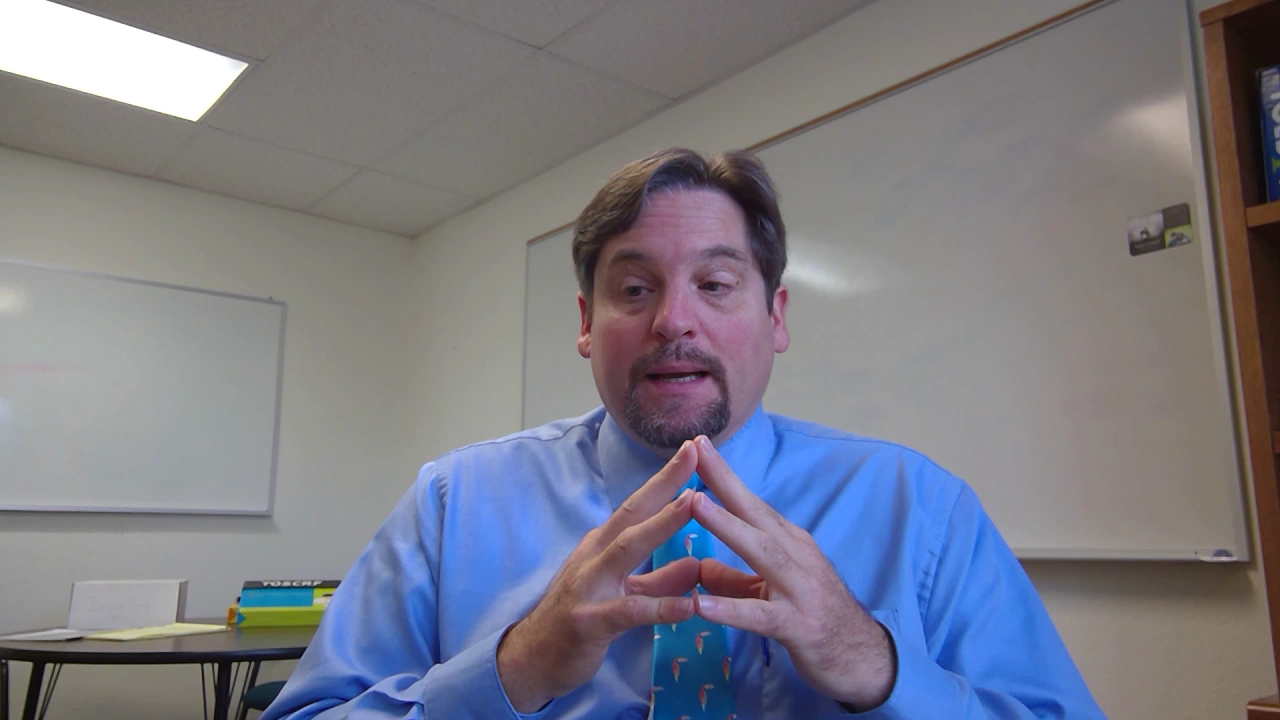
ASL phonology operates through six key parameters—movement, direction, repetition, handshape, placement, and palm orientation—that function similarly to phonemes in spoken languages, where individual parameters carry no independent meaning but combine to create distinct signs; for example, changing movement from up-and-down to circular transforms 'school' to 'paper,' while altering handshape changes 'mother' to 'imbibe,' and these parameters also exhibit co-articulatory effects such as the manual alphabet letter E appearing more open after B or closing after M.
Click to watch →
Phonological Processes: Deletion (or ‘Elision’)
34.1K
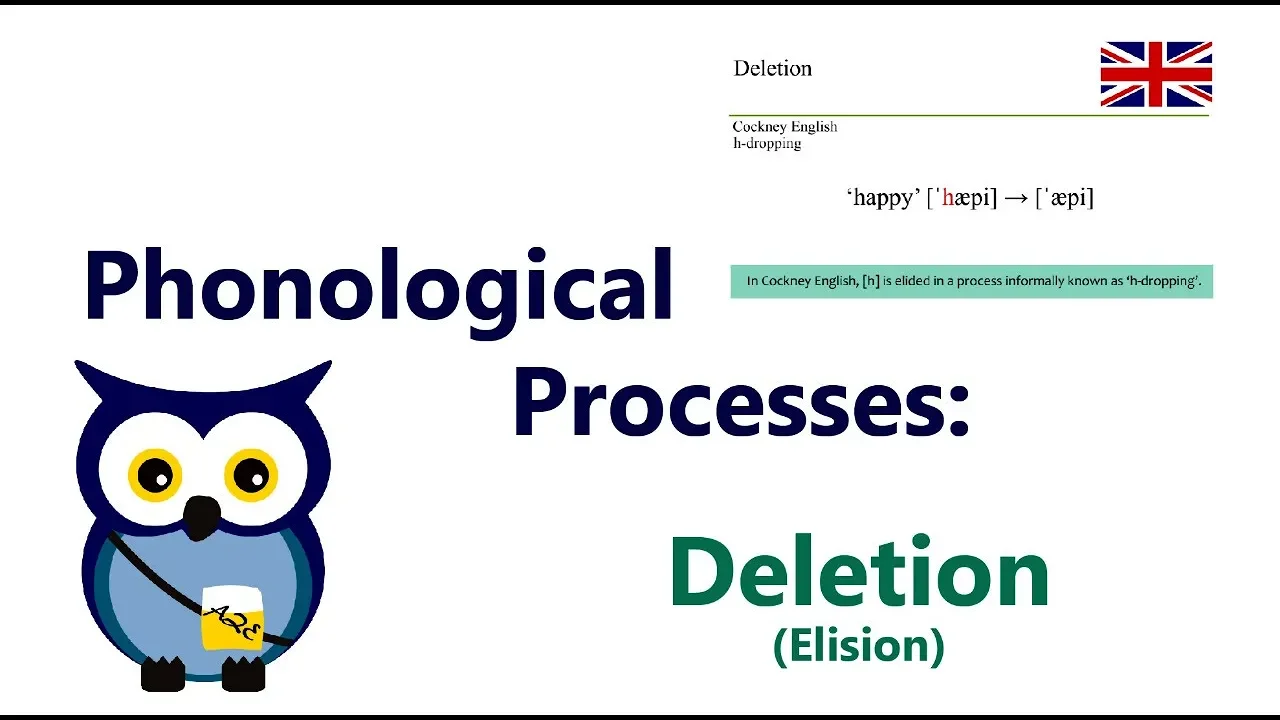
Deletion, also known as elision, is a phonological process where a sound is completely removed from speech, represented technically as a sound becoming nothing (X → ∅); this differs from assimilation (sounds becoming more similar) and dissimilation (sounds becoming less similar). Examples include English 'handbag' (from 'hand back' with the /d/ sound deleted), Cockney English H-dropping (deleting initial /h/ sounds like in 'appy' instead of 'happy'), and Persian vernacular where internal sounds are often deleted such as 'my Quran' instead of 'me Horan' or 'a skull' instead of 'East Gough'.
Click to watch →
Language, Two Ways | Jeremy Kuhn | TEDxStuyvesantHS
783
Both spoken and sign languages organize their basic units along systematic dimensions. Spoken languages categorize sounds by place and manner of articulation (lips, tongue position, bursts, nasalization). Sign languages organize signs by handshape, location, movement, and orientation—visual-spatial parameters analogous to acoustic ones. Both systems create natural classes of units sharing properties. Phonological processes like assimilation operate similarly: in English, the prefix 'in-' changes to match adjacent sounds (becoming 'im-' before 'possible'). In American Sign Language, compound signs show handshapes spreading or components assimilating, demonstrating identical structural principles across modalities.
Click to watch →
Deep Dive
Introduction to sign language notation and transcription systems, such as Stokoe Notation or SignWriting, which classify signs by their parameters.
Stokoe notation | Wikipedia audio article
186
Stokoe notation, created by William Stokoe for American Sign Language (ASL), is the first phonemic script used for sign languages, employing Latin letters and numerals to transcribe handshapes (handshape), location (tab), and movement (sig) of signs, with signs arranged alphabetically by their phonemic transcription rather than English glosses, enabling readers to look up signs without knowing their English meanings; the notation was later adapted to British Sign Language and Australian Aboriginal sign languages, though it has limitations in representing facial expressions, mouthing, gaze, and body posture.
Click to watch →

Introduction to SignWriting
7.7K
SignWriting is a visual notation system developed by deaf individuals to write sign languages like American Sign Language (ASL) by recording exact hand shapes, movements, contact points, and facial expressions, enabling deaf people to preserve and share their native language through written form; the system uses an expressive point of view (writing from one's own perspective) rather than receptive viewing, with symbols representing hand shapes (light for palm, dark for back), head locations, directional movements, and facial expressions, allowing signs to be written either horizontally from left to right or vertically down the page.
Click to watch →

Stokoe Notation System: An overview
971
The Stokoe notation system, developed by William C. Stokoe Jr. in 1960, is the first system for writing American Sign Language on paper, capturing three aspects of a sign: the place where the sign is made (tabula/tab), the hand configuration (designator/des), and the action of the hand or hands (signation/sig), with each symbol potentially modified to indicate articulation details such as palm orientation, contact, or sequential movements.
Click to watch →
Welcome to SignWriting
6K
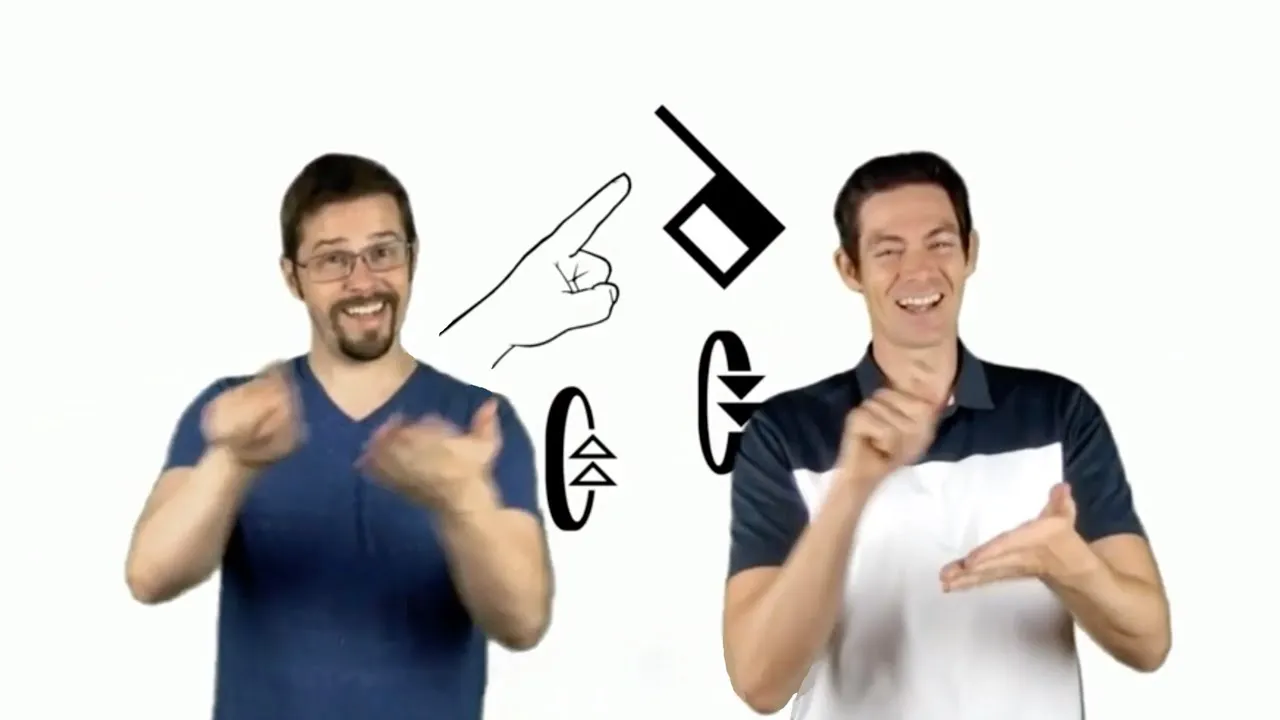
Adam Frost and Garrett Bose introduce SignWriting as a system for writing sign languages. They explicitly explain how SignWriting functions by representing key visual elements of signing: handshapes, palm orientation, movement, facial expressions, location, and speed (tempo). Each of these components is treated as a distinct graphical symbol within the writing system, allowing for the visual transcription of sign language gestures. Handshapes refer to the configuration of fingers and hands; palm orientation indicates the direction the palm faces; movement captures the path and direction of hand motion; facial expressions convey grammatical and emotional information; location specifies where in space the sign is performed relative to the body; and speed (tempo) reflects the timing or rhythm of the movement. Together, these elements form a comprehensive notation system that visually mirrors the spatial and dynamic nature of sign languages. The video does not elaborate on historical development, linguistic theory, or specific sign languages supported, nor does it demonstrate examples of written signs. The purpose is to present the core components of SignWriting as a writing system for sign languages, with further learning directed to external websites.
Click to watch →

CORSO di LIS PER PRINCIPIANTI | I CINQUE PARAMETRI | Da cosa è formato un segno? | la_LISegnante
3.7K
Sign language is defined by five key parameters that distinguish each sign. First, hand orientation refers to whether the palm or back of the hand faces the viewer. Second, movement describes how signs move—directional, circular, or alternating. Third, articulation location indicates where signs are produced: on the body, near the body, or in neutral space. Fourth, hand configuration is the shape the hand assumes, often corresponding to letters or numbers. Fifth, non-manual components include facial expressions and body movements that add meaning. Together, these parameters create a complete system for understanding and producing signs.
Click to watch →
Deep Dive
Practical application of parameter precision to improve conversational clarity and reduce signing errors in real-world communication.
👉 O Maior Mico que Já Paguei em Libras 😳 | Não Cometa Esse Erro!
1K
Brazilian Sign Language (Libras) is a complete language with five essential parameters: hand configuration (over 100 hand shapes), point of articulation (body location), movement (static or dynamic), orientation (hand direction), and non-manual expression (facial/body expressions). These parameters work together to convey meaning, emotion, and grammatical information. The instructor shares a personal experience of accidentally signing 'vagina santa' instead of 'espírito santo' on Brazilian television due to improper parameter use, illustrating the critical importance of correct parameter application for clear communication. This demonstrates that proper parameter usage is essential for effective and appropriate sign language communication.
Click to watch →

La vita è un viaggio di Beppe Severgnini - PRECISIONE
1.5K
Precision is crucial for young people in practical situations: responding promptly and effectively to proposals, remembering to make important phone calls, and presenting oneself appropriately at appointments.
Click to watch →
TIPS & TRICKS for learning ASL FASTER | Livestream
2.3K
Sloppy or lazy hands in signing can cause confusion because the smallest changes in hand positioning or movement can alter the meaning of signs. When teaching sign language, one of the biggest pet peeves is seeing learners with floppy, unclear signs. To ensure clarity, keep your hands rigid and precise when signing. If you're not sure about a sign, it's better to be clear and deliberate than fast and sloppy.
Click to watch →

SEJA PRECISO NO QUE DIZ | LIVE - CAOS E ORDEM: A ASCENSÃO DE JORDAN PETERSON com Lara Brenner
44.5K
Precision in language means making the right word choices that contextually designate exactly what you want to say. This prevents ambiguity and what Jordan Peterson calls 'névoa' (fog). Precision is the sister of clarity, and these two qualities work together to construct objective text. An imprecise text creates fog that makes comprehension difficult.
Click to watch →

UGC NET Paper 1 Communication | UGC NET Communication Previous Questions By Kanupriya Ma'am
8.9K
Precision is a device used to eliminate ambiguity and vagueness by delineating a concept more sharply. It involves communicating in a concise manner using fewer words while maintaining accuracy and clarity. Precision helps remove confusion and vagueness from communication.
Click to watch →
Sign Pairs
More Pairs
Sign Pairs
0:06- 1
Tests recognition of similar sign pairs like DRY/UGLY.
- 2
Covers ONION/APPLE and SCARED/BREATHE distinctions.
- 3
Highlights subtle movement and location differences.
The Movement-Hold Model (Sequential Phonology)
While traditional ASL instruction categorizes signs using five simultaneous parameters (handshape, location, movement, orientation, and non-manual signals), this framework has been criticized for oversimplifying sign structure. The Movement-Hold Model, developed by Scott Liddell and Robert Johnson, presents a major alternative perspective. It argues that sign languages, like spoken languages, possess a sequential segment structure consisting of alternating 'movements' and 'holds' (analogous to consonants and vowels). Under this model, analyzing signs merely as static bundles of simultaneous parameters fails to capture the complex, rule-governed sequential changes that occur within a single sign. For students, understanding this sequential perspective reveals that sign phonology is much more dynamic and structurally aligned with spoken language phonetics than a simple five-parameter checklist suggests.
Understanding of the five basic phonological parameters of American Sign Language: Handshape, Location, Movement, Palm Orientation, and Non-Manual Signals (NMS).
The linguistic concept of 'minimal pairs'—words or signs that differ by only one phonological element, resulting in different meanings.
A foundational vocabulary of basic ASL signs to readily recognize the visual examples used in the exercise.
Basic comprehension of how visual-gestural languages organize phonetic structure compared to auditory-vocal languages.
Exploration of ASL morphology, such as how shifting specific parameters changes a verb to a noun (e.g., SIT vs. CHAIR).
Study of ASL phonological processes in conversational signing, including assimilation, handshape change, and parameter deletion.
Introduction to sign language notation and transcription systems, such as Stokoe Notation or SignWriting, which classify signs by their parameters.
Practical application of parameter precision to improve conversational clarity and reduce signing errors in real-world communication.
20.2K views476likes3:19@ASLMeredithOriginal Release: 2019-12-02
Hi! So, you already read about handshapes, location, movement, etc. -- the different parts of a sign? So do you understand? Now, we'll test and see if you can recognize the difference between two similar signs: Number one: DRY, UGLY, SUMMER.
Again: Number one: DRY, UGLY, SUMMER.
What's the difference?
Number two: ONION, APPLE.
Again: ONION, APPLE.
Number three: SCARED or SCARY, BREATHE.
Again, to the side: SCARED, BREATHE.
SCARED, BREATHE. What's the difference?
Number four: CLASS, FAMILY.
Again: CLASS, FAMILY.
Number five: LATE, NOT-YET.
LATE, NOT-YET Number six: BATHROOM, WHERE.
Again: BATHROOM, WHERE.
Number seven: RED, SWEET.
Again: RED, SWEET.
Number eight: PLEASE, SORRY.
Again: PLEASE, SORRY.
Number nine: YOURS, MINE.
Again: that's YOUR / YOURS, MY or MINE.
And number ten: SCHOOL, NICE Again: SCHOOL, NICE Okay and that's ten questions. So I hope that you got them right! You can check your answers down in the description of this video -- you'll find answers, you can check them off.
And if you like this activity, please let me know, and I'll see you again soon.
Thank you for watching and reading! Bye.
Up Next

3:23
Features of Sign Language | Indian Sign Language (ISL) | Part 6
@signlibrary-dsl
1.1K views•2023-08-14
36:52
Constraint Interaction in Optimality Theory: Epenthesis & Deletion
@Vidyamitra
180 views•2018-08-20

8:59
Forensic Linguistics: How Language Solves Crimes | PBS
@pbsstoried
1M views•2024-01-25

21:32
Accent Expert Explains U.S. Regional Dialects | Part 1
@WIRED
9.3M views•2021-01-21
Related Study Plans & Knowledge Roadmaps
Structured learning paths in Linguistics
linguistics
Optimality Theory: Tableaux & Constraints
01Phonological Basics: Sounds, Syllables & Rules
02Foundations of Optimality Theory: GEN, CON, and EVAL
03The Constraint Inventory: Markedness vs. Faithfulness
+ 2 more learning modules
15h5 modules
Explore Roadmap
linguistics
Morphosyntactic Alignment: S, A & P Systems
01Foundations of Syntax: Transitivity and Arguments
02The Linguistic Variables: Mapping S, A, and P
03Nominative-Accusative Alignment
+ 3 more learning modules
12h6 modules
Explore Roadmap
linguistics
Analyzing Sign Language: Phonology & Syntax
01Foundations of Sign Language Linguistics
02Phonology: The Five Parameters of a Sign
03Morphology: Word Formation and Classifiers
+ 2 more learning modules
14h5 modules
Explore Roadmap
linguistics
Pragmatics: Speech Acts, Grice & Politeness
01Introduction to Pragmatics: Meaning in Context
02Grice’s Cooperative Principle & Implicature
03Speech Act Theory
+ 2 more learning modules
14h5 modules
Explore Roadmap