













![Structure Determination from Spectra (4) (H NMR, C NMR, IR) [Alkyl Halides, Nitriles, and Carbonyls]](https://i.ytimg.com/vi_webp/P_EINDG57vs/maxresdefault.webp)

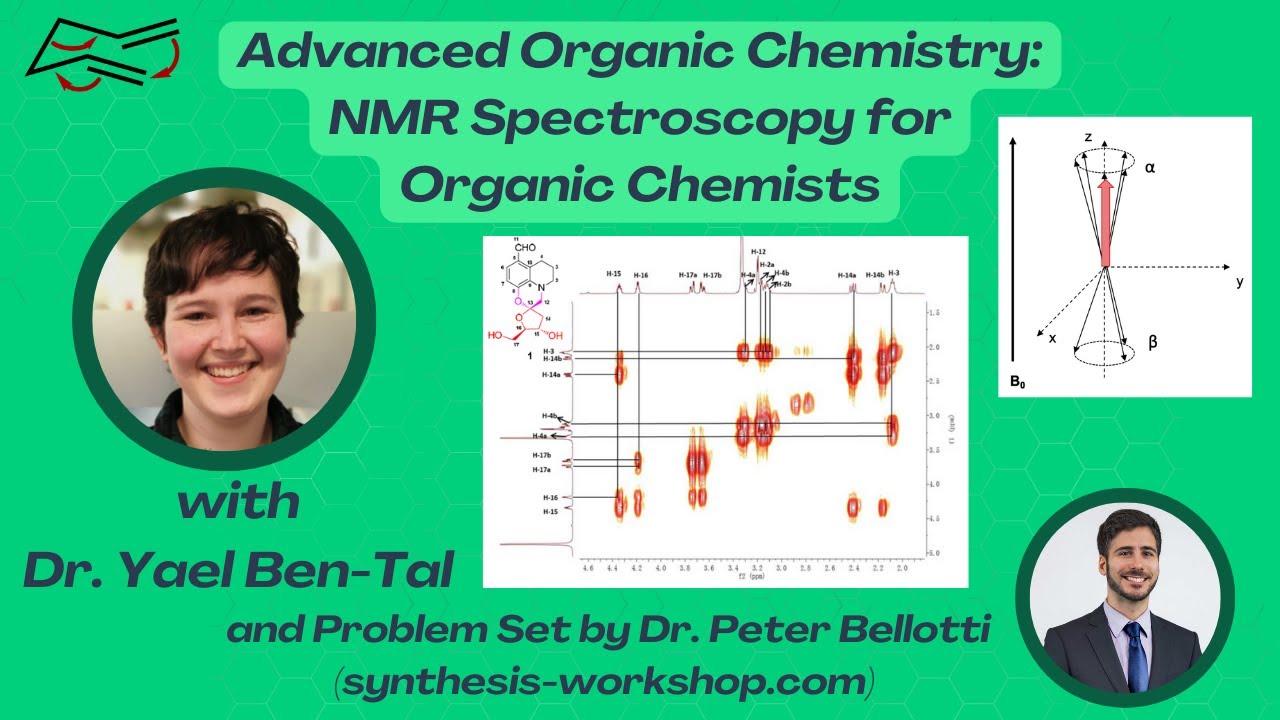


This video demonstrates how to distinguish between isomers of di-nitrobenzene (ortho, meta, and para) using 1D proton NMR spectra and COSY (Correlation Spectroscopy) analysis. The key approach involves: (1) Using symmetry analysis to predict the number of distinct NMR signals—ortho has 2 signals, meta has 3 signals, and para has 1 signal; (2) Applying the n+1 rule to interpret splitting patterns in 1D spectra, where a singlet indicates no neighboring hydrogens, a doublet indicates one neighbor, and a triplet indicates two equivalent neighbors; (3) Analyzing COSY spectra by identifying diagonal peaks (self-coupling, ignore) and cross peaks (indicating three-bond couplings between hydrogens); (4) Recognizing that longer-range couplings (four-bond and five-bond) produce smaller J-values (1-3 Hz) compared to typical three-bond couplings (6-9 Hz). In this example, the presence of three distinct signals in the 1D spectrum combined with the COSY cross peaks confirming B-C coupling and A-B coupling definitively identifies the compound as meta-dinitrobenzene.
2D NMR Worked Example 1: COSY Analysis for Isomer Differentiation
Added:hey everyone welcome to a short series of videos on a few worked examples of how we approach Trudi and um our problems so hopefully this will give you a little bit of insight into how to get started with these problems some of them are gonna contain a lot of data it can be pretty intimidating to look at all at once and feel like you don't know where to get started so to help you get started on getting started we'll start with some slightly easier problems that only cover a couple of techniques at a time and then we'll move on to some more really detailed problems that are gonna look a lot more like your post lab expectations so you can kind of build up to getting ready to tackle the post lab problem without just feeling like you've been thrown in and are overwhelmed with way too much information so this series will cover four different practice problems first one we're gonna start with in this video is the way to distinguish between a set of different isomers that are very similar right but not exactly the same using only cosy and some 1d data so we're going to start with this one stay tuned for the other three videos yet to come our first problem is on distinguishing isomers of die nitro benzene so we have three possible isomers here we have the ortho meta or para substituted version of die nitrobenzene then on the other side of the screen we have our cosy spectra that we can use to help us distinguish between these three different isomers so they're all gonna have a lot of big similarities there all aromatic and a lot of those hydrogen's are gonna have similar ppm shifts so just looking at this spectra and saying it's one of the isomers of die nitro benzene is probably not quite enough information we have to delve a little bit deeper into the 1d and this 2d to prove once and for all that it is specifically one of these three isomers and not just any of them so to get started with this cosy it's gonna be the most easy to look at the 1d spectra that are provided on either side first to gain some information from those and then we can you the cosy to confirm or deny our initial guess so looking at the 1d spectrum we have three distinct signals here so I'm going to go ahead and get into the practice of lettering them and doing so in a specific way this is the way that I recommend you approach all of these problems is lettering your hydrogen's and numbering your carbons so that you can keep them all straight for this example we don't have any carbons to worry about so we're just gonna worry about lettering the hydrogen's so I'm gonna letter anything that starts at the highest ppm shift with the letter A and then move on down the alphabet B and C we have three signals here and of course those match up with the same three signals that we see mirrored on these side so what do we know about the isomer of interest based on the fact that it has three signals so if we see three signals in our proton NMR that corresponds to three hydrogen types that are different from one another so that means we must have three distinct chemical environments that these hydrogen's exist in so if we look at our structures that may be enough information as it is to help you solve this problem so let's use our knowledge of symmetry and chemical environment to help us decide what we think our best guess is and then we'll actually go in to do the cosy analysis so if we look for planes of symmetry on all these they should all have one it's just going to be in a slightly different place so starting with the ortho benzene we have these two nitro groups here that are kind of symmetric to one another so if we draw a line like so kind of cutting down the middle of the side of the benzene ring there we can see that the two halves mirror one another perfectly which means that the hydrogen's at this position here is the same as the hydrogen at this position here and similarly these two that are furthest away from the nitro groups are in the same chemical shift so here we have two different chemical shifts we have the green chemical shift here and we have the purple chemical shift there so now that we've done this symmetry analysis we can see that we have the two different types of hydrogen's labeled in different colors there which should only give us two different signals in the proton and Ammar because of that we've ruled this out ortho cannot be the isomer that we're looking at in this cosy spectrum now if we move on to the next one the meta we can do a similar analysis and label the hydrogen's first we want to draw in our line of symmetry so if we think about now these nitro groups are a little bit further apart we can draw a similar line of symmetry except this time it's going to go right through those two carbon atoms like so and now they're mirror images of one another don't worry about the double bonds right because those can resonate around with one another that doesn't matter for this symmetry analysis now to draw in the hydrogen's I'm actually going to go ahead and remove the symmetry line for a second just because it does cut right through them and we want to look at those more clearly so to start with we can draw in similarly to the example above some green hydrogen's that are right next to those nitro groups so that doesn't mean that they give exactly the same chemical shift as the previous example but they're going to be similar at least in terms of their adjacency to those nitro groups and then again similar to the first example we have a hydrogen out here that I could label in purple is being kind of two carbons away from the Nitro group and now if I think about the remaining hydrogen that is not labeled yet you'd say oh okay that's next to a nitro group so label it green right which is true it is adjacent to a nitro group but it's not exactly the same as the green hydrogen's that we've already drawn in right because those ones are next to a nitro group and then they kind of just go around a benzene ring whereas this last hydrogen is between two nitro groups instead of just next to one so that's gonna change its chemical shift in chemical environments so that it is no longer the same as those green ones it's a totally different thing that we're gonna have to label with a different color so you know this one orange hydrogen that's between those two nitro withdrawing groups we have the two green hydrogen's that are adjacent and the purple that's a little bit further away so with that we can put back in our line of symmetry I just wanted to draw these hydrogen's in first so that we didn't forget about them underneath that line and now we can see that based on the three different chemical environments we should be seeing three different signals in our proton and Amana so this one meta could be what we're looking at in our cosy spectrum let's just see if we can rule that in or out by looking at the para example okay so for the pair of isomer the last one that's left we want to look for a plane of symmetry right and now we can draw one that goes directly through these nitro groups sort of top to bottom like so that there is half of a benzene ring on one side and a half of a nitro group that totally mirrors to the other it's a little hard to see if this one is kind of confusing with how these O 2 groups seem to hang off to only one side make sure you draw out the Lewis structure of the nitro group to get a better visual so we can see that they mirror each other sort of side to side the interesting thing that was because these nitro groups are opposite from one another we can also draw another plane symmetry that goes through the opposite way so if we kind of folded hamburger fold versus hotdog fold we could fold this benzene in two different ways that would still match up perfectly with one another so how many types of hydrogen do we have here we really only have one so we have a green hydrogen you could draw in there is next to a nitro group and it is next to this horizontal plane of symmetry and that's true for this hydrogen and this hydrogen and you get the idea all of those are exactly symmetric so you should only see one signal here in your proton NMR so that definitely rules out para as a possibility so now we're pretty sure that meta has to be the compound that we're looking at in this cozy in fact it's almost certain that the others have to be ruled out by the fact that they don't have the right number of one-dimensional proton signals so we can confirm this for sure using our cosy spectra but the other thing that we can do is use the one-dimensional to make sure that we have an idea of which protons are a B and C even before we get too convoluted into the cosy spectrum I'm just gonna redraw meta dye nitrobenzene here so that we can more explicitly draw in those hydrogen's and label them now clearly with letters all right so looking at just the one-dimensional spectra we can gain a lot of information about which hydrogen's are in which positions based on how they're split by their neighbors or lack thereof so again lots of great information that you can gain from the 1d NMR before you even get into the more complicated 2d cosy so anywhere you want to start I'm gonna just start at a because alphabetically that's the way it's gonna go so thinking about the nature of what we see a peak a it's a little bit weird looking right but for the most part I see just pretty much one peak there so let's go ahead and say that that's not really split at all it's basically a singlet so I'm going to just put that here in parentheses so if there is a single it signal that tells us that there is a hydrogen that has basically no neighbors right so in that case we have nothing adjacent that's going to split within three bond couplings away so we can pretty confidently say that there's only one hydrogen on our original drawing over here that's not adjacent to anything else that was the orange hydrogen so I'm going to label this position here between those two nitro groups as H a if we move along we then have B and if you look at that pretty much looks like a nice doublet so we can label that with a D in parenthesis and then we want to think about which hydrogen's have only one neighbor to split them right so if you have one neighbor plus one cousin at the n plus one rule is two so we would get a doublet thinking back to our original drawing we have the green hydrogen's left and the purple hydrogen so if you look at the perspective of the green hydrogen it is only next to the purple hydrogen again it's kind of too far away from any of the other hydrogen's to be split by it more on that in a bit so if it's split by just the one purple neighbor then we would see a doublet so I'm gonna say that B belongs to those two green hydrogen's kind of at either position here adjacent to those nitro groups and then by process of elimination the last one is probably C let's just check that with our n plus one analysis so if we have that HC in the middle it is split by two identical neighbors right so that should give you a splitting of two plus one for three to give you the triplet that we see here or peak C so that seems pretty good right we have an isomer that seems to work so far we've labeled all the hydrogen's and they make sense by they're one-dimensional splitting but let's just go in and confirm this 100% with our cosy so going ahead into the cosy the first thing we want to do other than labeling our Peaks along the top and side is to draw in your diagonal so that you can ignore those Peaks they're just self coupling pekes that are not gonna really tell us any new information so we want to carefully draw in our diagonal and ignore the peaks that fall along it so you may not always get the absolute best diagonal that splits perfectly through the exact middles of the peaks based on how these are graphed it's not always going to be exact and it's not always gonna go from opposite corner to corner if they do if they're nice they will but don't sweat too much about that if you follow them along you should be able to see it Oh even though this kind of big 1p peak in the middle doesn't exactly fall in our diagonal if you follow it along side to side you'll see that it's a b2b self coupling so that's how you can tell for sure whether or not it's a diagonal peak that you can just ignore so the remaining Peaks are off diagonal Peaks or cross peaks that we definitely can't ignore and we want to use those to confirm our idea about the structure of our isomer so let's start by drawing some lines down and across to show which correlations these Peaks represent so I'm feeling like reading down and across today but you can read this in a bunch of different ways I'm also really feeling like just reading the top half of my graph you're welcome to read the bottom half again there's a lot of correct ways to read these just do one way that feels good to you and stay consistent with it so I'm gonna read down from the top here at B and just again starting kind of at the middle of that peak drawing down and I'm going to use my fancy software to allow me to draw a nice straight line again using PowerPoint or Google sheets is a good way to get a nice straight line so that you know you're not kind of falling off diagonally a little bit to one side or the other so we're drawing down that from that peak at B and then if we follow it across and let our lines straight now we're pretty much coming right to the middle of C so if we want them to label these cross peaks which I recommend that you practice doing there's a good non worked example available on the Moodle that's just practice drawing in and labeling the cross Peaks so if we wanted to label this again you can label in a couple of different ways just depending on how you draw I'm going to label the down and then across so this is B couple with see now is see coupling to be the same thing in this case absolutely this is just the way that I'm going to draw it you choose whatever works for you so then if we look at our other cross peak a it seems to be right above this smaller peak here so we'll just draw a line down to that and then follow that over here like so and that looks like a coupling to B so let's go ahead and think about these on our structure and see if they actually make sense so when we were looking at our one dimensional NMR we said that B should be a doublet because it's split by its one neighbors C and C should be a triplet because it split by its two neighbours B so we've already kind of confirmed this something that we already knew right that V is splitting C and C is splitting B to give us the one dimensional pattern of splitting that we see and I'm studying before so this checks out makes sense B is adjacent to see right by only three bonds away so that should definitely be splitting no big surprises there but then you might say what about a and B I thought you said those don't split each other I said we'd come back to it so we're gonna come back to it now and talk about a more fine detail splitting that we can actually see in this cozy so a and B are not adjacent three bonds away from one another that's why you don't see a dramatic splitting of a at all it pretty much looks like a singlet if you were further away if you zoomed out you wouldn't be able to tell the difference but a does indeed split B it's just to a different extent right and the cosy is telling us that so the fact that we're kind of you know so many bonds away let's count that out one two three four bonds away is definitely further than our typical one-dimensional splitting at least that we've seen thus far but it doesn't mean we can't split especially across a strongly rigid system like a benzene ring that makes those four bond couplings a lot easier to see we can see this coupling actually taking place even in our one-dimensional NMR so I didn't talk too much about it but I gave a little hint that we about it now so I'm gonna copy our nice annotated structure and move that on to the next slide where I've added a couple of annotations from our j-coupling sheet that we might not have looked at in a while probably not since last semester but we'll talk about a few reminders of how we can use these values where to look for them on the 1d NMR and this should serve as a good refresher that will help you tackle some of the fine detailed splitting aspects of the more complex examples and also the post lab so looking at our structure and thinking about the one-dimensional NMR let me replace our letter labels here we said oh yeah okay a is a singlet B is a doublet and C is a triplet no problem right but there is a little bit more going on here and I think we can see that in peak a where it doesn't necessarily look exactly like a singlet really at least not perfectly so what we want to be thinking about are the different possibilities of how protons can couple to each other over longer bonding ranges especially because like I said we're in that rigid aromatic system so the first one is the normal one that we're kind of used to seeing here in this kind of ortho position of these two hydrogen's to one another I'm going to count them in terms of bonds because we're gonna be talking about that in some of the other examples so we would say that these two things are on adjacent carbons but they are three bonds away it's a three bond coupling so that is one for that carbon hydrogen bond two for the carbon-carbon bond and three for the other carbon hydrogen bond so we get these one three couplings and these are pretty standard right there the kind of thing that we would have been expecting to see in any other system aromatic or not and they couple for a pretty standard number of Hertz so that is gonna be somewhere around seven on average so six to nine we're well within that range that's what we see when we're looking at hydrogen be splitting see and see splitting B right so we talked about those splits already that's why we observe a doublet and a triplet and if you were able to I know this is just a PDF but if you were actually in NMR software you could go in and zoom in on these Peaks and you could measure that distance there in orange and same with this distance on the other side probably both gonna be around seven same with this distance in the middle of our doublet both around seven Hertz because we have this adjacent splitting of hydrogen's that are three bonds away so a three bond coupling but then if we look at a we said yeah that's supposed to be a singlet because there's no neighbors directly adjacent but we do have the possibility for like I said splitting over longer distances so this second one here that we're looking at is now instead of a three bond coupling is a four bond coupling where now we have those two carbon-carbon bonds in between and it happens but because of the distance it happens to a smaller extent so you can see that the J value in Hertz here is lower it's gonna be somewhere on the order of 1 to 3 Hertz instead of 6 to 9 so we can see that in peak a it's a little tough to see especially since you can't you know zoom in on this PDF or if you do it's just gonna get fuzzier the resolutions not that great but what I'm seeing when I look at peak a is there's kind of a weird little shoulder divot there there's another one here right they're very very small and pretty hard to see but you can tell it doesn't look like a smooth singlet and this comes from a very fine degree splitting of a 1 for hydrogen relationship so if we label that on our structure and if you want it'll be helpful to maybe count these out we look at hydrogen a and then go one two three four bonds away from it we have that one four bond relationship to hydrogen B so if we remove those annotations and instead just draw an arc we could say okay those two are splitting each other to the tune of 1 2 3 Hertz so pretty small the other thing to think about is how many neighbors a has that are doing this it is split with that be kind of around the top but it's also being split by this B down here at the bottom that's same one for coupling if we think that a is split by two neighbors B and then add one to that we should expect to see triplet splitting and this doesn't look like a nice triplet but I think you can kind of see we have this shoulder on the left hand side you have this big tall central peak and then we have the shoulder on the right side so if you were able to zoom in you could measure the distance between this right side shoulder and the central peak and the distance between the left side shoulder and the central peak and that should be somewhere on the order of 1 to 3 Hertz splitting so we see this really fine detail splitting of a so if we wanted to be you know the absolute most correct in how we talked about the peak a we wouldn't want to call it a singlet we would actually want to call it a triplet it's a triplet with very very fine splitting but it is still a triplet nonetheless because we are seeing that splitting from B to a so if we think about it that way are we seeing the splitting of a on B and can we see that somewhere here in the peak that represents B I think we can so it may be a little bit tougher to see on this one because the shoulders are there but they're a little less distinct if you look up here near the top of this doublet you see that it's not just two straight up piece each of those doublet Peaks has a little shoulder and to me that represents a very fine splitting of each of those doublet Pink's into yet another doublet so if we look for that one for coupling you can see it very very vaguely right here in the middle of that peak and same thing here in the middle of that peak so again very very subtle it would be great if we could zoom in a little bit more to see it but this is just a practice of identifying oh yeah there's something a little more complex going on there so instead of labeling peak B as a doublet even though it's pretty convincingly a doublet to be the most thorough with our assignments we would actually want to call this a doublet of doublets instead so we see the typical 1/3 splitting from hydrogen see that we talked about before but we also have that one neighbor a that splits it into a 1 plus 1 is 2 doublet so we get a doublet of doublets now you might be wondering ok well what about this last example here of our sort of para relationship coupling this is a 5 bond coupling with again getting progressively smaller and smaller J coupling do we see that with C because C has a 1/4 relationship to a and are you really trying to tell me that we got to zoom in there and see the 1 hurt maybe it's possible that we can see that splitting of a on C if we were able to zoom in a little bit more to my eye this looks very convincingly just like a triplet to me I don't see that fine degree splitting so for a really really really fine splitting that you can't just clearly see by eye and we haven't given you a blown up zoomed in region for you to be able to identify it we're not gonna be looking for you to tell us about that I feel totally comfortable leaving our assignment of the splitting of C as a triplet because I'm not visually seeing that very small one potentially 1 Hertz coupling and since we don't have a zoomed in region to really highlight our attention to it it's not something that we would be looking for you to label in say a post lab for your post lab examples there will be some blown-up regions wherein we might ask you to get a little bit more technical with your labeling of the splitting of those Peaks so for this example whether we see that tiny tiny coupling whether we label it or not what's most important is that it doesn't actually change anything about our answer right the purpose of this problem was just to decide which isomer it was and get some practice on looking at the code and labeling the cross Peaks but that small coupling being there definitely doesn't change our final answer that this has to be the meta isomer of dynodroid benzene and it cannot be any of the other isomers so that's a little bit of practice on how to use cosy and a little bit of a refresher on thinking about J coupling so definitely go back and refresh on that as we get to some of the more complicated examples the next one will feature instead of cosy we'll do some HS q c and h mbc hydrogen carbon correlation techniques to help us distinguish between different isomers based on the connectivity of the pieces so stay tuned for that in the next video and thanks for watching
Up Next
13C NMR Spectroscopy: Carbon-13 and DEPT Explained
@DanielAllwoodChem
27.3K views•2020-08-07

Biocatalysis and Catalysis in Islatravir Synthesis | Merck Webinar
@SCIwheresciencemeetsbusiness
675 views•2020-10-08
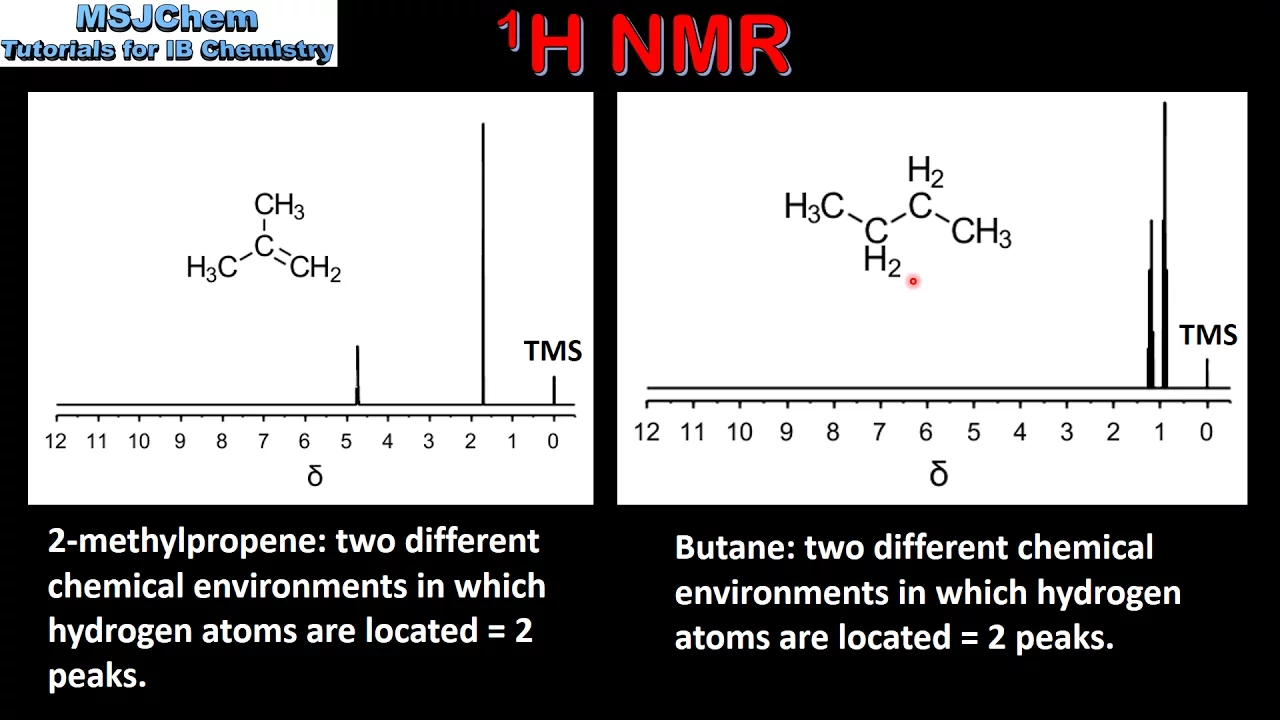
1H NMR: Determining Number of Peaks from Structure
@MSJChem
59.2K views•2017-04-06

Edible Water Bottles: A DIY Guide to Sodium Alginate Spherification
@ryan
10.5M views•2019-06-21
Related Study Plans & Knowledge Roadmaps
Structured learning paths in Chemistry