The Gemma Augustea is a Roman cameo carved from double-layered Arabian Onyx stone, depicting Augustus's apotheosis and military triumphs; created during the Augustan court in the early first century AD, it exemplifies the revival of religious and cultural traditions under Emperor Augustus, showcasing sophisticated cameo engraving techniques that combined political propaganda with artistic innovation to celebrate imperial power and divine favor.
Gemma Augustea: Roman Cameo & Augustan Propaganda
Added:Deep Dive
Understanding the historical transition of Rome from a Republic to an Empire under its first emperor, Augustus.

Creadores de imperios (XII) | Constantino · La March
1.3M
Augustus (formerly Octavian) transformed the Roman Republic into an imperial system around the end of the 1st century BCE. While maintaining many republican forms and institutions, he concentrated power in his own hands as the supreme princeps (first citizen). This transition marked the beginning of the Roman Empire, which lasted for approximately five centuries until the fall of the Western Roman Empire in the late 5th century CE.
Click to watch →
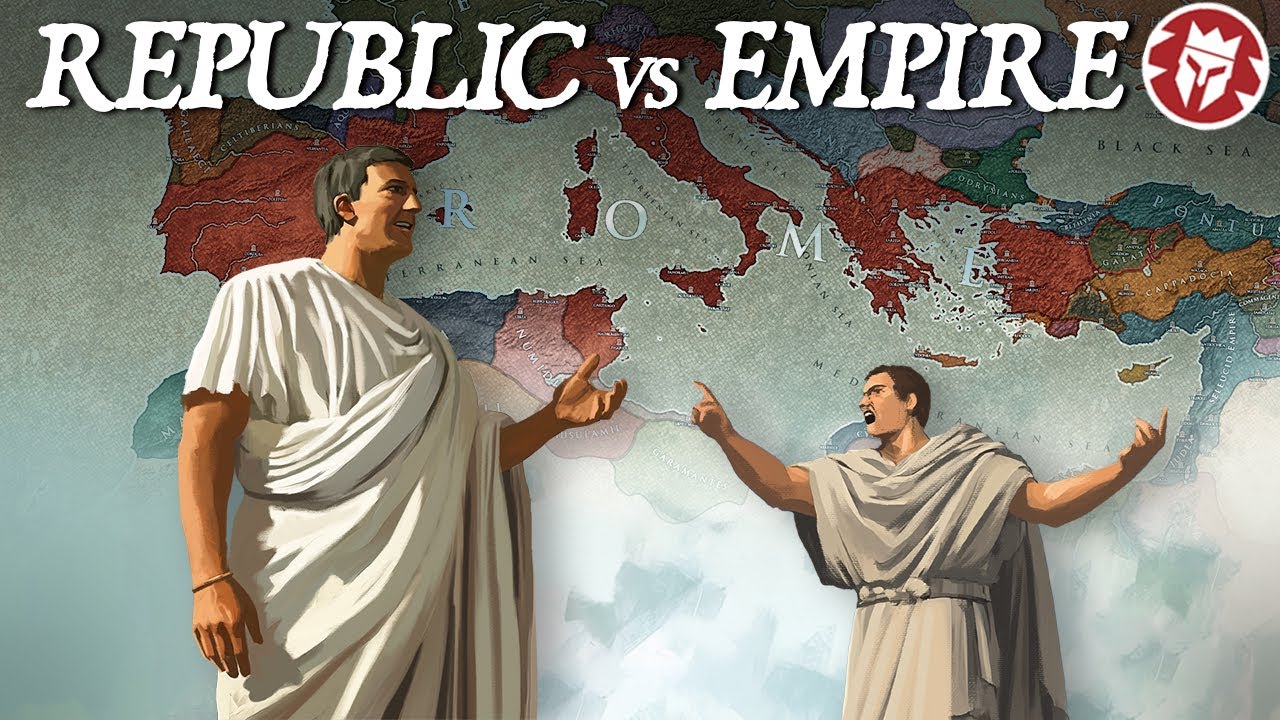
Roman Politics: Republic vs Empire - Ancient History DOCUMENTARY
177.3K
Augustus returned to Rome victorious and unchallenged master of the state. In 27 BC, he offered to return his dictatorial powers which he had held since 42 BC, but the Senate refused, allowing him to keep his position for life. This ratification created the First Roman Emperor, Augustus, and the final transition of Republic to Empire. By the time of the Eastern Roman Empire, the political structure had shifted back towards the style of the Kingdom of Rome that existed almost a thousand years earlier. The Senate of the Byzantine Empire was institutionalized by Constantine the Great, who reigned between 306-337 AD, and initially consisted of Roman citizens who happened to live in the East.
Click to watch →
O INÍCIO DO IMPÉRIO ROMANO E SEU PRIMEIRO IMPERADOR OTÁVIO AUGUSTO | PrimoCast 388
35.2K
This comprehensive segment traces Rome's transformation from Republic to Empire under Augustus. It covers the brutal political violence required for power consolidation, including the assassination of Caesarion and Cicero. The narrative explains how Augustus, as Caesar's adopted son and heir, executed the vision of a new monarchical system. Key developments include military expansion to 28 legions, enabling Rome's territorial peak and the Pax Romana. The segment covers Augustus's marriage and family laws that incentivized childbearing and punished adultery, fundamentally changing Roman demographics. Economic reforms centralized taxation with rates set by the central government. The dynastic succession system passed power to Tiberius, creating incentives for long-term thinking. The Julio-Claudian dynasty and Five Good Emperors period followed, with Trajan reaching the empire's greatest territorial extent. The triumphal arch emerged as a symbol of imperial power, with many still standing in Rome today.
Click to watch →
Kaiser Augustus I Beginn der Kaiserzeit in Rom
87.7K
Following the Roman civil wars ending in 27 BCE, Octavian emerged victorious over his rivals Marcus Antonius and Lepidus. Rather than accepting dictatorship as his adoptive father Caesar had done, Octavian resigned his offices and sought Senate recognition. The Senate, learning from past mistakes, did not accept his offered powers but instead formally acknowledged his sole rule, granting him the honorific 'Augustus.' He was re-elected consul and given military command. Augustus then created the principate—a system balancing republican forms with monarchical power. He avoided claiming kingship while accepting powers enabling royal rule. Senators participated in governance, holding offices and provincial governorships, maintaining republican appearances. Provinces were divided: peaceful ones governed by senatorial appointees, military provinces under imperial control. This system protected exhausted citizens while consolidating power. Under Augustus, Rome achieved unprecedented peace (Pax Augusta) alongside territorial expansion matching Caesar's conquests. He died in 14 CE, designating Tiberius as successor, establishing imperial hereditary succession.
Click to watch →
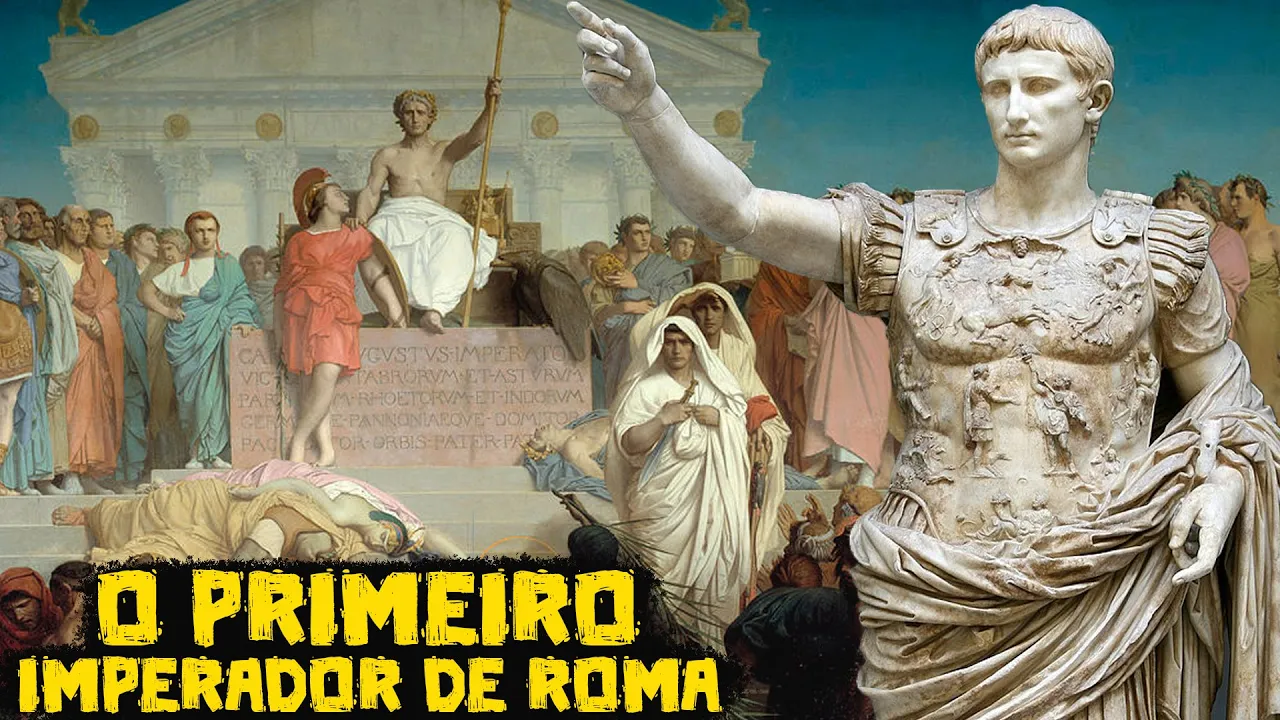
Otávio Augusto: O Primeiro Imperador de Roma - Os Imperadores de Roma #01 - Foca na História
52.5K
This comprehensive narrative traces Rome's transformation from Republic to Empire. On March 15, 44 BC, Julius Caesar was assassinated by senators fearing his concentrated power. His 17-year-old heir Octavian returned from military training to claim his inheritance, demonstrating remarkable political cunning. He formed the Second Triumvirate with Mark Antony and Lepidus, dividing Roman territories. After defeating Antony and Cleopatra at Actium (31 BC) and eliminating Lepidus, Octavian consolidated power. In 27 BC, the Senate granted him the titles Augustus and Princeps, marking the Republic's end. His reign (27 BC - 14 AD) was an age of golden prosperity known as the Pax Romana. He implemented reforms including marriage laws, built 82 temples, and established rigid moral standards. The Battle of Teutoburg Forest (9 AD) ended Roman expansion into Germania. Augustus died in 14 AD, leaving Rome 'a city of marble' and being deified as a god in the Roman Pantheon.
Click to watch →
Deep Dive
The concept of Roman imperial propaganda and how visual arts were utilized to establish and legitimize political power.
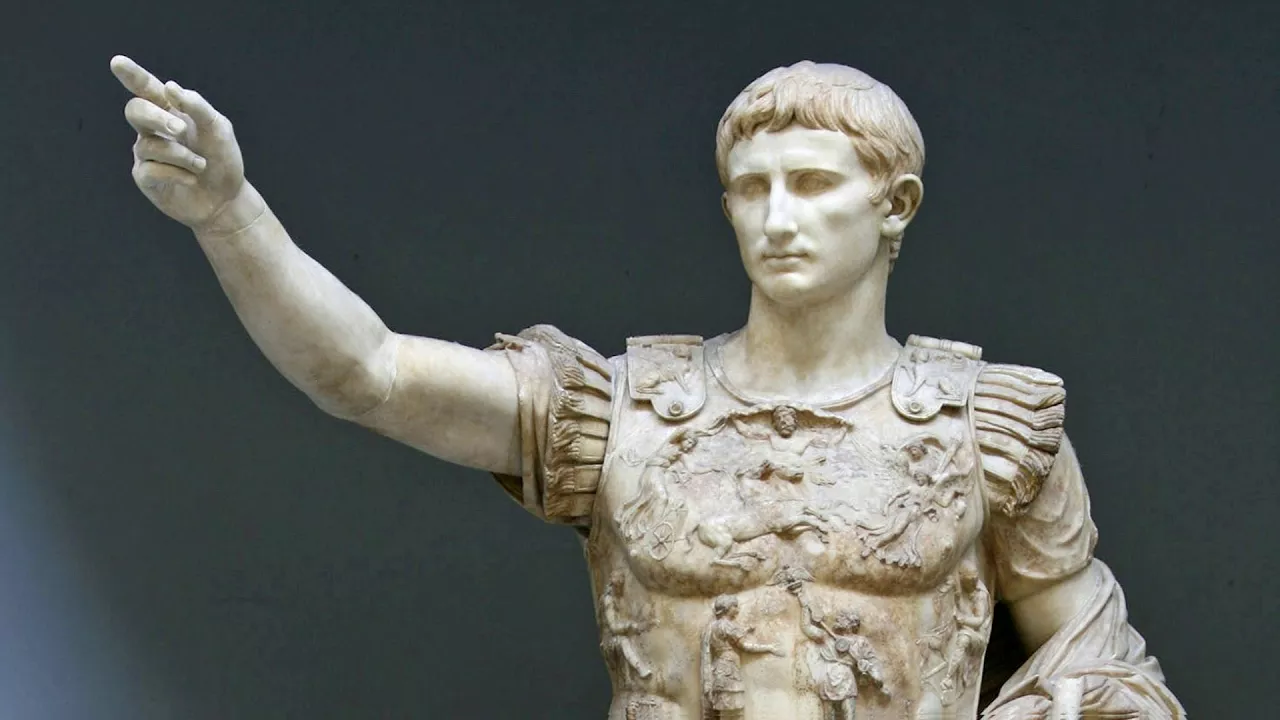
La statua loricata di Augusto
22K
Roman imperial art served as sophisticated political propaganda, using mythological symbolism, divine associations, and cosmic imagery to legitimize the emperor's authority. The prince is depicted barefoot like mythological heroes, with a dolphin representing Venus to establish divine lineage. Military victories are symbolized through the paludamentum and the King of the Parthians returning lost standards. Conquered peoples like the Celts and Germans are represented symbolically to demonstrate Roman dominance. The emperor is associated with deities like Diana and Apollo, and cosmic imagery of the sun and dawn reinforces his role as a messenger of divine providence. The emperor's primary function was not to accomplish great feats but to guarantee universal order through his mere existence, creating political elegance that viewers could immediately recognize and accept.
Click to watch →

Roma antiga: a arte como propaganda do poder imperial
24.5K
Ancient Roman monuments such as the Ara Pacis, Triumphal Arches, Trajan's Column, and imperial statues served as powerful propaganda tools that celebrated military conquests and legitimized imperial authority, using artistic imagery to communicate political messages to both Roman citizens and conquered peoples.
Click to watch →
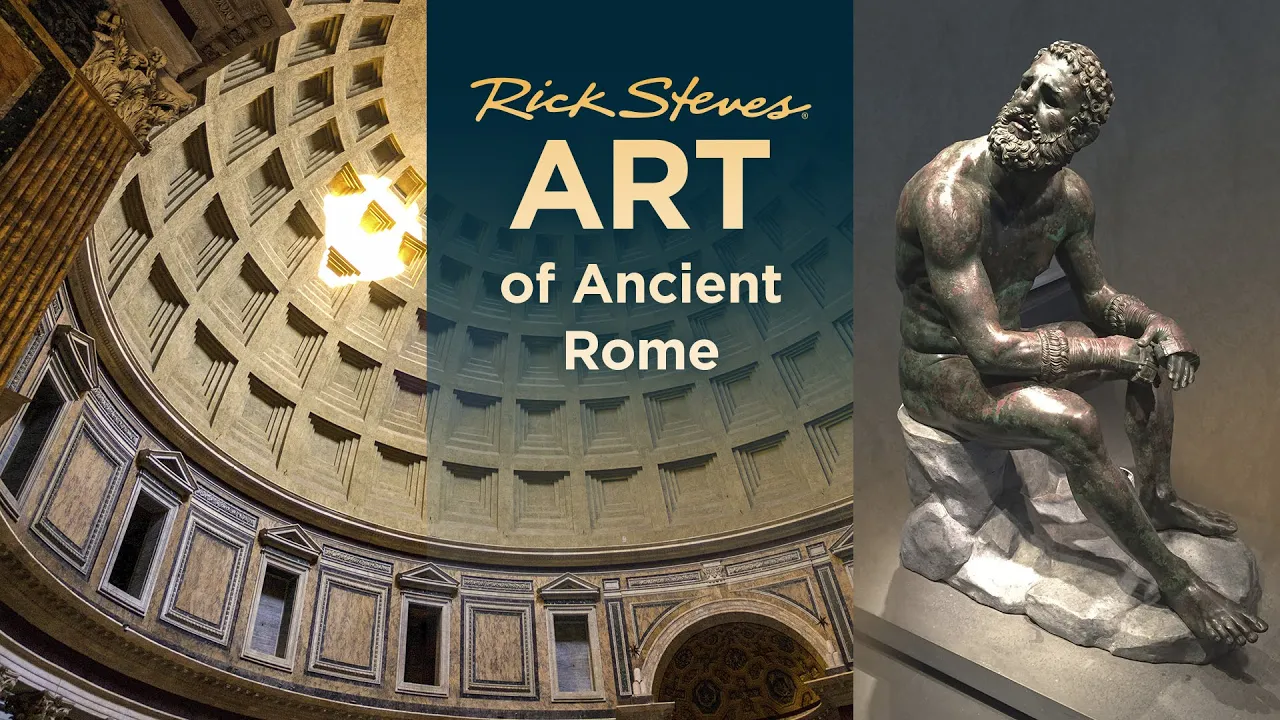
Rick Steves Art of Ancient Rome
568.7K
By the first century BC, Rome's republican government became unsuitable for ruling such a vast territory, transitioning to imperial rule under Julius Caesar and Augustus. Augustus ensured art conveyed government confidence, commissioning portrait busts showing 'the first among equals.' He initiated the Pax Romana, a 200-year period of peace and prosperity. The Altar of Peace celebrated Rome's success through propaganda reliefs. The Colosseum exemplified Roman engineering, accommodating 50,000 spectators while serving as social control through entertainment. Emperor Trajan's Column functioned as a propaganda billboard celebrating military victories through continuous stone carvings.
Click to watch →
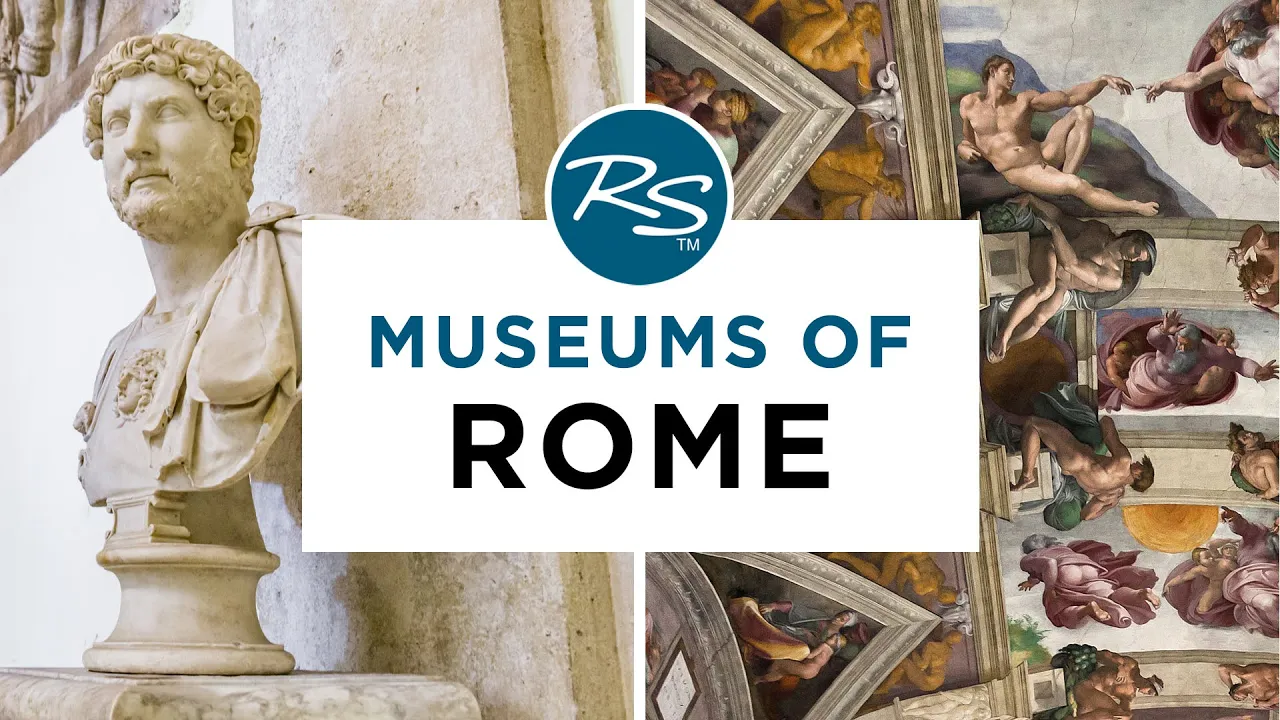
Museums of Rome — Rick Steves' Europe Travel Guide
31.6K
Roman imperial art served as powerful propaganda tools to reinforce political messages. The Ara Pacis altar, built 9 years before Christ by Emperor Augustus, marked the beginning of the Pax Romana—a two-century golden age of stability and prosperity. Michelangelo designed the Capitoline Staircase during the Renaissance, giving the square harmonious proportions and a majestic centerpiece of Emperor Marcus Aurelius. Roman art consistently carried political messages; battle scenes like the dying Gaul stoked imperial pride. The Capitoline Museum showcases Marcus Aurelius performing imperial duties: as chief priest sacrificing bulls, granting clemency to vanquished leaders, and presiding over victory parades. Roman artists excelled at making excellent copies of Greek originals, preserving classical beauty through replication.
Click to watch →

Art This Week-At the Kimbell Art Museum-Myth and Marble
408
During the Five Good Emperors period (96-180 AD), succession challenges from child mortality and infertility required strategic adoptions and marriages. Sculptors visually reinforced these political arrangements through carefully crafted portraits. The Hadrian-Antoninus Pius group demonstrates this: despite not being father and son, they share similar short-cropped curly beards and hair, visually suggesting familial connection. Female portraits were more idealized, emulating goddesses, with identification relying heavily on elaborate hairstyles. Scientific study of the collection has corrected previous misidentifications based on coin imagery, demonstrating how modern research reveals errors in historical attribution.
Click to watch →
Deep Dive
Familiarity with Roman mythology, specifically the deification of emperors (apotheosis) and the representation of personified virtues like Roma and Victoria.

Dioses y Alegorías: Roma || con @angelportillolucas
157
In ancient Roman belief, important cities were personified as divine beings. Roma was worshipped as a goddess, not merely a city-state. Emperor Hadrian built a double temple dedicated to Roma and Venus, the largest in Rome. Roma was depicted as both a maternal figure and a warrior goddess, wearing a short tunic and helmet. She was associated with fertility (like Greek goddess Rhea) and protection. On Republican coins, she appeared with a helmet, cornucopia (abundance), and globe (world). This divine personification reflected Rome's identity as a powerful, nurturing, and world-spanning civilization.
Click to watch →

SIMBOLOGÍA ANIMAL ESPEJO MORAL Y MÍSTICO
327
Apotheosis is the process by which a human is elevated to divine status. In Roman tradition, emperors like Julius Caesar and Augustus were deified after death through ritual ceremonies. The emperor's body was burned on a funeral pyre while a poet narrated his virtues, and an eagle was released from the pyre to carry his soul to Jupiter. This ritual demonstrated that the emperor had become a god, requiring a new college of priests, temples, and sacrifices. Apotheosis provided legitimacy for subsequent emperors by showing that their predecessors had achieved divine status.
Click to watch →

DIVI: esto pasaba cuando un emperador romano moría
1.9K
When Roman emperors died favorably, the Senate decreed their deification (apoteosis), declaring them among the gods. This practice originated from Greek traditions where mortals could become gods after death. Rómulo, Rome's founder, was the first Roman deified, becoming Quirinus. Julius Caesar, assassinated in 44 BC, became the first historically documented deified Roman, with a comet appearing at his funeral. The Senate decreed his deification in 42 BC, establishing a temple at his funeral pyre. His successor Octavian adopted the title 'Divi filius' (son of a god). This tradition extended to emperatrices, imperial family members, and even non-imperial figures like the fathers of emperors.
Click to watch →
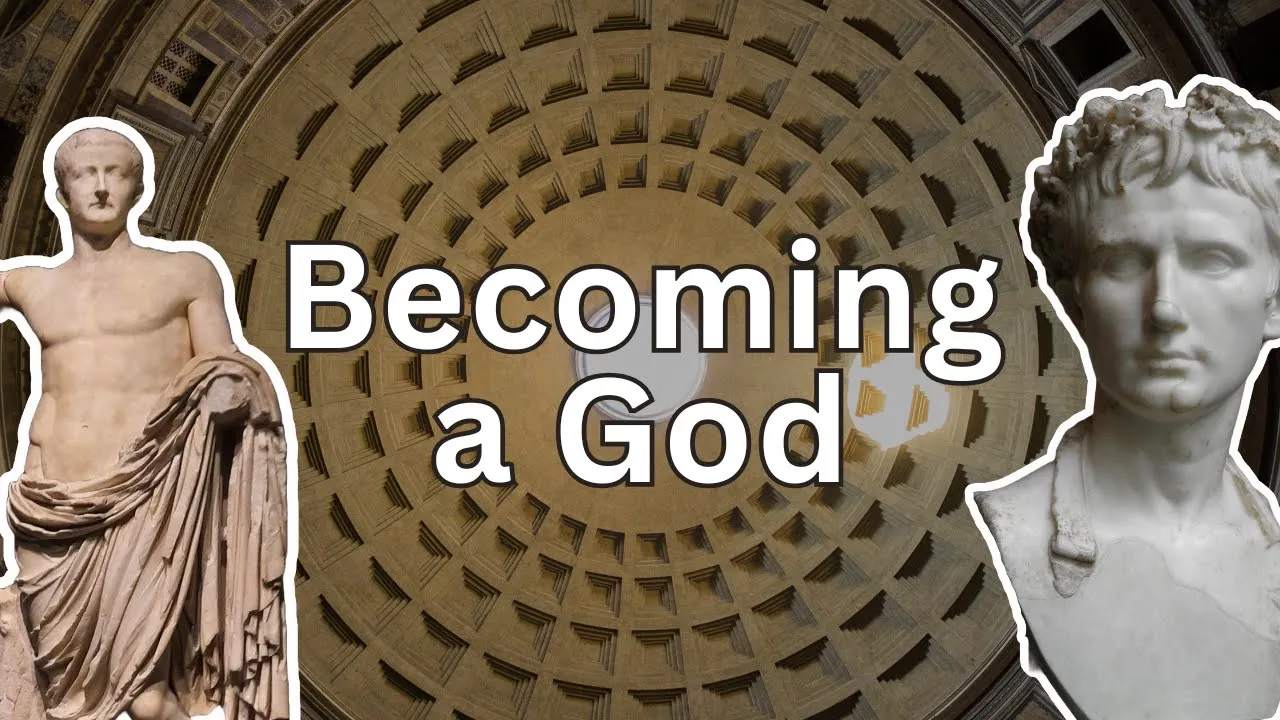
The Deification of the Roman Emperor
5.3K
The deification of Roman emperors was a formalized process that began with Julius Caesar's assassination and culminated under Augustus, involving elaborate rituals including cremation on a sacred pyre (ara sacrata), the release of an eagle symbolizing the soul's ascent to heaven, and eventual burial in grand mausoleums like the Mausoleum of Augustus; this practice transformed successful generals and emperors into divine figures (divi) through Senate legislation, creating a political-religious system that legitimized imperial power and ensured smooth succession, with key monuments like the Pantheon and Mausoleum serving as visual representations of the emperor's journey from mortal ruler to immortal god.
Click to watch →

El Culto Imperial Romano (La Deificación del Emperador)
3.8K
Upon Augustus's death, the Senate declared his divinity. Hellenistic influence reinforced traditional Roman cults to manes (household gods) of the deceased. Augustus was apotheosized, ascending to join the gods like Romulus. This practice was denied only to emperors who were hated. The title 'divus' (divine) was prefixed to their names, and this practice gradually extended to the entire imperial family.
Click to watch →
Deep Dive
An introduction to ancient glyptic art, specifically the materials and techniques used in cameo carving and hardstone engraving like double-layered onyx.
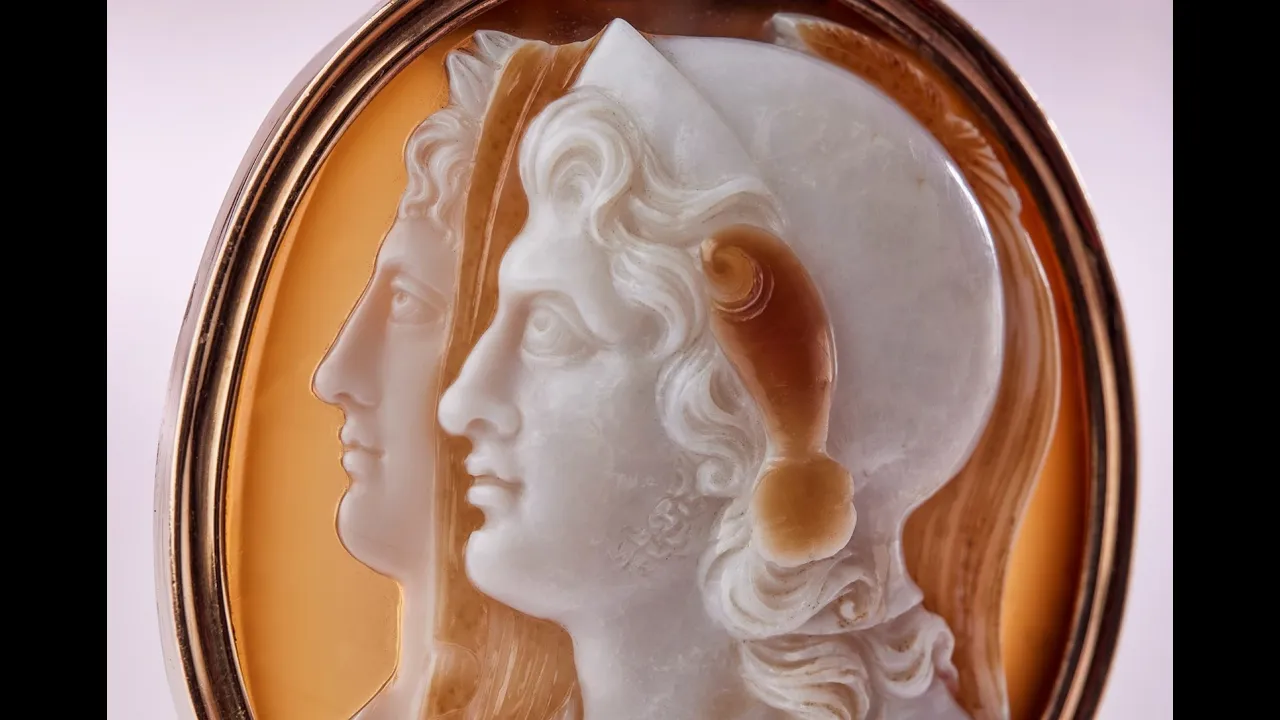
Visite guidée LIVE de l’exposition « Pierres gravées »
3.9K
Glyptic art (glyptique) is the art of engraved and carved stones, producing two fundamental types: intailles (engravings that create negative impressions to be transferred to soft materials like clay or wax) and camées (cameos that produce direct relief images). The art primarily uses quartz varieties (cornaline, sardonyx, chalcedony, jasper) rather than precious stones, working through abrasion techniques with rotating tools and abrasive pastes. The technique dates back over 7,000 years, with intaille being the oldest method used for seals, while camées emerged in Hellenistic Alexandria around the 2nd century BCE as objects of pure contemplation. The art draws inspiration from the natural polychromy of stones, with artists dialoguing with the material to reveal images within the stone's layers.
Click to watch →

"Путешествуем во времени вместе с камеей Гонзага" с искусствоведом Марией Добиной
112
Glyptic art encompasses all forms of stone carving, including cameos, intaglios, and other relief carvings. Intaglio refers to carvings where the design is incised into the stone surface, used primarily for seals, while cameo refers to raised, convex relief carvings where the design projects outward. The Cameo Gonzaga is a cameo because its figures project outward. In ancient times, gemstones served as important status symbols, typically set in gold and used to decorate clothing and religious objects. The word 'gem' derives from the Latin word 'gemma,' meaning 'bud' or 'knob.' In ancient times, gemstones were believed to possess magical and healing properties, with different stones associated with specific zodiac signs. Onyx is a layered stone with alternating light and dark bands, making it ideal for cameo carving. Sardonyx is a variety of onyx with reddish-brown bands. The Cameo Gonzaga is believed to be made of sardonyx, where the artist used the white layers for the figures and the darker layers for the background. The city of Alexandria in Egypt became the center of excellence for cameo carving during the Hellenistic period.
Click to watch →

Dans l’atelier du graveur – Cours publics d'archéologie
1.4K
Glyptics is the art of carving small precious objects, primarily stones, with techniques unchanged since the 5th millennium BCE. The term derives from Greek 'gluphein' (to cut), though the actual process involves slow abrasion. Two main techniques exist: intaglio (engraving in relief, the oldest dating to the 6th millennium BCE) and cameo (engraving in relief, developed during the Hellenistic period). Cylinders were rolled across clay to imprint images, while intaglios served similar purposes until the 3rd century CE. The choice of stone depends on hardness measured by the Mohs scale, with quartz (hardness 7) requiring diamond points or emery powder (hardness 9). Cornaline is considered the champion stone for all categories. Stones undergo preparation for color enhancement: cornaline's red color comes from heating, while sardonix undergoes specific treatment involving cooking in honey. The development of glyptics involved the introduction of abrasives from the 3rd millennium BCE, including sand and emery powder, enabling more varied tools like drills and small files. The bow drill, invented around the 15th century BCE, revolutionized the technique by allowing precise work while holding the stone.
Click to watch →

Friends of Greek Art Lecture:Alibi ars,alibi materia: An Introduction to Greek & Roman Engraved Gems
6K
The ancient world did not share the modern Renaissance hierarchy of architecture, sculpture, and painting as supreme art forms. Instead, ancient writers praised diverse crafts including silversmiths and gem engravers. Pliny the Elder devoted Book 37 of his Natural History entirely to gems, declaring that a single gemstone provides the highest aesthetic experience of nature's wonders. Two primary engraving techniques existed: intaglio, where images were cut into stone to create relief when impressed in clay, and cameo, invented in Hellenistic Ptolemaic Egypt around the third century, which carved backgrounds away to create relief images in layered stones like banded agate. Intaglio used rotating tools on a spindle, while cameo required more complex work due to tangential cutting angles. Ancient carvers used abrasive materials (emery/corundum) rather than metal tools, with tools rotated by hand using bows or foot pedals.
Click to watch →
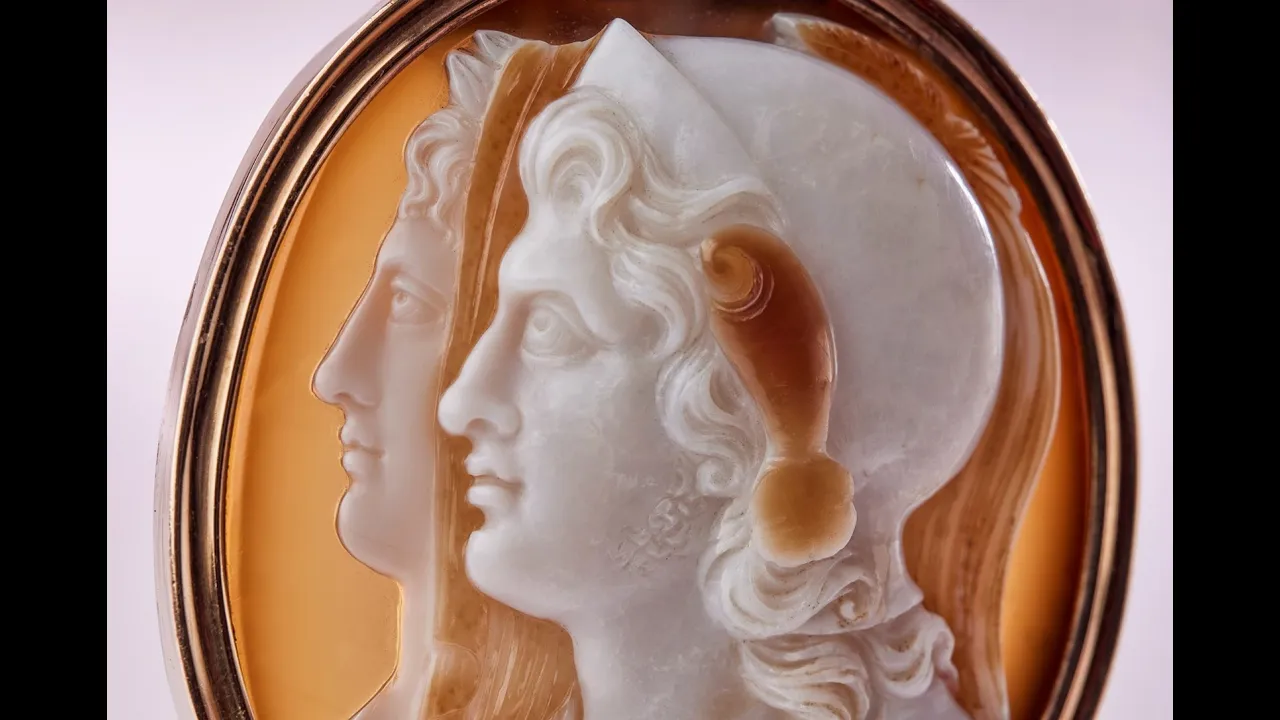
Live guided tour of the exhibition « Engraved Gems »
4.6K
Glyptic art encompasses stone carving with two primary techniques: intaglio (hollow carving, invented 5,000 years ago for seals) and cameos (relief carving, invented over 2,000 years ago for aesthetics). The quartz family forms the foundation, including carnelian, chalcedony, jasper, and heliotrope. Layered stones like sardonyx with 2-8 color bands were enhanced by sugar soaking. The art originated in the Indus civilization and spread to Mesopotamia and Egypt. The transition from functional intaglio to decorative cameos occurred during the Hellenistic period around 200 BC following Alexander's conquests. Court cameos served political purposes, featuring rulers positioned against backgrounds showing dynasty founders. Roman glyptic art served significant political purposes, with Dioscorides engraving Augustus's portrait on a Burma ruby. Under Septimius Severus, emperors were portrayed as Jupiter. Alexander the Great was an ideal model for subsequent rulers. Glyptic art disappeared in the West during barbaric invasions but survived in the Byzantine Empire for religious icons. In the West, it was revived in Sicily during Frederick II's reign (13th century), creating cameos with white backgrounds and brown figures. The Renaissance represented a major revival where artists studied ancient cameos while seeking greater freedom, creating larger pieces with a 'poetic' relationship between artist and stone.
Click to watch →
Prerequisite Knowledge
- Concept 01Understanding the historical transition of Rome from a Republic to an Empire under its first emperor, Augustus.
- Concept 02The concept of Roman imperial propaganda and how visual arts were utilized to establish and legitimize political power.
- Concept 03Familiarity with Roman mythology, specifically the deification of emperors (apotheosis) and the representation of personified virtues like Roma and Victoria.
- Concept 04An introduction to ancient glyptic art, specifically the materials and techniques used in cameo carving and hardstone engraving like double-layered onyx.
Subsequent Learning
- Step 01A comparative study of other major Augustan political artworks, such as the Ara Pacis Augustae and the Augustus of Prima Porta.
- Step 02Analyzing the 'Great Cameo of France' to understand how subsequent Julio-Claudian emperors adapted Augustan visual propaganda.
- Step 03Exploring the dynastic roles of family members, such as Livia and Tiberius, in securing political succession through imperial iconography.
- Step 04Examining the post-classical reception, survival, and collection of Roman cameos by European royalty during the Renaissance and Baroque eras.
Gemma Analysis
Artistic Legacy
Gemma Analysis
0:00Playing Section
- 1
Examines the Gemma Augustea, a Roman cameo from the Augustan court.
- 2
Details its physical attributes, including layered onyx and two-tiered composition.
- 3
Identifies the artwork's historical context and origin in early first-century Rome.
Private Dynastic Ideology and the Tiberian Attribution
While the Gemma Augustea is frequently analyzed as a prime example of Augustan public propaganda, many art historians and classicists challenge this designation. First, because cameos were small, private luxury items intended solely for the imperial family and elite court circles, they did not function as 'public propaganda.' Instead, they allowed the imperial household to indulge in Hellenistic-style divine associations—such as depicting Augustus as Jupiter alongside the goddess Roma—that would have been politically dangerous if displayed to the Roman public, who expected the emperor to maintain the facade of a humble citizen (princeps). Furthermore, some scholars contest the traditional dating of the cameo, arguing it was actually commissioned during the reign of his successor, Tiberius. From this perspective, the piece is not a contemporary celebration of Augustan triumph, but a retrospective monument of Tiberian legitimation. By highlighting Tiberius’s close association with the now-deified Augustus, the cameo served to secure Tiberius's own fragile political authority and justify his controversial succession, shifting the narrative from Augustan self-aggrandizement to Tiberian dynastic survival.
Deep Dive
A comparative study of other major Augustan political artworks, such as the Ara Pacis Augustae and the Augustus of Prima Porta.

10: Ancient Roman Art Part II - The Ara Pacis Augustae
676
The Ara Pacis Augustae (Altar of the Peace of Augustus), built in the Campus Martius between 13-9 BC to celebrate Augustus's return from western campaigns, exemplifies how Roman art served political propaganda by combining mythological narratives (Lupercal, Aeneid), abstract personifications of Rome and its territory, and representations of political power structures to legitimize Augustus's rule, contrasting with the idealism of Greek art like the Parthenon frieze through its political realism and naturalistic grouping.
Click to watch →

Ancient Rome Context Lecture
1.3K
The Ara Pacis (Altar of Peace) is a temple to Augustus in peace, making a comprehensive statement on how Augustus wanted future generations to view his reign. It features a raised platform, a maze or meander pattern, and false Corinthian columns. The abundance of nature in vines and flowers points to Rome's flowering and prosperity. The entrance has two reliefs depicting Rome's foundation myths: Romulus and Remus being nourished by the she-wolf and Aeneas making a ceremonial offering. Inside, the imperial procession shows Augustus's specific values, featuring not just important leaders but also their kids, with some verism as the kids behave like kids, impatiently tugging on parents' cloaks. The Augustus of Prima Porta shows him in his 40s, wearing a mixture of military and civilian dress indicating he's a good leader in both areas, with his hand raised as a symbol of good leadership.
Click to watch →

L'arte romana dalle origini ad Augusto: Mater Matuta, ara di Domitio Enobarbo, Eurisace, Ara Pacis
245
The Tomb of Eurisace (circa 30 BCE) represents pure Italico artistic expression through its unconventional design as a simulated bread oven—an anti-classical form that would never have been conceived by Greek architects. The decorative frieze depicts bread-making processes with figures in unstable postures, dry drapery lacking elasticity, and crude modeling. In contrast, the Ara Pacis Augustae represents Neogreco artistic achievement with dynamic diagonal compositions, clinging drapery revealing bodily contours, and sophisticated spatial hierarchy. The lower frieze features exuberant Hellenistic acanthus leaves reminiscent of Alexandrian art. Augustus is depicted as 'Primus inter pares' (first among equals), appearing indistinguishable from his companions in height and attire, demonstrating how imperial propaganda balanced autocratic power with republican ideals.
Click to watch →
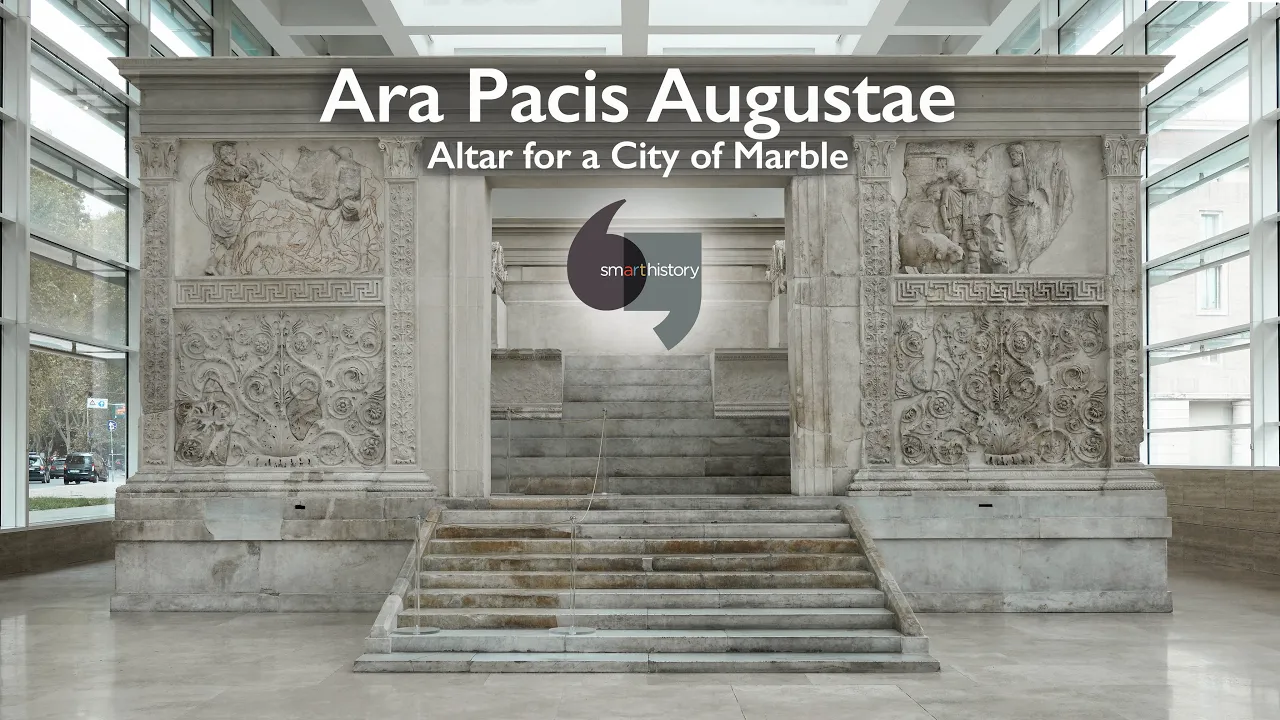
Ara Pacis Augustae, Rome
124.4K
The Ara Pacis Augustae (Altar of Augustan Peace), built in 9 BCE to commemorate Augustus's military victories and the establishment of the Pax Romana, represents a pivotal moment in Roman history where Augustus transformed the Republic into an empire while maintaining republican appearances; the monument's intricate decorative reliefs featuring over 50 plant species and allegorical figures symbolize fertility, abundance, and the Golden Age of Rome, demonstrating how Augustus used art and architecture to legitimize his centralized power while embracing traditional Roman values.
Click to watch →
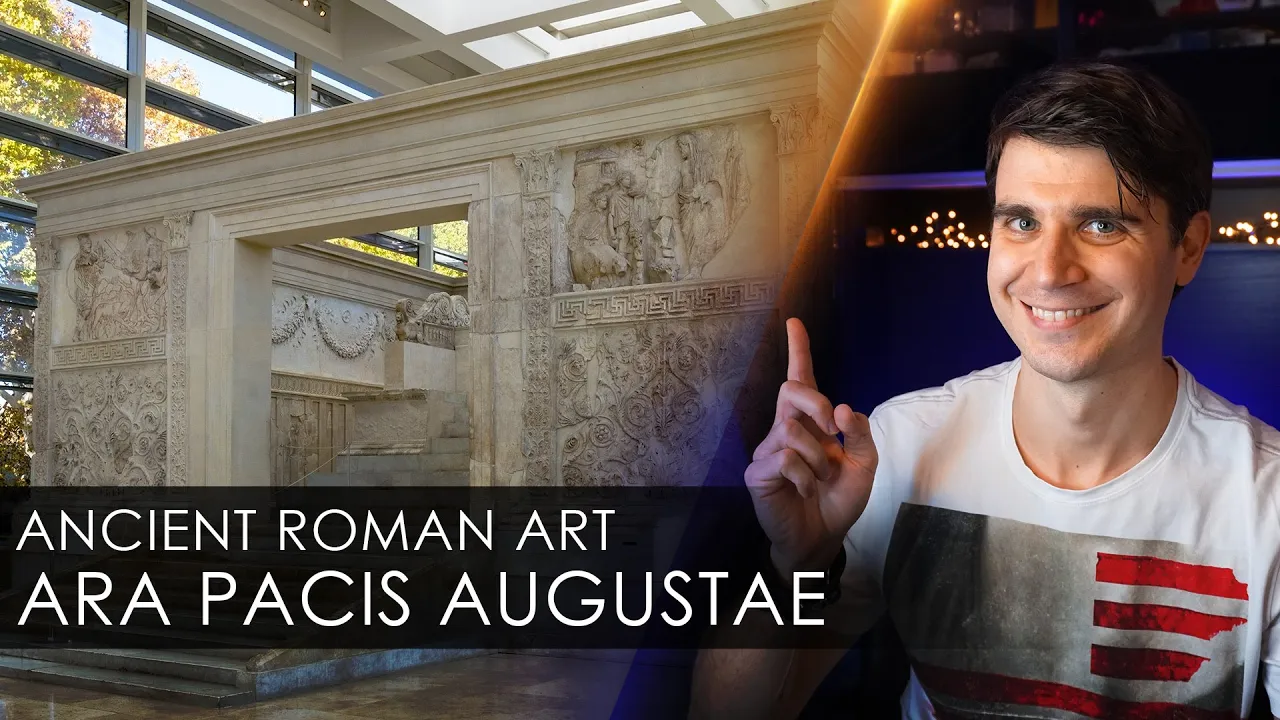
Ara Pacis Augustae The Altar of Peace That Glorified Augustus
851
The Ara Pacis Augustae, commissioned by the Roman Senate in 13 BC and dedicated in 9 BC, is a marble altar that glorifies Emperor Augustus by depicting scenes of peace, prosperity, and abundance through elaborate reliefs of plants, animals, and real portraits of Augustus and his family, serving as a powerful example of how Roman art was used as political propaganda to legitimize imperial rule and celebrate the transition from civil war to stability under Augustus's reign.
Click to watch →
Deep Dive
Analyzing the 'Great Cameo of France' to understand how subsequent Julio-Claudian emperors adapted Augustan visual propaganda.
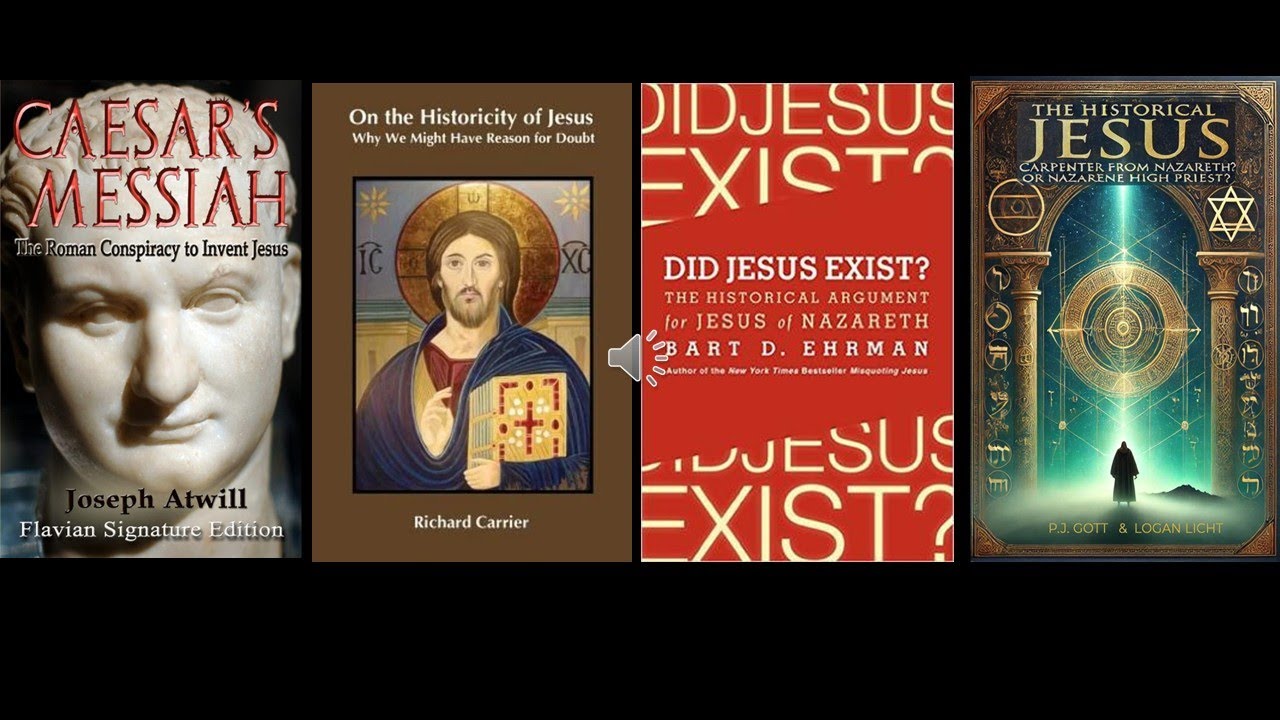
Artificial Intelligence Comparative Study: Atwill, Carrier, Ehrman, Gott & Licht Hypotheses
1.9K
The archaeological record supports the Gott & Licht hypothesis through the Great Cameo of France, which arrived in France in 1279 labeled as 'the triumph of Joseph at the court of the pharaoh.' Reading this as first-century Nazarene midrash reveals a tableau aligned with Genesis narratives—a wise son interpreting dreams, protecting his family, and ascending to power in a foreign empire. The cameo's upper row shows deified ancestors of the Julio-Claudian dynasty with identifying symbols: Marcus Agrippa bears the shield of Zeus (identifying him as the first called Yazus); Augustus holds the staff of Moses; Cleopatra holds the eye of Rah; Julius Caesar rides Pegasus. These are sacred identifiers in a midrashic portrayal of political theology. The larii of Augustus date the coronation to 41 CE when Caligula was removed and Claudius installed. The cameo was created after Paul's movement threatened to destroy the Nazarene legacy, with interpolations to Ur Marcus revealing Paul's plan.
Click to watch →

Recyclez dans l’Antiquité : bijoux, vases et monnaies | Cours publics d’archéologie
1.2K
Large imperial cameos underwent dramatic transformations across centuries, with each generation adapting imagery to contemporary needs. The Cameo of Augustus was modified to transform Agrippina from female to androgynous figure during Tiberius's reign when she fell from favor. Later hands added beards and altered coiffures to align with 3rd-century military emperor aesthetics. Phoenician scarabaei from the 8th-3rd centuries BCE were shortened for 1st-century CE ring settings, while others received new religious inscriptions decades later. These modifications demonstrate how glyptic objects maintained relevance across dramatic cultural shifts, with successive generations projecting their own priorities onto inherited material culture.
Click to watch →
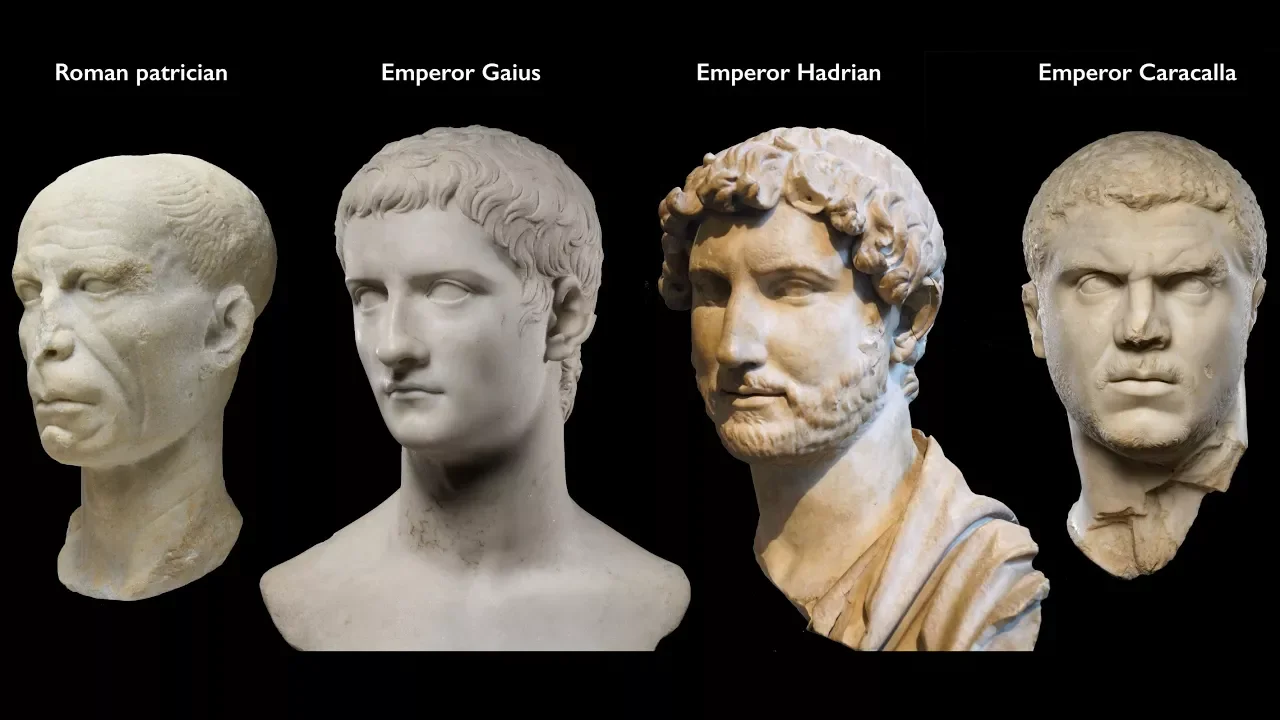
Rome's history in four faces at The Met
127.3K
Emperor Augustus marked a significant departure from the veristic tradition by adopting a classical idealized style in his portraiture. He promoted an eternally youthful athlete's appearance, drawing inspiration from Greek art and the image of the ageless god Apollo. This new tradition was followed by subsequent Julio-Claudian emperors including Caligula, who maintained this idealized image with youthful appearances and carefully crafted hairstyles to align themselves with Augustus's lineage.
Click to watch →

GCA November Talk 2021: Dr Christopher Burden-Strevens on Augustus and the Imperial Image
375
Augustus created a benchmark model for successful imperial image-building that endured for centuries. Subsequent Roman emperors were judged against Augustus's standard. The principate (Augustus's system) became the model for legitimate rule, contrasting with later dominate (tyrannical rule). Augustus's methods of communication—coins, inscriptions, autobiography, sculpture, monumental architecture, and Senate interaction—remained central to monarchical power communication for hundreds of years. His propaganda was so effective that even today, students studying imperial image often find his narrative convincing. The public image Augustus created resonated through Roman history and continues to influence our understanding of imperial power.
Click to watch →

INCREÍBLES ÁUREOS ROMANOS a subasta
5.7K
The Julio-Claudian dynasty (Augustus, Tiberius, Caligula, Claudius, Nero) used aurei as political propaganda. Augustus aurei featured symbolism of barbarian peoples submitting to Roman rule. Tiberius aurei showed both Augustus and Tiberius, with Augustus titled 'divi Augustus' (divine), indicating deification. Claudius aurei featured him with his wife Agrippina. Nero aurei showed Nero with Claudius, preparing the public for his succession. These coins demonstrated how Roman emperors used coinage to legitimize their rule and communicate political messages.
Click to watch →
Deep Dive
Exploring the dynastic roles of family members, such as Livia and Tiberius, in securing political succession through imperial iconography.

Livia y las Julio Claudias en el centro de las intrigas palaciegas
12.7K
Livia, born in 58 BC and dying in 29 AD, met Augustus in 38 BC at a reception. She was from one of the most important patrician families in Rome, which suited Augustus's political needs for reconciliation with important patrician families. She became Augustus's wife at age 20 when he was 25. Livia exhibited sobriety and elegance with a strong personality and marked ambition. Augustus always praised her notable dignity, chastity, and honesty, values that Roman wives should have and that should be set as examples for other women. All marriages within the palace or among close relatives were supervised and blessed by Livia. Her influence was crucial in securing Tiberius's succession to Augustus. She managed intrigues and business to ensure her son Tiberius would be officially named Augustus's heir. Her power was indisputable in matters of succession. Through influence and pressure, combined with the elimination of possible successors, she positioned the Claudian family ahead of the Julian family. Her dominance and adherence to imperial legislative precepts established the basis for a behavior model that would be followed by subsequent empresses and women of the imperial house and Roman high society for over 50 years.
Click to watch →

Tiberio: l'imperatore controvoglia, disgustato da Roma
401.8K
When Gaius and Lucius Caesar (Augustus' grandsons) died under suspicious circumstances, Livia worked to restore Tiberius to the line of succession. She convinced Augustus to formally adopt Tiberius as his son, thereby guaranteeing him the imperial throne. However, Augustus required Tiberius to reciprocate by adopting Germanicus (son of Drusus), creating a complex family relationship that would prove problematic for Tiberius' reign. This demonstrates how imperial succession was manipulated by influential family members to serve political interests.
Click to watch →

Why was Tiberius forced to be Emperor? - History of The Roman Empire (14 AD - 37 AD)
148.4K
In 29 AD, Livia died, leaving Rome solely in the hands of Sejanus—a treacherous turn of events. Tiberius, still isolated in his villa, was spared witness to the cleansing of Rome of all those who opposed Sejanus, including 3 surviving members of Germanicus's family. The emperor was so unwitting to the schemes of his trusted ally that he allowed Sejanus to serve as consul alongside him in 31 AD while his secret lover Livilla (Tiberius's niece) joined his ploy. Sejanus was determined to weasel his way into the line of succession now that Tiberius's obvious heirs were deceased, with the aid of the Julians.
Click to watch →

Nero Imperador: louco, depravado e cruel
138.3K
The Julio-Claudian dynasty established Rome's first imperial rule after Julius Caesar's assassination. Augustus (Octavian) became the first emperor, marrying Livia who orchestrated her son Tiberius's succession. Tiberius ruled from Capri, followed by his nephew Caligula, known for extreme madness. Caligula was assassinated, and his cousin Claudius became emperor. Many believed Claudius was foolish, but 'I, Claudius' reveals he was intelligent, pretending to be foolish to survive family intrigues.
Click to watch →
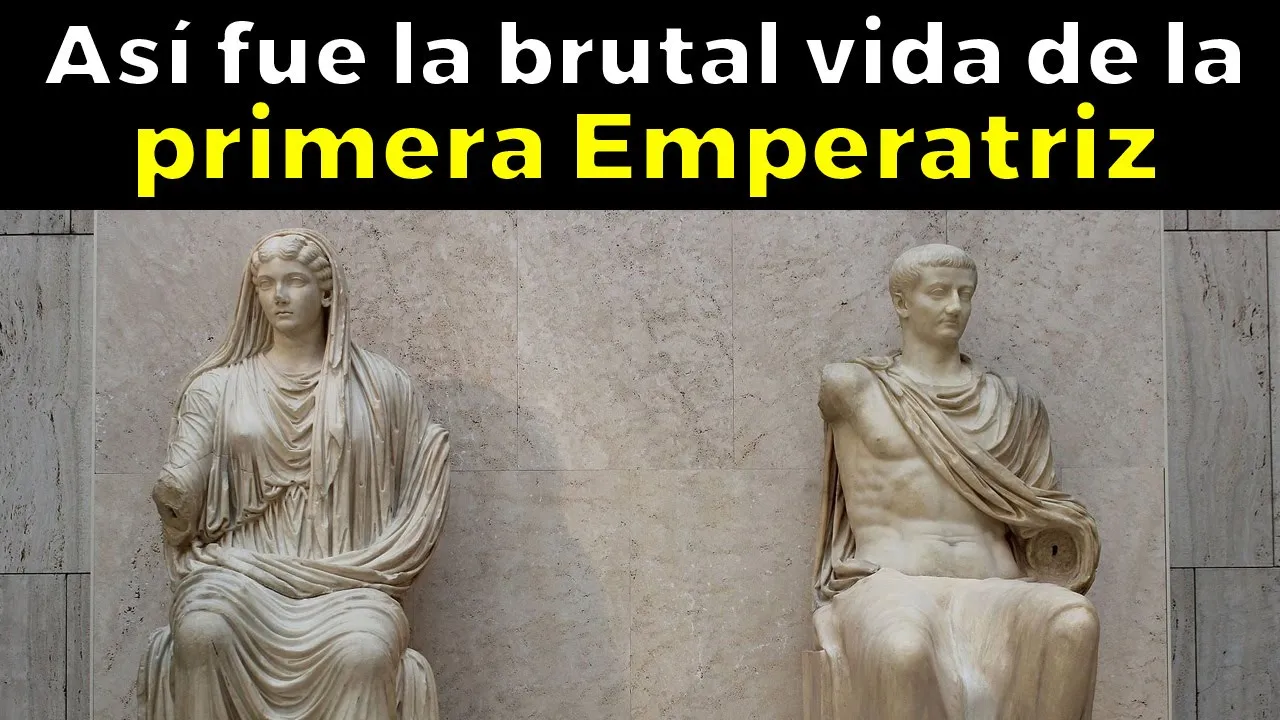
La trágica historia de Livia Drusila, la primera EMPERATRIZ de la Antigua ROMA
152.5K
Livia Drusila (59 BCE - 29 CE) was the first empress of Ancient Rome, serving as the wife of Emperor Augustus and mother of Emperor Tiberius; despite traditional Roman society limiting women's roles to domestic spheres, she wielded significant political influence as Augustus's chief advisor, manipulated imperial succession to ensure her descendants inherited the throne, and maintained power through strategic marriages and alliances, ultimately becoming an ancestor to all Julio-Claudian emperors including Tiberius, Claudius, Caligula, and Nero.
Click to watch →
Deep Dive
Examining the post-classical reception, survival, and collection of Roman cameos by European royalty during the Renaissance and Baroque eras.
La historia del camafeo
20.6K
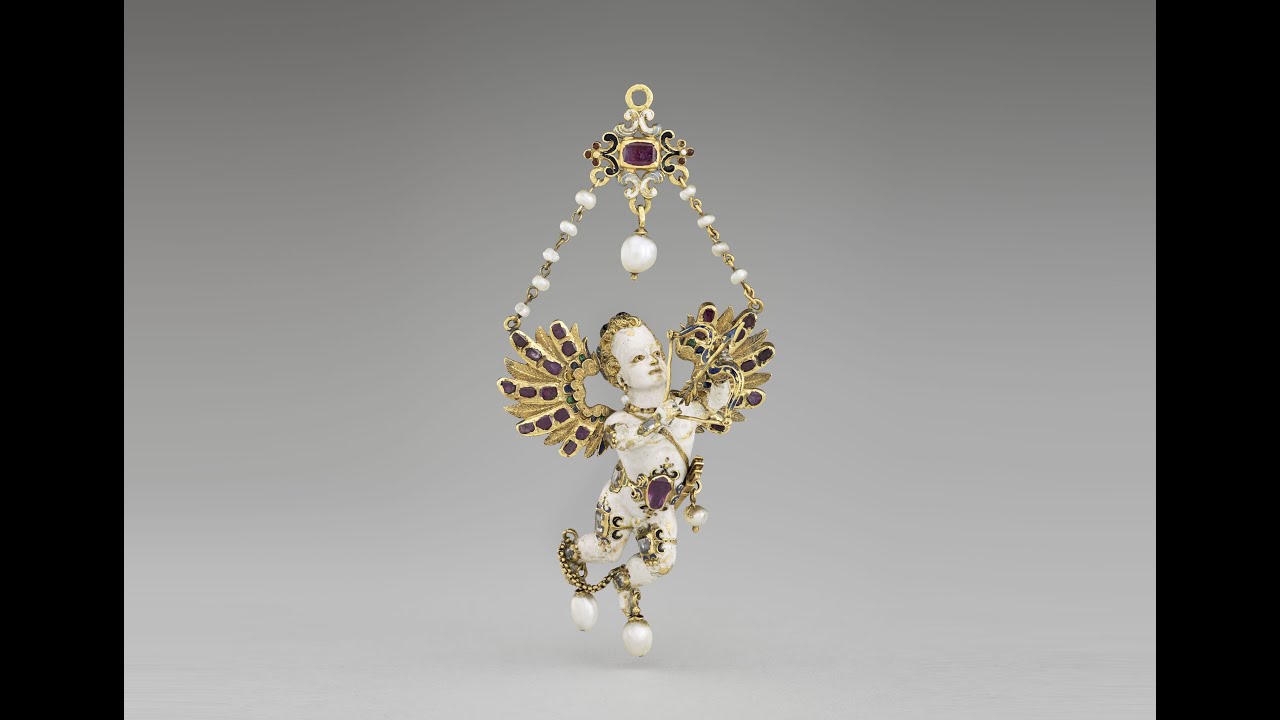
Cameo art disappeared for centuries until Lorenzo de Medici revived it during the Renaissance, making it fashionable across Europe. Henry VIII established a workshop in his court for this jewelry type. Renaissance cameos were more ornate, with artisans reassembling Roman pieces for brooches and necklaces. The discovery of America introduced exotic materials like ivory, jade, amber, and conch shell. Conch shell's unique property of revealing darker colors when layers are lifted created spectacular reliefs. This period established cameo as a prestigious art form across European courts.
Click to watch →
Renaissance : un âge d’or du bijou
2K
Cameos and intaglios were the only ancient jewelry that survived intact to the Renaissance. These glyptic arts were extremely prestigious, with collections considered invaluable - so valuable that diamonds were considered worthless by comparison. The Medici family and other Renaissance courts maintained extensive collections. These gems became symbols of eternal power, as they were believed to be unaffected by time. Kings and queens like Elizabeth I had their portraits engraved on cameos to represent themselves eternally young, symbolizing the immortality of their power. When gems broke, they were preserved by creating mounts that completed missing parts. This led to the 'cameo' art form, combining ancient gems with spectacular gold mounts featuring leaves of ivy or vine - a style described by Benvenuto Cellini as characteristic of Northern Italian jewelers.
Click to watch →

Dr Ittai Gradel - Old Gems in New Settings
871
Ancient Roman cameos were frequently reused or modified throughout history, serving as tangible evidence of how people at all social levels responded to political changes at the imperial level; examples include the deliberate destruction of portraits of disgraced empresses like Crispina and Macrinus, the recarving of state cameos from one emperor to another (such as Caligula to Claudius), and the practical adaptation of sealstones by flipping them and carving new imperial portraits on the reverse, demonstrating that even damaged pieces retain historical value because the damage itself becomes part of their story and connection to Roman history.
Click to watch →

Klejnoty koronne, które przetrwały imperia | Sekrety królewskich skarbów
138
The person wearing a cameo is considered very refined and appreciative of classicism, as since ancient Greece they were considered symbols of prestige. In ancient Rome and Greece, emperors like Julius Caesar collected cameos. For years, they were used as symbols of power. They found their way into this tiara because Napoleon was a great admirer of cameos. The tiara combines echoes of ancient Rome, Napoleon's shadow, and the process of royal inheritance.
Click to watch →

Riccardo Braglia * La grotta delle meraviglie (Il Rio Edizioni)
213
Isabella d'Este was particularly passionate about ancient Roman and Hellenistic cameos, which were carved from hard stone (typically sardonyx with multiple colored layers) rather than the softer materials used in later centuries. The most exceptional piece in her collection was a unique vase entirely made using the cameo technique, now located in Brunswick, Germany. Isabella was also skilled at negotiating for these rare items, acquiring them in pieces.
Click to watch →
Gemma Analysis
Artistic Legacy
Gemma Analysis
0:00- 1
Examines the Gemma Augustea, a Roman cameo from the Augustan court.
- 2
Details its physical attributes, including layered onyx and two-tiered composition.
- 3
Identifies the artwork's historical context and origin in early first-century Rome.
Private Dynastic Ideology and the Tiberian Attribution
While the Gemma Augustea is frequently analyzed as a prime example of Augustan public propaganda, many art historians and classicists challenge this designation. First, because cameos were small, private luxury items intended solely for the imperial family and elite court circles, they did not function as 'public propaganda.' Instead, they allowed the imperial household to indulge in Hellenistic-style divine associations—such as depicting Augustus as Jupiter alongside the goddess Roma—that would have been politically dangerous if displayed to the Roman public, who expected the emperor to maintain the facade of a humble citizen (princeps). Furthermore, some scholars contest the traditional dating of the cameo, arguing it was actually commissioned during the reign of his successor, Tiberius. From this perspective, the piece is not a contemporary celebration of Augustan triumph, but a retrospective monument of Tiberian legitimation. By highlighting Tiberius’s close association with the now-deified Augustus, the cameo served to secure Tiberius's own fragile political authority and justify his controversial succession, shifting the narrative from Augustan self-aggrandizement to Tiberian dynastic survival.
Understanding the historical transition of Rome from a Republic to an Empire under its first emperor, Augustus.
The concept of Roman imperial propaganda and how visual arts were utilized to establish and legitimize political power.
Familiarity with Roman mythology, specifically the deification of emperors (apotheosis) and the representation of personified virtues like Roma and Victoria.
An introduction to ancient glyptic art, specifically the materials and techniques used in cameo carving and hardstone engraving like double-layered onyx.
A comparative study of other major Augustan political artworks, such as the Ara Pacis Augustae and the Augustus of Prima Porta.
Analyzing the 'Great Cameo of France' to understand how subsequent Julio-Claudian emperors adapted Augustan visual propaganda.
Exploring the dynastic roles of family members, such as Livia and Tiberius, in securing political succession through imperial iconography.
Examining the post-classical reception, survival, and collection of Roman cameos by European royalty during the Renaissance and Baroque eras.
145 views0likes3:39@kathrynhonorOriginal Release: 2023-07-18
this piece I'll be talking about is Gemini Garcia the city and Country of work is most likely Rome the specific location the work currently is the museum of art history in Vienna the art is responsible for the work is most likely do I can't speak Latin but Dio ski rides or one of his disciples um who I can find much information on a lot of him online but I'm assuming he was Italian or Greek either one of those two um the meaning of work is a low relief Cameo engraved in gym cut from double layered Arabian Onyx Stone the period of work is Roman the historical relevance is the most commonly sub to origin story for this piece that is probably made in the court of Caesar Augustus if this gym was made during his lifetime it would perhaps be men have been made as a gift to a respected family or in a Roman province or a client Kingdom the period how long it takes to create is unknown but it was created in the second or third decade of the first century AG this works important because the Gemma Garcia was the political and cultural product of the Augustine Court in classical Rome is one of the most impressive carved cameos of a series of Roman gyms representing Imperial people the defining characters of this work it's one layer is why why the other layer layer is bluish Brown underneath the stories set on two tiers and upper and a lower depicting the apotheos of Augustus he's seated next to the goddess Roma and both are trampling the armor of defeated enemies the upper and lower scenes take place at different times and are basically a cause and effect of one another the lower scene takes place at the northern Frontiers just after the battle won by the Romans we wrecked a victory trophy gathered prisoners of War waiting for their punishment and grief or begging for mercy at the hands of the assisting Gods the Triumph on the battlefield precedes the in the upper plate the upper seating is a fusion of Rome Olympus in a world of the cities and the world of cities sorry this oral contributions of the artist was I guess his favorite gym cutter his working copies of it are seen from all over the Roman world but this one is his most popular or like well known um my first Love's version is that it was a really unique layering of the stone you normally don't see like multi-colored Stone if you do it's in like chunks not in like layers like cut away from one another and so the Shadows like the ability to create shots like probably a really intricate process like you have to make a very thin layer it seemed like which is really impressive especially for like the lack of technology that we've had at the time um I chose this word because I saw a lot of like these types of gem carvings they exhibit and they looked really interesting she don't really see that anymore but this one was definitely the most intricate at least on display um so compared to other works in the period during augustus's Reign religious culture revive temples rebuilt and a number of public ceremonies and Customs reinstated Craftsman from all around the Mediterranean established workshops that were soon producing a range of objects including silverware gyms glass out of very high quality and originality so the gym Augusta is just an excellent example of this progression in art and culture fun facts under his rule the Roman Empire doubled in size
Up Next
2:59
Arabic Calligraphy Art: Letters Modeled on the Human Body
@theGuardian
572.7K views•2013-06-26

114:18
Christian Iconography: History, Theology, and Meaning | Fr. Panayiotis Papageorgiou
@Trisagionfilms
58.8K views•2020-02-21
7:48
Ukiyo-e Art: History, Woodblock Printing & Influence
@japanathand
6.3K views•2023-06-08

16:34
Earliest Depictions of Jesus in Art: 10 Ancient Images Explained
@UsefulCharts
5.9M views•2022-06-03
Related Study Plans & Knowledge Roadmaps
Structured learning paths in Art History
art-history
Gothic Cathedrals: Engineering, Light & Society
01The Birth of the Gothic: Romanesque to Suger's Vision
02The Structural Triad: Pointed Arches, Ribbed Vaults, and Flying Buttresses
03Theology of Light: Lux Nova and Sacred Geometry
+ 2 more learning modules
14h5 modules
Explore Roadmap
art-history
Pre-Raphaelites: Realism, Symbolism & Critique
01The Victorian Art Establishment and Academic Formula
02The Founding of the PRB and Radical Realism
03Medieval Revivalism and Literary Symbolism
+ 1 more learning modules
8h4 modules
Explore Roadmap
art-history
Street Art: From Subways to Art Market
01Subcultural Origins in Philadelphia and New York (1970s)
02The Subway Era and Style Wars (Late 1970s - 1980s)
03The East Village Scene and Early Gallery Crossover
+ 2 more learning modules
10h5 modules
Explore Roadmap
art-history
Classic Maya Art: Iconography, Glyphs & Ritual
01Foundations of Classic Maya Visual Culture
02Deciphering Maya Hieroglyphs & Text-Image Integration
03Sacred Geography and Cosmological Architecture
+ 2 more learning modules
14h5 modules
Explore Roadmap