Arabic calligraphy is a sophisticated art form where letters are designed based on the human body structure, featuring distinct anatomical elements like a chest, spine, and head; this artistic tradition emerged from the Islamic emphasis on preserving the Quran without alteration, resulting in strict rules and regulations that make calligraphy both challenging and labor-intensive, requiring calligraphers to develop diplomatic skills to harmoniously arrange letters that may initially resist sitting together.
Arabic Calligraphy Art: Letters Modeled on the Human Body
Added:Deep Dive
Foundational history of Arabic calligraphy, including key traditional scripts (such as Thuluth, Naskh, and Kufic) and its status as a sacred Islamic art form.

خير جليس - خطاطو الموصل المعاصرون
265
Arabic calligraphy is the art of writing in languages using Arabic letters, characterized by connected letters enabling geometric shapes through elongation, contraction, and circularity. Two main origin theories exist: one from the Masnada script (Yemeni writing system) and another from the Aramaic alphabet. The first Quranic copy was written in the Makkah script by Zaid bin Thabit, predating the Kufic script. The Kufic script, originating in Kufa, Iraq, has over 70 varieties named after cities or shapes. By the end of the Abbasid period, six major scripts were standardized: Thuluth, Naskh, Muhaqqaq, Rehan, Tawqi', and Tawqiyat. Islamic calligraphy developed as a direct result of the Islamic prohibition of depicting human figures, channeling artistic energy into writing and geometric decoration, making it the greatest common denominator of Islamic art.
Click to watch →
مراحل تطور الخط العربي
1.3K
Arabic calligraphy evolved from Phoenician and Nabataean scripts before Islam, developed significantly during the Islamic era with the Quran's revelation introducing the Jazm script, and flourished in the Abbasid period with diverse styles including Kufic, Thuluth, Naskh, and Diwani, becoming a major Islamic art form that reflects cultural sophistication.
Click to watch →
Islamic Calligraphy: Brief History 2022 | All about Arabic Calligraphy | 1of4
2.4K
The Kufic and Naskh scripts were the two major scripts developed for Arabic writing. The Kufic script, the first used for Quran manuscripts, developed in Kufa in Mesopotamia in the 7th century. It is characterized as square, bold, and squat with straight vertical and horizontal lines meeting at 90-degree angles, omitting vowel diacritical marks. Arabic calligraphy comprises various cursive scripts with vertical extensions and geometric constructions, some using fuller curving and linking between letters. Each style serves specific purposes, with some favored for ornamental purposes while others are common for writing or reading.
Click to watch →

Thuluth calligraphy course (special) I class 01
1.2K
According to Islamic tradition, Allah created the Pen (Qalam) as the very first thing in existence, followed by the Decree (Takdeer), and then all other things came into existence. The Quran's first verse mentions Allah's creation of the Pen, and Surah Al-Qalam (Chapter 68) is named after it. When the Quran began to be revealed, Prophet Muhammad (PBUH) selected companions to write it on various materials, and those skilled in writing received significant spiritual rewards and were called 'Kuttab' (scribes). During Caliph Ali's reign, the expansion from Medina to Kufa increased demand for Quranic manuscripts, leading to the development of Khut-e-Kufi. Around 400 years after Hijrah, during the Abbasid Caliphate, Ibn Muqlah created six major scripts: Khut-e-Naskh, Khut-e-Sulus, Khut-e-Rihani, Khut-e-Muhakkaq, Khut-e-Tawqi, and Khut-e-Tawqif. Khut-e-Sulus is considered the 'King of All Scripts' (Taj-ul-Khat), most commonly found in architectural elements like domes, arches, and mosque inscriptions.
Click to watch →
وثائقي | الخط العربي.. رحلة عبر تاريخ الفن العربي وأثره العميق في الثقافة والتاريخ الإسلامي
1.1K
Arabic calligraphy operates under strict 'Qa'ida' rules that must not be violated, even by the width of a hair. Despite these constraints, the art has evolved into multiple styles including Thuluth, Naskh, Kufic, Muhaqqaq, Diwani, and Jali. Thuluth is considered the most difficult and beautiful style, representing the history of Islamic civilization. Originally developed for religious purposes to enable Quran reading, Arabic calligraphy has become a cultural identity for Arab civilization. The art form combines musical qualities of letters with graphical potential, with each style suited to specific meanings. The Quran compelled scribes to write without consciously moving their fingers, as calligraphic styles varied in movement. After Prophet Muhammad's death, the need for Quranic preservation spread to expand the Islamic state. The art evolved from Kufic to Muhaqqaq to Thuluth, representing the historical development throughout Islamic civilization.
Click to watch →
Deep Dive
The concept of 'Al-Khatt al-Mansub' (proportioned script) pioneered by Ibn Muqla, which uses the 'nuqta' (rhomboid dot) as the fundamental unit of measurement.

International Arabic Language Day Celebratory Evening, CIS, SOAS University of London
3.4K
The Kufic script was the first really convincing answer to the challenge of expressing the Quran visually. The technique involves taking all individual letters and combinations of letters and spreading them all over the page with equal distances in between, constructing what has been called an architecture of the page with proportional relationships between the height and width of the page. However, it is very difficult to read if you don't know the text. A revolution called al-khatt al-mansub (the proportion script) took place in the 4th century of the Hijra, spearheaded by Ibn Muqla. This resulted in the famous Quran of Ibn al-Bawwab, which is the Arabic script we know today.
Click to watch →
Arab American Heritage Month | Living Lines: The History of Arabic/Islamic Calligraphy
507
Ibn Mukla (died 940 CE), a chief minister of three Abbasid rulers and poet, established strict proportional rules for Arabic calligraphy. He invented the AL if model and a measurement system using rhombic dots to fix letter ratios. The system works by imagining a circle where each Arabic letter's size relates to the circle's diameter. By placing rhombic dots next to each other along the diameter, calligraphers can measure and maintain consistent proportions across all letters, enabling enlargement while preserving proportional relationships between characters.
Click to watch →
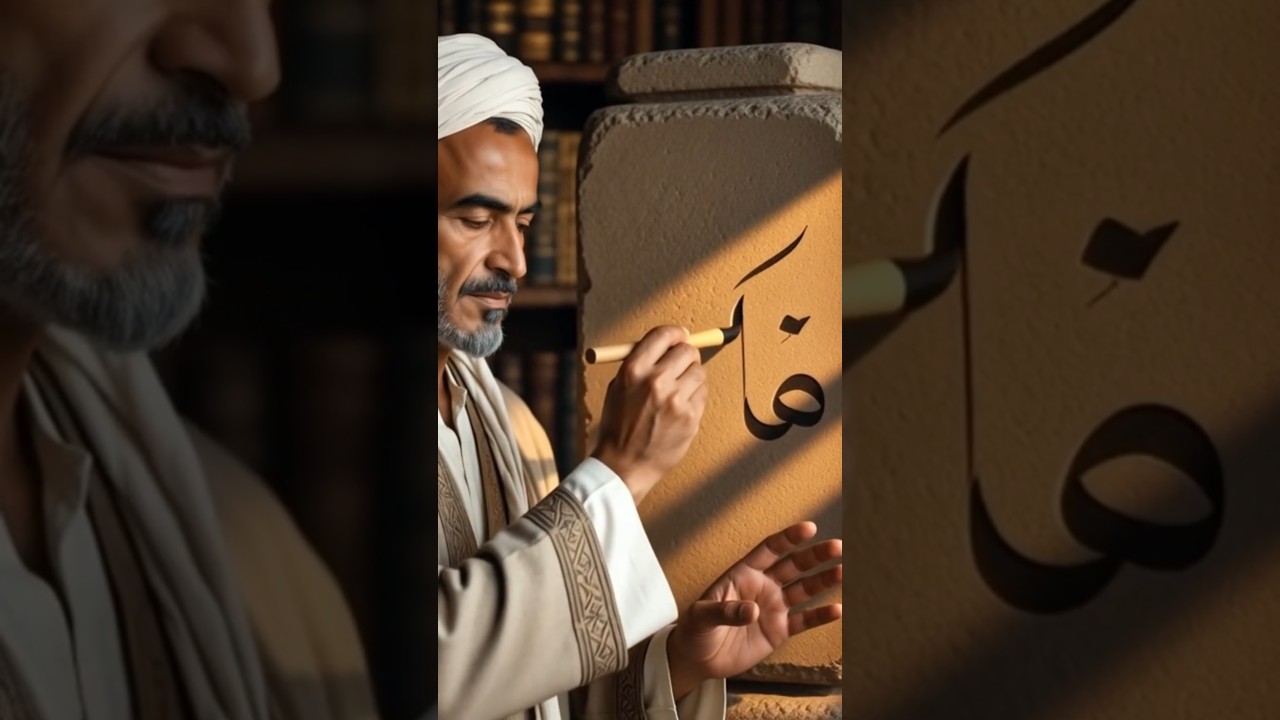
Ibn Muqlah: Founder of Proportional Arabic Script” #calligraphy #shorts #islamicgoldenage #tajmahal
700
Ibn Muqlah (886-940 CE), a renowned Islamic scholar and vizier from Baghdad, pioneered the proportional system of Arabic script by establishing precise mathematical rules for letter proportions, which he applied to standardize major scripts like Naskh, Thuluth, and Muhaqqaq; despite being imprisoned and having his right hand amputated by enemies, he continued to write with his left hand and even with his mouth, and his methods became the foundation for calligraphy in historic Islamic monuments including the Taj Mahal.
Click to watch →
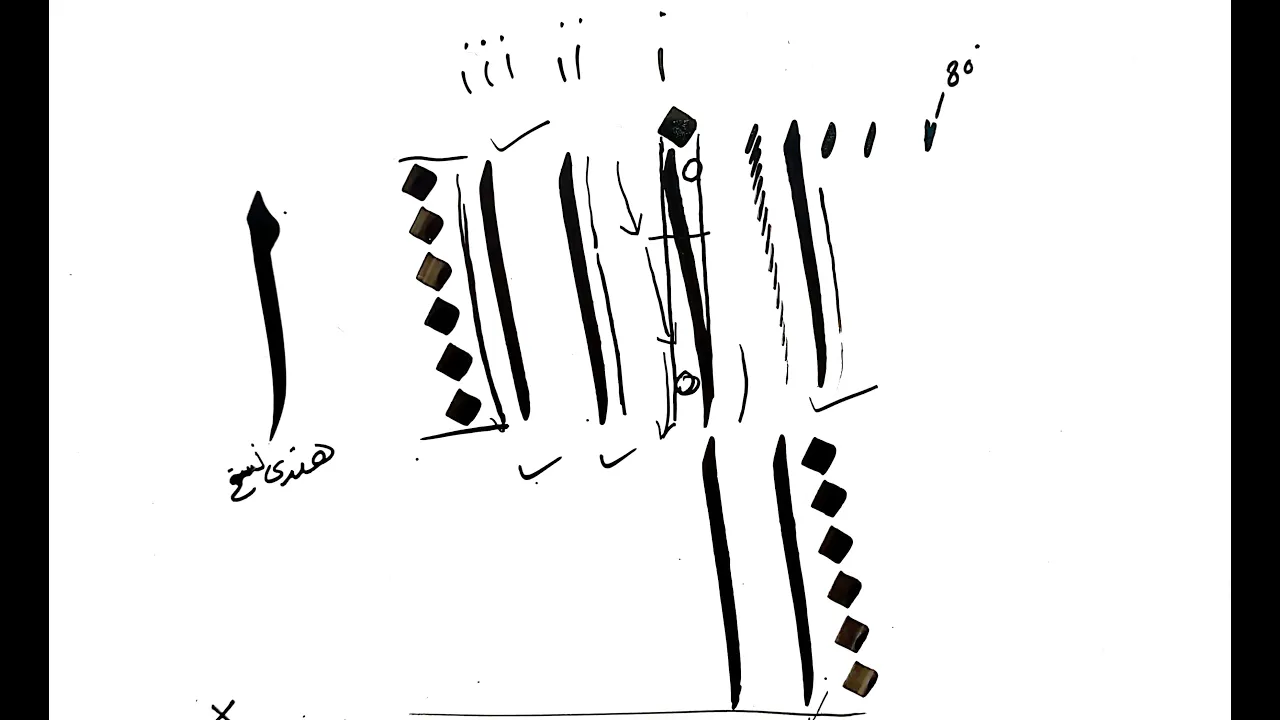
naskh calligraphy course I class 1
6.8K
Naskh calligraphy is a script developed by Ibn Muqla during the Abbasid Caliphate, derived from Kufic script and named for its dual meaning of 'writing' and 'erasing' as it replaced Kufic for practical Quranic writing. The instructor, Ustad Naveed Maroof from Karachi with 15 years of experience, teaches that Naskh has regional variations including Turkish Naskh (used internationally for Quran competitions) and Delhi/Mughal Naskh (used in Pakistan, India, and Bangladesh for home Quran recitations). The class begins with understanding the dot system (nuqta) as the fundamental measurement unit for letters, where Alif consists of 6 dots, and proper pen holding technique with the pen angled at 80 degrees. Students are encouraged to make sincere intention (niyyat) while learning Quranic calligraphy, as this spiritual aspect enhances the practice.
Click to watch →

Introduction to خطاطي Calligraphy (1) - Irfan Ahmed Qureshi
417
The dot (nuqta) is the fundamental building block of calligraphy. Every line and shape in calligraphy is constructed from dots. When a line is drawn, it consists of dots that are not immediately visible but form the underlying structure. This geometric foundation means that all calligraphic forms, whether simple or complex, are ultimately built upon the principle of dots. The two-dot system provides the fundamental structure for all calligraphic forms, with every calligraphic element requiring exactly two dots to form a complete shape.
Click to watch →
Deep Dive
Basic principles of Islamic aesthetics, particularly how the historical avoidance of figural representation channeled artistic expression into geometry, patterns, and writing.
Heights Art Lecture Series Emma Clute - Art of the Islamic Mediterranean
223
Islamic art's resistance to figural imagery stems from Quranic prohibitions against idols and Hadith objections to human image-making as infringement on divine creation. However, practice diverges from theory—historical manuscripts depict Muhammad with veiled faces and halos. Calligraphy achieves supreme status as the highest Islamic art form because Muhammad wrote divine revelations in Arabic script; Quranic text represents divine will visually. Geometric patterns dominate Islamic aesthetics due to calligraphy's inherent geometry, textile traditions, and adaptation of Byzantine/Sasanian border decorations. These patterns occupy central rather than marginal positions, creating compositions where non-figural elements become primary subjects. This artistic approach served dual purposes: honoring religious principles while visually distinguishing Islamic culture from Christian and pre-Islamic traditions.
Click to watch →

Rohit Gupta aka CompassWalla @APOGEE 2016
186
Islam historically banned the depiction of human or animal images in religious contexts. This restriction channeled artistic creativity into geometric patterns and calligraphy. Islamic architecture, art, and design became characterized by intricate geometric patterns, demonstrating how religious constraints can redirect creative energy into mathematical and geometric expression.
Click to watch →

FULL GRE TEST 1: Verbal Section A (Vocab Predictions, A causes B logic and more)
26.8K
Due to the ban on figural representation since the 7th century, Islamic artists have relied on vegetable motifs, calligraphy, and patterns. Scientists discovered that artists as far back as the 15th century were using the concept of geometry and polygons (mathematical principles) to create tilings that reflect sophisticated mathematics. These tilings were so advanced that modern scholars only recently understood them, approximately 20-30 years ago.
Click to watch →

Episode 22 - Aesthetic Islamic | Dr. Samir Mahmoud
1.3K
A uniquely Islamic characteristic is its fascination with geometric forms and non-figurative art. Unlike figurative art based on realistic images, Islamic art expresses itself through patterns, geometry, and stylized plant forms. This impulse emerged because Islam sees itself as culminating prophetic revelations sent to all humanity across different cultures—from pre-Columbian America to Africa, China, India, and Europe. Each culture received messages through its own languages and expressions, making universal artistic forms essential for transcending cultural boundaries.
Click to watch →

The Hidden Art of Islam | BBC
102
This section explores the three fundamental aspects of Islamic Art: geometry (the foundation), islimi/Arabesque (the floral vegetative aspect), and calligraphy (at the top because it is the word of God). Islamic artists built on the Arabic saying that purity of writing is purity of soul. Arabic calligraphy began with two sources: the Quran and the prohibition against figurative work. The first word revealed to Muhammad was 'Iqra' (Read), the foundation for seeking knowledge. Between the 8th and 10th centuries, there was specific geometry and harmony in how letters were fitted to pages. As Islam spread, calligraphy developed, reaching its peak in Turkey under the Ottoman Empire. Arabesque and geometric patterns have maintained appeal in contemporary design. It is a language of symmetry first developed by Greeks but extrapolated within the Islamic tradition. The idea is to engender a contemplative state - repetitions allow the mind to think upon pattern within nature and the idea of the infinite. Early Islamic art and architecture depict the Quranic description of paradise - gardens, flowing streams, geometric arches. Every part of Islamic architecture has always been geometrically perfect, correlating with one another.
Click to watch →
Deep Dive
The historical relationship between sacred geometry, natural proportions, and classical art theories that relate design to the human body (e.g., Vitruvian principles).
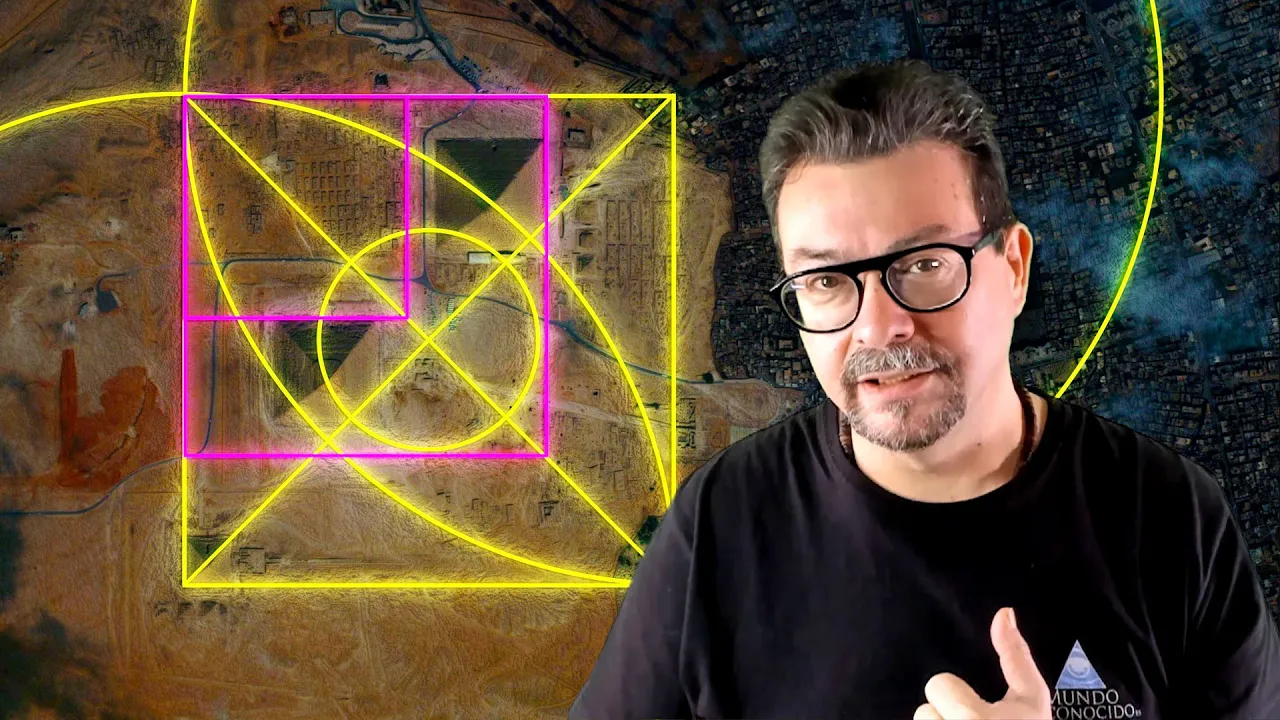
El Secreto de las Tres Pirámides de Egipto
339K
Leonardo da Vinci's Vitruvian Man demonstrates the relationship between human proportions and sacred geometry. When superimposed on the geometric figures from Giza, the human figure touches the inner square at the feet and the outer circle at the head. This suggests that the geometric principles used in Giza may have been known since ancient times and were understood by Renaissance scholars. The speaker questions whether this knowledge was deliberately hidden or if it represents a universal understanding of sacred geometry that transcends time periods.
Click to watch →

GEOMETRIA SAGRADA con Jezabel Martínez
16K
Sacred geometry is a concept present throughout human history since the beginning of time, found in nature and represented in architecture from Paleolithic stone alignments to Gothic cathedrals and Renaissance paintings. The human body itself is sacred geometry, fulfilling mathematical patterns related to the golden ratio and Fibonacci sequence. The Fibonacci spiral appears in shells, mollusks, fern leaves, pine cones, hurricanes, tornadoes, and galaxies, representing a fractal reality from microcosm to macrocosm. Leonardo da Vinci demonstrated these proportions in the Vitruvian Man, showing how the body's proportions from fingertips to navel follow perfect mathematical relationships.
Click to watch →

Secrets of Leonardo da Vinci's Sacred Geometry
391.9K
Sacred geometry is a secretive tradition centered on number, harmony, geometry, and cosmology spanning Egyptian, Babylonian, Indian, Greek, and Roman civilizations. Leonardo da Vinci exemplified the Renaissance universal genius who used sacred geometry as an underlying organizational principle in art, engineering, and architecture. Vitruvius (first century BC) wrote 'De Architectura,' the first surviving book on architecture, which was revived in the 1400s during the Renaissance. Euclid's 'Elements' (300 BC) served as the foundation for Vitruvian engineering. Luca Pacioli collaborated with Leonardo to illustrate 'De Divina Proportionione,' introducing the 'Divine Proportion' or golden ratio. The golden section rectangle is created by taking the midpoint of a square's side as the circle's center and drawing an arc. The first documented golden section rectangle appears in Euclid's Elements, where he called it the 'extreme and mean ratio.' The golden section spiral, based on the Fibonacci sequence, has been extensively used in art. Perspective was a geometric design technique described by Plato in his 'Republic' as early as 375 BC, involving subdividing squares to create receding lines toward a vanishing point.
Click to watch →
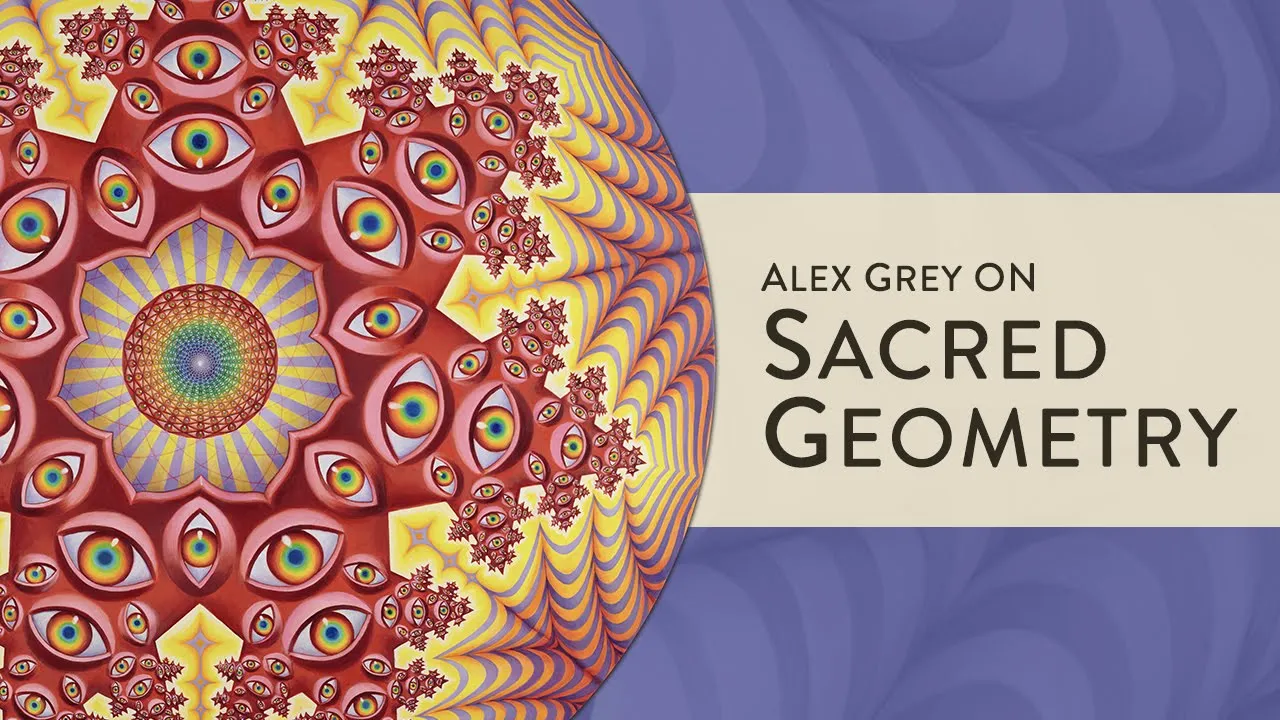
Alex Grey on Sacred Geometry
82.2K
Sacred geometry studies mathematical principles in nature and art with symbolic meaning. Each number from 1-10 corresponds to a shape. Plato declared the sphere most perfect due to equidistance from center to surface, symbolizing wholeness and spirit. The circle represents the soul, and mandalas help restore psychic balance. Keith Critchlow taught that the circle symbolizes spirit, the square represents matter, and the triangle represents the mind. These shapes combine in sacred architecture: rectangular rooms feel different from domed spaces, squared doorways stay rooted in material plane, half-circle arches bring heaven to earth, and gothic arches add upward-pointing mind influence. The Alhambra demonstrates infinite interconnected patterns symbolizing spirit. The golden ratio (1:1.618) appears throughout nature and the human body, such as in finger phalanges and at the navel. Brain research shows the right amygdala responds strongly to beauty displaying the golden ratio. Ancient Egyptian and Greek artists knew these secrets, passed through guilds. Father Desiderius measured Egyptian and Greek statuary to determine ideal human proportions for sacred art. Michelangelo studied Greek statuary to infuse classic proportions with Gothic spirit. In the Sistine Chapel, where God's and Adam's fingers nearly meet, the golden ratio appears. Artists apply this ratio in composition, placing key elements at the golden cut to enhance beauty, which ultimately transcends measure.
Click to watch →

AULA 2 | CAMPO DE FORÇA E PROTEÇÃO - O QUE É E PRA QUE SERVE| Semana Apometria Sistêmica
17.2K
Leonardo da Vinci created the Vitruvian Man, which represents the perfect human measurement based on Fibonacci calculations. When the human body is drawn with arms and legs spread out, it forms the shape of a Merkaba. This demonstrates that humans are the Merkaba, the channel of light, and the instrument of divine light. The human body is the seal of David and the seal of Solomon, representing the transportation of light.
Click to watch →
Prerequisite Knowledge
- Concept 01Foundational history of Arabic calligraphy, including key traditional scripts (such as Thuluth, Naskh, and Kufic) and its status as a sacred Islamic art form.
- Concept 02The concept of 'Al-Khatt al-Mansub' (proportioned script) pioneered by Ibn Muqla, which uses the 'nuqta' (rhomboid dot) as the fundamental unit of measurement.
- Concept 03Basic principles of Islamic aesthetics, particularly how the historical avoidance of figural representation channeled artistic expression into geometry, patterns, and writing.
- Concept 04The historical relationship between sacred geometry, natural proportions, and classical art theories that relate design to the human body (e.g., Vitruvian principles).
Subsequent Learning
- Step 01Practical application of proportional calligraphy, practicing the physical discipline of using a 'qalam' (reed pen) to construct letters using the dot-measurement system.
- Step 02Analysis of calligraphic integration in Islamic architecture, studying how letter proportions are adjusted to account for height and perspective on monumental structures.
- Step 03Comparative study of zoomorphic and anthropomorphic calligraphic designs, where Arabic script is intentionally shaped into animal, human, or symbolic silhouettes.
- Step 04Exploration of contemporary 'Calligraffiti' and modern abstract Arabic art, examining how modern artists deconstruct or honor classical anatomical rules.
Calligraphy Art
Composition Challenges
Calligraphy Art
0:00Playing Section
- 1
Calligraphy creation is a lengthy process, not casual writing.
- 2
Letters are designed based on the human body and posture.
- 3
Strict rules and precision are essential for mastery.
Geometric Purism and Theological Aniconism
While interpreting Arabic letters as reflections of the human body offers a poetic and esoteric perspective, many art historians and traditional calligraphers argue that the art form is fundamentally rooted in mathematical purism and abstract geometry. Pioneered by historical masters like Ibn Muqla, the proportional system of calligraphy (al-khatt al-mansub) relies on the rhombic dot as a strict unit of measurement to achieve cosmic and mathematical harmony, rather than anatomical mimicry. From this viewpoint, the primary purpose of Arabic calligraphy is to transcend the physical world and represent divine unity (Tawhid) through pure abstraction. Furthermore, some traditionalist and orthodox scholars discourage anthropomorphic comparisons, viewing the sacred script of the Quran as entirely distinct from human biology. Consequently, critics suggest that anatomical framing is a subjective or highly specific esoteric reading rather than the defining structural framework of the calligraphy tradition.
Deep Dive
Practical application of proportional calligraphy, practicing the physical discipline of using a 'qalam' (reed pen) to construct letters using the dot-measurement system.
Islamic calligraphy tutorial : how to Start calligraphy? Diwani calligraphy for beginners #art
10.6K
Diwani calligraphy requires holding the qalam (pen) at a 90-degree angle for proper line formation, using a scaling system of five levels (full khat, half khat, medium dot, small dot, and smallest dot) to determine letter proportions, and placing dots (nuqta) in specific patterns: single dots at the top, two dots side by side, and three dots in a triangular formation, with each dot needing to form a perfect diamond shape with equal sides.
Click to watch →
How to use Qalam for Arabic Calligraphy
46.9K
Practice vertical strokes by keeping the column at 80-70 degrees and bringing it down. Your palm should remain planted on the paper while moving the column and hand together. This exercise helps develop a good hold on the column.
Click to watch →
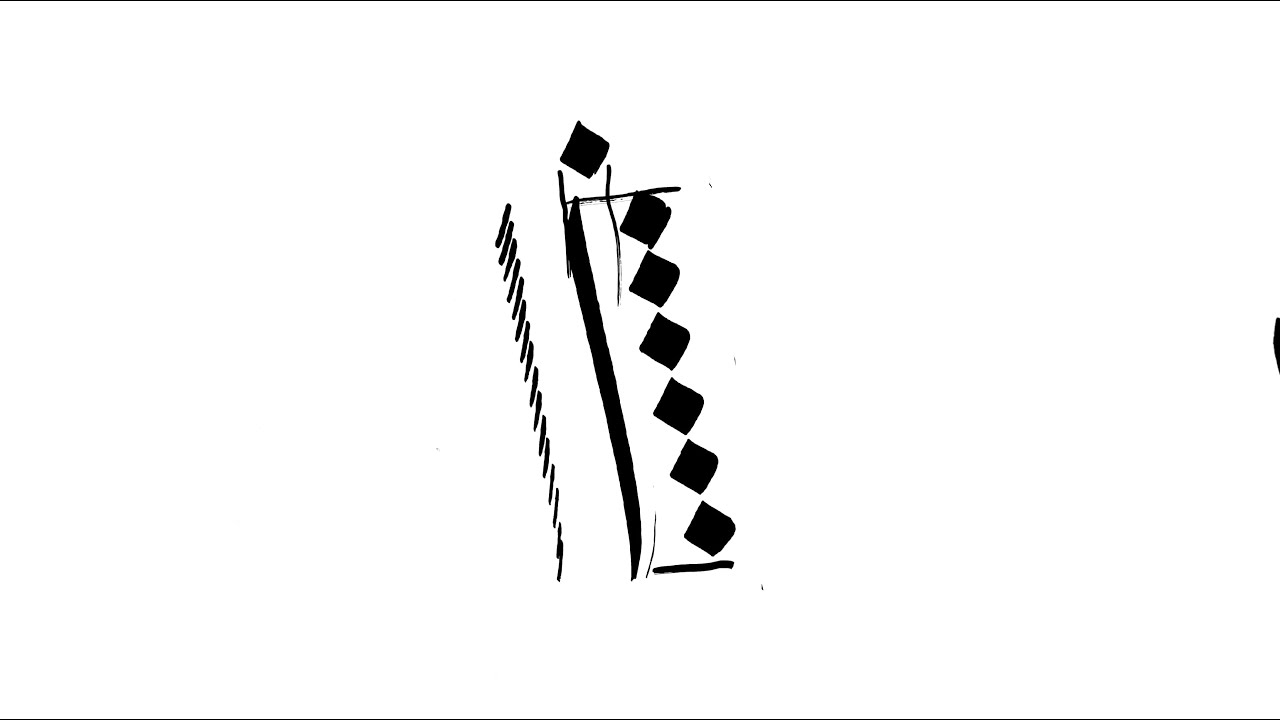
class 1 تاريخ، تعارف،حرف ألف
5.6K
The Qalam (pen) has two main parts: the upper part called 'wash' and the lower part called 'laga'. The wash is the upper part of the pen, while the laga is the lower part. The pen is held using the index finger and thumb, with the middle finger providing support. The pen should be held at an angle of 25-28 degrees. The pen should be held at an angle of 25-28 degrees. The pen should be held at an angle of 25-28 degrees. The Alif letter in Naskh script is written at approximately 80 degrees from the horizontal. The Alif has three main forms: one where it is written completely straight, one where it is written at an angle, and one where it is written with a slight curve. The Alif should be written with proper measurement using the nukta system. The Alif starts from the left side and ends on the right side. The Alif should be written with proper technique and measurement to ensure consistency and quality in calligraphy.
Click to watch →
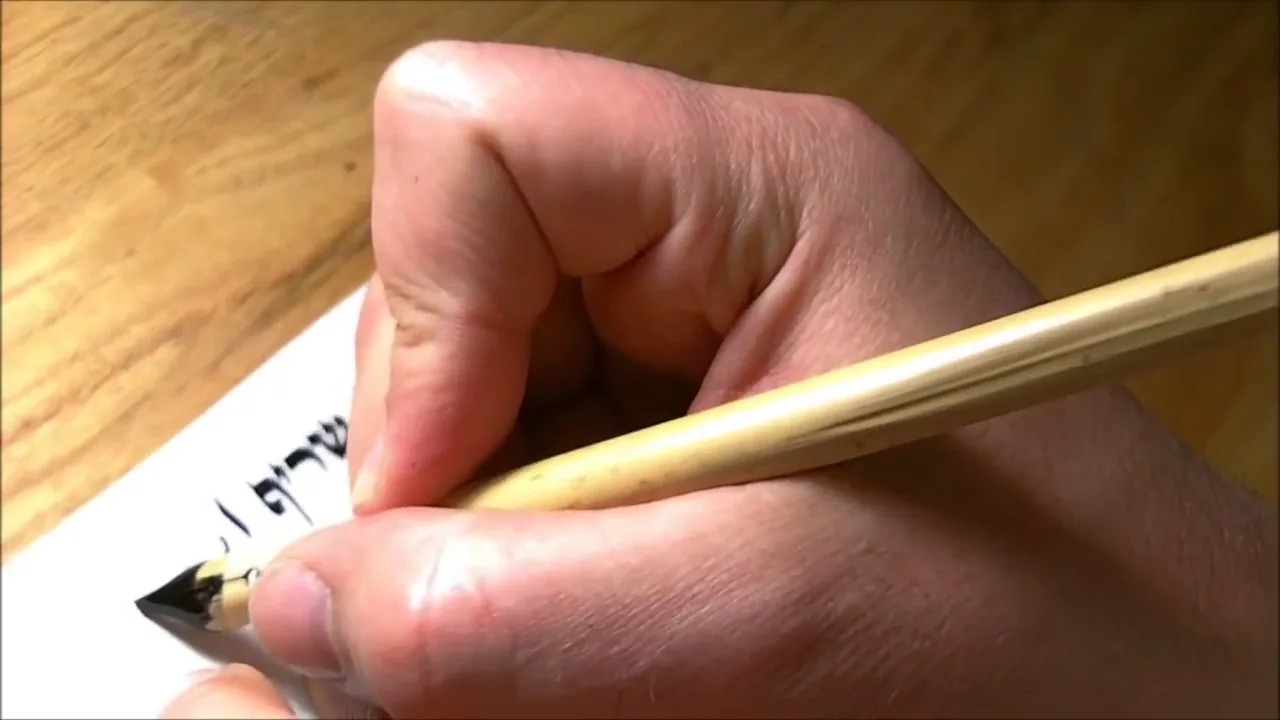
Milkyroad. Qalam - making calligraphy reed pen for Arabic, Perisan, Urdu
49.1K
A traditional reed pen (qalam) for Arabic, Persian, and Urdu calligraphy is made by cutting a bamboo reed to half its diameter, creating an inner cut 3-4mm from the edge to allow ink flow, and shaping the nib with both thumbs to control letter thickness; the process requires safety precautions including proper body positioning and careful handling of sharp tools.
Click to watch →
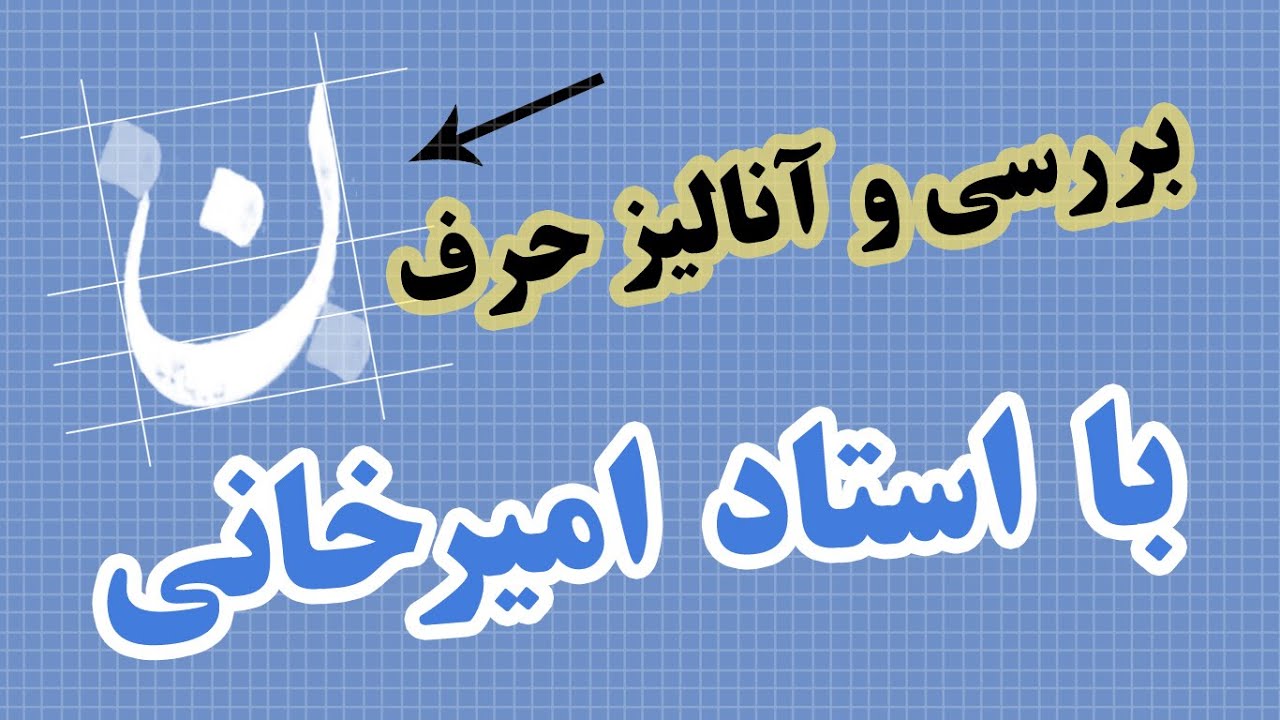
آنالیز دوایر با استاد غلامحسین امیرخانی بخش اول first part of nastaliq analyze، master amirkhani
1.1K
This segment covers the technical aspects of qalam placement and pressure in calligraphy. The instructor explains how qalam angle affects character proportions—too inclined creates short, compressed circles, while too vertical creates elongated shapes. Proper qalam placement requires balancing angle to achieve natural proportions. The instructor also discusses qalam pressure, explaining that the entire qalam should rest on the writing surface while the hand provides rotational movement for proper thickness. When connecting characters, the qalam's natural movement must be managed to avoid unwanted contact, requiring careful angle adjustment or slight inward tilting.
Click to watch →
Deep Dive
Analysis of calligraphic integration in Islamic architecture, studying how letter proportions are adjusted to account for height and perspective on monumental structures.

Masterpieces of Islamic Art, from the Umayyad Empire to the Ottomans • FRANCE 24 English
249.6K
One of the largest Qurans ever made, with each line of script over three feet long and each page originally over seven feet tall, was made for Timur (Tamerlane), who saw himself as the rightful successor to Genghis Khan and the sword of Islam. The calligrapher Omar Khayyam initially presented a tiny Quran to Tamerlane, who was not impressed, leading him to create this monumental Quran instead.
Click to watch →
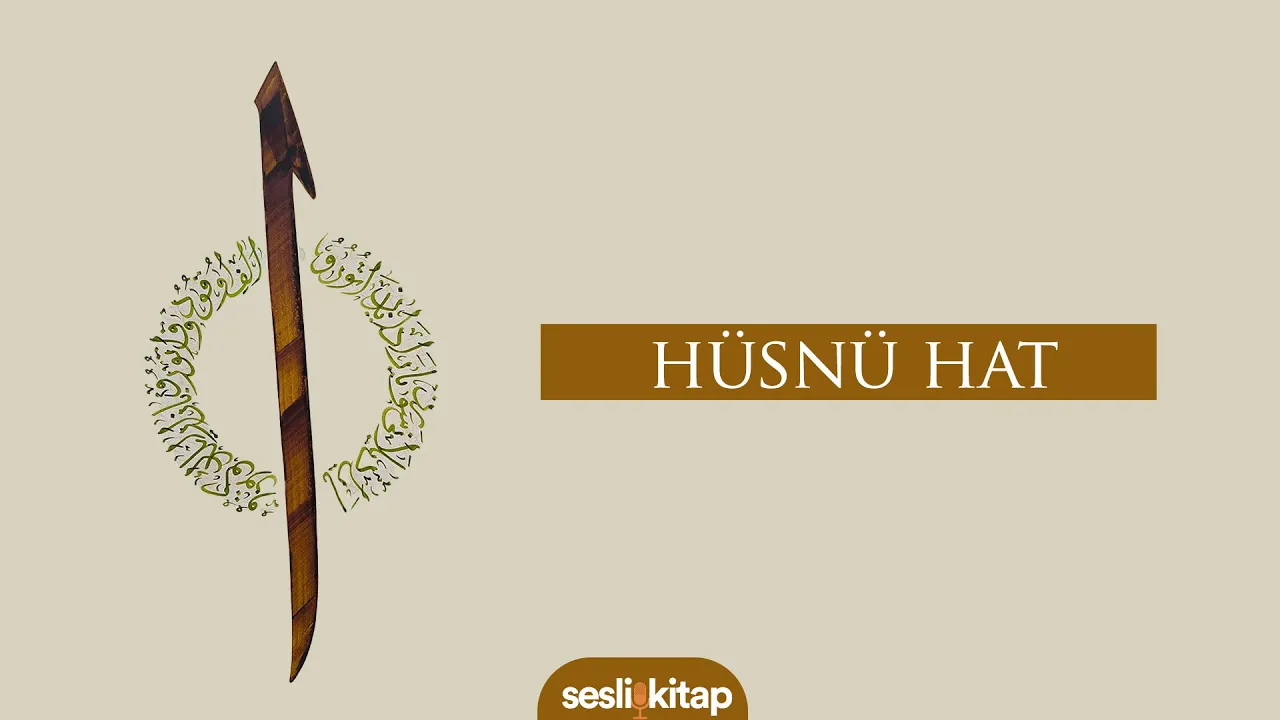
İslam sanatlarında Hüsnü Hat'tın yeri
901
Islamic calligraphy adorns mosques, palaces, madrasas, türbes, fountains, bridges, and tombs, transforming matter into meaning and creating spaces that remind people of Allah. Unlike Western architecture, it serves as an original component that guides people spiritually, encouraging respect and etiquette while satisfying believers' hearts and souls. The right-to-left flow represents a journey to the heart, while letter unity creates aesthetic space. Minarets symbolize the letter 'Alif' reflecting Tawhid belief. From early Islamic years, Kufic established letter proportions determined by dots, with different ethnic communities adding their marks—Iran developed flowing styles, Maghrib created elegant bold styles, and Turkish calligraphy emphasized vertical lines. Calligraphy combines with arabesque motifs in architecture and book arts. Artists worked according to the Prophet's measurements, and styles like Kufic, Sülüs, and Talik shaped regional architecture while maintaining their unique rhythm from early Islamic times to the present.
Click to watch →

خط و معماری | کتاب خشت و خیال
966
After Islam arrived in Iran, religious buildings were predominantly constructed for worship purposes. Islamic teachings prohibited depicting human and animal forms (aniconism), leading architects to use calligraphy as an alternative decorative element. The Quran emphasizes writing, particularly in Surah Al-Qalam, elevating calligraphy to a sacred art form. Four essential calligraphic terms describe visual characteristics: Qoot (Strength) - full pen pressure; Za'f (Weakness) - minimal pressure; Satah (Flatness) - straight, horizontal writing; Dour (Curvature) - curved shapes. Ascent and Descent describe pen movement direction. Three major calligraphic styles in Iranian architecture are: Kufic (maximum flatness, earliest use from 6th century, peak in 8th-9th centuries); Sols (balanced flatness and curvature, peak in 11th century); Nastaliq (maximum curvature, shorter historical usage). Each style's characteristics determine its suitability for different architectural contexts.
Click to watch →

آموزش خط نستعلیق خوشنویسی و خطاطی
21.8K
This segment teaches the proportional measurements essential for accurate Arabic calligraphy. The instructor explains that letters like سین (sin) require specific ratios: descent (نزول) is one-third of total height, surface (سطح) is half, and ascent (سود) is half the surface. The letter should sit on a baseline created by two dots of pen width. For لام (lam), the total height is seven dots with the main body being four dots. The continuation of letters maintains proportional relationships, with the second measurement being approximately half the first. Understanding these relative proportions is more important than absolute measurements for achieving balanced, aesthetically pleasing calligraphy.
Click to watch →

On The Road To Find Out l Waleed Arafa l Cairo Designathon
230
This section explores the mathematical foundations underlying Islamic architectural design through the work of Dr. Ahmed Mustafa, who deciphered the proportional grid governing Arabic calligraphy. Mustafa revealed that all 28 Arabic letters derive from the alif, which relates to seven dots—a system attributed to Ibn Mukla who introduced topology into Arabic script, replacing orthogonal kufic forms with curves based on the golden ratio (nisba al-fidla). The speaker explains how this proportional system governs the entire Basuna Mosque design: the minaret represents a three-dimensional interpretation of the alif's construction lines; the central dome is based on the golden angle; columns follow the same proportional logic; and the cube of cubes artwork featuring the 99 names of Allah embodies these principles. This demonstrates how mathematical proportionality connects calligraphic art with architectural form, creating unified systems where every element relates to fundamental geometric ratios.
Click to watch →
Deep Dive
Comparative study of zoomorphic and anthropomorphic calligraphic designs, where Arabic script is intentionally shaped into animal, human, or symbolic silhouettes.
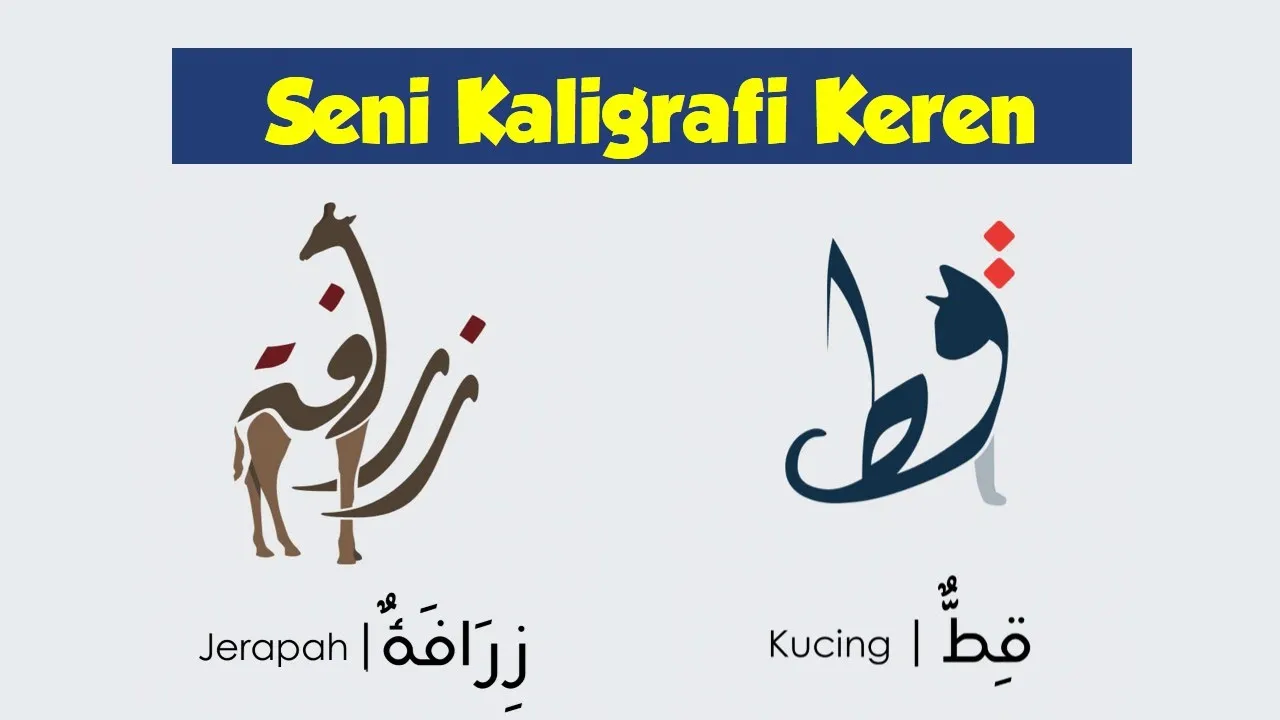
Keren!!! Seni Kaligrafi Bentuk Hewan Paling Ajib
3.1K
This video demonstrates a unique artistic technique where Arabic vocabulary (mufradat) is written in calligraphic form and shaped to resemble animals, creating a visual representation that illustrates the meaning of each word through its animal form.
Click to watch →

مدخل إلى الفنون والعمارة الإسلامية د إيمان عرفه اللقاء1 كلية الآداب تاريخ التعليم المفتوح
177
In Islamic art, calligraphy evolved beyond practical recording to become decorative art. Kufic was the earliest script, evolving into various forms including simple Kufic, Kufic with plant motifs, and Kufic with squares. The Naskh script became official during the Ayyubid period, followed by Thuluth in the Ottoman era. Calligraphy sometimes became so abstract it was unreadable, serving purely decorative purposes. Animal and human figures were not created for their own sake but as decorative elements, with famous examples including human-headed horses and birds, representing deliberate departure from naturalistic representation.
Click to watch →

I for Islam (A-Z of Iconography)
238
Calligraphy in Islamic art is often transformed into zoomorphic (animal-like) forms, creating what is called zoomorphic calligraphy. Lions are commonly depicted with verses praising Ali, who was known as the 'Lion of Islam.' Master calligraphers can write entire surahs in different animalistic forms. The Zulfiqar sword (the split-ended sword associated with the Prophet) also appears in both calligraphic and drawn forms as an important Islamic symbol.
Click to watch →
Arabic Numerology: Ilm al-Huroof : Islamicate Occult
31.6K
Zoomorphic calligraphy transforms letters into visual images, pioneered by Hassan Musa and Madia Omar (1940s), who brought sacred calligraphy into secular modern art. Hassan Masudi inspired the 'cig' graffiti movement merging street art with calligraphy. French-Tunisian artist L Seed installs calligraphic murals in communities. Letters serve as conduits for soul expression, carrying power to uplift or destroy. Words impress feelings into the world, making language choices critically important. This evolution shows how sacred linguistic traditions adapt across centuries while maintaining core symbolic power.
Click to watch →

MONUMENTOS MEGALÍTICOS DE MONTSERRAT. P.2
6K
The megalithic structures contain carvings that appear to represent zoomorphic (animal) or anthropomorphic (human-like) figures. One carving shows a head oriented to the left with a spiral design. These artistic elements are presented as evidence of sophisticated artistic traditions from the prehistoric civilization, further distinguishing these structures from natural rock formations.
Click to watch →
Deep Dive
Exploration of contemporary 'Calligraffiti' and modern abstract Arabic art, examining how modern artists deconstruct or honor classical anatomical rules.

eL Seed: The Art of Calligraffiti
29.7K
eL Seed, a Tunisian artist born in France, creates large-scale 'Calligraffiti' works that combine Arabic calligraphy with street art, inspired by the pre-Islamic tradition of poets whose names disappeared while their messages remained; he stopped signing his name and adding translations to resist cultural imperialism and preserve the poetic essence of Arabic script, which he believes speaks directly to the soul through its visual beauty and flow.
Click to watch →
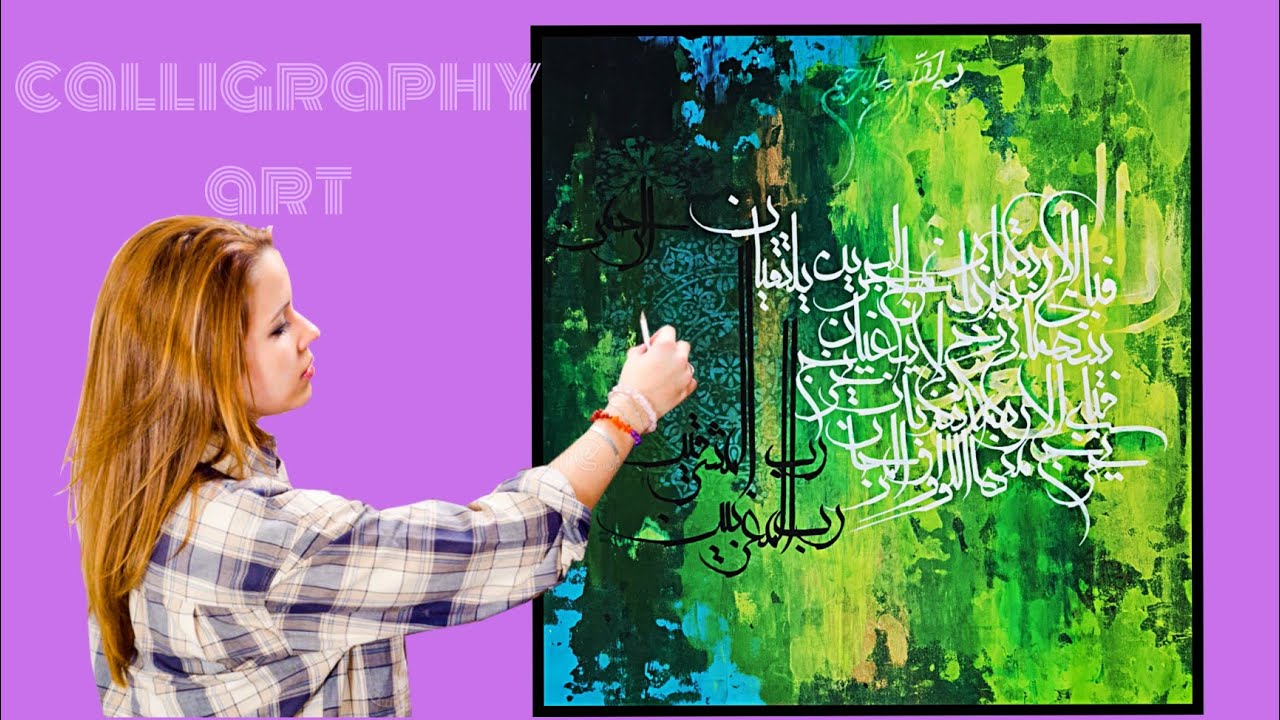
کالیگرافی مدرن روی بوم (بک گراند آبستره) Modern Arabic calligraphy on canvas (abstract background)
613
Modern Arabic calligraphy on canvas with abstract backgrounds represents a contemporary art form that combines traditional calligraphic techniques with abstract artistic elements, creating unique visual artworks that merge the elegance of Arabic script with modern abstract design principles.
Click to watch →

Tubs - Calligraffiti Metamorphosis | 729Productions x T.Harvey
84K
Calligraffiti is a contemporary art form that combines calligraphy with graffiti, characterized by its modern, flowing lettering style applied to traditional objects like antique pianos, creating a unique fusion of classical and urban artistic expressions.
Click to watch →

Panel Discussion: Dr. Okeke-Agulu and Dr. Hassan
506
The work of artists like Ibrahim El-Salahi demonstrates how form relates to politics of decolonization. El-Salahi's 'Vision of the Tomb' (1962) brings questions of language and Arabic script into visual art. In Arabic culture, there is a spoken variation and a standard modern Arabic used for news and literature. Literacy in Arabic became part of aesthetic vocabulary influenced by colonial context and exposure to ideas of abstraction. Artists experimented with Arabic calligraphy, twisting and reshaping letters to create what is called calligraphic abstraction—a movement where artists saw themselves as part of a larger question of abstraction across the world. This movement influenced schools of artists within France and others exposed to Arabic or Japanese calligraphy.
Click to watch →

Khalid Khreis, Director General de la Jordan National Gallery of Fine Arts
547
Arabic calligraphy serves as a powerful medium for contemporary artists to explore identity, with two primary styles—Kufic (geometric) and Naskh (cursive)—being utilized in diverse ways including pure aesthetics, social-political commentary, poetic expression, and integration with light and geometric forms, reflecting both traditional Islamic artistic principles and modern creative interpretations.
Click to watch →
Calligraphy Art
Composition Challenges
Calligraphy Art
0:00- 1
Calligraphy creation is a lengthy process, not casual writing.
- 2
Letters are designed based on the human body and posture.
- 3
Strict rules and precision are essential for mastery.
Geometric Purism and Theological Aniconism
While interpreting Arabic letters as reflections of the human body offers a poetic and esoteric perspective, many art historians and traditional calligraphers argue that the art form is fundamentally rooted in mathematical purism and abstract geometry. Pioneered by historical masters like Ibn Muqla, the proportional system of calligraphy (al-khatt al-mansub) relies on the rhombic dot as a strict unit of measurement to achieve cosmic and mathematical harmony, rather than anatomical mimicry. From this viewpoint, the primary purpose of Arabic calligraphy is to transcend the physical world and represent divine unity (Tawhid) through pure abstraction. Furthermore, some traditionalist and orthodox scholars discourage anthropomorphic comparisons, viewing the sacred script of the Quran as entirely distinct from human biology. Consequently, critics suggest that anatomical framing is a subjective or highly specific esoteric reading rather than the defining structural framework of the calligraphy tradition.
Foundational history of Arabic calligraphy, including key traditional scripts (such as Thuluth, Naskh, and Kufic) and its status as a sacred Islamic art form.
The concept of 'Al-Khatt al-Mansub' (proportioned script) pioneered by Ibn Muqla, which uses the 'nuqta' (rhomboid dot) as the fundamental unit of measurement.
Basic principles of Islamic aesthetics, particularly how the historical avoidance of figural representation channeled artistic expression into geometry, patterns, and writing.
The historical relationship between sacred geometry, natural proportions, and classical art theories that relate design to the human body (e.g., Vitruvian principles).
Practical application of proportional calligraphy, practicing the physical discipline of using a 'qalam' (reed pen) to construct letters using the dot-measurement system.
Analysis of calligraphic integration in Islamic architecture, studying how letter proportions are adjusted to account for height and perspective on monumental structures.
Comparative study of zoomorphic and anthropomorphic calligraphic designs, where Arabic script is intentionally shaped into animal, human, or symbolic silhouettes.
Exploration of contemporary 'Calligraffiti' and modern abstract Arabic art, examining how modern artists deconstruct or honor classical anatomical rules.
572.7K views7.4Klikes2:59@theGuardianOriginal Release: 2013-06-26
[Music] my name is tah aliti I'm an architect and an artist people just sometimes think that when you do a calligraphy you just sit down and write like casual writing and it's the exact opposite from that it's actually a long process to create a letter of [Music] calligraphy when letters were created as an art they were based on the human body the letter would have a chest the letter would have a lower part of the body the letter would have a a neck so you can see for example the El if uh which is the first letter equivalent to the a in in in Latin uh the AL if in Arabic is exactly the human posture it has the chest and the spine which is leaning slightly forward and it has the head of the letter the spine or the backbone of Islam is the Quran which is the holy book The Propet realized that the importance of preserving the Quran in such a way that it cannot be altered or changed all this richness of of culture that started Brewing under the Islamic pot produced calligraphy in its sophisticated form that we follow until today we use very strong rules and very tight regulations if you have sometimes if you have a pimple on your face you can see it clearly because it's a bump although it's tiny in in relation to the size of your body but you see it you notice it and exactly the same way in letters no matter how big or small they are and that's what makes calligraphy very challenging and sometimes people could call it as a labor intensive art because it takes a lot of hours into one sheet of paper and the combinations of some letters with others are very hard there are there are names in Arabic or words words in Arabic which are very hard to write there are long words in Arabic uh which I'm I was writing recently and um the problem with the word is that it's such a long word that it eats half of my my composition so half of my composition is eaten by one word and I have seven other words to fit in it's just like trying to get two people who don't get on trying to get them to sit and talk and sometimes it's very hard cuz each one snaps from a different angle and um you have to it's like diplomacy you have to work them out but at the end the more experienced you are the more diplomatic you become with letters and the more your letters will actually speak back to you and accept to sit next to something they they didn't want to sit next to so I think that's the skill of the calligrapher
Up Next

5:57
Dome of the Rock: Byzantine Influence in Early Islamic Art
@ArtHistory101
3.6K views•2017-10-28

114:18
Christian Iconography: History, Theology, and Meaning | Fr. Panayiotis Papageorgiou
@Trisagionfilms
58.8K views•2020-02-21
7:48
Ukiyo-e Art: History, Woodblock Printing & Influence
@japanathand
6.3K views•2023-06-08

16:34
Earliest Depictions of Jesus in Art: 10 Ancient Images Explained
@UsefulCharts
5.9M views•2022-06-03
Related Study Plans & Knowledge Roadmaps
Structured learning paths in Art History
art-history
Gothic Cathedrals: Engineering, Light & Society
01The Birth of the Gothic: Romanesque to Suger's Vision
02The Structural Triad: Pointed Arches, Ribbed Vaults, and Flying Buttresses
03Theology of Light: Lux Nova and Sacred Geometry
+ 2 more learning modules
14h5 modules
Explore Roadmap
art-history
Pre-Raphaelites: Realism, Symbolism & Critique
01The Victorian Art Establishment and Academic Formula
02The Founding of the PRB and Radical Realism
03Medieval Revivalism and Literary Symbolism
+ 1 more learning modules
8h4 modules
Explore Roadmap
art-history
Street Art: From Subways to Art Market
01Subcultural Origins in Philadelphia and New York (1970s)
02The Subway Era and Style Wars (Late 1970s - 1980s)
03The East Village Scene and Early Gallery Crossover
+ 2 more learning modules
10h5 modules
Explore Roadmap
art-history
Classic Maya Art: Iconography, Glyphs & Ritual
01Foundations of Classic Maya Visual Culture
02Deciphering Maya Hieroglyphs & Text-Image Integration
03Sacred Geography and Cosmological Architecture
+ 2 more learning modules
14h5 modules
Explore Roadmap