
![#23 - APUSH 3.8 The Constitutional Convention and Debates Over Ratification [UPDATED]](https://i.ytimg.com/vi/kRlNIAtgMWY/maxresdefault.jpg)




![Why the ARTICLES OF CONFEDERATION Failed [APUSH Review]](https://i.ytimg.com/vi_webp/Ri18Igyqa5I/maxresdefault.webp)






![AP U.S. Gov: Brutus No. 1 [Required Document] -- EVERYTHING YOU NEED TO KNOW](https://i.ytimg.com/vi/I1Ib-PgjaD8/hqdefault.jpg)
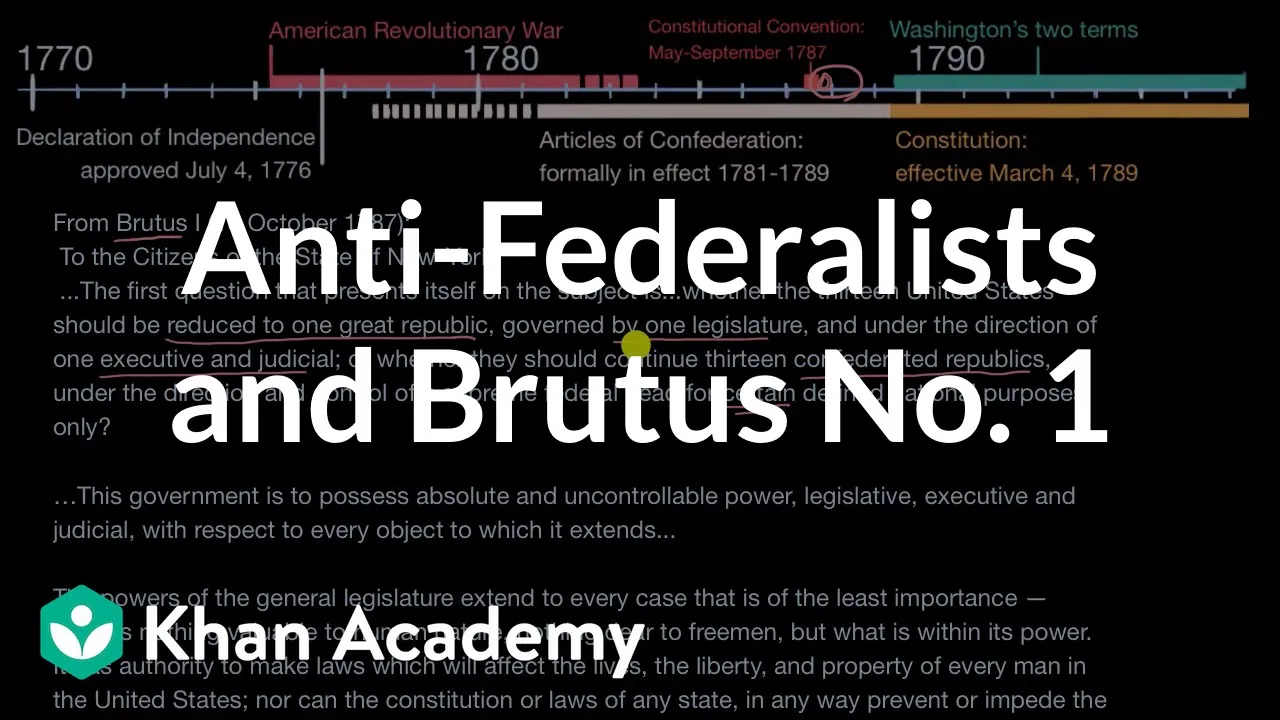

![Brutus no.1, EXPLAINED [AP Government Foundational Documents]](https://i.ytimg.com/vi_webp/tm-fNMWuJwo/maxresdefault.webp)
![Principles of AMERICAN GOVERNMENT [AP Government Review, Unit 1 Topic 6]](https://i.ytimg.com/vi_webp/JUiJhnx_K40/maxresdefault.webp)
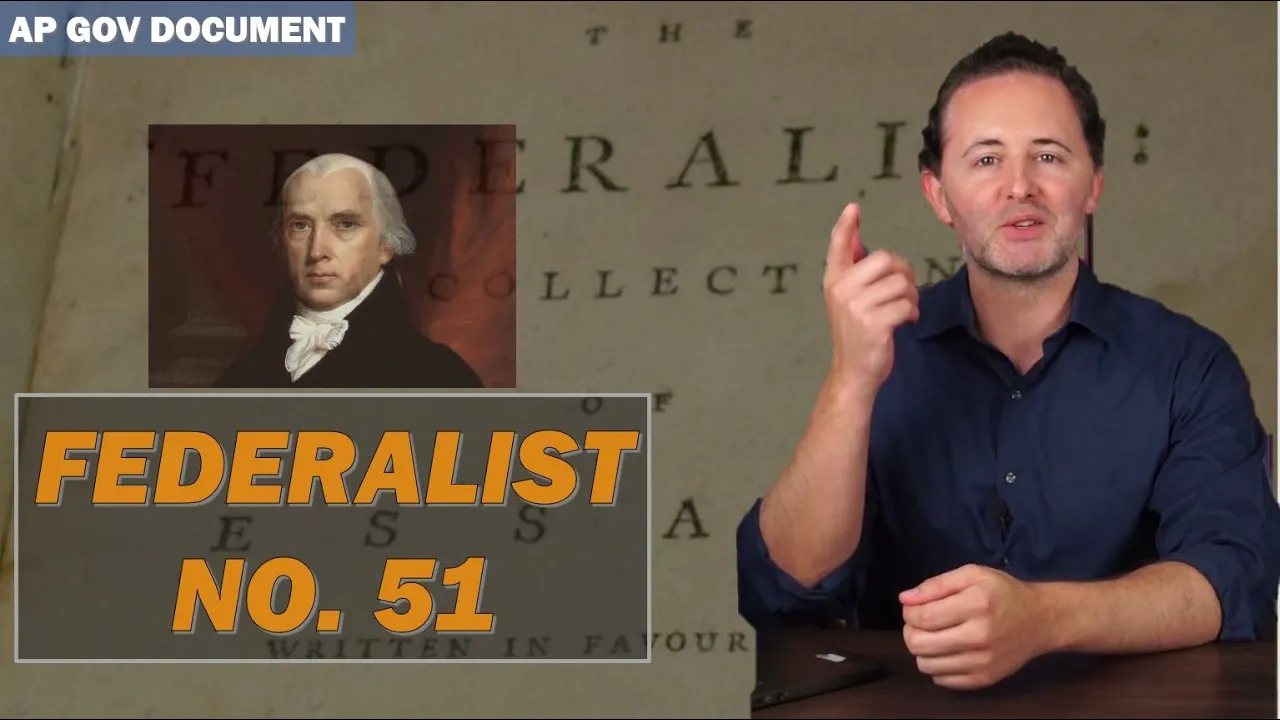
![Federalist 51, EXPLAINED [AP Government Foundational Documents]](https://i.ytimg.com/vi/f6J-mKOGaVQ/maxresdefault.jpg)

![AP U.S. Gov: Federalist No. 51 [Required Document] -- EVERYTHING YOU NEED TO KNOW](https://i.ytimg.com/vi_webp/m8b7paAnpAM/maxresdefault.webp)






In Federalist No. 10, James Madison argues that a republic with representative government is superior to pure democracy because it prevents factional violence and protects minority rights; he contends that while pure democracies inevitably lead to tyranny of the majority and instability, republics with elected representatives can refine public views and increase the likelihood of selecting capable leaders, making large republics more favorable than small ones for maintaining good governance.
Federalist No. 10 Part 1: Madison's Republic vs. Democracy | AP Gov
Added:The historical context of the Constitutional Convention of 1787 and the debate over the ratification of the U.S. Constitution.
The fundamental differences between the Federalists (who favored a strong central government) and the Anti-Federalists (who favored state sovereignty).
The basic structure and failures of the Articles of Confederation, which necessitated the drafting of a new constitution.
The core definitions of a 'pure democracy' (direct democracy) versus a 'republic' (representative democracy).
Anti-Federalist counterarguments, specifically Brutus No. 1, which argues that a large republic will lead to tyranny and a loss of local liberty.
Federalist No. 51, to understand how Madison's system of checks and balances and separation of powers further controls the abuse of power.
The modern application of 'factions' in U.S. politics, analyzing how interest groups, political action committees (PACs), and political parties operate today.
The debate over pluralist, elite, and hyperpluralist theories of democracy, and how they relate to Madison's vision of a representative republic.
117.3K views814likes9:56Original Release: 2017-11-27
- [Narrator] In other videos we have talked about how ratification of the US Constitution to replace the Articles of Confederation was not a slam dunk.
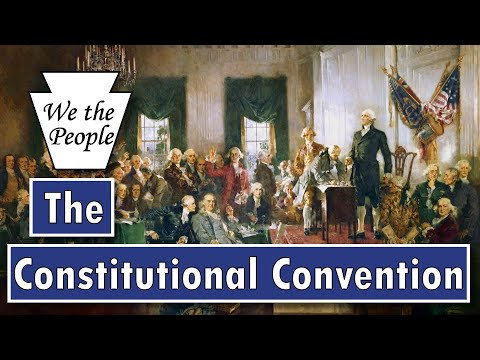
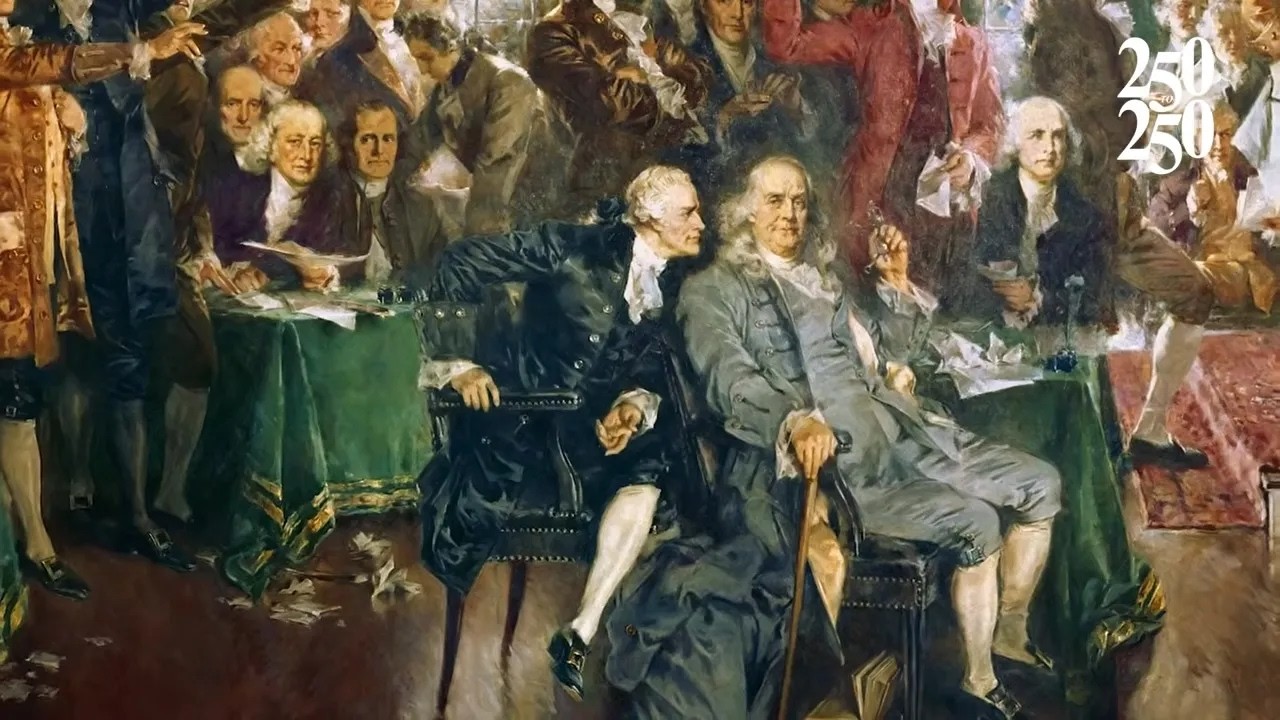
After the Constitution was drafted during the Constitutional Convention in mid 1787, you actually have a significant group of people who are against the ratification.
And we study some of their writings in another video on the anti-Federalist Papers, in particular on Brutus I, which is the most prominent of them.
In this video we're gonna focus on the other side, on the folks who are aggressively advocating for ratification of the Constitution.
Alexander Hamilton, James Madison, John Jay were some of the most prominent of these and they were the ones that wrote the Federalist Papers that were focused on convincing everyone to adopt the Constitution.
And what we're going to look at in this video is, perhaps, the most famous of the Federalist Papers, this is Federalist number 10.
Or at least an excerpt of Federalist number 10 that we're going to look at right over here.
It was published November 23, 1787.
And if you remember the video on Brutus I this is only a few weeks after Brutus I, which is now considered a famous anti-Federalist Paper was published.
So it's right in this time period right over here where people are going back and forth deciding, do we ratify this constitution?
And James Madison published under the pen name Publius.
And Publius is making reference to one of the ancient Roman aristocrats who overthrew the Roman kingdom in the late sixth century to establish the Roman Republic.
So one way to think about it is he is viewing himself and the other Federalists as trying to establish a strong republic.
This is in comparison to Brutus, which we see as the pen name for some of the significant anti-Federalist Papers, and Brutus played a significant role in the assassination of Julius Caesar to keep him from corrupting the republic, ending the republic and turning it into an empire.
But now let's read this excerpt of Federalist number 10.
And as I read this keep in mind some of these ideas, these flavors of democracy that we have talked about in other videos.
Does Madison, in Federalist number 10, does he seem pro-participatory democracy or anti-participatory democracy?
Does he seem to think that pluralism is a good idea or a bad idea?
And is he more pro elite democracy or anti-elites running a democracy?
"To the People of the state of New York."
Like Brutus I, it's addressed to the people of the state of New York because one, New York was a significant state and he's trying to convince them, in this case, to support the US Constitution.
"Among the numerous advantages promised by a well "constructed union, none deserves to be more accurately "developed than it's tendency to break and control the "violence of factions."
So a well constructed union needs to be able to control the violence of a faction.
In fact, this is the in the title, The Union as a Safeguard Against Domestic Faction and Insurrection.
"Complaints are everywhere heard from our most considerate "and virtuous citizens that our governments are "too unstable, that the public good is disregarded in "the conflicts of rival parties, "and that measures are too often decided not according "to the rules of justice and the rights of the minor "party, but by the superior force of an interested and "overbearing majority."
So already outlining some of the problems.
This problem of faction, this problem of majority rule overrunning minorities or the rights of the minorities.
"It is in vain to say that enlightened statesmen will "be able to adjust these clashing interests," the clashing interests of faction, "And render them all subservient to the public good.
"Enlightened statesmen will not always be at the helm, "it may be concluded that a pure democracy, "by which I mean a society consisting of a small number "of citizens who assemble and administer the government "in person can admit of no cure for the mischiefs "of faction."
So a pure democracy, which is about as close as you can get to a participatory democracy, Madison here is claiming that it can admit of no cure for the mischiefs of the faction, that it doesn't really help the situation.
"A common passion or interest will, in almost every case, "be felt by a majority of the whole, "and there is nothing to check the inducements to sacrifice "the weaker party or an obnoxious individual.
"Hence it is that such democracies have ever been "spectacles of turbulence and contention; "have ever been found incompatible with personal security "or the rights of people; and have in general been as short "in their lives as they have been violent in their deaths."
So what does Madison think of participatory democracies?
Right, he doesn't think too highly of them.
He says, "Look, a majority is going to take over "and they're going to trample over the rights of "everyone else."
So clearly he thinks that a participatory democracy, not good.
"A republic, by which I mean a government in which the "scheme of representation takes place, "opens a different prospect, and promises the cure "for which we are seeking."
So in his definition of republic it's a situation where you have the people being represented by others.
"The two great points of difference between a democracy, "or pure democracy, and a republic are first the "delegation of the government in the latter to a small "number of citizens elected by the rest."
So he's saying in a republic you're delegating the government to a small number of citizens elected by the rest.
"Secondly, the greater number of citizens and the greater "sphere of country over which the latter," the republic, "may be extended."
So this is interesting because in Brutus I the argument is made that republics aren't good at ruling over large territories.
Here Madison is claiming that a republic is better at ruling over a greater sphere of country, over a greater number of citizens.
"The effect of the first difference," and so this is a notion of having those representatives, having a representative democracy, "Is to refine and enlarge the public views, "by passing them through the medium of a chosen body "of citizens, whose wisdom may best discern the true "interest of their country and whose patriotism and "love of justice will be least likely to sacrifice it "to temporary or partial considerations.
"Under such a regulation it may well happen that the "public voice, pronounced by the representatives of "the people, will be more consonant to the public good "than if pronounced by the people themselves."
So this is really, really interesting because we already saw that Madison's not a fan of participatory democracy and here he's saying, "Look, if you take the views and "pass them through the medium of a chosen body of citizens "that these people might represent the public good "better than the people themselves."
This is really Madison being very pro elite democracy.
Where you have a limited number of people who are really participating and he's making the argument that they might be better at representing the needs of the people than the people themselves.
"On the other hand, the effect may be inverted."
So he is giving some credence to the other side of the argument.
"Men of factious tempers, of local prejudices, "or of sinister designs may, by intrigue, by corruption, "or by other means first obtain the suffrages and then "betray the interests of the people.
"The question resulting is whether small or extensive "republics are more favorable to the election of proper "guardians of the public weal; "and it is clearly decided in favor of the latter," so large republics, "by two obvious considerations.
"In the first place, however small the republic may be, "the representatives must be raised to a certain number, "in order to guard against the cabals of a few, "and that however large it may be, they must be limited "to a certain number in order to guard against the "confusion of a multitude."
So this is really interesting, he says, "Look, no matter how large your republic you're going "to need a certain number of representatives.
"You have too small then they're just going to be able "to control everything, but if you have too many "representatives it's just going to be confusing."
"Hence, the number of representatives in the two cases "not being in proportion to that of the two constituents," you're not gonna keep the same proportion depending on population, "and being proportionally greater in the "small republic, it follow that, if the proportion of "fit characters be not less in the large than in the "small republic, the former will present a greater option "and consequently a greater probability of a fit choice."
So what he's really saying is in a large republic you're more likely to find fit and good representatives than you will in a smaller republic.
Once again, he wants people who he considers to be elite in some way.
The more educated, whatever you might consider elite to be.
For the sake of time I'll leave you there in this part one video and in part two we'll see James Madison continue to argue, not only for a republic, but for a large republic which the US Constitution provides for.
Arguing that you'll have better people representing in government and you will also have a more pluralist society, which we'll see is very different than the view of the anti-Federalists.
Up Next
39:00
Federalism Economics & Policy: Who Decides? Law Lecture
@TheFederalistSociety
33.7K views•2020-04-03

24:30
BRICS Pay and de-dollarization: A New Financial Order Emerges? | 55 chars
@DannyHaiphongYT
164.6K views•2024-10-22

7:33
Government Surveillance Methods: 10 Ways You May Be Watched
@BeAmazed
1.6M views•2017-04-09
10:19
Explaining the Saudi-Iranian Proxy Conflict in the Middle East
@Vox
18.2M views•2017-07-17
Related Study Plans & Knowledge Roadmaps
Structured learning paths in Political Science
political-science
Economic Statecraft: Sanctions & Chokepoints
01Foundations of Geoeconomics and Economic Statecraft
02The Mechanics of Weaponized Interdependence
03International Sanctions: Types, Implementation, and Efficacy
+ 2 more learning modules
12h5 modules
Explore Roadmap
political-science
Central Bank Independence: Politics & Policy
01Foundations of Central Banking and Monetary Policy
02The Time Inconsistency Problem & Inflation Bias
03The Delegation Model and Designing Independence
+ 2 more learning modules
12h5 modules
Explore Roadmap
political-science
Consociationalism: Power-Sharing & Stability
01Democratic Dilemmas in Divided Societies
02Introduction to Consociational Democracy
03The Four Pillars of Consociational Design
+ 2 more learning modules
12h5 modules
Explore Roadmap
political-science
Rebel Governance: Legitimacy, Economy & State
01Foundations of Rebel Governance and Statehood
02Establishing Political Legitimacy and the Rebel Social Contract
03Wartime Economies and Rebel Resource Management
+ 2 more learning modules
14h5 modules
Explore Roadmap