




















Nuclear fission is the process where a large atomic nucleus (such as uranium-235 or plutonium-239) splits into smaller nuclei when struck by a neutron, releasing energy and additional neutrons; this creates a chain reaction where each split atom releases 2-3 neutrons that can cause neighboring atoms to split, multiplying the reaction exponentially and generating heat used in nuclear power stations.
Nuclear Fission Explained | GCSE & IGCSE Physics Revision
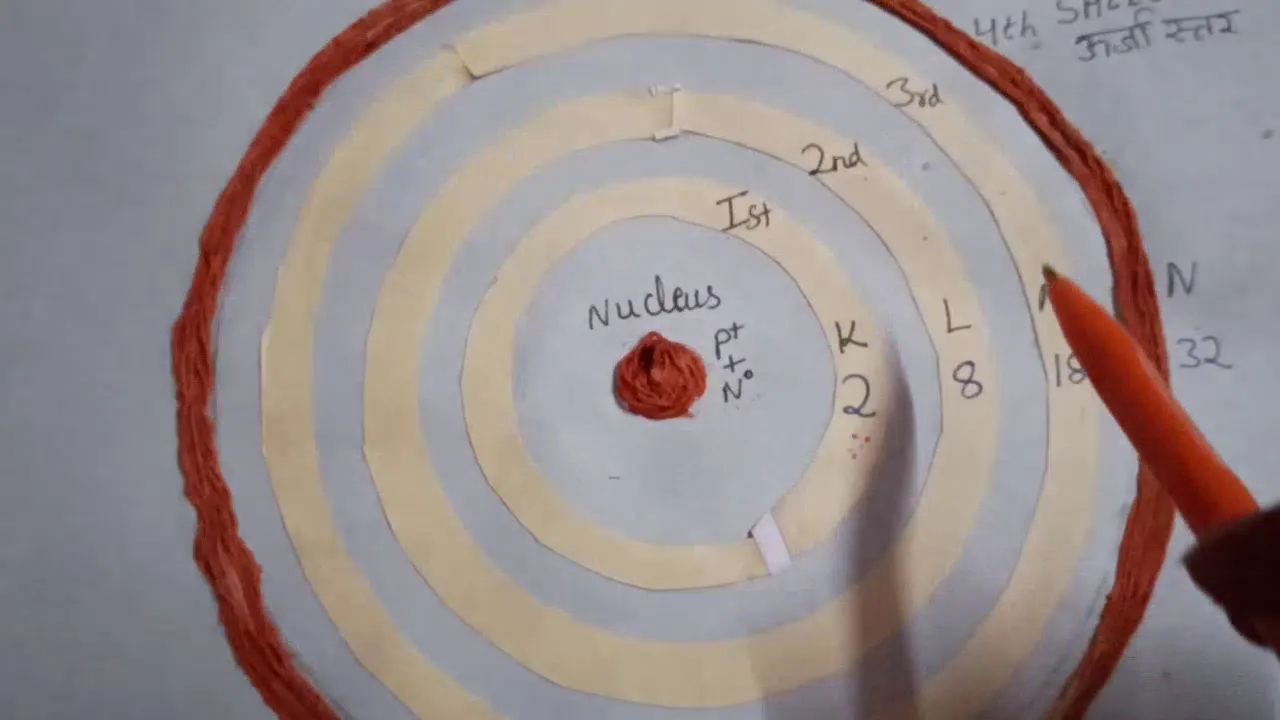
Added:Basic atomic structure, including the definitions and locations of protons, neutrons, and electrons within an atom.
The concept of isotopes, particularly how unstable isotopes differ from stable ones.
An introductory understanding of radioactivity and why certain heavy nuclei undergo radioactive decay.
The fundamental principle of conservation of energy and the idea that mass can be converted into energy.
Nuclear Fusion, understanding how the joining of light nuclei differs from fission and its role in powering stars.
The detailed engineering of nuclear reactors, specifically the distinct roles of moderators, control rods, and coolants.
The environmental, safety, and ethical implications of nuclear power, including radioactive waste management and historic reactor accidents.
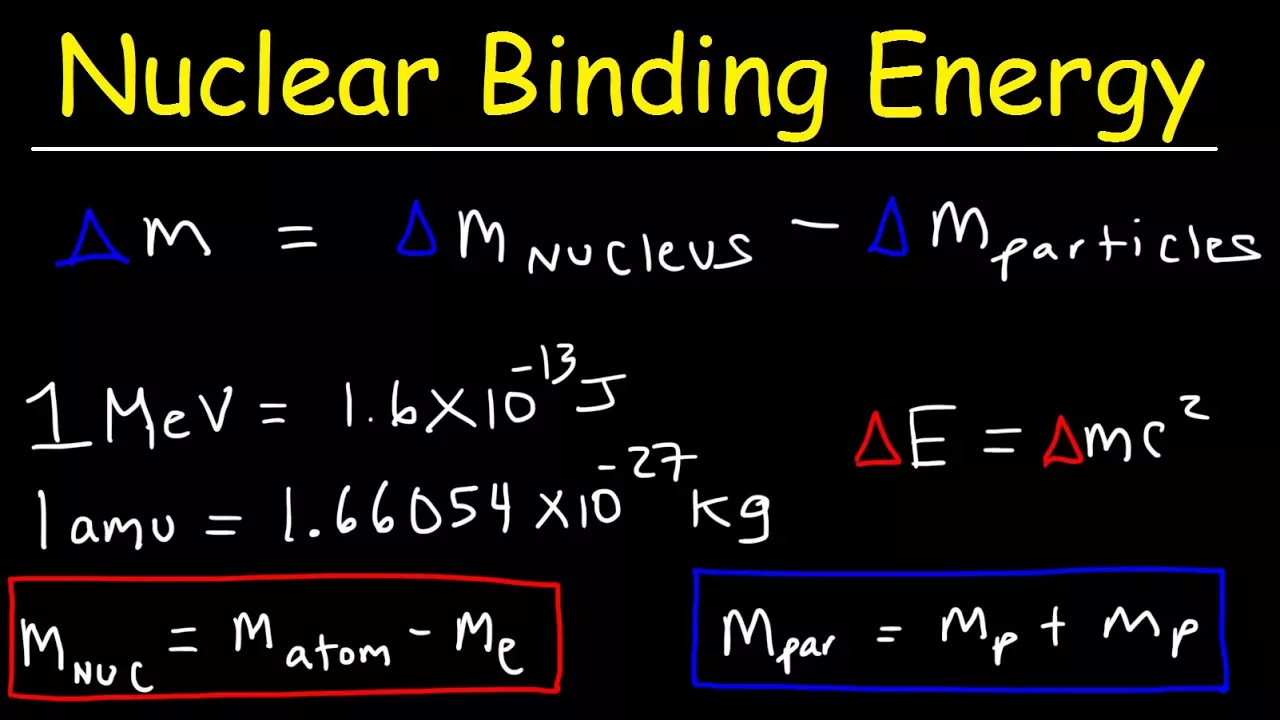
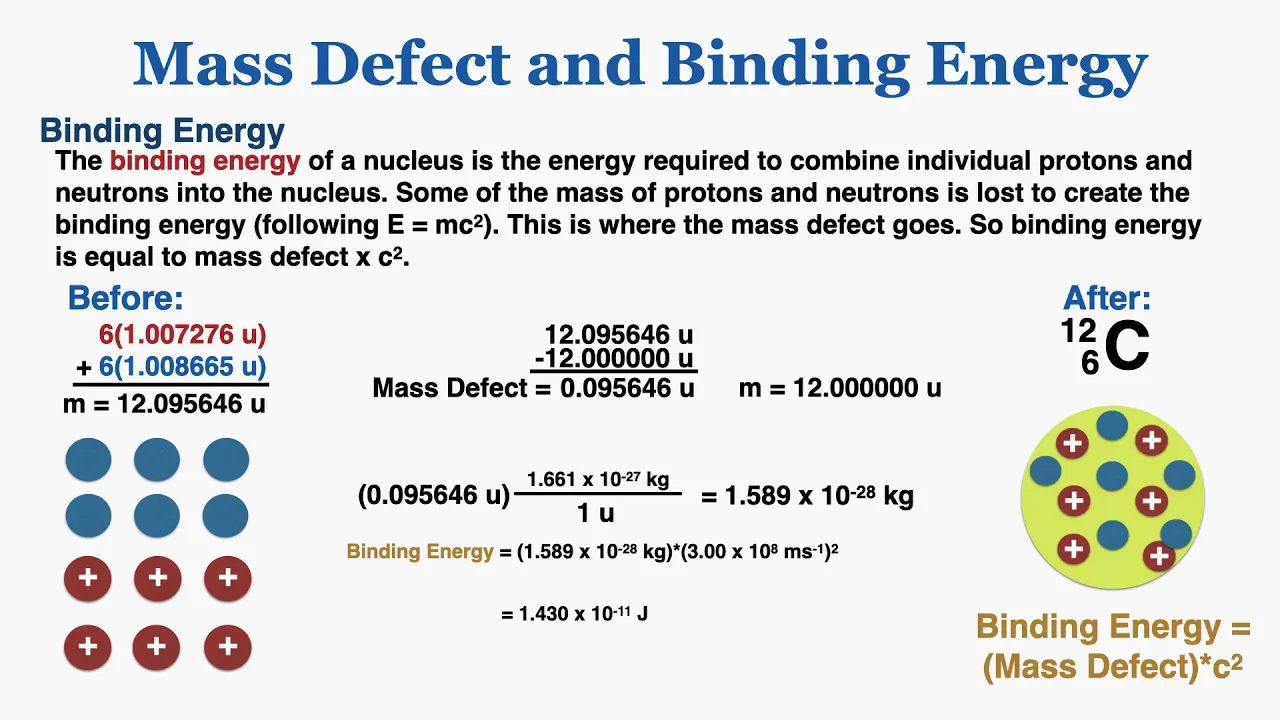
Advanced calculations involving binding energy, mass defect, and Einstein's mass-energy equivalence equation (E=mc²).
17.3K views201likes3:07Original Release: 2015-02-17
hey class I'm Mr Thornton and I'm going to help you get that to see in your GCSE this lesson nuclear [Music] fishing this topic was suggested by Yousef Bal and if there's a topic you'd like me to cover in a later video just leave a comment below now fishing is a little bit different to fusion fusion is where two small atoms join together to give one larger atom and you can watch a video on it just here fishing is kind of the opposite that is that it's one very large atom which splits apart and as it splits apart it releases energy we can use this in nuclear power stations and the two elements or the two isotopes uh which are most commonly used are uranium 235 and plutonium 239 these two isotopes are used because they split apart comparatively easily and the way that we get them to split apart is we fire a neutron at the nucleus and as that Neutron enters the nucleus it destabilizes it the neutron enters the nucleus it destabilizes it it splits in two and The crucial thing about using uranium 235 and 239 is the way they split because as you can see that nucleus will then release either two or three more neutrons now each one of these neutrons can then go on and cause a neighboring atom to split so we set off with just one atom splitting and then in the next round we we might get two or maybe three atoms splitting each one of them will also release two or three neutrons and so we get another round of neutrons spreading on and causing more of their neighbors to split and it's a little bit like one of those chain emails or chain messages that you might get on Facebook where it says forward this to five friends forward this to 10 friends in this case the splitting is being passed on to two or three of the neighbors and it keeps multiplying and multiplying and multiplying and we get a chain reaction you do need to be familiar with this idea of a chain reaction and the idea that because each time the atom breaks it releases more neutrons which can break more atoms which can release more neutrons that's the key concept to focus on here as each atom splits it releases heat as well and this is what nuclear power stations use they use that heat in the same way that any thermal power station would use it they've just got to be a little bit more careful with the way that they handle their fuel if you'd like to watch a video on thermal power stations I've got one right here I hope that video really helps you if you want to check how well you understood then try the snap quiz the link is right here and it'll also be in the description along with all the other links for this video if you want to check out my other videos then click right here if you want to download the free app I've made to help you with your revision then you can click right here if you want to subscribe to my channel then you can click right here don't forget to leave likes and if you go to the comments you can give me feedback and let let me know which topics you'd like me to cover next good luck in your GCS everyone and thanks very much for watching
Up Next

2:56
Chain Reaction in Nuclear Physics: Controlled vs Uncontrolled | Fission & Neutrons
@physics4students419
11.3K views•2017-02-17

12:53
21cm Hyperfine Transition in Neutral Hydrogen: Radio Astronomy Basics
@AaronRobertParsons
12.4K views•2011-10-13

32:32
NMR Spin Physics I: Zeeman Effect, Resonance Condition & Larmor Frequency
@nptel-indianinstituteofsci8064
2.3K views•2024-01-17

27:14
Entropy and the Second Law of Thermodynamics Explained
@veritasium
27.5M views•2023-07-01
Related Study Plans & Knowledge Roadmaps
Structured learning paths in Physics
physics
Nuclear Physics (Decay, Fission & Reactors)
01Atomic Structure and the Binding Force
02Radioactive Decay and Half-Life
03Nuclear Fission Mechanics and Chain Reactions
+ 2 more learning modules
12h5 modules
Explore Roadmap
physics
Soft Matter (Polymers, Colloids & Rheology)
01Foundations of Soft Matter & Thermal Forces
02Polymer Physics and Macromolecules
03Colloids, Surfactants, and Self-Assembly
+ 2 more learning modules
38h5 modules
Explore Roadmap
physics
Analytical Mechanics: Lagrangian & Hamiltonian
01Mathematical Foundations: Calculus of Variations
02From Newtonian Mechanics to Constraint Dynamics
03The Principle of Least Action & Lagrangian Mechanics
+ 3 more learning modules
28h6 modules
Explore Roadmap
physics
General Relativity (Spacetime & Cosmology)
01Foundations of Relativity: Special Relativity
02The Geometry of Spacetime: Equivalence Principle & Curvature
03Einstein's Field Equations: The Mathematics of Gravity
+ 2 more learning modules
55h5 modules
Explore Roadmap