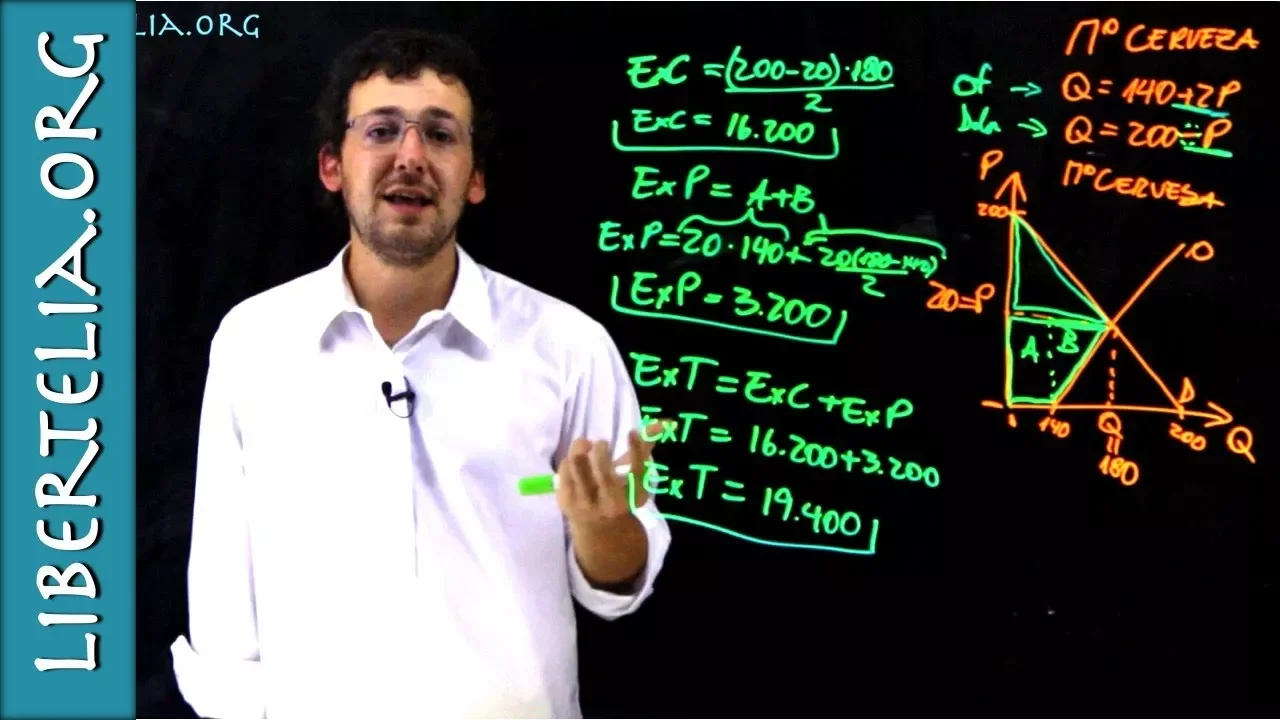
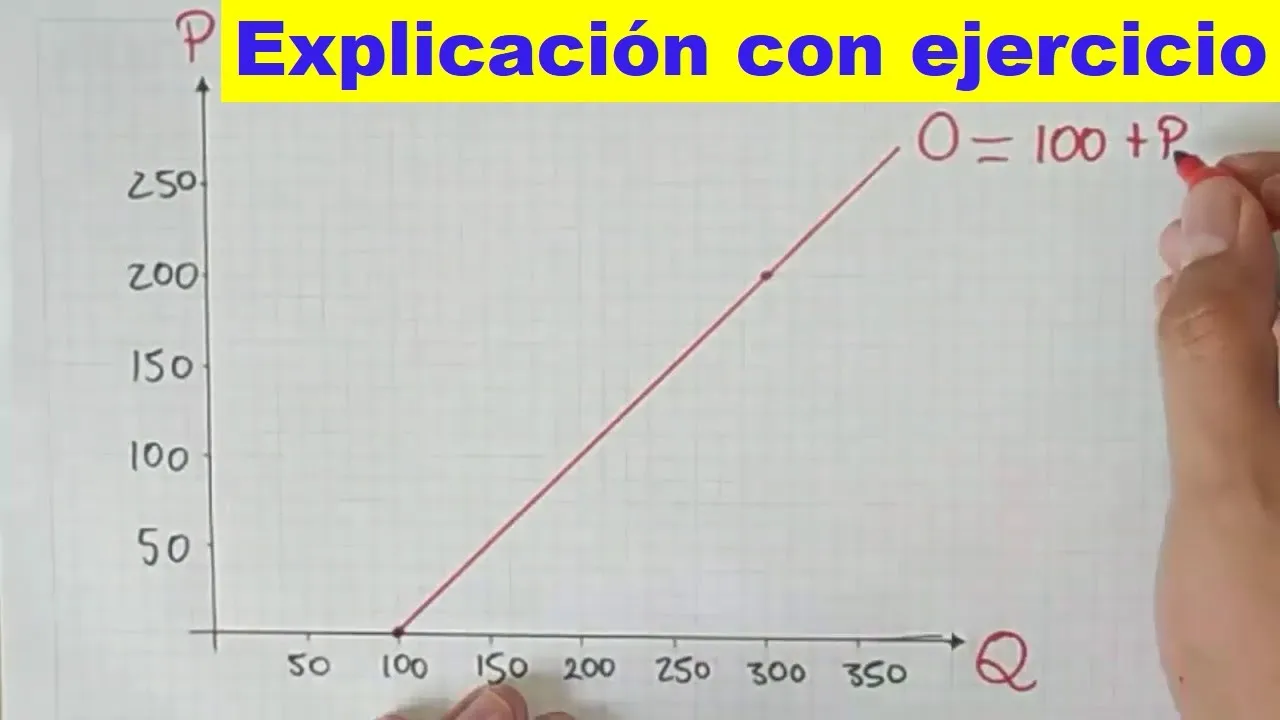
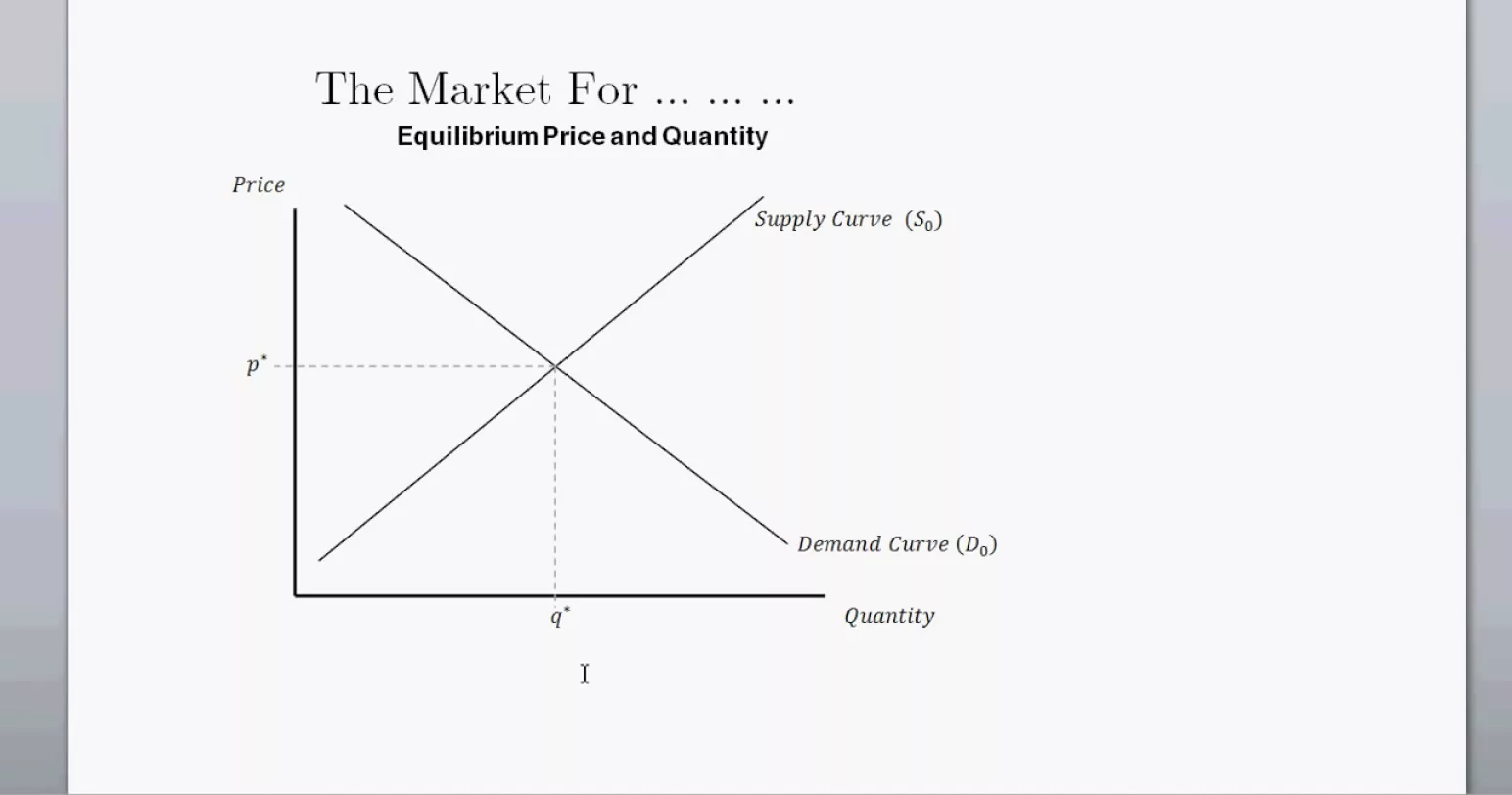


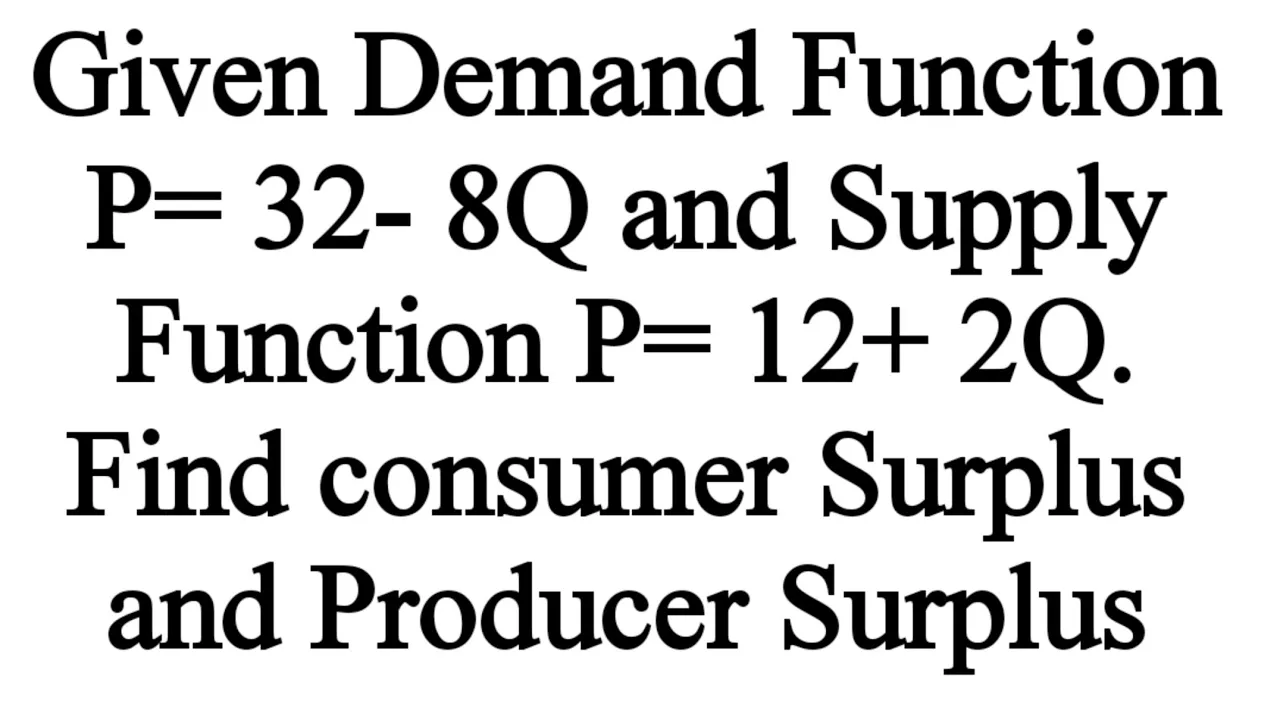
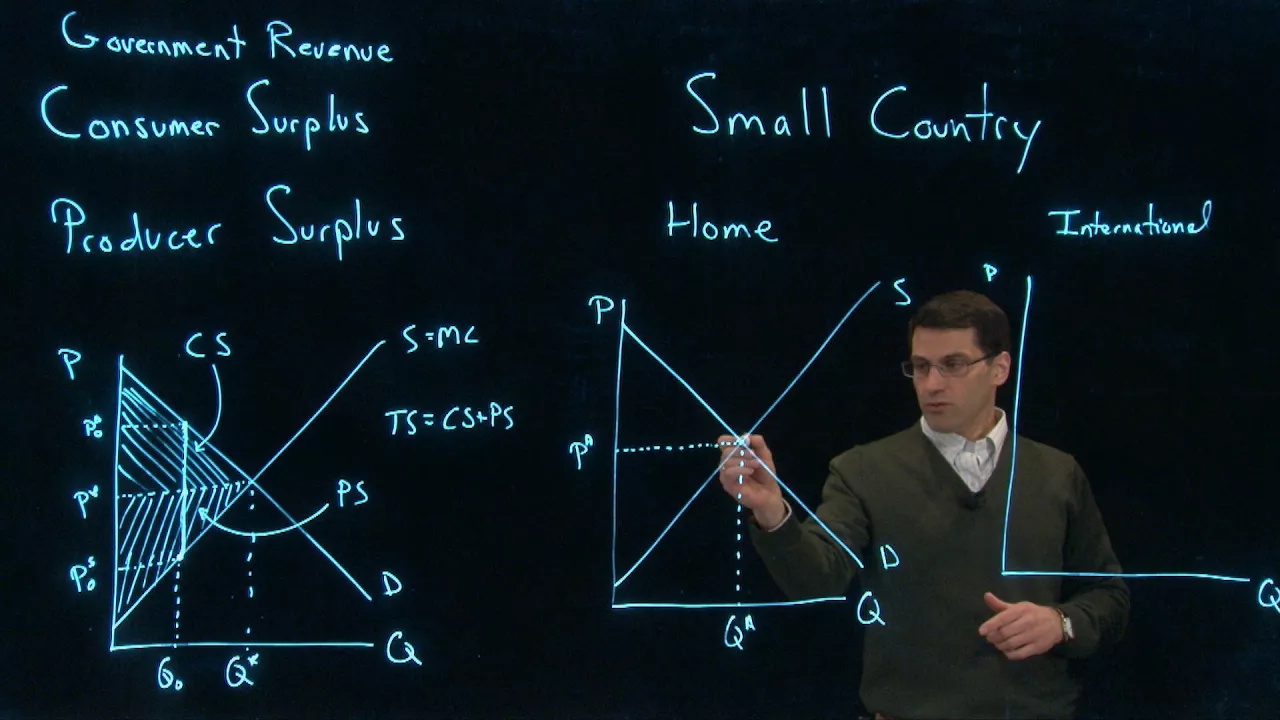
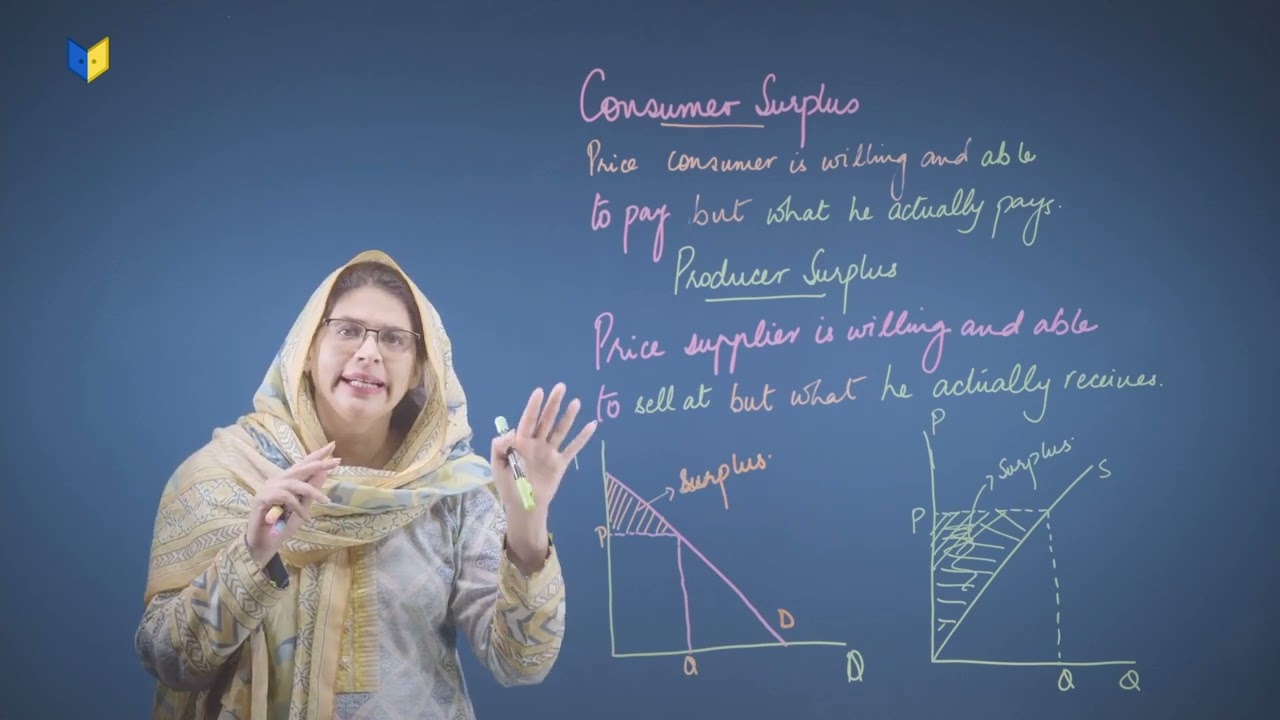



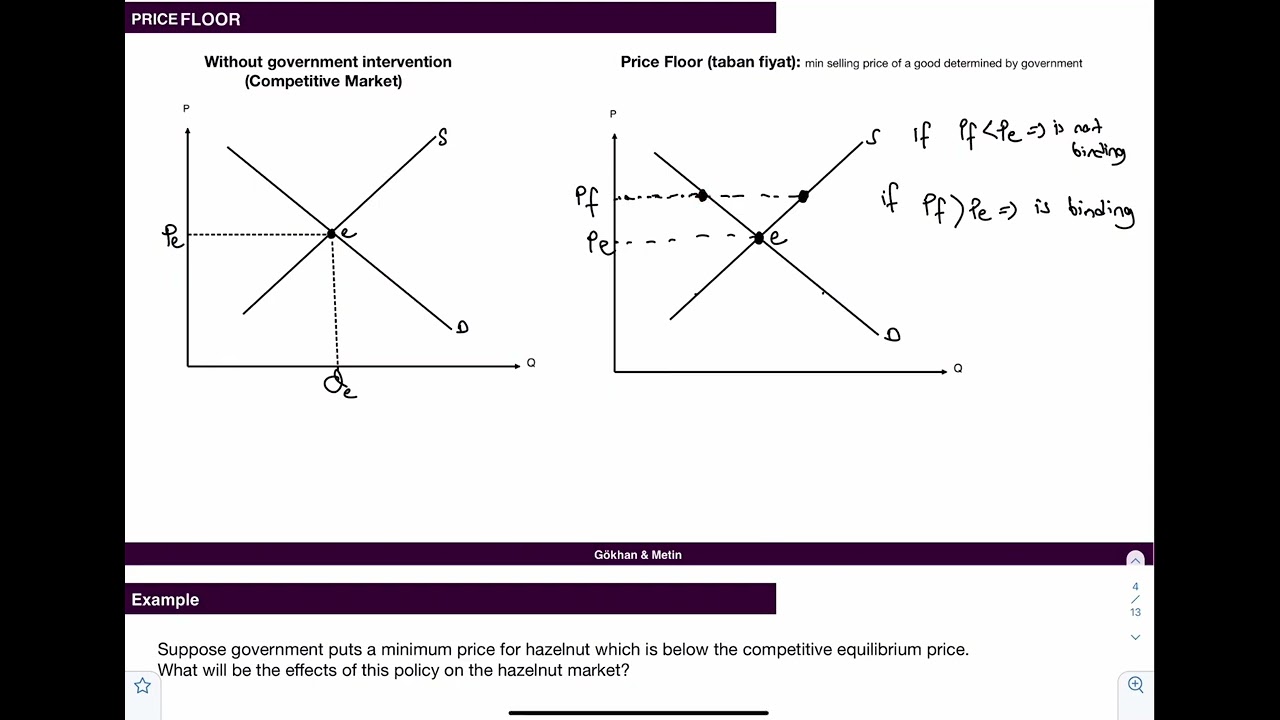








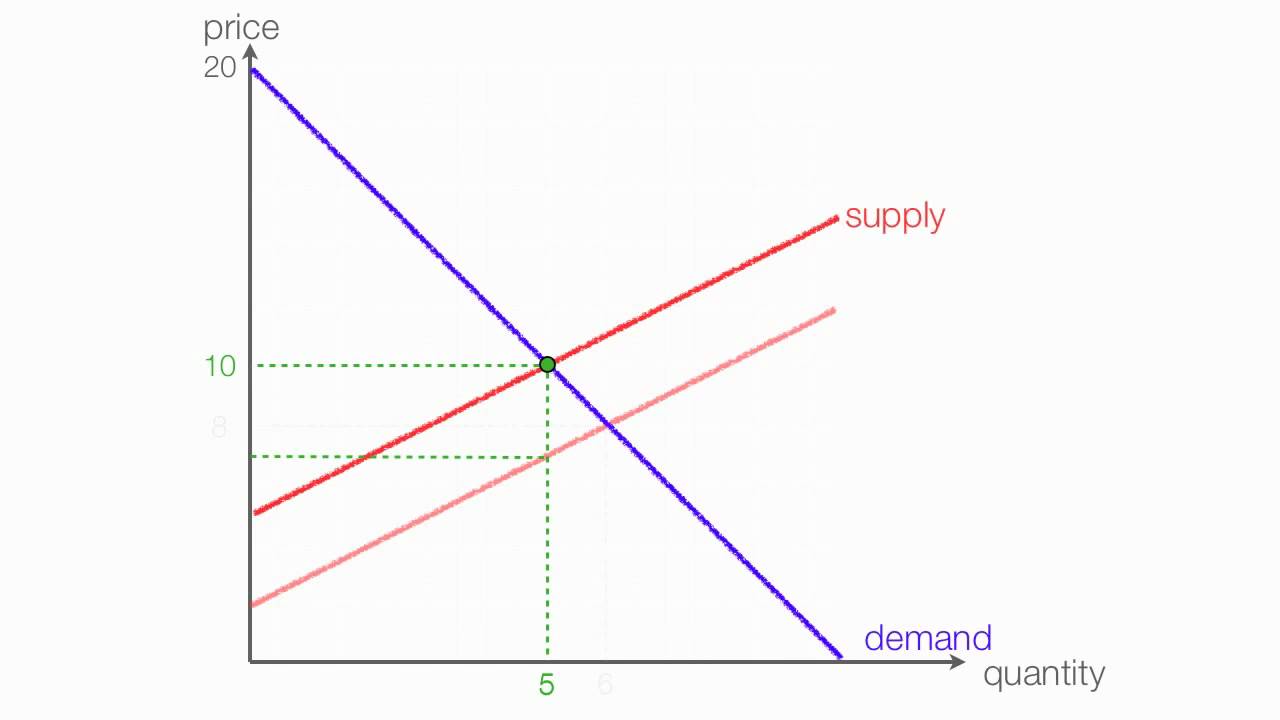








This video demonstrates how to calculate consumer surplus (area above price and below demand curve), producer surplus (area below price and above supply curve), and deadweight loss when a price floor is imposed. Before a price floor, total surplus is the sum of consumer and producer surplus. After imposing a price floor, consumer surplus decreases while producer surplus increases, but total surplus decreases by the amount of deadweight loss, which represents the inefficiency created by the price control.
Calculating Consumer & Producer Surplus with Price Floor
Added:Understanding the basic laws of demand and supply, including how to find and graph the market equilibrium price and quantity.
Conceptual knowledge of consumer surplus and producer surplus, including how they are represented graphically as areas under the demand curve and above the supply curve.
The definition of a price floor and the distinction between a binding price floor (set above equilibrium) and a non-binding price floor (set below equilibrium).
Basic geometric skills required to calculate the area of triangles (1/2 * base * height) and trapezoids on a coordinate grid.
Analyzing the welfare effects and deadweight loss associated with price ceilings, such as rent control policies.
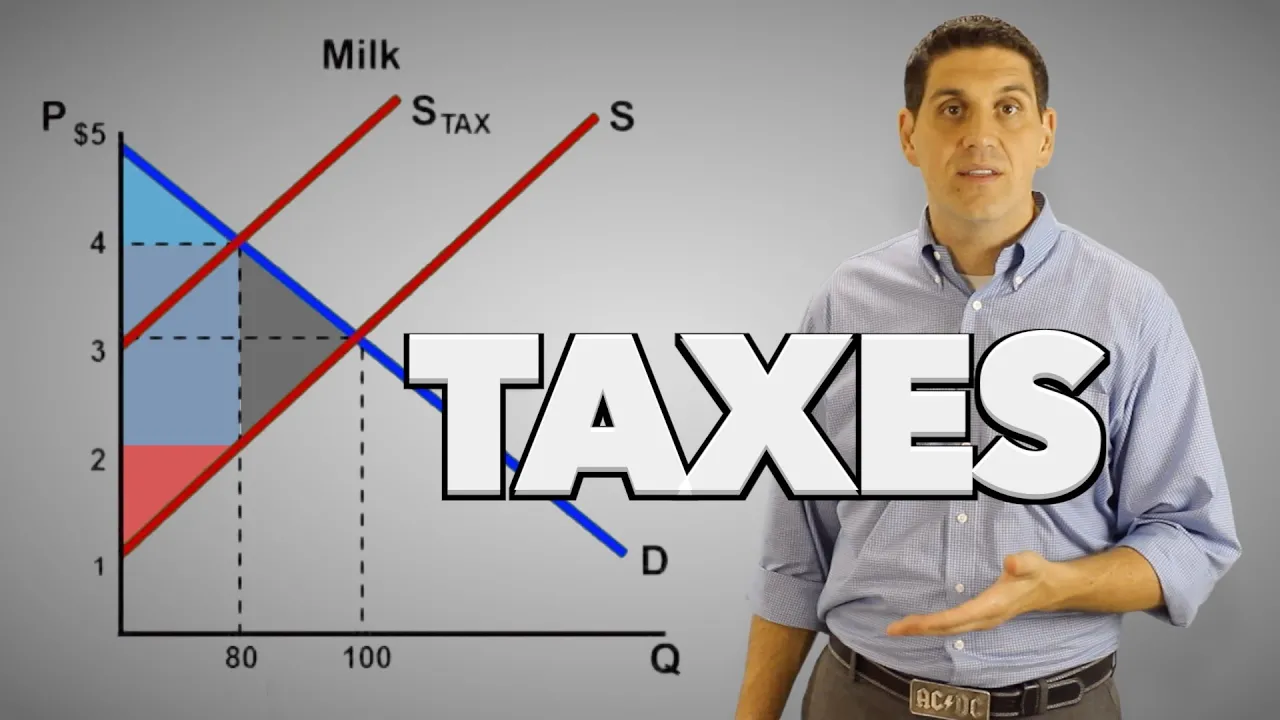
Calculating the impact of excise taxes and subsidies on consumer surplus, producer surplus, government revenue, and overall market efficiency.
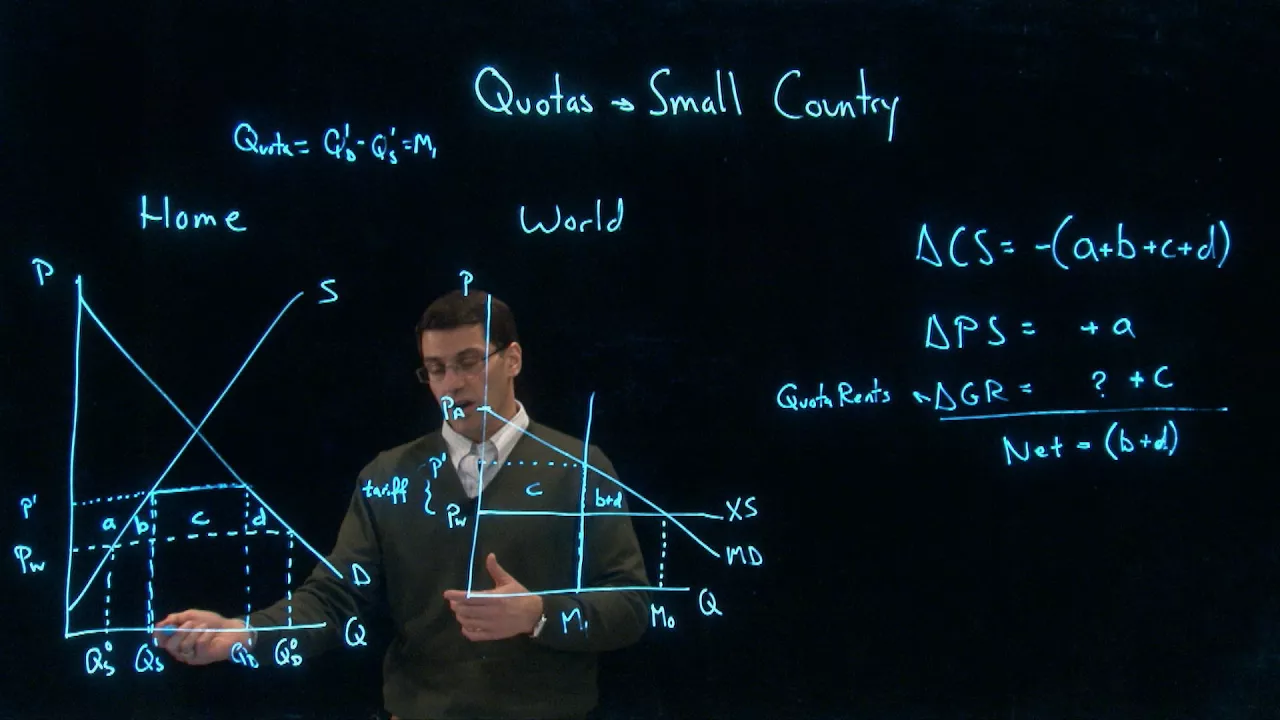
Applying surplus analysis to international trade to evaluate the welfare effects of tariffs, import quotas, and free trade agreements.
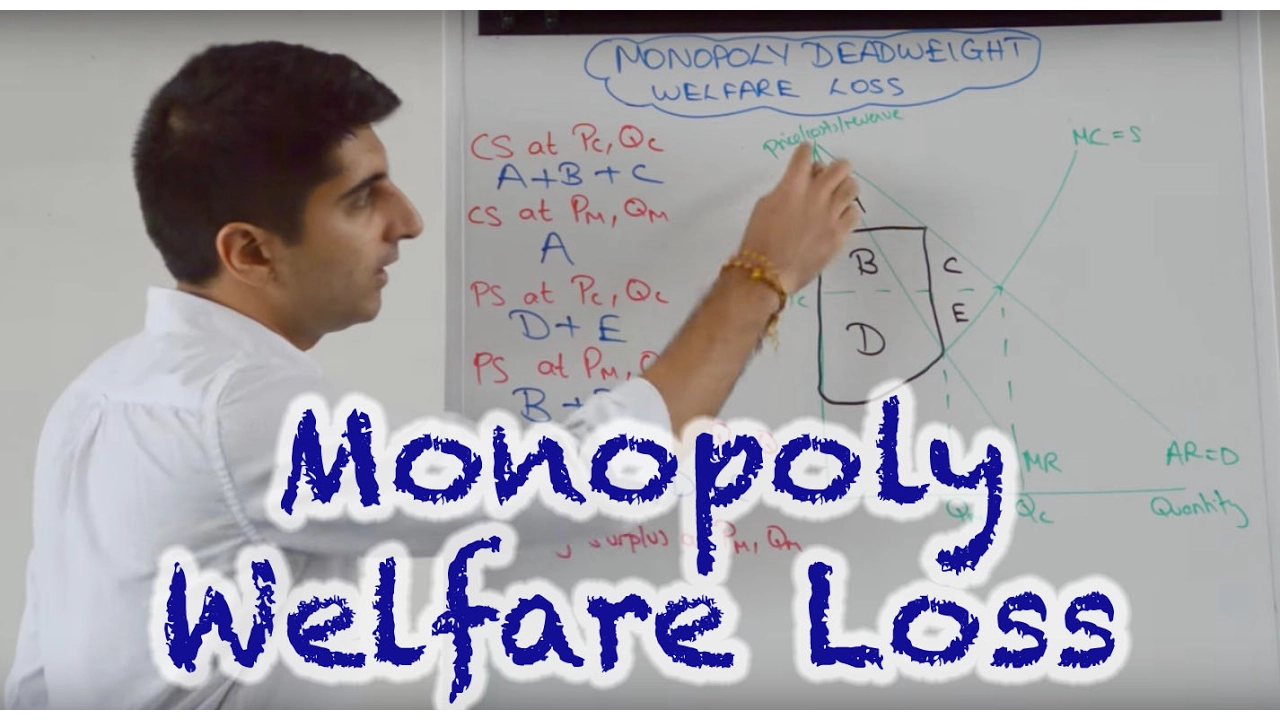
Comparing market surplus and deadweight loss in a perfectly competitive market versus a monopolistic or imperfectly competitive market structure.
110.3K views693likes7:19Original Release: 2011-05-28
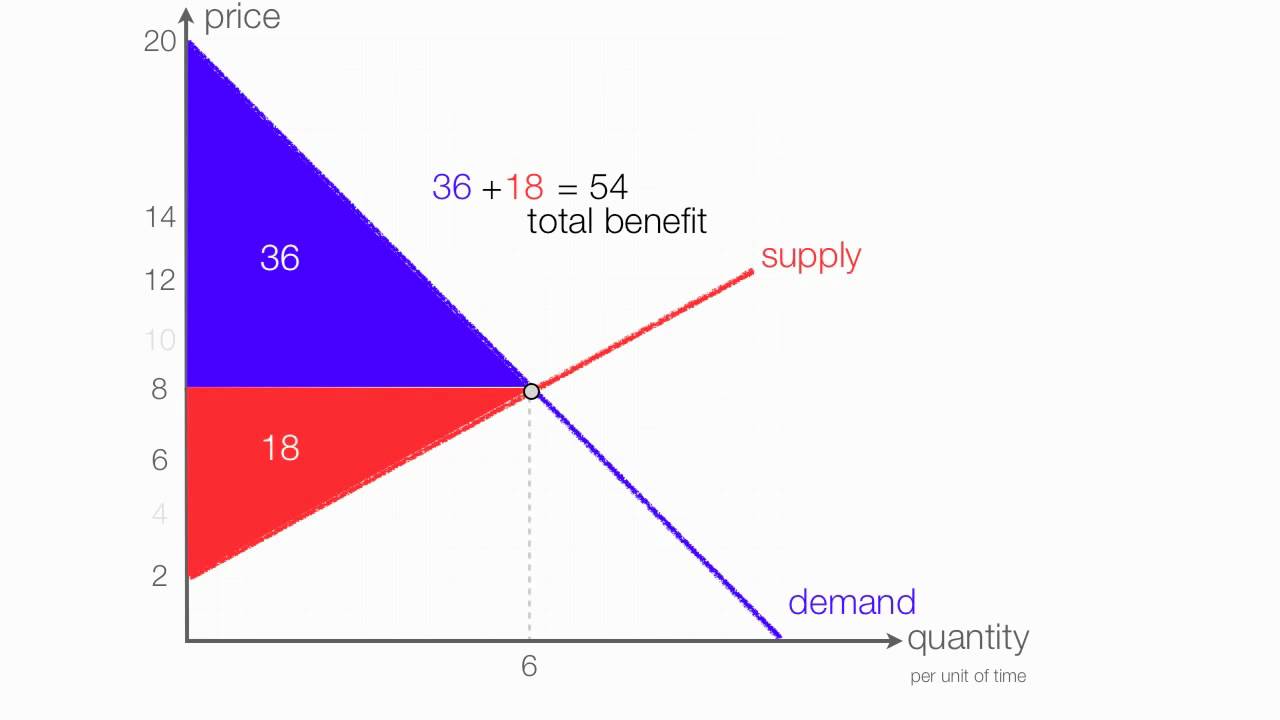
this video I'm going to talk about consumer surplus and producer Surplus with price floors I'm going to compare consumer surplus before and after a price floor then I'll examine producer Surplus before and after a price floor and we'll also calculate the dead weight loss to Society of a price floor as usual I'll plot price along the vertical axis and quantity per unit of time along the horizontal axis while drawing the supply and demand curves where they intersect is equilibrium price and equilibrium quantity I'm going ahead and fill in some additional numbers here I'm just making these up on a nice little grid consumer surplus is the area above price and below the demand curve that triangle or the blue triangle consumer surplus is the area of that blue triangle which is 12 time the base time the height that's the area the base of the triangle is six I have 1/2 time the base which is 6 the height of the triangle is 20 - 8 or 12 that 20 and that 8 now I have 1/2 * 6 * the height which is 12 so it's 12 * 72 which is 36 so consumer surplus is 36 let me erase all of this or take it all off the screen and now I'm going to talk about producer Surplus producer Surplus is the area below price and above the supply curve or the red triangle right there the area of this red triangle is 1/2 * base time the height the base is six I end up with 12 * 6 the height is also six it's 8 - 2 that 8 and that two which equals six of course this gives me 1 12 * 6 * 6 or 1 12 * 36 which equals 18 so producer surpluses 8 18 36 + 18 36 + 18 is equal to 54 and this is total benefit when I impose a price floor right there let's say price floor of 12 or $12 or 12 pounds whatever quantity supplied is nine and quantity demand is four what begins to happen is consumer surplus shrinks up to the level of the price floor right there some of the area transfers to the producer which is the yellow rectangle right there that transfers to the producer so I'll make that red so producer Surplus becomes the area outlined by the yellow lines I guess that's a trapezoid not sure what it's called but that area right there I'll get rid of that other triangle I can calculate these uh the area of producer and consumer surplus so I can calculate the area of the triangle right there I can also calculate the area of that rectangle and the area of that triangle the base of the triangle is four which is quantity demand coincidentally the base of the triangle is four also the height of the triangle is 4 6 - 2 or 4 the height of the rectangle is 12 - 6 12 - 6 or 6 and the height of the blue triangle is 20 - 12 or eight consumer surplus is the blue area of the triangle or the blue triangle which is 12 * 4 * 8 base time height which is 16 producer Surplus is the two red areas the red rectangle and the red triangle right there so the area of the rectangle is four * 6 which is 24 the area of the triangle is 1/2 * base * the height which is 8 total Surplus becomes total produc Surplus becomes 24 + 8 which is 32 let me rearrange this so consumer surplus is 16 producer Surplus is 32 when I add those together I get a total of 48 should be 48 that's total benefit total benefit after a price floor is 48 remember total benefit before the price FL is 54 that means we have a dead weight loss to Society of 6 54 minus 48 that six is at uh the gray triangle there with that there so that's did weight loss I could calculate the area of the two triangles which is the area of that triangle here the top triangle and the area of this triangle is four and the area of the bottom of triangle if I calculated it should be two but I'll let you do that on your own so that area is two and of course 4 + 2 is six now it's important to compare before and after price floor so producer Surplus plus uh consumer surplus added together is equal to that area of all that part the blue gray and red consumer surplus before is 36 and it's 16 after so there's a loss to Consumers producer Surplus is 18 before and it's 32 after so producers gain there's no dead white loss before the price floor and the dead white loss after is six so there's a loss to society so clearly producers gain from a price floor
Up Next

11:03
AP Micro Topic 2.6 & 2.8: Equilibrium & Deadweight Loss
@ReviewEcon
19.7K views•2023-08-31

5:07
Impact of Yuan in Indo-Russian Trade Amid Sanctions
@WION
261.9K views•2022-07-01
7:22
Consumer Surplus & Producer Surplus with Price Ceiling | Deadweight Loss
@economicsfun
591.1K views•2011-05-07

113:18
The Age of Easy Money: Fed & Inflation | Full Documentary
@frontline
21.2M views•2023-03-15
Related Study Plans & Knowledge Roadmaps
Structured learning paths in Economics
economics
Sovereign Debt: Defaults, IMF & Restructuring
01Introduction to Sovereign Debt & Government Bonds
02Debt Sustainability & Credit Ratings
03Anatomy and History of Debt Crises
+ 2 more learning modules
12h5 modules
Explore Roadmap
economics
Market Design: Matching Theory & Gale-Shapley
01Introduction to Market Design and Price-Free Markets
02Two-Sided Matching & The Gale-Shapley Algorithm
03School Choice Systems and Mechanism Design
+ 2 more learning modules
10h5 modules
Explore Roadmap
economics
Impossible Trinity: Forex, Capital & Policy
01Introduction to Monetary Policy and Central Banking
02Exchange Rates and International Capital Flows
03The Mundell-Fleming Model
+ 2 more learning modules
8h5 modules
Explore Roadmap
economics
Healthcare Economics: Market Failures & Systems
01Introduction to Healthcare Markets and Market Failure
02Asymmetric Information and Adverse Selection
03Moral Hazard and Insurance Design
+ 2 more learning modules
12h5 modules
Explore Roadmap