














![[Recorded] GTI Webinar - Island Tourism & the pandemic from a global perspective.](https://i.ytimg.com/vi/BIiqIjkSBCQ/hqdefault.jpg)

This video argues that Hawaii's cultural identity has been fundamentally distorted by American imperialism, where indigenous Polynesian traditions were systematically replaced or commercialized through colonization, tourism, and corporate exploitation. The content explains that many iconic Hawaiian cultural elements—such as the Hawaiian shirt (invented by Japanese immigrants), Spam (introduced during WWII rationing), and the Hawaiian flag (adopted from Britain)—are not authentically Hawaiian but rather foreign influences that became associated with the islands. The video traces how the 1893 coup and subsequent annexation transformed Hawaii from a sovereign nation into a tourist destination, where native cultural practices were either banned or repackaged as commercial entertainment for American tourists. The presenter draws parallels to contemporary cultural appropriation, suggesting that similar processes are occurring in other nations, and argues that cultural hegemony can be more damaging than military conquest because it replaces authentic cultural identity with commodified stereotypes.
The Manufactured Paradise: Hawaii's Cultural Commodification
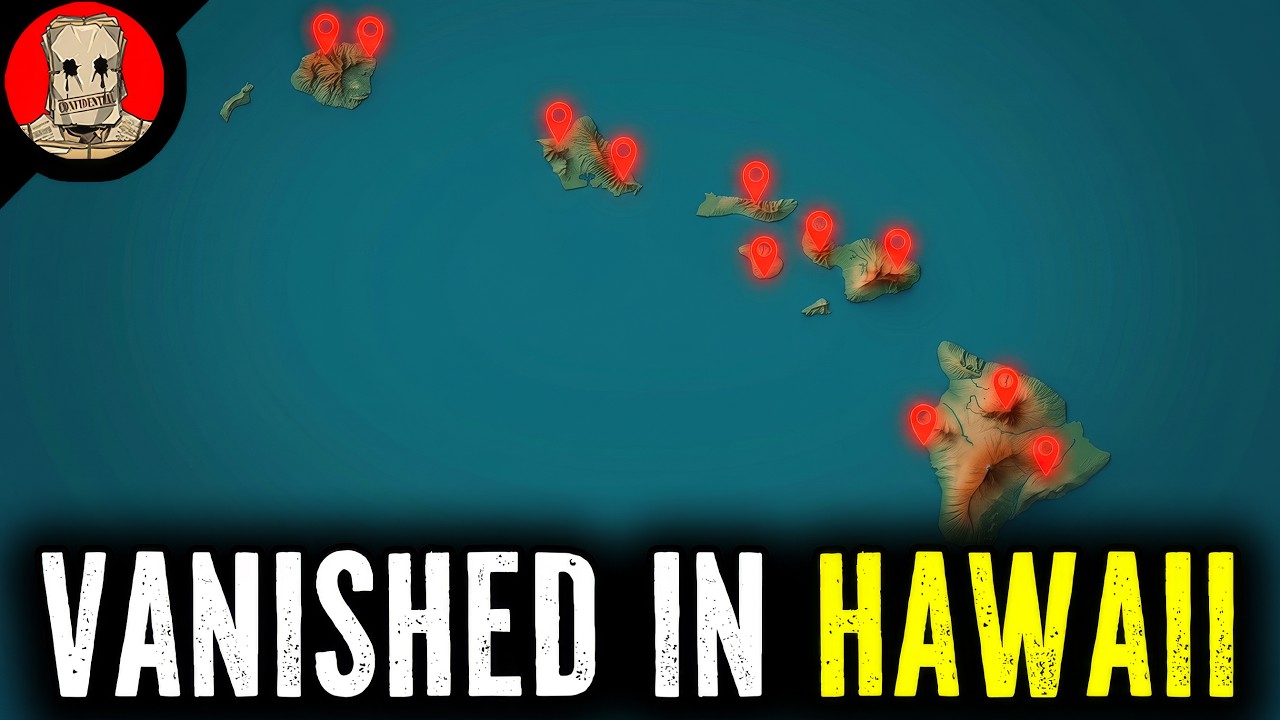
Added:I don't know if you've heard or not, but there is a very fascinating island out there. An island that one would call weird. A sunny paradise full of Polynesian people and the archetype of children's drawings of a generic exotic tree. Perfectly placed to be of great strategic interest to the bad guys of World War II. An island that has fascinated my staff a great deal.
Because nothing that you think you know about it is real.
Yeah. It turns out that a lot of stuff from and involving this island is completely fake. You've all been pestering me about it for months to make a video about a weird island. So, here it is. And I'd hate to bust your bubble, but Hawaii is fake.
[Applause] [Music] Please leave a like and a comment on this video because it really helps me in the algorithm.
Oh, it's you. God, have you seen him anywhere? I miss him so much. He's the most important man in my life, and I don't know where he is. Yeah, you do know him. He's the gold standard in flavored air devices after all. That's right. It's none other than Fume. What's that? You haven't heard of them?
Well, let me rectify that. Fume is the premier inflavored air that has but one objective to help you rid yourself of that one bad habit that won't go away.
With its masterfully crafted and chic wooden frame, Fume is nothing short of a sweet and tender tongue tickler when you feel it's rock hard wood glide across your lips. And with no electronics or yucky chemicals, you needn't worry about anything getting between you and a good time. It even has inbuilt fidget capabilities, so you can crank and squeeze it as much as it wants. But hey, it ain't only about the foreplay, because with Fume, you can get a wide and expertly curated catalog of flavor cores to explore. From crisp mint, cinnamon hearts, and orange vanilla to my one true love, black licorice, I can say with certainty that there is definitely a flavor for you.
It's just that they're all too good and I had a moment of weakness. Please come back. I'll stay loyal. So, grab that old vape and make your lawyer very uncomfortable. Because with Fume, you won't be needing it anymore. So, come and join me and 500,000 other fabulous fume links today and scan the QR code on the screen or go to trifume.com/dankula for a free topper with your journey pack. Again, scan the QR code on the screen or go to trifume.com/dankula for a free topper with your journey pack.
Before we get started, I know I'm going to sound like a bit of a pedant at first, but the intent of this video is far from just aping that one subversive horrible history song. Just bear with me as we get the clickbaity part out of the way by going through all of the Hawaiian stuff that isn't actually even native to Hawaii, but is actually Polynesian TM.
Or it's a foreign invention that the natives adopted, or it's based on stuff that colonizers brought over in the last few hundred years, or it's stuff that was just flat out made up for tourism.
Bluntly putting it, Hawaii doesn't actually have a culture. You see, Polynesians are known for having moved around a lot. I know this because my children are four and two, and I've seen Moana 351 times, and they'd have naturally brought a lot of things and customs with them from place to place as they settled new islands, including lays and surfing. Additionally, hoola is a Hawaiian version of a form of dance seen all over the Pacific Islands. Fire dancing is Samoan and Tikki is actually a figure from Maui mythology.
Californian businesses like Trader Vex and Dawn the beach comr have a lot to answer for on that last one. And also only one genus of palm tree, prchaldia, also known as the lulu pal, is actually native to Hawaii. And it's not really doing too well because of deforestation.
And the local pua or feral pigs, which incidentally also aren't even Hawaiian, keep damaging them and eating their seeds. Being an archipelago, not all of the fake Hawaiian stuff is Polynesian.
After Captain James Cook discovered the Sandwich Islands, which came to be known as Hawaii, other visitors left behind their own little duads that became part of Hawaiian culture. For instance, the ukulele is Portuguese.
And their flag, surprise, surprise, came from us. When Hawaii became a British protectorate in 1794 and a deal struck with King Kamihameha I, the British colors were flown over Hawaii. Then from 1816 onwards, their official flag had the Union Jack in the canton and varying numbers of stripes depending on which visitors you asked. But after 1843, the stripes were standardized at eight, one for each island. Essentially, Hawaii had never had a flag before. They just saw ours, thought it was neat, and they kept it.
This is going to be a running trend with this place. Spam considered a very important cultural delicacy in Hawaii is not [ __ ] Hawaiian. Having been introduced there due to rationing during World War II and hoarded by the locals out of fear that the shipments would stop. The culture of hoarding still exists today. So, it's no wonder that spam became a staple because it's [ __ ] everywhere. And speaking of spam and World War II, Japan being smack dab in the middle of the Pacific, Hawaii is notable for its very large Japanese population, as large as 40% in the early 20th century, which is more than large enough to make its mark. For instance, the iconic Spam Misubi.
I mean, just [ __ ] look at it. And of course, the Hawaiian plate lunch is clearly that's that that's just a bento box.
That's that's literally just a bento box. Another lowhanging fruit is the fact that the Hawaiian shirt was actually invented by Japanese immigrants with the term Aloha short being coined by a tailor named Koichiro Miiamoto. not actually being made of recut kimonos, but made out of the same fabric with funky designs printed on them. But that's all fine because what that horrible history song actually missed is that a series of affectations, however iconic, don't make a culture or a people. Just like how you can't teach someone how to be English by making them read Kipling. And besides, there's nothing wrong with a number of traits and sources from a region all coalescing to the point of ethnogenesis. After all, the British are the result of Bretonic, Pactish, other Celtic, Roman, to a lesser degree, Anglo-Saxon, and Norman influences to become the greatest people to ever walk this earth. And Polynesians are pretty cool. I know that Tiny Women in the New Zealand Parliament have made the hacker gay and the bloodline vortex has completely sucked the life out of Smackdown, but that doesn't mean that the All Blacks and Jacob Fatu aren't pretty [ __ ] cool. So, imagine what would come of all of their best traits if they were all brought together into a single cohesive culture. And keep imagining because that never [ __ ] happened.
And I'm actually quite annoyed about that. Before western cultural wars took hold, Hawaii was governed under the kapoo system, which was a series of taboss, the breaking of which was punishable by summary execution. The most relevant of these taboss was that women couldn't eat with men, and they also couldn't eat pork, reef fish, or bananas. But what's interesting is that the Kapu was suspended for a morning period between a chief's death and his successor taking power, giving rise to a great degree of every kind of vice and lentiousness that Slenesh would want, including co-ed banana eating.
It's weird that that's both a euphemism and also literally what happened. All of this was allowed because one, the people were considered to be so out of their minds with grief at the death of their chieftain that such heinous acts were excusable and two for that period no one officially had the mandate of heaven. So who was going to enforce the law and stop them? Most importantly, the first act of the new chief who was sequestered away from all the debauchery during this period was to reinstate Kapu as a way of formally taking power. But Kami Hameiha II just didn't. He wanted to, but his ascension to the throne saw his power very diluted by power grabs by some relatives. He was also fairly weak. a playboy gambler who liked drinking, military trained but no warrior, raised to rule but not really a statesman. Therefore, he was undermined by his father's favorite wife. The very picture of the longhouses devouring denmother, queen regent Kahuanu.
Kamihameiha II was absolutely longhoused as after a series of maneuvers, he was practically forced to sit down for a meal with Kahumanu and his own mother.
Not wanting to enforce Kapu and kill the latter, the edict was instead spread that the Kapu code had fallen. billions must dine.
Also, this extremely important piece of Hawaiian ancient culture was destroyed by women.
Now, there's something that all cultures actually have in common. With the Kapu code gone, Christianity arrived to take its place, and American missionaries and settlers basically made Hawaii liberal. The luau actually came in the wake of the collapse of taboos around communal eating developing as a feast of stew consisting of meat, coconut milk, and the key ingredient that gives the feast its name, taro. Funnily enough, while Kahumanu converted to Christianity, Kamihameiha II didn't because he liked his haram of women too much. But he was less of a trad hold out than the last gasp of a culture that had just changed forever. And its governance was next. Subsistence farming on communal land gave rise to a capitalistic land market, cash crop economy, and British trading hub. As more and more westerners actually visited Hawaii for pit stops on very long trans-pacific voyages, the plet affair of 1843 was really the beginning of the end of Hawaiian sovereignty because while it was happily resolved at the time, it was more than a bit of a sign of what was to come. At the time, Hawaii was courting foreign investment but refused to sell land because it all belonged to the crown in a feudal system. Feeling hard by the British console complained about rights being denied and Rear Admiral Richard Thomas sent Captain George Plet to investigate.
Plet contacted Kami Hameiha III to get to the bottom of things and requested an interview. When Kami Hameiha responded by sending an American envoy instead of meeting with Plet himself, the latter took that as a personal insult. He accused the American of faking Kamehamehiha's correspondence and he just literally annexed Hawaii over it.
Then Kamihameiha sought help from the Americans to undo this by appealing to London. By the time word had reached Thomas himself, Chinese whisperers had taken hold. So he sailed to Hawaii to meet Kamihameha personally and see what was going on. and he essentially responded by saying plet did [ __ ] what? And he ended the occupation of Hawaii on the spot. Then Britain and France signed a declaration essentially protecting Hawaii's independence from themselves. The Americans were also invited to sign it, but they refused.
In the business, we call this foreshadowing.
Pero Harbor isn't the only thing that makes Hawaii a very important part of America's relationship with Asians because for a time Hawaii was also administratively fake which enabled some very interesting geopolitical maneuvering. This little tidbit is courtesy of Africa Chan, who is having a little bit of a Wuang phase at the moment. Hawaii was actually once used as a staging ground for funneling Asian agitators into the United States.
Sunyatsen was looking to raise funds and support for a revolution against theQing dynasty. And since the Yanks are always down for a good old regime change, they would have loved to have them. However, the Chinese Exclusion Act was in full force because the US labor market was a little bit too much to Elon's liking.
Sunyatsen would have been deported if he had entered the United States without some proper documentation. Fortunately for Son, he had been educated in the territory of Hawaii, crucially not the state of Hawaii in his youth, and he was living on Maui in 1904. So, he was retroactively given a Hawaiian birth certificate to get around the Chinese Exclusion Act and grant him legitimate entry to the United States. About a century later, they did the exact same thing for Obama, allegedly. But to rewind a little bit, remember when I said that Hawaii developed a westernized labor market?
Well, that's a result of a huge edict called the Great Maheli. a land reform carried out in 1848 by Kamihameiha III from a feudal system to a more free land market sort of a third of the land would be reserved for the crown another third for the local chiefs and the last third for regular Hawaiian people. The intention was protectionism ensuring that the natives would maintain their right to their own lands. However, huge amounts of it were auctioned off to the Americans and corporations by the Hawaiian government. Many of those Yanks had been born in Hawaii as the descendants of settlers. So, one could cope that the land was still owned by Hawaiians.
And let how that turned out be a lesson in how civic nationalism is the kiss of death for a nation and a people. But let's not go on that tangent.
Hawaii was stuck as a de facto American colony long before it was made formal.
But the hold that the Yanks had on Hawaii still wasn't enough. A few decades after the Great Mahel, King Calakua would appoint ethnic allies to his cabinet to keep as strong a hold on what power he had left as he could. The sugar magnates and lawyers all banded together into a secret society called the Community of Safety or the Hawaiian League. And in 1887, they used the local militia, the Honolulu Rifles, to force the signing of what became known as the Bayonet Constitution. It was named so after the literal gunpoint by which it was signed. With the new constitution in place, suffrage became linked to land ownership, which completed the dispossession of the native Hawaiians because most of the land had been bought up by the Americans. However, their increased power didn't really amount to much when the 1890 Mckenley tariffs [ __ ] their bottom line.
Basically, the entire island was getting financially [ __ ] over. So they needed to push for the American annexation of Hawaii to get around these tariffs and economically save themselves. Meanwhile, Calaku's successor and sister, Lilio Kalani, tried to enact her own constitution that would re-enfranchise the natives and rest power back into the hands of Hawaiians. But a thousand armed men and 120 American Marines said no.
The coup was the last time that anyone actually acknowledged the tribal chief.
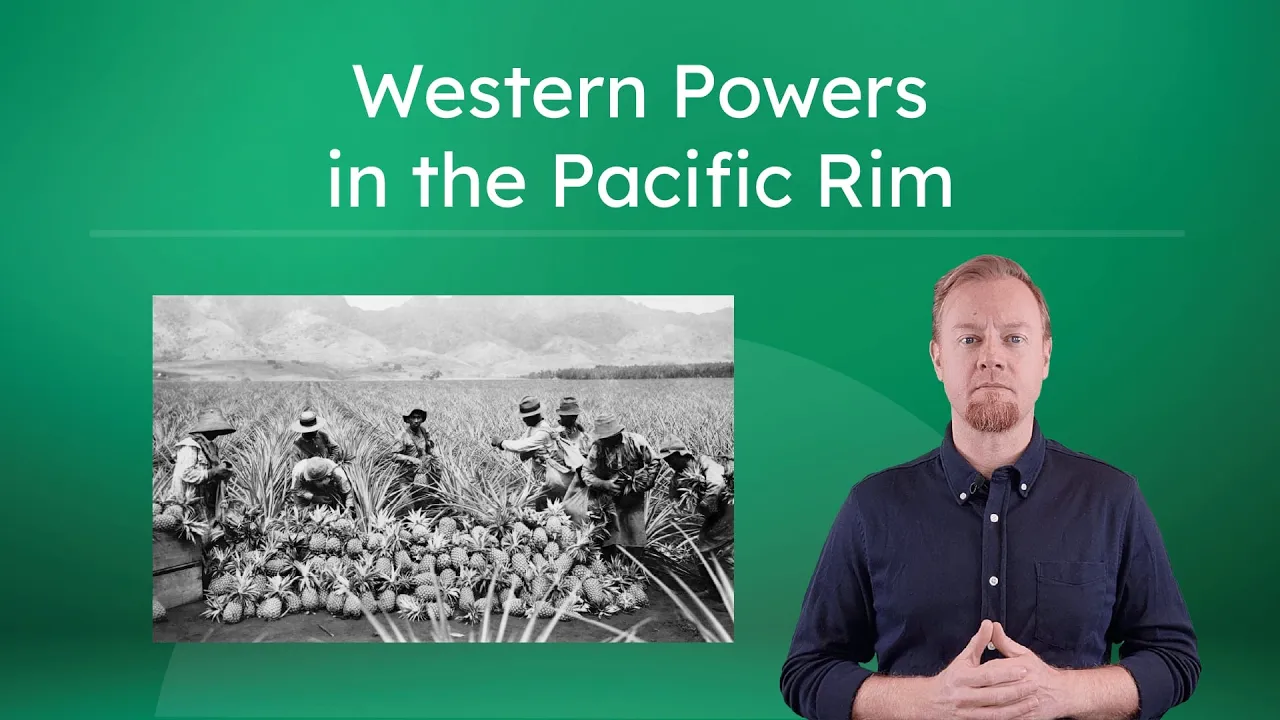
Now Hawaii was ruled over by an American nightmare. Sanford do became the president of the Republic of Hawaii and pushed for its annexation by the United States. There was little meaningful resistance. And once it was in American hands once and for all in 1898 with Dole as the governor, it was go time. Dole's first cousin, once removed, James Dole, founded the Hawaiian Pineapple Company, which was eventually acquired by the Standard Fruit Company, not to be confused with the United Fruit Company, the same company that Banana Republic Honduras. You know them today as Doe Foods. James Dole went all in on the Hawaiian TM branding to make his pineapples and other fruit products appear as exotic as possible by really leaning into the exaggerated picture of Hawaii as a laid-back paradise teameming with beautiful scenery and sexy hoola girls. This created the popular association of pineapples as being Hawaiian.
Pineapples are from South America.
They're not Hawaiian. Also, ham and pineapple pizza being called Hawaiian pizza was actually invented by a Greek man in Canada.
Hawaiian pizza isn't even Hawaiian. The corporations pulled the country out from under its own people and left the entire population stuck on the door because American foreign policy has always been hellbent on forcing unwanted fruits onto other countries. And after taking Hawaii's land, they were now coming for its very culture. The scenery that they advertised isn't even [ __ ] real. By the way, why Kiki Beach is made out of sand imported from California just a century ago. In fact, it's so fake that about a foot of it erodess every single year, and they have to keep topping it up.
Even Hawaii's [ __ ] beaches aren't real.
So, what's the point of this video?
We've covered the lowhanging Reddit here pedentry, and we've discussed how Hawaii fell victim to American imperialism. But those aside, what makes Hawaii so painfully fake? Well, it didn't have to be this way. Hawaii could have transcended its Polynesian roots and developed into a proper cultural ethnogenesis. However, two things happened. One, Hawaii was forcibly Americanized as many of its practices were banned. And two, the Yanks changed their minds. Why, you might ask? Well, the pineapple industry in Hawaii isn't anything like what it used to be. Despite pineapples being considered as Hawaiian, Hawaii produces only about a tenth of a percent of the world's pineapples. And to take its place, commercial flights began to take off after World War II. Therefore, Hawaii is still under the same sort of regime. But the whipand changed from the pineapple putoaucracy to totalitarian tourism. What was left of Hawaiian culture after its liquidation was brought to the US mainland and sent back as a commercialized bastardization by tourists who showed up and asked, "Where are all the tiki bars? Where are all the sexy brown girls on the pineapple tins?"
You know, like the dregs of Hawaiian culture were brought back to the four, but tailored to American expectations and made a little bit more familyfriendly.
Not wanting a topless mascot, coconut bras were added to the hoola costume.
They're not cultural to Hawaii at all.
They were just stuck in there by advertisers to make Hawaii a little bit more commercially palatable. And it just makes it look insultingly cartoonish.
And grass skirts that emphasize swaying hips weren't actually hoola dresses.
They were just grandfathered in after being sexualized by servicemen during World War II. Apparently, they loved a bit of bush. So, a lot of the things that people know about Hawaii, like the very first things that pop into their head when Hawaii gets mentioned, were all just exaggerated or completely madeup marketing or advertising for either tourism or [ __ ] fruit and aren't even part of their culture. This sort of thing is essentially why a lot of Scottish people don't like Braveheart and why the Kazaks do have a good case for hanging Sasha Baron Cohen in the street. Now to be fair to the Americans, the Hawaiians really did themselves no favors at the 1893 Chicago World's Fair where they danced and played music adorned in flowers and grass skirts to lean into the stereotypes. I mean, you kind of have to when you have only limited scope to represent as much of your culture as possible, even if a lot of that culture was completely made up by advertisers.
Countries hosting the Olympics tend to do the same thing in their opening ceremonies. However, this performance only began the western flanderization of Hawaiian culture. Not only is there the problem of California and its consequences with all of the catch tiki [ __ ] but the word aloha which is steeped in different contextual meanings like the Polish kurva but wholesome is now just a stock word that tourists say to feel cultured. Like boomers saying gracias after ordering tacos and luau still privately conducted dinners by Hawaiians on special occasions are now practically themed cabaret for the public including singing, dancing, and plenty of other Hawaiian TM culture that you can buy tickets for every single night. Even though under the original Hawaiian Kapu code that that [ __ ] wasn't allowed. And as if this couldn't get any worse, the Hawaiians, who aren't enslaved by the tourist industrial complex, don't even get to stay there because they have been priced the [ __ ] out of ever owning any property in their own homeland. If you think the pantomime in Hawaii is a humiliating farce, bear in mind the fact that there are more Hawaiians in [ __ ] Las Vegas than in Hawaii. But I suppose this is a bit appropriate considering the fact that fellow vaguely ethnic coded entertainment slave Elvis is also heavily associated with Hawaii after all of those movies that he made. Now, not to clutch perils about cultural appropriation, but this is it. This isn't a Hoya headdress for Halloween, nor a Chinese prom dress that exists in a vacuum, but an active throttling of a culture and repackaging it as a consumer commodity. At this point, Hawaii is little more than a cultural brothel. Except the pineapples don't make it go down any easier. Their economy is basically just tourism, which is shucking and jing for mainlanders.
real estate, which is selling second homes to rich mainlanders for far far more than the natives could ever hope to afford. Agriculture, which is relying on cash crops instead of growing actual [ __ ] food. And the military with Hawaii being America's kinenrad.
Funnily enough, Hawaii was actually almost Russia's kinenrad, but we don't have time to get into the Schaefer affair.
They'll find a warm water port someday, don't worry. Sure, the coups and annexations by the United States were illegal and actually fought by Cleveland when he was in office, but the entire history of those islands is a case study of the Schmidian exception. It says a lot that the only palm trees that are actually native to Hawaii are critically endangered. And all of the other ones that you see there all over the place were actually brought and planted there from abroad. And there's sadly nothing that the Hawaiians can do about it other than fester in endless torance of bitter cope. A lot of native Hawaiians are very very racist and hostile to tourists. And I really don't blame them. It's no wonder that they hate the Howley's or non- Hawaiian. Of course, like with any hot button topic, there's an SNL skit making fun of this very phenomenon. It proved controversial because Westerners thought it was culturally insensitive.
But the Hawaiians didn't care about that. They got annoyed because it said the quiet part out loud. Oh, also The Rock is yet another thing that isn't Hawaiian. He's Samoan when he feels like ruining wrestling and black when he feels like ruining movies. Another kind of cope is a series of initiatives for companies, especially in the service industry, to provide their staff with training and opportunities to study native and local customs and culture in order to disentangle distinctly Hawaiian traditions from the Polynesian TM ones and do all of them authentically.
Unfortunately, I don't see what good that would actually even do. With all the will in the world, the Howley's simply do not give a [ __ ] And it doesn't make their holiday any less of a pantomime in the same way that the diversity disclaimer doesn't make Assassin's Creed real history. No one wants to be lectured at while they're on holiday. So shut the [ __ ] up, put the pina colada in the glass, and dance for me, [ __ ] To wrap up with a hot take, I honestly think that losing to American cultural hedgemony is a lot worse than being conquered by force. The old AngloImperial model of you can keep your culture and customs, but you will grow the cash crop and sell it to us is one thing, but having your culture and your people turned into a fake and gay Disneyified product as a gayish play thing for what a friend of mine calls a fat, lazy, feminine, disgenic mass of matto people is something else entirely.
At least the red coats generally left you alone and built you cool stuff as long as you kept the goods coming.
Despite hotting in the short term, tariffs in the like are actually good for Europe. Well, they are just the result of an incoherent [ __ ] fit by sloppulous yanks who want everything made in America except for their own people. I wholeheartedly support any policy that gets the United States the [ __ ] away from us. Look guys, I love you all very much, but but no, we should take what they did to Hawaii as a warning and rearm and relearn how to fend for ourselves because what happened to their culture is essentially happening right now is we're bombarded with America's spiritually corrosive global homo slop and we mustn't stand for it. Second, to what our own government is doing to us right now, [ __ ] tryh harder [ __ ] There is no greater humiliation than being a vassel of the American Empire. I say this because Scottish culture is going down the exact same path as Hawaii. We spent millions adding the Gaelic language to our street signs because oh, we're so cool and culturally different from the rest of these islands when literally no one outside of the Hebedes speaks the [ __ ] language because we don't even teach it in our schools. Ask any native Scott who their clan chieftain is and they will have no [ __ ] idea. Ask any native Scott about the Jackabite rebellions and they'll think you're talking about crackers. Put any random tartan in front of any random Scott and ask them what clan it's from and they will have no [ __ ] clue. Any native Scott will tell you that we should protect our culture and our people and in the very same breath deep throat the EU and talk about how we need unlimited million billion immigrants for reasons they can't and won't explain. They've just been conditioned to regurgitate that because all their friends do and they want to fit in by doing a thing that will create a society where they won't fit in. And if you're bored of all of that, you can go up to the main street of any city where you will be assailed with all of the tartan tat shops selling you as many tweed hats, fridge magnets, t-shirts with some quote from still game on them, kilts with tartans that you aren't allowed to [ __ ] wear because no, I don't give a [ __ ] what Google told you you aren't in that clan. Why not grab yourself a keychain with your clan symbol on it and buy it from the Indian man who will be behind the counter of a shop like this?
You can buy it while listening to some bagpiping busker playing nearby. Yet there isn't a single native Scott nearby that can tell you the name of the [ __ ] song he's playing. And despite the average Scott not knowing a single thing about his own culture, that doesn't stop us creating such an over-the-top caricature of it for the plain loads of styrofoam Scots that come over here from America to tell us my great great great great grandfather was a McDonald. I'm practically like a lord here or something. I saw Braveheart 47 times. while their fat asses are blocking the path of all of the hikes because they're three footsteps away from heart failure. The saddest thing about every single bit of that, though, is that the average American with Scottish ancestry knows more about Scottish history than your average Scott. The commodifying, exaggerating, or outright fabrication of Hawaii's culture is tragic. And the exact same thing is happening here. It's no longer about a people. It's about making money from fat tourists.
>> It's count on YouTube. Everybody should subscribe.
Up Next

San Bartolo Murals: Maya Creation Myth & NASA Archaeology
@IseppOrg3945
16.7K views•2019-05-14
Astrobiology Through an Anthropological Lens: Field Insights
@georgiatechastrobiology
128 views•2021-04-14
Proxemics Explained: The Study of Personal Space
@Vox
536K views•2016-07-05
Psychology of Internet Trolling and Pranks Explained
@AzzyLand
10.7M views•2017-12-20
Related Study Plans & Knowledge Roadmaps
Structured learning paths in Anthropology