
























Raoult's Law states that the partial vapor pressure of a volatile component in a solution is directly proportional to its mole fraction in the solution, expressed as P₁ = P₁° × X₁, where P₁ is the partial vapor pressure of the component in the solution, P₁° is the vapor pressure of the pure component, and X₁ is its mole fraction; this law explains how the presence of a solute lowers the vapor pressure of a solvent, with the total vapor pressure of a solution being the sum of the partial pressures of all components according to Dalton's Law.
Vapor Pressure and Raoult's Law Explained | Class 12 Chemistry Solutions
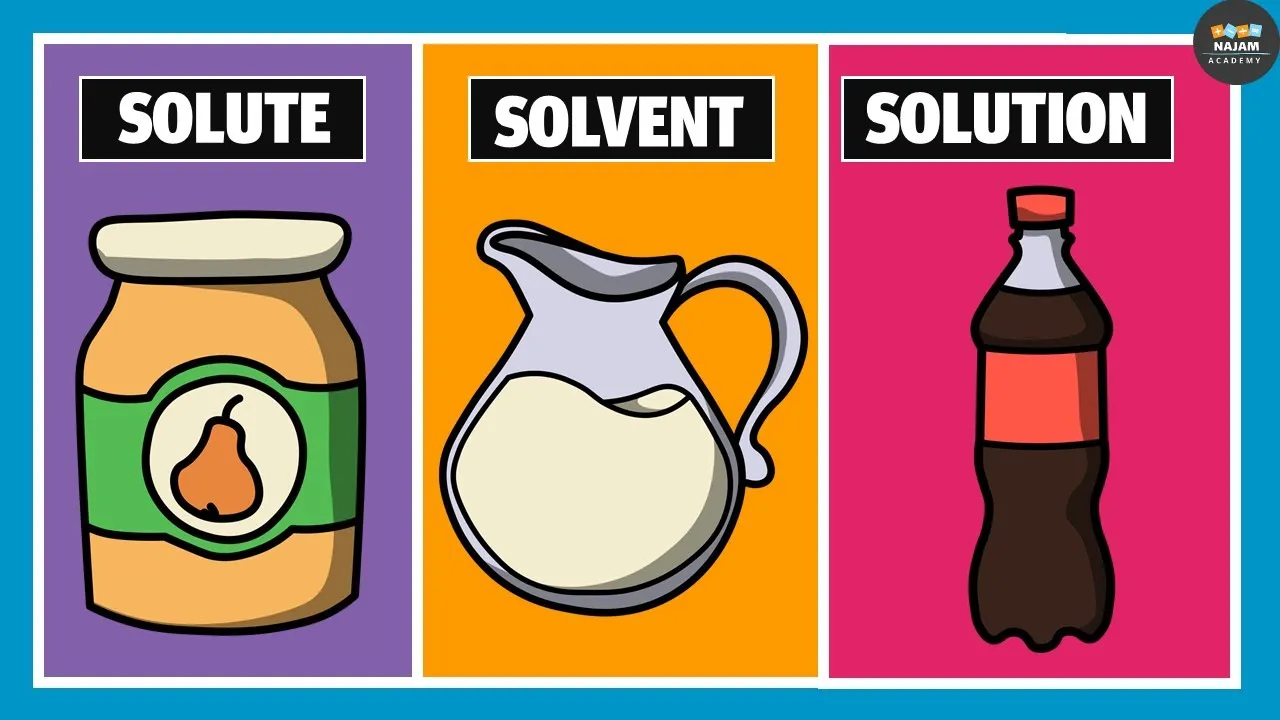
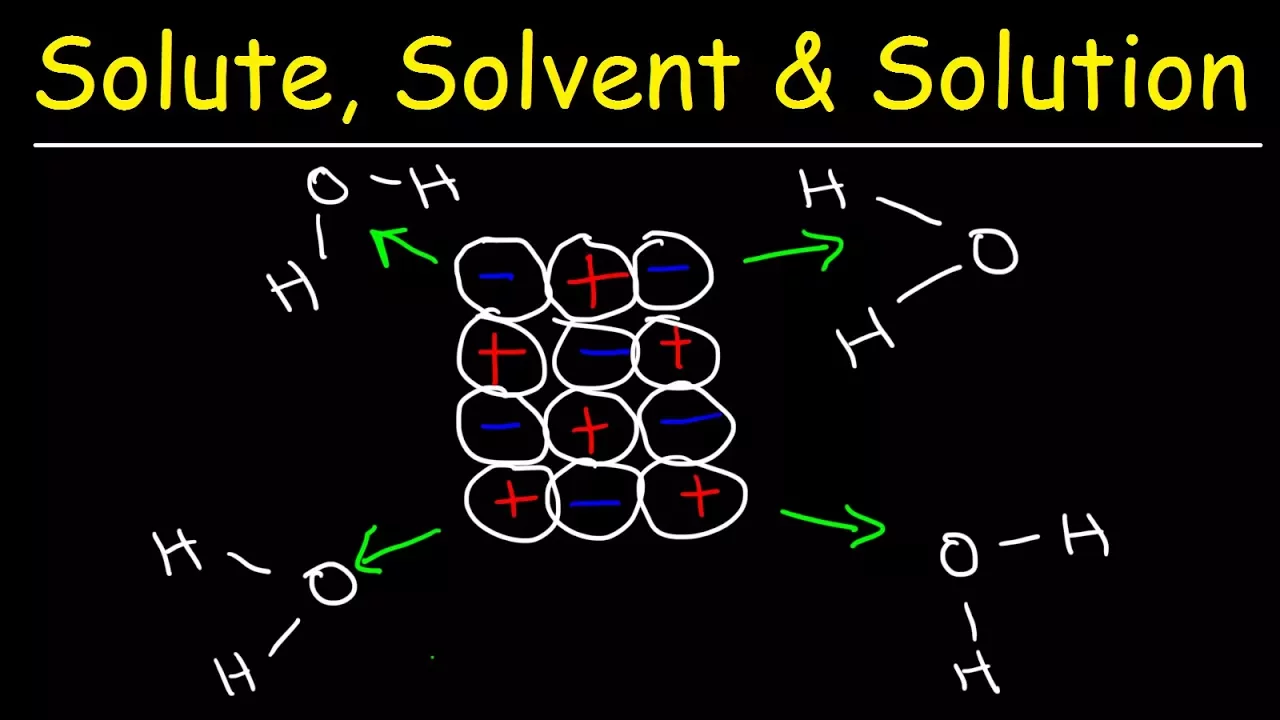
Added:Basic concepts of solutions, including the distinction between solute, solvent, and homogeneous mixtures.
Methods of expressing concentration, especially 'mole fraction', as it is a key variable in Raoult's Law calculations.
The concept of dynamic equilibrium, particularly regarding the processes of evaporation and condensation.
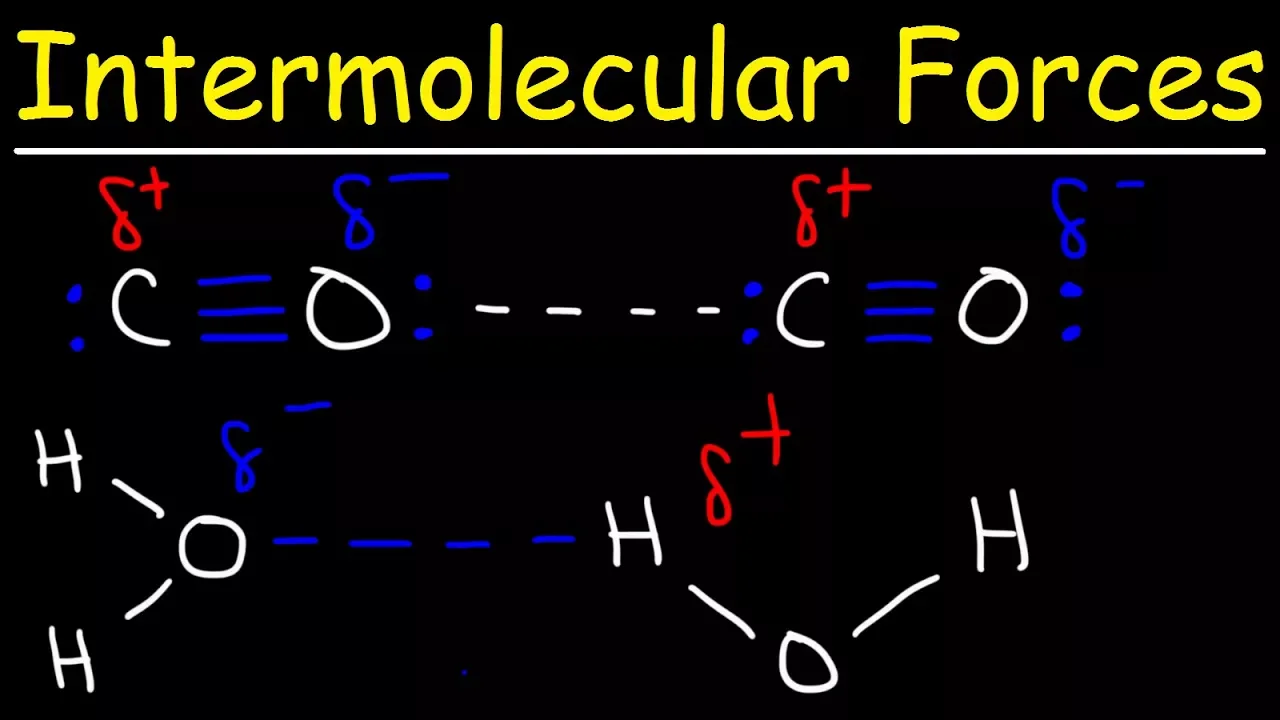
An understanding of intermolecular forces and how they affect a liquid's volatility and boiling point.
Ideal vs. Non-Ideal solutions, including understanding positive and negative deviations from Raoult's Law.
The concept of Azeotropes (constant boiling mixtures) and how deviations from ideality lead to their formation.
Colligative properties of solutions, specifically how relative lowering of vapor pressure relates to boiling point elevation and freezing point depression.
Henry's Law, comparing its application for gas-in-liquid solutions with Raoult's Law for liquid-liquid solutions.
Industrial and practical applications of vapor pressure, such as fractional distillation processes.
196.1K views4.9Klikes24:27Original Release: 2023-07-24
vapor pressure and routes law firstly we will learn some basic concepts like volatile substances and non-volatile substances a volatile substance is one that evaporates into a gaze through temperature or below for example water gasoline ethanol Etc are all volatile substances while non-volatile substances is the one that doesn't evaporate into a gaze at room temperature or below for example salt sugar urea Etc are all non-volatile substances the second concept is evaporation remember that evaporation only occurs in volatile substances like water now consider this open object which contains water we know that the molecules at the surface are called surface molecules and the molecule inside are at the bottom are called bulk molecules the bulk molecules have low kinetic energy due to which they move slowly while the surface molecules have high kinetic energy due to which they move fast now listen carefully after some time the surface molecules would leave the liquid and would Escape into the vapors let me repeat it after some time the surface molecules would leave the liquid and would Escape into the vapories this process is known as evaporation if you ask me why these surface molecules leave the liquid the answer is simple it is because they have high kinetic energy due to which they leave the liquid surface and become Vapors therefore we Define evaporation as the process by which a liquid is transformed into Vapors is called evaporation here let me ask you one important question what is the difference between evaporation and boiling point well boiling occurs at fixed temperature for example the boiling point of water is fixed which is 100 degree Centigrade while evaporation can occur at any time pressure for example water can even evaporate its 0 degree centigrade just remember that every volatile liquid evaporates at any temperature now let me teach you the basic concept of vapor pressure if I teach the complete concept of vapor pressure in one statement then I would say vapor pressure is evaporation in a closed container this statement explain the whole philosophy of vapor pressure now consider this close container which contain a volatile liquid we already know that volatile liquid evaporates I mean these surface molecules convert into vapor due to high kinetic energy hence I write evaporation occurs and which surface molecules evaporate into vapories after some time these Vapors would condense and would fall back into the liquid hence I write condensation occurs in which Vapors convert to liquid here inside this close container evaporation occurs I mean liquid converts to Vapor secondly condensation occurs I mean Vapors convert to liquid now a time will reach when rate of evaporation would be equal to the rate of condensation this stage is called equilibrium to make this concept more simple we say that at equilibrium if 10 molecules of liquid evaporates into vapories then 10 molecules of vapor condensed into liquid now listen carefully here I am going to teach you the best part of vapor pressure which a lot of talented people are missing we know that these Vapors condense and fall back into the liquid when these Vapors fall back into the liquid surface they exert force or unit area of the liquid surface let me repeat it when these Vapors fall back into the liquid surface they exert force on unit area of the liquid surface we know that pressure is equal to force on a unit area this pressure is exerted by the vapors so we call it vapor pressure remember that vapor pressure is the pressure of vapors on the surface of liquid therefore we Define vapor pressure as the pressure exerted by Vapors on the surface of the liquid at a given temperature is called vapor pressure let me repeat it the pressure exerted by Vapors on the surface of the liquid at a given temperature is called vapor pressure remember that vapor pressure is also known as equilibrium vapor pressure hence notary down that the pressure of vapors on the surface of liquid is called vapor pressure now let me teach you factors affecting vapor pressure first Factor affecting vapor pressure is temperature there is direct relationship between temperature and vapor pressure for example water is 60 degree Centigrade has more vapor pressure than water at 40 degree centigrade the second factor is nature of liquid or intermolecular forces there is inverse relationship between intermolecular forces and vapor pressure for example consider water and acetone at 40 degree Centigrade the vapor pressure of acetone is more than water because acetone has weak intermolecular forces like London dispersion forces while the water has strong intermolecular forces like hydrogen bonding also remember that vapor pressure doesn't depend upon the shape of objects hence noted down all these important points now we will learn the most important concept of this lecture firstly we will learn the vapor pressure of pure liquid P naught remember that I take volatile liquids now consider first liquid in this closed container and secant liquid in this close container this container contains one type of molecules and this container also contains one type of molecules after some time the volatile liquid will exert vapor pressure on the surface of the liquid we write vapor pressure of pure liquid 1 is equal to P1 naught similarly the volatile liquid in the second container would exert vapor pressure on the surface of the liquid we write paper pressure of pure liquid 2 is equal to P2 naught hence we learned that e naught is the vapor pressure of pure liquid or the vapor pressure of only one liquid let me repeat this important point P naught is the vapor pressure of pure liquid or the vapor pressure of only one liquid hence noted down this very very important point now let me teach you the Weber pressure of binary liquids are two liquids consider liquid number one and liquid number two enclosed container from the previous example we know that vapor pressure of pure liquid 1 is equal to P1 naught and the vapor pressure of pure liquid 2 is equal to P2 naught now I combine these two liquids in one closed container I get a solution this solution contains two volatile liquids liquid number one and liquid number two I mean this solution contains two types of different molecules now listen carefully and the solution liquid one exert partial pressure P1 and liquid to exert partial pressure P2 let me repeat it and the solution liquid 1 exert partial pressure P1 and liquid to exert partial pressure P2 here let me ask you one of my favorite questions what is the difference between P1 naught and P1 can you guess the answer well it is super easy P1 naught is the vapor pressure of pure liquid one for example P1 naught is the vapor pressure of pure liquid and this container while P1 is the partial pressure of liquid 1 and a solution for example E1 is the partial pressure of liquid one and this container of solution similarly P2 naught is the vapor pressure of pure liquid 2 and P2 is the partial pressure of liquid number two and a solution now what is meant by partial vapor pressure well partial vapor pressure means pressure of one liquid and a solution for example here are two liquids in this solution P1 is the partial vapor pressure of liquid one and P2 is the partial vapor pressure of liquid number two hence noted down all these important points now let me ask you the most important question of this lecture how can we find the partial vapor pressure of P1 and partial vapor pressure of P2 and a solution well to find partial vapor pressure in a solution here comes the routes Baba he states that partial vapor pressure of any liquid is directly proportional to mole friction of that liquid and a solution so we write partial vapor pressure of P1 in a solution is directly proportional to its mole fraction X1 if you want to learn more about mole friction then watch our video and its link is given in the description now to eliminate the sign of proportionality we have to put some sort of constant let this Escape I write partial vapor pressure of liquid 1 is equal to K into its mole fraction let this is equation number one remember that mole friction of liquid 1 x 1 is equal to number of moles of liquid 1 upon number of moles of liquid 1 less number of moles of liquid two now we will find the value of constant k let's consider only liquid 1 in this container its mole friction X1 is equal to 1. now the vapor pressure of pure liquid is P1 naught is equal to K into its mole friction our P1 naught is equal to K N to 1 we get P1 naught is equal to K that this is equation number two now I plug in equation number to n equation number one I get P1 is equal to P 1 naught into its mole friction it means that partial vapor pressure of liquid 1 in a solution is equal to vapor pressure of pure liquid 1 and to its mole friction similarly partial vapor pressure of liquid to NS solution is equal to vapor pressure of pure liquid number 2 and to add small friction in a solution therefore we Define route's law as partial vapor pressure of a liquid or solvent and a solution is equal to the vapor pressure of pure solvent and its mole friction in a solution let me repeat it partial vapor pressure of a liquid are solvent in a solution is equal to the vapor pressure of pure solvent into its mole friction in a solution thus we learned that routes law explain the partial pressure of a volatile liquid in a solution hence noted down this important concept now let me teach you the application of routes law well consider the solution of liquid number one and liquid number two from the previous example we know that there are two types of volatile liquids in this solution we already learned that route slow helps us to find the partial vapor pressure of liquid number one in a solution which is P1 is equal to P1 naught into its mole friction and routes law helps us to find the partial vapor pressure of liquid number 2 which is P2 is equal to P2 not into its small friction so let me ask you can routes law find the total vapor pressure of a solution the answer is no route slope cannot explain or find the total vapor pressure of a solution it can only find or explain the partial vapor pressure of one liquid or one component in a solution now the second question is then how can we find the total vapor pressure of a solution well with the help of delton's law we can find the total vapor pressure of a solution the total vapor pressure of a solution is equal to partial vapor pressure of first Liquid Plus partial vapor pressure of second liquid this remember that route slow explains the partial vapor pressure of one liquid in a solution and delton's law explained the total vapor pressure of a solution hence noted down this basic difference between routes law and deltan's law now I will teach you graphical representation of routes law let's consider two volatile liquids liquid number one and liquid number two let liquid number one is more volatile than liquid number two according to routes law vapor pressure of quid number one P1 is directly proportional to its mole friction similarly vapor pressure of quid number two P2 is directly proportional to its mole friction now I will teach you the graph of routes law using my personal method I draw two vertical arrows or y-axis we take vapor pressure on y-axis secondly I draw a horizontal line or x axis we take more friction on x-axis that this is the left side and this is the right side of x-axis let I take more friction of first liquid at left side and more friction of second liquid at the right side now I will write some important points believe me no one can teach you these magic lines I write from left to right along x axis mole friction of first liquid decreases we know that when mole friction decreases partial vapor pressure P1 also decreases if more friction are first liquid X1 is 1 here then mole friction of first liquid is 0 there because it is constantly decreasing along x axis now this is the vapor pressure of first liquid which is P1 naught we know that both friction of first liquid decreases from left to right here partial vapor pressure P1 also decreases and we get this straight line it is partial vapor pressure P1 of liquid one secondly from left to right mole friction of secant liquid increases we know that if more friction of second liquid is 0 here then its mole friction is 1 there we also know that pure vapor pressure of secret liquid P1 naught is here because it is less volatile than first liquid now from left to right mole friction or second liquid increases hence partial vapor pressure of second liquid also increases I draw this straight line it is the partial vapor pressure P2 of liquid number two now what about total vapor pressure of the solution well this is the total vapor pressure of the solution e total is equal to T1 plus P2 hence rotate down this graphical representation of routes law finally let me teach you some important numerical problems from je main exam consider this question 18 gram of glucose is added to 178.2 gram water find the vapor pressure of water and Tor for the aqueous solution firstly I write the given data the given mass of glucose is 18 gram and the given mass of water is 178.2 gram here is one important fact which you must know and it is not given in the question the vapor pressure of pure water PW naught is equal to 760 torr now according to routes law partial vapor pressure of water in this aqueous solution is PW is equal to its pure pressure and to its mole friction our PW is equal to PW naught N2 number of moles of water upon number of moles of water plus number of moles of glucose here I will calculate the molar mass of glucose and molar mass of water the molar mass of glucose is equal to 6 carbon plus 12 hydrogen plus 6 oxygen R 6 into 12 plus 12 into 1 plus 6 into 16.
I get 180 gram per mole we know that the molar mass of water is 18 gram per mole now I will calculate the number of moles the number of moles of glucose is equal to given Mass which is 18 gram upon molar mass which is 180 gram per mole after calculation I get 0.1 mole secondly the number of moles of water is equal to 178.2 gram upon 18 gram per mole after calculation I get 9.9 moles now we know that the vapor pressure of pure water PW naught which is 760 tall secondly we know that the number of moles of water and wo which is 9.9 mole thirdly we know that the number of moles of glucose NG which is 0.1 mole so I will plug in all these three values in this equation after calculation I get 752.4 tar hence the partial vapor pressure of water and this solution is 752.4 tall so note it down this important numerical problem finally consider this another question from je main exam the vapor pressure of ethanol and methanol are 44.5 and 88.7 mmhg an ideal solution is formed by mixing 60 gram of ethanol and 40 gram of methanol at the same temperature calculate the total vapor pressure of the solution well I write the given data the given vapor pressure of pure ethanol p e naught is equal to 44.5 mm he the given vapor pressure of pure methanol PM naught is equal to 88.7 mm HG the given mass of ethanol is 60 gram and the given mass of methanol is 40 Gram now the required value is the total vapor pressure of solution we know that total vapor pressure is equal to partial pressure of ethanol plus partial pressure of methanol no I will find the molar mass of ethanol and methanol we know that the molar mass of ethanol is c2h5oh two carbon plus 5 hydrogen plus oxygen plus hydrogen 2 into 12 plus 5 into 1 plus 16 plus 1 I get 46 gram per mole secondly the molar mass of methanol is carbon plus three hydrogen plus oxygen plus hydrogen are 12 plus 3 into 1 plus 16 plus 1 which is equal to 32 gram per mole now I will find the number of moles the number of moles of ethanol is equal to given Mass which is 60 gram upon molar mass which is 46 gram per mole I get 1.3 mole the number of moles of methanol is equal to given Mass which is 40 gram upon molar mass which is 32 gram per mole I get 1.25 mole now I will find the partial vapor pressure of ethanol PE which is equal to p e naught into its mole friction our PE is equal to p e naught number of moles of ethanol upon total number of moles we know that vapor pressure of pure ethanol is 44.5 mm-hg the number of moles of ethanol is 1.25 upon total number of moles after calculation I get partial vapor pressure of ethanol is equal to 21.8 mmhg secondly I find the partial vapor pressure of methanol PM which is equal to PM naught and to its mole friction RPM is equal to PM naught and to number of moles of methanol upon total number of moles we know that the vapor pressure of pure methanol is 88.7 number of moles of methanol is 1.3 upon total number of moles after calculation I get partial vapor pressure of methanol is equal to 44.35 mm HG finally I put partial vapor pressure of ethanol and partial vapor pressure of methanol and this equation number one I write total vapor pressure of the solution is equal to 21.8 mm-hg plus 44.35 mmhg after calculation I get 66.15 mmh GE thus the total vapor pressure of this solution is 66.15 mmhg hence noted down the second numerical problem I hope that you have learned all about vapor pressure and routes law
Up Next
26:42
Partial Molar Quantities & Gibbs-Duhem Equation | Thermodynamics
@AllBoutChemistry
86.5K views•2020-06-25
83:56
Biocatalysis and Catalysis in Islatravir Synthesis | Merck Webinar
@SCIwheresciencemeetsbusiness
675 views•2020-10-08
18:25
Isomerism in Coordination Compounds Explained | Types of Isomerism
@NAJAMACADEMY
289K views•2024-09-23

17:31
Edible Water Bottles: A DIY Guide to Sodium Alginate Spherification
@ryan
10.5M views•2019-06-21
Related Study Plans & Knowledge Roadmaps
Structured learning paths in Chemistry
chemistry
Nuclear Chemistry: Decay, Meds & Fuel Cycle
01Introduction to Nuclear Structure and Radioactivity
02Decay Dynamics and Kinetics
03Radiation Interaction and Detection
+ 2 more learning modules
24h5 modules
Explore Roadmap
chemistry
Supramolecular Chemistry: Forces & Machines
01Foundations of Chemical Bonding and Intermolecular Forces
02Introduction to Host-Guest Chemistry
03Thermodynamics and Dynamics of Self-Assembly
+ 2 more learning modules
16h5 modules
Explore Roadmap
chemistry
Photochemistry: Excited States & Reactions
01Foundations of Light-Matter Interactions
02Molecular Orbitals and Electronic States
03Photophysical Processes and Jablonski Diagrams
+ 2 more learning modules
18h5 modules
Explore Roadmap
chemistry
Coordination Chemistry: Bonding & Properties
01Introduction to Transition Metals and Ligands
02Crystal Field Theory (CFT) and Geometry
03Magnetic Behavior and Spin States
+ 2 more learning modules
14h5 modules
Explore Roadmap