














![[AULA ABERTA] CHARLES WATSON - O PROCESSO CRIATIVO](https://i.ytimg.com/vi_webp/n3ykiXN8oI4/maxresdefault.webp)




![How To Get Real Creativity in Your Content Marketing [Video]](https://i.ytimg.com/vi_webp/zSkY1hV-4QY/maxresdefault.webp)




Divergent thinking is a cognitive process that generates creative ideas by exploring many possible solutions in a spontaneous, non-linear manner, contrasting with convergent thinking's logical, single-solution approach; research indicates that creativity stems from connecting disparate concepts stored in semantic networks, where individuals with 'flat' networks (numerous loose connections) tend to be more creative than those with 'steep' networks (logical linear associations), and this creative thinking is enhanced by positive moods and playfulness but impaired by sleep deprivation, making activities like brainstorming, free writing, and meditation effective tools for developing divergent thinking skills.
Divergent Thinking Explained: Definition, Traits & Creativity
Added:Basic cognitive psychology principles, specifically how the human brain processes, stores, and retrieves information.
The concept of Convergent Thinking, which represents the traditional, linear approach to problem-solving with a single correct answer.
Fundamental theories of creativity and how psychological research defines creative thought processes.
An introductory understanding of sleep architecture (such as REM and NREM cycles) and basic mechanisms of mood regulation.
Methods for measuring creativity and divergent thinking, such as the Torrance Tests of Creative Thinking (TTCT) and the Alternative Uses Task.
The cognitive neuroscience of creativity, exploring the interaction between the brain's Default Mode Network (DMN) and Executive Control Network (ECN).
Practical applications of divergent thinking in educational curriculum design and organizational innovation strategies.
Advanced creative problem-solving frameworks, including Edward de Bono's Lateral Thinking and the CPS (Creative Problem Solving) model.
1.1K views3likes9:30Original Release: 2015-11-25
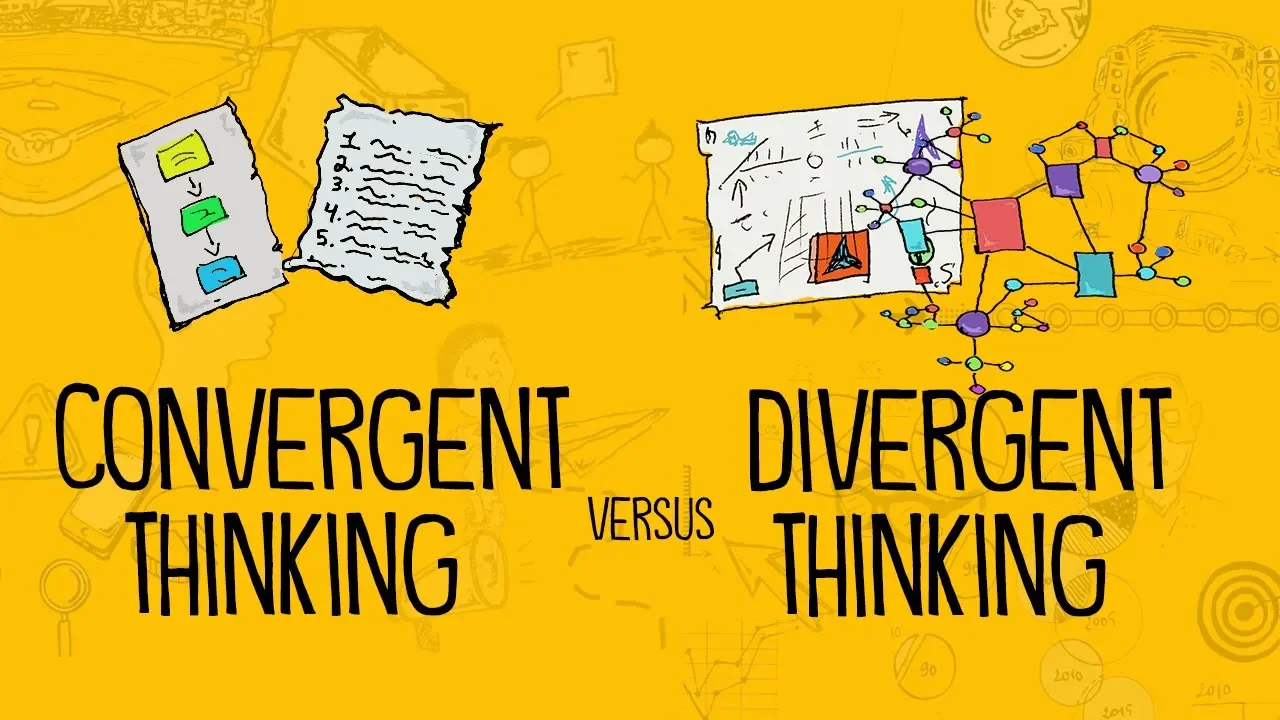
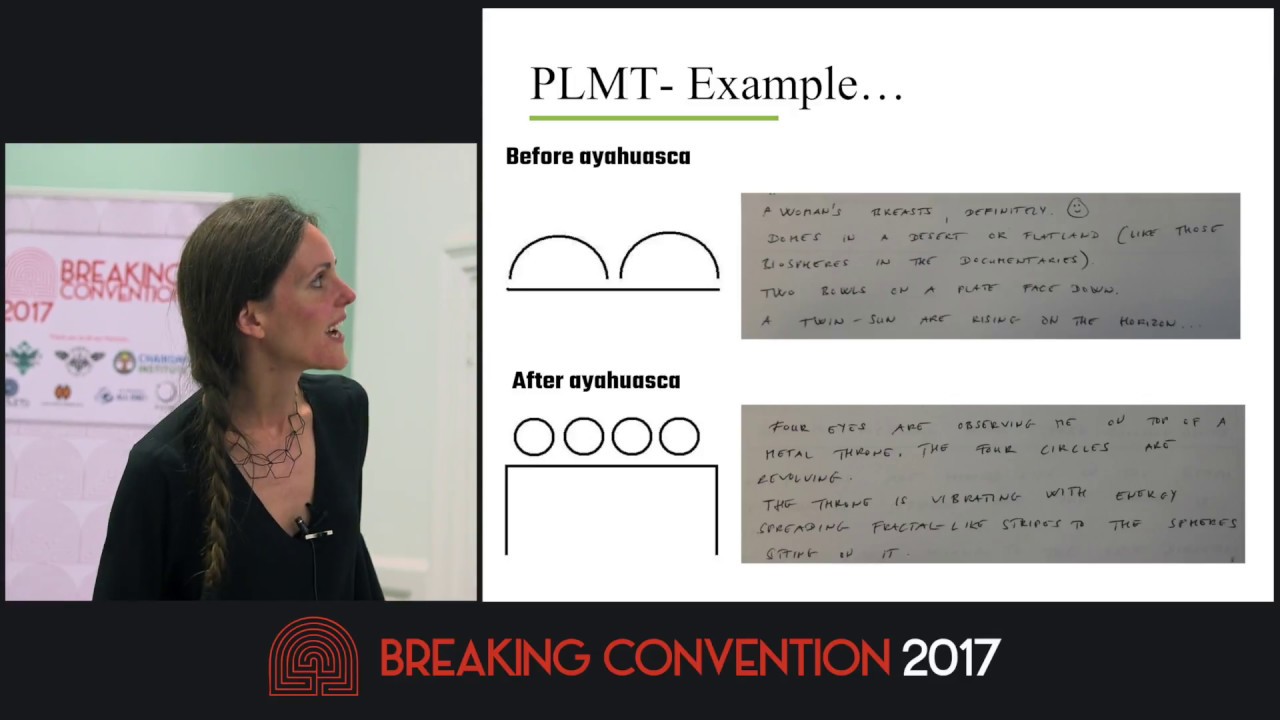
Divergent thinking is a thought process or method used to generate creative ideas by exploring many possible solutions. It is often used in conjunction with its cognitive opposite, convergent thinking, which follows a particular set of logical steps to arrive at one solution, which in some cases is a ‘correct’ solution. By contrast, divergent thinking typically occurs in a spontaneous, free-flowing, 'non-linear' manner, such that many ideas are generated in an emergent cognitive fashion. Many possible solutions are explored in a short amount of time, and unexpected connections are drawn. After the process of divergent thinking has been completed, ideas and information are organized and structured using convergent thinking.
The psychologist J.P. Guilford first coined the terms convergent thinking and divergent thinking in 1956. Free association theory of creativity Developing one's divergent thinking skills is thought to enhance creativity.
Creativity can be seen as an ability to retrieve and connect disparate concepts stored in long-term memory systems. Concepts are connected in our brains in 'semantic networks'. Psychologist have proposed that individual differences in creativity are due to differences in whether associative networks were 'steep' or 'flat'- those with 'flat' networks have numerous and loose conceptual connections, enabling them to be more creative. Those with 'steep' networks tend to have more logical, linear associations between nodes.
Someone with a flat network quickly and creatively hops – node to node – something someone ‘linear’ in their thinking would struggle with.
Traits associated with divergent thinking Psychologists have found that a high IQ alone does not guarantee creativity.
Instead, personality traits that promote divergent thinking are more important.
Divergent thinking is found among people with personality traits such as nonconformity, curiosity, willingness to take risks, and persistence.
Promoting divergent thinking Activities which promote divergent thinking include creating lists of questions, setting aside time for thinking and meditation, brainstorming, subject mapping, bubble mapping, keeping a journal, creating artwork, and free writing. In free writing, a person will focus on one particular topic and write non-stop about it for a short period of time, in a stream of consciousness fashion.
Playfulness and divergent thinking Parallels have been drawn between playfulness in kindergarten-aged children and divergent thinking. In a study documented by Lieberman, the relationship between these two traits was examined, with playfulness being “conceptualized and operationally defined in terms of five traits: physical, social and cognitive spontaneity; manifest joy; and sense of humour". The author noted that during the study, while observing the children’s behaviour at play, they "noted individual differences in spontaneity, overtones of joy, and sense of humour that imply a relationship between the foregoing qualities and some of the factors found in the intellectual structure of creative adults and adolescents”. This study highlighted the link between behaviours of divergent thinking, or creativity, in playfulness during childhood and those displayed in later years, in creative adolescents and adults. Future research opportunities in this area could explore a longitudinal study of kindergarten-aged children and the development or evolution of divergent thinking abilities throughout adolescence, into adulthood, in order to substantiate the link drawn between playfulness and divergent thinking in later life. This would be an interesting long-term study as it would help parents and teachers identify this behaviour in children, specifically at an age when it can be reinforced if already displayed, or supported if not yet displayed. Effects of positive and negative mood on divergent thinking In a study at the University of Bergen, Norway, the effects of positive and negative mood on divergent-thinking were examined. In this study, nearly two hundred arts and psychology students participated, first by measuring their moods with an adjective checklist before performing the required tasks. The results showed a clear distinction in performance between those with a self-reported positive versus negative mood: Results showed natural positive mood to facilitate significantly task performance and negative mood to inhibit it… The results suggest that persons in elevated moods may prefer satisficing strategies, which would lead to a higher number of proposed solutions. Persons in a negative mood may choose optimizing strategies and be more concerned with the quality of their ideas, which is detrimental to performance on this kind of task. A series of related studies suggested a link between positive mood and the promotion of cognitive flexibility. In a 1990 study by Murray, Sujan, Hirt and Sujan, this hypothesis was examined more closely and “found positive mood participants were able to see relations between concepts”, as well as demonstrating advanced abilities “in distinguishing the differences between concepts”. This group of researchers drew a parallel between “their findings and creative problem solving by arguing that participants in a positive mood are better able both to differentiate between and to integrate unusual and diverse information”. This shows that their subjects are at a distinct cognitive advantage when performing divergent thinking-related tasks in an elevated mood. Further research could take this topic one step further to explore effective strategies to improve divergent thinking when in a negative mood, for example how to move beyond “optimizing strategies” into “satisficing strategies” rather than focus on “the quality of their ideas”, in order to generate more ideas and creative solutions.. Effects of sleep deprivation on divergent thinking While little research has been conducted on the impact of sleep deprivation on divergent thinking, one study by J.A.
Horne, illustrated that when even motivation to perform well is maintained, sleep can still impact divergent thinking performance. In this study, twelve subjects were deprived of sleep for thirty-two hours, while a control group of twelve others maintained normal sleep routine.
Subjects’ performance on both a word fluency task, and a challenging nonverbal planning test, was “significantly impaired by sleep loss”, even when the factor of personal motivation to perform well was controlled. This study showed that even “one night of sleep loss can affect divergent thinking”, which “contrasts with the outcome for convergent thinking tasks, which are more resilient to short-term sleep loss”. Research on sleep deprivation and divergent thinking could be further explored on a biological or chemical level, to identify the reason why cognitive functioning, as it relates to divergent thinking, is impacted by lack of sleep and if there is a difference in its impact if subjects are deprived of REM versus non-REM sleep. See also Lateral thinking Creativity Convergent and divergent production References 1. Author Unknown. Strategies of Divergent Thinking. University of Washington. Retrieved August 6, 2009. 2. Horne, J.A.. Sleep Loss and “Divergent Thinking” Ability. Raven Press, Ltd., New York, Association of Professional Sleep Societies, 1988. 3. Lieberman, J. Nina. Playfulness and Divergent Thinking: An Investigation of Their Relationship at the Kindergarten Level. The Journal of Genetic Psychology, 107, 219-224.
4. Vosburg, Susanne K.. The Effects of Positive and Negative Mood on Divergent-Thinking Performance. Creativity Research Journal, Vol. 11, No. 2, 165-172. 5. Wade, Carole; Tavris, Carol.
Invitation to Psychology. Upper Saddle River, NJ: Pearson - Prentice Hall, 2008. ISBN 9780321060464 External links "Changing Paradigms" by Sir Ken Robinson - video animation by the Royal Society of Arts Divergent Thinking in Psychology: Definition, Examples and Quiz Fuel Creativity in the Classroom with Divergent Thinking What Type of Thinker Are You? When you get stuck in convergent thinking, you miss possibilities open to you Divergent Thinking: How To
Up Next
2:49
Tina Seelig Explains Divergent Thinking & Oxford's One-Word Exam
@ecorner
25.7K views•2011-10-07

68:32
Cognitive Skills for Differentiated Instruction | Teacher PD
@BrainWareLearning
631 views•2017-12-17

23:41
Crowd Psychology: Theories and Dynamics in Social Psychology
@audiopedia5493
3.2K views•2015-11-26

6:40
The Nocebo Effect: How Beliefs Can Cause Real Harm
@CGPGrey
10.4M views•2013-12-23
Related Study Plans & Knowledge Roadmaps
Structured learning paths in Psychology
psychology
Neuroscience of Creativity: Networks & Training
01Foundations of Creative Cognition
02The Cognitive Neuroscience of Insight & Fixation
03The Triple Network Model of Creativity
+ 1 more learning modules
15h4 modules
Explore Roadmap
psychology
Imposter Syndrome: Etiology & CBT Framework
01Defining the Imposter Phenomenon
02Socio-Developmental Etiologies
03CBT Fundamentals & Thought Distortions
+ 2 more learning modules
15h5 modules
Explore Roadmap
psychology
Adult ADHD: Executive Dysfunction & Scaffolding
01Neurobiology of the ADHD Brain
02The Core Triad of Executive Deficits
03Executive Dysfunction and Emotional Regulation
+ 2 more learning modules
12h5 modules
Explore Roadmap
psychology
Loneliness: Evolution, Neurobiology & CBT
01Evolutionary Origins of Human Connection and Loneliness
02The Neurobiology and Physiology of Chronic Loneliness
03Maladaptive Social Cognition: The Psychological Loop
+ 2 more learning modules
12h5 modules
Explore Roadmap