














Churn is the silent killer of SaaS startups that can destroy a business if overlooked during rapid growth; the fundamental solution lies in achieving product-market fit by understanding which customer segments derive sufficient value from your product to justify the price, rather than relying on half-measures like pricing changes or dunning campaigns, which may reduce churn temporarily but fail to address underlying retention issues.
How Churn Can Kill Your Startup: A SaaS Guide to Retention Metrics
Added:Understanding of the SaaS (Software as a Service) business model and how recurring revenue differs from traditional one-time transaction models.
Basic familiarity with foundational unit economics, specifically Customer Acquisition Cost (CAC) and Customer Lifetime Value (LTV).
Conceptual knowledge of basic financial metrics such as Monthly Recurring Revenue (MRR) and Annual Recurring Revenue (ARR).
A general understanding of the customer lifecycle, focusing on the stages of onboarding, adoption, and renewal.
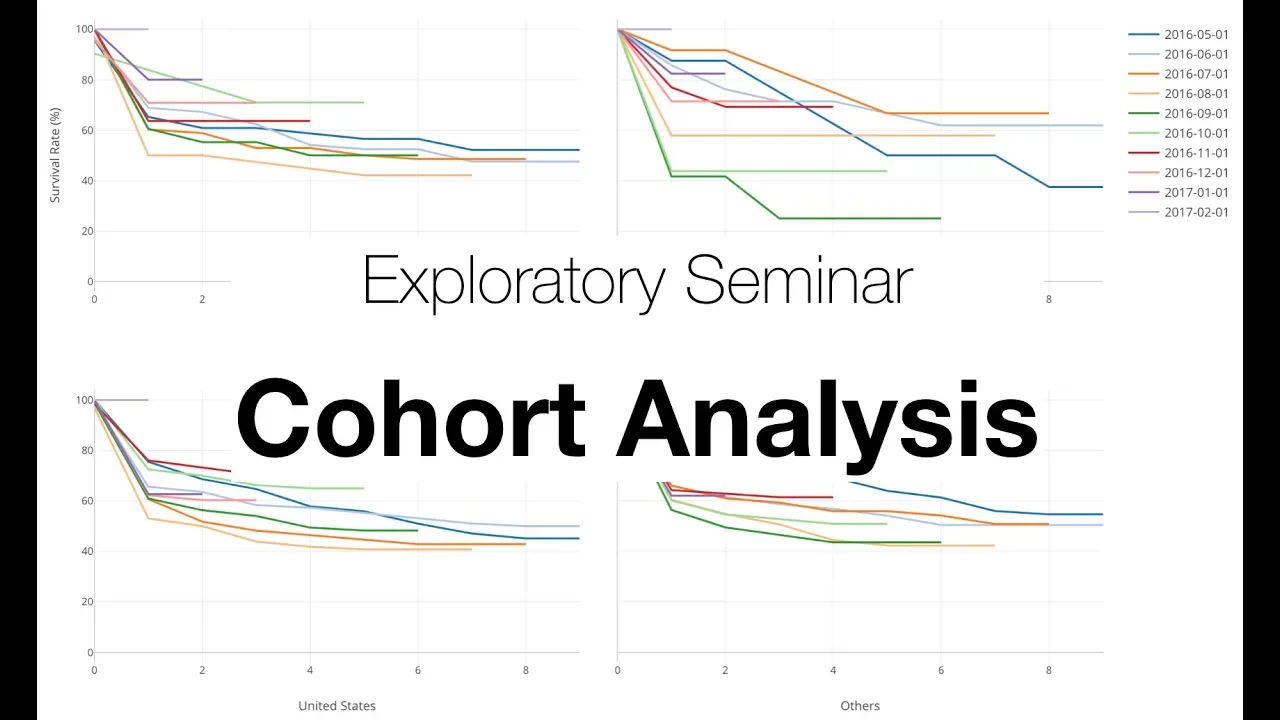
Advanced cohort analysis techniques to identify temporal and behavioral patterns in customer drop-off rates.
Designing and implementing proactive customer success frameworks and 'customer health' scoring systems.
Strategies to achieve 'negative churn' by optimizing expansion revenue through upselling, cross-selling, and value-based pricing tiers.
Utilizing product analytics tools to track feature adoption and identify early warning signs of user disengagement.
44.9K views1.8Klikes17:49Original Release: 2021-07-28
churn is cancer for a sas company overlooking it may have been the single biggest mistake our company made and the closest we've ever been from going out of business churn is a silent killer that slowly but surely will eat away your business you can cure it if you could catch it early on but if you let your churn problem go unchecked it will kill your starter and we learned this the hard way so let me give you some context into how we found ourselves here between 2015 and 2016 our company grew really fast we 5xed our subscriptions just in 12 months and everybody was really excited in 2016 we raised the second part of our seed round and it was the easiest money that i've ever raised it was obvious that we were on to something with slightly and the diligence process for what the investors had to do was actually pretty smooth there was inevitable fomo on sniper and i remember one investor coming and saying that they were going to pass because our churn was too high and at that point nobody was really paying much attention to churn let me show you why you'll see that we're adding six to seven thousand dollars in new subscriptions every month in the second half of 2016 that grew to 10 to 12 000 subscriptions new mrr every month which again got everyone really excited at the time we were consistently adding 45 000 in net mrr and moving fast towards the 1 million dollar annual run rate by the way i'm fast tracking through some terms like month return revenue ar assuming that you've already seen some of our videos if you haven't you want to hit pause and go watch this specific one sas metrics i promise you it'll help you make a whole lot more sense of everything that's coming in this video so the big number of new customers made us ignore the number of lost customers and we only focus on that pretty growing mrr chart and it's easy to miss what's happening under the hood so let me show you what we did to fix it the first part was understanding the why why do people turn in general people cancel because they're not getting enough value out of a subscription not enough to justify the price period that's really the only reason you can talk all you want about onboarding aha moments and cancellation flows it all comes down to the value obtained versus the price the more value you bring to your customers the more money you can get away with charging and i get this question a lot what should be the pricing of a sas product from the retail world we are maybe accustomed to thinking about margins we mark up the manufacturing price to generate profits from that in software it's it's really different because software is really cheap to operate so we could very much leave money on the table if we aren't aggressive enough about pricing my take on this here is that the pricing should be as much as we can get away with charging that's simple enough you can find that number by testing there's no way to guess it and user interviews and surveys are not going to give you the final answer on this they might guide you but you need to test and balancing these two variables the value obtained and the price is really some of the most complex challenges for sas product manager so let's talk about value first the value that a customer gets from a product can be affected by number one the onboarding so if you are not onboarding your customers correctly if you're not explaining what the tool does then the customers won't extract enough value out of it because maybe they just don't know how then you have the ux the user experience if customers can find what they're looking for or if they find the experience frustrating we are willing to forgive ux hiccups up to a certain point but after that we'll just cancel number three simply how the tool is used in their day-to-day are they using it daily weekly what's the alternative how much of a better experience are you giving them versus the alternative some examples from our own book we use intercom for our messaging for our onboarding for our emails for our support and for our newsletters it's over five thousand dollars a month for us it's one of our most expensive sas platforms but we couldn't really live without it the alternative doesn't have all the features so we just have to mix a bunch of different tools and it would still cost us somewhere in that range another service that hasn't logged for life is turn module it's the platform that you've been seeing in some of our youtube videos when we refer to sas metrics and the one we saw in this video we've been tracking our sask apis there for years and that set of features gives us what we need and we don't want to go through the process of migrating all of this data elsewhere it's just a lot of data another variable you might have noticed here is how hard it is to leave so for b2b software you want to find something that embeds deeply in the work pipeline of your customers so that they depend on your tool those are the companies that thrive look at slack or heck look even at microsoft office so your focus as a founder or as a product manager and you're probably going to be both for a little bit when you're starting a company is creating a product that adds a clear value to your customers lives it can't be just a nice to have ideally it should be and i can't live without it type of relationship and there are a lot of ways that you can measure this first you want to ask them you want to get into conversations with your customers i do probably 20 or 30 user calls a month and that gives me this qualitative view as much as those calls are focused on helping them in whatever they can and whatever i can i'm taking notes i'm asking which features they found or haven't found useful and the ones that they've been using more frequently for more quantitative approach we have a little survey that you can use you've probably seen it before how disappointed would you be if you could no longer use slide p another standardized measure for this is the nps service the mps score net promoter score the question is how likely are you to recommend sniping or any product to a friend there's a 0 to 10 meter so any answer below 6 is considered bad so that's minus 1 point answers between 7 and 8 are considered average so that's neutral or zero and then the answers that really speak passion about the product are nines and tenths so the sum of your nps score answers should be somewhere between 20 and 40.
40 plus is considered great 70 plus is considered world class now all of these indicators can be considered predictions for churn what we do is we pull this data into chart modules so we can look at the aggregated data based on the nps score and understand the likelihood of one of these customers churning or even our effectiveness in getting people from nine to ten to seven and eight month per month and how much revenue we get from each one of those groups last but not least you can also ask them why they're leaving you're i mean you've seen this quite a lot in cancellation flows and this is valuable information by any means but there's a big catch there which is that there's not a lot that you can do if a user has already cancelled your chances of re-engaging them at this point are pretty slim so what you can use is to plug those reasons into your data and then study why they're cancelled now in our case most of the cancellations we were seeing in 2016 could be summarized as this story i like your product i just don't need it anymore and that was very painful to hear the story was consistent i can still see it in my 2016 nightmares nine or 10 nps score great customer satisfaction i just don't need to make presentations anymore but that answer will be different of course from company to company you might be getting complaints i don't know on missing features or bugs and those i would say maybe they're easier or generally easier to tackle easier to address because the customers are pretty much telling you what you want what's driving them away and again as long as you're taking the time to track it and to make good decisions you're good but our cancellation reason reflected a deeper a more fundamental problem with our product this was combined with the fact that our second most common reason for canceling was pricing people were saying the product was too expensive so we figured well maybe we're going to play around with pricing as a solution and boy were we wrong i like to call this stage of our process half measures because i love breaking bad and this is a breaking bad reference so path measures and pricing now remember two variables affect churn the value and the pricing we have experimented with pricing a lot we started with 4.99 then went to 29 and then to 79 a month now our biggest lesson from all of this is then when converting people people are less sensitive to pricing that you might think one of our biggest breakthroughs as a company when we were starting up was that we discovered that the amount of people that we could convert on a 499 a month plan versus a hundred and sixty dollars a year annual only plan was pretty similar conversion rate was only slightly affected with the latter pricing and we of course made a lot of money a lot more money with the year subscription now our first thesis to solve our turn was allowing customers to pay to unlock a single presentation rather than a subscription so we ramp up the price of the subscription so that only customers that are power users and there are really gonna present choose the subscription ramp and the others can just unlock the presentation so we settled for a single presentation unlocked at 29 and then monthly plans starting at 49 and then 79.
and i think the thesis is not that bad i mean if we look back i think the thesis was kind of solid i think what would you say but boy did it fail at first we saw a nice spike of non-recurring revenue which chet mongol reported separately so we could keep track and then while the number of subscribers was reduced we still saw a decent amount of people that were picking the subscription option but the real problem churn would come by this a couple of months later the new higher pricing spiked churn to 25 people were kind of accepting this new pricing to convert but they were really really sensitive about it and they would cancel in a month or two and of course the value that this product was bringing was not 79 worth again we thought only power presenters would pick the plan but that really wasn't the case even worse our nps score dropped a lot people were suddenly much more sensitive to bugs and stuff that they couldn't solve in the platform as expected and they expected it more hands-on support than a 79 plan now one detail we did not foresee here was how much revenue shifted from recurring to non-recurring we had to change those sales every month and a bad month would seriously endanger our runway so after a failure in that approach we considered going with a lower pricing we came up with a plan called starter which was priced at 12 a month and that kind of worked also kind of worked the churning in the 12 hour month plan was better under 10 for the first time in a while but the next problem was lifetime value and cash flow look at this math on a 79 a month plan with 20 churn your average lifetime value per customer is 395 dollars that means the average customer stays on the platform for about five months not a long time but for cash flow you're collecting 395 dollars in five months now don't get me wrong that level of churn will kill any business but at the time we were acquiring customers for about fifty dollars so we spent fifty dollars and we recovered them the first month and then we make 345 dollars worth of profit within the next five months on a 12 a month plan with a five percent turn rate your lifetime value is 240 it's less and worse than that it takes 20 months to collect that money it takes you four months to recover the fifty dollars you spent bringing the customer so we had sort of solved the churn problem but the pricing created other serious cash flow problems for us so the lesson with these pricing changes you yeah you want to experiment yes but you want to always keep in mind how these experiments are going to affect your cash flow and your other metrics your job as a ceo is not running out of money in this case these metrics broke our profitability but in a company looking to raise funding they could affect the story that you're telling investors if suddenly your revenue drops the good thing is we learned a lot from the behavior of our customers and it allowed us eventually to solve the problem with full measures but before some other half-measure ideas pricing experiments weren't the only effort that we were making to improve retention we set up an aggressive dunning campaign stunning emails are used to recover customers who are who just canceled maybe voluntarily or involuntarily voluntary churn comes from people that took the time to go and cancel the product involuntary churn comes from people whose credit cards expired or failed to update them it's churn either way but you tackle it very differently now we also iterated a lot on our onboarding process both visually and with emails we became really really good at getting great open rates with which we achieved by sending really personalized but still automated emails that included details from the customer's activity on the platform if you include that information in the email people are bound to read them because they feel that it's very much directed to them and those were good efforts that we still do and we could accurately measure how much churn was stopped thanks to those but it wasn't enough we needed full measures because what we had failed to see through all of these years through all of these experiments was that our problem was a product market fit problem product market fit is this elusive achievement for startups it happens when you find the ideal combination of product and target audience when you find this sweet spot suddenly your marketing starts working better your nps gets higher and your retention goes up it's a very cinderella kind of moment and once again the answer oftentimes you can find it in the data so when we set out to build slightly we created this alternative to powerpoint right this alternative to designing presentations content first automated design we thought of it as a platform for a lot of different types of customers now a lot of customers could use this it worked for teachers and for professors it worked for sales teams for consultants for marketers and for account executives essentially anybody who needed to present often and who cared about those presentations who cared that they looked good while we didn't know what the customers were doing in the platform because we really don't have access to the slides we could still see what templates they were picking so we could classify these customers as startups or marketers or sales people or academic use and lo and behold our true numbers were drastically different for the startup group they were staying longer they were using the platform more they were rating us better on the nps scores and this was the beginning of a company-wide pivot over the course of the next in the next couple of years actually we embraced how the ideal use for sliding seems to be pitch text that required us to refocus our marketing into something like this videos and even to refocus our product we want to we wanted to redo and rename some features these customers were already clearly better customers for us than the rest so now it's just a matter of improving the experience doubling down so aside from features and marketing we made a key change in our business model after we understood who this audience was because if you're using sliding for bitsticks why would you pay for the product monthly pitching investors is not a monthly thing you don't make a pitch and are done and finished raising money in 30 days or in 90 days raising money takes easily six months so what if instead of thinking of months our pricing reflected the length of the fundraising process that would have made up for a six month or a nine month plan but in the end that was a little bit confusing so we ended up with a 12-month plan an annual plan that would make sure founders were covered for the whole extent of this fundraising process so when we switch to annual only plans and you might think that we're just cheating on churn right we're forcing people into a 12 month commitment with no ability to cancel monthly but if that were the case then the retention at the 13th month would be similar to the monthly plans right well no we improved that by about four x the number of customers that were still with us after their first chance to leave was four times higher than with the monthly plans and the reasons behind that are a complex combination of variables that we probably haven't fully understood yet it definitely has to do with us having more time to make sure that we get value that we show customers how to get value out of the product and it definitely has to do with customers having more time to use the product and more time to get more and more presentations into the platform thus making cancelling the products a more difficult choice and the change is not without its set of problems we know the conversion barrier is higher when when the pricing is very steep for customers especially customers outside the u.s and trust me we're trying to figure that out as well so the lesson for all of this is don't be afraid to experiment but use your data to make better decisions which brings me to our sponsor for today's video we have been using chart module for years and we're excited to announce that we've signed a partnership with them to sponsor some videos on our channel this in-depth look at slide beans churn and metrics and several of our upcoming videos would not be possible without the incredible data that turned mogul provides truly all of our data lives with chart module but what's cool for you is that your module is offering access to its tools for free if your business has less than ten thousand dollars in mrr so if your business has more than ten thousand dollars in mrr you can still go to chartmodule.com and you'll get a 50 a month discount for 12 months either way you want to check out turmoil.com type in promise you won't regret it make sure you hit that subscribe button and we'll see you next week you
Up Next
31:33
Essential SaaS KPIs for Sustainable Growth: A Founder's Guide
@RobWalling
9K views•2021-11-24
46:36
Retention Habits of Top DTC Ecommerce Brands Revealed
@SendItPodcast
44K views•2026-03-03

13:37
Crafting a Compelling Startup Pitch Deck: A Step-by-Step Guide
@slidebean
250.9K views•2019-10-31

17:30
The Planned Obsolescence of Light Bulbs and Tech
@veritasium
25.3M views•2021-03-26
Related Study Plans & Knowledge Roadmaps
Structured learning paths in Business
business
Pop-Up Retail: Strategy, Design & Execution
01Introduction to Pop-Up Retail & Strategic Goal Setting
02Budgeting, Site Selection, and Legal Essentials
03Experiential Retail Design & Visual Merchandising
+ 2 more learning modules
15h5 modules
Explore Roadmap
business
Reg CF: Startup Funding, Marketing & Launch
01Introduction to Equity Crowdfunding & Reg CF
02Platform Selection & Legal Preparation
03Crafting High-Converting Campaign Assets
+ 2 more learning modules
14h5 modules
Explore Roadmap
business
Productized Services: Scaling Solo Freelance
01Foundations of Productized Services
02Packaging and Scope Definition
03Pricing and Subscription Models
+ 2 more learning modules
15h5 modules
Explore Roadmap
business
Gov Procurement: Find, Bid & Win Contracts
01Introduction to Government Procurement & Business Setup
02Small Business Certifications & Set-Asides
03Finding and Analyzing Contract Opportunities
+ 2 more learning modules
14h5 modules
Explore Roadmap