


![임시정부 150개? 9개월 마다 쿠테타가? 세계 최다 정변 발생국 '볼리비아' 3부 [지구본연구소 시즌2 - EP.35]](https://i.ytimg.com/vi/EkVEUeMNiQo/maxresdefault.jpg)
















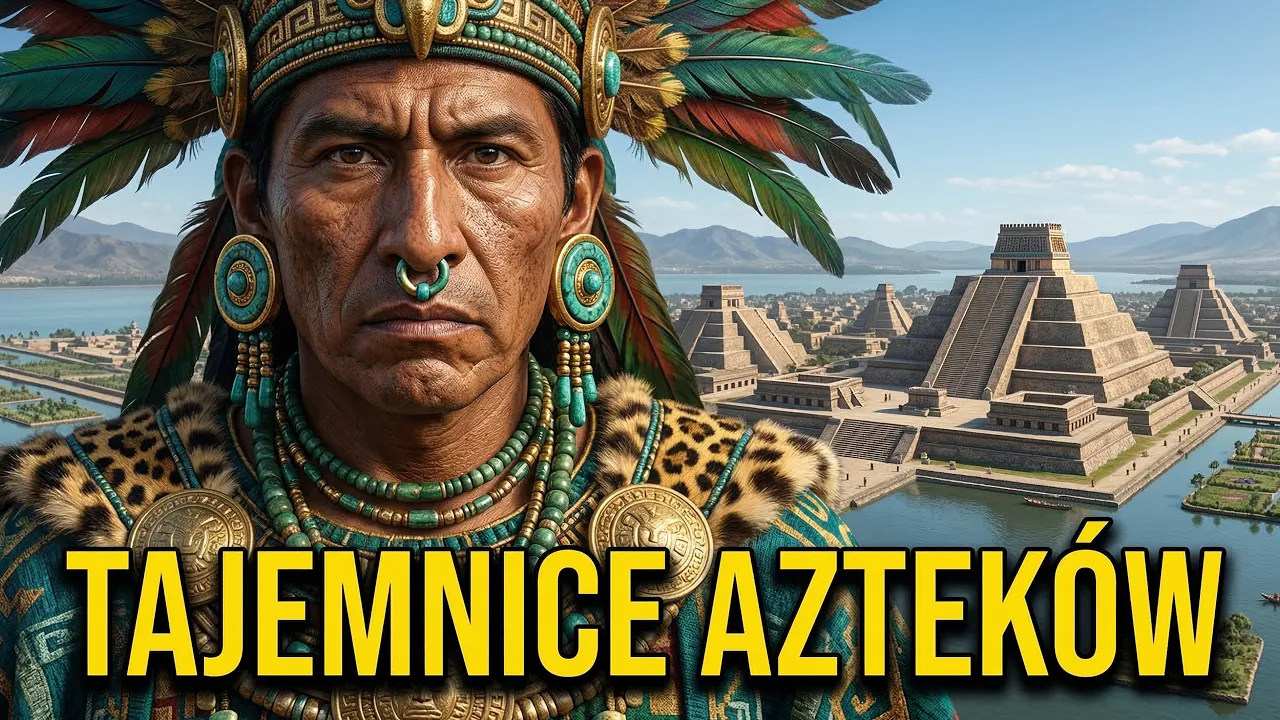


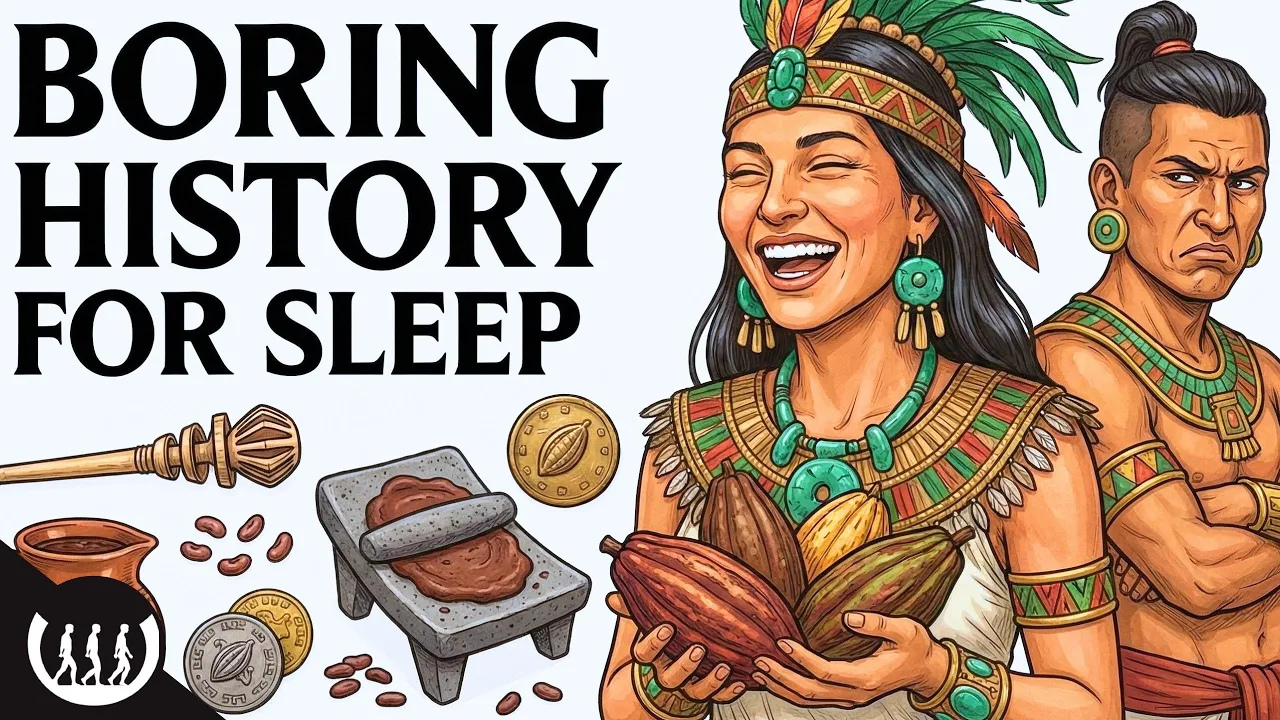
The Aztecs transformed from wandering nomads to the greatest civilization in the Americas within 200 years through remarkable engineering innovations including wooden piling foundations for floating cities, twin-tube aqueducts spanning 3 miles, chinampa agricultural systems producing seven crops annually, and sophisticated urban planning with causeways and canals. Their capital Tenochtitlan, called the 'Venice of the New World,' featured advanced infrastructure rivaling Rome, including the Templo Mayor pyramid and Nezahualcoyotl's hillside palace with elaborate water features. Despite their sophisticated achievements, the empire fell to Spanish conquistadors in 1521, with an estimated 20 million deaths from disease afterward.
Engineering an Empire: The Aztecs | Ancient Aztec Engineering & Technology
Added:The geographical layout of Mesoamerica, specifically the Valley of Mexico and the swampy environment of Lake Texcoco.
The basic timeline and social structure of the Aztec (Mexica) civilization prior to their imperial expansion.
Fundamental concepts of hydraulic engineering, such as water flow, aqueduct design, and basic irrigation principles.
The religious and ceremonial importance of monumental architecture in Mesoamerican cultures, particularly the role of sacred spaces.
The Spanish Conquest of Tenochtitlan and how Spanish colonial urban planning dismantled and replaced Aztec infrastructure.
The long-term ecological consequences of draining Lake Texcoco, including modern Mexico City's issues with subsidence (sinking) and water scarcity.
A comparative study of Aztec agricultural technology (chinampas) with other ancient sustainable farming methods, such as Incan terracing.
The socio-economic impact of the Aztec tribute system and how infrastructure supported the trade and rapid population growth of the empire.
3.6M views25.4Klikes44:52Original Release: 2020-07-26
NARRATOR: It is a story wrapped in myth and legend.
How did a tribe of wandering nomads engineer the Americas greatest empire in just 200 years?
They had to devise engineering systems which were extraordinary for their age.
NARRATOR: Their civilization rivaled Rome in its sophistication.
The Aztecs had the best technology that could be produced in the conditions of which they lived.
NARRATOR: Aqueducts, palaces, pyramids, and temples stood as a tribute to their gods and a testament to the power of humankind.
The Aztecs' crowning achievement was a gleaming capital city that astonished European explorers called the Venice of the New World.
The city spread out, glittering against its canals and its lake, bedecked with fine trees and beautiful mansions.
NARRATOR: Their thirst for power and blood set them on a course for destruction.
[shouting] When it finally came, their annihilation would be swifter and more complete than the world had ever known.
[tribal music] 1325 AD, central Mexico, near modern-day Mexico City, a young girl, just a teenager, is celebrating her impending wedding.
She is the daughter of a tribal king, and she is about to join a new tribe that has been a guest of her kingdom.
That tribe is now known as the Aztecs.
As part of the ritual, five Aztec noblemen lead her to an ancient temple for the ceremony.
But as she reaches the top, the nobleman suddenly veer her away from the altar and onto a slab of stone in front of the temple, one used for sacrifice.
Each man holds a limb while a fifth lifts an obsidian knife high in the air.
With one searing move, he smashes it through her chest and extracts her still beating heart.
[heartbeat] That evening, the king is invited to a ceremony to celebrate the marriage.
Instead, he finds a priest performing a dance wearing this still glistening skin of his daughter.
As part of the ritual, the Aztecs had flayed her to honor the god of fertility.
He saw this, and he was absolutely horrified at what he saw, his dear daughter.
And so he and his forces immediately chased the Aztecs into the lake and onto this island, where they sought refuge.
NARRATOR: The marshy island was an unwelcoming place.
Yet, it was from here that the Aztecs would beat the odds against them and forge the most powerful empire of the Americas.
[tribal music] Hi, I'm Peter Weller.
When I think of the Aztecs, I think of an elegant people with beautiful skin and flamboyant head dresses of many colors.
And I think of floating cities and a terrific song by Neil Young about Moctezuma and Cort s.
But I also think of knives, of obsidian glass ripping into chest cavities, and hands pulling out bleeding hearts and holding them high.
Most of the Aztec sacrifices were performed in a temple atop a stone pyramid like this one.
The Aztecs felt that without these offerings, the Sun would literally cease to rise, and the universe would die.
Now, Aztec history is a fusion of fact and myth.
But what we do know is that this murder, as horrific as it was, not only marked the beginning of the Aztec empire.
It also marked the location from where it would rise.
NARRATOR: The island the Aztecs were banished to after their disastrous sacrifice of the princess was in Lake Texcoco, the largest of five interconnected lakes covering a valley about 40 by 70 miles.
Today, this once vast and open valley is teeming with what is modern-day Mexico City, one of the largest cities in the world.
But 700 years ago, the island was so swampy, no one had laid claim to it.
Now, as they gazed on the lake, the Aztec leader Tenoch announced to his followers that he had seen an eagle perched on a cactus in the middle of the lake, a sign from the gods that they had found their new home.
They would name their city Tenochtitlan.
Life is tough for the Aztecs in the early days of Tenochtitlan.
But they have a vision, a vision of a powerful city modeled on an ancient and legendary city just 25 miles away.
They called this city Teotihuacan or City of the Gods.
We know very little about Teotihuacan because all we have is the archaeological remains.
We don't have any writing.
We don't have any documentation that really fleshes out what went on at this big city.
NARRATOR: It was in ruins, even in Aztec times.
But they believed it to be the stomping grounds of the gods and the literal birthplace of the Sun itself.
The place the Aztecs most revered in Teotihuacan was a pyramid that rose above the tree line.
It was called the Pyramid of the Sun.
The massive Sun Pyramid contains a million cubic yards of earth and stone with a base roughly the same as the Great Pyramid of Giza in Egypt.
The Aztecs believed Teotihuacan was laid out in the image of the cosmos created by their gods.
Now, it was this image they would attempt to replicate in the construction of their new city, Tenochtitlan.
Taking on the challenge would be an Aztec leader named Acamapichtli.
In 1376, he embarked on an ambitious plan to engineer an advanced city at Tenochtitlan, but there was a problem.
The swampy islands that they took over needed a lot of work.
When they started to build anything, it would begin to subside.
NARRATOR: There was simply no foundation on which to build.
The Aztec's solution would revolutionize the architecture of the Americas.
They began by anchoring their buildings deep in the ground using a system of pilings made from wood.
Workers cut steaks into 30-foot lengths, 3 to 4 inches wide.
These were driven into the soft ground to make a foundation.
The pilings were often surrounded with volcanic stone to add strength.
Masons and bricklayers could then build walls on top of this base with confidence.
MARIO SCHJETNAN: They have found wooden pylons to hold the foundations of the pyramids.
The fact that it didn't sink, or the fact that it didn't just topple-- I think that's a major feat of engineering.
Tenochtitlan was an island city, but the lakes surrounding it were very shallow, sometimes only 7 feet deep.
The whole thing looked like a giant metroplex floating on a pond.
Originally, the only way to get from this floating city to the mainland was by boat.
But the Aztecs eventually devised a series of causeways, sometimes 45 feet wide, that would connect their floating city to the mainland provinces.
The causeway was supported by strong wooden pilings, the same pilings that supported their temples and other buildings.
Thousands of these pilings had to be driven deep into the lake bed, and this presented a logistical challenge that could only be met by a strong, skilled labor force and the best of Mesoamerica's engineers.
NARRATOR: To build a causeway, two lines of stakes were laid out.
Then the space between them was filled with stones and earth until it reached several feet above the water level.
This allowed the road to support enormous weight.
And these causeways were built very straight.
They were very wide, with bridges that would open up that connected the city to the North, to the West, and to the South.
NARRATOR: The roads enabled the Aztecs to transport larger, heavier materials for building.
But this presented a new challenge.
There were no beasts of burden in Mesoamerica, so everything had to be done with humans, no carts, no wheel.
NARRATOR: Small loads would be carried on the back with a rope hung from the forehead.
Large items like stone blocks or sculptures for a temple would be dragged by huge numbers of men pulling ropes, possibly using logs as rollers.
Legend has it, one stone bound for a temple required a force of 50,000 men to drag it from the mountains on the mainland across the causeway and into the city.
The causeways would also present the Aztecs with a new way to get fresh water to Tenochtitlan.
In the past, the Aztecs had transported water in canoes from the shore.
But a huge boom in the city's population meant they needed a higher-tech solution to keep up with demand.
They wanted to use water from the springs on the mainland, and so they wanted to build an aqueduct.
NARRATOR: But the springs were under control of the dominant tribe in the region, the ruthless Tepanecs.
The Tepanecs Were the controllers, or the dominators, of all the valley.
They had a very strong empire.
So they were the lords of the valley, so the Aztecs where tributary subjects to them.
NARRATOR: As the Aztec population grew, tensions with the Tepanecs began to simmer.
Now the Aztecs decided to issue an ultimatum that could change the balance of power in the region.
The people of Tenochtitlan not only demanded that the Tepanecs give them the water, but also demanded that they help construct the aqueduct.
NARRATOR: The Tepanecs' answer was swift and brutal.
The Tepanec king, Maxtla, sent assassins who murdered the reigning Aztec leader in cold blood.
This was the final straw.
After decades of domination, the Aztecs would finally make their move and wage war against their ruthless overlords.
And they would launch a series of wildly ambitious building projects around their growing island city that would earn them a reputation as the greatest engineers of the Americas.
The founding tribe of the Aztecs called themselves the Mexica.
The country of Mexico gets its name from this tribe.
It is 1428, and the Aztecs have declared war on their overlords, a tribe called the Tepanecs.
But to defeat the Tepanecs, they would need a little help from their neighbors.
The Aztecs approached the nearby city-state of Texcoco.
There, a decisive leader was on the rise.
His name was Nezahualcoyotl, and his domineering leadership would be instrumental in forging the Aztec empire.
With Nezahualcoyotl at their side, the Aztec underdogs would go for the jugular.
They launched an all-out attack on the Tepanec capital.
After a siege of more than 100 days, they broke through Tepanec defenses and slaughtered their oppressors.
After capturing the Tepanec King, Maxtla, King Nezahualcoyotl personally cut out his heart and sprinkled his blood into the waters of lake Texcoco.
Suddenly, the tables had turned.
MANUEL AGUILAR-MORENO: That is the exact moment of the beginning of the empire, and the Aztecs became the leaders of the Valley of Mexico.
[tribal music] NARRATOR: After conquering the Valley of Mexico-- [lightning crackling] --the Aztecs could now turn their attention to bringing clean water to their growing city.
Remarkably, the Aztecs would independently design and build something that only a few world empires would master, the aqueduct.
The aqueduct actually had two channels, each about 5 feet high and 3 feet wide.
One would be cleaned and maintained, while the other was being used so the water flow was never interrupted.
The twin tube aqueduct ran for 3 miles from the mainland to the center of the island city.
In town, water streamed into public fountains and reservoirs and was distributed to the public in large clay jars or by canoe.
In comparison to the Europeans, the Aztec were very clean people.
We know that the Aztec emperor bathed twice a day.
So in terms of hygiene, the Aztec people was much more advanced than the Europeans.
NARRATOR: While the Aztec nobles were bathing in luxury, at this time in Europe, plague caused by unsanitary conditions was killing millions.
King Nezahualcoyotl's own bath was one of the most unique in the Americas.
It was fed by a sophisticated aqueduct system that also brought running water to his palace grounds.
Behind me is the hill of Tetzcotzingo.
On this hill, Nezahualcoyotl built a fantastic pleasure palace, and around this palace, a virtual botanical garden filled with all of the exotic flowers in Mesoamerica.
Nezahualcoyotl brought water from the Sierra Nevada mountains all the way down to here into this hill, into his palace, just to water his plants.
NARRATOR: To install an aqueduct there, Nezahualcoyotl had to fill a huge gorge between Tetzcotzingo and the next hill.
As the water arrived at the first hill, it gathered in small pools built to control the speed of the flow before it reached the aqueduct.
After crossing the aqueduct, the water ran in a circuit around Tetzcotzingo hill, spilling off over the sides in rock-cut waterfalls to water the gardens.
It ended up in a nearly-perfectly round rock-cut pool called the King's Bath.
PETER WELLER: And from here, he could look upon his domain of Texcoco.
And he could look down at the botanical gardens that he was watering with his fantastic aqueducts.
It is indeed a bath fit for a king.
NARRATOR: By the mid-15th century, with their empire on the rise, it was time for the Aztecs to choose a sovereign leader.
He was called Moctezuma, and he would be the first of two emperors with this now-famous name.
Moctezuma's first order of business was to extend the empire's borders.
The Aztecs captured city-states southward to the valley of Oaxaca, westward to the Pacific, and east toward the Gulf of Mexico.
By 1449, the empire contained as many as 15 million people.
In the short span of 100 years, the Aztecs accomplished the impossible.
They had toppled the Mesoamerican world order.
But while the Aztecs dominated militarily, their island city was vulnerable to a different kind of enemy.
Like New Orleans, Tenochtitlan was constantly doing battle with water.
And one of Moctezuma's first projects was to protect his city from the deluge of water surrounding it.
This is what is left of Lake Xochimilco in the Southern part of Mexico City, in Aztec times, the city of Tenochtitlan.
This lake, like the other four lakes that surrounded the city, were spring fed.
Thus, there were no rivers or streams into which it could drain.
[lightning crackling] And if it rained hard enough, the water would rise up and sweep over the land and into the city itself.
And this is exactly what happened in the mid-1400s when a flood of catastrophic proportions swept into Tenochtitlan.
The city and the empire it commanded were almost completely destroyed, and the Aztec civilization had to, once again, rely upon the genius of its engineers and one engineer in particular.
NARRATOR: Moctezuma enlisted the help of his old ally, Nezahualcoyotl, to protect the city he was rebuilding from the lake.
Nezahualcoyotl would design a solution that would make him the greatest engineer on the continent.
His plan was to create a safe zone around the city with a huge dike that would protect Tenochtitlan and its inhabitants.
It was designed to be larger than any earthwork anywhere in the Americas at the time, running for 10 miles just east of the city from the southern edge of the lake across to the north.
The walls were a wickerwork construction made of sticks, reed, stone, and earth.
Since the lake was shallow, the dike was only about 12 feet in height, but some 27 feet wide.
Nezahualcoyotl fitted the dike with sluice gates, most likely wooden doors, that would be raised or lowered to control the water level behind it.
The dike also served another purpose.
It protected their water supply.
It was important to build some sort of protective mechanism to keep salt water out of the freshwater western part of the lake.
"An army marches on its stomach," so said Napoleon.
Now, an ample food supply for civilians is a no-brainer and a critical development of any civilization.
But the Aztecs perfected a unique method, not only to provide a substantial food supply for its civilian populace, but to fuel the military expansion of its empire.
NARRATOR: This revolutionary engineering was called chinampas, a system that allowed them to literally create new land to farm and to live on.
If you're going to have a city of any size, you have to provide room for them.
And so what they did was build up these chinampas in the lake bed.
Basically, a chinampa is an artificial island built in the lake.
NARRATOR: They looked like narrow football fields about 300 feet long by about 30 feet wide.
A chinampa was built by weaving a web of sticks floating in the water and piling reeds on top of them.
Mud was then scraped from the lake bottom and piled atop the reeds to form the chinampa.
It took four to six men eight days to build an average chinampa.
They were connected to the city by massive navigational canals that would take thousands of men months to build.
PETER WELLER: A chinampa like this one could produce up to seven crops a year, whereas a farm on the mainland could yield one, maybe two, maybe three at the most.
As a crop was ready to harvest on a chinampa, seedlings from another would be sprouting out of mud that would be spread on a boat adjacent to the chinampa.
Then, when the seedlings were ready, they'd be transported to the chinampa.
And this cycle would be repeated over, and over, and over again on hundreds and in thousands of chinampas.
Now, it was this technology that transformed Tenochtitlan from just another tribal town in the 14th century to a dominant and thriving city-state.
[music playing] NARRATOR: With their city's infrastructure in place and vast lands under their control, the Aztecs would push the boundaries of their empire further than ever before.
They'd create a far-flung network of roads, Aztec super highways.
But as the empire grew, so too did their practice of human sacrifice.
Soon, rivers of blood would be flowing through the streets of Tenochtitlan.
[suspenseful music] The average life expectancy of an Aztec citizen was 37 years.
Today, Tenochtitlan, the capital of the Aztec empire, is gone, buried under modern-day Mexico City.
But 700 years ago, it was a shining capital on the rise, built by advanced engineers and led by larger-than-life emperors.
By the late 15th century, the Aztec population had exploded.
Their next great emperor would launch a series of conquests that would rival anything in world history.
His name was Ahuitzotl, and he would prove to be an even greater warrior than his grandfather, Moctezuma.
By 1502, Ahuitzotl had conquered territory from Mexico's Pacific coast and pushed the empire as far south as Guatemala.
FRANCES BERDAN: His reign was kind of like a golden age.
He was a king that opened up transport routes to the coastal areas and to lowland areas where the Aztecs got their greatest luxuries, these shimmering tropical feathers, the gold, the precious stones, that the nobles and rulers wore as symbols of their station in life.
NARRATOR: To transport riches to the heart of the empire, the Aztecs constructed a network of super highways throughout central Mexico.
Relay runners were stationed every few miles to create a sort of ancient federal express.
Messages or goods could be sent 200 miles from the Gulf Coast to Tenochtitlan in just 24 hours, faster than the postal service today.
With the empire at its height, the Aztecs under Ahuitzotl embarked on their greatest construction project, a massive pyramid at the very center of Tenochtitlan, the symbol of their absolute power.
It was called the Templo Mayor, or Great Temple.
The base of the pyramid was 240 feet deep by 300 feet wide and rose to a height of 15 storeys.
There were at least 117 steps in two staircases climbing 200 feet leading to twin temples to honor the gods of rain-- [lightning crackling] --and war.
The temple was rebuilt on the same location seven times beginning in 1325 with the city's founding.
As the empire grew, so did the pyramid.
Each stage was simply built right on top of the stage before.
The Templo Mayor was built mainly with a stone called tezontle.
That is a volcanic stone.
It's a very light-weight stone that would prevent the sinking of the temple.
NARRATOR: For floors and walls, the Aztecs applied a lime plaster, which was a form of concrete.
Some examples found today remain as hard as modern concrete, even after 500 years.
Aztec workers labored for decades to complete their monument to the gods.
The temple remained buried until 1978, when power company workers digging a trench accidentally uncovered a huge carved stone and discovered the temple ruins next to it.
The disk, 11 feet in diameter, weighs 8 tons and depicts the dismembered body of the goddess Coyolxauhqui.
Coyolxauhqui was the Moon goddess, but her brother murdered her because she became pregnant in a very shameful way.
Now, the Aztecs weren't prudes by any means.
Matter of fact, nobles had many wives and concubines.
But amongst the commoners, particularly women, adultery was a no-no and severely punished, often by death.
So according to legend, the Moon goddess's brother cut her head off.
And after he decapitated her, he shoved her body down a hill.
The Aztecs reenacted this killing literally and frequently in festivals throughout their calendar year.
They would decapitate their victims at the top of a pyramid like this and then push the carcasses down the steps to the great stone at the bottom.
NARRATOR: For the Romans, their most precious treasure was gold.
For the Egyptians, it was the afterlife.
For the Aztecs, it was human blood.
They felt a sense of reciprocity with the gods, so they needed to give a thanksgiving to the gods, giving the most precious thing they had.
That was human blood.
NARRATOR: The Aztecs called it precious water.
And they believed that if the gods didn't receive it in massive quantities, the world would end in apocalypse.
It was common practice to adorn the walls of the insides of the temples with fresh human blood.
And the smell must have been appalling.
NARRATOR: To dedicate his expansion of the Great Temple, Emperor Ahuitzotl held a mass sacrifice.
The heads of victims were displayed permanently on skull racks around the temple.
According to some chronicles, they say that there were sacrificed 20,000 people.
From a practical point of view and from a scientific point of view, it sounds impossible.
So I think that the chronicle that is written by Spanish sources is basically telling us that to their eyes, there were many.
NARRATOR: As Ahuitzotl's reign continued, the bloodletting skyrocketed.
Life in Tenochtitlan soon became an orgy of death.
Friends and enemies alike would be brought in to witness the sacrifices.
It's always ritual.
Sacrifice is always a ritual event, but it was also a political statement.
And it was a kind of a form of intimidation.
NARRATOR: By the time of Ahuitzotl's death, the Aztecs had institutionalized sacrificial killing and turned killing on the battlefield into an art form.
They were the Americas fiercest fighters, an elite cadre of whom would have a spectacular new mountainside temple dedicated to them.
But even they were not prepared for the war of the worlds that was about to descend upon them.
[suspenseful music] The Aztecs used obsidian to craft their blades, a volcanic stone so sharp, it's utilized in modern-day eye surgery.
1502, Ahuitzotl, emperor of the Aztecs, is dead.
Moctezuma II, a 34-year-old former priest, comes to power.
A world away in Spain, an 18-year-old notary named Hern n Cort s is preparing to cross the Atlantic to join in his country's conquest of the New World.
This is the zenith of the Aztec empire.
It now covers at least 80,000 square miles, reaching out from Tenochtitlan to both coasts and as far south as Guatemala.
Some 25 million people are subject to Aztec rule.
38 provinces containing innumerable city-states are paying them heavy tribute, making the emperor and nobles fabulously rich.
The city spread out, glittering against its canals and its lake, bedecked with fine trees and beautiful mansions.
NARRATOR: And Moctezuma II presided over it all.
He was known for his statesmanship and military skills.
A tough leader, he slaughtered the population of towns that wouldn't bend to his rule.
But privately, he was troubled.
It seems that Moctezuma was a passive individual, perhaps even a depressive individual.
NARRATOR: Legend says that when he witnessed a comet streaking across the skies over Tenochtitlan, he spent the rest of the night in tears.
As the weeks went by, he became increasingly paranoid.
But at the height of his obsession with the supernatural, a very real threat approached from across the sea.
Spies posted along the Gulf Coast reported strange sightings offshore that they were at a loss to describe.
They never have seen a boat, so they didn't even have a word to describe that.
So the Indians referred to those boats as mountains that move in the water.
NARRATOR: In 1519, after sailing from Cuba, Cort s landed with 11 of these floating mountains and 500 men on the Gulf of Mexico, 200 miles southeast of Tenochtitlan.
The tribes were astonished by these men with metal armor and animals they had never seen.
As he moved inland, tribes who resisted were brutally slaughtered.
But many others were happy to provide him with provisions and men.
One of the ways in which one local lord down on the Gulf Coast curried favor was to give Cort s and his company a group of women who were to not only provide for them in housekeepers sort of manner but were also clearly meant to be courtesans as well and provide sexual services to them.
NARRATOR: But among the concubines, one in particular caught the eye of Cort s himself.
She was the daughter of a chieftain who had been sold into slavery and was called La Malinche.
SUSAN TOBY EVANS: They developed an intimate relationship.
And in time, she bore a son to him.
And he would have been one of the first people of mixed blood in the New World.
NARRATOR: But she was much more than a mistress.
She became an interpreter for Cort s, and her role expanded to advisor and intermediary between him and the Aztecs.
SUSAN TOBY EVANS: Not only was she his translator, but she could also tell him about things that were being said that he was not intended to hear or understand.
NARRATOR: Moctezuma's network of relay runners kept him apprised of the Spaniards movements.
It was clear they were headed for his city.
As he advanced towards Tenochtitlan, through the summer of 1519, Cort s amassed an army of thousands.
Moctezuma's army of warriors numbered in the hundreds of thousands.
They wore animal costumes on the battlefield to intimidate their opponents.
[tribal music] JANINE GASCO: Part of it was spectacle.
You had just incredible costumes that the different warriors would wear.
NARRATOR: The most important warriors were knights dressed as jaguars and eagles.
The Aztec knights were initiated into their orders at sacred ceremonies at special temples like this one.
This is the cave temple at Malinalco, one of six temples on this remote mountainside few hours south of Mexico City.
It was finished by Moctezuma II around 1502 shortly after his coronation.
Now, over in Europe, Michelangelo was pounding out the David for the Republic of Florence.
But while Michelangelo was carving the David, the Aztecs were here carving this temple right out of the side of this mountain.
And it is the only temple in the entire Western hemisphere built in this manner.
At the bottom of the stairs of Cuauhcalli are the sculptures of two jaguars.
On each side of the door, there are the remnants of two warriors.
Now, the door itself represents the open mouth of a giant serpent.
You can literally see its tongue coming out of the room.
The Aztecs believed that this was the entrance to the womb of the Earth.
Now, the privileged warriors would come here, go into the room with sculptures of eagles, have their noses pierced, and offer blood and sacrifice to Huitzilopotchli, the god of war.
But this would be by no means the last time these Aztec warriors would spill their blood.
NARRATOR: The first meeting between Cort s and Moctezuma would be peaceful, but the Conquistador knew a huge and bloody clash between the old world and the new would soon take place.
[shouting] And the annihilation that ensued would become one of the most frightening events in the history of the Americas.
[suspenseful music] Cocoa beans were so valuable a commodity to the Aztecs, they were even used as currency.
It is the fall of 1519.
Spanish Conquistador Hern n Cort s has finally reached the gleaming Aztec capital he has heard so much about, Tenochtitlan.
FRANCES BERDAN: When the Spaniards first saw Tenochtitlan, they thought they were in some kind of an enchanted vision.
They thought they'd entered some kind of a dream.
NARRATOR: A massive force of native warriors allied against the Aztecs accompanies him as he advances on the main causeway into the city.
FRANCES BERDAN: The meeting of Cort s and Moctezuma on a causeway approaching Tenochtitlan had to be one of the most remarkable events in world history.
It's really a meeting of two different worlds.
And Cort s offered his hand.
But the minute he started to do that, to actually touch Moctezuma, the noble attendants around Moctezuma pushed Cort s away, and said, no, no, no, that's a total indignity.
Nobody touches Moctezuma, the great lord of the land.
NARRATOR: The meeting of the two worlds was peaceful but fraught with tension.
Moctezuma, by this time, had become increasingly impulsive and prone to bouts of hysteria.
So the encounter was an encounter of sensing the forces, no, in each side.
But the Aztecs have a diplomacy and a warfare system that was somewhat naive in comparison to the very tricky and sly system of the Europeans.
NARRATOR: Moctezuma invited the Spaniards to stay in one of his palaces.
It would prove to be a catastrophic mistake.
As the Spaniards entered the city, they were so awed, they thought they were dreaming.
At the heart of the city stood the emperor's colossal palace.
The palace of Moctezuma II was a massive complex, spread across 6 acres near the Great Temple.
One of the Spaniards noted that every day at Moctezuma's palace, 600 nobles gathered.
And they would hear the word of their emperor.
NARRATOR: Moctezuma received the Spaniards in a large reception chamber just beyond the main entrance designed to make the emperor appear omnipotent.
But Moctezuma's palace would be the last ever built by the Aztecs.
Not a week into their visit, the Spaniards went for the jugular, kidnapping Moctezuma.
It was an audacious move, but it paid off.
The empire appeared to be theirs.
Even though Moctezuma was still the official leader of the city, he was really, for some time, nothing more than a mouthpiece for Cort s.
NARRATOR: For six months, tensions within the walls of Tenochtitlan slowly simmered.
Then in the spring of 1520, it all came to a head.
One morning, Spanish soldiers interrupted a sacred sacrifice and slaughtered those taking part.
The move sparked an uprising.
For the Aztecs, the Spaniards had committed an unspeakable sacrilege.
The city became engulfed in chaos as the Aztecs marched on Moctezuma's palace.
JANINE GASCO: Moctezuma gets up on the top of the palace and tries to talk to the people and calm them down.
And by now, they're just not having any of it.
[fast-paced music] NARRATOR: Moctezuma had become nothing more than a Spaniard's puppet, a betrayal so great in the eyes of his people, they pummeled him with rocks and arrows.
Shortly after, Moctezuma's lifeless body was tossed from the palace walls.
Whether he died at Spanish hands or from injuries inflicted by his own people may never be known.
And the Spaniards at that point decide this would be a probably a good time to leave the city.
NARRATOR: On the night of June 30, 1520, the Spaniards attempted to escape under cover of darkness.
But they can't separate themselves from the plunder that they've gotten so far, so they're weighted down with all of the things that they want to take with them.
NARRATOR: They were easy targets for the Aztec warriors, who caught them on the causeway.
Bodies quickly piled up in the water.
400 Spaniards were killed along with several thousand of their Indian allies.
That escape has come to be called La Noche Triste, The Sad Night.
NARRATOR: Cort s and a few others managed to escape with their lives.
The Spaniards would now destroy the shining city of Tenochtitlan for good.
He would begin by severing the lifeblood of the city, the aqueduct.
As hundreds of thousands of people within the city's walls were without water, Cort s created a blockade around Tenochtitlan to cut off all outside supplies of food.
So the idea of this blockade was to try to make surrender the city by hunger.
And the Aztecs have a tremendous resistance, so they couldn't be defeated easily.
And what they decide to do is to mount an attack, both by land and by sea.
NARRATOR: For centuries, the lake around Tenochtitlan was a barrier against invaders.
But Cort s would find a way around that.
He had thousands of his Indian allies carry ships in pieces up thousands of feet over the mountains to be assembled and launched into the lake.
May, 1521, Cort s unleashes his massive army in a final decisive attack on Tenochtitlan.
600 Spaniards, including 100 cavalryman and upwards of 50,000 of their Indian allies, clash with the Aztec defenders of the city on its grand causeways.
Brutal fighting continued for months.
Day by day, Cort s razed the city block by block.
He and his Indian allies were merciless in their systematic slaughter of the population.
It was an extremely hard-fought battle, especially in the city precincts.
NARRATOR: The Aztecs made a last stand at the Great Temple in Tlatelolco.
Warriors lined the steep steps to rain down arrows and rocks on their enemy.
But it was hopeless.
On August 13, the final Aztec leader, Cuauht moc, was captured and surrendered to Cort s.
And that was just the beginning.
20 million would die of disease brought by the Spaniards.
By the end of the 16th century, we estimate that the native population had been reduced by about 90%.
[upbeat music] NARRATOR: Modern-day Mexico City has been built atop the rubble of the once majestic city of Tenochtitlan.
The Spaniards leveled it during the construction of their own colonial capital, even using stones from the Great Temple to build their cathedrals still standing next to the temple ruins.
The Aztec empire had vanished and with it, a legacy of astonishing engineering achievements.
It has become clear from their sophisticated systems of urban planning, agriculture, and waterworks that the Aztecs stood among the most advanced of the world's great empires.
The cave temple here at Malinalco is one of the few truly impressive Aztec achievements that the Spanish did not destroy.
And stunning sites such as this beg the tantalizing question, if the Spanish had not come, what would Mexico look like today?
I'm Peter Weller for the History Channel.
Up Next
10:03
The Hellenistic Age: A Fascinating Historical Overview
@CaptivatingHistory
95.2K views•2021-02-09

33:02
The Great Schism of 1054: Causes and Consequences
@SacredCathedrals
113.5K views•2026-02-19

1:19
How the Safety Elevator Enabled Skyscrapers and Social Mobility
@Historyn60seconds
611 views•2026-01-02

17:05
Understanding the Cold War: Superpower Conflicts and the Road to Détente
@OverSimplified
46.1M views•2019-01-24
Related Study Plans & Knowledge Roadmaps
Structured learning paths in History
history
Byzantine Iconoclasm: Theology, Art & Politics
01Foundations of Byzantium and Early Christian Images
02The First Iconoclasm: Leo III and the Crisis of Images
03Empress Irene, Nicaea II, and the Second Iconoclasm
+ 2 more learning modules
9h5 modules
Explore Roadmap
history
Iranian Revolution (Causes, Events & Legacy)
01The Pahlavi Dynasty and the Roots of Discontent
02The Spark of Rebellion and the Rise of Khomeini
031979: The Fall of the Shah and the Climax of the Revolution
+ 2 more learning modules
8h5 modules
Explore Roadmap
history
Mali Empire: Mansa Musa, Trade & Timbuktu
01Foundations of the Mali Empire
02The Trans-Saharan Gold and Salt Trade
03The Reign and Pilgrimage of Mansa Musa
+ 1 more learning modules
6h4 modules
Explore Roadmap
history
1947 Partition: Politics, Borders & Legacies
01Foundations of British India and the Divide
02The Political Negotiations and the Mountbatten Plan
03Drawing the Boundary: The Radcliffe Line
+ 2 more learning modules
8h5 modules
Explore Roadmap