


![[Hindi] Gear Box of Automatic Transmission | Epicyclic Gear Box | Sun & Planet Gear | Reverse Motion](https://i.ytimg.com/vi_webp/FzHOZngjeic/maxresdefault.webp)
![Type of Gearbox in Automobile Vehicles [Explained in Detail] 2021](https://i.ytimg.com/vi_webp/1xLpuCooSf8/maxresdefault.webp)











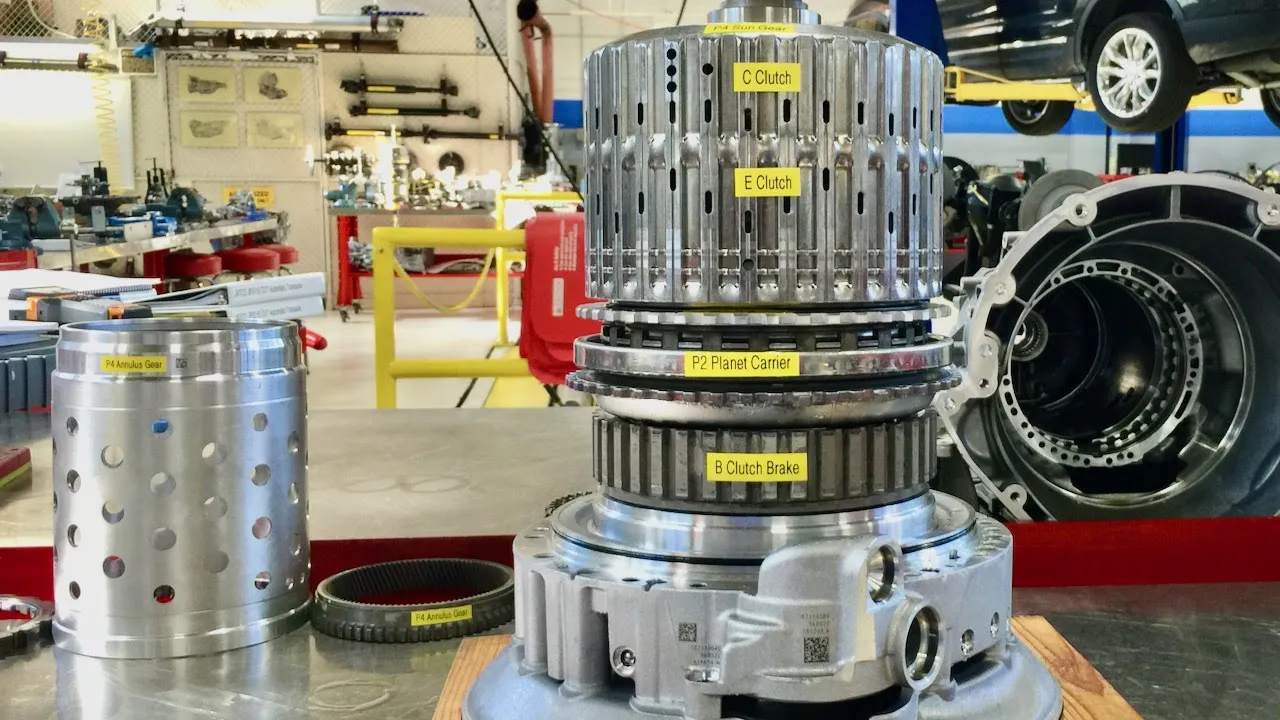

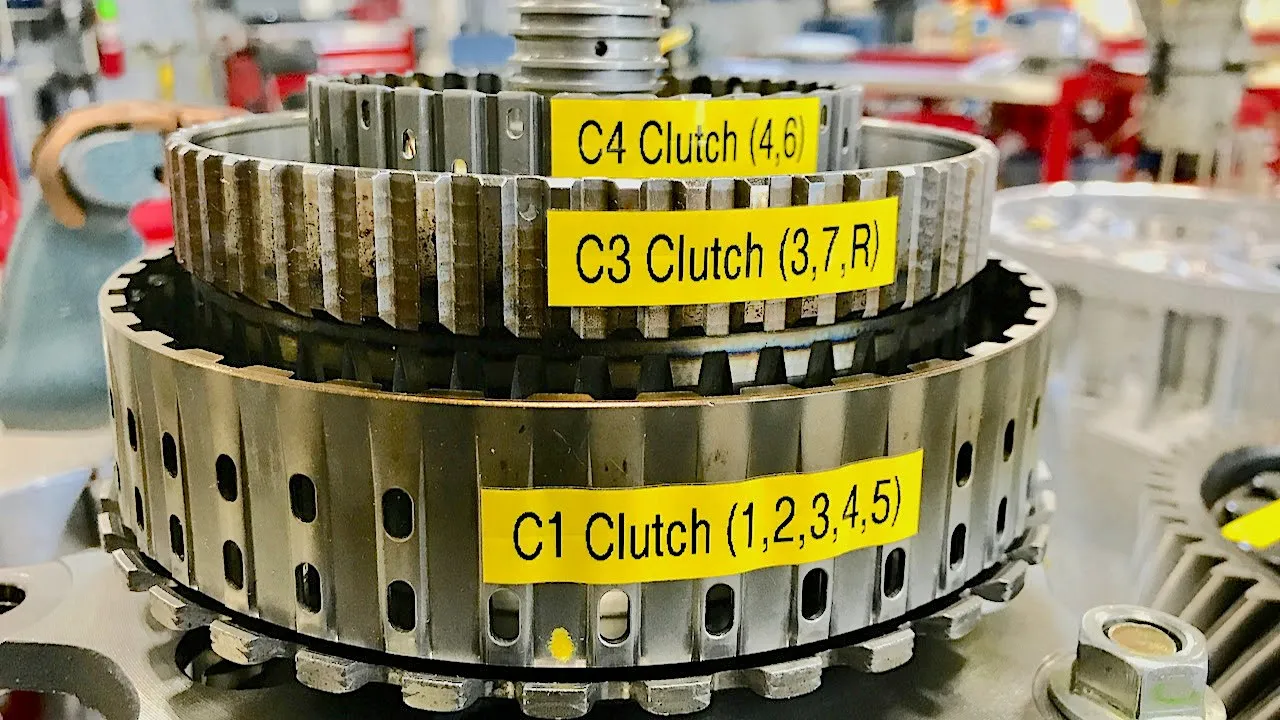

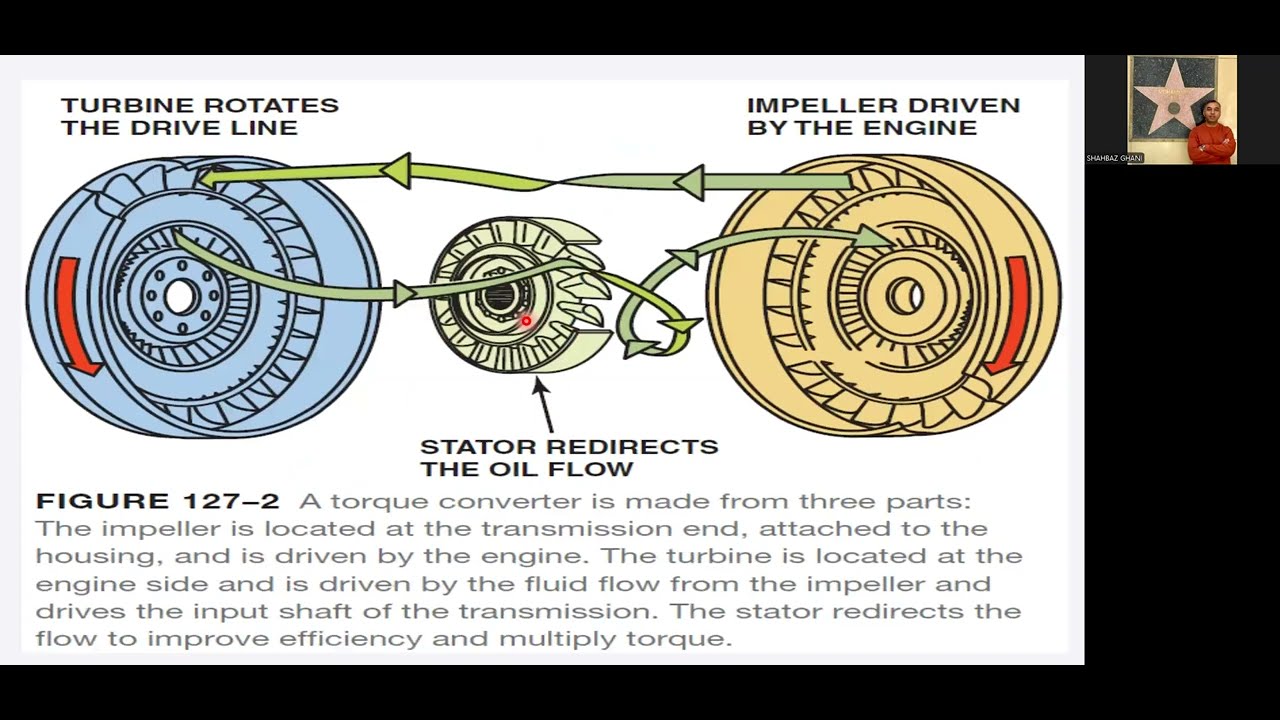

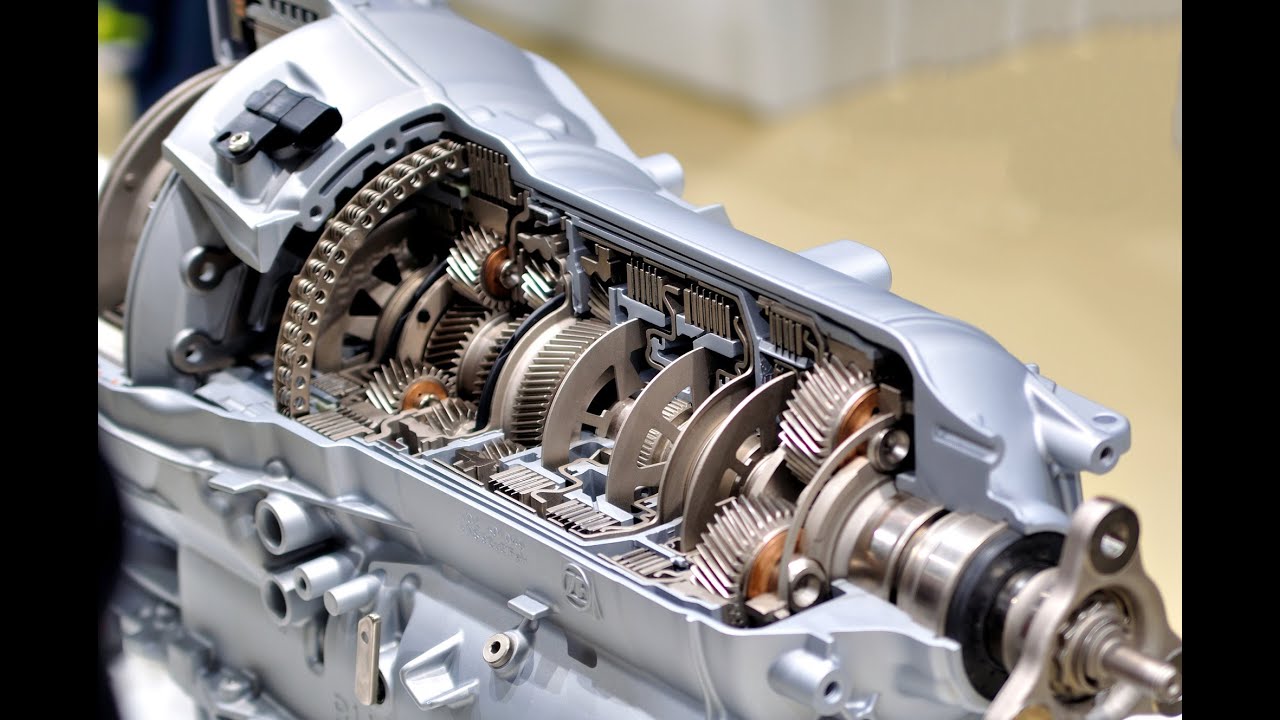











In a planetary gear set consisting of a sun gear, ring gear, and planetary carrier, the gear ratio is calculated by dividing the number of teeth on the driven gear by the number of teeth on the drive gear, where the planetary carrier's effective tooth count equals the sum of the sun and ring gear teeth; for example, holding the ring gear stationary while turning the sun gear with a 30-tooth sun gear and 90-tooth ring gear results in a 3:1 gear ratio (90/30), meaning the sun gear must turn three times for the ring gear to turn once.
How to Calculate Gear Ratios in a Planetary Gear Set
Added:Fundamental gear concepts, including how to calculate simple gear ratios using tooth counts and understanding the inverse relationship between speed and torque.
The anatomy and terminology of an epicyclic (planetary) gear system, specifically identifying the sun gear, planet gears, planet carrier, and ring gear.
Basic rotational kinematics, including angular velocity, torque, and the principle of conservation of mechanical power.
Basic algebraic skills required to manipulate equations with multiple variables to solve for an unknown.
Analysis of compound planetary gear systems, such as Simpson or Ravigneaux gear trains commonly used in automatic transmissions.
The engineering of control mechanisms, such as wet clutches and brake bands, used to dynamically lock different components of a planetary gear set.
Torque distribution and power-flow analysis within planetary gear systems under varying load conditions.
Real-world industrial applications of planetary gearing, including wind turbine gearboxes, heavy machinery final drives, and aerospace actuators.
318.5K views3.6Klikes5:15Original Release: 2015-02-20
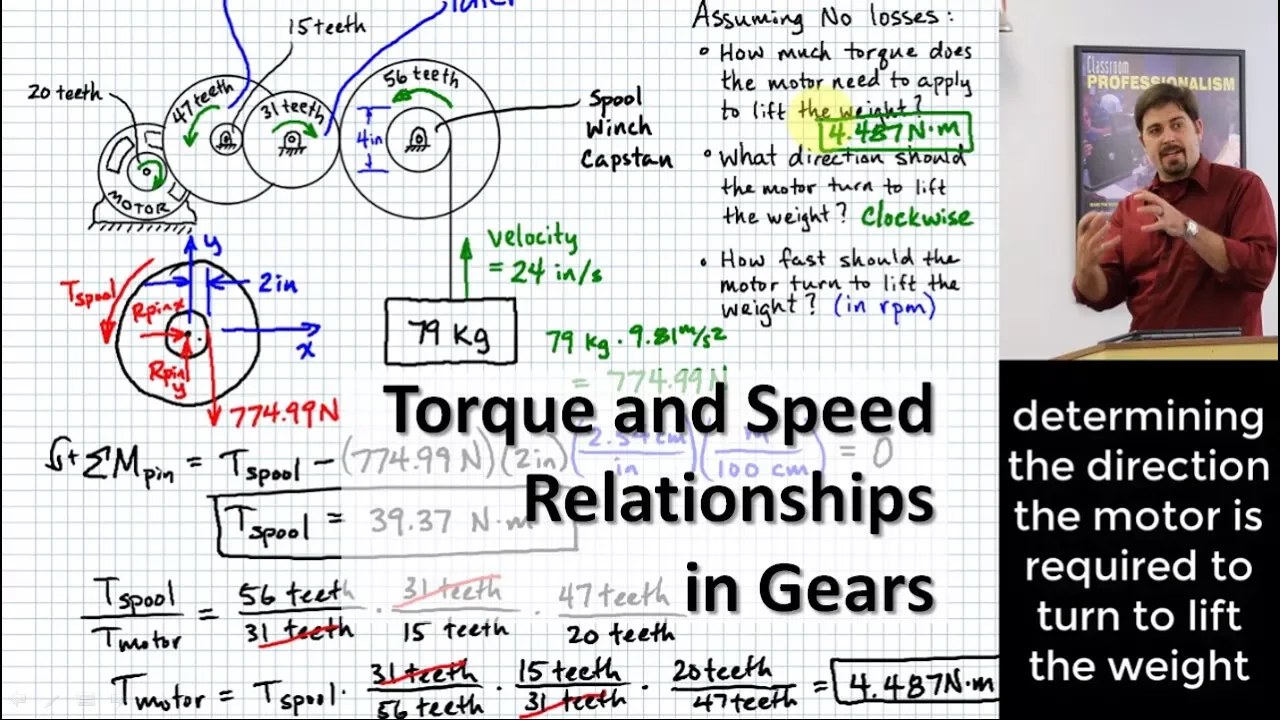
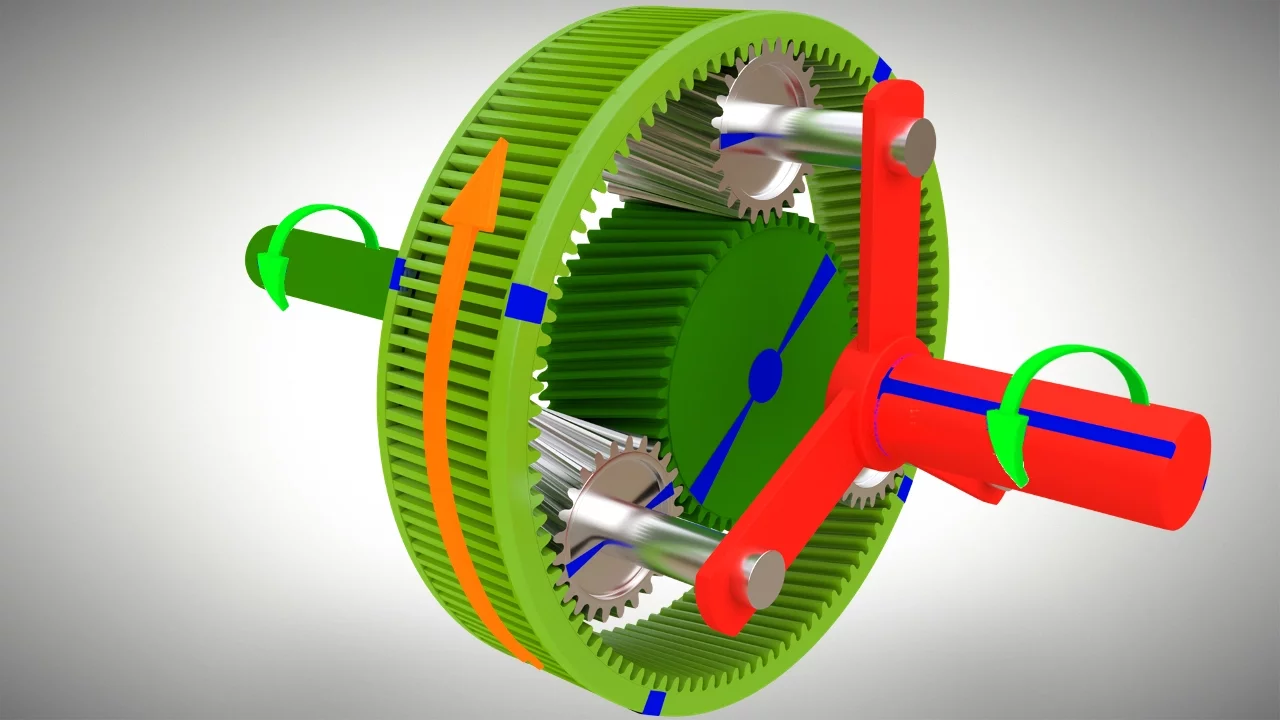
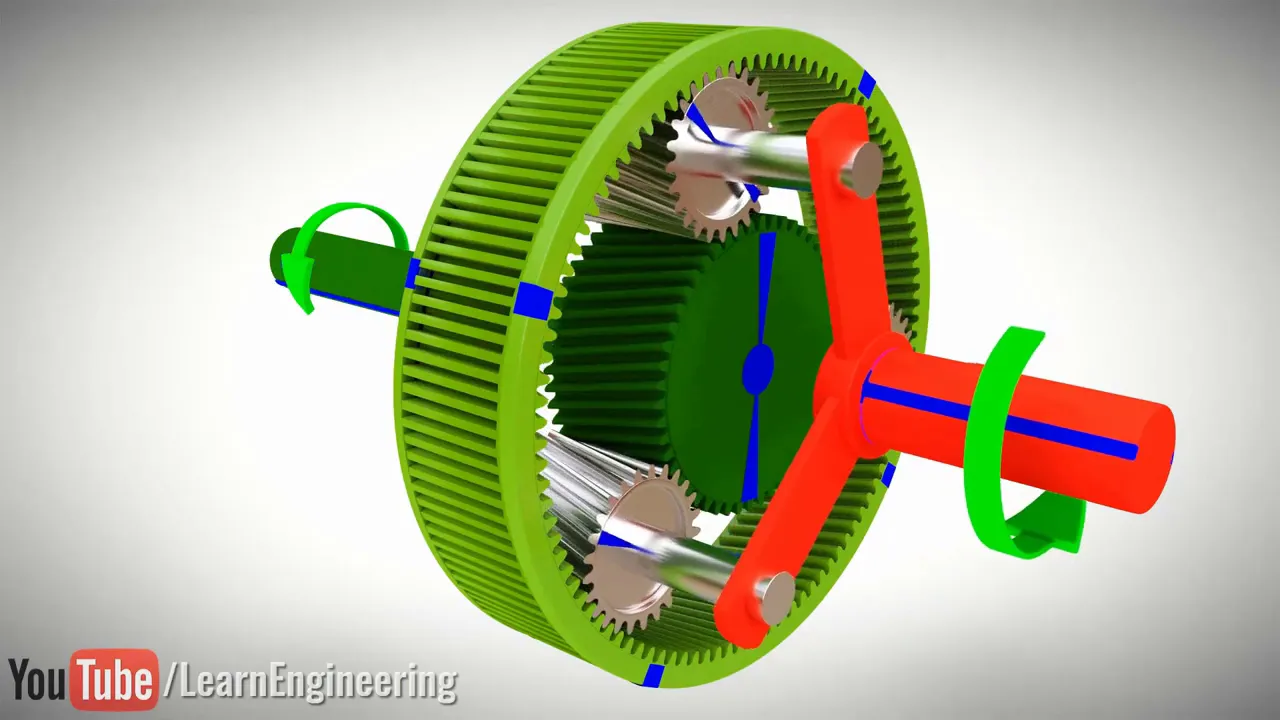
to demonstrate how to calculate a gear ratio from a planetary gear set and just to begin let's make sure that we understand how to calculate gear ratios in general the formula that we use for a gear ratio is the number of teeth on the driven gear over the number of teeth on the drive gear so for example if I had a a small gear that had 10 teeth on it that was turning a larger gear that had 40 teeth on it this is the drive gear this is the gear that's being driven and so we would say 40 over 10 or 4 for a 4:1 gear ratio what that means is the drive gear has to turn four times in order to turn the driven gear once that's where the four to one gear ratio comes from so it it uh affects the speed and the torque of course the speed of this gear will be 1/4 of the speed of this gear but the torque at this gear will be four times greater than the torque at this gear so it's a it's a trade-off between speed and torque now let's see how we do that with a planetary gear set of course a planetary gear set has three members there's a Sun Gear in the center there's a planetary carrier in the middle and they're surrounded by a ring gear pull that apart so you can see the three individual components Again The Sun Gear the ring gear and then the planetary carrier here that has the planetary pinions on it now the way that a planetary gear set is typically used is that one of those three members is held stationary while one is turned so you have an input and an output and then one that's held stationary so for example if I hold let's do it this way if I hold the the ring gear stationary and turn the Sun Gear there's a gear ratio there this is the drive gear the one that's doing the turning this is the one that's being turned right so the drive and the driven gear and I could do that I could just change the combination any way I wanted to I could hold this steel while I turn this hold the Sun Gear and turn the ring gear now the ring gear is the drive gear and the carrier is the driven gear you can do that in in many different combinations here's how you C calate this so we would need to take each of these gears and count the number of teeth so on the on the Sun Gear we'd want to mark it and count the number of Teeth Let's just say for the sake of the example that I counted 30 teeth on the sun I would take the ring gear and count the number of teeth on it let's say that I I counted 90 teeth and then finally I would take this gear but I won't I won't count the teeth on it um first of all you couldn't there there could be varying numbers of of pinions on this gear and it doesn't matter how many teeth there are on the pinions what I'll do is I'll say that the planetary carrier is equal to the sum of the sun and the ring gear so that's 120 so that's the secret here is we don't actually count the teeth on the carrier and calculate it based on the sum of the other two gears so now I put that back together now I can I can choose any combination of this planetary gear set I can hold the ring gear stationary and I can turn the carrier it makes the carrier the drive gear and what's the driven gear The Sun Gear is the driven gear so the driven gear is the sun it has 30t the drive is the carrier and when I calculate that I get 1/4 which equals.
25 to one and that's the that's the gear ratio when I do it that way so that's that's an overdrive gear ratio if I wanted to give you one more more example let's say that we are going to hold the carrier stationary and I will turn the Sun Gear you can see that is reversed the the ring gear is going in the opposite direction but now the drive gear is the Sun Gear The Driven gear is the ring gear so driven is the ring gear which is 90 drive gear is the sun gear which is 30 which equals three or a 3: one gear ratio so the Sun Gear would have to turn three times for the ring gear to turn once that's how you calculate a gear ratio on a planetary gear set
Up Next

29:02
Gear Manufacturing with a Dividing Head: A Machining Tutorial
@ThisOldTony
479.8K views•2019-02-03

30:32
Ultrasonic Transducers: Resonant Frequency Measurement and Horn Design
@imajeenyus42
229.9K views•2017-02-22

54:16
Polymer Environmental Degradation: Mechanisms & Stabilization
@iit
1.8K views•2012-07-10

33:39
How a Student's Question Saved a NYC Skyscraper from Collapse
@veritasium
22.8M views•2025-04-26
Related Study Plans & Knowledge Roadmaps
Structured learning paths in Engineering
engineering
Building Acoustic Levitators: Physics & Arduino
01The Physics of Sound and Standing Waves
02Piezoelectric Transducers and H-Bridge Drivers
03Arduino Programming: Generating 40 kHz Signals
+ 2 more learning modules
14h5 modules
Explore Roadmap
engineering
Building Peltier Cloud Chambers: Particle Tracks
01Cosmic Rays & Cloud Chamber Physics
02Thermoelectric Cooling (TEC) Fundamentals
03Custom Liquid-Cooling Loop Design
+ 2 more learning modules
18h5 modules
Explore Roadmap
engineering
Yagi-Uda Antennas: Modeling, Build & VNA Test
01Introduction to RF and Antenna Fundamentals
02Yagi-Uda Antenna Design Principles
03Antenna Modeling and Simulation in 4NEC2
+ 2 more learning modules
18h5 modules
Explore Roadmap
engineering
ECG Monitor Design: Op-Amps, Filters & Noise
01Electronics & Breadboard Basics
02Op-Amps and Instrumentation Amplifiers
03Bioelectricity and ECG Fundamentals
+ 2 more learning modules
18h5 modules
Explore Roadmap