


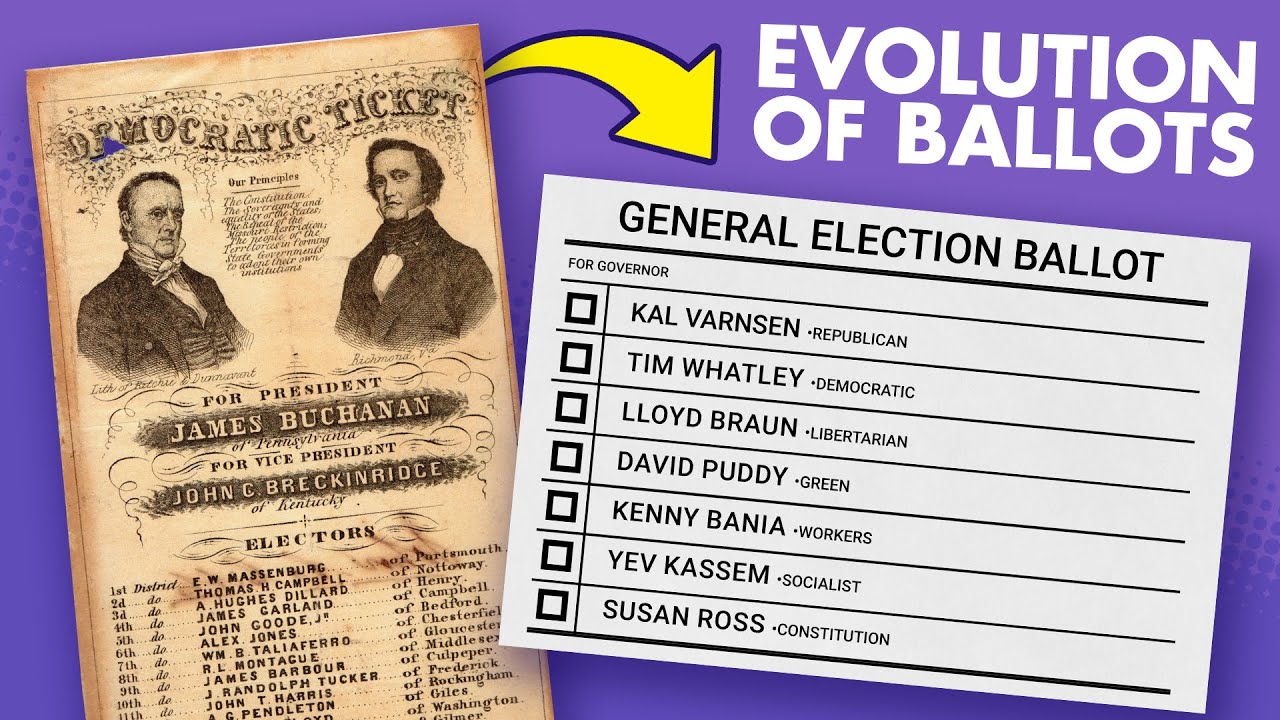




In 1856, Victoria became the first jurisdiction to implement the modern secret ballot, designed by lawyer Henry Chapman for the Eureka rebels, which fundamentally transformed democratic elections by protecting voter privacy and eliminating intimidation, fraud, and corruption; this Australian innovation later influenced Britain's adoption in 1872 and spread globally as the 'Australian ballot,' becoming a cornerstone of modern democratic voting systems worldwide.
The Secret Ballot: 1856 Australian Democratic Reform Explained
Added:The history of open voting (viva voce) and public declaration of votes, where electors cast their votes aloud or on public color-coded ballots.
The concept of electoral coercion, systemic bribery, and tenant-landlord dynamics in 19th-century electoral politics.
The impact of the Eureka Rebellion (1854) and the British Chartist movement on political reform demands in colonial Australia.
The basic definition of suffrage and the historical context of property qualifications required for voting in the mid-19th century.
The international adoption of the 'Australian ballot' system in Great Britain (Ballot Act 1872) and the United States during the late 19th century.
The evolution of Australian democracy, including the early introduction of women's suffrage (1894/1902) and compulsory voting (1924).
The mechanics of alternative voting systems developed in Australia, such as preferential voting (Instant-Runoff) and proportional representation.
Modern global challenges to voting privacy, including the security and privacy debates surrounding mail-in, proxy, and electronic voting systems.
22.5K views157likes5:42Original Release: 2018-09-07
[Narrator] When people from New York to New Guinea vote in elections, they have Australia to thank for a reform that changed democracy itself.
[Woman] The democracy sausage.
[Narrator] What?
[Woman] You know, the sausage sandwich you buy when you vote.
It’s the best thing about elections!
Sometimes you even get free onions!
[Narrator] A reform that changed democracy itself, even more than the democracy sausage, with or without free onions.
The modern secret ballot.
On the 27th of August 1856, the colony of Victoria unveiled the secret ballot.
But before we tell you how totes amazeballs it was, you need to know about the British open voting system it replaced.
Yes, what is it?
[Man] I’m voting.
[Narrator] British voters would gather outdoors and raise a hand when their candidate’s name was read out.
A winner was announced, and then the losers could spit the dummy and demand a formal vote.
Voters would then write their candidate’s name on any old piece of paper and hand it to an official, who’d announce who they’d voted for.
As MPs weren’t paid, candidates were inevitably wealthy landowners.
They knew who’d supported them, and knew how to punish those who hadn’t.
[Lord] I say, Jones, you didn’t vote for me.
I’m revoking your lease.
Get off my land.
[Narrator] The unfairness of British elections went beyond voter intimidation.
Women couldn’t vote, nor could men who didn’t own or rent sufficient property.
In 1838, British working-class leaders signed the People’s Charter, which demanded electoral reforms, including the vote for all men.
And to ensure voters weren’t pressured by their landlords or bosses, Chartists, as supporters of the Charter became known, called for the secret ballot.
The government responded to a number of Chartist uprisings by imprisoning the movement’s leaders, with dozens sent to Australia as convicts.
Australia’s first elections were held in New South Wales in 1843.
Australian elections were commonly held in pubs, with candidates providing those who voted for them with free drinks and food.
[Woman] Sausages?
[Narrator] Maybe, who cares?
Many of the 1843 races pitted Catholics against Protestants, and hostility increased as the free booze flowed and officials posted hourly vote counts.
In Sydney, Irish Catholic supporters of Maurice O’Connell armed themselves with fence palings and demolished William Wentworth’s campaign tent.
Whalers supporting Wentworth attacked the Irish with harpoons.
One death was recorded during the riots that followed.
This was democracy Australian style.
Governor Gipps reported to London.
[Governor] The elections in general went off very well.
[Narrator] Many migrants to Australia were working class and supported the Chartist agenda.
Come the gold rush, Victorian diggers who paid a mining tax but couldn’t vote demanded the vote for all men.
Some also called for the secret ballot.
The Victorian public swung behind the miners after the 1854 Battle of the Eureka Stockade.
Victorian politician William Nicholson secured support for the ballot from a narrow majority of his Legislative Council colleagues, with Premier Haines resigning in disgust.
Victoria, South Australia and Tasmania all passed secret ballot laws in 1856, with Victoria first to go live with a new voting system designed by a lawyer for the Eureka rebels, Henry Chapman.
Government officials gave voters a standard form, with candidate names printed in alphabetical order.
Each voter would then enter a private stall, cross out the names of candidates they didn’t support, and place their vote in a sealed box.
There were no drunken crowds or hourly updates to inflame tensions.
Even the ballot’s former opponents acknowledged its success.
In 1856, South Australia gave all men the vote in elections for the new Legislative Assembly.
And in 1858, William Boothby produced a ballot that allowed South Australian voters to place an X in a box beside their candidate’s name.
London’s Times newspaper thundered that anonymous voting was a vile system for cowards and liars.
But in 1872, Britain adopted Boothby’s brainchild and US states embraced the Australian ballot, as they called it, from 1888.
The Australian ballot is now used around the globe.
[Woman] And the democracy sausage was the icing on the cake.
[Narrator] Oh, for goodness sake, stop with the mixed metaphors.
[Woman] What have you got against sausages?
And cakes?
Why shouldn't Australians be able to enjoy a sausage and cake every few years?
Democracy sausage was the 2016 Australian Word of the Year, even though it’s two words.
Democracy sausage.
Democracy sausage.
Democracy...
Up Next

91:11
Voting Integrity and Election Reform: Expert Hammer Forum
@UCLA
928 views•2009-03-11
88:38
Patronage and Political Machines in Southeast Asian Elections
@NewYorkSoutheastAsiaNetwork
511 views•2023-04-05

7:33
Government Surveillance Methods: 10 Ways You May Be Watched
@BeAmazed
1.6M views•2017-04-09
10:19
Explaining the Saudi-Iranian Proxy Conflict in the Middle East
@Vox
18.2M views•2017-07-17
Related Study Plans & Knowledge Roadmaps
Structured learning paths in Political Science
political-science
Analyzing Clientelism: Patronage & Vote-Buying
01Foundational Concepts of Clientelism
02Mechanics of Patronage and Resource Allocation
03Vote-Buying, Turnout Buying, and Ballot Secrecy
+ 2 more learning modules
12h5 modules
Explore Roadmap
political-science
Economic Statecraft: Sanctions & Chokepoints
01Foundations of Geoeconomics and Economic Statecraft
02The Mechanics of Weaponized Interdependence
03International Sanctions: Types, Implementation, and Efficacy
+ 2 more learning modules
12h5 modules
Explore Roadmap
political-science
Central Bank Independence: Politics & Policy
01Foundations of Central Banking and Monetary Policy
02The Time Inconsistency Problem & Inflation Bias
03The Delegation Model and Designing Independence
+ 2 more learning modules
12h5 modules
Explore Roadmap
political-science
Consociationalism: Power-Sharing & Stability
01Democratic Dilemmas in Divided Societies
02Introduction to Consociational Democracy
03The Four Pillars of Consociational Design
+ 2 more learning modules
12h5 modules
Explore Roadmap