










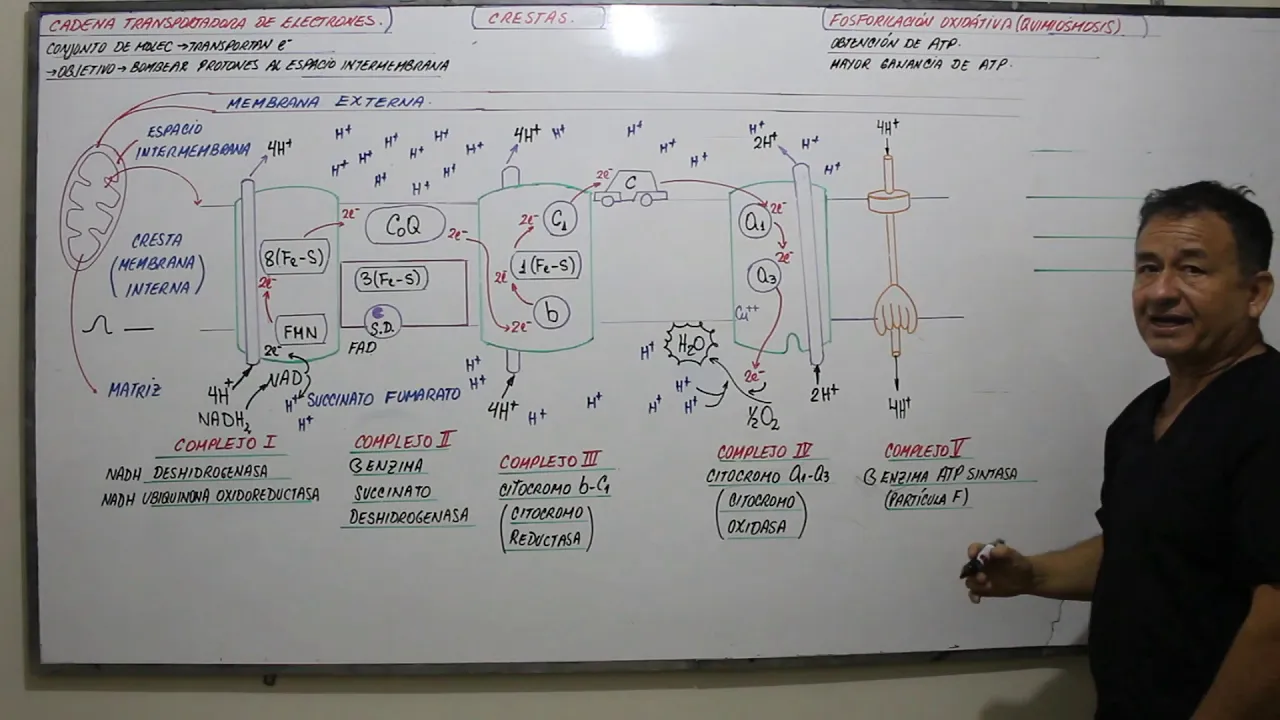
![REPLAY BIO[K+] SOX B2 | Cadena respiratoria, estrés oxidativo y vía de las pentosas](https://i.ytimg.com/vi/-B1zjQ6Q5rY/hqdefault.jpg)






ATP synthase is a molecular machine in mitochondria that generates ATP from ADP and inorganic phosphate using a proton gradient; it consists of two coupled motors (F0 and F1) where the F0 motor converts proton flow into rotational energy, which is transferred through a central stalk to the F1 motor, causing conformational changes in catalytic subunits that drive the three-step ATP synthesis cycle.
ATP Synthase Structure and Function | F1F0 Molecular Motor
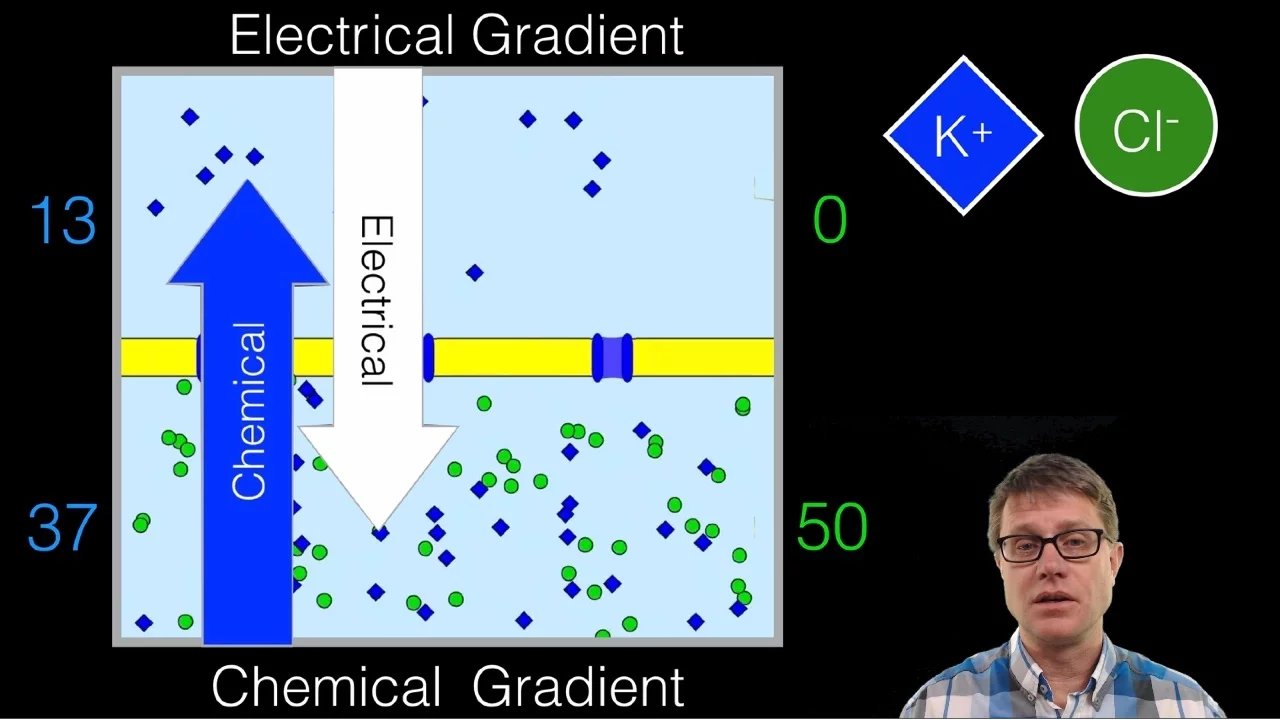
Added:The concept of an electrochemical gradient and the proton motive force across a biological membrane.
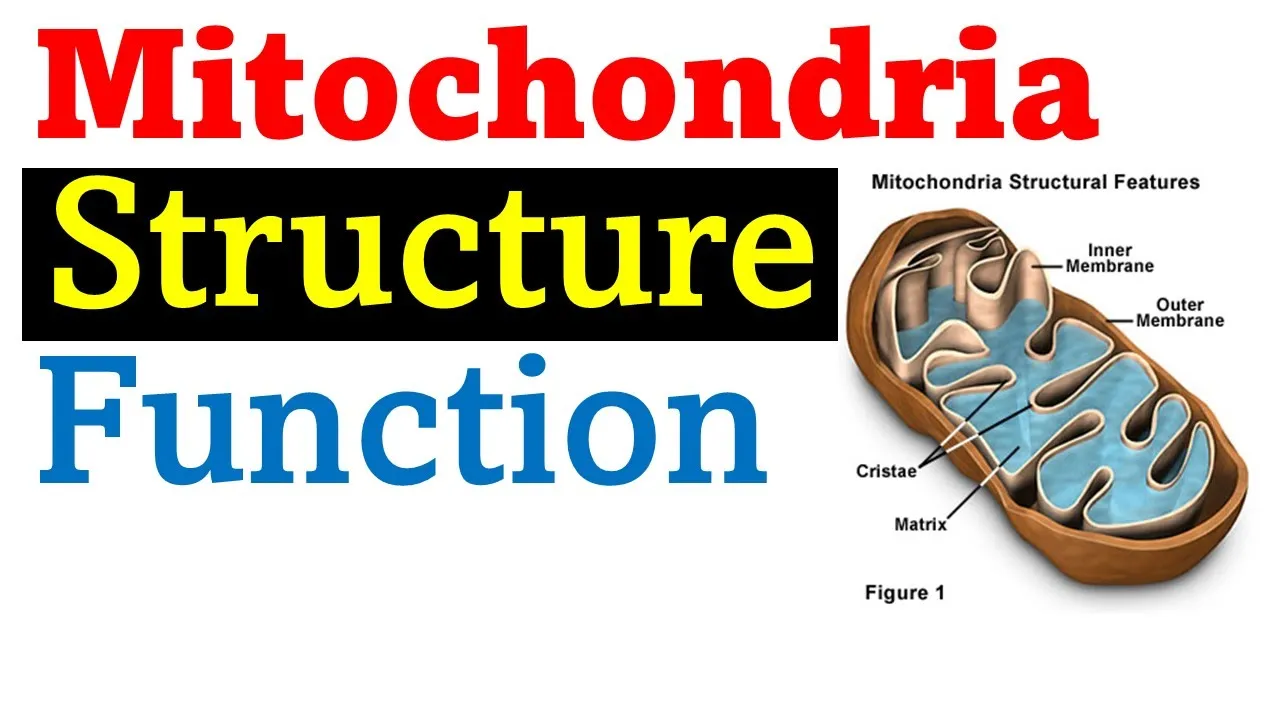
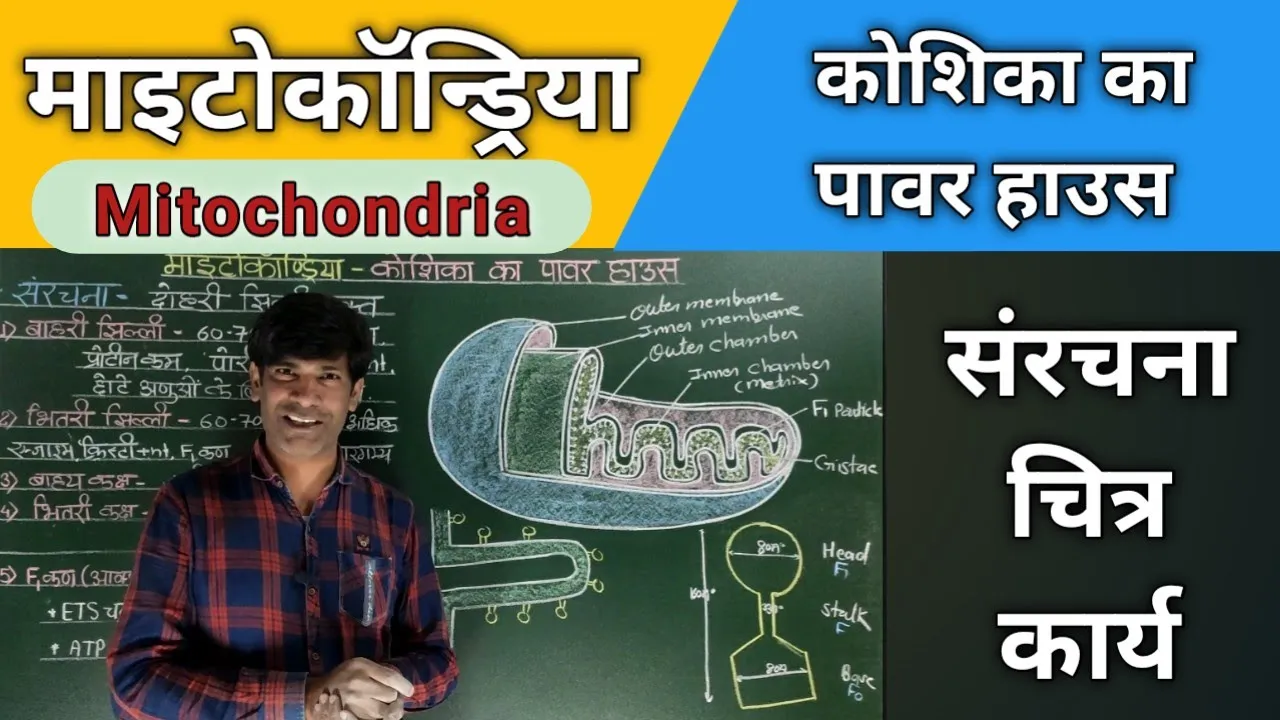
The structure and compartmentalization of the mitochondrion, particularly the inner mitochondrial membrane and the matrix.
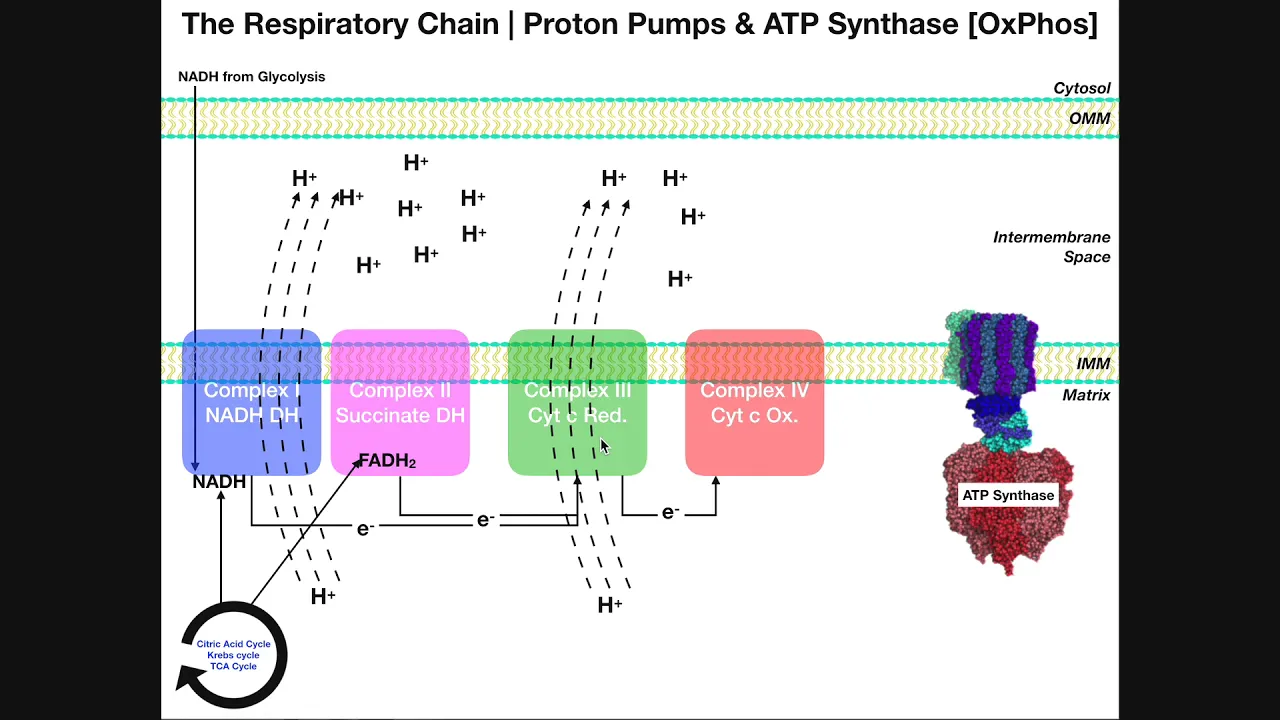
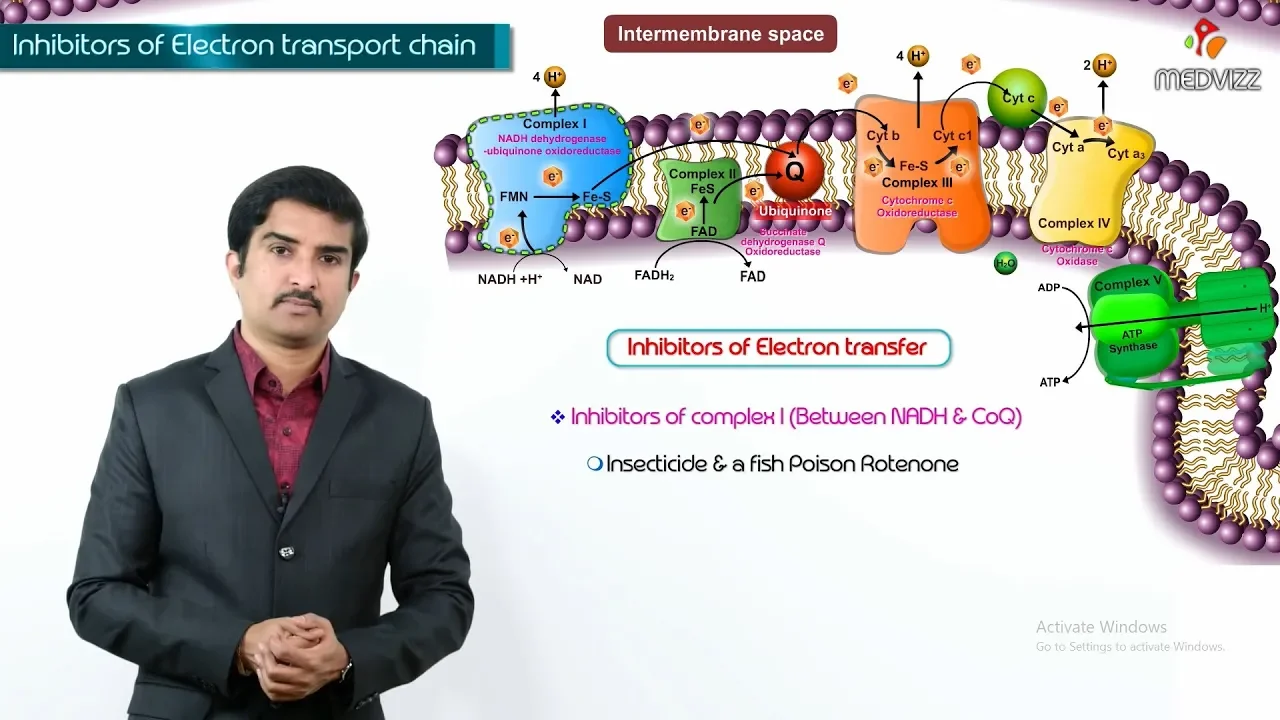
The basic operation of the Electron Transport Chain (ETC) and how it pumps protons to establish a concentration gradient.
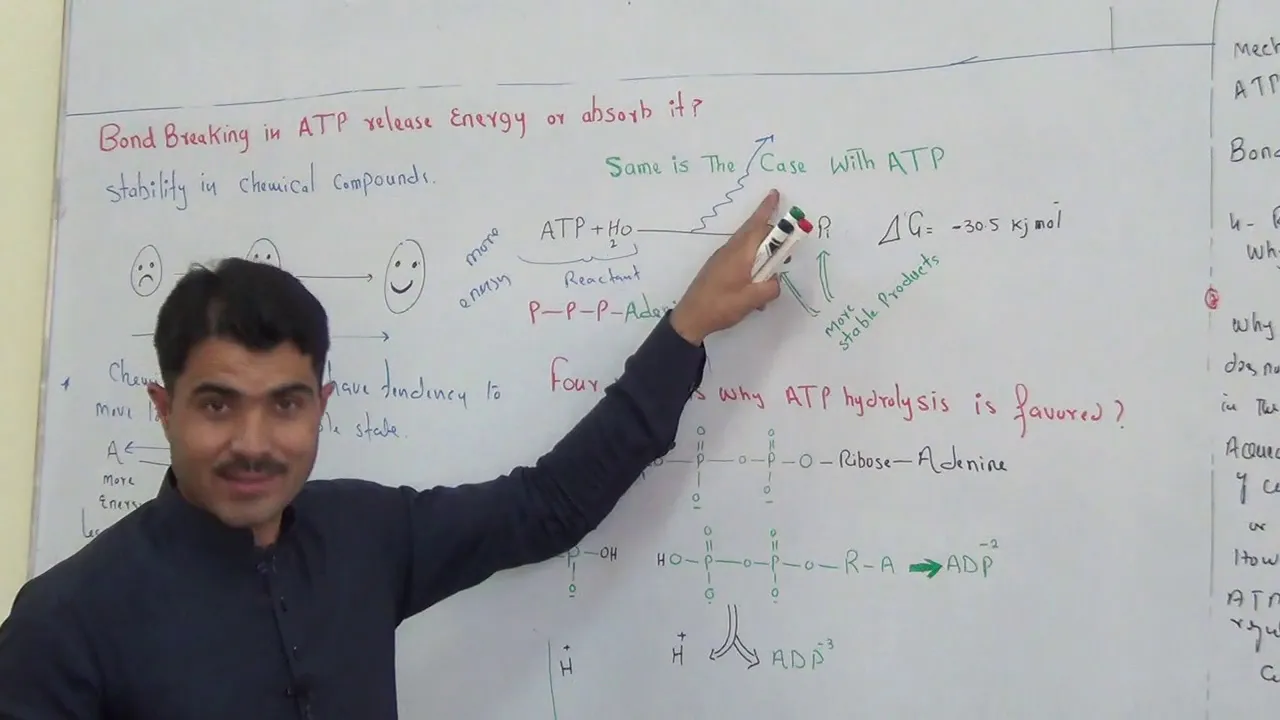
The chemical structures of ADP, inorganic phosphate, and ATP, including the thermodynamics of ATP hydrolysis.
Boyer's Binding Change Mechanism, detailing the transition of catalytic subunits through Open, Loose, and Tight conformational states.
The physiological impact of respiratory uncouplers (like DNP and thermogenin) and specific ATP synthase inhibitors (such as oligomycin).
The exact stoichiometry of oxidative phosphorylation, including the calculation of ATP yield per NADH and FADH2 oxidized.
Comparative analysis of other rotary motor proteins and ATPases, such as V-type ATPases and bacterial flagellar motors.
381.3K views4.6Klikes4:14Original Release: 2016-04-14
Life requires energy. The universal, biological fuel is a molecule called ATP or Adenosine Triphosphate. ATP stores chemical energy in the form of a high energy phosphate bond. As the name suggests, it consists of an adenosine ring with a chain of three phosphate groups attached. The last of these phosphates can be split off to release the energy within the bond, resulting in adenosine diphosphate and free inorganic phosphate. This energy is needed to keep cells alive and is used from processess from muscle contraction to producing the thoughts your brain is having right now. The hydrolysis of ATP can be reversed by the addition of inorganic phosphate to ADP, however this of course requires energy, and is performed by a molecular power generator called ATPsynthase.
Here we see an atomic model of F1-F0 ATPsynthase sitting in a membrane.
This molecular motor is found in the mitochondria of eukaryotic cells, and is responsible for making most of the ATP. Mitochondria, the powerhouses of the cells, turnover around 60 kg of ATP everyday in an adult person. A long chain of biochemical processes convert the energy stored in food into a proton gradient across the inner mitochondrial membrane. These protons drive a rotation of the turbine, within ATP synthase, resulting in synthesis of ATP.
Like all generators, ATP synthase consists of two separate motors coupled together.
Within the membrane we have the F0 motor, named after the binding of antibiotic oligomycin and at the top we have the F1 motor from factor 1. The FO motor is a proton powered motor. It is thought that protons flow through a channel open to just the intermembrane space where they bind to a ring of protein subunits, rotate 360 degrees, and exit through exposed only to the matrix.
The net flow protons, driven by the proton motor force provides the energy for the generation of rotation. The torque generated in the F0 motor is transferred to the F1 motor by a central stalk or shaft. The F1 motor is responsible for generating the ATP, by additional phosphate, to ADP. The top of the central stalk acts similarly to a camshaft so that as it rotates within the F1 motor it causes conformational changes of the catalytic subunits. The catalytic unit is made of a dimer of subunits and there are three of these arranged in a ring. Catalysis occurs of the interface between the dimers. If we concentrate on one dimer we can observe three distinct states. First, ADP and phosphate bind to the catalytic side. The central staff then rotates 120 degrees to rearrange the molecules. Next the enzyme undergoes a further 120 degree rotation and the ADP and phosphate are fused together to create ATP. The enzyme then rotates again to return to the starting position where ATP is released and ADP and phosphate can be bound for the next cycle of catalysis. One key aspect of this relationship is that catalytic subunits must remain stationary with respect to a rotating central shaft. This task is performed by a scaffold on the outside of the complex, referred to as the peripheral stalk. Recent work has shown that what was once thought of as a rigid scaffold, is actually dynamic and is able to accomodate the changes necessary for most efficient function.
Looking at this machine in its natural environment by electron cryotomography of intact mitochondria has shown that ATP synthase dimerizes to shape the mitochondrial inner membrane into their signature cristae shape. This This turbo charges ATP synthesis by focussing the proton gradient near ATP synthase.
Up Next

13:28
Calvin Cycle Explained: Photosynthesis Light-Independent Reactions
@khanacademy
1.4M views•2010-02-02
50:12
Bacterial Communication: Quorum Sensing and Biofilm Formation Explained
@JHUAAP
12.6K views•2011-06-28

5:35
Enteric Nervous System Explained: The Gut's Brain | Neurobiology Lecture
@alumniu6029
438 views•2018-09-12
7:08
Bacteriophages: Earth's Deadliest Killers and Future Antibiotics
@kurzgesagt
34.6M views•2018-05-13
Related Study Plans & Knowledge Roadmaps
Structured learning paths in Biology
biology
RNAi: Biogenesis, RISC & Gene Silencing
01Molecular Biology Foundations: DNA to Protein
02Introduction to RNA Interference (RNAi)
03Molecular Biogenesis of miRNA and siRNA
+ 2 more learning modules
10h5 modules
Explore Roadmap
biology
Mycorrhizae: Signaling, Biophysics & Ecology
01Foundations of Mycorrhizal Symbiosis
02Molecular Signaling and Root Colonization
03Biophysics and Bioenergetics of Nutrient Exchange
+ 1 more learning modules
11h4 modules
Explore Roadmap
biology
Circadian Clocks: TTFL, SCN & Periphery
01Foundations of Molecular Biology & Gene Expression
02Introduction to Chronobiology and Actograms
03The Core TTFL: Molecular Architecture of the Clock
+ 3 more learning modules
14h6 modules
Explore Roadmap
biology
Population Genetics: Math, Drift & Selection
01Genetic & Probability Foundations
02The Hardy-Weinberg Principle and Baseline Models
03Mathematical Modeling of Natural Selection
+ 3 more learning modules
18h6 modules
Explore Roadmap