








![Биология поведения человека. Лекция #3. Эволюция поведения, II [Роберт Сапольски, 2010]](https://i.ytimg.com/vi/zFu5NyK_eCI/maxresdefault.jpg)





![[Day 2] 2020-21 ETC for Policymakers on the 2030 Agenda for Sustainable Development](https://i.ytimg.com/vi/1s5jNQILsQc/maxresdefault.jpg)
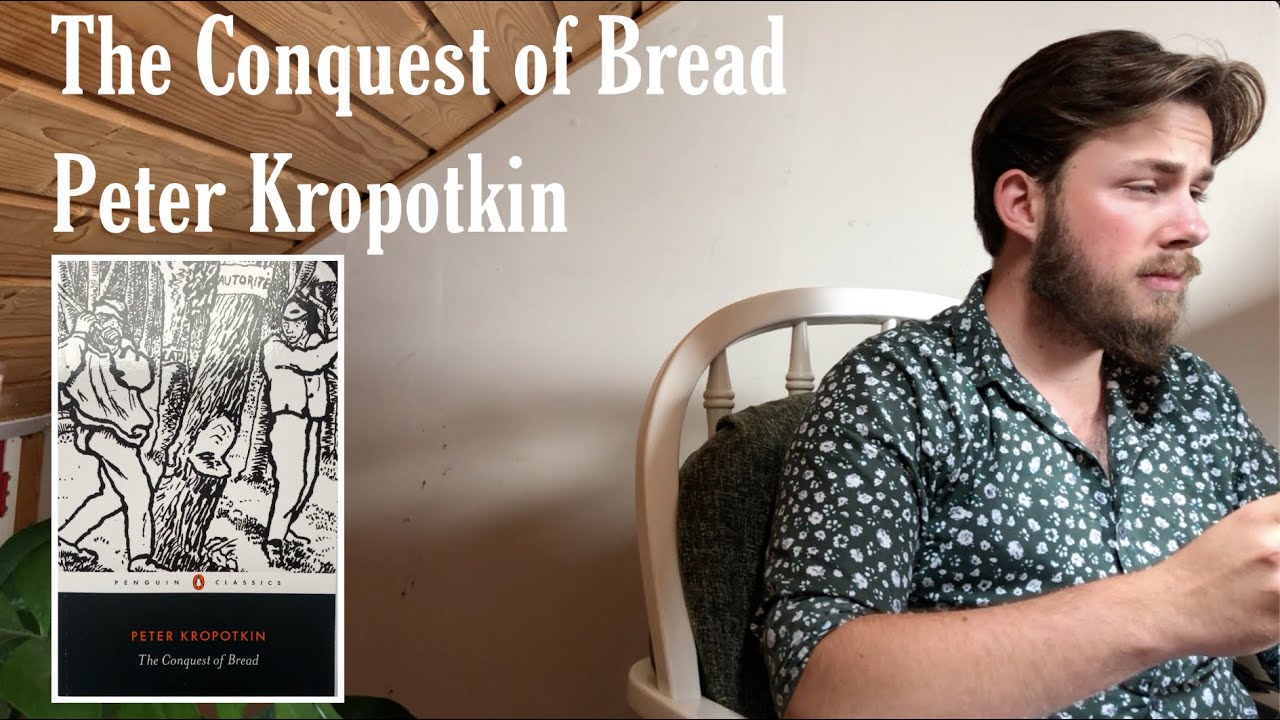
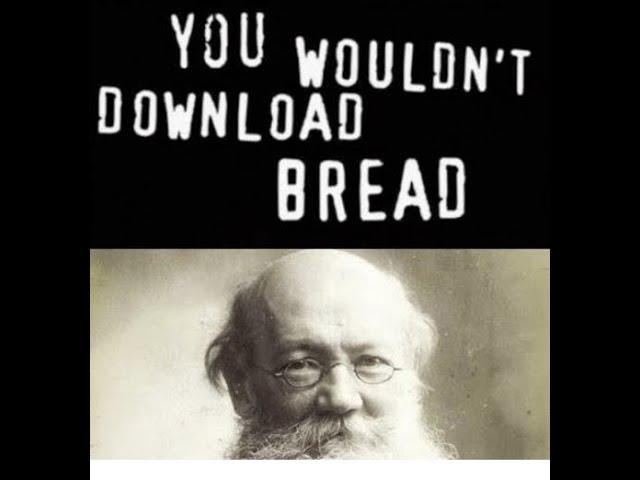
Peter Kropotkin, a Russian anarchist and geographer, challenged Darwin's 'struggle for existence' by arguing that mutual aid and cooperation are the primary factors driving evolution and human social development. In his 1902 work 'Mutual Aid: A Factor of Evolution,' Kropotkin demonstrated that species which combine and cooperate have the greatest chance of survival and further evolution, even if they may be inferior in individual faculties. This theory provided a scientific foundation for anarchist proposals, suggesting that human society could function without state protection through natural cooperative tendencies. The idea influenced later thinkers like Murray Bookchin, who further developed the concept of spontaneous order in human society.
Mutual Aid: Peter Kropotkin's Anarchist Legacy Explained
Added:the ludig Von misus Institute presents the libertarian tradition an audio series with Jeff [Applause] rickenbach it was 90 years ago this month on February 8th 1921 that Peter kotkin died in demitro then a small town in Russia about 40 Mi north of Moscow he had been born in Moscow itself almost exactly 78 years before on December 9th 1842 but he had spent at least half of the 78 intervening years living abroad a few years in Switzerland a few more in France though most of his time in France was spent Behind Bars and for more than 30 years in England kotkin was of noble birth Prince cotkin was the title he was born into and like his father and his father before him he was expected to become an officer in the Zars Army and pursue a military career the young Peter Crow pokin dutifully went to military school and on graduation at the age of 19 accepted a commission in the Zars Army but to his father's disgust he requested an assignment in Siberia where he knew there was little or nothing military for the Army to do so that he stood a pretty fair chance of being attached to one of the various geographical Expeditions that were busily mapping the region and documenting its flora and fauna geography and zoology you see were his true passions military service was just something he was doing to please his father and cotkin succeeded with his underhanded and self-serving plans he became a military atese on several geographical Expeditions over the next few years working alongside the geographers and zoologists and winning their respect for his conscientiousness and accuracy in 1867 at the age of 24 he resigned his Commission in the Army whereupon his father disinherited him leaving him a prince with no visible means of support nothing daunted kotkin began putting himself through the University of St Petersburg by working as a salaried employee of the Russian geographical Society in 1871 he led exploratory Expedition for the society in Finland and Sweden but by then his enthusiasm for geography and zoology though still very strong had begun to play second fiddle to a more recently acquired enthusiasm for radical politics by sometime late in 1872 near the time of his 30th birthday it would appear he decided he was an anarchist under the influence of these new ideas he joined an illegal Society the chaikovsky circle which had been named for one of its members a younger brother of the celebrated composer though the circle's principal activity seems to have been the publication of foreign books in additions for Russian readers Marx Darwin and John Stewart Mill were among the authors they made available the members began gradually to be picked off arrested by the Zar secret police and tried on charges of belonging to a banned organization in 1874 rotkin now 31 was imprisoned for this crime after 2 years behind bars he escaped and fled to Switzerland there he remained for the next 5 years until in 1881 after the assassination of the Zar the Swiss caved into pressure from the Russian government and agreed to expel all Russian Nationals living on Swiss soil who were known radicals or revolutionaries again cotkin fled this time to France but within a couple of years thanks to the continuing minations of his enemies in St Petersburg he was arrested again this time by French authorities who charged him with sedition and locked him up a new after his conviction on these charges by this time however he was able to rely on his growing International reputation to protect him from the worst of the mistreatment various political authorities had in mind for him since his Escape to Switzerland from Russia almost a decade before in 1876 when he was 33 years old he had earned his living as a scientific journalist contributing articles to magazines and newspapers during these same years the scholarly papers he had published during his time in Russia based on his explorations had gradually percolated through the scientific Community it proved very easy for his friends and supporters on the outside to organize itions and letter writing campaigns in which some rather eminent persons participated after 3 years the French gave into the pressure and released kotkin having tried Switzerland and France without much success he decided to try England and England worked out for him just fine he lived there from 1886 to 1917 writing principally for nature magazine the times of London and an influential intellectual magazine of the day the 19th century yet when the Zars government fell in the February 1917 Revolution and the way was cleared for him to return home he seized the opportunity he was 74 years old when he came back to a Russia he hadn't seen since he was in his mid-30s shortly after he arrived the October Revolution installed the bulvik in power an event katkin publicly deplored Paul aage reports that he told one friend this buries the Revolution and commented further that the Bolsheviks were demonstrating how the Revolution was not to be made that is by authoritarian rather than libertarian methods katkin didn't live to see the worst consequences of the bulvik Takeover of the Russian Revolution however as we have seen by the time conditions in the larger cities had become as bad as Ein Rand portrays them in her novel we the living he was dead and of course conditions became far worse after his death than they had ever been before it kutkin himself played no small part in bringing this catastrophe about in the later years of the 19th century his was one of the most influential of the voices raised in support of the economic absurdity of abolition of private property and the rule of from each according to his ability to each according to his need early in his career he had led his support to what was often called back then propaganda of the deed terrorist violence we would call it today intended to arouse the sleeping masses to political awareness and political action he abandoned these positions early on but not before he had committed his early ideas to paper and thereby made certain of their influence over at least two generations of young European anarchists and Communists nonetheless Peter kotkin is one of the half dozen cases of famous anarcho Communists that I would say is worth a second look if you're seeking candidates for places in the libertarian tradition in previous episodes of this podcast I've said as much about Rudolph rocker and Emma Goldman I say it now about Peter kotkin not only did kotkin awaken pretty quickly to the Folly of his early admiration for violence and force but he was arguably the first to enunciate and and systematically defend what has since become one of the key ideas of modern libertarianism in order to understand this it is necessary to understand first the intellectual World in which Peter kotkin came of age in the early 1860s like all good students of that era and later eras as well copot can knew his Thomas Hobs Hobbs had written 200 years before in the middle of the 17th century about the conditions that had existed when human beings lived in what he called the state of nature before coercive governments were established Hobs described the principal feature of this period as a war of all against all and the life of the average human during this time as solitary poor nasty brutish and short this conception of things seemed to be echoed in the language of Charles Darwin's On the Origin of Species published in 1850 9 when kotkin was 16 years old with its talk of how as George Woodcock summarizes it in nature there is never enough for all and that it is not desirable that it should be since the most potent force in the evolution of the animal world and of human societies is the struggle for existence within the species which procures the survival of the fittest and thus ensures the progress of the race the problem cop can confronted with respect to all this not long after his appointment to a post in Siberia is described simply and succinctly in the opening pages of his most famous work Mutual Aid a factor of evolution first published in 1902 when he was nearly 60 years old I failed to find he wrote although I was eagerly looking for it that bitter struggle for the means of existence among animals belonging to the same species which was considered by most darwinists though not always by Darwin himself as the dominant characteristic of struggle for life and the main factor of evolution what he saw instead was Mutual Aid and mutual support carried on to an extent which made me suspect in it a feature of the greatest importance for the maintenance of Life the preservation of each species and its further Evolution he concluded that life in societies enables the feeblest animals the feeblest birds and the feeblest mammals to resist or to protect themselves from the most terrible birds and beasts of prey it permits longevity it enables the species to rear its progyny with the least waste of energy and to maintain its numbers albeit a very slow birth rate it enables the gregarious animals to migrate in search of new abodes therefore while fully admitting that Force swiftness protective colors cunningness and endurance to hunger and cold which are mentioned by Darwin and Wallace are so many qualities making the individual or the species the fittest under certain circumstances we maintain that under any circumstances sociability is the greatest advantage in the struggle for Life those species which willingly abandon it are doomed to decay while those animals which know best how to combine have the greatest chance of survival and of further Evolution although they may be inferior to others in each of the faculties enumerated by Darwin and Wallace except the intellectual faculty as George Woodcock notes this argument is potentially important to anyone who wants to allege that Human Society with all its manifest advantages can be carried carried on without the protection offered by the state the argument was designed Woodcock writes to show that Anarchist proposals could work because they were based on the constant of social relations among beings of all kinds human and animal it was also designed of course to put the quits to Thomas hobb's assertion that life in the state of nature was a war of all against all perhaps if life in the state of nature included ual Aid then there could indeed be a free Society one in which force and the threat of force played no part in the 1960s Barbara Brandon famously responded when asked what would happen to the poor and disabled in a Libertarian society that if you want to help those people no one will stop you kotkin envisioned a human society in which more than a few would want to help those who were poor and disabled when Peter kopot died in February of 1921 these ideas did not die with him about 3 weeks before his death in Brooklyn New York a Russian immigrant couple gave birth to an infant they named Murray Murray bookin who would do a good deal to advance kotkin's main idea about human society bookin was what used to be known as a red diaper baby he grew up a Marxist he joined the young Pioneers the Communist Youth Organization at thee of nine but he devoted as much of his time as he could to reading and studying and it wasn't long before he began to discern problems in the faith he had been fed with his mother's milk by the end of the 1930s while still a teenager he announced that he could no longer support Stalin and after another few years as a progressively more disillusioned and skeptical trotskyite years in which bookan now in his 20s did factory work and organizing for the the CIO he began to feel that he had to reject categorically the coercion he had come to see as inherent in conventional Marxism leninism by the time of his 29th birthday at the beginning of 1950 he had decided he was an anarchist and what earlier Anarchist had impressed him and influenced him the most why Peter kotkin of course as William O rer put it in his 1976 book partisans of freedom study in American anarchism bin shared kotkin's view that the evolutionary process we find in physical nature has its counterpart in Social Development and that we ignore this Truth at our own Peril to bin it had begun to seem obvious that if kotkin had been right that Mutual Aid was a principal factor of The evolutionary process for humans and other animals then it would be wise to treat Mutual Aid as the spont anous natural process it is rard notes that for both the ecologist and the anarchist the most striking characteristic of nature is the spontaneity that lies at the bottom of every natural growth pattern Mutual Aid as a natural growth pattern for our species is also in a sense what Friedrich Hayek famously spoke of as a spontaneous order and when we see this we see also that Mutual Aid needs our protection this is how rer summarizes bookchin's argument natural living processes atopy and die to the extent that they are artificially restricted and caged within imposed regimens of force and restraint whereas they flourish and progress whenever left to their own internal resources here's how bookin himself puts it in his 1971 book post scarcity anarchism the ecologist in so far as he is more than a technician tends to reject the notion of power over nature he speaks instead of steering his way through an ecological situation of managing rather than recreating an ecosystem the anarchist in turn speaks in terms of social spontaneity of releasing the potentialities of people both in their own way regard Authority as inhibitory as a weight limiting the creative potential of a natural and social situation their object is not to rule a domain but to release it rer comments on this quotation from bookin in a way that would probably be surprising To The Man Behind this idea Peter kotkin as the above makes clear rer writes anarchism draws its inspiration not from the modern world of science but from the idea of nature as it has always been interpreted during the previous periods of enlightened thought nature on this view is not a defective system that needs to be discarded but a highly ordered living process that merely needs to be relieved of its artificial restraints to become the Magnificent thing it is just as ecology seeks to write the balance of physical nature by allowing it to revert back to its natural patterns of growth so anarchism seeks to write the balance of human society by allowing people to express their inner social inclinations there is a vital truth contained in ecology according to bookan and this is that if we wish to advance the unity and stability of the natural world if we wish to harmonize it we must conserve and promote variety if Ban's Theory appears strikingly similar to the theory theory of laay fair formulated by the enlightened thinkers of the 18th century we should not be surprised for the philosophical foundations of all anarchists stem from the same Source perhaps it was this common debt to the enlightenment of the 17th and 18th centuries that led bookin to seek grounds for friendly relations with Libertarians of our sort during the 1960s and '70s in the60s apparently in response to Murray rothbard's friendly overtures to the new Left bookchin arranged to meet rothbard and for a brief time became an occasional visitor in rothbard's famous living room at 215 West 88th Street in Manhattan but the two men did not get along and the time came soon enough when rothbard threw bookan out of his apartment though the nature of the enormity committed by bookin to make him deserving of such an eviction seems never to have been recorded in any case book continued his friendly overtures to Libertarians of our sort into the late 1970s when he spoke at at least one National libertarian Gathering the National Convention of the libertarian party held in Boston over Labor Day weekend of 1978 in later years bookin changed his mind about Libertarians of our sort and about various other things as well he even stopped calling himself an anarchist but however he characterized his political views at the time of his death nearly 5 years ago in Late July of 2006 his work in the middle years of the 20th century stands on its own and the essence of that work was the updating and further popularization of an idea traceable to Peter kotkin the idea that if human beings are freed from the burden of the state they will naturally find a way to live peaceably together they will create a spontaneous order and live in it harmoniously the idea remains an enticing one this is Jeff [Music] [Music] renbu
Up Next
Ubuntu Philosophy: Identity, Rationality, Justice | Explained
@CarneadesOfCyrene
75.5K views•2019-04-28

John of Damascus on Holy Images: A Theological Defense
@BannedBooks
139 views•2026-04-25

Should We Destroy the Machines? Big Tech Surveillance Critique
@TheStoriesWeTell303
167.9K views•2025-11-30
The Myth of Sisyphus: A Greek Legend of Eternal Punishment
@TEDEd
8.6M views•2018-11-13
Related Study Plans & Knowledge Roadmaps
Structured learning paths in Philosophy