




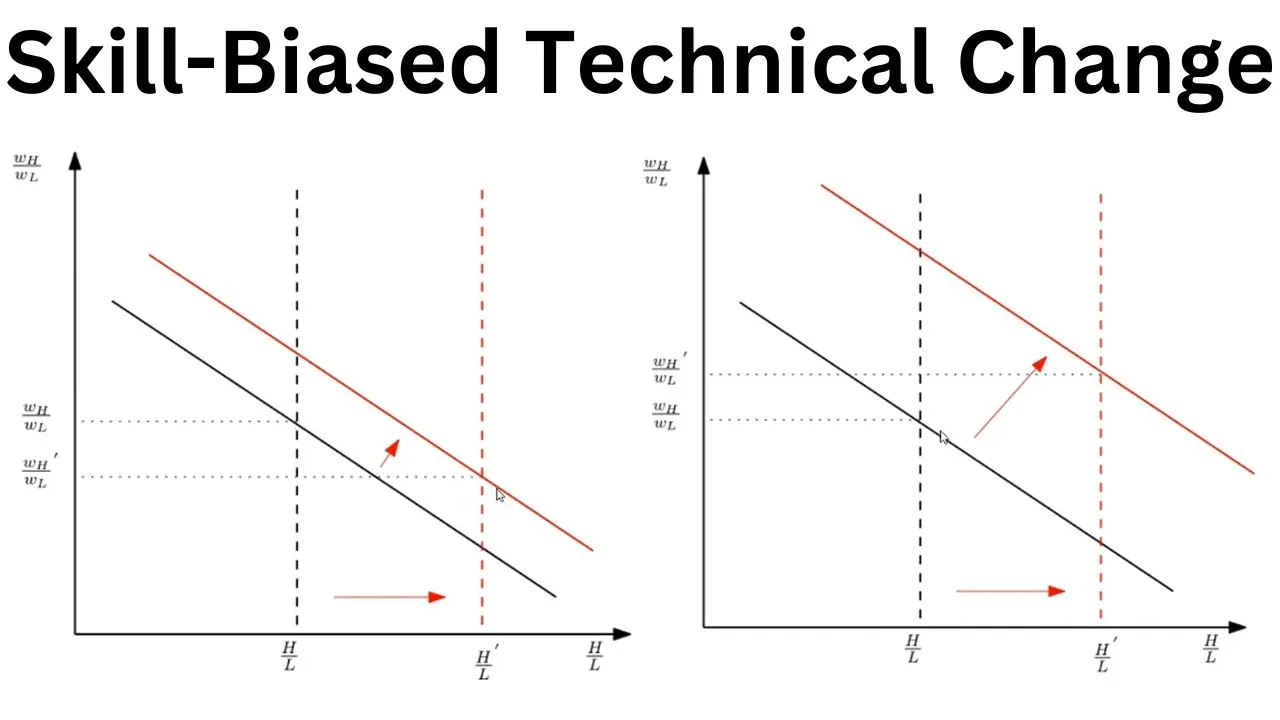

















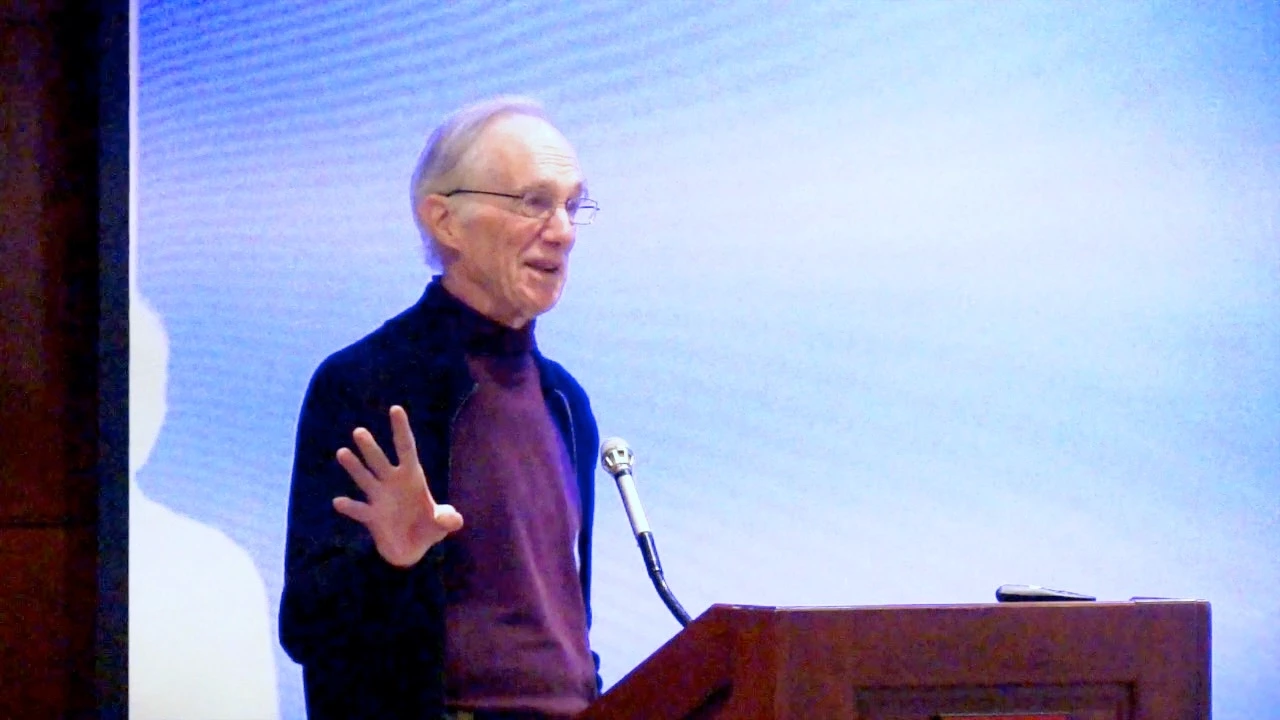

The United States has experienced slower economic growth and rising income inequality since the 1970s, driven primarily by skill-biased technological change that favors skilled workers over unskilled workers, combined with demographic shifts such as declining labor force participation and reduced productivity growth. These forces have created a 'race' where technology advances faster than education can compensate, leading to a widening gap between high-skilled and low-skilled workers. Addressing these challenges requires focusing on education and skilled immigration rather than relying solely on tax policy, as the fundamental economic forces driving inequality are largely beyond direct policy control.
Economic Trends, Inequality, and Policy Solutions with N. Gregory Mankiw
Added:Basic macroeconomic indicators, particularly Gross Domestic Product (GDP) and how long-term economic growth is measured.
Fundamental concepts of labor economics, including wage determination, labor productivity, and the concept of skill-biased technological change.
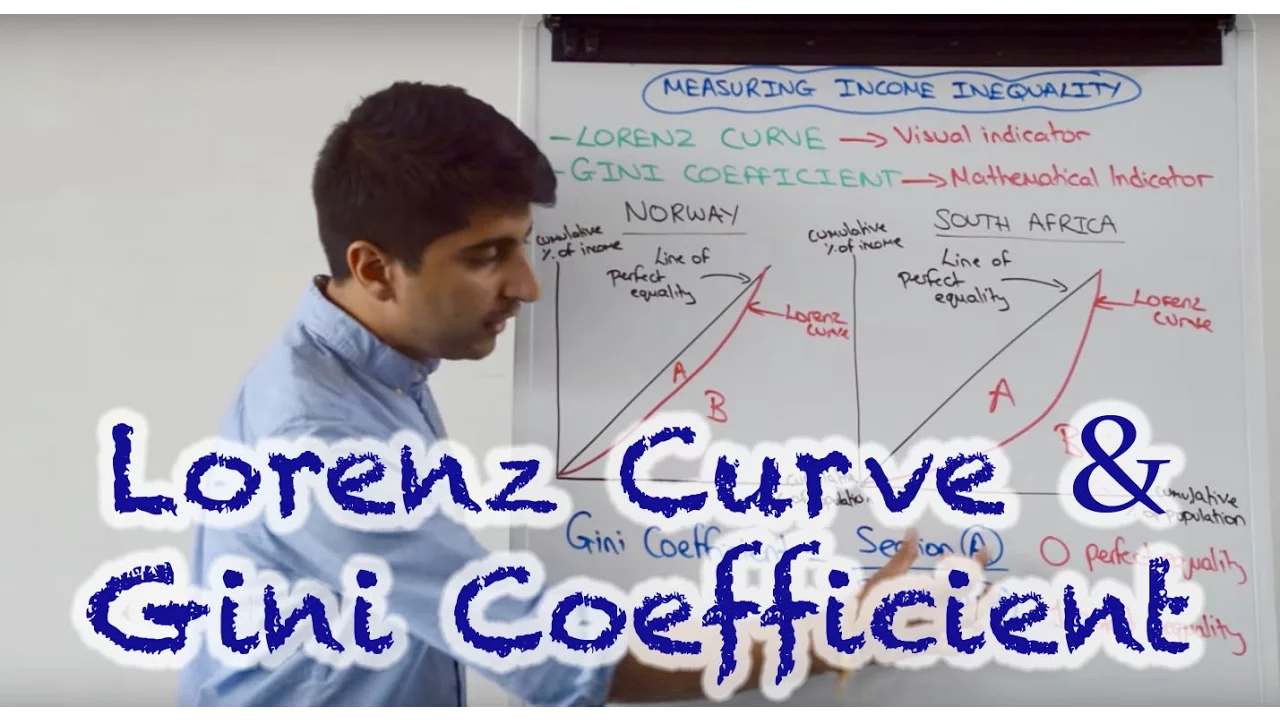
An understanding of income inequality metrics, such as the Gini coefficient, wealth versus income distribution, and income quintiles.
The basic principles of public finance, specifically progressive versus regressive taxation, and the role of government transfer programs.
In-depth analysis of specific policy alternatives for wealth redistribution, such as Universal Basic Income (UBI) versus a Negative Income Tax.
Advanced models of economic growth, such as the Solow-Swan Model and Endogenous Growth Theory, to understand the drivers of long-term prosperity.
Empirical research on intergenerational economic mobility, examining how opportunity and socioeconomic status are passed down through generations.
The political economy of inequality, exploring how economic disparities shape political influence, lobbying, and institutional design.
18.5K views0likes1:15:42Original Release: 2018-03-08
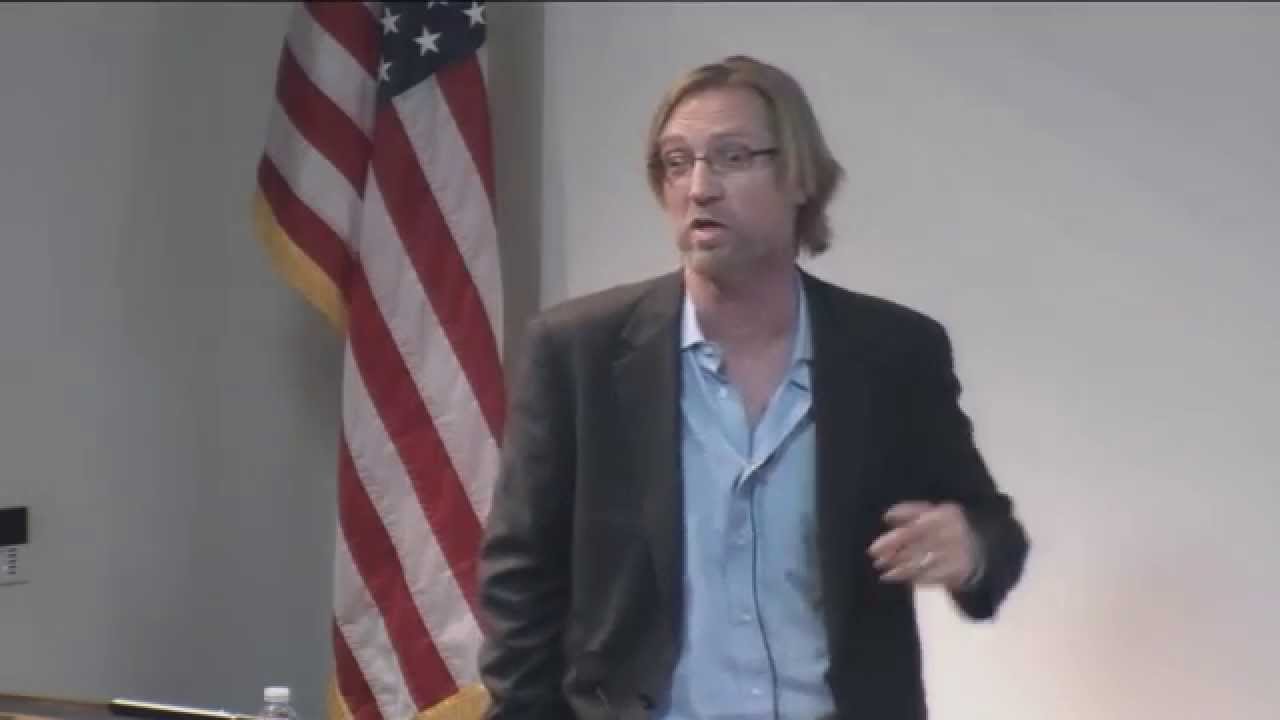
Good evening and welcome to the Marian Miner Cook Athenaeum.
My name is Wesley Whitaker, and I'm one of your Ath fellows this year.
Almost 10 years ago, I vividly remember sitting in front of the TV glued to CNN as Anderson Cooper described how the country was quickly sliding into the biggest recession since the Great Depression.
I may not have known anything about supply and demand, credit markets, or what the heck derivatives were, but it was obvious even then that this event would profoundly shape the coming years.
According to some metrics, the economy started to turn around after the first year of the Obama presidency, and his administration saw the longest sustained period of job creation and GDP growth of any modern president.
Despite this data, as well as a soaring stock market, many people in this country have felt that the recovery extolled by pundits and politicians never actually came.
No candidate capitalized on this sentiment better than Donald Trump, who made the economy the centerpiece of his campaign.
Our guest tonight will describe the origins of the economic trends that helped fuel this sentiment as well as discuss how they can be changed in the coming years.
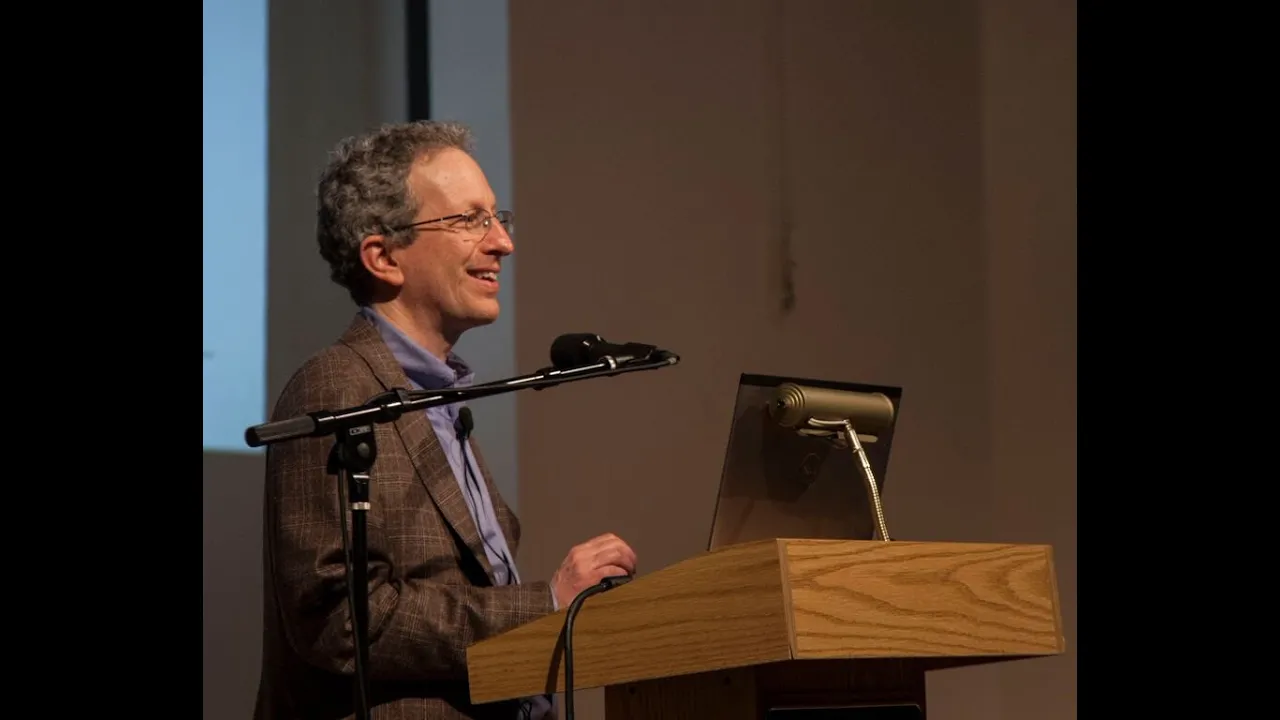
N. Gregory Mankiw is the Robert M. Baren professor of economics at Harvard University.
As a student, he studied economics at Princeton University, where he received his Bachelors, and MIT where he got his PhD.
As a teacher, he has taught macroeconomics, microeconomics, statistics, and principles of economics.
He even spent one summer working as a sailing instructor on Long Beach Island.
Professor Mankiw is a prolific writer and a regular participant in academic and policy debates.
His research includes work on price adjustment, consumer behavior, financial markets, monetary and fiscal policy, and economic growth.
His published articles have appeared in academic journals such as the American Economic Review and the Journal of Political Economy as well as in more widely accessible forms including the New York Times, the Washington Post, and the Wall Street Journal.
He has written two popular textbooks that I think some of you are aware of: (laughter) the intermediate-level Macroeconomics and the introductory textbook Principles of Economics.
The latter has sold over two million copies and has been translated into 20 languages.
In addition to his teaching, research, and writing, Professor Mankiw has been an advisor to the Congressional Budget Office as well as the Federal Reserve Bank of Boston and New York.
He also serves as a research associate of the National Bureau of Economic Research and served as chairman of the President's Council of Economic Advisors from 2003 to 2005.
Professor Mankiw's Athenaeum presentation is co-sponsored by The Financial Economics Institute at Claremont McKenna College.
As always, I must remind you that audio and visual recording are strictly prohibited.
Please silence and put away your mobile devices at this time.
And please join me in welcoming Professor Mankiw to the Athenaeum.
(applause) Thank you.
Thank you very much.
It's really a great honor to be here.
There's a lot of interesting things to talk about today, but I wanna start with this picture here.
And I'm not interested in the person.
I'm interested in the hat.
Make America great again.
This catchphrase resonated with lots of people in the last election, and what I wanna do today is talk about the economic dimensions of this.
What is it about the economy that made people feel like America wasn't great?
What made the people feel unsatisfied that they decided to elect what obviously has been an outsider, a disrupter to really shake things up?
There's only three parts of my talk today.
The three parts, obviously facts, hypotheses, and policies.
So I'm gonna talk about what are the facts, what are the underlying trends that might make people feel uneasy about what's going on in the US economy.
I then wanna give you my best guess as to what are the economic forces driving these trends, and then once we have some hypotheses in hand, we're gonna talk about what policies might we pursue to reverse some of these trends.
So that's my agenda today.
Part one is what are the facts.
Well this chart shows you the growth rate of real GDP.
I've averaged this over a 20 year period.
So the first observation here is growth from 1947 to 1967 all the way to the most recent observation which is growth from 1997 to 2017.
So this is growth and real GDP per person.
GDP is, of course, total income of the economy.
"Real" means adjusted for inflation.
So it's basically average income of the economy, more or less, the broadest measure of average income.
And what you see here is you see that this recent observation is the slowest growth experienced during this period.
We've been living through a very slow period.
A part of this is the financial crisis and the recession, but it's not just that.
This is a 20 year average.
So I'm trying to average out over the business cycle, and this shows you that we've been living, really, through a very poor time.
So not only was the recession in 2008 very deep, it was followed by quite a slow recovery.
And so as a result, the 20 year average is really quite disappointing.
Here's another way to look at this.
This is showing you the growth in family incomes for different parts of the income distribution.
So this over here is the bottom fifth of the income distribution.
This is the middle class, middle fifth.
This is the top fifth, and this is the top 5% which is, of course, a subset of the top fifth.
The blue bars show growth before 1973, and here you see robust growth in all parts of the income distribution.
So both rich people and poor people were experiencing rapid growth in incomes.
And indeed growth seemed a little bit higher for people at the bottom of the income distribution.
So we were becoming more equal as a society.
And then after 1973, things changed.
That's these brown bars here where you see after 1973, growth at the top was still okay, but a little lower than before, but growth at the bottom completely fell out.
So people at the bottom of the income distribution were experiencing basically no growth in family incomes over a very long period of time.
So we're going to a period of lower growth and widening inequality because people at the top were growing faster than people at the bottom.
So those are the two facts that I wanna focus on: slower growth and widening inequality.
Now when you think about inequality, people are particularly interested in the two tails of the distribution: the very rich and the very poor.
So here are some data on the 1%, which got a lot of attention in the Occupy Wall Street movement.
This shows you the percentage of the total income going to the top 1% based on income tax data.
And what we see is that from 1913, which is when income tax began, to the 1970's, the share going to the top 1% fell from about 20% of total income to about 10% of total income.
That's basically going from the Great Gatsby era right to basically when I was in college.
And then from the 1970's to today, that trend reversed itself, and the share of total income going to the top 1% approximately doubled.
Went from about 10% of total income to about 20% of total income.
Remember that number approximately doubled, because that's gonna be important later when we think about possible solutions to this.
So this is the share going to the top 1%.
Now, this next chart shows you an even more rarefied group.
This is the 1% of the 1%.
To be in the top 1%, you need a family income of about $450000.
To be in the top 0.01%, you need family income of about 11 million dollars a year.
A married couple of a couple of successful physicians is probably in the 1%, probably not in the 0.01%.
This is basically Elon Musk and Taylor Swift.
And what you see here, again, the same U-shaped pattern where inequality fell and then rose again, but the changes are much more pronounced.
Remember the previous chart we saw the share going to the 1% roughly doubled from the 1970's.
Here, the share going to the top 0.01% increased by roughly a factor of five.
So a very, very big change in the share going to the very top sliver of the income distribution.
So this tells you what's going on at the top, here's a chart that shows you what's going on at the bottom.
This is the official poverty rate, starts in 1959.
And you see that from 1959 to some time in the 1970's, there's a pretty persistent decline in poverty.
It was during this period when John Kennedy could say a rising tide raises all ships.
And then in the 1970's, because of rising inequality and basically very little, low growth and low incomes, we see that there was essentially no trend in the poverty rate.
You see some fluctuations.
The poverty rate tends to go up in recessions, which are these shaded bars here, and then down during booms, but the long-term trend since the 1970's has been flat, basically no significant advances in poverty since some time in the mid-1970's.
Here's a picture from Raj Chetty.
We've all heard about the American dream, and of course that means different things to different people, but one way of manifesting the American dream is what's the chance that a person is gonna do better, in terms of income, than their parents.
And so Chetty actually has gotten data linking children and parents, children of course once they're adults and they are earning income, and figured out the probability of doing better than your parents as a function of age and birth.
If you were born in 1940, the probability that you're gonna earn higher income than your parents is about 90%.
You will almost certainly do better than your parents.
If you were born in the 1980's, the chances of you doing better than your parents is only about 50/50.
So quite a big decline in this metric for the American dream.
This is not a new fact.
This is really another way of stating the two facts I've showed you, which would be we live in a period of slower growth, so the average person is not advancing as fast, and widening inequality, the extent that there's growth in incomes.
A lot of it is showing up at the top.
And Chetty has done some calculations to attribute this decline in the American dream, and he finds about a third of it is attributable to the lower growth and about 2/3 of it is attributable to the rising inequality.
So both of these facts are important and are manifesting themselves in this particular phenomenon here, which this is a particularly dramatic way of explaining lower growth and rising inequality.
Okay, so those are the facts.
Those are the facts.
And those are the facts I wanna explain.
And you can sort of see why, a typical voter surely was not studying the data like an economist would, but if you're living in a period where it's becoming less and less likely that your children are being born and are gonna do better than you, that makes you feel bad about the economy.
You want somebody to come and make America great again.
But before we talk about how we might do that, let's talk about what are the economic forces are explaining these facts.
I'm gonna give you my best guesses as to what is driving these two forces.
Well, one thing driving slower growth is changes in labor force participation.
So labor force participation is essentially the percentage of adults who are working or looking for work.
So these people are in the labor force, percentage of adults who are looking for work.
And you can see that this is far from steady.
It went from 59% in 1960 up to 67%, and then it's fallen back down to here to about 63%.
So you see these long-term trends.
And when there are more people working, there are more people producing, and that income is gonna be rising, and there's fewer people working, there's fewer people producing, and that's gonna tend to be a downward force on incomes.
So what's driving these long-term trends?
I think we have a pretty good handle on the main driving forces here.
What's driving labor force participation up during this period here?
This was largely the women's movement.
Women are entering the labor force.
A woman's role in society is very different than it was, say, when I was born here at the beginning of this chart.
And as women entered the labor force, the labor force participation goes up.
They start earning incomes.
That helps GDP expand.
Of course, this phenomena can't go on forever, because women can enter the labor force, but once they're in the labor force, they can't enter again, can only do it once, so therefore this force plateaus off at some point.
And then what happens over here, this is the baby boomers starting to retire.
Baby boomers started being born in the late 40's, and around now, they're starting to retire.
I just turned 60 a week or two ago.
I'm right in the middle of the baby boom, born 1958.
I'm not quite retired yet, but just wait a few years.
And so more of us will be retiring, and this downward trend for labor force participation is probably gonna continue.
And it provides a downward force on incomes because there are fewer people working and earning incomes.
So I think these demographic forces are one of the things driving the trend toward lower income growth that we've seen.
Another thing driving it is productivity.
There was a book that came out about a couple of years ago by Robert Gordon called The Rise and Fall of American Growth.
And Gordon's hypothesis is pretty simple.
He's saying basically live in an era which technological change is just not all that impressive.
Now, to some people that seems kind of surprising.
After all, think of all the stuff that you have that your parents didn't have, right.
You've got a smart phone, and you have a Twitter account, and we have Google.
And it seems like wow, we live in an era of tremendous optical change.
But Gordon points out that yes, these are impressive technological changes that are contributing to growth, but what did previous generations have?
They invented stuff like electrofication, the internal combustion engine, indoor plumbing.
Alright, if I had to ask you which would you give up first, your Twitter account or indoor plumbing, (laughs) you probably wouldn't choose your indoor plumbing.
You probably wanna keep indoor plumbing.
Although I must confess, I talked to Stan Fischer, my PhD advisor, about this once, and he said when I grew up, he grew up in part of Rhodesia, he said when I grew up, we didn't have indoor plumbing.
It's not that big a deal.
Personally, I'd be very hard pressed to give up indoor plumbing.
So Gordon's view is the sort of inventions that people are inventing now aren't just as life changing as previous inventions.
Elon Musk is a great entrepreneur, but he's not quite Thomas Edison, right.
It's great that we have a Tesla going around the sun in an endless orbit, but the light bulb was really more life changing. (laughter) Now, some evidence for this comes from a paper by Nick Bloom, Chad Jones, John Van Reenen, and Michael Webb where they make a very, very simple point.
One thing we all know is that productivity growth has been kind of slow.
But the amazing fact they point to is the number of researchers in the economy has increased tremendously.
The number of researchers in the US economy since the 1930's has increased more than 20 fold.
You have 20 times as many people trying to generate new ideas.
And this is all sorts of research: government research, private research, university research.
So we have 20 times as many people trying to generate good ideas, but productivity growth is kind of eh.
How do you interpret that fact?
Well their interpretation is that ideas are just getting harder to find.
To find the next good idea, you just need a lot of researchers.
Well when researchers are researching, the ideas they're generating are small ideas.
They're not big ideas.
Another piece of evidence that's consistent with this view is that this falling productivity growth story is true around the world.
It's not just the United States that's having lower productivity growth historically.
All economies at the technological frontier, the major developed economies, are experiencing slower productivity growth.
And it does suggest that whatever the explanation is, it's not a specific thing having to do with American policies or American institutions, but rather a phenomenon that's worldwide.
This idea that mentors aren't doing stuff as cool as previous generations can help explain that.
So those are the explanations, I think, for slower growth and average incomes.
What about this other phenomenon I talked to you about which is slower growth and productivity.
Here I think it's a little harder to know what the right answer is, but I'm gonna give you my best guess, or several guesses, I have as to the forces at work driving rising inequality.
The best explanation, my single favorite explanation, comes in this book here by two of my Harvard colleagues Claudia Goldin and Larry Katz, and they basically summarize their conclusion in their title, which I just wanna, I love this book.
You only have to read the title, and you kind of got it, The Race Between Education and Technology.
Their story is that technology tends to be a force causing inequality to rise.
And the reason is when technology advances, the easiest thing for technology to do is find stuff to replace unskilled workers, to automate things done by unskilled workers.
So think of an example, I have a friend who's an electrical engineer.
He programs automatic teller machines, so automatic teller machines have basically created his job.
He's a skilled worker.
But what do automatic teller machines do?
They replace hundreds of thousands of people who are tellers.
When I was a child, who now would wait in line for a human being to get some money from the bank?
That's a crazy idea.
We just go to the machine.
It's a robot, basically, is doing it for us.
Similarly, we're inventing other things.
I went to a restaurant at an airport a few months ago.
I think of a waiter as a job that, it's a pretty good job for a relatively unskilled person.
Well at this restaurant, they'd replaced most of the waiters.
You sit down at your table.
Your menu's on an iPad.
You type into the iPad what you want, then a real human being brings out your food, but even when you pay the bill, no waiter shows up again.
There's another machine at the table that you just swipe your credit card and you pay your bill that way.
So they replaced 2/3 of the tasks the waiters do with a machine.
Think of what's gonna happen to all the Uber drivers once self-driving cars come into being in a few years, or all the truck drivers when self-driving trucks come in.
So we're constantly finding new ways to replace unskilled workers with technology.
We're gonna reduce the demand for unskilled workers and tend to depress their wages.
Goldin and Katz say that the other participant in this tug of war, the other end of the rope, is education, because what education does is it turns unskilled workers into skilled workers.
That's presumably why you're here, right, students, not the professors.
Why you students are here, right, you're trying to turn yourself from an unskilled worker into a skilled worker so you can get the benefit of the skill premium.
But when we educate more people, it's also good for the unskilled workers because when unskilled workers become skilled workers, there's fewer unskilled workers competing for the unskilled jobs that remain, and that tends to raise the wages of the unskilled.
So when you become a skilled worker, you're not only benefiting yourself when you become a skilled worker, you also benefit the people you leave behind in the unskilled labor pool by reducing the supply.
So that's the story.
It's a constant race between technology and education.
And according to Goldin and Katz, early in the 20th century, education was winning the race, and recently we've let technology win the race.
Here's a picture from their studies.
This shows you years of schooling by year of birth.
So if you were an American born in 1870, you probably had about seven years of schooling.
If you're an average American today, you have about 13 or so years of schooling.
And there's been a pretty steady increase of this.
Pretty steady, but not completely steady.
In particular, recently it's slowed down, and you can see that if we kept going at the previous pace, the average American today would have a year or two more schooling than in fact they do.
And it's that slow down, according to Goldin and Katz, that has allowed technology to start winning the race between education and technology.
Here's a chart from David Otter, a professor at MIT.
This shows you growth in earnings, this is men on the left, women on the right.
Scores are similar but not exactly the same.
It shows you growth in earnings since 1963 by educational obtainment.
So here you see a high school dropout.
See a high school dropout today is earning a little bit less than a high school dropout would have earned in 1963.
You see a college graduate today is earning about 40% more, and someone with a graduate degree is earning about 90% more than their counterparts in 1963.
Again, similar stories for women.
So it's great that you're here in college, but consider graduate school. (laughter) This is completely consistent with the Goldin and Katz story.
This combination of skilled bias technological change has allowed the skilled to take off from the unskilled.
And notice, by the way, when this happens.
We had growth in sort of all of these categories.
We see growth in all of these categories from '63 to the 1970's, and it's exactly the 1970's when we saw inequality start increasing when these start fanning out.
So these start fanning out in the 1970's precisely when inequality starts rising.
So in my mind, this is the single most important explanation for rising inequality, the race between education and technology, but it's not the only force at work.
So let me mention three other forces that I think are contributing to rising inequality in addition to this one.
Oh before I get to that, let me talk about the election, get back to the election for a second.
This shows you who voted for Trump and who voted for Hillary.
Among college-educated people which is up here, Hillary won by nine percentage points.
Among people without college educations, Trump won by eight percentage points.
There's a huge gap in how college and non-college educated people voted.
Notice that this huge gap is very different from previous elections.
In previous elections when you asked the college educated and non-college educated to vote, they would have reached the same conclusion.
In this election, college educated and the non-college educated reached completely different conclusions.
Of course there's different ways to interpret this.
If you're a real Hillary supporter, you'd say I knew those Trump people were idiots.
But another explanation is that the people who didn't have college degrees were experiencing a different economy.
They were experiencing an economy where wages were not growing, where the American dream particularly seemed to be fading, and those are the people who wanted to shake things up.
Those are the people who really felt they needed to make America great again because they've been living a different experience than the people with college degrees.
Okay, so that sort of connects the Otter evidence to the Goldin and Katz story and the recent election.
Let me go on to some other explanations for rising inequality.
I think globalization is part of it.
The United States is a country that tends to have a lot of skilled workers 'cause we tend to export things that have a high skill content.
We tend to import things that are produced by unskilled workers because unskilled workers are abundant abroad.
That pattern of trade means that the demand for unskilled workers in the United States falls, and the demand for skilled workers rises when trade expands.
So globalization, increases in trade, probably has contributed to rising inequality.
On the other hand, we should be careful not to be too hard on globalization because we know, I think, from basic economics, in fact it's chapter three if you remember. (laughs) We know from basic economics that trade allows countries to be better off on average.
So while some people may end up with a smaller slice of pie, the overall pie is getting bigger.
And I think that's how most economists think of it.
This is actually a poll of economists.
Basically the first question asks economists trade with China makes most Americans better off, and absolutely every single economist they asked agreed.
It was a poll of several dozen prominent economists.
But then they asked the same economists aren't some Americans worse off because of trade with China?
Now again, virtually everyone agreed.
So I think the basic story about trade is yes, trade is good for the average person, but it's not necessarily good for every single person.
I think that's something to keep in mind as we think about policy responses.
I wanna pause, digress for a moment on that graphic up here.
This particular graphic's taken from the most recent edition of my textbook.
You can see that graphic we have, which is new, has Alex Trebek there in a little Jeopardy pose with three contestants which you can see on the left are Adam Smith, Milton Friedman, and John Maynard Keynes.
(laughs) Okay, superstars.
There's a great famous paper by Sherwin Rosen in the early 1980's in the American Economic Review, and it said that there's certain professions that technology allows superstars to develop.
And a superstar is basically somebody who's at the top of their game and as a result can command a huge share of the market.
So this is Robert Downey Jr. in The Avengers.
He played Iron Man in The Avengers.
For that one movie, for the movie The Avengers, Robert Downey Jr. was paid 50 million dollars.
Took him a few months to film it, and he was paid 50 million dollars.
To give you some sense of how much money that is, the average American worker, to make 50 million dollars, would have to work for more than a thousand years.
That's a long time.
So 50 million dollars is a lot of money.
How did he do it?
Here's the basic economics of it.
He had a share of the revenue.
Roughly 200 million people worldwide saw The Avengers.
Everybody who bought a ticket to see The Avengers had to pay basically 25 cents to Robert Downey Jr.
My guess is when they left the theater, if you had asked them, they would've said yeah, it was a good performance.
It was worth 25 cents because it was a good performance.
So nobody felt really ripped off.
And he only charged them 25 cents.
Well 25 cents doesn't sound like very much, but 25 cents is a lot of money if you can figure out a way to have 200 million customers.
Most people in most occupations cannot have 200 million customers.
If you're the world's best plumber, you may be in high demand, but there's no way you're gonna have 200 million customers.
You're the world's best barber.
There's no way you can have 200 million customers.
But if you're the world's best actor, you can because technology allows him to make a movie and send it around the world at basically zero cost so literally everybody can enjoy it.
Now similarly, think of singers.
The average singer doesn't get paid anything for singing.
They sing for free in the shower, and they annoy their spouse doing it.
But Taylor Swift, because she can sing a song and send it basically around the entire world like Robert Downey Jr. sends his movies, makes, I don't know, 70 million dollars a year or something like that.
So technology has allowed superstars to develop in some markets.
And I think there's been a growth of superstars, although it is hard to measure.
Oh and finally, I think one of the things going on is with the women's movement and assortative mating.
You're here at this elite school.
This is not only a great place to get a great education, it's a pretty good place to find a life partner.
Let's talk about why that's important.
Here's some data I pulled from a sociology journal.
And what this shows you is the correlation of husbands' incomes and wives' incomes.
If you look over here, you see today there's a positive correlation between husbands' incomes and wives' incomes.
And that's not so surprising, right.
The successful doctor, lawyer, banker marries another successful doctor, lawyer, banker, so therefore you get a positive correlation between husbands' and wives' incomes.
But notice here back a long time ago when I was a kid.
There was a negative correlation between husbands' incomes and wives' incomes.
You students are too young to remember that, but you've probably seen Leave It to Beaver.
So think of it this way, now we're in the Leave It to Beaver era.
And what happens when Ward Cleaver comes home, and he says June, I got a raise.
She says that's great.
I don't need to work anymore.
I can now stay home with the kids.
And this is basically what's going on here.
The more successful the husband, usually the husband was the primary worker back then, obviously not true today in many cases.
But the more successful the husband, the more likely it was that the woman would drop out of the labor force.
And as a result, there was a negative correlation between the income of the husband and income of the wife.
What has this done?
Well, if you have two incomes in a household and there's a positive correlation between them, the high income household is gonna pull away relative to the low income household.
So the negative correlation was a stabilizing force in household incomes, and the positive correlation is a destabilizing force, pushing people apart.
Okay, so those are my hypotheses, and I think there's some truth to all of them.
The question is what do we do about these trends?
Well one thing we might wanna do, now that we understand the forces at work, let's address the root causes.
The first thing you recognize is that many of these root causes are very, very hard to change.
It'd be great to tell Elon Musk stop just sending Teslas revolving around the sun.
Why don't you go and invent something really cool like Thomas Edison did?
But he's really doing the best he can.
It's probably not his fault that he hasn't quite, he's obviously a tremendously creative guy, but the fact that Paypal is not quite as great as the light bulb, that's not his fault.
He's really doing the best he can.
So we really can't tell people to invent better stuff.
We're not gonna tell women to enter the labor force again because they can't.
They've already entered once.
They can't enter a second time.
We're not gonna tell the baby boomers don't retire, got to keep working because we're worried about GDP growth.
We're kind of getting old and tired.
It's our turn.
So those demographic forces are hard to change.
Skilled bias technological change is hard to change.
We're not gonna tell inventors stop replacing unskilled workers.
Why don't you invent some stuff to make unskilled workers more productive?
Why don't you invent some stuff to replace skilled workers?
But they can't really control what they invent.
They invent what they can invent.
It's just easier to invent, automate stuff that unskilled workers are doing, 'cause it's more easily automatable.
So you really can't do that.
We're not gonna tell people to stop doing assortative mating.
We're not gonna say I know you're an investment banker making a lot of money, but what if you don't marry another investment banker.
That's gonna make inequality worse.
Go marry yourself a poet.
That's to solve the inequality problem, right.
We're not gonna stop that.
So a lot of the forces at work are really beyond control.
Now we could change globalization, but as I said, that's not such a great idea either because globalization does make the overall pie bigger, even if it does contribute to inequality.
So reversing globalization might help the inequality issue, but it's gonna make the growth issue worse.
So what can we do?
Education, that's one thing I talked about that maybe we can change.
And I think education is the thing that we should really focus our attention on because more human capital can both promote economic growth, because human capital is an input into growth, and it can also ameliorate inequality by changing the mix of skilled and unskilled workers.
A couple caveats, patience is required.
Jim Heckman, Nobel prize winner from the University of Chicago, has said that the best way we can provide more human capital people is probably better preschool for kids who are from underprivileged families.
Let's suppose Jim is right.
It's controversial, but let's suppose he's right.
And let's suppose we intervene with the absolute best preschool program ever imagined, and it's completely successful.
Well these three and four year olds who are benefiting from these preschool programs aren't gonna enter the labor force for 20 more years.
So you're not gonna see any of the economic benefits of this for a couple decades.
So yes, we need to focus on education, but it's not a quick fix by any stretch of the imagination.
The other caveat I call might Bryan Kaplan be right.
There's a new book that just came out a few weeks ago called The Case Against Education, and those of you who ordered my textbook, you know that there's really two views of education.
One is the human capital view, which is what I've been promoting through most of today.
The other is the signaling view.
The human capital doesn't really make people more productive, it just helps employers sort between productive and nonproductive people intrinsically.
Kaplan basically in his book argues that basically it's all signaling, and therefore most of education is a waste of time and money.
I hope to god he's wrong.
I think he's wrong, but I will entertain at least the possibility that I'm wrong and he's right.
So I'll leave that as a caveat.
Now one thing we can do to increase the educational content of the labor force is to allow more skilled workers in.
The debate over immigration is infinitely complicated, and it's got a lot of facets, and I'm not gonna go into that today.
The debate over skilled immigration is, I think, relatively straightforward.
Think of all the downsides that people point out about unskilled immigration really just don't apply to skilled immigrants.
My own view is that if you're a foreign student, you graduate from an American university, as you get your diploma, we should be giving you a green card with it, encouraging you to stay.
(applause) Now, the other thing we can do, the other thing we can do is not worry about the root causes.
We can say okay, fine, we have slow growth, rising inequality.
Let's use a tax system to do something.
All the data, by the way, I gave you on incomes is all before-tax incomes.
So we could focus on the tax system.
Here's some data on the progress of income taxes.
These are tax rates paid by, this is the lowest quintile, the middle class, and the top 1% since 1979.
So you see today, well it's not quite today, the most recent date is 2013.
The middle class pays about 14% of their income in taxes.
The top 1% pays 34%.
And you can see that there are fluctuations.
You can see a couple things.
One is we've always had an aggressive tax system.
This is all federal taxes including payroll taxes, income taxes.
So we've always had a progressive federal tax system.
The degree of progressivity does vary a little bit depending on who's in power.
So you see that Ronald Reagan cut taxes on the rich.
Bill Clinton raised taxes on the rich.
George W. Bush cut taxes on the rich, and Barack Obama raised taxes on the rich, and I presume this is coming down a little bit under the recent tax bill, although the data is not available for that yet.
I'm not gonna sit here arguing about Barack Obama versus Ronald Reagan's tax plan, but I do wanna point out one thing.
What's the difference between Ronald Reagan and Barack Obama's tax plan?
It's basically the difference between 27 and 34% tax rates for the top 1%.
So that's about a seven percentage point difference in taxes paid by the rich.
That's not insignificant, but remember earlier on when I said, we were looking at these changes in the top 1% income.
The top 1% income went from 10% of total income to 20% of total income.
They doubled their share of total income.
That's huge compared to this 7% tax rate.
We can debate about Barack Obama versus Ronald Reagan, but that difference is small compared to the huge differences in before tax incomes that we've seen in previous data.
Now one of the most difficult problems that we face is this one here, this famous book by Arthur Okun, Equality and Efficiency The Big Trade off.
He could have called this Equality Versus Growth The Big Trade Off.
And the basic idea here is that yes, we can use the system of taxes and transfers to try to achieve more equality, but if we do that, we're gonna blunt incentives, and that's gonna make the economy less efficient, so we're gonna lose economic growth.
Or we can try to reform the tax system to make the tax system more efficient to get better incentives, but one side effect of that might be reduced equality.
And so in Okun's view, that was sort of the big trade off faced with policy.
I think this is particularly important to keep in mind now because remember I said we face two big problems: slow growth and rising inequality.
Using the tax system to address one is gonna make the other problem worse.
I think focusing on education can ameliorate both problems, but if we simply use the system of taxes and transfers, we could do it to focus on inequality.
We could do it to focus on growth, but we can't probably use the tax system to do both at the same time.
Now we have a recent tax cut.
Donald Trump when he was asked what he wanted to call the tax cut said he wants to call it the Cut Cut Cut Act.
The House of Representatives thought that wasn't dignified enough, so in fact they called it The Tax Cut and Jobs Act.
And my reading of that act is that in its equality efficiency debate, they were really more focused on efficiency than equality.
They were more focused on trying to get economic growth up than on combating rising inequality.
And let me just say a few words about it since it's been in the news lately, there are some good things about it I like.
I like the fact that it's got a lower corporate tax rate.
I like the fact they've reformed the nature of the corporate tax to be territorial rather than global.
I won't go into detail on that now, just in the interest of time.
I like the base broadening, reducing the mortgage interest deductions, reducing the state-level tax deduction, even though it really screws California, by the way.
You guys in California are really screwed on this act.
I'm sorry to say, but it's true.
So I think there's some good things in it.
The worst thing in it, to me, is that it loses much too much revenue.
The budget deficits are getting too big, and I'm really worried about that.
I'm worried about the long-term fiscal imbalance.
And these are some ugly provisions of it.
I think this is gonna invite a lot of gaming.
These are all different tax rates for different kinds of income now, and it's gonna be a field day for tax accountants to try to game the system.
So I think it's kind of a mixed bag.
When people say whether I like it or don't like it, I really have trouble giving a simple answer because there's some things I like and some things I hate.
If I were to try to reform the tax system myself, sometimes people ask me that, I would've cut all income taxes much more than this and replaced them with another kind of tax that I think is much less distortionary.
Think of something like a consumption tax, like a value added tax, or a carbon tax.
I have a whole other lecture I could give you on climate change, but I'm taxing your patience already, so I won't go into that now. (laughs) Yes, it was a pun. I'm sorry. (laughs) Now I always feel at this point in the talk, I start feeling kind of bad because I feel like I'm gonna leave you depressed.
And I feel like because I said oh, we have these two problems, and most of the force that's causing these problems are things we can't fix.
And one of the tools we have, like education, are really hard to do and really slow acting.
And the tax system really is not very useful at fixing both problems simultaneously.
And if I just stopped right there, I feel you should just go home and wanna slit your wrists.
So I wanna end with some good news.
I wanna end with some good news.
So here's the first piece of good news I wanna leave you with.
This is showing people living in deep poverty.
So poverty, when we talk about world poverty is a very different thing when we talk about poverty in the United States.
This is people living on less than $2 a day.
And you see that the percentage of people living on less than $2 a day has fallen precipitously during our lifetime.
That's incredibly good news.
Why is that happening?
It's happening largely because of growth in parts of Asia, particularly China and India.
Probably more people have been pulled out of deep poverty because of growth in China in the past several decades than any event in human history.
So this is extremely good news.
Now most American voters, if you tell them yes, we have these problems, I'll get to questions in just a second, most American voters will say yes, we have these problems in the United States.
If you tell the voter yes, we have problems, but don't worry.
China's doing really great.
That's really not a message that you would give if you're a politician.
But since we're cosmopolitan citizens of the world, we should take solace in the fact that growth has been pulling more people out of poverty ever in human history.
So that's one piece of good news.
But even if you want some good news about the United States, let me leave you with this.
Suppose you're an American living at the poverty line, something like $15000 a year.
You're an American living at the poverty line in the United States.
That means you're poorer than 85% of other people in the United States.
But you are still richer than 85% of people in the world.
So even being poor in the United States is being rich by world standards.
And as you compare yourself not just to other people in the world now, if you compare yourself to the people who have ever lived throughout history, you're probably richer than 99% of humans who've ever been born on this planet.
So you're extremely fortunate, even if you're maybe not as fortunate as the people living down the street.
So to get back to my topic, this hat.
If I could revise this hat, I would just change one word: make America grateful again.
Because while we have our problems, we should remember that we are really, extremely fortunate by the standards of human history.
Let me end there, and I'm happy to take questions on anything I said.
Thank you so much. (applause) It was, it was I think was, we had a question over here but before you, I think we (mumbles) talk into the mic.
It's right there.
Right over here.
Okay, yeah so we'll open it up to questions.
If you have a question, please raise your hand and either Wesley or I will come and hand you the mic.
Priority goes to the students.
I was just wondering if your poverty graph was to real dollars?
Yes, it was to, yes it was real dollars.
Absolutely yes.
It's all adjusted to inflation (mumbles).
Hello Dr. Renicky and thank you so much for coming to our college today.
We really appreciate it.
Thank you for this amazing presentation and I have a lot of maybe off-topic question but still it is very hot topic today so describe the currency market, the current point of time for 153 billion dollars about a number ago, is bigger than the largest US bank which is owned by Mitsubishi Financial Division and you know, it's moving somewhere.
And I would like to ask you where is it moving?
Thank you.
Where is the cryptocurrency market moving?
I have no idea.
(laughter) I will say that I have a, I know my position with Bitcoin, I monitor very closely.
It's exactly zero.
(laughter) It's always been zero.
(laughs) (applause) And I wouldn't recommend anybody choose a different position.
'Cause it does seem like one big bubble to me.
I'm always preparing to believe I'm wrong.
Certainly there are people that made a lot of money in the but I fear the whole thing is gonna collapse.
So I wouldn't put in any money in it.
And maybe I'm just an old fuddy duddy.
And I don't really see any virtues, riches of this.
Thank you.
Thank you so much for talking.
I was happy to hear that you spend your summers on Long Beach Island.
I also spend my summers on Long Beach Island.
Oh really?
Very good.
Small world.
Greatest coastline in New Jersey.
Did you ever go to Theory Sailing?
What's that?
Did you ever go to Fury Sailing?
Do you know where Fury Sailing is?
I've never, well I've never gone sailing (mumbles).
It's a small sailing rental place on Long Beach Island called Fury Sailing.
That's where I got my first job teaching give me sailing lessons actually.
What's street is it on?
Or like what town?
(laughter) It's (mumbles) and Terrace I think.
Okay.
It's in the middle of the island.
From North Beach Inn.
Oh, okay.
So my question actually pertains to two different theories I heard about, like declining real wages.
So the first would be declining from dynamism in the United States.
And then the second theory I heard about is declining waiver share of productivity.
So I was wondering if you could talk maybe a little bit about your evaluation of those two theories and maybe why you choose not to factor them into your presentation today.
Yeah, I know.
I think there are other forces at work.
People have to have been talking about and who's a firm dynamism.
Some people believe, it's very hard to judge but some people believe that it's harder to enter markets, create new firms than the past.
And some evidence that sort of from creation it's lower than it has been in previous periods of time.
If you think that's true and (mumbles) that's drive by policy like regulations, and maybe some of the deregulatory policies the Trump administration is pursuing might make some sense.
It has been declined in the labor share.
I don't think it's the main driving force of rising inequality.
I think it's well, it's more recent and a smaller phenomenon than some of the data that I showed you.
But that is an interesting phenomena that people have been studying.
One explanation that some people have put forward is rising monopoly power.
And which could be consistent with (mumbles) dynamism.
And the questions were and if that, first of all it's the question whether that's true.
Or markups bigger than they have been in the past?
Is it because (mumbles) more market power and if so, why is there more market power?
And so, all of these are sort of open questions that we don't really know the answers to.
Interestingly that the Senator Schumer the leading Democrat in the Senate obviously comes to the view that it's policy driven because part of his new better deal plan that he announced maybe six months, a year ago, was including variety of provisions but one of them was more active anti-trust enforcement.
His view was that the policy administrators had allowed mergers to readily and that would reduce competition.
Maybe that's right.
Another possibility is differences in the nature of products that we're producing compared to what's happened in the past.
There's a lot of products now that are basic, information based products.
Things like making a movie.
Robert Downey Junior makes a movie.
Microsoft makes, writes software.
I write a textbook.
Listen to me, all of that, all of that activity is very, very fixed cost and very, very low marginal cost by it's nature.
Or pharmaceutical companies.
They invent the drug.
A lot of research in the drug.
Once it's invented, producing the drug is pretty cheap.
All those things are big fixed costs, low marginal costs.
This is intrinsically will have large markups.
And it's possible that we're moving more towards that kind of product as well as the old traditional products that of which normal competition include, prevails.
And as well, that was all very speculative unless (mumbles) could be important but I'm less sure so I see what gave you things that I'm pretty sure part of the story as opposed to things that might be a part of the story.
Yes?
Hi thank you for speaking with us.
I'm curious as to why you still believe that skills-based technological change is the best explanation for rising American income and equality despite a lot of criticism that the theory has received in recent years including the fact that all the factors that would lead to skills-based technological change have occurred another developed countries but with the exception of the UK to a much smaller extent.
Those countries haven't experienced a rise in income inequality than within group income inequality hasn't really increased in the same period despite the fact that we would think if you have an education but you're of the same income group there should be a divergence from people the that same income group who don't based on the SPTC thesis.
And also the fact that the vast vast majority of the increase in inequality has been concentrated at the very, very top rather than just a divergence of kind of the two halfs of educated and uneducated away from each other.
Yeah, I think, as I said I think skill biased technology change is part of the story.
I don't think it's the overall story.
Trying to understand the differences across countries is important but I don't think we fully understand that.
It is true that a lot of this has happened at the very top as I showed you the people at the very top are taking (mumbles) top 1% or top.01% I'm not as convinced that it's not skill biased technological change.
It was even among people who are same level of formal education, there's different levels of skill.
Twp people may have an MBA from the same business school.
That doesn't mean they're both gonna be equally suited to be CEOs.
They're gonna have different levels of skill.
One is gonna become a CEO other (mumbles) stuck as the Vice President.
And that could still be a skill biased technological change theory.
Now CEO pay is sort of one example of this.
It's a very small part because obviously there's only 500 CEOs of Fortune 500 companies.
So it's, there's not that many of them but there's a literature on CEO pay.
CEO pay is much higher in the United States than it is in say, Japan.
Why is that?
Well there's a couple theories as to why CEO pay is so high.
One is that the CEOs here are taking advantage shareholders by putting their friends on the Board of Directors.
And their friends are giving themselves excessive pay.
That sort of what I think of sort of the left wing explanation for those evil CEOs overpaying themselves.
I actually don't buy that.
I don't buy it for the following reason.
If you're a private equity firm taking over a company, and you're hiring the CEO for your company you own, your now the shareholder, usually the private equity firm.
You're not gonna overpay the CEO because it's your money you're overpaying him with.
But in fact, private equity firms pay CEOs in the United States a lot just as the public companies do.
So I don't actually think it's a principle agent problem on the Board of Directors.
There's another theory of CEO pay which is due to (mumbles) Gebecks.
Which is that as companies get bigger and more dynamic, the value of having the right CEO is more important.
And so his view is it's the nature of American capitalism is drive and see who'll pay up.
So the story that I'm I don't know particularly emphasize CEO pay here because it's only a small part of the story but the Gebecks explanation for CEO pay I think consistent with the kind of skill biased technological change story that I'm pushing here.
Thank you so much for coming tonight.
I had two questions.
Both of what your prescriptive text on.
The first concern your concerns about the rising defecit in the US.
I was wondering what you see as the-- (mumbles) what?
I was wondering what you see as the long run, upper bound for the capacity for the US to borrow given both a set of, (mumbles) all of the US economy.
And the sort of bedrock role played by US government debt in the financial world that might sort of create long run race sticky demand for large amounts of US government debt.
And then secondly, you advocated a shift away from income taxes which mean more progressive towards consumption taxes which are often more regressive.
And I was curious about what you thought about the rent of incidence.
All those consumption taxes across the population.
Okay, so we start off with the deficit.
I am very worried about the deficit and not just because of this tax bill.
I'm worried about the deficit because of structural fiscal problems that existed long before Mr. Trump that he inherited, hasn't really focused on.
In particular, my generation of baby boomers has promised ourselves a certain level of benefits when we retire from the social security and Medicare and some degree, Medicaid to extend the pace for nursing homes.
So we promised ourselves a certain level of benefits.
We haven't figured out ways to pay for that.
We obviously promised to the next generation you students are gonna pay for benefits with promised ourselves.
As a result, even before this recent act CBO projections of fiscal and balance it's getting worse and worse.
Keep rising as a shared GDP.
And this tax cut only made things worse.
So I'm very concerned.
I don't have a magic number that after X percent of GDP all hell breaks loose.
I think that's probably based on market psychology.
At what point does the, (mumbles) bond market look at the United States and say, "Oh, you know, you guys aren't (mumbles) from Greece."
I think it's, there is a point in which that could happen and will happen.
I don't think we're there yet, but it concerns me.
I think the most likely scenario is that we're going to end up raising taxes in the future and I suggested a couple taxes but I think I we should focus in on.
Now you mentioned the progressivity of taxes.
How, when you think about the progressivity of tax you have to think not only about how the money's raised but how the money's spent.
And so wanted give you for example, of a carbon tax, in my other lecture I have a, in my other lecture in carbon taxes I talk about a plan that I proposed with George Schultz, Hank Paulson, Jim Baker and Marty Felstein and our plan was through a group called the Climate Leadership Council and the plan that we proposed to the carbon tax was to put a carbon tax on to deal with climate change, roll back lots of regulations that are no longer necessary once you put a price on carbon and then use the carbon tax revenue to rebate lump sum back to people.
So since you know, richer people have bigger cars, bigger houses to heat and so on, they have bigger carbon footprint so they're gonna pay more of this tax.
Everybody gets the same rebate.
So the whole plan could be progressive even if the tax part itself is proportional.
Similarly, if I were designing the world from scratch, if I were saying, "Okay, a brand new society.
"I have no history.
"I can design the tax, the fiscal system "(mumbles) what would I do?"
I personally think the optimal system would be a value, raising a revenue through evaluated tax, a consumption tax.
Maybe a carbon tax, too.
Those (mumbles) aside for a moment.
A flat consumption tax and you summon the flat consumption tax to give people lump sum rebates in the form of like a universal basic income.
So that would have flat marginal tax rates but have progressive average tax rates which are take into account the lump sum rebate.
Thank for your talk.
I'm wondering what you are thoughts are on career and technical education in that it seems to more directly address the caveats for education and that there's more immediacy and it would provide a distinction that would address Kaplan's concerns.
Yeah, I mean Kaplan is big into that actually.
Kaplan book.
Kaplan's arguments, a lot of Kaplan's arguments to me strick me as hopelessly, I don't wanna choose an adjective that's too insulting.
But let me give the nature of some of the arguments.
He says things like, "What will all these people go to high school "or study Latin?"
Whoever uses Latin in their day to day life?
Nobody talks Latin anymore.
Or if he says, "Think about trigonometry."
A few people use trigonometry.
But almost nobody uses trigonometry.
How about fraction (mumbles) trigonometry.
But they all go to school to learn trigonometry.
What a waste of time.
And it's true that if you think of that a-ha, we're supposed to learn specific things and apply them directly to our job and that's what education is about then a lot of the things the academic skills we learn seem hopelessly unusable.
My own view of education is it's training your mind to think in ways to solve problems to express itself, and the more ways we train that mind, by learning Latin and trigonometry even when you come to problems that aren't either Latin or trigonometry your mind will be better prepared for it.
So I am, I'm more open and sympathetic to sort of pure academic stuff.
Let me sort of, give, right out of a psychology experiment that somebody, somebody did recently.
You're training people to throw, this may be a bit of stretch by the way.
You're training people to their beanbags into a bucket.
And we're to split the class up into two groups.
One group is gonna have the bucket always three feet away.
And throw the bean bag into the bucket three feet away.
That's the only thing I practiced doing.
The other group is gonna practice two different things.
Sometimes they're gonna throw the bean bag into a bucket two feet away.
And sometimes they're gonna throw the bean bag and the bucket four feet away.
That's why they're practicing two different distances.
After we spend given the moth doing this gotta be the worst experiment ever to be a subject but anyway, you have to have a month doing this practice we're then gonna give them a test.
And the test is gonna be how well can you throw a bean bag into a bucket three feet away?
The exact thing, the first group is only practicing the second group never practiced that.
They only did two and four feet and believe it or not, it's the second group that did better.
Is there a practicing diverse set of skills two and four feet and as a result they're skills developed better than doing the same test over and over again.
So I actually think that sort of your brain and so I'm now gonna jump from throwing bean bags into your brain, but I think I when you actually learn things your brain changed in ways that makes you, your ability to learn other things better.
And so I don't, I don't think the time we spend teaching trigonometry and Latin is really wasted.
I don't think we fully understand how the, and learned enough to fully understand why it's important but in my heart of hearts I really believe it is and I think this is why Bryan Kaplan's arguments sort of left me a little cold.
Hi, thank you so much for your talk.
So I'm interested to hear your thoughts on both the recent debates about NAFTA and the results of the administration's actions about TPP and also just what your thoughts are about how the American government can use economic institutions, international economic institutions to continue to reduce the rate of global poverty.
Yeah, I actually, I actually, I think of all the things the Trump administration has done with perhaps exception of prompting North Korea to a nuclear war.
But that aside, I think the retreat from the global consensus of free trade is one of the most regrettable and that comes, that comes with the recent tarriffs, the recent announcement that it were thinking about quotas instill the pulling out of PTP.
So it's why I think of all that stuff is very regrettable.
I should point out by the way that the populism that Trump tap into is not new.
I don't know if people remember this back when Barack Obama first got elected.
He talked about what to renegotiate NAFTA.
I remember his economic advisor, Austin Goolsby got a little bit of hot water during the campaign because Austin Goolsby went up to Canada.
He said, "Don't worry about it.
"We're not going to do that."
And it has to do with considered very, 'cause he basically announced during the campaign that (mumbles) was all just politics.
It was just taken, just taken seriously but obviously Barrack Obama thought he had to appeal to that popular sentiment during the campaign.
Now, as it turned out Goolsby was right.
Once he got elected he didn't actually renegotiate NAFTA, didn't do much at all.
I actually believe, I think what Hillary Clinton did, Hillary Clinton having helped negotiate EPP as Secretary of State during the campaign said, "Oh, wasn't good enough."
Now I actually believe if she had gotten elected she would've pulled, done the same thing that Obama did which is say, "Oh, I want to change this comma to a semicolon.
"Now, it's perfect."
So I don't think, I actually don't believe that it was a heartfelt.
So but both Clinton and Obama as campaigners tapped into that anti-trade populist sentiment that Trump tapped into, the difference being that I think Trump actually believes it.
And so I think he's actually doing, falling through on what he said.
And to me that's heading in, heading in the wrong direction.
I've, in fact, I've written that several, I've written several New York Times columns on that, the most recent one just two weeks ago which you can, which you can find on The New York Times Website.
Hi, thank you so much for coming to speak with us.
You're better situated than most to speak to the dynamic between the council of economic advisors and the rest of the administration.
Could you talk about kind of the recent events surrounding (mumbles), the Trump Administration and kind of how that dynamic has been playing out and its impacts and influences for the rest of economic policy.
Yeah, that's great.
I spent two years as a Chairman of the Council of Economic Advisors working with such great economists as Tom Kniesner.
Actually, that was the first time I was there.
I just, I spent three years in the Council of Economic Advisors, first working with Tom Kniesner back in Reagan Administration and the second time working for George W. Bush.
The Council of Economic Advisors has no responsibility other than give advice.
We have to write this annual economic annual report of the president.
That's not all that big a deal but it's really important what we do is give advice at meetings.
If you're ever in the business of giving advice what you know is you're advice is useful only if people listening to it care.
Now I, when I worked for George W. Bush I never felt like he didn't care.
I got along very well with him and the rest of the economic team, Steve Freedman at the National Economic Council, John Snow at the Secretary of Treasury and we were, we were, I think we were quite close knit, well working group.
And so I never felt like giving good advice didn't matter because I think people did care.
I have no idea whether Donald Trump cares or he tells us that he's got this big stable brain and so he doesn't seem, he doesn't seem to want advice in the same way that most politicians do.
I was (mumbles) for Mitt Romney during the (mumbles) when he ran for president twice.
I, and I think he was interested in talking to economists.
So I never felt like I was wasting my time working with Mitt Romney.
I don't know if I worked for Donald Trump whether I'd feel like I was wasting my time.
I have not seen a lot of Kevin Hassett in the public.
That is an, but that because we're very little about what's happening behind closed doors.
So it's very hard for me to judge to what extent the Council of Economic Advisors is having a big impact in this administration.
I'd be shocked if they we're behind a lot of the trade stuff because I know Kevin has it well enough to know that he's sort of a traditional economist and issues like trade.
But that doesn't mean he's not being listened to.
He just probably lost out on this one.
You need, whenever you work in government you don't expect to win every battle you fight.
And I, it's hard to know what's going on for outsiders.
At some, at some point we'll get some nice juicy tidbits when these people of the administration are worth their memoirs but I haven't heard anything yet.
Hi, thank you for your talk.
I was just interested in the tax cuts act that was recently passed.
By most metrics, the economy right now is at or near full employment.
It's doing pretty well and your textbook and many conventional economists would say right now it's the wrong time to introduce a fiscal stimulus.
Right now it'd be better to raise taxes instead of cut them.
Do you see cutting taxes now as a bad move and do you see the economy facing inflationary pressures in the near future as a result of the tax cut, specific although the economy right now doesn't seem to have high inflation.
I, as I mention, I'm worried about the deficit implications of the tax cut.
I would've much rather have seen a deficit neutral tax reform and I would've been happy to give them some suggestions on how to do it.
I had to (mumbles) own for tax systems.
So yes, I think a large increased budget deficit in this particular point of time is probably not the right move.
Is inflation heating up?
I think there's a little bit of evidence that inflation is heating up.
One of the big puzzles about that, I don't really know the answer to this, but over the past 10 years inflation has been amazingly stable.
It didn't really fall much during the big recession we had in 2008.
It hasn't really risen much during the very, during the recovery we've had since then.
Both of those things are a little puzzling from the standpoint of traditional (mumbles).
So I don't really know the end, I don't really understand that.
There is some evidence now that wages is starting to accelerate and that will eventually translate to somewhat higher inflation.
But it's still preliminary evidence and not tremendously conclusive, but other things equal yes.
A tax, a fiscal stimulus when you're at full employment and the Feds raising interest rates is probably other things equal to be a little but inflationary.
Hi, thank you for coming today.
I had a question.
So, when would these (mumbles) your presentation, was that education is the key to a happy future.
So my question is have you given thought to like what kind of education we need and like if there's any certain courses that needs to be introduced or if you think (mumbles) time for education that we should have and yeah, I'm curious (mumbles) that.
Oh that's a good, that's a good.
I don't.
But I'll say something about it anyway.
There's a lot of a great economist who study education.
My favorite education economist is Caroline Hucksbith Stanford.
If you haven't heard (mumbles), we should.
She's fantastic.
Sh would, so I'm sure she would have very specific ideas to where we should spend money and how we should move resources around.
There's a lot of people who study, who study that.
It's important, it's tremendously important I think at all levels but we got to focus on (mumbles) preschool important to anything that's higher and important.
I think it's both.
The other question is how we finance more education.
There one of my favorite ideas floating around is financing education is, and this is an idea that Marco Rubio talked about when he ran for president, is to get more private investors involved in education.
Right?
You guys are studying finance here know that when you have venture, business venture, there's two ways to finance it, is debt and equity.
But when you go get a college degree, there's really only one way to do it.
That's debt finance.
So what Marco Ruby basically says, he, this is not the way he puts it by the way (mumbles) the way I'm putting it.
He says, "How about we do some equity financing people.
"Let's get some investors to come in and say, "'I will pay for your education in exchange "for some equity in you.'"
What does that mean?
That's like I'll pay for your four years at this great private college which is probably, I don't know, I haven't looked at tuition rates here, but I'm guessing it's expensive right?
It's expensive?
Alright, I'll pay for your four years as private, great private college and you give me two percent of your income for the next 30 years.
And what does that mean?
Well that spreads the risk.
Right?
It spreads some of the risk of the education between you and the investor right?
Debt leaves the business man with all the risk.
Equity spreads the risk around between the investor and the entrepreneur.
So that's what, that's one thing it does.
But it also means that that investor now has an interest in you and your success.
So he might say, "You know what would be great "if this summer "you got an internship.
"Let me help you find you, find you one."
Says, "Let's look at what courses you're taking.
"Yeah, our history does look like fun "but what about economics?"
That might have a slightly higher rate of return.
So that would provide a mechanism where there would be some outside person helping you decide what's the best way to use your four years here at this great school.
Hi.
Thank you for your talk.
It's also based on education and how, 'cause you mentioned that we need education and we need an improvement in education necessarily.
I think that that's very key but how can we go about improving education given that we do have budget deficit concerns and we see that education, K through 12 more specifically, is always the first to get slashed when there are hard calls to make regarding deficits?
Yeah, it's a fair, it's a fairly common statement a lot of economists and policymakers make that we should stop throwing money at education.
I'm actually all in favor, I think, of throwing more money at education.
If you look at the average SAT scores of people who become education majors and go on to being a high school and grade school teachers, they tend to be below average.
Education is not attracting the best students coming out of great (mumbles) colleges anymore.
Why is that?
I believe the wages we pay them is one of the reasons and so I actually do think we should.
On the one hand, figure out ways to fire bad teachers.
The whole debate is how can we measure teacher performance?
We'd have to (mumbles).
I think we have to fire bad teachers and not say, "Oh no matter how bad you are, "you get, (mumbles) tenure for life."
But, at the same time, we need to pay the good teachers well to attract more more good people into education and to stay in education.
And so I actually think we need to find more way to do that.
Where do you get the money for that?
That's an issue of tax policy.
I don't have the, I don't have, I mean I have, I have my favorite taxes, consumption taxes, carbon taxes.
So, I don't have any, I don't need better answer when it comes to education.
But I actually think throwing our money at education is probably the right way to do it.
And it doesn't have, as I said from a previous answer, it doesn't have to be public money, I mean some of it, some of it has to be public money it is public schools, but some of it can be private money.
We need to find more ways to get resources into education.
There's a big, it's very popular for people who are in advocating increased spending to call every increased spending an investment.
And I think in most cases that's probably not the right term so when the Medicare pays for my healthcare once I turn what, 62.
I'm, it'd be a mistake to call that an investment in my future.
It might be good for me but it's hardly an investment in the economy once I'm retired.
But when we're, when we're paying money to education, I really do think that is investment and I think the best evidence is that it's got a pretty high rate of return.
You mentioned your support for an increased and high skilled education, I was wondering if you were worried at all on the brain drain effect of the, on the economies of the countries that those immigrants are leaving?
Yeah, I worry about that a little bit.
I do.
But one thing, but one thing, one thing about immigration is that when people move from a low productivity country to a high productivity country, their wages go way up.
So the benefit to the worker who's immigrating is huge.
In many cases, they can benefit people behind (mumbles) and so I'm, I have, I'm fairly sympathetic to immigration actually of all sorts because I think of, well first, for a few reasons, basically, it, part of the most, there's a lot of people who are affected by it and (mumbles) when somebody immigrates.
The person who's affected the most is the immigrant, if the immigrant wants to come here and they, they're going to be better off, that is the, that's the single most important thing in my mind.
Now some people say that it doesn't matter because we're not Americans.
And I have a slightly more Cosmopolitan view of morality in saying we only care about Americans.
If I thought the immigrants badly hurt the United States, (mumbles), but I don't think that's fundamentally true in most cases.
My favorite line about immigration is one from Pat Paulsen and I'm sure (mumbles) remember who Pat Paulsen is, I'm not sure none of the students know who Pat Paulsen is.
Pat Paulsen was a comedian who used to run for president every four years back in like the 1970s.
And one of the, and one of his campaign lines was, "Every problem of the United States faces today "could be traced to an unenlightened immigration policy "in the part of the American Indian."
(laughs) And that's, I think that's basically a way to remind us that we basically, almost all of us unless you have Native American, almost all of us are children of immigrants.
And I think that's a very, very important people to think to remember.
I certainly remember that.
I'm all for my grandparents immigrated from Ukraine roughly a hundred years ago.
And I know for sure that if I happened to be born in Ukraine, I would be a lot poorer today.
And so that movement, I think the movement of the four Mancues, they weren't actually all Mancues, but you know, the four grandparents from Ukraine to United States, the biggest impact of that event was on them and their descendants and it was surely positive.
And we shouldn't, and we shouldn't forget that when we let the, won't let people in, we're really dooming a lot of people to much less productive, much poorer lives.
Unfortunately that is all the time we have this evening.
Please join me in one more time thanking Professor Mancue.
Thank you.
(applause)
Up Next
8:33
Taste for Discrimination: Becker's Economic Model Explained
@nickirabo
1.1K views•2019-11-01

6:22
Mundell-Fleming Model: Negative Goods Market Shock Explained
@Inlecture
831 views•2020-05-07
10:33
Behavioral Economics Explained: Rationality, Nudges, and Risk
@crashcourse
1.1M views•2016-03-12

113:18
The Age of Easy Money: Fed & Inflation | Full Documentary
@frontline
21.2M views•2023-03-15
Related Study Plans & Knowledge Roadmaps
Structured learning paths in Economics
economics
Impossible Trinity: Forex, Capital & Policy
01Introduction to Monetary Policy and Central Banking
02Exchange Rates and International Capital Flows
03The Mundell-Fleming Model
+ 2 more learning modules
8h5 modules
Explore Roadmap
economics
Healthcare Economics: Market Failures & Systems
01Introduction to Healthcare Markets and Market Failure
02Asymmetric Information and Adverse Selection
03Moral Hazard and Insurance Design
+ 2 more learning modules
12h5 modules
Explore Roadmap
economics
Ag Policy: Subsidies, Price Floors & Markets
01Foundations of Microeconomics in Agriculture
02Price Floors and Government Price Supports
03Agricultural Subsidies and Production Decisions
+ 2 more learning modules
11h5 modules
Explore Roadmap
economics
Housing Policy Economics: Zoning & Rent Control
01Foundations of Microeconomics: Supply and Demand
02Price Controls, Surplus, and Market Inefficiency
03The Economics of Rent Control
+ 3 more learning modules
12h6 modules
Explore Roadmap