









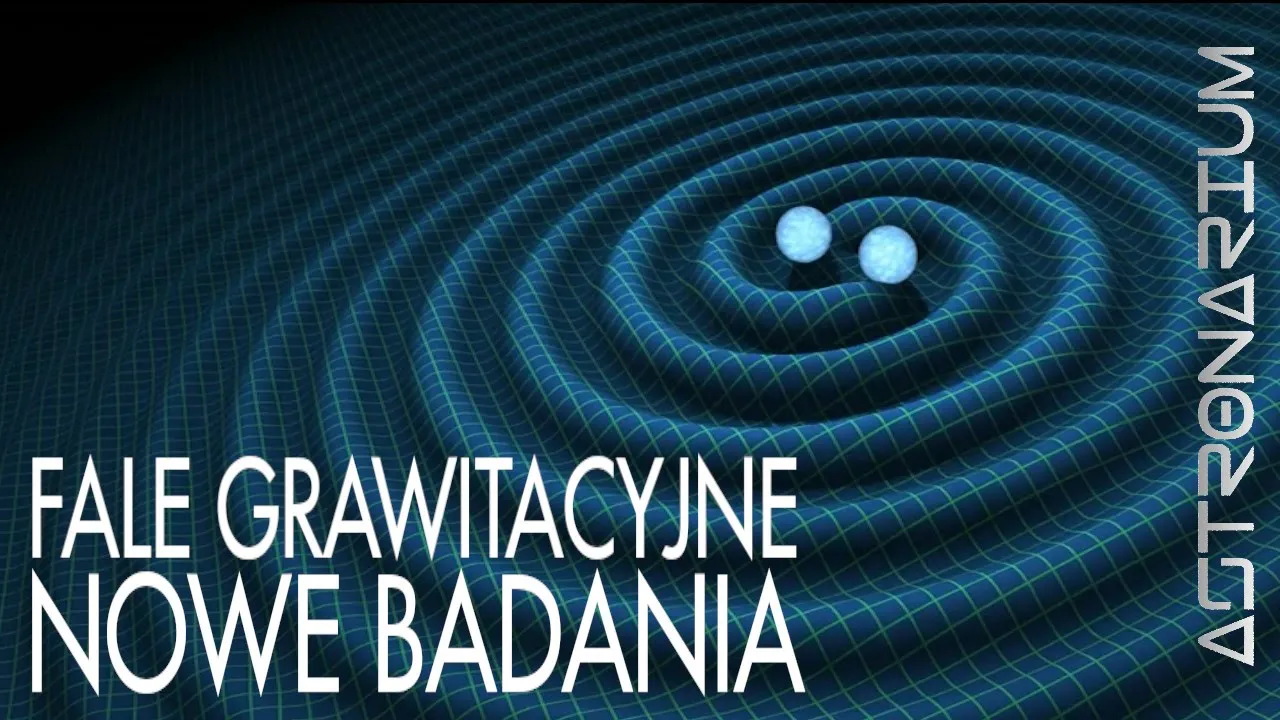




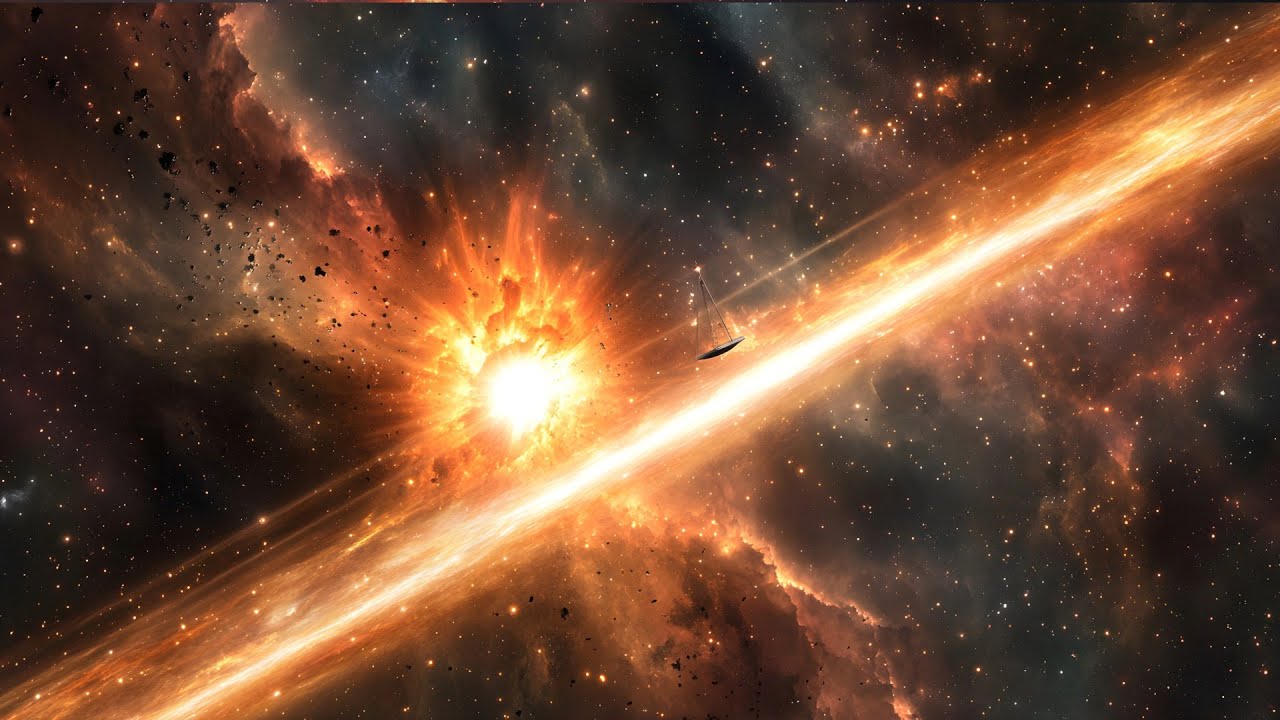

Gravitational waves are ripples in the fabric of space-time predicted by Einstein's General Relativity theory, caused by accelerating massive objects like merging black holes or neutron stars; these waves travel at the speed of light and carry energy away from their sources, causing orbiting bodies to spiral inward. The first direct detection by LIGO in September 2015 confirmed Einstein's 1916 prediction and opened a new era of gravitational wave astronomy, allowing scientists to observe cosmic events that are invisible through electromagnetic radiation, such as black hole mergers that convert mass into gravitational wave energy.
Gravitational Waves Explained: Einstein's Legacy | Prof Rob Jeffries
Added:Albert Einstein's Theory of General Relativity, specifically the concept of gravity as the curvature of the four-dimensional fabric of spacetime.
The nature and lifecycle of massive stellar remnants, particularly the formation and characteristics of black holes and neutron stars.
Basic wave mechanics, including concepts of wavelength, frequency, amplitude, and how waves carry energy through a medium.
The fundamental concept of interferometry, which is the experimental technique of using superimposed light waves to measure incredibly small distances.
Multi-messenger astronomy, which is the collaborative study of cosmic events using both gravitational waves and electromagnetic radiation (like gamma rays and visible light).
The engineering and technical designs of next-generation ground-based detectors (like Cosmic Explorer and Einstein Telescope) and space-based detectors (like LISA).
How gravitational wave signatures are analyzed to test the boundaries of General Relativity and search for deviations that could point to quantum gravity.
The study of primordial gravitational waves to gather observational evidence about cosmic inflation and the state of the universe moments after the Big Bang.
322 views6likes1:01:40Original Release: 2016-11-05
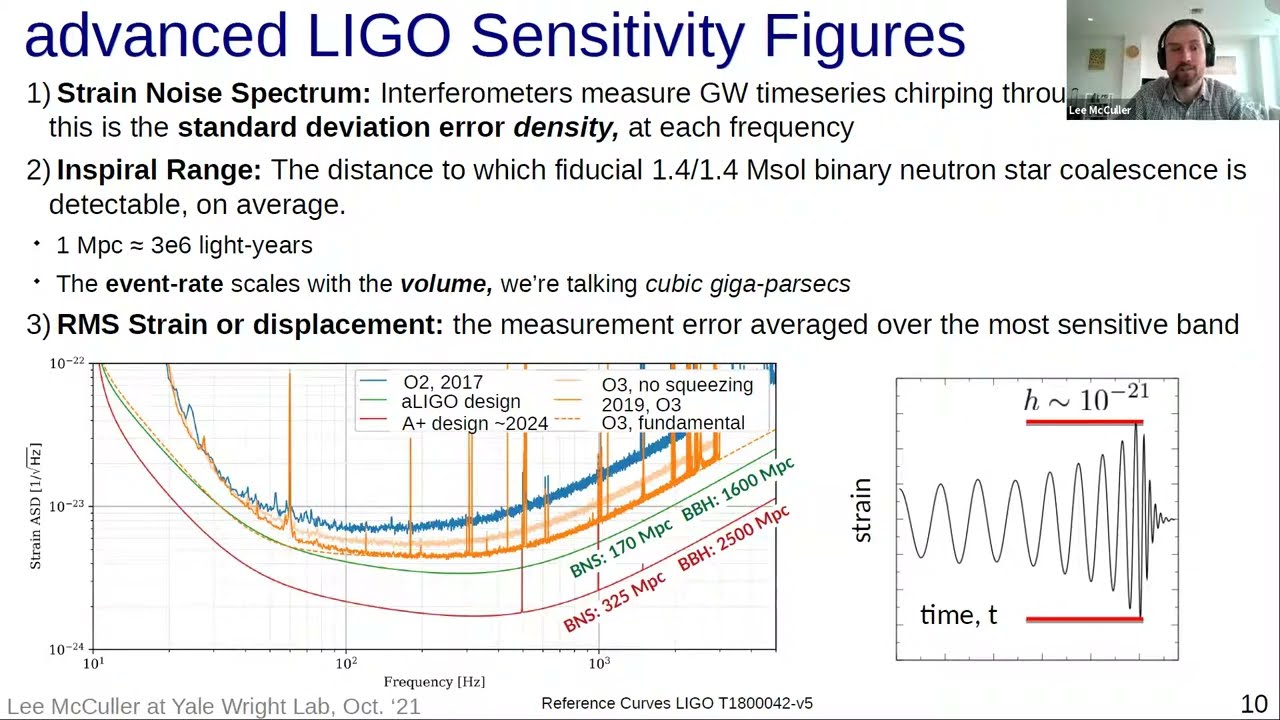
the next the next week are very pleased to have the professor Jefferson so mostly a klieg from keon University which is just hope the road just south of here and we're going to tell us about what I think is probably the most important astronomical discovery that's been made in in recent decades i would guess we're up to tell you all about gravitational waves okay thank you very much so am I audible and clear good okay so yes that's in said I'm going to tell you about gravitational waves so many of you will be aware then februari this announcement on the discovery of gravitational waves I think it's arguably but i would say it's it's the most important scientific discovery the 21st century certainly and well cause the great deal of excitement certainly on a par with things like the discovery the Higgs boson discovery a client under the stars and I'm sure it will be will be a Nobel Prize in it for somebody although how they're going to choose to give the Nobel Prize to from the thousands of authors that were on the paper announcing the discovery I have no idea so during the talk i'm going to tell you what tried explaining what gravitational waves are tell you a bit about how they're actually found how they're absolutely school it and perhaps most importantly what i wanted to go away with is an idea why before I bigger are getting quite excited about this this discovery why gravitational waves are so important will see that it actually opens a whole new area of observational endeavor in that sense to me it is more important than things like the Higgs bosons which simply should have complete our understanding of a particular area of felix ok well I'm going to steal our top with this chap I'm sure this is right okay mr. Einstein is it as a young man I try and get big audience Allison failed this is my side as a young man so in 1905 Einstein sort of shook the world as it were with his yeah this sort of annus mirabilis where he wrote three papers which were each individually worthy of Nobel prizes he only got a Nobel Prize for one of them does anybody know what Einstein got his Nobel Prize for ya he didn't get a Nobel Prize for a relativity bizarrely enough but in 1905 he introduced his special theory of relativity which changed the way that we think about space and time after throw common sense out of the window we have strange phenomenon like moving clocks actually appear to look slow you know lengths get contracted when things move past this is now you know this is scientific fact we know beyond any reasonable doubt whatsoever that these ideas of special relativity are absolutely correct many of the things that we rely on today many of the things that have done actually just assume special relativity now what I'm going to talk to you about those general relativity general relativity was a theory that Einstein came up with afterwards it was published in 1916 conveniently 100 years before the discovery of gravitational waves and the general relatively rests on this thing called the equivalence principle so the equivalence principle says that there really isn't any experiment that you can do in this room right now to distinguish between whether you are being accelerated by gravitational field or whether in fact this entire room is accelerating upwards at 9.8 meters per second squared ok so there is there is this fundamental between a gravitational field and an acceleration how nice that is genius was to kind of come up with that simple idea and then to follow it through and to see where it took you what is the consequence of that that simple idea so here's Einstein in a lift so just to repeat what I'm saying there really isn't if you're all sort of in a closed box and a lift like that it really isn't anything that you can do to tell when that lift is being accelerated upwards or in fact when the lift is stationary on the floor and you're being pulled down by by gravity so let's imagine that we have a clock in a rocket ship so here's the rocket on the left on the ground and what I'm going to do is white and blue touch paper and the rocket is going to launch into space now we know from special relativity that moving group moving rulers appear to be shorter to an observer that's rest and respect to the rocket and a clock that's on board would appear to run swallow you know this is on site has been tested many many times it's definitely a fact it happens well of course this must be true then or if an observer sees a rock accelerating to into the sky well the rocket is moving faster so you know on board that rocket o'clock the Mazon board that rocket would appear to be running slower when the equivalence principle tells us that this situation is entirely analogous the equivalence principle tells us there isn't any experiments that we could do to distinguish between that kind of rocket which is simply resting on the floor but is simply in a strong gravitational field so a gravitational field and accelerate kind of acceleration are equivalent so measured lengths and time intervals depend on your location and a gravitational field a clock which is on the earth will actually run slower than a clock that's in spikes now that sounds I don't like but it's not common sense and relativity really you can't you can't use your common sense during the stand relativity you have to accept the basic principles and tenets behind relativity and then see where it takes you and this is where it takes you now Einstein came up with this ideas or these ideas and a mathematical theory in 1916 one of the first things that he applied it to was a long-standing problem for Newtonian gravitational physics this was the so called precession of mercury problem so when mercury goes around the Sun it executes a wealth of an elliptical orbit but the ellipse does not stay with its if you like it's pointy ends in the same direction the ellipse processes around the Sun in in a path that I well this cartoon tries to indicate there of course this is vastly exaggerated vastly vastly exaggerated nevertheless the orbit of mercury was sufficiently well measured even in the 19th century to know that there was a problem between predictions and Newtonian gravity and what was observed it turns out that general relativity exactly explains that discrepancy so this was the first real inkling of first real indication that general relativity was certainly a more correct version of gravity that was the theory of Sir Isaac Newton that had been developed in the sanctuaries before that but it wasn't really until nineteen nineteen that general relativity hit the headlines so on the left here is so who's that again okay so this is this guy is after Eddington so Eddington was a very distinguished British scientist at the time of the foremost astrophysicist of his time in Britain and he arranged a couple of expeditions to South America and Africa to observe the total eclipse of the Sun which was occurring in May of that year now the rationale openness cost one money at the time actually it was I think sponsored probably by the Royal Astronomical Society was to investigate the relative predictions of Newtonian gravity and general relativity because general relativity predicted that the light from a star that passed close to the libman of the Sun a ray of light passing close to the deliver the Sun would be curved would be banked now Newtonian physics also predicts this but there is a factor of two difference in the prediction so Einstein's theory predicted the bending would be a factor of two larger than predicted by Newton so the expedition took place and they did these measurements of the positions of stars behind the Sun during the solar eclipse and the result was a triumph for Einstein's theory and this really was front-page news all around the world I like this I promised some running it says that it's the front page of the New York Times from 19 19 and it's actually probably not till 100 years later when science like this has made front page of the New York Times and I particularly like this phrase made of science where are less a god conservation Einstein fear I'm Stein's theory triumph so the star stars not where they seem to it same seed or calculator to be but nobody need worried that's that's great because that leads me on to my next slide you know white wine who cares really about whether general relativity is right or Newtonian gravity right now we seem to have managed okay with Newtonian gravity and for instance you know you can fly a rocket to the moon without really the Newtonian without getting too general relativity so what what's the point well this feature of the Einsteinian gravity or general right simply turns out to be extremely useful for astronomers so for example this bending of life without routinely used to investigate very very distant galaxies very distant galaxies my head up there like beds and magnified by a foreground cluster of galaxies here and that means that we can see things in more detail that are much further away alternatively we can use the light from very distant objects like quasars which are passing through a foreground massive galaxies of cluster of galaxies to map out the distribution of matter that's in that cluster of galaxies and for instance this tells us about dark matter it tells us about matter that can't be seen but we can see the influence of it in bending and magnifying the light of background objects so that's it was really fascinating people like people like me that's that's really useful but what about you well okay so GPS I guess it would be new at Joe Burbank last boy did any of you use a GPS to get here okay well the thing is the clocks on the GPS satellites run intentionally slowly my general relativity causes a time difference a difference in the rate at which plot run in your gps and ice on your car and gps blocks in space and if you just ignore general relativity soon actually run into trouble you know it's a very small difference but it's a difference that accumulates as time goes on so you know these things do have everyday consequences not many but they do you have everyday consequences okay let's think now stop to think about gravitational waves because gravitational waves are also a prediction of Einstein's general relativity theory so here I've got couple of cartoons triangle and circle now I'm sure you all remember back to your school days this is not really a test a big clue but if I draw a triangle on a flat piece of paper what are the angles of the triangle add up 60 60 60 writes an equilateral triangle down to 180 degrees and perhaps a little bit tougher some of you will remember or pads not that the circumference of a circle is 2 pi two pies this number 3.1 or whatever two pi times its radius but probably what you were told at school this is an example to me call Euclidean geometry this is the geometry of flat space if you start drawing triangles and circles on curved pieces of paper these facts which you may have gotten then seared into your brains I no longer true so if I was to draw it's obviously very difficult on a projector screen to demonstrate Martin objective is flat but i'm sure you can use your imaginations to imagine that this balloon thing here is a spare and this blue shape here might be the surface of the saddle for example so i could draw a triangle on top of the sphere if i do that the angles in that triangle actually added two more than 180 degrees thought experiment if you imagine the North Pole is one vertex of the triangle and then you draw two lines down to the equator so that you know it comes down with one line say in London or towards London but another one along the a line of longitude which perhaps goes through Los Angeles or San Francisco some around there then you imagine all the way joining up to the pole that angle or the top is more or less 90 degrees and the two angles down at the equator they're also 90 degrees of wild so the angles are actually add up to nearly 270 degrees on this saddle kind of surface the opposite is true the angles in a triangle add up to last the mortgage negative three so these these rules of geometry depend on what kind of space within now I signed mathematical theory of general relativity this was really what took him ten years to sort out in between special relativity general relativity within that he worked out that all of these things can be solved by thinking of space not the some kind of fixed fixed thing fixed rid but something that can be bent something that can be warped and what does the bending and warping of space and time is mass and energy so massive objects or things that have got a lot of pressure two stars black holes galaxies actually been space itself they actually change the shape of space so they so it's no longer true necessarily that the angles in a triangle add up to 180 degrees or the circumference of a circle is 2pi times its radius and this is very famous equation or saturday equations actually these are called is called the Einstein field equation and it basically expresses in a very mathematical elegant way this relationship between the curvature of space and the amount of mass and energy that is in that space now this is an extremely mathematically this is incredibly difficult theory to to master in fact this equation is only solvable in certain very symmetric needs approximate cases and the reason for that is actually relatively easy to understand though it's that curved space-time tells things how to move but the stuff in space itself tell space how to curve so it's a bit of a chicken and egg kind of problem and to come up with some sort of self consistent solution is very difficult but actually very soon after Einstein published is some Theory certain very simple symmetric cases were sold and the most famous of these is the so-called the Schwarzschild of solution of a Schwarzschild metric which deals with spherically symmetric objects now that's a very simple approximation but it actually is a very good approximation for many objects in the universe stars black holes things like that they are roughly spherically symmetric objects so in that case we can develop a picture an intuitive picture how space is curved in the vicinity of one of these sparkly symmetric object now over in the visitor center I assume it's still there ten-four there is actually a football because she's meant to demonstrate this so i recommend it up you'll install you all go and roll the balls around this funnel because that is exactly what I'm trying to illustrate there just to party with yeah that's so if we can imagine that objects always around the star as essentially an object rolling about on a full so the funnel is meant to represent the gravitational influence of the mass the more massive object and you can imagine a ball rolling around in or friction right obviously in the thing in the visitor side to it like drops into the props into the hole in the middle because friction slows it down there were no friction you could just have something rolling around on this surface and infinitum and that's how we can consider you know orbit of a planet around the star sometimes the space-time curvature gets so extreme that you know this funnel drops away to infinity and that's that's actually what we call black hole the singularity at the section of black hole but now really we're getting to the meat of this thing because now if we imagine two objects orbiting each other because of course it's not true to say a planet orbits a star they actually both orbit their common center of mass which is usually very close to the center of the star but nevertheless that's a distinction that's important so the two objects all with their common center of mass if this secondary object had a significant mass you can imagine that rather than it being a nice neat funnel it would actually be a dimple in the funnel where the secondary object was and that dimple would follow this object around as it went around in its orbit that results in a ripple in space-time which propagates outwards at the speed of light and for actually gets weaker and weaker as it moves away from the from the from the binary system that is a gravitational wave that is what the gravitational wave is or it's a very simple analogy which enables you to understand basically what a gravitational wave is you can see lots of things on the internet or some animations which claimed show show this phenomenon is a this is again this is the sort of rubber sheet analogy you have to imagine that such a binary system right in the middle of this animation and you get this idea of ripples propagating outwards into space which gradually diminishing strength as they get further away this is actually not really what a gravitational wave looks like this is more like a radio wave radio waves is more like a radio way or transverse electromagnetic wave a better illustration of what a gravitational wave looks like you is this so it's more like cosmic Paracelsus we imagine if you imagine and a ring like to point out yet a ring of free-floating masses they will be compressed and elongated in different directions in a rhythmic way as the gravitational wave passes through and that's what that animation is supposed to show in a reasonable way it's not bad and that you can see the wave pattern going along but this oscillation backwards and forwards like this this is what gravitational wave detectors intact okay now back to the 1970s we knew well we knew everybody assumed that gravitational waves did exist so Einstein predicted them but there is no way of detecting them until in the 1970s particular pulsar was discovered a binary system containing a pulsar the so-called Hall Taylor binary system and the thing about this was that you can measure its orbital period extremely accurately it's at seven and three-quarter hours what's it be more decimal places the interesting thing was you could clearly see that this orbit was getting shorter so these two neutron stars upon this pulsar binary system we're getting closer and closer together they were performing something we now call it in spiral so the two objects are spiraling closer and closer together now why is this well the reason is that they're emitting gravitational waves and those gravitational waves take away energy and that energy comes from the orbit of the binary system as the binary system it loses energy the two stars get closer together they actually start to move faster and faster and well in about 300 million years those two objects will collide them they'll crash together the actual rate of decrease of this orbital period is exactly the prediction of what general relativity predicts would happen if gravitational waves were being emitted by this system so this was a Nobel Prize winning discovery for the indirect detection of gravitational waves so not detecting the gravitational waves we're detecting the consequence of those gravitational waves being emitted okay I apologize in advance Stephen Hawking miss Lily says every time you write an equation you hard your readership two years so three-quarters of you about going to sleep the only ones who really get across to you is that what the power emitted in gravitational waves depends on and overwhelmingly it depends on two things it depends on how massive the objects are that are orbiting each other and it depends on how close together they are that's what this R is down here binary separation so if you have large masses and close separations you get lots of gravitational waves now this explains why you don't see very many whoops gravitational waves from say well you might think why doesn't the earth spiral into the Sun it turns out when you use this equation you only get 200 wats out of that so sabres a value right old-fashioned light bulb like 200 watts that's all the earth subsystem is losing in gravitational waves that doesn't really make much difference the Earth's orbit on an insensible timescale quite go back to this pulse pulse Taylor pulsar this was emitting about a tenth of a solar luminosity in gravitational waves so it's a much bigger effect and that's because neutron stars and black holes can get much closer together then save the earth and the Sun or even to normal stars can't really get that close together these can get very close together and that's why they are gravitational wave sources okay so what happens is this if we have say two black holes or two neutron stars and they start emitting they're emitting gravitational waves the author of it gets closer and closer together they spiral closer and closer together they make even more gravitational waves because they're getting closer together so that process accelerates and accelerates an example until they merge at the same time the gravitational waves that are being emitted go to higher and higher frequencies because the wave frequency is related to the orbital frequency of the binary system so what you end up with is something called a chirp now I'm going to play you some church because it turns out that the gravitational waves that have been detected actually are in the are actually roughly in the audible part of the spectrum in terms of their frequencies so what's really nice about gravitational waves is that you can you can listen to them you can serve to an audible signal so that's what I'm going to do so this is to equal mass black holes spire in together and then merging you have to listen quite carefully you might not want to turn it down [Laughter] so that's the two equal mass that type of solar mass at holes it's firing together right on yeah so see why it's called at the church you didn't divide be my words actually just turn that down with our five year but pit penetrating some people if they're if it's not two equal mass black holes it gets even more exciting so this this is a pair of black holes one solar masses [Music] right so that those are theoretical predictions I should say so back to our picture what the gravitational waves look like how we actually going to go and go and attack them I mean the problem is here right so this is now looking sort of end on and gravitational waves it turns out gravitational waves come in two polarization states there's kind of two two flavors of gravitational waves there are those that distort space like that and then there's this one which is more of a sort of cross pattern and they are called cross polarization and cross polarization that's what they're known else now if these waves pass through this written what it means is that the space inside this room sort of wobbles it actually gets bigger and smaller on the frequency of the gravitational waves the difficulty is right these these ones i'm showing you here i have an amplitude a relative amplitude of north point 5 in other words they're getting you know twice two times as long then half two times off this has got amplitude over half the gravitational wave signatures that you expect from things like merging black holes out there in the universe is 10 to the power of minus 21 21 part in a warrant with 21 zeros after it that's why it's difficult to detect gravitational waves this is the machine that's done it for one of the machines that's done it there are two detectors gravitational wave detectors what in Washington State's why lose Louisiana so several thousand kilometers apart these are vacuum tubes for carpenters long along which lasers are shown the raisins bounce up mirrors suspended on very sophisticated pendulums at each end of these arms the light comes back actually the light is bounced back quite a lot and forwards to give you a long path one inside these tubes now they're at right angles if a gravitational wave passes through this apparatus going through the screen here what happens is periodically at the frequency in a gravitational wave this arm will get shorter whilst this arm will get longer and then the swap over now if you shine the light from a laser split it up and send some down each arm then bring it back together again under ordinary circumstances that light would perhaps constructively interfere so you would actually get twice the amplitude as you would from down each arm on the other hand if there's a phase difference between the two ways if if the path lengths are different by half a wavelength then those ways when you really combine the will destructively interfere they'll completely cancel out now what happens when a gravitational wave comes through is that phase difference that path length difference buries it changes on the frequency of the gravitational wave and that means you get a changing signal in the recombined beam and that is what is actually detected in the gravitational wave detector it's that it's that it's that it's the rate at which the amplitude that we combined be is changing that tells you the amplitude of the wave and it tells you its frequency so you get two pieces in regulation there because there are two detectors separated by thousands of kilometers you also get another piece of information you get roughly to know where the gravitational wave came from because gravitational waves travel incentive light so there is a measurable time delay between the signal see by the two detectives the detectives are also to think about putting them on the surface of the earth they've got a slightly different orientation space that means the gravitational wave signals are slightly different amplitudes the orientation with respect to the wave action matters so there is some crude location can actually tell where it's coming from to a limited extent now this rather technical diagram explains why gravitational waves have just been discovered why you know why it suddenly happened this is a plot of sensitivity that's really matter what the units are but sensitivity gear on the y-axis against frequency in Hertz so we here between below 20 Hertz and 10 kilohertz maybe depends actually it's very age-dependent frequency if you can hear so you can see that advanced LIGO which is this orange curve is actually most sensitive this is where the graph goes into its minimum its most sensitive at audible frequency and the big step in which to go from y go the blue curve to advanced LIGO the orange curve and they're not actually all the way to this orange curd you have another factor of 2 sensitivity to come in various developments that we're making this machine and you know the reasons for this advanced in sensitivity are things like much more powerful lasers and also much cleverer ways to deal with well you can imagine seismic noise right so if somebody drops a spanner universe a mile away they're going to hear that with this detector it's going to shake the detector e north this is why they have to evacuate this poor form of the to make it high vacuum because molecules of gas bouncing off the mirrors is a big problem they don't they don't want that and similarly these mirrors at the end that the tubes are mounted on not as warm pendulum it's actually the fuller pendulums suspended from each other and then the mounds of that is has got both passive and active damping of any seismic noise so they have seismic detectors which put in an anti single bit like noise cancelling headphones to actually try and take out seismic motion it is the most incredible work of technology so this end of the frequency spectrum at the low frequency and seismic noise kills the detector kills the sensitivity at the other end we get something called shut noise this is because you the basically isn't enough power in your laser to follow very rapidly changing frequencies gravitational wave so this is a sweet spot there's a sweet spot in the middle and it just happens to be a rather low audible frequencies so here we are we arrive integra in fact the gravitational wave was detected in September 2015 and announced in so this is the signal this is the brewer signal from two detectives I've got one in Washington one in Louisiana the fact that these signals look the same is you know this is one of the criteria for deciding that this is actually a genuine protection right it's not just something dropping a spanner because you would hear that in one detector but not the one that SAT thousands of kilometers away that's an important part of that they're checking procedure from this signal you can work out that this came from the merger of two black holes one of them was this if solar masses one of those 29 solar masses they merged over the course of some of you might be able to see the time axis here is a fraction of a second there signal occurred over a fraction of a second so they merged in a fraction of a second could use a six to two solar mass black hole now because again it's not a test but those of you with quick arithmetic skills should be able to see that there's something at something awry there isn't that 36 plus 29 gives 65 the final battle was 62 where is the missing three solar masses right it's been converted into gravitational wave energy that's what we're detecting lene three solar masses being converted into energy in a fraction of a second if you do the songs it turns out that this gravitational wave event is more luminous than the entire universe to that fracture this happened this is one of them this is the most energetic dependent that's been seen the saucer is estimated to be 1.3 million light years away you get all that information from this horrible squiggly trace here right I've been anywhere i'm going to play you the secret gem well let me just play this so this is an artist or an artist's impression this is a calculation what this might look like if you were a few hundred kilometers away from these black holes if you're actually able to look at it with your own eyes this is what it would not like you see how that the light is distorted right this is the gravitational lens in the fact that I've talked about earlier i go with two black holes s very close and there we go we merge into one black hole okay so let me let me actually play the signal for you okay so this is a different way of looking at the data so this is frequency on the y-axis versus frequency against time and this is showing you where the signal is so this rising and brightening signal here is a churn that's what a church is and then the church we've made all but why you canceled yeah that's what you're hearing so I little group that's you having the most energetic event hoagland there you go so this these are the church okay now that was the first email there is our second detection so in while it actually detect on Boxing Day 2015 announced in June I think this was a much less impressive protection right a bit noisier detection but exceptional s and the reason that it was a bit more noisy is because this the pair of black holes is not as massive remember I said that the power that submitted depends on how massive the orbiting objects are so this is a source which is about the same distance away 1.4 million light years but the two black holes were not when I was massive so what this tells us is that we have a population of these things there is actually a population of merging black holes out there and in fact some numbers have been put on that now so that these are black holes that we know about so this point over here which actually now we have to say a relatively low mass black holes between about five and five and twenty solar masses these were discovered by x-ray satellites indirectly so actually looking at the influence that these black holes had on binary companions these big monsters here are the black holes that have been discovered by ligo this gravitational wave detector these are fairly monster black holes that we didn't actually know existed before like oh it's detecting them so very direct evidence of these black holes and in fact we now know still still quite a wide range but we now know that there's about something like a hundred of these events take place every year in a cube which is a billion parsecs on a side about about 100 of these things happened and my guess is now that that like oh we'll go on to detect many of these events many of these events and build up a real this diagram will get populated over the coming years so the risk is a cup i mentioned that earlier on so at the moment ligo is operating with a sensitivity curve given by this red is red curve here it's design specification is to get down to this blue curve so it's supposed to be get about a factor of two more sensitive than it is now now if it gets a factor of two more sensitive it actually samples a factor of 2 cube more volume it's capable of detecting gravitational waves a factor of two further away which means a factor of 2 cube in volume so you go get 10 times or eight times the event rate that they're discovering now so whereas they might discover so two of these events in a three-month run of the instrument when you get down to this sensitive they'll be detecting 16 events in a three-month run so gravitational wave astronomy is here now it's not just merging black holes which might be sources of gravitational waves and when these improved sensitivities are achieved it may be that we start to detect some different kinds of gravitational wave signature so I've got some sounds are going to play for you so one possible source of gravitational waves will be a rapidly spinning neutron star so Tim told you about Jagran band conservation of pulsars which are rapidly rotating neutron stars and these rotate with frequencies of well somewhere between menu1 and a thousand Hertz so again it's actually into the oddly regime importantly an absolutely spherically symmetric spinning neutron star would give no gravitational way so you need an asymmetry needed a cemetery then it's to be some sort of off-center component to the density in the neutron star to come up with a gravitational wave signature but if that's the case that it might sound something like this so it's just a tone which is given by the spin frequency of of the Pulsar as neutron stars pulsars spin down that tone would actually drop the lower frequencies another source of gravitational waves would be what's thought to be quite a rare event but sometimes black holes swallow a companion star so I've got a couple of sound files here our simulations of what a black holes swallowing a start might sound like so you listen carefully to this these are not very noisy events because rather than two black holes now we've got black hole in a normal star so this is a ten solar mass black hole swallowing a star sounds like an apocalypse in your hand right but interestingly if I make it 20-7 mass black hole now you could you could do gravitational wave astronomy County because you could tell the difference between that those it things could be tense all of us what holds following this up 20 some of us obvious difference is that this is the power of gravitational wave astronomy we wouldn't necessarily see this about happening but we hear it with a gravitational wave detector supernova explosions these are huge cosmic apocalyptic events the deaths of very massive stars so we expect these to be sources of gravitational waves again you might thought well oh this is probably gonna be quite impressive so this is a supernova explosion occurring perhaps in one of it one of the nearby galaxies 40 I'll operated boy nothing barely knows you missed it so the door thud basically that's a super those are going up why is that important well we actually don't get to see supernova going off we see the aftermath a supernova is the collapse of the core of a massive star but it's surrounded by this huge envelope of gas outside the actual massive style which gets blown off as a supernova but the supernova event itself is initiated by that core collapse and it's the core collapse you could hear they're not the right explosion that occurred later there's an awful lot of physics to be learned if we knew what the time delay was what the difference was between when the core actually collapses and when we see the explosion as a supernova so that moves me I agreed to sort of the end part of this talk which is really trying to convey to you why why you know other than making nice ringtones why gravitational wave astronomy is it's all shorten that sort of point is it opens up a full observational window so you think about how we observe the universe obviously you can see stars you can look at them you can actually get the electromagnetic radiation obviously at different wavelengths radio waves visible weightings x-rays but the electromagnetic spectrum so you can look at stars like that you can fly out there and try to grab something right now obviously that's possible in the solar system now we can go to the moon and we can pick up some moon rocks and bring it back a third ways is particles from outer space so there are now you know cosmic ray astronomy is a well-developed field of astronomy as is neutrino astronomy neutrinos are particles which are emitted for example a nuclear reactions and the cause of stars we can then detect them there are missing and supernovae so neutrino astronomy it's a third way of observing the universe gravitational waves in our fourth way fourth way of looking at things out of a whole new window and universe this is what we mean by melty messenger astronomy all right so that example I gave you and observing a supernova if we could observe a supernova nearby galaxies and detect a gravitational wave signature a burst of neutrinos and then the octal white the electromagnetic signature sometime later we would be in a position to solve all sorts of problems in fundamental physics and astrophysics testing gravity you know these gravitational waves are a consequence of Einstein's general theory of relativity but general relativity is not the only game in town there are other relativistically compatible theories of how gravity works which can be tested using gravitational waves so the example of merging black holes producing a single black hole at the end well that exact trace that the exact gravitational wave signature of that process is testing general relativity so we need more accurate data than we've got at the moment to provide a very stringent tests of general relativity but it looks like that's going to be possible so comparing general relativity you go to competing theories and then finding i'll leave you with someone speculative one which is that at the moment if we look at the universe with electromagnetic waves we are limited to how far back we can see Tim mention this in his talk we talked about the Cosmic Microwave Background so the Cosmic Microwave Background was formed a few hundred thousand years after the Big Bang prior to that the universe was opaque to electromagnetic radiation so it's a bit like looking into a fog bank we can't actually see beyond the pond back gravitational waves are fine normal matter almost transparent you know they passed through the work through the earth or impeded apart from the tiny fraction of their energy which is absorbed by the gravitational wave detector similarly gravitational waves can pass through the early universe with impunity now we think that in the very earliest fractions of a second of the Big Bang the gravitational waves were copiously produced by various mechanisms those gravitational waves are still out there they're still in the universe now filling the universe swashing about with a sort of stochastic background noise analogous to the growth to the Cosmic Microwave Background but a gravitational wave background if we can detect that then potentially it gives us information far more information actually than the Cosmic Microwave Background itself it's what allows us to see right back to the earliest moments of the universe and start to probe things like cosmic inflation Theory example I've got a well these waves are expected to be of much lower frequencies than the waves are we talking about more like white noise more like a white noise but patterns in that white noise and the spatial distribution of that white noise is extremely important and extremely diagnostic process in the universe but as I say this is at low frequencies not that the frequencies I've been talking about to detect gravitational waves upload frequencies you need to do something different remember that like oh this gravitational wave detector in the US was limited by seismic noise to get away from seismic noise is going to space so that our proposals it's on the drawing board something called Lisa or rather ELISA now it's it's a European European proposal for a gravitational wave attachment space which will consist of three free-floating fliers situated what about five million kilometers apart and this very long arm length is what you need to detect low-frequency by attentional waves low-frequency gravitational waves that might compare the universe low-frequency gravitational waves that might come from say super massive black holes colliding in the midst of forming galaxies at very high redshifts in the distant past so I'm going to leave you with that and say that gravitational wave astronomy has been born there are now detections of gravitational wave sources there is to try and understand it looks like there's a population of gravitational wave sorted out there to discover and therefore it's over the book of cleanly new window on the universe it's kind of increase our observational capacity by a quarter if you like so if it's a fourth way of looking at the universe and there's going to be a just a whole lot of new exciting discoveries about the most energetic events in the universe and also the things which are the hardest to see you know using conventional telescopes you can't see merging black holes with a conventional telescope they're black you can't see them and so there's going to be lots of exciting stuff to come in the next few years so just watch the space and i'll i'll try and answer your questions if you have any [Applause] I'm going to take one of the bartenders oh so you aren't busy road rich yes they are they found that so the source at 1.3 million light years away did have a redshift I'm busy while i'm talking trying to calculate one that would be in my head i think it's a redshift at 0.04 so that means that the yeah the waves are are said to a frequency is about four percent lower than it would be if you were sort of right next to the source that's right interestingly the distance is that if you write the gravitational wave sources are independent of any measurement of the redshift so you get the distance without having to measure that red shift in fact these merging black hole binaries are sometimes we call standard sirens in analogy to standard candles in optical Astronomy so when you measure emerging black hole by me you get its distance for free actually that's one of the things that comes out of the analysis but they were all red shifted yeah when you do but holes are losing yeah they increase in altitude and in frequency when to actually merging between them go you still get gravitation words from them and then determine right so if you watched well I just burn show on this one you can actually see at the end sides here so the black holes of merch about here where my laser spot you and there's actually what's called a ring down phase so the two black holes merge into a single black hole and that sort of kind wobbles itself into an equilibrium configuration but once it's in that equilibrium configuration it has complete symmetry and at that point you don't get any more gravitational waves so even even if it's spinning that doesn't matter you wouldn't get any gravitational waves up like it initial ring down phase but this is this ring down phase is extremely important for testing theories of strong gravity little talking about Fonzie about yes 17 yes going to the University second yeah yeah yeah if you average it over the first second over a second or so it's about 10 to the 48 watts and if you work that out in solar luminosities it's roughly ten to the twenty two solar luminosities and there are about ten to the twenty two stars in the observable universe so that's the source of my claim that this is as powerful as almost ours in the universe or at once for that collapse anchor together you talk about the two supermassive black holes merging and they do it incredibly quickly yeah but azumi because they're in a gravity well they're actually get much faster than we alter because that might be bad yes yes all those effects of time dilation and so on have to all have to be incorporated yeah it's very difficult it's a very difficult calculation to to make the predicted signals that we match against the data is it's a it's actually a fearsome computational problem it's not something to do with pencil and paper it is a numerical general relativity it is now a burgeoning industry do I say as a result of these that these gravitational wave detectors and all those things have to be taken happy does that have any effect on the propagation of gravitational waves plus to the new back yes it does yes yes the last being that's all lastly part of the calculation but no you've got the two objects a missing each other yeah and they make the dimple look next away look since about the supernova that actually makes I'm sure yeah okay good so the fundamental thing about something that produces gravitational waves is you have to have an asymmetry you can't have something sterically symmetric or even something that's axially symmetric so there's something spinning on its axis won't produce gravitational waves but there needs to be some asymmetry now in super novae it is normally expected that there will be an asymmetry in the explosion why that is is a little bit complicated ways to do with how how flames are ignited in classism there's a kind of random nature to where where the kind of explosion begins now we know that supernova explosions are asymmetric very frequently we see massive stars that presumably were part of binary systems where one of the objects has gone supernova and the other star is flying off in some of the directions somewhere so we know that that supernova explosions are intrinsically asymmetrical so we expect to be able to observe the gravitational wave signatures of supernovae if they occur in relatively nearby galaxies right so supernova explosion a much weaker sources of gravitational wave energy then these merging binary black holes we're gonna have to leave it though because we were much worse than world again from [Applause]
Up Next
17:59
The Most Precise Experiment Ever Built: LIGO Explained
@CleoAbram
2.5M views•2026-01-20

12:53
21cm Hyperfine Transition in Neutral Hydrogen: Radio Astronomy Basics
@AaronRobertParsons
12.4K views•2011-10-13

32:32
NMR Spin Physics I: Zeeman Effect, Resonance Condition & Larmor Frequency
@nptel-indianinstituteofsci8064
2.3K views•2024-01-17

27:14
Entropy and the Second Law of Thermodynamics Explained
@veritasium
27.5M views•2023-07-01
Related Study Plans & Knowledge Roadmaps
Structured learning paths in Physics
physics
Nuclear Physics (Decay, Fission & Reactors)
01Atomic Structure and the Binding Force
02Radioactive Decay and Half-Life
03Nuclear Fission Mechanics and Chain Reactions
+ 2 more learning modules
12h5 modules
Explore Roadmap
physics
Soft Matter (Polymers, Colloids & Rheology)
01Foundations of Soft Matter & Thermal Forces
02Polymer Physics and Macromolecules
03Colloids, Surfactants, and Self-Assembly
+ 2 more learning modules
38h5 modules
Explore Roadmap
physics
Analytical Mechanics: Lagrangian & Hamiltonian
01Mathematical Foundations: Calculus of Variations
02From Newtonian Mechanics to Constraint Dynamics
03The Principle of Least Action & Lagrangian Mechanics
+ 3 more learning modules
28h6 modules
Explore Roadmap
physics
General Relativity (Spacetime & Cosmology)
01Foundations of Relativity: Special Relativity
02The Geometry of Spacetime: Equivalence Principle & Curvature
03Einstein's Field Equations: The Mathematics of Gravity
+ 2 more learning modules
55h5 modules
Explore Roadmap