



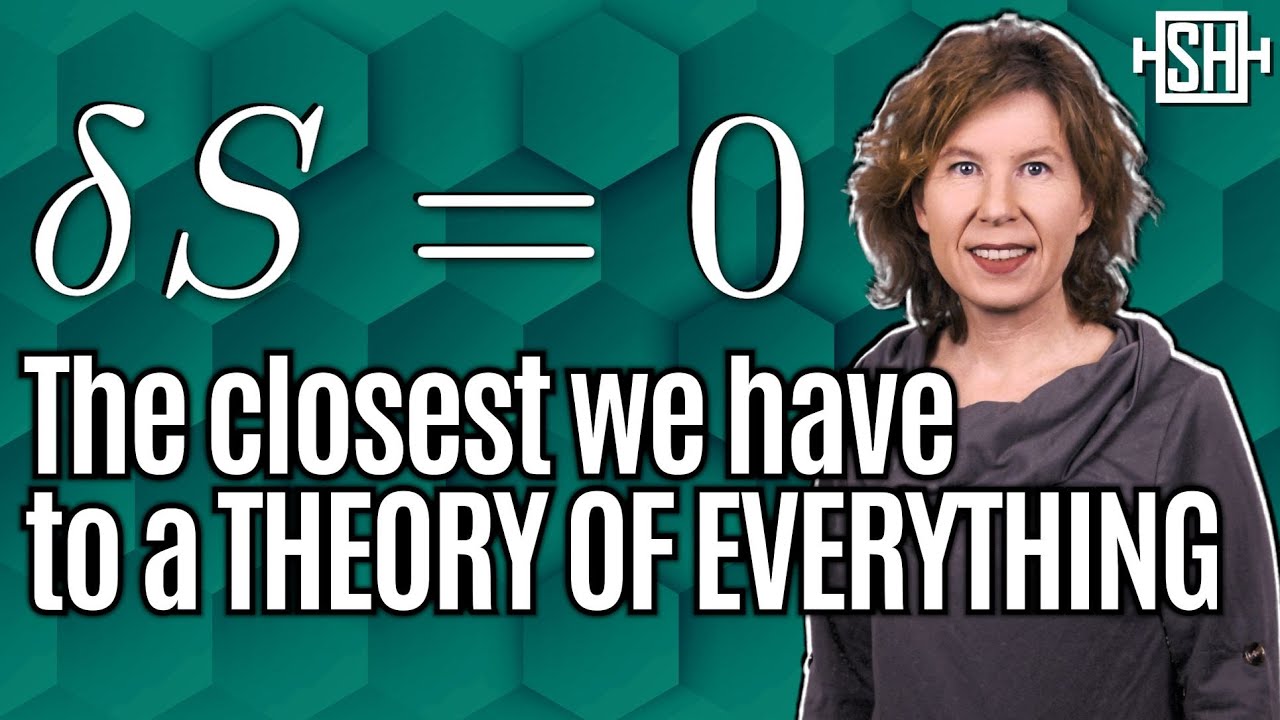

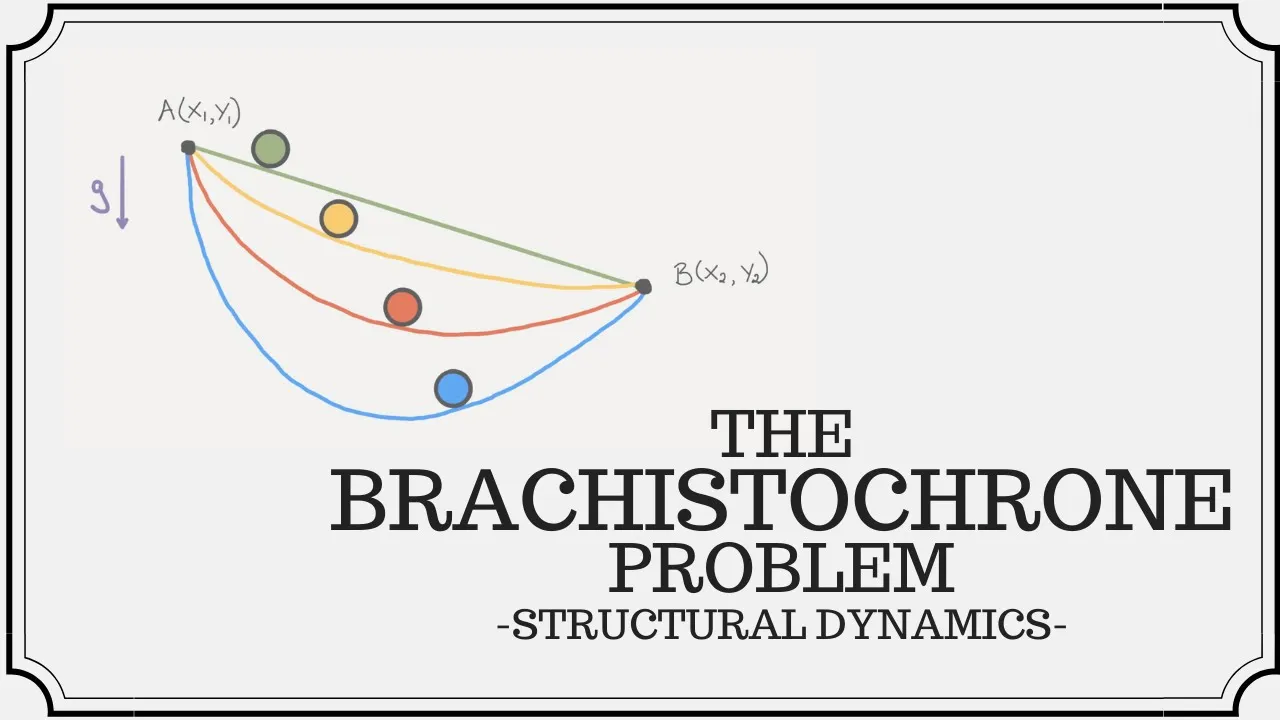














Fermat's Principle of Least Time states that light travels between two points along the path that takes the least amount of time, and this single principle unifies all laws of geometrical optics including the law of reflection (angle of incidence equals angle of reflection) and Snell's law of refraction, demonstrating that complex optical phenomena can be derived from a fundamental optimization principle rather than memorized separately.
Ray or Geometrical Optics I | Yale Physics 201 Lecture 16
Added:Basic understanding of the wave nature of light, including frequency, wavelength, and the speed of light in a vacuum.
Introductory calculus, specifically optimization techniques (finding minima and maxima) to fully comprehend Fermat's Principle of Least Time.
Fundamental geometry and trigonometry, such as the laws of sines and cosines, to analyze angles of incidence, reflection, and refraction.
The physical concept of the refractive index of a medium and how light speed varies across different materials.
Analysis of complex multi-lens systems and practical optical instruments such as microscopes, telescopes, and cameras.
The study of optical aberrations (such as spherical and chromatic aberration) and how real lenses deviate from the ideal paraxial approximation.
Transition to Wave (or Physical) Optics, exploring phenomena that ray optics cannot explain, such as interference, diffraction, and polarization.
Advanced engineering applications including fiber optics, wave guides, and the design of laser resonator cavities.
181.3K views0likes1:13:20Original Release: 2011-03-24
Prof: All right, welcome back.
We're going to do a brand new topic.
Well actually, a brand old topic, because it's about light, but I'm going to go backwards in time, because just before the break, we had this finish with a flourish, Maxwell's theory of light.
We took Ampere's law and Lenz's law and Faraday's law and all kinds of stuff, put them together and out came the news: the view that electromagnetic waves can exist on their own, travel away from charges and currents.
And they travel at a speed which happened to coincide with the speed of light, and people conjectured, quite correctly, that light was an electromagnetic phenomenon.
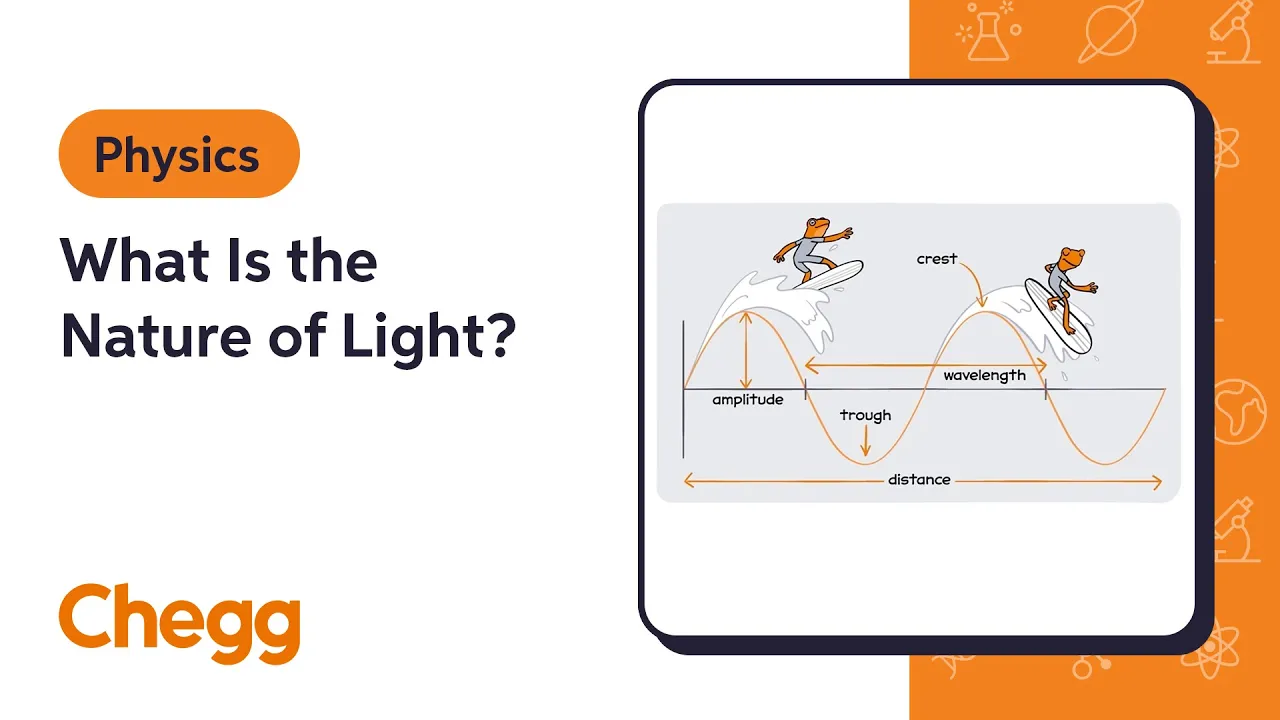
And it was an oscillatory phenomenon, but what's oscillating is not a piece of wire or some water on a lake, but what's oscillating is the electric field.
It's oscillating in strength.
The field is not jumping up and down.
The field is a condition at a certain point, you sit at a certain point, sometimes the field points up, sometimes the field points down, it's strong, it's weak, and you can measure it by putting a test charge.
It's that condition in space that travels from source to some other place.
Now that point of view came near the second half of the nineteenth century, and it came after many, many years of studying light.
And what I'm going to do is to tell you two different ways in which you can go away from the theory of light, of electromagnetic waves.
One is, when the wavelength of light is much smaller than your scale of observation, namely, you're looking at a situation where you're thinking in terms of centimeters and meters and so on, and the wavelength of light is 10^(-8) centimeters, then light behaves in a much simpler way.
You can forget about the waves, then you get this theory of light in which you have what's called geometrical optics.
Geometrical optics is just light going in a straight line from start to finish, from source to your eye.
So if you take Maxwell theory and apply it to a situation where the wavelength is very small, then you get this approximation that I'm going to discuss for a while today.
But when you say very small, you always have to ask, "Small compared to what?"
Do you understand that?
When someone says wavelength is small, as it is, it has no meaning.
I can pick units in which the wavelength is million or 1 millionth.
That has no meaning.
Small and large can be changed by change of units.
What we really mean is the following: suppose I have a screen and there's a hole in the screen.
And behind the screen, there is a source of light.
Then I put another screen here and the light goes through that and forms an image which you can obtain just by drawing straight lines from start to finish.
So you illuminate a region which is the same shape as what you had here.
That's what makes people think of using ray optics.
Ray optics, the light rays come out, they're blocked by the screen except near the hole, except inside the hole, and the light escapes through that hole and fans out and forms an image of the same shape.
If you made a blip here in the hole, you'll get a blip in the image, because it will simply follow the shape.
Now I can tell you what I mean by, the wavelength is small or large.
It's going to be small or large compared to the size of this opening.
If λ, the wavelength, is much less than d, which is the size of that opening here, then you have this simpler geometric optics.
That's the approximation.
It's like saying, if you have understood Einstein's relativistic kinematics, if you go to small velocities--again, one must say, "Small compared to what?"
The answer is small compared to the speed of light-- you get another kind of mechanics called Newtonian mechanics, which is simpler and was discovered first.
Likewise, geometrical optics is simpler than the real thing and it was discovered earlier.
You will note that this picture is incomplete if λ becomes comparable to the size of that hole.
Then you will find out that if you put a very tiny hole in a screen, and it would be very tiny compared to wavelength, the waves have then spread out and formed something much bigger than the geometric shadow.
Then you will have to realize that drawing straight lines won't do it.
In other words, if I show you a side view, you would think, if you had a source, you'll form an image of that dimension on the screen, but actually it will spread out much more.
And the smaller the hole, the more the light will fan out.
You're not going to get that from geometrical optics.
But in order to realize that, you will have to deal with apertures small comparable to the wavelength of light and the wavelength of visible light is 5,000 angstrom, which is very small.
So it wasn't known for a while.
Now you might say, okay, if you want, you can go back in time, but you should probably start with this and build your way to electromagnetic theory a la Maxwell.
Well, it turns out Maxwell isn't right either, and to see where Maxwell's theory fails, you will have to take light of very low intensity.
Remember, intensity is the square of the electric field, or the magnetic field.
They're all proportional.
If light becomes really dim, you might think the electric field is going to be smaller and smaller, because E^(2) or B^(2) is a measure of intensity, but something else happens when light becomes really week.
You realize that the light energy is not coming to you continuously like a wave would, but in discrete packets.
These are called photons.
But you won't be aware of photons if the light is very intense, because there are so many of them coming at you.
It's like saying, if you look at water waves, you see this nice surface and you're looking at the description of that surface undulating.
You have a wave equation for that.
But if you really look deep down, it's made of water molecules, but you don't see them and you don't need that for describing ocean waves.
But on some deeper level, water is not a continuous body.
It's discrete, made of molecules.
Likewise, light is not continuous.
It's made up of little particles called photons.
And that we will talk about later.
So you understand the picture now?
You're going back in time to the ancient theory of light, then we did Maxwell's.
I won't stop there, because I have already done it, and we'll go onto the new theory of light, which involves photons, and that's part of what's called quantum mechanics, so we'll certainly talk about that.
So what did people know about light?
Well, they had an intuitive feeling that something bright or shiny emits some light and you can see it.
It seemed to travel in a straight line, and for the longest time, people did not know how fast it traveled.
It looked like it traveled instantaneously, because you couldn't measure the delay of light in daily life.
You can measure the delay of sound, but not the delay of light.
They knew it travels in a straight line, unlike some, because if I close my face, you can hear me, but you cannot see me.
So sound waves can get around an obstacle, but not light waves.
That one, everybody knew.
But they did not know how fast it travels.
Sound, they knew, travels at a finite speed, because you go to the mountain and start yelling at the mountain, it yells back.
You can even time it and find the velocity of sound.
So Galileo tried to find the velocity of light by asking one of his buddies to go stand on top of one mountain, and he's going to stand on top of the other mountain with a lantern which is blocked.
Then he's going to open the lantern and the minute his friend saw this light, he was supposed to signal back with another light signal, come back to Galileo.
Meanwhile, he was timing it with his pulse.
Then he was going to--well, that's the only clock you had in those days.
I think the two mountains were like 20 miles apart or something, so it's not impossible that with the pulse, you can probably find the velocity.
So you've got some answer, but I think he realized very quickly that that answer just measured the reaction time of him and his friend.
Do you know how you will realize that, that it's the reaction time and not the propagation time?
How will you find out?
You all had a good laugh at Mr. G.
but what will you do?
How will you know that it's really--yes?
Student: Vary the distance between them.
Prof: You vary the distance.
If he and his friend, instead of being on two different mountains, are in the same room, and they do the experiment and they get the same delay, then they know that it's nothing to do with the travel time.
It's just how long it takes them to react.
So the real serious measurement of light, you can't ask yourself, "How am I going to measure it if it's traveling that fast?"
First of all, you don't even know if it takes any finite time.
It's possible to imagine that if you turn something on, you can see it right away.
It looks very natural.
So the fact that it could take a finite time was a hypothesis, but to measure it, if it's going very fast, you need a long distance.
Even the distance equal to the circumference of the earth is not enough, because it takes one seventh of a second for a light signal to go around the earth, if it could be made to go in a circle.
So that's too fast.
So the idea of finding the velocity of light, the first correct way, came from Roemer, I think in 1676.
He did the following very clever experiment: here's the sun, let's say, and here is the earth and here is Jupiter.
It's got one of these moons called Io.
And the moon goes round and round Jupiter, and we know from Newtonian physics that it will go in an orbit with a certain time period.
If the earth was stationary, this would go round and round with some period.
I've forgot what it is, an hour and something, to go once around Jupiter.
So what you do is you record the pulse.
Let's say you wait until it's hidden behind Jupiter, or it comes right in front of Jupiter.
Pick any one key event in its orbit, then wait for the next pulse, and wait for the next pulse, and wait for the next pulse.
You understand what I mean by pulse?
You can see it all the time, but wait till it comes to a particular location in its orbit, then repeat, then time them.
So that should be one hour and something.
Let's say one hour exactly.
But you notice that as the earth begins its journey around the sun, it takes longer and longer and longer, the pulses get spaced apart a little more.
And he found out that if you go to this situation when the earth is here, Jupiter hasn't moved very much in this time, it takes about 22 minutes more.
Namely, this pulse, with respect to the anticipated time, is 22 minutes delayed.
Do you understand?
The delay is continuous, but take the case now and take the case six months later, and the pulse should have come right there if it was not moving, but it comes 22 minutes later.
And he attributed that to the fact that it takes light time to travel, and it takes an extra time of traveling the whole diameter of the orbit around the sun.
And that's the 22 minutes.
And how do you know you are right?
Well, you know you are right, because as you start going back now, the remaining six months, the pulses get closer and closer.
So this delay is clearly due to the motion.
Yes?
Student: How could they still see it >?
Prof: Well, it's not all in the same plane.
So you can try to see it, even if it's not the... If you can see Jupiter at night, which you do, then you'll be able to see the satellite also.
All right, so he calculated based on that timing and this distance, which was known to some accuracy at that time, a velocity of light, that was roughly 2/3 the correct answer.
The correct answer is what, 3�10^(8) meters per second.
He got 2�10^(8) or roughly that much.
That was quite an achievement.
I mean, it's off by some 50 percent, but till then, people had no clue.
Also he used the best data he had, but the travel time was not really-- the delay was not really 22 minutes, but maybe 13 or 14 minutes and he didn't have the exact size of the orbit of the earth around the sun.
But it was quite an achievement, take a number that could have been infinity and to nail it to within 50 percent accuracy.
Then after that, people started doing laboratory experiments to measure the velocity of light.
I don't want to go into that.
Everybody has something to say about velocity of light.
That's not the main thesis.
The main thesis is to tell you that what people had figured out by the seventeenth century is that it travels, and it travels at a certain speed.
Now you guys have learned geometrical optics in high school, right?
Everybody?
Who has not seen geometrical optics, lenses and mirrors?
You've not seen?
Okay, that's all right.
But I will tell you, I'll remind you what the other guys have seen.
I'm going to show you another way to think about it.
First thing they teach you is if light hits a mirror, it bounces off in such a way that the angle of incidence is the angle of reflection.
Second thing they will teach you is that if light travels from one medium to another medium, say this is air and say this is glass, then the first thing to note is that the velocity of light, c, is the velocity in vacuum.
When light travels through a medium, that's not the velocity.
The velocity is altered by a factor called n, which is bigger than 1 or equal to 1, and n is called the refractive index of that medium.
I think glass is like 1.33.
Every medium has a refractive index and the effective velocity of light is slowed by this factor, n.
So let us say, this medium, let's not call it air, n_1, this is refractive index n_2.
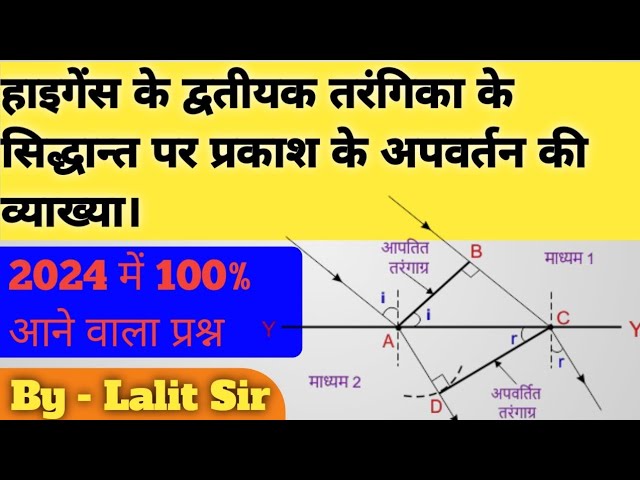
If a beam of light comes like this and hits this interface, it won't go straight.
It will generally deviate from its original direction, and if you call this the theta incident, and you call this the theta refracted, then there is a law, called Snell's law, which says n_1 sinθ _1 is n_2 times sinθ_2.
And theta is measured--in fact, let me call it θ_1 and θ_2.
This is called Snell's law.
Look, the way to think of the law is, if n_2 is bigger, then sinθ will be smaller, so this angle would be smaller.
So when light goes from a rare medium to a dense medium, it will go even closer to the perpendicular, or to the normal.
And if you run the ray backwards, from the dense medium to the rare medium at some angle, it will go away from the normal even more.
That was done and that was measured and all that stuff.
Then you can look at more things.
You look at mirrors, parabolic mirrors, where you know if a light ray comes like that, parallel to the axis, it goes through what's called a focal point.
Every parallel ray goes through the focal point, so you can use it to focus the light ray.
That's what you see.
Whenever you have these antennas, your own satellite dish, here's the dish in which the rays come and they're all focused onto one point.
That's where you put your probe that picks up the signal from the satellite.
It's a way to focus all the light into one place, so it's a property of these concave mirrors that they will focus all the light at the focal point.
Then you learn other stuff.
If you don't have the object at infinity sending parallel rays, if you have an object here, what happens?
Well, you have to do other constructions.
If you have an object here, for example, you want to know what image will be formed.
You draw a parallel line and that goes through the focal point.
You draw a line through the focal point.
That comes out parallel, and where they meet is your image.
And this is called h_1, this is called h_2.
That distance is called u, that's called v, and you have this result, 1/u 1/v is 1/f.
By the way, there is no universal agreement on what to call these distances.
Some people call it i and o for image and object.
When I was growing up, they called it u and v.
I don't care what you want to call it, but this is the law.
Then you've got lenses.
This is a piece of glass and it has the property that when you shine parallel light from one side, it all focuses on the other side.
That's called the focal length.
And if you have an object here, it will go and form an image on the other side, which will be upside down and that also obeys the same equation, except u is the distance of the object and v is the distance of the image and f is the focal length.
So there's a whole bunch of things you learn.
That's all I want you to know.
Then there are some tricky issues you must have seen yourself, that if you got a lens that's not concave but convex, like this, and if you shine light on that guy, what will happen?
This parallel ray of light, you can sort of imagine, will go off like that.
In fact, the way it will go off is as if it came from some point called the focal point.
In other words, these rays of light in this mirror, instead of really focusing at some point, seem to come from the focal point.
And if you draw a ray of light here, since that is a vertical part of the mirror, you use i = r.
That will go off at i =r.
That ray of light when seen by person here will seem to come from there, and if you join them, you get an image here.
That's the virtual image, in the sense that this is a concave mirror--convex mirror like the one you have in your car.
And if forms a reduced image of the object.
Okay, so this is the scene from Jurassic Park.
That's the dinosaur, and there's the Jurassic-- I mean, the image of that, and it says, "Objects may be bigger than what they appear in the mirror."
That's what it's all about, because one of these mirrors will make an image, but it's called a virtual image.
In other words, if you put a screen there, you won't see anything.
It's on the other side of the mirror.
Here, if you put a screen, if you put a candle here and put a screen here, you will see a bright image of the candle.
So this is a real image, and that's a virtual image.
The way you do these calculations, you use the same formula, except f will be a negative number.
Instead of really focusing, it anti-focuses, so the focal point, if you want, is on the wrong side of the mirror.
You'll get all the right answers if you use a negative f.
So your textbook will have many examples of how to solve these problems, very simple algebra.
But what I want to do, since many of you have seen this, and to make it interesting for you, is to show you there is a single unifying principle, just one principle, from which I can derive all these laws.
All the things I mentioned, this is why I didn't stop and go into detail, every single one of them comes from one single principle.
Anybody know what that principle might be?
Have you heard of anything?
Yes?
Student: I don't know how to pronounce the name.
It starts with an "H."
Prof: You mean Huygens' principle?
Student: Yes.
Prof: No, that's a different guy.
This is the famous Fermat, who had this theorem with prime numbers.
His principle says light will go from start to finish in a path that takes the least amount of time.
That's the path it will take.
That's the Principle of Least Time.
Now we find a lot of pleasure when we can derive many, many things from a single principle and you will see then, all the stuff I wrote, I can deduce from this one principle and that's what I want to do today.
So you don't have to carry all that baggage.
You can derive everything.
So let's see how it goes.
So first let's say I am here and you are here, you send me a signal.
What's the path it will take?
Where is the path of least time?
And everybody knows that's a straight line.
No point going any other way.
So that tells you first, light travels in straight lines when there's no other obstacle.
The next possibility is, I want the light--let me do this right because I'm going to really draw some pictures.
I want the light to hit the mirror and then come to me, so it's like a race.
You are here.
You've got to touch the wall and go to the finish line.
Whoever gets there first wins.
That's the path light will take.
Now there are different attitudes you can have.
First is, you can start wandering like this.
You know that person's a loser, because that's not the way to optimize your time.
So we don't even listen to that person.
There are other reasonable people who may have a different view.
One person may say, "Look, he told me to touch the wall, so I'm going to get that out of my way first.
Then I'm going to go there."
Fine, that's a possibility.
Another person can say, "Well, let me touch the wall right in front of this person, then run over to meet the person.
That's another possibility."
So there are different options open to you.
And we've got to find from all these possible paths the one of least time.
That's the goal.
Now I already said, when you look at paths, the path to the mirror has got to be a straight line.
You gain nothing by wiggling around.
And the path back from the mirror to the receiving point should also be a straight line, because the winner lies somewhere there.
Anybody who doesn't follow a straight line in free space is not going to win.
So the only freedom you have, the only thing you want to ask, is the following: "Where should I hit that mirror?"
right?
So let's call that point where you hit as x.
Let's say the distance between these two points is L.
This is at some height h_1, this is at some height h_2.
So what I will do, is I will simply calculate the time, then find the x for which the time is minimum.
So what's the time taken for the first segment?
So let's find the total time.
It will be the distance, d_1, divided by the velocity of light distance d_2 divided by the velocity of light.
d_1, you can see, is h_1^(2) x^(2), divided by c h_2^(2) L - x squared divided by c, just from Pythagoras' theorem, right?
It's d_1/c d_2/c.
So let's multiply everything by c.
That doesn't matter.
Whether you minimize cT or T, it doesn't make any difference.
So let's take d/dx of this whole expression and equate it to 0.
That's how we find the minimum of anything.
So let me take d/dx of the first term.
That is x divided by square root of h_1^(2) x^(2).
You understand?
Something to the power ½ is ½ times something to the power -½ times derivative of what's inside, that's the 2x.
That's what cancels the ½ and you get this.
This is the d/dx of the first term.
The d/dx of the second term will look pretty much the same.
It will look like L - x divided by h_2^(2) (L − x)^(2), but when you take the derivative of (L − x)^(2), you get a 2 times L - x and another - sign from differentiating that guy, so you will get that.
And that's what should = 0.
Therefore the point x has to satisfy this condition, but what is x over d_1?
This is just x over d_1 = L - x over d_2.
So here is x and here is L - x.
So x over d_1 is cosine of this angle and that is cosine of that angle, right?
I don't know what you want to call it?
Let's say it's cosine α = cosine β.
That means α = β.
Or if you like, 90 - α is 90 - β and 90 - α is what one normally calls the angle of incidence and this is called the angle of reflection.
So you get θ_i = θ_r.
Now it's something everybody should be following, because if you don't follow, you should stop me.
But it's very interesting that i = r is the way for light to go from here to there after touching the mirror in the least amount of time.
So this is the first victory for the Principle of Least Time.
It reproduces this result.
Now I'm going to reproduce a second result.
That's when light changes the medium.
So here it is.
Now the challenge is different.
So here is h_1 in a medium with a refractive index n_1, and you want to go there in a medium, refractive index n_2, and the distance between these points is L.
So imagine you are the light ray and this is the beach and this is the ocean.
You are the lifeguard and here is the person asking for help.
Now how do you get there in the least amount of time?
One point of view is to say, "Look, let's go in a straight line, because we have learned that's always good."
But it may not be always good, because maybe you want to spend less time in the water, because you are slower in the water.
One point of view is to say, "Look, let's go as far as we can in the land, and then minimize the swimming time because we can swim slower than we can run."
That's a possibility.
Or you can draw all kinds of possibilities.
So we're going to find one that has the least amount of time.
If this happens to be the answer, it should turn out in the end, so once again, let's assume that we do that.
And let this be at a distance x from the left.
Now what do you want to minimize?
Again, you want to minimize the travel time, T.
That's going to be h_1^(2) x^(2) divided by n_1c.
That's the only subtlety, because the time--I'm sorry, not n_1c--time n_1.
It's c over n_1.
You want to divide by the velocity in the medium.
Velocity is c divided by n_1.
Also you should know, it's going to take longer in anything but a vacuum, so n_1_ should come on top.
Then you have the other term, that is, h_2^(2) L - x squared divided by c times n_2.
And this will tell you what to do.
So you see, I'm teaching you a lot of practical things in this course.
I taught you, if you're in a tsunami situation, remember what you should do?
You should calculate the gradient and go along the gradient.
On the other hand, if it's a volcano and you calculate the gradient, you go opposite the gradient.
So this is one more thing.
If you want to rescue somebody, you've got to go towards the water in such an angle that this function is minimized.
So I suggest we calculate it and keep the answer ready, because if you really want to be a lifeguard, what you should do is swim and measure your speed, run and measure your speed.
It's the ratio of those two speeds, n_1 to n_2, that will tell you where to hit the water.
Okay, so we're going to do that now.
So I take d/dx of all of these things.
What's the difference?
It looks the same, except you've got an n_1 everywhere, right?
h_1^(2) x^(2 )should = (L − x)n_2/h _2^(2) (L − x)^(2).
So what is x over this?
This is the x.
So n_1x over that distance = cosine of this angle.
You understand?
That's the sine of that angle.
x over that is cosine of this angle or the sine of that angle, since people like to write it in terms of sine, you get this result, n_2 sinθ _2.
So this is Snell's law.
It also comes from the principle of least time.
Each one of them has got interesting consequences.
I don't have time to do it, but you can imagine some of the consequences are, if you are in the bottom of a lake, and you look outside, the light rays go like that, because lake is dense, air is not so dense.
That means you can see stuff right up to the horizon by taking an angle, so that this comes exactly here.
So if you're a fish and you look out, you can see right up to the surface of the lake without going to the surface of the lake, because all the light, right up to the surface, bends and comes into you.
Or if you've got a flashlight and you're sending a signal, maybe hoping somebody there will see it, actually it will bend and somebody at this angle will see it.
And if your angle x is a certain critical angle, your flashlight will go to the surface, and beyond that, it will just get fully reflected.
It won't be able to go to the other side.
So another useful thing to know, if you're going to be under water, you're lying there, you've got some concrete blocks you're dealing with.
Meanwhile you're trying to send a signal.
What angle should you send it?
You've got to remember that it's not going to go in a straight line.
These are all useful lessons from 201.
All right, so now I'm going to do the third thing.
The third thing is very interesting, which is the following: we say, take the path of least time, right?
Now there is a problem that occurs when there's more than one path of least time.
That's what we're going to talk about now.
What if there's more than one answer?
I'm going to give that to you, so here it is.
Take an elliptical room, Oval Office.
You stand here, at one of the focal points, and you want to send a signal to the person in the other focal point, a light signal.
You know what you have to do.
That portion of the mirror is like horizontal mirror, right?
So it's like the tangent to the horizontal, so it's very clear that if you send it like that, it will end up here, because it will obey i = r, and you can see from similar triangles, that distance and that distance are equal, and therefore they are similar triangles.
Are you will me?
This is the angle at which you should send it.
If you send it to this midpoint, by symmetry, it will come to the other focal point.
Okay, so now imagine that this is not a mirror, but some steel walls and you have a gun.
You've got one bullet left.
You are here and your enemy is here.
Now what direction will you fire in?
Pardon me?
Student: At him.
Prof: Right.
So you can fire-- very good.
See, this is why I forgot.
So that's a little steel plate.
Now what will you do?
That's like asking the light how to go from A to B without hitting the mirror, I agree, that's the shortest time.
But if there's something blocking you, then you know the other person's at the other focal point.
Now which direction should you aim?
You know the answer.
I gave it, right?
Give me an answer then.
Yes?
Student: At that point in the wall.
Prof: At that point in the wall.
But it turns out, you can aim anywhere you like.
You will thank me when you use that rule.
In other words, you can shoot any direction.
See?
This is the guy who took only Physics 200.
This person took Physics 201.
That's what 201 gives you.
Now that's amazing, right?
I'm telling you, shoot anywhere you want.
You know that bullets are like light.
They follow angle of incidence = angle of reflection.
This beam obeys i = r.
You can see by symmetry.
How about this one I shot at some random angle?
The way to think of that is to draw a tangential plane mirror there.
As far as this beam is concerned, the mirror could be flat.
It doesn't know it's curving away.
That angle better be equal to that angle.
That's the way you should fire it, because you find the tangent, then draw the normal to the tangent, and choose and angle so that that and that become equal, and the bullet ends up here.
But I'm saying you don't have to do all that.
You shoot anywhere you like, you go crazy, shoot in any direction, they will all end up on this person.
So why is that?
Pardon me?
That's the definition of an ellipse, but why does the definition--if you follow the Principle of Least Time, why should that also work, according to the Principle of Least Time?
I know this path is a path of least time, because it obeys i = r with respect to this mirror, so I know it's the path of least time.
You agree?
Student: > Prof: That is correct.
In other words, the time it takes is really that length that length.
But an ellipse is a figure that is drawn keeping the sum of that distance to that distance constant.
That's how an ellipse is drawn.
Take two thumbtacks and put them in the paper and you take a string of some length, and you stretch it out, grab your pencil and move it, and you will draw the ellipse.
So that distance is r_1 and that distance is r_2, r_1 r_2 = constant is what defines an ellipse.
But the time taken is really r_1 r_2 divided by c.
So if you were to design a surface so that if you shot something one point, it will all end up here, all the light from here will focus here, you should build an ellipse, and send the light from one focal point.
Likewise, if you talk, also the sound will come to that other point.
Now sound waves behave more like waves rather than geometrical optics, but if it's high, long, short wavelength sound.
Suppose you're talking to your dog, then you can talk to the dog from here.
At sufficiently high frequency, the dog will hear it here.
So it's a focusing effect.
So the way focusing works, is that there's more than one way to go from start to finish.
But you are supposed to follow the Principle of Least Time.
That means all those paths take the same time.
That's the key.
When you look at a mirror in front of--an object in front of a mirror, there's only one path, hit the mirror and bounce out.
But if you have a geometry like this one, curved, then it's not true.
There is more than one way to go from start to finish.
Okay, so now let us ask how you build a focusing mirror.
Here's what we want to do.
So this is not very practical.
This is very useful, but it's not what I'm talking about, because I didn't discuss that in things you knew from high school.
Here's what you knew from high school, how to make a focusing mirror.
So the deal is, light's going to come from some object at infinity, therefore it's coming in some parallel lines from a very distant object.
You want to put some mirror of some shape so that every one of these guys will come to the same focal point.
You can ask, "Can I even design such a thing?
Is it possible?
If so, what do I have to do?
What's the shape of the object?"
So let's do the following.
Let's take the ray that goes along the axis of this thing.
It goes here.
It goes to that mirror, hits the mirror, then it comes back a distance f.
So in the time it takes to go from here to here, had it continued going, it would have gone to this wall here, also at a distance f.
Do you agree?
The time it takes for it to hit the mirror and come to the focal point is the same as the time it would have taken, but for the mirror, to go the other side the same distance f.
Okay, now I take a second ray that's not on the symmetry axis, but above the axis.
It comes here, and having come here, if it has to take the same time as the other beam, it's the time to go there.
But you want it to instead come here.
So how will that happen?
What will ensure that that happens?
Can you guys think of what condition you have?
Yes?
Student: The two distances need to be the same.
The distance from the mirror to the-- Prof: Do you understand that?
That's very important.
That distance and that distance have to be equal.
Let's be very clear on why we are doing that.
See, these guys came from infinity.
They've been traveling in a parallel line.
Start with some plane here, so that everybody is counted from now on and see how much time you take.
The ray from this center goes to the mirror and goes an extra distance f, because that's what it does.
So that's the distance to which any distance these rays would have gone, but for the mirror.
That's how much time you have.
So if you went there and you want to turn around and come here, that extra distance better be equal to the distance to go to that plane, because that's the same time for everything.
So that's the condition of the surface.
It is a surface with a property that its distance, any point on that curve, has the same distance from a fixed point as from a fixed line.
If you can find that, that's the surface you want.
Now that happens to be a parabola, but we'll derive that, but that's what you learn in high school.
A parabola is a curve which is equidistant from a point and from a line.
Distance to the point is very clear.
Distance to the line is obtained by drawing a perpendicular and measuring that distance, the shortest distance.
So I'm just going to equate these two, that's it.
That will give me the equation for this curve.
So let this graph, the shape of the mirror I'm trying to design, let this be the origin.
This is some point with coordinate x and y, and y is some function of x that I'm going to find out.
That's the goal.
What's the function y of x that you want?
So let's find out the different distances.
So what is that distance it has to travel?
You can see, x is the coordinate of this point.
It's got to do that and another extra f on the other side.
So going horizontally, it's got to do an x here and an f there, so it's got to do x f.
That's the distance from the mirror to this fictitious plane.
That's the time they have.
They all have the time to go to this fictitious plane.
So I'm going to equate that to this distance.
This one, you've got to use Pythagoras' Theorem.
So this height is y.
So it's y^(2) (f − x)^(2), because this side here is f - x, because the whole distance is f and that's x.
You follow that?
(x,y) is the coordinate of this point.
You drop a line down here.
That distance is x.
This is f - x and that's y.
That's that length.
You want these two to be equal.
So if you have a square root, you know what you have to do.
You've got to square both sides.
You square both sides, you get x^(2) f^(2) 2xf = y^(2) (f − x)^(2).
So x^(2) cancels, f^(2) cancels, then I get y^(2) = 4xf.
That's the equation of the parabola.
You're probably used to drawing parabolas that look like this, but it's the same thing.
I've just turned it around.
So if you go a distance y here, then this x is quadratic in the y.
So that's the equation, that's the process by which you can design a mirror that will focus light from infinity.
So it can be done.
Likewise, if you said in the elliptical case, "Can I find a surface inside which the distance will go from here to there after touching the figure is independent of where I touch it?"
the equation you will get will be an ellipse.
That's more complicated to derive.
This is a lot easier to derive.
This is the equation of the parabola.
So if you want to build a dish that will really focus light, no matter how far, how wide the beam is, this will do it.
Parabolic mirrors is something like what Hubble would use.
Anybody would use parabolic mirrors, but there is a cheap trick people use if they cannot afford a parabola, because it's very hard to design things in a parabolic shape.
Do you know what the simplest solution is?
It's a sphere.
Now a sphere is not quite a parabola, but you can imagine that if you have a parabola like this, and have a sphere, the sphere can sort of mimic the parabola up to some distance.
Then of course it will deviate.
But if you promise that you'll only take beams very near the axis, then the two are just as good, except it's easier to make a spherical mirror than to make a parabolic mirror.
But if you've got the money, parabola is what you want.
Otherwise, this is the cheaper solution.
So let's ask ourselves the following question: if I take a sphere of radius R and I slice a part of it, okay, it's a hollow sphere and I slice a part of it and I paint it with silver, so I've got a mirror, this part of it, what will be the focal length of that?
That's what we are asking.
I get that by saying the following: so here is that sphere.
It's got radius R, and there is some point (x,y) on that sphere.
Then if this is my origin, the equation for a sphere will be (x − R)^(2) y^(2) = R^(2).
See, normally is x^(2) y^(2) = R^(2), right?
That's when the origin is at the center of the sphere.
But the center of this sphere is at a point x = R, so the equation in this coordinate system will look like this.
So you open everything out, you get x^(2) R^(2) - 2xr y^(2) = R^(2). You cancel the R^(2) and you get y^(2) = 2xr x^(2).
I want you to compare this equation to the equation for a real parabola.
They don't look the same.
Yes?
Student: Yes, that's correct.
Yes.
Now the way to think about this is that but for this −x^(2) term, this equation looks like a parabola, but if you compare the two, you find that 4xf = 2xR.
That means R = 2f.
Or, if you like, the focal length is R/2.
But we're not done yet, because I just threw away the second term.
I've got to give you a reason for throwing the second term.
So here is where you've got to get used to the following notion of big and small numbers.
Whenever you deal with a mirror or a lens, things like u, v, f are all going to be treated as big numbers.
Things like y that take you off the axis are going to be considered small numbers.
Things like x are even smaller.
So the hierarchy is, u, v, f, big, y is small, x is small squared.
You can see that already.
Suppose someone tells you to look at this equation.
You can look at the two terms.
One is x times R, other is x times x.
So x times R beats x times x, because one is a small number, one is a small number squared.
So we're going to drop that term.
Then we get, in that approximation, this condition.
But that had to be such an approximation, because a sphere can never equal a parabola.
It can look like a parabola only for small deviations from the axis.
This is cautioning you that if your rays come too far off, like way over there, then the x times R term will be comparable to the x^(2) term and it will no longer look like a parabola.
So you should be very clear.
When you make a real parabolic mirror, it will focus rays, no matter how far they are from the origin.
If I take a spherical approximation to it, it will work only if the rays are very close to the center.
So here's a spherical mirror.
You cannot have the rays going too far from here, in the scale of u, v and f. Yes?
Student: With the first equation, if f = 0, isn't it a plane?
Prof: Yes.
Student: But the focal point isn't at the origin, is it?
Because the plane here has-- Prof: Yeah, what did you want to do for that one?
Student: If you put f = 0, so you have the focal length = 0.
Prof: Plane mirror is focal length = infinity.
Student: Infinity.
Oh, it's the other way around.
Okay.
Prof: It's the fact there is bending that's focusing it.
As you straighten it out more and more, it will just reflect it and go right back.
And when will those lines meet?
They'll meet at infinity.
So I want to do one thing.
I want to show you something.
Here is a spherical mirror I've cut out.
I want to send a parallel beam.
I've already shown you that this should go through the focal point, because it's the path of least time.
But you can say, "How do I know once again this is the same as i = r?"
Suppose you grew up on incidence = reflection.
I'm not going to reassure you continuously.
I'm going to do it one last time, okay?
Don't ever ask me again.
It's the last time.
I'm going to show you that Principle of Least Time is the same as i = r.
I don't want to do it over.
Here's the last time we're going to do this.
So what's our question?
Question is, if I draw a tangent to that graph and drew the normal to that tangent, right, we want to know that that angle a will be equal to that angle b.
That's what we want to show.
But where will this go?
If that's a circle, if it's a spherical mirror, you draw a normal to the tangent, it will go through the center of the sphere.
You understand?
And this one is supposed to go to the focal point.
Now let this height be h.
Now let this angle is also a.
This figure is too small, so let me draw you a bigger figure so you can see.
This is sort of exaggerated so you've got to be a little careful that the--let's call that a and that's also a.
Let's call this b.
This is f and this is R.
I hope you understand why.
That's the important part.
This mirror is locally tangential to that line, tangent to the circle.
And the normal to the circle is pointing towards the center.
That's the way circles work.
You draw a perpendicular from the circumference, you hit the center, but that's looking like the plane mirror for that particular light ray.
That light ray doesn't care if you bend it somewhere else.
As far as this ray is concerned, you are a plane mirror.
You want that angle to be equal to that angle.
That's what I want to show you.
So let's take this height h here, and you can notice that tan b = h/f and tan a = h/R.
Can you see that?
That's b and a?
For small angles, for a small angle, I remind you again and again, sinθ is roughly θ and tanθ is roughly θ and cosθ is roughly 1 corrections of order θ^(2).
So we delete the tan.
And if you use the fact that R = 2f, it becomes h over 2f, you can see that a = b/2.
So a = b/2.
That means b is twice as big as a, but in any triangle, the external angle is sum of the internal opposite angles, therefore if this is 2a and this guy is a, that's also a.
That means the angle of incidence is the angle of reflection.
So what I'm telling you is, you can always go back to angle of incidence = angle of reflection, but it's going to take more work because you have to find the tangent.
You've got to draw the normal to the tangent.
You've got to find the angle with respect to that normal and equate it with that angle.
You will find in fact every ray goes through f.
But it works only in the small angle approximation.
The small angle basically means your object is not too tall compared to the radius of the mirror.
That's because if the object is comparable, then the approximation I made that a circle will approximate a parabola is no longer valid.
So remember, if you took a real parabola, if you have the stomach, you can do the following calculation.
Take a real parabola, you will find angle of incidence is angle of reflection exactly.
Whenever you draw a line, horizontal line, that hits the mirror, comes to the focal point, if you find the local value of the perpendicular, you'll find i = r, no matter how far you go.
But if you approximate it by a spherical mirror, we have seen, the spherical mirror is only an approximation to the parabola, when you can drop the x^(2) term.
Okay, so we have seen the Principle of Least Time is able to give us i = r, Snell's law and focusing of a parabola.
Now I want to consider the following thing: just because a parabola can focus light ray at infinity to a focal point does not mean if you put a finite object at a finite distance from it, it will form a clear image.
It's only an approximation.
And I will show you what we normally get from geometrical optics.
I'll remind you what we know from geometrical optics.
Geometrical optics tells you the following: if you have an object of height h at a distance u from the mirror and you want to know where the image will be formed, you first draw a horizontal line whose fate you know.
It has to go through the focal point.
The second one says you draw a line through the focal point and it's got to come out horizontal.
How do I know that?
I know that if I run the ray backwards, a horizontal ray will go through the focal point, but if going backwards, it's a good idea, namely least time, it's also a good idea going forward.
That's why we know that parallel will go through focus.
Through focus it will come out parallel.
So you join them and you've got the image there.
And that's at a distance v at a height h_2.
So I'm now going to use ideas of geometrical optics, having shown you enough times that least time and geometrical optics are equal, to find the usual relation between u, v and f.
So how do we do that?
We say, take that triangle with angle alpha and that with angle alpha and draw a triangle like this here.
Then you equate tangent of this angle to tangent of that angle.
Then you find tanα = h_1 divided by u - f, that distance, = h_2/f.
Actually, there's a tiny bit.
It's not quite f.
It's (f − x)^(2), but x^(2) is negligible compared to f, so we won't worry about that.
You see this triangle here?
That height is certainly h_2.
That length is not quite f.
f goes all the way to the mirror, but if I drop a perpendicular here, there's a tiny little x inside.
I'm now showing you that x.
I've been neglecting it.
In other words, you really should put an f - x, but x is quadratic in the small numbers, so we're not going to keep it.
Then draw another similar triangle.
This angle β is the same as this angle β.
So let's say tan β found two ways it's equal.
This one, tan β on the top, you can see is the h_1/f and that's going to = the tan β of this triangle, which will be h_2 divided by v - f.
These are the two conditions you get.
Okay, I may want to draw bigger pictures.
Can you guys see this, or there's no hope?
Can you see in the last row?
Cannot.
You should tell me when you cannot, because I'll be happy to fix that.
So let me draw this bigger.
The reason that I'm drawing everything small is that I don't want the rays to go too far up the axis, but I'm not going to worry about that.
So let's make sure you can see the rays.
There's one guy who did that, one which did that, correct?
This is α and that is α and this is β and this is β`.
That's all I've done now.
So tan α = h_1 divided by this side, where u is the distance from the mirror, you take away f, because that's f. That's h_1 over u - f.
It's the same as tan alpha measured on this triangle.
That tan α is h_2/f - a tiny portion, which is the x, which I'm dropping.
But similarly for β, you have a similar rule.
So here's all you can get out of these two rays.
So let's multiply this one and this one and that one and that one.
So I'll get h_1h_2 over u - f times v - f.
I'm going to cross multiply like that.
It = h_1h_2 over f^(2).
That tells you, u - f times v - f = f^(2).
You may not have seen it this way, but it's a very symmetric way to write the equation.
If you measure all distances, not from this point here but from the focal point, then it says u - f times v - f equals f^(2).
But let's make contact with what we all know.
So let's open out the brackets, so I get uv - uf - vf f squared = f^(2).
You cancel that guy.
Then you get uf vf = uv.
Now divide everything by uvf.
You divided everything by uvf, you'll get 1/v 1/u = 1/f.
Anyway, this is derived by standard geometrical optics, without going back to the Principle of Least Time.
So this is the result.
But there's one more result, because you've got two equations, you can learn one more thing.
You can ask yourself, what's the ratio of the object size to the image size?
You can say, what is h_2/h _1?
So h_2/h_1 is f divided by u -f.
Or let me write it another way, it's easier.
h_1/h_2 = (u − f)/f.
That's equal to u/f - 1.
u/f is u times 1/f and 1/f is 1/u 1 over v - 1.
And if you do that, you'll find it's just u over v.
So the ratio of the object size to the image size is just the ratio of the object distance to the image distance.
And people sometimes define a magnification M to be −u/v.
What they mean by the - sign is that if this comes out negative, the object is in the upside down version.
The image is an upside down version of the object.
In this problem u and v are both positive, then M will come out negative.
It just means it is that much bigger, but flipped upside down.
In some other mirrors, you will find v is negative because the image is virtual.
Then it will mean M is positive.
That means the object is upright.
That's when you look into the mirror, the bathroom mirror, then your image has the same orientation as your face, not upside down.
Then M will be positive.
Okay, now here's a question one can ask.
When you do geometric optics, there's a question one can ask, which usually occurs about 30 years afterwards.
I never asked that question.
I kept doing all the problems.
Then a few years ago, when I started teaching this course, I began to ask myself, you know, you can always draw two rays and they will always meet.
What if I draw another one?
What if I draw one that goes like this?
How do I know it will come here?
A lot of pictures show you that coming here, but should it come here?
Maybe it won't, so let me check this thing.
Let me make sure that if I have a ray coming to the center of this, it will also end up where the other two guys came.
Well, if you do the center, remember, it's angle of incidence = angle of reflection, that means the tangent of the angles are equal.
That means h_1/u should be h_2/v.
Luckily that happens to be true, because h_1/h_2 is in fact u/v.
Thereby you can show that this ray, which hits the center of the mirror, will also come to where this one came.
But that's not enough, because somebody can draw yet another one and yet another one.
How do you know they will all come to the same focal point?
How will you know they're all from the same image?
Do you understand the question now?
You have to show that every ray leaving that source hits the mirror and comes back to the very same image point.
And it's not enough to draw two rays and show them meeting, because two rays will always meet.
Now I've drawn a third one and shown you that it certainly comes to the right place, but that's not enough.
You can sort of argue that the evidence is overwhelming it will come here, because if you look at all the rays fanning out of this, the one that went to the top came here.
One that went to the bottom and also came here, but that's pretty solid.
This involves the focal point.
One in the middle also came to the same point.
You can sort of say, "Look, this end is good, that end is good, point in the middle is good.
What do you think will happen?
We don't know.
Sometimes it can happen that there are three points which are good, but everything else is wrong.
So what is the way to nail this thing?
I'm not going to do it today, but I want you to think about what calculation will satisfy you that no matter where I hit the mirror, I will get the same time.
What do you think I have to do?
What would you do?
What do you want to check?
Yes?
Student: You can make the object infinitely small > Prof: Yes, if you make the object infinitely small, perhaps every ray will start looking parallel.
That's correct.
Student: You can take infinitely small pieces > Prof: No, I think I'll explain what my question really is.
Then you can think about it.
Here is the mirror, right?
I took an object here, that's the focal point, and I draw some number of rays, three of them in fact, right?
This one, that one and one through the center.
They all came.
If I want to show you that if I took an arbitrary point at height y--yes.
Student: Create an ellipse based off of the two points.
Prof: Pardon me?
Student: Could you create a function for an ellipse off of two points?
Prof: Yes.
What you have to do is to pick a random generic point on that graph, not a parabola, and ask how long it will take light to go to that point and come here.
So what do I want to show?
Every ray of light hitting this is going to end up here, correct?
For every possible altitude, all the way from 0 to the full height.
Now in order to show that it will come here, it also has to be a path of least time, because you need to go in the path of least time.
These three guys are obviously path of least time, the three rays I showed you.
I want you never to forget that.
If three rays leave here and they meet here, that means they take the same time, because light travels in a path of least time.
If three guys get there, they all take the same time.
But it's not enough to consider that height, 0 height and that height.
I only took a height h_2, h_1 and 0.
I want to take a generic height y, and I want to calculate that distance, divided by velocity of light.
Just take that distance that distance and show that the answer does not depend on y.
The answer does not depend on y, then you vary any y you like.
Then you get the same time.
So I'm not going to do the calculation, but I want you to think about what it is you want to calculate.
I'm going to set it up, but then come back next time and do it, because it takes some time.
I'm going to exaggerate everything so you can sort of see what we are trying to do here.
You want to go to that guy, not at that height h_1, sorry.
I want to pick an arbitrary height y, then I wanted to form an image here.
So that's at u, that's at v, that's h_2.
I want to find that distance and I want to find that distance and add them up, and the answer should be the same as any of the winners.
The winner I want to take is this guy, which came like this, which I know is one of the least time.
If you want, that corresponds to y = 0.
So the time we are trying to match is really h_1^(2) u^(2) h_2^(2) v^(2) divided by c, but I'm not going to divide by c.
Just imagine everywhere we're dividing by c.
The path length for this path that goes to the middle of the mirror and comes out, you can see from Pythagoras' Theorem's h_1^(2 ) u^(2) and h_2^(2 ) v^(2).
And that's going to be equal to this length d_1_ this length d_2.
And they will depend on y.
d_1 and d_2 will depend on y.
And we want to expand it as a function of y and make sure it doesn't vary with y, and I'll tell you the details next time.
Up Next

9:15
Schlieren Photography Setup: Visualizing Air Currents with Optics
@TannerTech
7.3K views•2020-10-17

12:53
21cm Hyperfine Transition in Neutral Hydrogen: Radio Astronomy Basics
@AaronRobertParsons
12.4K views•2011-10-13

73:51
Rotations Part I: Dynamics of Rigid Bodies | Physics Lecture
@YaleCourses
282.3K views•2008-09-22

27:14
Entropy and the Second Law of Thermodynamics Explained
@veritasium
27.5M views•2023-07-01
Related Study Plans & Knowledge Roadmaps
Structured learning paths in Physics
physics
Nuclear Physics (Decay, Fission & Reactors)
01Atomic Structure and the Binding Force
02Radioactive Decay and Half-Life
03Nuclear Fission Mechanics and Chain Reactions
+ 2 more learning modules
12h5 modules
Explore Roadmap
physics
Soft Matter (Polymers, Colloids & Rheology)
01Foundations of Soft Matter & Thermal Forces
02Polymer Physics and Macromolecules
03Colloids, Surfactants, and Self-Assembly
+ 2 more learning modules
38h5 modules
Explore Roadmap
physics
Analytical Mechanics: Lagrangian & Hamiltonian
01Mathematical Foundations: Calculus of Variations
02From Newtonian Mechanics to Constraint Dynamics
03The Principle of Least Action & Lagrangian Mechanics
+ 3 more learning modules
28h6 modules
Explore Roadmap
physics
General Relativity (Spacetime & Cosmology)
01Foundations of Relativity: Special Relativity
02The Geometry of Spacetime: Equivalence Principle & Curvature
03Einstein's Field Equations: The Mathematics of Gravity
+ 2 more learning modules
55h5 modules
Explore Roadmap