


















![16 - Curso TEORÍA CUÁNTICA de CAMPOS [Integrales de contorno]](https://i.ytimg.com/vi_webp/PP8E4Zu-_y0/maxresdefault.webp)
A complex function f(z) = u + iv is analytic if it satisfies the Cauchy-Riemann equations: ∂u/∂x = ∂v/∂y and ∂u/∂y = -∂v/∂x. For f(z) = z·e^z, by expressing z = x + iy and separating real and imaginary parts, we find u = e^x(xcosy - ysin y) and v = e^x(xsin y + ycos y). Computing partial derivatives shows ∂u/∂x = ∂v/∂y = e^x(xcosy - ysin y + xsiny + ycosy) and ∂u/∂y = -∂v/∂x = e^x(-xsin y - ycosy + xsiny + ycosy), confirming the function is analytic. The derivative is f'(z) = (z + 1)e^z.
Cauchy-Riemann Equation Problem 1: Cartesian Co-ordinates | Engineering M3
Added:Understanding the representation of complex numbers in Cartesian form, specifically expressing a complex variable as z = x + iy.
Fundamental knowledge of partial differentiation, specifically finding first-order partial derivatives of multi-variable functions.
Familiarity with the complex exponential function, including Euler's formula to decompose e^z into its real and imaginary components.
Basic conceptual understanding of differentiability and analyticity (holomorphism) for complex-valued functions.
Applying the Cauchy-Riemann equations in Polar Coordinates for functions involving r and theta.
Understanding Harmonic Functions and learning how to find the harmonic conjugate of a given real or imaginary part.
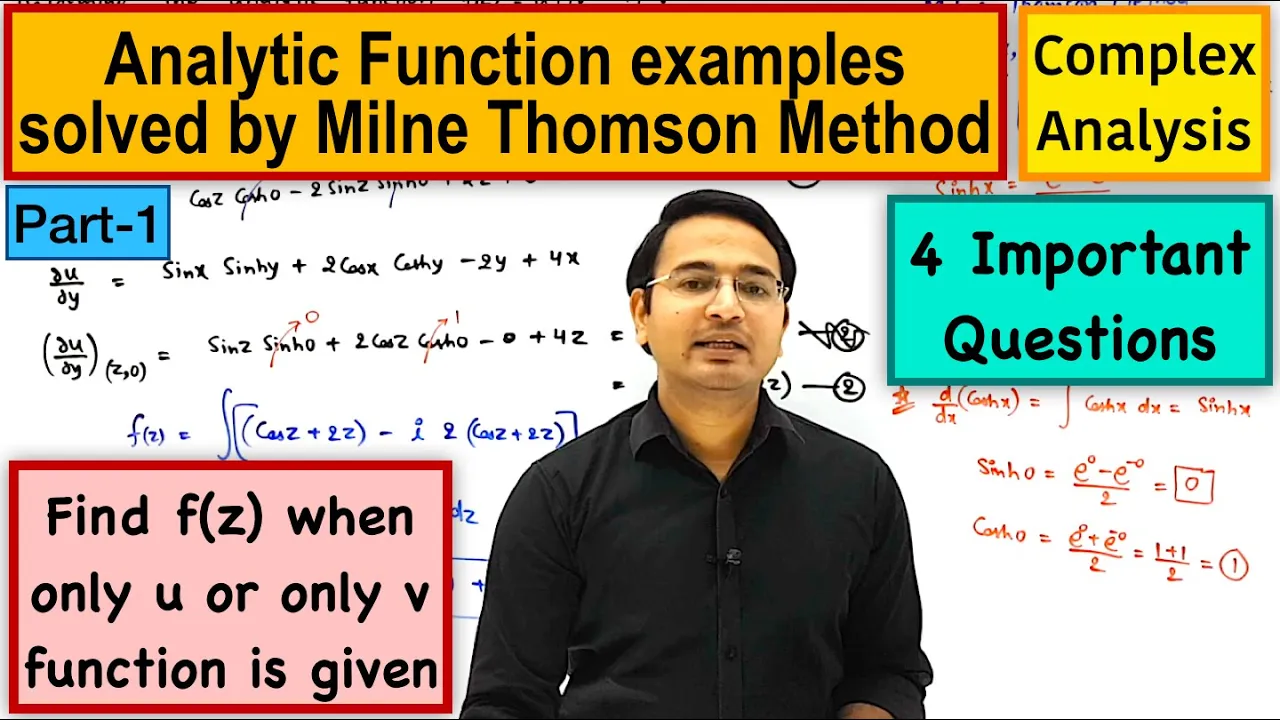
Utilizing the Milne-Thomson Method to construct an analytic function f(z) when only u(x,y) or v(x,y) is known.
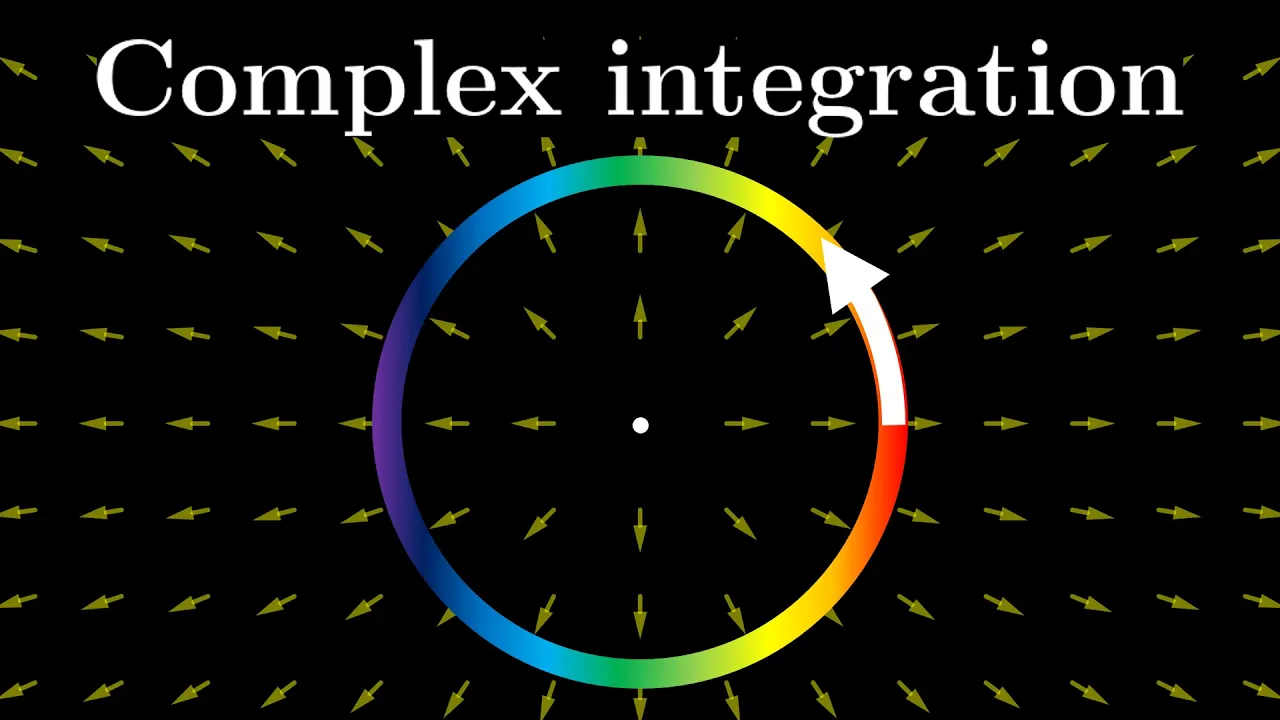
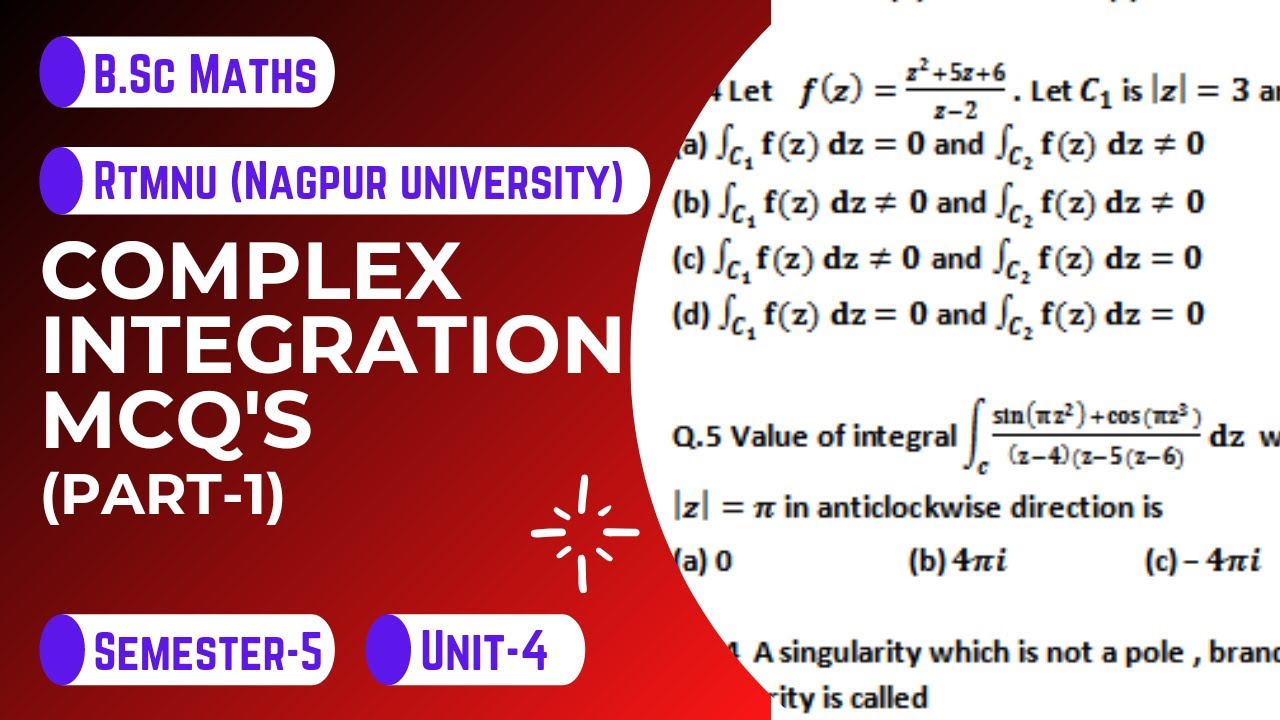
Exploring Complex Integration, including contour integration and the application of Cauchy's Integral Theorem.
46.3K views420likes14:09Original Release: 2016-11-12
Hello friends so in this problem we have to show that F of Z equal to Z e raised to Z is analytic and we have to find out its derivative now guys how to show that given function F of Z as analytic or not so we know that we have Cauchy Riemann equations with us so by using Cauchy Riemann equations we can prove that the Cauchy Riemann equations are satisfied and if the equations are satisfied then we can say yes F of Z is analytic now your F of Z is given in terms of Z where Z is a complex number so now we have a choice we can represent this Z as X plus IY that is in Cartesian form of complex number or present Z as our arrays 2i theta that is exponential form of a complex number so when we represent it in a form X plus iy it is a Cartesian form hence at that time we have to use Cauchy Riemann equation in cartesian coordinates and if we are taking red as our erased Y theta so at that time we have to consider the Cauchy Riemann equations in polar coordinates since we have R and theta in Z so you have to solve it I am going to use the Cartesian coordinates so here let's start with F of Z so f of Z is equal to Z so there is nothing but X plus iy e raised to Z again X plus iy so I have represented Z as a Cartesian form of a complex number which is X plus iy now let's solve this so here we will get X plus iy here arrays 2 X into e raised to I Y now by multiplying this with X we will get X into e raised to X into e raised to I Y plus iy into e raise to X into e raised to Iowa now what is value of e raised to I Y so we know that the value of e raised to I theta is equal to cos theta plus I sine theta so this is nothing but the polar form of a complex number so we will usually say that there are three forms of complex numbers one of them is X plus I Y which is Cartesian form then this cos theta plus I sine theta by assuming the R that is modulus as one so that is the polar form or I will say here R into cos theta plus I sine theta this is the polar form and our arrays 2i theta so this is the exponential form so what I am doing friends that I am representing this arrays to I theta as cos theta plus I sin theta so this is one of the standard identity now here I got erased to I by term so I can say that theta is y so I get cos y plus I sin Y so here I will say it is equal to X I raise to X in bracket cos of y plus I sine Y here I will say plus I by E raised to X in bracket cos of y plus I sine of Y now by multiplying the bracket with the term X raise to X we will get X Y raise to X cos y plus i x e raise to X into sine Y and I'm multiplying the second bracket with I by E raise to X we will get I by E raise to X cos Y and I into I I square which is minus 1 so minus y e raise to X into sine Y now guys here we got fill terms out of that first term and the last term is real so I will take it inside the bracket so X Y raise to X cos y minus y I raised to X sine Y plus I here we will get X Y raise to X sine Y plus y raise to X cos y so I have taken the imaginary terms together now guys why are we doing this so the reason is we want to separate a real and imaginary part from the given function so that we can compare it with f of Z equal to u plus IV where the real part will be called as u and the imaginary part will be called as V and from U and V we can get the Cauchy Riemann equations in Cartesian coordinates so now you are by separating this real and imaginary but we got the values of U and V so I will say U is equal to this first bracket and V is equal to second bracket so we will get now after this we have to prove that pachi Raymond equations from you and be so what is Cauchy Riemann equation so the first equation is dou u by dou X is equal to dou V by dou Y so for that we need to find out dou u by dou X and dou V by dou Y so here I'll find out the value of dou u by dou X first now do you by dou X is nothing but partial differentiation of U with respect to X and friends you must be knowing that whenever we differentiate any function partially that time we just consider a single variable so you have if I am differentiating U with respect to X partially so X will be the variable or I consider X as variable in u whereas Y will be treated as constant so in you we have variable as x + y out of that X is the variable of differentiation whereas Y is constant so since Y is constant I can take cos Y outside so there I have to differentiate XE raise to X so by the product rule of derivative you will get X then derivative of e raise to X as e raise to X + e raise to X as it is and derivative of X is 1 so we you can also call it as UV rule so this is the derivative next in the second term again why it's constant so here I can say minus y + sine my outside and the derivative of e raise to X is again erase 2x so we got this value for dou u by dou X now what it do you buy do one so you are we have to differentiate U with respect to Y partially by treating X s constant so if X is constant so X Y raise to X both are constant where these are the function of X now for cos Y if I will differentiate with respect to Y we will get minus sine way so minus here and sine of Y next in the second term I can take minus e 2x outside since it is constant and for y into sine Y we will use the product rule of derivative so this is nothing but Y as it is the derivative of sine Y is cos of Y next plus sine of Y as it is and the derivative of Y is 1 so this is the value of dou u by dou Y now friends let us expand this value so here we will get cos Phi into bracket so X Y raise to X into cos y plus e raise to X into cos Y minus y sine Y arrays 2x similarly by expanding this we will get here I will write so minus X Y raise to X sine Y next - he raised to X Y cos Y and this will become minus e raise to X sine of Y so you got the value for dou u by dou X and dou u by dou 1 now let differentiate V with respect to X and y so we will get dou V by dou X as your sine Y constant so outside the derivative of XE raise to X by product rule will be X as it is derivative of e raise to X is e raise to X plus e raise to X as it is and derivative of X is 1 next plus now Y and quasi are constant because I am differentiating with respect to X partially so Y outside cause Y outside and the derivative of e raise to X is e raise to X so you have by expanding we will get X Y raise to X into sine y plus e raise to X sine Y and here plus e raise to X Y cos Y so we got these three terms now let us find out dou V by dou Y so we will differentiate V with respect to y para Shelly so X is constant erased to X is constant and derivative of sine Y is cos Y next here erased to X constant take it outside and we'll use the product rule for y into cos Y so Y as it is the derivative of cos y is minus sine y plus cos y as it is and the derivative of Y with respect to Y is 1 so by multiplying the bracket with the raised to X and adding this term we will get X raise to X cos Y here minus a raise to X Y sine Y and the last term will be plus e raise to X cos of Y now guys we got all the four terms now let's observe two two terms so if you will see dou u by dou X and dou V by dou Y so the first term of dou u by dou X is X raise to X cos Phi which is present here yes as it is next plus e raise to X cos Phi which is also present here and the last term is minus y sine Y e raise to X and here we have minus y sine Y E raised to X it is also present so can I say that dou u by dou X is equal to dou V by dou y yes that's absolutely right so it I will say therefore dou u by dou X is equal to dou V by dou Y now let's see the other two equations so here we have dou u by dou Y and dou V by dou X so u are we have a term minus X raise to X sine Y here we have XE raise to X sine Y so guy just observe the difference so both terms are same but opposite inside one is positive one is negative next we have erased two XY cos Y which is negative and here we have erased two XY cos Rho which is positive and the last one here is 2 X sine Y positive and erased 2 X sine Y negative so it means can I say all three functions are repeated endo you by the way with negative sign yes so I can say that this dou V by dou X is equal to minus dou u by dou Y and because if you see then this two are nothing but the Cauchy Riemann equations in Cartesian coordinates so here I can say therefore the Cauchy Riemann equations or we can say it as CR equations are satisfied and therefore we can say that F of Z which was given as Z e raised to Z is analytic since Cauchy Riemann equations are satisfied now if we'll see the problem then we have to show that it is analytic and the next question was find its derivative so you have to get the derivative will say differentiating that function f of Z with respect to Z so therefore we will get F dash of Z equal to now Z e raise to Z so by differentiating it you will get by UV rule Z as it is the derivative of e raise to Z is e raise to Z plus e raise to 0 as it is and the derivative of Z is 1 so here I can take a raise to 0 outside in bracket Z plus 1 and get this is nothing but the derivative of that analytic function so here we got the given function as analytic and we got the derivative of the function thank you
Up Next
14:54
Complex Derivative Intuition: Geometry and Conformal Mapping
@zachstar
221.1K views•2020-11-05

4:43
Elliptic Curve Cryptography Explained: ECC, ECDSA, ECDH
@PracticalNetworking
28.5K views•2024-10-21
10:44
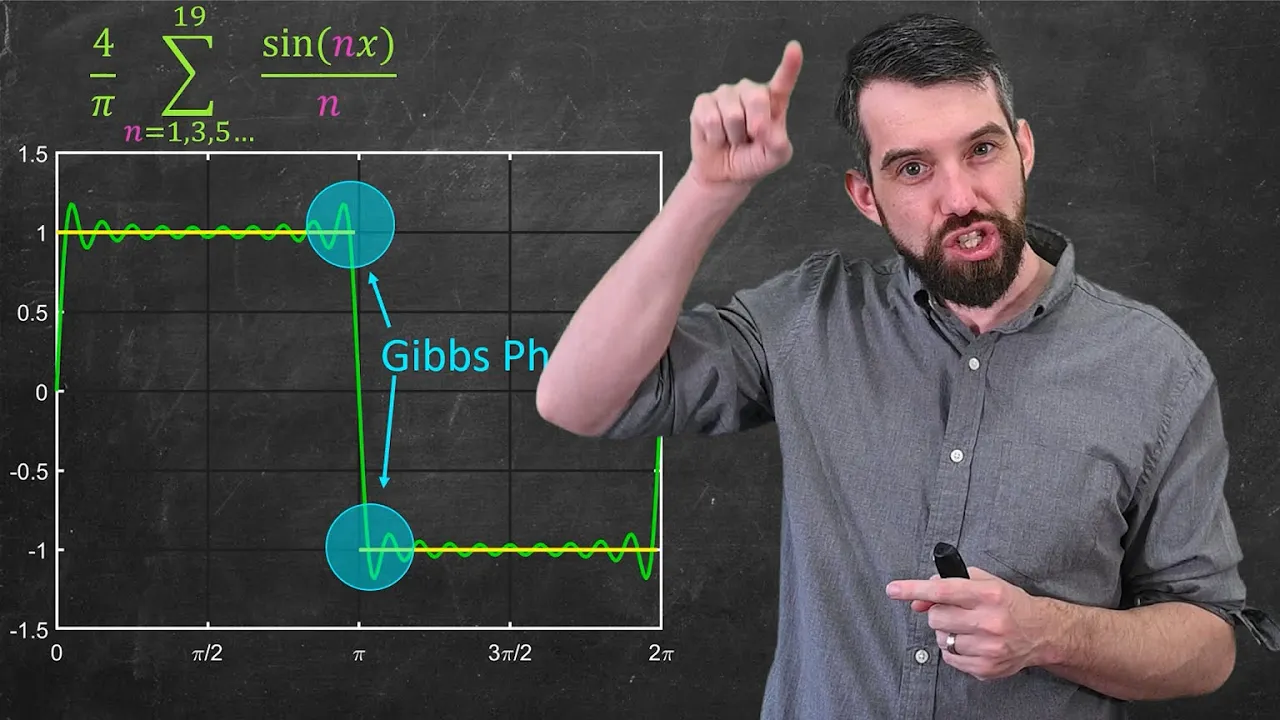
Fourier Series Introduction: The Big Idea Explained
@DrTrefor
387K views•2021-05-03

6:00
The Mathematical Impossibility of Accurate World Maps
@Vox
23.3M views•2016-12-02
Related Study Plans & Knowledge Roadmaps
Structured learning paths in Mathematics
mathematics
Tensor Calculus: Vectors to Riemann Curvature
01Mathematical Foundations: Linear Algebra & Calculus
02Covectors, Dual Spaces, and Tensor Basics
03The Metric Tensor and Index Gymnastics
+ 2 more learning modules
40h5 modules
Explore Roadmap
mathematics
Gödel's Incompleteness: Logic, Proofs & Limits
01Introduction to Formal Systems & Hilbert's Dream
02Set Theory, Cardinality, and Cantor's Diagonal Argument
03Arithmetization and Gödel Numbering
+ 2 more learning modules
14h5 modules
Explore Roadmap
mathematics
Galois Theory: Fields, Groups & Solvability
01Foundations of Abstract Algebra: Groups & Fields
02Polynomials & Field Extensions
03Splitting Fields & Symmetries
+ 2 more learning modules
24h5 modules
Explore Roadmap
mathematics
Non-Euclidean Geometry: Models & Geodesics
01Euclid's Fifth Postulate and the Birth of New Geometries
02Hyperbolic Space and the Poincaré Disk Model
03Geodesics: Defining Straight Lines in Curved Spaces
+ 2 more learning modules
15h5 modules
Explore Roadmap