






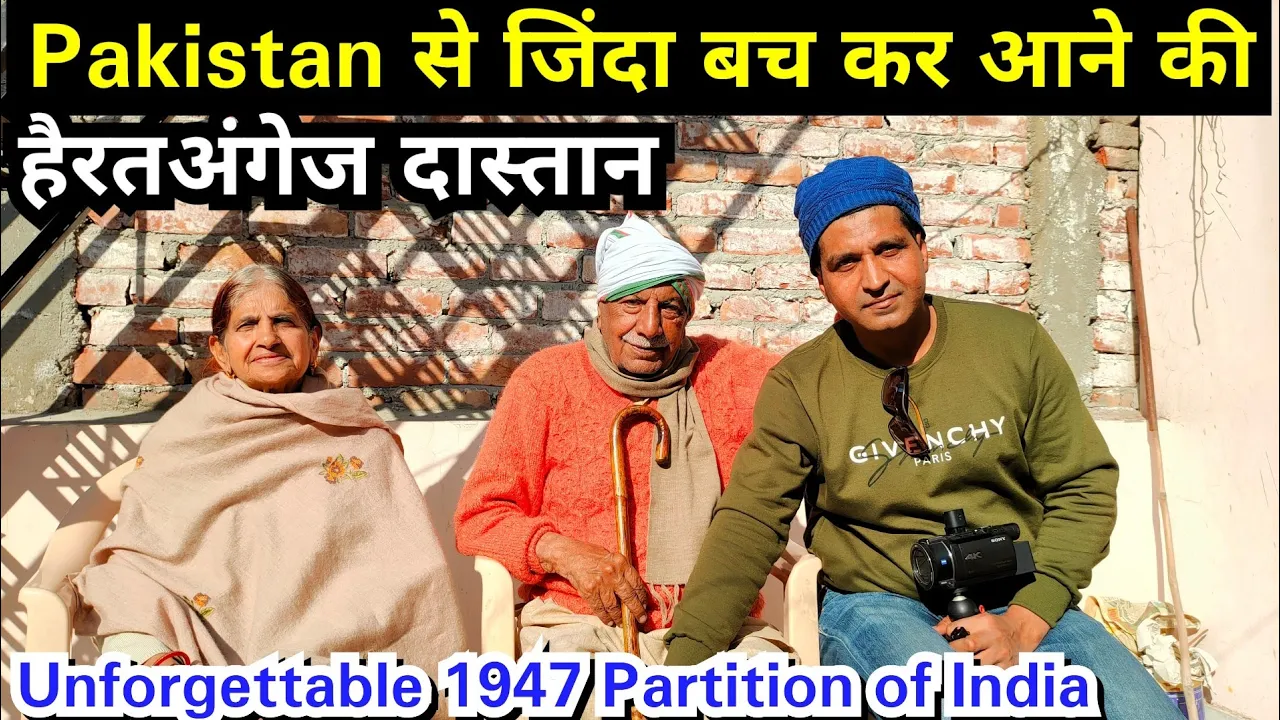








The partition of India in 1947, orchestrated by British Viceroy Lord Mountbatten and British lawyer Cyril Radcliffe who had no prior experience of the region, resulted in one of history's largest forced migrations and humanitarian disasters, with an estimated 1-2 million deaths, 75,000-100,000 women raped and abducted, and millions displaced, demonstrating how hasty political decisions and inadequate preparation can transform peaceful transitions into catastrophic violence.
The 1947 Partition of India: Causes and Catastrophic Impact
Added:The history of the British Raj, including the administrative strategies and 'divide and rule' policies used to govern colonial India.
The origins and key figures of the Indian Independence Movement, specifically the Indian National Congress and the All-India Muslim League.
The concept of the 'Two-Nation Theory' championed by Muhammad Ali Jinnah, which asserted that Hindus and Muslims were distinct nations.
The geographic and demographic distribution of religious communities in pre-partition British India, particularly in Punjab and Bengal.
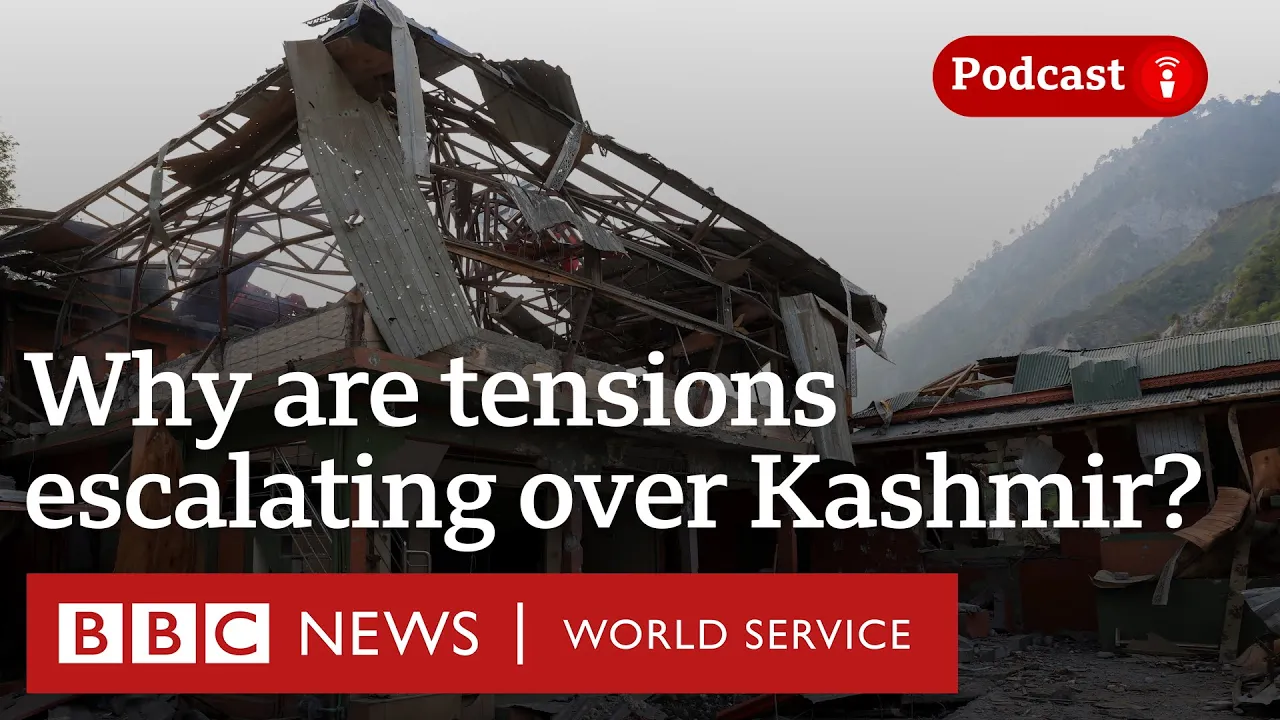
The origins and evolution of the Kashmir Conflict and its role in ongoing geopolitical tensions between India and Pakistan.
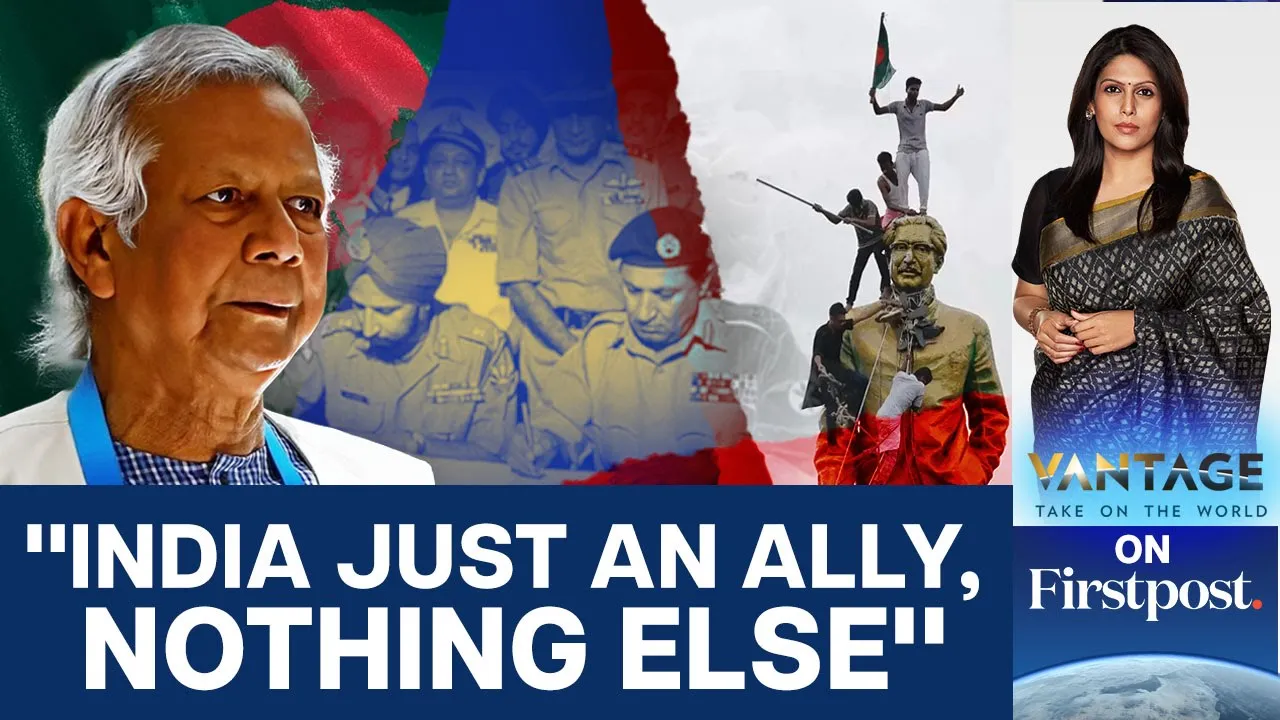
The 1971 Bangladesh Liberation War, which led to the secession of East Pakistan and the creation of Bangladesh.
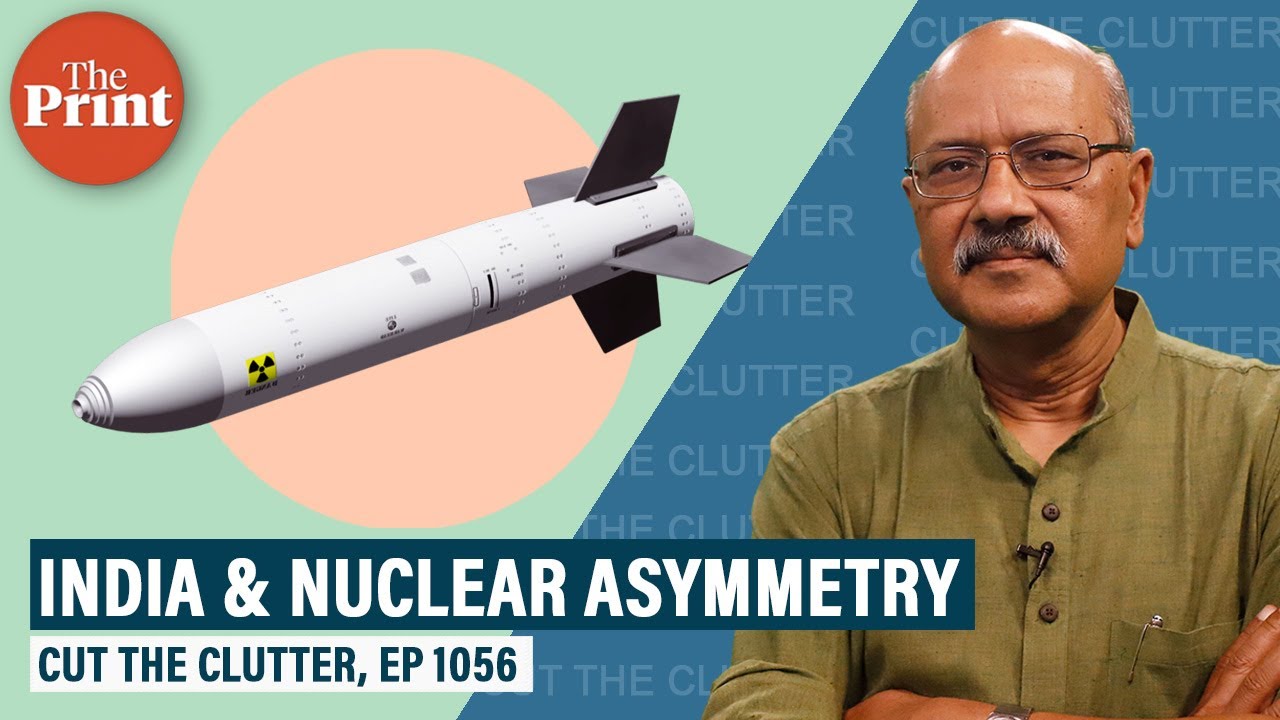
The nuclearization of South Asia and how the historical legacy of Partition continues to influence regional defense and security policies.
The study of Partition literature and oral history archives to understand the trauma, memory, and social reconstruction of displaced populations.
449 views8likes1:03:36Original Release: 2026-02-26
Between 1 and two million people died in less than one year. It was not a war between armies. It was neighbors killing neighbors, trains arriving full of corpses, and caravans of hundreds of thousands being attacked in the middle of an exodus. The partition of India in 1947 was the largest forced migration in history, and no one stopped it. A British lawyer who had never been to India was given 5 weeks to divide territories of 88 million people. The borders were published 2 days after independence when millions were already fleeing without knowing where to go.
Between 75,000 and 100,000 women were raped and abducted as an ethnic weapon of war. The governments that failed to protect them then claimed them as national property.
The collapse of the empire. how the catastrophe was crafted. In February of 1947, British Prime Minister Clement Atley made a decision that would forever change the destiny of 400 million people. After 200 years of colonial dominance over the Indian subcontinent, the British Empire announced its definitive withdrawal. But this withdrawal would not be the orderly and peaceful transfer that British propaganda would later proclaim.
Instead, it would be the prelude to one of the greatest humanitarian disasters of the 20th century. The Second World War had left Great Britain exhausted.
The Treasury was empty. The empire was crumbling. And in India, the demands for independence could no longer be ignored.
Indian soldiers had fought for the British in two world wars, promising them freedom in exchange for blood. Now with Europe in ruins and British power in decline, that promise finally had to be fulfilled. But the path to independence was fraught with decades of colonial politics specifically designed to divide. For generations, the British had methodically applied their strategy of divide and conquer. They had exacerbated the differences between Hindus and Muslims, favoring one group over the other according to the political convenience of the moment.
They had created separate electorates based on religion, institutionalizing community division. They had manipulated the censuses to classify the population into rigid religious categories that did not reflect the fluid reality of identities in the subcontinent. This policy was neither accidental nor benign. It was a deliberate tool of colonial control designed to maintain British power by fragmenting Indian resistance. In August of 1946, a year before independence, India was already on fire. Muhammad Ali Jina, the leader of the Muslim League, had called for a direct action day on the 16th of August, demanding the creation of a separate Muslim state called Pakistan. In Kolkata, violence erupted with a ferocity that horrified even seasoned observers. For 4 days, the city was engulfed in chaos. Hindus and Muslims attacked each other with systematic brutality. Bodies piled up in the streets. Between 4,000 and 10,000 people died. Margaret Bour White, the American photographer who had documented the liberation of the Nazi camps, arrived in Kolkata shortly afterward and was shocked. The violence she witnessed reminded her of the horrors she had seen in Europe, but with a crucial difference. This was not war between nations but the collapse of the social fabric within the same society. The massacre in Kolkata was just the beginning. The violence spread like fire through Bengal, Bihar, the United Provinces and finally to Punjab. In Bihar, thousands of Muslims were massacred in retaliation for Kolkata. In Gmukteshwar, Muslim women were stripped, publicly raped and burned alive in the streets. The poison of communal hatred cultivated over decades of colonial rule now flowed freely. It was in this context of increasing violence that King George V 6th appointed his cousin Lord Louie Mountbatton as the last viceroy of India. The choice was both political and personal. Mountbatton was charismatic, ambitious and had connections to royalty but crucially he had no experience in Indian affairs.
He arrived in New Delhi on the 22nd of March 1947 with clear instructions to oversee the transfer of power by June 1948, preferably keeping India united.
Mountbatton quickly discovered that the India unit was an illusion. The Indian National Congress led by Jawahal Neu primarily represented Hindus and secular elites. Jina's Muslim League insisted that Muslims were a separate nation that required their own state. The Seikhs concentrated in Punjab feared being caught in the middle of this binary division. The tensions were not only political but viscerally violent. What Mountbatton did next was extraordinary for its irresponsibility. Impatient to return to Great Britain and advance his naval career, he unilaterally decided to move the date of independence forward by a full 10 months.
On the 3rd of June 1947, he announced that Great Britain would grant independence not on the 30th of June 1948, but on the 15th of August 1947, less than 11 weeks away.
This decision was met with alarm by many of his own advisers. 10 months less meant 10 months less to prepare for the mass migration that would inevitably follow. 10 months less to establish adequate security forces. 10 months less to plan for the division of assets, the army, the infrastructure. But Mount Batton insisted. According to his own memoirs, he wanted to avoid the responsibility for the violence falling on the British. A swift withdrawal meant that when chaos erupted, Britain would have already left. The Mountbatton plan as it was known accepted the inevitable.
India would be partitioned. The provinces of Punjab and Bengal would be divided between India and Pakistan based on district religious majorities. Border commissions would be established to draw the exact lines. The princely states which had maintained autonomy under British rule would have to choose to join India or Pakistan according to their geographical location and demographic composition.
But the plan was fatally flawed in its implementation.
No adequate preparations were made for security. No protocols were established to protect the minorities who would be on the wrong side of the borders. No orderly evacuation plans were created.
The Punjab border force with 55,000 soldiers looked impressive on paper, but it was completely inadequate to control a region of 29 million inhabitants that was descending into chaos. Even more unsettling, there was no official British condemnation of the violence that was already occurring. When in March 1947 the Raalpindi massacre erupted where thousands of Sikhs and Hindus were killed by Muslim mobs, neither Mountbatton nor the leaders of the Muslim League issued strong public condemnations.
This silence was interpreted as permission. If the leaders did not stop the violence, then the violence would continue. The historian Yasmin Khn would later identify a crucial pattern. Many of the perpetrators of the massacres were demobilized soldiers from the Second World War who still retained their weapons. India had contributed 2 million and a half soldiers to the Allied war effort. These men returned home, trained in combat, brutalized by war, and now they were unemployed in a collapsed economy. When communal violence began, these veterans formed the core of the organized attack groups.
They were not hysterical and uncontrollable mobs. They were effective paramilitary units executing systematic ethnic cleansing. The historian Stanley Walpert would later write that although many Indian leaders contributed to the disaster of 1947, none played such a tragic and central role as Mount Batton. His haste to leave India, his personal vanity that led him to believe he could solve problems in weeks that others had tried to resolve for decades, his lack of understanding of the realities on the ground. All of this created the perfect conditions for the catastrophe. On the 18th of July 1947, less than a month before independence, Mount Batton celebrated his 25th wedding anniversary at the Viceroyy's house in New Delhi. The guests included Nou Jina and Cecil Radcliffe, the man tasked with drawing the border. It was an opulent celebration while outside India was preparing for the apocalypse. The seating arrangements at the dinner reflected the power that Mountbatton wielded over the future leaders of India and Pakistan. Nou sitting next to Mount Batton on one side of the table. Jina on the other next to Lady Mountbatton. The architect of the future displaying his control over those who would inherit the ruins of his creation. The Radcliffe line, the map that condemned millions.
Ceil Radcliffe had never been to India before the 8th of July 1947.
He was a respected British lawyer specializing in tax and commercial law but completely ignorant of the geography, demography, history or culture of the Indian subcontinent. He did not speak any Indian languages. He had not studied the patterns of settlement, the irrigation networks, the historical administrative divisions or the realities of the mixed communities that had coexisted for centuries in Punjab and Bengal. And yet this man would receive the impossible task of dividing a territory inhabited by 88 million people in just 5 weeks. The choice of Radcliffe was deliberate precisely because of his ignorance.
Mount Batton and the Indian leaders wanted someone who had no previous connections to India, someone who could not be accused of favoritism towards any community. Radcliffe's neutrality was his main qualification. But this neutrality was actually a profound inability. A man without knowledge of the land he was about to divide is a dangerous man when millions of lives depend on every stroke of his pen.
Radcliffe arrived in Delhi and immediately met with Mountbatton. It was in this meeting that he discovered apparently for the first time that the border had to be completed by the 15th of August. He protested. Five weeks for a task of this magnitude was absurd. The British had spent years drawing borders in Africa and the Middle East with already visible consequences. Here, Radcliffe had 36 days to divide two of the most populous and complex provinces in the world. But Mount Batton, Neu, and Jina were adamant. They all wanted the deadline to be met. Radcliffe was left alone with an impossible task and a suicidal timeline. The boundary commissions established to assist Radcliffe were dysfunctional by design.
Each commission, one for Punjab and another for Bengal, consisted of five members. Radcliffe was the chairman with a casting vote. The other four were two nominated by the Indian National Congress and two by the Muslim League.
As expected, the representatives of the Congress and the League never agreed on anything. Each district, each tessil, each village was a matter of dispute.
The Congress representatives argued that such an area should go to India. Those from the League insisted it should be Pakistani. The sessions turned into endless legal battles with no possible resolution. Radcliffe quickly realized that consensus was impossible. All significant decisions would rest solely on him. This British lawyer with no knowledge of the terrain, working from an office in Delhi with outdated maps and inaccurate census data, would decide the fate of tens of millions. The materials he was working with were inadequate. The available maps dated back decades. Many lacked sufficient detail to determine precise boundaries between villages. The census data from 1941 recorded populations by religion at the district level, but the populations were not evenly distributed. One district could have a Muslim majority, but contain areas with concentrated Hindu or Sikh majorities. The instructions given to Radcliffe specified that he should divide the provinces based on contiguous areas of Muslim majorities versus non-Muslim majorities. But he also had to consider other factors. These other factors included natural boundaries, communication systems, water courses, irrigation systems, and socopolitical considerations.
Each of these factors conflicted with the others. Radcliffe never attended the public sessions of the boundary commissions. He sent his private secretary, Christopher Bowmont, while he remained in his office studying maps and memorandums. He traveled briefly to Lahore and Kolkata, but these visits were superficial. He did not tour the countryside. He did not visit the villages that would soon be cut in half.
He did not speak with the local communities that understood the complex interdependencies of the region better.
The case of Punjab was particularly complex. The province was the agricultural heart of India, fed by one of the most sophisticated irrigation systems in the world. Canals built over decades connected rivers like the Ravi, the Sutledge, and the bays, carrying water to millions of acres of arable land. These canals did not respect religious boundaries. A canal could originate in a predominantly Muslim area, but irrigate fields cultivated by Hindus and Sikhs further east. Dividing Punjab potentially meant cutting these vital arteries, leaving millions without access to water. Furthermore, Punjab was home to the Sikh community, approximately 5 million people who were neither Hindus nor Muslims. The Seikhs did not have a majority in any significant contiguous area. They were dispersed throughout central Punjab.
Their holiest city, Lahore, where several of their most important gardas were located, was in an area with a clear Muslim majority. The Sikhs demanded that Lahore and the district of Gurispur be assigned to India to maintain access to their holy sites.
Muslims argued that based on demographics, these areas should be Pakistani.
Radcliffe faced similar dilemmas in every decision. The Gerdaspur district had a slight Muslim majority of 51% but it also contained crucial routes to Kashmir. If Gerdaspur were assigned to Pakistan, India would lose land access to the princely state of Jammu and Kashmir. If it went to India, hundreds of thousands of Muslims would be on the wrong side of the border. There was no right solution. Any decision would create victims. In Bengal, the problems were equally insoluble. Kolkata, the second largest city in India, had a mixed population but was surrounded by districts with a Muslim majority. The port of Kolkata handled a significant portion of the trade in East Bengal. If Bengal was divided, East Pakistan would be left without adequate access to the sea through a major port. The division would also cut off the jute plantations of East Bengal from the processing factories in Kolkata.
Economically, the partition of Bengal was a guaranteed disaster.
Radcliffe worked day and night during the last weeks. His health deteriorated.
He barely slept. The weight of responsibility overwhelmed him.
Christopher Bowmont would later remember finding Radcliffe at his desk, surrounded by maps, looking utterly desparing. Radcliffe knew that whatever he decided, millions would suffer. But he had no choice. The deadline was approaching inexurably.
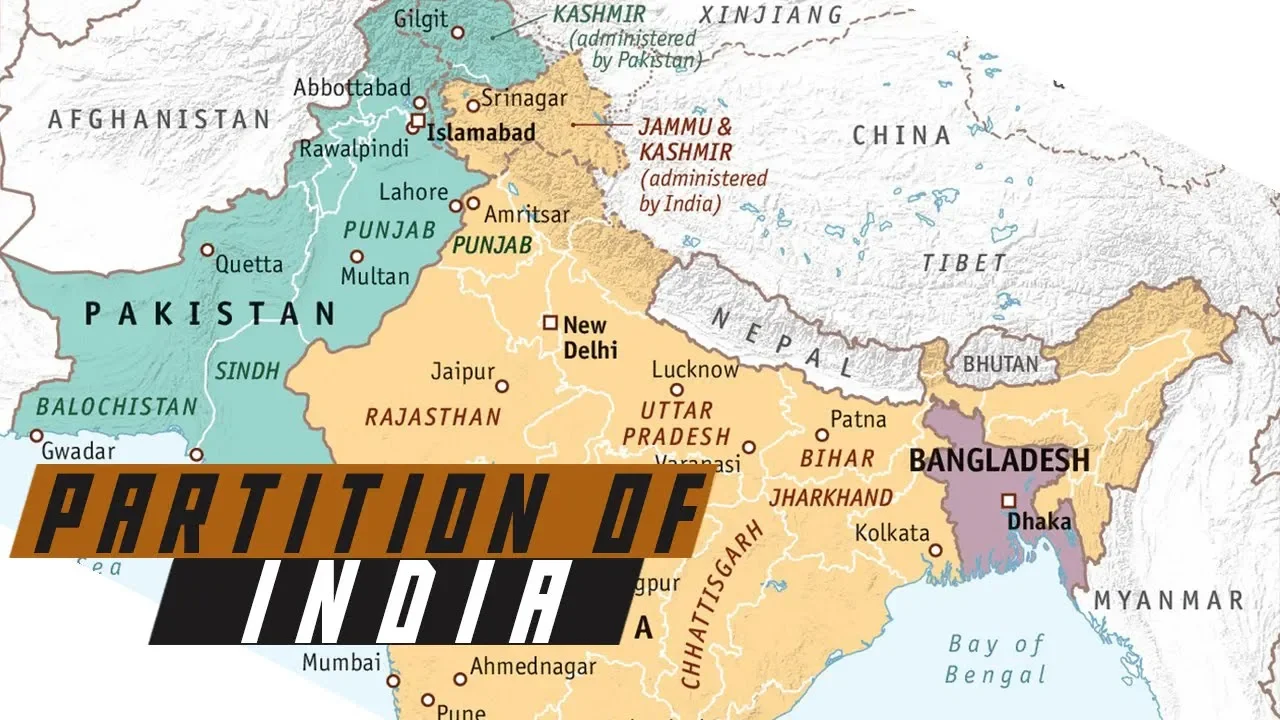
On the 12th of August in 1947, Radcliffe completed his report. He traced 2,900 mi of new international border. The Radcliffe line, as it would be known, divided Punjab into West Punjab for Pakistan and East Punjab for India. It divided Bengal into East Bengal for Pakistan and West Bengal for India. In Punjab, 17 districts went to Pakistan, 12 to India. In Bengal, the division was similar, but the report was not published on the 12th of August, neither on the 13th nor on the 14th. Mountbatton decided to withhold the announcement until after the independence ceremonies.
He did not want the controversy over the borders to overshadow the celebrations.
This decision meant that when India and Pakistan became independent at midnight from the 14th to the 15th of August, no one knew exactly where the borders were.
Villages celebrated believing they belonged to one country only to discover 2 days later that they were in the other.
The Radcliffe line was finally published on the 17th of August 1947.
The reactions were immediate and furious. The Seikhs felt betrayed.
Although Gerispur was assigned to India giving them a connection to Kashmir, Lahore and large areas of central Punjab went to Pakistan. Muslims in eastern Punjab found out that they were in India. Hindus and Sikhs in the west found out that they were in Pakistan.
Millions of people suddenly found themselves being minorities in countries where they were seen as enemies.
Radcliffe's decisions were immediately questioned. His criteria seemed inconsistent.
Guraspur with a Muslim majority went to India. Kulna with 51% of the non-Muslim population went to Pakistan. The Tessils of Ajnala, Zera, Ferrosepur, Nakodar and Juland all with Muslim majorities were assigned to India. The Chittagong Hills with 97% of the non-Muslim population went to Pakistan. Each community found reasons to feel agrieved. Radcliffe himself acknowledged the inadequacy of his work. He refused his payment of 40,000 rupees for the service. He destroyed all his notes and working papers. He left India before the line was published and never returned. In his later years, he refused to speak publicly about the partition. When he died in 1977, he took to the grave any detailed justification of his decisions.
the wagons of silence when the trains brought death.
On the 22nd of September 1947, a train loaded with Muslim refugees fleeing from eastern Punjab to Pakistan arrived at the Amritza station. The train was carrying approximately 4,000 people, men, women, children, and elderly packed into cars designed for much smaller loads. When the train stopped at the station, a strange silence enveloped the platform. There were no welcoming shouts. There was no movement from the cars. The guards who approached discovered a scene of absolute horror.
Seek militants organized paramilitary groups armed with rifles, swords, and spears ambushed the train as it passed through seek territory. The attackers had systematically boarded the carriages. For hours, they massacred the trapped passengers with no chance of escape. 3,000 people were killed. 1,000 more were injured, many severely mutilated. Only 100 passengers remained unharmed, mostly small children who had been hidden under their parents' bodies or whom the attackers chose to spare.
The carriages were soaked in blood. The bodies were piled up to the ceiling.
Severed limbs covered the floors. The massacre had been methodical, efficient, and utterly brutal. This was neither the first nor the last massacre on a train during the partition. Just days before, on the 8th of September, an attack near Kala College in Amritsa had killed 1,000 Muslims on another train bound for Pakistan. In the opposite direction, trains carrying Hindu and seek refugees from West Pakistan to India suffered similar fates. A train attacked in Camok, approximately 40 km west of Lahore, arrived with 340 people dead and 250 injured on the 24th of September.
Newspapers of the time reported that some trains arrived at their destinations completely silent, every passenger murdered, the cars turned into mobile coffins. The railways, which had been the pride of British India, symbols of progress and modernity, became instruments of genocide. The railway system connected the entire subcontinent. The locomotives and carriages did not respect the new invisible borders. But as the trains crossed from predominantly Hindu territories to predominantly Muslim ones or vice versa, they became targets. The attackers knew the schedules. They were familiar with the routes. They could set up ambushes at specific points where the trains had to slow down or stop. The nature of the train cars made them perfect death traps. The refugees traveled in closed freight cars packed to the point of suffocation. The windows were small. The doors were few. Once the attackers boarded, the passengers had no escape. Whole families were massacred together. The men tried to defend their wives and children with sticks and knives, but faced organized attackers with firearms and combat swords. The resistance was futile. The methods of killing on the A trains were varied but consistently horrific. Decapitations were common, executed with seek kurps or Islamic swords. Bodies were stabbed repeatedly. Small children were thrown out of moving cars or their heads were smashed against metal walls. Women were raped before being killed or in some cases kidnapped from the trains to be taken as spoils. The elderly who begged for their lives were mercilessly slaughtered. Age, gender, fragility did not matter. The only consideration was religion. The government of Pakistan faced with absolute insecurity halted all passenger trains from Indian Punjab to Pakistani Punjab at the end of September 1947.
This decision cut off a vital escape route for hundreds of thousands of refugees who relied on the railway for evacuation. Now they had no other option but to walk. The columns, as the caravans of refugees were called, became the other great stage of massacres during the partition. These columns of human beings walking could extend for dozens of miles. The largest columns contained between 200,000 and 400,000 people. Families carried what they could bring, pushing carts with their belongings, hering cattle, carrying children, and the elderly. They moved slowly through the countryside, visible from kilometers away, completely vulnerable. The attackers could see the caravans approach for hours. They had time to organize, gather weapons, and prepare ambushes at strategic points.
Bridges, crossroads, wooded areas all became sites of slaughter. The caravans tried to defend themselves by organizing the men on the outside of the column, but this offered little protection against mounted attackers armed with rifles. A witness described seeing a caravan that had been attacked. The bodies covered several kilometers of road. Many had been mutilated after death in displays of sadistic violence.
The women showed signs of sexual violence before being killed. The small children lay next to their mothers. The elderly, who could not keep up with the panicked column, had been abandoned to die alone. The overturned carts and dead livestock mingled with the human corpses in a vision of the apocalypse. The caravans not only faced violence from external attackers. Hunger, thirst, and diseases exacted their own toll. The caravans could take weeks to complete journeys that by train would have taken hours. Food supplies were running out.
The wells along the roots had been poisoned by hostile communities or were dry from overuse. Cholera and dissentry spread rapidly in unhygienic conditions.
Babies died of dehydration. The elderly collapsed from exhaustion and were left behind because the caravan could not stop without risking an attack. The Punjab Frontier Force established specifically to maintain order during the partition proved to be completely inadequate. With 55,000 soldiers trying to control a region of 29 million inhabitants in chaos, the ratio was approximately 1 to 500. The soldiers escorting caravans often found themselves outnumbered by attackers.
Worse still, many of the soldiers were themselves from the communities involved in the violence. seek soldiers escorting Muslim refugees sometimes simply looked on while their co-religionists attacked the caravan. The same happened with Muslim soldiers escorting Hindus and Sikhs. Some British officers desperately tried to maintain order. Lieutenant Colonel Douglas Gray would remember decades later clearing a massacre scene where they counted 2,400 identifiable bodies, unable to count how many more heads, arms, and legs were scattered.
Gray also described the heartbreaking moment when an Indian soldier from his regiment begged him to do something, reminding him that they had fought together in the war. Gray admitted that he nearly broke down in tears, feeling that he was abandoning men who had served under his command. The testimonies of survivors of the caravans reveal the lasting psychological trauma.
A woman recalled walking over bodies for miles with her bare feet stepping on swollen corpses. A man described hiding in a field while watching his family being massacred on the road. A child remembered seeing a bare tree from which hung the bodies of five hanged men.
These images would haunt the survivors for the rest of their lives, passed down as intergenerational trauma to their children and grandchildren. Brutality knew no bounds. In some attacks, the perpetrators would rip babies from their mother's arms and throw them into the air to impale them on spears.
Pregnant women were opened, their fetuses ripped out. Men were forced to witness the rape of their wives and daughters before being executed. These atrocities were not isolated excesses of uncontrolled individuals. They were systematic tactics designed to maximize the terror and humiliation of the enemy community. The invisles of the partition, the silence of women. The body of the woman became the most disputed battleground of the partition.
In all communities, Hindu, Muslim, and Sik, male and communal honor, was inextricably linked to control over women. Raping, mutilating, or abducting a woman from the enemy group was not simply an act of individual sexual violence. It was an act of war designed to humiliate and destroy the integrity of the entire rival community. Between 75,000 and 100,000 women were raped, kidnapped, mutilated, or murdered during the partition. These are the official figures, but historians agree that they are grossly underestimated. Many rapes were never reported due to the associated shame. Many women were murdered by their own families to prevent them from being captured. Others simply disappeared without a trace. The actual number of victims probably exceeds 150,000 women. Sexual violence during the partition followed specific patterns that reveal its systematic nature. Rape was rarely individual acts of opportunism. They were organized operations carried out by groups of men who specifically sought women from the rival group. The attackers would enter villages, separate women from men, and rape them on mass before killing or abducting them. Public humiliation was a central component. Women were not only raped but raped in front of their families and communities in Amritza.
Muslim women were stripped and forced to march through the streets while the crowd insulted them. After this parade of humiliation, they were publicly raped in the streets and then burned alive. In Seialot and Shikupura in Pakistan, Hindu and Sik women suffered identical fates in retaliation.
The goal was to ensure that the humiliation was witnessed, that the inability of the men in the community to protect their women was publicly displayed. The mutilation of female bodies reached levels of calculated sadism. The breasts of women were amputated, an act laden with symbolism about the destruction of the ability to nourish the next generation. The genitals were mutilated. The bodies were marked with tattoos or cut with inscriptions that said Pakistan zindabad or jihind literally turning the female body into claimed territory. A doctor in Shikapura reported treating six cases of women whose breasts had been cut off.
All arrived at the refugee camp bleeding to death. The testimonies of survivors reveal the specific brutality of these attacks. One witness described seeing bite marks all over the bodies of rape victims, evidence of the sadism with which the attacks were perpetrated.
Another survivor recalled how the attackers carved religious symbols into the skin of the women using knives, permanently marking them as war booty.
The violated, mutilated, and marked female body became a message sent to the enemy community. The kidnapping of women occurred on an industrial scale.
Official numbers indicate that approximately 83,000 women were kidnapped, 50,000 Muslims and 33,000 Hindus and Sikhs. But these numbers only account for those who were eventually found and recorded. Tens of thousands more were kidnapped and never recovered, disappearing in the vastness of the subcontinent. The kidnapping followed organized patterns. The seek jatathas developed specific operations to abduct Muslim women from trains and carillas.
They were armed and supported by the seek rulers of 16 semi-aututonomous princely states in Punjab that over overlapped with the future border. These states had been preparing to expel the Muslims if partition occurred. The kidnapping of women was an integral part of this ethnic cleansing strategy. On the Muslim side, Pans and other organized groups carried out similar raids. They ambushed Hindu and Sik caravans specifically separating young women to abduct them. The men who tried to resist were killed on the spot. Young children were often also abducted or killed. Only women of childbearing age were systematically preserved for abduction. The women who were kidnapped faced varied but universally traumatic destinies. Some were sold as domestic or sexual slaves. Others were forced into marriages with their captives. Many were repeatedly raped by multiple men before eventually being sold or abandoned. Some were kept as concubines. The common goal was forced conversion and assimilation, the erasia of their original identity, and their transformation into members of the capturing community. Pregnancies resulting from rapes created additional traumas. Women who became pregnant due to rapes were seen as impure by their own communities. Many attempted dangerous abortions. Others were rejected by their families if they managed to escape. The children born from these rapes faced lives of stigma, rejected by both the mother's community and often by that of the rapist father.
The response of the communities to the danger of kidnapping and rape was in itself a form of violence against women.
Anticipating that women would be targets, many families decided that it was preferable to kill them rather than allow their capture. The mass suicides of women were later presented as heroic acts of honor preservation.
The case of Thaaksa in Punjab became the symbol of this tragedy. In March of 1947, when the violence in Raalpindi spread across the region, the men of the village decided that their women should not fall into Muslim hands.
Approximately 90 women were led to a well. Some jumped voluntarily. Others were pushed by male relatives. Mothers held their children while they jumped.
The oldest was 80 years old, the youngest 16. All drowned or died from the impact. The men of the village then fled, leaving the bodies in the well.
This story was subsequently mythologized as an act of female bravery. Compared to the Rajput Jawar, the collective suicide of women to avoid enemy capture. But many of the women in Thuakala did not choose to die. They were killed by their own families under the pretext of protecting community honor. The Thakala well became a site of seek pilgrimage.
But it is also a monument to how women were victimized both by the enemy and by their own protectors. The suicides and honor killings were not limited to thacals. Throughout Punjab and beyond, thousands of women were poisoned, strangled, burned alive or pushed into wells by their own families. Fathers killed their daughters. Brothers killed their sisters. Husbands killed their wives. All in the name of honor. Women had no voice in these decisions. Their life or death was decided by men who believed they were acting correctly. The map of extermination chronicles of regional ethnic cleansing. The violence of the partition was not uniform across the subcontinent. Each region experienced distinct patterns of atrocity reflecting the local dynamics of power, specific demographic compositions and histories of communal tension. Punjab received the greatest international attention due to the absolute scale of its slaughter. But other regions suffered equally systematic massacres that have received less historical recognition. Punjab was the epicenter of horror. With a population of approximately 29 million, the province was almost equally divided between Muslims, Hindus and Sikhs. This demographic mix combined with its strategic location on the partition route made it the bloodiest place of the catastrophe.
The massacres in Punjab began months before independence and continued long afterward. The attacks in Raal Pindi in March 1947 marked the beginning of organized ethnic cleansing in Punjab.
Between the 6th and the 13th of March, Muslim mobs systematically attacked villages of Sikhs and Hindus in the district of Raal Pindi. Between 2,000 and 7,000 Sikhs and Hindus were killed.
80,000 more fled from the division of Raal Pindi. The attacks were not spontaneous. They were carried out by organized groups that arrived at villages in coordinated waves. The villages were surrounded to prevent escape. The men were separated and executed. The women were raped before being killed or kidnapped. The properties were looted and burned. The brutality of Rahul Pindi had a catalytic effect. The refugees arriving in eastern Punjab with stories of atrocities inflamed the desires for revenge in the Sikh and Hindu communities. Seek leaders began to organize jatas, armed paramilitary groups specifically to carry out reprisals against Muslims.
Master Tara Singh, a prominent SEK leader, gave speeches calling for revenge. The 16 seek princely states in Punjab began to arm and train these groups. When independence arrived in August, the seek vengeance was systematic and devastating. In eastern Punjab, now part of India, Muslims were attacked village by village. The seek jatas, often assisted by Hindu refugees who had lost families in the west, conducted cleanup operations. The Muslim villages were surrounded during the night. At dawn, the attacks would begin.
The methods were similar to those used in Rahul Pindi, demonstrating that both sides had learned each other's atrocity tactics. The result was the almost total demographic transformation of Punjab.
The west of Punjab, now Pakistani, which had significant populations of Hindus and Sikhs, became almost exclusively Muslim. The east of Punjab, now Indian, experienced the almost complete expulsion of its Muslim population.
Communities that had coexisted for centuries were destroyed in months. The religious diversity of Punjab was annihilated, replaced by forced homogeneity through genocide. Jamu and Kashmir experienced violence of a different yet equally systematic nature.
The princely state ruled by Maharaji Singh had a predominantly Muslim population but a Hindu ruler. In October and November of 1947, between 20,000 and 100,000 Muslims were massacred in the Jamu region. These massacres were carried out with the direct complicity of the Maharaja's state forces. The RSS, the Hindu nationalist organization, played a central role in planning and executing the attacks. Hindu and seek refugees from West Pakistan arriving in Jamu were actively recruited to participate in the massacres. The aim was to alter the demographic composition of Jamu to create a Hindu and seek majority that would legitimize the state succession to India. The methods in Jamu included coordinated attacks on Muslim villages, ambushes on Muslim refugee convoys trying to flee to Pakistan and massacres in refugee camps. Mahatma Gandhi in a speech on the 25th of December 1947 explicitly condemned the violence.
Hindus and Sikhs from Jamu and those who had come from outside killed Muslims.
The Maharaja of Kashmir is responsible for what is happening there. A large number of Muslims have been killed there and Muslim women have been dishonored.
The demographic change was dramatic.
Districts that had substantial Muslim majorities saw their Muslim populations collapse. In the district of Jamu, the Muslim population fell from 61% before partition to less than 30% afterward. In Udampur, from 52% to 35%.
These numbers represent not only migration but also mass slaughter. The states of Alwis and Paratpur in what is now Rajasthan suffered particularly brutal attacks against the Mayo Muslim community. The Mayos were a unique pastoral community. Muslims by religion but with distinct cultural practices. In 1947, approximately 100,000 Mayos lived in Alwir and Paratpur.
After the partition, 30,000 were massacred. The remaining fled to Pakistan in columns that stretched for miles. The violence against the Mos was particularly vicious because they were seen as an easy target. As semi-nomadic herders, the Mayos did not have the defensive networks of settled agricultural communities. When the attacks began, they had few options except to flee. The Mayo caravans were repeatedly ambushed on their way to Pakistan. Of the 80,000 who attempted to reach Pakistan, only a fraction survived the journey. Eastern Bengal experienced violence of a somewhat different nature.
The violence began before the partition with the riots in Noakali in October of 1946 where thousands of Hindus were attacked and killed by Muslim mobs.
These attacks generated reprisals against Muslims in Bahar and other areas. After the partition, eastern Bengal became East Pakistan and the Hindus who remained there faced ongoing sporadic violence for years. Unlike Punjab where the ethnic cleansing was swift and complete, in Bengal the migration was more gradual. Millions of Hindus left East Bengal during the years following the partition, but many remained, creating a situation of prolonged tension.
Violence erupted periodically, especially during elections or when tensions between India and Pakistan escalated.
This low-level but persistent violence would continue until the Bangladesh liberation war in 1971.
The princely states presented their own challenges. There were 563 princely states in British India ruled by Maharajas and Nawabs who had maintained autonomy under British rule.
When Great Britain withdrew, these rulers had to decide whether to join India or Pakistan.
Some states with majority populations of one religion had rulers of another, creating immediate conflicts. Hyereabad, the largest princely state, had a Muslim nisam ruling over a predominantly Hindu population. When the Nisam attempted to declare independence instead of joining India, the Indian government ultimately invaded in 1948 during Operation Polo.
The annexation was accompanied by violence against the Muslim population of the state. Junagat, a small state in Gujarat, had a Muslim Nawab with a predominantly Hindu population. When the Nawab chose to join Pakistan despite Junagath being geographically surrounded by India, the state was invaded by Indian forces. The Muslims of the state faced reprisals. But the most problematic case was Kashmir. Maharaja Hari Singh, a Hindu ruling estate with a Muslim majority hesitated to join either side. When Pakistanbacked Patan tribes invaded Kashmir in October 1947, the Maharaja requested military assistance from India. India agreed but only if Kashmir formally joined India. The Maharaja consented and Indian troops were airlifted to Shinagar to repel the invaders. This decision unleashed the first IndoPakistani war and created the Kashmir conflict that persists to this day. The region was de facto divided with India controlling the majority including the valley of Kashmir and Pakistan controlling Azad Kashmir and Gilgit Baltistan. Hundreds of thousands of people were displaced. Massacres occurred on both sides of the line of control. In Mapur and Rajuri, areas that ended up under Pakistani control.
Thousands of Hindus and Sikhs were massacred by invading tribes. The Kashmir conflict continues to be a nuclear flash point between India and Pakistan. A direct legacy of the mishandled partition, the rescued without a voice, when the law silenced women. For the women who survived the rapes, abductions and atrocities of the partition, the horror did not end with the conclusion of mass violence. In December 1947, the governments of India and Pakistan signed the interdomminion treaty, an agreement that officially sought to recover and repatriate the abducted women. On the surface, this seemed like a humanitarian effort. In practice, it became a second victimization of women who had already suffered unimaginable traumas. The treaty established that all women found with men of another religion after the 1st of March 1947 would be considered automatically abducted. This arbitrary cutoff date completely ignored the complex realities of these women's lives. Some had been effectively abducted and desperately wished to return to their families. But others had formed new relationships, had children with their new partners, or had found ways to rebuild their lives. Some had even fallen in love with the men they now lived with. The treaty did not distinguish between these cases. All would be recovered without exception.
Even more disturbing, the treaty explicitly stated that the desires of the concerned women were irrelevant.
This clause stripped the women of any agency over their own destinies. They would not be asked if they wanted to be reclaimed. No statements would be recorded before magistrates. They would be treated as property to be claimed, not as human beings with the right to choose. The central recovery operation was established in 1948 to implement the treaty. Social workers from both countries were recruited to identify and recover the abducted women. These women figures such as Meridola Sarabi Ramshwari Neu Kamlaban Patal Damyanti Sagal Anis Kid and others undertook their work with sincere humanitarian intent. They believed that they were rescuing women from terrible situations.
But they quickly discovered that the reality was much more complex than the governments admitted. The recovery operations followed a standard pattern.
Social workers, often accompanied by male police officers, visited homes where it was suspected that kidnapped women were living. If they found a woman of one religion living with a man of another, they identified her as a kidnapped victim. The woman was then torn from her home, regardless of her protests, and taken to a recovery camp.
The resistance of women was frequent and sometimes violent. Anis Kid, a Muslim social worker involved in recovering Muslim women from India, recalled cases of women who physically fought with the authorities, refusing to leave their homes. Some women clung to their children, pleading not to be separated from them. Others threatened to commit suicide if they were forced to return.
The social worker found herself carrying out what she could only describe as state sanctioned kidnappings.
The reasons for women's resistance varied. Some had formed genuine bonds with their new families. After months or years, they had children whom they loved. They had built daily routines, relationships with neighbors, lives that although born from trauma, were now their lives. Being torn from these situations meant leaving their children who legally belonged to the parents and would not be allowed to cross the border. Other women feared rejection from their original families. The culture of honor that permeated both societies meant that women who had been raped or who had lived with men of a different religion were considered impure. Many knew that their families would reject them. They preferred to remain in a known albeit imperfect situation than to risk humiliation and ostracism.
Some women simply did not want to identify as victims. They had survived hell. They had found ways to continue living. Being labeled as kidnapped women meant being defined by trauma forever.
They wanted to move on, not be forced to constantly relive their victimization.
The recovery camps where women were taken were in themselves sites of new trauma. Known as ashams, these camps housed hundreds of women in overcrowded conditions. The women lived in harrowing uncertainty, not knowing when or if they would be reunited with families who may not want them back. The stigma of having been kidnapped marked them permanently.
The process of repatriation was bureaucratic and dehumanizing. Women had to prove their original identity.
Relatives had to come to claim them, but many families never came. Some men refused to accept backwives who had been raped or who had had children with other men.
Some fathers rejected daughters they considered dishonored. These women were left trapped in the ashrams indefinitely without a home in either the country where they had been found or in the country to which they supposedly belonged. For the women who were reunited with their families, the return was often not the happy reunion that the official discourse promised. Many faced accusations of having enjoyed their kidnapping or of not having resisted enough. They were treated with suspicion and disdain. Some were forced into marriages with men who considered them damaged goods. Others were relegated to lives of domestic service in their relatives homes, treated as servants instead of family members. Children born from rapes or forced relationships presented a particularly painful problem. According to the treaty, these children belong to their father's country, not their mothers. This meant that a Hindu woman recovered from Pakistan could not bring her child with a Muslim father. She had to choose between staying with her child in Pakistan or returning to India without him. Thousands of women faced this impossible choice. Many chose to remain in the ashrams in Pakistan living in limbo rather than abandon their children. The recovery statistics reveal the asymmetries of the operation. During the first years of the operation, 20,728 Muslim women were recovered from India, while 9,032 Hindu and Sikh women were recovered from Pakistan. These differences do not necessarily reflect that there were more Muslim abductions, but rather that the operation in India with a more organized state apparatus was more aggressive in locating and recovering women. It could also reflect that Muslim women in India faced greater community and governmental pressure to be recovered. The recovery operation officially continued until 1957, although most of the recoveries occurred between 1947 and 1952.
In total, approximately 30,000 women were recovered by both governments during the 8-year period, but tens of thousands more were never found or actively chose to avoid being identified. Voices of silence, testimonies of survivors.
For 70 years after the partition, the voices of those who experienced it remained largely silenced. Historians wrote about political movements, decisions of leaders, and geopolitical dynamics.
School textbooks presented independence as a glorious triumph of freedom over colonialism. The partition was mentioned briefly, its horrors minimized, its trauma ignored. There was no memorial, no museum, no national archive dedicated to preserving the memories of the millions who suffered. This silence was not accidental. Both India and Pakistan had powerful reasons not to examine too closely the events of 1947.
For India, acknowledging the full scale of the violence meant admitting that independence had come at an unacceptable cost of blood. For Pakistan, confronting the atrocities committed during partition complicated the foundational narrative of the country as a necessary refuge for Muslims of the subcontinent.
For both countries, it was more convenient to look forward than to look back. For individual survivors, silence was a survival strategy. Speaking about the trauma meant reliving it. It meant risking the stigma in communities where the shame of sexual violence or the loss of property still resonated. It meant possibly alienating relatives who preferred to forget. So, they kept their stories inside, passing them on only in fragments to their children and grandchildren. often in private moments and rarely with complete details. It was only in the 1990s that it began to change. Feminist academics, notably Urvashi Bhutalia, Ritumen and Kamla Basin, began to systematically collect the oral histories of women who had lived through the partition. Their book, Borders and Boundaries, published in 1998, documented experiences of sexual violence, abduction, and trauma that had been completely absent from the official historical record. Battalia's work, The Other Side of Silence, published in the year 2000, expanded this through 70 extensive interviews with survivors.
These academic works opened the floodgates. The survivors, now elderly, began to understand that their stories had historical value, that they were not simply personal tragedies, but part of a collective catastrophe that needed to be documented and remembered. Slowly, they started to speak.
In the year 2010, a physicist from California named Gonita Singh Pala founded the partition archive of 1947.
Parlor had grown up listening to her grandmother's fragmented story about escaping the violence of the partition while driving over bodies. When Parlor would ask for details, her grandmother would change the subject. Frustrated by this gap between the family oral history and the official historical record, Bala decided to create a massive archive of partition stories told by the survivors themselves.
The archive began as a radical crowdsourcing project. Parlor developed free online workshops to train volunteers in oral history techniques.
These citizen historians, as he called them, learned how to sensitively interview trauma survivors, how to ask the right questions, how to record and preserve the interviews. They then went out into their own communities to find the survivors. The moment was critical.
In 2010, the youngest survivors of the partition were over 70 years old. Many were in their 80s and 90s. The time to capture their memories was running out quickly. With each passing month, more survivors were dying, taking their stories with them. The archive became a race against time. The interviews revealed a humanity and complexity that simplified historical narratives had erased. A seek man named Kulwant Singh described being severely injured during the violence in Raalpindi in March of 1947.
He lay on the ground for 24 hours with fire sweeping around him, assuming that he would die. The army finally rescued him. But in the same interview, Singh also admitted his own complicity in the subsequent violence, describing how he and his friends participated in attacks against Muslims in revenge. His testimony encapsulated an uncomfortable truth. Most people were not simply victims or perpetrators, but both. A woman named Hammed Bano Begum, born in 1936, recalled her journey as a refugee from India to Pakistan. Her family walked for days, listening to stories of massacres, but without witnessing direct violence. However, one image remained etched in her memory forever. After crossing the Rabi River, they saw in the distance a bare tree from which hung the bodies of five hanged men. This one image witnessed fleetingly haunted her for 70 years. Vimla Dingra contributed photographs of her family before the partition. In the images she appears performing in a school play in Lahore.
They are photos of a normal life, a carefree youth, a vibrant community.
These images heartbreakingly contrast with what would come next, the total loss of that world, the destruction of that normaly.
Ali Shan, who now lives in the San Francisco Bay area, shared the most traumatic story imaginable. In 1947, he was a child. He witnessed how a mob massacred his entire family. He was the only survivor of the attack. He became an orphan at such a young age that he barely has memories of his former life.
Decades later, he leads what appears to be a happy life, guiding hikes on Sundays. But at the end of his interview, Shan made a disturbing observation. This could happen here too, he said, referring to the United States, his adopted country. Community violence is not unique to the subcontinent. The conditions that make it possible can arise anywhere. Ila Banaji explained why her family in Miming, East Bengal, did not migrate immediately after the partition. The situation in Bengal was not as immediately catastrophic as in Punjab. Many Hindu families stayed hoping that the violence would subside.
But in 1950, when arson and stabbings became more frequent, they finally fled.
Her testimony illustrates that the partition was not a singular event, but a process that unfolded differently in different regions and over different periods. Amul Swani spoke about the constant fear of sexual violence. He recalled how his cousin and other girls had to take refuge in a hospital after being chased by 15 or 20 Muslim men with malicious intentions.
More chillingly, Swani described how his father instructed his mother to emulate Swani and herself if they were attacked rather than allow the Muslims to capture them. This order given by a father to a mother about a daughter encapsulates how women were seen as containers of family honor, preferably dead than dishonored.
Pran Neville offered a moving contrast by describing the cultural richness of Lahore in the decades of the 1930s and4s. Lahore was known as the Paris of the East. Home to prominent classical music singers, a vibrant Punjabi film industry and numerous educational institutions.
It was a cosmopolitan city where Hindus, Muslims and Sikhs interacted daily. The partition destroyed this mixed urban culture, turning Lahore into an exclusively Pakistani and Muslim city.
What was lost was not just lives but an entire way of a civilized multi-religious life. Sahib Singh Viri described his family's dangerous journey from Pakistan to India. His father defended himself against Muslims on horseback using a double-barreled shotgun. To avoid further attacks, the family took a much longer route through Jamu and Kashmir. Instead of going directly to their destination in Deraba Nanak, they narrowly escaped being killed multiple times during the journey. Such testimonies reveal the survival strategies that families employed changing routes, traveling at night, disguising themselves, relying on the help of compassionate strangers.
Asha Gupta recounted the story of her grandfather who refused to leave his property in Karachi. With the help of a Muslim friend, he disguised himself as a Muslim and remained in Karachi for five or 6 years after the partition. These stories of friendship that crossed religious lines during the darkest moments appear in many interviews. Not everyone yielded to hatred. Some individuals risked their own lives to protect neighbors of another religion.
These stories of humanity amidst hell are as important to preserve as the stories of atrocity.
Jaz Khan shared how his father and family returned to their home in Jalandar years after the partition. The warmth and love with which they were received by their former Hindu and seek neighbors was overwhelming. They cried together remembering better times. These reconnections showed that for many ordinary people communal hatred was not deep or permanent. It had been inflamed by specific circumstances and could, in the right environments, be overcome.
By the year 2025, the Partition Archive of 1947 has collected more than 12,000 interviews of survivors in 14 countries.
These interviews are in 22 different languages and dialects reflecting the diversity of the subcontinent. They include stories of Hindus, Muslims, Sikhs, Christians, Paris and others.
They document experiences from Punjab, Bengal, Sind, the Northwest Frontier Provinces, Kashmir and beyond.
In August of 2024, the archive published a massive volume titled 10,000 Memories: A Lived History of the Partition, Independence, and the Second World War in South Asia. The book presents almost 300 oral testimonies and 1,000 photographs. It is to date the most comprehensive compilation of firstirhand experiences of the partition ever gathered. In parallel with the archive, other projects have emerged. The partition museum opened in Amitritza in 2017, 70 years after the partition. It is the first museum in the world dedicated specifically to this event.
The museum houses artifacts, photographs, documents, and crucially audio stations where visitors can listen to oral testimonies from survivors.
The opening of the museum marked a turning point in how the partition is remembered, an official recognition that this trauma deserves memorialization.
The work of preservation continues to be urgent. The younger survivors are now more than 80 years old. Most of them are 90 or older. Every day more are dying.
Once they are gone, the opportunity to capture their direct testimonies will be lost forever. Future historians will completely depend on the records being created
Up Next

89:15
India Partition 1947: A Documentary Analysis of the Tragedy
@PeaceMongerSoul
1.3M views•2013-01-29

33:02
The Great Schism of 1054: Causes and Consequences
@SacredCathedrals
113.5K views•2026-02-19
91:57
The Geopolitics of the Ukraine War and the Rise of Global Autocracy
@JordanHarbingerShow
468K views•2025-04-19

17:05
Understanding the Cold War: Superpower Conflicts and the Road to Détente
@OverSimplified
46.1M views•2019-01-24
Related Study Plans & Knowledge Roadmaps
Structured learning paths in History
history
Byzantine Iconoclasm: Theology, Art & Politics
01Foundations of Byzantium and Early Christian Images
02The First Iconoclasm: Leo III and the Crisis of Images
03Empress Irene, Nicaea II, and the Second Iconoclasm
+ 2 more learning modules
9h5 modules
Explore Roadmap
history
Iranian Revolution (Causes, Events & Legacy)
01The Pahlavi Dynasty and the Roots of Discontent
02The Spark of Rebellion and the Rise of Khomeini
031979: The Fall of the Shah and the Climax of the Revolution
+ 2 more learning modules
8h5 modules
Explore Roadmap
history
Mali Empire: Mansa Musa, Trade & Timbuktu
01Foundations of the Mali Empire
02The Trans-Saharan Gold and Salt Trade
03The Reign and Pilgrimage of Mansa Musa
+ 1 more learning modules
6h4 modules
Explore Roadmap
history
1947 Partition: Politics, Borders & Legacies
01Foundations of British India and the Divide
02The Political Negotiations and the Mountbatten Plan
03Drawing the Boundary: The Radcliffe Line
+ 2 more learning modules
8h5 modules
Explore Roadmap