


























The capability approach, developed by Nobel laureate Amartya Sen, defines wellbeing not merely by income or resources but by individuals' real freedoms and opportunities to choose and achieve diverse functionings (states and activities like being healthy, educated, employed, or traveling). This approach distinguishes between 'substantial freedoms' (the actual achievements people can reach) and 'instrumental freedoms' (enabling conditions like political freedom, economic facilities, social opportunities, transparency, and protective security). Sen argues that wellbeing differences arise primarily from capability gaps rather than income disparities, as material resources are limited by conversion factors (personal, social, and environmental barriers) that prevent people from achieving their desired functionings.
Amartya Sen's Capability Approach Explained | Wellbeing and Freedom
Added:In this video I will tell you about the capability approach which was developed by Amartya Sen.
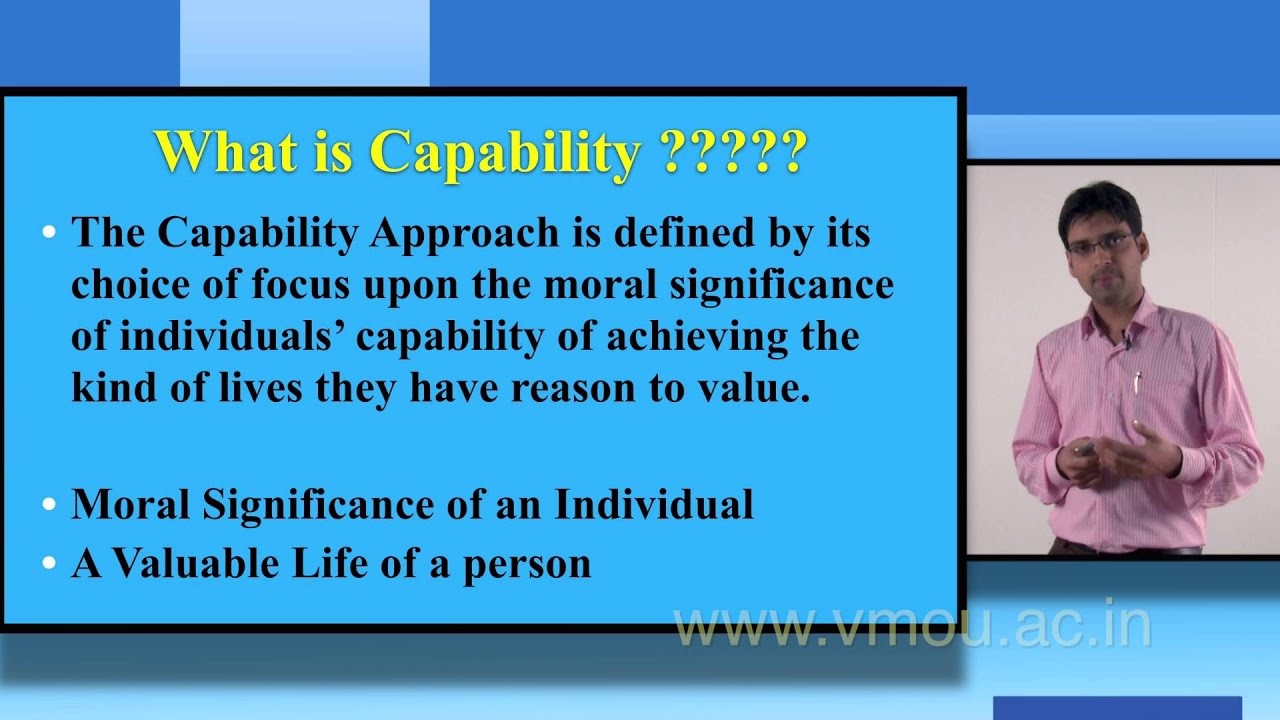
It is focused on differences in capabilities between people which are reasons for the differences in level of wellbeing.
Capability is a possibility to choose and to achieve something which helps you to reach wellbeing.
In this sense capability is a freedom to choose (procedural aspect of freedom) and freedom to achieve what you have chosen (opportunity aspect of freedom).
But what do you choose?
According to Sen, we choose between diverse functionings.
Functionings are states and activities (‘beings’ and ‘doings’) that constitute a person’s being (in a positive or negative sense).
This may include: being healthy (or being ill), being treated, equally (or unfairly), having a flat to live in (or being homeless), having children (or not), being educated (or illiterate), being part of a supportive social network (or criminal network), having a good job (or being unemployed), travelling.
So, putting it simple, you may consider travel as an important part of your wellbeing.
But it is a capability, which informs whether you are able to achieve it or not.
Sometimes you may want to achieve a set of 2 or more functionings.
For instance, if you are a single parent you may wish to provide for your family and to hold a job (and not lose your health), which is sometimes very difficult.
x To now bring capabilities and functionings together, we can say that capabilities are a person's real freedoms or opportunities to achieve functionings.
Why, for Sen, is the freedom to choose so important for achieving wellbeing?
Is it not enough to ask if somebody is satisfied or happy with what he/she does have?
For Sen, no.
He realizes that many people don’t even know that they could lead a different life.
Many women especially don’t realize that they could study, work, not marry as a child, not be beaten by their husband, or have equal payment or rights as man.
So, there are still women who, even if forced by their husbands to work as prostitutes, are just happy if not beaten.
Could we call this happiness?
The problem can be expressed with an old parallel: is it better to be a happy pig or unhappy Socrates?
No wonder, then, that it was Amartya Sen who linked the interests of economists to discrimination of women in the economy, and no wonder that feminist economists appreciate him.
One of the first opening papers in Feminist Economics was written by him and about his ideas (x).
It was he who spoke about missed women, i.e. millions of women who are missed in the whole globe.
Why?
For instance, in China and India many girls are killed before they were born or immediately after because their parents prefer to have boys.
In many countries, girls don’t receive the same treatment as boys – are nurtured and educated less, and consequently live shorter lives (less education often means lower income).
Moreover, many girls are still forced to marry very early (as children) and risk their health and life when they give birth while so young.
So, being a woman often means having less capability not only to achieve what you want, but to choose.
When these capabilities (built from functionings) are limited, your chances of achieving wellbeing will be limited as well.
So, the reason for differences in wellbeing are caused not so much by the differences in monetary income as in capabilities – which are substantial freedoms, and in instrumental freedoms.
Even if material income and material resources may facilitate the possibility of your achieving wellbeing, ie. functionings – still there are some limiting factors – called by Sen - conversion factors.
Let’s imagine that you have a bike, which permits you to go to work and maintain a job (important functioning).
There are personal conversion factors which may limit the possibility of your achieving this functioning.
So, if you don’t have legs, or if you have problems with equilibrium, the bike won’t help you.
Moreover, we can distinguish social conversion factors, which can limit your possibility to use a car for social/cultural reasons.
There are some cultures in which women can’t use a bike, or even a car.
Sometimes a woman’s fashion may limit it – as was the case for Marie Curie, who after her marriage with Pierre Curie, went for a honeymoon on their bike.
Marie had to shorten her skirt to be able to do it, which in 19th century was very daring.
There are also environmental conversion factors.
There could be, for instance, few bike-lanes or streets safe for bike.
During my stay as visiting professor in Chicago I experienced this limitation.
I was accustomed to biking every day in Munich where I had been living for a long time.
I couldn’t do it anymore in Chicago because of the lack of safe bike lanes on streets in Chicago Similarly, I couldn’t use my bike for outdoor activity functioning.
In Munich I could go out of the city easily on my bike, not so in Chicago.
One time after riding relatively easily for 50 miles, my path suddenly ended, finishing at the motorway where you can’t use a bike.
In order to continue, I was forced to take my bike under my arm, and cross the river, walking on the narrow train-track.
This was a risky adventure especially when the train would come on this track, meaning there was no achievement of a safe outdoor activity.
Environmental conversion factors may play a role, when it comes to the possibility of getting a flat.
If you live for instance in Florida, you may construct the house at a low cost but to maintain the house you have to spend a lot on air conditioning.
The same is true when you live in Siberia, where you have to invest a lot of money to construct highly insulated walls and then heat the flat in winter.
In Italy expenses are incurred as you are supposed to invest in anti-earthquake technologies.
So, you see the differences in personal, social and environmental factors limit our possibility to use our resources.
Last but not least, there are also instrumental freedoms which facilitate the achievement of substantial freedoms.
For instance, if one country is rich, people have much greater opportunity to achieve their freedoms.
However, for Sen, GDP per capita is not a good measure even of such material freedom (and the reason is not only that GDP doesn’t contain info about distribution of income).
This is because, in addition to such material freedom, there are also 4 other freedoms, (political, social, transparency and security freedoms) which means GDP by itself doesn’t really inform us about all components of material freedom.
(see summary framework): 1.
Political freedom includes the freedom to vote, to participate in decision-making processes, fair elections, ability to criticize the government, an uncensored press, ability to run for office 2.
Economic facilities: one's access to financing or credit, and access to global markets, open labour market, access to product markets, saving opportunities, stable business ethics, freedom for women to seek employment outside the home 3.
Social opportunities: education, health care, gender equity, women’s wellbeing, childcare, and social services (anything that ensures all citizens can become productive members of society).
4.
Transparency guarantees having open and transparent dealings in business, government and any transactions between citizen, in this sense absence of corruption, mechanisms for seeking justice, guarantees of disclosures, lucidity and speed of judicial decisions, access to police protection.
5.
Protective security: protective safety net that ensures one's safety like unemployment insurance or relief support, emergency facilities, shelters, subsidy for victims of famine and disaster, arrangements for protection of extreme deprivation.
So, summarizing: the capability concept introduced by the Amartya Sen provides a new understanding of wellbeing.
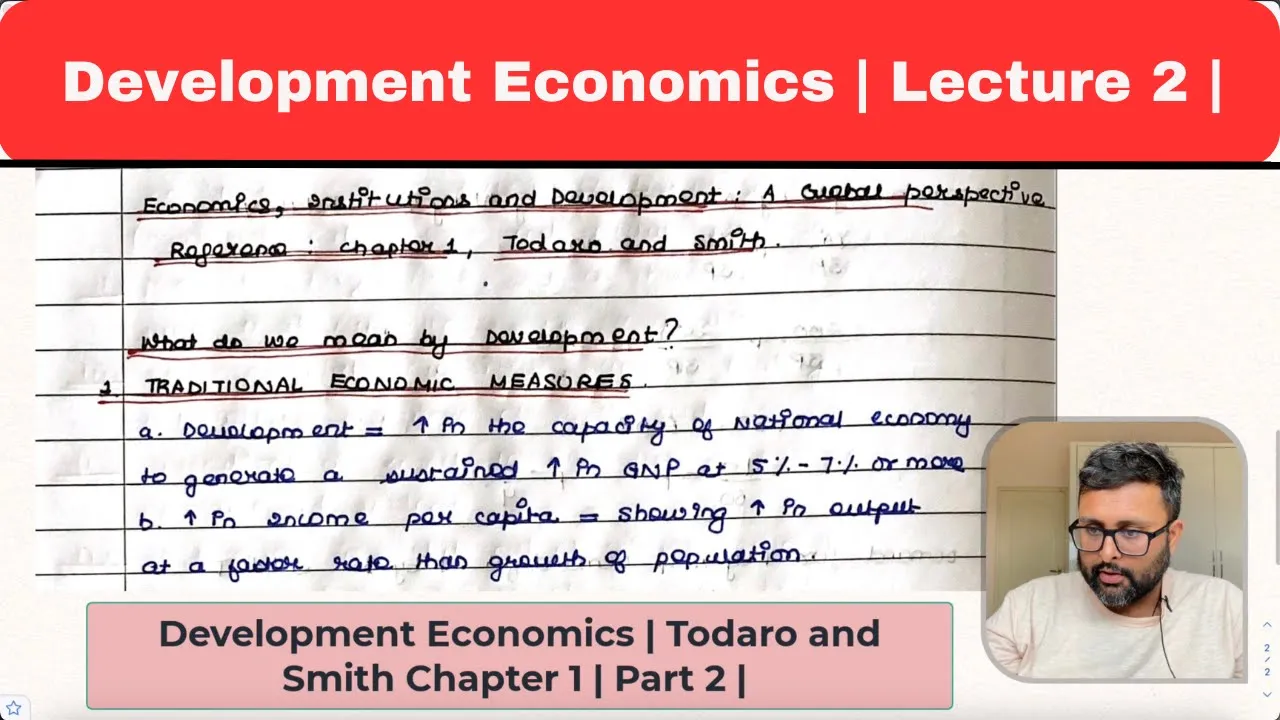
The traditional economic way of counting it – by GDP per capita- is not sufficient.
It does not tell us if we are able (we have a capability) to choose and achieve our desirable functioning, which enlarges our subjective wellbeing (which can be understood as freedom).
Material resources may be important to achieve freedom, but they are limited by so called conversional factors: private, social, and environmental.
Moreover, there are other instrumental freedoms which can harm us in the achievement of our substantial freedom – political, economic, social, transparency and security.
Capability approach is a normative theory, it is not a theory that will explain poverty, inequality, or well-being, but rather a theory that helps us to conceptualize these notions.
Many policy makers and scholars apply it a wide range of fields, most prominently in development studies and policymaking, welfare economics, social policy, and social and political philosophy.
Up Next

How to Afford the Healthcare System of Our Dreams | Health Economics
@RoyalSocNSW
284 views•2024-10-29

Impact of Yuan in Indo-Russian Trade Amid Sanctions
@WION
261.9K views•2022-07-01

Behavioral Economics Explained: Rationality, Nudges, and Risk
@crashcourse
1.1M views•2016-03-12

The Age of Easy Money: Fed & Inflation | Full Documentary
@frontline
21.2M views•2023-03-15
Related Study Plans & Knowledge Roadmaps
Structured learning paths in Economics