
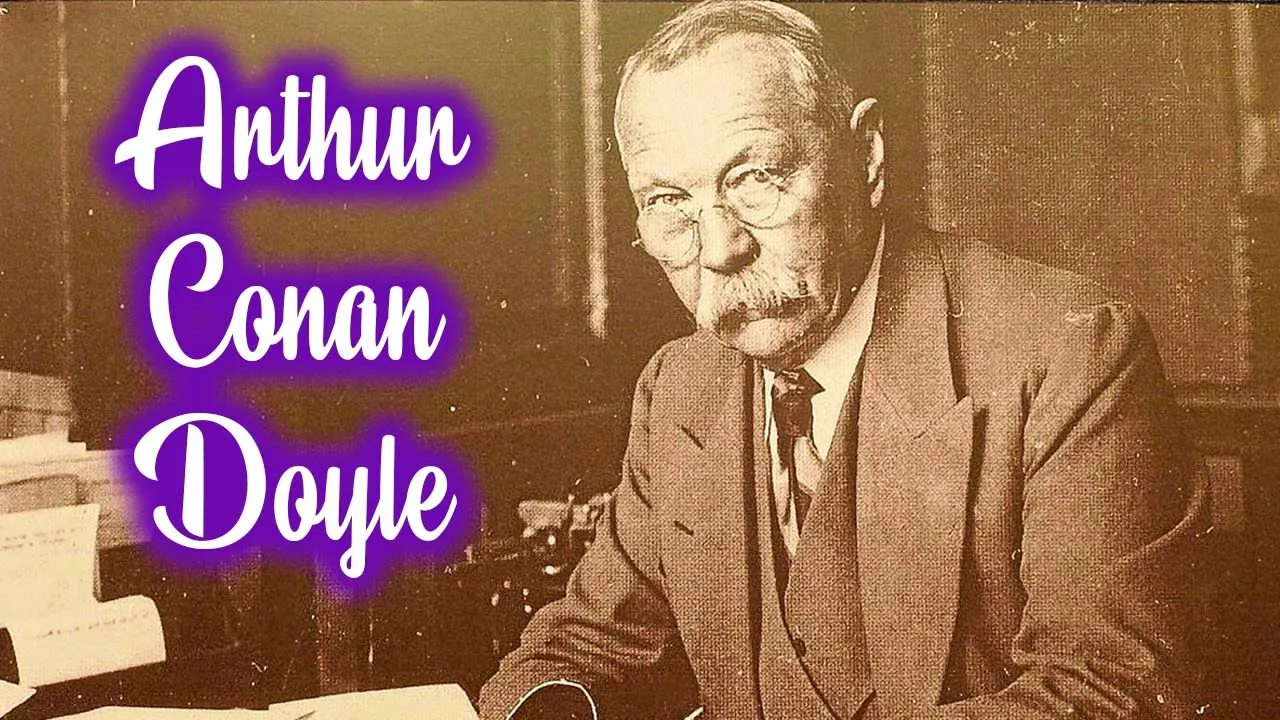




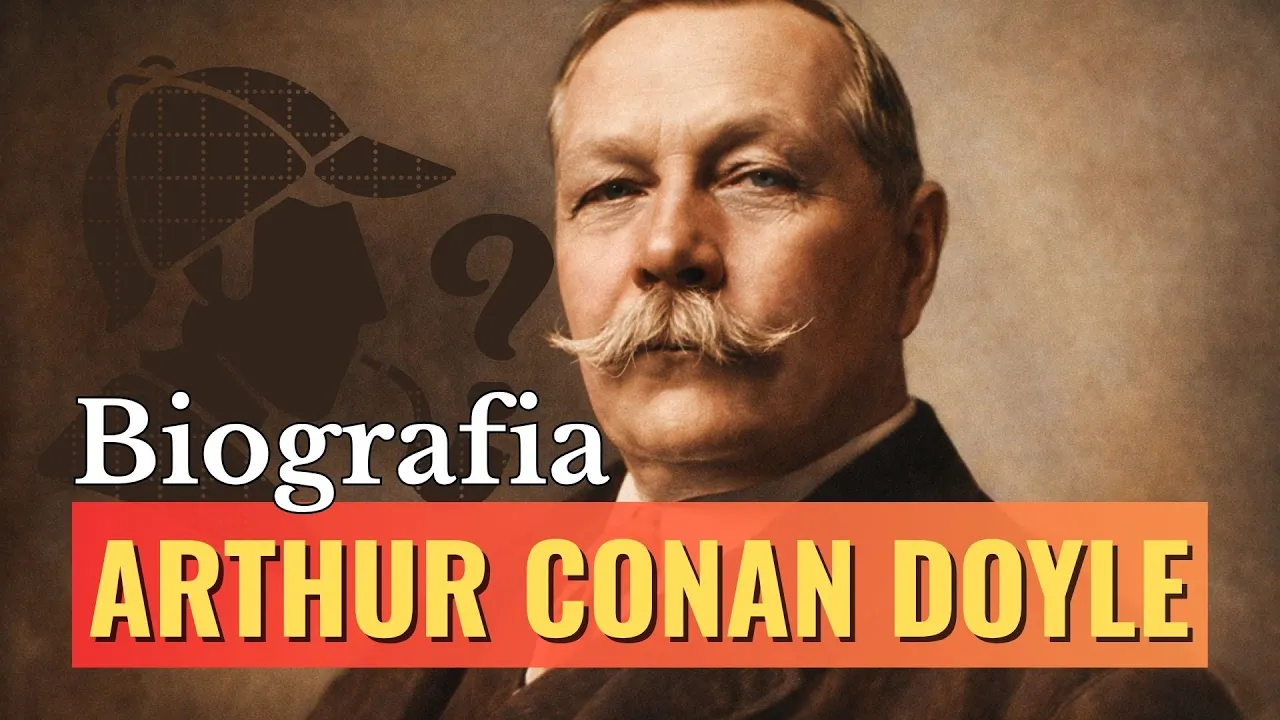

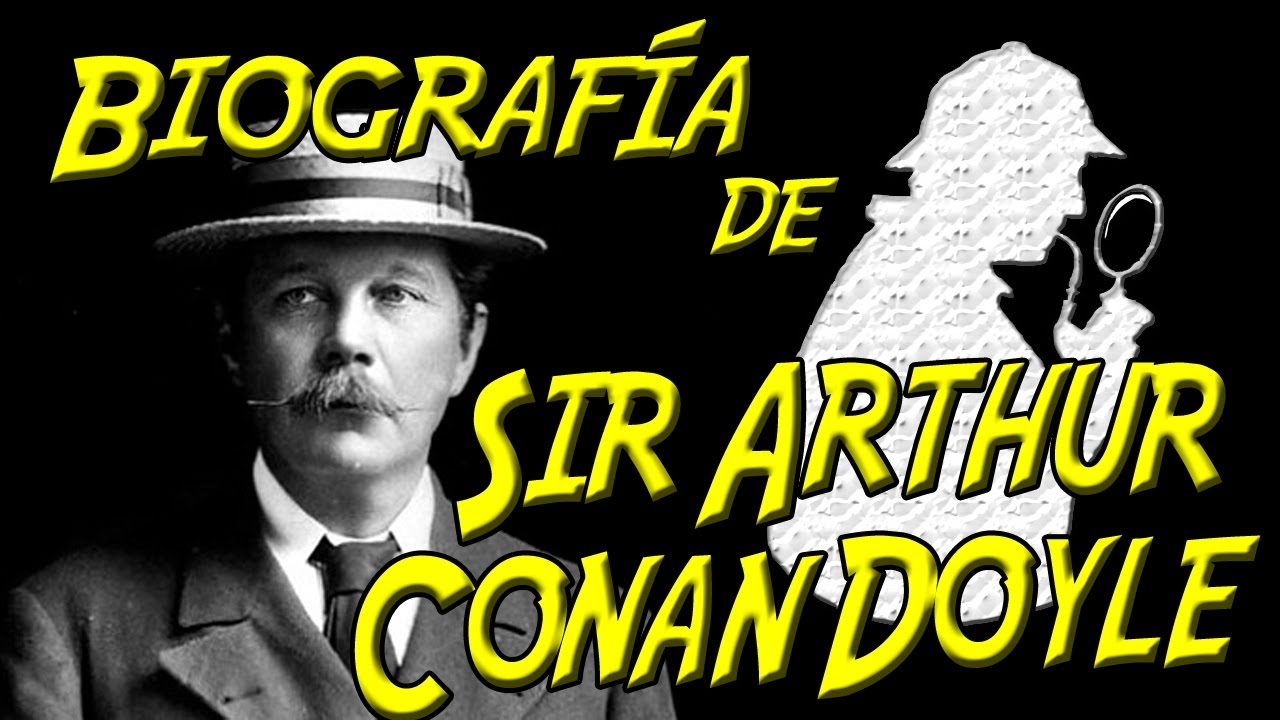
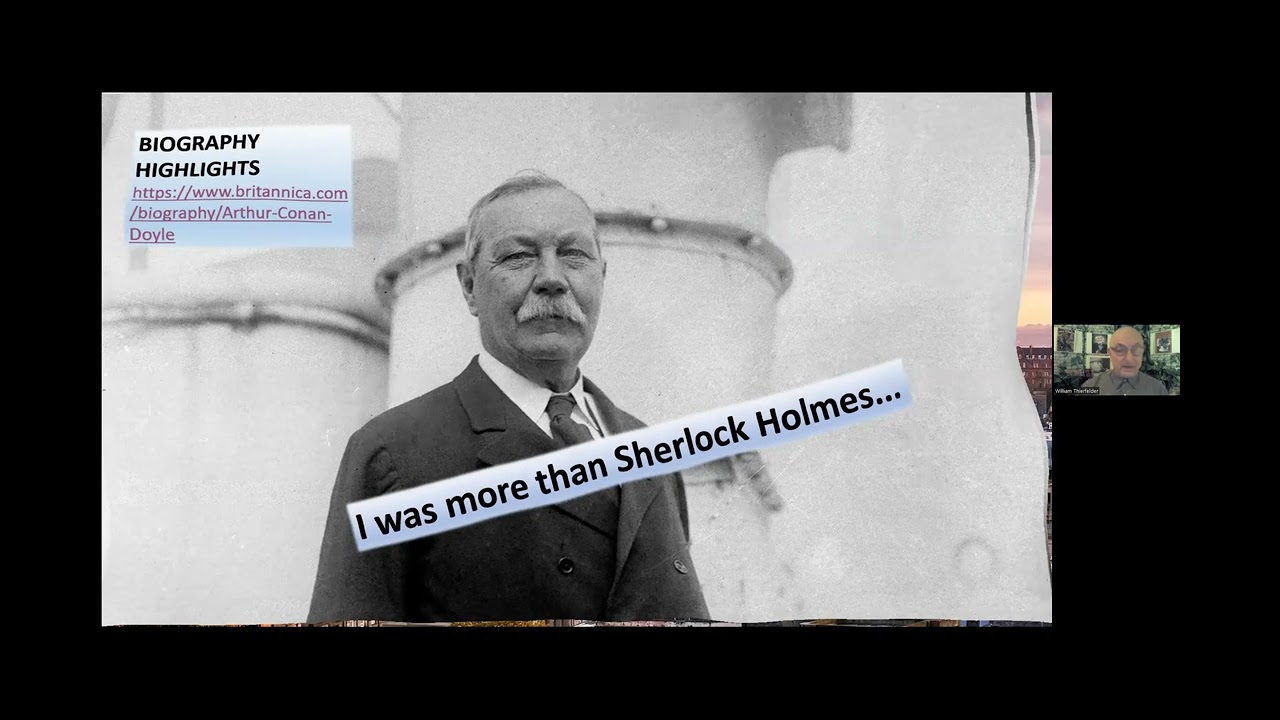

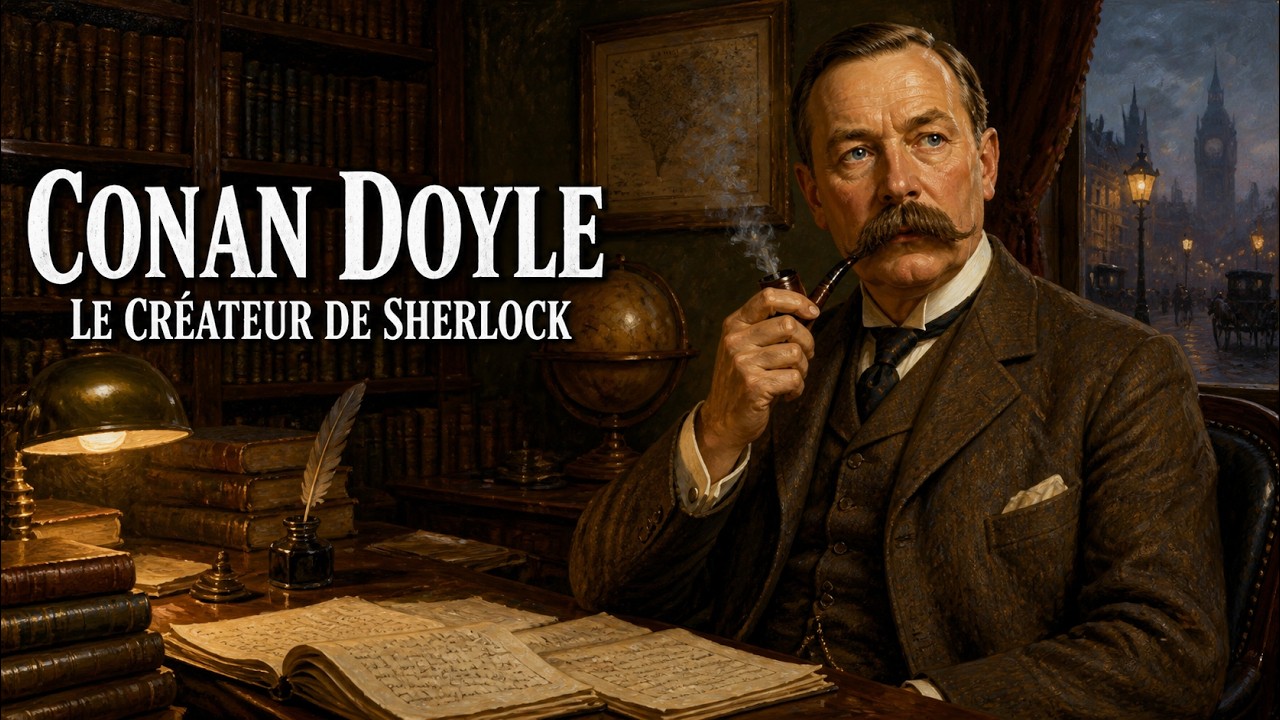




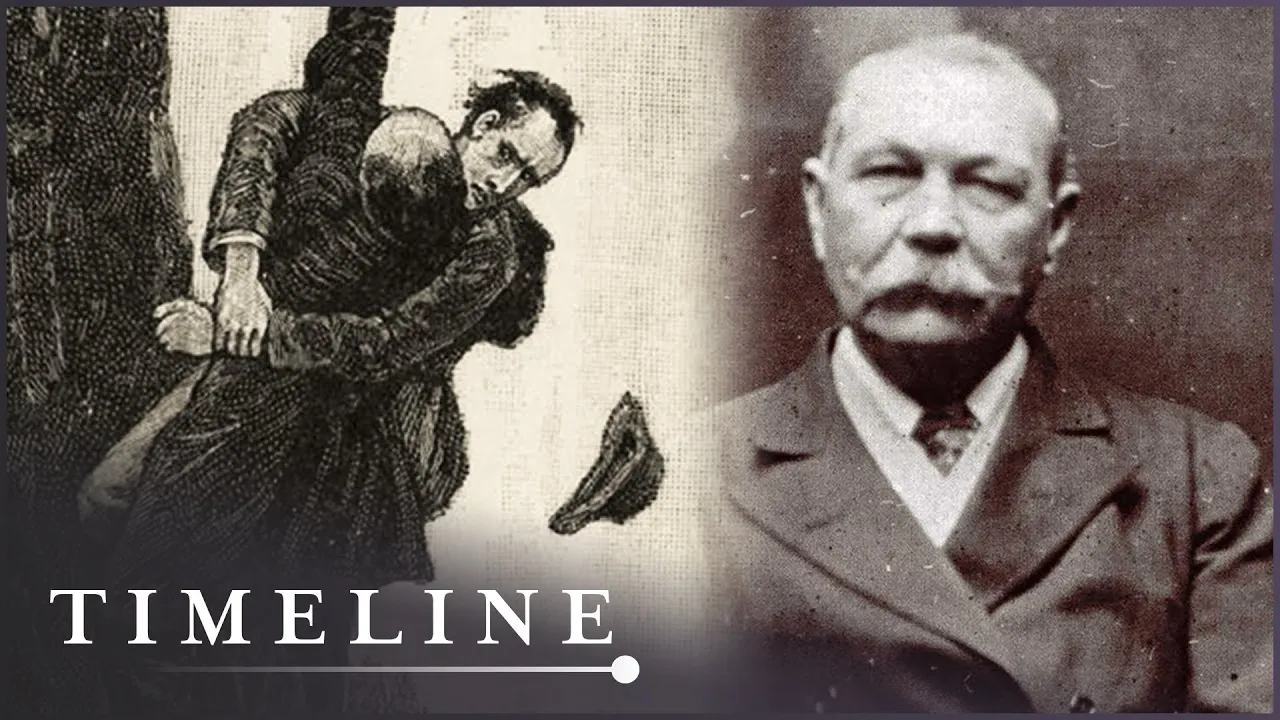



Sir Arthur Conan Doyle explains that he created Sherlock Holmes by applying scientific deduction methods to detective fiction, transforming the genre from stories where detectives solved cases by luck into ones where conclusions were built systematically through observation and reasoning. He also discusses his 41-year serious study of spiritualism, emphasizing that he distinguishes between belief and knowledge, having conducted experiments with multiple witnesses to verify psychic phenomena, and views spiritualism as a philosophy with potential for human spiritual improvement.
Sir Arthur Conan Doyle: 1927 Interview on Sherlock Holmes & Spirituality
Added:Familiarity with the character of Sherlock Holmes and his reliance on deductive reasoning, observation, and scientific rationalism.
An understanding of the Spiritualism movement of the late 19th and early 20th centuries, including beliefs in mediumship and communication with the deceased.
Historical context of the post-World War I era (the 1920s), specifically how mass casualties during the war fueled a global resurgence in spiritualist beliefs.
A basic biography of Sir Arthur Conan Doyle, including his medical background as a physician and his transition to a full-time author.
Analysis of the philosophical tension and paradox between Conan Doyle's rationalist creation (Holmes) and his personal spiritualist convictions.
Investigation into the famous friendship and subsequent ideological rift between Arthur Conan Doyle and the illusionist/skeptic Harry Houdini over spiritual mediums.
Study of Doyle's later, spiritualist-focused literature, such as 'The Land of Mist', and how his beliefs reshaped his narrative themes.
Exploration of the psychological and sociological factors that drive belief in paranormal and spiritualist phenomena during times of societal trauma.
39.7K views751likes10:08Original Release: 2011-09-15
[Music] good old boy let's see now I've got to speak one or two words and just to try my voice I understand there are two things that people always want to ask me one of them is how I ever came to write the Sherlock Holmes stories and the other is about how I came to have psychic experiences and to take so much interest in that question well first of all about the shock H studies it came about in this way I was quite a a young doctor at the time I had of course a scientific training and I used occasionally to read detective stories it all annoyed me how in the oldfashioned detective Story the detective always seemed to get at his results either by some sort of Lucky chance or a fluke or else it was quite unexplained how he got there he got there but never gave an explanation how well it didn't seem to me quite playing the game it seemed to me that he's bound to give his reasons why he came to his conclusions one of us I began to think about this I began to think of turning scientific methods as it were onto the work of detection and I used as a student to have a old Professor his name was Bill who was extraordinarily quick at deductive work he would look at the patient he would hardly allow the patient to open his mouth but he would make his diagnosis of the disease and also very often of the patient's nationality and occupation and other points entirely by his part of observation so naturally I thought to myself well if a scientific man like Bell is to come into the detective business he wouldn't do these things by chance he' get the thing by building it up scientifically so having once conceived that line of thought uh you can well imagine that I had as it were a new idea of the detective and one which it interested me to work out I thought of aund little Dodges as you may say 100 little touches by which he could build up his conclusions and then I began to write stories on those lines at first I think they attracted a little very little attention but after a time when I began the short Adventures one after the other coming out month after month in the Strand magazine uh people began to recognize that it was different to the old detective that there was something there which was new they began to buy the magazine and uh it uh prospered so I may say did die we both came along together and from that time Sherlock Holmes fairly took root I've written a good deal more about him than I ever intended to do but my hand has been rather forced by kind friends who continually wanted to know more and so it is that this monstrous growth has come out I don't want really a comparatively small seed but the Curious Thing is how many people that are in the world who are perfectly convinced that he is a living human being I get letters addressed to him I get letters asking for his autograph get letters addressed to his rather stupid friend Watson I've even had ladies writing to say that they'd be very glad to act as his houskeeper one of them when she heard that he had turned to the occupation of keeping bees wrote saying that she was an expert at segregating the queen whatever that may mean and that she was evidently predestined to be the housekeeper of Sherlock Holmes I don't know if there's anything more I could say with Advantage about him but on the other point which is to me of course a very much more serious one on the question of my taking up this psychic matter curiously enough my first experience is in that direction well just about the time when Sherlock Holmes was being built up in my mind that would be about the year 1886 and 1887 so nobody can say that I formed my opinions on Psychic matters very hastily there just 41 years now since I wrote a signed article upon the subject which appeared in a magazine called light so that I put myself on record during these 41 years I never lost any opportunity of reading of studying and experimenting on this matter people ask me will I write any more shallow H stories I certainly don't think it's at all probable but as I grow older the psychic uh subject always grows in intensity and then one becomes more Earnest upon it and I should think that my few remaining years years will probably devoted much more in that direction than in the direction of literature nonetheless of course I haven't abandoned writing one has to earn one's living but my principal thoughts are that I should extend if I can uh that knowledge which I have on Psychic matters and spread it as far as I can to those who have been less fortunate but don't for one moment suppose that I'm taking it on myself to say that I am the inventor of spiritualism or that I am even the principal exponent of it there are many great mediums many great psychical researchers investigators of All Sorts all that I can do is to be a gramophone on the subject to go about to meet people face to face to try and make them understand but this thing is not the foolish thing which is so often represented but that it really is a great philosophy and as I think the basis of all religious Improvement in the future of the human race I suppose I set with more mediums good and bad and indifferent than perhaps any living being anyhow a larger variety because I've traveled so much all over the world and wherever I've gone either in Australia America or South Africa or the best that there was to be had in that direction I was put at my disposal therefore when people come along and contradict me you have had no experience at all read little and perhaps never been to a SE uh you can imagine that I don't take their opposition very seriously when I talk on this subject I'm not talking about what I believe I'm not talking about what I think I'm talking about what I know there's an enormous difference believe me between believing a thing and knowing a thing and talking about things that I've handled I've seen what I've heard of my own ears and always mind you in the presence of witnesses I never risk hallucination I usually in most of my experiments have had six eight or 10 Witnesses all of whom have seen and heard the same things that I have done gradually I became more and more convinced on the matter as I studied year in year out but it was only in the time of the war when all these Splendid young fellows were disappearing from our view the whole world was saying well what's become of them where are they what are they doing now have they dissipated into nothing or are they still the grand fillers that we used to know it was only at that time that I realized the overpowering importance to human race of knowing more about this matter then it was that I flung myself more earnestly into it and that I felt the highest purpose that I could possibly devote the remainder of my life to was trying to bring across to other people something of that knowledge and Assurance which I had acquired myself certainly the results have Justified me and quite sure I could fill a room of my house with the letters that I have received from people are telling me of the consolation which my writings on this subject and my lectures on this subject I have given to them how they have once more heard the sound of a vanished voice and felt the touch of the vanished hand [Music] oh goodbye I'm alone
Up Next

8:57
Sherlock Holmes: The Evolution of Crime Solving in Literature
@theindependent
50.3K views•2017-03-02

13:43
Formalism in Literary Criticism: An Academic Lecture Overview
@mattalberhasky9952
39.1K views•2015-08-05

6:08
Point of View in Fiction: First Person vs. Third Person
@magicalthriftyteacher
153.8K views•2014-03-31

15:25
1984: Orwell's Dystopian World and the Mechanisms of Totalitarianism
@AlternateHistoryHub
7M views•2017-03-04
Related Study Plans & Knowledge Roadmaps
Structured learning paths in Literature
literature
Graphic Memoirs: Visual Art, Trauma & History
01Foundations of Sequential Art and Visual Language
02Autographics and Processing Historical Trauma
03Visualizing Personal Trauma, Grief, and Graphic Medicine
+ 2 more learning modules
14h5 modules
Explore Roadmap
literature
Campus Novels: Evolution, Themes & Critique
01Introduction to the Campus Novel Genre
02Mid-Century Satire and the Post-War Academy
03Dark Academia and the Critique of Privilege
+ 2 more learning modules
14h5 modules
Explore Roadmap
literature
Theater of the Absurd: Philosophy & Plays
01Postwar Existentialism & Historical Roots
02Dismantling Narrative: Esslin & Absurdist Conventions
03Samuel Beckett and Tragicomic Existentialism
+ 2 more learning modules
12h5 modules
Explore Roadmap
literature
Revenge Tragedy: Justice, Madness & State
01Foundations of Early Modern English Theatre
02Anatomy of Revenge: Structural Conventions
03Psychological Complexity: Madness and Melancholy
+ 2 more learning modules
15h5 modules
Explore Roadmap