









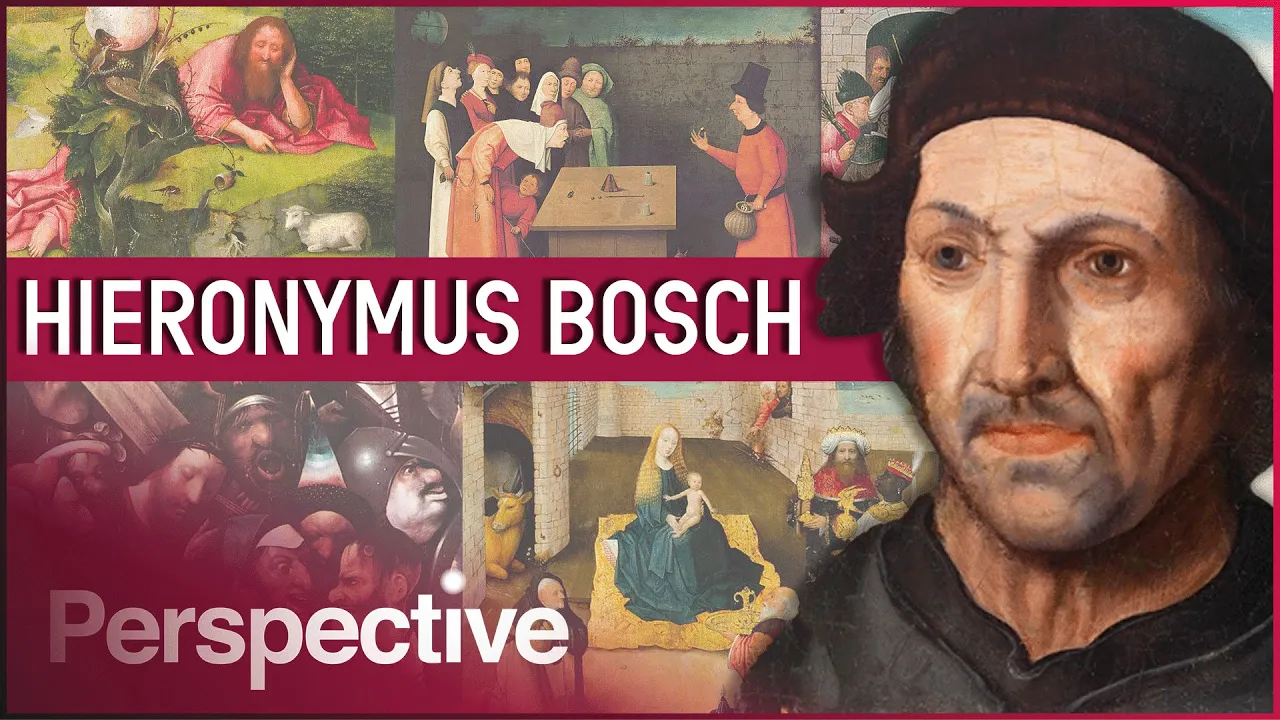


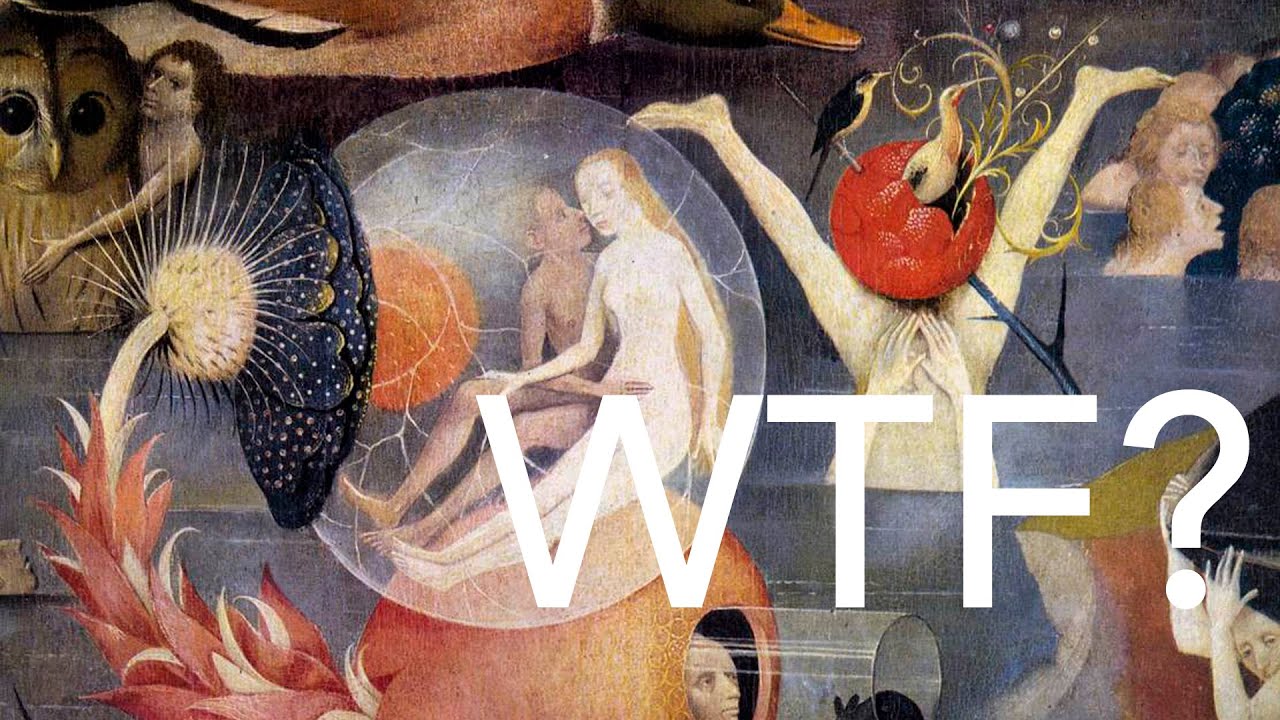









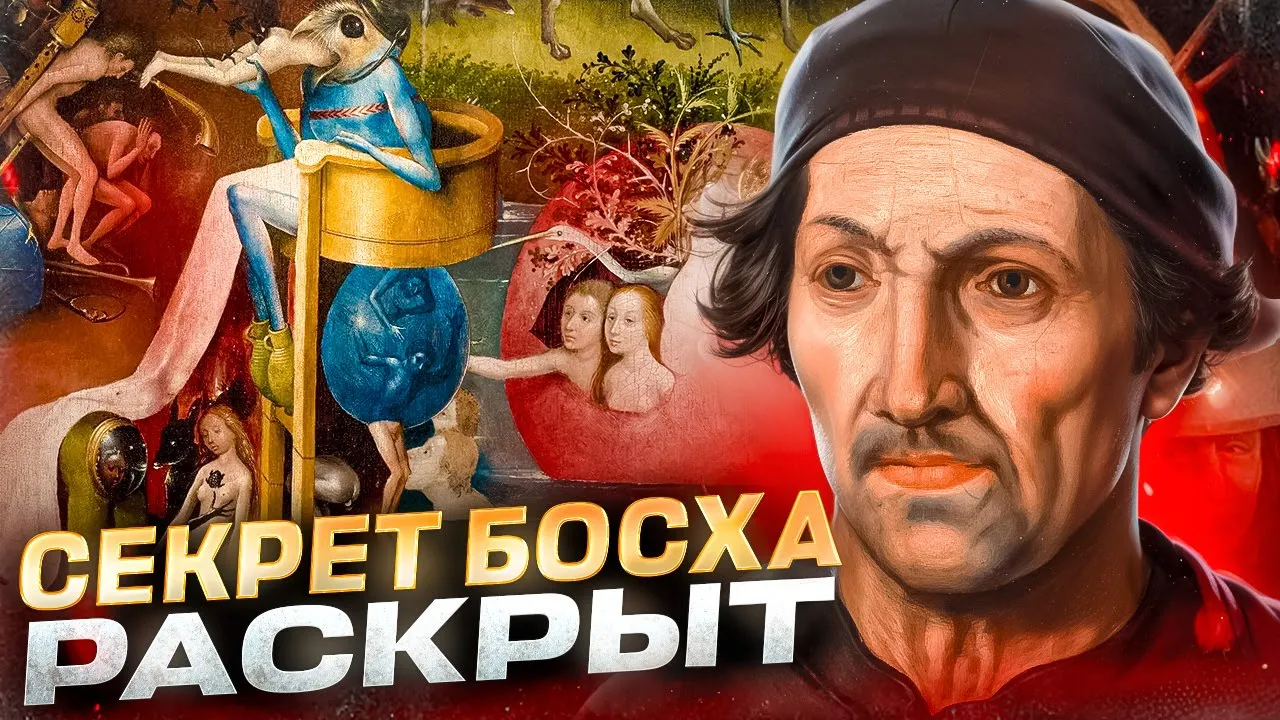


Hieronymus Bosch's paintings, particularly The Garden of Earthly Delights, should be understood as moral and religious instruction works created by a devout follower of the Common Life Fraternity, depicting sin and its consequences rather than mere eroticism or heresy; the paintings contain systematic biblical references and symbolic imagery that convey the fraternity's teachings about inner piety, the dangers of worldly wealth, and the importance of returning to genuine faith.
Unraveling the Mysteries of Hieronymus Bosch
Added:Understanding the distinct characteristics of the Northern Renaissance compared to the Italian Renaissance, particularly its focus on detailed realism and domestic settings.
Familiarity with late medieval Christian theology, specifically the prevailing beliefs regarding sin, moral corruption, purgatory, and the terrors of Hell.
Basic knowledge of iconographical analysis in art history, which involves decoding symbolic meanings behind visual elements, animals, and objects.
Historical context of the late 15th and early 16th centuries in the Low Countries (modern-day Netherlands/Belgium), including religious anxieties leading up to the Protestant Reformation.
A deep-dive comparative study of Bosch's major triptychs, specifically 'The Garden of Earthly Delights', 'The Last Judgment', and 'The Haywain Triptych'.
Tracing the artistic lineage from Hieronymus Bosch to Pieter Bruegel the Elder, exploring how Bruegel adapted Bosch's fantastical and moralizing style.
Analyzing the profound influence of Bosch's dreamlike and grotesque imagery on the 20th-century Surrealist movement, particularly the works of Salvador Dalí and Max Ernst.
Examining the academic and historiographical debates surrounding Bosch's personal beliefs, assessing whether he was a devout Catholic moralist, a member of a heretical sect, or an early satirist.
455.1K views5.5Klikes1:15:22Original Release: 2014-12-30
this is the story of my exploration of the mysteries of heronimus Bosch but first I need to tell you how my interest in Bosch began the process of this exploration through the work of this extraordinary and enigmatic painter has for me been a journey in itself one that started many years ago I first saw Bosch's paintings in the original in the prao museum about 30 years ago it was my first visit to [Music] Spain I'd gone to the pra because I knew that paintings by El Greco velasque and Goya were there I knew that to see them for the first time was going to be a great moment in my life I had in the slightest idea that any of Bosch's paintings were in Spain let alone in Madrid and in the PR of then one day I shall never forget it I think it was my third visit to the museum I happened to turn a corner in the Flemish gallery and there to my amazement came face to face with The Garden of Earthly Delights ever since that first moment when I stood staring at this picture I've been fascinated by it I've been trying to understand it trying to work out how it was that heronimus Bosch a painter who lived over 500 years ago could have produced a painting like this what I wanted to know was going on in these pictures those figures there are they making love or copulating why three two might be respectable three is an ory the people in the thistle bubble what are they up to and those legs and those giant Birds if as some have said it was an alterpiece it was a very strange work indeed for a church I wasn't a professional in the history of art so naturally I went to look up Bosch in the standard books and painting to my astonishment the great wiwin panovski not only told me nothing but he explains quite deliberately why he has nothing to say the secret of the interpretation of Bosch's strange paintings has according to panovski not yet been found we have not discovered the key to them and panovski with enviable intellectual restraint says no more except to quote a 16th century German scholar who gave up on quite a different intellectual problem with the words this too high for my wit I prefer to Omit for a long time my curiosity led me to pick up information and opinions from wherever I could I was living in Spain and had ample opportunity to look at the Bosch paintings more and more questions were piling up in my mind but I was finding no answers then a couple of years ago I got the chance to dig into the whole subject of Bosch I decided to play the detective to review the theories new and old and above all to follow the evidence and clues that Bosch himself has left us in his paintings of the 30 or more of Bosch's paintings that still exist eight of them include pretty well all the puzzles I found I had to face and solve The Garden of Earthly Delights itself the mystery of mysteries the temp tempation of St Anthony which is in Lisbon the hay way another of the pra collection and the picture on the outside of the Hayway when it's closed St John on the island of Patmos the pedler if that's who he is in Rotterdam the marriage Kaa and the Adoration of the Magi one of the few titles you can trust all the names we have for Bosch's pictures were given them by catalogers we don't know what Bosch himself called any of them I first of all looked for areas of agreement among the commentators and historians of art to begin with there are details of Bosch's paintings which are recognizable in the Flemish or Dutch tradition the Virgin and child in Bosch's Adoration of the Magi is stylistically related to Roger Vander wien's St Luke painting the Virgin which in turn follows the tradition of yan vanik before him with his little figures in the perspective distance a trick which Bosch uses time and again and I discovered for myself two pictures astonishingly alike in style and composition boses and toan St John the Baptist in the wilderness heren was from Harlem and was about 10 years or so younger than Bosch there can be no doubt that one artist saw the work of the other but in the surrounding details of the figure of the saint Bosch is original himself and unlike anybody before him the second thing that everyone agrees about is that Bosch's painting says it silently speaks Beyond those two areas of agreement there's nothing but argument and controversy nearly every commentator is convinced that he has the clue to the mysteries of aonomus Bosch one Theory the most popular is that he was a member of a secret sect which practiced forbidden rights and orges and that he painted these practices another that his entire work is based on astrology and can be read with the help of the signs of the zodiac another commentator says that every little scene he painted illustrates a Dutch saying or a Dutch proverb and yet another believes Bosch to be a scholar painting puns in Greek and Latin heresy witchcraft Alchemy Ling istics even drugs each new interpreter is satisfied with his own explanation but the fact is I wasn't I couldn't accept any of them not one of them did I find totally convincing I believed the answer was more reasonable less attractively exotic it was facts I wanted facts to get at the man in his mind motives but the problem is that the established facts about heronimus Bosch are intimidatingly few even this portrait was done several years after his death when was he born nobody knows for certain but the likelihood is that it was in the exact middle of the 15th century 1450 or a couple of years either side where was he born again nobody can be sure but he undoubtedly lived married worked and died in a place called CMOS in the Netherlands and this film was going to give me the chance of going there at last I thought I might discover some key to the pictures which had tantalized me for so many years if I could actually explore the place that they came from surely I'd find something there to help me cogos or denos as it's called for short is in the southern part of Holland in the region of bant I knew little more about it than its name when I went there and had no idea what to [Applause] expect [Music] [Applause] [Music] [Applause] [Music] [Applause] [Music] [Applause] my first reaction was disappointment I'm not sure what I did imagined it would be like but I wasn't expecting such a very ordinary very commercial very provincial little town I couldn't for the life of me fit anybody as extraordinary as Bosch into a sleepy little place like [Music] this [Music] whatever sign was there that anything but the most ordinary events could have happened here in any [Music] Century the one big occasion of the week is this Market the kind of Market you know instinctively hasn't changed in hundreds of years this this one is normally held in the Market Square but when I was there because of Road repairs it was taking place under the walls of the cathedral it was this great mess of St John's Cathedral that gave me my first hope it was the very same church as was being built in Bosch's day this part of the Netherlands has remained predominantly Roman Catholic even though long after Bosch died the greater part of the Netherlands split off from the church and became Protestant the Virgin that is worshiped daily by the town folk to this very day is the same one that Bosch knew but what had caught my imagination was not the continuity of ritual but to see the church once again full of Builders restorers this time getting back some of the original color and giving new strength to the Old [Music] Stone this I told myself is a scene that Bosch himself would have witnessed not only that it reminded me that Bosch was a Craftsman just like any other in this backwards of the Middle Ages he was no famous painter like rembrand or bral who came after him if he had been records would exist and we'd know a great deal more about him than we do as a professional he was on the same level as stonemasons carpenters and [Music] decorators these were his contemporaries craftsmen who carved their own images into the work they were doing for the fine new church they were building It's Curious that Bosch never painted a face and said that's me and yet there's a persistent tradition that we know what he looked like if you'd seen people going through the streets you'd have recognized their jobs in Bosch's day Weavers and Fullers in cloth making saddle makers cobblers and cap makers painters Burger Masters as officers everyone wore his distinctive clothing his Mark of office even Beggars and Street entertainers wore their [Music] badges [Music] beging was a recognized profession in Bosch's day the deformed the maimed the crippled were part of the everyday scene in any Town throughout these centuries and Bosch jotted them down in these quick sketches just as any other artist would for future use in one of his paintings whatever Bosch's pictures may be about they depict the life of his contemporaries as one of imminent Calamity and misery medieval European man was solemn and smiles weren't exchanged natur naturally when people greeted one another smiling over much was sinful and tears were frequent in church during the telling of tales in ordinary conversation and to weep was no shame for even the bravest of men contrasts were marked the poor begged in the streets showed dreadfully maimed Limbs and starved in public the great lived in ostentatious Splendor people spoke loudly and did everything noisily indoors and [Laughter] out but by night all were silent the streets deserted except for the homeless and the evil houses darkened and still Calamity was bewailed aloud a cry in the night was murder a light in the night was arrest voices in the night were Marauders and evildoers the unknown and the different was devilry and to be put down the age was sad pessimist expecting evil as man's ineluctable Destiny and snatching at Joys because they were in inescapably shortlived hell beckoned and the detailed inventory of its tortures was known studded embellished and brandished before children and adults heroic virtue and the intercession of saints might save some but most the most by far were damed it was real fire that Bosch painted when he wanted to create an image of Hell fires that he'd seen with his own eyes whole Villages burning like matchwood few of us know the fear of burning in fire Eternal none of us has seen a witch or a heretic burned alive in a public place Bosch and his contemporaries had the fires of hell for them were just as [Music] [Applause] real with details like this how can we not believe he'd seen the blast furnaces burning through the night the Revolutionary new iron smelting technique near the city of Li would have been the talk of any Town Li the diois center for his own church of St John now that I was in denos I felt more and more convinced that certain things that we find so extraordinary in many of Bosh's paintings were in fact taken from the experiences of his daily life it was for this reason that I was particularly interested to see a painting showing exactly what the town was like in Bosch's day now this is a painting which is uh approximately in the time of Boss BOS you say but we call him Yun boss approximately it is dated about 1530 Peter hermesdorf a specialist in the restoration of medieval Flemish painting paintings was working on it when I was there it was painted on wood panel like any of Bosch's paintings and like Bosch the artist had used transparent glosses which was the new Flemish technique of that time the subject is everyday's subject the wool market in sat boss then boss where Yun boss lived and the form of it is almost the same as it is now nowadays the market is still there Fountain will be re-erected the well underneath it it has been proved is still there for a great part that is uh historically true this then is the market that Bosch knew he would have walked through it to get to his house in this very same square he had food that was bought here and wore clothes that came from here and knew houses that stood here to find out more about the rest of the town that related to Bosch's day to see what Clues might be there I met father gak a Franciscan frier of great reputation among students of Bosch's paintings in the time of in the time of jun bu it was not it was not the cathedal no it was the beginning of the Church of church church and the church were vended end it end father has lived for years in denos and verified every building that existed in Bosch's day with him and another medievalist father servus we wandered through the alleys of the old city and traced the boundaries of the old town I asked him about the two schools of the fraternity of the common life that were once there at one of which the great Erasmus studied I wasn't aware then what a vital clue the existence of the common life fraternity was to prove for me the other side is the house had work the who died and where he died this house bizarre as it may seem looking at the place now this men's outfits is in fact on the site of the house where Bosch had lived here I was told he'd set up his workshop and lodged his apprentices [Music] and when the only part of the house left which is anywhere near genuine is the sellers to my surprise the owners had never been down there they even had to force an entry for me dry as a bone and cool here I told myself Bosch would have stacked the wooden panels and the materials for his paints but that's anybody's guess it didn't get me a any further The Cellar steps LED out onto the street I had to circumvent iron bars and the dirt of Ages to get up them I was back where I began in the Market [Music] Square I wanted to see anything that was part of the T when Bosch lived there so I even explored the disused canals the network of waterways that goes under the old houses in that punt by torch light I was getting something the books couldn't give me the authentic smell and feel of Bosch's own day there was a gentle and strangely pleasant smell of putri action down there the silence was tangible my imagination was taking me into the dream world of Bosch's fantasy I had to pull P myself together and get back to real fact start with his name his real name was yuron or yon fakan and his first name was often given in the Latin form of jonus or heronimus he used the signature of heronimus Bosch taking as his surname the substantive part of the name of his City it didn't surprise me to find that even in this sleepy little town as I'd called it records went back many hundreds of years they have a rich library of documents in them there are references to his grandfather Jan who was a painter and to his father and uncles who were painters and to his brothers who were also painters we know that when he was about 30 or so he married a woman of good family called Al van we know too that because of whom he married he became a land owner here's an item in the land registry referring to his newly come by possessions it says uh your Al fan mven that's his wife with heronimus fakan her husband registers in the Parish of oscot one house one other dwelling one hectare of land another four hectares and a further measure of 2 half hectares she because of the distinction of her family had been made a member of the Brotherhood of the Virgin when she was very young now he because of his marriage was also inducted into the same Brotherhood this one Brotherhood the popular name for the Brotherhood of the Virgin still exists and has its own building on the same site in the town as the one in Bosch's day it Still Remains The Society of Pious laymen a distinguished body of merchant patricians whose Charter dates back from 1318 though they' hadd been founded quite a time previously they organized church services a choir and processions and had a chapel of their own in St John's Church their Banquets were great occasions and heronimus Bosch after rising to the Dignity of a notable among them presided over their Banquets or as they said spread the cloths at least twice in his own own house a great moment always of their feasts was the eating of one or more rast Swan this is when he joined yes the son of Antonius yonus 10 to join to join that's his membership fee his membership yes script Yun it's it's a sort of of um Lucas vanck arist little name yes the nickname or a shorten a shortened version of his name y Mal Mal yes we would we would translate that literally is Jerry the painter Jerry see from his name anyway Jeron the painter and what what more does it say well Lucas vanc produced for me an old membership book out of which came a curious circumstance about herous Bosch a blank coat of arms window here you see all the shields of the members but is very curious Yun boss is empty here no coat of arms no coat of arms not at all shield and no coat of arms is he the only one he's not the only one it's possible that the the auor the copyist copyist yes uh did not know the arms of Boss ah you think he it's not proving that he had no arms interesting it's a manuscript uh from 1460 there was also a reference to the fact that when Bosch became a member of the Swan Brotherhood his head was shaved to give him the Tona and he adopted the sort of semi clerical clothes they all wore so I'd learned there were two sides to the membership of this club this Brotherhood one was the religious and charitable activities they were all known for and two the social standing you got by being accepted as a member and that meant then as now to say the least of it being rather wealthy Bosch took part in the activities of this Brotherhood but at the same time must have engaged like any other farmer in arguing and bargaining in the marketplace and trying to make [Music] money yet in spite of these two associations there was something in him that made him bitterly angry at the idea of using the whole of life to try and increase worldly wealth he's saying so in this painting the Hayway it's a clearly satirical picture in which he shows the whole world from Pope to Emperor to Merchants and Priests the common people everybody chasing after hay and hay in biblical and Country Proverbs means the vanity and emptiness of money wealth people hoard it people's Swindle for it people kill for it the great of the world just go along with it and take it for granted as their due and on top of it all the Arts and the muses they are no better than any of the others it's unquestionably a personal protest Bosch is making in this pap painting at the back of my mind was an idea a memory that Erasmus in his ctitical little book Praise of folly takes up exactly this attitude towards weals seizing people for devoting their lives to chasing after riches I knew that Erasmus had been influenced by the teachings of the common life fraternity the same fraternity that I talked about with Father H Erasmus was more than influenced in fact his mind had been formed by them the city of denos was known for years even well after Bosch's death for its religiosity one out of every six men in the town was in holy orders of one sort or another it was that fraternity that set the tone of sincere devotion among high and low and made that City different from from many others their aims and purposes by our standards were good decent Christian ideals they taught an inner piety and frequent reading of the Bible and incidentally were against beating children in school but the one I found amazing the one that jumped out at me was their fundamental and virulent dislike of polyphonic music of CounterPoint the fashionable over elaborate church music of Bosch's day which was beginning to replace the simple human voice of plain song for them it led to sin the work of the devil I knew I'd seen this in one of Bosch's paintings if I was right this fantastic musical section in the hell panel of The Garden of Earthly Delights is Bosch telling us that polyphonic music in church is a sin and a heresy and that those who perpetrate it and enjoy it will suffer in Hell forever i' read at least a dozen complicated and contradictory attempts to explain this strange group to me now it appeared straightforward Bosch is here preaching using paint to preach the common life teachings what I had to do now was to test other aims of the common life fraternity against other details in his paintings if the aims of the common life fraternity fit his pictures my hypothesis is proved if I'm right then this is the evil of drink his legs are rotten trees standing unsteadily in boats on water he's the Eternal drunk his body a rotten egg is nothing but a dreary Tavern this would be glatton not as the books told me a devil in hell swallowing Sinners and defecating them the sin of greed or gluton wears a cooking pot on his head his body is the color and pattern of a common ceramic cooking stove his hands are the two prong Fork of the period his feet are stuck in kitchen jugs and he sits on a cucking or stool a glutton is eaten up by his own sin wastes his money on it Bosch is saying and it all ends in vomit the waste of time and life involved in gaming yet another diversion from the search for salvation the inevitable accompaniment girls lust I now believed I was on the right track if I was right heronimus Bosch was a Fierce and Pious Christian a follower of the teachings of the common life the fraternity which had taught him as a boy the fraternity which was to teach arasmus 20 years later in one of the very same schools of den boss the fraternity whose seminal figur and Thomas Aus has left us that beautiful pleading little book of advice the imitation of Christ Erasmus The Scholar St Thomas Aus the gentle Mystic and a simpler less intellectual man heronimus Bosch the painter of den BOS were after the same thing Bosch was in his painting and I don't doubt in his life pleading threatening cajoling for a return to the faith of the true church his Gothic like that of the church he watched going up and prayed in was still pure and [Music] white [Music] I'd started with this church and John and for me it had become a symbol of the very specific spiritual atmosphere in this town precisely at the moment of Bosch's [Music] lifetime the people who prayed and worshiped daily here were instilled with the rhythms the intonations the words of the Latin Bible [Music] they were fed serm stories and Parables made to see the characters of The Bible as real people real people whom they invoked and communed with the Bible is taught to them by the fraternity of the common life [Music] I left in boss with a conviction that the fraternity's insistence on the Bible was the main key to Bosch's paintings I decided to use it the Bible on a painting that had been termed a problem picture St John on the island of Patmos no one up till now had told me what this strange creature was doing in the picture what I found in the Bible fits almost word for word allowing for the creative license of a man like Bosch I John was in the aisle that is called Patmos and the shapes of the Locust were like unto horses prepared to battle not quite Bosch has invented one little man type and he has to do for all the locusts and on their heads were as it were crowns of gold that's the fireball thing on top of the helmet and their faces were as the faces of men and they had hair as the hair of women and their teeth were as the teeth of lions no teeth and no hair and that face looks like the artist to me and they had breastplates as it were breastplates of iron yes indeed and the sound of their wings was as the sound of Chariots of many horses running to battle and they had tails like unto scorpions and there were stings in their tails and their power was to hurt men five months and there appeared a great Wonder in heaven a woman clothed with the sun and the moon under her feet and upon her head a crown of 12 stars and there they are I never noticed that Moon until I read those words it's important to remember that all the names we know for Bosch's pictures are invented by others nobody knows what Bosch called any of his paintings this one has had several titles the Vagabond the pedler mankind The Prodigal Son and even the so-called prodigal son I don't believe any of them I see it as the Good Samaritan There's the Man bound to a tree and being robbed there's the levite turning aside and there's the Good Samaritan about to turn round and give up his journey to save the man the other very similar painting in Rotterdam carries the same confusion of titles I've got to admit that the rdam one has so far got me puzzled everything seems to concentr at on a Tavern brothel in the background somebody trying to seduce a woman a man pissing against the wall a woman looking out of a window straight at us or at the central figure the whole house falling to pieces the man in the center I find very difficult to explain there's a sort of double symbolism about him two hats of different kinds why I don't know why one shoe one slipper I have no idea and no one else has provided a complete explanation I can accept but one thing I'm sure of in this painting is that Bosch used his own face for the man the face that appears in so many of his paintings that nose is unmistakable proof or no proof I'm satisfied that's our man all this time I'd been trying to build up for myself a picture of a real man not just a name a man who'd lived in a specific place at a specific time it's an impossible thing to do bridge 500 years but I felt I had to try to understand the man's character through the paintings that were left to us and I see him as a man man of many angers he's furious at the gullibility of the people around him for any tub Thumper any quack he's saying in this picture is able to deceive us a trickster in any Street at any time it's called the conjura [Music] he's full of contempt and not pity for those in their stupid self-indulgent Pleasures the Ship of Fools it's an old and well-worked theme all Sinners are going to hell those dressed as monks and nuns as well as Ordinary People Bosch was obsessed with sin and into this painting The Temptations of St Anthony he put all the burning passion he had inside him here is the great fight against evil the good man who stands up and defeats Temptation sin the Devil Himself Bosch painted the theme of St Anthony and his Brave fight again and again most of the paintings are lost Anthony was his father's name the family worshiped at the chapel of St Anthony and den BOS BOS identified with St Anthony he uses the story of St Anthony his Temptations and his struggle against them St Anthony carried up into the Sky by Devils before they fling him down to earth his friends carrying him back to his cave or to the coffin in which he lived the saint surrounded by Temptations the devil queen who tried to seduce him but the real purpose of the tryptic is the denunciation of sin the sin waiting everywhere to trap mankind the sin which is blasphemy bewitchery the devil's doing psychology psychoanalysis says that nobody could be like Bosch so obsessed by sin so obsessed by images of sex so obsessed by evil Witchcraft and sorcery and not have it himself deep in him of course he had and he knew it the very fact that he returns to the same great themes sin and repentance again and again and again proves his obsession with what he considers his own miserable spiritual condition he was a man of his times for all of them the devil was alive and lurked around every corner the belief in witchcraft was a fearful commonplace a Blasphemous representation of the flight into Egypt with Mary mounted on a giant rat and stuffed into the hollow of a dead tree a Blasphemous mockery of the Adoration of the Magi with the black king spread eagled Joseph behind Mary in the background as usual one of the Kings petrified and the third encased in armor in the air which is cavort the devil bending over for his behind to be kissed was typical of witch is Sabbath while in the very center of the picture Jesus points to his own crucifixion the true way to Salvation a mass a black mass is being celebrated A procession of the filthiest of mankind by the standards of Bosch's day the crippled in body and the maimed in mind jugglers musicians dogs and monsters attend the mass lining up to take a sacriligious communion a false priest conducts the false mess in the Roman mess the priest gives the people the wafer but never the wine in this one he gives the wine and she who is the spirit of evil is taking up the wafer the black acolyte elevates a symbol of sacrilege where in the true Mass would be the crucifix the images of corruption and wickedness are innumerable yet says the story the mighty power of the goodness of antthony was proof against all this evil in heronimus Bosch's list of the great the greatest super anony indeed BOS loved his Countryside more than he knew his Landscapes are distinctively North bent his part of the Netherlands like any medieval Craftsman he put in background incidents to fill in the scenes but being by Bosch they're often evil he put in complete little vignettes as those spying them people from far away in the open air museum of medieval buildings at bokri in Belgium which is also part of the bant region I've seen buildings which could have come straight out of a Bosch picture when Bosch wants to he paints with such attention to detail it's nearly impossible to see what's real and what's painting but even a familiar subject like the Adoration painted by Bosch has more in it than a first glance can take in or understand Bosch has set the whole scene as if it were the celebration of the mess Mary is the altar the child enthroned on her lap balthasar the oldest of the kings in his Red Cloak is the celebrate and the other two are acolytes Casper must be one of the finest figures Bosch ever painted all round are scattered sculptured engraved and embroidered references from the Old Testament again the Bible is our key the the sculpture on the ground is the sacrifice of Isaac mela's Cape is embroidered with the queen of sheba's visit to Solomon Casper's orb shows abna offering homage to David the little figure in the background on the left wing is St Joseph he looks up from washing the child's clothes as if wondering what's happening St Joseph was often a figure of fun and ryal humor throughout the Middle Ages earthy humor saw him as coded of the Holy Ghost and many a solemn sermon argued seriously to refute the slander the bad shepherds are watching from the roof they are described in a verse in the gospel of St John verily verily I say unto you he that entereth not by the door into the Sheepfold but climbeth up some other way the same is a thief and a robber the bizarre figure in the doorway has attracted the most bizarre theories one of them is he's the Antichrist and at the same time the Jewish Messiah another that he's balum the Heathen Prophet who came to curse and stayed to bless I suggest that he's King David he's Nearly Naked and draped in a red robe when David danced in exaltation before the Ark of the Lord the second book of Samuel says uncovering himself as one of the vulgar fellows shamelessly uncovers himself this is another moment of exaltation the birth of Jesus who according to the gospels was of the line of David Son of Jesse the strange headdress with its curious leafy twig becomes no longer strange there shall come forth a chute from the stump of Jesse and a branch shall grow out of its roots the helmet likee crown that King David holds is I guess the crown of the Kingdom brought by David to the newly born child Jesus good then predominates it is after all one of Bosch's most straightforward paintings this picture called the marriage at Kaa is a much tougher one to interpret nobody offers a complete explanation it's a puzzle picture the colonel of the Cana story is there there are the jars being filled with a miracle water turned to Wine six water pots in the parable six Stone water pots in the painting but there's a lot that needs explaining there are strange things going on in the background a swan is being brought in Spitting Fire a curious crouched Piper in a sort of minstral gallery a man gesticulating in the background the guests are in Outdoor Clothing there's a curious little robed figure offering a chalice of wine right in the middle I think it's three separate meals three Bible incidents the marriage of Kaa that we know for the outdoor clothes of the guests I went to Jesus's parable about the king who had a wedding dinner but no guests he sent his servants out and made them bring in from the street anybody who was there both good and bad says Jesus and the third incident is the tax gatherer who was so short that he climbed up a tree to see Jesus and in reward Jesus promised to come round to his house zakas the little TX gatherer was rich which accounts for his ornate robe he'd be the host so I make it a composite Bible story so much I think I found out but it doesn't yet yel I can't squeeze out of it that moral lesson that usually comes out of a Bosch picture The Garden of Earthly Delights we've come full circle but don't take the name too seriously that's not what Bosch would have called it with the wings open there's the Garden of Eden on the left hell on the right and one of the greatest of all Bosch's mysteries in the center when the shutters are closed you see a creation scene in the top left hand corner is God looking at a book and Below him the new made world the world is a book written by the Finger of God the book held by God in my opinion refers to St John's Creation in the beginning was the word and the Word was with God and the Word was God all things were made by him and without him was made nothing that was made on the top of the outer Wings Bosch puts in Latin a verse which in the Vulgate version of the Bible he knew occurs in identical form in two separate Psalms for he spoke and they were made he commanded and they were created it seems to me to be only common sense to take the hint and go to both Psalms to see if any other part of them is represented anywhere in this series of paintings and listen to what you find when you look by the word of the Lord the heavens were established and all the power of them by the spirit of his mouth Gathering Together the Waters of the sea as an vessel laying up the depths in storehouses gathering together the Waters of the sea as in a vessel other translations say a flask a bottle laying up the depths in storehouses the fantastically shaped edifices on the skyline and no great mystery even though most of the commentators find them hard to explain they're the storehouses of God's wisdom why so exotic Christopher Columbus came back from his first great expedition across the seas when heronimus Bosch was about 43 years old I see them as Bosch's genius playing with the stories going the rounds about what those men had seen the Fantastic fountain at the very center of the Garden of Eden is rarely no mystery in Chapter 2 of The Book of Genesis it says but there went up a mist from the earth and watered the whole face of the ground The Vulgate the only Bible the Bosch knew instead of mist has in Latin F's Fountain and he naturally painted a fountain and not a mist Bosch places the fountain on a rock encrusted with precious stones and that I found in the Book of Ezekiel the sardius the topaz and the Jasper the chrysite and the onx the barrel the sapphire and the emerald even those little glass tubes are mentioned pipes prepared in the day thou was created that's how how intimately Bosch follows the Bible and equally closely I believe he follows the spiritual teachings of the fraternity in all his paintings if I now try to look at the center panel of the picture commonly called The Garden of Earthly Delights Through The Eyes of a follower of the doctrine of the common life fraternity at the turn of the 16th century what do I see not necess necessarily the lewdness and the lechery and lust that jumps out at us in the 20th century it's not nearly a simple as that it's naked people acting out the varieties of human wickedness in symbolic terms of course they're naked at the day of judgment we shall all be denuded of our draperies without our deceits and our hypocritical coverings if you see mankind as it really is you see mankind naked and that's why all judgment paintings show men and women naked the teaching of the church fathers was that at the last day of Judgment at the resurrection we shall all come out of our graves in the prime of Our Lives most of us that is about 30 years old and that's why there are no children in the painting but this is no last judgment no judgment of God there's no Throne no divine presence it is Bosch's judgment he is denouncing the world for the depravity of Its Behavior the whole picture is a catalog of sins in the understanding of the common life teachers this is the epitome of egoism the conent conentration in self-indulgence which Cuts people off from all else birds are evil symbols and Bosch uses them to attack the corrupt church with all its fine plumage its indifference its condoning of wickedness it indulges sin and is the despair of those seeking for truth the maddest of beliefs flourish the craziest of sectarianism Thrive and BOS shows them cavorting round and round getting nowhere in their frantic anticlockwise Circle Bosch contrasts the two types of teaching the theologians enclosed unseeing in the narrowness of their useless argumentations the cardinal red of their tent signifying the approval of Rome in contrast to the true schools of simple clear seeeing Faith the fraternity of the common life itself the teacher with the mendicant robe the pupil staring out horrified at the sinful world every single detail carries meaning there's no end to it and I haven't got anywhere near Plumbing it to its depths for me this is the correct analysis of one of the greatest pictures ever painted painted by a man whose genius took the form of concentrating in one style the declining strengths the last gosp of the dying Middle Ages a picture done not for any secret sect but as a teaching and contemplative work created for a chapel or private devotional place of some God-fearing Christian did his contemporaries understand his work my guess is that many did and many didn't but I'm certain that he wanted to arouse curiosity he wanted people to ask so that they might be answered and thus learn the symbols are his own the teaching method is traditional in Italy they'd left it far behind they were worlds away in in their thinking and their painting Leonardo DaVinci Bosch's exact contemporary is at a peak of the Renaissance Bosch was not to know that after he was dead his imitators used his style as caricature and that his intensely sincere imagery would be called grotesquery in devilry the inevitable happened his meaning except where it was obvious and traditional was forgotten his new style was taken up quite brilliantly sometimes by other artists a print seller with a shrewd Eye For What would sell commissioned an artist by the name of brle to do things for him in the new crazy Bosch style that people were ready to buy brle was drawing Bosch likee pictures for others to engrave 30 years after Bosch had died devilry and Japes they called them and because of them Briel got the nickname of Peter the clown anyone who collected Bosch's paintings like Philip II of Spain was thought to have very weird taste indeed before long Bosch was denigrated to a heretic and worse a bungler a Spanish poet in another as you Bosch among poets all devils and buts and asses and then Oblivion even Bosch the caricaturist was forgotten until almost our own century and suddenly now in a new age with new tastes and a feverish eroticism heronimus Bosch has become more known than in all the centuries digging deep down into himself for his images he struck into the unconscious common to us all he dredged up symbols and images which make sense today in Freudian and jungian terms poor Bosch such a good Orthodox Catholic he wouldn't have liked it at all [Music] J [Music] see [Music] have [Applause] [Music] yeah
Up Next

8:05
Netherlandish Proverbs: Pieter Bruegel's 112 Hidden Idioms
@frame0freference
3.4K views•2021-04-05

114:18
Christian Iconography: History, Theology, and Meaning | Fr. Panayiotis Papageorgiou
@Trisagionfilms
58.8K views•2020-02-21
7:48
Ukiyo-e Art: History, Woodblock Printing & Influence
@japanathand
6.3K views•2023-06-08

16:34
Earliest Depictions of Jesus in Art: 10 Ancient Images Explained
@UsefulCharts
5.9M views•2022-06-03
Related Study Plans & Knowledge Roadmaps
Structured learning paths in Art History
art-history
Gothic Cathedrals: Engineering, Light & Society
01The Birth of the Gothic: Romanesque to Suger's Vision
02The Structural Triad: Pointed Arches, Ribbed Vaults, and Flying Buttresses
03Theology of Light: Lux Nova and Sacred Geometry
+ 2 more learning modules
14h5 modules
Explore Roadmap
art-history
Pre-Raphaelites: Realism, Symbolism & Critique
01The Victorian Art Establishment and Academic Formula
02The Founding of the PRB and Radical Realism
03Medieval Revivalism and Literary Symbolism
+ 1 more learning modules
8h4 modules
Explore Roadmap
art-history
Street Art: From Subways to Art Market
01Subcultural Origins in Philadelphia and New York (1970s)
02The Subway Era and Style Wars (Late 1970s - 1980s)
03The East Village Scene and Early Gallery Crossover
+ 2 more learning modules
10h5 modules
Explore Roadmap
art-history
Classic Maya Art: Iconography, Glyphs & Ritual
01Foundations of Classic Maya Visual Culture
02Deciphering Maya Hieroglyphs & Text-Image Integration
03Sacred Geography and Cosmological Architecture
+ 2 more learning modules
14h5 modules
Explore Roadmap